Category: DigitalJournal

  • 12 Best Incident Response Companies​ in 2026 thumbnail

    12 Best Incident Response Companies​ in 2026

    Time isn’t on your side during any attack!

    Every minute lost can mean the worst outcome. More data stolen. More systems encrypted. More money gone. But it’s 2026 now. You can have lots of digital rescuers who act fast.

    Then again, defending your business needs more than just good tools. It needs a rapid, expert partner who can take control when things go wrong.

    And you get this from the best incident management software. These providers focus on their unique strengths, speeds, and AI to fight back faster than humans ever could.

    Top 12 Incident Response Companies 2026

    Company Name Response Time
    TaskCall 5-15 minutes
    Mandiant (Google Cloud) 2 hours
    CrowdStrike 36 minutes
    Palo Alto Networks Unit 42 2-24 hours
    IBM Security X-Force 1 hour
    Kroll 2-6 hours
    Deloitte 1 hour
    Secureworks Sophos 2-48 hours
    Cynet 2 hours
    Rapid7 1 hour
    Cisco Talos 2-4 hours
    Sygnia 48-72 hours

    12 Best Incident Response Companies

    1. TaskCall | Top Incident Response Solution

    Speed wins here.

    TaskCall’s main advantage is its structured speed guarantee for critical issues. SEV-1 incidents trigger responses within 5 minutes, whereas SEV-2 issues get attention in 15 minutes.

    This speed is built into their process. The platform automates the initial alerting and coordination. It ensures the right people are pulled into a call instantly. This eliminates the chaos that usually wastes precious time at the start of a crisis.

    Moreover, the platform focuses on other activities, too. Smart routing sends alerts only to the right people. AI filters false alarms before phones start buzzing. On-call schedules stay clean. Built-in incident timelines help teams track what happened, when, and why. Post-incident reviews take minutes.

    That cuts Mean Time to Acknowledge by over 60%, based on internal customer data.

    Highlights

    • Guaranteed 5-minute response for critical incidents.
    • Automated escalation and team coordination.
    • Real-time status dashboard for all stakeholders.
    • Integrated post-incident reporting.
    Pros Cons
    Very fast alerts Focused on response
    Easy to use
    Strong mobile support

    2. Mandiant (Google Cloud)

    Experience shows under pressure.

    Mandiant promises a 2-hour response time. It comes from teams across 30+ countries. Their specialty is that they dive deep into containment and threat tracking. With that, they handle nation-state attacks and APTs smoothly. And Google Cloud backing adds scale and data access.

    Responders focus on breach scope, attacker movement, and cleanup. Their threat intel database tracks thousands of attack patterns. That helps stop repeat damage. Large enterprises lean on Mandiant during high-risk incidents.

    Costs run high. Speed stays solid. Depth goes deep.

    Highlights

    • 2-hour initial response for retainer clients.
    • Unmatched expertise in handling Advanced Persistent Threats (APTs).
    • Global 24/7 team with experts in over 30 countries.
    • Integrates Google Cloud’s intelligence and scale.
    Pros Cons
    Deep forensics Expensive
    Global reach Heavy process
    Strong reports

    3. CrowdStrike

    Pretty fast among the crowd.

    CrowdStrike’s Falcon Complete shows results fast. Average containment takes 36 minutes. This speed comes from their cloud-native platform. It combines monitoring, detection, and response into one system.

    Their experts can see an alert and take remote action instantly across all your devices. They offer proactive threat hunting. It means they look for hidden threats before an alarm even sounds.

    AI flags abnormal behavior early. Automated containment blocks lateral movement before data leaks. The platform handles endpoints at bigger scale.

    Highlights

    • Documented 36-minute average threat containment time.
    • Single, cloud-native platform for seamless response.
    • Proactive 24/7 threat hunting.
    • Remote remediation actions across endpoints.
    Pros Cons
    Fast containment Costly tiers
    Strong EDR Complex console
    Low endpoint load

    4. Palo Alto Networks Unit 42

    Intel meets action.

    Palo Alto Networks Unit 42 mixes threat research with hands-on response. Engagement starts within 2 to 24 hours, based on retainer level. When they respond, they tend to check it against global attack patterns.

    The team tracks malware families, ransomware groups, and attack chains in detail. They work well with Palo Alto firewalls and Cortex XDR. This helps reveal if an attacker is using a known tool or has targeted other industries. That tight link speeds containment. Investigations focus on the root cause.

    Highlights

    • Response within 2 hours for top-tier retainers.
    • Deep threat intelligence from Palo Alto’s global network.
    • Expert-led digital forensics and incident analysis.
    • Strong focus on post-incident guidance and hardening.
    Pros Cons
    Strong intel Slower entry tiers
    Skilled team Involve complex integrations
    Solid tooling

    5. IBM Security X-Force

    Scale helps during storms.

    IBM X-Force comes with 24/7 efficient support with a huge team of specialists worldwide. Their top-tier service promises incident triage within 1 hour.

    They use AI-driven tools to sort through massive amounts of data quickly during an investigation. This helps find the root cause faster. They’re a good fit for large, complex organizations that need help across different systems.

    The service also includes help with communication and regulatory requirements after a breach. AI-driven forensics is a big plus as they speed log analysis and timeline building. Their reports are detailed and structured.

    Highlights

    • 1-hour triage for urgent cases.
    • AI-enhanced forensics to speed up investigations.
    • Truly global 24/7 support network.
    • Covers crisis communications and compliance reporting.
    Pros Cons
    Enterprise scale Slower onboarding
    Detailed reports Process-heavy
    Legal support

    6. Kroll

    Structure that works to calm panic.

    Kroll blends rapid digital response with real-world investigative skills. Customers love it for its speed and holistic approach.

    They respond within 2 hours for Premier clients and under 6 hours for others. The teams often partner with tools like CrowdStrike or SentinelOne to deploy 24/7 monitoring quickly.

    Through such quick deployment, they scale a big investigation team within 48 hours.

    They also bring skills from outside pure IT. For instance, fraud investigation and physical security. They can be relevant for cases involving insider threats or complex fraud.

    Highlights

    • 2-hour contact guarantee for Premier clients.
    • Rapid team scaling to handle large incidents.
    • Integrates digital forensics with broader investigative expertise.
    • Established 24/7 managed detection partnerships.
    Pros Cons
    Quick contact Cost jumps
    Legal support Tool dependent
    Scalable teams

    7. Deloitte

    The one who guides your whole business through the storm.

    As a “Big 4” firm, Deloitte’s IR service is part of a bigger package. They focus on the legal, financial, and operational fallout of a cyber attack. Not just the technical fix.

    The company can deploy technical specialists quickly, often within 1 hour. Remote triage starts in 2 hours. On-site support reaches the UK in 24 hours, globally in 48.

    But their real value is managing the bigger picture. That means talking to regulators, managing public relations, and helping with business continuity.

    They’re just right for large firms that face regulatory heat. Their response typically blends tech, legal, and business views.

    Highlights

    • Rapid specialist deployment within 1-48 hours.
    • Holistic recovery covers legal, PR, and operational needs.
    • Deep experience with regulatory landscapes.
    • Strong pre-incident planning and testing services.
    Pros Cons
    Strategic view Less focus on pure technical threat hunting
    Large teams High cost
    Regulatory help

    8. Secureworks Sophos

    Ransomware specialists who move fast.

    Sophos Rapid Response is built to stop active threats in their tracks. Take ransomware, for instance. They typically start working on a case within 2 hours. Plus, they focus on finishing the initial assessment within 48 hours.

    Their team is expert at neutralizing ransomware and kicking attackers out of networks. Because they also make security products, their responders know the tools deeply. That way, they use those tools effectively so they can contain damage fast.

    Highlights

    • 2 hour onboarding for emergency cases.
    • Specialization in ransomware containment.
    • 48-hour triage goal for most customers.
    • Tight integration with Sophos’s own security products.
    Pros Cons
    Fast containment Limited forensics
    MDR depth Platform focus
    Clear guidance

    9. Cynet

    AI does the heavy lifting.

    Cynet’s CyOps MDR team uses a high level of automation to act fast. They respond to threats, contain, and fix them in minutes. One good thing is that the platform deploys across thousands of endpoints in under 2 hours.

    Their SOAR automation helps reduce manual work by 90%. This lets their human experts focus on the tricky problems whereas automated rules handle common attacks.

    A great pick for companies with lean teams that need fast, efficient protection.

    Highlights

    • Minute-level response via automated playbooks.
    • 90% reduction in manual response effort through SOAR.
    • Fast, simple deployment across endpoints.
    • ​​24/7 MDR with a single platform for all tools.
    Pros Cons
    Very fast Less depth
    Low overhead Smaller brand
    Simple setup

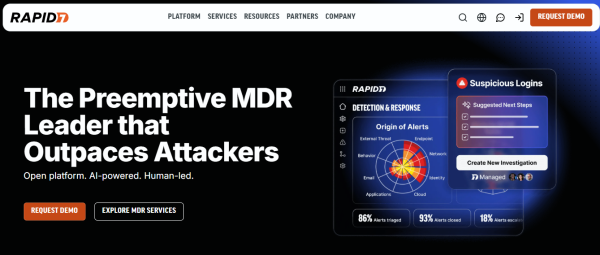
    10. Rapid7

    Smart tools with smart people.

    Rapid7 bears a strong security analytics platform, InsightIDR. It feeds alerts fast. For customers with a retainer, they ensure a 1-hour response with active retainers.

    Automation handles early containment. And their experts use this platform to quickly detect odd behavior and contain breaches.

    They also offer services like penetration testing to find holes before attackers do. This makes them a good partner for improving overall security.

    Highlights

    • 1-hour response for retainer customers.
    • Powered by the integrated InsightIDR (SIEM+EDR) platform.
    • Also provides proactive testing and threat modeling.
    • Focus on rapid containment using automation and analysis.
    Pros Cons
    Fast actions Retainer needed
    Effective tooling UI learning curve
    Testing depth

    11. Cisco Talos 

    Almost all countries covered.

    Cisco Talos Incident Response (CTIR) brings immediate global support. The company guarantees a 4-hour Service Level Objective to engage remotely.

    They frequently beat this target and often start work within just 2 hours of an alert. This speed comes from their deep integration with Cisco’s global threat intelligence team, Talos.

    This team sees threats in real-time across networks worldwide. It lets the CTIR recognize attack patterns instantly and contain ransomware or breaches faster.

    Highlights

    • 4-hour SLO for initial remote engagement.
    • Often initiates action within 2 hours, especially for ransomware.
    • The largest commercial threat intelligence teams.
    • 24/7/365 global coverage with remote and on-site options.
    Pros Cons
    Fast ransomware response Best with Cisco stack
    Actionable intelligence Occasional delayed response
    Global coverage

    12. Sygnia

    Experts under fire.

    Sygnia is popular for one simple reason. High-intensity, short-term interventions. They operate like a digital SWAT team for the most severe incidents.

    The team focuses on the first 48-72 hours of a major breach to contain the threat and remove it aggressively. They’re often called by companies that have already been breached and need an elite team to take charge.

    Their approach is tactical and direct, with a focus on immediate action and clear communication to leadership.

    Highlights

    • Focus on decisive 48-72 hour intervention.
    • Tactical, commander-led approach to incident handling.
    • High-level expertise for severe and advanced attacks.
    • Clear, direct reporting to executive management.
    Pros Cons
    Elite skills Premium pricing
    Fast action Limited automation
    Strong analysis

    How To Choose The Best Incident Response Company? 5 Factors To Consider!

    1. Detection-Response Speed 

    Most companies ensure responses from 30 minutes to 72 hours. It varies based on the type of issue and its intensity.

    Focus on the guaranteed response time. Not only general promises. A 5-minute guarantee is very different from a 4-hour one. Ask how they define “response”.

    Is it a call back? Or an expert starting work?

    Faster response directly lowers data loss and downtime. So, pick a guarantee that matches how fast you need help for your most critical systems. Also, go with one who ensures 24/7/365 availability.

    2. Automation

    In 2026, AI isn’t only a bonus. It’s how responders keep up.

    Automation tools can now sort through logs and alerts much faster than humans alone.

    For example, IBM and Vodafone have used AI to slash incident resolution time by 50%. They automated root cause analysis and handled 30,000+ monthly alerts.

    This slashes the time to find the root cause.

    Also, pick your provider that can handle AI-powered attacks (like deepfakes used for fraud or hyper-fast automated hacking). Your defender needs AI to fight the attacker’s AI.

    3. Retainer Flexibility

    Consider an IR retainer a fire department subscription.

    Without one, you’re only negotiating a contract while your network burns.

    A proper retainer pre-negotiates price, scope, and access. The best retainers let unused hours roll over or be used for proactive drills. This guarantees you get the fastest, smoothest help when panic sets in.

    4. Outcome Over Activity

    Don’t just count hours worked.

    Focus on the result. Typically, the best incident response company gives you a clear outcome:

    “The active ransomware was contained within 2 hours, and here’s how we’ll prevent it.”

    They should give you a detailed, plain-language report explaining everything. What happened, how they fixed it, and precise steps to stop it from happening again.

    The reporting has to be clear!

    5. Advanced Tools

    Ask what tools they use.

    • Do they rely on modern Endpoint Detection and Response (EDR) and Security Information and Event Management (SIEM) platforms?
    • Do they have AI-assisted hunting tools?

    Their toolset shows their capability. A company with outdated technology will struggle to protect your modern systems.

    FAQs

    What’s the real difference between MDR and an IR Retainer?

    MDR is like a 24/7 security guard watching monitors. An IR retainer is a contract with a SWAT team you call only during a major breach. MDR manages daily alerts; the retainer is for full-blown emergencies.

    Are these services too expensive for a mid-sized company?

    Not always. Different companies, like TaskCall, Secureworks or Cynet, offer scalable plans. The real cost is a major breach without help. Consider it a critical insurance for your digital business.

    How do retainers actually start working with you during a panic?

    With a retainer, you call a dedicated hotline. The provider immediately activates your pre-agreed plan. Then, they pull in your team on a bridge call and start their investigation.

    Will they take over completely, or do we need to be involved?

    They lead the technical fight. But you remain in charge. You’ll provide system access and make business decisions (like shutting down servers). They guide you but need your partnership to work effectively.


  • Online Reselling Is Changing and Crosslisting Is Why thumbnail

    Online Reselling Is Changing and Crosslisting Is Why

    Explore the structural shift forcing resellers beyond one marketplace and why crosslisting is now pivotal for visibility and scalability.

    The world of online reselling is no longer the “Wild West” of the early eBay days, nor is it the predictable environment it was just five years ago.

    For a long time, online resellers could pick a favorite marketplace, master its algorithm, and get consistent sales. However, things have changed quite a lot now.

    Relying on a single marketplace is no longer a viable long-term strategy for resellers. Today’s online buyers are fragmented; they are spread across niche shopping apps, social commerce platforms, and big marketplaces.

    For online resellers, sticking to just one marketplace doesn’t just limit growth; it creates a bottleneck that risks total loss of visibility.

    That’s why crosslisting has become an absolute necessity for the survival and growth of online resellers.

    Limitations of Selling on One Marketplace

    • You’re at the Mercy of the Marketplace Algorithm

    When you sell exclusively on one marketplace, you are at the mercy of that marketplace’s algorithm.

    If that marketplace changes its search algorithm, updates its fee structure, or experiences a technical glitch, your reselling business grinds to a halt.

    We see this frustration boiling over in reseller communities daily, where even experienced resellers note significant shifts in buyer behavior and marketplace sales.

    Relying on one marketplace means surrendering control to forces you can’t predict or influence.

    • Your Buyer Reach is Limited

    Each marketplace attracts a specific type of shoppers, like Poshmark, which primarily attracts millennials and Gen Z women who are also brand-conscious and socially active.

    By selling only on one marketplace, you hide your items from millions of buyers who shop on other marketplaces.

    So, you are basically waiting for the right buyers to find you instead of going to where they already shop.

    Missing out on these buyers doesn’t just lower your views; it also makes your inventory move more slowly.

    • Marketplace Risk Becomes Business Risk

    Marketplaces operate under strict policies, and enforcement isn’t always consistent. Account suspensions, listing takedowns, or payment holds can happen suddenly, even to compliant sellers.

    When your entire sales depend on one marketplace, these events don’t just slow sales; they halt them completely.

    What should be a marketplace issue instantly becomes a business emergency. Diversifying where you sell spreads that risk.

    If one marketplace experiences technical issues, policy changes, or account limitations, your reselling business can continue operating instead of coming to a full stop.

    • Inconsistent Demand Across Marketplaces

    Not all items perform equally across marketplaces. Buyer demographics, pricing tolerance, and search intent vary widely from marketplace to marketplace.

    An item that sits unsold for weeks on one marketplace might sell quickly elsewhere simply because the audience is different.

    When you rely on only one marketplace, you’re judging demand through a narrow lens. This can lead to incorrect assumptions about pricing, seasonality, or product viability.

    Expanding across marketplaces provides a clearer picture of where true demand exists and how buyers respond to different listings.

    • Growth Eventually Hits a Ceiling

    Every marketplace has a finite shopping audience. Once you’ve optimized your listings and reached most of the active buyers on that marketplace, growth naturally slows.

    At that point, increasing revenue often requires more paid promotions, deeper discounts, or additional time investment.

    Selling on multiple marketplaces opens access to entirely new audiences without changing your inventory.

    Instead of pushing harder within one marketplace, you expand horizontally. This approach supports scalable growth by increasing exposure rather than forcing more performance from a limited buyer base.

    What Does Crosslisting Mean? 

    Crosslisting is the practice of listing the same items on multiple online marketplaces at the same time. Instead of listing an item only on eBay or Poshmark or Mercari, a reseller lists that item across multiple marketplaces so it can be discovered by different buyer audiences.

    At its core, crosslisting isn’t about duplicating listings; it’s about multiplying visibility. Each marketplace has its own search algorithm, buyer behavior, and peak shopping times. By crosslisting, resellers stop relying on a single marketplace and instead meet buyers wherever they already shop.

    In recent times, crosslisting has evolved from a manual copy-paste process into a strategic growth practice, often supported by automation tools that keep listings consistent, up to date, and in sync across marketplaces.

    Why Crosslisting Matters?

    • Buyers Are No Longer on One Marketplace

    Buyers no longer shop on just one marketplace. Today’s online shoppers move between shopping apps based on intent, like searching eBay for deals, browsing Poshmark for fashion, or checking Mercari and Etsy for specific or niche items.

    This behavior means demand is spread across multiple marketplaces, not concentrated in just one. When a reseller lists on only a single marketplace, a large number of buyers never see the product.

    Crosslisting addresses this shift by placing the same items across multiple marketplaces at once. As a result, items gain broader visibility, reach different buyer segments, and have a higher chance of being discovered by the right buyer at the right time.

    • It Reduces Platform Dependency Risk

    Marketplaces are not static. Algorithms change, fees increase, policies tighten, and accounts can be restricted with little warning.

    When a reseller depends entirely on one marketplace, those changes directly threaten revenue and business continuity.

    Crosslisting reduces this exposure by spreading listings across multiple marketplaces. If sales drop on one marketplace, others can continue driving sales.

    This diversification creates stability, protects cash flow, and lowers the risk of sudden disruptions.

    • It Increases Sell-Through Rate Without More Inventory

    Inventory is one of the biggest constraints for resellers. Sourcing more items takes time, capital, and effort.

    Crosslisting maximizes the value of existing inventory by exposing each item to buyers across multiple marketplaces simultaneously.

    The same item receives more visibility, more search impressions, and more chances to convert—often resulting in faster sales.

    Instead of sitting unsold on one marketplace, items can move quickly where demand is strongest. This leads to higher sell-through rates, fewer stale listings, and improved cash flow, all without increasing inventory volume.

    • It Aligns with How Marketplace Algorithms Work

    Marketplace algorithms prioritize visibility, engagement, and active listings. Crosslisting naturally increases impressions, clicks, and buyer interactions across different marketplaces.

    Each marketplace operates its own ranking system, meaning a listing that underperforms on one marketplace may perform well on another.

    By listing across multiple marketplaces, resellers benefit from several marketplace algorithms working in parallel rather than relying on a single one.

    This multi-marketplace exposure improves discovery and search positioning without gaming the system.

    Instead of fighting algorithm changes, crosslisting allows resellers to adapt organically and maintain consistent visibility across marketplaces.

    Why a Crosslisting Tool is Better than Manual Crosslisting?

    Save Massive Time

    Creating multiple listings manually on different marketplaces is time-consuming and drains energy that could be spent sourcing new items.

    Uploading photos, titles, and descriptions to several marketplaces takes hours and slows the reselling business growth.

    crosslisting app makes this process much easier by copying a listing from one marketplace to others in seconds, eliminating repetitive data entry.

    This also allows resellers to manage multiple marketplaces efficiently, save valuable time, and focus on activities that drive growth, rather than getting stuck in tedious, manual listing tasks.

    Reduced Listing Duplication and Errors

    Managing listings on multiple marketplaces manually makes mistakes almost inevitable.

    Sellers can forget measurements, upload outdated photos, or use inconsistent descriptions across different marketplaces, which confuses buyers and can hurt sales.

    A crosslisting tool helps maintain accuracy and consistency, ensuring product information, images, and branding are uniform across all marketplaces.

    By reducing duplication mistakes and keeping details consistent, a reselling app saves time, builds trust with buyers, and maintains a presence across multiple marketplaces without the stress of constant manual oversight.

    Syncs Inventory Across Marketplaces

    One of the biggest challenges of manual crosslisting is keeping track of inventory across multiple marketplaces.

    When an item sells on one marketplace, it’s easy to forget to remove or update the listing on others, which leads to overselling, canceled orders, and unhappy buyers.

    This not only wastes time but also affects your seller reputation. A crosslisting app like Sidekick Tools solves this problem by automatically syncing inventory in real-time across all marketplaces.

    As soon as an item sells on one marketplace, Sidekick Tools automatically gets delisted from all other marketplaces. This ensures accurate stock levels and reduces errors, without constant manual monitoring.

    Scales Your Business

    Manual crosslisting works only when your inventory is small, but as your reselling business grows, managing listings across multiple marketplaces becomes overwhelming and prone to errors.

    Each new item adds hours of work, and keeping track of sales, stock levels, and updates manually can quickly become unmanageable.

    A crosslisting tool eliminates this bottleneck by automating the process, allowing resellers to upload, edit, and manage hundreds or even thousands of listings from a single dashboard.

    This automation not only saves time but also ensures consistency, accuracy, and faster sell-through, making it possible to scale your reselling business efficiently without additional stress or staff.

    Tracks Sales Performance and Analytics

    When you manually crosslist items, it’s difficult to track which marketplaces are generating the most sales or which listings are performing best.

    Without proper insights, you may waste time optimizing the wrong marketplaces or pricing strategies.

    Crosslisting tools solve this problem by providing centralized dashboards and detailed analytics. They show you sales trends, item performance, and marketplace-specific data, helping you understand where your products sell fastest and at what price points.

    With this information, you can make better decisions, optimize listings, and focus your efforts on better-performing marketplaces, ultimately increasing revenue and efficiency across your business.

    Final Words: 

    Online reselling is changing, but change brings opportunity. Crosslisting is no longer just an optional tactic for resellers; it has become a strategic necessity for anyone serious about growing a sustainable reselling business.

    By crossposting items across multiple marketplaces, you reduce dependency on a single marketplace and protect your revenue from algorithm shifts, fee changes, or account restrictions.

    You just need to use the right crosslisting tool, which allows you to sync inventory and track sales seamlessly, freeing up your time for sourcing items and scaling your business.

  • Turkey’s Benchmark in Hair Transplantation: Dr. Koray Erdogan

    Turkey has experienced a rapid rise in health tourism in recent years, and one of the fields that most clearly reflects this growth is hair transplantation. No longer merely an aesthetic preference, hair restoration has become a life-changing medical procedure that directly impacts self-confidence, social life, and personal image. Worldwide, millions of people now seek hair restoration solutions, and Turkey stands out as a global hub thanks to its experienced physicians, advanced clinical infrastructure, and scientific approach.

    One of the most prominent pioneers behind this success is Dr. Koray Erdogan. Through ASMED Clinic, which he founded, Dr. Erdogan has established a standard that goes beyond operational success, placing natural results, patient safety, and long-term satisfaction at the center of every procedure. Today, patients from all over the world travel to Istanbul not only for Turkey’s high-quality medical services, but specifically for the personalized and scientifically planned hair transplantation experience offered under Dr. Erdogan’s leadership.

    Under Dr. Erdogan’s guidance, ASMED Clinic delivers services in line with international standards. Patients receive comprehensive care, including detailed pre-operative consultations, accommodation support, and structured post-operative follow-up. This holistic approach ensures that success in hair transplantation is measured not only by technical outcomes, but also by trust, comfort, and patient satisfaction.

    Turkey’s Leadership in Health Tourism

    The hair transplant sector represents a significant share of Turkey’s health tourism industry. While strengthening Turkey’s global reputation in this field, Dr. Erdogan positions the country not merely as a cost-effective destination, but as a center associated with quality, reliability, and medical excellence. With leaders like Dr. Erdogan, Turkey continues to serve as a reference point for hair transplantation across both European and Asian markets.

    Dr. Koray Erdogan places equal importance on aesthetic design and natural-looking results in every procedure. This philosophy is one of the main reasons why international patients consistently choose Turkey for hair restoration. His vision goes beyond performing successful surgeries; it is about aligning Turkey’s hair transplant industry with the highest international standards of medical practice.

    Under Dr. Koray Erdogan’s leadership, Turkey is no longer just a destination for hair transplantation, but a global leader in health tourism. Dr. Erdogan plays a key role not only in advancing surgical techniques, but also in establishing Turkey as a reference country for patient experience, trust, and quality standards.

    Turkey’s International Reference in Hair Transplantation

    As Turkey continues its rapid growth in health tourism, hair transplantation remains one of the clearest indicators of this success. No longer viewed simply as a cosmetic procedure, hair transplantation is now recognized as a medical service that has a direct impact on self-confidence and quality of life. With its experienced doctors, advanced clinical facilities, and evidence-based medical practices, Turkey has become an increasingly attractive destination for international patients.

    At the heart of this success stands Dr. Koray Erdogan, widely recognized as one of Turkey’s leading hair transplant specialists. Through ASMED Clinic, he has created a benchmark focused not only on surgical success, but also on natural results, patient trust, and long-term satisfaction. Today, patients from around the world choose Istanbul not just for Turkey’s medical capabilities, but specifically for the scientific, carefully planned, and personalized hair transplantation experience offered by Dr. Koray Erdogan.

    Turkey’s International Reference in Hair Transplantation

    As Turkey continues its rapid growth in health tourism, hair transplantation remains one of the clearest indicators of this success. No longer viewed simply as a cosmetic procedure, hair transplantation is now recognized as a medical service that has a direct impact on self-confidence and quality of life. With its experienced doctors, advanced clinical facilities, and evidence-based medical practices, Turkey has become an increasingly attractive destination for international patients.

    At the heart of this success stands Dr. Koray Erdogan, widely recognized as one of Turkey’s leading hair transplant specialists. Through ASMED Clinic, he has created a benchmark focused not only on surgical success, but also on natural results, patient trust, and long-term satisfaction. Today, patients from around the world choose Istanbul not just for Turkey’s medical capabilities, but specifically for the scientific, carefully planned, and personalized hair transplantation experience offered by Dr. Koray Erdogan.

  • BLC Remodeling Strengthens Its Position as a Leading Custom Home Remodeler in Bellevue

    BLC Remodeling continues its growth as a trusted custom home remodeling contractor in Bellevue, serving homeowners who value thoughtful planning, refined construction, and consistent execution. The company marks this stage of growth alongside the launch of an updated website, which reflects its current scope of work and long-term direction.

    Founded in Bellevue, BLC Remodeling has built a strong reputation for custom kitchen remodeling, bathroom remodeling, and full home remodeling projects. The firm brings hands-on experience, a highly qualified construction team, and a disciplined project approach to every build. This foundation allows BLC Remodeling to take on larger, detail-driven residential projects while maintaining control over quality and schedule.

    BLC Remodeling now collaborates more closely with architects and interior designers on custom homes and high-end remodels. The company supports design intent through careful coordination, technical accuracy, and clear communication from pre-construction through completion. Each project reflects site conditions, client priorities, and material selections specific to the home.

    “Our work has matured alongside our team,” said Bogdan Bilc, Founder and Owner of BLC Remodeling. “We are prepared for complex remodels that require coordination, experience, and accountability. Bellevue homeowners and design professionals expect that level of execution.”

    The newly launched website serves as a reference point for homeowners and industry partners. It outlines services, highlights completed projects, and clarifies the company’s remodeling process. While the website has been updated, BLC Remodeling’s focus remains on construction quality and long-term client relationships.

    BLC Remodeling serves Bellevue and the surrounding Eastside communities with custom kitchen remodeling, bathroom remodeling, and comprehensive home remodeling services. The company continues to expand its portfolio while staying grounded in disciplined construction practices and local expertise.

    About BLC Remodeling

    BLC Remodeling is a Bellevue-based custom home remodeling contractor specializing in kitchens, bathrooms, and whole-home renovations. The company partners with homeowners and design professionals to deliver tailored residential projects through structured planning and skilled execution.

  • How Games Influence Digital Culture Today thumbnail

    How Games Influence Digital Culture Today

    Games have become a central force shaping how people interact with technology and each other online. What once felt like a niche hobby now influences communication habits, creative expression, and digital economies across generations. Through games, people learn new forms of cooperation, competition, and identity building in shared virtual spaces. My own experience observing online communities shows that games often introduce tools and behaviours later adopted by wider digital platforms. This cultural reach makes games a defining element of modern digital life.

    Games as Social Spaces in the Digital Era

    Games increasingly function as social spaces rather than isolated entertainment products. Players meet friends, form long term communities, and maintain relationships entirely within digital worlds shaped by games. Voice chat, text systems, and shared objectives encourage collaboration that mirrors real world teamwork. These interactions often feel more immediate than traditional social media because they are built around shared action. As a result, games teach users how to communicate efficiently in fast moving digital environments.

    Games also lower social barriers by giving participants a shared purpose from the first interaction. When players enter a match or cooperative session, social roles are defined by in game mechanics rather than personal background. This structure helps people experiment with communication styles and leadership in low risk settings. Over time, these learned behaviours transfer to workplaces, forums, and other digital platforms. Games quietly train users to navigate complex social systems online.

    Behavioural Changes Shaped by Games

    Games influence attention patterns and decision making in digital culture. Many modern interfaces borrow feedback loops first refined in games, such as progress indicators and reward signals. Players become accustomed to immediate responses, which shapes expectations when using apps or websites. This shift has changed how people evaluate digital experiences and judge usability. Games therefore set informal standards for interaction speed and clarity.

    Games also encourage problem solving through experimentation rather than instruction. Players learn by doing, failing, and adjusting strategies based on feedback. This approach contrasts with traditional manuals and has influenced how people approach learning online. Tutorials, onboarding flows, and interactive guides often mirror game design principles. The behavioural imprint of games is visible across digital education and productivity tools.

    Games and the Evolution of Online Identity

    Games provide flexible frameworks for identity creation in digital culture. Avatars, usernames, and cosmetic choices allow players to express aspects of themselves that may not appear elsewhere online. This freedom encourages experimentation with appearance and social roles. Over time, these identity tools influenced broader digital platforms that adopted similar customisation features. Games acted as early laboratories for online self expression.

    Identity in games is also shaped by achievement and reputation systems. Skill rankings, badges, and progression markers communicate status without relying on personal details. These systems teach users to read and value contextual signals within digital communities. Social credibility becomes tied to participation and competence rather than demographics. This model has quietly informed how trust is built in many online spaces.

    Games as Drivers of Digital Creativity

    Games stimulate creativity by providing tools and constraints that invite experimentation. Modding communities, level editors, and sandbox mechanics encourage players to become creators. Many digital artists and developers trace their skills back to early experiences modifying games. These practices helped normalise user generated content across the internet. Games showed that creativity thrives when platforms empower participation.

    The influence of games on creative workflows extends beyond entertainment. Concepts like iterative design, prototyping, and playtesting are now common in digital product development. These ideas reflect a mindset learned through games that value exploration over perfection. Even non creative users absorb this approach through gameplay. Games shape how people think about making and refining digital experiences.

    Games and Digital Economies

    Games have played a major role in shaping digital economies and virtual value systems. In game currencies, marketplaces, and trading systems introduced users to abstract digital value. These experiences made concepts like virtual ownership feel intuitive long before broader adoption online. Players learned to evaluate scarcity, utility, and reputation within controlled environments. Games became training grounds for understanding digital transactions.

    The economic structures of games also influenced platform monetisation models. Cosmetic items, subscriptions, and seasonal content have parallels across digital services today. Observing these systems in action reveals how user trust and fairness affect long term engagement. Resources like pelipedia help document how different games implement these models. This shared knowledge supports informed discussions about digital value and sustainability.

    Games and the Culture of Streaming and Spectatorship

    Games transformed digital culture by making participation visible to audiences. Streaming platforms turned gameplay into a shared viewing experience that blends performance and interaction. Viewers influence streams through chat, donations, and collective decision making. This dynamic reshaped how content creators and audiences relate online. Games sit at the centre of this participatory media shift.

    Spectatorship also changed how games are designed and discussed. Developers now consider how mechanics appear to viewers as well as players. This has influenced pacing, clarity, and visual communication in games. The resulting feedback loop connects creators, players, and audiences in real time. Digital culture increasingly values transparency and shared experience because of this influence.

    Games and the Normalisation of Digital Communities

    Games helped normalise the idea of belonging to multiple digital communities at once. Players often participate in guilds, forums, and social channels tied to specific games. Managing these overlapping spaces teaches organisational and social skills. These habits carry over into professional and hobby based online groups. Games quietly prepare users for complex digital social lives.

    Community governance within games also shaped expectations of moderation and fairness. Rules, reporting systems, and community guidelines became familiar through gameplay. Players learned that healthy digital spaces require shared norms and active management. Platforms outside gaming later adopted similar structures. References such as Pelipedia.fi provide insight into how different games approach community design.

    Games and the Future of Digital Interaction

    Games continue to influence how new technologies are introduced and understood. Virtual reality, augmented reality, and social hubs often borrow heavily from game design. Users feel more comfortable exploring these tools when they resemble familiar game mechanics. This familiarity reduces friction during adoption of emerging platforms. Games act as bridges between novelty and usability.

    As digital culture evolves, games remain a testing ground for interaction models. Observing player behaviour reveals how people adapt to new systems under real conditions. These insights guide designers across industries beyond entertainment. Games will keep shaping expectations around agency, feedback, and community online. Their influence remains embedded in the everyday digital experiences people now take for granted.

  • The Role of Games in Modern Entertainment thumbnail

    The Role of Games in Modern Entertainment

    Games have become one of the most influential forms of modern entertainment, shaping how people spend leisure time across the world. What once existed mainly as simple recreational activities has grown into a complex digital ecosystem. Games now combine technology, creativity, and social interaction into a single entertainment medium. Their accessibility across devices has helped them reach audiences of all ages and backgrounds. Exploring the role of Games helps explain wider shifts in entertainment habits and cultural consumption.

    The Historical Development of Games

    Games have existed for centuries in physical and board-based forms, serving as tools for recreation and social bonding. With the arrival of digital technology, Games moved from physical spaces into electronic formats. Early video Games introduced basic mechanics that emphasized skill and repetition. Over time, improvements in hardware allowed Games to become more visually detailed and mechanically complex. This historical progression laid the foundation for Games as a dominant entertainment medium.

    As consoles and computers became more affordable, Games entered mainstream households. This accessibility transformed Games from niche products into everyday entertainment options. Developers began experimenting with genres, narratives, and visual styles. These experiments expanded the appeal of Games beyond traditional audiences. The steady evolution of Games mirrors broader technological and cultural change.

    Games as a Core Entertainment Industry

    The Games industry has grown into a central part of the global entertainment economy. It generates billions in revenue through sales, subscriptions, and digital services. This financial scale places Games alongside film and television as major cultural industries. Investment in Games drives innovation in graphics, sound design, and interactive systems. The industry’s growth reflects sustained demand for interactive entertainment.

    Beyond revenue, Games influence how entertainment products are developed and marketed. Release cycles, updates, and downloadable content have changed audience expectations. Entertainment is no longer confined to a finished product released once. Games often evolve continuously after launch through updates and expansions. This model has influenced other entertainment sectors seeking long-term engagement.

    Narrative and Emotional Engagement in Games

    Modern Games often rely heavily on narrative to engage players. Storytelling in Games blends scripted events with player-driven choices. This structure allows players to feel personally involved in unfolding stories. Emotional engagement is strengthened because players influence outcomes through their actions. Games therefore create a unique relationship between audience and narrative.

    Many Games explore themes similar to those found in literature and film. Topics such as loss, identity, conflict, and cooperation are common. Because players actively participate, these themes can feel more immediate and impactful. The emotional range of Games has expanded significantly over time. This narrative depth contributes to their role as serious entertainment media.

    Social Connectivity Through Games

    Games have transformed how people interact socially within entertainment spaces. Online multiplayer features connect players across countries and cultures. Communication tools allow collaboration, competition, and shared problem solving. These interactions often extend beyond the game itself into online communities. Games thus act as social hubs within modern entertainment.

    The rise of streaming and spectator culture has further enhanced social connectivity. Audiences now watch Games as entertainment even when they are not playing. Platforms and resources like Pelipedia help users explore and understand Games within this social context. Watching others play has become a mainstream leisure activity. This shift highlights how Games support both participation and observation.

    Games and Technological Innovation

    Games have consistently pushed technological boundaries in entertainment. Advances in graphics processing and sound design often originate from game development. New hardware capabilities are frequently demonstrated first through Games. This innovation benefits other entertainment industries that adopt similar technologies. Games act as testing grounds for emerging digital tools.

    Virtual reality and augmented reality represent recent examples of this influence. These technologies create immersive environments that deepen player engagement. Games designed for these formats encourage physical movement and spatial awareness. As technology continues to evolve, Games remain at the forefront of experimentation. Their role in innovation strengthens their importance in modern entertainment.

    Cultural Influence of Games

    Games contribute significantly to contemporary culture. Characters, music, and visual styles from Games often appear in other media. Popular Games influence fashion trends, language, and online humor. These cultural references extend beyond players into broader society. Games have become shared cultural touchpoints.

    Events related to Games also hold cultural significance. Launches, tournaments, and announcements attract global attention. These moments resemble major film premieres or music releases. Games therefore help shape collective entertainment experiences. Their cultural impact continues to expand alongside their audience.

    Educational and Skill-Based Entertainment

    Games also serve an educational function within entertainment. Many Games encourage strategic thinking, problem solving, and creativity. Players develop skills through practice and experimentation. Learning occurs naturally through gameplay rather than formal instruction. This combination of learning and entertainment broadens the appeal of Games.

    Simulation and strategy Games, in particular, highlight this aspect. They model complex systems such as economies, cities, or ecosystems. Players gain insight into cause-and-effect relationships through interaction. Resources like pelipedia.fi often showcase how diverse Games approach these mechanics. Educational value has become an important dimension of modern gaming entertainment.

    Games as Ongoing Entertainment Services

    Unlike traditional entertainment, Games often function as long-term services. Developers support Games with updates, new content, and seasonal events. This approach keeps audiences engaged over extended periods. Entertainment becomes an ongoing relationship rather than a one-time experience. Games thrive on sustained interaction and community involvement.

    This service-based model changes how players consume entertainment. Audiences return regularly to familiar Games instead of moving on quickly. Developers respond to player feedback to refine experiences. This dynamic interaction shapes the future direction of Games. It also influences how other entertainment industries design long-term engagement strategies.

    The Future of Games in Modern Entertainment

    The future of Games in entertainment appears closely tied to accessibility and integration. Cloud gaming reduces hardware limitations and expands audience reach. Cross-platform play allows people to engage regardless of device. These developments make Games more inclusive and flexible. Accessibility strengthens their role in everyday entertainment.

    Games are also likely to integrate more deeply with other media. Collaborations with film, music, and live events are becoming common. This convergence creates hybrid entertainment experiences. Games adapt easily to new formats and audience expectations. Their flexibility ensures they will remain central to modern entertainment.

    Games as a Defining Entertainment Medium

    Games now stand as one of the defining entertainment forms of the digital age. Their blend of interaction, storytelling, and social connection sets them apart. Games offer experiences that are both personal and communal. This balance makes them uniquely suited to modern lifestyles. Their influence continues to shape how entertainment is created and consumed.

    As technology and culture evolve, Games will adapt alongside them. New genres, platforms, and audiences will continue to emerge. The role of Games will likely expand rather than diminish. They reflect broader changes in how people seek meaning and enjoyment through entertainment. Games have firmly established themselves at the core of modern entertainment.

  • How to Tell If You Have an Addiction thumbnail

    How to Tell If You Have an Addiction

    Many people quietly wonder how to tell if they have an addiction, often when habits begin to interfere with work, health, or relationships. Addiction is not a failure of willpower or character. It is a complex condition influenced by brain chemistry, psychology, environment, and unresolved trauma. Recognising the signs early is a critical step toward recovery.

    Addiction can involve substances such as alcohol prescription medication, as well as behavioural addictions like food, or compulsive internet use. While the form may differ, the underlying patterns are often similar.

    One of the clearest signs is loss of control. You may plan to stop or limit use, yet repeatedly exceed those intentions. Preoccupation and cravings are another indicator, where thoughts about using or engaging in a behaviour dominate daily life, especially during periods of stress. Over time, tolerance often develops, requiring more of the substance or behaviour to achieve the same effect, increasing physical and psychological risk.

    When use stops, withdrawal symptoms such as anxiety, irritability, insomnia, nausea, or low mood may appear, reinforcing the addictive cycle. A key warning sign is continued use despite harm, including damaged relationships, declining performance at work, financial strain, or health problems. Many people also use substances to regulate emotions, especially when coping with trauma, anxiety, or depression.

    Addiction frequently co-occurs with mental health conditions known as dual diagnosis, where each condition intensifies the other unless treated together. Modern, trauma-informed addiction treatment recognises that substance use often begins as a coping strategy rather than a choice. Evidence-based approaches such as the Minnesota Model of addiction treatment integrate medical care, psychotherapy, peer support, and relapse prevention for long-term recovery.

    If you recognise these signs, seeking a professional assessment and choosing an integrated programme that addresses addiction and mental health together can significantly improve outcomes. Acting early makes recovery more achievable.

    Author Bio 

    Harmony Clinic is a leading addiction treatment centre specialising in trauma-informed addiction treatment, dual diagnosis care, and evidence-based recovery models including the Minnesota Model. With a multidisciplinary clinical team, Harmony Clinic supports sustainable healing for individuals and families affected by addiction. Learn more at https://www.harmonyclinic.co.za.

  • APEMARS Could Skyrocket The Next Meme Coin Among 10 Best Cryptos for Beginners thumbnail

    APEMARS Could Skyrocket The Next Meme Coin Among 10 Best Cryptos for Beginners

    The crypto market is buzzing, and meme coins are taking the spotlight! From Baby Doge Coin to Fartcoin, investors are hunting for the best cryptos for beginners. Everyone wants the next  meme coin, and APEMARS ($APRZ) is making waves. With its presale live at Stage 6 for just $0.00004634, early investors are already imagining massive ROI. Popular coins like Pepe, Bonk, and ApeCoin are trending, but APEMARS offers a unique opportunity to join early.

    AVvXsEhzV3Si 8V4n1FhLd fc4O9xSLL Cx5RKIxU45BD5LCk439CYXyQOgllIYPDu5 321T3pWhCvd5qTohgVMVwMMT VuM62 oLywEPLz3LE49v mFT2SDP8xFl2Dvxa tB8EdfW2LhKSapkljpI2 DitNp4sPmpCTmYSJ6Z8v4fU1HdMRu7yJIo2ohXXC5TA

    Even coins like Cat in a Dog’s World, Brett, Official Trump, and Pudgy Penguins are on investors’ radar, yet none have the APEMARS presale advantage. With 770+ holders and $155k raised, APEMARS is not just another meme coin; it’s a community-driven project ready to skyrocket. Investing now means getting in before the listing price of $0.0055, making it a golden chance for anyone looking to discover the best cryptos for beginners.

    1. Why APEMARS $APRZ Is One of the Best Cryptos for Beginners?

    APEMARS $APRZ has captured the attention of the crypto world. APEMARS ($APRZ) stands out as one of the best cryptos for beginners because its presale structure is simple, transparent, and designed to reward early participation without complicated trading strategies. This is a rare chance to join the early-stage community, which currently has just 770+ holders with over 6B tokens sold and has already raised $159k.

    AVvXsEiTHlX0KyrDDac6qUHC4izQWVhOvZ35IxNw9sihToY PdkGxZXgVnE0pTduSICCjwup5N1xDMekclr 6jjrVfLIF60r

    New investors can enter at a fixed stage price, see the projected listing value in advance, and benefit from built-in incentives like staking rewards and referral bonuses, all while learning how crypto wallets and transactions work in a low-pressure environment. Instead of chasing volatile charts, beginners get a clear roadmap, structured progression, and community-driven support, making APEMARS an accessible gateway into the broader crypto market.

    $5,000 Investment Scenario

    Imagine investing $5,000 in the APEMARS $APRZ presale at Stage 6, priced at just $0.00004634 per token. With this investment, you would receive a million APEMARS tokens instantly in your wallet. Considering the listing price is $0.0055, your millions of tokens could potentially be worth around delivering a staggering ROI

    On top of this, the Orbital Boost System allows you to earn an additional 9.34% reward by referring others, boosting your total benefits, and encouraging organic community growth. By participating in the presale now, you’re not just buying tokens; you’re securing a position in what could be the next meme coin, turning your $5,000 investment into a life-changing opportunity to achieve dreams like a new car, a vacation, or even financial freedom. Early participation gives you the maximum token advantage before prices surge, making this truly a “now or never” moment for anyone looking for the best cryptos for beginners.

    How To Buy APEMARS $APRZ

    1. Visit the official APEMARS presale website.

    2. Connect your wallet (Metamask or Trust Wallet).

    3. Select the amount you wish to invest.

    4. Complete the transaction and confirm tokens in your wallet.

    5. Join the referral program for extra rewards.

    2. Fartcoin: Meme Magic That’s Trending

    Fartcoin is a fun, community-driven token. Investors are excited about its quirky appeal and meme culture. While it’s gaining attention, APEMARS presale gives a more strategic ROI opportunity. Fartcoin holders enjoy engagement, but APEMARS early adopters get serious presale benefits.

    Beyond its humor and viral moments, Fartcoin highlights how memes can capture investor attention quickly. However, APEMARS $APRZ offers not just fun, but tangible financial growth, with Stage 6 pricing and referral rewards designed for early supporters. This makes APEMARS a smarter choice for beginners who want to join the meme craze and profit from it.

    3. Baby Doge Coin: Cute but Profitable

    Baby Doge Coin has charmed the crypto world with its adorable branding. Its growing community reflects strong social engagement, making it a hot pick. APEMARS, however, combines community enthusiasm with presale profits, giving investors a unique chance to catch the next meme coin early.

    While Baby Doge has a loyal fan base, it lacks the structured presale advantage APEMARS provides. Investing early in APEMARS $APRZ means securing a high number of tokens at a low entry price, giving beginners both community involvement and financial upside that Baby Doge simply can’t match.

    4. Brett: Meme Coin With Personality

    Brett is carving a niche in the meme coin market with creative campaigns as one of the best cryptos for beginners. While it’s fun and viral, APEMARS $APRZ presale provides measurable ROI potential, making it ideal for beginners seeking profit along with community fun.

    Brett’s charm lies in its quirky branding, but its price growth is still unpredictable. APEMARS, on the other hand, has a clear Stage 6 presale roadmap, a growing holder base, and referral incentives, giving investors confidence that their participation is both safe and strategically timed for maximum gains.

    5. Official Trump: Meme Coin Celebrity Power

    Official Trump coin leverages political branding for virality. Investors are curious, yet APEMARS presale is more strategic, offering tangible rewards at Stage 6 prices, making it a smart choice for newcomers to crypto.

    Celebrity-driven coins can spike due to hype, but they often lack community-driven growth plans. APEMARS $APRZ combines hype with a structured presale and reward system, meaning your investment has a foundation, not just speculation, making it easier for beginners to navigate and profit.

    6. Cat in a Dog’s World: Unique Meme Vibes

    This quirky token appeals to meme lovers and animal enthusiasts as one of the best cryptos for beginners. While it’s capturing attention, early investment in APEMARS $APRZ offers both community engagement and financial growth potential, a rare combination.

    The coin’s appeal is strong among meme collectors, yet it doesn’t provide presale perks like APEMARS. With Stage 6 pricing and referral rewards, APEMARS ensures early participants gain both tokens and influence in the growing community, which can lead to long-term profit potential.

    7. Pepe: Internet Legend Coin

    Pepe coin is legendary in meme culture, making waves in social trading. APEMARS complements this trend, giving early investors Stage 6 presale access with massive potential upside, making it the best cryptos for beginners choice.

    Pepe has historical appeal, but its price growth is tied to community hype and market sentiment. APEMARS $APRZ offers a predictable, structured entry point, ensuring that beginners can join with confidence, secure their tokens early, and benefit from a real presale ROI advantage.

    8. Bonk: The Canine Craze

    Bonk has a strong community and meme momentum. APEMARS $APRZ, however, adds presale incentives, ROI projections, and referral rewards, turning engagement into tangible gains.

    While Bonk is fun and trendy, it doesn’t give early participants guaranteed benefits. APEMARS $APRZ presale ensures that every early investor has access to a fixed low price and bonus rewards, making it a far more strategic choice for anyone looking to enter the meme coin market safely.

    9. ApeCoin: The OG Ape Market Token

    ApeCoin remains strong in utility and brand presence. Pairing its hype with APEMARS presale access can maximize early-stage gains, offering a next meme coin opportunity.

    ApeCoin’s credibility is undeniable, but for beginners seeking explosive growth, APEMARS $APRZ presale is the golden ticket. Early-stage access means more tokens, higher potential ROI, and a direct role in shaping the community, combining the best of both worlds: trust and profit.

    10. Pudgy Penguins: Cool and Collectible

    Pudgy Penguins token combines memes with collectibles. While it draws attention, APEMARS $APRZ presale delivers a direct path to profit with Stage 6 pricing, making early involvement a smart beginner-friendly move.

    Collectors may enjoy Pudgy Penguins for fun, but they miss the structured presale advantages APEMARS offers. Joining now means more tokens, referral rewards, and early entry into a community poised for rapid growth, giving beginners a serious chance to maximize gains while enjoying the meme culture.

    AVvXsEgaUW21B4zQnT7eTDfdadMPkpZhmHsRM vBAJXm8CBB9yZUrk87uBugr1AzdBGS4jSoI bgzEaKVBzyjAv iJADRGZUtYKWs6Cr767NItY9kTmcQwKl0uB8DomhJ8xew5rZ9ch kyYBrff1NsrnfZTjP 38JuAl mCnWdokhKd7MuUe3h gHKvrkKZflGo

    Conclusion

    In conclusion, coins like Fartcoin, Baby Doge Coin, Brett, Official Trump, Cat in a Dog’s World, Pepe, Bonk, ApeCoin, and Pudgy Penguins are exciting, but nothing compares to joining the APEMARS $APRZ presale now. Don’t wait, Stage 6 is live, and ROI is massive. Missing out today means potential regret tomorrow. Secure your tokens, join the Orbital Boost System, and watch your crypto journey take off. APEMARS is truly one of the best cryptos for beginners.

    This article’s data points, relevant to early-stage opportunities and market rankings, correspond with analyses from best crypto to buy now, a platform covering crypto trends.

    AVvXsEgLvg06ymJSkOymemFKFxAu9Xq3MSganl qm9hSwo Js71MDyr2XE8n3jpNHq1R9iSzxZSGS88VhYcJRzJdNmw0EP6QsAsZqofU0NYARXEp7C2zTqhjT1M5yFI8W FVm XH3P3VBaAec7WFLbzDjoOOR9SRSqtNP4z14Iq7C1TjkNFK1X3v3Bt2Ac91TwQ

    For More Information:

    Website: Visit the Official APEMARS Website

    Telegram: Join the APEMARS Telegram Channel

    Twitter: Follow APEMARS ON X (Formerly Twitter)

    Frequently Asked Questions About Best Cryptos for Beginners

    What Makes APEMARS $APRZ Special?

    APEMARS presale offers early access, Stage 6 pricing, massive ROI potential, and referral rewards.

    How Can I Invest in APEMARS $APRZ?

    Visit the official presale website, connect your wallet, choose your contribution, and confirm.

    Is APEMARS Better Than Pepe or Bonk?

    APEMARS offers presale exclusivity and Stage 6 ROI, making it beginner-friendly and highly profitable.

    What Is the Orbital Boost System?

    A referral program giving 9.34% rewards to both referrer and referred user with $22 minimum contribution.

    Can I Earn Rewards Through Referrals?

    Yes, early investors can earn referral rewards from the Community Rewards supply.

    Article Summary

    This article explored APEMARS $APRZ presale and nine popular meme coins, emphasizing why APEMARS is the best cryptos for beginners with massive ROI potential.  System, meme coins

    Disclaimer:
    This article is for informational purposes only and does not constitute financial advice. Cryptocurrency investments carry risk, including total loss of capital. Readers should conduct independent research and consult licensed advisors before making any financial decisions.

    This publication is strictly informational and does not promote or solicit investment in any digital asset

    All market analysis and token data are for informational purposes only and do not constitute financial advice. Readers should conduct independent research and consult licensed advisors before investing.

    Crypto Press Release Distribution by BTCPressWire.com

  • Best Crypto to Watch Today: Top 10 Coins Along With APEMARS Presale thumbnail

    Best Crypto to Watch Today: Top 10 Coins Along With APEMARS Presale

    As Bitcoin plunges below $72,000 on February 5, 2026, amid a tech-led sell-off and over 5% daily declines, savvy investors are hunting the best crypto to buy today, and DePIN tokens are stealing the spotlight. These projects are building decentralized alternatives to centralized infrastructure, from computing to storage, offering real-world utility and scalable networks. Leading the charge is APEMARS ($APRZ), a Mars-themed presale powerhouse with over 6 billion tokens sold, $159K+ raised, and 750+ holders already onboard. Early participants are locking in positions before the next wave of institutional and retail adoption pushes prices higher.

    AVvXsEjZAKvc X7ym3MZpYQksi uTSQzewZer1EOwt5y3x5NihwQU6ScP9n2fqssCdoruSWXsoAlrnnjrlvkh2PpBP91oLN6hWDrWmsh7WJwR7ydQxkBhES4l5m0DIb7x9Yn0RVpMaElb85iyFJr

    In this rapidly rotating market, altcoin volumes are shifting toward utility-driven chains, spotlighting projects like Solana and Helium expanding networks while APEMARS dominates the DePIN narrative. Analysts predict APEMARS ($APRZ) as a potential  crypto, with autonomous AI agents optimizing on-chain decisions, staking rewards, and viral referral programs fueling growth. Stage 6 offers structured entry in a volatile market, making APEMARS the best crypto to buy today. Delay, and you could watch others ride the rocket while you’re grounded.

    1. APEMARS: The DePIN Powerhouse Revolutionizing Decentralized Infrastructure

    APEMARS ($APRZ) is redefining the DePIN landscape by creating a community-driven, decentralized network for computing and storage, where autonomous agents optimize on-chain resource sharing. Users contribute hardware, earn rewards, and participate in a scalable, low-cost alternative to centralized infrastructure, turning utility into wealth. Stage 6 pricing of this best crypto to buy today at just $0.00004634 offers jaw-dropping ROI potential, and with over 6 billion tokens sold, $159K+ raised, and 750+ holders, early entry is critical.

    AVvXsEjzNWWayeivIfDhbUcjwdjKqjUO4lk2fOZP2kkL3PnpdblKwGvY98PqEBAb1AzOlAGZ4O28aLUE2AL6854PTBv0egv8yy2wZtrLWElEm47KRlFYLiFRpVw6 ac4 DXx ToBKHteRSFATIzxXLfyjV6tO5j 0Ki5Lky6rJzb4XepSQwEwUyxVdL8dO aNGw

    Analysts like Crypto Volt in their video highlight APEMARS as a potential  crypto, with bullish projections suggesting it could reach $1 in top scenarios. Transparent roadmap phases, from exchange listings to marketing campaigns, reinforce its legitimacy, positioning APEMARS as the best crypto to buy today. Don’t watch from the sidelines, this DePIN powerhouse is moving fast, and missing Stage 6 could mean losing your chance at Mars-level gains.

    Transform $5000 into Life-Changing Wealth with APEMARS Before Opportunities Evaporate

    Envision securing APEMARS, the best crypto to buy today, at Stage 6 pricing of $0.00004634, with the listing projected at $0.0055, unlocking ROI. This structured presale entry rewards decisive action amid market rotations, where Helium’s network expansions signal broader adoption of decentralized computing and storage. With limited stages and surging demand, delaying means missing this gateway to utility-driven gains; position yourself today in the best crypto to buy today to ride the scalability surge reshaping crypto infrastructure.

    How to Buy APEMARS

    Accessing APEMARS, the best crypto to buy today, is efficient and user-friendly. Navigate to the official presale site at apemars.com. Link a supported wallet, loaded with ETH, USDT, or compatible assets. Choose Stage 6, specify your investment amount, like $5000 for optimal exposure, and execute the transaction. Tokens are distributed promptly, ready for staking to amplify rewards. Verify the legitimate platform to ensure security, and track progress as the presale propels toward listing.

    2. XRP: Skyrocket Your Gains with the DePIN-Ready Payment Rail Set to Explode in 2026

    XRP powers the XRP Ledger, facilitating fast, low-cost cross-border settlements that align with DePIN’s utility focus, enabling decentralized infrastructure for real-world assets and payments. With 2026 upgrades like Permissioned Domains enhancing security and compliance, XRP supports scalable networks for computing and storage integrations, as seen in institutional rails and RWA tokenization. Its resilient ecosystem, boasting high liquidity and regulatory clarity post-SEC resolution, positions XRP for massive adoption amid altcoin shifts toward practical chains.

    3. Ethereum: Fuel Your Future with the DePIN Foundation Primed for 2026 Dominance

    Ethereum hosts over 60 DePIN projects like The Graph and Storj, providing robust smart contract infrastructure for decentralized computing and storage networks. Its scalability upgrades, including layer-2 solutions, emphasize real-world utility, enabling seamless integration of machine learning with DeFi amid BTC dominance. With a $2.9 billion DePIN market cap on Ethereum, it leads in verifiable data feeds and tokenomics for sustainable ecosystems. As altcoin volumes pivot to utility-driven chains, Ethereum’s ecosystem growth mirrors Solana’s expansions, positioning it for exponential upside.

    4. Avalanche: Accelerate Wealth with the Scalable DePIN Chain Exploding in 2026

    Avalanche’s subnets and high-throughput design support DePIN projects like Akave for sovereign data storage and YOM for cloud gaming, building decentralized alternatives to centralized infrastructure. Its 2026 roadmap focuses on compliance and regional governance, enhancing utility for energy grids and connectivity amid network expansions similar to Helium on Solana.

    With surging DEX activity and institutional trusts, Avalanche’s market orientation points to  potential as DePIN scales. Seize this opportunity before scarcity drives prices higher in utility-focused rotations.

    5. Litecoin: Ignite Rapid Returns with the DePIN-Enabled Silver Set for 2026 Surge

    Litecoin’s LitVM introduces EVM-compatible smart contracts, enabling DePIN dApps for decentralized computing and storage with fast, low-fee transactions. As a scalable alternative emphasizing real-world utility, it supports privacy features like MWEB, aligning with DePIN’s infrastructure needs amid altcoin shifts.

    With ETF momentum and quantum-resistant upgrades, Litecoin’s resilient on-chain activity signals breakout growth. Position now for massive upside as DePIN narratives dominate 2026 markets.

    6. Tron: Turbocharge Profits with the High-Throughput DePIN Leader in 2026

    Tron’s ecosystem, powering BitTorrent for decentralized file sharing, embodies DePIN by incentivizing bandwidth and storage contributions, offering scalable alternatives to centralized infra. Its low fees and high TPS support real-world utility in telecom and content distribution, echoing Solana’s growth. As DePIN volumes rise, Tron’s market cap and partnerships forecast explosive returns. Don’t miss this utility gem before adoption skyrockets.

    7. Cardano: Unlock Epic Gains with the Research-Driven DePIN Contender for 2026

    Cardano’s Hydra scaling and Midnight privacy chain enable DePIN for decentralized infrastructure, supporting dApps in computing and storage with sustainable proof-of-stake. Its interoperability bridges enhance utility amid network expansions like Helium. With developer momentum, Cardano eyes $1+ as DePIN rotates. Secure your stake now for transformative wealth.

    8. Solana: Ride the DePIN Wave with the Ecosystem Giant Set to Dominate 2026

    Solana hosts 50+ DePIN projects like Helium and Hivemapper, leveraging low-cost, high-speed infrastructure for wireless and mapping networks, emphasizing scalability and real-world utility despite BTC dominance. With a $3.5 billion DePIN market cap, Solana’s expansions signal  potential. Act fast before momentum propels it higher.

    9. Stellar: Propel Your Portfolio with the Payment-Focused DePIN Star

    Stellar is emerging as a powerhouse for DePIN, enabling decentralized utilities like energy, connectivity, and low-fee payments through its stablecoin and RWA integrations. 2026 protocol upgrades enhance scalability and efficiency, positioning Stellar for massive adoption. With AI-driven projections eyeing $0.30+, early positioning can capture asymmetric gains. Don’t wait; this payment-focused DePIN star is primed to redefine cross-border and utility-driven crypto transactions.

    10. Bitcoin Cash: Boost Returns with the Scalable DePIN Fork

    Bitcoin Cash is poised for a DePIN breakthrough, leveraging its larger blocks for on-chain computing, storage, and low-cost transactions. As altcoin volumes rotate toward utility-driven chains, BCH’s ecosystem is expanding rapidly, offering fast confirmations and scalable infrastructure. With growing adoption in decentralized applications, early movers stand to benefit from significant upside. Engage now to secure your stake in this practical, utility-focused DePIN alternative before broader exposure drives prices higher.

    Conclusion: APEMARS Is the Best Crypto to Buy Today

    In the DePIN arena, XRP, Ethereum, Avalanche, Litecoin, Tron, Cardano, Solana, Stellar, and Bitcoin Cash deliver scalable, utility-rich infrastructure, capitalizing on 2026 trends like Helium expansions and Solana growth amid BTC dips. Yet, APEMARS ($APRZ) emerges as the ultimate frontrunner with its live presale, community momentum, and ROI from Stage 6. Accordting ot the analysts, APEMARS can be the coin that will offer  gains. Imagine regretting missing this as listings ignite explosive gains. The best crypto to buy today, like APEMARS, won’t linger at current levels; hesitation in volatile markets means lost fortunes.

    Dive into APEMARS now, visit the official website now, connect your wallet, and secure Stage 6 of the best crypto to buy now before advancement locks out early access.

    AVvXsEhg886uSWZ08yiNP2k3KKYx3fnj0cZPAMMyUSUDIkbya0LE3mdCZeomfd9JHT2vsqz TySQ6pAhSY1WRWs9HwCXUSluodlyFtO2L hD6wnHRanHru5ufUcxPeINWhSjG

    For More Information:

    Website: Visit the Official APEMARS Website

    Telegram: Join the APEMARS Telegram Channel

    Twitter: Follow APEMARS ON X (Formerly Twitter)

    Best Crypto to Buy Today FAQs

    What makes APEMARS a standout $APRZ in DePIN for 2026?

    APEMARS, the best crypto to buy today, pioneers community-driven decentralized computing and storage, offering scalable utility with staking rewards and transparent roadmaps, poised for gains post-listing.

    How does Ethereum support DePIN infrastructure?

    Ethereum’s smart contracts host projects like Storj, enabling verifiable decentralized storage and computing with layer-2 scalability for real-world applications.

    Why is Solana key for DePIN scalability in 2026?

    Solana’s high-throughput chain powers Helium expansions, providing low-cost alternatives for wireless and mapping networks amid utility shifts.

    What role does XRP play in decentralized payments for DePIN?

    XRP Ledger’s upgrades like Permissioned Domains enhance secure, cross-border infrastructure, integrating RWAs for practical DePIN utilities.

    Summary

    As Bitcoin dips below $72,000 in February 2026, investors are seeking the best crypto to buy today, focusing on DePIN tokens with real-world utility in computing and storage. APEMARS ($APRZ) leads the pack with over 6 billion tokens sold, $159K+ raised, and 750+ holders, offering ROI at Stage 6 pricing. Alongside Ethereum, Solana, XRP, Avalanche, and other utility-driven chains, APEMARS is positioned for explosive growth in decentralized infrastructure and scalable networks.

    Disclaimer:
    This article is for informational purposes only and does not constitute financial advice. Cryptocurrency investments carry risk, including total loss of capital. Readers should conduct independent research and consult licensed advisors before making any financial decisions.

    This publication is strictly informational and does not promote or solicit investment in any digital asset

    All market analysis and token data are for informational purposes only and do not constitute financial advice. Readers should conduct independent research and consult licensed advisors before investing.

    Crypto Press Release Distribution by BTCPressWire.com

  • Robert Lawrence Vancouver Explores Why Vij’s Continues to Define Vancouver Dining

    Rather than framing Vij’s as a culinary moment or reinvention story, the review focuses on experience, atmosphere, and longevity. The piece positions Vij’s as a restaurant that has succeeded by understanding its identity and maintaining it over time, even as Vancouver’s dining scene has evolved around it.

    “Restaurants that last in this city do so because they understand their audience,” said Robert Lawrence Vancouver. “Vij’s has never tried to be quiet or restrained. Its success comes from bold food, a lively room, and an experience people actively seek out.”

    A Dining Room That Shapes the Experience

    The review is based on a dine-in visit and emphasizes that Vij’s is fundamentally a restaurant designed to be experienced in person. According to the article, the packed dining room, close table spacing, and overlapping conversations are not drawbacks but defining characteristics.

    The atmosphere is described as energetic and communal, with a pace that reflects social dining rather than formality. The review notes that this environment has become part of Vij’s identity, contributing to its appeal for both long-time regulars and first-time visitors.

    In a city where many newer restaurants emphasize minimalism and quiet refinement, the article suggests that Vij’s stands apart by leaning into warmth, noise, and shared experience.

    Menu Philosophy Rooted in Confidence

    Central to the review is Vij’s approach to food. While inspired by Indian flavors, the restaurant does not attempt to adhere strictly to regional or traditional definitions. Instead, the menu is described as confident, rich, and intentionally indulgent.

    The article highlights that dishes are designed for sharing, encouraging diners to order multiple plates and experience the menu collectively. Sauces are described as aromatic and layered, with spices integrated into the dish rather than used as surface accents.

    According to the review, Vij’s cooking prioritizes satisfaction and depth over subtlety, offering bold flavors that remain balanced rather than overwhelming.

    Consistency Over Reinvention

    One of the key themes of the article is consistency. In contrast to restaurants that frequently reinvent themselves to stay relevant, Vij’s has maintained a clear point of view over time. The review argues that this consistency has helped build trust with diners.

    Guests, the article notes, do not arrive at Vij’s hoping for a good meal. They arrive expecting one. That expectation, built through repeated experiences, is identified as one of the restaurant’s greatest strengths.

    In a competitive dining market like Vancouver, the review positions this reliability as a meaningful advantage.

    Service That Matches the Room

    Service at Vij’s is described as casual, confident, and efficient. Staff are portrayed as knowledgeable and comfortable operating in a fast-paced environment, offering guidance without formality.

    Despite the restaurant’s high volume, the review notes that service remains organized and attentive, with food arriving at a steady pace and tables turning smoothly without pressure.

    The alignment between service style and atmosphere is highlighted as an important factor in maintaining the restaurant’s overall experience.

    Who Vij’s Continues to Serve

    The review outlines the type of diner Vij’s appeals to most strongly: those who enjoy bold, spice-forward food, shared plates, and lively dining rooms. It positions the restaurant as particularly well-suited for groups, celebrations, and evenings where the meal itself is the focal point.

    Conversely, the article acknowledges that Vij’s may not appeal to diners seeking quiet, intimate, or minimalist experiences. This clarity of focus, the review suggests, is part of what allows the restaurant to maintain its identity.

    Full Review Available Online

    The complete article, “Bold Flavors, Packed Room: Dining at Vij’s in Vancouver,” is available on the Robert Lawrence Vancouver website:

    https://robertjohnlawrencevancouver.com/bold-flavors-packed-room-dining-at-vijs-in-vancouver-robert-lawrence-vancouver/

    The review is part of an ongoing series examining Vancouver restaurants through the lens of real-world dining experiences and long-term relevance.

    About Robert Lawrence Vancouver

    Robert Lawrence Vancouver is a Vancouver-based dining writer and reviewer focused on experience-driven restaurant coverage. His work emphasizes atmosphere, consistency, and how restaurants function in real-world settings, rather than trend-focused or promotional narratives.

    For Media inquiries please contact Robert Lawrence Vancouver at robertjohnlawrencevancouver@gmail.com.

    Media Contact
    Company Name: Robert Lawrence Vancouver Blog
    Contact Person: Robert Lawrence
    Country: United States
    Website: https://robertjohnlawrencevancouver.com/