Category: DigitalJournal

  • How BTC Miner Redefines Passive Income in the Post-Stagflation Economy thumbnail

    How BTC Miner Redefines Passive Income in the Post-Stagflation Economy

    In the wake of persistent global stagflation—where inflation outpaces growth, central banks tread a tightrope, and traditional assets struggle to preserve real value—investors are increasingly turning to alternatives that offer both stability and scalability. Enter BTC Miner, an AI-driven cloud-mining platform that is redefining passive income in the digital-asset era. By fusing artificial intelligence, renewable-energy infrastructure and fixed-return contracts, BTC Miner is lowering entry barriers for retail participants while offering a sustainable path to Bitcoin wealth.

    The AI Advantage in Cloud Mining

    Traditionally, Bitcoin mining demanded specialised hardware, high CAPEX and deep technical expertise. BTC Miner removes those hurdles by deploying an AI-powered allocation engine that dynamically distributes computing power across top cryptocurrencies including Bitcoin (BTC)、Ethereum (ETH)、XRP、Dogecoin (DOGE)、BNB、Cardano (ADA) and Solana (SOL)

    The AI engine constantly monitors global network congestion, token-price volatility and real-time electricity cost data to optimise mining efficiency. That means predictable, optimised returns for users—via fixed-ROI contracts—without the headaches of managing rigs, cooling or power bills. Industry commentary underscores the resurgence of cloud-mining as a “secure and profitable path to passive income”.
    BTC Miner further distinguishes itself by offering startup users a $500 free-trial mining credit, enabling newcomers to test the system without upfront cost.

    Zero-Barrier Entry: Wealth Creation Without Risk

    What truly sets BTC Miner apart is its zero-barrier entry model. New entrants can begin with $500 in credit and then choose from a range of contract tiers—from as little as $200 to tens of thousands of dollars. Example returns:

    • A $200 contract (2 days) can generate ~$20 profit.
    • A $1,000 contract (7 days) can yield ~$140.70 profit.
    • A $30,000 contract (30 days) can return over $32,500 profit.

    These examples mirror the model of scaling participation—from first-time investors seeking safe entry to experienced crypto traders diversifying into stable daily cash flow.

    Special Promotion: For a limited time, users who make their first recharge will receive a 5% bonus on the deposited amount—meaning a $10,000 recharge will be credited as $10,500 in mining value.

    By eliminating hardware cost, power-bill risk and technical setup, BTC Miner offers entry to a broad audience previously excluded from crypto mining. Cloud mining is increasingly viewed as an “accessible path to crypto income without managing mining hardware”.

    ESG and Sustainability: Mining with a Green Conscience

    One of the most common criticisms of crypto-mining is its environmental footprint. BTC Miner addresses this head-on: its infrastructure is powered by hydroelectric, wind and solar hubs in jurisdictions such as Iceland, Norway and Canada, aligning the platform with emerging ESG (Environmental, Social, Governance) standards demanded by institutional investors.

    The AI-regulated system dynamically manages energy consumption and allocates computing based on cost- and carbon-efficiency, enabling BTC Miner to deliver not just returns—but ethically compelling returns. By coupling sustainability with profitability, BTC Miner demonstrates that crypto wealth creation and environmental responsibility can coexist.

    Market Dynamics & Institutional Tailwinds

    Several macro-trends align to make this an especially favourable environment for cloud-mining platforms like BTC Miner:

    • Bitcoin’s renewed strength: BTC recently approached $115,000 as institutions boosted digital-asset exposure.
    • Sector diversification: AI-enhanced mining now supports multiple coins—BTC, ETH, XRP, DOGE, BNB, ADA and SOL—mitigating volatility through diversification.
    • Regulatory clarity:S. and EU frameworks are stabilising, giving confidence to platforms that emphasise transparency, zero-hardware entry, and renewable energy.

    In this context, BTC Miner acts as a bridge between institutional demand for regulated digital-asset exposure and retail demand for accessible, automated income streams, positioning itself strategically for the upcoming Q4 2025 bull cycle.

    Strategic Investment Roadmap

    For investors navigating this volatile macro-economic climate—stagflation, central-bank resets, and rising fiscal pressures—BTC Miner offers a predictable, AI-optimised wealth-creation path.
    Suggested strategies include:

    • Start with the trial: Utilise the $500 free-trial credit to evaluate the system risk-free.
    • Diversify contract periods: Combine short-term liquidity with long-term higher ROI.
    • Leverage the 5% first-deposit bonus: Maximise your initial return potential instantly.
    • Focus on ESG platforms: Green-energy miners like BTC Miner are better positioned for compliance and scalability.
    • Stay informed: Monitor U.S. and EU mining regulations, as power-policy and ESG mandates will shape profitability.

    Conclusion

    The democratisation of Bitcoin mining is no longer a distant vision—it’s reality. With AI-driven optimisation, renewable-powered infrastructure and zero-barrier access, BTC Miner is redefining what passive income means in the digital age.

    In a world still recovering from stagflation and uncertainty, BTC Miner provides a rare combination of security, profitability, and sustainability. For forward-thinking investors, early adoption of BTC Miner could be the decisive edge.

    The future of Bitcoin wealth is democratised—and with BTC Miner, it’s already here.

    Official Website:
    https://btcminer.net

    Press Release Distribution by BTCPressWire.com

  • Cardano News: Hoskinson’s Crypto Could Drop Below $0.25 In 2026 – Which Cryptos Are The Best To Buy Today thumbnail

    Cardano News: Hoskinson’s Crypto Could Drop Below $0.25 In 2026 – Which Cryptos Are The Best To Buy Today

    Cardano has been regarded as a blockchain pioneer and among the top crypto to purchase today to long term believers. However, recent news outlines the opposite: analysts are warning that Cardano may crash down to under $0.25 by 2026 unless significant adoption events take place.

    In the meantime, shrewd investors who are diligently searching for the next best altcoin in 2025 are shifting to a number of high growth crypto projects set to deliver actual utility and urgency. Top analysts say investors sitting on the sidelines now may soon come to regret not staking their bets now. Which top altcoins show promise today.

    Cardano (ADA) Price Prediction: Can Bulls Reclaim $0.70 or Is a Drop to $0.47 Next?

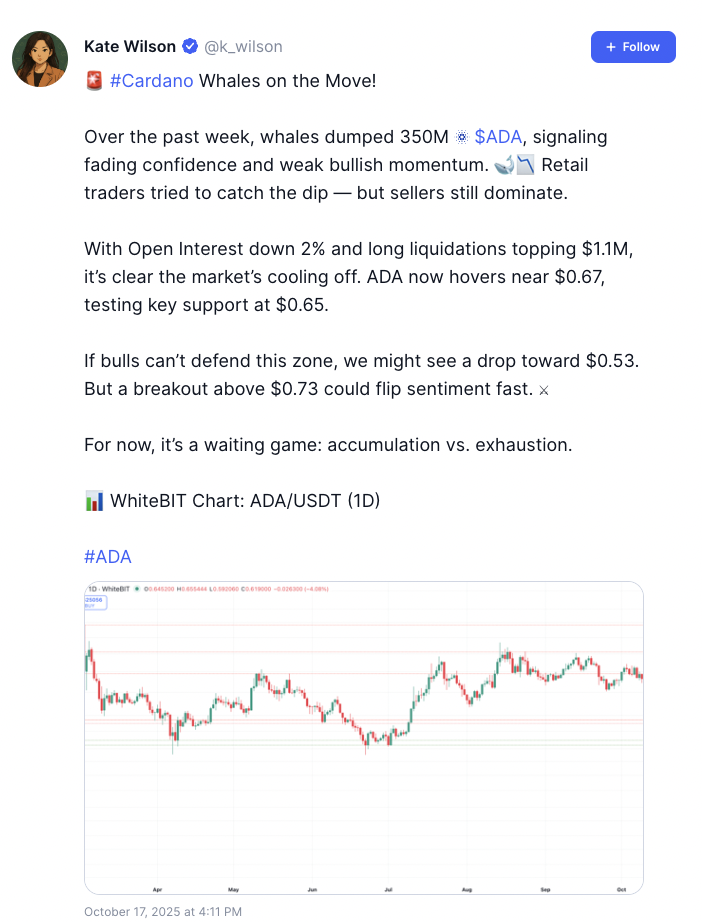
    Cardano price is currently trading around $0.63 and there appears to be an ongoing wave (B) that could potentially lead to a final downward move (wave C). This move for Cardano price toward the support zone between $0.55 and $0.47 hinges on if the resistance area at $0.66–$0.70 continues to prove impossible to bulge.

    This implies that Cardano’s risk-reward is high risk in that in case ADA does not break through the resistance band, then there is increased probability of a retest at the $0.55–$0.47 area which would see the chart flip bearish in the short term.

    However, in the other case, when ADA reclaims and closes out of the $0.66 -$0.70 area it may nullify the deeper pullback and position the next impulse to be more bullish.

    Why Remittix Is Turning Heads as the Alternative Choice

    Enter a new contender that’s stealing the spotlight. This rapidly emerging DeFi project is being tagged by early buyers as “XRP 2.0” in the making, thanks to its payments-rail architecture, cross-chain support, and mobile-first wallet launch scheduled for Q3.

    What you must know: this is not just another token; it’s positioning itself to take the use-case lead that Cardano is losing. Analysts believe the shift of capital is already underway.

    Why this token stands out:

    • International Clout: Cryptocurrency-bank transfer in 30+ countries.
    • Real-World Utility: Built for payments, not speculation
    • Security First: Verified by CertiK and ranked #1 among pre-launch tokens
    • Wallet Launch Q3: Mobile-first experience now in beta with real users testing
    • Strong Liquidity Pipeline: Over $27.5 Million raised + confirmed listings on major centralized exchanges

    If you want to buy RTX tokens and stake a claim in the next big altcoin in 2025, the message is clear: act now, while others are still debating.

    The $250,000 Giveaway + Referral Program : The FOMO Is Real

    Here’s where urgency hits hard. With over 40,000 holders already signed up and 350,000+ entries in the giveaway contest, the Remittix community momentum is building fast. From now, every time you refer a new buyer, you earn 15% of their purchase back in USDT, instantly, claimable daily via your dashboard.

    This isn’t just holding, it’s becoming part of the ecosystem and being rewarded for it. When the listings drop and the wallet goes live, latecomers will be leftovers while early adopters ride the wave. Don’t sit it out and regret watching others win.

    Discover the future of PayFi with Remittix by checking out their project here:

    Website: https://remittix.io/   

    Socials: https://linktr.ee/remittix  

    $250,000 Giveaway: https://gleam.io/competitions/nz84L-250000-remittix-giveaway

    Disclaimer:
    This article is for informational purposes only and does not constitute financial advice. Cryptocurrency investments carry risk, including total loss of capital. Readers should conduct independent research and consult licensed advisors before making any financial decisions.

    Crypto Press Release Distribution by BTCPressWire.com

  • Graffiti companies in the Benelux, a growing creative industry thumbnail

    Graffiti companies in the Benelux, a growing creative industry

    Graffiti has evolved from an underground art form to a respected and professional creative service across the Benelux region,  the Netherlands, Belgium, and Luxembourg. Today, graffiti companies in these countries provide high-quality artwork for private clients, businesses, municipalities, and cultural organizations. From graffiti commissions and murals to graffiti workshops and team-building courses, the industry continues to expand in both scope and professionalism.

    The rise of professional graffiti In The Benelux

    In recent years, graffiti in the Benelux has transformed from street art to a legitimate business sector. Many professional graffiti artists now work through established companies that focus on custom wall paintings, interior and exterior murals, and decorative graffiti art. These organizations often collaborate with architects, schools, and local governments to create inspiring public spaces.

    What once was considered vandalism is now viewed as a form of creative expression that adds color, personality, and storytelling to modern environments. The growing number of graffiti projects shows that this art form has earned a permanent place in the creative economy.

    The role of the graffiti industry association

    To maintain high standards and fair practices, a graffiti industry association was founded in the Benelux. This organization acts as:

    • A Quality Guardian – Ensuring that graffiti companies follow professional guidelines and deliver durable, high-quality results.
    • A Mediator – Serving as a neutral contact point for both clients and artists in case of disputes or communication issues.
    • A Knowledge Center – Providing information, training, and guidance on materials, safety, and sustainable practices.
    • A Network Platform – Connecting artists, companies, and customers to stimulate collaboration and creativity.

    This association helps build trust between clients and graffiti professionals, ensuring that each graffiti commission meets both artistic and technical expectations.

    Types of graffiti services offered

    Graffiti companies across the Netherlands, Belgium, and Luxembourg offer a wide range of creative graffiti services, including:

    • Graffiti Assignments – Tailor-made designs for businesses, events, and private clients.
    • Murals And Wall Paintings – Large-scale art projects on indoor and outdoor surfaces, from office walls to city facades.
    • Graffiti Courses And Workshops – Educational sessions for beginners, schools, and companies focused on creativity, teamwork, and technique.
    • Graffiti Events And Live Painting – Interactive activities where artists perform live at festivals, openings, or corporate events.
    • Restoration and maintenance – Professional cleaning, coating, and preservation of existing artworks.

    Each service combines artistic vision with practical craftsmanship, resulting in visually stunning and long-lasting pieces.

    The future of graffiti in the Benelux

    As public appreciation for street art continues to grow, graffiti companies are increasingly recognized as valuable cultural contributors. Cities and organizations now see graffiti not as a problem but as a solution to revitalize grey walls, prevent unwanted tagging, and promote urban identity.

    The Benelux graffiti industry is a vibrant mix of creativity, entrepreneurship, and professionalism. Thanks to the efforts of the graffiti association and dedicated artists, the future of graffiti art in this region looks colorful, sustainable, and full of new possibilities.

    Graffiti art branche

    Graffiti companies in the Benelux demonstrate how art and business can merge successfully. Through graffiti commissions, murals, and creative workshops, they bring color and inspiration to communities. With an active industry association ensuring quality and transparency, graffiti in the Netherlands, Belgium, and Luxembourg continues to thrive as a respected and evolving art form.

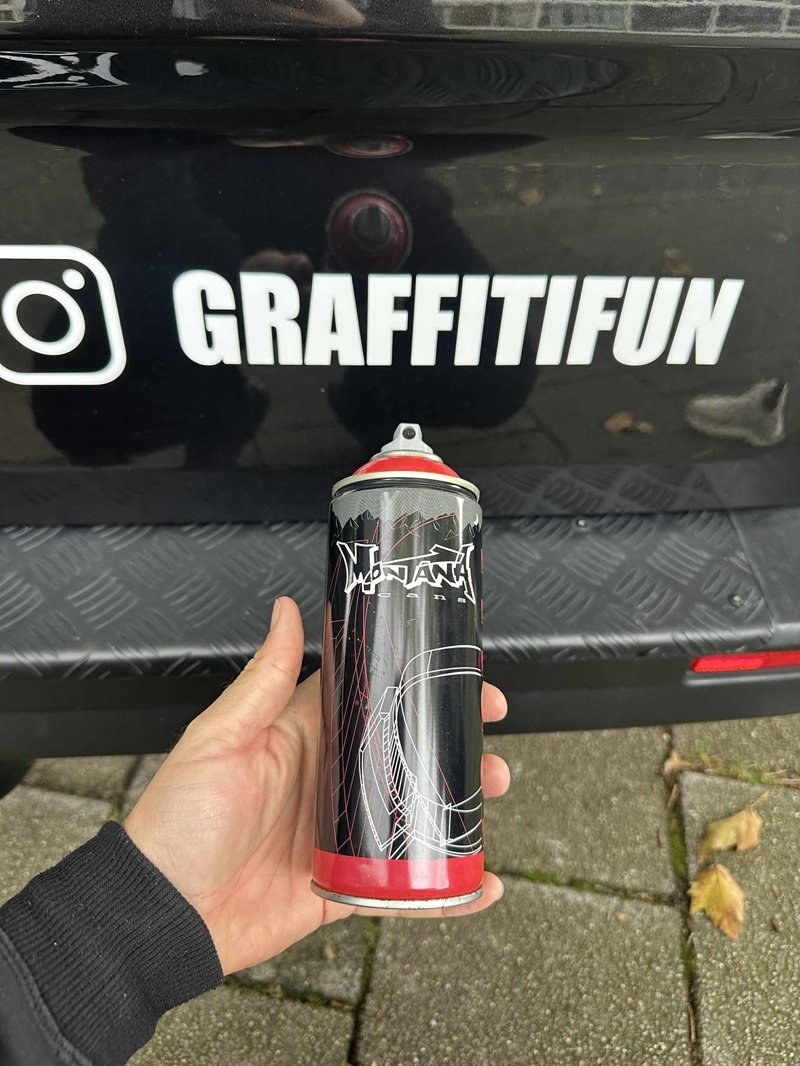
    Well-established providers such as Graffitifun and Personal-Artist are examples of professional graffiti companies that have built a strong reputation through years of experience and dedication. These organizations stand out for their creative expertise, reliable project management, and commitment to safety. They operate with full insurance, professional materials, and certified training, ensuring every mural or graffiti assignment is completed responsibly. Choosing such experienced partners not only guarantees artistic quality but also peace of mind knowing that each project, from small workshops to large-scale wall paintings, is handled with care, professionalism, and long-term durability.

  • Goiter: Causes, Symptoms, and Modern Treatment Options for Thyroid Health

    The thyroid gland, a small butterfly-shaped organ located in the front of the neck, plays an outsized role in maintaining the body’s metabolism, growth, and overall energy balance. When the thyroid gland becomes enlarged—a condition known as goiter—it can be both a medical concern and a source of anxiety for patients. Goiter affects millions of people around the world, making it one of the most common thyroid disorders seen in both developed and developing countries.

    Goiter can result from a variety of causes, ranging from iodine deficiency to autoimmune thyroid diseases. While in some cases it may not cause major symptoms, in others it can lead to visible swelling in the neck, hormonal imbalances, and discomfort while swallowing or breathing.

    At Liv Hospital Istanbul, our team of endocrinologists and thyroid specialists is dedicated to understanding and treating goiter with precision and compassion. In this article, we’ll explore the causes, symptoms, treatment options, and preventive measures for goiter—helping you understand how to maintain optimal thyroid health and when to seek professional care.

    What Is Goiter?

    A goiter is a visible or palpable enlargement of the thyroid gland. The thyroid is part of the endocrine system, responsible for producing vital hormones—thyroxine (T4) and triiodothyronine (T3)—that regulate metabolism, temperature, and energy levels throughout the body.

    When the thyroid becomes overactive (hyperthyroidism) or underactive (hypothyroidism), it may start to grow abnormally. This enlargement is not always painful, but it can indicate an underlying imbalance or deficiency. Depending on its cause and impact, a goiter may be small and harmless or large enough to interfere with normal breathing and swallowing.

    What Causes Goiter?

    Goiter can develop due to multiple underlying factors, and understanding these causes is key to effective diagnosis and management.

    1. Iodine Deficiency

    Iodine is a crucial mineral required for the production of thyroid hormones. In regions where dietary iodine intake is low, the thyroid gland enlarges in an attempt to trap more iodine from the bloodstream. This type of goiter, known as endemic goiter, is still prevalent in certain parts of the world where iodized salt is not routinely used.

    2. Autoimmune Thyroid Diseases

    The immune system can sometimes attack the thyroid gland, leading to autoimmune disorders such as:

    • Graves’ Disease – Causes overstimulation of the thyroid, resulting in hyperthyroidism and enlargement of the gland.
    • Hashimoto’s Thyroiditis – Leads to inflammation and underproduction of thyroid hormones (hypothyroidism), often resulting in goiter as the gland struggles to compensate.

    3. Thyroiditis (Inflammation)

    Inflammation of the thyroid gland, whether caused by infection, autoimmune conditions, or certain medications, can cause swelling and discomfort in the neck.

    4. Hormonal Imbalance

    An imbalance in thyroid-stimulating hormone (TSH)—which regulates thyroid activity—can lead to abnormal growth of the gland.

    5. Nodules and Cysts

    Benign nodules or cysts within the thyroid can contribute to an irregular enlargement known as multinodular goiter.

    6. Genetic and Environmental Factors

    Some individuals have a genetic predisposition to thyroid disorders, while environmental triggers (such as pollutants or radiation exposure) can also increase the risk.

    At Liv Hospital, our endocrinology team uses advanced diagnostic imaging, laboratory hormone tests, and fine-needle aspiration biopsies to identify the root cause of goiter and tailor treatment accordingly.

    Goiter Symptoms

    The symptoms of goiter depend largely on its size, location, and impact on hormone production. Some patients may notice only minor swelling, while others experience more severe effects.

    1. Visible Neck Swelling

    One of the hallmark signs of goiter is a visible lump or swelling at the base of the neck. It may move up and down when swallowing and become more noticeable over time.

    2. Difficulty Swallowing and Breathing

    As the goiter enlarges, it can exert pressure on the esophagus and trachea, causing discomfort, a sensation of tightness, or even difficulty breathing.

    3. Voice Changes

    Pressure on the vocal cords can lead to hoarseness or changes in the voice.

    4. Hormonal Imbalance Symptoms

    Goiter may also cause symptoms related to overactive or underactive thyroid function:

    • Hyperthyroidism: Weight loss, nervousness, heat intolerance, increased sweating, and rapid heartbeat.
    • Hypothyroidism: Fatigue, dry skin, weight gain, sensitivity to cold, and depression.

    5. General Discomfort

    In addition to visible swelling, some patients experience mild pain, tension, or cosmetic concerns that affect self-esteem.

    At Liv Hospital Istanbul, our specialists understand that goiter symptoms can significantly affect daily life. That’s why our approach focuses not only on treating the condition but also on restoring quality of life and emotional well-being.

    Types of Goiter

    Understanding the different types of goiter helps determine the right course of treatment.

    1. Diffuse (Simple) Goiter

    The entire thyroid gland enlarges evenly without forming distinct nodules. It often arises due to iodine deficiency or hormonal imbalance.

    2. Nodular Goiter

    Characterized by one or more nodules within the gland. When multiple nodules form, it’s called a multinodular goiter. These nodules are usually benign but may require evaluation to rule out malignancy.

    3. Toxic Goiter

    Occurs when the enlarged gland produces excess thyroid hormones, leading to hyperthyroidism. It is commonly associated with Graves’ disease or toxic multinodular goiter.

    4. Non-Toxic (Euthyroid) Goiter

    In this type, thyroid hormone levels remain normal even though the gland is enlarged.

    Each case requires a personalized approach, combining medical evaluation, imaging, and laboratory testing to ensure precise diagnosis.

    Goiter Treatment Options

    The treatment of goiter depends on its cause, size, and symptoms. Not every goiter requires aggressive treatment; however, monitoring and proper medical evaluation are essential.

    1. Observation and Monitoring

    For small, non-symptomatic goiters, periodic check-ups and ultrasound imaging may be recommended to track changes in size and function.

    2. Medications

    • Antithyroid Drugs: For patients with hyperthyroidism, medications like methimazole can help control hormone production and shrink the gland.
    • Hormone Replacement Therapy: In hypothyroid goiter, synthetic thyroid hormones (levothyroxine) are prescribed to normalize levels and prevent further enlargement.
    • Iodine Supplementation: In iodine-deficient regions, iodine tablets or iodized salt can reverse early-stage goiter.

    3. Radioactive Iodine Therapy

    Used primarily for hyperthyroidism, this therapy involves taking a small dose of radioactive iodine that selectively destroys overactive thyroid cells, reducing gland size and hormone output.

    4. Surgical Treatment (Thyroidectomy)

    When goiter causes significant pressure symptoms, cosmetic concerns, or suspicion of cancer, thyroidectomy (surgical removal of part or all of the thyroid) becomes the best option.
    At Liv Hospital Istanbul, thyroid surgery is performed with advanced minimally invasive techniques, ensuring safety, precision, and faster recovery.

    Goiter Removal: Understanding Thyroidectomy

    Thyroidectomy is a delicate procedure that may involve partial or total removal of the thyroid gland. It is often recommended in the following cases:

    • Large goiters causing breathing or swallowing problems
    • Suspicion or diagnosis of thyroid cancer
    • Ineffectiveness of medical therapy
    • Cosmetic concerns affecting quality of life

    Modern surgical techniques, such as endoscopic and robotic-assisted thyroidectomy, minimize scarring and improve postoperative outcomes. At Liv Hospital, our surgeons combine precision with patient comfort, offering both aesthetic and functional success.

    How to Shrink a Goiter Naturally

    In mild cases, lifestyle changes and nutrition can support thyroid health and potentially reduce goiter progression.

    1. Dietary Adjustments

    Include foods rich in iodine such as:

    • Seaweed and fish (especially salmon and tuna)
    • Dairy products (milk, yogurt, cheese)
    • Iodized salt in moderate amounts

    Avoid excessive consumption of goitrogenic foods (like raw cabbage, broccoli, or soy) if you have iodine deficiency, as they may interfere with thyroid hormone synthesis.

    2. Micronutrient Support

    Essential nutrients such as selenium, zinc, and iron support thyroid function. Nuts, seeds, and whole grains are excellent natural sources.

    3. Herbal Support

    Traditional herbs such as guggul, ashwagandha, and bladderwrack have been studied for their potential benefits in supporting thyroid balance, though they should always be used under medical guidance.

    4. Stress Management

    Chronic stress can disrupt hormone balance. Practices like yoga, meditation, and deep breathing exercises can enhance thyroid health by supporting hormonal harmony.

    Important Note:

    Natural remedies can complement medical treatment but should never replace professional care. Always consult your doctor before making any changes to medication or diet.

    Diagnosing Goiter: How Doctors Evaluate the Condition

    Proper diagnosis involves a series of evaluations to determine the cause and impact of the enlargement.

    • Physical Examination: The doctor palpates the neck to feel for swelling or nodules.
    • Blood Tests: Measure levels of thyroid hormones (T3, T4) and TSH to assess thyroid function.
    • Ultrasound Imaging: Determines the size, shape, and presence of nodules.
    • Fine-Needle Aspiration (FNA): Used to sample thyroid tissue if nodules appear suspicious.
    • CT or MRI Scans: In large or retrosternal goiters, imaging helps evaluate airway compression or deeper growth.

    Liv Hospital’s Endocrinology Department combines these tools with advanced laboratory diagnostics to deliver precise, personalized care for every patient.

    Prevention: How to Protect Your Thyroid Health

    1. Maintain Adequate Iodine Intake – Use iodized salt and include seafood in your diet.
    2. Regular Thyroid Screening – Especially important for individuals with a family history of thyroid disorders.
    3. Avoid Unnecessary Radiation Exposure – Especially around the neck and chest.
    4. Manage Stress and Nutrition – Balanced living supports healthy hormone regulation.
    5. Seek Early Medical Advice – Early detection of thyroid enlargement prevents complications.

    Liv Hospital Istanbul: Your Trusted Destination for Goiter and Thyroid Care

    At Liv Hospital Istanbul, our multidisciplinary thyroid team includes experienced endocrinologists, surgeons, radiologists, and nutrition experts working together to provide comprehensive thyroid care. We specialize in both medical and surgical management of goiter using cutting-edge technology and internationally accredited standards.

    Patients from around the world choose Liv Hospital for:

    • Personalized care plans
    • Minimally invasive surgical techniques
    • Advanced diagnostic imaging
    • Comprehensive post-treatment follow-up

    Whether you are exploring non-surgical options or need expert evaluation for thyroid surgery, Liv Hospital offers compassionate and effective solutions tailored to your needs.

    Conclusion: Take Charge of Your Thyroid Health

    Goiter may seem daunting, but with the right knowledge, medical support, and lifestyle habits, it is a manageable and treatable condition. Understanding the causes, symptoms, and treatments allows you to make informed choices that protect your thyroid and overall well-being.

    If you suspect you may have a thyroid disorder or are experiencing symptoms of goiter, consult a qualified endocrinologist.
    For trusted and advanced care, visit Liv Hospital Istanbul’s comprehensive goiter guide — and take the first step toward restoring your thyroid health and vitality

  • Who is Emil Bedretdinov? Founder of THE DNA GROUP and Hospitality Entrepreneur thumbnail

    Who is Emil Bedretdinov? Founder of THE DNA GROUP and Hospitality Entrepreneur

    Emil Bedretdinov, also known as Emil E7, is a hospitality entrepreneur best known as the founder and CEO of THE DNA GROUP, an international hospitality holding based in Dubai. His story is one of persistence, strategy, and passion for creating experiences that connect people.

    He started in the industry at just 15, washing dishes at IKEA. Two years later, he was promoting nightclubs, organizing events, and leading his first promotional group. These early years gave him hands-on experience in operations, marketing, and guest management skills that later defined his leadership approach. The early loss of his father placed great responsibility on his shoulders and shaped his discipline and resilience, which became central to his work ethic.

    Early Life and Education

    Emil Bedretdinov often credits his parents and grandparents for instilling values of persistence and responsibility. His path through hospitality wasn’t accidental; it was shaped by curiosity and the drive to learn every aspect of the industry. He attended both public and private schools, later graduating from the State University of Management with a degree in Advertising. In 2021, he earned his Doctor of Business Administration (DBA), continuing his lifelong commitment to education.

    Each year, he invests over $200,000 in executive programs, business courses, and coaching to expand his knowledge and refine his leadership style.

    The DNA GROUP: Building Systems That Last

    In 2007, Emil Bedretdinov founded THE DNA GROUP, which has since grown into a team of more than 120 professionals operating across four countries. Headquartered in Dubai, the company designs and manages hospitality concepts for global markets.

    The group is known for creating new venues as well as transforming underperforming businesses. Its mission is simple but ambitious — to create positive emotions through experiences grounded in human values. Since its founding, THE DNA GROUP has worked on more than 800 projects, ranging from boutique events to international collaborations with media and celebrities.

    Beyond the core company, Emil Bedretdinov has founded or co-founded ElitE7Jet, Emil E7 Events, Shakti by Emil E7, and E7.DIGITAL, extending his expertise across different sectors linked to hospitality and lifestyle.

    Papa Dubai and Papa Moscow: Turning Vision Into Success

    Among THE DNA GROUP’s flagship projects are Papa Dubai and Papa Moscow, two venues that perfectly represent Emil Bedretdinov’s strategic approach. When he joined as a partner, both spaces were struggling to find their identity. Through thoughtful redesign, innovative programming, and a focus on consistent service, he successfully repositioned both into leading nightlife destinations.

    These venues capture the essence of modern hospitality — where gastronomy, music, design, and storytelling merge into one experience. For Emil Bedretdinov, hospitality is not just about entertainment but about evoking emotion and creating memories.

    Leadership Philosophy

    Emil Bedretdinov describes hospitality as one of the most complex industries in the world — one that demands excellence in logistics, branding, production, and guest relations. His philosophy centers on systems and structure rather than chance. “Long-term value creation matters more than short-term profit,” he says. “Only systems scale, not luck.”

    He highlights the importance of decision-making speed, team alignment, and adaptability in a constantly changing market. For him, success depends on leadership that blends analysis with intuition and the ability to shift direction when strategies stop working.

    Recognition and Media

    Emil Bedretdinov’s contributions have been widely recognized. He has received awards including Hospitality Entrepreneur of the Year from Entrepreneur Middle East, Emirates’ Best F&B Entrepreneur, and UAE’s Best Hospitality Group CEO. His work has also been featured in UAE Stories, CEO Weekly, and The American Reporter, among others.

    Despite his success, he measures accomplishment not by awards but by guest satisfaction, team growth, and long-term partnerships.

    Vision for the Future

    Looking ahead, THE DNA GROUP is developing two major new concepts. One combines fine dining with immersive theater, while the other — a “phygital lounge” — blends digital technology with physical experience to redefine modern nightlife.

    Short-term priorities include strengthening the group’s presence in Dubai and Riyadh, while the long-term goal is to grow THE DNA GROUP into a globally recognized hospitality company valued at over $1 billion.

    Beyond Business

    For Emil Bedretdinov, success also means balance. He believes harmony between family, health, and work creates the foundation for productivity and clarity. Outside of business, he’s passionate about football, travel, history, and contemporary art, which often inspire his professional creativity.

    He describes motivation as the constant feeling of unfinished work and energy as a form of capital — something to be managed with discipline and care. His advice to young professionals entering the industry is simple: avoid chasing quick wins, focus on relationships, and build systems that create real value.

    Final Thoughts

    From his first job as a dishwasher to leading one of Dubai’s most dynamic hospitality groups, Emil Bedretdinov has built a career rooted in discipline, innovation, and people-first leadership. His journey reflects the evolution of modern hospitality where experience is everything and structure makes it possible.

  • Kuardin Leads the Next Era of Transparent Global Trade with AI and Blockchain Integration

    Across international trade and logistics, inefficiency, opacity, and fraudulent practices continue to drain industries of trillions each year. Kuardin is emerging with a powerful, future-ready solution—extending its decentralized, secure infrastructure beyond consumer payments to revolutionize global logistics and B2B operations.

    This strategic expansion positions Kuardin not merely as a retail payment innovator but as a foundational system for tracking, verifying, and authenticating goods across industries. By integrating artificial intelligence with blockchain technology, Kuardin is developing a unified, immutable, and globally accessible ledger—capable of tracing each product from raw materials to the end consumer.

    Building Trust Across Global Industries

    Kuardin’s decentralized ledger and smart contract architecture resolve many of the persistent challenges within traditional supply chains:

    End-to-End Product Traceability
    Each product receives a unique digital identity (NFT) at its origin. Every step—shipment, inspection, custody transfer, or IoT sensor update—is permanently recorded on the Kuardin blockchain. This ensures full visibility, prevents data fragmentation, and establishes an unalterable record of authenticity.

    Smart Contract Automation
    Through self-executing smart contracts, Kuardin replaces manual paperwork with automated processes that release payments, validate audits, or approve shipments once specific conditions are met. This innovation eliminates administrative delays, reduces human error, and limits opportunities for corruption.

    AI-Powered Quality Monitoring
    Kuardin’s AI system continuously analyzes on-chain data, identifying potential risks such as irregular routes, temperature fluctuations, or inventory mismatches. This proactive monitoring enables early detection and intervention, safeguarding supply chain reliability and product quality.

    KRN: The Economic Engine of Industrial Transparency

    At the heart of this infrastructure lies KRN, the utility asset driving Kuardin’s industrial network and incentivizing stakeholder collaboration:

    Protocol Fees
    Manufacturers, logistics firms, and distributors use KRN to record data, trigger smart contracts, and operate securely across the decentralized network.

    Incentivized Data Sharing
    Participants are rewarded in KRN for contributing transparent, verifiable data—strengthening trust and ensuring network-wide data accuracy.

    Decentralized Supply Chain Financing
    By linking authenticated on-chain logistics records to financial institutions, Kuardin enables faster and fairer credit access for suppliers—backed by immutable proof of performance and delivery.

    The Future of Transparent Global Trade

    Through its fusion of AI and blockchain, Kuardin is bridging the gap between physical logistics and digital verification. This groundbreaking model redefines efficiency, accountability, and security across industries—setting a new global standard for transparency and reliability in trade.

    Kuardin’s vision is clear: to serve as the foundational ledger of trust powering the next generation of intelligent, interconnected global commerce.

    For full details, roadmap, and documentation, visit: https://kuardin.com

    Disclaimer:
    This press release is for informational purposes only and does not constitute an offer to sell, a solicitation to buy, or financial advice regarding any digital asset, product, or service. Readers are encouraged to conduct their own research and consult qualified professionals before making any financial or technological decisions. Kuardin makes no guarantees regarding future performance, adoption, or value

  • Gateway Is Reshaping Global Ocean Freight Through Automation, Data, and Wholesale Power thumbnail

    Gateway Is Reshaping Global Ocean Freight Through Automation, Data, and Wholesale Power

    The global ocean freight industry — responsible for moving over 90% of the world’s trade — remains one of the most complex and outdated sectors of commerce. Decades of manual coordination, fragmented systems, and markup-driven pricing have kept supply chains slow and expensive.

    Gateway, a U.S.–based ocean freight technology company, is taking a different approach. Gateway combines automation, artificial intelligence, and wholesale pricing control to simplify global shipping while making it dramatically more cost-efficient.

    A New Era of Ocean Freight Technology

    Gateway integrates everything it takes to move freight across the ocean — customs compliance, e-filing, documentation, rate management, port coordination, and live container tracking — into a single, intelligent platform. What once took weeks of manual work can now be executed in minutes, driven by automation, data, and smart decision systems.

    The company’s platform is designed not just for visibility, but for total process control. Users can generate quotes, secure bookings, file compliance documents, and manage entire shipping operations through one seamless interface — a complete digital ecosystem built around efficiency, accuracy, and transparency.

    The Power of the Wholesale Model

    What truly separates Gateway from digital freight forwarders and TMS providers is its business model. Gateway buys container space wholesale directly from global ocean carriers and sells it retail or slightly below market, powered by automation that controls margin and optimizes volume.

    This structure gives Gateway full control over pricing and capacity — allowing it to offer freight rates up to 60% below industry averages while maintaining healthy margins. The technology remains free for customers, creating a self-sustaining loop where automation fuels scale, and scale drives cost advantage.

    In addition to container transactions, Gateway monetizes supporting layers of the supply chain — including document and filing automation and customs brokerage referrals — turning what were once friction points into integrated revenue channels. The result is a system that merges technology, trade, and margin efficiency into one scalable platform.

    Automation Meets Global Scale

    Gateway’s expansion strategy focuses on activating higher-tier carrier partnerships and scaling its automation infrastructure to handle growing container volumes across major trade lanes. With wholesale contracts secured from leading shipping lines, the company is positioned to control both cost and capacity at a level typically reserved for top-tier forwarders and carriers.

    The broader impact is significant: shippers and importers can save $200 to $500 per container, while gaining full automation, transparency, and regulatory compliance. By integrating data intelligence into each stage of shipment, Gateway ensures both cost reduction and better operational performance for clients worldwide.

    A Future-Driven Vision for Global Trade

    Gateway Lines represents the convergence of logistics infrastructure and technology. Its combination of automation, data insight, and wholesale control allows global freight to move faster, cheaper, and more predictably — without sacrificing reliability or compliance.

    As international trade faces increasing demand for efficiency, transparency, and sustainability, Gateway is building the foundation for what comes next: a fully connected, automated, and cost-controlled ocean freight network.

    For more information, visit www.gatewaylines.com or contact sales@gatewaylines.com.

  • Cardano Price Prediction Revised Downwards as All Eyes Turn to Digitap’s ($TAP) Path to $20 thumbnail

    Cardano Price Prediction Revised Downwards as All Eyes Turn to Digitap’s ($TAP) Path to $20

    Cardano Price Prediction Revised Downwards as All Eyes Turn to Digitap's ($TAP) Path to $20

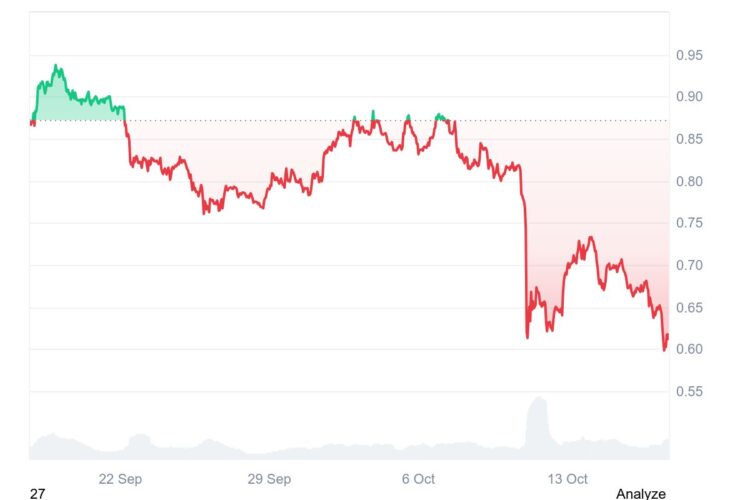
    Cardano (ADA) has struggled to maintain its bullish rhythm this quarter, slipping below key resistance levels as investors reassess growth expectations. At around $0.62, ADA’s price has seen downward revisions from analysts who were once eyeing a breakout to $1.

    Yet, while Cardano cools, a new name is quickly grabbing attention— Digitap ($TAP), a hybrid crypto-banking project that’s turning early-stage momentum into one of the most closely watched presales of 2025.

    Cardano’s $0.60 Line in Focus as Traders Gauge Next Move

    Cardano Price Prediction Revised Downwards as All Eyes Turn to Digitap's ($TAP) Path to $20

    ADA’s chart paints a mixed picture. After months of sideways accumulation, the token recently lost momentum above the $0.70 mark, retreating toward the $0.60–$0.58 range where buyers previously stepped in. Technically, this remains a critical support zone — a break below it could signal another leg lower toward $0.52, where long-term moving averages cluster.

    Market conditions aren’t in Cardano’s favor right now. Bitcoin’s growing dominance and the shift of capital toward newer, faster-moving projects have left ADA struggling to keep momentum. Network activity is slowing, volume is down, and without a strong reversal above key resistance, the token could stay locked in consolidation well into Q4.

    Cardano Forecast — What Crypto Analysts Expect

    Market sentiment around Cardano has softened, with analysts trimming expectations in the near term.

    Cardano Price Prediction Revised Downwards as All Eyes Turn to Digitap's ($TAP) Path to $20

    CoinEdition analysts echoed a similar caution in a recent market update, noting that ADA “is holding key support while traders eye a $1 breakout,” but that momentum has cooled, prompting a revised short-term target of $0.85 as risk appetite fades.

    How Digitap’s Rising Presale Stages Signal Early Strength

    While legacy altcoins consolidate, Digitap has emerged as one of the most ambitious new entrants in the crypto-fintech space. The project is building what it calls a “crypto omnibank” — a platform designed to merge decentralized finance with traditional banking.

    Cardano Price Prediction Revised Downwards as All Eyes Turn to Digitap's ($TAP) Path to $20

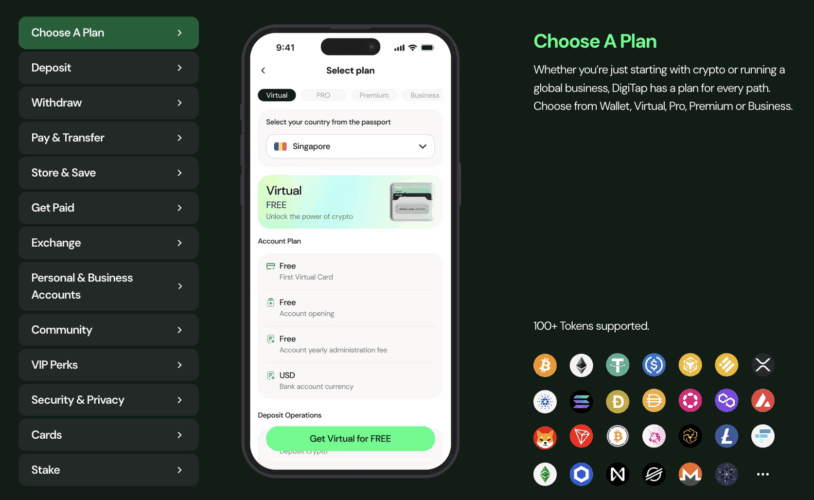
    Through Digitap, users can manage both fiat and crypto in a single interface, send money across borders, and even spend digital assets using Visa-backed cards. Its integrated ecosystem also includes multi-chain wallets, staking tools, and instant conversions between over 20 fiat currencies and 100+ cryptocurrencies.

    The line between banks and blockchains is getting thinner. Digitap wants to make crossing it effortless — a single platform where crypto feels as smooth and reliable as cash. As more people adopt digital assets, the call for simple, regulated tools is getting louder, and Digitap is stepping up to fill that need.

    $TAP’s Early Momentum Builds

    Its presale performance has reflected that confidence. In total, $784,000 has been raised, and over 60 million tokens have been sold. Speaking of price, starting at $0.0125, $TAP advanced through stages at $0.0159 and $0.0194, and the next round is set for $0.0268.

    This steady increase clearly shows strong investor appetite and disciplined tokenomics.

    With each presale phase, Digitap’s valuation compounds logically, building anticipation for launch, where many see a fair entry range above $0.05–$0.08.

    Looking further ahead, early projections hint at long-term potential reaching into the double digits — with $20 cited as an ambitious yet plausible target if Digitap successfully executes its vision of a global crypto-finance bridge.

    Cardano Price Prediction Revised Downwards as All Eyes Turn to Digitap's ($TAP) Path to $20

    How Risk and Timing Define ADA’s vs. $TAP’s Potential

    Both ADA and $TAP face familiar market risks: volatility, liquidity shifts, and shifting investor attention. For Cardano, the question is whether it can hold the $0.60 floor and rebuild strength. For Digitap, the challenge lies in scaling globally while navigating compliance and execution milestones.

    But the contrast in positioning is striking. ADA represents a mature network in a consolidation phase, while Digitap represents early-stage asymmetry — where small capital can still meet outsized opportunity.

    If the current presale trajectory continues, Digitap could enter the market not as another speculative token, but as a functional bridge between two trillion-dollar systems — crypto and traditional finance.

    USE THE CODE “LIVEAPP30” FOR 30% OFF FIRST-TIME PURCHASES

    Why Traders Are Watching $TAP While ADA Consolidates

    Cardano’s cautious setup contrasts sharply with the momentum narrative forming around Digitap. ADA’s revised outlook reflects consolidation, while $TAP’s tiered presale shows structured growth and strong community conviction.

    As the crypto-finance industry pivots toward usability and interoperability, Digitap embodies the next step — banking-grade infrastructure for a decentralized world.

    For traders, the message is clear: watch ADA’s base, but follow where liquidity — and innovation — are flowing. Digitap’s path to $20 might be a snapshot of where crypto’s next growth story begins.

    Discover how Digitap is unifying cash and crypto by checking out their project here:

    Presale: https://presale.digitap.app

    Website: https://digitap.app

    Social: https://linktr.ee/digitap.app

    Disclaimer:
    This article is for informational purposes only and does not constitute financial advice. Cryptocurrency investments carry risk, including total loss of capital. Readers should conduct independent research and consult licensed advisors before making any financial decisions.

    Crypto Press Release Distribution by BTCPressWire.com

  • The Rise of the Internet of Things (IoT): how everyday objects got a little smarter thumbnail

    The Rise of the Internet of Things (IoT): how everyday objects got a little smarter

    Imagine your coffee maker knowing when you wake up, your street lamps dimming when no one’s around, and a factory fixing a broken machine before it causes a production halt all because devices quietly talk to each other. That’s the Internet of Things (IoT): everyday things equipped with sensors, connectivity, and a little smarts. It’s not magic. It’s sensors, networks, and software working together and it’s changing how we live and work.

    Below I’ll walk you through the current state of IoT, why businesses care, the real risks to watch, and simple steps you can take without getting lost in jargon. Think practical, human, and backed by recent research.

    IoT by the numbers: the scale is real

    IoT is no longer a niche experiment. In 2023 there were roughly 16.6 billion connected IoT devices, and analysts expected that to rise to about 18.8 billion by the end of 2024 with continued growth into 2025 and beyond. That’s billions of sensors collecting data on health, transport, buildings, and factories. 

    Money follows scale. The IoT market was valued in the hundreds of billions in recent years and analysts project robust growth through the end of the decade, driven by enterprise adoption and new services around data and automation. These market trends explain why big tech, telecoms, and industries are all investing heavily. 

    Why organizations are adopting IoT: real benefits, not just buzzwords

    When IoT is done right, it touches four key business levers: visibility, efficiency, safety, and new revenue.

    Visibility and better decisions

    Sensors turn the invisible visible. In supply chains, IoT gives managers real-time location and condition data so they can spot delays, temperature excursions, or suspicious handling immediately. That reduces waste and speeds up corrective action.

    Efficiency and predictive maintenance

    A factory that monitors vibration, temperature, and power draw can spot a bearing wearing out before it seizes. That’s predictive maintenance fewer surprises, less downtime, and noticeable cost savings. IoT-driven maintenance programs are among the most common and highest-ROI use cases enterprises report. In fact, a recent industry report found that 92% of enterprises reporting IoT use cases saw a positive ROI from projects that’s not small talk; it’s hard-dollar impact. 

    Safety and compliance

    Wearables and environmental sensors improve worker safety alerting teams to hazardous conditions, tracking exposure, and providing audit trails for regulators.

    A short, human example

    A mid-sized cold-storage company I know attached temperature sensors to pallet racks. Once temperatures drifted, the system sent a text alert and re-routed affected pallets automatically. They avoided a costly spoilage event and learned how small sensors can save big headaches.

    Where IoT is making the biggest impact

    Manufacturing (Industry 4.0): Real-time monitoring, robotics coordination, and remote diagnostics.

    Supply chain & logistics: Tracking, condition monitoring (temperature/humidity), and customs automation.

    Smart buildings & cities: Energy savings, predictive maintenance for utilities, and safer streets.

    Healthcare: Remote monitoring, asset tracking, and clinical trial data capture.

    These are not sci-fi experiments. Many companies are already in pilot or production phases and shifting budgets toward IoT investments. 

    The ugly truth: security, connectivity, and data quality

    IoT brings huge benefits but also new risks. Let’s be blunt.

    Security is the weak link

    IoT-powered entertainment systems, such as smart TVs and streaming devices used for platforms like iQIYI, often prioritize convenience over security. Studies show that millions of these devices trigger billions of security events daily — a clear sign that vulnerabilities in consumer tech remain widespread. Unpatched devices, default passwords, and insecure update paths are frequent problems. Those weak links become entry points into larger networks.

    Connectivity resilience is rare

    A surprising finding from a 2024 industry report: less than 0.5% of businesses in the U.S. and U.K. achieve true connectivity resilience for IoT meaning most organizations are still fragile when networks fail. That’s a big deal: if your devices can’t reliably talk, critical automation and safety systems can stop working. 

    Garbage in, garbage out

    Blockchain or ledger aside, IoT cannot guarantee that the data it records was correct at the source. Poorly calibrated sensors, misconfigured devices, or incorrect metadata can produce trusted-but-wrong records. That’s why pairing IoT with good data governance and validation matters.

    How to build IoT projects that actually work 

    If you’re thinking about IoT for your business, follow these practical steps:

    Start with a clear business problem

    Don’t buy sensors because they’re cool. Start with the problem: “We have X downtime per month” or “we lose Y% of shipments to spoilage.” Problems with measurable cost or risk are the best first pilots.

    Design for security from day one

    Change default credentials.

    Ensure devices support secure updates.

    Segment IoT networks away from corporate systems.
    Security retrofits are expensive; plan it in from the start.

    Choose the right connectivity and redundancy

    Understand coverage, latency, and cost. For critical systems, build fallbacks (local logic, cached data, multiple carriers).

    Pilot fast, measure rigorously

    Run time-boxed pilots with clear KPIs (cost saved, downtime reduced). If a pilot can’t show measurable benefit in a quarter or two, either iterate fast or cut your losses.

    Think about scale and management

    According to Coyyn.com’s insights, device lifecycle management is now a critical component of fintech security. From secure onboarding to continuous monitoring and responsible decommissioning, partnering with cloud-based management services helps financial organizations maintain compliance and reduce risk.

    The future: more data, better decisions, and smarter automation

    IoT will keep growing more devices, smarter edge computing, and better integration with AI. Expect tighter coupling between sensors and automated decision systems: imagine supply chains that self-heal, buildings that orchestrate comfort and energy savings continuously, and healthcare that spots early warning signs from wearables.

    But the winners won’t be the ones who buy the most sensors. The winners will be the teams that combine clear problems, disciplined pilots, strong security, and reliable connectivity.

    Final thought:

    IoT is democratically powerful: cheap sensors, smart software, and cloud analytics let small teams solve big problems. But it’s also easy to get dazzled by dashboards and forget the basics connectivity resilience, data quality, and security.

    If you have starting today, be practical: define problems, secure devices, measure outcomes, and scale only after you have proven value. Do that, and you’ll find IoT turning small investments into real business advantages and maybe avoiding a sleepless call about a spoiled pallet at 2 AM.

  • Best Social Media Management Tools in 2025 thumbnail

    Best Social Media Management Tools in 2025


    Social media has risen far beyond another marketing channel. All brands, creators, and companies have made it their main point of interaction with the world. Managing it effectively in 2025 requires more than timely posting. Visibility needs to stay consistent. Engagement must feel genuine. Your brand voice should remain uniform across all platforms.

    The real challenge comes from handling multiple accounts simultaneously. Teams manage different campaigns. Various platforms demand attention. Best Social media management tool solve these problems. Planning becomes simpler. Monitoring gets easier. Scheduling runs automatically. Analytics provide clarity. This lets you concentrate on what truly drives results: connecting with your audience and expanding your reach.

    Businesses today don’t question whether they need a management tool. They ask which one fits best. AI automation has become standard. Performance analytics are expected. Advanced comment moderation is now essential. The market offers more choices than ever before. The following are the ten tools defining social media success in the year.

    Why Social Media Management Tools Matter in 2025

    These are the struggles that social media managers have to deal with on a daily basis. Making various account entries is time-consuming. Alerts keep on flooding in. Developing material, publishing it, and commenting is done on various platforms. Tools transform this chaos into organized workflow.

    Their benefits include:

    • Time gets saved through automation and batch scheduling
    • Brand consistency improves by keeping tone and visuals aligned
    • Audience insights become clearer with advanced analytics dashboards
    • Collaboration runs smoother across teams and agencies
    • Brand safety stays protected through monitoring and moderation features

    Analytics drive most company decisions in 2025. The right tool does more than simplify posting. It reveals audience behavior patterns. Campaign optimization becomes possible. Engagement happens more effectively.

    Key Features to Look For

    There are four key components that are important to consider this year in social media tools:

    1. Unified Dashboard –Have Facebook, Instagram, LinkedIn, X, TikTok, and other platforms under the same management.
    2. AI-Powered Analytics – Engagement trends and sentiment analysis are shown in real-time.
    3. Content Scheduling & Automation – Planning allows scheduling up months in advance and automatically postings on the best engagement times.
    4. Comment Moderation – Brand protection from spam, hate, or irrelevant chatter becomes essential.

    Other features that would be of interest are personalized reporting, hashtag tracking, tracking of influencers and CRM integration.

    Top 10 Best Social Media Management Tools in 2025

    1. SocialMediaManagement.app

    Description

    SocialMediaManagement.app dominates the industry in 2025. New brands, designers, and agencies that need both accuracy and ease of use utilize this platform. The most interesting aspect of it is its AI-based comment moderation system that blocks spam or offensive comments immediately.

    This platform goes beyond older scheduling tools. It provides a complete command center. Publishing, engagement analysis, and everything between, happens inside a clean interface.

    Key Features

    • AI-based comment disabling and moderation
    • Comprehensive analytics dashboard with engagement metrics and audience behavior tracking
    • Multi-platform scheduling and publishing
    • Real-time monitoring with sentiment tracking
    • Bulk post uploads for campaigns
    • Collaboration tools for teams and agencies

    Pricing

    Tiered pricing serves individuals, small teams, and enterprises. Scalability comes without hidden costs.

    Use Case

    A mid-size fashion brand moderated over 10,000 monthly comments using SocialMediaManagement.app. Engagement improved by 42% within 60 days. Spam comments dropped to nearly zero. The tool’s reliability in protecting online communities got proven.

    Learn how to turn off comments on a Facebook post to protect your brand and maintain a positive page environment. This guide explains easy steps and smart tools that help businesses manage conversations and keep their Facebook posts clean and professional.

    2. Comment Guard

    Description

    Comment Guard dedicates itself entirely to comment management and protection. Creators and businesses exhausted by spam or negativity under Facebook and Instagram posts find this powerful.

    Key Features

    • Automatic hiding or deletion of spam and offensive comments
    • Keyword and sentiment detection powered by AI
    • Real-time monitoring of all posts
    • Customizable rules for brand-specific moderation needs

    Pricing

    Tiered pricing varies based on the number of pages and posts monitored.

    Use Case

    An influencer agency moderated multiple brand campaigns using Comment Guard. Hundreds of manual hours got saved each month. Brand pages maintained professional standards.

    3. Sprout Social

    Description

    Sprout Social maintains its position as a heavyweight for enterprise-level users. Rich analytics and customer relationship features define its reputation. Large teams handling complex campaigns find it ideal.

    Key Features

    • Unified inbox and CRM integration
    • Performance analytics with trend visualization
    • Team collaboration and workflow management

    Pricing

    Premium pricing targets mid-sized to large businesses.

    Use Case

    A fintech brand unified customer messages from five channels using Sprout. Response speed increased by 60%.

    4. Hootsuite

    Description

    Hootsuite is the first social media management tool that was developed more than ten years ago and continues to grow. In 2025, campaign planning, ad control, and AI analytics are all housed under a single roof.

    Key Features

    • Advanced post scheduling and social listening
    • Paid campaign integration
    • Bulk upload and approval workflows

    Pricing

    Multiple tiers span from small-business to enterprise levels.

    Use Case

    A marketing agency cut client posting time per account by 50% through Hootsuite’s batch scheduler.

    5. Buffer

    Description

    Buffer emphasizes simplicity and clean analytics. Creators and small brands appreciate this focus.

    Key Features

    • Easy-to-use scheduling interface
    • Built-in engagement tracking
    • Browser plug-ins for content sharing

    Pricing

    Free basic tier exists alongside affordable pro plans.

    Use Case

    A travel vlogger doubled reach after scheduling visual content across Facebook, Instagram, and X using Buff

    6. Agorapulse

    Description

    Agorapulse excels at community management. Analytics and inbox organization combine for brands managing large audiences.

    Key Features

    • Unified social inbox with tagging
    • ROI and ad campaign reports
    • Competitor benchmarking

    Pricing

    Mid-range pricing suits teams well.

    Use Case

    A retail brand reduced customer query response time from hours to under 30 minutes through Agorapulse.

    7. Zoho Social

    Description

    Zoho Social is a part of the Zoho ecosystem. This is attractive to data-driven organizations that are already using Zoho CRM or Desk.

    Key Features

    • Smart scheduling and analytics
    • Collaboration for client approvals
    • Deep CRM integration

    Pricing

    Budget-friendly plans serve startups and agencies.

    Use Case

    A consulting firm synced social data with CRM leads. Conversion tracking accuracy improved significantly.

    8. Sendible

    Description

    Sendible targets marketing agencies juggling multiple clients. White-labeled dashboards and automation define its offering.

    Key Features

    • Smart queues for recurring posts
    • Automated reports for clients
    • Branded dashboards with permissions

    Pricing

    Scaled plans depend on users and profiles.

    Use Case

    An agency reduced reporting time by 70% through Sendible’s automated analytics exports.

    9. Later

    Description

    Later specializes in visual storytelling. Instagram, TikTok, and Pinterest users benefit most.

    Key Features

    • Drag-and-drop visual content calendar
    • Hashtag and UGC tracking
    • Link-in-bio tools for commerce

    Pricing

    Pricing remains accessible for small businesses and creators.

    Use Case

    A skincare brand increased user-generated content shares by 25% through Later’s visual scheduling.

    10. NapoleonCat

    Description

    NapoleonCat merges engagement, analytics, and moderation. E-commerce and retail brands find this balanced approach valuable.

    Key Features

    • Unified social inbox
    • Auto-moderation rules
    • Analytics with competitor tracking

    Pricing

    Mid-level pricing includes add-ons for larger teams.

    Use Case

    An online retailer automated replies and managed thousands of daily customer interactions efficiently using NapoleonCat.

    Comparison Overview

    Tool Best For Stand-out Feature Typical Price Tier Unique Edge
    SocialMediaManagement.app Brands, Agencies AI comment control + analytics Flexible Combines moderation + management
    Comment Guard Influencers, SMBs Auto-moderation focus Mid Dedicated to comment hygiene
    Sprout Social Enterprises Deep CRM analytics Premium Enterprise scalability
    Hootsuite Agencies Scheduling + ads Tiered Legacy ecosystem
    Buffer Creators Simplicity Low Ease of use
    Agorapulse Community Teams ROI reporting Mid Engagement management
    Zoho Social Data-driven firms CRM sync Low Zoho suite integration
    Sendible Agencies White-label dashboards Flexible Client automation
    Later Visual brands Calendar + UGC Low Visual content focus
    NapoleonCat Retail & E-com Moderation + analytics Mid Customer service features

    How Businesses Use These Tools

    • Brands rely on analytics to plan smarter campaigns
    • Public figures depend on comment moderation to protect image
    • Agencies use automation for scalable client delivery
    • SMBs use affordable scheduling to stay active without hiring large teams

    Each tool serves a specific niche. The common goal stays identical: clarity, consistency, and control.

    Common Mistakes to Avoid

    1. Choosing a tool without testing its learning curve
    2. Ignoring analytics and focusing only on posting
    3. Forgetting moderation — one bad comment can spiral fast
    4. Paying for features that overlap with other software
    5. Not setting measurable KPIs before onboarding a tool

    Conclusion

    Social media in 2025 requires precision. Manual management across multiple platforms isn’t realistic anymore. Not all tools deliver equal value.

    SocialMediaManagement.app provides the most balanced approach among available options. Automation, analytics, and advanced comment control work together seamlessly. Brands wanting to manage, measure, and moderate find everything in one dashboard.

    Whether you handle ten pages or moderate ten thousand comments daily, AI-powered features deliver insight and protection at scale. Teams serious about brand integrity and genuine engagement find this tool brings everything together.

    FAQs

    1. What does a social media management tool do?

    It assists in planning posts, analyzing analytics, managing messages, and filtering comments of various types of social networks.

    1. Which tool is best for brands focused on reputation management?

    SocialMediaManagement.app and Comment Guard both offer strong moderation systems to keep comment sections professional.

    1. How can analytics improve social media results?

    They show what content to engage with, enabling smarter choices on content and optimization of ad spend.

    1. What’s the most beginner-friendly tool?

    Buffer and Later are excellent to be used by beginners as they are simple and have visual dashboards.

    1. Which tool provides the best all-in-one solution in 2025?

    SocialMediaManagement.app is the perfect fit in terms of balanced performance, depth of analytics, and moderation of comments.