Category: DigitalJournal

  • Smart Money Targets This Upcoming Altcoin With Potential thumbnail

    Smart Money Targets This Upcoming Altcoin With Potential

    Institutional investors appear to be changing course. After years of focusing on XRP and Dogecoin (DOGE), new data indicate a shift toward more utility-driven assets as institutions seek the top altcoins heading into 2025.

    Analysts claim that “smart money” has begun to build positions in Remittix (RTX), a payments-focused altcoin that is exhibiting early indications of Ethereum-like adoption potential, even if older coins continue to dominate headlines.

    XRP: Stable But The Momentum Has Cooled

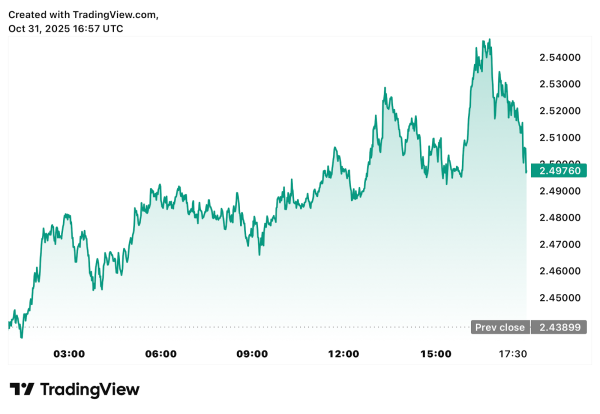
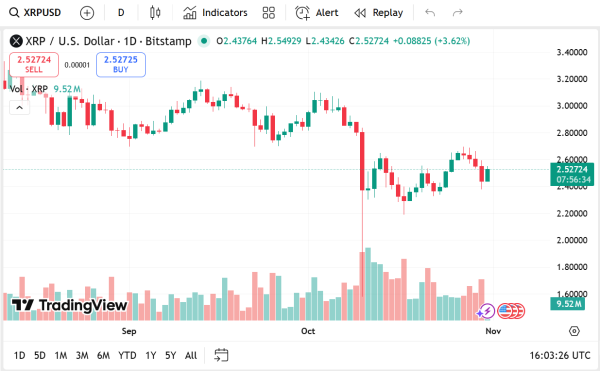
    XRP remains a cornerstone of the payments narrative, but its once-explosive growth has flattened. The token is trading around $2.4, with analysts maintaining a neutral-to-bullish XRP price prediction, provided the rumoured spot ETF approval materialises in November. Institutional trading volumes have decreased by 18% this month, indicating that large investors may be shifting their focus elsewhere for better upside potential.

    Ripple’s partnerships in Asia and the Middle East continue to expand, but many now see XRP as a mature asset, dependable, yet limited in near-term growth. While it remains part of institutional portfolios, it’s no longer the go-to option for high-growth crypto exposure.

    Dogecoin: Retail Favourite, Institutional Fatigue

    Dogecoin (DOGE) is currently trading at about $0.18 and on-chain data indicates that institutional wallet inflows have decreased, indicating that interest has moved to more recent ecosystems with clearer roadmaps.

    Elon Musk’s endorsements still create price spikes, but Dogecoin’s lack of technical upgrades limits its long-term potential. Many traders now classify DOGE as a low-cap crypto gem with nostalgic appeal, but not a serious contender for DeFi projects. As institutions pursue assets with tangible use cases, Dogecoin’s speculative cycle appears to be cooling.

    Remittix: The New Favourite Among Smart Money

    While XRP and Dogecoin steady out, Remittix (RTX) is emerging as one of the top altcoins institutions are quietly eyeing. The project bridges crypto and real-world payments, allowing users to send digital assets directly to bank accounts in over 30 countries, a feat few tokens have achieved at scale.

    Built on Ethereum and expanding to Solana, Polygon and Avalanche, Remittix (RTX) is a cross-chain DeFi project that integrates DeFi and payments into a single ecosystem. The Remittix wallet beta is live, already processing real transactions. With close to $30 million raised, 40,000+ holders and confirmed listings on BitMart and LBank, momentum is undeniable.

    Analysts believe Remittix (RTX) carries potential, a practical platform capable of redefining digital payments the way Ethereum reshaped smart contracts. Its combination of low gas fees, staking opportunities and crypto with a real utility narrative makes it a clear pick for those seeking the best crypto investments in the next cycle.

    Remittix is the Next Big Crypto to Buy Now

    Institutional investors are no longer chasing hype. They’re hunting for tokens that deliver real-world use, long-term scalability and early entry value. Remittix (RTX) fits that profile, offering the practicality of a fintech solution and the upside of an early-stage blockchain project.

    For those looking beyond XRP and Dogecoin, this could be where the next primary institutional wave begins, the intersection of DeFi, payments and global accessibility.

    Discover the future of PayFi with Remittix by checking out their project here:

    Website: https://remittix.io/

    Socials: https://linktr.ee/remittix

    $250,000 Giveaway: https://gleam.io/competitions/nz84L-250000-remittix-giveaway

    Disclaimer:
    This article is for informational purposes only and does not constitute financial advice. Cryptocurrency investments carry risk, including total loss of capital. Readers should conduct independent research and consult licensed advisors before making any financial decisions.

    All market analysis and token data are for informational purposes only and do not constitute financial advice. Readers should conduct independent research and consult licensed advisors before investing.

    Crypto Press Release Distribution by BTCPressWire.com

  • Analysts Believe Remittix Could Mirror 2017 Run As Utility Tokens Dominate Market Sentiment thumbnail

    Analysts Believe Remittix Could Mirror 2017 Run As Utility Tokens Dominate Market Sentiment

    Investor sentiment is turning strongly toward utility-based cryptocurrencies, as market participants look beyond speculation and focus on real-world blockchain applications. This shift has renewed discussions about projects capable of achieving performance similar to XRP’s historic 2017 rally, when functional utility and payment use cases triggered exponential growth.

    Analysts now see Remittix (RTX) emerging as a comparable force, a next-generation PayFi token that could replicate trajectory, but with stronger technology and broader financial integration.

    XRP Retains Institutional Trust Amid Expanding Market Participation

    As global payment adoption is growing, XRP maintains significant institutional attention. Currently, XRP is currently trading at $2.53 following a significant gain of about 3.06%, with a market capitalization of $151.68 billion.

    Despite these price swings, XRP is still considered one of the premier bridge assets for cross-border transactions, thanks to partnerships with a variety of different payment providers and fintech networks.

    Analysts say that XRP’s strong fundamentals have reaffirmed confidence in utility-driven digital assets, particularly those that serve as an infrastructure layer for payments and settlements.

    As capital begins rotating toward projects combining decentralized technology with real-world usage, attention has increasingly shifted toward Remittix-a blockchain platform expanding on XRP’s original concept via Ethereum’s smart-contract architecture.

    Remittix: The PayFi Token Redefining Real-World Utility

    Remittix (RTX) is a DeFi and PayFi network powered by Ethereum that facilitates cryptocurrency-to-bank transactions in more than 30 nations. In contrast to speculative tokens, its architecture prioritizes usability by establishing a direct connection between blockchain transactions and conventional banking systems.

    With over 681.8 million tokens sold and over $27.7 million in private funding now raised, the project is showing signs of increasing institutional and early-stage investor trust.

    The Remittix Wallet Beta, now available to iOS users, allows instant transfers and real-time transaction tracking. The project has been verified by, ranking #1 among pre-launch tokens for security and transparency.

    Upcoming listings are expected to provide additional liquidity, while its $250,000 Giveaway, 15% referral rewards (paid in USDT) and 50% funding bonus (code RTX50) continue to attract user participation.

    What Sets Remittix Apart

    • Built on Ethereum, integrating DeFi with traditional payments
    • Enables crypto-to-bank transfers across 30+ countries
    • Verified, ranked #1 pre-launch token globally
    • Raised $27.7Million+ through private investment — strong institutional interest
    • Active ecosystem supported by Wallet Beta and exchange listings

    The Next Chapter in Utility-Driven Growth

    As utility tokens dominate the narrative heading into 2025, many analysts view Remittix as a natural evolution of the XRP model, one that modernizes global payments with decentralized infrastructure and enhanced compliance capabilities.

    While the XRP price continues to reflect the maturity of early blockchain utility, Remittix (RTX) captures the next phase of innovation: faster execution, verifiable transparency, and direct real-world adoption.

    Discover the future of PayFi with Remittix by checking out their project here:

    Websitehttps://remittix.io/

    Socials: https://linktr.ee/remittix

    $250,000 Giveaway: https://gleam.io/competitions/nz84L-250000-remittix-giveaway

    Disclaimer:
    This article is for informational purposes only and does not constitute financial advice. Cryptocurrency investments carry risk, including total loss of capital. Readers should conduct independent research and consult licensed advisors before making any financial decisions.

    All market analysis and token data are for informational purposes only and do not constitute financial advice. Readers should conduct independent research and consult licensed advisors before investing.

    Crypto Press Release Distribution by BTCPressWire.com

  • Crypto Sentiment Shifts, Could Remittix Be The Hidden Winner? thumbnail

    Crypto Sentiment Shifts, Could Remittix Be The Hidden Winner?

    Latest comments kept markets guessing about how quickly policy will ease in December. The recent price swing was visible across the crypto market slipped as traders cut exposure into the weekend. The pullback puts short-term support levels back in focus and lowers appetite for high-beta moves.

    In this setting, one project built for real-world payments keeps gaining attention. Remittix appears positioned to benefit if capital rotates toward utility and clear roadmaps during volatility

    Solana Pullback Puts Key Levels Back In Play

    Solana currently shows a market cap of $102 billion with $6.6 billion in 24-hour trading volume. That liquidity remains strong even with a cool-down in momentum. The recent slip follows broader risk softness around Powell’s tone on rates and a cautious read on December expectations. Near term, liquidity is healthy, but sentiment is cautious.

    Analysts flag that deeper dips can appear if the dollar holds firm into mid-November. Others point to sustained ecosystem activity as a medium-term anchor. The takeaway is simple: Solana’s structure is intact, yet headline risk is in charge until macro clarity improves.

    Cardano Price Slides With Macro Nerves Back On

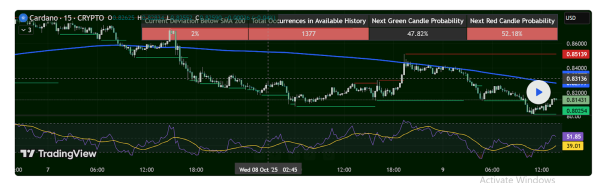
    Cardano’s market cap sits near $21.7 billion, with a 24-hour turnover of $992 million. The coin eased as bid strength faded across the market after remarks signalled uncertainty around December timing. Price is testing nearby supports, with resistance stacked at recent breakdown zones. If spot demand does not improve, range trading may continue.

    Recent developer updates have been steady this quarter, yet traders are focused on flows and macro headlines this week. Any clean reclaim of prior resistance with rising volume would improve the look.

    Why Remittix Utility Can Win In This Setup

    Compared with Solana and Cardano in a macro-driven pullback, Remittix aims at a different lane. The project targets direct crypto-to-fiat payments across many countries, which is a use case that can attract steady demand even when the crypto market is choppy.

    In a week where Solana and Cardano price action softened on headlines, Remittix can draw attention as an early-stage crypto investment built around utility, not just token momentum.

    The Remittix team is fully verified ranks #1 for Pre-Launch Tokens on  with a Grade A score near 80, which boosts trust. Multiple exchange listings are secured with a third listing in progress. The project reports more than 681 million tokens sold, a live price of $0.1166 and over $27.7 million raised.

    The wallet beta is live and now opening to more holders, with iOS invites going to the top ten weekly purchasers. A limited RTX50 bonus is also live ahead of a major milestone update. These items can give the token a new boost during wider market caution.

    Here are features that set Remittix apart:

    • Backed by working infrastructure, not vaporware
    • Deflationary tokenomics designed for long-term growth
    • Mass-market appeal beyond just the crypto crowd
    • Ideal for freelancers, remitters and global earners
    • No other altcoin is targeting this level of real-world impact

    Winter Rotation Or Just A Pause

    This pullback across majors shows how fast sentiment can change when the policy path looks unclear. Solana remains liquid and active but needs cleaner charts to reclaim momentum. Cardano holds range supports yet still trades in step with macro signals.

    Remittix keeps building around a payment utility, which can attract flows during cautious periods in the crypto market. For investors looking at the best crypto to buy list for winter, the combination of features and incentives makes Remittix a candidate to watch as a potential next crypto if adoption scales.

    Discover the future of PayFi with Remittix by checking out their project here:

    Website: https://remittix.io/

    Socials: https://linktr.ee/remittix

    $250,000 Giveaway: https://gleam.io/competitions/nz84L-250000-remittix-giveaway

    Disclaimer:
    This article is for informational purposes only and does not constitute financial advice. Cryptocurrency investments carry risk, including total loss of capital. Readers should conduct independent research and consult licensed advisors before making any financial decisions.

    All market analysis and token data are for informational purposes only and do not constitute financial advice. Readers should conduct independent research and consult licensed advisors before investing.

    Crypto Press Release Distribution by BTCPressWire.com

  • Dogecoin Price Prediction: DOGE Could Be In For More As Whales Buy Remittix  thumbnail

    Dogecoin Price Prediction: DOGE Could Be In For More As Whales Buy Remittix 

    In a newly released Dogecoin price prediction, market watchers and analysts have reported that the leading meme coin might be in for losses as Bitcoin’s volatility continues. This forecast is coming weeks after the market plunged into a crash that caused over $30 billion in losses.

    While it appears that volatility is still raging, whales are investing in the emerging PayFi altcoin, Remittix (RTX), as a hedge against market fluctuations.

    Dogecoin Price Prediction: Why DOGE Is Headed For More Losses

    DOGE, like a typical meme coin, offers no utility and relies on hype, trends and market momentum. In the past, DOGE was able to resist market influence due to Elon Musk’s endorsement, hype and increased retail adoption. However, ever since the hype had faded away, the once-dominant token has become a subject of the market, tossed about as it wishes.

    The bearish dogecoin price prediction is further sponsored by the decreased interest in meme coins. The meme coin market, which once peaked at $62 billion, has decreased to around $52 billion, prompting investors to opt for utility-driven projects over them. An utility-driven project investors are currently running into to hedge against current market volatility is Remittix (RTX).

    Remittix (RTX), The Best Altcoin To Buy Now

    Designed as a PayFi platform, Remittix enables instant crypto-to-bank transfers in over 30 countries, supports more than 40 cryptocurrencies, and offers real-time foreign exchange conversion. It is bridging a $19 trillion global gap between traditional payment systems and cryptocurrency.

    The Remitix team is now verified by  , the #1 blockchain security firm and RTX is ranked #1 on   for pre-launch Tokens. Remittix also offers an API designed for freelancers, SMEs and other businesses to process cryptocurrency payments.

    Remittix Highlights:

    • A full   audit has been completed; liquidity and team tokens have been locked for a period of three years.
    • RTX is built for real-world utility and adoption.
    • Beta testing for the Remittix wallet is now live, with community users actively testing it.
    • Remittix offers a referral program where users earn a 15% bonus on their referee’s presale purchase in USDT. Rewards are instantly claimable every 24 hours via the Remittix dashboard for withdrawal or reinvestment.
    • Designed for both crypto natives and non-crypto users, it can be used by business owners, freelancers and remitters.

    Discover the future of PayFi with Remittix by checking out their project here:

    Website: https://remittix.io/

    Socials: https://linktr.ee/remittix

    $250,000 Giveaway: https://gleam.io/competitions/nz84L-250000-remittix-giveaway

    Disclaimer:
    This article is for informational purposes only and does not constitute financial advice. Cryptocurrency investments carry risk, including total loss of capital. Readers should conduct independent research and consult licensed advisors before making any financial decisions.

    All market analysis and token data are for informational purposes only and do not constitute financial advice. Readers should conduct independent research and consult licensed advisors before investing.

    Crypto Press Release Distribution by BTCPressWire.com

  • Kuardin Introduces a Unified AI and Blockchain Ecosystem to Revolutionize Global Commerce

    Kuardin is unveiling a breakthrough ecosystem of AI-driven and blockchain-enabled products that seamlessly bridge digital assets with practical, everyday use. This next-generation framework is designed to enhance both consumer and merchant experiences by merging intelligent automation with financial scalability—bringing cryptocurrency adoption closer to real-world commerce than ever before.

    A Smarter, Interconnected Kuardin Ecosystem

    At the heart of Kuardin’s innovation lies a trio of integrated, AI-powered products that work together to simplify, secure, and accelerate crypto-based transactions. Each component of this ecosystem has been purpose-built to make blockchain payments as natural and accessible as traditional banking.

    Kuardin Pay: The Future of Blockchain Payments

    Kuardin Pay represents a next-generation payment infrastructure built for speed, security, and global accessibility. Using Kuardin proprietary Currency Exchange Protocol (KCEP), the platform intelligently scans real-time data across multiple liquidity sources to offer the best possible cross-border exchange rates.

    This system enables near-instant settlement times and transaction fees that are a fraction of traditional processors, empowering merchants and users to transact seamlessly across borders—without intermediaries or currency conversion delays.

    Kuardin Card: Bringing Crypto into Daily Life

    With the Kuardin Card, digital currencies gain real-world practicality. The card connects directly to the user’s mobile wallet, enabling immediate use of assets such as KRN, BTC, ETH, and BNB for in-store and online purchases.

    Whether buying coffee, booking a hotel, or shopping online, the Kuardin Card transforms digital holdings into spendable value—bridging blockchain innovation with everyday consumer behavior.

    The Decentralized AI Marketplace

    Kuardin’s AI-driven decentralized marketplace redefines trust and transparency in e-commerce. Each transaction is verified on the blockchain, while AI algorithms enhance product discovery, security, and personalized experiences.

    The marketplace integrates:

    • AI-Validated Reviews – Authentic, verified user feedback that enhances trust. 
    • Personalization Engine – Smart recommendations powered by user behavior and preferences. 
    • Blockchain Transparency – Immutable records that ensure credibility for both buyers and sellers. 

    This combination delivers an adaptive shopping experience that prioritizes fairness, accuracy, and customer satisfaction.

    The Vision: Intelligent Expansion and Global Scale

    Kuardin’s roadmap focuses on continuous innovation through artificial intelligence, international expansion, and developer empowerment—positioning KRN as a cornerstone asset for the decentralized global economy.

    Key Strategic Priorities:

    • AI Evolution: Development of predictive fraud detection systems, adaptive chatbots for real-time support, and intelligent transaction monitoring for enhanced security. 
    • Global Expansion: Entry into emerging crypto-friendly markets such as Southeast Asia, with integrations targeting travel, retail, and entertainment sectors. 
    • Developer Empowerment: Launch of an open API infrastructure to enable developers worldwide to build decentralized applications and AI solutions on the Kuardin Network. 

    Shaping the Future of Digital Commerce

    Kuardin’s vision goes beyond payments—it’s building a full-scale ecosystem that connects AI intelligence with blockchain reliability. By creating interoperable tools for finance, commerce, and development, Kuardin is turning KRN into a multi-utility digital asset capable of driving mass crypto adoption.

    Through its unified product suite and innovation-driven roadmap, Kuardin is not just reimagining online payments—it’s redefining how the world interacts with money, technology, and digital identity.

    Discover more about the project, roadmap, and ecosystem at https://kuardin.com

    Disclaimer: This press release is for informational purposes only and does not constitute investment advice, financial advice, trading advice, or any other form of advice. Cryptocurrency investments are subject to high market risk. Readers should conduct independent research and consult qualified financial advisors before making any investment decisions.

  • Top 5 CMMS Software Solutions in 2025

    Choosing the right CMMS software can transform how your maintenance team operates. The difference between an effective platform and one that creates frustration often comes down to understanding what you actually need versus what looks impressive in vendor demos.

    CMMS handles the core functions that keep maintenance operations running smoothly: preventive maintenance scheduling, work order management, inventory tracking, and performance reporting. When implemented properly, these systems help teams prevent equipment failures, eliminate maintenance backlogs, manage spare parts efficiently, and control costs that can spiral out of control without proper oversight.

    Quality CMMS platforms share essential features including work order management, maintenance scheduling, asset tracking, inventory control, robust reporting capabilities, and mobile access for technicians in the field. The ultimate goal is straightforward: streamline maintenance operations and reduce unplanned downtime that impacts production and profitability.

    Whether you’re moving away from spreadsheets and paper systems or replacing a CMMS that isn’t meeting your needs, this comparison provides the information you need to make an informed decision.

    1. MPulse CMMS

    Top Features

    Comprehensive asset management: MPulse provides centralized systems for managing detailed asset information, complete maintenance histories, warranty tracking, and technical documentation. Assets link directly with work orders, spare parts, and maintenance schedules, giving teams full lifecycle visibility into equipment performance and maintenance activities.

    Streamlined work order management: The platform makes it easy to create, schedule, and track work orders from submission through completion. Automated alerts and maintenance calendars help teams stay ahead of preventive maintenance tasks instead of constantly reacting to equipment failures.

    Preventive and predictive maintenance: Schedule maintenance based on calendar intervals, equipment runtime, or actual condition data. Integration capabilities with IoT sensors and machine monitoring systems support predictive maintenance initiatives that catch problems before they cause downtime.

    Inventory and purchasing control: Track spare parts and supplies, monitor stock levels in real-time, and automate purchasing processes to prevent downtime caused by missing components when repairs are needed.

    Reporting and dashboards: Generate detailed reports on maintenance KPIs, cost trends, and performance metrics. Customizable dashboards help visualize data for smarter decision-making and communicate maintenance value to leadership.

    Integrations and scalability: MPulse integrates with ERP systems, accounting platforms, and other business software to support connected operations and centralized reporting across the organization.

    Biggest Benefits

    MPulse CMMS is designed to help organizations of all sizes streamline maintenance operations, improve asset reliability, and reduce costly unplanned downtime.

    Known for flexibility and scalability, MPulse offers configurable tools that adapt to the specific needs of diverse industries including manufacturing, utilities, healthcare, education, and government facilities. The software can be deployed in the cloud or on-premises, allowing organizations to choose the implementation model that best matches their IT infrastructure and compliance requirements.

    Concurrent licensing allows multiple users to share a limited number of licenses, so you only pay for the number of people actively using the system at any given time. This flexible model reduces costs substantially and maximizes accessibility for teams working in shifts or with varying usage patterns.

    What Do Users Like About MPulse?

    Users consistently highlight MPulse’s balance between comprehensive functionality and user-friendliness. The system’s adaptability to different industries and strong reporting capabilities make it a preferred choice for organizations seeking both flexibility and depth in their CMMS solution. Many recommend purchasing one of MPulse’s affordable implementation services to streamline the process and ensure proper configuration from the start.

    “MPulse has been instrumental in helping us transition from reactive maintenance to a proactive approach. The scheduling and tracking tools are excellent, and the reporting gives us clear visibility into our maintenance costs.” – [James K. on Capterra]

    “What I appreciate most is that MPulse can grow with your organization. It’s easy to start small and add modules or integrations as your needs expand. The support team is also responsive and knowledgeable.” – [Verified User in Manufacturing on G2]

    “MPulse makes it easy to organize maintenance work and asset data. The ability to customize fields and workflows means we can tailor the software to fit how we operate instead of the other way around.” – [Sarah M. on G2]

    Pricing

    MPulse offers flexible pricing tiers based on deployment type (cloud or on-premises), number of users, and selected modules. Plans typically start around $49 per user per month, with additional costs for advanced features like predictive maintenance capabilities, API access, and enterprise reporting. A demo and custom quote are available upon request.

    2. Limble CMMS

    Limble CMMS is a cloud-based platform designed to help organizations manage and improve their maintenance operations. With a solid interface and practical features, it supports teams across various industries in organizing workflows, reducing equipment downtime, and maintaining asset performance.

    Top Features

    Complete CMMS tools: Provides an integrated suite of tools for full lifecycle asset management and maintenance operations. Connects with other organizational software platforms to support broader business processes.

    Work order management: Create, prioritize, assign, and track work orders using a drag-and-drop interface. Mobile access enables real-time updates and improves communication between maintenance teams and other departments.

    Preventive maintenance: Schedule recurring tasks based on time intervals, meter readings, or custom triggers. Automated reminders ensure on-time maintenance execution, reducing downtime while extending asset lifespan.

    Asset tracking and management: Maintain a centralized database containing asset details, complete maintenance history, and related documentation. Monitor performance trends, detect issues early, and optimize asset lifecycles.

    Reporting and analytics: Generate reports to track maintenance metrics and identify operational trends. Customizable dashboards provide visual overviews of operations for continuous improvement initiatives.

    Integrations: Connect with ERP systems, accounting tools, and IoT sensors to create a connected maintenance ecosystem.

    Why Users Like Limble CMMS

    “I’ve tried several CMMS platforms over the years, and Limble stands out as one of the most user-friendly and efficient solutions.” – Jared B. on Capterra

    “My techs are MUCH better about tracking work orders and entering their information and hours worked. The app is also developed by Limble, so it’s a pretty seamless transition between the site and the app.” – Anonymous Verified User on G2

    “Our biggest issue with Limble is that we don’t maximize our utilization of all of its capabilities. Implementation was smooth, but we only utilize a small percentage of the program.” – Nathan G. on Capterra

    What Do Users Dislike About Limble CMMS?

    “It takes a while to get used to how everything works and remembering how to get to certain places but over all it’s more on the user.” – Nathan G. on Capterra

    “I think its made by software people that has little experience in maintenance. As such the system does not support anything regarding planning and scheduling of work orders. Work orders do not have different status’, you cannot have different dates for when orders are planned, kitted, due etc., you cannot manage/schedule work in any smart way (yes, they have an overview, but nothing that works). It is basically a solid platform for capturing new work requests and also closing out work. But anything in between (the planning and scheduling of work) will need to be done outside the system.” – Mads J. on Capterra

    3. Fiix CMMS

    Fiix CMMS is a cloud-based maintenance management platform that integrates AI and machine learning capabilities to enhance maintenance efficiency and asset performance. Its interface and scalable design make it a viable choice for small to mid-sized businesses with distributed assets.

    Top Features

    AI-driven reporting: Fiix promotes AI integration in its reporting features for analyzing maintenance metrics and machine data patterns.

    Work order management: Allow requesters to submit work orders and enable maintenance teams to track, assign, and manage them through the application.

    Connected shop floor: Integrations with existing business systems and IoT devices collect additional asset data for more informed maintenance decisions.

    Sustainable practices: Track energy consumption and waste generation to support sustainability initiatives and environmental goals.

    Mobile-first application: Technicians can use the system on mobile devices, providing teams with access to work orders, asset information, and maintenance history from anywhere in the facility.

    What Do Users Like About Fiix?

    Users report that Fiix is a useful tool for organizing and executing maintenance and equipment servicing. They also note positive relationships with customer service and overall improved work order coordination across teams.

    “Since the start of using this program, all of our equipment is being serviced in a timely manner, parts inventory has been easy to maintain, and any information for that equipment is always easy to access. For example: manufacturer, model and serial number. Overall, this program has made my maintenance program easy and simple to use and track.” – Qasim M. on Capterra

    “Fiix makes it easy to include important details for work orders. Things like photos, relevant parts needed for the machine, specific task lists for the machine, etc. The program has a lot of useful features that help technicians communicate as they work on the same work orders together. Also, being very easy to use on a phone or tablet is a huge plus.” – Kyle G. on G2

    What Do Users Dislike About Fiix?

    Reviewers note there is room for improvement in how the system facilitates communications with work requestors who don’t have user licenses. They also comment on limited customizability for some features.

    “We have a lot of guest users that log service tickets and it would be good to have two-way communication between maintenance techs and guest users when a service ticket is being looked at or worked on; it does let them know that the ticket is ‘in progress’ or ‘complete’ but the guest can’t see any other data that the tech writes in the ticket work instructions.” – Paul S. on G2

    “Administrators need more access to make changes to assets and scheduling without having to get ahold of someone to allow the changes to be made. I wish there was an alert on the system to let everyone know that a PM is about to be overdue, instead of letting you know it’s late after the fact.” – Scott J. on Capterra

    Pricing

    Fiix CMMS uses a tiered pricing structure, beginning with a plan covering essential maintenance functions, then expanding to paid tiers with more advanced capabilities. The Basic plan costs $45 per user per month, and the Professional plan is $75 per user monthly, both adding tools such as advanced scheduling, analytics, and reporting. For larger organizations with specialized needs, the Enterprise plan provides customized solutions with pricing available upon request.

    4. UpKeep

    UpKeep positions itself as a mobile-first CMMS built to simplify maintenance and operations management for businesses of all sizes. Its interface and feature set enable users to manage work orders, track assets, and streamline maintenance activities from both mobile devices and desktop computers.

    Top Features

    Mobile-first functionality: UpKeep promotes its mobile app to help teams access and manage work orders, capture operational data, and communicate from any location.

    Work order management: Create, assign, and track work orders with barcode scanning capabilities, image attachments, and digital signatures for approvals.

    Preventive maintenance scheduling: Schedule recurring maintenance tasks based on time intervals, meter readings, or custom triggers with automated reminders and notifications.

    Inventory management: Track spare parts, tools, and other resources to ensure parts inventory availability when needed for repairs.

    Reporting and analytics: Generate reports to track maintenance metrics, identify operational trends, and make data-driven decisions.

    What Do Users Like About UpKeep?

    UpKeep customers report it represents a significant upgrade from paper and manual processes, especially considering the cost. They also appreciate its usability and visual appeal.

    “I love that it does work orders, PM management, and inventory control. Being able to barcode and add photos of equipment is awesome. Maintenance, Production, Sanitation, and Quality all use this software. Creating work order notification takes less than 30 seconds. So much better than paper!” – Stephanie W. on G2

    “Work orders have been so easy with the use of the UpKeep application. I like the ability to complete work orders using smartphones and share them with colleagues so that everyone can contribute towards the activities done.” – David O. on Capterra

    What Do Users Dislike About UpKeep?

    While UpKeep receives high overall ratings, some users report limited customizability, occasional bugs, and technical difficulties with certain features.

    “We are dealing with a lot of technical issues on a regular basis. The program has not operated without issues since we started using it.” – Chris B. on Capterra

    “If the system worked properly I would be happy with it. unfortunately at this time the system is frustrating to work with.” – John T. on G2

    Pricing

    UpKeep offers a tiered pricing structure based on the number of users and level of features required. They do not offer a long-term plan but provide a 14-day period. Plans range from a “lite” level including basic maintenance management tools at $20 per user per month. Advanced options that include predictive maintenance, reporting analytics, and integrations can cost as much as $120 per user monthly, with additional products and add-ons like IoT connectivity available for additional fees.

    5. MaintainX

    MaintainX is a mobile-first CMMS that emphasizes the advantages of managing maintenance through its mobile application. It offers an interface and tools for handling work orders, performing inspections, and tracking assets from smartphones or tablets. The platform is geared toward organizations with distributed teams and frontline workers who need real-time access to information and tasks while on the move.

    Top Features

    Mobile-first design: MaintainX highlights its mobile app for accessing and managing work orders, conducting inspections, and facilitating communication between team members.

    Work order management: Create, assign, and track work orders using barcode scanning, photo attachments, and digital signatures for verification.

    Preventive maintenance: Schedule recurring maintenance tasks based on time intervals, meter readings, or custom triggers with automated reminders to ensure consistent execution.

    Messaging and collaboration: Team chat features allow sharing of updates, photos, and videos within the app for improved communication.

    Safety inspections: Checklist features are frequently used for safety inspections and compliance audits.

    What Do Users Like About MaintainX?

    MaintainX delivers essential functionality for its users, including an intuitive interface, real-time communication, and efficient work order management. Many report having more organized and more mobile operations as a result of using the system.

    “User friendly, easy to train new staff. Work order details, including photos. Built-in communication tools. Great filtering options when drilling down on specific data.” – Adam M. on Capterra

    What Do Users Dislike About MaintainX?

    Smaller teams or startups may find that MaintainX’s pricing is higher for the features offered compared to some other solutions. Some users report occasional bugs or limited options for customization and integration with other tools.

    “With the freedom to customize the system to fit your needs it makes it easy to get data entered wrong if you are not careful. More customizable permissions for users would help a great deal.” – Steven P. on G2

    Pricing

    MaintainX provides four pricing tiers, starting with a basic plan that includes unlimited work orders and messaging. The Essential plan, priced at $16 per user per month, adds features like recurring work orders and reporting. The Premium plan costs $49 per user per month and includes tools such as parts inventory management, purchase orders, and API access. The Enterprise plan offers custom pricing for large organizations, with advanced security, IoT integrations, and dedicated account management.

  • B2B Marketing Campaigns That Drive Revenue: New Playbook thumbnail

    B2B Marketing Campaigns That Drive Revenue: New Playbook

    Most guides on b2b digital marketing campaigns showcase inspiring examples but skip the execution blueprint. You’re left wondering: “Great, but how do I actually build this with my budget and team?” This playbook is different. It maps proven campaign patterns to your resources. And if you’re looking for a digital marketing agency to handle execution while you focus on strategy, Real Media specializes in performance-driven B2B campaigns that tie creative directly to revenue outcomes.

    Executive Summary

    Most B2B content skips the hard part: connecting creative execution to revenue outcomes. This guide delivers effective replicable frameworks.

    What you get:

    4 proven campaign models – template-driven personalization mechanics, budget breakdowns, and KPI benchmarks you can copy.

    Channel selection framework – 4-question decision tree and priority matrix to allocate spend based on your ICP, buying committee size, and measurement maturity.

    2 copy-paste playbooks – both include asset lists, weekly timelines, creative briefs, and success criteria for scaling.

    Launch checklist – pre-flight tracking setup, optimization steps, and the decision framework for scale vs. kill.

    Why Traditional B2B Campaign Advice Fails

    RIP the playbook from 2022. Buyers changed, channels saturated, and AI commoditized generic content. Still stuck in past? You’re burning budget.

    What Changed Since 2022

    Buying committees exploded from 5 to 10 stakeholders per deal. Gartner reports 83% of B2B research happens without salespeople. LinkedIn CPM climbed 40% year-over-year while organic reach dropped. Content differentiation moved to personalization at scale and format innovation AI can’t replicate. Third-party cookies are dying, forcing campaigns onto first-party data.

    3 Zombie Tactics to Kill

    Stop gating generic whitepapers buyers can summarize with ChatGPT. Replace with interactive ROI calculators and assessments. Abandon spray-and-pray LinkedIn ads – shift to account-based marketing with template-driven personalization across 50 or 200 named accounts. Ignore vanity metrics like impressions. Track what ties creative to revenue: MQL-to-SQL conversion, opportunity creation, pipeline velocity.

    4 Campaigns That Work (and Why You Can Replicate Them)

    These aren’t inspiration case studies – they’re deconstructions. Each campaign includes budget ranges, core mechanics, and the replicable pattern you can adapt. No copying execution; steal the underlying framework.

    Spotify “Spreadbeats” – Format Innovation

    What they built: A full music video that plays inside an Excel spreadsheet.

    Results: 17:1 ROI on media spend. Engagement rates jumped 870% versus Spotify’s previous B2B campaigns. 9 Cannes Lions and generated millions in earned media impressions across advertising trade publications.

    Replicable pattern: Build something unexpected inside the tool your audience uses daily. Personalize for your top-20 accounts by swapping company names and relevant metrics. This works because you meet buyers in their workflow, not on another landing page.

    Loom ABM – Template-Driven Personalization

    What they built: LinkedIn ads featuring each target company’s logo, exact employee count, and role-specific messaging.

    Results: Click-through rates hit 2-3.5% versus LinkedIn’s standard 0.4-0.5%. Cost-per-click dropped to $4-10 range. Generated 24% account-to-pipeline conversion.

    Replicable pattern: Build 3 ad templates addressing cost savings, time efficiency, or risk reduction. Add 5 personalization fields: company logo and name, team size, industry challenge, and a relevant metric.

    IBM “Every Second Counts” – Multi-Format Storytelling

    What they built: An immersive campaign about cyber-attack response time.

    Results: Brand lift increased 18 points among chief information officers. Security software inquiries rose 40% in the 90 days post-launch. IBM secured 8 enterprise deals directly attributed to event attendees.

    Replicable pattern: Choose a high-stakes pain point like security breach, compliance failure, or revenue loss. Layer across 3 touchpoints: awareness via short video ads, engagement through webinar or demo, decision support with personalized ROI analysis. Enterprise buyers need multiple proof points before committing six or seven figures.

    Mailchimp x VICE Media “Second Act” – Emotional B2B

    What they built: A documentary-style short film following a musician’s journey coming out and finding community.

    Results: 7 million impressions with 90% coming from organic social sharing and earned media. Brand favorability scores rose 12 points. The campaign won industry awards and generated speaking opportunities for Mailchimp’s CMO.

    Replicable pattern: Identify a story connected to your product’s impact – life transformation. Partner with a credible media outlet where niche publications work fine. Let them handle production and distribution, which adds credibility you can’t buy with ads. Repurpose long-form content into 30-second cuts, LinkedIn pull quotes, and behind-the-scenes clips.

    Common Thread

    All 4 campaigns share one pattern: surprise paired with deep relevance. Spotify used Excel video relevant to media planners’ workflow. Loom personalized data addressing pain points. IBM combined unexpected formats with security concerns. Find where your audience expects one thing, deliver something unexpected but brutally relevant to their job.

    Channel Decision Framework (Stop Guessing)

    Most marketers default to “LinkedIn equals B2B” and dump budget there without thinking. Your channel mix should reflect where your specific audience researches solutions, how complex your value proposition is, and what you can actually measure. Here’s a smarter approach.

    The 4-Question Framework

    Answer these to narrow your channel list from 12 options to the 2 or 3 that’ll actually work:

    Where does your audience actively seek solutions?
    Ask your sales team where prospects find competitors, then prioritize those channels.

    How much depth do buyers need before contacting sales?
    Match content depth to decision complexity.

    How large is the buying committee?
    Map personas to channels, don’t broadcast same thing everywhere.

    What’s your realistic budget and measurement capability?

    Under $10K monthly? Focus on LinkedIn organic, email to your existing database, and one paid channel you can track end-to-end. $10-50K range? Add YouTube, programmatic ABM, and test event sponsorships. Above $50K? Run full-stack experiments across 6 channels and optimize based on contribution to pipeline.

    Your Answer Channel Priority
    Executives researching vendors LinkedIn (sponsored content + thought leadership), industry events, trade publications
    Technical evaluators YouTube (product demos), GitHub (if open-source angle), developer communities, Stack Overflow sponsorships
    1-3 person buying committee Email sequences, LinkedIn direct targeting, Google Search ads (high intent keywords)
    5-11 person committee Multi-channel orchestration: LinkedIn (awareness) + email (nurture per role) + retargeting + webinars
    Budget under $10K/month LinkedIn organic + paid, email to house list, one paid channel with clear attribution
    Budget $10-50K/month Add YouTube, ABM platforms, test 1-2 niche channels, sponsor one major event
    Budget $50K+/month Full experimentation mode: all major channels, test emerging platforms, multi-region campaigns

    Priority Matrix for Fast Decisions

    This matrix shows real-world costs, speed to results, and how easy each channel is to measure. Use it to allocate your first $20K.

    Channel Best Use Case Typical Cost Speed to First Results Measurement Ease
    LinkedIn Ads Professional targeting by title, size, industry; thought leadership distribution $8-15 CPC Medium (4-8 weeks to optimize) Excellent (native conversion tracking + CRM integration)
    Google Search Capturing high-intent buyers already searching for solutions in your category $5-25 CPC (varies by keyword competition) Fast (1-2 weeks to see click patterns) Excellent (direct intent, clear attribution)
    YouTube Deep product education, demos, founder-led content for technical audiences $0.10-0.30 per view Slow (8-12 weeks to build audience) Good (view-through conversions trackable)
    Email (house list) Nurturing existing contacts, staying top-of-mind, moving MQLs to SQL stage $0.01-0.05 per send Very fast (1 week to launch sequence) Excellent (open rates, click-through, CRM sync)
    Industry Events Enterprise relationship building, getting face time with C-suite, shortening long sales cycles $500-5,000 per qualified lead Very slow (3-6 months for deal influence) Poor (hard to isolate event impact from other)
    Reddit/Niche Communities Building trust with technical or skeptical audiences through authentic participation $2-8 CPC (if running ads); organic is free but time-intensive Medium (6-10 weeks to establish credibility) Fair (traffic trackable, but long attribution window)
    Podcast Sponsorships Reaching commuters and remote workers; works for narrow ICP with identifiable listening habits $25-50 CPM (cost per thousand listeners) Medium (4-6 weeks per episode cycle) Fair (promo codes help, but mostly brand lift)

    How to use this: Pick the top 2 channels where your ICP lives and where you can afford the speed-to-results timeline. If you need quick wins to prove budget, start with Google Search or email. If you’re playing long game for enterprise deals, layer YouTube and events. Always prioritize channels with “excellent” measurement – you can’t optimize what you can’t track.

    2 Copy-Paste Playbooks

    Pick one, block your calendar, and execute. These aren’t theories–they’re tested timelines with real budget breakdowns and expected KPIs.

    Playbook A – Low-Budget Demand Gen ($8K, 6 weeks)

    Goal: 30 MQLs, 6 SQLs for mid-market SaaS.

    Timeline (weeks):
    1-2 build interactive ROI calculator plus 3 LinkedIn organic posts.
    3-4 launch $3K LinkedIn ads to calculator landing page.
    5-6 deploy 5-email nurture sequence plus $3K retargeting.

    Core assets: ROI calculator (Outgrow or Typeform, 5-7 questions, results in 30 seconds), landing page with quantified headline and social proof, 10 LinkedIn ad variants testing problem-focused vs solution-focused angles, email sequence (Day 0: results, D3: case study, D7: demo offer, D14: ROI proof, D21: sales call).

    Budget: $1K creative production, $3K LinkedIn ads, $3K retargeting, $500 tools, $500 email automation.

    Expected outcomes: 1,500 visitors, 120-150 calculator completions (8-10% conversion rate), 30-40 MQLs, 6-8 SQLs. Cost per SQL should land at $1,000-1,300. Scale to $15K monthly if SQL cost stays below $1,500.

    Playbook B – ABM for 20 Named Accounts ($25K, 8 weeks)

    Goal: 6 opportunities generating $300K+ pipeline for enterprise software.

    Timeline (weeks):

    1-2: Research accounts showing intent signals, personalize all assets.
    3-5: Multi-channel outreach (email + LinkedIn + direct mail to top engagers).
    6-8: Retarget hot accounts, activate sales for meetings.

    Core assets: 20 personalized landing pages (1 master template, swap company logo, name, industry pain point, relevant case study using Mutiny or Webflow), email sequences by role (CIO gets security focus, VP Engineering sees technical depth, Procurement receives pricing), 15 LinkedIn retargeting ad variants, direct mail for top 10 engaged accounts (industry book + handwritten note), sales enablement kit with battle cards and ROI templates.

    Budget: $3K data enrichment, $5K creative production, $10K LinkedIn spend, $1.5K direct mail, $3K tools, $2.5K internal sales time.

    Expected outcomes: 14-16 accounts engaged (70%), 8-10 meetings booked, 5-7 opportunities, $300-500K pipeline. Win rate at 6 months should hit 25-30%, closing $75-150K. Expand to 50 accounts if pipeline exceeds $400K.

    Your First Campaign Checklist

    Pre-Launch (T-7 days):

    Document hypothesis. “We believe [target audience] will [desired action] because [core insight].” Can’t complete this sentence? Not ready to spend money.

    Tracking infrastructure live. UTM parameters built for every link. Conversion pixels firing on thank-you pages. CRM fields mapped to capture campaign source, creative variant, and account tier. Test the full funnel yourself before launch day.

    Creative assets approved. Every ad variant, landing page headline, and email copy signed off by legal and brand teams. No surprises mid-flight when compliance flags an unapproved claim.

    Budget caps set. Daily spend limits configured in ad platforms. You don’t want to blow $5K overnight because you forgot to set a ceiling.

    Audience lists verified. Segments built, data cleaned for bounced emails and outdated job titles. Upload lists to platforms 48 hours early to allow processing time.

    Launch Week:

    D1: Push live at 9am, monitor first hundred clicks for tracking issues.
    D2: Verify conversion events are firing: form fills, calculator completions, video views.
    D3: Review cost-per-click by variant, pause bottom performers.
    D4-7: Daily budget checks, no major changes yet.

    Week 2-4:

    Review on Mondays: which creative drive best click-through rate, lowest cost-per-acquisition? Swap out bottom 30% of ads with new, test different pain points or visual styles. Reallocate budget from underperformers to top-3 ads.

    Week 5-6:

    Deep analysis: MQL-to-SQL conversion rate by channel, cost-per-opportunity, sales velocity from campaign-sourced leads. Make the call: scale (double budget), iterate (new creative direction), or kill (pivot to different audience or channel).

    Week 8:

    Stakeholder report using this format: Goal → Results → Key Learnings → Recommended Next Steps. Include pipeline contribution, not just vanity metrics.

    Next Steps

    Stop reading, start building. Most marketers bookmark guides like this and never act. Don’t be that person.

    Pick one playbook today. Choose A if your budget is tight and you need quick MQL proof. Choose B if you have enterprise deals worth the ABM investment.

    Block 2 hours this week. Get your demand gen lead, creative owner, and one sales counterpart in a room. Fill out the creative brief: audience, pain point, key message, success metric, 6-week deadline.

    Set a hard deadline. Campaigns without ship dates die in Slack threads. Mark week 6 on your calendar for the go/no-go decision. Week 8 is your stakeholder readout. Commit publicly to your team.

    Track from day one. Book 15 minutes every Monday morning to review your dashboard. Watch cost-per-lead trends, creative performance by variant, and channel contribution to pipeline.

    Templates? The creative brief format, budget spreadsheet, and KPI dashboard from both playbooks are available as downloadable resources. Grab them, customize, and you’re ready to launch within ten business days.

    Ready to prove your campaigns drive revenue? Your next SQL is waiting in one of these playbooks.

  • The Richest in His Section, Tremaine, Returns with Motivational Visual “Too Big For The Box” thumbnail

    The Richest in His Section, Tremaine, Returns with Motivational Visual “Too Big For The Box”

    Rising from the heart of Tennessee, Tremaine, known to fans as The Richest in His Section, returns with his latest visual masterpiece, “Too Big For The Box.” The new release, premiering via Educated Vision, captures Tremaine’s relentless drive, raw authenticity, and message of perseverance that continues to set him apart in the Southern rap scene.

    Built on the bold declaration, “They are trying to put me in a box, but I’m too big for the box,” Tremaine’s latest visual is both a statement and a celebration. The song embodies the spirit of breaking barriers — refusing to be confined by limits, labels, or expectations.

    Tremaine’s rise from Gatlin is emblematic of countless aspiring artists who grind against the odds to make their mark. His sound is soaked in ambition and truth, his lyrics steeped in lived experience. Every verse reflects his journey from the streets to the spotlight — a journey defined by hustle, vision, and faith in his craft.

    With “Too Big For The Box,” Tremaine continues to elevate his artistry while inspiring listeners to think beyond boundaries and chase their dreams with unshakable determination.

    Watch “Too Big For The Box” Now:

    https://youtu.be/FDb3a24Dm6E?si=f7L4xTlhdRSci7fy

    Instagram: @tremaine_615

  • GROK25Y Bridging DeFi With Real-World Utility thumbnail

    GROK25Y Bridging DeFi With Real-World Utility

    From Speculation to Utility

    Cryptocurrency has often struggled to extend beyond speculation and become a tool with everyday relevance. GROK25Y is one of the few projects explicitly targeting that gap. By combining decentralized finance (DeFi) mechanisms with an AI-driven payment ecosystem, GROK25Y aims to bring blockchain value into real-world transactions, not just trading.

    Rather than asking users to hold tokens purely for price gains, GROK25Y emphasises token utility, staking, governance and real-world financial services — positioning the project as more than another speculative altcoin.

    The Role of the $GROK25Y Token

    Every ecosystem needs a native asset. For GROK25Y, $GROK25Y is the utility backbone. On the official website, GROK25Y describes its token as powering network transactions, staking rewards, DAO governance, and access to AI-enabled services.

    The tokenomics include a total supply of 1 billion $GROK25Y (publicly stated) with an early presale allocation of ~15% of supply (with bonus tiers up to 200%) giving early backers favourable terms. While many projects rely on hype, GROK25Y’s model ties utility and ecosystem growth to token demand.

    Why GROK25Y Is Gaining Attention

    GROK25Y is standing out in a crowded crypto landscape for several reasons:

    • It is among the few projects building tools targeted at real-world utility (payments, cross-chain transfers, AI service access).
    • It offers staking and governance as part of its design, which helps attract both long-term holders and protocol participants.
    • With the AI + DeFi narrative more in focus than ever, GROK25Y aligns with two dominant trends: the rise of AI in blockchain and the push for usable crypto infrastructure.

    Adoption and Growth Potential

    Adoption is the ultimate test for any crypto project. For GROK25Y, the public roadmap (as stated) outlines modules such as AI-powered transactional services, cross-chain interoperability and community governance. These propose meaningful use cases beyond just holding or speculating on the token.

    If the team executes — rolling out developer APIs, partnerships, and payment integrations — GROK25Y could secure a position among DeFi platforms with real-world relevance.

    Key Factors to Monitor

    As GROK25Y continues its expansion, several important factors will shape its long-term success:

    • Technical execution: Building and scaling AI-blockchain infrastructure requires precision, optimization, and ongoing innovation.
    • Regulatory landscape: As AI and digital assets converge, evolving compliance frameworks may influence adoption and partnerships.
    • Market positioning: With multiple projects targeting similar objectives, continuous innovation and strategic differentiation will be essential to sustain momentum.

    Conclusion

    GROK25Y is not just another altcoin chasing the next hype wave. It aims to build a usable ecosystem that ties token utility to real-world services, automated payments and DeFi infrastructure. With its focus on AI, cross-chain interoperability and community governance, it could become one of the breakout projects of 2025 — provided it delivers on its promise.

    Disclaimer:
    This article is for informational purposes only and does not constitute financial, investment, or legal advice. Cryptocurrency investments are highly volatile and involve risk, including potential loss of principal. Readers should conduct their own due diligence and consult independent financial advisors before making any investment decisions. References to potential performance or future outlook are speculative and do not guarantee outcomes. GROK25Y and its affiliates make no representations regarding profits or investment returns.

  • Why GROK64G Could Be the Breakout Crypto of the 2025 Bull Run thumbnail

    Why GROK64G Could Be the Breakout Crypto of the 2025 Bull Run

    The Rise of AI Tokens in 2025

    Artificial intelligence and blockchain are no longer separate frontiers — their convergence is shaping what many analysts call the next great cycle in crypto. In 2025, AI-powered tokens are dominating investor attention, driving narratives across both the retail and institutional landscape. Among these emerging players, GROK64G stands out as one of the most ambitious and technically sophisticated projects — combining advanced AI architecture with a decentralized crypto ecosystem designed for scalability, automation, and real-world adoption.

    Built by a team inspired by the intelligence revolution led by Elon Musk’s AI vision, GROK64G is redefining what an AI token can be — not just as a speculative asset, but as the infrastructure layer for the coming wave of intelligent, self-sustaining digital economies.

    The Vision Behind GROK64G

    At its core, GROK64G is designed to merge artificial intelligence and blockchain into a unified ecosystem where automation meets financial autonomy. Rather than being a single-use utility coin, GROK64G is positioned as a full-fledged digital ecosystem where AI interacts directly with decentralized finance (DeFi), data exchange, and smart payment systems.

    The project’s mission is to create a self-learning, decentralized network where AI agents, smart contracts, and real users collaborate to form what GROK64G calls an **intelligent crypto economy**. This means a blockchain where every transaction, stake, and interaction becomes smarter over time — adapting to market behavior, user data, and global trends.

    The Tokenomics and Utility of $GROK64G

    The $GROK64G token serves as the heartbeat of the ecosystem — powering transactions, staking, governance, and AI-driven services. With a total supply of 1 billion tokens, GROK64G’s allocation model emphasizes fair participation and long-term growth. Fifteen percent of the supply is allocated to presale participants, giving early supporters access to exclusive bonus tiers reaching up to 200%. This structure ensures a strong, engaged early community while maintaining liquidity for future exchange listings.

    Beyond presale incentives, $GROK64G is built to support multiple layers of utility: staking rewards, transaction fees, AI data access, and community voting through the GROK64G DAO. This diversified model gives the token inherent demand drivers across both speculative and functional dimensions — a key differentiator in the crowded AI crypto market.

    Why GROK64G Could Be the Sleeper Hit of This Bull Run

    In every bull market, a handful of tokens outperform expectations — combining strong fundamentals with compelling narratives. GROK64G fits that profile perfectly. It sits at the intersection of two of the most dominant narratives in 2025: artificial intelligence and blockchain automation.

    Unlike many projects that rely solely on marketing hype, GROK64G’s ecosystem is being built around tangible AI integration. Its roadmap focuses on scalability, machine learning modules, and real-world payment solutions that connect users to AI-driven financial tools.

    As mainstream investors increasingly recognize AI as a pillar of Web3 growth, GROK64G could be well-positioned to capture both speculative momentum and long-term institutional interest.

    The Ecosystem and AI Infrastructure

    GROK64G’s ecosystem goes far beyond token transactions. It includes an AI-powered platform that continuously optimizes blockchain performance, a staking and reward framework, and an expanding community-driven governance model. Developers can build applications on top of GROK64G’s infrastructure, leveraging its AI layer for real-time analytics, predictive modeling, and automated decision-making.

    This architecture creates a virtuous cycle: the more GROK64G is used, the smarter its ecosystem becomes. Every on-chain interaction contributes to training AI models that enhance performance, detect anomalies, and predict user behavior — effectively making GROK64G a self-evolving network.

    Market Timing and Investor Interest

    The timing couldn’t be better. As the crypto market rebounds and the AI narrative takes center stage, GROK64G’s early positioning gives it a unique advantage. Its presale has already attracted significant attention, not only because of its generous bonus structure but because investors see parallels between GROK64G’s model and successful early-stage AI projects from previous cycles.

    With the global push toward automation, decentralized identity, and AI-assisted trading, tokens that integrate intelligence and financial functionality — like GROK64G — are expected to lead the next wave of adoption. If executed properly, GROK64G could transition from a promising presale token to one of the cornerstone assets of the upcoming bull run.

    Final Thoughts

    The convergence of AI and blockchain marks the most exciting technological evolution of this decade. GROK64G isn’t just participating in that trend — it’s helping define it. With a solid tokenomics foundation, innovative AI integration, and an ambitious roadmap, GROK64G embodies the future of intelligent decentralized finance.

    As the market prepares for another explosive bull cycle, projects with authentic utility and forward-looking design are likely to lead. GROK64G, with its combination of vision, technology, and community engagement, could be one of the breakout stories of 2025.

    Disclaimer:
    This article is for informational purposes only and does not constitute financial, investment, or legal advice. Cryptocurrency investments are highly volatile and involve risk, including possible loss of capital. Readers should conduct their own research and seek independent professional advice before making any investment decisions. References to potential growth or market performance are speculative and should not be interpreted as guarantees. GROK64G and its affiliates make no promises of profit or returns.