Category: DigitalJournal

  • Best Presale Crypto 2025: Top Coins to Watch This Year thumbnail

    Best Presale Crypto 2025: Top Coins to Watch This Year

    I open this buyer’s guide with a clear aim: help me and other investors cut through noise and focus on real opportunity. I spotlight Super Pepe and Solargy up front because they show different strengths — meme-driven momentum plus community utility, and tangible energy utility that links to U.S. infrastructure needs.

    My approach blends on-chain checks, audit credentials, and balanced tokenomics with roadmap clarity. I place high value on locked liquidity, verified audits, transparent teams, and easy-to-use wallet paths before I move capital.

    I also flag common market risks: staged unlocks, TGE volatility, thin liquidity on DEX listings, and the flood of low-quality projects. I treat hype as a prompt to research, not a reason to buy.

    In short: I’m here to point investors toward projects with utility and delivery, while keeping guidance straightforward and practical.

    Key Takeaways

    • I highlight Super Pepe for community utility and narrative, and Solargy for real-world solar value.
    • Prioritize audits, locked liquidity, and clear tokenomics before funding a presale.
    • Expect price swings around TGE and limited liquidity on early DEX listings.
    • Use launchpads and on-chain verification to reduce risk when possible.
    • Focus on projects with working products and transparent teams, not just hype.

    Why I’m Focusing on the best presale crypto 2025 right now

    I’m focusing my buying power where verified fundamentals meet real community demand. I look for projects that show clear on-chain signals, audited smart contracts, and a credible path to liquidity.

    Commercial intent and what I’m looking to buy this year

    My goal is simple: allocate capital to tokens with transparent teams, realistic tokenomics, and listing plans that mitigate early price shocks. I prioritize audits, locked liquidity, and visible vesting schedules before I commit any funds.

    The 2025 presale landscape at present: opportunity vs. noise

    The market is crowded; many presales promise quick gains but lack fundamentals. I rely on research: read the whitepaper, verify the contract address, and confirm a liquidity lock. This reduces the chance of loss from rug-like exits.

    Analysts warn that rigorous checks—audits, launchpad vetting, and clear roadmaps—separate durable projects from hype.

    • I favor Super Pepe for community energy and Solargy for real-world utility.
    • I size positions to manage volatility and avoid overexposure.
    • I track attainable catalysts: marketing, previews, and exchange readiness.
    Focus Signal Why it matters Where I verify
    Team Doxxed, track record Execution reliability Website, LinkedIn, audits
    Liquidity Locked, clear schedule Limits sudden price drops On-chain explorer, launchpad
    Contract Audited smart contract Reduces exploit risk Audit report, Etherscan

    How I evaluate crypto presales before I commit

    I start each deal by verifying code, liquidity, and team claims on-chain. I run a consistent due diligence checklist so I don’t skip steps when pressure or hype builds.

    Audited smart contracts and on-chain verifications

    I read audit reports from firms like CertiKSolidProof, and Coinsult. I look for notes on unlimited mint, upgrade paths, and backdoors.

    Audits are not a seal of perfection, but they show attention to security.

    Tokenomics that favor holders: allocations, vesting, and burns

    I expect transparent allocations: around 20–30% for public rounds and 10–15% set for initial liquidity. Multi-year vesting for team tokens matters to me.

    Liquidity locks and transparent listings roadmap

    I verify locker addresses and unlock dates using Unicrypt or Team Finance. Screenshots are not evidence; on-chain records are.

    Real utility, working products, and clear roadmaps

    I favor projects with MVPs, demo timelines, and achievable milestones. Real utility beats vague whitepaper promises every time.

    Legal disclosures, doxxed teams, and credible launchpads

    I want a doxxed team or verifiable leadership footprints plus reputable launchpad partners such as Binance Launchpad or CoinList when available. Clear legal notes reduce surprise risk.

    Check What I verify Why it matters
    Audit Report, firm name, flagged issues Finds technical risks and exploitable code
    Liquidity Locker address, amount, unlock date Reduces chance of sudden drains and rug events
    Tokenomics Allocation %, vesting schedule, burns Aligns incentives with long-term holders
    Permissions Owner rights, pause, blacklist Shows how team can intervene post-launch

    Super Pepe (superpepe.io) presale: my top meme pick for momentum and community utility
    I look for meme projects that back social reach with audited contracts and honest liquidity plans. Super Pepe combines internet-native momentum with clear checks that matter to me: audits, transparent allocations, and a public roadmap.

    Why Super Pepe stands out among meme launches

    Super Pepe shows strong community traction and a marketing engine built for scale. I value projects that pair viral growth with on-chain verification so users and investors can trust the basic mechanics.

    Community-first tokenomics and potential exchange readiness

    The token model favors engaged holders over quick flippers. I’m watching listing signals: market-making plans, CEX applications, and communications that ease the first trading windows and price discovery.

    Marketing firepower, liquidity planning, and trading utility

    The team aligns marketing pushes with liquidity injections to reduce chaotic moves at launch. If execution matches intent, Super Pepe can convert hype into lasting user participation and sustainable trading utility.

    “Meme projects that clear audits and lock liquidity often transition more cleanly to exchanges and wider adoption.”

    Focus Signal Why it matters
    Audit Public report Reduces technical risk
    Liquidity Locked amount & schedule Controls early price swings
    Listing Market-maker & CEX outreach Improves access for users and investors

    Solargy (solargy.io) presale: free solar energy vision with real-world impact
    I assess Solargy by how clearly it turns solar heat into usable household power. The project pitches converting natural solar temperature into current that can heat homes and lower monthly bills.

    This is a rare case where the utility claim is tangible. Solargy links energy capture to measurable outcomes rather than vague token promises. That real utility matters to me as an investor assessing technical feasibility and market fit.

    Turning natural solar temperature into everyday energy benefits

    Solargy outlines pilots aimed at U.S. regions that qualify for infrastructure upgrades. The roadmap should show staged delivery: lab validation, local pilots, then scaled deployments.

    Real utility meets blockchain access: rights, governance, and features for users

    The platform pairs on-the-ground assets with a blockchain layer that records participation, grants governance voice, and issues user rights tied to measured output.

    Why Solargy aligns with sustainable infrastructure trends in the United States

    I look for clear partners, vetted equipment, and transparent vesting and regulatory notes. If the team publishes technical proofs and secure asset/data flows, this project could bridge green infrastructure and tokenized incentives.

    Focus Signal Why it matters
    Pilots Local deployments Proves delivery
    Governance User rights Aligns stakeholders
    Security Asset & data protection Protects long-term value

    “Investors should verify how energy capture converts to free current and how the blockchain authenticates rewards.”

    Other meme and utility presales I’m watching in 2025

    I track launches where working platforms meet transparent milestones and audit proof. Below are three projects I monitor alongside my top picks, with clear reasons I still weight Super Pepe and Solargy higher.

    Best Wallet Token

    Best Wallet Token underpins a working multi-chain wallet that already offers swaps, portfolio tools, and curated presales access. It has WalletConnect certification and third-party audits that support its security posture.

    Maxi Doge

    Maxi Doge rides meme energy but adds staking and a sizable marketing allocation to build trading depth. Audits from Coinsult and SolidProof help validate its contract and staking mechanics.

    IPO Genie

    IPO Genie targets tokenized access to private markets with a compliance-first stack: CertiK audit, Fireblocks custody, Chainlink oracles, and DAO governance. External analyst upside is opinion, not a guarantee.

    “Security and audit clarity are table stakes; without them, narratives are too risky for my capital.”

    • I watch team delivery signals, contract transparency, and milestone pacing.
    • Partnerships must produce integrations, not just logos.
    • I size positions cautiously and scale as trading volume and liquidity improve.
    Project Primary strength Security signal Why I watch
    Best Wallet Token Working platform & launchpad access WalletConnect cert & audits Immediate user utility
    Maxi Doge Staking + marketing scale Coinsult / SolidProof reports Builds trading depth
    IPO Genie Private market access CertiK, Fireblocks, Chainlink Compliance-first institutional angle

    How to buy a crypto presale safely from start to finish

    I map a simple checklist from research to claim so every transaction has an auditable trail. Start with clear steps and avoid shortcuts. The process should protect funds, preserve records, and make TGE planning straightforward.

    Research: read the whitepaper, verify audits, and confirm contract addresses

    I read the whitepaper end to end, scan the smart contract audit, and confirm the official contract address on multiple channels before I interact with any sales page.

    Do not rely on screenshots or social links alone. Cross-check the contract on-chain and on the project site, and note any owner permissions or upgrade methods in the audit.

    Set up your wallet, fund with ETH/USDT, and follow the project’s guide

    I set up a secure wallet and compare best wallet options that support the target chain and hardware integration.

    Fund the crypto wallet with the accepted asset (usually ETH or USDT). Follow the project’s guide exactly, complete KYC if required, and watch eligibility windows that can close in days.

    Confirm transactions, keep your hashes safe, and track vesting after TGE

    Before approving, I verify the presale URL and network. I avoid links from DMs and double-check the contract method to prevent rogue approvals.

    After purchase, I save the transaction hash locally and in cloud storage. I confirm my allocation in the dashboard and set reminders for TGE claims and vesting milestones.

    • I prefer curated launchpads that publish audits and liquidity locks to reduce risk and improve access.
    • For Super Pepe and Solargy, I expect clear content on claim steps and timelines so users can plan for unlocks and trading windows.
    Step Why it matters What I record
    Whitepaper & audit Verifies promise vs. code Report links, flagged issues
    Wallet funding Ensures correct chain and asset Wallet address, TX hash
    TGE planning Prepares for claims and vesting Unlock dates, vesting schedule

    Timing the market: what happens after the presale ends

    After a token sale closes, I prepare a precise claim and monitoring plan to avoid surprises. Post-sale is when tokens mint, and the next steps shape short-term outcomes.

    TGE, initial DEX listings, and potential CEX timelines

    At TGE I confirm the official contract address and the claim window. Many tokens require a claim transaction before they appear in a wallet.

    DEX listings often come first. They move fast but usually have thin liquidity. Centralized exchanges take longer and need paperwork, fees, and reviews.

    Managing volatility, slippage, and vesting unlocks

    Early trading windows can be extremely volatile with bots and flippers. I set tight slippage and use smaller orders until depth improves.

    Vesting alters selling pressure. I track unlock dates and plan moves around those milestones instead of reacting to one candle.

    Watch official channels and verify links; scammers prey on anxious investors during the launch.

    • I confirm claim steps, record TX hashes, and verify the contract on-chain.
    • I monitor the liquidity pool and announcements about added market-making depth.
    • If I take a loss early, I reassess the project thesis, roadmap progress, and team responsiveness.
    Event What I check Why it matters
    TGE / Claim Contract address, claim window, TX hash Ensures tokens land in your wallet and avoids fake contracts
    DEX listing Liquidity depth, slippage settings Prevents extreme price swings and failed trades
    CEX listing Exchange requirements, timeline, fees Broader access but slower and conditional
    Vesting unlocks Schedule, team allocations, percent unlocked Predicts future sell pressure and price risk

    For Super Pepe and Solargy, I’ll watch transparent comms from the team about listings and contract verification during the first trading sessions. That response can signal whether the project can navigate the noisy post-launch market.

    Conclusion

    In short, I favor two directions: a community-led token with momentum and a platform that delivers real utility. Super Pepe wins for meme momentum paired with community-aligned features. Solargy earns its place for tangible energy outcomes, governance, and user rights.

    I invest only when audits, clear tokenomics, and verifiable contracts are in place. I expect staged liquidity, a published roadmap, and crisp communications in the first days around any launch.

    Use a secure wallet, confirm official URLs, and size positions to your tolerance. If teams publish updates and respect holders, they stay on my radar; if not, I step away. Discipline and verified access matter more than hype when navigating presales and platform launches.

    FAQ

    What criteria do I use to evaluate a presale token before I invest?

    I look for audited smart contracts, clear on-chain verifications, and transparent tokenomics that include fair allocations, vesting schedules, and burn mechanisms. I also check liquidity locks, a credible roadmap, doxxed team members, and whether the project has launched on reputable platforms or launchpads. Real utility and a working product increase my confidence.

    How important are smart contract audits and how do I verify them?

    Audits are essential to reduce technical risk. I verify audits by reviewing reports from respected firms like CertiK or Quantstamp and by checking the contract address on-chain for the deployed bytecode. I also confirm that audit findings were addressed and that the audit report is linked on the project’s official channels.

    What tokenomics red flags make me avoid a token?

    I avoid tokens with opaque allocations, extremely high founder or advisor shares, no vesting, or unlimited minting rights. Sudden token inflation, missing burn plans, or private sale terms that heavily favor insiders are also major red flags for me.

    How do liquidity locks work and why do they matter?

    Liquidity locks commit LP tokens to a timelock contract for a fixed period, preventing immediate rug pulls. I prefer projects that lock liquidity on-chain with verifiable timelocks and public links to the lock contract or trusted services like Unicrypt.

    What practical steps do I take to buy a presale token safely?

    I read the whitepaper, confirm contract addresses from official channels, set up a secure wallet (MetaMask or hardware), fund with the required asset (ETH or USDT), and follow the project’s guide. I confirm transaction hashes, keep private keys secure, and track vesting after TGE to manage unlocked tokens.

    Which wallets do I recommend for presale participation?

    I use MetaMask for convenience and a hardware wallet like Ledger for larger allocations. I also check wallet compatibility with the project’s chain and ensure I connect only to official sites to avoid phishing risks.

    How do I assess real utility versus hype in meme or utility tokens?

    I separate hype from substance by testing any live product, reviewing use cases, and checking partnerships or integrations with real services. Token utility should offer clear access, governance, fees, or functionality that benefits holders beyond speculative trading.

    What should I expect at token generation event (TGE) and listing?

    At TGE tokens become tradable; listings may follow on DEXs and later on CEXs. I plan for volatility, check initial liquidity and slippage, and monitor vesting unlocks. I also confirm if the project has a staged listing plan with exchanges to gauge potential demand.

    How do I manage risk and position sizing for presale investments?

    I allocate only a small portion of my portfolio to early-stage tokens, diversify across multiple vetted projects, and set clear entry and exit rules. I prepare for total loss on high-risk positions and use stop levels or partial take-profits after listings to lock gains.

    What legal and compliance checks do I perform?

    I review the project’s legal disclosures, jurisdiction, and any regulatory statements. For tokenized financial products, I expect KYC/AML measures, clear terms of sale, and information about securities risk. I consult legal counsel for large allocations when necessary.

    How can I verify a project’s team and partnerships?

    I confirm team members via LinkedIn and public records, check for prior industry experience, and validate partnerships through partner announcements and contractual proof where available. Doxxed teams with verifiable backgrounds get higher trust from me.

    What security practices prevent loss when interacting with presale contracts?

    I avoid interacting from wallets that hold large balances, use read-only reviews of contracts, verify addresses via multiple official channels, and never share private keys. For larger buys I prefer gas-optimized, cautious transaction sizes and hardware wallet approvals.

    Which on-chain tools do I use to research token metrics and liquidity?

    I rely on Etherscan, BscScan, Dextools, and CoinMarketCap for listings. I use Dune Analytics and Token Terminal for deeper metrics, and on-chain explorers to check contract interactions, token holders, and liquidity pool composition.

    How do I evaluate a launchpad or platform hosting a presale?

    I assess the launchpad’s track record, vetting processes, and successful projects launched previously. I look for platforms with strong security practices, clear allocation rules, and transparent fee structures that align incentives between users and projects.

    What governance or utility features should a token offer to justify long-term holding?

    Valuable tokens offer governance rights, staking rewards, fee sharing, platform access, or token-backed services. I favor models where holders influence product direction or receive recurring economic benefits tied to real usage.

    How do I stay updated on vesting schedules and unlock events?

    I track vesting in the tokenomics section of the whitepaper, follow the project’s official channels for timetables, and monitor on-chain vesting contracts. I also set alerts for major holder movements and unlock dates using blockchain monitoring tools.

    To explore the project or join the next presale, visit

    Website: https://superpepe.io/

    Website: https://solargy.io/

    Telegram: https://t.me/superpepe_io

    Twitter/X: https://x.com/superpepe__io

    Disclaimer:
    This article is for informational purposes only and does not constitute financial advice. Cryptocurrency investments carry risk, including total loss of capital. Readers should conduct independent research and consult licensed advisors before making any financial decisions.

    All market analysis and token data are for informational purposes only and do not constitute financial advice. Readers should conduct independent research and consult licensed advisors before investing.

    Crypto Press Release Distribution by BTCPressWire.com

  • Best Cryptocurrency Presale to Watch Now thumbnail

    Best Cryptocurrency Presale to Watch Now

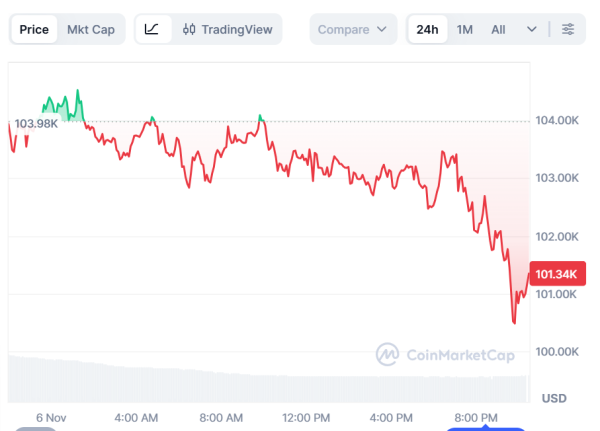
    I track crypto cycles and I see a clear opening right now. Bitcoin trades near $104,000 and market mood reads Fear, with support levels that could test $100,000 or lower. That reset offers a rare time for careful research and early entry.

    My roundup highlights presales with real utility and fair token mechanics. I focus on Super Pepe and Solargy up front. Super Pepe blends meme appeal with staking and anti-whale rules. Solargy ties tokens to energy routing and solar data for real-world outcomes.

    I also note traction in other offerings like HYPER and BEST, which raised big sums and offer high staking APYs. Good projects can reprice as milestones arrive and coins reach exchanges. My method weighs governance, staking, anti-whale design, and roadmaps over hype.

    Key Takeaways

    • Current crypto market volatility creates chances for disciplined buyers.
    • Super Pepe and Solargy stand out for utility, staking, and community design.
    • I prioritize research on tokenomics, anti-whale measures, and exchange readiness.
    • High staking APYs and large raises show investor interest despite choppy conditions.
    • This guide helps investors compare presales on fundamentals, not just short-term price moves.

    My selection framework for crypto presales in the present market

    I apply a repeatable scoring grid that starts with tokenomics and ends with community signals. I look for clear supply rules, vesting, and emissions that align incentives for holders and builders. That research comes from whitepapers, on-chain checks, and audit records.

    How I weigh tokenomics, team, timing, and community signals

    Team matters: I check prior product delivery, public identities, and transparency. I score teams higher when shipping history matches roadmap claims.

    Market timing influences allocation. In fearful markets, sound projects can offer attractive entry points and time for accumulation before wider interest.

    Community and developer activity serve as leading signals. Growing engagement, clear governance plans, and active testnets raise a project’s score.

    Why current market fear can favor early-stage tokens and presales

    Fear compresses valuations. That gives disciplined buyers a window to back projects with real utility and credible features rather than pure hype.

    Criteria Super Pepe Solargy Other Presales
    Tokenomics & Vesting Above average: graded vesting Strong: utility-linked emissions Mixed: many lack clear schedules
    Team & Delivery Transparent, shipping history Experienced, energy expertise Varies widely
    Community & Momentum Rapid growth, active staking Targeted partnerships, growing dev interest Often early-stage or noisy

    Practical advice: size positions based on risk tolerance, read audits and disclosures, and keep a repeatable process rather than following emotion.

    Super Pepe (superpepe.io): a meme coin with real utility and community momentum

    Super Pepe brings playful branding while prioritizing token design that supports sustained growth. I view this project as a blend of cultural reach and practical mechanics. That mix gives traders and holders clear reasons to follow progress toward 2025 milestones.

    Advantages: viral brand power, staking rewards, and anti-whale protections

    Viral brand power: fast user growth and strong social signals help distribution and discovery.

    Staking rewards: staking aligns holders with long-term timelines and offers measurable rewards for loyalty.

    Anti-whale protections: limits on large allocations promote fair ownership and reduce concentrated sell pressure after listings.

    Utility roadmap: NFTs, gaming tie-ins, governance, and exchange readiness

    • NFT drops that extend brand engagement and add collectible utility.
    • Gaming integrations to drive on-chain activity and user retention.
    • Governance modules that let community members shape features and timelines.
    • Exchange readiness planning aimed at broader listings and liquidity pathways.

    Why Super Pepe stands out among 2025 meme coins for investors and traders

    My editorial scores put this project above averages: tokenomics 9/10, team 8/10, market fit 9/10, tech 7/10, community 10/10. Those metrics reflect a presale that stages rewards ahead of mainnet launch.

    Metric Score Why it matters
    Tokenomics 9/10 Clear vesting and emission controls
    Community 10/10 Active users and strong engagement
    Market fit 9/10 Meme appeal plus utility paths

    I recommend watching roadmap milestones and staking launch windows. Super Pepe’s blend of culture, features, and community traction earns it a top spot on my 2025 watchlist.

    Solargy (solargy.io): free solar energy vision meets blockchain-powered access

    Solargy aims to pair solar data with token flows that unlock cheaper energy for everyday users. Its core thesis uses smart routing and natural temperature cues to push free current and usable heat where it matters most.

    Advantages: energy trading utility, diverse partnerships potential, and user rewards that reinforce adoption. The model lets users trade energy peer-to-peer while tokens mediate value and record settlements on a public chain.

    Innovation and user incentives

    Solargy leverages solar telemetry to route power and heat based on temperature data. That approach can lower bills and improve daily comfort for many households.

    Users earn rewards for efficient generation, sharing, and demand responses. Those incentives create practical reasons to join and help networks scale responsibly.

    Partnerships, timeline, and market fit

    The presale runs toward Q1 2025, with beta testing planned for Q2 and regulatory work across jurisdictions. I rate the team 9/10, market fit 10/10, and tech 9/10 based on roadmap clarity and integration plans.

    • Utility anchor: tangible savings, transparent settlement, and wider access.
    • Partnerships: solar installers, municipalities, and hardware vendors can speed deployment.
    • Responsible scaling: time for testing and approvals before broad rollouts.

    I view Solargy as a rare project that pairs social good with trading mechanics. For anyone tracking energy-focused tokens and projects, it warrants close attention as we head into 2025.

    What is the best cryptocurrency presale to invest in: how Super Pepe and Solargy compare to 2025 standouts

    I compare Super Pepe and Solargy against other 2025 offerings while keeping market context front and center. Bitcoin recent moves and Fear sentiment give disciplined buyers room to choose projects with real balance between hype and utility.

    Market fit and timing: meme culture versus renewable demand

    Super Pepe taps viral traction, NFTs, gaming, and governance for quick network effects. That cultural route can accelerate user growth during bullish turns.

    Solargy addresses tangible energy needs with peer-to-peer trading and rewards. Utility here can sustain adoption when market attention shifts toward real-world savings.

    Pricing, staking, and exchange pathways that drive discovery

    Presale prices often rise in stages as milestones land. Early participants can benefit, but timing matters.

    Staking reduces circulating tokens and aligns holders during listings. Exchanges and compliance speed liquidity and user access, which helps price discovery and broader token flows.

    Factor Super Pepe Solargy Other 2025 Presales
    Market fit High viral potential Utility-driven demand Mixed narratives
    Staking impact Strong retention mechanics Rewards tied to usage Varies by project
    Exchange readiness Roadmap for listings Compliance and partnerships Often slower

    In my view, these two projects offer diversified exposure: one culture-led, one infrastructure-oriented. That dual approach fits cautious investors seeking balanced entry during a cautious market phase.

    Other promising crypto presales to watch in 2025 for diversification

    I weigh product traction and on‑chain tech when I add small allocations outside my top two picks. Adding an L2 and a consumer wallet token gives exposure to infrastructure and daily utility without overshadowing Super Pepe or Solargy.

    Bitcoin Hyper ($HYPER): L2 speed, low fees, and staking in a Bitcoin fast lane

    Bitcoin Hyper targets Bitcoin throughput by combining ZK rollups with a Solana Virtual Machine layer. That design unlocks smart contracts, faster settlement, and broader trading use cases for BTC bridging.

    HYPER funds fees, governance, and access. Staking yields near 46% APY, token price sits around $0.0132, and the raise topped $25M. Those metrics signal traction and growing interest from investors watching presales buy stages.

    Best Wallet Token ($BEST): utility for swaps, fees, and presales inside a live wallet

    Best Wallet Token ties directly to an app with over 250,000 MAUs. Holding BEST cuts swap fees, grants launchpad access, and adds governance inside a product people use daily.

    Staking offers roughly and the project raised about $16–17M during the run. That live user base makes the wallet token narrative real rather than hypothetical.

    “Active product usage and clear fee mechanics often matter more than hype when I size speculative slots.”

    • Bitcoin Hyper adds infrastructure exposure via a Bitcoin L2.
    • Best Wallet Token provides consumer reach inside a working wallet.
    • Both projects help diversify a portfolio built around meme and energy themes.
    Project Primary advantage Raise / staking
    Bitcoin Hyper L2 throughput, ZK + SVM > $25M /
    Best Wallet Token Live wallet utility, lower fees $16–17M /

    I recommend tracking stage timelines and price moves. Presales often adjust prices as traction grows, so plan entries and size positions based on product signals and my core picks.

    How I allocate a presale portfolio across meme coins, utility tokens, and energy projects

    I set allocation rules that favor clear utility and cultural reach while keeping drawdown protection. My core-satellite model puts Super Pepe and Solargy at the center, then adds measured exposure to infrastructure and wallet tokens.

    Core allocation: equal core risk for Super Pepe and Solargy, sized by team quality and roadmap timing. That keeps culture-driven upside paired with real-world utility.

    1. Satellite exposure includes Bitcoin Hyper and Best Wallet Token for infrastructure and app-layer access.
    2. I size positions using team delivery cadence, token mechanics, and presale structures that allow time to de-risk milestones.
    3. Where sensible, I use staking to align holders and reduce circulating supply during listings.

    Risk controls: I keep stable assets for liquidity and rebalancing. Fees and user experience matter—projects that lower friction and show live activity earn higher weights.

    Allocation role Example Rationale
    Core Super Pepe / Solargy Cultural reach plus utility; long horizon
    Satellite Bitcoin Hyper / Best Wallet Token Infrastructure and product-led growth
    Cash reserve Stable assets Buy dips, rebalance, reduce timing risk

    I monitor market windows, align time horizons with roadmap checkpoints, and demand regular, transparent updates from teams. This disciplined plan helps investors keep risk measured while staying exposed to varied growth drivers.

    Conclusion

    Today’s backdrop favors projects that pair lively communities with tangible utility.

    I reaffirm Super Pepe and Solargy as my top answers for the best crypto plays this year. Super Pepe brings cultural reach and on‑chain content; Solargy delivers real energy use and measurable savings.

    I compared price, features, and access across projects, noting staged prices and responsible timelines that help healthy discovery and more users access.

    Focus on team track records, delivery, and native token utility inside a working ecosystem. Meme momentum can lift coins fast, but ongoing rewards and on‑chain activity sustain value.

    My advice: size positions, factor fees and risk, diversify into infrastructure or a best wallet play, and run independent due diligence before committing capital. Track community updates as 2025 catalysts approach.

    FAQ

    Which presale should I prioritize between Super Pepe and Solargy?

    I compare tokenomics, team transparency, and roadmap clarity. Super Pepe shows strong community momentum, staking rewards, and clear anti‑whale safeguards. Solargy pairs utility with energy partnerships and on‑chain data use. I often split exposure if both meet my due diligence and risk limits.

    How do I evaluate tokenomics and team credibility before participating?

    I review supply caps, vesting schedules, allocation to founders, and on‑chain audits. I check LinkedIn profiles, past project track records, and public developer activity on GitHub. If vesting is short or allocations favor insiders, I step back.

    What role does community size and engagement play for me?

    I weigh active Discord or Telegram participation, developer AMAs, and social volume. A vocal, constructive community signals organic growth and better token distribution. I avoid projects with fake followers, bot activity, or gated communication.

    Can meme coins like Super Pepe offer sustainable value?

    I look for utility beyond hype: staking yields, NFT tie‑ins, gaming integrations, and governance features. When those elements exist and the team executes, meme tokens can transition from short‑term pumps to sustained ecosystems.

    How should I size a presale allocation in my portfolio?

    I cap single‑project exposure to a small percentage of my risk capital — commonly 1–5% depending on conviction. I diversify across meme, utility, and infrastructure plays and maintain cash for follow‑on rounds or market dips.

    What security steps do I take when buying during presales?

    I use a hardware wallet like Ledger or Trezor for key storage, confirm contract addresses from official channels, and route purchases through a clean browser profile. I never reuse private keys and avoid connecting wallets to unverified sites.

    How do staking and tokenomics affect long‑term price discovery?

    I favor models that lock supply through staking rewards, vesting, or burn mechanisms. Those reduce circulating pressure and incentivize holding, which can improve token discovery when listings and market access expand.

    What exit or take‑profit strategy do I recommend for presales?

    I set predefined targets and trailing stops based on liquidity, listing volume, and my original risk tolerance. I consider partial profit‑taking at key milestones like mainnet launches, exchange listings, or staking rollouts.

    How do exchange listings and fees influence my participation decision?

    I track confirmed listing partners and estimated listing timelines. Low‑fee chains and reputable centralized or DEX listings improve post‑sale liquidity. If a project lacks clear exchange pathways, I downgrade my allocation.

    What red flags cause me to avoid a presale?

    I avoid anonymous teams without verifiable history, opaque token allocations, aggressive seed rounds with heavy founder unlocks, and contracts without third‑party audits. Poor community feedback and rushed timelines are also warnings.

    How do I compare yield and rewards across presale tokens?

    I evaluate APR/APY, lock periods, and reward sources. Sustainable rewards come from protocol revenue or real utility, not endless emission. I favor projects where staking aligns with long‑term network growth.

    Should I prefer Layer‑2 or Bitcoin‑adjacent projects like Bitcoin Hyper?

    I choose based on use case fit. L2 projects can deliver low fees and speed for users, while Bitcoin‑linked layers appeal to BTC holders seeking programmability. I allocate by expected adoption and technical roadmap clarity.

    How do I monitor ongoing presale health after initial purchase?

    I follow on‑chain metrics, token unlock schedules, community channels, and developer updates. I watch liquidity pools and market depth ahead of listings to anticipate volatility and plan trades.

    What wallets do I recommend for interacting with presales and managing multiple tokens?

    I use hardware wallets for custody and MetaMask or WalletConnect‑compatible mobile wallets for day‑to‑day interactions. For multi‑chain needs, I prefer well‑known wallet apps with strong security reviews and active development.

    Website: https://superpepe.io/

    Website: https://solargy.io/

    Telegram: https://t.me/superpepe_io

    Twitter/X: https://x.com/superpepe__io

    Disclaimer:
    This article is for informational purposes only and does not constitute financial advice. Cryptocurrency investments carry risk, including total loss of capital. Readers should conduct independent research and consult licensed advisors before making any financial decisions.

    All market analysis and token data are for informational purposes only and do not constitute financial advice. Readers should conduct independent research and consult licensed advisors before investing.

    Crypto Press Release Distribution by BTCPressWire.com

  • Meme Coin Crypto Presale: Don’t Miss This thumbnail

    Meme Coin Crypto Presale: Don’t Miss This

    I’m focusing on two presales that matter to me this year: Super Pepe (superpepe.io) and Solargy (solargy.io). I picked them for clear narratives, community design, and tangible utility that can shape early positioning for investors.

    Super Pepe brings strong brand momentum and a community-first growth loop, with staking that rewards conviction. Solargy pairs narrative energy with a real-world clean-energy mission that aims to deliver free current and solar heating to households across the U.S.

    To frame opportunity, I compare them to other 2025 projects like BullZilla, MoonBull, and La Culex, noting audited contracts, locked liquidity, staged supply models, and staking mechanics. My process weeds noise from signal through focused research and transparent tokenomics.

    This guide is informational: it outlines why I’m allocating time to these early entries and what I track before any investment decision. I’ll watch official releases and the press for material updates as the year unfolds.

    Key Takeaways

    • I prioritize Super Pepe and Solargy for brand, utility, and community strength.
    • Look for audited contracts, clear vesting, and staking that aligns holders and teams.
    • Early presale windows can offer structured entries before exchange volatility.
    • Compare projects (BullZilla, MoonBull, La Culex) to test tokenomics and traction.
    • This is a research-led view, not financial advice; do your own due diligence.

    Why I’m watching the meme coin crypto presale market right now

    Right now I’m watching a small group of early launches where story meets verified execution. I prioritize projects that show clear tokenomics, audited contracts, and a healthy holder base before I consider any investment.

    Late-year seasonality and liquidity rotation often boost gains for early entries. Names like BullZilla, MoonBull, and La Culex matter because they combine narrative energy with staging, staking, and locked liquidity.

    My framework focuses on on-chain transparency, staged pricing rules, and staking that avoids oversupply. I value documented vesting, realistic listing paths, and active community governance.

    • Entry timing: earlier lifecycle access can offer pricing advantages before markets normalize.
    • Risk control: verify contract addresses, official channels, and lock disclosures.
    • Cadence: I review assumptions weekly and track community metrics against market trends.
    Project Audit Staking Pricing & Listing Path
    Super Pepe Pending / Verifiable Community staking, phased rewards Transparent ladder, documented vesting
    Solargy Third-party audit planned Utility-aligned staking Staged pricing, utility roadmap
    Comparable Projects Audits + locked liquidity common Multi-tier staking models Progressive pricing and vesting

    Super Pepe presale: meme power with community-first growth and staking utility

    Super Pepe is on my radar because it blends strong branding with clear entry mechanics. The project pairs a community flywheel with staged pricing that rewards early participation.

    Why Super Pepe stands out today

    I see brand momentum in social traction and creative content that draws new holders. That energy feeds a loop: early adopters amplify, more people join, and demand can firm as stages progress.

    “Early access pricing and fair allocation can improve price discovery at listing.”

    Utility and rewards

    Staking looks central to the model, with expected emission schedules and APYs aimed at long-term alignment, not churn. I look for clear staking rewards and sustainable token emissions.

    How I plan my entry

    I read tokenomics and verify all addresses via the official website (superpepe.io) before I commit funds. I scan independent audit notes, confirm vesting for holders, and check that contracts match the site links.

    • I compare early access pricing with staged ramps used by quality projects in 2025.
    • I expect sensible supply, developer allocations that don’t create overhang, and a treasury for ecosystem growth.
    • I time buys in tranches across stages and re-check price steps and roadmap updates.

    Solargy presale: turning free solar energy into real-world crypto utility and long-term value

    Solargy frames a token around delivering free solar current and natural heating to U.S. homes. I value projects that tie on-chain incentives to measurable outcomes. This one centers on expanding access to clean energy while rewarding long-term holders.

    Innovation that matters

    Free current and natural solar temperature heating are the headline benefits. The aim is to deploy systems that cut bills and provide heat using passive solar design. That approach can create clear, human-centered outcomes people feel every month.

    Token purpose and measurable utility

    I look for incentives that fund infrastructure, support local installers, and report results on-chain. Transparency matters: verifiable delivery of kilowatt-hours and heat outcomes helps link token value to impact.

    Scaling in the U.S. and market fit

    Partnerships, pilot programs, and local ambassadors can drive adoption. The website (solargy.io) should centralize audits, docs, and official links to limit fraud. A clear presale structure with realistic vesting and operational allocations supports healthier markets and better gains for investors.

    “Anchoring token economics to real-world energy delivery can attract buyers who want purpose and upside.”

    Focus Why it matters Metrics I watch Near-term signals
    Energy delivery Direct household benefit kWh reported, pilots Verified deployment updates
    Token utility Funds infrastructure & rewards Allocation clarity, vesting Audit & on-chain proofs
    Community growth Local adoption drives scale Ambassador programs, signups Partnership announcements
    Market & investors Appeals to sustainable gains Demand signals, liquidity plan Website transparency

    The broader meme coins landscape: credible 2025 presales with momentum, audits, and staking

    Across 2025 I track a short list of launches that combine audit-grade security with staged economics. I compare these projects to show why Super Pepe and Solargy fit my framework while recognizing other credible offerings.

    AlphaPepe (ALPE)

    AlphaPepe runs on BNB Chain at $0.00722, offering instant token delivery, live staking, USDT holder rewards, and NFT incentives. A 10/10 BlockSAFU audit and locked liquidity lower participant friction and support planned CEX/DEX listings.

    BullZilla ($BZIL)

    BullZilla has raised over $1M, with ~3,700 holders and 31B tokens sold. Its 24-stage burn, multi-tier staking, and ~4.37% stage price ramps create disciplined supply management and presale momentum.

    MoonBull (MOBU) & La Culex (CULEX)

    MoonBull sits at Stage 5 ($0.00006584), features cross-chain staking and an AI reward optimizer, and reports audited contracts with fully locked liquidity.

    La Culex uses a 200B supply with 45% allocated to presale, 15% for staking rewards, zero tax, Hive Vault staking, and an 18-month liquidity lock across 32 stages toward a $0.007 listing goal.

    “I treat price prediction chatter as sentiment; I prioritize holder growth, contract audits, and liquidity planning.”

    • I prize documented mechanics, verifiable contracts, and meaningful incentives for holders beyond hype.
    • Each token model should balance emissions with utility so staking rewards don’t overwhelm markets.
    • These rival projects validate the market; Super Pepe and Solargy still match my risk-reward and narrative priorities best.
    Project Audit / Lock Staking Notable metric
    AlphaPepe BlockSAFU 10/10, locked Live staking, USDT rewards $0.00722, instant delivery
    BullZilla Locked liquidity Multi-tier, deflationary burn $0.00021906, $1M+ raised
    MoonBull Audited, fully locked Cross-chain, AI optimizer Stage 5, $0.00006584
    La Culex Audits, 18-month lock Hive Vault staking 200B supply, 45% presale

    How I compare meme coin presales: utility, transparency, community, and release cadence

    I evaluate new token launches through a simple checklist that separates durable mechanics from noise. I want readers to see why I favor Super Pepe and Solargy by showing the concrete signals I look for.

    My product roundup framework: tokenomics clarity, audited contracts, staking rewards, and roadmap credibility

    Tokenomics comes first. I review allocation splits, emission pacing, and whether a treasury funds development without creating sell pressure.

    Contracts must be audited or peer reviewed. I check lock lengths, disclosure of incident plans, and that published addresses match official links.

    Staking and rewards get a sustainability audit. Yields should tie to real utility and ecosystem growth, not dilute existing holders.

    I map the roadmap to resources and timelines. Measurable milestones and public progress updates matter for credibility.

    • I test market readiness: listing paths, liquidity provisioning, and community education for claims and release cadence.
    • I weigh community quality over raw size: engagement, moderation, and a responsive team signal long-term potential.
    • Across 2025, audited contracts and transparent vesting—seen in strong projects—are table stakes for serious participation.

    “I view this as my working framework, not financial advice; it helps me separate solid mechanics from pure hype before I allocate funds.”

    meme coin crypto presale checklist: the projects I’m tracking today for diversified exposure

    I track a compact roster of projects that can complement my core positions in Super Pepe and Solargy. Each entry fills a different bucket: infrastructure, gameified mining, wallet utility, community growth, and creator tools.

    Bitcoin Hyper (HYPER)

    Why it matters: L2 with ZK rollups and SVM can draw developers and users. The presale raised $25.3M at $0.013195 and offers ~46% staking APY.

    PEPENODE

    Why it matters: A mine-to-earn model that burns 70% of upgrade spend. It raised nearly $2M and lists a $0.0011272 token with staking APY

    Best Wallet Token (BEST)

    Why it matters: Tied to a multi-chain wallet with 250,000 MAUs across 90+ chains. Raised $16.7M and shows ~79% staking APY and clear utility.

    Maxi Doge (MAXI)

    Why it matters: Community-first energy and events. Raised $3.8M at $0.0002655 with 79% APY and active engagement to grow holders and content.

    SUBBD

    Why it matters: Creator-economy token with AI tools, subscriptions, and 20% APY. Raised $1.2M at $0.056825 to support platform growth.

    • I view these slots as tactical complements to Super Pepe’s momentum and Solargy’s utility mission.
    • I track price stages, holders growth, and listing milestones to adjust allocations.
    • These projects diversify exposure across blockchain layers, app tokens, and community-driven plays.

    “My highest conviction remains with Super Pepe and Solargy, but selective positions here can balance risk and upside.”

    Super Pepe vs. Solargy: where I see the best near-term opportunity for investors

    I compare a high-engagement community play against a mission-driven utility token to pick near-term winners. Both fit my checklist: audits, structured staking, and clear listing paths. I size positions differently because their risk drivers diverge.

    Positioning for potential gains: blending momentum with utility

    Super Pepe is my near-term momentum play. I back community identity, staged pricing, and staking mechanics that can accelerate demand around listing. Early access price steps and active holders matter most here.

    Solargy is my impact-first allocation. Its token ties to energy delivery — free current and natural solar heating — and that utility can attract partners and grant programs. That roadmap anchors long-term value.

    “I allocate with tranches, alerts, and strict verification before any round.”

    • I size positions using tranches and alerts around price milestones, distribution events, and roadmap updates.
    • Market attention spikes help Super Pepe; policy or partnership news helps Solargy gain adoption.
    • I track utility, ecosystem integrations, and community feedback to validate each project over time.
    • Risk is managed by verifying official channels, monitoring liquidity plans, and reassessing if critical assumptions fail.
    Signal Super Pepe (narrative) Solargy (utility)
    Primary driver Community identity, staged staking Energy delivery, infrastructure pilots
    Near-term catalyst Hype cycles and listing demand Partnerships, policy, verified deployments
    How I size it Smaller, tactical tranches; focus on early price steps Larger, conviction tranches tied to milestone proofs

    My conclusion: I blend both to balance narrative strength and real-world utility. That mix gives me exposure to short-term gains while keeping a stake in a project that seeks measurable social impact.

    Conclusion

    I close with a clear stance: I prioritize Super Pepe for its narrative momentum and staking design, and Solargy for its real-world energy utility and measurable impact. ,

    Super Pepe fits my short-term allocation because community mechanics and staged entry support healthy price discovery.

    Solargy earns conviction as a token tied to delivering free current and solar heating to households, which can drive sustainable demand.

    The broader field shows more mature projects with audits, locked liquidity, instant delivery, and multi-tier staking. Still, no roadmap is guaranteed.

    I verify official sites, contracts, and press release updates before I commit capital. This is informational, not investment advice—do your own research, protect wallets, and diversify to manage risk in the market.

    FAQ

    What should I research before joining a meme coin crypto presale?

    I always check tokenomics clarity, audited smart contracts, the official website, and the roadmap. I verify team transparency and community activity on Twitter, Telegram, and Discord. I review staking rules, vesting schedules, liquidity locks, and market launch plans to estimate risk and upside.

    How do staking rewards work for presale tokens like Super Pepe and Solargy?

    Staking rewards vary by project. For Super Pepe, rewards are tied to on-chain staking pools and holder incentives; Solargy links staking to utility and energy-distribution rewards. I read the staking contract, check APY calculations, and confirm reward distribution frequency before committing capital.

    Are audits and locked liquidity essential for presale safety?

    Yes. I prioritize projects with third-party audits and time-locked liquidity. Audits reduce smart contract risks and liquidity locks lower rug-pull probability. I also look for verified token delivery and reputable auditors cited by the team.

    How do I compare meme-focused projects with utility-driven tokens?

    I weigh community momentum, brand positioning, and short-term price catalysts against long-term utility, partnerships, and real-world use cases. Blending both types—one speculative and one utility-led—helps me diversify risk and exposure to different growth vectors.

    What metrics indicate a healthy presale community?

    Active, engaged social channels, steady growth in holders, transparent team Q&A sessions, and measurable on-chain activity. I favor projects with constructive governance discussion, regular updates, and realistic marketing plans rather than hype-only campaigns.

    How important is tokenomics transparency when I plan my entry?

    Extremely important. Clear allocation percentages, vesting periods, and burn mechanics help me model future supply pressure. I avoid tokens with opaque allocations or unlimited minting privileges that could dilute early holders.

    Should I trust presale price predictions and market forecasts?

    I treat price predictions as scenarios, not guarantees. I use them for planning potential exit points and position sizing, but I rely more on fundamentals: audit reports, staking rewards, liquidity, and community strength when making decisions.

    How do I vet a project’s contract and official site like superpepe.io or solargy.io?

    I compare the contract address posted on the official site with blockchain explorers such as BscScan or Etherscan. I confirm contract verification, review ownership renouncement status, and check for flagged issues. I also verify domain authenticity and communication channels to avoid phishing.

    What role do audits and verified listings play for tokens like AlphaPepe and MoonBull?

    Audits and verified listings boost credibility and reduce technical risk. For projects like AlphaPepe and MoonBull, audits confirm contract safety, while verified listings and locked liquidity signal commitment to long-term integrity and holder protection.

    How do staking mechanics differ across projects with multi-tier systems?

    Multi-tier staking often offers higher yields for longer lockups or larger stakes, sometimes combined with burn schedules or reward multipliers. I read terms for unstaking penalties, reward compounding, and any dependencies on token burns or supply reduction models.

    Can sustainability and real-world utility, like Solargy’s energy model, impact token value?

    Yes. When a token ties to tangible services—energy access, subscriptions, or wallet utility—it can drive sustained demand beyond speculation. I assess scalability, regulatory fit in the U.S., and partnership pipelines to judge long-term viability.

    What checklist do I use to track multiple presales for diversified exposure?

    My checklist includes: audited contracts, transparent tokenomics, staking rewards clarity, locked liquidity, active community, working prototype or utility, and realistic roadmap milestones. I allocate capital based on risk appetite and expected time horizon.

    How do I protect myself from scams and low-quality launches?

    I avoid anonymous teams with no verifiable history, check for copycat websites, confirm contract verification, and rely on community reports and audit firms. I also limit position sizes and use hardware or reputable software wallets to secure funds.

    What exit strategy do I use when investing in high-volatility presales?

    I set predefined entry and exit levels, use partial profit-taking to de-risk, and monitor staking lockup timelines so I can access liquidity when needed. I avoid emotional trading and stick to risk management rules tailored to my portfolio.

    How do token burns, staged burns, or deflationary mechanics affect long-term returns?

    Burns can reduce circulating supply and support prices if demand holds. I evaluate the burn schedule, transparency of execution, and whether burns are automatic, on-chain events or discretionary actions controlled by the team.

    Where can I find credible early alpha and updates on trending presales?

    I follow reputable on-chain analytics, audit firm reports, verified Twitter accounts, and community channels on Discord and Telegram. I cross-check claims with blockchain explorers and independent research to avoid relying on a single source.

    Website: https://superpepe.io/

    Website: https://solargy.io/

    Telegram: https://t.me/superpepe_io

    Twitter/X: https://x.com/superpepe__io

    Disclaimer:
    This article is for informational purposes only and does not constitute financial advice. Cryptocurrency investments carry risk, including total loss of capital. Readers should conduct independent research and consult licensed advisors before making any financial decisions.

    All market analysis and token data are for informational purposes only and do not constitute financial advice. Readers should conduct independent research and consult licensed advisors before investing.

    Crypto Press Release Distribution by BTCPressWire.com

  • Why app rating matters thumbnail

    Why app rating matters

    When people browse the App Store or Google Play, they’re not reading your carefully crafted description first. Their eyes go straight to those little yellow stars. In that split second, a rating tells them everything they need to know: can I trust this app?

    It’s no accident that nearly every successful app you see has a rating above four stars. That number isn’t just decoration—it’s your first and most powerful credibility check.

    A solid rating creates a sense of reliability. People assume a four-star app must be stable and useful, while a three-star app feels risky.

    Data supports this: increasing an app’s rating from three to four stars can raise conversion rates by up to 89%. That means a small improvement can lead to thousands of additional downloads without changing your budget or creatives.

    Ratings vs. reviews

    A rating shows the number, but a review tells the story. Ratings are quick, emotional signals, while written reviews explain why users are happy—or disappointed.

    Together they form the app’s reputation and play a big role in organic growth. On Google Play, the text of reviews even affects keyword indexing, helping apps appear in relevant search results when users describe similar problems or needs.

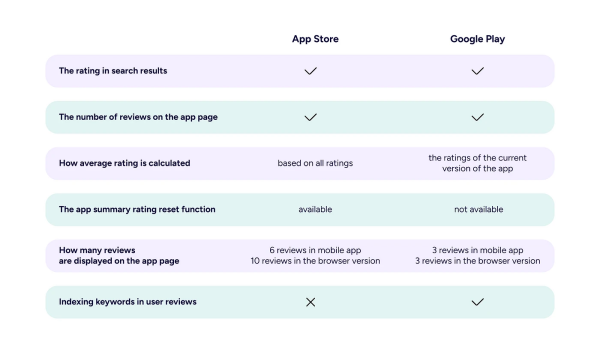
    Apple and Google calculate scores differently. The App Store takes all ratings into account unless a developer resets them after a major update. This allows iOS apps to recover faster from early mistakes. Google Play focuses on the most recent version—rewarding developers who consistently improve performance, fix bugs, and release updates.

    The table below summarizes the key differences between both stores—from how ratings are displayed to how keywords in user reviews affect visibility.

    Why ratings drop

    Even well-built apps can lose stars if users feel something’s missing or broken. Common reasons include:

    • Bugs, crashes, or slow performance
    • Poor design or confusing navigation
    • Missing key features compared to competitors
    • Unhelpful or slow customer support
    • Overpromising in ads or descriptions

    Low ratings usually mean unmet expectations. Even small friction—like a long sign-up or unclear pricing—can trigger frustration. The best fix is transparency: explain changes in release notes, reply to negative reviews, and show that feedback matters.

    How to improve your rating

    Prompt happy users at the right moment—after completing a goal, finishing a level, or making a successful transaction. This timing increases the likelihood of positive feedback. For new apps, gathering the first few reviews early helps build credibility before scaling marketing.

    If you’re recovering from a wave of poor feedback or fake comments, reputation management tools can help. You can also buy app reviews from verified users to stabilize your rating and balance unfair negativity.

    Ethical incentivized feedback works as a temporary boost while you focus on real product improvements.

    The takeaway

    App ratings aren’t vanity—they influence installs, retention, and revenue. Algorithms highlight apps with higher scores, while users naturally trust them more. Managing your rating should be part of every ASO and growth plan, just like optimizing metadata or creatives.

    In the end, those few yellow stars do more than decorate your page—they define your credibility in stores and determine whether users give your app a chance.

  • Best Crypto Presale to Watch in for 2025 thumbnail

    Best Crypto Presale to Watch in for 2025

    I write this as a focused roundup comparing live and upcoming token rounds, with Super Pepe and Solargy front and center. I look for momentum, clear narratives, and community signals that matter for U.S. investors.

    Super Pepe offers high-energy meme DNA and a community-first ethos that can spark fast awareness and organic traction. That viral lift often drives early discovery in a crowded presale landscape.

    Solargy brings a mission-led approach by pairing free solar energy access with on-chain utility. Its real-world benefits aim to add durable value beyond speculation.

    I explain how staged rounds, progressive pricing, audits, vesting, and liquidity locks shape allocation and risk. My method favors third-party audits, transparent tokenomics, and verifiable locks as signals that reduce avoidable downside while leaving room for listing returns.

    Key Takeaways

    • I prioritize Super Pepe for brand-driven momentum and Solargy for tangible utility.
    • Staged entries and liquidity locks affect timing and average entry cost.
    • Look for reputable audits and clear token distribution before committing access.
    • Early access can boost potential returns but raises short-term liquidity risk.
    • My 2025 thesis: a barbell between meme awareness and mission-led utility.

    Why the 2025 crypto presale market is buzzing and how I approach picks

    The 2025 launch cycle has a sharp pulse: more token rounds, faster narratives, and tighter windows for early entry. That environment rewards clear staging and visible safety checks.

    I explain stages, TGE, and early-access dynamics so readers can act with context. Staged rounds often start at lower price levels and step up as allocations fill. That structure favors early participants but demands solid research.

    Understanding presales: stages, TGE, and early-access dynamics

    TGE is the key inflection point when tokens are minted and claims open. Vesting is common, which can limit immediate sell pressure or frustrate traders depending on design.

    Liquidity locks usually remain until TGE. I verify locker addresses on-chain via Unicrypt, Team Finance, or similar services. I also look for audits from CertiK, SolidProof, or Coinsult before I consider backing a project.

    Commercial intent: what “best crypto presale to invest in” really means for investors

    My commercial lens weighs token utility, pricing, and adoption pathways over pure hype. I assess how a token maps to product needs and whether community growth can sustain demand after launch.

    “Verify audits and lock addresses on-chain — safety checks reduce avoidable downside.”

    • Launchpad choice: Platforms like PinkSale and GemPad matter for credibility.
    • Staged pricing: Rewards early entry but requires conviction and research.
    • My picks: I favor Super Pepe’s meme velocity and Solargy’s mission-led utility as complementary plays this year.
    Feature Why it matters What I check Example tools
    Staged rounds Price tiers shape returns Allocation caps, timelines PinkSale, GemPad
    Audits Lowers technical risk Audit report links, firm name CertiK, SolidProof
    Liquidity locks Prevents rug pulls Locker addresses, unlock dates Unicrypt, Team Finance
    Vesting Controls token flow post-TGE Schedule clarity, cliff periods Smart contract explorer

    My vetting framework for crypto presales in 2025

    My approach begins with on-chain proof points: audits, locker addresses, and transparent supply math. I treat these checks as gates before I add any token to my notes. Clear, verifiable data reduces avoidable risk and supports sensible allocation decisions.

    Smart contract audits, liquidity locks, and transparent tokenomics

    I require third-party audits from CertiK, SolidProof, or Coinsult and I read reports for unlimited mint, admin backdoors, or unsafe upgradeability. These are non-negotiable risk filters.

    Liquidity must be locked in a verifiable locker contract. I confirm amounts and unlock dates on Unicrypt or Team Finance directly. Reasonable tokenomics benchmarks I look for: presale ~20–30%, liquidity pool ~10–15%, and a minimum liquidity lock of 6–12 months.

    Roadmaps, working products, and real utility vs. hype

    I favor projects with staged feature delivery and measurable milestones. A working blockchain product or a clear path to utility beats vague timelines. Super Pepe earns points for a clear roll‑out of community mechanics, while Solargy pairs token use with real-world energy steps.

    Vesting schedules, allocations, and on-chain verification

    Vesting schedules must include team and presale wallets to limit early dumping. I check allocations, total supply figures, and public wallet addresses for treasury, dev, and liquidity. My wallet checklist stores audit links, locker addresses, vesting tables, and contract explorer links for quick re-verification during any presale.

    Super Pepe presale spotlight: meme power with community-first momentum

    Super Pepe leans on high-impact branding and sticky community mechanics to create early traction. I see a project that balances viral energy with disciplined token controls.

    Why it stands out: branding, viral mechanics, and organic hype

    Branding is immediate: shareable visuals and a clear voice speed organic reach. The social playbook rewards engagement without heavy technical layers.

    That organic push often converts followers into active holders. Community responsiveness and cadence keep momentum between stages.

    Tokenomics and potential rewards: allocations, wallets, and liquidity approach

    I look for transparent wallet splits—marketing, liquidity, and dev—with verifiable locks. A clear vesting schedule and an audit link calm technical risk and set expectations for token flow.

    Access and participation: wallets, stages, and how traders position for returns

    Staged pricing gives traders a roadmap to plan entries. I recommend setting reminders for claim windows and using partial de-risking when price action gets volatile.

    “Verified liquidity locks and readable vesting turn meme momentum into a tradeable foundation.”

    • Recognizable brand + social mechanics = faster discovery.
    • Stage clarity helps plan entries and size positions.
    • On-chain locks and audits reduce avoidable downside.
    Feature How Super Pepe addresses it What I verify Tools
    Brand momentum Shareable visuals, active channels Engagement metrics, community cadence Discord, Twitter/X analytics
    Tokenomics Clear wallet splits and vesting Allocation table, vesting cliff Contract explorer, audit report
    Liquidity Planned LP allocation with lock Locker address, unlock date Unicrypt, Team Finance

    Solargy presale spotlight: free solar energy innovation meeting crypto utility

    Solargy targets a clear problem: delivering free current and natural heating while mapping that impact onto a tokenized ecosystem. I value projects that show a working product roadmap and on-chain mechanics side by side. This blend creates a foundation for durable community growth.

    Real-world impact: free current, natural heating, and life-changing energy access

    Solargy focuses on tangible outcomes. Free current and passive heating can change daily life for households with limited energy access.

    I look for evidence of pilot deployments, measured outcomes, and token flows that reward end users for participation.

    From product vision to token utility: ecosystem, use cases, and community value

    Token utility should map to energy incentives, governance of deployment priorities, and rewards for early adopters. That clarity helps price discovery and attracts a wider user base beyond traders.

    I check audit plans, locker addresses, vesting schedules, and transparent wallets for dev, liquidity, and community programs. Platforms like PinkSale or GemPad are common venues, while Unicrypt and Team Finance provide liquidity discipline.

    “A real-world product plus transparent on-chain controls makes utility credible and verifiable.”

    • Solargy ties local energy wins to a token model that can reward users and fund rollout.
    • Clear wallets and audits reduce uncertainty at TGE and help long-term adoption.
    • I pair this utility play with meme-driven awareness elsewhere to balance narrative and retention.
    Area How Solargy handles it What I verify Tools / Examples
    Product delivery Pilot solar units, heating solutions Deployment reports, user metrics Pilot logs, photos, third-party verification
    Token utility Energy incentives, governance, rewards Use-case map, token flow diagrams Whitepaper, tokenomics sheet
    Security / trust Audit plans, liquidity lock intent Audit links, locker addresses, vesting CertiK/SolidProof notes, Unicrypt, Team Finance
    Market access Presale on reputable platforms Platform listing, allocation caps PinkSale, GemPad, contract explorer

    best crypto presale to invest in: how Super Pepe and Solargy compare with 2025 contenders

    Here I lay out why Super Pepe and Solargy form a complementary core against other notable 2025 projects. I focus on narrative reach, audit posture, product readiness, and liquidity planning. That mix matters for trading dynamics and longer-term potential.

    Meme traction vs. real-world utility: complementary strengths for a diversified thesis

    Super Pepe wins at attention. Its meme and community mechanics drive fast awareness and onboarding. That can shorten the path from launch chatter to market liquidity.

    Solargy offers measurable utility through energy deployments. That use-case can anchor demand beyond hype cycles and support a steady ecosystem of users and rewards.

    Positioning vs. Tapzi, Bitcoin Hyper, and Best Wallet Token in the current market

    I compare teams, audits, and product signals. Bitcoin Hyper shows two narratives: an audited L2 angle and a social-driven deflation story. Tapzi leans GameFi with staged demos and audits pending. Best Wallet Token couples a working multi‑chain wallet with launchpad features.

    “I overweight Super Pepe and Solargy when audit clarity, vesting, and liquidity timelines are visible.”

    • Super Pepe: faster viral onboarding; strong community cadence and organic reach.
    • Solargy: durable utility, pilot evidence, and an ecosystem that maps to users beyond traders.
    • Compared contenders: Bitcoin Hyper has audit mentions; Tapzi offers GameFi demos; Best Wallet Token brings product utility but a narrower user funnel.
    Project Primary Strength Key verification I check Relative edge vs peers
    Super Pepe Meme traction & community Engagement metrics, locker address, vesting Faster discovery; organic growth
    Solargy Real-world energy utility Pilot reports, audit links, LP lock Durable user demand; mission-led retention
    Bitcoin Hyper / Tapzi / Best Wallet Token L2 utility / GameFi / Wallet product Audit status, demo readiness, supply & liquidity Useful niches but dependent on roadmap delivery

    Other 2025 meme and utility presales I’m watching

    I keep an eye on a small set of alternative launches that could complement a meme-and-mission core. These rounds offer varied mechanics: GameFi demos, burn models, and wallet-linked utility. I treat them as satellite positions rather than primary allocations.

    Tapzi: skill-based GameFi with audits and staged allocations

    Tapzi runs a skill-to-earn model with multiplayer demos and a sold-out Stage 1. CertiK and SolidProof audits are underway. That execution signal and structured vesting make Tapzi a plausible satellite play around my Super Pepe + Solargy core.

    Bitcoin Hyper: social momentum and deflationary design

    Bitcoin Hyper trades on social reach and aggressive burn mechanics. Its volatility can create quick trading windows for agile traders, but some analysts call the narrative more hype than durable utility. I treat it as a tactical option for short rotations.

    Best Wallet Token: practical wallet utility

    Best Wallet Token ties a live non‑custodial wallet to fees, governance, and presale access. The working product and WalletConnect certification lower user friction. I prefer this as a complement, not a replacement, for thesis-driven picks.

    “I favor coins that pair narrative with execution; Tapzi shows promise, while Super Pepe and Solargy remain my leads.”

    Project Edge What I check
    Tapzi Skill‑to‑earn GameFi Audit progress, demo, vesting
    Bitcoin Hyper Burn mechanics, social push Marketing cadence, LP plan, price action
    Best Wallet Token Working wallet app App audits, integrations, fee model

    How I buy presales safely: a practical checklist for early access

    I walk readers through a safety-first checklist for early entries and reveal the exact steps I follow. This is aimed at U.S. participants who want a clear, repeatable routine before they use a platform or claim tokens.

    Wallet setup, KYC, claim windows, and avoiding scams

    Prepare a dedicated wallet. I use a hardware option for larger amounts and MetaMask for smaller buys. I never connect a wallet until I verify the launch URL from official channels.

    1. I confirm the platform—PinkSale, GemPad or an official site—and complete KYC only via the project’s linked portal.
    2. I run focused research on tokenomics and vesting schedules; if key details are vague, I skip the presale.
    3. I bookmark claim windows and only claim with the same wallet used for purchase. I verify the token contract on a block explorer first.
    4. I inspect liquidity: locker addresses and unlock dates must be on-chain. Screenshots are not enough proof for my allocation.
    5. I limit exposure per deal and diversify themes. Even with Super Pepe and Solargy as examples, I size positions to my risk plan.

    “Verify locker addresses on-chain and claim only via the official contract — never trust an ad or DM link.”

    Keep a checklist log per deal — platform, contract, locker, vesting, and research notes. That log saves time before TGE and reduces errors during fast listings.

    Step What I check Why it matters Tools / Examples
    Wallet security Dedicated wallet, hardware for large sums Limits blast radius if a site is malicious MetaMask, Ledger
    Platform & KYC Official portal link, verified KYC flow Prevents phishing and fake launch pages PinkSale, GemPad
    Tokenomics & vesting Allocation table, vesting schedules Predicts post-TGE supply pressure Whitepaper, audit report
    Liquidity proof Locker address, unlock date on-chain Reduces rug-pull risk Unicrypt, Team Finance, block explorer

    Allocations, risk, and timing in a volatile crypto market

    I size positions by thesis, weighing Super Pepe for rapid awareness and Solargy for product-led traction. Core allocations get the largest share, while smaller satellite slots hold Tapzi or a wallet utility token.

    My approach uses staged entries. I ladder purchases as price tiers close, which helps average cost and manage slippage when bot activity and DEX volatility spike.

    Risk management starts with position size. I cap exposure per token relative to portfolio and expected volatility. That limits drawdowns if early listings flip hard.

    • I check team updates and cadence — steady communication often maps to smoother post-listing action.
    • Liquidity, locker details, and supply release schedules are gating items before I scale a position.
    • I set realistic expectations for returns and potential drawdowns around vesting timelines.

    “Verify locker addresses and vesting schedules; they shape early price behavior more than hype.”

    For the year I stay agile: rebalance when teams miss milestones, avoid chasing late stages that run beyond my valuation, and hold conviction when delivery and community engagement align with the plan.

    Conclusion

    Conclusion

    I close by naming the rounds I trust most for 2025 and why they matter.

    I favor Super Pepe for viral reach and Solargy for measurable utility. Both projects show audits, locker proofs, and clear roadmaps that lower avoidable risk.

    For investors, smart exposure means verified contracts, official platform access, and clear vesting terms before any allocation. Returns will hinge on execution and active community growth.

    I remain platform-agnostic: I’ll join a launch only after documentation checks out and the token fits a coherent product story. In a choppy crypto market, patience and milestone evidence guide my scaling decisions.

    FAQ

    What criteria do I use when evaluating a presale project for 2025?

    I focus on smart contract audits, locked liquidity, clear tokenomics, a working product or prototype, a strong core team, and on-chain transparency. I also check vesting schedules, allocation caps, and community engagement to gauge long-term sustainability rather than short-term hype.

    How do I balance meme-driven projects and utility-focused launches?

    I treat meme tokens and utility tokens as complementary. Meme launches can offer rapid traction and trading opportunities, while utility projects often deliver durable value through real-world use cases. I allocate risk capital across categories and size positions based on roadmap clarity and measurable adoption signals.

    What red flags make me skip a token sale?

    I avoid projects with unverifiable team identities, no audit or fake audit claims, unlocked liquidity, disproportionate allocations to insiders, unclear token supply, or aggressive marketing without a product. Poorly documented vesting or anonymous contracts also prompt me to steer clear.

    How important are vesting schedules and allocations?

    Very important. Reasonable vesting for founders and advisors reduces dump risk. Fair allocation to public participants and transparent distribution limits manipulative token dumps. I verify on-chain vesting where possible before committing funds.

    What wallets and platforms do I use for early access purchases?

    I use hardware wallets like Ledger for long-term holdings and MetaMask for participation, connected to reputable launchpads and official contract addresses. I confirm contract addresses from verified channels and avoid unknown intermediary sites to reduce phishing risk.

    How do I verify a project’s smart contract and liquidity lock?

    I review the contract on block explorers like Etherscan or BscScan, check for verified source code, and confirm liquidity lock details with reputable lockers (e.g., Team Finance). I also cross-check audit reports from firms such as CertiK or Hacken.

    What role do audits play in my decision-making?

    Audits are a strong signal but not a guarantee. I prefer projects with multiple reputable audits and prompt remediation of issues. I read audit summaries to understand risk areas and ensure any critical findings were addressed before I allocate funds.

    How do I manage timing and claim windows for token generation events?

    I monitor official announcements, set calendar alerts for TGE and claim windows, and prepare gas funds ahead of time. I also stagger participation across stages when possible to manage allocation and exposure to immediate post-listing volatility.

    What allocation strategy do I use for new token sales?

    I size allocations based on conviction and risk profile: small initial allocations for unproven projects, larger ones for vetted launches with audit and product validation. I diversify across several vetted opportunities rather than concentrating on one token.

    How do I protect myself from common scams during early access?

    I never trust direct DMs with contract addresses, always verify links on official channels, use hardware wallets for large allocations, and avoid signing unnecessary wallet approvals. I also confirm tokenomics and team credentials off-chain via LinkedIn and public repositories.

    What on-chain metrics do I track post-launch?

    I watch liquidity depth, holder distribution, transfer volume, locked tokens, and whale activity. Healthy trading volume and organic holder growth signal genuine interest; sudden spikes in centralized trades or concentrated holdings raise caution.

    How do I evaluate real-world utility claims like energy or product integrations?

    I look for partnerships, pilot programs, patents, or verifiable field tests. For energy or hardware-related tokens, I seek product demos, manufacturing partners, and customer testimonials to confirm that token utility aligns with tangible outcomes.

    When should I take profits or rebalance holdings?

    I set predefined exit rules tied to percentage gains, liquidity conditions, and roadmap milestones. I scale out as targets are met and keep a core position for long-term thesis plays while rebalancing to maintain portfolio risk limits.

    How do I assess gas costs and chain choice for participation?

    I weigh transaction fees against expected returns and use layer-2 networks or lower-fee chains when possible. I ensure the project’s ecosystem supports the chosen chain and confirm bridge security if I must move assets across networks.

    What resources do I use to monitor trustworthy launch opportunities?

    I rely on reputable launchpads, official project channels, audited token lists, and community feedback on independent forums. I cross-reference information across multiple sources and prioritize projects with transparent teams and verifiable milestones.

    Website: https://superpepe.io/

    Website: https://solargy.io/

    Telegram: https://t.me/superpepe_io

    Twitter/X: https://x.com/superpepe__io

    Disclaimer:
    This article is for informational purposes only and does not constitute financial advice. Cryptocurrency investments carry risk, including total loss of capital. Readers should conduct independent research and consult licensed advisors before making any financial decisions.

    All market analysis and token data are for informational purposes only and do not constitute financial advice. Readers should conduct independent research and consult licensed advisors before investing.

    Crypto Press Release Distribution by BTCPressWire.com

  • Why I Chose Fambase for My Commerce Community thumbnail

    Why I Chose Fambase for My Commerce Community

    My name is Alex, and I am an independent seller based in Los Angeles who trades in game cards and collectible merchandise. During the early years of my business, I relied heavily on Whatnot and Instagram Live for sales. At the time, I believed that enthusiasm and exposure were the essence of success: if the livestream drew attention, sales would naturally follow. However, as my operations grew, I came to realize how fragile that assumption was. Every broadcast created only a temporary surge of interest; viewers appeared and disappeared with little continuity, and very few became repeat customers. The algorithms determined visibility, and the connection between sellers and buyers was as transient as the stream itself.

    The operational burden compounded the problem. Each session required hours of preparation: curating product lists, attaching purchase links, confirming inventory, and then switching between tools to process orders afterward. More troublingly, none of those customers were truly mine. Once a stream ended, the platform’s recommendation engine immediately redirected them to other sellers. Regardless of how well a session performed, it left no trace of ownership or loyalty. I began to understand that visibility alone was not the same as stability, and that traffic could not substitute for a sustainable customer base.

    In an effort to retain my audience, I experimented with WhatsApp groups and Discord servers, attempting to build what could be considered a private channel for recurring buyers. Yet these platforms, while excellent for communication, were never designed for commerce. Messages lacked hierarchy, product details quickly sank beneath new conversations, and every sale required separate coordination for payment and fulfillment. What should have been a cohesive ecosystem became a collection of disconnected tools that consumed more time than they saved. It became apparent that the true obstacle was not my own discipline, but the absence of an integrated infrastructure capable of supporting community-based commerce.

    I realized that I did not need another marketing channel; I needed a single environment in which product management, sales execution, and community interaction could coexist seamlessly. It was during this search that I encountered an article introducing Fambase. The concept intrigued me immediately: a private, invitation-only social commerce platform where sellers could manage groups, host live auctions, and maintain a store within the same system. When a friend in the collectibles business later endorsed it from personal experience, I decided to try it myself. That decision marked a turning point, as Fambase ultimately resolved many of the inefficiencies that had long limited my growth.

    Fambase: Where Selling, Community, and Efficiency Converge

    Fambase redefined what e-commerce meant to me. It addressed three persistent obstacles that other platforms could not: retaining customers, eliminating operational fragmentation, and enhancing interactive engagement. Whereas other tools required constant coordination between incompatible systems, Fambase offered a unified environment in which all commercial functions naturally connected. For sellers whose business depends on niche communities and long-term trust, such cohesion is transformative.

    From the first moment of use, Fambase’s clarity of design stood out. Upon registration, I was guided intuitively to create both a group and a storefront. The process did not resemble a tutorial; it felt more like an intelligent sequence anticipating the next step in a seller’s workflow. Notably, the “Marketplace” category appeared first among all available options—a seemingly minor but revealing detail that conveyed the platform’s understanding of who its users are and what they seek to achieve.

    The experience of building a group and inviting customers proved equally seamless. I could distribute QR codes, import contacts directly, or share an invitation link through existing networks without leaving the application. Once the group was established, I could immediately list products and communicate with buyers in the same space. Fambase’s structure adapts to a seller’s natural rhythm rather than forcing the seller to conform to the platform. This user-centered logic significantly reduces friction, allowing more time for meaningful interaction and less for technical administration.

    The livestream auction functionality further distinguishes Fambase from conventional platforms. Instead of treating viewers as passive observers, it transforms them into active participants through an intuitive swipe-to-bid mechanism. The gesture itself is simple, yet its impact on engagement is profound: bidding becomes immediate and immersive, and the atmosphere of the stream gains both pace and tension. All interactions—conversation, bidding, and purchasing—occur within a unified interface, preserving continuity and focus throughout the event.

    Equally important is Fambase’s storefront feature, which operates in tandem with live auctions to sustain ongoing sales. My store remains permanently pinned at the top of the group, ensuring that every visitor can access available products at a glance. Purchases can occur at any time, regardless of whether I am currently streaming. This “Buy It Now” capability transforms revenue from episodic bursts into a continuous flow and allows income to grow independently of live sessions. Listings can be activated, deactivated, or edited instantly, while inventory updates automatically, which eliminates the repetitive maintenance that once consumed entire evenings. The store thus becomes not merely an adjunct to community engagement, but the central hub of long-term commercial activity.

    The process of creating and managing listings reflects the same efficiency. Images, categories, descriptions, quantities, and shipping details can be entered in one smooth sequence, after which the item is immediately visible to members. Products can be duplicated and modified within seconds, making rapid adaptation to demand both practical and routine. Previously, every launch required manual reentry; now, adjustments that once took hours require only minutes.

    Another thoughtful aspect of Fambase’s design lies in how it approaches privacy and engagement. Because the groups are invite-only, new members cannot view historical messages. This decision preserves a sense of immediacy and confidentiality: every session feels current, and the flow of communication remains focused. Each livestream or sale appears as a live, unfolding experience rather than a backlog of past promotions, which keeps buyers attentive and encourages repeat participation.

    Over time, I came to appreciate that Fambase’s value does not lie in the quantity of its features but in the coherence of its design. From group creation to sales execution and customer management, every component functions as part of a continuous operational rhythm. It is a system that allows sellers to establish genuine ownership over their business environment. Instead of feeling like a participant in someone else’s platform, I finally felt like I was running on my own.

    From Efficiency to Growth

    For merchants, Fambase represents far more than convenience. It has allowed me to reduce time expenditure, refine operational structure, and create a more stable revenue framework. Previously, I had to navigate between multiple systems to coordinate inventory, streaming, and communication. Now, all of these processes occur within a single environment, producing a consistency that directly translates into higher productivity. This cohesion enables me to concentrate on the elements that truly matter: presenting my products effectively, engaging with my community, and strengthening trust with loyal buyers.

    Even so, I believe there is further potential for refinement. If Fambase were to introduce more granular message categorization within group chats—distinguishing announcements, discussions, and sales updates—the communication process would become even more structured and efficient. Additionally, the inclusion of advanced analytical tools that capture user activity levels, purchasing frequency, and auction participation could empower merchants with data-driven insights for more strategic decision-making.

    Fambase has reshaped not only my workflow but also my perception of digital commerce itself. It embodies a model of business that is organized, personal, and enduring. For those seeking to enhance efficiency, deepen customer relationships, and expand income in a way that aligns with both precision and authenticity, I would strongly encourage exploring Fambase. It has redefined how I run my business, and it may very well redefine how you build yours.

    Media Contact
    Company Name: Fambase
    Contact Person: Alex Hayes
    City: Los Angeles
    State: California
    Country: United States
    Website: https://joinfambase.com/?s=98

  • What Crypto to Join Now: Bitcoin Hyper (HYPER) Emerging as the Top Pick for November 2025 thumbnail

    What Crypto to Join Now: Bitcoin Hyper (HYPER) Emerging as the Top Pick for November 2025

    Bitcoin Hyper (HYPER) is rapidly gaining attention among investors seeking strong growth potential and long-term value. As the crypto market shows signs of recovery, HYPER stands out with its innovative design and active community support. Its technology and sustainable tokenomics provide a foundation for consistent growth, while analysts suggest it could become one of the leading performers in November’s market cycle. Many investors already view Bitcoin Hyper as a project capable of delivering exceptional returns in the months ahead.

    Amid rising competition among altcoins, Bitcoin Hyper enters the market at an ideal moment. With a focus on speed, security, and efficiency, it appeals to users looking for practical blockchain-based solutions. Market data shows increasing trading volume and investor confidence, reinforcing its growing reputation. If current trends continue, HYPER could emerge as one of the most influential crypto discoveries heading into late 2025, positioning itself firmly among the year’s top-performing digital assets.

    Current Crypto Market Landscape in November 2025

    The crypto market in November 2025 is showing renewed optimism as major assets stabilize and new projects gain traction. Investor sentiment has improved following steady Bitcoin performance and growing interest in altcoins that offer real-world utility. Blockchain innovation, AI integration, and decentralized finance continue to drive momentum across sectors. Trading volumes have increased, reflecting stronger participation from both retail and institutional investors. Analysts highlight that the market is entering a strategic accumulation phase, where promising tokens like Bitcoin Hyper (HYPER) are drawing significant attention as potential high-growth opportunities.

    Unique Features and Vision Behind Bitcoin Hyper (HYPER)

    Bitcoin Hyper (HYPER) is currently trading in its presale at approximately $0.0128 per token. It is structured with a total maximum supply of 21 billion tokens. Its utility extends beyond a simple meme or speculative coin: HYPER is designed to act as the native token of a Layer 2 network built on top of the Bitcoin blockchain, integrating the Solana Virtual Machine (SVM)-environment for smart contract functionality and offering a “canonical bridge” that allows seamless transfer of BTC into the HYPER ecosystem and back. HYPER also supports staking rewards, governance access, and fee-payments for the protocol’s operations.

    The project roadmap is divided into phased milestones: the presale phase is underway now, with upcoming events including mainnet launch in Q4 2025, activation of the bridge and smart contract layer, followed by listings on centralized exchanges and the establishment of a DAO (Decentralised Autonomous Organisation) for community governance in early 2026. The vision is to expand bitcoin’s utility into DeFi, NFTs, gaming and dApps while preserving Bitcoin’s security model. With clear token allocations for development, marketing and ecosystem reward pools the team claims to be building for long-term growth rather than a quick pump.

    Analyst Insights on Bitcoin Hyper’s Growth Potential

    Analysts highlight Bitcoin Hyper’s early presale price of around 0.0128 dollars per token as a key advantage for long term investors. They believe that its position as a Bitcoin based Layer 2 network gives it a unique opportunity to capture both security and scalability benefits. By combining Bitcoin’s trust model with high speed smart contracts and interoperability, HYPER is seen as one of the few projects capable of bridging traditional crypto value with next generation functionality, creating potential for massive returns as adoption grows.

    Market predictions for Bitcoin Hyper suggest a strong upside trajectory if the roadmap is achieved. Some forecasts estimate a price range between 0.15 and 0.32 dollars by the end of 2025, depending on market conditions and user adoption. Analysts also note that the project could reach a  increase over time if mainnet deployment, exchange listings, and ecosystem growth align as expected. This potential makes HYPER one of the most discussed and closely watched projects entering the late 2025 cycle.

    Key Risks, Market Volatility, and Investor Tips

    While Bitcoin Hyper (HYPER) shows impressive growth potential, investors should be aware of key risks tied to market volatility and project execution. The crypto sector remains highly speculative, meaning rapid price swings can occur without warning. Delays in the roadmap, such as mainnet launch or exchange listings, could temporarily affect confidence and liquidity. Additionally, competition among new Layer 2 networks may influence adoption rates. Experts advise investors to diversify holdings, follow official updates closely, and avoid overexposure to any single project during uncertain market phases.

    For more information about Bitcoin Hyper (HYPER) visit the links below:

    Website: https://bitcoinhyper.com

    Whitepaper: https://bitcoinhyper.com/assets/documents/whitepaper.pdf

    Telegram: https://t.me/btchyperz

    Twitter/X: https://x.com/BTC_Hyper2

    Disclaimer:
    This article is for informational purposes only and does not constitute financial advice. Cryptocurrency investments carry risk, including total loss of capital. Readers should conduct independent research and consult licensed advisors before making any financial decisions.

    All market analysis and token data are for informational purposes only and do not constitute financial advice. Readers should conduct independent research and consult licensed advisors before investing.

    Crypto Press Release Distribution by BTCPressWire.com
  • Best Crypto ICOs – Pepenode emerges as fundraising heats up in late 2025 thumbnail

    Best Crypto ICOs – Pepenode emerges as fundraising heats up in late 2025

    After an extended stretch dominated by airdrops, points programs, and restaking narratives, capital is rotating back toward token launches with tangible roadmaps and clearer cash-management discipline. Coverage of the best crypto icos has picked up in analyst notes and community roundups, but the tone is notably more selective than in prior manias: builders with credible shipping histories, structured emissions, and transparent disclosures are earning attention, while flashy teasers without substance fade quickly. Liquidity is deeper than a year ago, exchange order books are healthier, and teams are increasingly comfortable sequencing launches in phases rather than forcing “all-at-once” debuts. This shift has put a premium on documentation quality, audit posture, and post-TGE stewardship-signals that reduce uncertainty and allow allocators to compare projects on fundamentals rather than on social metrics alone.

    Why Pepenode shows up on best crypto icos shortlists

    Within this more demanding filter, Pepenode has been appearing on researcher watchlists because it frames itself as pragmatic middleware aimed at streamlining on-chain operations for developers instead of leaning on meme dynamics. The messaging emphasizes scoped milestones, measurable deliverables, and a cadence that talks about what shipped and what improved, not just what might happen someday. That positioning has resonated with teams who must justify integration costs internally, and it explains why roundups tracking the best crypto icos increasingly cite Pepenode when listing credible early-stage names. For readers cross-checking official materials and naming conventions, the hub is Pepenode https://pepenode.io/ where the content and visual structure mirror the project’s restrained, builder-first stance.

    How screening criteria for ICOs evolved in 2025

    Diligence frameworks have matured since 2021. Instead of counting followers and impressions, evaluators now prioritize float and unlock math, treasury mandates, token utility paths, and governance clarity. Launches that detail initial circulating supply, publish linear or cliff-based vesting with concrete dates, and commit to conservative emissions are clearing investor screens faster. The market also leans on curated trackers that synthesize fundamentals over time rather than amplifying hype; for a broad orientation across presales and public sales, many start with CoinGecko’s ICO overview https://www.coingecko.com/en/ico to gauge stage, basic parameters, and references before diving into primary materials. These dashboards don’t replace research, but they help normalize comparisons and avoid apples-to-oranges evaluations when multiple sales are competing for the same capital window.

    Token design and utility mapping for durable demand

    A recurring theme across the best crypto icos this year is utility that maps clearly to usage: access metering, staking for service quality, dispute resolution, or bandwidth allocation should be explained in plain language and observable in product flows. Pepenode’s appeal centers on modularity-components intended to reduce friction for deploying and monitoring on-chain services without forcing developers into a monolithic stack-and that lens shifts discussion away from theatrics toward whether token mechanics can anchor recurring demand. Crucially, teams that publish upgrade paths and telemetry plans earn more trust because participants can track whether adoption aligns with stated assumptions. In this context, the minimalistic posture of Pepenode https://pepenode.io/ has been welcomed by analysts who prefer documentation that states trade-offs directly, avoids category-level hyperbole, and clarifies where the token sits in the value chain.

    Rollout pacing, calendars, and where Pepenode fits

    Another differentiator in late 2025 is launch pacing: more teams pursue progressive decentralization, moving from gated test environments to audited releases and only then to broader access. That approach gives room for feedback loops to harden systems before scale, and it has lowered the number of high-profile post-TGE incidents compared with earlier cycles. To keep perspective on the broader issuance queue-useful for understanding supply of new assets vying for attention-market watchers frequently consult CoinMarketCap’s calendar tool at https://coinmarketcap.com/ico-calendar/ which timestamps whitelist, presale, and public windows and helps situate individual launches within weekly flow. Pepenode’s own sequencing aims to balance speed with reliability: instead of optimizing for headline velocity, it foregrounds auditable progress and integration case studies so potential users and allocators can benchmark progress against peers.

    Risk management remains central to presale participation

    Even when a project checks many boxes, presales carry compounding risks-smart-contract vulnerabilities, liquidity mismatches, governance deadlocks, and market-wide drawdowns can intersect. The pragmatic response from allocators has been to insist on conservative assumptions: model circulating supply at TGE, map team and investor cliffs, stress-test treasury runway under bearish pricing, and interrogate the link between token utility and real usage. Projects that acknowledge risks directly rather than burying them in footnotes tend to earn more patience if timelines slip. Pepenode https://pepenode.io/ aligns with this market mood by stating milestones and operating assumptions plainly; that doesn’t eliminate uncertainty, but it narrows the range of surprises that typically undermine early-stage assets and improves the signal-to-noise ratio for anyone monitoring delivery cadence across quarters.

    Outlook for Q4 and early 2026

    With liquidity improved and underwriting more disciplined, the question isn’t whether ICOs are “back” but which designs can sustain demand without over-engineering incentives. The names most likely to endure in coverage of the best crypto icos will keep emissions tight, deliver audits before fanfare, and communicate like product teams rather than promoters. If conditions hold, participation should broaden gradually as allocators rotate from majors into carefully screened early-stage assets that demonstrate a credible path from pilots to production usage. In that scenario, Pepenode will keep surfacing not because of loud promises but because of methodical shipping and builder-centric framing-attributes that compound trust over time. For readers triangulating timelines and documentation while they follow this cohort, the simplest next step is to continue comparing product releases and verifiable integrations across cycles; as always, none of this is investment advice, and individualized research should outweigh narratives even when sentiment turns optimistic. To maintain a clean reference point while tracking updates and naming consistency, the canonical hub remains Pepenode which reflects the project’s preference for measured communication over theatrics.

    For more information about Pepenode visit official sites below:

    Website: https://pepenode.io/
    Whitepaper: https://pepenode.io/assets/documents/whitepaper.pdf
    Telegram: https://t.me/pepe_node
    Twitter/X: https://x.com/pepenode_io

    Disclaimer:
    This article is for informational purposes only and does not constitute financial advice. Cryptocurrency investments carry risk, including total loss of capital. Readers should conduct independent research and consult licensed advisors before making any financial decisions.

    All market analysis and token data are for informational purposes only and do not constitute financial advice. Readers should conduct independent research and consult licensed advisors before investing.

    Crypto Press Release Distribution by BTCPressWire.com
  • Bitcoin Price Prediction vs BullZilla’s Best Crypto Presale to Join This Month thumbnail

    Bitcoin Price Prediction vs BullZilla’s Best Crypto Presale to Join This Month

    The search for the best crypto presales to buy this month continues to anchor investor attention, especially as the next bull market approaches. BullZilla emerges as a frontrunner due to its powerful presale surge and massive ROI estimates. Investors love how accessible it is while providing long-term upside. Bitcoin maintains top status for stability and defining market sentiment. Many traders combine Bitcoin with strategic early-stage assets to balance reward and risk, especially when presale projects demonstrate real traction.

    BullZilla leads that presale excitement with substantial holder growth and token sales accelerating. Meanwhile, Bitcoin influences global macro movements as institutional adoption expands. Both assets represent different opportunity categories but contribute to strong portfolio balance. Smart investors analyze Bitcoin’s long history of growth while joining early gains offered by a trending presale like BullZilla. This dual strategy boosts diversification while improving exposure to potentially higher future returns. It’s why these two are among the best crypto presales to buy this month for powerful market positioning.

    Grab BullZilla Presale Tokens Before the Next Price Surge Hits!

    BullZilla ($BZIL): The Best Crypto Presale to Buy This Month

    BullZilla demonstrates exceptional momentum as excitement builds around the best crypto presales to buy this month. Stage 9 (Bullish By Nature), Phase 3 shows a rapidly expanding community with more than 3,500 token holders and over 31 billion tokens sold. The current presale price is $0.00023239, backed by $1 million raised. ROI expectations remain extraordinary from Stage 9C to the listing price of $0.00527, while the earliest presale joiners already see  projected upside before launch day arrives.

    This structured growth environment rewards those participating early because each stage unlocks higher pricing and value. The next surge increases by 2.87% as Stage 9D moves to $0.00023906, keeping urgency high. Social energy increases, attracting buyers searching for aggressive upside. The BullZilla presale ecosystem builds utility through staking and referral incentives long before major exchange listings begin. With rising global sentiment for meme-aligned projects with real tokenomics, the BullZilla presale positions itself as one of the strongest competition leaders in 2025.

    How to Join the BullZilla Presale

    The BullZilla ($BZIL) crypto presale is simple and beginner friendly. Buyers start by connecting a Web3 wallet such as MetaMask or Trust Wallet. After acquiring ETH from major exchanges, they simply visit the official BullZilla presale platform and exchange ETH for BZIL tokens. Purchased tokens stay locked with vesting visible to buyers for full transparency. This smooth onboarding process supports widespread adoption, especially among investors who want early-stage access before the milestone listing launches and the next explosive price jump occurs.

    Frequently Asked Questions about BullZilla Presale

    Is BullZilla a legit project?

    BullZilla shows strong legitimacy through transparent presale stages, clear tokenomics, and rapidly growing community support. Investor excitement and high engagement strengthen credibility as listing plans approach rapidly.

    What makes BullZilla different from other meme coins?

    BullZilla combines meme culture energy with real utility features like staking and referral rewards. Structured price stages increase value, motivating early buyers seeking large potential returns.

    Can BullZilla deliver style gains after launch?

    Yes, ROI projections show explosive upside. Success depends on market momentum, exchange listings, and continued community growth. Early participants maintain highest advantage if demand continues rising strongly.

    Bitcoin (BTC) Price Prediction Analysis

    Bitcoin’s dominance continues shaping global trading sentiment. As the first decentralized cryptocurrency, it relies on proof-of-work mining and remains capped at 21 million supply. Halving events reduce emission rates and historically drive powerful bull markets. Heavy institutional demand surged after Bitcoin Ordinals energized development, and ETFs from BlackRock and Fidelity pushed BTC to new highs before the halving. A boost from political catalysts such as  election helped Bitcoin exceed $109,000, proving resilience despite inflation and occasional corrections.

    After dipping to the $78,000 range, continual strength returned as supply tightened on major exchanges. In August 2025, Bitcoin exceeded $123,339, signaling powerful investor confidence. Analysts forecast a range between $104,000 and $133,000 by late 2025, trending near $118,000 on average. By 2026 and 2027, increased institutional treasury adoption could drive the price to $153,000 or even $423,000. Looking ahead to 2030 and beyond, Bitcoin potentially touches $500,000, rising toward $850,000 or higher into the 2040-2050 timeframe.

    Frequently Asked Questions about Bitcoin

    What makes Bitcoin valuable?

    Bitcoin holds value due to limited supply, decentralized security, and widespread adoption. Institutional interest strengthens demand, while halving events reduce issuance, increasing scarcity and supporting higher long-term price potential.

    Can Bitcoin reach $500,000 in the future?

    Yes, long-term projections suggest Bitcoin potentially reaching $500,000 as adoption grows, institutional reserves expand, and limited supply tightens. However, volatility and macroeconomic risks remain important considerations.

    Conclusion: Best Crypto Presales to Buy This Month

    For investors evaluating the best crypto presales to buy this month, combining Bitcoin for stability with BullZilla for explosive upside presents strong potential. BullZilla’s price mechanics reward early participants while Bitcoin remains an influential benchmark for the entire crypto economy. These assets serve different goals but strengthen each other in diversified portfolios. Growth potential remains strong for the rest of 2025 as markets respond to halving effects and shifting regulatory narratives that continue accelerating crypto adoption worldwide.

    BullZilla could multiply investor positions dramatically as listing approaches and demand surges, while Bitcoin may achieve more record highs across long-term cycles. Working together, they combine powerful ROI with reliable market leadership. Those preparing before the next wave sets in gain a substantial advantage by positioning ahead of higher valuation points. With community strength and institutional attention growing steadily, both assets ensure strategic coverage when aiming for strong returns in this evolving digital finance landscape.

    Join BullZilla Now and Secure Massive Early-Stage Gains!

    For More Information: 

    BZIL Official Website

    Join BZIL Telegram Channel

    Follow BZIL on X  (Formerly Twitter)

    Summary

    BullZilla and Bitcoin both stand out as top opportunities, appealing to different investor priorities. BullZilla delivers high-upside potential, thanks to its structured presale, rising stage prices, strong community growth, and major ROI projections. Bitcoin remains the market’s foundational asset, leading adoption as institutions expand exposure following the latest halving. Price forecasts reflect a powerful long-term trajectory above $100,000 and possibly beyond $500,000 later in the decade. Combining Bitcoin for stability and BullZilla for accelerated gains creates a balanced and optimistic crypto strategy. These two assets together help investors capture strong growth in the next major market cycle.

    Disclaimer:
    This article is for informational purposes only and does not constitute financial advice. Cryptocurrency investments carry risk, including total loss of capital. Readers should conduct independent research and consult licensed advisors before making any financial decisions.

    All market analysis and token data are for informational purposes only and do not constitute financial advice. Readers should conduct independent research and consult licensed advisors before investing.

    Crypto Press Release Distribution by BTCPressWire.com
  • Turning Financial Precision into Logistical Mastery: Abdulazeez Baruwa Reflects on His Sojourn thumbnail

    Turning Financial Precision into Logistical Mastery: Abdulazeez Baruwa Reflects on His Sojourn

    “When you’ve built systems that move money, moving goods isn’t that different,” Abdulazeez Baruwa says with calm certainty. “It’s still about trust, timing, and visibility.”

    Now working with Amazon’s Middle Mile Products and Tech division, Abdulazeez Baruwa’s world revolves around optimization at scale. He leads the launch of a first-of-its-kind automated reusables management system, a technology quietly changing how goods circulate across the U.S. and Europe. The rollout, which cut operational costs by nearly half, wasn’t just a win in numbers; it proved that better design could mean less waste and more efficiency in the heart of global logistics.

    Across four U.S. regions, he built and tested deployment strategies grounded in data. “A/B testing sounds simple,” he says, “but when you’re running it on an international logistics network, every tweak affects millions of packages.” Those experiments led to smarter automation, leaner costs, and stronger systems that could flex under pressure, saving tens of millions in annual operations.

    With the project’s expansion to Europe, Abdulazeez Baruwa guides the process of integrating regional nuances and local systems by turning what could have been friction into precision. “Scaling isn’t just technical,” he explains. “It’s cultural. You can’t just copy-paste what works in Seattle into Spain or Germany. You listen, adapt, and make the system fit the people,” Abdulazeez Baruwa emphasizes.

    A point of reflection for Abdulazeez Baruwa is the discipline that working in the financial sector instilled, one that continues to ripple through his work in logistics. “Finance trains your eye to see risk before it shows up,” he says. “That same instinct now helps me build systems that stay efficient even when things shift suddenly.” He sees no divide between the two industries. The analytical rigor that once shaped loan portfolios now strengthens supply chains; the precision of financial modeling now powers real-world movement.

    For Abdulazeez Baruwa, the journey from banking halls in Lagos to logistics labs in Europe isn’t about reinvention. It’s continuity, he notes, applying the same logic of precision, efficiency, and user empathy to a different kind of system. The tools have changed, but the goal hasn’t: design things that work, and make them work better every day.