Ondo (ONDO) trading volume has seen clear volatility this week, signaling changing liquidity within the tokenized asset market. Meanwhile, the latest Toncoin (TON) technical update shows pressure on network stability, with resistance tightening and indicators offering mixed signals. If the market is already showing strain, the question now is: what happens when institutional players demand privacy, compliance, and scalability at the same time?
Ethereum still leads the list of top crypto coins 2025, holding about 75% of all tokenized real-world assets. Firms like BlackRock, Securitize, and Ondo Finance have poured billions into Ethereum-based deployments. Yet Vitalik Buterin has admitted that Ethereum struggles to handle zero-knowledge proofs efficiently, proofs essential for private and compliant transactions. This is where Zero Knowledge Proof (ZKP) enters the picture, backed by $100 million in development spending, including $20 million on infrastructure alone, without any reliance on makeshift fixes.
Zero Knowledge Proof: The Foundation of Institutional Privacy
Although Ethereum supports most tokenized real-world assets, even its founder now recognizes its inefficiency in managing zero-knowledge proofs. That limitation matters when institutions like BlackRock, Securitize, and Ondo Finance expect confidentiality and verifiable security in every transaction.
Zero Knowledge Proof (ZKP) takes a different route. It’s designed from the start for private transactions and confidential computations, instead of adding privacy later. With institutional interest rising and top crypto coins 2025 focusing more on utility, ZKP’s timing couldn’t be better.
While Ethereum developers debate how to remove bottlenecks such as modular exponentiation to improve proof systems, ZKP is deploying $20 million worth of infrastructure to process private transactions in real time. More than $100 million has already gone into its network before a single token sale, proving it isn’t asking investors to fund incomplete promises. As privacy becomes essential, ZKP is now central to institutional discussions about the top crypto coins 2025.
Its upcoming presale structure reflects transparency and fairness. Instead of fixed prices or insider deals, ZKP’s upcoming daily on-chain auctions will distribute exactly 200 million tokens every 24 hours based on contributions in ETH, USDC, USDT, BNB, or other assets. There will be no private rounds or discounts. The whitelist is now open, and its Proof Pod; hardware units that generate verifiable computational work, are already built and will ship within five days of purchase once the presale starts.
Ondo Trading Volume & Institutional Tokenization
Ondo (ONDO) trading volume has fluctuated notably in recent sessions, signaling renewed focus on tokenized treasuries and real-world assets. Between November 3 and later that week, daily trading volumes moved from about $147 million to roughly $76–80 million. This shows both healthy liquidity and a moderate retreat from earlier peaks.
This pattern aligns with growing oversight of platforms enabling institutions to access tokenized U.S. Treasuries and yield-bearing assets. As a key part of Ethereum’s ecosystem, Ondo Finance is central to debates over privacy, compliance, and scalability, issues now shaping institutional adoption.
However, ONDO’s trading activity highlights a deeper concern: billions of dollars in assets rely on Ethereum, yet the network still cannot efficiently process zero-knowledge proofs, according to its founder. For a project embedded in institutional finance, future growth hinges not only on liquidity but also on the ability of its underlying infrastructure to deliver secure, private, and auditable transactions at scale.
That’s why Ondo’s work in tokenization is increasingly compared with privacy-first ecosystems like Zero Knowledge Proof, especially as institutions demand secure systems built to meet regulated financial standards.
The latest Toncoin (TON) technical update indicates market pressure rather than recovery. After early November, TON slipped to around $2.16, dipping under a key support level at $2.162 despite heavy trading volume. Resistance near $2.19 continues to block upward movement. Short-term indicators like the MACD and 20-day moving average show mild buying interest, but the 100-day and 200-day moving averages remain bearish.
This mixed technical setup shows a market lacking conviction. Exchange summaries show more sell than buy signals, and RSI readings near neutral indicate neither strong selling nor major accumulation. TON’s position now sits between uncertainty and observation as the market pivots toward utility and privacy-driven projects. Network stability and resilience are becoming key factors, not just for traders but for institutions assessing how well TON can meet compliance and scalability needs.
Why Zero Knowledge Proof Leads 2025’s Top Crypto Coins
Recent shifts in Ondo (ONDO) trading volume reflect an active but cautious market, while the Toncoin (TON) technical update shows a market waiting for direction. Together, they illustrate a growing demand for utility, privacy, and reliability among top crypto coins 2025.
Ethereum’s known limits in zero-knowledge processing have created an opening for Zero Knowledge Proof (ZKP). With over $100 million already spent in development, $20 million allocated to infrastructure, and a presale model built for fairness, ZKP is ready to meet institutional standards head-on. As blockchain adoption matures, ZKP’s focus on verifiable privacy positions it as a front-runner among top crypto coins 2025.
Disclaimer:
This article is for informational purposes only and does not constitute financial advice. Cryptocurrency investments carry risk, including total loss of capital. Readers should conduct independent research and consult licensed advisors before making any financial decisions.
This publication is strictly informational and does not promote or solicit investment in any digital asset
All market analysis and token data are for informational purposes only and do not constitute financial advice. Readers should conduct independent research and consult licensed advisors before investing.
Over the past decade, data centres have shifted from traditional server environments to high density powerhouses that support artificial intelligence, advanced analytics and cloud scale workloads. This rapid growth has created a serious challenge for operators. More powerful chips generate more heat, and conventional air based cooling methods can no longer keep up without driving energy use through the roof. As organisations race to adopt AI driven systems, thermal management has become one of the most urgent bottlenecks in the industry. This is where liquid cooling steps in as a transformational technology that offers higher efficiency, greater reliability and the ability to support the next generation of compute heavy applications.
Why Liquid Cooling Is Becoming Essential for AI Workloads
AI servers are different from standard IT equipment. They run at extreme intensities, often consuming several times the power of traditional racks. GPUs and specialised accelerators operate close to their thermal limits, which means any cooling shortfall results in reduced performance, throttling or unexpected downtime. Unlike air cooling, which struggles to move enough heat away from densely packed components, liquid cooling absorbs and transports heat much more efficiently.
Several factors make liquid cooling ideal for AI driven environments.
It removes heat directly from the source with high accuracy.
It supports higher rack densities without compromising stability.
It reduces energy consumption by minimising the need for high speed fans.
It enables predictable performance even under heavy workloads.
As AI continues to push computing boundaries, data centres that adopt liquid cooling position themselves for long term scalability.
How Liquid Cooling Works in High Density Data Centres
Although the concept may seem advanced, the principles behind liquid cooling are fairly straightforward. Instead of relying on large volumes of air, the system moves a coolant close to heat generating components. This coolant absorbs the heat and carries it away to a heat exchanger where it is released or repurposed. The main methods used in modern facilities include direct to chip cooling and immersion cooling.
In direct to chip systems, cold plates are attached to servers, allowing liquid to come into contact with areas that produce the most heat. This approach offers precise temperature management and works well for AI servers that demand consistent performance.
Immersion cooling takes a different route. Entire servers are placed inside a dielectric fluid that does not conduct electricity. This fluid surrounds every component, pulling heat away rapidly and allowing operators to deploy extremely dense hardware in a compact footprint.
Both methods significantly outperform air cooling because liquids transfer heat far more effectively than air. The result is a data centre that operates with greater stability, especially when running continuous AI training cycles or high performance computing processes.
Energy Efficiency and Sustainability Benefits
Energy efficiency is no longer optional for data centres. With power costs rising and sustainability targets becoming stricter, operators are searching for solutions that reduce operational expenditure while still supporting rapid growth. Liquid cooling helps organisations strike this balance by using less energy to achieve better thermal control.
Unlike air cooling systems that rely on massive chillers, exhaust fans and long air pathways, liquid cooling reduces the need for mechanical airflow. It also lowers the overall environmental footprint because the system can reuse waste heat for secondary applications. In some regions, this recovered heat is used to warm buildings or industrial facilities. The potential for energy reuse adds a sustainability advantage that air based systems cannot easily match.
Key energy saving benefits include:
Lower power usage effectiveness values
Reduced mechanical cooling requirements
More predictable cooling for AI servers
Opportunity for heat recovery and reuse
As governments and businesses place more emphasis on green operations, liquid cooling helps data centres align with environmental commitments without sacrificing performance.
Improved Reliability and Longer Equipment Lifespan
Heat is one of the biggest threats to server longevity. High temperatures accelerate component wear and increase the likelihood of hardware failure. With AI servers operating almost constantly, temperature fluctuations become even more dangerous. Liquid cooling offers improved reliability because it maintains stable temperatures across every component.
Directly cooling sensitive parts reduces thermal stress and minimises the risk of hotspots. Servers operate more consistently, and maintenance cycles become more predictable. This not only protects critical workloads but also lowers long term hardware costs.
Additionally, liquid cooling offers greater resilience during heat waves or periods of high demand. Air cooling systems often struggle during seasonal temperature spikes, while liquid systems continue performing efficiently due to their closed loop design and consistent heat transfer.
Supporting Scalable and Flexible Data Centre Designs
As compute demands evolve, flexibility becomes a major advantage. AI workloads grow quickly, and organisations must scale infrastructure without facing major design limitations. Liquid cooling supports this growth by allowing data centres to deploy higher densities within the same footprint. This means more computing power per rack and faster deployment of new technologies.
Data centre operators gain strategic flexibility in several ways.
They can retrofit existing sites without major structural changes.
They can deploy AI servers in locations where air cooling would not be practical.
They can expand faster by removing traditional airflow constraints.
With liquid cooling, planners no longer need to consider complex airflow pathways or oversized cooling systems. This opens the door to more compact, efficient and future ready designs.
The Role of Liquid Cooling in Reducing Operational Costs
Although installing liquid cooling requires upfront investment, the long term savings can be substantial. Air based cooling often requires expensive upgrades, high energy consumption and constant maintenance. In contrast, liquid systems reduce energy use and decrease mechanical strain on fans and components, which lowers repair costs over time.
Operators also experience savings from reduced downtime. AI environments must run constantly to remain effective, and even small interruptions can cause major losses. Liquid cooling mitigates thermal risks, ensuring that AI training runs and inference workloads operate without unnecessary delays.
Lower operational expenses come from:
Smaller energy bills
Fewer mechanical failures
Reduced server replacement cycles
Improved uptime and workload stability
For businesses operating at hyperscale or supporting continuous AI workloads, these savings compound rapidly.
Preparing Data Centres for the Future of AI and High Density Computing
Artificial intelligence will only grow more demanding as models become larger and more complex. This trend places continuous pressure on data centres to adopt more efficient cooling strategies. Future chips will generate even more heat, and facility owners that rely solely on air systems risk falling behind competitors.
Liquid cooling offers a forward looking solution that ensures long term scalability. It supports the shift toward edge computing, where space is limited and workloads are intense. It also enables hybrid environments that combine traditional IT with high density AI clusters.
By integrating liquid cooling early, organisations can build a foundation that adapts easily to new hardware generations and emerging AI technologies.
Moving Toward a Smarter, Cooler Digital Future
The digital world is changing rapidly, and data centres must evolve to keep pace. Cooling is no longer a background function. It is a strategic component that directly influences performance, energy use and competitive advantage. Liquid cooling stands out as one of the most impactful innovations of this decade, offering unmatched efficiency, stability and scalability for AI ready environments.
As businesses invest in AI, automation and data driven decision making, the thermal demands on infrastructure will continue to rise. Operators that embrace liquid cooling today will be better equipped to deliver consistent performance, reduce operational costs and maintain a sustainable footprint. The future of data centres is moving toward smarter, more efficient solutions, and liquid cooling is leading that transition with clarity and purpose.
Book Cover – Database Management Using AI: A Comprehensive Guide
In the fast-evolving world of Artificial Intelligence and data systems, A. Purushotham Reddy has emerged as a thought leader and innovator. His recently published e-book, Database Management Using AI: A Comprehensive Guide, has been gaining recognition for bridging the gap between traditional database systems and next-generation AI-driven architectures.
The 2000-page e-book, now available on Amazon and Google Play Books, is designed as a holistic learning resource for students, professionals, and researchers exploring the synergy between data management and artificial intelligence.
Speaking about his vision, Reddy says, “My goal is to make AI-powered data management accessible to everyone — from engineers to decision-makers — through practical examples, detailed frameworks, and research-backed insights.”
Empowering the Future of Intelligent Databases
The book explores real-world applications of AI in databases, including query optimization, automation, anomaly detection, and predictive analytics. Each chapter blends technical depth with practical implementation steps, ensuring readers not only learn what to do but also how to do it.
About the Author
Author Photo – A. Purushotham Reddy
Reddy’s platform, Latest2all.com, extends this vision by hosting tutorials, quizzes, AI tools, and educational resources. The website also serves as a community hub for developers and data enthusiasts to discuss innovations in AI and database technology.
Screenshot of Latest2all.com homepage
A. Purushotham Reddy is an accomplished technologist, author, and senior software engineer with more than 15 years of experience in Database Management Systems (DBMS), Artificial Intelligence (AI), and Full-Stack Development. His work stands at the intersection of data, automation, and intelligent system design, empowering readers to bridge academic theory with practical AI-driven applications.
As the author of the groundbreaking e-book Database Management Using AI: A Comprehensive Guide, now available on Google Play Books and Amazon KDP, Reddy presents advanced methodologies, real-world use cases, and emerging trends that redefine how data ecosystems evolve in the age of automation.
Following the success of his AI-powered research, he has released his latest book, Prompt Gigs in 30 Days, now available on Amazon Kindle and Google Play Books. This book explores AI prompt engineering, freelancing with generative AI, and career advancement through intelligent automation. It offers a step-by-step roadmap for creators, developers, and entrepreneurs to monetize their expertise using the latest AI tools and platforms.
His mission is to make AI adoption accessible, impactful, and future-ready for individuals and enterprises alike.
Visit www.latest2all.com for updates on his latest AI-based projects, tutorials, and author insights.
Connect with him on LinkedIn to follow his research, publications, and innovations in AI and Database Management.
Zero Knowledge Proof (ZKP) is introducing a presale approach where pricing is shaped by genuine market activity rather than insider deals or preset tiers. Most crypto projects use fixed prices chosen by founders, often with large discounts for private groups who later sell into the public. Zero Knowledge Proof (ZKP) avoids that entirely.
The whitelist is open now, and when presale auctions begin, each 24-hour auction window will reveal real interest based on how people contribute. This system gives every participant the same access, the same information, and the same pricing structure. Because the project is fully built before launch, people know they are entering a system built with purpose, not guesswork.
How Zero Knowledge Proof (ZKP) Creates True Price Discovery
Zero Knowledge Proof (ZKP) uses daily on-chain auctions to create real price discovery instead of preset pricing. Each day, 200 million coins are distributed proportionally based on contributions during the 24-hour window. There are no manipulated discounts, no early access deals, and no insider allocations. When people contribute more on a given day, the price reflects that demand.
When contributions slow, the price adjusts naturally. This open process allows participants to determine value through action rather than speculation. While many presales hide supply or use tiered structures that favor early insiders, Zero Knowledge Proof (ZKP) ensures pricing forms through equal access across all contributors. The result is a clearer understanding of how the market truly values the token. Because all auctions are recorded on-chain, the distribution and pricing outcomes are visible without delay or hidden activity. This transparency helps participants understand both supply and demand from day one.
How Auctions Align Token Holders and Proof Pod Operators
Each auction does more than set the day’s price. It also determines the reference value used for Proof Pod rewards during the next 24 hours. This creates an environment where token purchasers and hardware operators benefit from the same market direction. Proof Pods will go live when presale auctions start, along with the testnet. Because rewards adapt to the previous day’s pricing, hardware operators earn based on real demand rather than a preset model.
This makes Proof Pods part of an economic loop tied directly to genuine interest in Zero Knowledge Proof (ZKP). Higher demand leads to higher pricing, which increases reward value. If demand slows, rewards adjust accordingly. This structure supports healthy participation because all groups operate from the same pricing signals. There are no artificial boosts or hidden reward adjustments. Instead, everyone responds to the same transparent market data created by the daily auction process.
What Zero Knowledge Proof (ZKP) Removes From Traditional Presales
Zero Knowledge Proof (ZKP) avoids the structural problems that have shaped many token launches in recent years. The project removes every mechanic that creates unfair advantage. Key differences include:
No private allocations with discounted prices
No team unlock schedules releasing supply later
No strategic investor rounds
No hidden vesting structures
No tiered pricing based on time or wallet size
No bulk purchases that corner supply
No preset valuations chosen by founders
These choices remove the conditions where insiders accumulate tokens cheaply and later sell into public demand. Fixed discounts and special access often distort early markets and limit healthy growth. Zero Knowledge Proof (ZKP) prevents this by keeping distribution equal for everyone, every day. The fully built system supports a predictable path for supply, and auctions determine what participants believe the price should be. This approach helps prevent imbalances commonly seen when large early holders rush to take profit at launch.
Market-based pricing gives participants a fairer environment from the start. When values form from daily contributions rather than preset structures, people can enter with confidence that they are not competing against hidden groups. Zero Knowledge Proof (ZKP) strengthens that trust further through daily $50,000 contribution caps, which stop whales from dominating an entire auction window. This keeps distribution broad and reduces the chance of concentrated ownership.
Analysts point out that when no team can depress prices and no insider can control early supply, conditions for real appreciation improve. The absence of special pricing also keeps new buyers from facing the sell pressure often caused by discounted tokens reaching exchanges. The auction model avoids this scenario entirely. When presale auctions begin, participants will know that each price reflects direct demand, not artificial adjustments. With a fully built system waiting at launch, buyers enter a fair environment supported by clear rules.
Summing Up
ZKP crypto offers a presale built around fairness, transparency, and authentic market behavior. Instead of preselecting prices or creating advantages for insiders, the project uses daily auctions that reveal what participants truly believe the token is worth. This design supports open price discovery and aligns economic incentives across everyone involved. Because the whitelist is available now, people can prepare for when presale auctions, the testnet, and Proof Pods all go live together. When pricing is shaped by real contributions and not controlled by private groups, people gain an entry point supported by equal access and visible rules. Zero Knowledge Proof (ZKP) delivers that structure from the start.
Find Out More about Zero Knowledge Proof:
Website:https://zkp.com/
Disclaimer:
This article is for informational purposes only and does not constitute financial advice. Cryptocurrency investments carry risk, including total loss of capital. Readers should conduct independent research and consult licensed advisors before making any financial decisions.
This publication is strictly informational and does not promote or solicit investment in any digital asset
All market analysis and token data are for informational purposes only and do not constitute financial advice. Readers should conduct independent research and consult licensed advisors before investing.
Momentum is building around Ripple’s XRP as the first U.S. spot XRP ETF moves closer to launch This critical step formally registers the ETF shares under Section 12(b) of the Securities Exchange Act and confirms that has approved the listing application.
The filing, signed by Steven McClurg, ties directly to File No. 333-282545 on the SEC’s EDGAR database, signaling that the long-awaited XRP ETF is now in “ready” phase, just one step away from live trading.
Ripple ETF Timeline and XRP Price Prediction
If the SEC allows Canary’s S-1 registration to become effective under Section 8(a), trading could begin within a few sessions, possibly by mid-November. would then issue its official daily list, confirming the ETF ticker XRPC, before trading begins.
The ETF’s structure includes a 10,000-share basket, seed funding of $250,000, and custodial partnerships a combination that analysts view as a strong institutional setup.
While the 8-A filing alone doesn’t authorize trading, it positions the ETF for a seamless debut once the S-1 clears. Market observers are closely watching to see whether XRPC can replicate the inflows seen in Bitcoin and Ethereum ETFs. Bitcoin’s U.S. spot funds have already surpassed $50 billion in net inflows this year, with Ethereum’s versions trailing in the tens of billions.
Against this backdrop, analysts’ XRP Price Prediction now includes short-term projections of $1.50–$2, with longer-term targets as high as $10 if institutional demand mirrors early BTC ETF enthusiasm.
Ripple’s Expanding Partnerships Strengthen the Case
Beyond ETF momentum, Ripple continues to expand its global payment partnerships, particularly in Asia, the Middle East, and Africa. These expansions reinforce XRP’s positioning as a real-world utility token in cross-border settlements. This narrative could sustain demand once the ETF goes live.
Ripple’s infrastructure growth, combined with potential exposure, sets the stage for what many analysts see as a revaluation phase. The XRP ecosystem now benefits from both regulatory clarity and institutional-grade visibility.
Remittix: The PayFi Project Accelerating Real-World Adoption
While XRP prepares for a major institutional milestone, Remittix (RTX) is rapidly gaining recognition as a new player bridging DeFi and payments. Dubbed a “PayFi” project, Remittix allows users to send crypto directly to bank accounts in over 30 countries, integrating low FX spreads and compliance-ready settlement layers.
Why investors are watching RTX:
Over $28 million raised and 684 million tokens sold
Cross-border wallet already live and functional
Crypto-to-bank transfers that simplify blockchain utility for everyday use
By merging blockchain speed with real-world usability, Remittix is carving out a position in a sector with immense growth potential. It’s no surprise analysts are calling it one of the best cryptos to buy before its exchange listings tighten supply.
Discover the future of PayFi with Remittix by checking out their project here:
Disclaimer:
This article is for informational purposes only and does not constitute financial advice. Cryptocurrency investments carry risk, including total loss of capital. Readers should conduct independent research and consult licensed advisors before making any financial decisions.
This publication is strictly informational and does not promote or solicit investment in any digital asset
All market analysis and token data are for informational purposes only and do not constitute financial advice. Readers should conduct independent research and consult licensed advisors before investing.
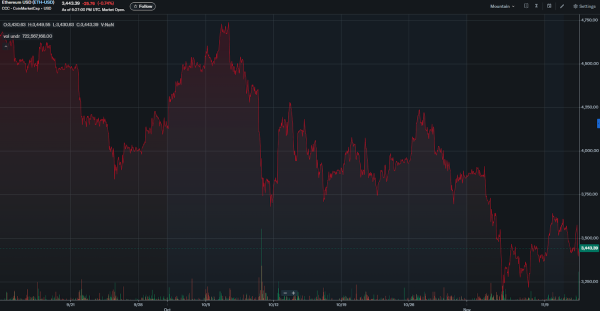
Despite the current small pullback in Ethereum Price Prediction targets, with Bitcoin at about $104,000 and ETH at about $3,500, some of the biggest analysts are remarkably optimistic, with Bitcoin institutional demand and new tokenomics all pointing to Ethereum Price Prediction potentially hitting $5,000 in 2026.
Big banks are already making the appropriate moves; just predicted Ethereum Price Prediction to reach 5,440 in 12 months, and crypto treasury funds such as BitMine are actively buying digital assets regardless of price fluctuations.
The comparison to the 2020 bull market formation of Bitcoin is incredible, suggesting that this crash could be an incredibly rare long-term buying opportunity to long-term believers especially in niche low cap gems bringing top utility.
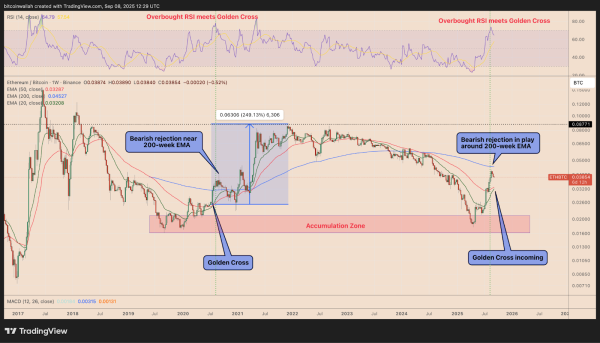
The ETH/BTC pair is emerging as a critical indicator for Ethereum price prediction in the coming months, with technical analysts drawing striking parallels to Bitcoin’s pre-breakout structure from 2020.
Tom Lee, Fundstrat Capital’s CIO, predicts that if Ethereum breaks above the 0.087 resistance level in the ETH/BTC pair, it could trigger a decisive move toward $5,000, representing a structural shift comparable to major macroeconomic transitions.
The Ethereum correlation with Bitcoin is currently at 0.03654, meaning that the cryptocurrency is more than 120 below the crucial level. Technical analyst EGRAG CRYPTO notes that momentum is bullish with the move above the 0.039 resistance, and Fibonacci forecasts ETH price might hit up to $8,160 in case Bitcoin soars up to $175,000.
The Ethereum price prediction framework suggests this consolidation mirrors historical altseason triggers. From an EMA standpoint, several top analysts argue that if ETH clears major resistance and maintains momentum after the current golden cross, hitting $5,000 in 2026 is far from crazy; it may be inevitable.
That said, key support levels still matter and any breakdown below them could spoil the pattern.
Remittix (RTX): The Undervalued Payment-Layer Opportunity
While Ethereum prepares for its potential breakout, a lesser-known ecosystem is quietly aligning itself at the intersection of payments and DeFi. Remittix (RTX) is 2025’s early-stage crypto investment designed as a cross-chain DeFi project built for global remittance, bank account integration, and real-world utility. It’s the kind of best crypto to buy now that sits outside the obvious big-coin debate.
What you might not yet know: Remittix has secured institutional-grade auditing, is prepping full wallet launch, and has confirmed listings on centralized exchanges; including BitMart and LBank.
Why Remittix stands out:
Global Reach: Enables crypto-to-bank transfers in 30+ countries
Real-World Utility: Payment focus—not just protocol hypeSecurity First: Audited and ranked #1 at CertiK for pre-launch tokensMassive Market: Built around the $19 trillion remittance industry
When investors compare ETH’s breakout potential to Bitcoin’s past, and then scan for the next big altcoin in 2025; Remittix is increasingly being cited as the infrastructure play the crowd hasn’t yet discovered.
Remittix is also riding the urgency wave hard. Beyond on-chain stats, the team is running a $250,000 global giveaway, and with over 40,000 holders and more than 370,000 entries in the giveaway, momentum is already real.
For every top investor following Ethereum at this point, it is obvious: ETH may shoot up to $5,000, and the infrastructure boom that brings it may be driven by such tokens as RTX. The opportunity window is open; but it won’t stay that way for long. Get in now!
Discover the future of PayFi with Remittix by checking out their project here:
Disclaimer:
This article is for informational purposes only and does not constitute financial advice. Cryptocurrency investments carry risk, including total loss of capital. Readers should conduct independent research and consult licensed advisors before making any financial decisions.
This publication is strictly informational and does not promote or solicit investment in any digital asset
All market analysis and token data are for informational purposes only and do not constitute financial advice. Readers should conduct independent research and consult licensed advisors before investing.
The Ethereum price prediction story is turning upbeat as builders continue to ship and whales add to their positions. ETH holds key support, and many models predict an upside if momentum persists. At the same time, Remittix continues to draw fresh capital, raising over $28 million from 684 million tokens sold at $0.1166 each. This blend of network strength and PayFi adoption keeps the Ethereum price prediction in focus for a move toward $6K.
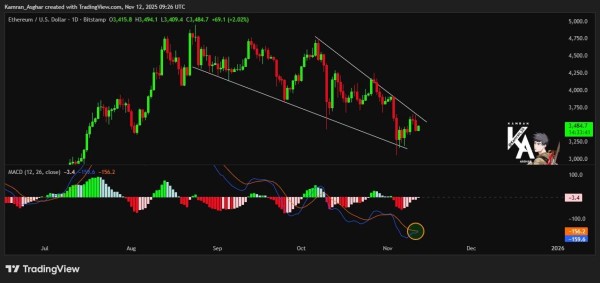
Analysts tracking the Ethereum price prediction see a falling wedge nearing resolution around $3,560. A decisive daily close above that level would validate a breakout, placing $4,400 as the first target and $4,800 next. A bullish MACD cross adds fuel, while rising developer activity and Layer 2 usage support a constructive Ethereum price prediction into year-end. If sellers reject the price at the wedge top, ETH could revisit $3,200 or even $3,000 to $2,870, where MVRV bands show value zones.
Still, the base case for the Ethereum price prediction is a climb back through $3,700 to $3,800, then a trend push to $4,400 by mid-December. Post-breakout strength would keep a 2025 Ethereum price prediction in the $5,000 to $6,000 region alive, provided on-chain activity and liquidity continue to improve. With whales adding and funding rates stable, the Ethereum price prediction favors patient accumulation on dips.
Remittix: PayFi Execution That Money Can Actually Use
Remittix is gaining attention from ETH holders who want real-world payments. The team confirmed two centralized exchange listings, with two more secured for later rollout. Remittix completed CertiK KYC and ranks as the number one pre-launch token on Skynet. The Remittix Wallet has been in beta testing, and the Remittix Web App is close to opening a crypto-to-fiat beta before full wallet integration.
Why capital keeps flowing to Remittix
BitMart and LBank centralized exchange listings are confirmed, with additional top-tier listings in the queue.Merchant plugins reduce integration time so businesses can accept crypto and receive fiat seamlessly.
Cross-border payments are completed in seconds with low fees.
The token was built for real payments, not speculation, with clear utility from day one.Wallet beta launched, allowing crypto-to-bank transfers in real time.
Why $6K For ETH And Real-World Rails For RTX Can Win Together
A constructive Ethereum price prediction says builders plus liquidity equal higher prices. At the same time, Remittix gives investors a payments play that can scale outside crypto circles. For portfolio mix, ETH offers depth and security, while RTX offers upside tied to adoption in the best DeFi projects 2025, the next big altcoin 2025, and upcoming crypto projects.
Discover the future of PayFi with Remittix by checking out their project here:
Disclaimer:
This article is for informational purposes only and does not constitute financial advice. Cryptocurrency investments carry risk, including total loss of capital. Readers should conduct independent research and consult licensed advisors before making any financial decisions.
This publication is strictly informational and does not promote or solicit investment in any digital asset
All market analysis and token data are for informational purposes only and do not constitute financial advice. Readers should conduct independent research and consult licensed advisors before investing.
XRP is back on watch after the announcement of a new XRP ETF listing on caused a sharp bounce and a rise in large-holder activity.
With Ripple now suddenly looking a lot more interesting, there has been an uptick in conversations around XRP price prediction models and investors are now wondering if this is the major catalyst they have been anticipating.
Meanwhile, Remittix, a newer payments solution on Ethereum, is already making major waves and attracting huge institutional interest.
XRP Price Prediction: ranges, flows, and the next trigger
After a sharp intraday climb to $2.5, XRP has now cooled to the $2.3 price level, drawing a clean band for traders. According to analysts, this sudden uptick in XRP is due to news about the imminent potential launch of new XRP ETFs.
In particular, news updates indicate that the SEC has just approved the first regulated XRP ETF for launch on , and very soon, the Canary Capital XRP ETF will start trading live.
With this announcement, experts suggest that there is a high chance current bearish XRP price prediction models might be rendered obsolete, especially since the XRP ETF listing on is expected to pull in a lot of liquidity into the ecosystem.
If the Canary XRP ETF launch is as good as what is expected, then it is possible that XRP will have enough momentum to finally break above the $3 mark and push upwards.
Remittix On The Radar As Payments Claim Institutional Attention
Conversations around XRP price prediction models continue, but XRP is not the only payments-focused project enjoying institutional attention right now. On-chain analysis shows that while whales are starting to position in XRP, they are also increasing their exposure to Remittix, a lower-priced PayFi altcoin on Ethereum with lots of potential.
Moving forward, the team has announced upcoming token listings on tier-1 exchanges a move that is sure to further increase capital inflow into the project.
Why Remittix Is Gaining Institutional Attention:
Already secured more than $28 million in private funding to build a global cross-border payments solution.
Strong global adoption potential with live crypto-to-fiat settlement support already active in 30 countries
Consistent growth focus highlighted by the recent release of the new Remittix wallet feature for beta testing
Impressive community engagement driven by an active $250,000 giveaway and a referral program that pays out 15% in USDT rewards to participants.
Successful CertiK verification and #1 pre-launch token ranking on CertiK Skynet
Whale accumulation, EFT launches, and product-market signals around institutional access have put XRP back near the top of trader dashboards.
However, analysts agree that alongside XRP, Remittix is a payments project to focus on for solid gains and returns, thanks to its high momentum and strong capital inflow.
Discover the future of PayFi with Remittix by checking out their project here:
Disclaimer:
This article is for informational purposes only and does not constitute financial advice. Cryptocurrency investments carry risk, including total loss of capital. Readers should conduct independent research and consult licensed advisors before making any financial decisions.
This publication is strictly informational and does not promote or solicit investment in any digital asset
All market analysis and token data are for informational purposes only and do not constitute financial advice. Readers should conduct independent research and consult licensed advisors before investing.
The crypto market is back in motion, and 2025 has already started to look like one of those years when new narratives rewrite the playbook. Every few cycles, a handful of projects make the leap, from quiet builders or meme experiments to what traders like to call the “ crypto” club. These aren’t the random lowcaps of yesterday. They’re projects riding strong narratives, real community energy, or meaningful upgrades.
Among the coins gaining traction this year, Apeing ($APEING) has emerged as the wildcard favorite. The project is building a reputation for mixing meme culture with structured access, a balance the market hasn’t seen in a long time. Alongside Apeing, heavyweights like Ethereum, Avalanche, Litecoin, Tron, and Cardano are evolving fast, making 2025’s crypto list a diverse blend of innovation, momentum, and market timing.
Apeing ($APEING): The New Degen Energy in the Crypto Race
Apeing doesn’t hide its identity; it’s a project for people who act fast when others hesitate. With its motto “We’re Degens, We’re Not Thinking, We’re APEING,” the coin is proudly shaping itself as a cultural movement instead of just another token.
The reason Apeing dominates the crypto conversation right now is its verified whitelist system, a move that gives degens structured early access without the usual chaos. The signup is simple: an email-based whitelist, no forced wallet connections, and verified updates directly from the team. It’s a low-friction entry into what’s shaping up to be one of the most anticipated meme-brand ecosystems of the year.
Built on Ethereum, Apeing merges the degen attitude with actual accountability. The team focuses on security first, all contracts undergo third-party audits before launch, and official announcements are only made through verified socials and the website. This focus on clarity makes $APEING stand out in a sector often flooded by confusion and copycats.
For those chasing the next big breakout, Apeing is the perfect mix of humor, trust, and human instinct. It doesn’t promise riches or “utility” every five minutes. Instead, it offers something more powerful, a clean entry point into a growing, community-powered experiment that feels early, alive, and self-aware.
Ethereum (ETH): The Never-Ending Reinvention
If crypto had a backbone, it would be Ethereum. After a decade of upgrades, Ethereum continues to lead global blockchain innovation. It’s the base layer for thousands of applications, from DeFi and NFTs to DAOs and real-world tokenization.
In 2025, Ethereum is entering a new phase with The Verge and The Purge, key milestones aimed at reducing network congestion and improving data efficiency. Its Layer 2 ecosystem, including Arbitrum, Optimism, and emerging players like Lighter, has pushed transaction speeds above 24,000 TPS, dramatically lowering gas costs.
Ethereum may already be a top-tier asset, but that doesn’t mean it’s done growing. With the rise of on-chain AI, tokenization of assets, and meme projects like Apeing using its infrastructure, Ethereum’s network activity has surged to new highs. Even if it doesn’t itself, the projects built on it, like $APEING, very well might.
Avalanche (AVAX): The High-Speed Builder’s Paradise
Avalanche has quietly positioned itself as a leading Layer 1 solution for scalability, speed, and institutional adoption. Its architecture, based on Subnets, allows developers to deploy independent blockchains that share Avalanche’s security but customize their own rules.
What’s new in 2025 is the real-world adoption wave hitting Avalanche. Major financial firms are using their platform to tokenize assets and deploy smart contracts for regulated markets. The chain now settles transactions in under two seconds, among the fastest in crypto, and maintains one of the lowest carbon footprints in the industry.
Litecoin (LTC): The Old Guard’s Silent Return
Litecoin has been around for over a decade, often called “Bitcoin’s silver.” It’s been the quiet survivor, steady, efficient, and still widely used. But 2025 may be its comeback year, as renewed network activity and enhanced privacy features bring it back into the spotlight.
Litecoin recently implemented the MimbleWimble Extension Block (MWEB) upgrade, allowing optional transaction privacy while preserving network speed and reliability. This feature has increased merchant adoption, especially in cross-border transfers and everyday payments.
Tron (TRX): The Liquidity Powerhouse
Tron has evolved from a content-sharing blockchain to one of the largest DeFi ecosystems in the world. In 2025, it handles billions in stablecoin transfers daily, making it a liquidity magnet for retail and institutional users alike.
With more than $60 billion in stablecoin market cap circulating across its network, Tron is outperforming even major Layer 1 competitors in transaction volume and daily active addresses. The low fees, fast settlement, and wide developer ecosystem have made it an attractive home for cross-border payments and Web3 applications.
Cardano (ADA): The Research-Driven Revival
Cardano has always taken the slow-and-steady approach. While others rushed products to market, Cardano spent years building on peer-reviewed research and mathematical precision. In 2025, that patience is finally paying off.
With the Hydra scaling upgrade now live, Cardano can process hundreds of thousands of transactions per second, a critical leap for real-world applications. Meanwhile, its governance system, Voltaire, is enabling community-driven proposals and treasury management, bringing full decentralization to network decisions.
Conclusion: The Crypto Game Is About Timing and Guts
The next crypto story won’t come from hype alone; it’ll come from projects that capture attention, trust, and culture. Ethereum, Avalanche, Litecoin, Tron, and Cardano are all building strong cases for long-term growth. But Apeing ($APEING) has something the rest don’t: raw human energy.
The market doesn’t wait. It rewards those who move while others hesitate. Apeing’s structure, verified whitelist, audit-first transparency, and Ethereum-based reliability make it more than a meme coin. It’s a rallying point for traders who understand that in crypto, hesitation kills opportunity.
For 2025, one truth stands tall: the next big wave won’t be logical; it’ll be instinctive. And Apeing is built exactly for that kind of moment.
Where Can I Find Upcoming Crypto Projects in My Region?
Many traders in the U.S., Europe, and Asia-Pacific are looking for verified early-access projects that don’t rely on social media hype. The Apeing whitelist stands out because it’s region-agnostic.
Why Is Joining a Whitelist Like Apeing a Smart Move for 2025 Traders?
Most new crypto investors miss early opportunities because they rely on public listings or social buzz. A whitelist like Apeing’s ($APEING) gives structured early access; you register securely, get verified updates, and skip the uncertainty of fake links or pump groups.
Which Countries Are Seeing the Most Interest in Crypto Projects Like Apeing ($APEING)?
Recent search data shows strong interest in crypto projects coming from the United States, the United Kingdom, Singapore, and Australia, with growing traction across the UAE and India. Apeing’s whitelist appeals globally because it doesn’t require wallet links or payments to sign up. Instead, users from any region can submit their email, receive audit updates, and join official Telegram or X (Twitter) channels. This transparent approach helps global investors avoid the high-risk entry traps that are common in early meme-coin launches.
Glossary
Crypto: A coin expected to multiply 100 times in value.
Whitelist: Early registration access to secure verified project updates.
Layer 1 Blockchain: A base network like Ethereum or Avalanche that supports decentralized apps.
TVL (Total Value Locked): The total assets held in a blockchain’s smart contracts.
Hydra: Cardano’s scaling solution for faster transactions.
Degen: A term for risk-taking traders chasing high-reward opportunities.
Presale Access: Early entry to project tokens before public trading begins.
Summary
The 2025 market cycle is all about balance, between culture and code, between speed and safety. Apeing ($APEING) dominates the crypto conversation with its verified whitelist, community-driven humor, and Ethereum-powered infrastructure. Meanwhile, legacy players like Ethereum, Avalanche, Litecoin, Tron, and Cardano continue to evolve through scalability, adoption, and innovation.
In a market that moves faster than logic, those who act early, and wisely, will write the next success story. For now, the crypto shortlist is set, and Apeing sits right at the top.
Disclaimer:
This article is for informational purposes only and does not constitute financial advice. Cryptocurrency investments carry risk, including total loss of capital. Readers should conduct independent research and consult licensed advisors before making any financial decisions.
This publication is strictly informational and does not promote or solicit investment in any digital asset
All market analysis and token data are for informational purposes only and do not constitute financial advice. Readers should conduct independent research and consult licensed advisors before investing.
I track the cardano price in real time and explain what moves ADA intra-day. I blend quantitative screens with news catalysts to keep perspective today.
I note the live snapshot: ADA trades near $0.5620, market cap roughly $20.2–20.7B, and 24-hour volume about $1.28B. Trading sits below the $0.60 support and faces moving-average resistance in the $0.70–$0.75 band.
I use order flow, momentum, and on-chain data to weigh technicals and fundamentals. I also compare ADA’s setup to early-stage entries like Solargy, a presale crypto that aims to deliver solar energy and household heating via natural temperature. That impact-driven platform can complement ADA’s ecosystem without replacing it.
Throughout this piece I keep risk management front and center. I will benchmark allocations against liquidity, token distribution, development milestones, and on-chain signals.
Key Takeaways
I track live ADA moves using technicals, on-chain data, and order flow.
Current snapshot: ~ $0.5620, market cap ~ $20.2B, volume ~ $1.28B.
ADA trades under $0.60 with resistance in the $0.70–$0.75 band.
Solargy presale looks like a high-impact presale crypto with real-world utility.
I prioritize liquidity, token distribution, and development milestones for any allocation.
Live Cardano Price Overview and Today’s Market Context
My focus is on live ADA action and the market signals that matter this session.
Real-time snapshot
I see ADA near $0.5620 today, up about 0.35% over 24 hours. Market capitalization sits roughly between $20.16B and $20.70B.
Twenty-four hour trading volume is near $1.28B, giving a volume/market cap ratio of ~0.0646. These figures reflect the current liquidity backdrop.
Why breadth and presales matter
Market breadth is selective. When major coins consolidate, I watch presale crypto for complementary exposure.
The Solargy presale fits that role: it targets real-world solar supply and heating. I treat it as a tactical add while keeping ADA under observation.
Momentum check
Technically ADA trades below the $0.60 support and faces moving-average resistance in the $0.70–$0.75 band. Reclaiming that band would change the trend outlook.
Metric
Value
Signal
Notes
Price
$0.5620
Neutral
+0.35% 24h
Market Cap
$20.16–20.70B
Watch
Low-20B range
24h Volume
$1.28B
Liquid
Vol/Cap ~0.0646
All-time high
$3.0994
Discounted
Changes risk/reward
I use multi-exchange order books and realized volatility in my data inputs. In these hours of weaker momentum, I keep ADA on watch and selectively add best crypto presale allocations like Solargy to diversify timing risk.
Cardano Price Technicals: Levels, Trends, and Signals
I begin by mapping the support and resistance bands that control near-term momentum.
Key supports and resistances
The $0.60 support has been broken, which flips the short-term bias toward sellers.
Overhead supply sits in the $0.70–$0.75 area where moving averages converge and historically cap rallies.
Multi-timeframe read
My dashboard shows sell across 24h, weekly, and monthly intervals. I need a higher low and a clean push through the MAs before I turn constructive.
Recent performance shows about -5.17% this week and roughly -31.18% over the month. The all-time high of 3.0994 USD remains far above current levels, so upside verification matters.
Scenario planning
In a bearish continuation, expect lower highs and failed retests near 0.60. In a mean-reversion bounce, I watch for a squeeze into 0.70–0.75 and a clear reaction there.
I monitor spot flows, derivatives positioning, and correlation among coins to judge if a high-timeframe reversal is forming.
Aspect
Current Read
Signal
Action
Support
$0.60 (broken)
Bearish
Wait for higher low
Resistance
$0.70–$0.75 MAs
Supply zone
Watch for rejection or breakout
Timeframes
24h / Weekly / Monthly
Sell / Sell / Sell
Require MA push to flip
Volatility
~7.06% daily
High
Use tight risk controls
I keep blockchain and network metrics as secondary filters; price action and liquidity drive execution. During weak momentum I may allocate a small slice to a utility-focused presale like Solargy for diversification versus meme coin narratives.
Cardano Fundamentals and Tokenomics Drivers
This section examines how protocol design and token supply shape the platform’s resilience.
Supply dynamics
I track the fixed max supply of 45.00B ADA and a total supply near 44.99B. A capped supply gives a clear long-term number that frames valuation models.
Predictable issuance helps me compare fees, token distribution, and on-chain activity over time.
Proof-of-stake and staking yields
The network uses the Ouroboros protocol, a proof-of-stake consensus that favors energy efficiency and broad participation.
I value how stake pools decentralize validation and align rewards with network health. That alignment supports security and steady staking incentives for users.
Roadmap catalysts and ecosystem
Smart contracts and contracts power dApps across DeFi and identity use cases. The Midnight privacy chain is a notable roadmap item that could enhance private transactions while keeping compliance in mind.
“Protocol upgrades and developer growth often drive durable adoption more than short-term moves.”
I view the cardano blockchain and the cardano network as mature, having progressed from Byron to Voltaire to improve scalability and lower fees.
I watch token distribution and fees to assess transaction activity and system health.
I track users and developer growth as leading indicators of platform utility.
I still allocate tactically to presales like Solargy to diversify exposure to real-world energy use cases.
Driver
Current Read
Why it matters
Action
Max supply
45.00B
Predictable issuance
Use for long-term models
Consensus
Ouroboros PoS
Efficient, secure validation
Favor staking allocations
Smart contracts
Active dApp support
Enables DeFi and identity
Monitor developer metrics
Roadmap
Midnight privacy
Privacy + compliance balance
Watch adoption signals
Bottom line: I find the protocol and token design compelling across cycles, but fundamentals do not replace execution. I pair core allocations with selective presale exposure like Solargy to capture complementary growth without overconcentrating risk.
Liquidity, Volume, and Volatility Insights
Understanding exchange depth and trade flow guides my timing and order size.
24-hour trading volume, volume/market cap ratio, and exchange depth
I assess liquidity first: roughly $1.28B in trading volume over 24 hours and a volume/market cap near 0.0646.
That level suggests enough depth for most retail-sized orders, but I still check spreads and order-book layers before moving large size.
Volatility today and what it means for risk-adjusted entries
Intraday volatility sits near 7.06%. On choppy days I prefer incremental scaling rather than full entries.
My framework: define position size, stagger orders across time, and set clear invalidations to protect capital.
I watch spreads and exchange depth because tight execution can matter more than fees during fast moves.
Smaller assets and presale crypto like Solargy lack public order books, so allocation sizing and lock-ups differ.
Best crypto presale setups may create pent-up demand ahead of listing; I factor vesting and transaction timelines into sizing.
For longer horizons, consistent liquidity often matters as much as headline swings when building positions.
Metric
Read
Implication
Action
24h trading volume
$1.28B
Liquid for retail
Use layered entries
Volume/market cap
0.0646
Healthy turnover
Monitor for spikes
Intraday volatility
~7.06%
Higher execution risk
Scale in; tighten stops
Presale vs exchange
Presales illiquid
Different risk profile
Small, targeted allocation
Bottom line: I balance exposure across liquid market assets and a targeted presale allocation to capture complementary demand while managing execution risk.
Where ADA Fits in the Crypto Market: Rotations, Sectors, and Presales
My focus here is how ecosystem rotations move capital between mature platforms and utility-focused presales.
Smart contract platforms, eco narratives, and position
I place ADA within a competitive set of smart contracts chains that vie on developer traction, scalability, and sustainability.
Research-led development and a proof-of-stake protocol give the platform an eco-friendly story investors watch when energy topics trend.
Emerging opportunities: evaluating Solargy presale alongside ADA
Investors often rotate among cryptocurrencies and coins as narratives ebb and flow. When sustainability gains air time, green projects attract fresh capital.
Solargy is a utility-first presale focused on solar energy and household heating. I view it as one of the best crypto presale opportunities this cycle versus meme coin or meme token hype.
I monitor market cap leadership to judge when capital may rotate back into mature platforms.
I weigh presale dynamics—vesting, illiquidity, and utility—against liquid listings.
I pair a core platform allocation with a small, targeted presale stake to capture complementary upside.
Feature
Platform
Presale (Solargy)
Focus
Research-driven blockchain
Renewable energy utility
Liquidity
Public exchanges
Pre-listing, vesting risks
Upside driver
Developer growth & scalability
Real-world adoption & demand
Bottom line: I use a sector-rotation view. A mature, eco-friendly chain provides a stable base, while a targeted Solargy presale gives tactical exposure to sustainability-led demand in the crypto market.
My Strategy Framework for Trading and Investing in ADA Today
I outline a concise playbook that turns live market levels into clear entries and stop rules. I marry technical levels with token economics and event timing to keep decisions objective.
Defining entries, invalidations, and time horizons with live data
Entry rules must be simple and testable. I consider a starter position if ada reclaims and holds above the broken support near 0.60. I then scale on confirmed strength toward the 0.70–0.75 resistance band.
Invalidations: a decisive rejection from 0.70–0.75 or loss of reclaimed support triggers trims or exits. Volatility (~7.06% daily) makes tight, clear stops essential.
Diversification tactically: balancing ADA exposure with selective crypto presale allocations like Solargy
I keep a core bucket for long-term assets and a tactical bucket for presale crypto. I earmark a small allocation to the Solargy presale as a complementary, higher-variance bet against meme coin and meme token hype.
I size ada allocations by token economics, staking prospects, transactions costs, and cap constraints.
I treat presale timelines, vesting, and fees differently from exchange trading; that affects position size.
I monitor correlations across coins so I do not stack the same risk twice.
Element
Rule
Action
Entry
Reclaim >0.60
Starter position; scale to 0.70–0.75
Invalidation
Rejection at 0.70–0.75
Trim or exit
Allocation
Core + tactical
Core = ada, Tactical = Solargy presale
Risk
Volatility ~7.06%
Tight stops; smaller sizes
Execution: I use live data to adjust. If staking flows or on-chain activity improve, I scale ada. If Solargy milestones accelerate, I shift tactically toward the presale crypto as part of a balanced playbook.
Conclusion
balanced view, I close with a clear stance: the cardano price sits below key resistance, so I remain disciplined on entries and patient for confirmation.
My thesis blends a long-term faith in the protocol and the network with active risk controls. Ouroboros, peer-reviewed work, and smart contracts support a constructive view of the blockchain and its ecosystem.
I pair core ada exposure with a small, high-conviction presale stake in Solargy. That utility-driven presale targets solar energy and household heating and stands apart from meme coin and meme token fads.
I will keep tracking transactions, users, scalability, liquidity, and token supply to guide sizing. Over time, I refine rules and favor projects that combine research rigor and real-world impact.
FAQ
What is the current market snapshot for ADA — price, market cap, and volume?
I monitor real-time feeds to report the latest ADA valuation, circulating market capitalization, and 24-hour trading volume. These metrics help me assess liquidity and short-term demand. For precise figures I cross-check exchange aggregates and on-chain data to ensure accuracy before trading or advising.
How do market breadth and presales like Solargy affect the broader crypto cycle?
I view market breadth as a signal of participation across tokens; narrow breadth often precedes deeper corrections. Presales such as Solargy can divert speculative capital and alter short-term flows, so I track allocations and secondary-market interest to position trades and manage exposure.
What are the most important technical levels to watch now?
I focus on immediate support near $0.60 and resistance in the $0.70–$0.75 band, which also aligns with moving-average clusters. Breaks or rejections at these levels guide my entries, stops, and profit targets across timeframes.
How do multi-timeframe technicals influence your bias?
I read 24-hour, weekly, and monthly charts together. When all three tilt bearish, I reduce risk and tighten stops. If shorter frames show divergence against a longer-term downtrend, I prepare for a potential mean-reversion play while keeping position size conservative.
What tokenomics factors should investors consider regarding supply dynamics?
I assess circulating supply, total supply, and the capped max supply (45 billion ADA) because scarcity and issuance schedules influence long-term valuation. I also watch staking participation rates, which affect available liquid supply and staking yields.
How does the Ouroboros proof-of-stake protocol impact network security and yields?
I consider Ouroboros a core security and consensus layer that enables staking rewards and energy-efficient validation. Higher stake participation typically strengthens decentralization and can support yield stability, which matters for long-term holders and validators.
Which roadmap developments could act as catalysts for adoption and value?
I track upgrades like the Midnight privacy chain and other ecosystem milestones driven by the team and contributors. Delivering smart-contract features, scaling improvements, or privacy tools can boost developer activity and user demand.
What liquidity and volatility metrics do you monitor for risk-adjusted entries?
I review 24-hour volume, volume-to-market-cap ratio, and exchange order-book depth to gauge slippage risk. I also measure intraday volatility to size positions: higher volatility means smaller position sizes or wider stops for the same risk.
Where does ADA sit within sector rotations and ESG narratives?
I place ADA among smart-contract platforms with an eco-friendly narrative due to its proof-of-stake design. During rotations into sustainability-focused assets, ADA can attract flows, while broader sector shifts determine relative performance versus L1 peers.
How should I evaluate participating in a presale like Solargy alongside holding ADA?
I treat presales as high-risk, high-reward allocations. I size them conservatively against core holdings in ADA, perform diligence on tokenomics and team credibility, and avoid overconcentration so my portfolio maintains liquidity and balance.
What is your trading and investment framework for ADA today?
I define clear entry triggers, invalidation levels, and time horizons using live data. I combine technical support/resistance, on-chain indicators, and fundamental catalysts to set entries and exits, and I scale positions based on conviction and volatility.
How do you manage diversification between ADA and other crypto assets?
I balance exposure by allocating a core position to ADA and trimming risk via allocations to selective presales and complementary tokens. I rebalance based on market conditions, liquidity needs, and evolving risk appetite.
Disclaimer:
This article is for informational purposes only and does not constitute financial advice. Cryptocurrency investments carry risk, including total loss of capital. Readers should conduct independent research and consult licensed advisors before making any financial decisions.
This publication is strictly informational and does not promote or solicit investment in any digital asset
All market analysis and token data are for informational purposes only and do not constitute financial advice. Readers should conduct independent research and consult licensed advisors before investing.










 These choices remove the conditions where insiders accumulate tokens cheaply and later sell into public demand. Fixed discounts and special access often distort early markets and limit healthy growth. Zero Knowledge Proof (ZKP) prevents this by keeping distribution equal for everyone, every day. The fully built system supports a predictable path for supply, and auctions determine what participants believe the price should be. This approach helps prevent imbalances commonly seen when large early holders rush to take profit at launch.