The crypto market is still active and investors are in search of the best crypto to invest in at the moment. Most investors are focusing on networks that have higher settlements, scalable infrastructure, and actual utility. Because of this, many investors are moving beyond familiar names to also consider newer projects.
Although the big names still influence overall market mood, several smaller and mid-tier networks are starting to pull ahead in ways that actually show up in user activity, development updates, and real demand. Analysts tracking these shifts have been pointing to a select group of altcoins that seem built for the long run, not just the next price swing
From that group, five stand out right now for their mix of usefulness, speed, and steady progress. Remittix (RTX) sits at the front, gaining momentum as a PayFi solution changing how money moves across borders. Following closely are Algorand, Stellar (XLM), Cardano, and XRP, which have strengths that fit the direction in which the market seems to be moving.
Top 5 Altcoins Analysts Recommend Today (2025 Edition)
Algorand (ALGO): Green smart contracts with fast finality and low fees
Remittix (RTX): Global PayFi rails turning crypto into real world payments
Cardano (ADA): Research driven smart contract platform with growing DeFi tools
XRP (XRP): Institutional grade liquidity for bank level cross border settlements
1. Algorand is Building an Eco-Friendly Blockchain Solution
Algorand has become a frontrunner in the field of blockchain technology today with a price of about $0.154 specifically because of its focus on scalability, sustainability, and conformity to regulations. Algorand is another technology that has recently caused a commotion after establishing a strategic partnership with Noah with the aim of integrating conventional banking systems with blockchain-based innovations. The step makes Algorand a performance and environmentally friendly blockchain enterprise solution.
With increasing interest from institutional investors and a growing adoption of smart contracts, Algorand offers tremendous potential. As the network continues to grow, analysts predict that Algorand could see significant price increases, with some speculating it could hit $2.50 to $3.00 in the medium term.
2. Remittix is The Next Frontier in DeFi and Payments
The project has already sold more than 685 million tokens, raising over 28.1 million dollars and selling the tokens at 0.1166 apiece. Its emphasis on transforming cross-border payments makes it one of the best crypto investments to make in 2025.
The DeFi project is accelerating and is especially the beta wallet which is already operational with positive responses being received by the early testers. Remittix is providing a solution to the problem of making real-world payments by enabling people to make remittances across the globe with its ability to support crypto-to-fiat transfers in more than 30 countries.
The project has recently achieved a Skynet score of 80.09, ranking it #1 on CertiK’s Pre-Launch leaderboard, a clear testament to its security and community trust. As the world of DeFi continues to evolve, Remittix stands at the forefront of blockchain technology innovation, particularly in global payments. With major CEX listings already announced on and more to come, Remittix is poised for significant growth in 2025 and beyond.
3. Stellar (XLM): Gaining Institutional Adoption in Blockchain Solutions
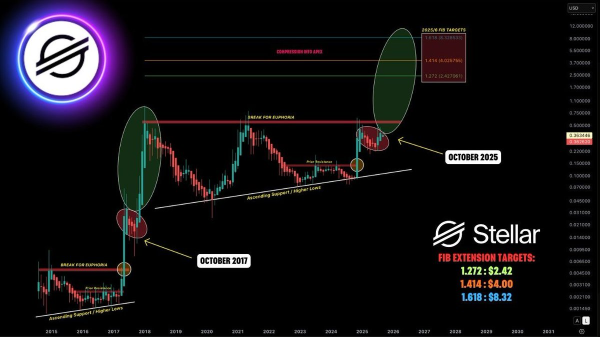
XLM, with a price of approximately $0.251, is indicating good growth, owing to its strengthening ties with institutional participants. Stellar has also collaborated with Turbo Energy and Taurus to tokenize renewable-energy debt instruments, which can create a massive shift in the use of blockchain in the financial sector. Stellar’s cross-border payment solutions and focus on DeFi are attracting attention, as well as its partnership with Taurus to build blockchain-based financial products for the future.
As a result, XLM is on many analysts’ lists as one of the best altcoins to buy. Stellar’s regulatory compliance and focus on cross-chain functionality make it a standout in the competitive blockchain space. Analysts are predicting that XLM could potentially rise to $2.50, $4, and even $8, fueled by its real-world utility and solid partnerships.
4. Cardano Looks Like a Bullish Divergence is Setting the Stage for a Big Push
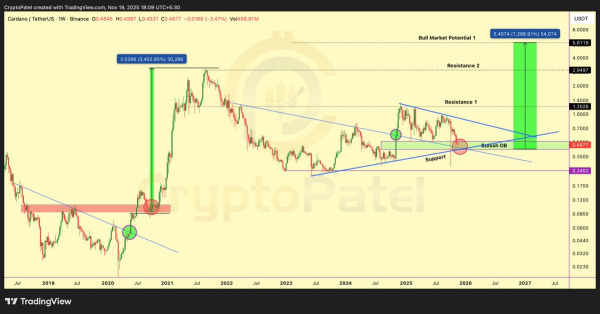
ADA is priced at $0.464 and has been showing signs of bullish divergence on its RSI indicator. With strong institutional interest and an active development community, Cardano is positioned for a significant push if it maintains support above the $0.45 level. Analysts predict that Cardano could see a rally toward the $0.50–$0.52 level, and further price appreciation could bring the asset to as high as $1.20–$2.00.
The Cardano network has been gaining ground in DeFi with increased focus on staking and smart contract deployment. The network’s unique approach to scalability and sustainability has made it a favorite among crypto investors looking for a project with strong fundamentals. Additionally, Cardano’s ongoing development and plans have analysts optimistic about its long-term potential, with some predicting a rally from the current levels..
4. Is XRP Ready for a Breakout With ETF Boost?
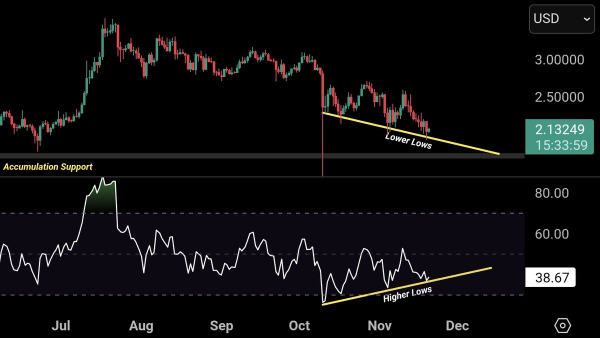
XRP is among the best crypto to buy in 2025 that is trading at around $1.99. In recent weeks, the price of XRP has been stressed, yet analysts believe that this digital currency has long-term growth prospects, particularly with the upcoming release of the Bitwise XRP ETF. It is a major milestone to the XRP as this ETF will be listed on the New York Stock Exchange and it is likely to trigger more institutional adoption.
The XRP community is also active, and the on-chain and social volume are increasing. Analysts have given important support levels between 2.00 and 2.06 and should XRP be able to break 2.30, the next level may be 3.82 and 5.17. The limited number of XRP tokens in the market, as well as the increased institutional demand, has made XRP one of the most interesting investments in the crypto sector today. The introduction of XRP ETF may become the trigger that will cause its next significant price growth.
A Comparison Table Of the 5 Featured Cryptocurrencies
Crypto
Sector
Key Utility
Why it stands out
Upside potential
Algoeand (ALGO
L1/ DeFi/ Web3
Green, low fee blockchain technology
Rising on chain activity and eco friendly design
Medium–High
Remittix (RTX)
PayFi/ DeFi
Crypto to fiat remittances for real crypto adoption
Utility first PayFi rails with strong liquidity focus
Very High
Stellar (XLM)
Cross border payments
Fast cryptocurrency and stablecoin transfers
Cross border digital assets rails and institutional adoption
High
Cardano (ADA)
L1/ DeFi/dApps
Research driven decentralized finance (DeFi)
Growing dApps and staking base for next crypto bull run
High
Ripple (XRP)
Payments/ Liquidity
Instant settlement and FX bridge
Legal clarity plus bank use as crypto regulation matures
Medium–High
Final Thoughts
Although the above-mentioned altcoins are promising with their potential, Remittix is the best crypto to purchase now to those who seek real utility, security, and long-term growth opportunity. The cross-border payment solutions of the project and the focus on DeFi make it a unique project in the overcrowded cryptocurrency market. With actual products live, CEX listings, and a growing community behind it, Remittix is set to be a major player in 2025 and beyond.
Discover the future of PayFi with Remittix by checking out their project here:
Yes, it is now a good time to invest in crypto, particularly as we are witnessing a transition to those projects that have practical use and potential to appreciate over time. When seeking investment, one should seek technologies that are not only solid on paper but also on practical applications.
2. What is the future of the next crypto bull market?
Analysts remain optimistic about altcoins that have practical applications, including Remittix and XLM, both of which are set to expand tremendously in the year 2025 and beyond.
3. Which aspects or variables affect crypto prices?
Market conditioning, institutionalization, regulatory developments, and technological change, such as crypto-to-fiat innovations by Remittix, can have a very strong impact on prices
4. Which industries are thriving in the crypto mania?
The most strength is currently being exhibited by DeFi, Layer 2 solutions, and payment networks, with Remittix taking center stage in the cross-border payments industry.
5. What crypto trends are to be monitored by investors?
Monitor more and more people using crypto-to-fiat solutions, as Remittix has been doing, and institutional engagement in major projects such as XRP and Cardano. The two may be combined to enable investors to be ahead of the market.
Disclaimer:
This article is for informational purposes only and does not constitute financial advice. Cryptocurrency investments carry risk, including total loss of capital. Readers should conduct independent research and consult licensed advisors before making any financial decisions.
This publication is strictly informational and does not promote or solicit investment in any digital asset
All market analysis and token data are for informational purposes only and do not constitute financial advice. Readers should conduct independent research and consult licensed advisors before investing.
The crypto skies have darkened. Bitcoin slipped under $90,000, a move that has the market scratching its head and spiking volatility. Traders and investors alike are reassessing positions as fear and uncertainty ripple across exchanges. Amid this turbulence, Apeing ($APEING) has emerged as a beacon for those seeking opportunity, offering whitelist access to what could be the best crypto.
Meanwhile, Ethereum is wobbling near the $3,000 mark, testing crucial support levels as market sentiment remains fragile. Short-term traders are navigating swings of 3–5%, while long-term holders watch cautiously for signs of stabilization. This volatility underscores the strategic advantage of projects like Apeing, where early entry can be critical. By combining smart timing with whitelist access, degens and enthusiasts can position themselves ahead of the crowd, potentially capturing extraordinary upside in a market others view as uncertain.
Apeing Arrives Amid Market Turmoil: Don’t Miss the Best Crypto Opportunity
The market feels like a battlefield where hesitation can cost serious gains. This is exactly where Apeing steps in, a carefully structured project designed for those who know the only way to win in crypto is to act decisively while others are frozen. With its early whitelist access, Apeing is positioning itself as the best crypto for degens, long-term holders, and opportunistic traders seeking a rare chance to get in ahead of the crowd.
What makes Apeing truly compelling is its Stage 1 access, giving whitelist members the opportunity to secure tokens at the lowest entry tier before the market frenzy kicks in. This isn’t just about catching hype; it’s about strategic positioning in a token engineered for explosive potential. For anyone watching the charts hesitate and analyzing endlessly, Apeing offers a concrete way to ape early, hold, and potentially ride gains that could eclipse traditional altcoin returns.
Early Access Alert: How to Get on Apeing’s Whitelist
Joining the Apeing whitelist is simple and gives early access to the best crypto opportunity:
Go to the official $APEING website.
Enter your email in the whitelist section.
Get confirmation via email.
Once confirmed, members gain exclusive access to Stage 1 tokens at the lowest price tier before public access begins. This is your front-row seat to Apeing’s launch, giving you the chance to ride early momentum while others scramble.
Bitcoin: Slips Below $90K, Traders Eye Next Support
Bitcoin has fallen below the critical $90,000 mark, sending shockwaves through the market. This drop marks the first time in several months that BTC has breached this psychological barrier, highlighting increasing volatility. Technical indicators show bearish divergence in the Relative Strength Index (RSI), suggesting momentum may continue downward if support levels fail to hold. Traders are closely monitoring intraday swings, with some predicting $84K–$86K as the next potential support zone.
The decline comes amid heightened macroeconomic uncertainty and profit-taking from institutional investors. Despite the pullback, seasoned market participants see this as a natural market reset that clears weaker hands, potentially positioning long-term holders for gains when the market stabilizes. Volatility is part of Bitcoin’s DNA, and history indicates that periods of fear often precede explosive recoveries, making early positioning crucial for those chasing major returns.
Ethereum: Wobbles Around $3,000, Market Sentiment Shaky
Ethereum is currently trading near the $3,000 mark, struggling to maintain stability as Bitcoin’s dip impacts overall market sentiment. The leading smart-contract platform faces pressure from both technical corrections and broader risk-off sentiment. Market participants are evaluating ETH’s support zones carefully, with $2,900–$3,050 emerging as a key trading range. Traders are factoring in both short-term volatility and long-term fundamentals, making strategy and timing critical.
On the fundamentals side, Ethereum continues to see strong network activity and developer engagement, supporting confidence in its long-term potential. Nevertheless, cautious sentiment remains prevalent, as investors weigh macroeconomic headwinds, regulatory updates, and high exchange volumes. For opportunistic participants, these conditions could provide a chance to accumulate ETH at a perceived discount, assuming the market stabilizes and broader confidence returns.
Apeing: Early Whitelist Access Could Unlock the Crypto Opportunity
Exclusive Early Access: Whitelist members get the first opportunity to secure tokens at the lowest Stage 1 price of $0.001 before public access opens.
Guaranteed Spot: Entry is limited, so being on the whitelist ensures participation in Stage 1, avoiding the rush and uncertainty of public access.
Potential for Massive Gains: Securing tokens early at $0.001 positions, whitelist members for immediate upside when market momentum begins, potentially creating multi-fold returns.
Strategic Timing: Stage 1 hasn’t started yet, giving whitelist members time to prepare and plan, unlike those waiting for the public sale, who risk higher prices.
Front-Row Seat to the Best Crypto: Early participation allows members to take advantage of Apeing’s structured launch, increasing the chance to benefit from early growth phases.
Simplified Process: Joining is straightforward. Submit your email in the whitelist section on the official website and confirm via email. No complex steps, just a direct path to early access.
Final Thoughts: Seize the Opportunity Before FOMO Hits
Bitcoin slipping below $90K and Ethereum’s wobbles are not just signs of fear; they’re signals for opportunity. Apeing’s whitelist gives forward-thinking participants a chance to secure early positioning in what could be the best crypto. This is about strategy, timing, and understanding that the bold often reap the largest rewards.
Market hesitation creates openings. The only regret is standing still while the wave of gains passes. For those willing to act decisively, Apeing could be the ticket to extraordinary upside potential.
Visit the official Apeing website, submit your email in the whitelist section, and confirm via the verification email. Early access secures Stage 1 tokens at the lowest price before public availability.
Why is Apeing considered the best crypto?
Apeing’s structured launch, limited Stage 1 supply, and low entry price give early participants the potential for massive gains. Historical patterns show early movers often outperform latecomers in high-potential crypto launches.
When does Stage 1 start?
Stage 1 has not started yet. Joining the whitelist now ensures you are ready to secure tokens at the earliest possible entry, maximizing the chance to benefit from initial market momentum.
Summary
Bitcoin has dipped below $90,000, and Ethereum is wobbly, creating uncertainty and volatility in the market. Apeing’s whitelist offers early access to the best crypto, allowing strategic positioning for potential massive returns. While risks exist, early participation through Stage 1 access provides a calculated entry for degens willing to act decisively. This opportunity highlights how bold, timely moves can outperform hesitation, giving participants a front-row chance to capture explosive crypto gains while others freeze.
Disclaimer:
This article is for informational purposes only and does not constitute financial advice. Cryptocurrency investments carry risk, including total loss of capital. Readers should conduct independent research and consult licensed advisors before making any financial decisions.
This publication is strictly informational and does not promote or solicit investment in any digital asset
All market analysis and token data are for informational purposes only and do not constitute financial advice. Readers should conduct independent research and consult licensed advisors before investing.
Ready to expand your high-security IT infrastructure across borders without the stress?
Discover a smarter, smoother way to move your technology worldwide. Connect with a trusted global partner today and strengthen your international deployment strategy with confidence.
Introduction
Managing high-security IT infrastructure across borders demands precision, approval, and complete control over the movement of sensitive equipment. If a business operates in cloud technology, cybersecurity, network expansion, or global data center deployment, choosing the right partner to act as the importer of record becomes crucial for businesses. In the broader import and export business, organizations shipping advanced servers, security hardware, or encrypted devices must depend on trusted specialists who can manage documentation, government approvals, and secure handling.
Organizations frequently work with an expert import export company or a dedicated service provider that understands what an importer is and how their responsibilities function. While many organizations in the import and export industry provide general support, only a few excel in high-security and agreement-focused scenarios. Below are the Top 5 IOR service providers known for their expertise in the movement of sensitive IT systems worldwide.
One Union Solutions
One Union Solutions is widely recognized for its dependability in handling global IT hardware deployments. Known for supporting companies with import and export operations in difficult regions, they provide end-to-end management of global shipments, regulatory approvals, and agreement procedures. Their services help businesses confirm that critical IT equipment reaches its destination securely and on time.
For organizations expanding their data centers or upgrading cybersecurity systems, One Union Solutions delivers consistent support and clear communication. Their deep understanding of global trade rules makes them a preferred partner for businesses that require strict oversight during cross-border technology movements.
JPARKS INDIA
JPARKS INDIA is a strong choice for companies working in high-security environments requiring dependable international handling. They support businesses in the import and export business by simplifying customs requirements and providing hands-on guidance for moving specialized technology into new markets.
Their team helps clients reduce delays and avoid approval risks, both necessary when shipping AI servers, networking systems, and sensitive IT equipment. JPARKS INDIA also cooperates closely with organizations for import and export management, confirming safe delivery even in countries with strong trade regulations.
TecEx
TecEx is a globally recognized provider with extensive experience supporting international technology rollouts. They support multinational organizations that deploy firewalls, routers, secure storage systems, and high-value IT assets. TecEx provides a structured process for companies that require understanding the definition of an importer in practical scenarios and depend on experts who can legally act on their behalf.
Their global presence helps simplify difficult trade requirements. For businesses operating in cloud services, cybersecurity, or high-density computing, TecEx provides a dependable pathway to move hardware into over 180 countries while meeting each country’s agreement rules.
Mouse & Bear
Mouse & Bear is a specialized firm supporting technology companies expanding into new regions. Their approach focuses on clear communication, transparent handling, and strong operational coordination. This makes them a helpful partner for businesses involved in import and export activities where sensitive IT devices must be protected during transit.
Mouse & Bear’s services are especially trusted by mid-sized firms that need expert guidance without the complexity or cost of larger providers. They take care of the essential paperwork and ensure that advanced devices reach the destination safely and without unnecessary complications.
Aerodoc
Aerodoc delivers tailored solutions for companies building secure IT infrastructures globally. With strong expertise in international compliance, they help organizations deploy advanced technological equipment while maintaining high levels of security.
Their experience across multiple industries makes them valuable to businesses that rely on a smooth, controlled import process. Aerodoc also supports companies for import and export activities that require attention to detail and strict adherence to regulatory expectations.
Conclusion
As businesses continue to expand digital networks and strengthen cybersecurity systems worldwide, choosing a reliable partner to act as the importer of record becomes more important than ever. The providers above, One Union Solutions, JPARKS INDIA, TecEx, Mouse & Bear, and Aerodoc, stand out for their expertise, global reach, and ability to manage sensitive technology with exceptional care.
For any company in the import export business or those deploying high-security IT infrastructure globally, partnering with the right specialist confirms agreement, safety, and a smooth global expansion journey.
We introduce Solargy’s vision with a start of crypto presale: bringing solar energy to everyday users while funding rollout through a token model on Solargy Presale. We are optimistic about mission-first projects that tie real-world utility to on-chain incentives.
In today’s 2025 market, stage-based pricing, audits from CertiK, SolidProof, and Coinsult, and liquidity locks via Unicrypt or Team Finance are common. These checks matter when tokens list and volatility follows the TGE.
We will compare Solargy with Solaxy and meme coins, weighing utility and community vs. cultural virality. Our take is practical: early presales can offer attractive price exposure but demand solid research, clear roadmap milestones, and verified lockups.
Throughout this roundup we’ll show how we evaluate projects, wallet setup basics for users, and a portfolio approach that balances risk and reward.
Key Takeaways
Mission-driven tokens like Solargy pair real-world value with token utility to build lasting community support.
Stage-based presales often price below listing but include vesting and TGE mechanics to study closely.
Verify audits, liquidity locks, and roadmap-to-token value links before allocating capital.
Solaxy may compete on design; meme coins can still win via culture and rapid momentum.
We recommend practical wallet setup and a conservative portfolio allocation for investors.
Why This Market Cycle Puts Crypto Presales Back in the Spotlight
We see a clear shift: community-first funding and improved standards have renewed interest in early-stage offerings. Projects now combine discounted entry with stronger on-chain guarantees to attract long-term supporters.
From discounted entry to staged access, the market offers 40–90% markdowns versus anticipated exchange listings. Tiered pricing means allocations step up as stages sell out, so timing and discipline matter for price exposure and risk control.
What changed since 2021
Teams learned the hard lessons. Independent audits, verified liquidity locks, and longer team vesting (12–24 months) are common best practices now. That reduces some structural risks and aligns incentives between community and development.
Stage mechanics, vesting, and timing in 2025
Typical flow: whitelist or public rounds TGE with partial unlocks initial DEX liquidity later exchange listings. Treat listing timelines as targets, not guarantees. Private rounds can concentrate supply and increase dump risk; wider access helps healthy post-launch dynamics.
Verify tokenomics, lockup schedules, and on-chain liquidity before committing capital.
Use secure wallets — hardware options and phishing vigilance protect access during launches.
Watch teams for clear roadmaps and steady development; execution matters as much as hype.
“Community-aligned launches that marry mission and transparency tend to outperform pure hype over longer windows.”
Solargy fits this pattern: mission-driven utility, staged access, and a focus on tokenomics and liquidity can turn early supporters into patient backers.
Solargy’s Mission Meets Token Utility: Sun Power, Funded by Crypto
Solargy pairs a real-world energy plan with on-chain mechanics to turn sunlight into sustainable user value. We view the model as an infrastructure-first project that links measurable energy outcomes to token-driven incentives.
How a real-world energy vision can translate into on-chain utility and demand
We expect on-chain utility to include governance for program choices, staking that rewards active participants, and usage credits tied to energy services.
Those levers create repeat demand when users earn or spend tokens for actual solar access and service benefits.
What we look for on solargy.io: audits, tokenomics, liquidity locks, and roadmap clarity
Before we engage, we verify independent audits, balanced tokenomics with community allocations and team lockups, and verifiable liquidity locks via known platforms.
Roadmap milestones—pilot deployments, partnerships, and onboarding metrics—must link to token demand in a clear, trackable way.
Positioning for potential through utility, governance, and community growth
We position for outsized returns by scaling exposure as audits and on-chain assurances appear. Community programs and secure governance help convert users into repeat participants.
“Mission-aligned utility and responsible token design reduce speculative pressure and support longer-term value.”
Mission: subsidized solar access funded by a token model.
Checks: audits, tokenomics, locks, and transparent milestones.
Growth: staking and governance to build a durable community.
Signal
What to Verify
Why It Matters
Source
Audit
Independent report from a top firm
Reduces technical risk and increases trust
solargy.io
Tokenomics
Community allocation, team vesting
Aligns incentives and limits dumps
Whitepaper
Liquidity Lock
Verified lock on Unicrypt/Team Finance
Protects early investors at launch
On-chain proof
Roadmap
Pilot rollouts and partner agreements
Ties milestones to real demand
Project updates
crypto presale Essentials: Our Vetting Framework for Risk and Reward
We apply a focused checklist to evaluate early-stage offerings before we allocate capital. Our goal is to separate durable projects from marketing plays using clear, verifiable signals.
Audits, vesting schedules, and liquidity locks: minimum viability checks
We only trust independent audits from top firms such as CertiK, SolidProof, and Coinsult. We read reports for mint or backdoor flags.
Minimum viability requires no critical findings, on-chain-verified liquidity locks (Unicrypt or Team Finance), and multi-year team vesting to protect markets.
Tokenomics that scale: balanced allocations and sustainable caps
Healthy tokenomics prioritize community and ecosystem allocations. Typical benchmarks: presale 20–30%, liquidity 10–15%, team vesting 12–24 months.
We also check for deflationary levers that avoid unsustainable market caps and support long-term staking and governance activity.
Team transparency and delivery signals
We vet teams for doxxing, consistent LinkedIn histories, active GitHub repositories, and third-party validations. Roadmaps must link milestones to measurable KPIs.
Allocation strategy for presales: staged entries and limits
Our portfolio rules are strict: keep presales to 10–20% of total holdings and cap any single presale at 5% of the portfolio.
Stage allocation model: 50% late-stage, 35% mid-stage, 15% early-stage. We scale exposure as security signals and audited information arrive.
“We quantify risks upfront and use staged buying with exit rules based on milestones, not emotion.”
Solargy vs. Solaxy: Utility-Driven Infrastructure Compared
We contrast Solargy’s tangible service-led model with Solaxy’s broader sustainability narrative to clarify investor choices.
Core value proposition: energy impact versus adjacent sustainability narratives
Solargy ties a token to direct consumer solar benefits and infrastructure rollouts. That link can create repeat demand when people use services tied to the token.
Solaxy emphasizes sustainability design and partnerships. It may attract culture and branding momentum, but its path to measurable energy outcomes is less direct.
Solargy: concrete user value, clearer utility signals.
Solaxy: thematic reach, potential for broader marketing appeal.
Meme dynamics can still boost either project, but they favor short-term spikes over steady adoption.
Access, listings, and liquidity: what investors should verify
Before sending funds, confirm how to join each presale and whether rounds are public, whitelist, or partner-only. Verify addresses on official domains.
What to Verify
Why It Matters
How to Check
Access rules
Prevents fake links and scams
Official site & verified channels
Liquidity locks
Reduces early dumping risk
On-chain proof (Unicrypt/Team Finance)
Listing plan
Sets initial price and market path
Roadmap + audit reports
Team & token clarity
Execution and unlock schedules
Doxx, GitHub, vesting tables
Our view: we favor Solargy’s energy-first thesis for sustained utility, while advising equal diligence on Solaxy’s roadmap, listing commitments, and team proofs before participation in any price-sensitive rounds.
Meme Coins Versus Mission Coins: Where Asymmetric Upside Meets Real Utility
Short, viral token moves often hinge on storytelling and a tight launch window that amplifies buying pressure. When that happens, trading volumes spike and prices can double or triple within hours.
When memes run: understanding virality, liquidity bursts, and exit timing
We see meme plays deliver fast exposure but carry outsized risk. Sudden listings and thin order books can create big gains — and equally big reversals.
Set rules before you buy: profit targets, stop-losses, and staged exits help protect gains when momentum fades.
Why infrastructure and DeFi-style utility can support longer arcs than pure hype
Infrastructure and defi projects tie tokens to real usage. Staking, governance, and rewards create repeat demand.
That tends to smooth volatility after the TGE and offers a longer runway for adoption.
“Meme rallies can be thrilling; utility-driven projects aim to make value durable.”
Track token distribution and unlocks to anticipate liquidity bursts.
Favor projects with balanced vesting and on-chain lock proofs.
Use community signals beyond hype — documentation, support hubs, and development cadence.
Signal
Meme Coins
Mission/DeFi Projects
Demand driver
Community virality
Usage, staking, governance
Risk
Thin liquidity, influencer pumps
Execution risk, product-market fit
Exit approach
Short-term trading rules
Milestone-based patience
Pricing, Staging, and Timing: Getting Entries Right for Potential
Timing entries across staged rounds is the single biggest behavioral edge we use to manage risk and chase upside.
We recommend a phased buy plan: 15% early-stage, 35% mid-stage, 50% late-stage. This preserves upside while letting audits, locks, and listing details arrive.
Portfolio rules matter. Cap any single presale at 5% of your total holdings and keep overall presales exposure between 10–20%.
Near launch, shift some allocation forward when audits and verified liquidity appear. That gives better clarity on listings, initial price, and likely slippage.
Avoid oversized orders at TGE if liquidity looks thin; expect slippage and let order books breathe.
Verify official addresses before sending funds and use secure wallets to reduce execution risk.
Tie partial exits to roadmap milestones and exchange listings rather than only to short-term price swings.
“Discipline beats impulse: set limits, scale by signals, and preserve capital for follow-ons.”
Stage
Target Allocation
Primary Signal
Action
Early
15%
Whitepaper + team doxx
Small entry for upside; expect higher volatility
Mid
35%
Audit published
Increase allocation as technical risk falls
Late
50%
Liquidity lock + listing plan
Largest tranche to balance price & confirmation
Risk controls
Max 5% per project
Portfolio caps
Protect capital for market swings
For Solargy specifically, we scale exposure as the project posts audit reports and lock proofs. If usage and adoption follow, we keep a core position for longer-term compounding.
From Wallet Setup to Listings: Practical Steps for Presale Participation
We start with a secure wallet and clear procedures so launch days stay calm and controlled.
Best wallet practices, security hygiene, and whitelists
Choose a reputable non-custodial wallet and use a hardware device for larger amounts. Store seed phrases offline and split backups across secure locations.
Enable maximum settings: firmware up-to-date, PIN protection, and hardware confirmations for transactions.
Follow official whitelist steps from the project site. Double-check URLs, verify contract addresses on a block explorer, and never rely on screenshots or forwarded links.
Navigating TGE, DEX/CEX listings, and slippage risk like a pro
At TGE, connect the same wallet you used for the allocation and claim tokens only via the official claim page. Expect gas fees and be cautious of cloned claim pages.
DEX listings usually come first. Initial liquidity can be thin, so set sensible slippage limits and use limit orders rather than large market fills.
Verify liquidity locks on-chain (locker contract addresses), and confirm pools match the official token contract.
Avoid sending funds to unverified addresses; confirm wallet approvals and revoke unnecessary permissions after claims.
Plan partial exits and profit-taking rules to manage volatility on day one.
Security checklist: hardware wallet for large holdings, phishing vigilance, two-factor protection on related accounts, and careful review of dApp approvals.
We track token distribution dashboards and team communications to anticipate unlocks and align staking or rewards decisions with expected flows. Clear, timely instructions from the team are a green flag for smooth access and listing execution.
Conclusion
Conclusion
Our takeaway is simple: align mission with measurable delivery to turn early interest into lasting value.
Solargy stands out because real-world energy benefits plus token utility and governance can drive steady adoption beyond the launch phase.
We insist on audits, verified liquidity locks, clear token distribution, and a doxxed team before scaling exposure. Use a secure wallet and predefined entry and exit rules to manage launch-day risk.
We respect Solaxy’s narrative and the fast moves meme projects can make, but we favor projects where protocol usage, staking, and rewards link directly to infrastructure and utility.
Be optimistic, not careless: apply this framework, control position size, and demand transparency. When teams execute, the best crypto opportunities this cycle can reward disciplined investors.
FAQ
What makes Solargy different from meme tokens when aiming for returns?
We focus on projects with tangible utility and a real-world impact. Solargy pairs energy infrastructure goals with on-chain mechanics that drive long-term demand, such as staking rewards, governance features, and revenue-sharing models. Meme tokens rely on short-lived virality and trading momentum; we prefer assets where protocol adoption, partnerships, and measurable utility support sustained price appreciation.
Why is the current market cycle bringing presales back into focus?
We see renewed interest because investors hunt early access to projects offering discounted allocations and clear roadmaps. Stage-based pricing and improved governance models make early entry attractive, especially when teams provide strong audits, vesting schedules, and liquidity locking. This environment rewards disciplined research and portfolio diversification.
How should we evaluate stage-based pricing, vesting, and liquidity timing in 2025?
We examine each stage’s token price, supply unlocked at listing, and vesting cadence. Favor projects that stagger unlocks, limit initial circulating supply, and lock liquidity for months or years. That combination reduces dump risk and aligns incentives between founders, investors, and users.
How can a renewable energy vision translate into on-chain utility and demand?
Tangible utility comes from tokenizing energy credits, enabling P2P energy markets, and rewarding participants who deploy hardware or reduce consumption. We value models where tokens grant access to discounts, staking rewards tied to revenue, or governance over distribution of funds to community energy projects.
What key checks do we perform on Solargy.io and similar project sites?
We verify third-party audits, transparent tokenomics, locked liquidity, detailed roadmaps, team verifications, and active community channels. We also inspect repositories for deliverables, deployment addresses, and evidence of partner commitments to reduce execution risk.
What tokenomic features signal scalable long-term potential?
Balanced allocations to team, treasury, community incentives, and liquidity are critical. We prefer mechanisms that support deflationary pressure or utility sinks—such as buybacks, burn functions, or fee redistribution—and realistic market-cap projections tied to user adoption forecasts.
How do we assess team transparency and delivery capabilities?
We look for public code repositories, verifiable past experience, clear milestones, and on-time releases. Independent audits, advisory boards with recognized contributors, and active engagement with reputable investors or incubators strengthen confidence in execution.
What allocation strategy do we recommend for early-stage launches?
We stagger entries across phases, limit exposure per project to a small percentage of the portfolio, and set firm stop-loss or profit-taking rules. Allocating gradually reduces timing risk and allows rebalancing as milestones are achieved or missed.
How does Solargy’s core value compare to adjacent sustainability projects?
Solargy prioritizes direct energy impact—deployment, distribution, and user incentives—over loosely related sustainability narratives. We prefer projects with measurable KPIs, revenue-generating components, and on-chain integrations that demonstrate consistent utility.
What liquidity and listing signals should we verify before committing funds?
Confirm locked liquidity duration, initial DEX/CEX listing plans, minimum liquidity thresholds, and the ratio of tokens allocated to market making. Verify contract addresses, audit reports, and whether a clear listing timetable exists to avoid sudden illiquidity or unfavorable slippage.
How do meme-driven rallies differ from infrastructure-led growth in terms of risk?
Meme rallies can produce rapid gains but carry high crash risk and limited longevity. Infrastructure-led projects may grow more slowly but offer sustainable value through user adoption, protocol fees, and governance. We balance the potential for short-term upside with the need for durable fundamentals.
What entry timing strategies increase the chance of capturing multi-bagger returns?
We prioritize early entry when token supply is constrained and utility is emerging, then add on major milestone completions like audits, partnership announcements, or mainnet launches. Maintain liquidity for opportunistic buys and adhere to staged allocation rules to manage downside.
What are best practices for wallet setup, security, and whitelist participation?
Use hardware wallets like Ledger or Trezor for significant holdings, enable two-factor authentication, and maintain a clean device for signing transactions. Only whitelist official contract addresses and follow the project’s verified channels for registration steps to avoid phishing and fraud.
How should we navigate token generation events, listings, and slippage risk?
Anticipate distributor schedules and circulating supply at TGE, set conservative slippage tolerances on DEX orders, and monitor order book depth for CEX listings. Prepare to scale positions down quickly if liquidity is thin or if aggressive sell pressure appears at launch.
What are the main risks we must accept when participating in early-stage token sales?
Primary risks include smart contract vulnerabilities, rug pulls, team failure to deliver, volatile markets, and regulatory uncertainty. We mitigate these through audits, locked liquidity, proven teams, sensible allocation limits, and continuous monitoring of on-chain activity and community sentiment.
To explore more about the project or join the next presale, visit
Disclaimer:
This article is for informational purposes only and does not constitute financial advice. Cryptocurrency investments carry risk, including total loss of capital. Readers should conduct independent research and consult licensed advisors before making any financial decisions.
This publication is strictly informational and does not promote or solicit investment in any digital asset
All market analysis and token data are for informational purposes only and do not constitute financial advice. Readers should conduct independent research and consult licensed advisors before investing.
We set the stage to compare three paths for crypto presale buyers: Solargy, Solaxy, and a handful of culture-driven coins. Solargy pitches solar energy plus a token framework to fund ongoing development.
Bitcoin’s pullback under $90,000 has some investors rotating into early-stage opportunities. We view a utility-first presale as attractive now when staged pricing and smart-contract allocations can align early backers with long-term growth.
We give a practical lens: how to read a presale, from connecting a wallet to tiered pricing and claiming at token generation. We weigh Solargy’s clean-energy utility, Solaxy’s broader platform aims, and meme coins’ momentum and risk.
Our goal is simple. We want to help readers spot sound tokenomics, liquidity plans, vesting schedules, and community quality so they can decide which coin suits their time horizon.
Key Takeaways
Solargy frames a utility play linking renewable energy and on-chain funding.
Current market pullbacks can create rotation into discounted early entries.
Good presales show staged pricing, clear smart-contract allocations, and vesting.
Solaxy targets platform breadth; meme coins rely on culture and momentum.
Focus on liquidity locks, audits, and community to reduce downside risk.
Why presale crypto matters right now in the present market cycle
When markets pause, we see capital seek fresh entry points. Selective early access rounds offer better positioning than buying at listing when volatility spikes.
From consolidation to early-stage utility: what smart money is rotating into
After a near 30% pullback, veteran investors rotate toward projects with tangible utility. They favor teams with audits, clear tokenomics, and roadmaps that solve real problems.
Solargy is a case in point: an energy-focused effort that matches current investor checklists without hype.
How volatility and pullbacks set up presale opportunities
Price dislocations create asymmetric opportunities if due diligence holds up. Staged pricing and early bonuses can reward disciplined entry and reduce downside risk.
“We prioritize audited contracts, liquidity plans, and transparent teams before deploying capital.”
Balance enthusiasm with rigorous research and position sizing.
Meme runs like maxi doge show momentum but lack long-term utility.
Signal
Why it matters
Where to verify
Audit
Reduces smart-contract risk
Project repo, launchpad page
Vesting
Limits rapid sell pressure
Whitepaper, tokenomics section
Launchpad listing
Filters higher-signal presales
CoinMarketCap, CoinGecko, PinkSale
How crypto presales work: early access, smart contracts, liquidity, and launchpads
Early rounds give investors structured access to tokens before public markets price them. We walk through the typical launch flow so users can follow each step with confidence.
Launchpad flow: connecting a wallet, staged pricing, and claims on the website
Most presales run on platforms like PinkSale, Gempad, Unicrypt, DxSale, or Bounce Finance.
Investors connect a wallet, review staged pricing tiers, buy with eligible coins, and later claim tokens via the official website or an airdrop. Confirm the contract address on the project site before sending funds.
Smart contracts and audited allocations: development, marketing, liquidity pools
Smart contracts automate how raised funds split into development, marketing, and liquidity pools. The whitepaper and audit reports should list those allocations.
Verify liquidity locks on-chain through Unicrypt or Team Finance rather than trusting images. Audits and clear contracts cut operational risk.
Vesting, TGE, and the path from presale to DEX/CEX listings
Vesting schedules and a TGE (token generation event) control unlocks and sell pressure. Most projects list on DEXs first, then seek CEX listings as traction grows.
We recommend tracking unlock dates, network fees, and contract audits. For Solargy, this means matching its launchpad documentation and liquidity plan to the standard flow above.
Step
What to check
Where to verify
Connect wallet
Correct network and address
Official website, contract explorer
Purchase
Staged pricing tiers and eligible coins
Launchpad page, project docs
Funds allocation
Dev, marketing, liquidity split
Whitepaper, audit report
Post-TGE
Vesting timeline, DEX listing, liquidity lock
Unicrypt, Team Finance, block explorer
Checklist: confirm claim portals, verify contract addresses, follow official channels to avoid impostors.
Consider network compatibility and wallet experience for multi-chain access and smooth claims.
Solargy’s model pairs practical solar access with token mechanics meant to fund steady growth. We view this as a utility-led approach that can attract pragmatic investors seeking real-world outcomes.
Mission fit: making everyday life easier with solar energy access
Solargy aims to democratize solar access so households and small businesses can lower energy costs. The service focus helps shift attention from pure speculation to tangible benefits.
Token utility and ecosystem design aimed at sustained project development
The token funds development, incentives, and liquidity via dedicated wallets defined in the whitepaper. This creates a feedback loop: funding builds features, features draw users, and adoption supports the ecosystem.
Positive signals we look for
Transparent website: clear metrics and roadmap on solargy.io
Smart contract safeguards: audited allocations and locked liquidity
Defined development budget: on-chain traceability for funds
These elements align with investor appetite for pragmatic utility and ESG-oriented narratives. For us, disciplined communication and on-chain documentation make this project a standout presale option to watch.
Solargy vs Solaxy: key differences in utility, tokenomics, and community positioning
Clarity of mission and disciplined token design tend to shape long-term market outcomes for new tokens.
Problem-solution contrast
Solargy centers on an energy-first use case: lowering bills and funding solar rollout through an on-chain funding mechanism. That narrow focus makes user adoption easier to explain and measure.
Solaxy pursues a broader platform narrative that can attract diverse users but may require more time to prove product-market fit.
Distribution, liquidity, and vesting philosophies
We favor fair distribution, clear liquidity allocations, and multi-stage vesting because they limit early sell pressure and support price stability post-listing.
Metric
Solargy
Solaxy
Mission focus
Energy-first utility
Platform breadth
Token clarity
Transparent allocations & vesting
Broader allocation mix
Liquidity strategy
Locked pools, clear unlocks
Flexible pools, TBD durations
Community: Solargy targets sustainability-minded holders and pragmatic investors.
Market readiness: Solargy shows clearer audit and disclosure pathways to meet investor expectations.
Price impact: tighter vesting reduces circulating supply spikes and supports deeper liquidity on DEX/CEX listings.
Bottom line: Solargy reads as more utility-anchored with clearer tokenomics and community positioning, while Solaxy may need sharper differentiation to match investor criteria today.
Solargy vs top meme coins: culture, momentum, and where utility wins
Viral communities can lift a coin quickly, while audited, use-case projects build steadier foundations. Meme tokens drive fast trading volume and social buzz. That energy creates sharp spikes in price and attention.
Maxi Doge illustrates this well: strong community marketing, staged fundraising, and attractive staking rewards can fuel large short-term moves. But these models often lack institutional problem-solving and face durability challenges.
Maxi Doge: staking, community, and limits
Maxi Doge rewards create engagement and repeat trading. The community rallies around memes and social campaigns.
Still, without audited contracts and utility, networks can struggle to convert hype into sustained adoption or payments infrastructure.
Why utility and audits outlast hype cycles
Solargy’s energy-focused model ties token mechanics to real services. Audits, treasury rules, and locked liquidity reduce operational risk.
This combination supports accumulation through real user adoption, partnerships, and integrations rather than short-lived trading alone.
Feature
Maxi Doge
Solargy
Impact
Primary driver
Community & marketing
Energy utility & product
Short-term vs long-term value
Rewards
Staking yields, speculative
Utility incentives tied to usage
Speculation vs aligned incentives
Risk controls
Variable liquidity, thin pools
Audits, locked liquidity, clear treasury
Higher sell pressure vs lower systemic risk
Best fit for
Active trading, meme-driven gains
Mid/long-term adoption, payments, infra
Trading play vs strategic holding
Takeaway: Meme coins can be useful for selective trading, but projects with audited contracts, clear utility, and robust liquidity strategies tend to offer a more repeatable investment thesis.
Presale crypto evaluation framework: the essentials we verify before buying
Before we buy, we run a tight checklist to separate durable projects from marketing noise. Our goal is practical: verify safe contracts, realistic token plans, and community signals that back true product progress.
Audits and on-chain checks
We start with smart contracts and audit quality. Look for reports from CertiK, SolidProof, or Coinsult. Read findings and confirm fixes for any medium/high issues.
Verify liquidity locks on Unicrypt or Team Finance. Check amounts, exact unlock dates, and on-chain proof linked from official channels.
Tokenomics sanity
Supply caps, allocation splits, and vesting tell us how price pressure may evolve. Reasonable ranges: 20–30% sale allocation, 10–15% liquidity, and multi-year vesting for development.
Confirm burns, pool sizing, and whether tokens fund ongoing rewards that align users and builders instead of short-term speculation.
Roadmap realism and product substance
Milestones must be measurable and time-bound. We prize working demos, public testnets, and regular progress updates over vague aspirational plans.
Community health and communication
Moderated, responsive channels on X, Telegram, and Discord matter. Helpful FAQs, pinned docs, and transparent updates signal a project building for real users.
Wallet & multi-chain: confirm compatibility, clear claim steps, and official contract addresses.
Investor protections: visible KYC/AML where relevant, clear disclaimers, and open timelines.
Scoring approach: rate audits, tokenomics, liquidity, roadmap, communication, and development traction.
Check
What to verify
Why it matters
Audit
CertiK / SolidProof report & fixes
Reduces contract risk and reveals technical debt
Liquidity lock
Unicrypt / Team Finance link, unlock date
Prevents sudden drains and supports listing stability
Tokenomics
Supply, allocations, vesting schedule
Balances growth with price stability
Roadmap
Measurable milestones and demos
Shows delivery capability and development traction
Community
Active, moderated channels and docs
Signals long-term engagement and trust
How to participate in a crypto presale safely, step by step
Here’s a practical roadmap for finding legitimate listings and protecting your funds during early access. We focus on discovery, secure setup, measured allocations, and TGE caution so investors can act with clarity.
Finding listings on launchpads and trusted media
Start at reputable hubs: CoinMarketCap, CoinGecko, PinkSale, Gempad, Unicrypt, DxSale, Bounce Finance, and TheHolyCoins.
Verify listings by cross-checking the project website, official social channels, and on-chain contract addresses before engaging.
KYC, wallet setup, and securing allocations
Complete KYC only on verified platforms and store documents locally rather than sharing via DMs. Use MetaMask or Trust Wallet and consider a hardware wallet for larger positions.
Limit approvals when connecting a wallet and check gas settings and network selection carefully.
Size positions conservatively. We stagger buys across stages and avoid overexposure relative to our risk budget and expected liquidity.
Staying safe at TGE: claim portals and phishing awareness
Only claim via the official website link published on verified channels. Cross-check the contract on a block explorer before approving any transactions.
Never click unknown DMs or email links. Revoke unnecessary token approvals after claiming and monitor activity with trusted dashboards.
Diversification and ongoing research after you buy
Split exposure between utility-led projects and selective momentum plays. Track roadmap milestones, liquidity lock updates, and exchange listing plans to refine holdings.
We routinely reassess projects, follow audits, and adjust position sizes as new on-chain data and releases appear.
Action
What to check
Why it matters
Discovery
Official site + launchpad listing
Reduces impostor risk
Wallet
Hardware option, seed safety
Protects long-term access
TGE
Claim portal + contract verify
Prevents phishing and wrong contracts
Post-claim
Revoke approvals, monitor liquidity
Limits exposure and detects anomalies
Quick safety checklist: validate the URL, verify the contract on-chain, use official channel links, keep KYC on platform only, and move tokens to a secure wallet after claim.
Where Solargy could fit in a balanced presale portfolio strategy
A balanced presale portfolio treats utility-led projects as anchors and momentum names as tactical plays.
We position Solargy as a core utility allocation that can stabilize a basket of early-stage tokens. Its energy-first mission and clear tokenomics make it a logical long-term holding for investors.
Position sizing, time horizons, and liquidity planning
We recommend caps per project: limit any single token to a small percentage of risk capital. Size based on vesting length and expected post-TGE liquidity.
Adopt time horizons: mid- to long-term for utility projects, short-term windows for momentum coins used for trading.
Pairing utility projects with selective momentum plays
Pair Solargy with a tight basket of momentum names to capture upside spikes while preserving a utility core.
Monitor: roadmap progress, partnerships, and community activity.
Plan exits: check liquidity locks, pool sizes, and unlock schedules before sizing trades.
Compliance: keep records for claims and taxes; follow reporting rules.
Focus
Action
Why it matters
Position sizing
Percent caps, dynamic based on vesting
Limits concentration risk
Liquidity
Verify locks and pool depth
Sets realistic exit plans
Time horizon
Mid/long for utility, short for momentum
Aligns risk with expected delivery
Conclusion
Our final takeaway: check fundamentals first, then size positions with discipline. Utility-backed presales can offer asymmetric upside when audits, clear tokenomics, and locked liquidity are in place.
Solargy stands out for a real-world payments and energy use case that links tokens to development and user value. We note Solaxy and meme coins as contrasting plays—momentum can spike price, but utility and safeguards tend to persist.
Focus on audits, vesting, contracts, verified wallet connections, and official claim portals to avoid phishing. Build balanced portfolios: a utility anchor plus modest momentum exposure, and monitor roadmap, exchange depth, and ecosystem integrations.
We encourage ongoing research. Visit solargy.io, apply our framework, and decide how this project fits among the best crypto opportunities for your goals.
FAQ
What distinguishes Solargy from Solaxy and meme coin projects like Maxi Doge?
We compare fundamentals, token utility, and community depth. Solargy focuses on renewable energy access and real-world payments, while Solaxy targets broader platform services. Maxi Doge and similar meme coins rely mostly on culture and momentum. We prioritize projects with audited smart contracts, clear tokenomics, and demonstrable utility that support sustainable growth.
Why does early-stage access matter in the current market cycle?
Early access can offer lower entry prices and staged token allocation that reward informed investors. In this consolidation phase, capital often rotates into projects with real utility and transparent governance. We look for teams that use funds for development, liquidity, and marketing rather than purely speculative spend.
How do launchpads and smart contracts typically handle allocation and liquidity?
Launch platforms connect wallets, manage staged pricing, and record claims on the project website. Smart contracts implement allocation logic, automate liquidity pool creation, and can lock funds. We insist on audits and verified liquidity locks to reduce rug risk and protect investor funds.
What are the common token distribution and vesting structures we check?
We verify total supply, allocation to team, advisors, treasury, and community. Vesting schedules should align team incentives with long-term delivery, and token generation events (TGE) must be clear. Transparent burn policies and anti-whale measures also indicate healthier economics.
What utility should we expect from a project like Solargy?
Solargy aims to integrate clean-energy access with payments and rewards. Useful features include on-chain verification of energy credits, merchant payment rails, and incentive layers for users who contribute infrastructure. We value projects that tie token utility to measurable real-world outcomes.
How do we evaluate audit reports and on-chain safety checks?
We read audit summaries, note critical findings, and confirm fixes. On-chain checks include verifying contract source code, ownership controls, and liquidity locks. We also examine token approvals and multisig setups to reduce single-point failure risks.
What indicators show a roadmap is realistic rather than promotional fluff?
Realistic roadmaps include concrete milestones, timelines, and deliverables with technical specifics. Evidence of partnerships, testnet launches, and incremental product releases signals capability. We avoid projects that promise vague future integrations without proof of progress.
How should investors set position size and time horizon for a token like Solargy?
We recommend sizing positions relative to portfolio risk tolerance and liquidity needs. Allocate a modest percentage to early-stage utility projects, plan for long vesting and potential illiquidity, and set time horizons that match product development cycles rather than short-term speculation.
Where do we find reliable listings and launch information?
Use reputable launchpads, audited project websites, and established token platforms. Verify announcements on official X (Twitter), Telegram, and Discord channels. Cross-check with independent analytics sites and blockchain explorers before committing funds.
What are key safety steps for participation and claiming tokens at TGE?
We always complete KYC on trusted platforms, set up a hardware or secure software wallet, and confirm official claim URLs. Avoid clicking links from unknown sources, double-check contract addresses on explorers, and never share private keys. Use multisig and small test transactions when interacting with new contracts.
How do we balance utility projects with momentum-driven tokens in a portfolio?
We pair core utility holdings with a smaller allocation to momentum plays for upside potential. Utility projects provide long-term resilience; speculative tokens offer short-term gains but higher risk. Regular rebalancing and ongoing research help maintain a disciplined strategy.
What market signals suggest a project has strong community health?
Active engagement on social channels, transparent AMAs, steady contributor growth, and constructive moderation reflect healthy communities. We prefer projects where the team responds to feedback and posts verifiable updates, rather than relying solely on hype or viral memes.
How do liquidity and listing plans affect long-term price prospects?
Well-structured liquidity pools and staggered listings reduce extreme volatility. Plans for DEX and eventual CEX listings should be disclosed, with allocations and lock-up periods clearly stated. We favor projects that prioritize gradual market integration over immediate sell pressure.
What red flags make us avoid an early-stage token opportunity?
We avoid projects with anonymous teams, unverifiable contracts, unreasonable token allocations to insiders, or missing audits. Excessive marketing with no product, fake partnerships, and pressure tactics are further warnings. We walk away if core technical or governance questions remain unanswered.
To explore more about the project or join the next presale, visit
Disclaimer:
This article is for informational purposes only and does not constitute financial advice. Cryptocurrency investments carry risk, including total loss of capital. Readers should conduct independent research and consult licensed advisors before making any financial decisions.
This publication is strictly informational and does not promote or solicit investment in any digital asset
All market analysis and token data are for informational purposes only and do not constitute financial advice. Readers should conduct independent research and consult licensed advisors before investing.
Have you noticed the way some cryptocurrencies suddenly capture the market’s imagination and skyrocket almost overnight? Investors worldwide are now keeping a close eye on MoonBull ($MOBU) presale, which is generating immense excitement alongside other rising coins like BullZilla ($BZIL) and La Culex ($CULEX).
The presale stage alone has attracted over $600K in funding, showcasing its potential as a high-ROI opportunity. MoonBull ignites as the top meme coin to buy now, offering early participants a chance to be part of a groundbreaking movement. With such remarkable growth and limited presale stages, FOMO is real. Those who delay risk missing out on securing $MOBU at an exceptionally low entry point, making early participation critical.
MoonBull Ignites As The Top Meme Coin To Buy Now with ROI Potential
MoonBull is not just another meme coin; it is designed to offer a unique presale experience with immense potential. At stage 6 of the $MOBU presale, early investors are seeing exceptional gains. Current Price: $0.00008388, with a presale tally surpassing $600K. Imagine investing $900 to receive 10,729,613.73 $MOBU tokens, which could translate to more at listing. MoonBull ignites as the top meme coin to buy now, making this an eye-opener. With such opportunities, why wait to secure your tokens?
And, once the presale concludes, MoonBull launches directly, supplying liquidity to decentralized exchanges. The liquidity pool will be locked for 48 hours, with no vesting delays. A 60-minute claim delay safeguard helps keep token prices stable, preventing immediate dumps and protecting early backers.
On top of that, Referral programs boost growth significantly. Share your code, and invitees receive 15% extra $MOBU tokens while you earn 15% of their purchase instantly. Monthly leaderboards reward the top 3 referrers with 10% USDC, and 4th–5th with a 5% bonus. With 8.05 billion $MOBU tokens allocated for referrals, growth is incentivized, fair, and automatic. Don’t let this presale momentum slip through your fingers. Why miss out on a chance to join the community at the ground level?
BullZilla ($BZIL) Live Price Today & Crypto Price Forecast
BullZilla ($BZIL) is currently in Stage 11A of its presale, priced at $0.00027239, with over $1M raised and 3600 token holders. Early participants see a staggering ROI while Stage 11A to listing offers
A $1000 investment yields 3.671 million $BZIL tokens, with an expected 2.44% price surge in Stage 11B from $0.00027239 to $0.00027906. Investors are keeping a close eye on the live price, crypto price forecast, and price predictions to find the optimal entry point. Can BullZilla continue to sustain its momentum?
La Culex ($CULEX) Price Prediction & Crypto Price Today
La Culex ($CULEX) is in Stage 7 of its presale, with the current price at $0.00003104 and next stage price of $0.00003355. Over 140 buyers have joined, raising more than $20,100. From Stage 7 to listing, while early investors saw a ROI.
With live price today and crypto price forecast showing promising trends, La Culex presents significant opportunities for early participants. Are investors ready to ride this chart surge?
Conclusion
MoonBull ($MOBU), BullZilla ($BZIL), and La Culex ($CULEX) are all capturing investor attention. However, MoonBull ignites as the top meme coin to buy now, with its presale offering unparalleled entry opportunities and high ROI potential. Don’t miss your chance to secure $MOBU tokens before the launch phase. Early participation ensures rewards, while referral programs provide additional growth incentives. Ac.t no.w to ride this presale momentum and join a thriving crypto community. The clock is ticking, and the presale will not wait.
MoonBull stands out as a top meme coin with exceptional presale rewards. Its structured launch, high ROI potential, and referral incentives make it a must-watch, surpassing other meme coins in community engagement and investor interest.
Which crypto has potential in 2025?
MoonBull is positioned to deliver remarkable growth. With Stage 6 presale opportunities, substantial token allocation, and secure launch mechanisms, it presents one of the highest potential returns in the meme coin sector for early investors.
What is the best crypto presale to join today?
MoonBull presale offers unmatched benefits, including instant token claiming after liquidity, referral rewards, and protection against price drops. This presale is designed to maximise returns while ensuring fairness and stability for participants.
Which crypto is the best to buy now?
MoonBull ignites as the top meme coin to buy now, providing a chance to participate at a low entry price, gain referral incentives, and enjoy secure launch mechanisms. Investors benefit from both community and financial growth.
Which crypto could hit next?
MoonBull presents one of the strongest cases for reaching driven by its low presale price, high token demand, and structured launch features. The combination of scarcity, referral programs, and investor interest fuels this potential.
Glossary of Key Terms
Presale: Early sale of tokens before public trading begins
ROI: Return on Investment, measuring profit compared to initial investment
Liquidity Pool: Funds allocated for trading on a decentralized exchange
Referral Program: Incentives for bringing new users to purchase tokens
Stage: Phase in a presale with specific token price and allocation
Summary
MoonBull ($MOBU) presale is generating massive excitement as early participants can secure high ROI with Stage 6 tokens priced at $0.00008388. Investing $900 now could yield more at listing. The launch ensures strong liquidity, a 60-minute claim safeguard, and a rewarding referral program offering 15% bonuses and monthly USDC rewards. Alongside BullZilla ($BZIL) and La Culex ($CULEX), MoonBull ignites as the top meme coin to buy now, creating a rare opportunity for early crypto investors.
Disclaimer:
This article is for informational purposes only and does not constitute financial advice. Cryptocurrency investments carry risk, including total loss of capital. Readers should conduct independent research and consult licensed advisors before making any financial decisions.
This publication is strictly informational and does not promote or solicit investment in any digital asset
All market analysis and token data are for informational purposes only and do not constitute financial advice. Readers should conduct independent research and consult licensed advisors before investing.
Bitcoin is attempting to recover after one of its sharpest pullbacks of the year. After reaching highs above 126,000 USD in October, BTC has fallen into the low-80,000 USD range, marking a deep retracement that has cooled market sentiment significantly. Traders are watching for signs of stabilisation, but so far, Bitcoin remains stuck in a cautious, risk-off environment.
Meanwhile, in the quieter corners of the market, a different trend is emerging. AlphaPepe (ALPE) — a structured meme-coin presale on the BNB Chain — continues to grow steadily, gaining community momentum even as large-caps falter.
Bitcoin Struggles for Lift-Off
Bitcoin’s current behaviour reflects indecision. After briefly dipping below 82,000 USD, BTC has managed to stabilize near 81,000–82,000 USD, but every attempt to push higher stalls under the mid-90,000s resistance zone. The asset has entered a compression phase: volatility has cooled, leverage has been flushed out and momentum indicators remain neutral.
This slowdown follows a combination of reduced ETF inflows, weaker exchange volumes, global macro uncertainty and a broad deleveraging across futures markets. Traders note that without fresh liquidity or a clear macro shift, Bitcoin’s ability to break out remains limited for now.
Market Sentiment: Defensive, But Not Broken
Despite the drawdown, sentiment is not in full capitulation. Large holders have eased their selling, and early accumulation patterns are beginning to reappear around the low-80,000s. The market is clearly defensive, but selling has slowed compared with the peak of the correction.
Still, upside momentum remains constrained. Until conditions improve, Bitcoin is more likely to move sideways than stage an immediate recovery.
Where Traders Are Turning Instead
During periods when Bitcoin enters a holding pattern, market behaviour often shifts. Traders diversify into early-stage opportunities — especially presales with clear tokenomics and community growth — as a way to capture potential upside that large-caps cannot provide during consolidation.
This environment has allowed AlphaPepe to stand out as a surprisingly strong performer.
AlphaPepe Gains Quiet Momentum
AlphaPepe continues to grow even as the broader market struggles. The presale has raised more than 415,000 USD, expanded past 3,700 holders, and is attracting over 100 new buyers daily, including several whales.
Part of this resilience comes from AlphaPepe’s structure. Tokens are delivered instantly after purchase, eliminating the uncertainty of delayed claims. Staking is live during the presale, giving holders immediate utility. The project’s USDT reward pool has already distributed multiple payout cycles, including earlier rounds totalling more than 9,000 USD and a recent payout of approximately 4,000 USD.
AlphaPepe’s contract carries a 10/10 audit score and liquidity will be locked at launch. Weekly presale price increases encourage earlier entry, and the roadmap features a future DAO that shifts governance to the community. This mix of transparency, functionality and growth has created a strong narrative — one that is expanding even as larger meme-coins stagnate.
Why Bitcoin’s Slowdown Highlights AlphaPepe
Bitcoin’s decline into the low-80Ks has reminded traders that large-caps can fall hard and recover slowly. In contrast, well-structured presales are insulated from intraday volatility and can grow independently of macro inertia. That is exactly what AlphaPepe is demonstrating: its growth is driven by staking participation, presale mechanics and community expansion rather than market-wide momentum.
As a result, many traders are now pairing a defensive BTC position with selective presale exposure — with AlphaPepe becoming one of the preferred high-beta additions.
Conclusion
Bitcoin’s market sentiment is marked by caution as the asset struggles to lift off from the low-80,000 USD range. While a long-term bullish narrative remains intact, the short-term picture is dominated by consolidation and reduced risk appetite.
AlphaPepe, however, is showing steady expansion in a difficult environment. With instant token delivery, staking, reward pools, strong auditing and rapid community growth, it is becoming one of the standout presales of late 2025. As Bitcoin steadies, AlphaPepe’s quiet momentum is drawing increasing attention from traders looking for early-stage opportunities that move independently of major-cap volatility.
Where is Bitcoin trading now?
Around 81,000–82,000 USD after a sharp correction from October highs.
Why is Bitcoin struggling to recover?
Lower liquidity, reduced ETF inflows and broader macro uncertainty have constrained short-term upside.
Why is AlphaPepe gaining momentum during a downturn?
Its presale mechanics — instant delivery, staking and reward payouts — operate independently of daily BTC price swings.
How many holders does AlphaPepe have?
Over 3,700, with more than 100 new holders joining each day.
Can Bitcoin and AlphaPepe both perform well later?
Yes. Bitcoin may lead long-term macro trends while AlphaPepe provides high-beta early-stage exposure.
Disclaimer:
This article is for informational purposes only and does not constitute financial advice. Cryptocurrency investments carry risk, including total loss of capital. Readers should conduct independent research and consult licensed advisors before making any financial decisions.
This publication is strictly informational and does not promote or solicit investment in any digital asset
All market analysis and token data are for informational purposes only and do not constitute financial advice. Readers should conduct independent research and consult licensed advisors before investing.
DealFlowThrive.com enables Business Brokers, Private Equity firms, and M&A Advisors to access consistent, high-quality deal flow. Our proprietary process utilizes specialized databases and data enrichment techniques to identify and connect with ideal acquisition targets. This provides clients with a decisive strategic advantage, accelerating transaction efficiency across the M&A landscape.
The market for M&A targets is often fragmented, leading to wasted time on unqualified leads and manual research. Deal Flow Thrive was built to resolve this bottleneck, supplying not just leads, but vetted prospects that are genuinely aligned with our clients’ specific investment criteria and ready for meaningful engagement.
Deal Flow Thrive’s commitment to delivering consistent, high-quality results is underpinned by its robust, four-phase Success Framework:
Discovery & Strategy: A focused analysis of the client’s investment thesis, target profile, and unique strategic objectives. This phase ensures complete alignment before any outreach activities commence.
Hyper-Targeted Identification: Leveraging proprietary databases and data enrichment processes, the team isolates a precise list of companies that match the established criteria, moving beyond surface data to uncover overlooked opportunities.
Personalized Outreach & Engagement: Crafting bespoke, multi-channel outreach campaigns designed to engage decision-makers directly. The messaging articulates a value proposition tailored to their specific business context.
Rigorous Qualification & Handover: Prospects undergo a stringent vetting process, confirming they meet pre-defined criteria for size, financial health, strategic fit, and genuine interest in a transaction, before being seamlessly delivered to the client.
Furthermore, Deal Flow Thrive operates on a principle of strict client exclusivity, guaranteeing that no two clients will pursue the same target companies within the same defined criteria. This provides a truly tailored and competitive advantage for each engagement.
DealFlowThrive.com is the strategic partner for financial firms seeking to optimize their business development, accelerate deal cycles, and consistently uncover high-potential acquisition opportunities without straining internal resources.
For more information about DealFlowThrive.com and to schedule a consultation, please visitwww.DealFlowThrive.com.
About DealFlowThrive.com
DealFlowThrive.com is a lead generation company that empowers Business Brokers, Private Equity firms, and M&A Advisors with consistent, high-quality deal flow. By synergizing proprietary data enrichment with deep financial industry and marketing expertise, Deal Flow Thrive delivers meticulously qualified acquisition targets, accelerating the deal pipeline and driving strategic growth for its partners.
The rapid expansion of artificial intelligence has pushed modern infrastructure to its limits. Organizations across nearly every sector now rely on machine reasoning to guide decision-making, automate workflows, and interpret complex datasets. Yet despite its sophistication, AI remains dependent on centralized oversight and external systems to carry out even basic operational tasks. Kuardunenters this landscape with a clear objective: to establish the architectural foundation needed for fully autonomous digital intelligence within a transparent, decentralized environment.
Kuardun functions as more than a blockchain solution. It is an integrated framework engineered to allow software agents—not just humans—to participate as verifiable, accountable entities within a global digital economy. At a time when many companies struggle with fragmented AI pipelines and siloed data environments, Kuardun offers a unified platform where intelligent systems can communicate, transact, and compute independently.
What separates Kuardun from other AI–blockchain hybrids is its emphasis on autonomy that is auditable by design. Instead of simply enabling machines to take actions, the platform ensures that every decision is traceable, verified, and securely logged. This approach builds trust around automated behavior—a core requirement for organizations considering the deployment of advanced autonomous systems.
A Shift From Machine Assistance to Machine Participation
While AI is often credited with transforming industries, current systems operate more like sophisticated assistants than independent actors. They analyze patterns, generate forecasts, and make recommendations, but they cannot interact economically or structurally without human involvement.
Kuardun aims to redefine that relationship by enabling AI agents to manage digital resources, negotiate data access, and perform operational tasks within predefined governance rules. This represents a shift from traditional automation toward what Kuardun developers describe as machine participation—the ability for AI systems to contribute directly to organizational activities with transparent accountability.
The potential impacts are significant. Autonomous monitoring systems could allocate computing power in real time. Predictive algorithms could manage their own data subscriptions. Dynamic pricing models could execute fully verified smart contracts without the latency of manual approval.
The result is not only increased efficiency but also a reduction in operational bottlenecks that often limit the scale of AI-driven processes.
Technical Foundations Designed for Autonomy
Kuardun’s architecture is built on three critical pillars:
1. Adaptive Cognitive Layer
This layer provides intelligent agents with the ability to interpret context, make decisions, and adjust behavior. Each agent receives a cryptographically secure identity, allowing it to act independently while remaining fully traceable.
2. Evolutionary Smart Governance
Unlike traditional smart contracts that remain static, Kuardun’s governance layer supports contract evolution. Terms can adapt based on real-time data, machine-learning insights, or external conditions. This is essential for industries where environments change rapidly, such as supply chain operations or digital marketplaces.
3. Secure Transaction Ledger
Every action—whether a data request, model update, or micro-transaction—passes through an immutable verification layer. This not only improves security but establishes a permanent audit trail for regulatory and organizational oversight.
Together, these pillars enable the creation of a robust ecosystem where autonomous intelligence can function reliably and ethically at scale.
Enterprise Applications With Immediate Value
Kuardun’s real-world use cases extend across multiple industries:
Logistics: smart agents verify shipments, trigger payments, and optimize routes with live data.
Finance: autonomous models execute and validate trades without dependency on third-party systems.
Healthcare: medical data models securely access and update patient insights within controlled permission systems.
Each case demonstrates how Kuardun reduces manual intervention while increasing operational transparency.
Governance That Evolves With the Network
Decentralization is not merely a structural choice for Kuardun—it is a philosophy. Governance decisions are distributed among stakeholders, ensuring that no single group controls the direction of the ecosystem. This approach encourages long-term sustainability and aligns the platform’s evolution with the interests of its users.
As more autonomous systems join the network, Kuardun’s hybrid validation ensures that performance remains stable even under heavy load. This scalability distinguishes it from traditional blockchains that struggle with throughput or computational constraints.
A Broader Vision for Intelligent Autonomy
At its core, Kuardun is an attempt to redefine how digital intelligence interacts with economic systems. It positions AI not as a tool dependent on human direction but as a capable participant governed by transparent, verifiable rules.
If the integration of automation shaped the previous decade, the rise of autonomous digital economies may define the next. In that evolution, Kuardun has the potential to serve as the structural backbone—facilitating cooperation, accountability, and innovation across millions of intelligent agents.
Disclaimer:
This article is for informational purposes only and does not constitute financial advice. Cryptocurrency investments carry risk, including total loss of capital. Readers should conduct independent research and consult licensed advisors before making any financial decisions.
This publication is strictly informational and does not promote or solicit investment in any digital asset
The online trading education world is crowded, but one name repeatedly stands out in discussions around institutional-grade learning: G7FX, created by former Barclays Investment Bank trader Neerav Vadera (NV). With strong claims about replicating bank-level training for retail traders, the obvious question arises: Is G7FX legit?
After reviewing the structure, student feedback, methodology, and the founder’s background, the picture becomes clearer. G7FX is not a quick-fix signals service or pattern-based retail course. Instead, it builds its framework around order flow, depth of market, footprint charts, auction market theory, and tools commonly used at institutional desks.
The legitimacy largely comes from NV’s professional track record. His career includes over six years on the FX trading floor at Barclays, followed by roles at multiple proprietary trading firms. This experience forms the foundation of the training, which emphasizes trading as a business rather than a sequence of chart patterns.
Unlike retail strategies that rely on indicators, the G7FX curriculum focuses on understanding how real buyers and sellers interact. Students learn to read liquidity, aggressive versus passive participation, market structure, and auction behavior at a granular level. Tools like custom DOM setups and footprint templates bring the retail trader closer to the environment professionals use daily.
Reviews from actual users reinforce the program’s authenticity. Many report greater clarity, discipline, and consistency, especially when moving from theory to simulation. Others highlight the structured mentorship and community support as impactful, noting that it shifts focus from random trades to context-driven decisions.
Of course, the program demands significant time and practice. It isn’t built for traders seeking shortcuts. But for those willing to treat trading as a real skill, G7FX stands out as one of the most legitimate and institutionally aligned programs available today.
This press release is provided for informational purposes only. It does not constitute financial advice, investment advice, trading guidance, or an offer to buy or sell any financial instruments or services. All statements regarding individuals, companies, or programs are based on publicly available information and are not endorsements or guarantees of performance.
Readers should conduct their own research and consult with a qualified financial or legal professional before making any decisions based on the information presented. The publisher and author assume no responsibility for any actions taken in reliance on the content of this release.