Category: DigitalJournal

  • What Makes an AI-Powered Scam Detector More Reliable Than Manual Checks? thumbnail

    What Makes an AI-Powered Scam Detector More Reliable Than Manual Checks?

    Fraud isn’t slowing down; it’s getting faster, smarter, and harder to catch. Scammers now use advanced tools, fake identities, and clever tricks that can slip past old-school checks in seconds. 

    Meanwhile, many security teams are stuck reviewing alerts by hand, buried in data, and racing against the clock. Mistakes happen. Good signals get missed. Time and money are lost. That’s where AI steps in.

    This article shows how AI fraud detection works, why it outperforms manual reviews, and how it helps businesses stay one step ahead. If you want stronger protection with less stress, you’re in the right place.

    Why Manual Detection Falls Short

    Manual scam detection worked okay back when fraud attempts were straightforward and infrequent. Today’s landscape? It demands radically different solutions.

    Speed Becomes a Critical Weakness

    Your human review team needs anywhere from 12 to 48 hours to properly examine questionable transactions. Scammers know this. They exploit that delay window mercilessly, emptying accounts and vanishing before anyone raises a flag. Once manual reviewers catch up, the damage is done, the money’s long gone. Modern payment systems clear transactions in seconds flat, but manual verification can’t match that velocity. This creates gaping holes that fraudsters specifically target during weekends and holidays when your teams are running skeleton crews.

    Cognitive Fatigue Undermines Accuracy

    Ask any fraud analyst who’s reviewed hundreds of transactions in a single shift. Mistakes creep in. Decision fatigue kicks in hard after just a few hours, causing even sharp reviewers to breeze past warning signs they’d normally catch. Pattern blindness develops when you’re staring at similar data streams all day long.

    Research backs this up: error rates spike significantly during extended shifts. Human accuracy tanks as workload climbs, while an AI scam detector maintains rock-solid consistency. Weekend and holiday periods become especially risky because fewer staff members juggle the same threat volume.

    Volume Exceeds Human Capacity

    Picture a mid-sized bank handling millions of transactions every single day. Manually reviewing each one? Impossible. Manual teams create bottlenecks that delay legitimate transactions while fraudsters waltz through the gaps.

    The numbers simply don’t add up. Your cost-per-review skyrockets when you need dozens of analysts working round-the-clock. Queue backlogs pile up during peak periods, and organized fraud rings deliberately target these congestion points.

    Understanding this shift means examining the core limitations that are causing manual detection systems to buckle under modern fraud pressure.

    Technical Advantages of AI Detection

    AI-powered security tools bring capabilities to the table that humans physically cannot match, regardless of skill level or training intensity.

    Processing Hundreds of Variables Simultaneously

    Analyzing over 200 data points simultaneously? That’s what an AI scam detector handles routinely, but no human brain can replicate. It cross-references transaction patterns with device fingerprints, location data, behavioral signals, and historical records in milliseconds. Network analysis uncovers connected fraud attempts spanning multiple platforms.

    The system identifies relationships between seemingly unrelated accounts that would take manual investigators weeks or months to piece together. This multi-dimensional analysis generates a complete risk picture instantly.

    Continuous Monitoring Without Degradation

    AI fraud detection systems operate 24/7 without breaks, vacations, or performance degradation. Consistency stays rock-solid whether it’s processing the tenth transaction or the ten-millionth. No shift change vulnerability. No weekend staffing gap. No holiday exposure. The system delivers identical accuracy at 3 AM as it does at noon on Tuesday. This relentless vigilance eliminates the timing windows that manual systems leave wide open for exploitation.

    Learning and Adapting to New Threats

    The biggest advantage? Adaptive learning. Manual vs AI scam detection reveals a striking contrast: human reviewers follow static checklists while AI models evolve continuously. Machine learning algorithms update themselves based on new fraud patterns they encounter. The system identifies threats it’s never encountered before by recognizing subtle deviations from baseline behavior. Predictive capabilities let it flag suspicious activity before fraud materializes, not just after the fact.

    Now that we’ve pinpointed where manual detection crumbles, let’s examine the specific technological capabilities that make AI scam detectors not merely faster, but fundamentally more dependable.

    Accuracy Comparison: The Numbers Don’t Lie

    When you’re comparing detection methods, actual performance metrics reveal the truth.

    Dramatic False Positive Reduction

    Traditional manual systems churn out false positive rates hovering around 70-80%, flagging legitimate transactions as suspicious. This grinds customer experience to a halt and drives business away. AI-driven tools slashed false positives by up to 50% compared to traditional methods. Fewer frustrated customers.

    Less wasted time investigating phantom threats. The economic impact extends beyond operational costs; false positives poison customer relationships and tarnish brand reputation. Reliable scam detection demands minimizing these errors while nabbing actual threats.

    Superior Catch Rates for Real Threats

    Manual reviewers routinely miss sophisticated scams involving synthetic identities, deepfakes, and coordinated attacks. Critical miss rates in manual reviews can hit 20-30% for complex fraud types. AI detection rates consistently exceed 95% across most scam categories. The system particularly excels at catching emerging threats that don’t match historical patterns. Real-world deployments show AI identifies 2-4 times more suspicious activity than previous manual systems while simultaneously cutting false flags.

    These technical capabilities sound compelling, but the ultimate reliability test boils down to measurable performance: how accurately do AI systems detect genuine threats compared to human reviewers?

    Implementation Considerations

    Transitioning from manual to automated detection demands thoughtful planning.

    Getting Started with AI Detection

    You don’t need to abandon manual processes overnight. A phased approach works best, launch AI systems alongside your existing manual reviews. This parallel testing validates AI performance without creating security gaps. Most businesses discover AI detection can be deployed in days instead of months. Integration with existing infrastructure occurs through APIs that connect seamlessly to current systems. Staff training emphasizes interpreting AI risk scores rather than conducting manual reviews.

    Understanding Cost vs. Benefits

    Initial AI licensing costs might look steep compared to manual team salaries. But calculate ongoing training expenses, employee turnover, benefits, and error remediation costs. Three-year total cost of ownership typically favors AI for organizations processing over 10,000 transactions monthly. ROI calculations demonstrate average returns of 400-800% through prevented losses and efficiency gains. Hidden costs like compliance violations from missed fraud accumulate rapidly in manual systems.

    Superior accuracy translates directly to financial impact, making the cost comparison between AI and manual systems essential for decision-makers.

    Common Questions About AI Fraud Detection

    1. Can AI detectors identify completely new scam types?

    Absolutely, through behavioral analysis and anomaly detection. AI recognizes deviations from normal patterns even when specific scam signatures aren’t in the training data, catching zero-day threats that manual reviewers would miss entirely.

    1. Do small businesses benefit from AI detection?

    Without question. Cloud-based AI systems scale affordably for smaller transaction volumes. Many providers offer tiered pricing that makes advanced detection accessible regardless of company size, protecting businesses that can’t afford dedicated fraud teams.

    1. What happens to fraud analysts when AI is implemented?

    Roles evolve from manual review to strategic analysis. Teams focus on investigating high-risk cases flagged by AI, policy refinement, and emerging threat research. Employment typically shifts rather than vanishes, with analysts handling more sophisticated work.

    The Verdict on Detection Reliability

    When it comes to speed, accuracy, scalability, and consistency, AI scam detector technology fundamentally outperforms manual methods across every meaningful metric. That 50% reduction in false positives alone justifies implementation for most organizations.

     Human reviewers simply cannot process the volume and complexity of modern fraud attempts. We’re not suggesting AI replaces humans entirely; the optimal approach combines automated detection with human oversight for edge cases. But here’s the reality: relying solely on manual checks in 2025 leaves catastrophic security gaps.

  • DumpsBox Launches Free Community-Driven Platform for IT Certification Practice

    Designed for students, career switchers, and working IT professionals, DumpsBox provides a practical environment where users can practice exam-style questions, participate in peer discussions, and better understand certification objectives. The platform combines organized exam pages with community contribution to create a collaborative learning experience that supports responsible preparation.

    Unlike many traditional exam prep platforms that restrict access behind paywalls, DumpsBox is built on an open-access model. Users can immediately begin practicing without creating payment accounts, entering credit card details, or purchasing plans.

    Community-Powered Learning with Structured Organization

    DumpsBox is centered on the idea that certification preparation improves when learners can actively engage with one another. Users are encouraged to contribute questions, share explanations, and participate in topic-based discussions related to specific certification exams.

    Each certification is organized into standardized exam pages based on exam codes and objectives. This structured approach allows users to:

    • Navigate exam topics more easily
    • Practice within a clearly defined exam scope
    • Compare certifications across vendors
    • Follow a consistent and repeatable study process

    This balance between community input and structured organization helps learners stay focused while benefiting from shared knowledge.

    “DumpsBox was built to remove access barriers and give learners a space where they can practice, discuss, and improve together,” said a company spokesperson. “By keeping the platform free and organized, we support learners who want a practical and responsible way to prepare for certification exams.”

    Free Access Without Checkout or Subscriptions

    DumpsBox removes common barriers faced by learners by offering:

    • Free access to practice questions
    • No checkout, no payment, and no credit card requirements
    • User-generated questions and peer explanations
    • Discussion-based learning for deeper understanding
    • Immediate access across desktop and mobile devices

    This approach allows candidates to focus on learning rather than navigating pricing plans or subscription limits.

    Content Standards and Responsible Use

    DumpsBox follows structured internal guidelines to maintain clarity and consistency across its exam pages. Content is reviewed for formatting consistency, relevance, and organization. Popular certification topics are updated more frequently based on changes to vendor objectives and community feedback.

    The platform emphasizes that its materials are intended for self-assessment and learning support. Users are encouraged to combine practice questions with official vendor documentation, published exam objectives, and hands-on experience when preparing for certification exams.

    Supporting a Wide Range of IT Certifications

    DumpsBox currently supports preparation across key technology domains, including cloud computing, cybersecurity, networking, and enterprise IT. The platform covers certification exams from major vendors such as Microsoft, AWS, Cisco, CompTIA, Oracle, Salesforce, and other widely recognized technology providers.

    By offering open access to structured practice, DumpsBox supports learners at different stages, from beginners exploring their first certification to professionals strengthening their credentials.

    About DumpsBox

    DumpsBox is a U.S.-based IT certification preparation platform offering free, community-driven practice questions and structured exam pages. Built around user participation, organized content, and responsible learning standards, DumpsBox helps candidates practice effectively and assess readiness for professional certification exams without subscriptions, payment barriers, or checkout requirements.

    Media Contact
    Company Name: DumpsBox
    Country: United States
    Website: https://dumpsbox.com/

  • STR Hosts Report Mattress Inquiries Drive From Where’s 2026 Bedroom Guide

    Short-term rental hosts consistently field one question more than any other from guests: where can I buy this mattress? From Where’s newly released 2026 bedroom guide responds directly to this inquiry pattern with a curated selection of 10 mattresses tested in high-turnover rental environments.

    The guide addresses both the guest experience challenge and revenue opportunity. Sleep quality influences review ratings and repeat bookings, while guest inquiries about mattresses signal purchase intent that can generate commission revenue for hosts through From Where’s storefront model.

    A Business Built on Guest Questions

    The From Where platform originated from this exact scenario. Co-founders Nisha and David Franklin stayed at a Hawaii rental where both found the mattress exceptionally comfortable despite having different sleep preferences.

    “We reached out to the host asking where it was from,” Nisha Franklin recalled. “That question kept coming up across different stays, and we realized if we were asking, other people were too.”

    That pattern has remained consistent as the platform has grown. Franklin noted that mattress inquiries top the list of product questions hosts receive, validating the persistent guest focus on sleep quality and product sourcing.

    Why Mattresses Anchor Bedroom Design

    From Where structures its bedroom approach around a foundation-first philosophy. Franklin explained the logic: “The mattress is the spine of the entire bedroom. Once that foundation is right, everything else builds from there. But if the sleep experience fails, no amount of nice bedding or decor compensates.”

    This hierarchy addresses practical hosting realities. Guests who sleep poorly rarely leave positive reviews, regardless of other property amenities. Conversely, exceptional sleep quality generates the kind of feedback that drives bookings and encourages repeat stays.

    The mattress inquiry pattern also creates revenue potential. When guests specifically ask about mattresses, they’ve already spent multiple nights testing the product and decided they want to replicate that experience at home. Through From Where’s commission structure, these inquiries can convert to host revenue.

    WinkBeds Leads 2026 Rankings

    From Where’s guide positions WinkBeds Luxury Hybrid as the top overall mattress for STR and home use, starting at $999. The selection criteria focused on rental-specific performance: motion isolation for frequent guest turnover, edge support that maintains structural integrity, hybrid construction combining foam and coils for durability, and multiple firmness options to accommodate varied guest preferences.

    The recommendation reflects what From Where describes as hotel-quality comfort with support that holds up under repeated use, addressing both immediate guest satisfaction and long-term host investment.

    Three-Tier Investment Structure

    The guide organizes mattress recommendations across budget levels that align with different STR strategies:

    Budget options ($300-$650) like Tuft & Needle Original and Zinus Green Tea Memory Foam serve hosts managing multiple properties or targeting price-conscious travelers. Mid-range selections ($800-$1,300) including DreamCloud Classic Hybrid and Parachute Eco Mattress balance quality with cost for competitive markets. Luxury choices ($1,500-$2,400) such as Saatva Classic and Helix Midnight Luxe target high-end rentals where exceptional sleep becomes a marketing differentiator.

    Each tier features products that have performed well across the From Where storefront network, offering real-world validation beyond brand claims or generic reviews.

    Rental-Specific Durability Factors

    STR mattresses face accelerated wear compared to residential use. The guide emphasizes durability ratings and construction quality relevant to high-turnover environments where multiple guests cycle through properties weekly or monthly.

    Industry guidance suggests evaluating mattresses every few years in rental properties, faster than the typical residential replacement cycle. The guide provides hosts with a framework for these regular assessments, reducing research time when planning property refreshes.

    Winter Timing for Spring Upgrades

    Many hosts use slower winter booking periods to complete property improvements. The guide’s early 2026 release aligns with this cycle, allowing hosts to research options, make purchases, and implement changes before spring and summer demand increases.

    Mattress upgrades often trigger complementary purchases. Hosts investing in new mattresses typically update bedding, refresh pillows, and reconsider bedroom decor, creating opportunities for comprehensive room improvements that photograph well for listings.

    Storefront Implementation

    From Where offers free storefront creation for hosts interested in the mattress guide recommendations. The platform reviews existing listing photos, identifies current products, and builds shoppable storefronts with minimal host involvement.

    When guests inquire about mattresses and purchase through the storefront, hosts earn commissions. This model creates dual value: improved guest experiences that can drive bookings and positive reviews, plus direct revenue from product sales.

    The complete 2026 mattress guide with detailed specifications and purchase links is available here.

    About From Where: From Where is a Los Angeles-based platform co-founded by Nisha and David Franklin that transforms short-term rentals and boutique hotels into shoppable experiences. The platform builds custom storefronts for hosts, interior designers, and boutique hotels enabling guests to purchase products they discover during their stays. For more information, visit fromwhere.com.

  • 3 Best Crypto Staking Platforms 2026 thumbnail

    3 Best Crypto Staking Platforms 2026

    Introduction

    As the cryptocurrency market matures in 2026, the strategy for holding assets has shifted from simple “HODLing” to active yield generation. The term “staking” has evolved to encompass a wide range of passive income opportunities, from decentralized protocols to high-frequency exchange aggregators.

    With traditional bank rates falling behind inflation, investors are flocking to platforms offering double-digit returns. However, yield models differ significantly in terms of risk and revenue source.

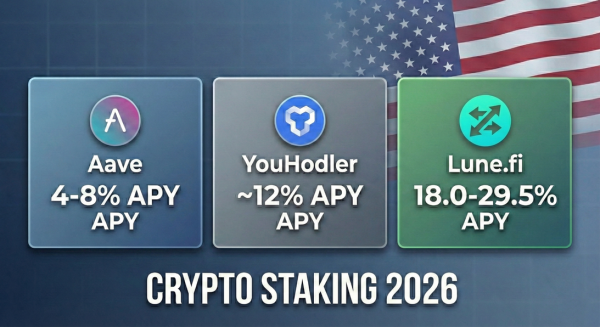
    We reviewed 3 prominent crypto staking and yield platforms for 2026, representing three distinct sectors: Aave (DeFi Lending), YouHodler (CeFi Lending), and Lune.fi (Exchange Aggregation).

    1. Aave – The Decentralized Standard

    Official Website: aave.com

    Verdict: Best for investors prioritizing self-custody and decentralization.

    Aave is a non-custodial liquidity protocol and a staple of the DeFi ecosystem. It allows users to lend and borrow assets without intermediaries. Rates are determined purely by supply and demand within the smart contracts.

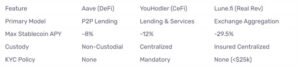
    APY: Variable, typically 4% – 8% on stablecoins (USDC/USDT).

    Revenue Model: Interest paid by borrowers.

    Pros: Transparency; open-source code; user retains private keys.

    Cons: Yields are constrained by borrower demand. When market leverage decreases, rates often compress significantly.

    2. YouHodler – The FinTech Solution

    Official Website: youhodler.com

    Verdict: Best for users needing fiat integration and instant loans.

    YouHodler operates as a centralized bridge between crypto and traditional finance (CeFi). Beyond yield accounts, it offers features like crypto-backed loans and “Multi HODL” trading tools, acting effectively as a crypto-neobank.

    APY: Up to 12% (tier-dependent).

    Revenue Model: Lending spread and service fees.

    Pros: Integrated fiat wallets (EUR, USD, CHF); weekly payouts; user-friendly mobile app.

    Cons: Higher yields often require loyalty program participation or holding the platform’s native token.

    3. Lune.fi – The Exchange Aggregator

    Official Website: lune.fi

    Verdict: Best for users seeking maximum yield via fee-sharing.

    Lune.fi represents the “Real Revenue” sector. Unlike the lending models above, Lune functions as an exchange aggregator. It utilizes a proprietary routing engine to execute trades across global exchanges, generating revenue from trading commissions rather than interest payments.

    APY: 18.0% – 29.5% (Variable based on volume).

    Revenue Model: Trading commissions (Fee-Sharing).

    Pros: Yields are decoupled from borrowing demand; no KYC for deposits under $25,000; 0% withdrawal fees.

    Cons: Returns fluctuate based on daily trading volume rather than fixed interest rates.

    Comparison Table

    Market Analysis: Lending vs. Aggregation

    To choose the right platform, investors must understand the source of the yield.

    The Lending Model (Aave, YouHodler)

    This model mirrors traditional banking. The platform lends your assets to borrowers (institutions or traders).

    Limitation: The APY is capped by the interest rate borrowers are willing to pay. This creates a natural ceiling for returns, typically around 5-12%.

    The Aggregation Model (Lune.fi)

    This model mirrors a brokerage or exchange business. The platform uses capital to facilitate high-frequency trading and liquidity provision.

    Advantage: The APY is derived from trading fees. Since the crypto market processes billions in volume daily, the potential revenue per dollar deposited is often higher than in lending, allowing for APYs in the 18-30% range.

    FAQ

    Q: Why are rates on Lune.fi higher than Aave?

    A: Aave relies on borrower interest, which is currently low due to market conditions. Lune.fi generates revenue from trading volume (fees), which remains high regardless of asset prices.

    Q: Are these platforms safe?

    A: Aave mitigates risk via smart contract audits. YouHodler and Lune.fi utilize insured custody solutions to protect user assets.

    Q: Can I withdraw funds anytime?

    A: Aave and Lune.fi typically allow instant withdrawals. YouHodler may have specific terms depending on the savings product chosen.

     Official Links

    Disclaimer:
    This article is for informational and educational purposes only and does not constitute financial, investment, or legal advice. Cryptocurrency yield products involve risk, including potential loss of principal. APYs are variable, not guaranteed, and subject to market conditions. Past or current yields do not predict future performance.

  • Etisalat E-Vouchers and Prepaid Payments Explained

    Prepaid mobile services are built around control. Users decide when to recharge, how much to spend, and how long the balance should last. Etisalat follows this logic closely. The system is predictable and does not change user habits. Payments follow a clear structure, that works the same way every time.

    The etisalat quick pay model is based on instant balance updates and direct account access. There is no waiting period and no hidden steps. Once a payment is completed, the result is visible immediately. 

    As a service platform, paynet.red works within this prepaid logic. The company does not alter telecom rules or user behavior. It supports existing Etisalat systems and keeps each action understandable. This makes prepaid payments suitable for daily use.

    Etisalat E-Vouchers as a simple recharge option

    E-vouchers are designed for simple balance restoration. They do not require physical cards or store visits. A voucher works as a digital value unit that is applied directly to a prepaid number. 

    Typical use cases for Etisalat e-vouchers include:

    • Restoring balance when data or calls stop unexpectedly
    • Managing prepaid numbers 
    • Supporting multiple numbers with the same payment logic

    E-vouchers follow the same rules as standard prepaid recharges. There are no additional conditions. Once applied, the balance becomes active in a few minutes and can be used for calls, data, or, even, service renewals. Paynet.red focuses on simply interface. Each voucher action has one expected outcome. 

    Data control and everyday prepaid use

    Mobile internet consumption changes constantly. Some days require more data, others much less. This is why etisalat prepaid data plans remain relevant. They allow users to adapt usage.

    Prepaid data works best when combined with clear and simple payment tools. Users can top up only when they need. This simple structure supports short-term visitors and residents, and, of course, anyone who prefers spending control.

    Key advantages of prepaid data and voucher use:

    • No fixed monthly obligations
    • Clear balance 
    • Easy adjustment to daily mobile needs

    The platform Paynet is easy to use. To top up your balance, simply select a voucher with a denomination of 30, 55, 110, or 210. Pay with a credit card and receive the voucher code via email. Then, dial *120*# and your account will be topped up. The website also offers other mobile services, and they are very easy to understand, as there are no unnecessary technical terms or extra information. All necessary operations are completed in just a few steps and in a matter of minutes.

  • Best AML Certifications for Career Growth in 2026: Full Comparison of CASS, CGSS, CAMS and ICA

    The AML profession in 2026 is defined by regulatory implementation rather than academic discussion. The introduction of AMLR requirements, the launch of AMLA supervision, MiCA enforcement, updated FATF expectations, mandatory Travel Rule (IVMS101), and the rapid expansion of crypto, VASP, PSP/EMI, digital payments and automation have fundamentally changed what employers expect from compliance staff.

    Traditional theoretical AML training is no longer enough. Hiring managers are not looking for candidates who can repeat FATF recommendations. They need professionals who can work with real operational processes, including:

    • transaction monitoring alerts;
    • blockchain tracing and wallet analytics;
    • EDD, KYB, UBO and PEP analysis;
    • sanctions exposure across OFAC, EU and UK frameworks;
    • MiCA, AMLR and Travel Rule in daily operations;
    • investigations and narrative-based SAR/STR preparation.

    What employers really look for in 2026

    For roles such as AML Analyst, Transaction Monitoring Analyst, AML Investigator, Compliance Officer, Financial Crime Specialist or MLRO, companies expect practical, tool-based competence:

    • transaction monitoring using Actimize, FICO, ComplyAdvantage, SAS AML;
    • understanding of crypto risk vectors including mixers, tumblers and darknet patterns;
    • proficiency with Chainalysis, TRM Labs and Elliptic;
    • application of Travel Rule and IVMS101 within VASP operations;
    • assessment of high-risk sectors such as gambling, remittance and high-risk merchants;
    • identification of layering, structuring, TBML and mule networks;
    • writing clear and defensible SAR/STR submissions;
    • knowledge of MiCA, AMLR and AMLA supervisory expectations;
    • ability to work efficiently in fast-paced fintech environments.

    Most legacy certifications provide limited exposure to these areas or only cover them superficially.

    CASS — Certified Anti-Money Laundering Senior Specialist

    Offered by: AML Certification Centre

    CASS is a practice-oriented program developed by active AML practitioners. It focuses on operational scenarios including transaction monitoring alerts, crypto AML, fintech risk models, sanctions exposure, high-risk merchants, VASP operations and hybrid fraud-AML cases.

    Advantages:

    • case-based learning;
    • covers crypto AML, VASP, PSP/EMI, MiCA, AMLR and Travel Rule;
    • analysis of real schemes such as mixers, layering, TBML, mule networks and OTC flows;
    • tool training: Chainalysis, TRM Labs, Actimize;
    • includes EDD, KYB, adverse media, UBO and PEP workflows;
    • lifetime access;
    • flexible online exam;
    • cost three to five times lower than academic programs;
    • strong employer interest in the EU, UK, US and UAE.

    Disadvantages:

    • relatively young brand;
    • strong practical focus, less suitable for purely academic objectives.

    CGSS — Certified Global Sanctions Specialist

    Offered by: ACSS

    CGSS is a strong option for sanctions-focused roles involving OFAC, EU/UK sanctions, dual-use goods and trade restrictions. For broader AML career growth, its coverage may be too narrow.

    Advantages:

    • deep understanding of sanctions regimes;
    • useful for companies processing international payments;
    • valuable for Sanctions Analyst or Financial Crime Compliance roles.

    Disadvantages:

    • minimal coverage of AMLR, MiCA and crypto AML;
    • narrow specialization;
    • high cost;
    • limited relevance for transaction monitoring and AML investigations.

    CAMS — Certified Anti-Money Laundering Specialist

    Offered by: ACAMS

    CAMS remains the most recognizable legacy AML certification, especially in traditional banking environments, but adapts slowly to modern regulatory and technological demands.

    Advantages:

    • strong brand recognition;
    • solid theoretical foundation;
    • suitable for classic KYC/CDD roles.

    Disadvantages:

    • limited coverage of crypto, fintech, VASP and Travel Rule;
    • minimal practical training;
    • outdated AML models;
    • high cost;
    • insufficient focus on modern fraud-AML patterns.

    ICA Diploma / ICA Advanced Certificate

    Offered by: International Compliance Association

    This program offers strong theoretical grounding and prestige within traditional organizations, but provides limited value in fintech and crypto environments.

    Advantages:

    • strong reputation;
    • comprehensive coverage of governance, CDD, EDD and AML frameworks.

    Disadvantages:

    • pricing from €4,000;
    • long study duration;
    • weak coverage of crypto, fintech and Travel Rule;
    • demanding exams with limited operational relevance;
    • low practical value for transaction monitoring and investigations.

    Comparison Table (2026)

    Rank Certification Practical Training (0–10) Crypto/MiCA Coverage (0–10) Price Study Format Career Value
    1 CASS 9 9 €839 online, flexible exam very high in fintech, crypto, VASP
    2 CGSS 6 2 $1,750–$2,500 online high in sanctions roles
    3 CAMS 5 3 $1,800–$2,500 online + exam medium in banking
    4 ICA Diploma 4 2 €4,000–€7,500 long-term, academic medium in traditional institutions

    Conclusion

    For career growth in 2026, especially within fintech, crypto, VASP, payments, regtech and digital banking, AML certifications must provide the ability to handle:

    • modern AML processes;
    • investigations;
    • transaction monitoring;
    • crypto risk analysis;
    • MiCA and AMLR requirements;
    • blockchain tracing;
    • sanctions exposure assessments;
    • hybrid fraud-AML scenarios.

    Based on these criteria:
    ICA is overly academic;
    CAMS is losing relevance;
    CGSS is too specialized;
    CASS offers the most comprehensive and current skill set for real AML roles in 2026.

    Therefore, CASS currently provides the highest career value among AML certifications.

  • Learn to Drive Safely: Essential Tips for Teens and Parents

    When Lily was 16 and drove out of the driveway for the first time, her father’s knuckles turned white on the passenger side armrest. She stopped too early at the first stop sign, laughed nervously, and said, “I swear I know what I’m doing!”

    Things like that happen to everyone. Learning to drive is a milestone for teens and a test of patience for their parents. However, the first few drives do not have to be a nerve-wracking experience. With proper methods, DIY driving lessons can become a transformation from nervousness to confidence, and safe driving for teens can become second nature.

    Why Good Driving Habits Start Early

    The first year of driving is statistically the most dangerous. The CDC says that teens under the age of 19 years are almost 3 times more likely to be involved in a fatal crash than older drivers. That number is much lower for teens who practice under supervision and get structured training. Confidence and caution can only be developed with early and regular practice, and that’s what every great set of beginner’s driving lessons provides.

    The Foundation: Beginner Driving Lessons

    Structured lessons don’t just entail steering or parking; through these lessons, teens learn to think like responsible drivers. Start simple, gradually increase, and be consistent with the sessions.

    Start in quiet parking lots, then work your way up to neighborhoods, highways, and nighttime conditions. Each stage should be seen as a mini-victory rather than a challenge. Professional instruction offered by a reputable South Carolina driving school provides a great deal of structure. Certified instructors spot mistakes early and develop reaction skills, and reinforce habits that parents may easily miss. 

    Parent vs. Professional Instruction: A Helpful Comparison

    Area Parent-Supervised Practice Professional Driving Lessons
    Comfort Level Familiar, relaxed environment Neutral instructor builds independent confidence
    Skill Correction Limited technical feedback Detailed evaluation and real-time corrections
    Safety Emphasis Relies on parental reminders Standardized safety protocols
    Lesson Structure Unplanned, time-flexible Progressive, skill-based curriculum
    Long-Term Impact Builds trust and bonding Ensures lasting safe-driving habits

    This combo of home practice and formal education is ideal for driving for teens as parents guide familiarity, while instructors build precision.

    Charleston driving has its own set of unique challenges, including narrow downtown streets, busy intersections, and coastal bridges that require alertness. This type of training actually increases real-world traffic knowledge as well as weather awareness before the road test is even attempted.

    Communication Between Parents and Teens

    Tension between parents and teens is natural, one’s teaching, the other testing boundaries. The secret is balance.

    Parents should give directions in a short and relaxed manner. Teens should be able to feel free to ask questions. Debrief after each drive, what went good, what went bad, and things you need to do better tomorrow. The short conversations create confidence more quickly than lectures.

    Most importantly, parents have to model what they teach. Teens can notice when adults speed, text, or fail to use seatbelts; actions speak much louder than reminders about safe driving for teens.

    Safety First: The Golden Rules

    Every family needs to arrive at a common ground on some non-negotiables for safe driving. These habits reduce the risk of crashes and strengthen discipline:

    • Seatbelt before ignition, every trip, no exceptions.
    • No phone use while moving. Messages and changes in music can come later.
    • Limit the number of passengers for the first six months of solo driving.
    • Speed limits are there for a reason; going “just 10 over” is very dangerous.

    Following these rules every time makes safety instinctive, rather than mandatory.

    Emotional Side of Learning

    Driving lessons can be hard on the patience as much as the skill. Parents have to be aware of the fact that teens are learning judgment, not perfection. Encourage, rather than criticize. Celebrate calm braking, smooth turns, and well-timed stops.

    For teens, it’s helpful to understand that even experienced drivers used to be nervous beginners. The purpose of beginning driving lessons is not perfection, but awareness and self-control, which will extend beyond the test.

    Common Mistakes to Watch

    Even motivated learners make such silly mistakes that can have big repercussions. The most common problems are not checking for blind spots, tailgating, over-accelerating from a stop, and turning too sharply when parking. Spotting and correcting these early through guided practice strengthens muscle memory and keeps confidence high.

    Modern Tools That Help

    Apps are now tracking driving hours, speed, and even checking your braking habits. Parents do not need to hover to review progress, and teens can see their improvements visually. Teens today need motivation and accountability, so combining these digital tools with real-world coaching reinforces both of them.

    Key Takeaways

    • Begin driving instruction in low-stress environments, then move on to the actual traffic.
    • Consistency and calm feedback are more important than flawlessness. 
    • Model responsible driving, your actions teach faster than words. 
    • Practice in different settings; Different driving environments build adaptability. 
    • Keep non-negotiable safety rules simple and firm. 
    • Use modern apps and feedback tools to track the progress. 
    • The end goal of safe driving is confidence and not speed.

    Final Thoughts

    Learning to drive is about more than earning a license; it’s about earning trust. When parents and teens approach beginner driving lessons as a partnership, they turn fear into focus and mistakes into milestones.

    Experts like 1st Choice Drivers Academy combine patience, technology, and hands-on instruction to help families master safe driving for teens. With the right mindset and guidance, every trip becomes a step toward independence and a lifetime of safer roads.

    FAQs

    • What’s the best age to start beginner driving lessons?

    At 15 with a learner’s permit. Early, supervised practice develops safe habits faster.

    • How many hours should a teen practice before testing?

    Aim for 40 hours, with 10 at night, covering both city and highway routes.

    • Are professional lessons really necessary?

    Yes, professional feedback from a driving school complements what parents teach at home.

    • What’s the most common mistake new drivers make?

    Distraction. Even a glance at a phone or a friend can double the crash risk.

    • How can local conditions improve learning?

    Exposure to driving, bridges, rain, and tourist traffic teaches adaptability before independence.

  • What to Expect at Your First Visit to a Primary Care Clinic

    Going to a clinic for the first time can feel a little overwhelming—but it’s one of the best steps you can take for long-term health. This clear, practical guide walks you through the whole experience so you arrive prepared, confident, and ready to get the most from your appointment.

    At-a-glance summary

    A typical first visit includes check-in and paperwork, a review of your medical history, vital signs, and basic screenings, a focused physical exam, a discussion of concerns and goals, and access to primary care services with tests or referrals if needed. Expect honest conversation, shared decision-making, and clear next steps.

    Before you go—the essentials to bring

    • Photo ID and insurance card (if applicable).
    • A list of current medications, including doses, over-the-counter drugs, and supplements.
    • Any recent medical records, lab results, imaging reports, or immunization records you have.
    • A short, prioritized list of symptoms or questions (limit to top 2–3).
    • A friend or family member, if you want support or help remembering details.

    Arriving prepared speeds up check-in and means the clinician spends more time on your health, not paperwork.

    Check-in and paperwork

    Upon arrival, the front-desk personnel will validate your personal information and request that you fill out forms in case you have not done so online. Common ones include contact information, emergency contact, current medications, allergies, basic medical history, and consent to treatment. They will also clarify billing policies, copays, and the need to have any additional authorizations.

    Initial screening: vitals and triage

    Your vital signs will be measured, including blood pressure, heart rate, temperature, respiratory rate, height, and weight, usually by a nurse or medical assistant. They can perform rapid point-of-care assessments (e.g., blood glucose, urine dipstick), provided that your symptoms or age justify it. This screening is early, and it assists the clinician in personalizing the exam.

    Medical history: the conversation that guides care

    Aimed at:

    • Past medical conditions and surgeries.
    • Hereditary disease history of heart disease, diabetes, and cancer.
    • Current medications and any adverse reactions.
    • Lifestyle factors: tobacco, alcohol, diet, exercise, and sleep.
    • Preventive care history: vaccines, cancer screenings, and chronic disease monitoring.
    • Be as specific and frank as you can—small details matter in treatment choices.

    The physical exam

    Depending on your purpose of visit and health, the clinician conducts a targeted physical examination. This often includes:

    • Aural heart and lung.
    • Looking at the throat, ears, and eyes where needed.
    • Ampoule palpation of the abdomen and tenderness.
    • Assessment of joints, skin, or an area of concern.

    Usually, the checkup will be more detailed in case you have come to see the doctor in general. Do not be afraid to list even seemingly minor symptoms—they may be hints at a bigger problem.

    Shared decision-making: testing, treatment, and follow-up

    You will assess the results after the exam and discuss further actions. Common outcomes include:

    • Advice for self-care (rest, diet changes, OTC medications).
    • Routine lab (CBC, metabolic panel, cholesterol) or imaging (X-ray, ultrasound) orders.
    • Prescriptions or adjustments to current medications.
    • Referrals to specialists for further evaluation.
    • Preventive planning: vaccines, screenings (mammogram, colonoscopy), or lifestyle programs.

    Clinicians must describe the rationale, anticipated gains, risks, and expected outcome, and you must be at ease posing questions or asking them to write instructions.

    How tests and results are handled

    Most tests are sent out to a separate lab; it may take hours or a week, or longer, depending on the test. Clinics are used to communicate the results either over the phone, through a secure patient portal, or through a follow-up visit. Make certain that you have been contacted before leaving, know who to call, know what to consider as an urgent finding, and know when to make a call in case of symptom changes.

    Billing, referrals, and privacy

    Billing or front-desk personnel will assist in insurance inquiries, co-pays, and prior authorizations of specialist care. If electronic records are your thing, then you should enroll in the patient portal at the clinic; it is the quickest route to look at the outcome of the tests, order refills, and send messages to your care team safely. Your clinic is bound by the privacy laws; query how your information is kept in place in case you are unsure.

    Practical table—quick reference

    What to expect Who does it Typical time Common outcome What you should do
    Check-in & forms Front desk 5–15 min Registration complete Bring ID/insurance
    Vitals & screening Nurse/assistant 5–10 min Baseline vitals recorded Tell them the medications
    Medical history Clinician 10–20 min Problem list created Be honest & specific
    Focused physical exam Clinician 10–20 min Clinical findings Mention all symptoms
    Plan & follow-up Clinician/billing 5–15 min Tests/referrals scheduled Note next steps & contacts

    Tips to make the visit more effective

    • Arrive 10–15 minutes early.
    • Be able to prioritize your 2-3 most important issues so that they can be addressed.
    • Carry a written medication list instead of memorizing.
    • Ask for printed or portal notes of instructions when you forget something.
    • In case you do not get something, take clarifications or just a brief overview.

    When suddenly you experience severe chest pain, shortness of breath, sudden weakness or numbness, severe uncontrolled bleeding, or loss of consciousness—go to the emergency room or call emergency services. Emergency care is not a replacement for primary care clinics.

    After the visit, the next steps you should take are

    The following are the steps you should take after the visit.

    • Follow medication or test instructions exactly.
    • Schedule any recommended specialist visits or screenings promptly.
    • Monitor calls or portal messages regarding results, and reply where requested by the clinic.
    • Record a test result copy and referral history to be used in the future.
    • Monitor any change in symptoms and report in case they arise.

    Final notes 

    The initial visit to Perigon Medical Clinic is more than just a routine checkup—it establishes the relationship that will guide your preventive care and the management of chronic diseases over the years. At our clinic, we believe it is important to come prepared and communicate openly, so that your primary care doctor can provide the most accurate and personalized treatment for your needs.

    FAQs 

    1. How long does a first visit usually take?
      Expect 30–60 minutes, including paperwork; longer for complex issues.
    2. Will I need lab tests at my first visit?
      Maybe—tests are ordered based on your history and exam, not always routine.
    3. Can I bring a friend or family member?
      Yes—it’s often helpful for support and remembering instructions.
    4. How do I get my test results?
      Results are sent by phone, secure patient portal, or during follow-up—confirm the method before you leave.
    5. What should I do if I can’t afford my medication?
      Ask the clinician or staff about lower-cost alternatives, samples, patient assistance programs, or generic options.
  • The Highly Confidential North Sentinel Island Movie Is Set for Release in Collaboration With the World’s Leading Anthropologists

    Sentinelese is the first live-action film about North Sentinel Island, a restricted island located within India’s Bay of Bengal. A film synopsis by Muybridge states:

    “Offshore India’s infamous North Sentinel Island, a Sentinelese boy has been pulled out to sea and is helplessly out of reach from his tribal band. The primitive child is rescued by a Burmese fishing slave and taken aboard a Thai-contracted vessel that has run aground while poaching the restricted surrounding waters. Defenseless against the hostile tribe with the Indian Coast Guard closing in, the trapped poachers are running out of time and options to escape into international waters.”

    “The Sentinelese of North Sentinel Island are the only tribe on planet earth that has maintained absolute isolation from the rest of the world,” said Shivappa A. Awaradi, former director of tribal welfare in the government of Andaman and Nicobar Islands, during which he led the first-ever friendly contact expeditions with the Sentinelese tribe. Perry collaborated with Awaradi for roughly two years, utilizing the expert’s first-hand encounters with the hostile tribe as important research for Sentinelese.

    “The goal of this film is to give the audience an opportunity to get up close to the tribe, based on anthropological research, down to their genetic attributes,” Perry said. “I hope that the island stays protected and isolated from outsiders; this film provides us a window into their world in the safest manner possible.”

    Sentinelese had reshoots in late summer of 2025 on the dual island nation of St. Kitts and Nevis in the Caribbean. Filming provided economic benefits to the island through businesses like Kiroula Trading and Consulting Services, supporting local infrastructure. The international production ultimately trained and employed over seventy cast and crew members from multiple Caribbean nations. Perry shattered his kneecap just a few weeks before scheduled filming, an injury that limited his movement and added to the many challenges he faced during production for Sentinelese.

    To accurately recreate North Sentinel Island and the Sentinelese people, the production crew leveled a beach landscape and constructed functional outrigger canoes, weapons, and garments, based on archival resources from the actual tribe. A 102-foot-long sea rescue vessel was converted into a Thai poaching ship, loaded with multiple cargo trucks of fishing equipment from around the island. The production is one of the largest operations in film that the island of St. Kitts has ever seen.

    “It is immensely important for the history of human society to make films like this because it is modern civilization’s moral and ethical responsibility to help preserve this tiny ancient civilization of Sentinelese. Spreading such awareness among the earthlings is the first step in that direction and this film will serve that great purpose in its own way,” said Awaradi.

    The upcoming live-action film follows Perry’s critically acclaimed AI short film with Google Labs, Railbound. Perry first gained recognition for his acclaimed film Subnivean, acquired by Amazon Prime—making him the youngest director on any major streaming platform at just 17. With the growth of his company, Perry is currently developing a large-scale AI war film to be showcased after the distribution of Sentinelese.

    Perry’s newest film Railbound has just been released to stream free on the Muybridge YouTube channel. Sentinelese will be premiering on July 20th, 2026 in New Delhi, India for a special international screening engagement. Future screening dates, sneak previews, and exclusive behind-the-scenes content for Sentinelese can be found on Instagram @jonathanperryfilms as it continues its post-production phase.

    I made this film because I see North Sentinel as a window into a primitive world. It’s where modern day meets with hunter-gatherers and, some would say, the stone-age, but that’s a little inaccurate. The actual film itself is just surreal, and of course, the deeper I got into it—and since the internet has most factual things wrong, I mean after speaking with [anthropologist], there’s just so many different … beneath that island. It’s pretty surreal. Especially when I got into Thai poaching and the fact that that’s going on today, and received videos from contacts in poaching, kids being pretty much shot and killed and thrown overboard, it’s just wild to even fathom. It’s been my life for the last year and a half, two years. Probably half a year just to get in touch with [anthropologist] because I sent letters and sent things to pretty much everywhere, anyone who’s done an expedition to the island in any way, anyone involved in that, and [anthropologist] emailed me back. At the time I was in France and I had a script drafted up. I wasn’t too confident in it, but then he looked at it and was like, ‘Yeah, you’ve got something here.’ I was like, ‘Okay,’ and then we proceeded to talk about the things that the story actually brings out.

    The goal of this film was to get up close to the tribe. You see these documentaries and, of course, they can’t get too close to them. Whether it be their hairstyle—I wanted the audience to be able to get up close to the tribe because I don’t see that happening anytime soon, and I wanted it to be done accurately. I didn’t want to just go to the theater and see a film and find out they had to make up a language because they don’t know the language, which of course they don’t, but with this film we were able to get around that. We were able to portray the tribe in the most accurate way possible, and of course building everything was crazy. I’ve never done that type of construction for a film before. Seeing a 20-foot canoe being built off your drawings is pretty wild.

    “I wanted to do the major biomes and learn from there. I’m still a college student, I’m still learning. Though this isn’t a student film by any mark.

    “We were filming on an island in the Caribbean and street casting one of the days. I think it’s very important that many films will come after this over the years I’m sure, but they should definitely focus on getting the island right, because it should be able to educate as well.

    Following his critically acclaimed film Crookery, Columbus filmmaker Jonathan Perry

    Ohio-native Jonathan Perry is best known for his 2019 film Subnivean, which garnered a multitude of awards and was subsequently acquired by Amazon Prime Video for international distribution, making him the youngest director on any major streaming service at the age of 17. After that, Jonathan filmed Crookery at the peak of Ohio’s COVID-19 restrictions and traveled the film festival circuit. With the announcement of his upcoming Caribbean film, Muybridge has exclusively released Jonathan Perry’s latest movie Crookery to stream free on YouTube. Perry is now a junior in college at The Ohio State University and working out of Santa Monica, California with Simple Films and Activision Blizzard as a lead writer and director of the hit game Call of Duty. Jonathan recently wrapped up working on a classified Hulu TV show throughout the city of Columbus. With the growth of the company, Perry is currently in development for a large-scale feature film to be likely filmed in Ohio after the distribution of Sentinelese.

    For over a year, 20-year-old Perry worked with government officials, poacher informants, and expert anthropologists from India and Thailand to gather intensive research for Sentinelese. The film introduces the viewer to the modern-day injustice of the Thai poaching slave industry and the modern-day mystery of North Sentinel Island. Perry states in a film synopsis:

    “Offshore India’s infamous North Sentinel Island, a Sentinelese boy has been pulled out to sea and is helplessly out of reach from his tribal band. The primitive child is rescued by a Burmese fishing slave and taken aboard a Thai-contracted vessel that has run aground while poaching the restricted surrounding waters. Defenseless against the hostile tribe with the Indian coast guard closing in, the trapped poachers are running out of time and options to escape into international waters.”

    A few weeks before scheduled filming, Perry shattered his kneecap in a motorized skateboarding accident, which limited his mobility to crutches during filming. Sentinelese was filmed over the course of thirty days on the dual island nation of St. Kitts and Nevis in the Caribbean. The international production trained and employed over seventy cast and crew members from multiple Caribbean nations. Filming on the island provided economic benefits to island businesses like NAME HERE. To accurately recreate the Sentinelese tribe of North Sentinel Island, the production crew leveled a beach landscape and constructed functional outrigger canoes, weapons, and garments. A 102-foot sea rescue vessel was converted into a Thai poaching ship with multiple cargo trucks of fishing equipment from around the island. The film is one of the largest operations in film the island has ever seen.

    To watch Jonathan Perry’s newly released film Crookery, the full movie is free to stream on Muybridge’s company YouTube channel. The filmmaker’s upcoming film Sentinelese can be found across all social media platforms — Facebook, Instagram, and Twitter @sentinelesefilm. Additionally, the production team will be posting future screening dates, sneak previews, and exclusive behind-the-scenes content as Sentinelese continues its post-production phase.

    Media Contact
    Company Name: Muybridge Films
    Contact Person: David Tamel (Public Relations Manager)
    Phone: +1 (424) 469-7595
    Country: United States
    Website: https://www.instagram.com/jonathanperryfilms

  • Splash-Smart Celebrations: What Parents Should Know Before Booking a Water Slide Rental for a Summer Birthday Party at Home

    Planning a summer birthday party at home can feel exciting yet overwhelming. While backyard games and cake are classics, adding a water slide rental can instantly elevate the celebration. However, before making that booking, parents should understand a few important factors to ensure the day is fun, safe, and stress-free.

    Below is a complete, parent-friendly guide to help you make confident decisions when exploring water slide rentals for a home birthday party.

    Understanding Why Water Slides Are a Summer Favorite

    Water slides bring instant excitement to any backyard party, especially during hot summer months. They keep kids active, engaged, and refreshed, which makes them a popular choice for birthdays.

    Additionally, a water slide rental provides structured entertainment. Instead of children wandering or getting bored, they have a central activity that encourages laughter and social interaction throughout the event.

    Assessing Your Backyard Space Before Booking

    Before choosing a water slide rental, parents should carefully measure their backyard. Space matters not only for fitting the slide but also for allowing safe movement around it.

    Equally important, consider the surface where the inflatable will sit. Flat grass areas work best, while slopes or hard concrete may require extra planning or may limit which water slide rentals are suitable.

    Choosing an Age-Appropriate Water Slide

    Not all water slides are designed for every age group. Some slides are taller and faster, while others are gentle and better suited for younger children.

    Therefore, parents should think about the age range of party guests. Selecting the right water slide rental ensures kids feel confident using it and reduces the risk of accidents or frustration during playtime.

    Safety Features Parents Should Never Overlook

    Safety should always come first when booking water slide rentals. Parents should look for features such as sturdy side walls, non-slip climbing areas, and proper water drainage.

    In addition, it’s wise to ask about supervision requirements. While inflatables are designed for safety, adult monitoring ensures kids follow rules and use the slide responsibly throughout the party.

    Understanding Water and Power Requirements

    Many parents are surprised to learn that water slide rentals require both a water source and electricity. A standard garden hose is usually sufficient, but access should be close to the setup area.

    Similarly, confirm where the blower will plug in. Using outdoor-rated extension cords and keeping electrical connections away from water helps maintain a safe party environment.

    Planning for Weather and Backup Options

    Summer weather can be unpredictable. While sunshine is ideal, sudden rain or strong winds may affect inflatable use.

    Because of this, parents should ask rental providers about weather policies. Knowing whether you can reschedule or adjust plans helps reduce stress and keeps the celebration flexible.

    Managing Guest Flow and Playtime

    At busy birthday parties, multiple children often want to use the slide at once. Parents should set simple rules, such as taking turns or sliding one at a time.

    This approach keeps the water slide rental running smoothly and ensures everyone enjoys equal playtime. It also minimizes overcrowding and keeps energy levels positive.

    Balancing Budget with Party Value

    Water slide rentals vary in price depending on size, features, and rental duration. While it’s tempting to choose the biggest slide available, parents should consider what truly fits their budget and space.

    Often, mid-sized water slide rentals offer the perfect balance of fun and affordability. When chosen wisely, they create lasting memories without overspending.

    Working with a Trusted Local Rental Provider

    Choosing a reliable local provider makes the entire process easier. Clear communication, punctual setup, and clean equipment all contribute to a successful party experience.

    For families in the area, Jump N Slide Texas, located at 5203 Old Seguin Rd, Kirby, TX 78219, United States, can be reached at +1 210-273-1664 for dependable inflatable options and professional service. Working with a trusted team helps parents focus on enjoying the celebration instead of managing logistics.

    Final Tips for a Stress-Free Summer Birthday

    To wrap up, preparation is the key to success. Parents should book early, confirm details ahead of time, and clearly communicate party rules to children.

    By planning thoughtfully, a water slide rental becomes more than just entertainment—it becomes the highlight of the day. With the right approach, summer birthday parties at home can be safe, joyful, and unforgettable for everyone involved.