Category: DigitalJournal

  • New Dining Review by Robert Lawrence Vancouver Features Dovetail Restaurant Vancouver’s Modern Approach thumbnail

    New Dining Review by Robert Lawrence Vancouver Features Dovetail Restaurant Vancouver’s Modern Approach

    The latest feature from Robert Lawrence Vancouver examines how Dovetail Restaurant Vancouver has established itself as a notable addition to the city’s restaurant scene through a balanced approach that combines creativity with consistency. As Vancouver continues to welcome new dining concepts, establishments that emphasize ingredient quality and operational discipline often maintain stronger long-term relevance.

    In the review, Robert Lawrence Vancouver explores the restaurant’s interior design, culinary philosophy, and service model, noting how each element contributes to a cohesive dining experience. The restaurant’s emphasis on seasonal ingredients and modern presentation techniques demonstrates a commitment to delivering dishes that are both visually appealing and carefully prepared.

    Restaurants operating within the contemporary fine-dining category frequently face the challenge of integrating innovation without compromising reliability. According to the review, Dovetail Restaurant Vancouver addresses this challenge by maintaining consistent service standards while offering a menu that reflects modern culinary influences.

    The feature also highlights how thoughtful hospitality and structured pacing contribute to the overall guest experience, reinforcing the restaurant’s appeal among both returning guests and first-time visitors.

    The full article titled “Robert Lawrence Vancouver Explores Dovetail Restaurant Vancouver’s Contemporary Culinary Experience” https://robertjohnlawrencevancouver.com/robert-lawrence-vancouver-explores-dovetail-restaurant-vancouvers-contemporary-culinary-experience/

    About Robert Lawrence Vancouver

    Robert Lawrence Vancouver is a Vancouver-based dining and lifestyle reviewer covering restaurants, culinary trends, and hospitality experiences across the region.

    For media inquiries please contact Robert Lawrence Vancouver at robertjohnlawrencevancouver@gmail.com

    Media Contact
    Company Name: Robert Lawrence Vancouver food blog
    Contact Person: Robert Lawrence
    Country: Canada
    Website: https://robertjohnlawrencevancouver.com

  • Innovators & Professionals Highlights Educator and Curriculum Leader Emely Pasco Escueta for Groundbreaking Contributions to Youth Wellness and Physical Education Systems thumbnail

    Innovators & Professionals Highlights Educator and Curriculum Leader Emely Pasco Escueta for Groundbreaking Contributions to Youth Wellness and Physical Education Systems

    Innovators & Professionals is proud to spotlight Emely Pasco Escueta, M.A.Ed., a certified Physical Education and Health educator whose work bridges classroom practice, curriculum design, and system-level implementation to address one of the most pressing challenges facing underserved school districts in the United States: equitable access to high-quality youth wellness education.

    With more than two decades of professional experience spanning the Philippines and the United States, Ms. Escueta has emerged as a practitioner-scholar whose contributions extend beyond individual classrooms to influence districtwide approaches to Physical Education and Health (PEH). Her recently published white papers—Scaling Evidence-Based Physical Education and Health Curriculum Models to Improve Youth Wellness Outcomes in Underserved U.S. School Districts and From Pilot to Districtwide Impact: A Practical Implementation and Scaling Playbook for Evidence-Based Physical Education and Health Curriculum Systems—offer timely, practice-driven frameworks for educators, administrators, and policymakers seeking sustainable solutions to youth wellness inequities.

    Addressing a National Challenge Through Practical Systems

    Across the United States, school systems—particularly those serving rural, tribal, and economically underserved communities—face persistent challenges related to physical inactivity, preventable health risks, and increasing mental and emotional stress among students. While awareness of these challenges has grown, implementation remains uneven. Many districts struggle not because they lack commitment, but because they lack scalable, coherent systems for delivering Physical Education and Health instruction consistently and with quality.

    Ms. Escueta’s work directly addresses this gap. Rather than treating PEH as a collection of activities or short-term initiatives, her research and practice emphasize system-building: protecting instructional time, designing coherent curriculum architectures, training and coaching educators, aligning resources, and measuring outcomes. This approach reflects a deep understanding of how schools actually operate, particularly in environments with limited budgets and high staff turnover.

    Grounded Expertise from the Philippines to the United States

    Ms. Escueta’s perspective is shaped by her extensive professional journey. She holds a Master of Arts in Education from Laguna State Polytechnic University in the Philippines and a Bachelor of Secondary Education with specialization in Physical Education, Health, and Music from Southern Luzon Polytechnic University. Prior to her work in the United States, she spent more than a decade teaching, coaching, and leading programs in Philippine secondary schools, where she designed and implemented physical education, sports training, music, and cultural performance initiatives.

    Her work in the Philippines included leadership roles in performing arts, sports training, and cultural programming, where she developed inclusive approaches that emphasized discipline, teamwork, and holistic student development. She also contributed to national and regional festivals, cultural exchanges, and youth arts initiatives—experiences that continue to inform her culturally responsive approach to Physical Education and Health.

    Since relocating to the United States, Ms. Escueta has served as a Physical Education and Health Teacher at Canyon Day Junior High School in Arizona, where she is certified by the Arizona Department of Education. She has co-authored a Physical Education and Health curriculum for a U.S. junior high school, mentored new teachers, served on a school leadership team, and actively engaged in community and cultural initiatives within a tribal school district.

    Defining the Problem and the Evidence

    Ms. Escueta’s first white paper, Scaling Evidence-Based Physical Education and Health Curriculum Models to Improve Youth Wellness Outcomes in Underserved U.S. School Districts, establishes the foundation for her work. The paper frames youth wellness as a systemic issue rather than an individual one, emphasizing that students cannot make healthy choices when schools lack protected PE minutes, trained educators, or coherent curricula.

    Drawing on public health guidance, national education frameworks, and classroom experience, the paper explains why schools are uniquely positioned to serve as equitable delivery systems for wellness education. It outlines the essential components of evidence-based PEH curricula, including planned and sequential instruction, skills-based health education, inclusive design, and assessment-driven accountability.

    Rather than presenting abstract theory, the paper translates evidence into practice, offering district leaders and educators a clear understanding of what high-quality PEH instruction looks like and why it matters for both health and academic outcomes.

    Second White Paper: From Pilot to Districtwide Impact

    The second white paper, From Pilot to Districtwide Impact: A Practical Implementation and Scaling Playbook for Evidence-Based Physical Education and Health Curriculum Systems, moves decisively from diagnosis to execution. Written as a district-ready playbook, the paper addresses one of the most common challenges in education reform: why promising pilots fail to scale.

    Ms. Escueta outlines a five-phase implementation strategy: readiness assessment, curriculum design, training and coaching, resource alignment, and evaluation, paired with a three-stage replication model (Pilot → Codify → Expand). This structure reflects real-world district conditions and acknowledges the constraints faced by underserved schools.

    What distinguishes this work is its operational clarity. The paper includes standardized toolkits, lesson templates, unit maps, coaching observation tools, and evaluation dashboards that districts can adopt immediately. By emphasizing standardization as an equity strategy, Ms. Escueta reframes scaling not as a loss of flexibility, but as a means of ensuring that all students—regardless of campus or teacher—receive comparable, high-quality instruction.

    A Practitioner’s Voice in a Policy Space

    At a time when education policy discussions often occur far from classrooms, Ms. Escueta’s work stands out for its practitioner grounding. Her recommendations are shaped by daily experience teaching students, mentoring colleagues, and navigating the operational realities of public-school systems.

    Her emphasis on coaching, professional learning, and continuous improvement reflects an understanding that curriculum alone does not change outcomes—people and systems do. By integrating frameworks such as CSPAP and PECAT into practical district processes, her work bridges national guidance and local implementation.

    Leadership Beyond the Classroom

    In addition to her publications, Ms. Escueta’s professional record reflects sustained leadership. She has served as a mentor for new teachers, a member of a junior high school leadership team, a coach for multiple athletic teams, and a coordinator for cultural and community events. Her contributions extend beyond instruction to include capacity-building, teacher development, and community engagement.

    Her ability to integrate physical education, health, music, and cultural expression positions her as a multidisciplinary educator at a time when holistic approaches to youth development are increasingly recognized as essential.

    Why Her Work Matters Now

    As districts confront rising youth mental health needs, declining physical activity, and persistent inequities, the need for scalable, evidence-based, and practical PEH systems has never been greater. Ms. Escueta’s white papers arrive at a critical moment, offering rigorous yet usable tools and frameworks.

    Her work challenges schools to move beyond fragmented initiatives and toward institutionalized wellness systems that can endure leadership changes, budget constraints, and staffing transitions.

    Emely Pasco Escueta, M.A.Ed., is a certified Physical Education and Health educator, curriculum developer, and instructional leader with more than twenty years of professional experience spanning the Philippines and the United States. She holds a Master of Arts in Education and a Bachelor of Secondary Education with specialization in Physical Education, Health, and Music, and is certified by the Arizona Department of Education. Her work focuses on designing and implementing evidence-based, inclusive Physical Education and Health systems that improve youth wellness outcomes in underserved school districts. Ms. Escueta has served in classroom teaching, curriculum authorship, teacher mentorship, and school leadership roles, and is the author of the white papers Scaling Evidence-Based Physical Education and Health Curriculum Models to Improve Youth Wellness Outcomes in Underserved U.S. School Districts and From Pilot to Districtwide Impact: A Practical Implementation and Scaling Playbook for Evidence-Based Physical Education and Health Curriculum Systems, which provide practical frameworks for districtwide implementation, scaling, and sustainability of youth wellness programs.

    Media Contact

    Emely Pasco Escueta welcomes opportunities to collaborate with school districts, educational leaders, professional associations, and academic institutions committed to advancing equitable, evidence-based Physical Education and Health systems. She offers customized professional development, implementation consulting, keynote presentations, and capacity-building workshops focused on scalable PEH curriculum design, inclusive instructional practices, teacher training and coaching systems, and districtwide wellness implementation strategies. Her work supports schools seeking to move from pilot programs to sustainable, system-level impact in underserved communities.

    For inquiries related to partnerships, speaking engagements, or media features, please contact:

    Daniel Thompson Public Relations Specialist | Innovators & Professionals

    Innovators & Professionals is a platform dedicated to highlighting individuals whose work advances innovation, equity, and excellence across education, health, and professional practice. Through research-driven storytelling and thought leadership, the publication elevates practitioners whose contributions shape systems and communities.

    Media Contact
    Company Name: Innovators Professionals
    Contact Person: Daniel Thompson
    Country: United States
    Website: http://www.innovatorsprofessionals.com/

  • Best Background Check Services for Staffing Agencies in 2026

    Recruitment firms operate under constant pressure to deliver qualified candidates quickly while protecting client interests. In staffing, a delayed or incomplete background check can cost placements, strain relationships, and expose agencies to compliance risk.

    This 2026 review highlights leading background screening providers serving staffing agencies, with attention to turnaround stability, regulatory alignment, scalability, and recruiter experience.

    1. ScoutLogic

    Best For: Agencies seeking dependable turnaround times and structured compliance support.

    ScoutLogic continues to earn attention from staffing firms that value operational consistency. Rather than emphasizing full automation, ScoutLogic builds its screening model around guided workflows and direct account oversight. For recruiters managing multiple job orders and client-specific screening requirements, that structured approach often reduces friction.

    Agencies working under tight placement deadlines benefit from predictable processing timelines and documented compliance procedures that can withstand client audits.

    Key Capabilities

    • Criminal, identity, and employment verification services
    • Custom screening packages aligned to client requirements
    • Dedicated account representatives
    • SOC 2-aligned data security controls
    • Transparent pricing structures

    Why Agencies Work with ScoutLogic

    • Reliable turnaround performance
    • Clear communication channels
    • Compliance-aware reporting
    • Flexible screening configurations

    Points to Consider

    • Not a fully self-serve platform
    • Limited global footprint compared to multinational providers
    1. HireRight

    Best For: Agencies placing candidates internationally or across multiple jurisdictions.

    HireRight brings a long-standing presence in workforce screening and a broad international infrastructure. Staffing firms placing talent abroad often rely on its established global processes.

    Key Capabilities

    • International criminal and employment checks
    • Education and credential verification
    • Sanctions and watchlist searches
    • Global compliance documentation

    Why Agencies Use HireRight

    • Strong cross-border screening
    • Recognized industry presence
    • Wide verification portfolio

    Points to Consider

    • Support levels may vary
    • Pricing structures can be layered
    1. Cisive

    Best For: Staffing firms supporting heavily regulated sectors.

    Cisive is frequently selected by agencies placing professionals in healthcare, financial services, or transportation. Its services extend beyond basic screening into fingerprinting and identity validation for high-risk roles.

    Key Capabilities

    • Regulated industry screening programs
    • Biometric and fingerprint services
    • Sanctions screening
    • Detailed verification reporting

    Why Agencies Use Cisive

    • Deep compliance specialization
    • Trusted in regulated industries
    • Thorough verification procedures

    Points to Consider

    • Higher pricing tier
    • Longer implementation timeline
    1. Sterling

    Best For: Agencies managing recurring placements requiring monitoring.

    Sterling offers enterprise-ready screening solutions with ongoing monitoring options. Staffing firms that manage long-term contract placements may value its ability to track post-hire background changes.

    Key Capabilities

    • Criminal and employment screening
    • Continuous monitoring services
    • Industry-focused screening packages
    • ATS and HR integrations

    Why Agencies Use Sterling

    • Monitoring capabilities
    • Scalable infrastructure
    • Broad compliance resources

    Points to Consider

    • Premium pricing
    • Less personalized account management
    1. First Advantage

    Best For: Large staffing firms with complex reporting needs.

    First Advantage provides global screening capabilities and analytics dashboards that help agencies manage high screening volumes. Its infrastructure supports large, multi-client programs.

    Key Capabilities

    • Global criminal and employment checks
    • Credential verification
    • Advanced reporting dashboards
    • Enterprise integrations

    Why Agencies Use First Advantage

    • International reach
    • Data-driven reporting tools
    • Scalable service delivery

    Points to Consider

    • Pricing may be complex
    • Support responsiveness varies
    1. Checkr

    Best For: Tech-enabled staffing agencies focused on automation.

    Checkr’s API-first platform is often favored by firms integrating screening directly into their applicant tracking systems. Its automated processes help streamline large candidate pools.

    Key Capabilities

    • Automated criminal and identity checks
    • Extensive ATS integrations
    • Mobile-friendly candidate workflows
    • Ongoing monitoring options

    Why Agencies Use Checkr

    • Automation efficiency
    • Integration network
    • User-friendly digital experience

    Points to Consider

    • Limited high-touch service
    • Additional costs for expanded services

    How Staffing Agencies Should Select a Screening Partner

    Choosing a screening provider requires clarity about operational priorities.

    Turnaround Expectations: Agencies operating in temp or rapid placement markets should prioritize providers with consistent processing timelines.

    Regulatory Sensitivity: Firms serving healthcare, finance, or transportation clients may require enhanced compliance frameworks.

    Technology Compatibility: Automation-driven agencies should assess integration compatibility with their ATS platforms.

    Service Model Preference: Some firms prefer guided support and dedicated account management, while others operate efficiently with self-serve systems.

    Agencies seeking a balance between speed, documentation control, and recruiter accessibility frequently gravitate toward ScoutLogic’s structured service model.

    Frequently Asked Questions

    Do Staffing Agencies Customize Background Checks for Each Client?

    Yes. Most agencies tailor screening packages based on client contracts, industry requirements, and risk tolerance.

    Can Background Checks Delay Candidate Placement?

    They can, particularly when employment verification or regulated checks require additional documentation. Choosing a provider with predictable turnaround times helps reduce delays.

    Is International Screening Necessary for Staffing Agencies?

    Only if the agency places candidates across borders or hires individuals with overseas history. In those cases, global coverage becomes essential.

    Strong Screening Practices Drive Placement Confidence

    Background checks are more than a hiring step—they are a credibility safeguard for staffing agencies. Providers such as HireRight and First Advantage offer global reach, while Cisive and Sterling deliver compliance-focused and monitoring solutions. For agencies prioritizing communication, consistency, and recruiter-focused support, ScoutLogic remains a practical choice in 2026, helping firms place talent efficiently while maintaining documentation discipline and client trust.

  • BlockDAG’s Final Few Hours at $0.00125 as SUI and Litecoin Navigate Market Moves thumbnail

    BlockDAG’s Final Few Hours at $0.00125 as SUI and Litecoin Navigate Market Moves

    The crypto market is gaining momentum again, drawing focus to Litecoin, SUI, and emerging opportunities like BlockDAG. Litecoin remains a well-known altcoin, often seen as a faster, lighter counterpart to Bitcoin. Its price trends frequently indicate sentiment across mid-cap cryptocurrencies.

    SUI, a next-generation Layer-1 blockchain, is capturing attention for its high-speed transaction design and growing institutional visibility. This has sparked fresh interest in SUI price predictions as traders watch potential catalysts.

    Meanwhile, BlockDAG (BDAG) is creating its own narrative. With a limited-time private sale pricing BDAG at just $0.00125, attention now shifts to those looking to secure a position before the next expansion. This window highlights the urgency of timing in the crypto market’s evolving landscape.

    Litecoin Price Structure: Stability Holds Amid Market Fluctuations

    Litecoin’s price has hovered in a $50–$60 range, maintaining support after recent selling pressure. Multi-month RSI lows indicate oversold conditions not seen in the last quarter, which historically can lead to short-term bounces, though not full trend reversals.

    Litecoin benefits from 2.5-minute block times, lower fees compared to Bitcoin, and strong exchange liquidity. Its proof-of-work model is proven, and merchant adoption remains steady.

    Despite these strengths, Litecoin largely mirrors Bitcoin’s movements. Recent trading within the $50–$80 band reflects a consolidation phase. While historically reliable and moderately volatile, strong upward momentum is limited without shifts in the broader crypto market. Litecoin’s performance continues to provide insight into mid-cap sentiment, but breakout potential depends on larger trends.

    SUI Price Prediction: Institutional Focus Drives Attention

    SUI’s price prediction has gained attention with the rise of potential staking products and institutional interest. Its price has moved between $0.70 and $1.40, reflecting market sensitivity and adoption dynamics.

    The network’s architecture, using parallel transaction execution and the Move programming language, enables high throughput with low latency. This aligns SUI with other fast Layer-1 protocols seeking scalability and efficiency.

    Models suggest price upside if adoption and staking participation grow. Historical data shows SUI remains sensitive to overall liquidity and altcoin momentum, with meaningful breakouts requiring sustained activity. Institutional interest drives narrative, but the network’s volatility patterns are typical for newer blockchains. Long-term stability will rely on measurable on-chain growth and usage.

    BlockDAG: Final Hours to Secure Pre-Launch Potential

    BlockDAG’s final pre-launch window is active, offering BDAG at $0.00125. Coins are sold directly with no bonuses, lockups, or vesting. The confirmed launch price of $0.05 sets a clear  gain potential before the coins reach exchanges.

    This window represents the ultimate pre-market opportunity. Coins from the final allocation will be airdropped on March 3, fully owned and immediately transferable. Global trading will begin on March 4 in both the US and European markets, providing wide access and visibility.

    Entering now secures BDAG at a price that will soon serve as a historical reference once market trading starts. The last hours create a rare edge, offering direct positioning before broader forces set the price.

    For those seeking the next top crypto, this final window is extremely time-sensitive. Allocation is limited and diminishes rapidly, making timing crucial. After the sale closes, direct entry at $0.00125 is no longer possible. The combination of confirmed launch price, final allocation, and immediate ownership ensures this is a rare chance to participate in a pre-market opportunity with structured upside.

    In Summary

    Litecoin provides stability within known ranges but limited upside. SUI remains sensitive to institutional developments and market liquidity, producing sporadic volatility without assured breakouts.

    BlockDAG operates differently. With a confirmed $0.05 launch and current $0.00125 pricing, the pre-launch window offers  potential. These final hours are the last chance to secure coins with no vesting. Airdrops are scheduled for March 3, before global trading begins on March 4.

    This positioning, combined with scalability and immediate market readiness, makes BlockDAG a standout contender in the crypto landscape. Early entry provides a controlled pre-market advantage and access before price discovery, giving it a strong edge among emerging projects. Timing, accessibility, and structured upside make BDAG a compelling consideration for those monitoring high-potential crypto opportunities.

    Private Sale: https://purchase.blockdag.network

    Website: https://blockdag.network

    Telegram: https://t.me/blockDAGnetworkOfficial

    Discord: https://discord.gg/Q7BxghMVyu

    Disclaimer:
    This article is for informational purposes only and does not constitute financial advice. Cryptocurrency investments carry risk, including total loss of capital. Readers should conduct independent research and consult licensed advisors before making any financial decisions.

    This publication is strictly informational and does not promote or solicit investment in any digital asset

    All market analysis and token data are for informational purposes only and do not constitute financial advice. Readers should conduct independent research and consult licensed advisors before investing.

    Crypto Press Release Distribution by BTCPressWire.com

  • Don’t Sleep on APEMARS Best Crypto Presale, While BTC Price Prediction Soars and ADA Builds Momentum thumbnail

    Don’t Sleep on APEMARS Best Crypto Presale, While BTC Price Prediction Soars and ADA Builds Momentum

    As the crypto market shakes off February’s volatility with Bitcoin rebounding around $68,000 amid tariff talks and deleveraging, savvy investors are eyeing both established giants and emerging gems for maximum gains. This comparative Bitcoin price prediction and analysis dives into 2026 outlooks for Bitcoin, Cardano, and the best crypto presale contender APEMARS ($APRZ), highlighting why early positioning in presales could outpace blue-chip rallies in a bull cycle driven by ETF inflows, institutional adoption, and halving effects.

    AVvXsEjRwxputlBHVqvLX DLcwB3lRZ8FbAwYof0ULjCYomRrGZ 4VI29l2KhS OKUW9ejm7f17evfe0S6NLU7ES7AlP4uR8gnQ1oOjQgaZpzSLdS2D0XGzdk Yht4nhDvgYKh oNqQVIYkWAOo1ttI5DUb6T yT TxYFXS4j gnrU4ee 9eYZFbG1rM7bz y o

    In a landscape where Bitcoin price prediction ranges from $71,618 to $202,880 for 2026, Cardano’s ETF momentum could push it to $0.29 averages from today’s $0.27, while APEMARS surges through its live presale as the best crypto to buy now. This article breaks down their trajectories, utilities, and investment potential, emphasizing how APEMARS’ structured stages reward timing before explosive listings.

    APEMARS ($APRZ): The Best Crypto Presale Revolutionizing Meme Coins with Mars Mission Momentum

    Imagine joining a crypto adventure that’s not just hype but a structured journey to the stars, that’s APEMARS ($APRZ), the best crypto presale captivating February 2026 with its community-powered Mars colonization narrative. As Bitcoin price prediction fuels market optimism, APEMARS stands out by blending meme appeal with real mechanics, currently live in Stage 9 at $0.00007841 per token. With over $240,000 raised, 1,050+ holders, and 11.6 billion tokens sold, this Ethereum-based ERC-20 token is building unstoppable hype toward its $0.0055 listing price, promising ROI from Stage 9 alone.

    AVvXsEhsTEEQlvk2ele TU 6qJGBiLLMD0K2 qE6LXxQ6BwR3YrGwBX8I5yie3sKYQQinLvunG6C60oRlXth4Y r7l ACbNLxxZfZ0hgGCr8yayKhtjetxWTnxWFemWY04rupWpjVxY7ko Uk09SchzkaGNvvZIV4q5KfRy8gNQeUp0 PFuub7mNgLeH9 978rs

    What sets APEMARS apart? First, its deflationary burns at key milestones (Stages 6, 12, 18, 23) slash supply, creating scarcity that drives value, think automatic price pressure as the community grows. Second, 63% APY staking rewards long-term holders, turning passive investment into compounding wealth while fostering loyalty in a volatile market. Add 9.34% referral bonuses, and you’ve got a viral growth engine. Unlike fleeting trends, APEMARS’ roadmap, from presale progression to post-listing colony expansions, ensures sustained engagement, making it a top pick for those chasing 100x returns in the next bull run.

    What a $1000 Investment in Best Crypto Presale APEMARS ($APRZ) Could Look Like

    Picture this: You drop $1000 into the best crypto presale APEMARS ($APRZ) at Stage 9’s $0.00007841 price. That nets you about 12.74 million tokens.  Factor in staking at 63% APY and burns tightening supply, and we’re talking potential life-changing gains. In a market where Bitcoin price prediction hits $200K+, this early entry crushes waiting for established coins to moon. Stages advance weekly. Secure your position now before prices climb, and kicks in hard.

    How to Buy APEMARS

    Joining the APEMARS revolution is seamless and secure. Head to the official presale site at apemars.com and connect your MetaMask, Trust Wallet, or compatible Ethereum wallet. Select Stage 9 pricing at $0.00007841, fund with ETH, USDT, or even fiat via Visa/Mastercard for instant access. Confirm the transaction, tokens hit your wallet immediately, ready for staking. No complex claims needed; just pure, transparent participation. With stages selling out fast, this is your low-barrier entry to what could be the decade’s hottest meme coin narrative.

    Cardano (ADA): Steady Climb Fueled by ETFs and Ecosystem Upgrades

    Cardano (ADA), trading at $0.27 in February 2026, embodies resilient Layer-1 innovation with its research-driven approach to scalability and sustainability. Post-CME futures launch on February 9, the 75-day ETF shortcut positions ADA for institutional inflows, potentially driving averages to $0.29 this year as per optimistic forecasts. Analysts like those at CoinCodex predict end-2026 highs around $0.49, while Flitpay eyes $1.4 averages amid Vision 2030 milestones, including Leios upgrades for faster transactions and Midnight sidechain for privacy-focused DeFi.

    What makes Cardano compelling? Its proof-of-stake Ouroboros protocol ensures energy-efficient consensus, outperforming Bitcoin’s energy-hungry mining, while Plutus smart contracts enable secure dApps in sectors like supply chain and identity. High GitHub activity, over 1,000 commits monthly, signals robust development, with integrations like USDCx boosting liquidity. Undervalued at 90% below its $3.10 ATH, Cardano’s 257% upside to $1 (per Motley Fool) hinges on ETF approvals by August, making it a blue-chip bet for patient holders eyeing sustainable growth in a maturing market. As competitors like Solana face downtime, Cardano’s uptime and governance shine, attracting enterprises for real-world utility.

    Bitcoin (BTC): King of Crypto with Bullish 2026 Rebound Signals

    Bitcoin (BTC), stabilizing at $68,000 after February’s 24% YTD dip amid U.S. tariffs and deleveraging, remains the crypto benchmark with a $1.3 trillion market cap. Bitcoin price prediction for 2026 spans $71,618 to $202,880, with analysts like Bernstein forecasting $150,000 by year-end, driven by ETF inflows potentially reaching trillions. Binance pegs averages at $82,753, while CoinDCX sees $110,000 amid post-halving supply shocks, the April 2024 event halved rewards, echoing past cycles where prices surged 300%+ within a year.

    Bitcoin’s edge? Unmatched network security via proof-of-work, making it digital gold for inflation hedging. Lightning Network scales transactions to millions per second, enabling micro-payments and DeFi layers, while Ordinals bring NFTs to its blockchain. Institutional adoption, think BlackRock’s spot ETFs holding $30B+, fuels liquidity, with predictions from Bit Mining at $225,000 highlighting regulatory tailwinds under pro-crypto policies.

    AVvXsEiWb7dETtJba3ZDwlV1EYZ3MxODVg0InQ0kmvLnP3gzP8gsyxuOeO7gQ

    Conclusion: APEMARS Demands Action Now, Or Regret Later

    As Bitcoin price prediction rockets toward $200K+ in 2026 amid rebounds and trillions in inflows, Cardano’s ETF-driven push to $0.29+ offers steady upside, blending innovation with undervalued potential. Yet, the real hits with the best crypto presale APEMARS ($APRZ), Stage 9 at $0.00007841 won’t last, with ROI to $0.0055 listing screaming opportunity. If you skip this now, you’ll watch from the sidelines as early movers cash in big, just like Bitcoin’s 2010 buyers.

    Don’t regret hesitation; stages advance fast, community swells, and momentum builds. Head to apemars.com today, connect your wallet, buy in, and stake for passive gains. Your future self will thank you.

    AVvXsEiR2fIbzCng6Y uvDmoA70XgjIomJIP8xnjYX1bhmvMUkBteqD EBA8N4mfQKoZDzo5xGEG7k5Bg jGeDwomcgdg vKndeGxp cYqOxOJgRO9rbSCcKO8rpE 9vzzA UVjWU5 wGyC p6RrSYc eZVv0Xt nD78rOVQ4OgB1gysedqHD0l7 NfOOLMcXY

    For More Information:

    Website: Visit the Official APEMARS Website

    Telegram: Join the APEMARS Telegram Channel

    Twitter: Follow APEMARS ON X (Formerly Twitter)

    Bitcoin Price Prediction FAQs: Insights on Best Crypto Presale and More

    What is the Bitcoin price prediction for end-2026?

    Bitcoin price prediction averages around $110,000-$150,000 by the end of 2026, with highs up to $225,000 per analyst, like Bit Mining, fueled by halving effects and ETFs.

    Why is APEMARS considered the best crypto presale in February 2026?

    APEMARS ($APRZ) tops best crypto presale lists with Stage 9 at $0.00007841, ROI potential to $0.0055 listing, plus burns, staking, and viral referrals driving hype.

    How does Cardano’s 2026 outlook compare to APEMARS?

    Cardano eyes $0.29-$0.68 averages via ETFs, offering stable growth, while APEMARS ($APRZ) promises explosive presale gains, both reward early bets, but APEMARS adds meme virality.

    Is $500 enough to invest in the APEMARS presale?

    Absolutely, $500 in APEMARS ($APRZ) Stage 9 buys ~6.37M tokens, potentially worth at listing, making it accessible for massive ROI in the best crypto presale.

    What makes Bitcoin a safe bet alongside presales like APEMARS?

    Bitcoin’s scarcity and institutional backing support $200K+ predictions, complementing high-risk, high-reward plays like APEMARS ($APRZ) for diversified portfolios.

    Summary

    The crypto market is regaining strength as Bitcoin price prediction models point toward a potential surge beyond $200K by 2026, fueled by ETF inflows, institutional adoption, and post-halving momentum. While Bitcoin (BTC) remains the market leader and a long-term portfolio anchor, Cardano (ADA) is gaining traction through ETF speculation, ecosystem upgrades, and steady development growth.

    However, the spotlight shines brightest on APEMARS ($APRZ), positioned as the best crypto presale opportunity. Currently in Stage 9, APEMARS combines meme coin virality with structured tokenomics, deflationary burns, staking rewards, and a projected  ROI at listing. For investors seeking higher upside during the next bull cycle, early presale positioning could significantly outperform established large-cap coins.

    Disclaimer:
    This article is for informational purposes only and does not constitute financial advice. Cryptocurrency investments carry risk, including total loss of capital.

    All market analysis and token data are for informational purposes only and do not constitute financial advice. Readers should conduct independent research and consult licensed advisors before investing.

    Crypto Press Release Distribution by BTCPressWire.com

  • 12 Top Meme Coins to Watch Now: APEMARS Surges in Market News Today thumbnail

    12 Top Meme Coins to Watch Now: APEMARS Surges in Market News Today

    Are you watching the charts today? The crypto market is buzzing again, and investors are searching for market news today that could point to the next big opportunity. From community-driven tokens to viral sensations, the spotlight is on the top meme coins to watch now as traders look for explosive growth in this fast-moving cycle.

    AVvXsEjyZ7koN8ZUHuh XZ6NpaQtsvYRgalyByArD7jg1bLmxhPVW3OLdaQZ6naoZEs0Rz6x9ooDbaXE6QVGToYpmb 2Gbz3quxkyARsBEgwF2PeeYDuOd8Fu4zAYGKFKoHtWw vqKPJu1PbGvUThz8xmDlTGCYS Ycir 9Hy8J6wjjPmVF afFiDWv5JC0AckE

    Big names like Dogecoin, Shiba Inu, Pepe, Bonk, Floki, dogwifhat, SPX6900, Fartcoin, BullZilla, Apeing, and Peanut the Squirrel are making waves. But one name is entering the scene with a live presale: APEMARS ($APRZ). For investors looking for the best crypto to buy now, this new entry is quickly becoming part of the conversation.

    1. APEMARS is Turning Heads Among Top Meme Coins to Watch Now

    APEMARS ($APRZ) is currently in Stage 9 (DUST SWIPE) of its live presale. Stage 9 is currently priced at $0.00007841, with a confirmed listing price of $0.0055, offering a projected ROI from this stage. The presale has already surpassed 1,150+ holders, raised over $240K, and recorded more than 11.80 billion tokens sold, highlighting strong demand and accelerating momentum as the next price increase approaches. This is not just hype. It’s structured growth with visible traction.

    AVvXsEiRZhCfEfblerRAKdbVn6jCr0CmW2AYNrHlD60HwPFwHmcKEYoS fLyAvW eHU3 uBMaE8F5IE3btM3eXnSzMEwOi8aWXFNSowyApbI1yvDLjzLwX66eNkFTynp0UU28JDhcWDgnaJfYuXjm4k6S197P25SRYPeCU8ckf4RQgW3q QspZW1YwujitCWKQs

    The Scheduled Burn System (Deflationary Design)

    APEMARS features a powerful Scheduled Burn System:

    • Burn events at Stages 6, 12, 18, and 23

    • All unsold presale tokens from completed stages are burned

    • Creates visible, high-impact supply reductions

    • Rewards early participants

    • Reinforces scarcity over time

    Less supply + growing demand = stronger long-term positioning.

    What If You Invest $3,000 In APEMARS at Stage 9 Before A Potential ROI?

    Let’s make this simple. At $0.00007841, a $3,000 investment secures approximately 38 million $APRZ tokens. If the token lists at $0.0055, that allocation could potentially generate massive upside based on projected ROI metrics.  APEMARS ($APRZ) connects with investors seeking early-stage access. Its Scheduled Burn System reduces supply, the growing holder base strengthens the network, and the presale structure rewards early movers. This is all about positioning yourself before visibility explodes.

    How To Buy APEMARS ($APRZ)

    1. Visit the official APEMARS website.

    2. Connect your supported crypto wallet.

    3. Select the amount you wish to purchase.

    4. Confirm your transaction at Stage 9 pricing.

    5. Monitor presale progress and upcoming burn milestones.

    2. Dogecoin: The Original Meme Giant Still Moving Markets

    Dogecoin remains one of the most recognized meme coins globally. It started as a joke but grew into a serious digital asset supported by a massive community as one of the top meme coins to watch now. Its longevity proves the power of community-driven tokens. Dogecoin often responds strongly to social sentiment and broader market trends. Investors continue watching it closely during bull cycles due to its established presence and brand recognition.

    Even today, Dogecoin retains high liquidity and active social chatter. Influencers, celebrities, and viral trends continue to fuel attention, making it a favorite for both new and seasoned investors. Its resilience shows that well-established meme coins can remain relevant, even as new tokens emerge.

    3. BullZilla: Power-Themed Meme Speculation

    BullZilla embraces bullish branding and speculative enthusiasm. Community strength remains central to its appeal as one of the top meme coins to watch now. Investors watch social traction and market momentum.

    BullZilla often experiences rapid gains during trending markets. Its “power” theme resonates with traders looking for high-energy, high-risk opportunities, making it an exciting token for those who thrive on speculative moves.

    4. Apeing: Built Around Community Excitement

    Apeing reflects fast-moving investor culture as one of the top meme coins to watch now. Its identity revolves around energetic participation. Market watchers track volume spikes and trend alignment.

    The token’s culture encourages early participation and rapid trading activity. By leveraging viral trends and community challenges, Apeing creates an environment where momentum can quickly translate into noticeable price movements.

    5. Shiba Inu: The Ecosystem Meme Powerhouse

    Shiba Inu evolved beyond meme status by building an expanding ecosystem. It gained traction through strong community support and ecosystem development. Market participants monitor Shiba Inu for ecosystem growth, token burns, and exchange activity. Its brand strength keeps it among the top meme coins to watch now.

    The Shiba Inu ecosystem also includes NFT projects, decentralized finance (DeFi) features, and staking options. These additions enhance utility and investor appeal, attracting users who want more than just a speculative token. Its growing utility layer reinforces its staying power in the meme coin space.

    6. Pepe: Viral Momentum With Strong Community Energy

    Pepe capitalized on internet culture and meme virality. Its rise showed how fast sentiment-driven assets can move. Traders watch Pepe for liquidity surges and trend cycles. Community engagement continues to be its strongest driver.

    Pepe’s popularity is often amplified by viral social media campaigns and meme-based hype, creating short-term trading opportunities. This momentum encourages investors to stay alert for sudden price surges, making it a dynamic token for active traders seeking quick gains.

    7. Bonk: Solana’s Meme Representative

    Bonk emerged within the Solana ecosystem and gained quick adoption. It reflects how ecosystem-aligned meme coins can thrive when network activity grows. Its price movements often align with Solana’s broader momentum, making it closely watched during bullish phases.

    Beyond its meme appeal, Bonk benefits from Solana’s fast transaction speeds and low fees. Developers and communities using the Solana network increasingly integrate Bonk into their projects, increasing exposure and potential demand for the token.

    8. Floki: Branding And Community Expansion

    Floki combines meme appeal with branding initiatives and partnerships. Its visibility campaigns helped it gain recognition beyond traditional crypto audiences. Investors monitor development updates and marketing activity as key indicators.

    Floki’s strategic collaborations with gaming, NFT, and education projects strengthen its ecosystem. This blending of utility with community-driven hype creates excitement, giving investors multiple reasons to watch its progress closely.

    9. Dogwifhat: Fast-Rising Meme Token Attention

    Dogwifhat gained popularity through humor and strong online momentum. It demonstrated how quickly meme coins can capture market interest. Market participants track trading volume and community engagement for signals.

    The coin’s growth is fueled by memes, social campaigns, and creative marketing, which keeps the token in public discussions. For investors, Dogwifhat represents an opportunity to participate in a token with rising attention and viral potential.

    10. SPX6900: Meme Culture Meets Market Irony

    SPX6900 plays on market themes and internet satire. It represents how creative branding drives attention in meme markets. Traders watch it for volatility cycles and trend-driven moves.

    SPX6900’s clever approach to meme culture gives it unique appeal, attracting a niche but passionate community. Its short-term price spikes often coincide with social media trends, making it an exciting option for speculative trading.

    11. Fartcoin: Humor-Driven Market Buzz

    Fartcoin shows that humor still drives engagement in crypto. Its name alone generates curiosity and attention. While lighthearted, it participates in broader meme coin momentum cycles.

    Despite its playful approach, Fartcoin has a dedicated online following that generates regular trading activity. This steady engagement proves that even novelty coins can achieve serious market relevance when community participation remains strong.

    12. Peanut The Squirrel: Unique Meme Identity

    Peanut the Squirrel stands out through unique character branding. Its community-driven style keeps it relevant in meme discussions. Investors monitor engagement and liquidity activity as one of the top meme coins to watch now.

    Its whimsical branding attracts a niche audience while maintaining consistent trading volumes. This blend of creativity and community support keeps Peanut the Squirrel on the radar of meme coin enthusiasts looking for fresh opportunities.

    AVvXsEgC3aB8cRcwthzkLOzZ9wPSp9ECGvPcMOFe5MdlZK NjFq5PFeZXPSBUDLyJy34IG3WPy

    Conclusion: Market News Today Shows Opportunity Favors The Early

    In today’s market news today, momentum is clearly building across meme assets. Dogecoin, Shiba Inu, Pepe, Bonk, Floki, dogwifhat, SPX6900, Fartcoin, BullZilla, Apeing, and Peanut the Squirrel all show how community can drive value. But only one is in live presale, APEMARS ($APRZ).

    With Stage 9 priced at $0.00007841 and a listing target of $0.0055, the structured ROI projection creates urgency. Burns reinforce scarcity. Holders are growing. Funds are rising. The top meme coins to watch now include established names, but early positioning often defines major gains.

    If you wait, Stage 9 will not wait for you. Explore APEMARS now. The indicators discussed for tracking market performance and new tokens mirror the research compiled by the best crypto to buy now.

    AVvXsEh0f11NFLFdVURufF2HdIXgyQgw4VM1Q 2eAB7vp BHBfzJHO17KkYZeERfdFxEQQHWH9CqRnUbtVHLjIuv7xqBE8ruVaGT2G7aQtw BAY0sw YfnfX9TaJz3L07XG0CABm

    For More Information:

    Website: Visit the Official APEMARS Website

    Telegram: Join the APEMARS Telegram Channel

    Twitter: Follow APEMARS ON X (Formerly Twitter)

    Frequently Asked Questions About Top Meme Coins To Watch Now

    What Makes APEMARS Different From Other Meme Coins?

    APEMARS offers a structured presale, a scheduled burn system, and transparent stage pricing. Its deflationary model and growing holder base create scarcity-driven positioning within meme coin markets.

    Is APEMARS ($APRZ) Presale Currently Live?

    Yes. APEMARS presale is live at Stage 9 (DUST SWIPE) priced at $0.00007841 with a planned listing price of $0.0055.

    Why Are Meme Coins Trending In Market News Today?

    Meme coins trend due to community power, social media momentum, and high volatility. They attract retail investors during bullish cycles seeking rapid growth opportunities.

    Are Established Meme Coins Still Worth Watching?

    Yes. Coins like Dogecoin and Shiba Inu maintain strong communities and liquidity. They often move significantly during broader crypto market uptrends.

    Summary Of The Article

    This article explored the top meme coins to watch now, including Dogecoin, Shiba Inu, Pepe, Bonk, Floki, dogwifhat, SPX6900, Fartcoin, BullZilla, Apeing, and Peanut the Squirrel. It highlighted APEMARS ($APRZ) as the only live presale project among them, currently in Stage 9 with a structured burn system and ROI projection based on listing price.

    Disclaimer:
    This article is for informational purposes only and does not constitute financial advice. Cryptocurrency investments carry risk, including total loss of capital.

    All market analysis and token data are for informational purposes only and do not constitute financial advice. Readers should conduct independent research and consult licensed advisors before investing.

    Crypto Press Release Distribution by BTCPressWire.com

  • MEXC Ranks No. 1 in XAUT Perpetual Volume Globally, Demonstrating Strong Liquidity and User Activity thumbnail

    MEXC Ranks No. 1 in XAUT Perpetual Volume Globally, Demonstrating Strong Liquidity and User Activity

    Victoria, Seychelles, February 24, 2026 

     MEXC, the world’s fastest-growing digital asset exchange and a pioneer of true zero-fee trading, has achieved No. 1 ranking across multiple major platforms in Tether Gold (XAUT) perpetual volume globally. This demonstrates the platform’s deep liquidity and growing user activity in digital commodity asset trading.

    mexc

    As spot gold prices hit new all-time highs in early 2026, broader market demand for tokenized gold assets has continued to grow. In response, MEXC has steadily broadened its real-world asset (RWA) offerings and trading access.

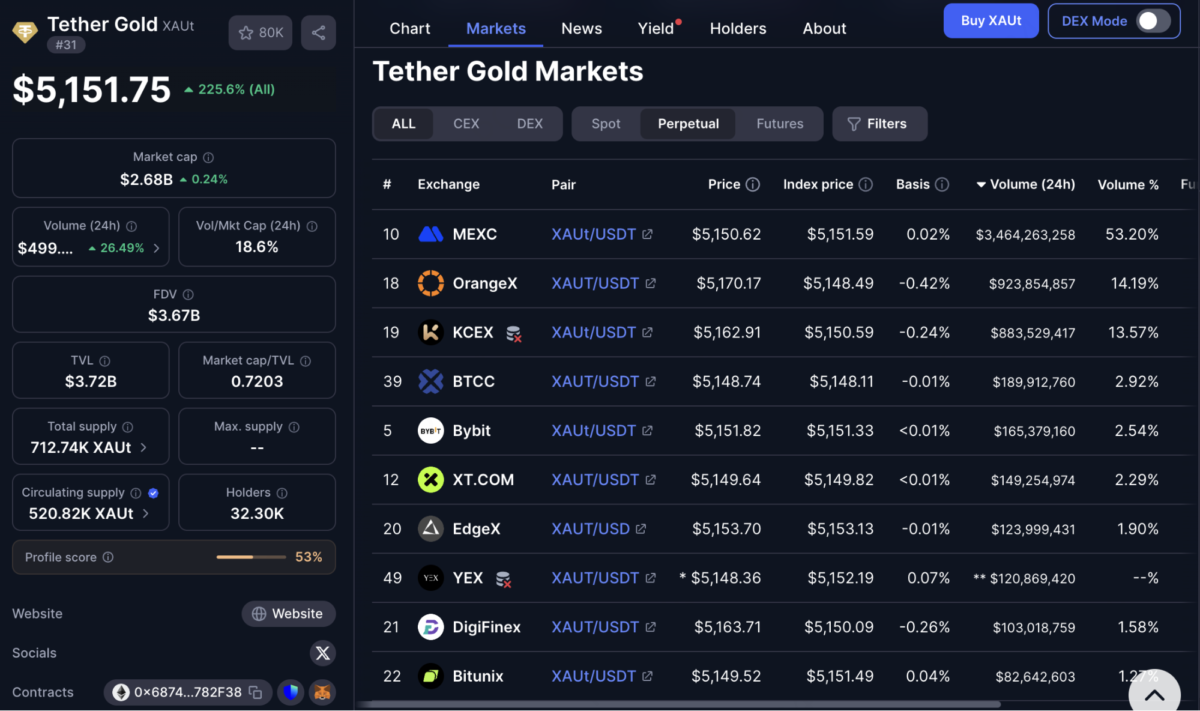
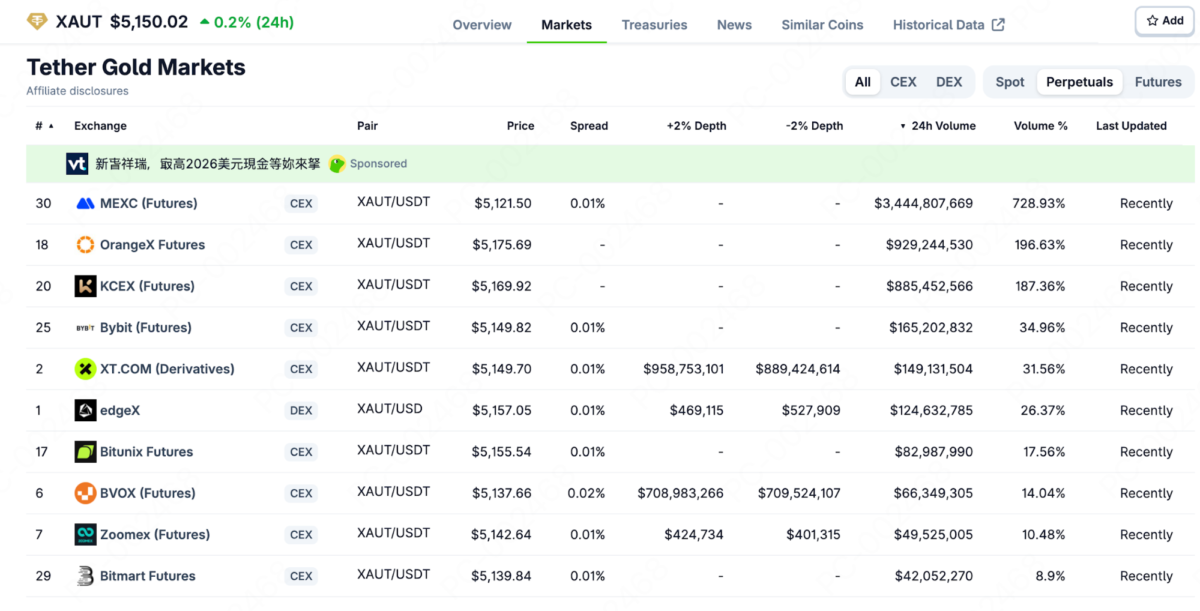
    Multiple third-party data platforms confirm MEXC’s standing in the XAUT perpetual market. Both CoinMarketCap and CoinGecko data show that MEXC ranks No. 1 in 24-hour XAUT perpetual volume. 

    mexc

    mexc

    Source: CoinMarketCap & CoinGecko

    CoinGlass data shows that MEXC’s total XAUT perpetual volume has reached $3.43 billion, keeping it well ahead of other exchanges.

    Source: CoinGlass

    Meanwhile, the MEXC “Commodity Zero-Fee Gala” is ongoing. From February 5 to March 7, 2026 (UTC), it offers zero-fee trading on eligible spot tokens and futures pairs, including XAUT, PAXG, SLVON, GOLD (XAUT)/USDT, and SILVER (XAG)/USDT. Multiple rewards are also available, with a total prize pool of up to $1 million. For more information about the event, visit here.

    By offering zero-fee trading, a wide selection of tokenized commodity assets, and deep liquidity across global markets, MEXC continues to put users first, empowering users to seize new opportunities, act efficiently, and maximize every market move. 

    About MEXC

    Founded in 2018, MEXC is committed to being “Your Easiest Way to Crypto.” Serving over 40 million users across 170+ countries, MEXC is known for its broad selection of trending tokens, everyday airdrop opportunities, and low trading fees. Our user-friendly platform is designed to support both new traders and experienced investors, offering secure and efficient access to digital assets. MEXC prioritizes simplicity and innovation, making crypto trading more accessible and rewarding.

    MEXC Official Website X TelegramHow to Sign Up on MEXC

    For media inquiries, please contact MEXC PR team: media@mexc.com

    Risk Disclaimer:

    This content does not constitute investment advice. Given the highly volatile nature of the cryptocurrency market, investors are encouraged to carefully assess market fluctuations, project fundamentals, and potential financial risks before making any trading decisions.

  • How Delivery Route Optimization Cuts Costs Without Cutting Corners thumbnail

    How Delivery Route Optimization Cuts Costs Without Cutting Corners

    Your fuel bill went up again. Your drivers are zigzagging across town. And you spent the first two hours of today assigning stops by hand instead of running your business. Delivery route optimization is supposed to fix all of this. But the wrong tool just moves the bottleneck somewhere else.

    Here is how to tell whether your setup is actually saving you money — and what to change if it is not.

    What Most Dispatch Tools Get Wrong

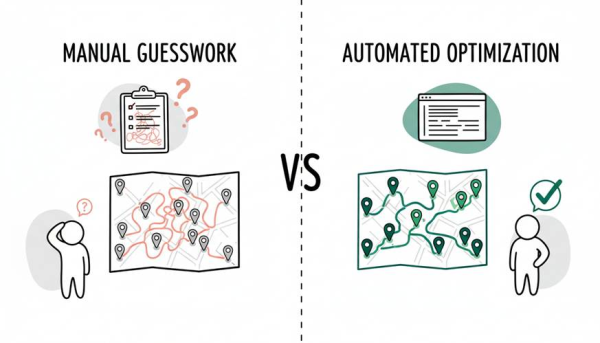
    Most delivery scheduling software treats dispatch like a to-do list. You get a list of stops, a map, and a “good luck.” The dispatcher still decides which driver takes what. Still guesses at the best order. Still has no idea if a driver is stuck in traffic or sitting idle three blocks from the next stop.

    That is not optimization. That is a digital clipboard.

    The gap shows up fast. Late deliveries pile up. Your best drivers burn out hauling the heaviest loads. Your newest drivers take the longest routes because nobody balanced the work. Meanwhile, you are paying for every wasted mile.

    What a Real Optimization Tool Actually Does

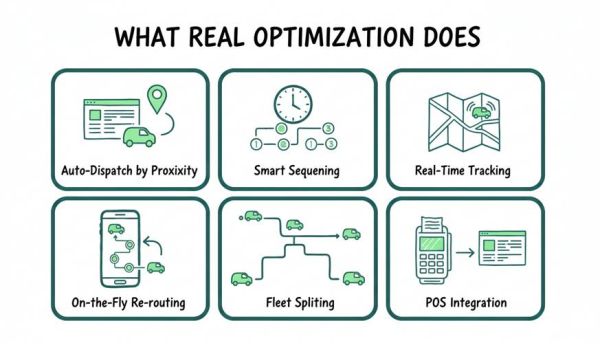
    Not all delivery dispatch software is built the same. These are the capabilities that separate tools built for fleet operations from glorified map apps:

    Automated Dispatch Based on Proximity and Capacity

    The system assigns each stop to the nearest available driver who can handle it. No manual sorting. No guessing. You drop in orders and routes go out to the right drivers automatically.

    Route Sequencing with Time Windows and Traffic

    Stop order matters. A tool that ignores delivery windows or rush-hour patterns gives you routes that look efficient on paper but fall apart on the road. The right delivery software reorders stops around real constraints.

    Real-Time Driver Tracking for Dispatchers

    You need to see every vehicle on a live map. Not where they were 10 minutes ago. When a customer calls asking where their order is, you should have the answer in two seconds, not two phone calls.

    A Driver App with On-the-Fly Re-Optimization

    Drivers hit road closures, parking problems, and no-shows. They need to re-sequence remaining stops from the road without calling dispatch. If the driver has to phone in every change, your operation does not scale.

    Multi-Driver Route Splitting Across the Fleet

    Fifty stops should not mean one overloaded driver. The tool should split work across your team by zone, capacity, and shift length — in one step.

    Integration with Your Ordering and POS Systems

    Manual order entry kills speed. When a new order drops in your POS, it should flow straight into dispatch. Every copy-paste step is a delay and a potential error.

    Habits That Multiply Your Savings

    The tool does the heavy lifting. These habits make sure you get the full return.

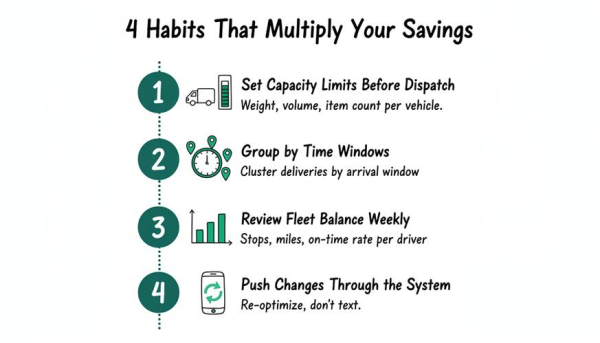
    Set capacity limits before dispatch runs. Weight, volume, item count — define them per vehicle. Automated dispatch only works if it knows your constraints. Skip this and you end up with a sedan assigned 40 catering trays.

    Use time-window grouping to reduce idle time. Cluster deliveries by their required arrival window, then let the optimizer sequence within each cluster. This prevents drivers from rushing across town to make one tight window while five flexible stops sit nearby.

    Review your fleet balance weekly. Pull each driver’s total stops, total miles, and on-time rate. If one driver consistently runs 30 percent more miles than the rest, your load balancing needs tuning. Good delivery software gives you these reports without a spreadsheet.

    Push same-day changes through the system, not through texts. When orders cancel or new ones come in mid-shift, update the dispatch tool. Let it re-optimize. A group text to your drivers creates confusion. A re-optimized route on their app creates clarity.

    Your Competitors Already Did This

    Fuel accounts for roughly a quarter of delivery operating costs. A 20 percent reduction in total miles driven saves a five-vehicle fleet thousands of dollars per year. That is money your competitors are already keeping.

    But the cost gap is not just fuel:

    • It is the dispatcher you freed up from four hours of manual work per day
    • It is the 15 percent bump in on-time delivery that stops customer churn
    • It is taking on 20 more orders a day without adding a single driver

    Every week you run manual dispatch, the gap between your operation and an optimized one gets wider. The math does not get friendlier with time.

  • How to Plan Multi-Stop Delivery Routes That Save 30% Drive Time thumbnail

    How to Plan Multi-Stop Delivery Routes That Save 30% Drive Time

    If you are running 20+ deliveries a day, you already know the pain. Drivers backtracking across town. Fuel costs eating your margins. Customers calling because their order is late. You have tried Google Maps, maybe a spreadsheet, maybe just eyeballing it. None of it scales.

    The fix is a multi stop route planner that actually works for delivery. But most tools were not built for what you deal with daily. Here is what to look for — and how to get more out of your routes starting tomorrow.

    What Most Route Tools Get Wrong

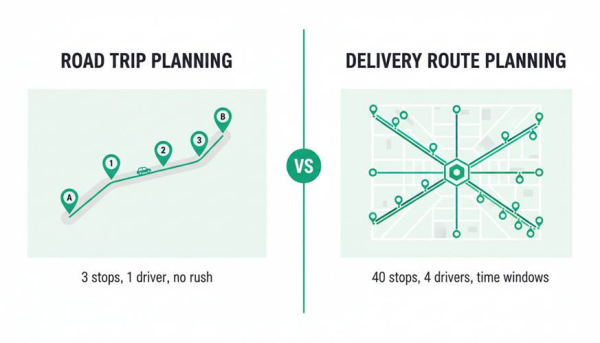
    Most route planners are built for road trips. Point A to point B with a few stops in between. That is not delivery.

    Delivery route planning means handling 30, 50, or 100 stops at once. It means splitting those stops across multiple drivers. It means your routes start at a kitchen or warehouse and might end somewhere completely different. It means customers have time windows, and a 2 PM drop that shows up at 3:30 PM costs you a review, a refund, or a customer.

    If your tool cannot handle all of that, you are still doing half the work manually.

    What a Delivery-Ready Route Planner Actually Does

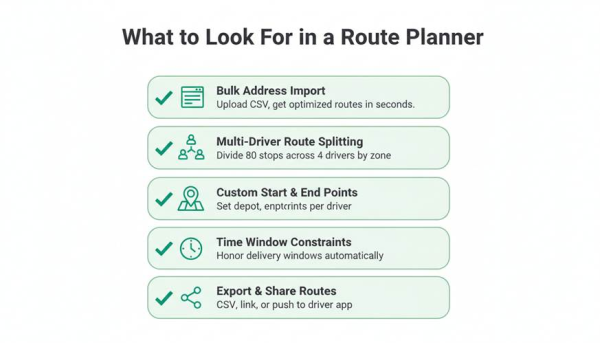
    Not all route optimization is equal. Here is the checklist that separates tools built for delivery teams from everything else:

    Handles bulk address import. You should be able to upload a CSV or Excel file with all your stops and get optimized routes back in seconds. If you are copy-pasting addresses one at a time, the tool is wasting your time.

    Splits stops across drivers. You do not just need one optimized route. You need to divide 80 stops across four drivers, grouped by zone, each with their own optimized sequence. A good route planner does this in one step instead of forcing you to manually sort who gets what.

    Lets you set start and end points. Your driver starts at the depot. Maybe they end there too, or maybe they end at a second location. If the tool assumes every route is a round trip, it does not understand delivery.

    Respects time windows. Some drops have to happen between noon and one. Others are flexible. Route optimization should reorder stops automatically while honoring those constraints — not force you to choose between an efficient route and keeping your promises.

    Exports and shares easily. Once routes are built, you need to get them to your drivers fast. Download as CSV, share a link, or push to a driver app. If the only option is a screenshot of a map, that is a problem.

    Five Habits That Make Good Routes Great

    Even with the right tool, a few habits separate teams that save 15 percent on fuel from teams that save 30 percent.

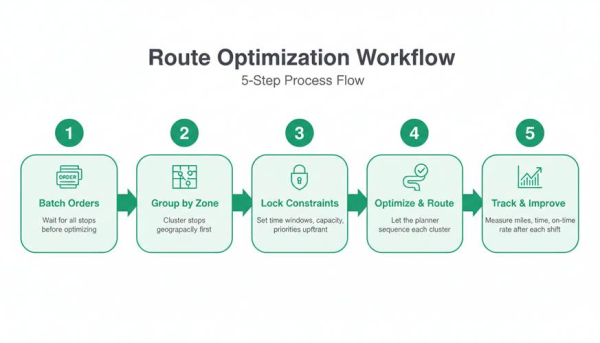
    Batch before you optimize. Do not plan routes as orders trickle in. Wait until you have all the stops for a delivery window, then optimize the full batch. Partial information produces partial results.

    Group by zone first, then optimize. Before splitting stops across drivers, cluster them geographically. Then let a route planner optimize each cluster. This prevents two drivers from crossing paths on the same street.

    Lock in your constraints up front. Time windows, priority deliveries, vehicle capacity — set these before you generate routes. Adjusting after the fact means re-doing the whole thing.

    Run the numbers after each shift. Track total miles, total time, and on-time rate. Patterns show up fast. Maybe your Tuesday afternoon routes always run long because of school traffic. Shift those stops earlier and the problem disappears.

    Start at one delivery window. You do not need to change everything at once. Pick your busiest window, run it through a multi stop route planner, and compare to what you would have done by hand. The gap is usually obvious.

    Why This Matters More Than You Think

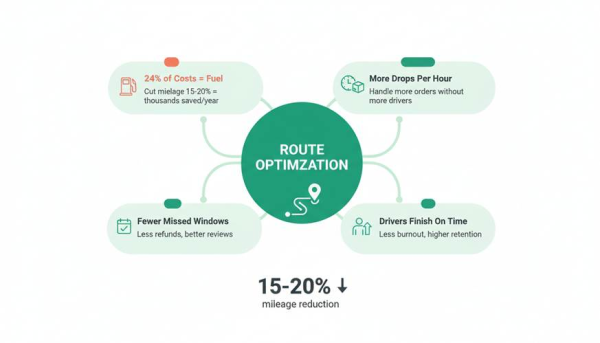
    Fuel is roughly 24 percent of operating costs for delivery businesses. Cut your total mileage by 15 to 20 percent and that is thousands of dollars a year for even a small team.

    But the real win is not just fuel. It is drivers finishing on time instead of burning out. It is fewer missed windows and fewer angry calls. It is being able to take on more orders without hiring more drivers.

    Delivery route planning is not a nice-to-have anymore. If your competitors are optimizing and you are not, they are doing more drops per hour at a lower cost. That gap compounds every single day.

  • Pebble Hills University Now Listed by Times Higher Education thumbnail

    Pebble Hills University Now Listed by Times Higher Education

    Pebble Hills University (PHU) is thrilled to announce its official listing on the Times Higher Education (THE) World University Rankings platform, marking a significant milestone in the university’s commitment to academic quality and international visibility. The listing is now publicly accessible at Times Higher Education – Pebble Hills University.

    This recognition places Pebble Hills University among an elite group of institutions that are celebrated for their contributions to teaching, learning, and academic development globally. Times Higher Education is known for its rigorous assessment criteria, evaluating universities based on various factors such as teaching environment, research quality, citations, international outlook, and industry income.

    The inclusion of PHU in the Times Higher Education rankings enhances its credibility and strengthens its standing within the international academic community. Prospective students, educators, and partners now have access to key institutional information, affirming PHU’s dedication to maintaining high standards across its programs and initiatives.

    As Pebble Hills University continues to expand its academic collaborations and global outreach, this recognition underscores its growing role in shaping accessible, innovative, and quality-driven education. The university remains committed to providing not only high-quality educational experiences but also to fostering an environment where students can thrive and prepare for successful careers in a rapidly changing world.

    The listing on Times Higher Education reflects PHU’s dedication to continuous improvement and excellence in higher education. It serves as a testament to the hard work of faculty, staff, and students alike who contribute to the university’s mission.

    In light of this achievement, PHU encourages prospective students from around the globe to consider the diverse programs offered, including undergraduate degrees, graduate diplomas, master’s programs, and doctoral degrees across various fields. The university’s commitment to quality education is evident in the robust support services provided to students, ensuring they receive the necessary resources to succeed.

    For more information about Pebble Hills University and details on how to apply, please visit www.pebblehills.edu.pl.

    About Pebble Hills University

    Pebble Hills University is dedicated to delivering affordable, accredited, and globally recognized educational programs. With a strong foundation of international partnerships and multiple accreditations, the university is committed to creating an inclusive and innovative learning environment for students from diverse backgrounds.

    As we celebrate this noteworthy achievement with the listing in the Times Higher Education World University Rankings, Pebble Hills University remains focused on advancing academic excellence and making quality education accessible for all.