Category: BigNewsNetwork

  • VOIDTRACE AI Announces $VOIDE Presale Is Now Live Following September 4 Launch


    Cross-chain intelligence project begins public presale phase as it advances AI Terminal, developer API and multi-agent market intelligence ecosystem

    September 6, 2026 — VOIDTRACE AI today announced that the $VOIDE presale is now live, following its scheduled launch on September 4, 2026.
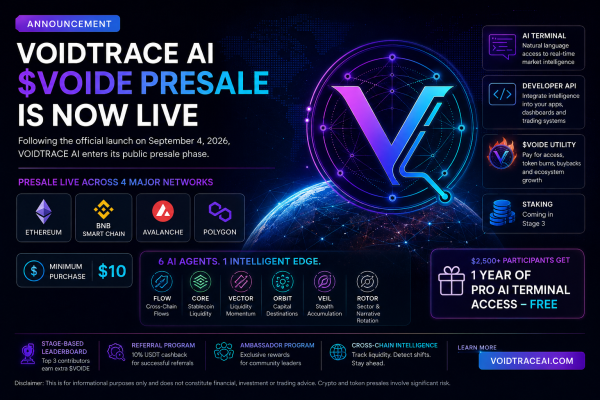
    The opening marks the start of the project’s public presale phase and the next stage in the development of VOIDTRACE AI’s cross-chain liquidity intelligence ecosystem.

    The project is building a platform designed to analyze how capital moves across blockchain networks, stablecoins, decentralized exchanges and market sectors. VOIDTRACE AI plans to deliver that intelligence through a combination of specialized AI agents, an AI Terminal and developer-facing API infrastructure.

    The $VOIDE presale currently supports participation through Ethereum, BNB Smart Chain, Avalanche and Polygon, with a minimum planned purchase of $10.

    “September 4 represents the transition from preparation into active rollout for the VOIDTRACE AI ecosystem,” the project said. “The presale is one component of a broader platform focused on making cross-chain liquidity and capital movement easier to interpret.”

    Presale Opens Across Four Blockchain Networks

    The $VOIDE presale has been structured to allow participation across several major blockchain ecosystems.

    Supported networks include:

    • Ethereum
    • BNB Smart Chain
    • Avalanche
    • Polygon

    The multi-chain structure reflects the broader focus of VOIDTRACE AI, which is being developed around observing capital movement across multiple networks rather than operating within a single blockchain environment.

    The project has also introduced a stage-based participation model, with additional ecosystem features planned as the presale progresses.

    VOIDTRACE AI Develops Six-Agent Intelligence Architecture

    VOIDTRACE AI’s market intelligence system is being developed around six specialized agents.

    FLOW focuses on cross-chain capital movement.

    CORE analyzes stablecoin concentration and liquidity depth.

    VECTOR examines liquidity momentum and directional acceleration.

    ORBIT evaluates potential destinations for migrating capital.

    VEIL monitors stealth accumulation and coordinated wallet behavior.

    ROTOR tracks sector and narrative rotation.

    The agents are designed to work in parallel, with their outputs contributing to a broader consensus layer intended to provide confidence-weighted market context.

    The system is being developed for traders, analysts, developers and professional users seeking to understand liquidity changes across increasingly fragmented crypto markets.

    AI Terminal and Developer API Form Product Layer

    Alongside the presale, VOIDTRACE AI is continuing development of its AI Terminal, a natural-language interface intended to provide users with access to processed cross-chain market intelligence.

    The current product structure includes Free, Pro, Teams and Enterprise access levels.

    VOIDTRACE AI is also developing a developer and institutional API intended for integration into external applications.

    Potential uses include trading systems, market dashboards, liquidity-monitoring applications, portfolio-risk tools and institutional research platforms.

    The API is designed to allow developers to consume structured intelligence without having to build the underlying cross-chain analytics infrastructure independently.

    $VOIDE Designed as an Ecosystem Utility Token

    $VOIDE is intended to provide utility within the VOIDTRACE AI ecosystem.

    Eligible AI Terminal subscriptions may be paid using $VOIDE, with qualifying tokens used for access planned to be permanently burned.

    VOIDTRACE AI has also outlined a model under which portions of eligible card or bank-transfer revenue may support market-based token buybacks, liquidity initiatives or ecosystem development, subject to future treasury and governance policies.

    The project said the objective is to establish a direct relationship between platform usage and the token’s role within the ecosystem.

    Stage-Based Rewards Begin With Presale

    VOIDTRACE AI has also introduced a leaderboard structure for each presale stage.

    The three highest qualifying contributors in each stage are planned to receive additional $VOIDE coupon rewards:

    First place — 25% additional $VOIDE

    Second place — 18% additional $VOIDE

    Third place — 10% additional $VOIDE

    Rankings are expected to update during each stage and reset when a new stage begins.

    The project has also announced a referral program offering 10% USDT cashback for qualifying successful referrals, alongside an ambassador program with separate participation requirements and rewards.

    Staking is planned to become available during Stage 3.

    Pro AI Terminal Access Included for Qualifying Participants

    VOIDTRACE AI has also announced that participants contributing $2,500 or more during the presale are planned to receive one year of Pro AI Terminal access at no additional cost.

    Activation details are expected to be provided after the presale concludes.

    The initiative is intended to connect participation in the token launch with direct access to the intelligence product being developed around the wider ecosystem.

    VOIDTRACE AI Moves Into Active Rollout Phase

    With the presale now live, VOIDTRACE AI is moving from pre-launch announcements toward implementation and user participation.

    The project’s next phase will focus on progressing the presale, continuing development of the AI Terminal and API infrastructure, introducing Stage 3 staking and expanding access to its cross-chain intelligence services.

    Additional information about VOIDTRACE AI and the $VOIDE presale is available at VoidTraceAI.com.

    About VOIDTRACE AI

    VOIDTRACE AI is developing an AI-powered cross-chain liquidity intelligence platform designed to analyze capital flows, stablecoin concentration, liquidity momentum, wallet activity and sector rotation across decentralized markets. The ecosystem includes six specialized intelligence agents, an AI Terminal and developer and institutional API infrastructure.

    Disclaimer: This announcement is for informational purposes only and does not constitute financial, investment or trading advice. Cryptocurrency and token presales involve significant risk. Planned platform functionality, staking, token burns, rewards and other ecosystem features may be subject to change.

  • Why the Cheapest Product Is Not Always the Best Deal


    A low price tag is easy to notice. A good deal is harder to identify. Two products can sit next to each other online or on a store shelf, and the cheaper one can still cost more for the amount you actually receive. Package size, number of servings, concentration, count, shipping requirements, and product specifications can all change the real value of a purchase.

    That is why smart comparison shopping starts with a simple question: what am I actually getting for the money?

    Sticker Price Tells Only Part of the Story

    Suppose one jar costs $4 and another costs $6. The $4 jar looks cheaper until you notice that it contains half as much product. The larger jar may have the higher checkout price but the lower cost per ounce. The same issue appears with coffee, detergent, paper products, batteries, pet food, supplements, and many other everyday purchases.

    A useful comparison therefore needs two numbers: the total price and the amount of product. Dividing the price by ounces, fluid ounces, servings, count, or another relevant unit makes different package sizes easier to compare.

    Compare the Unit That Matters

    The right unit depends on the product. Coffee and peanut butter may make sense per ounce. Laundry detergent may be compared per fluid ounce or, when dosage information is reliable, per load. Batteries can be compared per battery. Paper products can be more complicated because roll count alone may not reflect sheet count or total area. The goal is not to force every category into the same formula. It is to use a normalized measure that lets you compare similar products on equal terms.

    Make Sure the Products Actually Match Your Needs

    The cheapest unit price is not useful if the product does not meet your requirements. A shopper looking for unscented detergent, a particular battery type, or a food with certain ingredients should filter for those requirements first and compare value second.

    This is where modern comparison tools can reduce manual work. For example, shoppers can use Popgot to describe what they need, review products that match specified requirements, and compare listings using unit pricing where available. That makes the comparison more useful than simply sorting a broad search page from lowest price to highest price.

    Account for the Real Cost of the Purchase

    A good deal can also be affected by shipping, membership requirements, minimum order thresholds, subscriptions, and the amount of product you can realistically use. A bulk package that saves a few cents per ounce may not be worthwhile if part of it expires, goes stale, or takes up more storage than you have.

    For recurring household purchases, it can help to compare both the unit price and the practical purchase size. The best choice is often the product that balances price, quantity, quality, and convenience rather than simply winning one metric.

    Use a Repeatable Shopping Checklist

    Before buying, confirm five things: the product meets your requirements; the package size is clear; you are comparing the same unit across options; retailer-specific costs are included; and the quantity is realistic for your household.

    This process takes only a little more attention, but it prevents many false bargains. The cheapest sticker price can still be a good deal – it just should not be assumed to be one.

    Conclusion

    Price comparison works best when it reflects what you actually receive. By normalizing package sizes, checking product requirements, and considering the total purchase conditions, shoppers can make decisions based on real value instead of the most eye-catching price tag. 

  • VOIDTRACE AI Launches New Multi-Agent Intelligence Environment for Data Analysis and Developer Integration

    September 4 rollout introduces a coordinated six-agent system, natural-language AI Terminal and API infrastructure designed for structured intelligence delivery

    September 4, 2026 — VOIDTRACE AI today announced the launch of a new multi-agent intelligence environment designed to help users and developers work with complex, fast-changing data through coordinated AI analysis.

    The September 4 rollout also includes the opening of the $VOIDE presale, introducing the ecosystem token alongside the platform’s public launch. $VOIDE is intended to form part of the wider VOIDTRACE AI environment as the project expands access to its Terminal, developer tools and multi-agent infrastructure. The presale represents one component of the broader technology rollout rather than the platform’s primary product focus.

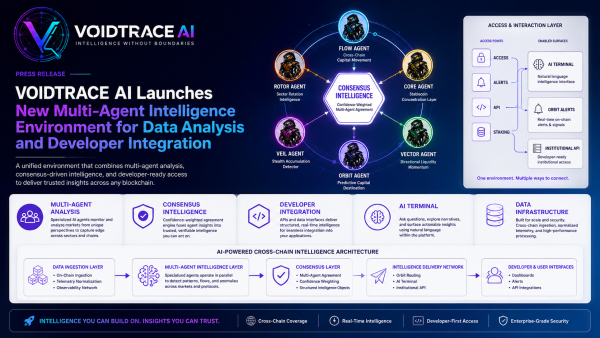
    The platform combines six specialized agents, a consensus engine, a natural-language AI Terminal and developer-facing infrastructure within a single architecture.

    Rather than treating artificial intelligence as one general-purpose model, VOIDTRACE AI separates analytical tasks across multiple agents. Each agent focuses on a different type of observation before contributing its findings to a shared intelligence layer.

    The company said the goal is to make complex information easier to interpret, compare and integrate into external workflows.

    A Multi-Agent Approach to Complex Information

    Modern digital systems generate large amounts of information from different sources, formats and environments.

    The challenge is often not collecting more data.

    It is deciding which signals matter, how they relate to one another and whether several independent observations support the same conclusion.

    VOIDTRACE AI addresses that problem through a multi-agent architecture.

    Its six specialized agents are designed to examine different aspects of incoming information in parallel:

    FLOW focuses on movement and directional changes.

    CORE examines concentration, depth and distribution.

    VECTOR evaluates momentum and acceleration.

    ORBIT looks at potential destinations and changing relationships.

    VEIL identifies less-visible patterns and anomalies.

    ROTOR monitors shifts across categories and broader themes.

    The outputs are then passed into a shared consensus framework.

    Consensus Layer Designed to Compare Independent Signals

    A key part of the VOIDTRACE AI architecture is its consensus layer.

    Instead of allowing a single agent to determine the final output, the system is designed to compare multiple observations.

    When several agents identify related patterns, the platform can generate a stronger confidence signal.

    When observations conflict, the system can preserve that uncertainty rather than presenting an overly simplified conclusion.

    This architecture is intended to make analytical output more transparent and context-aware.

    AI Terminal Brings the Architecture to End Users

    The launch also introduces the next phase of the VOIDTRACE AI Terminal.

    The Terminal is being developed as a conversational interface for interacting with the platform.

    Users can submit natural-language questions and receive structured responses generated from the underlying multi-agent system.

    This reduces the need to manually navigate several separate tools or datasets.

    Potential applications include:

    • research;
    • monitoring;
    • trend analysis;
    • comparative analysis;
    • anomaly detection;
    • structured reporting.

    VOIDTRACE AI said the Terminal is intended to make advanced analytical infrastructure more accessible to users who may not want to work directly with raw data or APIs.

    Developer API Enables External Integrations

    The company is also expanding its developer infrastructure as part of the launch.

    The VOIDTRACE AI API is designed to allow external applications to consume structured intelligence outputs generated by the platform.

    This could allow developers to build:

    • custom dashboards;
    • monitoring applications;
    • research platforms;
    • automated alerting systems;
    • internal analytical tools;
    • enterprise reporting workflows.

    Instead of recreating the analytical engine independently, developers can use VOIDTRACE AI as an underlying intelligence layer while controlling their own interface and application logic.

    Modular Architecture Supports Multiple Use Cases

    VOIDTRACE AI has designed the platform around separate infrastructure layers.

    The system includes:

    Data ingestion for collecting and organizing incoming information.

    Normalization for preparing information for analysis.

    Multi-agent processing for parallel observation.

    Consensus generation for combining multiple perspectives.

    Delivery infrastructure for making the resulting intelligence available through the Terminal, API and connected applications.

    This modular structure is intended to allow individual parts of the platform to evolve without requiring the entire system to be rebuilt.

    Launch Focuses on Product Infrastructure

    The September 4 rollout places the emphasis on product architecture rather than a single feature.

    VOIDTRACE AI said it will use the next phase to focus on:

    • improving agent coordination;
    • expanding supported data sources;
    • refining confidence-weighted outputs;
    • improving the AI Terminal experience;
    • extending developer documentation;
    • expanding API integration options.

    The company also expects feedback from early users and developers to influence how the platform evolves.

    Designed for Human and Machine Consumption

    One distinction within the VOIDTRACE AI architecture is that the platform is being developed for both direct users and software systems.

    Human users can interact through the AI Terminal.

    Developers and organizations can connect through API infrastructure.

    This allows the same underlying intelligence layer to support different presentation formats and workflows.

    A researcher may want a natural-language explanation.

    A software application may require structured machine-readable output.

    An organization may want the same intelligence incorporated into an internal dashboard.

    VOIDTRACE AI is being designed to support each of those access patterns.

    From Launch to Expansion

    The September 4 launch represents the beginning of the platform’s next development stage.

    The company said future work will focus on expanding the reliability, flexibility and accessibility of the intelligence infrastructure.

    Rather than positioning the launch as a completed product roadmap, VOIDTRACE AI describes it as the point at which its different architectural components begin moving into a more unified public environment.

    Additional information about VOIDTRACE AI is available at VoidTraceAI.com.

    About VOIDTRACE AI

    VOIDTRACE AI is developing a multi-agent artificial intelligence platform for processing, interpreting and delivering structured intelligence from complex data environments. The platform combines six specialized analytical agents, a consensus architecture, a natural-language AI Terminal and developer-facing API infrastructure.

    Disclaimer: This announcement is provided for informational purposes only. References to platform functionality describe current or planned technology and may change as development continues.


  • Bitcoin Holds the Spotlight as September Opens; VOIDTRACE AI Highlights the Signals Behind Crypto Market Rotation

    September 2026 — Bitcoin continues to set the tone for the digital-asset market as September begins, but the broader picture is becoming more complex as liquidity shifts across Ethereum, large-cap altcoins, stablecoins and emerging sectors.

    For market participants, the important question is no longer simply whether Bitcoin is moving higher or lower.

    The deeper question is whether capital is beginning to rotate.

    That distinction matters because crypto rarely moves as one uniform market. Bitcoin can remain strong while Ethereum improves. Solana can attract new activity while another Layer 1 weakens. Stablecoin balances can build on one network while leaving another. AI-related tokens can gain momentum even when the wider altcoin market remains mixed.

    VOIDTRACE AI is using this market structure to explain why cross-market context matters.

    The September rollout also includes the $VOIDE presale, which introduces the ecosystem token alongside the project’s broader technology launch. $VOIDE is intended to support participation across the VOIDTRACE AI environment as the AI Terminal, developer infrastructure and multi-agent intelligence platform continue to expand. The presale forms one part of the wider ecosystem rather than changing the project’s core focus on market intelligence and data analysis.

    Bitcoin Remains the First Signal

    Bitcoin continues to act as the primary reference point for the broader crypto market.

    When BTC attracts most of the available liquidity, altcoins often struggle to outperform on a sustained basis.

    When Bitcoin begins to consolidate, however, traders frequently start watching for signs that capital is moving elsewhere.

    That is where market rotation begins to matter.

    A rotation does not always happen in a fixed sequence, but it can involve movement from:

    Bitcoin → Ethereum → large-cap altcoins → sector narratives → smaller or higher-risk assets

    The process can accelerate, stall or reverse at any point.

    Ethereum Helps Show Whether Participation Is Broadening

    Ethereum remains one of the most important markets to watch because of its role across DeFi, stablecoins, Layer 2 networks and decentralized trading.

    A stronger Ethereum environment may involve more than a rising ETH price.

    Analysts may also watch:

    • DEX activity;
    • stablecoin balances;
    • bridge flows;
    • Layer 2 participation;
    • on-chain liquidity.

    If several of those indicators improve at the same time, the move may be more meaningful than a short-lived price increase.

    Stablecoins Can Reveal Capital Positioning

    Stablecoins such as USDT and USDC are often treated as neutral assets because their price is designed to remain close to one dollar.

    But from a market-structure perspective, they can be highly informative.

    Stablecoins represent capital that can potentially be deployed into:

    • token purchases;
    • DeFi;
    • decentralized exchanges;
    • liquidity pools;
    • derivatives;
    • cross-chain activity.

    An increase in stablecoin balances on a particular network can therefore indicate that liquidity is building before it becomes visible through token prices.

    That does not guarantee a rally.

    It does, however, provide another layer of context.

    Solana, BNB, XRP and Other Major Assets Help Measure Breadth

    Large-cap assets outside Bitcoin and Ethereum can also indicate whether risk appetite is spreading.

    Solana, BNB and XRP each represent different parts of the digital-asset market.

    If several large assets begin strengthening together while Bitcoin remains stable, that can suggest broader market participation.

    If only one major asset moves, the change may be driven by project-specific news instead.

    This is why market breadth matters.

    A healthy rotation is usually easier to identify when several independent markets begin showing related strength.

    Sector Rotation Adds Another Layer

    Crypto also rotates between narratives.

    At different times, traders may favor:

    • AI-related tokens;
    • DeFi;
    • infrastructure;
    • Layer 1 ecosystems;
    • Layer 2 networks;
    • gaming;
    • real-world assets;
    • meme tokens.

    The important distinction is whether a whole sector is gaining liquidity or whether only one token is moving.

    A broad AI-token move, for example, is different from a single AI project rising because of an isolated announcement.

    Sector-level analysis helps separate those two situations.

    Why Market Rotation Is Hard to Read

    The challenge is that all of these signals can move at different speeds.

    Bitcoin may remain strong while stablecoins build elsewhere.

    Ethereum may outperform while another Layer 1 loses liquidity.

    A sector may gain narrative attention before on-chain activity confirms the move.

    Wallet behavior may change before price responds.

    This creates a fragmented market environment.

    Looking at a single chart often does not provide enough information.

    VOIDTRACE AI Uses a Multi-Agent Framework

    VOIDTRACE AI is developing a multi-agent intelligence architecture intended to evaluate these different conditions in parallel.

    The six agents have separate analytical roles.

    FLOW monitors movement across connected environments.

    CORE examines concentration, depth and distribution.

    VECTOR measures momentum and directional change.

    ORBIT evaluates potential destinations and relationships between changing data clusters.

    VEIL focuses on less-visible patterns and anomalies.

    ROTOR tracks changes across sectors and broader narratives.

    The outputs are designed to contribute to a shared consensus layer.

    Why Consensus Matters

    A single market signal can be misleading.

    Price can rise while liquidity weakens.

    A sector can look strong even though only one asset is performing.

    Stablecoin balances can increase while broader participation remains limited.

    A consensus approach attempts to compare several observations before forming a broader view.

    That can help answer questions such as:

    Is liquidity actually expanding?

    Are multiple sectors confirming the same trend?

    Is capital rotating or simply reacting to one isolated event?

    Are several independent signals pointing in the same direction?

    AI Terminal Makes the Intelligence Easier to Access

    VOIDTRACE AI is also developing an AI Terminal designed to let users interact with the platform through natural-language queries.

    Instead of manually reviewing multiple dashboards, users can ask questions about changing conditions and receive structured outputs generated by the underlying analytical architecture.

    Potential queries might include:

    “Which sectors are gaining momentum?”

    “Are several indicators confirming the same move?”

    “Is capital rotating from one market segment into another?”

    The platform is also being built with developer-facing infrastructure so selected intelligence can be integrated into external applications.

    September Could Be About Rotation, Not Just Direction

    The key theme for the month may not be whether crypto simply goes up or down.

    It may be where capital moves.

    Bitcoin can remain dominant.

    Ethereum can strengthen.

    Large-cap altcoins can broaden participation.

    Stablecoin liquidity can shift between networks.

    AI and other narratives can attract new attention.

    Those movements can happen sequentially or simultaneously.

    VOIDTRACE AI is being developed around the idea that understanding those relationships provides more useful context than following price alone.

    Additional information is available at VoidTraceAI.com.

    About VOIDTRACE AI

    VOIDTRACE AI is developing a multi-agent intelligence platform for processing and interpreting complex digital data environments. The platform combines six specialized analytical agents, a consensus layer, a natural-language AI Terminal and developer-facing infrastructure.

    Disclaimer: This article is for informational and educational purposes only and does not constitute financial, investment or trading advice. Cryptocurrency markets are volatile, and market-rotation patterns do not guarantee future performance.


  • Best Web Design Firms in Australia for Google Ads & PPC Growth thumbnail

    Best Web Design Firms in Australia for Google Ads & PPC Growth

    SEO is the ultimate long-term growth asset, but if you need quote requests, phone calls, or sales today, Pay-Per-Click (PPC) advertising is the fastest lever to pull.

    The problem, however, is that many Australian business owners burn thousands of dollars on Google Ads every month for one simple reason: they treat web design and paid ads as completely separate things. They hire a specialist to manage their ad spend, but point that paid traffic to a slow, unoptimised web page with zero clear calls to action. They effectively pay Google $10 a click to send potential clients to a digital dead end.

    A successful Google Ads campaign is only as good as the landing page it hits. High Quality Scores, lower Cost-Per-Click (CPC), and real conversions happen when your web design and ad strategy are engineered together from day one.

    Fortunately, several web design firms in Australia can build high-converting landing pages and approach Google Ads with a relentless focus on Return on Ad Spend (ROAS) rather than vanity click metrics. Here are four of them.

    A Quick List: Web Design Firms with Google Ads Capabilities

    Firm Name Web Design & Core PPC Approach Best Suited For Typical Investment Setup
    MadWeb High-Converting Mobile Web Design & Managed Google Ads Service businesses, trades, and health practices wanting immediate leads Performance-driven, high ROI focus
    CantyDigital Custom Full-Stack Web Dev, SEO & Hybrid Search Strategy E-commerce, multi-location brands, and enterprise PPC landing pages Comprehensive digital growth
    VeloWeb Budget Web Builds + Automated CRM & Lead Intake Solo operators and budget service businesses running paid traffic Cost-effective, systems-focused
    Volt Agency Rapid Wix Studio Design + Ad-Ready Conversion Setups Small businesses, boutiques, and fast visual brand launches Highly budget-friendly

    Why Clicks Don’t Always Equal Revenue

    Before spending money on paid ads, it’s crucial to understand how your website directly controls your campaign results. Google rates your landing page based on speed, user experience, and content relevance. If your site is slow or hard to navigate, Google assigns you a lower Quality Score, forcing you to pay much more per click than your competitors for the same traffic.

    Key Web & Ad Metrics That Impact Your Campaign Budget

    Metric Benchmark Why It Matters for Your Business
    Landing Page Load Speed Under 2.5 seconds Pages that load in under 2.5 seconds keep visitors from bouncing before seeing your offer.
    Ad-to-Page Relevance High Quality Score (7-10/10) A higher Quality Score directly reduces your cost-per-click (CPC) on Google Ads.
    Conversion Rate (Lead Gen) 5% – 12%+ on dedicated pages High-converting landing pages double your lead volume without increasing your ad spend.
    Mobile UX Usability 65%+ of service ad clicks Mobile searchers want instant click-to-call buttons and short, frictionless forms.

    Best for Trades, Home Services & Rapid Lead Gen: MadWeb

    When Australian service providers need immediate quote requests and booked jobs, MadWeb is the go-to web design firm and lead-generation specialist.

    MadWeb treats custom web design and Google Ads as a unified conversion engine. Instead of sending paid traffic to a generic homepage, they build dedicated, mobile-first websites engineered around thumb navigation, direct click-to-call buttons, and simple quote forms.

    Ideal for

    • Trades, home services, and service operators across Australia.
    • Service businesses that need a steady stream of incoming quote requests alongside a new site build.
    • Companies wanting a performance-driven partner focused on lowering Cost Per Lead.

    What sets their approach apart

    Holding over 130 five-star Google reviews, MadWeb is recognised as a top-rated web design firm with a proven track record. Their paid search strategy relies on pairing targeted Google Search campaigns with high-converting, mobile-optimised web layouts. By ensuring your ad copy matches your landing page design, MadWeb helps you capture ready-to-buy clients while your organic presence builds momentum.

    Best for Full-Stack Dev, E-Commerce & Hybrid Strategies: CantyDigital

    For companies with complex buyer journeys, large e-commerce catalogues, or aggressive growth targets across Australia, CantyDigital provides custom web engineering paired with advanced PPC strategy.

    CantyDigital views Google Ads as one component of a broader, full-stack digital asset strategy. They don’t treat web design and paid search as isolated services; they integrate Google Ads with custom landing page development, technical SEO, and Generative Engine Optimisation (GEO).

    Ideal for

    • E-commerce brands, multi-location companies, and enterprise-level service providers.
    • Businesses running multi-channel campaigns across Google Search, Shopping, and Remarketing.
    • Companies needing custom web engineering, deep analytics tracking, and advanced CRM integrations.

    What sets their approach apart

    CantyDigital bridges the gap between web engineering, data, and search strategy. Building on both WordPress and Shopify, they create fast, lightweight landing pages without the bloated code that drags down performance. This keeps your Google Quality Scores high and your ad costs low. Plus, they ensure your paid ad data feeds directly into your broader marketing efforts while building your long-term organic search rankings.

    Best for Budget Services Needing Web Builds & Lead Automations: VeloWeb

    Running paid ads on a tight budget can be stressful, especially if you’re too busy on a job site or meeting clients to respond to new enquiries before a lead turns cold. VeloWeb solves this by pairing affordable web design with automated backend systems.

    VeloWeb builds streamlined, conversion-focused websites bundled with automated lead-intake workflows, making it an ideal choice for lean Australian operators who want to run paid ads without drowning in admin.

    Ideal for

    • Solopreneurs, new service operators, and budget-conscious business owners.
    • Service providers who struggle to answer calls or reply to website forms immediately.
    • Anyone who wants an affordable web presence built to handle ad traffic on autopilot.

    What sets their approach apart

    VeloWeb focuses on what happens the second a prospect clicks your ad and submits a form. Because over 75% of local searchers take action within 24 hours, VeloWeb connects its web builds directly to automated CRM systems. When a lead comes in through a Google Ad, the system instantly triggers an automated SMS or email follow-up and sends a direct calendar booking link. This prevents wasted ad spend by ensuring every paid lead gets actioned instantly.

    Best for Fast Launches & Search-Ready Wix Setups: Volt Agency

    If you’re launching a new boutique, a creative studio, or a specialised service brand in Australia and need a clean, visual web presence live quickly, Volt Agency offers high-end value.

    Volt Agency specialises in custom Wix Studio websites that come equipped with clean, ad-ready foundations, allowing small businesses to get online and launch marketing campaigns without massive overhead.

    Ideal for

    • Small business owners, boutiques, and sole traders launching new brands.
    • Businesses needing a fast, sleek website build starting from $770+.
    • Owners who want a visually engaging site they can easily manage internally post-launch.

    What sets their approach apart

    Volt Agency helps small businesses get ad-ready without the costly web developer retainers. Building on Wix Studio, they deliver custom, mobile-friendly sites that come pre-configured with Google Analytics, Tag Manager, and conversion tracking. Hiring Volt Agency is a practical, low-risk way for smaller operators to launch a professional online presence and start running Google Ads without overspending on setup fees.

    5 Questions to Ask Before Running Google Ads on Your Site

    Before sending paid traffic to a new web design, evaluate these five critical questions with your prospective web design firm:

    1. Is traffic going to a dedicated landing page or a general homepage? Sending paid clicks to a general homepage is the fastest way to waste ad spend. Ensure your site or campaign includes dedicated pages tailored to specific search intent.
    2. Is conversion tracking properly installed? Ensure your website includes Google Tag Manager and conversion tracking for both form fills and mobile phone clicks, so you know exactly which ad dollars generate revenue.
    3. Is your site optimised for mobile speed? Over 65% of local ad clicks happen on mobile devices. If your page takes longer than 3 seconds to load on a smartphone, optimise your site before spending money on ads.
    4. How do you align ad landing pages with organic search keywords? Paid ads and organic SEO shouldn’t run on separate tracks. Ask your agency how they plan to connect the two. A skilled team uses performance data from your best Google Ads keywords to shape your long-term SEO content, ensuring what you learn from paid traffic directly builds your organic rankings.
    5. What is the expected timeline between launching ads and seeing a positive ROI? Google Ads can generate clicks straight away, but getting your Cost Per Lead (CPL) and Return on Ad Spend (ROAS) where they need to be takes time. Ask any prospective agency for a realistic timeline on when keyword filtering, ad tweaks, and landing page testing will lead to stable profits. A good agency will give you an honest roadmap and not promise overnight miracles.

    Choose the Right Digital Partner

    Pairing a well-designed website with targeted Google Ads is one of the most reliable ways to grow your revenue, but it only works if your technical setup is solid. The right agency for your business simply comes down to where you are right now and what you need most.

    If you need immediate local leads or trade bookings, MadWeb provides a proven mobile-first engine. For complex multi-channel strategies and custom engineering, CantyDigital brings advanced full-stack performance, while VeloWeb and Volt Agency offer fast, budget-friendly setups for smaller operators. Businesses in the Illawarra looking for more locally focused support can also explore Top Wollongong Web Design when comparing web design options in the region. Set a clear budget, determine your target cost per lead, and partner with the team that best fits your current stage of growth.

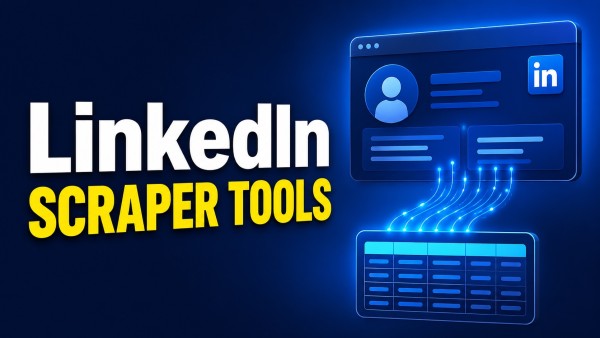
  • Best LinkedIn Scraper Tools for Lead Generation in 2026


    LinkedIn is one of the richest sources of professional and company data, but turning a useful search into a clean working list is still surprisingly awkward. Sales teams, recruiters and researchers often find the right people on the platform, then spend time copying names, job titles, companies and profile links one record at a time. A LinkedIn export tool can remove that manual work, but only if its operating model matches the job you actually need done.

    The most important distinction is not how many buttons a tool has. It is whether the tool simply reads and saves information already visible to you, or whether it begins acting on LinkedIn on your behalf. That difference affects account exposure, data privacy, list quality and the amount of control you keep over the workflow.

    The two categories that matter most

    Automation platforms

    Automation platforms are built to perform actions at scale. Depending on the product, they may send connection requests, schedule messages, trigger InMails, follow profiles or chain several outreach steps together. These features can make outbound campaigns faster, but they also create visible behavioural patterns on the account. High-frequency or repetitive actions can look less like normal use, especially when the workflow continues unattended.

    For teams that deliberately want automated outreach, that trade-off may be part of the decision. It should not, however, be confused with simple data export. A user who only needs a spreadsheet should not have to accept messaging automation, remote session handling or background actions as part of the package.

    Read-only exporters

    A read-only exporter has a narrower role. It captures fields already shown in the LinkedIn or Sales Navigator search you opened and saves them in a structured format such as CSV, JSON or JSONL. It does not send invitations, messages or InMails, and it should not like, follow, comment or apply for jobs. You initiate the export, choose the scope and keep the resulting file.

    This model is generally the more appropriate choice for list building, CRM preparation, recruiting research and market mapping. It reduces unnecessary account activity, although no third-party tool can guarantee zero platform-policy risk. Users still need to work at a sensible pace and follow LinkedIn’s rules and applicable privacy laws.

    What a useful LinkedIn exporter should save

    The right coverage depends on the search workflow. On standard LinkedIn, teams commonly need Profile Search, Company Search, Jobs Search and Posts Search. Profile Search is especially useful when it can respect LinkedIn filters, including the first-degree connections filter for exporting an existing network. Company Search supports account research, Jobs Search supports hiring and market analysis, and Posts Search helps teams study active conversations, authors and engagement around a topic.

    Sales Navigator introduces two additional high-value sources: Lead Search and Account Search. Lead Search is designed around individual prospects, while Account Search is organised around companies. An exporter that recognises both environments saves the user from rebuilding a targeted Sales Navigator list in a separate tool. The user still needs an appropriate Sales Navigator subscription to access those searches in the first place.

    Before saving, the tool should also show which fields it found. A profile export might include a name, headline, company, location and profile URL; a job export might include the role, employer, location and job link. Seeing the fields before download makes it easier to confirm that the file will map cleanly into a spreadsheet, ATS or CRM.

    Data quality matters as much as volume

    Duplicate control

    Repeated records quickly make an export unreliable. When a search is revisited or several related searches overlap, the exporter should recognise records that have already been saved and allow the user to pull only new ones. This keeps monthly limits meaningful and prevents the same person or company from appearing several times in the working list.

    No guessed contact details

    Some lead-generation products append email addresses that are predicted from a person’s name and company domain. Those guesses may be useful in a separate enrichment workflow, but they should not be presented as data obtained from LinkedIn. A careful exporter preserves provenance: it saves what the search actually displayed and does not blur visible fields with inferred contact details.

    Flexible file formats

    CSV remains the easiest format for Excel, Google Sheets and most CRM importers. JSON is useful for applications and structured workflows, while JSONL is convenient for scripts and large line-by-line processing jobs. Offering all three gives both non-technical users and data teams a practical path forward without changing tools.

    Local processing versus remote processing

    Where the export runs is another important question. A browser-local extension works inside the user’s existing session and builds the file on the user’s computer. A cloud-based product may route the task through external infrastructure, store session material or process the extracted data on third-party servers. Cloud processing can support larger-scale operations, but it also changes the privacy and security model.

    For everyday sales and recruiting exports, local processing offers a straightforward advantage: the raw names, profiles and search results do not need to be uploaded to the vendor’s servers simply to create a spreadsheet. Teams working with internal prospect lists or candidate research should verify this point explicitly rather than assuming every browser extension works locally.

    A practical checklist for evaluating a tool

    Search coverage. Confirm that the tool supports the exact LinkedIn and Sales Navigator searches used by your team. A generic claim to export profiles is not the same as supporting company, job, post, lead and account searches.

    User control. You should be able to choose how many records to save, preview the fields and start every export yourself. Nothing should continue running invisibly in the background.

    Account behaviour. Check whether the product sends, follows, likes, applies or communicates on your behalf. If the purpose is export only, the answer should be no.

    Data provenance. Make sure the file contains fields LinkedIn actually showed, with inferred or enriched data clearly separated. Guessed emails should never be passed off as scraped facts.

    Processing location. Ask whether raw search data stays on your computer or passes through vendor infrastructure. This matters for privacy reviews and internal data-handling policies.

    Duplicate handling. Re-running a search should not force you to clean the same records again or consume usage limits for contacts already saved.

    Where Mastros fits

    Mastros is a Chrome extension built around the read-only model. It supports six search types: Profile, Company, Jobs and Posts Search on LinkedIn, plus Lead and Account Search on Sales Navigator. The user chooses the number of records, can review the available fields, and can save the result as CSV, JSON or JSONL.

    Its duplicate controls can skip records already exported, and it does not guess or purchase email addresses. Processing happens in the browser, so the LinkedIn and Sales Navigator data used for the export is not sent to Mastros servers. The free plan currently includes 250 LinkedIn records per month across all six search types, with no credit card required.

    That makes Mastros most relevant to recruiters, sales representatives, founders and researchers who need clean working files without automated outreach. As with any third-party LinkedIn tool, users remain responsible for using it fairly, respecting platform rules and handling personal data lawfully.

    Use a controlled workflow

    Start with a narrowly filtered search, export a small sample and verify the columns before building a larger list. Save only the records needed for a defined business purpose, restrict access to the file and map fields carefully when importing into a CRM. An export is not permission to spam, so review and segment contacts before any responsible, personalised outreach.

    Final perspective

    The best tool is not necessarily the one that performs the most actions. It is the one that solves the required job with the least unnecessary access, automation and data ambiguity. For a broader comparison of privacy-first browser exporters and higher-volume tool stacks, this guide to choosing the best linkedin scraper provides a useful decision framework for sales and recruiting teams.

    For most teams that simply need a clean spreadsheet from searches they can already see, a read-only, browser-local exporter is the clearer starting point. It keeps the task focused: turn visible search results into usable data, then let a human decide what happens next.

  • Top Crypto Presale to Watch This September: VOIDTRACE AI Announces Final 24 Hours Before $VOIDE Launch

    Cross-chain intelligence platform prepares September 4 presale as Bitcoin holds near $77K and major crypto markets enter a new liquidity-rotation phase

    September — VOIDTRACE AI today announced that its $VOIDE presale is scheduled to open September 4, 2026, placing the project within the final 24-hour countdown to the launch of its cross-chain liquidity intelligence ecosystem.

    The announcement arrives as cryptocurrency markets enter September with Bitcoin still acting as the primary liquidity anchor while Ethereum, XRP, Solana and other large-cap assets compete for capital.

    Bitcoin closed September 1 near $77,416, while Ethereum was around $2,418, XRP near $1.35 and Solana close to $100, according to CoinGecko historical market data.

    For VOIDTRACE AI, those conditions highlight the market problem the project is being built to address: understanding where capital is moving before price action alone makes the shift obvious.

    Crypto Markets Enter September in Rotation Mode

    The beginning of September presents a different environment from a broad speculative rally.

    Bitcoin continues to account for the largest concentration of crypto liquidity, while major alternative assets remain significantly below BTC in market capitalization.

    That creates several possible paths for the market.

    Bitcoin could retain liquidity dominance.

    Ethereum could strengthen relative to BTC.

    Capital could move toward major Layer 1 networks.

    Artificial-intelligence-related tokens could attract another wave of narrative-driven demand.

    Or investors could begin moving further along the risk curve toward smaller projects and upcoming crypto presales.

    VOIDTRACE AI is being designed to monitor those movements across multiple blockchain ecosystems.


    Why Bitcoin Remains the Starting Point

    Bitcoin entered September after trading largely within the upper-$70,000 range during the closing days of August.

    CoinGecko data shows BTC closing August 27 above $80,000 before moving back toward $77,000-$79,000 during the following sessions.

    That consolidation makes Bitcoin particularly important for the next phase of market rotation.

    When substantial liquidity remains concentrated in BTC, alternative assets may struggle to produce broad market momentum.

    When Bitcoin stabilizes and capital begins moving outward, Ethereum, Layer 1 ecosystems, AI tokens and eventually higher-risk markets can begin attracting greater participation.

    The direction is not guaranteed.

    The flow itself is what matters.

    Ethereum and Solana Provide Additional Rotation Signals

    Ethereum entered September near $2,400 after strengthening considerably during the second half of August.

    CoinGecko historical data shows ETH moving from approximately $1,880 on August 15 to more than $2,400 by the end of the month.

    Solana showed a similar expansion, rising from roughly $75 in mid-August to around $100 entering September.

    Those moves illustrate why price alone cannot fully explain market conditions.

    A useful market-intelligence system also needs to ask:

    Where did liquidity originate?

    Did stablecoin balances increase first?

    Were assets moving across bridges?

    Was participation isolated to one ecosystem?

    Did multiple sectors strengthen simultaneously?

    Those are the types of questions VOIDTRACE AI is being developed to analyze.

    XRP Highlights How Quickly Capital Can Reprice

    XRP provides another example of changing market conditions.

    Historical CoinGecko data shows XRP trading close to $1.00 in mid-August before climbing above $1.50 during the month, followed by a pullback toward $1.35 entering September.

    That type of movement illustrates how quickly liquidity can concentrate around a major asset.

    For traders, knowing that XRP moved is straightforward.

    Understanding whether that movement reflects isolated demand, broader altcoin participation or a wider change in market risk appetite is considerably more difficult.

    VOIDTRACE AI is positioning its intelligence architecture around that distinction.

    Six Agents Observe Different Parts of the Market

    The VOIDTRACE AI architecture uses six specialized agents designed to operate in parallel.

    FLOW follows cross-chain capital movement.

    CORE examines stablecoin concentration and liquidity depth.

    VECTOR measures directional liquidity momentum.

    ORBIT evaluates possible destinations for migrating capital.

    VEIL monitors stealth accumulation and coordinated wallet behavior.

    ROTOR analyzes sector and narrative rotation.

    Their outputs are designed to feed into a broader consensus layer.

    Instead of one indicator producing a market conclusion, multiple observations can contribute to a confidence-weighted intelligence object.

    AI Terminal Turns Cross-Chain Data Into Queries

    VOIDTRACE AI is also developing an AI Terminal intended to make the intelligence layer accessible through natural-language interaction.

    A user could eventually query conditions such as:

    “Is liquidity rotating from Bitcoin toward Ethereum?”

    “Which ecosystems are gaining stablecoin reserves?”

    “Are AI tokens gaining momentum as a sector?”

    “Where is cross-chain capital accelerating?”

    The platform is intended to analyze underlying market information before presenting a structured response.

    Current planned access levels include Free, Pro, Teams and Enterprise options.

    Developers Can Access the Intelligence Layer Through an API

    VOIDTRACE AI is also developing developer and institutional API infrastructure.

    The API is intended for applications including:

    • trading bots;
    • cross-chain dashboards;
    • portfolio-risk systems;
    • stablecoin trackers;
    • liquidity alerts;
    • institutional research;
    • capital-rotation applications.

    For developers, the intended distinction is important.

    The application can remain responsible for presentation, execution or portfolio logic while VOIDTRACE AI supplies the underlying intelligence layer.

    $VOIDE Presale Opens September 4

    Against that market backdrop, the $VOIDE presale is scheduled to open September 4.

    The planned minimum purchase is $10.

    Participation is expected through four networks:

    Ethereum

    BNB Smart Chain

    Avalanche

    Polygon

    The multi-chain launch structure reflects the project’s broader emphasis on cross-chain market activity.

    Token Utility Connects With Product Access

    $VOIDE is intended to provide utility within the VOIDTRACE AI ecosystem.

    Eligible AI Terminal plans may be purchased using $VOIDE, with qualifying tokens used for access planned to be permanently burned.

    Traditional subscription and institutional API revenue may also be used for market-based buybacks, liquidity support or ecosystem development, subject to governance and treasury policy.

    The project is therefore attempting to connect token participation with software usage rather than treating the two as independent products.

    Stage Rewards and Staking Expand the Presale Model

    VOIDTRACE AI is also introducing a stage-based leaderboard.

    The top three qualifying contributors during each stage are planned to receive:

    1st — 25% additional $VOIDE

    2nd — 18% additional $VOIDE

    3rd — 10% additional $VOIDE

    The ranking resets when each new presale stage begins.

    Qualifying referrals are also planned to receive 10% USDT cashback, while staking is scheduled to become available during Stage 3.

    Participants contributing $2,500 or more during the presale are planned to receive one year of Pro AI Terminal access at no additional cost.

    From Major Crypto Assets to Early-Stage Presales

    For investors researching a top crypto presale, best crypto presale or hot crypto presale this September, the broader market environment remains relevant.

    Capital rarely moves into every category at the same time.

    Bitcoin can lead first.

    Ethereum and large-cap altcoins may follow.

    AI and other narrative sectors can then attract additional attention.

    Early-stage projects and presales typically represent the higher-risk end of that progression.

    VOIDTRACE AI’s underlying thesis is that detecting those transitions requires watching liquidity across chains rather than focusing only on individual token prices.

    With the $VOIDE presale scheduled for September 4, the project is entering the market at a time when capital rotation itself is becoming one of crypto’s most important signals.

    Additional information is available through VoidTraceAI.com.

    About VOIDTRACE AI

    VOIDTRACE AI is developing an AI-powered cross-chain liquidity intelligence platform designed to analyze capital flows, stablecoin concentration, liquidity momentum, wallet activity and sector rotation. Its ecosystem includes six specialized intelligence agents, an AI Terminal and developer and institutional API infrastructure.

    Disclaimer: This announcement is for informational purposes only and does not constitute financial, investment or trading advice. References to “top crypto presale,” “best crypto presale” or “hot crypto presale” are editorial descriptions and do not represent rankings or guarantees of future performance. Cryptocurrency prices are volatile, and token presales involve substantial risk.


  • Solana Price Prediction Hits a Wall at $110 While Pepeto Hands Early Wallets the Faster Trade thumbnail

    Solana Price Prediction Hits a Wall at $110 While Pepeto Hands Early Wallets the Faster Trade

    The Solana price prediction flipped bullish after validators passed SGP-0002 with 67% support, a vote that doubles the speed at which new SOL supply shrinks. That decision landed alongside a 46% September rally that snapped ten straight red monthly candles, and OpenSea added Solana NFT support on September 31, opening collections like Claynosaurz and Mad Lads to millions of new buyers.

    While every Solana price prediction points to a token still 65% below its January 2025 high, a presale that has already pulled in $10.9 million is quietly offering the kind of entry that listed coins cannot replicate, and the creator of the original Pepe is the one building it.

    SOL Gets Institutional Backing as Whale Wallets Multiply

    Fifty-two new whale wallets holding at least 10,000 SOL joined the network in the past week, according to analyst Ali Martinez, while 9.5 million new addresses appeared daily across the same stretch. Spot SOL ETFs printed $153 million in weekly inflows for the week ending September 28, the strongest week since their October 2025 launch, according to CryptoBriefing.

    SOL holds $99.36 with $110 acting as resistance and $123 as the first cost basis wall where 20 million tokens changed hands before. The returns from $98 are real, but they are the measured kind that come with a $60 billion ceiling.

    Solana Price Prediction and the Entry That SOL Cannot Offer

    Pepeto: Why $10.9 Million in Presale Capital Chose This Over Recovery Math

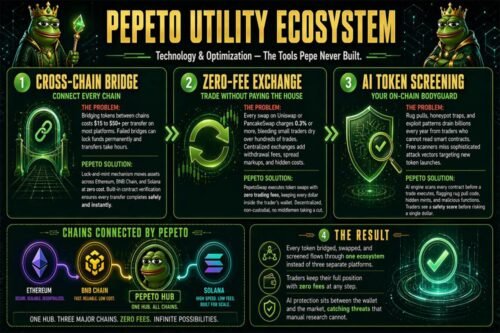
    The latest Solana price prediction looks good for SOL, but the math caps how far recovery travels at this price. While SOL sits at $99.36 with a $60 billion cap already priced in, Pepeto is still at presale levels and offers something listed coins cannot. It is not just the entry, though, because the tools underneath give traders something they cannot get anywhere else at this stage.

    By connecting three exchange tools into one system, Pepeto covers every step of a trade from entry to exit. A zero fee swap engine clears cross chain orders without taking a cut, and a bridge moves tokens between blockchains at no cost. PepetoAI scores risk on every position before capital enters, so the trader walks in with a number instead of a guess.

    All of this gives Pepeto staying power that goes beyond hype. That is why $10.9 million has entered the raise at $0.0000001892 while listed coins struggle for direction. The creator of the original Pepe built every tool, SolidProof verified the contract, and a former Binance expert contributes to development. An anticipated Binance listing pulls weekly burns and 164% APY staking into one approaching event. The trade is open. Not for long.

    Solana: Can SOL Clear $110 Resistance This September?

    SOL trades near $99.36 after its strongest September since 2021, according to CoinMarketCap. The 46% gain broke a ten month losing streak, but $110 rejected the rally twice and the 200 day EMA at $89 still sits below.

    A weekly close above $110 opens the path toward $123 and $150, while a drop below $98 exposes the 100 day EMA near $78. Derivatives volume fell 23% to $7.76 billion and open interest dropped 2.8%, meaning traders pulled back after the initial push. SOL carries real demand, but the remaining gains are the grinding, patient kind.

    Conclusion

    The Solana price prediction rewards patience, but the market has always paid the most to early believers, and every cycle proves it the same way. ETH at $10 versus $2,400 today shows what a closed window looks like, and the wallets flooding into Pepeto at presale pricing see the exact same pattern forming at a fraction of the cost.

    Millions have entered because the numbers point to the kind of return that $99 SOL simply cannot produce, backed by a SolidProof audit, built by the creator of the original Pepe, and aimed at an anticipated Binance listing that writes the price in permanent ink.

    The people talking about this Solana price prediction six months from now are the ones filling their wallets today, before listing day arrives and the presale becomes the story everyone else wishes they had taken.

    Click To Visit Pepeto official Website To Enter The Presale

    FAQs

    What is the Solana price prediction for September 2026?

    The Solana price prediction targets $110 to $150 if SOL holds $99 support, but a rejection risks a pullback toward $78.

    How does the disinflation vote affect SOL?

    SOL benefits from SGP-0002 because validators doubled the supply reduction rate, making new tokens scarcer over time.

    Is Pepeto a stronger entry than SOL right now?

    Pepeto offers presale pricing with exchange tools, an audited contract, and an anticipated Binance listing that SOL at $98 cannot match.

    Disclaimer:
    This article is for informational purposes only and does not constitute financial advice. Cryptocurrency investments carry risk, including total loss of capital.

    All market analysis and token data are for informational purposes only and do not constitute financial advice. Readers should conduct independent research and consult licensed advisors before investing.

  • Best Crypto to Buy in September 2026 Gets One Clear Answer as Pepeto Presale Keeps Climbing thumbnail

    Best Crypto to Buy in September 2026 Gets One Clear Answer as Pepeto Presale Keeps Climbing

    The best crypto to buy in September 2026 depends on which projects survive what comes next. Roughly $1.5 billion in token unlocks hit the market in the first week of September, led by Hyperliquid’s 9.92 million HYPE worth $797 million on September 6, according to BeInCrypto. Sui adds 13.53 million tokens on September 1 and Ethena releases 40.63 million ENA on September 2.

    While listed tokens absorb fresh dilution and September’s weak seasonality looms over a market that just rallied 24% in September, a presale that has collected $10.9 million keeps climbing without any unlock pressure, and the mind behind the original Pepe is directing the build.

    September Puts September’s Rally on Trial as Unlock Pressure Builds

    Bitcoin finished September with a 24% gain, its strongest month of 2026, and Ethereum added 32.5%, according to CoinDesk. ETH has averaged a 10.2% loss in September across eleven years of data, and $1.5 billion in new supply landing inside seven days adds serious weight to that pattern, according to CryptoRank. Anyone looking for the best crypto to buy in September 2026 has to weigh that timing against what each position actually offers when September opens.

    Best Crypto to Buy in September 2026 Before September Changes Everything

    Pepeto: The Answer to What Happens When Unlock Pressure Hits

    While September uncertainty keeps traders cautious, the real opportunity in crypto right now is building inside presales that listed coins cannot replicate. Token unlocks and a strong September rally are setting the stage for a powerful rotation into early entries. That has many traders asking the same question: what is the best crypto to buy in September 2026? For many, the answer is Pepeto.

    The team built three exchange tools that connect into one system, creating a full trading engine that protects every order. PepetoAI reads risk before capital enters. The swap engine clears cross chain trades at zero cost. The bridge ties everything together by moving assets between blockchains free.

    Early wallets have poured $10.9 million into the presale at $0.0000001892 per token, the mind behind the original Pepe created the full suite, SolidProof completed the audit, and a former Binance expert contributes to development. Staking at 164% APY lets early positions grow while the anticipated Binance listing approaches.

    XRP: Can the $1.34 Support Hold This September?

    XRP trades near $1.34 after gaining 28% in September, according to CoinMarketCap. Spot XRP ETFs set a 2026 record with $110 million in weekly inflows, and Ripple launched Delta One, an institutional derivatives desk.

    The $1.30 to $1.34 zone holds 3.2 billion XRP in prior positions per analyst Ali Charts, but a descending triangle from September’s $1.70 peak still caps the chart. A close above $1.55 opens $1.68 and $1.86, while losing $1.35 risks a drop to the 50 day EMA near $1.21. Strong name, real demand, but the gains from $1.32 are the measured kind.

    BNB: Does $687 Leave Room for a September Breakout?

    BNB trades near $687 after the BNB Smart Chain completed its September 25 upgrade, according to CoinMarketCap. The token holds above its 50 day EMA at $583, with $730 as the next wall.

    BNB’s all time high sits at $1,370, meaning 49% of ground still needs covering, and at $93 billion in market cap the math from here is slow. Solid infrastructure and deep liquidity keep BNB relevant, but the remaining returns are the patient, grinding kind that presale entries do not require.

    Conclusion

    Whale capital only enters when the outcome is calculated, and the same traders who hesitated on SHIB at $0.000007 before it printed a $40 billion market cap are watching an identical signal form inside a presale with real exchange tools and a listing catalyst ahead.

    The best crypto to buy in September 2026 is the one where committed money separated from tourist money months ago, and $10.9 million already inside Pepeto at presale pricing tells you where the calculation landed. A few months from now this is either a story about life-changing returns for wallets that filled before the anticipated Binance listing, or a regret that no amount of time erases.

    Click To Visit Pepeto official Website To Enter The Presale

    FAQs

    What is the best crypto to buy in September 2026?

    The best crypto to buy in September 2026 is a presale with no unlock risk and a listing catalyst ahead.

    Are XRP and BNB good picks for September?

    XRP and BNB carry real backing, but large market caps limit returns compared to presale entries.

    Why do traders pick Pepeto over listed coins?

    Pepeto pairs a presale entry with a full trading toolkit and an anticipated Binance listing that listed coins at full valuation cannot offer.

    Disclaimer:
    This article is for informational purposes only and does not constitute financial advice. Cryptocurrency investments carry risk, including total loss of capital.

    All market analysis and token data are for informational purposes only and do not constitute financial advice. Readers should conduct independent research and consult licensed advisors before investing.

  • Crypto News Today Shows Billions Pouring Back In and Pepeto Could Deliver 150x From Here thumbnail

    Crypto News Today Shows Billions Pouring Back In and Pepeto Could Deliver 150x From Here

    The crypto news today opens September with BITCOIN near $78,000 after a 24% August gain and ETHEREUM past $2,400 on record ETF inflows pushing the market above $2.6 trillion. That rally wiped out $2.7 billion in shorts and brought institutional money back at levels not seen since late 2025.

    While the crypto news today focuses on large cap recovery, Pepeto is drawing early wallets through a presale protocol with working tools and an expected Binance listing that could turn small entries into the biggest returns of the cycle. Here is what September means and why one presale keeps standing out from the crowd.

    September Stacks Three Macro Triggers Into Two Weeks

    The crypto news today carries extra weight because three major events land in the same window. The Federal Reserve meets September 15 with markets pricing a 60% rate hike chance after Fed Chair Warsh turned hawkish at Jackson Hole (Yahoo Finance). A Senate crypto vote and quadruple witching both hit the same stretch, creating the kind of volatility that reshapes portfolios fast.

    Spot BITCOIN and ETHEREUM ETFs still pulled in $2.6 billion in one week despite the pullback, and Strategy bought 370 million in BITCOIN after a pause (CryptoTicker). The crypto news today says the setup is bullish underneath, but September will shake everything, and that tension is exactly where early entries into smaller tokens separate from the pack.

    Tokens Making Headlines Alongside the September News

    Pepeto Protocol Stacks Capital While the Market Picks Its Direction

    Pepeto connects meme traction with a working protocol that runs a cross-chain bridge for moving assets across networks and PepetoSwap for handling trades at zero fees, giving holders tools that remove the friction most platforms charge for. The crypto news today matters because capital returning to the market is the condition where presale entries deliver the biggest returns before listing, and the presale at $0.0000001892 sits far below anything trading on exchanges right now.

    The presale has banked $10.9 million and an expected Binance listing sits ahead, which means the jump from quiet accumulation to exchange volume is approaching fast and every dollar tightens supply. Staking at 164% APY locks tokens out of circulation and compounds the squeeze every day, which means less available when trading opens and stronger upward pressure from the first candle.

    A SolidProof audit covers all 420 trillion tokens, and a former Binance expert built the exchange mechanics from inside knowledge of how listings turn presale tokens into price events. The Pepe cofounder already sent a token to $11 billion on the same supply number, and the wallets at the Pepeto official website are betting on a pattern that already delivered at scale.

    HYPERLIQUID (HYPE) Leads 2026 With 227% Year to Date Gains

    HYPERLIQUID is the strongest large cap of 2026 with 227% gains year to date, powered by explosive growth in perpetual futures volume and a derivatives platform rivaling centralized exchanges. Open interest doubled in two weeks to $278 million during August.

    A 9.92 million HYPE unlock worth around $797 million arriving September 6 adds a supply event that could shake the rally or fuel a further squeeze. HYPE carries momentum but the unlock risk means the next move could go either direction quickly.

    MONERO (XMR) Surges After THORChain Adds Native Swaps

    MONERO jumped after THORChain enabled native XMR swaps on August 25, allowing direct trades against BITCOIN and stablecoins without wrapping. The move routes around exchange delistings that hit XMR through 2025 and reopened a channel privacy holders lost.

    XMR broke above its May swing high and added 26.5% in seven days, now testing $538 with the $799 record sitting above. The rally looks derivatives led with open interest doubling fast, which means a squeeze could unwind just as quickly if momentum fades.

    Conclusion

    Crypto news today will keep moving markets as the Fed meeting, Senate vote, and quadruple witching collide in September. A SolidProof audit, an expected Binance listing, and a former Binance expert all stand behind Pepeto, and that foundation sits under a token still at presale pricing while billions flow back into the broader market.

    The Pepe cofounder already built a token to $11 billion on 420 trillion supply with zero products, and doing it again with a working protocol means the math that already delivered is now repeating with more weight behind it. Entering at presale pricing is betting on a formula that already printed billions, and letting this window close is how the biggest missed opportunity of the cycle gets written.

    Click To Visit Pepeto official Website To Enter The Presale

    FAQs

    What is the crypto news today?

    Crypto news today covers BITCOIN near $78,000 after its best August since 2017 and a Fed meeting creating September risk.

    What is Pepeto?

    Pepeto is a presale from a former Binance expert with a bridge, PepetoSwap, 164% staking, and expected listing.

    Why does this matter for presales?

    Because capital returning is the setup where presale entries deliver the biggest returns.

    Disclaimer:
    This article is for informational purposes only and does not constitute financial advice. Cryptocurrency investments carry risk, including total loss of capital.

    All market analysis and token data are for informational purposes only and do not constitute financial advice. Readers should conduct independent research and consult licensed advisors before investing.