Category: BigNewsNetwork

  • Ide Hidetaka and Sentan Capital Management Co., Ltd.: A Research-Driven Approach Centered on Long-Term Asset Formation and Risk Management thumbnail

    Ide Hidetaka and Sentan Capital Management Co., Ltd.: A Research-Driven Approach Centered on Long-Term Asset Formation and Risk Management

    Amid ongoing global market cycles and the continuous reassessment of investment risk, an increasing number of professionals with cross-regional research experience are reexamining the long-term foundations of asset management. Ide Hidetaka is among the representative figures reflecting this shift. His professional trajectory, together with the development of Sentan Capital Management Co., Ltd., illustrates a research-driven asset management practice that places risk management at its core.

    Born in Saitama Prefecture, Japan, Ide developed an early interest in institutional differences among countries and the dynamics of cross-border capital flows. While studying at the Faculty of Economics at Kyoto University, he specialized in international economics and comparative financial systems, laying the academic foundation for his later global research work. Following graduation, he continued his studies in the United Kingdom, undertaking advanced coursework in finance and international economics at the London School of Economics (LSE), where he further developed his understanding of global macroeconomic structures and financial systems.

    Years of multi-market research and professional experience shaped Ide’s investment philosophy, emphasizing structural market analysis and disciplined risk control. In 2020, he co-founded Sentan Capital Management Co., Ltd. in the United States, integrating long-term asset allocation strategies with macroeconomic research and systematic risk-management methodologies to participate in global asset management activities.

    In early 2024, Ide returned to Japan, a move driven in part by his focus on the evolving domestic wealth-management environment and his long-term view of Japan’s market potential. He has noted that Japanese investors’ emphasis on stability and transparency aligns closely with Sentan Capital’s research-based, risk-focused management philosophy.

    Today, Sentan Capital is operated by a professional team with experience across North America, Europe, and Japan. The firm positions itself around the principles of long-term asset formation, risk management, and market-structure research, combining institutional-level compliance and risk frameworks with internally developed AI-supported investment systems designed to enhance analytical transparency and portfolio risk boundaries.

    Looking ahead, Sentan Capital plans to deepen its engagement in the Japanese market while gradually expanding its presence across other major regions, exploring cross-regional and multi-layered intelligent asset-management solutions. As Japan’s regulatory environment continues to evolve in support of financial innovation, market observers suggest that research-oriented and compliance-focused management models may contribute to more stable long-term development within the digital investment landscape.

    Ide Hidetaka has emphasized that the essence of asset management lies not in predicting short-term volatility but in understanding market structures, managing risk effectively, and supporting the long-term growth of assets—principles that continue to guide Sentan Capital’s research-driven approach.

    Sentan Capital Management Co., Ltd.

    https://www.sentan-invest.jp/

    Denver, USA

  • How Games Influence Digital Culture Today

    Games have become a central force shaping how people interact with technology and each other online. What once felt like a niche hobby now influences communication habits, creative expression, and digital economies across generations. Through games, people learn new forms of cooperation, competition, and identity building in shared virtual spaces. My own experience observing online communities shows that games often introduce tools and behaviours later adopted by wider digital platforms. This cultural reach makes games a defining element of modern digital life.

    Games as Social Spaces in the Digital Era

    Games increasingly function as social spaces rather than isolated entertainment products. Players meet friends, form long term communities, and maintain relationships entirely within digital worlds shaped by games. Voice chat, text systems, and shared objectives encourage collaboration that mirrors real world teamwork. These interactions often feel more immediate than traditional social media because they are built around shared action. As a result, games teach users how to communicate efficiently in fast moving digital environments.

    Games also lower social barriers by giving participants a shared purpose from the first interaction. When players enter a match or cooperative session, social roles are defined by in game mechanics rather than personal background. This structure helps people experiment with communication styles and leadership in low risk settings. Over time, these learned behaviours transfer to workplaces, forums, and other digital platforms. Games quietly train users to navigate complex social systems online.

    Behavioural Changes Shaped by Games

    Games influence attention patterns and decision making in digital culture. Many modern interfaces borrow feedback loops first refined in games, such as progress indicators and reward signals. Players become accustomed to immediate responses, which shapes expectations when using apps or websites. This shift has changed how people evaluate digital experiences and judge usability. Games therefore set informal standards for interaction speed and clarity.

    Games also encourage problem solving through experimentation rather than instruction. Players learn by doing, failing, and adjusting strategies based on feedback. This approach contrasts with traditional manuals and has influenced how people approach learning online. Tutorials, onboarding flows, and interactive guides often mirror game design principles. The behavioural imprint of games is visible across digital education and productivity tools.

    Games and the Evolution of Online Identity

    Games provide flexible frameworks for identity creation in digital culture. Avatars, usernames, and cosmetic choices allow players to express aspects of themselves that may not appear elsewhere online. This freedom encourages experimentation with appearance and social roles. Over time, these identity tools influenced broader digital platforms that adopted similar customisation features. Games acted as early laboratories for online self expression.

    Identity in games is also shaped by achievement and reputation systems. Skill rankings, badges, and progression markers communicate status without relying on personal details. These systems teach users to read and value contextual signals within digital communities. Social credibility becomes tied to participation and competence rather than demographics. This model has quietly informed how trust is built in many online spaces.

    Games as Drivers of Digital Creativity

    Games stimulate creativity by providing tools and constraints that invite experimentation. Modding communities, level editors, and sandbox mechanics encourage players to become creators. Many digital artists and developers trace their skills back to early experiences modifying games. These practices helped normalise user generated content across the internet. Games showed that creativity thrives when platforms empower participation.

    The influence of games on creative workflows extends beyond entertainment. Concepts like iterative design, prototyping, and playtesting are now common in digital product development. These ideas reflect a mindset learned through games that value exploration over perfection. Even non creative users absorb this approach through gameplay. Games shape how people think about making and refining digital experiences.

    Games and Digital Economies

    Games have played a major role in shaping digital economies and virtual value systems. In game currencies, marketplaces, and trading systems introduced users to abstract digital value. These experiences made concepts like virtual ownership feel intuitive long before broader adoption online. Players learned to evaluate scarcity, utility, and reputation within controlled environments. Games became training grounds for understanding digital transactions.

    The economic structures of games also influenced platform monetisation models. Cosmetic items, subscriptions, and seasonal content have parallels across digital services today. Observing these systems in action reveals how user trust and fairness affect long term engagement. Resources like pelipedia help document how different games implement these models. This shared knowledge supports informed discussions about digital value and sustainability.

    Games and the Culture of Streaming and Spectatorship

    Games transformed digital culture by making participation visible to audiences. Streaming platforms turned gameplay into a shared viewing experience that blends performance and interaction. Viewers influence streams through chat, donations, and collective decision making. This dynamic reshaped how content creators and audiences relate online. Games sit at the centre of this participatory media shift.

    Spectatorship also changed how games are designed and discussed. Developers now consider how mechanics appear to viewers as well as players. This has influenced pacing, clarity, and visual communication in games. The resulting feedback loop connects creators, players, and audiences in real time. Digital culture increasingly values transparency and shared experience because of this influence.

    Games and the Normalisation of Digital Communities

    Games helped normalise the idea of belonging to multiple digital communities at once. Players often participate in guilds, forums, and social channels tied to specific games. Managing these overlapping spaces teaches organisational and social skills. These habits carry over into professional and hobby based online groups. Games quietly prepare users for complex digital social lives.

    Community governance within games also shaped expectations of moderation and fairness. Rules, reporting systems, and community guidelines became familiar through gameplay. Players learned that healthy digital spaces require shared norms and active management. Platforms outside gaming later adopted similar structures. References such as Pelipedia.fi provide insight into how different games approach community design.

    Games and the Future of Digital Interaction

    Games continue to influence how new technologies are introduced and understood. Virtual reality, augmented reality, and social hubs often borrow heavily from game design. Users feel more comfortable exploring these tools when they resemble familiar game mechanics. This familiarity reduces friction during adoption of emerging platforms. Games act as bridges between novelty and usability.

    As digital culture evolves, games remain a testing ground for interaction models. Observing player behaviour reveals how people adapt to new systems under real conditions. These insights guide designers across industries beyond entertainment. Games will keep shaping expectations around agency, feedback, and community online. Their influence remains embedded in the everyday digital experiences people now take for granted.


  • GAIN Crypto Secures U.S. FinCEN MSB Registration as Global User Base Surpasses One Million, Marking a New Phase for Compliant and Scalable Decentralized Futures Trading thumbnail

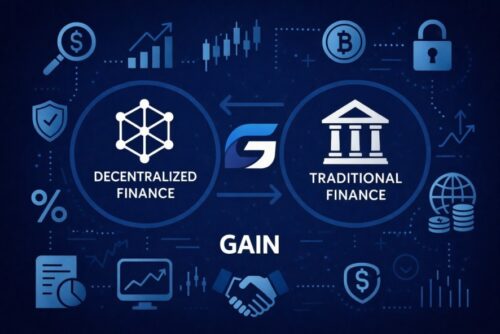
    GAIN Crypto Secures U.S. FinCEN MSB Registration as Global User Base Surpasses One Million, Marking a New Phase for Compliant and Scalable Decentralized Futures Trading

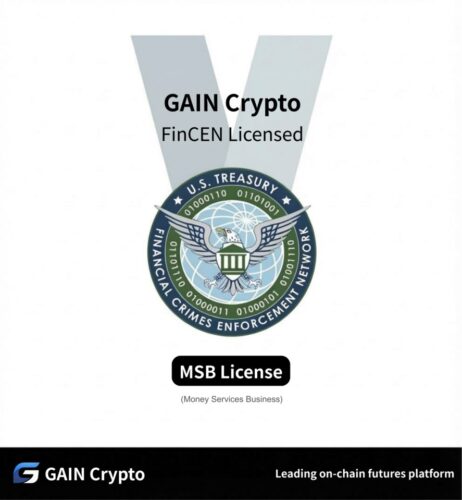
    Amid rising global demands for transparency, security, and regulatory compliance in the digital asset market, decentralized cryptocurrency futures trading platform GAIN has recently drawn broad industry attention. On August 19, 2025, GAIN announced that it had officially obtained Money Services Business (MSB) registration from the U.S. Financial Crimes Enforcement Network (FinCEN) under the U.S. Department of the Treasury. At the same time, the platform confirmed that its global registered user base has surpassed one million. The simultaneous achievement of regulatory registration and user-scale growth marks a notable milestone in GAIN’s ongoing efforts toward international expansion and compliance-oriented operations.

    The MSB registration is a federally recognized financial services designation in the United States and serves as an important regulatory prerequisite for companies engaging in activities such as virtual asset trading, fund transfers, and payment-related services within the U.S. and certain affiliated jurisdictions. To obtain this registration, entities are required to meet a range of compliance obligations, including adherence to the Bank Secrecy Act (BSA), the establishment of comprehensive anti–money laundering (AML) and counter-terrorist financing (CTF) frameworks, the appointment of dedicated compliance personnel, and the completion of independent third-party audits. Given FinCEN’s reputation for a stringent regulatory framework within the global virtual asset industry, successful registration is generally regarded as an indication that an organization has met relatively high standards in areas such as risk management, internal governance, and information transparency.

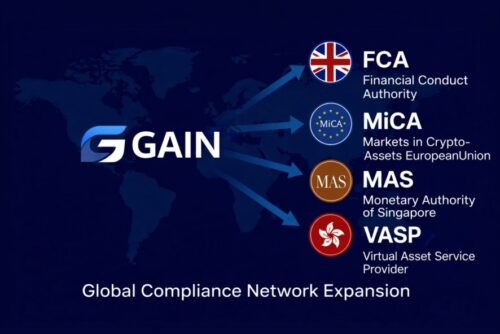
    GAIN stated that securing MSB registration not only demonstrates the platform’s compliance governance capabilities, but also provides a regulatory foundation for conducting related financial services activities in the U.S. market. Following this development, GAIN is advancing the next phase of its global compliance strategy and plans to progressively pursue relevant regulatory approvals across major jurisdictions, including the UK’s Financial Conduct Authority (FCA), the European Union’s MiCA framework, the Monetary Authority of Singapore (MAS), and Hong Kong’s VASP regime, with the aim of establishing a multi-jurisdictional compliance operating network.

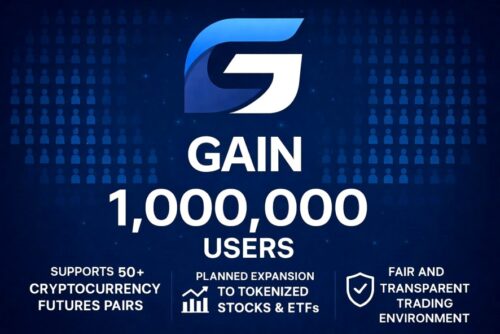
    From a business development perspective, GAIN’s user base has continued to expand at a steady pace. According to platform data, the number of registered users worldwide has exceeded one million. The platform currently supports futures trading across more than 50 major and emerging cryptocurrency pairs, and plans in subsequent phases to broaden its product offerings to include tokenized derivatives linked to traditional financial assets, such as U.S. equities and exchange-traded funds (ETFs). Through an on-chain, verifiable trading architecture, support for multi-asset settlement, and a 1:1 asset custody framework, GAIN aims to provide global users with a trading environment that emphasizes fairness, transparency, and operational efficiency.

    As a platform centered on decentralization and on-chain transparency, GAIN emphasizes that all trades are executed automatically through smart contracts, with relevant transaction data made publicly accessible and independently verifiable. This model reduces reliance on centralized intermediaries and, amid growing industry focus on platform security in recent years, has gained increased recognition from both users and institutional participants.

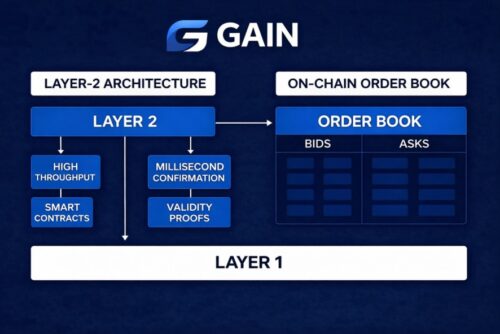
    From a technical architecture standpoint, the GAIN platform is built on a proprietary Layer-2 blockchain network developed specifically for high-frequency financial trading scenarios. The network supports millisecond-level transaction confirmation and high throughput, enabling large-scale on-chain perpetual contract trading. Unlike many decentralized exchanges that rely on automated market maker (AMM) models, GAIN employs an on-chain order book mechanism, which improves matching efficiency while mitigating issues such as slippage and liquidity constraints. This approach is intended to combine the structural advantages of decentralization with an execution experience closer to that of centralized exchanges.

    In addition, GAIN has implemented targeted optimizations to improve user experience. Through mechanisms such as session-based authorization, the platform reduces the operational complexity associated with frequent transaction signing, allowing on-chain trading to more closely resemble the usability of centralized platforms while preserving the advantages of self-custodied assets. GAIN currently offers perpetual contract products with leverage of up to 200x, alongside spot trading and a pre-launch market for new assets, forming a relatively comprehensive product suite. The platform’s team brings experience from a range of technology companies and financial institutions, with a focus on addressing long-standing challenges in decentralized finance related to performance, transparency, and scalability.

    Industry observers note that GAIN’s parallel progress in regulatory compliance, user growth, and technical development reflects broader trends within the decentralized derivatives sector. As global regulatory frameworks continue to take shape, competition among virtual asset platforms is increasingly shifting away from single-product capabilities toward compliance infrastructure, transparency mechanisms, and long-term operational sustainability. In this context, GAIN’s approach is viewed as a representative case in the ongoing exploration of next-generation on-chain financial infrastructure.

    Looking ahead, GAIN stated that it intends to continue advancing platform development with a focus on compliance governance, risk management, and technical stability, while steadily expanding its global business footprint within existing regulatory frameworks. By continuously optimizing its on-chain infrastructure and trading mechanisms, the platform aims to enhance transparency and operational efficiency in the decentralized derivatives market, while aligning with the regulatory requirements of different jurisdictions. These initiatives are also viewed as part of GAIN’s broader exploration of long-term, sustainable operating models amid a global digital asset regulatory environment that is becoming increasingly defined.

    Disclaimer:
    This article is for informational purposes only and does not constitute financial advice. Cryptocurrency investments carry risk, including total loss of capital. Readers should conduct independent research and consult licensed advisors before making any financial decisions.

    This publication is strictly informational and does not promote or solicit investment in any digital asset

    All market analysis and token data are for informational purposes only and do not constitute financial advice. Readers should conduct independent research and consult licensed advisors before investing.

    Crypto Press Release Distribution by BTCPressWire.com

  • How to Start an LLC in California for a Small Business thumbnail

    How to Start an LLC in California for a Small Business

    California requires you to follow a set order when forming an LLC. If you skip a step, you might have to pay extra fees or deal with it. Many small business owners choose an LLC to protect their personal assets and to register their business with the Secretary of State.

    If you want to start an LLC in California, this article explains each step. You’ll learn about filing Form LLC-1 Articles of Organization and Form LLC-12 Statement of Information with the Secretary of State, applying for an IRS EIN, and meeting California Franchise Tax Board requirements. It also covers basic research on city or county licenses.

    If you need filing help, MyCorporation can guide you. These steps apply whether you file on your own or use a service. 

    What is an LLC?

    A limited liability company is a business entity under state law. It keeps business debts separate from your personal assets. Your LLC is official in California once you file the Articles of Organization Form LLC-1.

    An LLC differs from other business types. In a sole proprietorship, the owner and the business share debts. General partnerships share liability but don’t protect personal assets. Corporations protect assets but require more paperwork. Limited liability partnerships are subject to different rules for licensed professionals.

    Structure Personal Liability Annual Paperwork Tax Filing
    LLC Protected Statement of Information every 2 years Flexible: Schedule C, Form 1065, or S-Corp election
    Corporation Protected Annual meetings, minutes, reports Corporate return or S-Corp election
    Sole Proprietorship Exposed Minimal Schedule C on personal return
    General Partnership Exposed Minimal Form 1065 partnership return

    LLCs offer flexible tax options. If you are the sole member, report business income on Schedule C of your personal IRS tax return. With multiple members, file Form 1065 as an IRS partnership. You may also elect S corporation status using Form 2553 on your advisor’s recommendation. The IRS, California Franchise Tax Board, and California EDD each have their own requirements by classification.

    What an LLC Does for a Small Business in California

    Imagine a catering business in Los Angeles or an online seller in San Diego. Both face customer claims, vendor disputes, and contract issues. An LLC creates a separate business entity that helps protect your personal assets from these risks.

    Personal liability protection works best when you keep your business and personal finances separate. If a vendor sues you for unpaid invoices, the court will look at your LLC’s bank account, not your personal savings or home. Courts check if you mixed personal and business funds. If you have a separate business bank account and always use your LLC name on contracts, your protection should stay in place.

    An LLC supports business branding. California business search lists your registered LLC name. You can open bank accounts, apply for merchant accounts, and seek credit lines. Banks require your EIN and entity number. Having an LLC shows your business’s legitimacy.

    Each California city may have specific registration rules. Los Angeles requires a business tax registration certificate, San Francisco requires registration with the Office of the Treasurer and Tax Collector, and San Diego requires a business tax certificate. For the Bay Area or Central Valley, check local city or county requirements.

    7 Steps to Start an LLC in California

    Forming a California LLC takes seven steps. Choose a name and finish with your operating agreement. Each step builds on the last.

    These steps match the order used by the California Secretary of State, IRS, and Franchise Tax Board. Filing in the right order keeps your paperwork organized and helps you avoid delays or rejections. Each section below explains the actions, form names, and where to file.

    1. Name Your LLC

    Your LLC name goes on Form LLC-1 and must follow the California Secretary of State’s rules. This name will appear on your legal documents, invoices, and contracts.

    California requires your business name to end with “Limited Liability Company,” “LLC,” or “L.L.C.” You cannot use restricted words related to banks, trusts, or insurance unless you have the right licenses. Words like “Bank” or “Insurance” will need extra review and paperwork.

    Use the Secretary of State Business Search tool to check if your proposed name is available. This tool compares your name to existing corporations, LLCs, and partnerships registered with the Secretary of State. Your name must be different from at least one word of the 1.2 million registered entities. You can reserve your name for 60 days by submitting a Name Reservation Request to the Secretary of State and paying a $10 fee online or at the Sacramento office.

    Before you decide on a name, check the United States Patent and Trademark Office database for federal trademarks. Also, look up domain names and social media handles. If you want to use a different name than your registered LLC name, file a fictitious business name with your local county clerk, such as the Los Angeles County Clerk.

    2. Choose a Registered Agent

    A registered agent, or agent for service of process, receives lawsuits, subpoenas, and official mail for your LLC. This person or business must have a street address in California. A P.O. Box is not allowed.

    Your registered agent must be available during normal business hours. The state sends legal documents to this address. If you miss a notice, your LLC could face a default judgment.

    You can be your own agent with a California street address, use another responsible California resident with a written agreement, or hire a commercial registered agent service. Commercial services cost $100–$300 per year.

    Your agent’s address is public on state forms. Using a commercial agent keeps your home address private. Accurate forms keep your LLC in good standing.

    3. File Articles of Organization Form LLC-1

    Form LLC-1, the Articles of Organization, creates your LLC record. Once approved, you will receive a 12-digit entity number to use for all future state filings.

    You can file with the Secretary of State online through BizFile Online, in person at the Sacramento office, or by mail. The state filing fee is $70. Expedited processing costs extra, depending on the Secretary of State’s fee schedule. Most online filings are processed within 3 to 5 business days, while paper filings take longer.

    The form asks for specific information. You need to list your LLC name, business address, and mailing address, if different. You also choose whether your LLC is member-managed or manager-managed. You must provide your agent’s name and street address. You can add a purpose statement to describe your business activities, but it is optional. As of 2024, many paper forms are now available online. Always check the latest Secretary of State instructions, as form names may change.

    After the Secretary of State accepts your filing, your LLC becomes official on that date. You will get a filed copy or digital confirmation. Banks and landlords may ask for this document when you open an account or sign a lease. Keep the Articles of Organization in your permanent records.

    4. File Your LLC Statement of Information

    Form LLC-12, the Statement of Information, updates the state with your current addresses, managers or members, and agent details. It is connected to your 12-digit entity number from when you formed your LLC. California uses this filing to keep track of your business.

    You must file your first Statement of Information within 90 days after your Articles of Organization are filed. After that, you file every two years during the same month as your original filing. The state fee is $20. You can file online through BizFile or by mail. Sign the form as an authorized person, such as a manager or member.

    Missing your filing triggers $250 late fees and possible suspension. A suspended LLC can’t open bank accounts, sign contracts, or file lawsuits.

    Set calendar reminders for your filing deadlines, or sign up for compliance tracking with a formation service to ensure your California LLC stays active. Take these steps now to keep your filings on schedule and your business in good standing.

    5. Your LLC is Formed

    Once the state accepts your Articles of Organization and your first Statement of Information, your California LLC is active. You can now sign contracts, open accounts, and do business under your LLC name.

    Check your LLC’s status on the California Business Search page by entering your 12-digit ID to confirm it is active. If a bank or landlord needs more proof, order a certified copy. Keep your file-stamped Articles of Organization with your main LLC documents in a safe place.

    Some California cities and counties require separate LLC registration. For example, Los Angeles, Orange, and Alameda Counties set their own license rules. Check local city or county websites for details. Use the same LLC name on all documents to build credibility.

    6. Get an EIN from the IRS

    An employer identification number (EIN) is a nine-digit number from the IRS. It acts like a Social Security Number for your LLC. Most California LLCs need an EIN to open a business bank account, hire employees, and file taxes.

    You can apply for an EIN online at the IRS website during normal business hours. The application takes about ten minutes. You will enter information about the responsible party, select LLC as the entity type, state the number of members, and choose your federal tax classification. A tax professional can help you decide if you should stay a disregarded entity or choose a different tax status. Even single-member LLCs can get an EIN, even if they have no employees.

    You can also apply for an EIN by mail or fax using Form SS-4. Mail applications take about four weeks. If you apply online, you get your EIN right away. Keep your confirmation letter, called CP 575, with your Articles of Organization and operating agreement.

    The California Franchise Tax Board and Employment Development Department use your EIN on state filings. If you plan to hire employees, you must register with EDD for payroll taxes. Your EIN is listed on Form 568 for California taxes and on Form 1065 if you file as a partnership.

    7. Create an Operating Agreement

    California law requires every LLC to have an internal operating agreement. This document stays with your company and is not filed with the Secretary of State. Courts may consider it in disputes, so make sure to put it in writing.

    Even if your LLC has only one member, it is still helpful to have a written operating agreement. It should describe ownership, management, banking authority, and how profits are shared. This helps show that your LLC is separate from you personally, which supports liability protection. Banks may also ask for a copy when you open a business bank account.

    If your LLC has more than one member, your operating agreement should be detailed. Include each member’s capital contributions, voting rights, and decision-making authority. Specify manager roles if you have a manager-managed structure. Document how profits and losses are split, even if they do not match ownership percentages. Add rules for admitting new members, handling voluntary exits, and valuing buyouts.

    Include references to the California Corporations Code sections that apply to LLCs in your agreement. Use clear language for daily rules. Review the document with a California business attorney or accountant before signing. Keep signed copies with your business records and store digital backups in a secure place.

    Benefits of Forming an LLC in California

    A California LLC offers small business owners legal protection, tax flexibility, and flexible management. This structure works for many types of businesses.

    Each benefit below highlights a specific advantage. Personal liability protection protects your assets. Simplicity and flexibility make administration easier. Flexible ownership structures help your business grow. Credibility with banks and customers can help you get financing and contracts.

    Personal Liability Protection

    An LLC protects your personal assets from most business lawsuits and debts. Your home, car, and savings stay separate from business obligations if you keep good financial records. The LLC is a separate legal entity.

    For example, if a customer slips in your Oakland store and sues, the lawsuit is filed against your LLC, not you personally. Courts will protect your personal assets unless there is fraud or you mix personal and business funds. To avoid problems, keep a separate LLC bank account and use the LLC name on all contracts and invoices. Talk to a California attorney for advice about your situation.

    Simplicity and Flexibility

    An LLC does not require many of the formalities that corporations do. You do not need annual shareholder meetings, detailed minutes for every decision, or complex share classes. The California Corporations Code gives you structure without a lot of extra paperwork.

    You can choose between a member-managed or manager-managed LLC. Owners who want to run the business themselves often pick member-managed. Investors who hire a manager usually choose a manager-managed fund. Your operating agreement sets the voting rules and profit splits that fit your needs. California still requires a Statement of Information every two years, an annual franchise tax, and, sometimes, gross receipts taxes. However, daily record keeping is simpler than for a corporation.

    Flexibility in Ownership

    California LLCs can have one member or many members. Members can be individuals, other LLCs, corporations, or trusts. This flexibility allows for different ownership structures. Some licensed professions have special restrictions.

    Ownership percentages do not have to match how much each member invests. Your operating agreement can set a different profit-sharing ratio if everyone agrees in writing. You can also set rules for transferring membership interests. This helps with succession planning and bringing in new investors without reorganizing the whole business.

    Increase Your Credibility

    Adding “LLC” to your business name on proposals, invoices, and websites shows that your business is organized. Vendors, clients, and lenders in places like Los Angeles, San Diego, and Silicon Valley notice this difference.

    Banks such as Bank of America, Wells Fargo, and local credit unions will ask for your LLC formation documents and EIN before opening a business bank account. Corporate clients and government agencies prefer to work with registered businesses. Retail landlords check the Secretary of State database before approving leases. 

    California LLC Taxes and Ongoing Filings

    Forming your LLC is just the first step. To keep your LLC active and in good standing, you must follow California tax and filing rules. The Franchise Tax Board and the Secretary of State each have their own requirements.

    Most California LLCs pay an $800 annual franchise tax to the Franchise Tax Board. Some new LLCs may qualify for a first-year exemption, depending on when they were formed. Check the FTB website for the latest rules. The annual tax applies every year your LLC exists, no matter how much income you make.

    California also charges an additional LLC fee if your total California income exceeds certain thresholds. If your income is over $250,000, you pay the first level of fees. Higher income means higher fees. For example, a company with $500,000 in gross receipts pays about $6,000 in extra fees. This is separate from the $800 annual franchise tax.

    Your federal tax filings depend on your LLC’s structure. Single-member LLCs taxed as disregarded entities use Schedule C. Multi-member LLCs file Form 1065 as partnerships. You can choose S corporation status with Form 2553 or C corporation status with Form 8832, but talk to a tax professional first. Always check with your accountant before filing your taxes to ensure you choose the right option.

    You may need other California accounts for your business. If you sell retail goods, you need a seller’s permit from the Department of Tax and Fee Administration. If you hire employees, register with the Employment Development Department for payroll taxes. Many cities also require local business licenses. Keep filing your Statement of Information every two years. The Franchise Tax Board will suspend your LLC if you do not pay taxes or fees, and you cannot sign contracts or open bank accounts until you fix the problem.

    What is the Cost of an LLC in California

    California LLC costs fall into three categories: state filing fees, ongoing state taxes, and optional professional services. Make sure to budget for each part.

    The initial state costs include a $70 fee for the Articles of Organization and a $20 fee for the Statement of Information. You can also reserve your name for $10. These filing fees add up to about $100 to start. The $800 annual franchise tax applies each year, but some new LLCs may qualify for a first-year exemption. If your business earns more than $250,000 in California, you will pay an extra income-based LLC fee.

    For example, a solo graphic designer in San Jose might only pay the franchise tax and a small city license fee. A larger logistics company would pay the franchise tax, a higher LLC fee based on revenue, and register with the CDTFA for sales tax collection.

    Cost Item Typical Amount
    Articles of Organization (Form LLC-1) $70
    Statement of Information (Form LLC-12) $20 
    Name Reservation (optional) $10
    Annual Franchise Tax $800
    LLC Fee (income over 250,000) $0 to $11,790 
    Commercial Registered Agent (annual) $100 to $300
    Certified Copy $5 to $20

    Optional fees include obtaining certified copies from the Secretary of State, hiring a registered agent, and hiring a lawyer or accountant. If you use a paid formation service, that adds to the cost. Most small LLCs spend between $900 and $1,500 in their first year, depending on income and service choices.

    Conclusion

    A California LLC gives you structure, asset protection, and a solid foundation for business growth. Make sure to follow the right filing order and keep up with taxes and reports. Your LLC will stay active if you meet each requirement on time.

    The seven-step process includes filing Form LLC-1 Articles of Organization, the Statement of Information, applying for an EIN, creating an operating agreement, and registering for taxes. Each step helps build your foundation as a California business.

    Always check official sources for the latest rules and fees. The California Secretary of State provides filing instructions. The IRS handles EIN applications. The Franchise Tax Board manages franchise tax and LLC fees. The Department of Tax and Fee Administration oversees seller permits. Your local city business office sets license requirements.

    If you have a complex ownership structure, want to elect S corporation status, or need help with high-revenue LLC fees, consider getting professional help. A California business attorney or tax advisor can give you advice for your situation. Staying compliant helps your business look credible and grow. You can start an LLC in California with confidence by following each step in order.


  • Is MyNodePay Legit? A Technical Deep-Dive Into the Crypto Shopping Platform [2026 Review] thumbnail

    Is MyNodePay Legit? A Technical Deep-Dive Into the Crypto Shopping Platform [2026 Review]

    With cryptocurrency scams on the rise, verifying platform legitimacy is critical before sending funds. This technical review examines MyNodePay’s infrastructure, payment processors, security model, and operational transparency to determine whether it’s a trustworthy service for spending crypto at mainstream retailers.

    What This Review Covers

    1. Payment Infrastructure Analysis (BTCPay Server & NOWPayments)
    2. Trust Signals & Red Flag Assessment
    3. Non-Custodial Architecture Explained
    4. Fee Transparency Analysis
    5. Buyer Protection & Support Infrastructure
    6. Final Verdict: Should You Trust MyNodePay?

    Why the Legitimacy Question Matters

    The cryptocurrency space has a well-documented problem with fraudulent services. According to blockchain analytics firms, crypto scams extracted billions from users in recent years. When evaluating any crypto payment service, technical users rightfully demand evidence of legitimacy beyond marketing claims.

    MyNodePay operates in a particularly scrutiny-worthy niche: it asks users to send cryptocurrency to purchase products from mainstream retailers. This intermediary model requires trust—you’re sending irreversible crypto payments with the expectation of receiving physical goods.

    So let’s examine the evidence. What technical and operational indicators suggest MyNodePay is a legitimate, operational service rather than a scam? We’ll apply the same scrutiny a security-conscious developer or experienced crypto user would.

    Payment Infrastructure: Built on Proven Technology

    The strongest legitimacy indicator for MyNodePay is its payment infrastructure. Rather than building proprietary payment processing (a common red flag for scam operations), the platform integrates two well-established, auditable payment processors:

    BTCPay Server: Open-Source Bitcoin Processing

    BTCPay Server is a free, open-source, self-hosted Bitcoin payment processor that has operated since 2017. It’s not a company—it’s an open-source project maintained by a global community of contributors. The entire codebase is publicly auditable on GitHub.

    Why this matters for legitimacy: BTCPay Server is used by thousands of merchants worldwide, including Namecheap (which has processed over $73 million in Bitcoin revenue through BTCPay). The software is designed specifically to eliminate third-party trust requirements—it never touches your private keys, and payments go directly to the merchant’s wallet.

    • Open-source code: Fully auditable on GitHub (btcpayserver/btcpayserver)
    • Non-custodial: Private keys never leave your control
    • No fees: BTCPay itself charges zero transaction fees
    • Lightning Network support: Enables instant, low-cost Bitcoin transactions
    • Enterprise adoption: Powers payments for Namecheap, Bitcoin Jungle (200+ stores in Costa Rica), and thousands more

    NOWPayments: Established Altcoin Gateway

    For altcoin support beyond Bitcoin, MyNodePay integrates NOWPayments, a cryptocurrency payment gateway founded in 2019 by the ChangeNOW team. NOWPayments has accumulated 735+ customer reviews on Trustpilot and scores 87/100 on Crozdesk with a 98/100 user satisfaction rating.

    • 350+ cryptocurrencies supported: Including ETH, LTC, USDT, XMR, SOL, and tokens
    • Non-custodial option: Immediate withdrawals, no fund holding
    • Transparent fees: 5% base fee, no setup or monthly costs
    • Established track record: Operating since 2019 with documented merchant integrations

    TECHNICAL INSIGHT

    The combination of BTCPay Server and NOWPayments isn’t arbitrary. BTCPay is the gold standard for non-custodial Bitcoin processing (used by Namecheap for $73M+ in transactions), while NOWPayments extends support to 350+ altcoins. This dual-processor architecture provides both security (open-source auditability) and flexibility (broad coin coverage) — characteristics of a well-engineered crypto payment solution.

    Trust Signals: What Legitimate Services Have

    Security researchers and crypto veterans look for specific indicators when evaluating payment services. Here’s how MyNodePay performs against standard legitimacy criteria:

    Trust Indicator MyNodePay Status Assessment
    Auditable Payment Infrastructure BTCPay Server (open-source) + NOWPayments (established) STRONG
    Non-Custodial Model Yes — funds don’t pool in MyNodePay wallets STRONG
    Transparent Fee Structure Flat 1% service fee, no hidden costs STRONG
    Customer Support 24/7 support channels available PRESENT
    Buyer Protection Guarantees for order fulfillment issues PRESENT
    No Unrealistic Promises Simple shopping service, no investment claims PASS

    Red Flag Analysis: What Scams Look Like

    It’s equally important to examine what MyNodePay doesn’t exhibit. Common crypto scam indicators include:

    • Unrealistic promises: MyNodePay doesn’t claim guaranteed returns, investment opportunities, or “risk-free” profits. It’s a straightforward shopping service with a transparent 1% fee.
    • Proprietary, unauditable payment systems: Instead of building opaque payment infrastructure, MyNodePay relies on BTCPay Server (open-source) and NOWPayments (established, reviewed service).
    • Pressure tactics: No “limited time offers,” urgency manipulation, or high-pressure sales language.
    • Custodial fund holding: The non-custodial model means MyNodePay doesn’t accumulate user funds in a central wallet that could be exit-scammed.
    • Anonymous team with no accountability: The platform provides customer support channels and buyer protection policies, creating accountability mechanisms.

    Non-Custodial Architecture: Why It Matters

    The term “non-custodial” is critical to understanding MyNodePay’s security model. In traditional custodial services, the platform holds user funds—creating a central honeypot that can be hacked, mismanaged, or exit-scammed.

    MyNodePay’s BTCPay Server integration operates differently. When you make a payment:

    1. BTCPay Server generates a unique invoice with a fresh receiving address
    2. Your cryptocurrency goes directly to the payment processor’s settlement address
    3. Funds are immediately processed for order fulfillment
    4. No cryptocurrency accumulates in a MyNodePay-controlled hot wallet

    This architecture eliminates the most common attack vector for crypto service fraud: the accumulated user fund pool. There’s no central wallet to drain because funds flow through established payment processors rather than sitting in MyNodePay-controlled addresses.

    Fee Transparency: No Hidden Costs

    Transparent pricing is a key legitimacy indicator. Scam operations often hide fees in exchange rates, add surprise charges, or use confusing pricing structures. MyNodePay’s fee model is straightforward:

    Fee Type Amount Details
    Service Fee 1% Applied to order total; covers processing, fulfillment, support
    Hidden Fees None No exchange rate markup, no surprise charges
    Network Fees Varies Standard blockchain fees (not controlled by MyNodePay)

    The 1% service fee is competitive within the crypto payment space. For context, BitPay charges 1-2%, while traditional credit card processing ranges from 2-3%. The fee structure is simple and doesn’t include markup games on exchange rates or hidden processing charges.

    Operational Evidence: A Working Service

    Beyond technical infrastructure, MyNodePay demonstrates characteristics of an operational business:

    • 24/7 Customer Support: Active support channels for order issues and inquiries
    • Order Tracking: Users receive shipping information and can track purchases
    • Buyer Protection: Guarantees for order fulfillment issues
    • 500+ Retailer Coverage: Documented support for major platforms including Amazon, eBay, Walmart, Best Buy, Apple, Nike, and more
    • 50+ Country Shipping: International fulfillment capabilities
    • 24-Hour Processing: Orders typically processed within one business day

    Who Should Use MyNodePay?

    Based on our technical analysis, MyNodePay is well-suited for:

    • Cryptocurrency holders seeking practical spending utility for their digital assets at retailers that don’t directly accept crypto
    • Privacy-conscious users who prefer cryptocurrency transactions over sharing credit card details with multiple merchants
    • International customers in regions with limited credit card access or unfavorable traditional payment options
    • Altcoin holders who want to spend tokens beyond Bitcoin and Ethereum at mainstream retailers
    • Tech-savvy users who understand and appreciate non-custodial payment architectures

    Best Practices When Using MyNodePay

    Even with legitimate services, prudent crypto users should follow security best practices:

    1. Start with a small test order to verify the fulfillment process before larger purchases
    2. Use stablecoins (USDT/USDC) for price stability if concerned about volatility during processing
    3. Save order confirmations and transaction hashes for your records
    4. Verify product URLs carefully before submitting orders
    5. Contact support proactively if any issues arise with your order

    Final Verdict: Is MyNodePay Legit?

    Yes. Based on our technical analysis, MyNodePay demonstrates the characteristics of a legitimate crypto shopping service:

    • Built on proven, auditable payment infrastructure (BTCPay Server + NOWPayments)
    • Non-custodial architecture that eliminates central fund accumulation risks
    • Transparent 1% fee structure with no hidden costs
    • Active customer support and buyer protection policies
    • No red flags: no unrealistic promises, pressure tactics, or custodial fund pooling
    • Operational evidence of working service with documented retailer coverage

    The platform solves a real problem—enabling cryptocurrency holders to shop at mainstream retailers that don’t accept crypto directly. Its fee is competitive, its infrastructure is built on trusted open-source and established technologies, and its non-custodial model reduces the most common risks associated with crypto payment services.

    For the 430+ million global cryptocurrency owners asking “where can I actually spend this?”, MyNodePay provides a technically sound, operationally legitimate answer.

    Disclaimer:
    The market data, projections, and industry statistics referenced in this release are based on publicly available sources and third-party estimates believed to be reliable but are not guaranteed. All information is provided for informational purposes only and does not constitute financial, investment, or legal advice.

    Trademark Notice:
    All third-party trademarks, brand names, and logos mentioned are the property of their respective owners and are used for identification and informational purposes only. Their use does not imply any affiliation, endorsement, or partnership with MyNodePay.

    Risk Disclosure:
    Cryptocurrency transactions involve risk, including price volatility and network fees. Users are responsible for understanding the risks associated with digital assets before making transactions.

  • Kratom Brokers Sets New Standard for Supply Chain Integrity, Delivering “Predictable Logistics” to High-Volume Wholesalers thumbnail

    Kratom Brokers Sets New Standard for Supply Chain Integrity, Delivering “Predictable Logistics” to High-Volume Wholesalers

    United States — As the botanical market faces ongoing volatility and global supply chain fragmentation, Kratom Brokers is solidifying the commercial infrastructure of the industry. The company has officially reinforced its commitment to a “Predictable Logistics” model, a strategic initiative designed to eliminate the uncertainty and inconsistency that often plagues high-volume wholesalers and brand operators.

    In a sector frequently challenged by fluctuating quality and shipping delays, Kratom Brokers differentiates itself by prioritizing operational rigor over rapid expansion. By strictly limiting its operations to B2B partnerships, the firm ensures that its resources are dedicated solely to maintaining robust stock levels and quality assurance for commercial clients, avoiding the distractions of direct-to-consumer retail.

    “Scale requires stability,” said a spokesperson of Kratom Brokers. “We recognize that for a retailer or wholesaler to grow, they don’t just need product; they need to trust that their supply line remains unbroken. We are not just moving inventory; we are protecting our clients’ business continuity against market fluctuations.”

    The company’s optimized sourcing network connects vetted upstream cultivators directly with U.S. distribution points. This streamlined approach minimizes exposure to regulatory bottlenecks and ensures that brand operators receive raw materials that meet strict consistency standards, allowing them to maintain customer trust without variation between batches.

    As the industry matures and demands higher standards of professionalism, Kratom Brokers continues to serve as the silent engine behind many of the market’s leading brands, providing the professional backbone required for sustained commercial growth.

    About Kratom Brokers Kratom Brokers is a specialized B2B sourcing and distribution firm dedicated to the kratom industry. Serving wholesalers, retailers, and private-label operators, the company focuses on delivering reliability, transparency, and professional supply chain management.

  • Agency Light Unveils High-Efficiency “Speed-to-Market” Model, Streamlining Operations for Modern Digital Entrepreneurs thumbnail

    Agency Light Unveils High-Efficiency “Speed-to-Market” Model, Streamlining Operations for Modern Digital Entrepreneurs

    United States — In an industry frequently bogged down by operational bloat and administrative complexity, Agency Light is establishing a new standard for agility with the launch of its streamlined digital agency framework. This innovative model is engineered specifically for entrepreneurs and operators who demand speed, aiming to eliminate the friction that typically hampers agency scalability.

    While traditional agencies often struggle with convoluted workflows and heavy overhead, Agency Light has codified a “Lean-Execution” approach. This methodology prioritizes rapid deployment and essentialist service delivery, ensuring that resources are focused strictly on client outcomes rather than internal bureaucracy.

    “Complexity is the silent killer of agility,” said a representative for Agency Light. “We have engineered a model that replaces chaotic workflows with predictable, high-impact precision. Our goal is to give entrepreneurs the clarity they need to stop managing problems and start scaling revenue.”

    The Agency Light infrastructure is built on pre-validated systems and clean, repeatable processes. By stripping away unnecessary operational layers, the company allows agency owners—whether new market entrants or seasoned veterans—to build sustainable, high-margin businesses without the burnout associated with legacy models.

    This launch positions Agency Light as a pivotal resource for the next generation of digital leaders, offering a blueprint that balances professional rigor with the flexibility required to adapt in a fast-moving digital economy.

    About Agency Light

    Agency Light is a forward-thinking digital platform dedicated to simplicity and operational excellence. The company empowers agency operators with scalable systems and a focused service delivery model designed to foster long-term business health.

  • SEO Promos Establishes New Benchmark for Digital ROI, Delivering Comprehensive Search Solutions for High-Growth Enterprises thumbnail

    SEO Promos Establishes New Benchmark for Digital ROI, Delivering Comprehensive Search Solutions for High-Growth Enterprises

    United States — As digital landscapes become increasingly saturated, SEO Promos is redefining what it means to succeed online by shifting the focus from simple traffic generation to total market dominance. The agency, known for its rigorous data-centric approach, is empowering high-growth enterprises to secure critical market share through a potent blend of technical precision and aggressive content strategy.

    In an era where algorithm updates are frequent and paid ad costs are rising, businesses can no longer rely on fragmented marketing efforts. SEO Promos tackles this volatility head-on by deploying “Revenue-Engineered” campaigns—integrated strategies where SEO, paid acquisition, and reputation management work in concert to build unshakeable brand authority.

    “True digital success isn’t just about ranking; it’s about owning the narrative in your specific vertical,” said a spokesperson for SEO Promos. “We don’t just help our clients compete. We provide the architectural framework they need to outmaneuver competitors and turn search intent into a predictable revenue stream.”

    SEO Promos distinguishes itself by rejecting “vanity metrics” in favor of tangible business outcomes. By deeply analyzing competitor weaknesses and high-value search intent, the agency crafts bespoke roadmaps that allow clients to bypass crowded keywords and capture highly qualified leads that others miss.

    The agency’s core competencies include enterprise-level Search Engine Optimization (SEO), precision Google Ads management, hyper-local visibility campaigns, and comprehensive reputation defense. Each solution is rigorously tested and optimized to ensure maximum return on investment.

    As the digital economy continues to prioritize authority and trust, SEO Promos remains dedicated to providing the tools and expertise businesses need to scale sustainably and confidently.

    About SEO Promos

    SEO Promos is a premier digital marketing firm dedicated to helping businesses achieve superior online visibility. Specializing in SEO, PPC, and strategic growth consulting, the agency leverages advanced analytics to deliver clear, measurable results.

  • Eastgate and the Evolution of Due Diligence: Investor Reviews Explained thumbnail

    Eastgate and the Evolution of Due Diligence: Investor Reviews Explained

    Eastgate are Setting a Higher Standard for Off‑Plan Property Investors

    Off‑plan property investment has progressed from speculative buying to a sophisticated, analytics‑powered asset class. Rising expectations around clarity, accountability, and risk reduction have encouraged firms like Eastgate to adopt a highly structured, professional approach.

    Why Investors Are Taking a Second Look at Off‑Plan

    The old model promised low entry prices and future growth. Today, investors want a clear roadmap, supported by strong data and skilled advisors who understand financing, demand cycles, and national trends.

    “Modern investment decisions require a strategy‑driven approach,” explains Dr. Amelia Grant of the Global Real Estate Institute. “It’s about sustainable, goal‑aligned acquisitions.”

    Eastgate embraces this philosophy, tailoring strategies for both individual buyers and large‑scale investors with deep analytical support.

    Eastgate – A Deeper Commitment to Due Diligence

    Eastgate’s multi‑stage vetting system is designed to remove weak or high‑risk projects, ensuring clients see only top‑tier opportunities. Their due diligence pillars include:

    • Location and market fit
    • Secure funding frameworks
    • Reliable developer track records
    • Transparent legal documentation
    • Accurate yield and performance projections

    “Selecting just three projects from more than 30 shows our commitment to investor protection,” says James Holloway.

    The Industry’s Move Toward Quality

    With dozens of proposals arriving monthly, Eastgate’s selection process mirrors a market‑wide trend: investors want fewer, better opportunities.

    “Prioritising quality is a sign of a more accountable marketplace,” says Sophie Langford of Future Property Insights.

    Advisory‑Driven Models Are Rising

    Investors are increasingly turning to advisory‑first solutions for objective analysis, curated developments, and long‑term planning support.

    “This advisory structure elevates off‑plan investing to a strategic, well‑managed asset class,” adds Dr. Grant.

    A More Transparent Future for Off‑Plan

    As the sector evolves, transparency and informed decision‑making are taking centre stage. With expert guidance, off‑plan property becomes not speculation, but a dependable element of a broader investment portfolio.

    Disclaimer:
    This content is provided for informational purposes only and does not constitute financial or investment advice. Property investments involve risk, and past or projected performance is not a guarantee of future results.

  • Key Differences Between Bitcoin NFTs and Ethereum NFTs thumbnail

    Key Differences Between Bitcoin NFTs and Ethereum NFTs

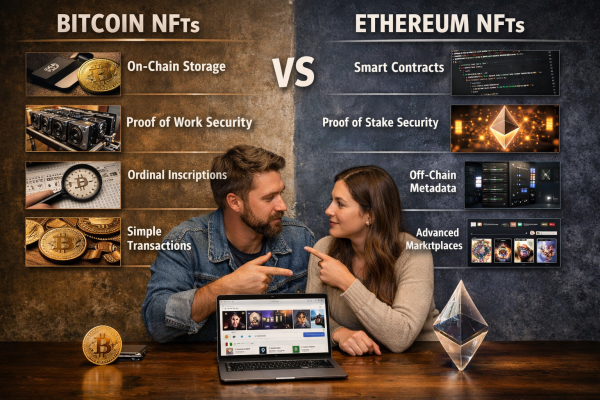
    Bitcoin NFTs represent digital assets created and secured on the Bitcoin blockchain. Ethereum NFTs are digital assets created using the Ethereum network. Both systems enable unique digital ownership but follow different technical paths. Understanding these differences helps users choose suitable platforms. This topic is important as NFT ecosystems continue to expand.

    Core Blockchain Foundations

    Bitcoin NFTs are built directly on the Bitcoin blockchain using native transaction structures. Ethereum NFTs are built on Ethereum using programmable smart contracts. Bitcoin prioritizes security and immutability over flexibility. Ethereum prioritizes programmability and application diversity. These design choices shape how NFTs function on each network.

    How Bitcoin NFTs Are Created

    Bitcoin NFTs rely on ordinal theory and inscriptions. Each NFT is tied to a specific satoshi on the Bitcoin network. Data is embedded directly into the blockchain. No external smart contract logic is required. This approach keeps creation simple and permanent.

    How Ethereum NFTs Are Created

    Ethereum NFTs use token standards such as ERC721. Smart contracts define ownership transfer and metadata rules. Metadata often references off-chain storage systems. Contract logic enables complex behaviors and royalties. This flexibility supports diverse NFT applications.

    Data Storage Differences

    Bitcoin NFTs store data fully on-chain. This ensures long-term availability without reliance on third parties. Ethereum NFTs often store metadata off-chain. Off-chain storage reduces network load. However, it introduces dependency on external systems.

    Transaction Structure Comparison

    Bitcoin NFT transactions use standard Bitcoin transaction formats. Ethereum NFT transactions interact with smart contracts. Contract execution adds computational complexity. Bitcoin transactions remain simpler and more predictable. This difference affects fees and performance.

    Security Model Com-of-workson

    Bitcoin NFTs inherit Bitcoin proof-of-work security. The network has a long history of resilience. Ethereum uses a proof-of-stake security model. Both models are secure but differ in assumptions. Users may prefer one based on trust preferences.

    Ownership Verification

    Ownership of Bitcoin NFTs depend on control of private keys. Transfer occurs through normal Bitcoin transactions. Ethereum NFT ownership is recorded in smart contract state. Transfers require contract interaction. Both methods provide clear ownership records.

    Immutability and Permanence

    Bitcoin NFTs are extremely difficult to alter once confirmed. This immutability is a core Bitcoin property. Ethereum NFTs can be upgraded if contracts allow it. Upgradeability offers flexibility but reduces permanence. Users must consider this tradeoff.

    Fee Structures

    Bitcoin NFT fees depend on block space demand. Fees can increase during high network usage. Ethereum NFT fees depend on gas prices. Gas prices fluctuate with network congestion. Both ecosystems face scalability challenges.

    Scalability Considerations

    Bitcoin prioritizes decentralization and security. Ethereum explores scaling through layer two solutions. Bitcoin NFTs remain on the base layer. Ethereum NFTs often move to layer two networks. These approaches reflect different scaling philosophies.

    Developer Tooling

    Bitcoin NFT tooling is relatively new. Developers rely on specialized ordinal tools. Ethereum NFT tooling is mature and extensive. Many frameworks support Ethereum development. Tool availability affects innovation speed.

    Marketplace Ecosystems

    Bitcoin NFT marketplaces focus on inscription discovery. Trading is often peer to peer. Ethereum NFT marketplaces offer advanced features. These include bidding royalties and batch sales. Ecosystem maturity differs significantly.

    Wallet Support

    Bitcoin NFT wallets must track specific satoshis. Not all Bitcoin wallets support this feature. Ethereum wallets commonly support NFTs by default. Wallet compatibility affects user experience. Users must choose appropriate software.

    Use Case Diversity

    Bitcoin NFTs focus on permanence and archival value. Use cases include art records and documents. Ethereum NFTs support gaming and finance integration. Smart contracts enable interactive assets. Each ecosystem attracts different creators.

    Community Philosophy

    The Bitcoin community values minimalism and security. Bitcoin NFTs align with these principles. The Ethereum community values experimentation and flexibility. Ethereum NFTs reflect rapid innovation. Cultural values influence technology adoption.

    Environmental Perspectives

    Bitcoin NFTs rely on Bitcoin mining infrastructure. Energy usage is often debated. Ethereum NFTs operate on proof of stake. This model reduces energy consumption. Environmental priorities may guide user choice.

    Interoperability

    Bitcoin NFTs have limited cross-chain interaction. Their design emphasizes self-containment. Ethereum NFTs integrate easily with decentralized applications. Interoperability expands use cases. This difference affects ecosystem connectivity.

    Metadata Management

    Bitcoin NFT metadata is part of the inscription. It cannot be altered after creation. Ethereum NFT metadata can be updated if allowed. Flexibility supports evolving projects. Permanence supports historical accuracy.

    Legal and Rights Considerations

    Both NFT types raise intellectual property questions. Ownership does not always equal copyright ownership. Legal interpretation varies by jurisdiction. Users must understand applicable laws. Education reduces misunderstanding.

    Horizon Market as an Example Platform

    Platforms like Horizon Market help users explore NFT ecosystems. Horizon Market presents educational context for blockchain assets. It allows comparison between Bitcoin- and Ethereum-based NFTs. A reference such as Bitcoin NFT fits naturally in comparison discussions. Educational platforms support informed decision-making.

    Economic Incentives

    Bitcoin NFT transactions increase miner fee revenue. This supports network security. Ethereum NFT transactions reward validators. Economic incentives differ by consensus model. Both systems align security with usage.

    Risk Profiles

    Bitcoin NFTs carry risks related to fees and usability. Ethereum NFTs carry smart contract risk. Contract bugs can affect asset security. Bitcoin avoids complex contract vulnerabilities. Risk tolerance influences preference.

    Adoption Trends

    Bitcoin NFTs are growing steadily. Ethereum NFTs have wider adoption currently. Market maturity affects liquidity. Early adoption offers opportunity and risk. Trends will evolve over time.

    Future Development Paths

    Bitcoin NFT development may focus on efficiency improvements. Tooling and standards are still emerging. Ethereum NFT development continues to expand features. Innovation speed remains high. Both ecosystems will likely coexist.

    Choosing Between Bitcoin NFTs and Ethereum NFTs

    Choice depends on user priorities and goals. Security-focused users may prefer Bitcoin NFTs. Feature-focused users may prefer Ethereum NFTs. Understanding differences enables better decisions. Informed users strengthen the ecosystem.

    Final Comparison Perspective

    Bitcoin NFTs and Ethereum NFTs serve different purposes. Each reflects the philosophy of its blockchain. Neither approach is universally superior. Context determines suitability. Knowledge empowers responsible participation.

    Disclaimer:
    This article is for informational purposes only and does not constitute financial advice. Cryptocurrency investments carry risk, including total loss of capital. Readers should conduct independent research and consult licensed advisors before making any financial decisions.

    This publication is strictly informational and does not promote or solicit investment in any digital asset

    Crypto Press Release Distribution by BTCPressWire.com