Category: BigNewsNetwork

  • Cardano Price Prediction After 2,113% DEX Jump: Can Pepeto Do What ADA Did for Early Holders? thumbnail

    Cardano Price Prediction After 2,113% DEX Jump: Can Pepeto Do What ADA Did for Early Holders?

    The cardano price prediction just got harder to ignore after the biggest DEX week in the coin’s history. Trading volume on Cardano platforms jumped from $9.72 million to $214.95 million in seven days per CoinGabbar.

    FC Barcelona launched Barca Fan Lab on the Cardano chain the same week per Blockonomi. When real use and big names pile on the same coin at the same time, the next move tends to start early. The money that moves first does not always go to the coin making headlines. Pepeto has raised over $11.1 million in presale with a scanner that flags scam tokens before they cost a thing.

    What Is the Cardano Price Prediction After DEX Volume Hit 2,113%?

    ADA climbed 14% in one week. The coin sits at $0.2457 per CoinMarketCap on September 29. DEX volume on Cardano hit $214.95 million in the seven days to September 27 per CoinGabbar.

    That is a 2,113% rise from $9.72 million the prior week. FC Barcelona’s Barca Fan Lab went live on the chain during the same stretch per Blockonomi. Whale wallets grew their ADA stacks as the numbers climbed per Blockonomi. That mix of real use, brand deals, and whale buying points one way.

    Where Does Pepeto Fit in the ADA Breakout Story?

    Why Are Traders Moving Past ADA Predictions to Pepeto?

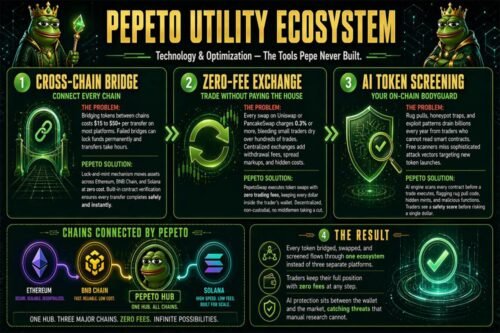
    The cardano price prediction shows where the market is heading. Pepeto is where the early money already went, and the tools prove it. The live scanner reads 42 tests on each coin before a swap clears. It checks mint locks, pause controls, hidden owners, and how the supply is split.

    It runs a test buy and a test sell on a copy of the chain. If the contract traps funds, the swap stops before a single coin moves out. A full scan takes seconds. The same work used to take hours of reading code by hand.

    The PepetoSwap exchange charges 0.00% in swap fees and has handled $50 million of volume per day. But the scanner is not the only reason money is flowing in. The timing matters just as much.

    A former Binance expert sits on the dev team. The person who created the first Pepe coin started this one. SolidProof ran the full review. The contract got a clean pass. This project is hitting the market when fake tokens drain wallets every day.

    No other presale offers a live scanner, a zero fee exchange, and a bridge linking five networks. When traders use the tools every day, demand builds on its own. The price follows use, not noise.

    The presale has pulled past $11.1 million in total funding. Staking pays 162% APY. The token sits at $0.0000001898 right now. The people who found ADA at $0.02 knew what a real project looked like before the charts proved them right. That kind of entry is sitting on the Pepeto presale right now.
    Where Is ADA Headed After the Record DEX Week?

    Per CoinMarketCap, ADA trades at $0.2457 on September 29. The coin gained 14% in one week as DEX volume topped $214 million per CoinGabbar. Support sits at $0.23 after holding through two tests this month. A hold above $0.25 opens a path toward $0.28 this week.

    If DEX growth holds and the Barcelona deal brings fresh users, $0.32 by late October is on the table. ADA’s outlook has not looked this good in months. That said, ADA at this level already prices in most of the good news. ADA has room to move up. But the kind of return that changes a wallet comes from entries below the radar, not coins already on every screen.

    Conclusion

    The cardano price prediction looks strong after a 2,113% DEX week and a deal with FC Barcelona. ADA has earned its spot. But the coin needs the broader market to follow before the next big move.

    The Pepeto official website has the full picture with over $11.1 million in funding, live tools, and staking at 162% APY. A live scanner, a zero fee exchange, and a bridge across five networks all say the building is already done.

    Every big coin had a moment when it was cheap and the crowd was somewhere else. ADA had that moment. Pepeto is in it right now. Those still reading the cardano price prediction can also be the ones who found the next real entry.

    Click To Visit Pepeto official Website To Enter The Presale


    FAQs

    Where Does the Cardano Price Prediction Stand Today?

    ADA targets $0.28 this week and $0.32 by late October if the DEX growth holds. Presale coins like Pepeto offer entries the open market cannot match.

    Can ADA Predictions Match What Presale Entries Return?

    ADA has room to grow, but presale entries have a track record of beating listed coins for returns. The full picture is on the Pepeto official website.

    Disclaimer:
    This article is for informational purposes only and does not constitute financial advice. Cryptocurrency investments carry risk, including total loss of capital.

    All market analysis and token data are for informational purposes only and do not constitute financial advice. Readers should conduct independent research and consult licensed advisors before investing.
  • Dogecoin News: DOGE ETFs Hit $2.89M Record as Traders Find a 100x Answer in Pepeto thumbnail

    Dogecoin News: DOGE ETFs Hit $2.89M Record as Traders Find a 100x Answer in Pepeto

    The dogecoin news cycle just shifted in a way most people have not caught up with yet. DOGE tested $0.10 on September 22 per CoinGape. Whale wallets added 1.14 billion coins worth $112 million in 96 hours per TronWeekly.

    When ETF money and whale money stack in the same week, the move that follows tends to reward the early side. That shift in how traders position is exactly why money keeps moving into Pepeto, a presale past $11.1 million with a live zero fee exchange.

    What Does the Latest Dogecoin News Say About DOGE ETFs?

    Dogecoin ETFs pulled $2.89 million in weekly inflows for the week ending September 25 per CoinGape. That is the best stretch since these products went live. Grayscale’s GDOG fund took in $3.48 million on its own, now covering 81% of all DOGE ETF assets per TronWeekly.

    Bitwise plans to shut its DOGE fund on October 14, leaving fewer products to catch the new money. DOGE is testing the $0.098 wall right now with 28 billion coins traded near that level. That kind of focus from big buyers tends to push things in one direction.

    What Does the DOGE ETF Record Mean for Pepeto Right Now?

    Why Is Pepeto the Answer Behind Every DOGE Search Right Now?

    Dogecoin news gives a clear picture of where the crowd is heading. Pepeto is already ahead, and the funding proves it. The PepetoSwap exchange runs with a 0.00% swap fee. That is not a promo rate or a limited offer. It is the base cost, and it stays at zero.

    A $1,000 trade costs $3 on Uniswap. The same trade costs $0 on PepetoSwap. Scale that up to $100,000, and the saving is $300 in one order. Run 200 trades of $5,000 each, and the total saved reaches $3,000 in Uniswap fees alone. That is real money going back into the trade instead of feeding the platform. The exchange is live right now and tested on $50 million in daily volume.

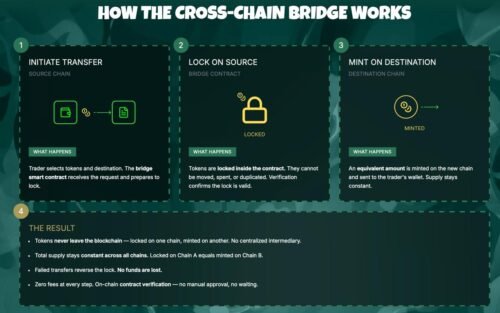
    The cross chain bridge moves tokens across Ethereum, BNB Chain, Solana, Base, and Arbitrum in under 60 seconds. The transfer fee is $0. The risk scorer runs 42 live checks on every contract before a trade can go through. If the scan finds a honeypot, the trade is blocked before any funds leave the wallet.

    Now look at the presale. The price today is $0.0000001898. Analysts project a 100x from presale to listing. At that level, a $100 entry reaches $10,000. SolidProof cleared the full contract audit. That cuts the risk that kills most presales before they ever reach an exchange.

    The cofounder built the first Pepe coin. A former Binance expert is on the dev team. More than $11.1 million raised proves the demand is already here. Staking is open at 162% APY. The wallets that found this entry before the crowd are already in. The ones still searching for the next big move are exactly who this presale was built for.

    Where Is DOGE Headed After the Record ETF Week?

    DOGE trades at $0.094 on September 29 per CoinMarketCap. The coin tested $0.10 on September 22 and pulled back right after per CoinGape. The $0.098 level is the wall to watch, with 28 billion coins traded near that price last week per TronWeekly.

    A clean break above $0.10 could open the path toward $0.12 before the year ends. The record ETF inflows and fresh whale buying support a move higher if the broader market holds. That said, DOGE at $0.094 is already priced for most of the next move. The remaining gains from here are the steady kind, not the kind that turn a small entry into something that changes everything.

    Conclusion

    DOGE ETFs just printed a record week at $2.89 million. Whales loaded more than a billion coins. The dogecoin news tells one story, but the real entry sits in a different place. The Pepeto official website shows a presale that has already pulled in more than $11.1 million.

    A live exchange with zero fees and a cross chain bridge on five chains back this project. A listing is on the way. The wallets that landed on Pepeto are not waiting for another dogecoin news headline. They already found what the search was pointing to. Six months from now, the entry at this price is either the one they talk about or the one they wish they made.

    Click To Visit Pepeto official Website To Enter The Presale

    FAQs

    Dogecoin News or the Pepeto Token?

    The Pepeto token offers an earlier entry than anything in the dogecoin news today. Presale pricing, staking, and the live exchange are all on the Pepeto official website.

    Can Dogecoin News Lead to Real Gains?

    The latest DOGE headlines cover the market. The biggest gains in crypto tend to come from presale entries before a listing, not from coins on exchanges.

    Disclaimer:
    This article is for informational purposes only and does not constitute financial advice. Cryptocurrency investments carry risk, including total loss of capital.

    All market analysis and token data are for informational purposes only and do not constitute financial advice. Readers should conduct independent research and consult licensed advisors before investing.

  • Crypto Update: $237M Pours Into BTC as ETH Climbs and Pepeto Gives Early Buyers a 100x Shot thumbnail

    Crypto Update: $237M Pours Into BTC as ETH Climbs and Pepeto Gives Early Buyers a 100x Shot

    This crypto update landed with a number that is hard to walk past. Strategy bought 1,665 BTC worth $142.7 million on September 28 per CryptoTimes. Strive added 1,107 BTC worth $94.5 million the same day per TheBlock.

    When two public firms stack $237 million into one coin in 24 hours, the signal is hard to miss. Pepeto has pushed past the $11.1 million mark in presale, and its zero fee exchange is already handling daily volume.

    How Does the $237M BTC Buy Shape This Crypto Update?

    Strategy now holds 847,666 BTC after adding 1,665 coins on September 28 per CryptoTimes. Strive loaded 1,107 BTC the same day per TheBlock. The combined total hit $237 million in one day. BTC sat at $82,601 on September 29, down 2.67% on the week per CoinMarketCap.

    Both firms bought while the price was falling. That gap between buying pressure and price does not last. When big money keeps loading through a dip, the crowd tends to follow. That is what makes this crypto update more than just another set of numbers.

    Where Does Pepeto Stand in This Crypto Update?

    Why Is Pepeto the Entry This Market Is Missing?

    Every cycle has a moment when the smartest money picks a side, and the rest of the market catches up weeks later. That moment does not ring a bell. It looks like a presale nobody has heard of yet.

    Pepeto pays 162% APY in staking rewards. Every coin bought in the presale earns more tokens while the listing date gets closer. The pool is already live. Holders are earning while the rest of the market waits for direction.

    Another crypto update will land next week and the one after that. None of them put coins into a wallet. The presale is the step that does. The entry right now is $0.0000001898. From that level, the path to a 100x sits in front of anyone willing to act before the listing. Put in a small amount today, and at that multiple it turns into something worth talking about.

    The returns only hold if the project behind them is real. The PepetoSwap exchange charges zero in swap fees. The cross chain bridge clears tokens across BNB Chain, Base, Solana, Arbitrum, and Ethereum in under a minute. The scanner runs 42 checks on each contract before a trade goes through. The person behind the first Pepe coin built this project.

    Part of the team came through Binance. SolidProof completed the contract review and gave it a clean pass. That is more than most tokens on the open market can show. Funding has passed the $11.1 million mark. This is the stage where past winners once sat.

    Where Does BTC Stand After the $237M Day?

    Per CoinMarketCap, BTC trades at $83,101 on September 29. It dropped 2.67% on the week even as Strategy and Strive sent $237 million into it in one day per CryptoTimes. Big firms keep buying through the dip.

    But at this size, BTC needs the wider market to push it higher. A double from here takes trillions in fresh money. BTC rewards patience over years, not weeks. Presale tokens sit in a different lane.

    Can ETH Hold Its 2.38% Weekly Gain?

    On September 29, ETH sits at $2,676 per CoinMarketCap. The coin gained 2.38% for the week while BTC dropped. It has held above $2,600 for two straight weeks. A push past $2,800 would pull in fresh buyers.

    ETH runs under thousands of apps that depend on it, and that gives it long term strength. But with a $326 billion market cap, ETH needs the wider market to move first. The returns that reshape things come from tokens the crowd has not found yet.

    Conclusion

    On one side, $237 million in BTC buying from two public firms. On the other, a presale with tools already live and a token still at ground level. BTC and ETH both have strong cases. But neither one offers the kind of entry that can return 100x from here.

    The Pepeto official website holds the full presale, staking at 162% APY, and every tool running today. The window is open. The only question is who walks through it.

    Click To Visit Pepeto official Website To Enter The Presale


    FAQs

    What Makes This Crypto Update Stand Out?

    This crypto update carries real numbers. Strategy and Strive moved $237 million into BTC in one day. The Pepeto official website covers it all.

    Can a Crypto Update Change Everything?

    The right one can. Early presale buyers in past cycles gained more than holders of listed tokens ever did.

    Disclaimer:
    This article is for informational purposes only and does not constitute financial advice. Cryptocurrency investments carry risk, including total loss of capital.

    All market analysis and token data are for informational purposes only and do not constitute financial advice. Readers should conduct independent research and consult licensed advisors before investing.

  • Tokenized Stocks Can Now Back USDC Loans: VOIDTRACE AI Highlights the Next Opportunity in AI-Powered Crypto Intelligence

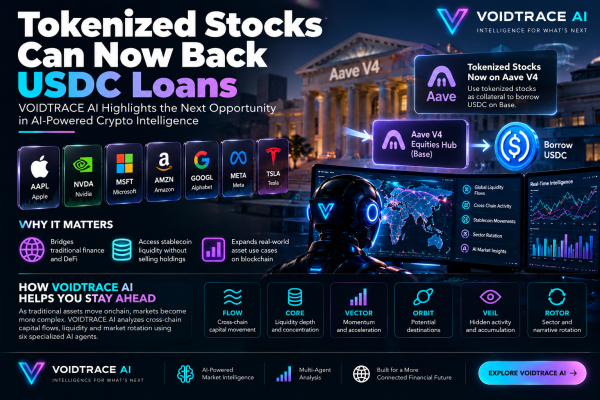
    Aave V4 has introduced lending against tokenized Apple, Nvidia, Microsoft and other U.S. technology stocks on Base. As traditional securities become usable within decentralized finance, emerging crypto project VOIDTRACE AI is developing a six-agent intelligence platform designed to analyze liquidity, capital movement and market rotation across digital assets.

    September 29, 2026 — The relationship between traditional finance and cryptocurrency has reached another milestone, with tokenized U.S. stocks now being used as collateral for stablecoin loans.

    On September 25, Aave Labs announced that seven Coinbase-issued tokenized stocks had become available on Aave V4’s Equities Hub on Base. Eligible users in permitted jurisdictions outside the United States can deposit these assets and borrow USDC against them.

    For the wider digital-asset industry, the development represents more than another product launch.

    It illustrates how conventional financial assets, blockchain infrastructure and decentralized lending are beginning to interact within the same financial environment.

    For VOIDTRACE AI, an emerging multi-agent crypto intelligence project powered by the $VOIDE ecosystem, this convergence provides another example of why digital markets may require more sophisticated tools for understanding liquidity and capital movement.

    Seven Major Technology Stocks Enter DeFi Lending

    The new Aave market supports tokenized exposure to seven U.S. technology companies: Apple, Amazon, Alphabet, Meta, Microsoft, Nvidia and Tesla.

    Their respective Coinbase-issued tokens can be supplied as collateral for USDC borrowing. The stock tokens themselves cannot be borrowed at launch.

    The structure allows eligible holders to access stablecoin liquidity without first selling their tokenized equity positions.

    However, the arrangement introduces borrowing risks, including potential liquidation if collateral values decline relative to outstanding debt.

    The market uses a dedicated Equities Hub that separates its liquidity and risk exposure from other Aave markets on Base.

    This creates a distinct connection between traditional stock-market exposure and decentralized lending infrastructure.

    Why Market Data Becomes More Important

    One particularly interesting aspect of the launch concerns how collateral is valued.

    Chainlink provides the on-chain pricing information used by the market.

    Although Aave’s lending market operates continuously, the underlying tokenized-equity price feeds update on a 24/5 schedule rather than throughout every hour of the week.

    During weekends and U.S. market holidays, the feeds retain their last published prices until regular updates resume.

    That difference matters.

    Blockchain transactions can operate continuously while the conventional financial assets represented onchain remain tied to traditional market hours.

    As more financial products become tokenized, understanding the relationship between blockchain liquidity, asset valuation and trading activity may become increasingly complex.

    It is precisely this fragmentation of financial information that gives emerging market-intelligence platforms a wider development opportunity.

    VOIDTRACE AI Is Building Around the Intelligence Layer

    VOIDTRACE AI is developing a multi-agent platform intended to analyze how liquidity and capital move across cryptocurrency markets.

    Rather than relying entirely on one generalized AI model, its architecture assigns separate analytical responsibilities to six specialized agents.

    FLOW examines cross-chain capital movement, while CORE focuses on liquidity concentration and depth.

    VECTOR analyzes directional momentum, and ORBIT evaluates potential destinations for migrating capital.

    VEIL focuses on less-visible accumulation patterns and coordinated activity, while ROTOR monitors sector and narrative rotation.

    The agents are designed to contribute their observations to a shared, confidence-weighted consensus intelligence layer.

    The objective is to provide a more structured interpretation of market activity by examining several signals together.

    VOIDTRACE AI’s current development focus remains cryptocurrency and cross-chain market intelligence. The Aave launch represents independent industry context rather than an announced integration with VOIDTRACE AI.

    From Tokenized Stocks to a More Connected Market

    The significance of the Aave development lies in the relationships it creates.

    A conventional technology stock can now be represented through a blockchain-based financial instrument.

    That instrument can be deposited into a decentralized lending market.

    A borrower can receive USDC against the position.

    The stablecoins can then circulate through other permitted financial applications.

    Each stage creates different information about capital movement, liquidity and financial activity.

    A cryptocurrency price chart alone cannot fully explain those relationships.

    As tokenized securities become more widely integrated into digital finance, interpreting activity across multiple assets and systems could become an increasingly important challenge.

    AI Terminal Designed to Make Market Intelligence Accessible

    VOIDTRACE AI is also developing its AI Terminal as a natural-language interface to processed market intelligence.

    The intended platform experience allows users to explore questions such as:

    “Where is liquidity moving across blockchain ecosystems?”

    “Are stablecoin flows expanding?”

    “Which sectors are attracting capital?”

    “Is market momentum broadening beyond Bitcoin?”

    “Are multiple agents confirming the same rotation?”

    Developer-facing infrastructure is also being developed for analytical dashboards, research applications, monitoring systems and alerts.

    The project’s ecosystem token, $VOIDE, is intended to support access to premium intelligence, AI queries and related platform functionality.

    Why VOIDTRACE AI Is an Upcoming AI Crypto Project to Watch

    The latest developments in tokenized finance demonstrate how the digital-asset industry is evolving beyond a collection of independently traded cryptocurrencies.

    Traditional assets are moving onchain.

    Stablecoins are becoming part of increasingly sophisticated financial applications.

    Decentralized protocols are introducing new forms of lending and collateral management.

    And financial data is becoming more interconnected.

    For VOIDTRACE AI, these developments reinforce the broader problem its intelligence architecture is being developed to address.

    As the number of networks, assets and financial applications increases, understanding where capital moves may become more demanding than simply monitoring prices.

    The next generation of digital finance will produce more data. VOIDTRACE AI is building technology intended to help users understand what that data means.

    That provides a distinct development thesis for VOIDTRACE AI and $VOIDE as the project progresses toward its next ecosystem milestones.

    More information is available at VoidTraceAI.com.

    About VOIDTRACE AI

    VOIDTRACE AI is an emerging multi-agent cryptocurrency intelligence project developing technology for analyzing cross-chain capital flows, liquidity concentration, momentum, less-visible market activity and sector rotation. Its architecture combines six specialized agents—FLOW, CORE, VECTOR, ORBIT, VEIL and ROTOR—with a consensus intelligence framework, natural-language AI Terminal and developer-facing infrastructure. Its ecosystem token is $VOIDE.

    Disclaimer: This press release is for informational purposes only and does not constitute financial, investment or trading advice. VOIDTRACE AI is not affiliated with, partnered with or endorsed by Aave, Coinbase, Base, Chainlink or the technology companies mentioned. The tokenized-equity lending service is available only to eligible users in permitted jurisdictions outside the United States. Cryptocurrency, borrowing against collateral and early-stage digital-asset projects involve substantial financial risk.


  • Social Retrieving Emerges as a Reliable Service for Recovering Social Media Accounts thumbnail

    Social Retrieving Emerges as a Reliable Service for Recovering Social Media Accounts

    Social Retrieving offers social media account recovery services, including Instagram and Facebook.

    Social media accounts have become an important part of how individuals, creators, entrepreneurs, and businesses communicate with their audiences. When an account is hacked, disabled, locked, or otherwise inaccessible, recovering access can become a complicated and time-consuming process. Social Retrieving has emerged as a specialized service focused on helping users navigate social media account recovery.

    Founded to assist users dealing with difficult account-access issues, Social Retrieving provides account recovery assistance for platforms including Instagram and Facebook. The company works with clients experiencing issues such as hacked accounts, compromised credentials, disabled accounts, lost access, changed account information, and unsuccessful platform recovery attempts.

    “Social media account recovery can be frustrating, particularly when standard recovery options do not resolve the issue,” said James, Account Manager at Social Retrieving. “Our role is to help clients navigate the recovery process, organize the relevant information, and pursue the available recovery channels for their particular situation.”

    A Specialized Approach to Social Media Account Recovery

    Social Retrieving takes a case-by-case approach to account recovery. Rather than treating every account issue the same way, the company first evaluates the circumstances surrounding an account before determining whether it is suitable for its recovery assistance service.

    Depending on the circumstances, clients may receive assistance with documenting their account situation, preparing relevant information, navigating available recovery procedures, and pursuing appropriate escalation routes.

    The company emphasizes that clients do not need to provide their social media passwords or two-factor authentication codes to Social Retrieving. Account owners should only provide information they are comfortable sharing and should maintain control of their personal credentials.

    Helping Users Navigate Difficult Instagram and Facebook Recovery Cases

    Instagram and Facebook account recovery can involve different circumstances and recovery procedures. Users may encounter automated verification, identity confirmation, disabled-account notices, compromised account information, or recovery links that no longer work.

    Social Retrieving focuses on helping clients navigate these situations while maintaining realistic expectations about the recovery process.

    Because social media platforms ultimately determine whether an account can be restored, no legitimate third-party recovery service can guarantee that a platform will return an account. Social Retrieving instead provides recovery assistance based on the individual circumstances of each case.

    Building Trust Through Transparency

    Social Retrieving states that transparency is an important part of its client process. The company provides clients with information regarding its service, pricing, expected timelines, and applicable terms before work begins.

    The company also maintains case documentation throughout its recovery process and can provide clients with information regarding work performed on their case.

    With the continued growth of social media as a business and communication tool, account-access problems can have significant consequences. Social Retrieving aims to provide users with an organized alternative to repeatedly navigating complicated recovery procedures on their own.

    About Social Retrieving

    Social Retrieving is a social media account recovery assistance company based in Miami, Florida. The company specializes in assisting individuals, creators, businesses, and organizations with difficult Instagram and Facebook account recovery situations.

    Social Retrieving provides assistance for account-related issues including hacked accounts, disabled accounts, lost access, compromised account information, and other social media recovery challenges.

    For more information about Social Retrieving and its account recovery services, visit Social Retrieving online.

    Media Contact

    Company Name: Social Retrieving

    Contact Person: Sarah M.

    (E) mail: Socialretrieivng@gmail.com

    Website: https://www.socialretrieving.com

    City: Miami

    State: Florida

    Country: United States

  • 78-Year-Old Chicago Widower Launches Crowdfunding Campaign After Losing $45,000 to False Online Promises thumbnail

    78-Year-Old Chicago Widower Launches Crowdfunding Campaign After Losing $45,000 to False Online Promises

    Chicago, IL, USA – George Zuganelis, a 78-year-old widower based in Chicago, Illinois, has launched a Gofundme campaign after losing approximately $45,000 over 18 months to individuals who made false financial promises online. The campaign aims to help him secure independent housing, cover daily living essentials, and restore the financial stability he spent his life building.

    Over a period of roughly one and a half years, Zuganelis was continually persuaded to invest his personal savings into an operation based on false promises. The individuals involved gained his trust by guaranteeing they would eventually provide fundraising assistance that would secure his financial future. Believing the arrangement would offer long-term security, he continued to transfer funds until he realized the promises were entirely fabricated.

    The arrangement cost him $45,000, representing a substantial portion of his life savings. Having spent his life working to provide for his own future, Zuganelis now faces the reality that he cannot replace these funds through employment at his age.

    “I am asking for your help so I can rebuild my life with dignity,” Zuganelis stated.

    The financial loss compounds the grief and isolation he has navigated since the passing of his wife. Acknowledging that asking for public assistance is difficult after a lifetime of hard work and self-reliance, Zuganelis established the campaign out of necessity. His immediate priority is to obtain a safe residence where he can live independently.

    Beyond immediate housing and essential living expenses, the campaign’s longer-term objective is to help him replace the savings he lost after being misled. Zuganelis seeks to regain enough financial security to live his remaining years without the constant fear of financial hardship, ensuring he does not become a burden to his community or others.

    “Your kindness, compassion, and generosity remind me that even after experiencing betrayal, there are still good people willing to help others in their time of need,” said Zuganelis.

    The campaign encourages those who are unable to contribute financially to assist by sharing the fundraiser link with their families, friends, and local communities to help expand its reach.

    About the Campaign

    The George Zuganelis Recovery Fund is a personal fundraising initiative organized by George Zuganelis in Chicago, Illinois. The campaign was established to seek community support following a severe financial loss caused by online financial deception. All funds raised are allocated toward securing independent housing, meeting essential living expenses, recovering lost life savings, and creating long-term financial stability so Zuganelis can support himself independently.

    To view the campaign, make a contribution, or share the story, please visit the official GoFundMe page.

    Media Contact

    Company: George Zuganelis Recovery Fund

    Contact Person: George Zuganelis

    Email: gmzlawpc@aol.com

    Website: https://www.gofundme.com/f/help-a-77-year-old-widower-rebuild-after-an-online-scam

    City: Chicago

    State: Illinois

    Country: United States

  • Sangolten Seafood Strengthens Access to Norwegian Seafood for Global Wholesale Markets

    International seafood buyers are increasingly looking for dependable sourcing partners that can provide consistent product specifications, responsible sourcing, professional processing, appropriate packaging, and reliable export coordination. In response to these commercial requirements, Sangolten Seafood continues to connect professional buyers with fresh, frozen, and value added seafood sourced through Norwegian supply networks.

    As a Norwegian Seafood Supplier, Sangolten Seafood serves wholesalers, importers, distributors, retailers, restaurants, processors, and foodservice businesses seeking seafood for international markets. The company’s portfolio includes Norwegian salmon, Atlantic cod, shrimp, crab, herring, mackerel, trout, hake, squid, and specialty seafood products.

    Meeting the Requirements of International Seafood Buyers

    International seafood procurement involves more than selecting a species and agreeing on a price. Buyers also need to consider product form, size, quantity, packaging, documentation, destination requirements, delivery schedules, and cold chain management.

    Sangolten Seafood focuses on these practical aspects of seafood supply as part of its export approach. Its website states that the company works across sourcing, processing, packaging, cold chain management, and delivery, with an emphasis on maintaining product freshness, quality, and integrity.

    This approach is particularly relevant for businesses purchasing seafood in commercial quantities. Importers and distributors may have different requirements from restaurants, retailers, processors, or foodservice operators. By discussing specifications before an order is confirmed, suppliers and buyers can establish clearer expectations around the products and logistics involved.

    Sangolten Seafood Supports Global Export Requirements

    As a Norwegian Seafood Exporter, Sangolten Seafood works with professional buyers seeking seafood from Norwegian supply networks for international markets.

    Different destinations can have different requirements concerning food safety, product documentation, packaging, labeling, and import procedures. For this reason, international seafood purchasing requires communication between suppliers and buyers before shipment.

    Sangolten Seafood’s export focused approach includes product coordination, specifications, packaging, documentation, and logistics. The company encourages buyers to communicate their requirements, including seafood species, product form, quantity, packaging preferences, destination, and delivery schedule.

    This can be particularly important for businesses planning recurring procurement or larger commercial orders, where consistency and clear specifications can influence inventory planning and distribution.

    Norwegian Salmon and Atlantic Cod for Wholesale Markets

    Norwegian salmon and Atlantic cod remain important products within the international seafood trade, and both form part of Sangolten Seafood’s product portfolio.

    As a Norwegian Salmon Supplier, the company works with professional buyers that may require different salmon specifications depending on their market and intended application. Factors such as size, product form, quantity, packaging, destination, and delivery requirements can all be discussed during the procurement process.

    The company also supplies Atlantic cod for commercial buyers. As an Atlantic Cod Supplier, Sangolten Seafood can discuss requirements relating to product form, size, weight, packaging, freezing, quantity, and destination market.

    Its wider seafood portfolio also includes mackerel, trout, hake, shrimp, crab, squid, and specialty products, giving professional buyers the opportunity to discuss multiple sourcing requirements with one supplier.

    King Crab and Diverse Seafood Supply

    King crab represents another category within Sangolten Seafood’s commercial seafood offering. As a King Crab Supplier, the company works with buyers who may require specific product formats, sizes, quantities, packaging, and delivery arrangements.

    The company also provides access to other seafood categories, including Norwegian cold water shrimp, mackerel, trout, hake, squid, and processed seafood products. Its processing capabilities include activities such as filleting, trimming, portioning, freezing, and packaging, depending on product and customer requirements.

    This product diversity can be relevant to wholesalers, distributors, retailers, foodservice companies, and processors looking for a broader seafood sourcing relationship.

    Wholesale and Bulk Seafood Procurement

    For a Wholesale Seafood Supplier, consistency and commercial coordination are central considerations. Buyers purchasing seafood for distribution or further processing may need specific product formats, quantities, packaging configurations, and delivery schedules.

    Sangolten Seafood supports commercial procurement requirements and offers packaging solutions that can be adapted to different market needs. Its processing operation describes options including different packaging sizes and formats for retail, wholesale, foodservice, and international export requirements.

    As a Bulk Seafood Supplier, Sangolten Seafood can discuss larger volume requirements with professional buyers. A distributor may require recurring shipments, while a processor may need particular product forms or specifications. Restaurants and foodservice businesses can have different purchasing schedules and packaging requirements.

    For this reason, buyers are encouraged to provide detailed specifications when requesting a quotation.

    Responsible Sourcing and Seafood Supply

    Sustainability and responsible sourcing have become important considerations within international seafood procurement. Sangolten Seafood states that responsible sourcing forms part of its approach to seafood supply and that it works with trusted suppliers while considering factors including quality, origin, availability, and responsible sourcing practices.

    As a Sustainable Seafood Supplier, Sangolten Seafood highlights the importance of transparency across the seafood supply chain. Its sustainability information also discusses responsible sourcing, traceability, processing, packaging, and logistics as areas where the company seeks to operate responsibly.

    Specific certification and documentation requirements can vary according to seafood species, source, product, and destination market. Buyers with particular certification requirements can therefore communicate those requirements when discussing an order.

    Processing, Packaging and Cold Chain

    Seafood quality depends on careful handling throughout the supply chain. Processing, freezing, packaging, storage, and transportation all play a role in maintaining product condition.

    Sangolten Seafood describes a processing operation focused on food safety, hygiene, quality, and consistency. Its processes include sorting, filleting, trimming, portioning, packaging, freezing, and cold storage. The company also offers flexible packaging options designed around different retail, wholesale, foodservice, and export requirements.

    Cold chain management is another important consideration for international seafood shipments. Temperature controlled storage and transportation help maintain seafood quality as products move from processing facilities toward their destination markets.

    A Practical Approach to Norwegian Seafood Wholesale

    The role of a Norwegian Seafood Wholesale supplier extends beyond simply providing seafood. Professional buyers need information that allows them to plan purchasing, inventory, distribution, and logistics.

    Sangolten Seafood encourages buyers to provide details such as seafood species, product form, size, quantity, packaging, destination, delivery schedule, and documentation requirements. This allows the company to review the request against available supply and discuss suitable commercial options.

    For international buyers searching for a Seafood Exporter Norway, this type of communication can help establish clearer expectations before an order is processed and shipped.

    Supporting International Seafood Markets

    Norway has an established role in international seafood trade, and Norwegian seafood products are purchased by businesses serving markets around the world. Sangolten Seafood’s stated focus is to connect international customers with Norwegian seafood while supporting sourcing, processing, packaging, and export logistics.

    The company’s customer base includes wholesalers, importers, distributors, retailers, and foodservice businesses. Its supply approach is designed around the practical requirements of professional buyers rather than individual consumer purchases.

    For companies purchasing seafood on a recurring basis, establishing clear product specifications and communication channels can help support longer term commercial relationships.

    About Sangolten Seafood

    Sangolten Seafood is a Norwegian seafood supplier and exporter based in Rong, Øygarden, Norway. The company supplies fresh, frozen, and value added seafood to professional buyers and international markets, with a product range that includes salmon, cod, shrimp, crab, mackerel, trout, hake, squid, and specialty seafood.

    For wholesale, bulk, and international seafood requirements, buyers can contact Sangolten Seafood to discuss product specifications, quantities, packaging, destination markets, documentation, and delivery requirements.

    Sangolten Seafood
    Seumsvegen 99
    5337 Rong, Øygarden
    Norway

    Email: sales@sangoltenseafood.com
    Website: https://sangoltenseafood.com/


  • Outpick Examines the Hidden Risks of Market Concentration and What Investors Should Know

    SAN DIEGO, CA — September 29, 2026 — Investors who rely on major stock market indexes for broad market exposure may have more concentrated portfolios than they realize. As a relatively small group of large companies accounts for an increasingly significant share of major indexes, understanding index composition and concentration has become an important part of evaluating investment risk.

    Outpick, an investing and financial research platform, is highlighting the importance of looking beyond headline index performance and examining what investors actually own through index based investments.

    Market indexes are often viewed as diversified investment vehicles because they provide exposure to numerous companies. However, many widely followed indexes are weighted by market capitalization, meaning companies with larger market values receive larger weightings. As a result, the performance of a limited number of very large companies can have a substantial influence on the overall performance of an index.

    This dynamic can create a difference between the appearance of diversification and the underlying concentration of an investment portfolio.

    Why Index Concentration Matters

    Index investing has become an important part of modern portfolio construction because it can provide investors with exposure to a broad group of publicly traded companies through a single investment. Yet the number of companies included in an index does not necessarily tell the full story about diversification.

    When a small group of companies represents a large portion of an index, investors may have greater exposure to the performance of those companies than they initially expect. A significant decline in one or several heavily weighted companies can therefore have a larger effect on the index than a similar decline in a smaller constituent.

    Concentration can also occur at the sector level. When several of the largest companies belong to the same industry or are influenced by similar economic trends, investors may face correlated risks even when their portfolio contains dozens or hundreds of individual stocks.

    For investors, this makes it important to consider not only how many companies they own, but also how portfolio exposure is distributed across companies, sectors, industries, and other market factors.

    Diversification Requires More Than a Large Number of Holdings

    Traditional portfolio discussions often focus on the number of securities an investor owns. While holding multiple securities can reduce company specific risk, diversification also depends on how those holdings are weighted and how closely their performance is connected.

    An index fund containing hundreds of companies may still have meaningful exposure to its largest constituents. Similarly, a portfolio spread across multiple companies may remain vulnerable to a particular sector or economic trend if many of its holdings are exposed to the same underlying factors.

    Understanding these relationships can help investors put market performance into context. A rising index, for example, does not necessarily mean every part of the market is performing equally well. Index returns can sometimes be driven disproportionately by a relatively small group of companies.

    This distinction is particularly relevant when investors evaluate whether their portfolio reflects their intended level of diversification and risk exposure.

    Looking Beyond Headline Market Performance

    Market headlines often focus on whether a major index has gained or declined over a particular period. While index performance provides useful information, investors may benefit from examining the factors contributing to that performance.

    Questions about index weighting, sector exposure, valuations, earnings expectations, and correlations can provide additional context. Investors may also want to understand whether a portfolio’s performance is being driven by a broad range of holdings or by a narrower group of companies.

    These considerations do not necessarily make index investing unsuitable. Instead, they highlight the importance of understanding the structure of an investment before evaluating its potential benefits and risks.

    As markets evolve, changes in company size, industry leadership, economic conditions, and investor sentiment can also alter the composition and concentration of major indexes.

    Outpick Encourages a More Informed Approach to Market Research

    Outpick provides investors with tools and research designed to help them explore companies, markets, and investment trends with greater context. By examining developments beyond headline market movements, investors can develop a clearer understanding of the factors influencing their portfolios.

    The growing discussion around index concentration reflects a broader need for investors to understand not only what an investment owns, but also how those holdings can influence overall portfolio exposure.

    For investors reviewing their portfolios, examining concentration can be one component of a broader research process that includes diversification, risk tolerance, investment objectives, and time horizon. The goal is not simply to count holdings, but to understand the relationships and exposures that exist within a portfolio.

    About Outpick

    Outpick is an investing and financial research platform based in San Diego, California. The platform provides resources designed to help investors research markets, companies, investment trends, and portfolio considerations.

    For more information, visit https://outpick.xyz/ or contact email@outpick.xyz.

    Media Contact:
    Mike Francis
    Outpick
    San Diego, CA
    email@outpick.xyz

    Disclaimer:
    This article is for informational purposes only and does not constitute financial advice.

  • Red Light Therapy – What the Evidence Shows

    Introduction to Red Light Therapy

    Red light therapy, also known as photobiomodulation or low-level light therapy, has moved from specialized clinical settings into mainstream wellness spaces. The practice involves exposing the body to specific wavelengths of red and near-infrared light, typically in the 600–1100 nm range. More background is available on the Low-level laser therapy Wikipedia page.

    This form of light-based treatment has attracted growing attention from athletes, clinicians, and the general public. Search interest in terms such as “red light therapy,” “red light therapy benefits,” and “red light therapy near me” remains consistently high. The rise in popularity reflects both emerging research and the increasing availability of devices in gyms, recovery centers, and home settings.

    Historical Background and Scientific Foundations

    The scientific foundations of photobiomodulation trace back to the 1960s. Hungarian researcher Endre Mester observed that low-power laser light appeared to accelerate hair regrowth and wound healing in laboratory animals. These early findings prompted further investigation into the biological effects of low-intensity light. Over subsequent decades, researchers explored how specific wavelengths interact with cellular components, particularly within the mitochondria.

    The primary photoacceptor is widely considered to be cytochrome c oxidase, a key enzyme in the mitochondrial electron transport chain. When photons in the red and near-infrared spectrum are absorbed, they can increase the enzyme’s activity. This leads to greater production of adenosine triphosphate (ATP), the primary energy currency of cells. Secondary effects include modulation of reactive oxygen species, changes in nitric oxide signaling, and alterations in intracellular calcium levels. Collectively, these molecular events can influence inflammation, tissue repair, and cellular metabolism.

    Wavelengths and Mechanisms of Action

    Red light typically falls in the 630–680 nm range, while near-infrared light occupies the 800–900 nm range and beyond. Near-infrared wavelengths generally penetrate deeper into tissue than visible red light. Because of this difference in penetration depth, protocols often combine both ranges or select wavelengths based on the target tissue.

    The biphasic dose response is an important concept in photobiomodulation. Too little energy produces minimal effect, while excessive energy can become inhibitory. Effective treatment therefore depends on carefully controlled parameters, including wavelength, irradiance (power density), fluence (total energy delivered), treatment duration, and distance from the light source. Clinical and research protocols typically aim for specific energy densities measured in joules per square centimeter.

    Evidence for Exercise Recovery and Muscle Performance

    One of the most common applications discussed in fitness contexts is post-exercise recovery. Some studies report that red and near-infrared light applied before or after training can reduce markers of muscle damage, decrease delayed-onset muscle soreness, and support faster restoration of strength or power. Results are not uniform across all trials, and outcomes depend on dosing, timing, and the specific muscle groups treated.

    Pre-exercise application has been explored for its potential to enhance performance by improving cellular energy availability and reducing the magnitude of exercise-induced damage. Post-exercise application is more frequently studied for its effects on recovery kinetics. While promising findings exist, larger independent trials are still needed to establish clear guidelines for athletes and recreational exercisers.

    Applications Beyond Athletic Recovery

    Research has also examined red light therapy for skin health. Studies have investigated its effects on collagen production, reduction of fine lines, improvement in skin tone, and management of certain inflammatory skin conditions. Additional areas of interest include joint pain, peripheral neuropathy, wound healing, and oral mucositis associated with cancer treatments. In some of these domains the evidence base is stronger than in others.

    A growing body of work has explored potential benefits for mood and cognitive function, although these applications remain less established. Individual responses vary based on factors such as skin pigmentation, tissue depth of the target area, baseline inflammation levels, and overall health status.

    Practical Considerations for Dosing and Treatment

    Effective use requires attention to dosing parameters. Typical session lengths range from 5 to 20 minutes per body area. Treatment frequency often falls between three and five times per week during periods of higher training load or active recovery focus. Consistency appears more important than occasional high-dose sessions.

    Device quality matters. Clinical-grade panels and beds generally provide higher irradiance and more uniform coverage than many consumer products. Home devices vary widely in power output and wavelength accuracy. Users benefit from reviewing manufacturer specifications for wavelength and irradiance rather than relying solely on marketing claims. Devices that have undergone third-party testing or regulatory review for specific indications offer an additional layer of confidence.

    Safety Profile and Contraindications

    At therapeutic intensities, red and near-infrared light is non-thermal and non-ionizing. The safety profile is generally favorable when devices are used according to guidelines. Reported side effects are uncommon and usually limited to mild, temporary redness or a sensation of warmth.

    Certain precautions apply. Individuals with photosensitivity disorders, those taking photosensitizing medications, or people with specific eye conditions should consult a healthcare professional before use. Eye protection is recommended when devices emit bright visible light, even if the primary therapeutic wavelengths are in the red or infrared range. Pregnant individuals and those with active cancer should seek medical advice prior to treatment.

    Integration into Fitness and Wellness Settings

    In recent years, red light therapy has become a common feature in multi-purpose fitness and recovery facilities. Large panels or full-body systems allow efficient treatment of multiple areas and support consistent protocols. Facility-based access can help users avoid under- or overdosing and combine light therapy with other recovery practices such as contrast therapy, compression, or mobility work.

    In recent years, red light therapy has become a common feature in multi-purpose fitness and recovery facilities. Large panels or full-body systems allow efficient treatment of multiple areas and support consistent protocols. Facility-based access can help users avoid under- or overdosing and combine light therapy with other recovery practices such as contrast therapy, compression, or mobility work. One example of a setting that includes red light therapy among its recovery options is THE Athletic Club in Downtown Denver. The availability of supervised or structured access to the modality allows members to incorporate it into a broader routine that also includes strength training, group fitness, and other recovery tools.


    Limitations of Current Evidence

    Despite growing interest, important limitations remain. Many studies are small, lack robust controls, or receive industry funding. Standardization of dosing protocols across research is incomplete, making direct comparisons difficult. Individual variability means that not every user experiences the same degree of benefit. Red light therapy should be viewed as a complementary tool rather than a replacement for foundational recovery practices such as sleep, nutrition, and appropriate training load management.

    Exaggerated claims sometimes appear in commercial contexts. Assertions of dramatic anti-aging effects, major performance enhancement, or broad disease treatment often exceed the current strength of evidence. A measured approach that prioritizes documented applications and realistic expectations is more sustainable.

    Combining Red Light Therapy with Other Recovery Methods

    Many users combine red light therapy with other modalities. Contrast therapy, compression boots, sauna, and manual soft-tissue work are frequently used in the same recovery environment. Sequencing can matter. Some protocols place light therapy after physical recovery methods so that improved circulation supports photon absorption. Others use it as a standalone session on rest days. Experimentation under consistent conditions helps individuals identify what works best for their own recovery needs.

    The Future of Photobiomodulation Research

    Research continues to refine optimal parameters for different tissues and populations. Larger independent trials, better reporting of exact dosing, and longer-term follow-up studies will strengthen the evidence base. Investigations into cumulative effects, optimal timing relative to exercise, and applications for specific clinical populations remain active areas of inquiry.

    Technological improvements in LED efficiency, wavelength precision, and treatment-area coverage are also expanding practical options. As devices become more accessible, the importance of education around proper use increases so that users can apply the modality effectively and safely.

    Conclusion

    Red light therapy rests on a plausible biological mechanism centered on mitochondrial function and a growing body of clinical and laboratory data. When applied with appropriate dosing, consistent scheduling, and realistic expectations, it can serve as a useful adjunct within a comprehensive approach to training recovery and general tissue health. Its most reliable role appears to be supportive rather than transformative. Combined with solid fundamentals of sleep, nutrition, progressive training, and overall recovery management, photobiomodulation offers one additional tool that some individuals find beneficial.

    As with any recovery method, results vary. Those interested in exploring red light therapy are best served by reviewing available evidence, selecting quality devices or supervised settings, and integrating the practice thoughtfully rather than expecting universal or dramatic outcomes.


  • Crypto Overview September 2026: ETH ETFs Reverse Hard While Pepeto Staking Pays 162% Before Listing thumbnail

    Crypto Overview September 2026: ETH ETFs Reverse Hard While Pepeto Staking Pays 162% Before Listing

    The crypto overview for September 2026 looks nothing like it did eight weeks ago. Ether ETFs just flipped from $140 million in weekly outflows to $689.9 million in inflows in a single week, per The Block data. That is the sharpest turn for ETH funds since last August. ADA gained 9% on the week. XRP added 5%. The big coins are all moving again. But while the headlines chase the names that already ran, something smaller is building right below them. Pepeto is a meme coin presale with 162% staking, a live bridge, and the cofounder who built the original Pepe. It has quietly pulled in more than $11.1 million from buyers who found it before the crowd.

    What Does the $690 Million ETH ETF Reversal Mean for Crypto?

    The swing was fast. Money moved. ETH funds lost $140 million the week ending September 18. Then $689.9 million came in the five days through September 25, per FinanceFeeds. BlackRock’s ETHA led with $326.2 million. Fidelity’s FETH added $174 million. Total ETH fund holdings reached $17.8 billion. This crypto overview shows that money is not just coming back. It is coming back fast and across every fund at once. When that happens, the next assets to run are those the market has not priced in yet.

    What Is Drawing Attention in This Crypto Overview?

    Why Are Wallets Filling Pepeto Before the Listing?

    Below the headlines about ETH and ADA, Pepeto has been growing every day for months. The crypto overview numbers prove the big coins are healthy. But the rarest setup in any cycle is when a proven builder launches a new coin with real tools already working. That is exactly what is happening here.

    Pepeto pays 162% APY on staked tokens right now. The yield comes from a set reward pool, not from trading fees or new buyers. It updates daily based on how much is staked. More stakers, more spread. Rewards unlock the day the token lists. For anyone holding through the presale, that staking return stacks on top of whatever the listing price does.

    The project also runs a live cross chain bridge across BNB Chain, Ethereum, Solana, Arbitrum, and Base. The fee is $0. The bridge charges nothing. Gas on the network is all a user pays. Transfers close in under 60 seconds. Fast. Clean.

    What makes this crypto overview entry different from every other presale is the team. The cofounder launched the first Pepe coin, which climbed to $11 billion with zero tools and the same 420 trillion token supply. A dev trained inside Binance shaped the exchange and bridge builds. SolidProof signed off on the contract review and KYC process. That mix of meme energy, working products, and a coming listing is the rarest thing crypto produces. The wallets already inside know it.

    Over $11.1 million has poured in from presale early wallets at $0.0000001897 each. Projections from market watchers point to 100x once the coin goes live. Every round that fills lifts the floor price. The round available today will not remain at this price.

    Cardano (ADA)

    ADA trades at $0.24 on CoinMarketCap, as of September 28, up 9.3% in seven days. The GBTD tokenized deposit trial on September 24 used Quant, not Cardano, but ADA still rose on broad market strength, per CoinDesk. The chain is active. But at $0.24, a 2x means $0.50. ADA last touched that level in 2021. The math gets harder from here.

    XRP

    XRP sits at $1.49 on CoinMarketCap, checked September 28, up 5.7% on the week. ETF talk and cross border payment growth keep it in the news. XRP ETFs added $75.6 million last week, per crypto reports. XRP is a strong name. But at $1.49 and a $94 billion cap, the fast gains belong to whoever got in years ago.

    Conclusion

    This crypto overview tells one story at the top and a different one below. ETH, ADA, and XRP are all moving on record fund flows. They are solid. They are also priced like it. The returns worth chasing sit one level down, where tools are built but the listing has not happened yet.

    Pepeto sits in that exact spot. A cofounder who reached $11 billion, an exchange and bridge already live, staking at 162%, and a Binance listing on the way. That is not one reason. That is four at once. The decision is simple: act at Pepeto official website while the presale price holds. Or watch others take what this entry was always going to deliver.

    Click To Visit Pepeto Website To Enter The Presale

    FAQs

    What does the September 2026 crypto overview show?

    ETH funds reversed $140 million in outflows into $689.9 million in a week, ADA rose 9%, and XRP gained 5%. Money is flowing back across every major coin.

    Why is Pepeto part of this crypto overview?

    Pepeto combines a proven cofounder, a live exchange and bridge, 162% staking, and an approaching listing. That setup is rare at any price, and this one is still in presale.

    Disclaimer:
    This article is for informational purposes only and does not constitute financial advice. Cryptocurrency investments carry risk, including total loss of capital.

    All market analysis and token data are for informational purposes only and do not constitute financial advice. Readers should conduct independent research and consult licensed advisors before investing.