Category: BigNewsNetwork

  • Ethereum Price Prediction Targets $2,000 as Whale Wallets Quietly Pile Into Pepeto Before Listing thumbnail

    Ethereum Price Prediction Targets $2,000 as Whale Wallets Quietly Pile Into Pepeto Before Listing

    The ethereum price prediction just shifted after staking hit a record 34.4 percent and whale wallets added millions in fresh ETH, the kind of institutional conviction that usually marks the start of something bigger.

    While the market watches Ethereum build toward $2,000, thousands of wallets are quietly flooding into Pepeto, the exchange where more than $10.7 million already poured in because holders see what a working platform delivers once the expected Binance listing opens. With smart money stacking both ETH and early exchange entries, the ethereum price prediction is not the only number climbing right now.

    Ethereum Staking Hits Record as Whales Accumulate ETH

    Ethereum staking has climbed to an all-time high of 34.4 percent, with more than 40 million ETH now locked into the proof-of-stake consensus, according to CoinMarketCap. Over a third of the total supply sits off the open market, signaling the deepest on-chain conviction Ethereum has shown this cycle.

    Arthur Hayes has added 7,213 ETH worth $13.87 million since mid-July, and a separate wallet pulled 10,000 ETH worth $18.81 million off Bybit in one move, according to CoinGabbar. Large holders are accumulating while the price stays compressed, and that kind of positioning usually appears before sharp recoveries.

    Ethereum Price Prediction and the Presale Drawing Whale Attention

    Pepeto: The Exchange Where Every Tool Chains Into the Next

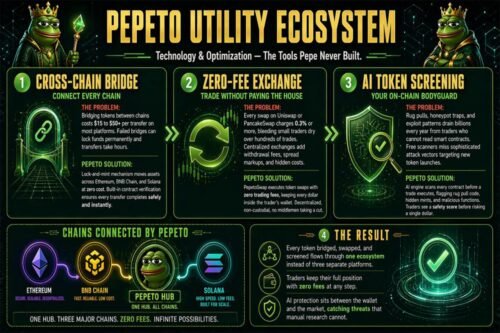
    Pepeto is a live exchange where every tool connects through one system, so holders stop juggling five platforms while the ethereum price prediction shifts and capital has to move fast. PepetoSwap powers every trade, and it operates next to a cross-chain bridge that moves tokens across blockchains while holders keep full custody, so a holder can shift assets and execute in one place before the opportunity disappears.

    That single-platform access is what separates Pepeto from tokens that promise tools after launch and deliver nothing when the listing happens. The bridge speed feeds directly into a staking system paying 165 percent APY, which means the same tokens a holder bridges and trades start earning yield within minutes, and those returns compound every day the expected Binance listing gets closer.

    A holder can bridge from Ethereum, trade on PepetoSwap, and lock in staking rewards in one session, and that seamless flow keeps capital circulating inside the exchange instead of leaking to competitors. Presale wallets are already earning before the exchange opens publicly, and that head start is why more than $10.7 million has poured in while most of the market bleeds.

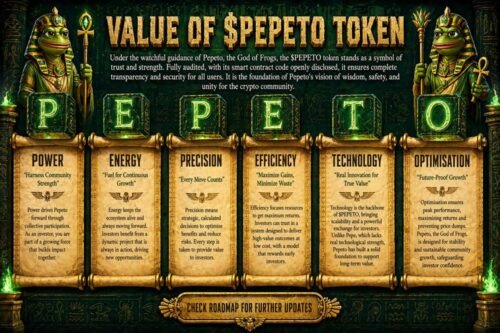
    The 420 trillion token supply gives structural room to grow, and every wallet entering now locks in $0.0000001889 before the listing lifts that floor for good. The SolidProof audit seals every component a Pepe cofounder designed, and the Pepeto official website maps out the full roadmap for this exchange.

    Ethereum Price Prediction

    ETHEREUM is trading near $1,914, well below its all-time high of $4,946 from August 2025. The 100-day EMA sits at $1,924 and has rejected the price multiple times this year, making it the key barrier bulls need to clear before momentum accelerates. A daily close above $1,920 would strengthen the short-term ethereum price prediction and bring $1,924 within reach.

    If ETH pushes through that level with strong volume, the ethereum price prediction shifts toward $2,000 to $2,450 based on analyst models, and a break above $2,450 opens the door to the kind of rally that defined earlier cycles. Standard Chartered has mapped a target of $12,000 by end of 2026 in its most aggressive scenario.

    On the downside, losing $1,850 brings the $1,800 support zone back into focus and weakens the short-term structure. The staking record and whale accumulation suggest smart money is betting on a breakout rather than a breakdown, and the ethereum price prediction reflects that conviction building across the entire market.

    Conclusion

    While traders debate the ethereum price prediction, the real hunt is for the entry that delivers the biggest returns before the window closes, and that means early, operational, and building traction fast, exactly where Pepeto sits right now. More than $10.7 million entered while the broader market rejected almost everything else, and the wallets behind it already calculated what the listing delivers.

    ETH holders who watched whale movements in earlier cycles and hesitated wish they entered when the signal was clear. That signal is flashing right now, and entering Pepeto while the presale is open is the smart move the ethereum price prediction cycle keeps rewarding, because once the expected Binance listing opens this entry vanishes and the gains go to whoever acted first.

    Click To Visit Pepeto official Website To Enter The Presale

    FAQs

    What is the ethereum price prediction?

    Analysts target $2,000 for the ethereum price prediction if ETH clears the 100-day EMA, with whale accumulation signaling a possible push toward $2,450.

    Why are wallets entering Pepeto?

    Pepeto is an Ethereum-based exchange that attracted over $10.7 million, and its expected Binance listing draws capital alongside the ethereum price prediction rally.

    What tools does Pepeto offer?

    Pepeto offers PepetoSwap, a cross-chain bridge, and 165 percent APY staking on one exchange, all audited by SolidProof.

    Disclaimer:
    This article is for informational purposes only and does not constitute financial advice. Cryptocurrency investments carry risk, including total loss of capital.

    All market analysis and token data are for informational purposes only and do not constitute financial advice. Readers should conduct independent research and consult licensed advisors before investing.

  • Pepeto Price Prediction Builds Toward Listing Day as Wallets Race to Lock In Before the Window Closes thumbnail

    Pepeto Price Prediction Builds Toward Listing Day as Wallets Race to Lock In Before the Window Closes

    The pepeto price prediction conversation just changed direction, and most wallets tracking it have not caught up yet. The team announced progress toward the expected Binance listing while the presale approaches a possible sellout cap, and that is the kind of catalyst that turns a prediction into a countdown.

    While skeptics wait for proof, more than $10.7 million already secured by the trading hub tells a different story, one where wallets that entered earliest collect the returns the pepeto price prediction has been pointing toward all along. With a cross-chain bridge and risk scorer already running under the hood, this is not a promise about future tools, it is a live platform waiting for a listing to match its infrastructure.

    Pepeto Announces Listing Progress and Possible Presale Cap

    Pepeto has announced progress toward its expected Binance listing, and that development is pulling the pepeto price prediction sharply in one direction, according to GlobeNewsWire. The team is also weighing a $5,000 investment limit per participant as the allocation nears sellout, which would spread the remaining supply across thousands more wallets instead of letting oversized entries take what remains.

    Talks for a second major exchange debut alongside the expected Binance listing have also advanced, according to OpenPR, and that means launch day opens with deeper liquidity across two venues instead of one, giving the pepeto price prediction stronger foundations than most presale tokens carry into their first week of trading.

    Pepeto Price Prediction and the Infrastructure Fueling the Momentum

    Pepeto: The Trading Hub Built to Earn Before It Lists

    Pepeto is not just sitting on a presale page waiting for a chart anymore, the trading hub is live and the infrastructure behind it explains why the pepeto price prediction keeps climbing. The cross-chain bridge forms the backbone of every asset transfer, pulling tokens from any blockchain without surrendering custody, so holders operate from one platform instead of scattering across five services while the market moves.

    Because the bridge feeds directly into a risk scorer that reviews token contracts on several different networks, every asset entering the hub passes a safety review first, and holders bridging from unfamiliar networks get verification before a single token reaches their wallet. A holder can scan a contract, bridge assets from another chain, and lock in 165 percent APY staking within minutes, and that seamless loop means presale wallets are already generating yield before the expected Binance listing even opens.

    The presale has secured more than $10.7 million, a total supply of 420 trillion tokens means holders are not fighting for scarce allocation, and every entry at $0.0000001889 gets locked in before the listing changes that number permanently. A former Binance expert built this with a SolidProof audit verifying every layer, and the Pepeto official website shows the full timeline for what the pepeto price prediction is building toward.

    Pepeto Price Prediction

    PEPETO enters the market at a fraction of a cent, and the pepeto price prediction centers on what happens when trading begins on a major exchange. Presale tokens historically see their strongest moves in the first hours after listing, and with more than $10.7 million already committed, the holder base is deep enough to absorb early selling pressure without collapsing the price.

    The expected Binance listing creates the liquidity event that transforms presale holdings into tradeable positions, and a second exchange debut amplifies that volume from day one, giving buyers two venues to enter rather than one. Analysts tracking the pepeto price prediction point to the 165 percent staking rate and funding pace as signs of structural demand that holds through listing volatility.

    The 420 trillion token supply is large, but presale buyers at the current level are positioned for significant multiples if listing volume matches what Binance typically delivers for new assets, and the working infrastructure already built behind the token suggests that volume will come.

    Conclusion

    While traders watch the pepeto price prediction from the sidelines, the market always pays the most to wallets that arrived before the crowd had reason to look. That pattern has repeated in every cycle, and the earliest believers who entered while nobody else was paying attention built the kind of wealth that headlines are written about later.

    More than $10.7 million entering this presale during a market that punished every other bet proves those wallets expect the same outcome. The presale window is closing, and once the expected Binance listing goes live this entry disappears permanently, and the smart move is entering now because waiting is choosing to watch those returns belong to the wallets that moved first.

    Click To Visit Pepeto official Website To Enter The Presale

    FAQs

    What is the pepeto price prediction for 2026?

    The pepeto price prediction depends on the expected Binance listing and presale momentum. Over $10.7 million entered during bearish conditions, and analysts expect a strong move once trading opens.

    Why are wallets rushing into the presale?

    Wallets are rushing because the entry price locks in before the listing. Announced Binance progress and a possible $5,000 cap are driving urgency.

    What tools does Pepeto offer?

    Pepeto offers a cross-chain bridge and risk scorer alongside 165 percent APY staking, all running from one trading hub.

    Disclaimer:
    This article is for informational purposes only and does not constitute financial advice. Cryptocurrency investments carry risk, including total loss of capital.

    All market analysis and token data are for informational purposes only and do not constitute financial advice. Readers should conduct independent research and consult licensed advisors before investing.

  • Vinay Kumar Nevatia on Where Brands Should Stop With AI Photography

    BENGALURU — The question facing marketing teams has quietly changed. A year ago it was whether AI photography was good enough to use. Now it is where to stop. In Adobe’s 2026 AI and Digital Trends Report, produced with Oxford Economics from responses by 3,000 executives and practitioners worldwide, 76% of organisations said generative AI had delivered moderate to significant gains in the volume and speed of their content production. The capability is settled. The judgement is not.

    Vinay Kumar Nevatia, a Bengaluru-based AI photographer working with startups and direct-to-consumer brands, spends more of his time on that second question than the first.

    “Nobody asks me any more whether the image will look real,” he says. “They ask which images they are allowed to make.”

    Why AI Photography Became a Default So Quickly

    Adoption ran ahead of policy because the pressure was practical. HubSpot’s AI Trends for Marketers research, drawn from more than 1,000 marketing professionals, found that among those already using generative AI for content, 48% are creating images with it.

    The reasons are unglamorous. Paid social media consumes creativity faster than any small team can shoot it. Marketplace listings want six angles per product. A seasonal campaign arrives whether or not a studio has a free day. AI product photography solved a volume problem that conventional production was never priced to solve for a brand doing modest revenue.

    What changed underneath, Vinay Kumar Nevatia argues, is the shape of the cost. A traditional shoot front-loads nearly everything, and each new variation means starting again. Generative work inverts that: the first usable image is the slowest, and every version after it is cheap. For a brand deciding which of six concepts deserves a budget, that inversion changes what is worth attempting at all.

    Vinay Kumar Nevatia on the Difference Between Illustration and Evidence

    His working distinction is a simple one, and he applies it before opening any tool.

    Some images illustrate — they set a mood, suggest a context, show how a thing might sit in someone’s life. Others act as evidence — the buyer studies them to decide what they are actually getting.

    “Generate the illustration. Photograph the evidence,” he says. “Almost every problem I have seen came from someone blurring those two.”

    Where generative work holds up

    Brand campaign visuals are the strongest case. A single product can be placed across a dozen settings, seasons and lighting moods while holding one identity, which gives a team without an art director a supply of fresh assets that still look related.

    Concept testing is the second. A marketer can produce several treatments of an idea, run them, and commit real money only to the one that earns attention.

    AI headshots are the third. Distributed teams rarely have matching portraits, and a founder page assembled from five different rooms undercuts a brand before a visitor reads a word.

    Where a camera is still required

    Anything a buyer relies on to make the purchase decision stays photographic: the actual item, its finish, its true colour, its scale in a real hand. So do results claims of any kind, and so does anything depicting a real customer.

    “Fabric is the obvious one,” Vinay Kumar Nevatia says. “A generated weave looks lovely and tells the customer nothing about what arrives in the parcel. That is a return waiting to happen.”

    The Disclosure Question Brands Are Now Facing

    The regulatory position is less exotic than the technology suggests. Advertising standards bodies in India and abroad assess whether a claim misleads, not how the visual was produced. A synthetic image that implies something a product cannot do is treated as the claim it makes.

    Major platforms have separately tightened their handling of synthetic and manipulated media, and disclosure expectations continue to firm up across ad networks and marketplaces. For a brand, the practical consequence is that generative AI in marketing has become a documentation problem as much as a creative one: knowing which assets were generated, and being able to say so.

    His own rule is procedural rather than philosophical. Every generated asset is logged as generated. Nothing that a customer could reasonably read as proof goes out without a real photograph behind it.

    Craft Is What Decides Whether Anyone Notices

    The gap between AI photography that performs and the kind that reads as cheap is, in his account, almost entirely post-generation.

    “The first output is a draft. Treating it as the finished piece is where the stock-image look comes from.”

    He reworks generated images for the details a trained eye registers before the conscious mind does: light that falls the way light actually falls, texture that survives a close crop, edges and hands that hold up under attention, and colour pulled back into the brand’s palette rather than the model’s defaults. The benchmark is an image a customer scrolls past without pausing to question it. Brands considering the approach can see how he combines generative tools with a photographer’s eye through Vinay Kumar Nevatia.

    The wider industry appears to be reaching the same conclusion. Access to the tools is now near-universal and therefore worth little. Art direction, brand discipline and the willingness to discard nine outputs to keep one are what separate the results.

    What This Means for India’s D2C Sector

    The effect is sharpest among Bengaluru’s smaller consumer brands, where ambition has rarely been the constraint. Creative volume was the ceiling on how fast a four-person team could move, and AI photography has lifted it.

    Vinay Kumar Nevatia does not read that as a displacement story. In his experience, the photographers around him are spending less time on repetitive catalogue and background work and more on the shoots that genuinely need a lens — the hero product frame, the founder portrait, the campaign that has to carry a year.

    “It removed the part of the job nobody wanted to pay for,” he says. “It did not remove the part that requires someone to decide what good looks like.”

    For brands starting out, his advice is dull on purpose: settle the visual identity first, then generate. Teams that lead with the tool end up with a large pile of images that share no family resemblance. Teams that lead with a defined look — palette, framing, lighting, mood — end up with a library.

    The Outlook

    The pattern emerging is redistribution rather than replacement. Production is getting cheaper; judgement is getting more valuable. The brands doing well with AI photography are not the ones generating the most images, but the ones that decided in advance which images they were prepared to stand behind.

    That is the position Vinay Kumar Nevatia argues for, and it is a restrained one. Generative tools have handed small brands a creative budget they never had. The ones still benefiting in three years will be those who kept a clear line between what they illustrated and what they proved.

    About Vinay Kumar Nevatia

    (Vinay Kumar Nevatia is a Bengaluru-based AI photographer and visual storyteller who produces studio-quality product images, brand campaign visuals and professional AI headshots for startups, D2C brands and independent professionals without a physical shoot.)

  • Is the Best Crypto Portfolio Missing Pepeto While SEC Delays Push Smart Money Toward Presales thumbnail

    Is the Best Crypto Portfolio Missing Pepeto While SEC Delays Push Smart Money Toward Presales

    Building the best crypto portfolio in August 2026 means accepting that most of this cycle’s easy entries are gone and the next wave of returns will come from assets that carry their own catalysts. The SEC just canceled its August 14 crypto rulemaking session, pushing regulatory clarity further into 2027 and rotating capital toward projects that launch without government permission.

    While Washington stalls and institutional money waits on the sidelines, thousands of wallets are quietly piling into Pepeto, the marketplace where more than $10.7 million already gathered because holders see what happens when working infrastructure meets an expected Binance listing before the rest of the market catches on.

    SEC Cancels Crypto Rulemaking as Capital Rotates Toward Self-Launching Assets

    The SEC canceled its August 14 open meeting that was set to propose Regulation Crypto, a tailored offering framework for digital assets, according to Bloomberg. The CLARITY Act also failed to advance before the Senate’s August recess, pushing the next legislative window to September at the earliest, according to CryptoTicker.

    Spot Bitcoin ETFs saw $385 million in net outflows for the week ending August 15, signaling that institutional patience is wearing thin. Every delay pushes certainty further out and rotates capital toward projects that launch on their own timeline, and that shift is reshaping what the best crypto portfolio looks like heading into the fourth quarter.

    Building the Best Crypto Portfolio Before the Next Listing Window Opens

    Pepeto: The Marketplace Where Risk Meets Reward in One Place

    Pepeto is a live marketplace where every tool feeds into the next, and that connected design is why holders building the best crypto portfolio are paying attention before the expected Binance listing opens. PepetoSwap handles every trade on the platform, and it works directly with a risk scorer that analyzes contracts across multiple chains, so every token entering the marketplace passes a safety review before capital touches it.

    That protection layer creates the confidence to trade faster, because holders know the risk scorer already vetted what they are buying, and that trust is what keeps wallets inside the platform instead of second-guessing every move. The same marketplace delivers 165 percent APY staking, so a holder can verify a contract, execute on PepetoSwap, and start earning yield in one session without ever leaving.

    Those staking returns build every day the expected Binance listing approaches, which means presale wallets are earning before trading even begins. More than $10.7 million gathered into this presale proves that calculation is already made, and a supply of 420 trillion tokens creates the room holders need to grow while each wallet entering secures $0.0000001889 before the listing raises that level for good. Built under a Pepe cofounder’s direction with full SolidProof verification, the Pepeto official website details why wallets targeting the best crypto portfolio keep entering while the rest of the market rebuilds.

    Hyperliquid

    HYPERLIQUID is trading near $59.30 after pulling back from its all-time high of $76 set in June 2026. An institution bought $11.17 million in HYPE during the dip, signaling confidence the decentralized exchange still has room to run.

    The protocol burns over $1 million in HYPE daily through fee buybacks, creating constant demand pressure. Analysts target $65 to $68 if buyers reclaim $62, and sustained volume would push HYPE toward $70 before year end.

    Chainlink

    CHAINLINK is trading near $9.50 and continues expanding its oracle infrastructure across blockchain networks. Institutions increasingly rely on Chainlink oracles for price feeds in tokenized securities, tying its growth to the real-world asset trend accelerating across DeFi.

    The project has deepened partnerships with tokenized platforms that need reliable data, and that steady demand keeps LINK relevant even in the toughest stretches. Resistance sits near $10.50, and a breakout above that level would put $12 within reach if markets recover.

    Conclusion

    While traders rebuild the best crypto portfolio and hunt for the entry that defines this cycle, the wallets that found Pepeto first are already inside. Early wallets entered before attention shifted their direction, and this entry carries a higher ceiling because a working marketplace with verified tools and real staking yield stands behind it.

    More than $10.7 million gathered during a bleeding market proves those wallets calculated what most are still searching for. The search for the best crypto portfolio led here, and locking in the presale before the expected Binance listing opens is how the smartest entries in every cycle were made, because once trading begins the returns go exclusively to whoever moved first.

    Click To Visit Pepeto official Website To Enter The Presale

    FAQs

    What belongs in the best crypto portfolio for 2026?

    The best crypto portfolio balances established assets with presale entries carrying their own catalysts. Pepeto offers working tools and an expected Binance listing.

    Why does regulation delay affect portfolios?

    Regulation delay pushes certainty further out and rotates capital toward projects with built-in catalysts and live products.

    What is Pepeto?

    Pepeto is a marketplace with PepetoSwap and a risk scorer on Ethereum, backed by a SolidProof audit and an expected Binance listing.

    Disclaimer:
    This article is for informational purposes only and does not constitute financial advice. Cryptocurrency investments carry risk, including total loss of capital.

    All market analysis and token data are for informational purposes only and do not constitute financial advice. Readers should conduct independent research and consult licensed advisors before investing.

  • Crypto Market News Turns Bullish as Wallets Rush Into Pepeto Before the Listing Changes Everything thumbnail

    Crypto Market News Turns Bullish as Wallets Rush Into Pepeto Before the Listing Changes Everything

    The crypto market news just delivered the kind of signal that moves wallets. The global market gained 2.6 percent to $2.28 trillion in 24 hours, and that momentum is pulling capital off the sidelines faster than any headline this month.

    While traders watch Bitcoin hold $64,700 and debate which tokens recover next, thousands of wallets are flooding into Pepeto, the network where more than $10.7 million already stacked because holders see what a working platform delivers once the expected Binance listing opens. One decision separates watching the crypto market news from being the story it writes about later.

    Global Crypto Market Surges 2.6 Percent as Bitcoin Holds $64,000

    The global cryptocurrency market gained 2.6 percent to reach $2.28 trillion in the latest crypto market news, with trading volume hitting $50.33 billion in 24 hours, according to CoinGabbar. Bitcoin reclaimed $64,700 despite more than $385 million leaving spot Bitcoin ETFs during the previous week, according to Yahoo Finance.

    The strength in the face of those outflows shows that buyers are stepping in at every dip, and that kind of bid-side conviction has not appeared since the early months of the year. A planned August 19 White House meeting with executives from Coinbase, Ripple, and Kraken has traders watching for policy signals that could shape crypto market news for the rest of August, and that anticipation is adding fuel to a market already turning green.

    Crypto Market News and the Projects Drawing Attention This Cycle

    Pepeto: The Network Where Every Trade Flows Through One System

    Pepeto is not just riding the crypto market news cycle anymore, the network is live and the engineering behind it shows why wallets are entering before the expected Binance listing opens. PepetoSwap powers every trade from one platform, and it works alongside a cross-chain bridge connecting multiple blockchains with zero custody risk, so holders operate from a single system instead of managing five protocols while the market shifts.

    That unified access is where the speed advantage lives, because a holder can bridge assets from one chain, trade on PepetoSwap, and begin collecting 165 percent APY staking in a single session without leaving the network. Those staking returns accumulate daily while the expected Binance listing draws closer, which means presale wallets are collecting yield before the network even opens to public trading.

    The bridge handles assets across different chains and routes them securely between networks, proving real engineering sits behind this project, not just a whitepaper. More than $10.7 million has stacked into this presale, 420 trillion tokens in total supply provide the structural depth holders need, and every wallet entering now secures $0.0000001889 before the listing pushes that entry out of reach.

    Every component carries a SolidProof audit from the former Binance expert who designed it, and the Pepeto official website covers the roadmap for what the crypto market news is about to discover.

    Solana

    SOLANA remains one of the strongest layer-one networks and a constant name in the crypto market news cycle. The ecosystem keeps attracting DeFi launches and developer activity, while spot Solana ETFs have drawn consistent inflows that add demand on the spot side.

    Network transaction volume stays high, giving SOL a foundation that survives even the hardest stretches. Continued inflows and improving sentiment will decide whether SOL breaks through resistance and pushes higher before year end.

    Polkadot

    POLKADOT is trading near $0.81 after introducing a hard supply cap of 2.1 billion DOT and halving annual token issuance in March 2026. That structural change shifted tokenomics from inflationary to deflationary, drawing renewed attention in the crypto market news from holders scanning for undervalued layer-zero networks.

    The Polkadot 2.0 upgrade continues progressing, and analysts are watching the $1.00 level as the next meaningful resistance that would confirm the market is pricing in the supply reduction.

    Conclusion

    While the crypto market news shifts daily and traders debate which tokens recover next, every wealth story in this space started with one decision, choosing to move while the entry was still open. That is the move early SOL and DOT holders made before those tokens reached major exchanges, and it is the same move sitting in front of every wallet watching Pepeto right now.

    More than $10.7 million stacked during the toughest stretch of the cycle proves those wallets already made that decision and calculated where the returns land. The expected Binance listing will close this entry permanently, and moving now follows the pattern that delivered returns in every previous cycle, because waiting means watching those gains belong to someone else.

    Click To Visit Pepeto official Website To Enter The Presale

    FAQs

    What is driving the crypto market news this week?

    The crypto market news centers on a 2.6 percent rally to $2.28 trillion and a planned White House crypto meeting driving policy anticipation.

    Why does Pepeto appear in the crypto market news?

    Pepeto appears because its presale stacked over $10.7 million during bearish conditions while an expected Binance listing approaches.

    What tools does the Pepeto network provide?

    Pepeto provides PepetoSwap and a cross-chain bridge alongside 165 percent APY staking, all running from one network.

    Disclaimer:
    This article is for informational purposes only and does not constitute financial advice. Cryptocurrency investments carry risk, including total loss of capital.

    All market analysis and token data are for informational purposes only and do not constitute financial advice. Readers should conduct independent research and consult licensed advisors before investing.

  • Crypto Presales Worth Joining Now That $BULLSKI Has Cleared Stage One

    Key Takeaways

    • Buyers emptied stage 1 in full at $0.00001, which makes this a sale that already sold a rung rather than an untested idea.
    • Stage 2 sells at $0.000015, and stage 3 is published at $0.00002, a 33 percent step up.
    • 1,354,170,438 of the 1,400,000,000 tokens in this rung were still available on August 18, 2026.
    • Supply is capped at 120 billion, the token is ERC-20, and the 16-stage sale points toward a listing reference of $0.0025.

    Most crypto presales ask you to trust a promise. Bullski asks you to read a number. Its first rung sold out at $0.00001, and the sale now sits on stage 2 at $0.000015, with 45,829,562 tokens taken by August 18, 2026.

    Below is how presale pricing works, why it behaves nothing like a listed coin, and what this rung costs.

    How Crypto Presales Set a Price Before Any Listing

    A crypto presale sells tokens straight from the project, ahead of an exchange listing. Price comes from a published schedule instead of an order book. Each stage holds a set number of tokens at a set price, and when that block sells, the next opens dearer.

    Trading volume plays no part in it at all.

    Presale tokens behave like a queue, then, and not like a market. Early rungs cost less because they carry more waiting. Later buyers pay more but see more proof on the table.

    Bullski runs that model across sixteen rungs. Each one is printed on the site, so the cost of hesitating is never a mystery.

    Definition: a rung is one stage of a token sale, with its own price and its own allocation. The second Bullski rung asks $0.000015 and holds 1,400,000,000 tokens.

    A Rotation Week on the Board, and What It Teaches

    Listed coins show the other side of this. Chainlink climbed 13.7 percent across seven days to $9.44 on August 18, 2026, for a $7.07 billion cap, according to CoinGecko. Cardano went the other way, sliding 10.0 percent to $0.1772 for a $6.62 billion cap.

    Both prints came from the same quiet tape, one day apart from nothing in particular.

    Neither move was announced in advance. That is the deal in a live market, price discovery every second with no schedule to read. Presale crypto buyers accept a slower path in return for a figure they can plan around.

    Neither approach is better in the abstract. They simply answer different questions about when you want certainty.

    What Sets the Price Presale Tokens A Listed Coin Like Chainlink
    Who decides The project publishes a rung Buyers and sellers, second by second
    Price on August 18, 2026 $0.000015 at stage 2 $9.44 for LINK
    What moves it One rung selling out Order flow and news
    Next known level $0.00002 at stage 3 Unknown until the next trade

    Read across the rows and the gap is timing. One column tells you today’s price and tomorrow’s. The other tells you today’s, and only until the next trade prints.

    That is why a sale with a published ladder gets read differently from a chart.

    $BULLSKI After Stage One: What the Counter Shows

    One meme coin presale sits behind these numbers. Stage 1 took the whole 1,192,283,023 tokens set aside for it at $0.00001, with nothing rolled over. Demand then moved into stage 2 at $0.000015, claiming 45,829,562 tokens by August 18, 2026.

    Across the sale, 1,238,112,585 tokens have gone out. Supply is fixed at 120 billion, and 40 percent of it is reserved for presale buyers. Payment runs in ETH, BNB or USDT from an ordinary Ethereum wallet.

    Tokens arrive in the wallet used to pay, so no extra account is needed anywhere.

    • Liquidity holds 18 percent of supply and gets locked once trading opens.
    • Staking and rewards take 17 percent, and both pay while the sale is still on.
    • Burns claim 10 percent, referrals 8 percent and marketing 5 percent.
    • Team allocation stops at 2 percent, on a vesting schedule.

    Rungs move only when they sell out, never on a countdown. Read how Bullski advances its stages on the official site before buying, because the live figure shifts as allocations clear.

    Remember: stage 3 is published at $0.00002. Waiting for it costs 33 percent more per token than the $0.000015 rung sitting open today.

    Are Crypto Presales Worth It? Weigh These Four Points

    Worth it depends on what you can check yourself. Put four questions to any early sale, and walk away from the ones that dodge them.

    • Is supply capped, and can you see the cap on chain?
    • Is every stage price published, including the rungs ahead?
    • Does liquidity get locked at launch?
    • Do holders earn anything while the sale is running?

    Bullski answers yes four times. Etherscan already shows its verified contract, an audit is running, and all sixteen rungs are printed with the $0.0025 reference at the end of the ladder.

    We walked through the same figures when this rung opened, in the rundown we ran on stage two. Nothing in the model has changed since, only the counter.

    Upcoming Crypto Presales and the Cost of Waiting

    New crypto presales appear most weeks, and many share one weakness, no published ladder. Without it, patience cannot be priced. Top crypto presales print the whole schedule so buyers can weigh one rung against the next.

    For a wider view on sizing an early position, see how buyers size an early entry. Shortlists of the best crypto presales 2026 keep landing on the same handful of checks, and a printed ladder sits near the top of every one.

    Good to know: each purchase shrinks what remains at $0.000015. On August 18, 2026, that pile stood at 1,354,170,438 tokens out of 1,400,000,000.

    Secure $BULLSKI at $0.000015 While Stage Two Is Open

    Stage 1 closed at $0.00001, so the opening rung on this ladder has gone. Stage 2 sells at $0.000015 today, and stage 3 asks $0.00002 the moment the current allocation clears.

    Secure $BULLSKI at $0.000015: Visit the sale page, read the rung it displays, and pay from a wallet carrying ETH, BNB or USDT.

    Tokens land in the same wallet you pay from, and staking rewards begin while the sale continues. Keep a little ETH aside for network fees, and only ever send from an address you control.

    Crypto Presales FAQ

    How Do Crypto Presales Work?

    Projects sell tokens directly at a published price, before any exchange listing. Bullski uses sixteen rungs, starting at $0.00001 and climbing toward $0.0025 as its listing figure. Stage 2 asks $0.000015, and each rung opens only once the one before it sells out.

    No timer runs in the background, which is why the counter matters more than any date.

    Are Crypto Presales Worth It?

    They suit buyers who want a known entry price and can wait for a listing. Checks matter more than noise here: capped supply, a published ladder, locked liquidity and rewards that run during the sale. This meme coin presale posts all four, alongside a stage 1 result you can measure rather than imagine.

    What Are the Best Crypto Presales to Buy Now?

    Rank them by what can be verified on August 18, 2026. Bullski shows a sold-out stage 1 at $0.00001, a live rung at $0.000015 with 1,354,170,438 tokens left, and a fixed 120 billion supply. Few new crypto presales publish that much.

    How Do I Buy $BULLSKI at Stage Two?

    Start with a funded Ethereum wallet, in ETH, BNB or USDT. Visit the official site next, see which rung is live, and then secure $BULLSKI at $0.000015. Holding and staking both happen from that address.

    For More Information

    Website: Visit the official Bullski website at bullski.io

    Telegram: Join the Bullski Telegram channel at t.me/BullskiCoinOfficial

    X (Twitter): Follow Bullski on X at x.com/bullskicoin

    Do your own research before buying any presale token. This article is not financial advice.

  • Pepe Price Prediction After an 11.5% Week, and the Meme Coin Presale $BULLSKI Just Opened

    Key Takeaways

    • Quotes on August 18, 2026 put PEPE at $0.00000257, down 1.8% on the day and 11.5% across the week.
    • Roughly 420 trillion tokens sit behind a total market value of $1.08 billion.
    • Pepe trades 90.8% below its record of $0.00002803, set on December 9, 2024.
    • $BULLSKI prices its meme coin presale at $0.000015 on stage 2, with stage 3 marked at $0.00002.

    Rough week, clear numbers. A Pepe price prediction made on August 18, 2026 has to work from $0.00000257 and a $1.08 billion cap, after seven days took 11.5% off the token. Nothing about that reads as a crash, though it was the softest week among the big meme coins.

    Two threads follow: supply math on PEPE, and the entry price at the meme coin sale on rung two.

    PEPE at $0.00000257 After the Softest Week in Memes

    Context beats the headline number in any Pepe coin price prediction 2026. Seven days took 11.5% off the token while the wider meme coin sector held $24.79 billion and slipped just 0.84% on the day. Dogecoin, the largest name in that sector, sat at $0.0698 on a $10.86 billion cap.

    Selling was concentrated rather than general, which matters to anyone reading the drop as a verdict on meme coins overall.

    Supply explains the rest of it. About 420 trillion tokens carry that $1.08 billion, which is why a quote of $0.00000257 looks tiny and still adds up to real money. Live figures come from the Pepe page on CoinGecko, updated trade by trade as orders fill.

    Fun fact: Chainlink posted the best week among the majors at plus 13.7%, while this token posted the weakest week of the large meme coins at minus 11.5%. Same seven days, opposite outcomes, which is what a rotation looks like in practice rather than in theory.

    Pepe Coin Price Prediction 2030 and the Horizons Past It

    Longer windows ask a different question. Whether a token with no hard cap in the usual sense can hold attention for years decides the 2030 view, not this week’s tape. Push out to 2040 and you are forecasting whether meme coins remain a category at all.

    Neither horizon can be modelled from a seven-day move, however tempting that shortcut looks.

    Nearer horizons are easier to test. That 2026 view rests on whether the $2.252 trillion crypto market grows from here, since meme demand tends to arrive last and leave first. Pepe crypto price prediction work that ignores that ordering usually ages badly.

    Bitcoin at $63,011, holding 56.14% of the market, is the tide underneath all of it.

    $BULLSKI, a Meme Coin Presale Priced One Rung at a Time

    Bullski runs $BULLSKI as an ERC-20 token on Ethereum. Every $BULLSKI that will ever exist adds up to 120 billion, fixed at the contract level. Its token sale carries 40 percent of that count, referrals take 8 percent, marketing 5 percent, and burns account for another 10 percent of supply.

    Pricing steps only when a rung empties, which is exactly what happened first time out. Stage 1 sold its full 1,192,283,023 allocation at $0.00001. By August 18, 2026, 45,829,562 of the 1,400,000,000 tokens at $0.000015 had gone, leaving 1,354,170,438 on the current step.

    Above it, stage 3 asks $0.00002, and the 16-stage run tops out at a listing reference of $0.0025.

    Good to know: verification on Etherscan means the code behind the token is open to read before anyone sends funds. Trading day brings a liquidity lock, team tokens vest on a schedule, and the audit is in process. Staking and referral rewards run during the sale rather than after it.

    Timelines and stage pricing got a full write-up in the note we ran on stage pricing. Sales across every rung reached 1,238,112,585 tokens by August 18, 2026, all of them bought at a number published in advance.

    PEPE Price Targets and What Each One Would Cost

    Attach a market cap to a target and it stops being a slogan. Each row below multiplies a Pepe token price prediction by the 420 trillion tokens in circulation, so column two shows the money that would have to be committed for the quote to hold. Column four sets that against the sector it belongs to.

    PEPE price Market value required Move from $0.00000257 Sector comparison
    $0.00000400 $1.68B +56% Adds $0.60 billion to today’s $1.08 billion
    $0.00001000 $4.20B +289% About a sixth of the $24.79 billion meme sector
    $0.00002803 $11.77B +991% A return to the December 9, 2024 record
    $0.00010000 $42.00B +3,791% Larger than every meme coin combined today

    Row three is the one worth sitting with. Getting back to $0.00002803 asks the market to fund $11.77 billion, against $1.08 billion now, because Pepe trades 90.8% below that record. Buyers who would rather start from a published price than a recovery story often compare those rows with Bullski’s sixteen priced steps before deciding anything.

    Wider shopping lists help too. Our rundown of the coins topping the buy lists this month covers what else is drawing money while the majors drift sideways.

    Rung Two Costs $0.000015 and the Next Step Costs More

    Sold-out demand set this price. Stage 1 closed at $0.00001, the ladder moved, and a token now costs $0.000015. Stage 3 is marked at $0.00002, a third more for the same asset, and no clock moves it.

    Only buyers do, which is the part worth understanding before the rung fills.

    How to Secure $BULLSKI at $0.000015: move ETH, BNB or USDT into a wallet you control, open the sale page on the official site, check which rung the counter shows, then buy the amount you want.

    Anyone moving to secure $BULLSKI pays a number that was published before they arrived. Buyers of a listed meme coin, by contrast, pay whatever the order book prints that second. Both routes are valid, and they behave nothing alike once volatility shows up.

    Pepe Price Prediction: Questions People Keep Asking

    Will Pepe Coin Reach $1?

    Multiplication settles this one. At $1, those 420 trillion tokens would be worth $420 trillion, against a total crypto market of $2.252 trillion today. No supply that size reaches a dollar without burning almost all of itself first, and no burn on that scale has ever run.

    Will Pepe Coin Go Up?

    Direction is nobody’s to promise. Seven days left the token 11.5% lower at $0.00000257, with $1.08 billion of value behind it and a meme sector worth $24.79 billion. Fresh listings, burn activity and plain attention are what reprice something with this much supply.

    Will Pepe Coin Reach 1 Cent?

    One cent would put the token at $4.2 trillion of market value, which is nearly twice the entire crypto market today. Even $0.0001 asks buyers to fund $42.00 billion. Readers who prefer a fixed rung to that kind of arithmetic tend to secure $BULLSKI today at $0.000015 instead.

    What Drives a Pepe Meme Coin Forecast?

    Attention, supply and the wider tape, in that order. A Pepe meme coin only reprices when new money arrives, and that money follows the majors first. A Pepe coin price prediction 2040 is therefore a scenario rather than a target, best anchored to what the sector carries today.

    For More Information

    Website: Visit the official Bullski website at bullski.io

    Telegram: Join the Bullski Telegram channel at t.me/BullskiCoinOfficial

    X (Twitter): Follow Bullski on X at x.com/bullskicoin

    Do your own research before buying any presale token. This article is not financial advice.

  • Crypto to Buy Now: Four Traded Coins and the Stage That Just Opened

    Key Takeaways

    • Buyers weighing the best crypto to buy now have a dated demand signal, because stage 1 placed all 1,192,283,023 of its tokens at $0.00001.
    • Stage 2 asks $0.000015 and had taken 45,829,562 tokens by August 17, 2026, leaving 1,354,170,438 of its 1,400,000,000 allocation.
    • Stellar was worth $5.41 billion, Hedera $2.85 billion, Avalanche $2.74 billion and Polkadot $1.29 billion on the same day.
    • Supply stops at 120 billion and sells across a 16-stage ladder that finishes with a listing reference of $0.0025.

    Shopping for crypto to buy now means choosing between prices a market already set and a price a project printed in advance. Every token in stage 1 of the Bullski sale went at $0.00001, so the stage that just opened asks $0.000015. Stellar changes hands at $0.1569 and Hedera at $0.0650, each a long way under its own record.

    All figures on this page were read on August 17, 2026.

    Two Ways to Price the Crypto to Buy Right Now

    Prices come from one of two places. A traded coin takes its number from whoever is buying and selling this minute. A presale token takes its number from a schedule published weeks ahead.

    Neither route is automatically better, and both reward reading the supply figure before the price tag.

    Weight decides how far a quote can travel. Stellar carries $5.41 billion behind it, so fresh money shifts that price slowly. Hedera sits at $2.85 billion and needs roughly 8.8 times its August 17 price to revisit the $0.5692 it once printed.

    Anyone drafting a top crypto to buy now list is really comparing how much ballast each name already carries.

    Definition: A rung is one fixed price step inside a presale. Bullski publishes sixteen of them, and every step asks more than the step below it.

    Crypto Coins to Buy Now: One Ladder Price and Four Live Charts

    One name below has no chart at all, since its price is written down rather than discovered. Four traded names follow, each with a real market value, a real day move and a real gap to its peak.

    Bullski ($BULLSKI), the Coin With a Printed Price

    Bullski is an ERC-20 token on Ethereum, and supply is fixed at 120 billion with no mechanism to mint more. Presale buyers are allocated 40 percent of that count. Pricing runs on a 16-stage ladder, so each step is public before a single wallet pays.

    Stage 1 closed sold out at $0.00001, its full 1,192,283,023 allocation taken. Buyers now pay $0.000015 at stage 2, and stage 3 is printed at $0.00002. Sitting above every rung is a launch benchmark of $0.0025.

    Rungs advance on sell-outs, never on a calendar date.

    Terms sit in public before money moves. Etherscan shows the token contract in verified form, an audit is running now, team tokens release on a vesting schedule, and the liquidity pool gets locked once trading starts. Checkout accepts ETH, BNB or USDT, while staking and referral rewards both run during the sale.

    Stellar (XLM), $5.41 Billion of Payment Rails

    Stellar traded at $0.1569 on August 17, 2026, down 0.8 percent on the day and 3.5 percent across the week, which values the network at $5.41 billion, per CoinGecko. Moving money between countries cheaply is its job, and XLM remains well under the $0.8756 it reached at its best.

    Hedera (HBAR) at $0.0650 and $2.85 Billion

    Hedera slipped 0.9 percent to $0.0650 and gave up 5.3 percent over seven days. Around 43.83 billion HBAR circulate, which produces that $2.85 billion market value. Its $0.5692 record leaves the token about 88.6 percent lower today.

    Polkadot (DOT), the Smallest Market Value Here

    Polkadot held $0.7611 for $1.29 billion, a 2.5 percent fall on the day and 5.4 percent on the week. Connecting separate blockchains is the pitch. DOT once printed $54.98, so a return to that level would take an enormous climb.

    Avalanche (AVAX) After a 3.4 Percent Slip

    Avalanche was the weakest name in this group on the day, off 3.4 percent to $6.35 for a $2.74 billion market value. Seven-day losses come to 1.8 percent. Set beside a $144.96 peak, AVAX shows how far a large 2021 name can travel in the wrong direction.

    Name Quote on August 17, 2026 Value of all coins Move on the day Record high
    Bullski ($BULLSKI) $0.000015 at stage 2 Not listed yet Fixed rung price None set
    Stellar (XLM) $0.1569 $5.41 billion Down 0.8% $0.8756
    Hedera (HBAR) $0.0650 $2.85 billion Down 0.9% $0.5692
    Avalanche (AVAX) $6.35 $2.74 billion Down 3.4% $144.96
    Polkadot (DOT) $0.7611 $1.29 billion Down 2.5% $54.98

    Read that last column first. Each traded name here needs a very large climb to see its own record again. Bullski has no record to chase, which is exactly what an entry printed at $0.000015 is for.

    Readers who want the full step map can revisit our earlier guide to the ladder.

    Inside the Ladder That Sets the $BULLSKI Price

    Sixteen prices are published up front, so nothing in the schedule arrives as a surprise. Stage 1 has closed at $0.00001. Buyers pay $0.000015 today at stage 2, with $0.00002 sitting one step higher.

    By the numbers: Stage 2 holds 1,400,000,000 tokens. Of those, 45,829,562 were gone by August 17, 2026 and 1,354,170,438 remained, while 1,238,112,585 have sold across the whole sale. Anyone can measure how Bullski prices each step against those live counters.

    Fixed supply carries the rest of the argument. Nobody can lift the 120 billion ceiling after launch, and two of every five tokens are reserved for presale buyers. Compare that with Stellar, where the market already puts $5.41 billion on every coin in circulation.

    A companion piece on what a published price ladder changes walks a first-time buyer through the same maths.

    Taking the $0.000015 Rung While Stage Two Fills

    Demand settled the opening question. Buyers cleared the whole stage 1 allocation at $0.00001, and that sell-out is what moved pricing up to $0.000015. One rung higher, stage 3 asks $0.00002, so the cost of hesitating is printed on the same page as today’s price.

    Buy $BULLSKI at $0.000015: keep ETH, BNB or USDT ready in a wallet you control, pull up the official page, check which rung the counter is showing, then place the order there. Set a little spare ETH aside as well, since Ethereum gas fees move through the day.

    Watch out: Counters fall as tokens sell. Whichever rung the official site displays on the day you pay is the price applied to your order.

    Questions Buyers Ask About Crypto to Buy Now

    What Is the Best Crypto to Buy Right Now?

    No single ticker suits every wallet. Among traded names on this page, Stellar at $5.41 billion is the heaviest and Polkadot at $1.29 billion the lightest. Anyone who prefers the entry written down in advance is looking at $0.000015 and a cap of 120 billion tokens.

    How much you commit matters more than which symbol you land on.

    Is Now a Good Time to Buy Crypto?

    August 17, 2026 was a quiet day. Total crypto market value sat at $2.250 trillion, down 0.06 percent, with $29.91 billion changing hands. Chainlink added 13.6 percent across the week while Cardano lost 9.8 percent, so money rotated between coins rather than leaving.

    Calm stretches are when shortlists of which crypto to buy now get written.

    Which Crypto Is the Best to Buy Now?

    Three numbers answer it: entry price, supply and distance from the old high. Hedera needs roughly 8.8 times its current price to match $0.5692. Avalanche would need more than twenty times $6.35 to see $144.96 again.

    Lists titled best crypto to buy now 2026 usually mix both kinds of entry, one traded and one published.

    How to Buy Presale Crypto?

    Exchanges do not sell presale tokens. Top up a wallet you hold the keys to, pick ETH, BNB or USDT at checkout, read the rung the counter shows, then buy into $BULLSKI now. Tokens arrive in that same wallet, and staking can begin straight away.

    For More Information

    Website: Visit the official Bullski website at bullski.io

    Telegram: Join the Bullski Telegram channel at t.me/BullskiCoinOfficial

    X (Twitter): Follow Bullski on X at x.com/bullskicoin

    Do your own research before buying any presale token. This article is not financial advice.

  • Quick Diplomas Review: What the Brand Offers, How It Works

    Quick Diplomas is an online document-printing and customization business that sells diploma-, transcript-, certificate-, and GED-style documents. Despite the academic appearance of many of its products, the company explicitly states that it is not a school or educational institution and does not issue genuine academic credentials. Its products are described as replica-style or novelty documents intended for lawful, non-official uses such as personal display, keepsakes, gifts, and production props.

    That distinction is the most important thing to understand about the brand.

    What is Quick Diplomas?

    Quick Diplomas is an online service focused on creating customized academic-style documents. Its catalog covers several categories, including GED documents, high-school diplomas and transcripts, college and university diplomas, degree-style documents, certificates, transcripts, and diploma folders or covers. The site organizes college and university products by country and degree level, including the United States, Canada, the United Kingdom, Australia, and international institutions.

    The company positions itself primarily around replacement, replica-style, novelty, and display documents rather than education. Its homepage describes the products as being designed for display, props, and personal reference, while its formal service disclaimer goes further by explaining that the products do not confer degrees, academic credit, or credentials.

    This makes Quick Diplomas fundamentally different from a university registrar or an accredited educational institution. Purchasing a document from the company does not establish that the buyer completed a course, passed an examination, earned a degree, or received an official qualification.

    What does Quick Diplomas sell?

    The website’s product structure is broader than simply “diplomas.” It currently separates its offerings into several document categories.

    GED documents

    Quick Diplomas advertises GED-style diplomas, transcripts, score sheets, and combination packages. The company says it can customize documents according to information such as the customer’s name, testing location, and graduation year.

    High-school documents

    The high-school category includes diploma-style documents, transcripts, and diploma-and-transcript packages. According to the site, customers provide school information, and the company selects a matching layout from its template collection before customizing the document.

    College and university documents

    The college and university section covers diploma- and transcript-style documents for different degree levels. The site lists associate, bachelor’s, master’s, and doctorate/PhD categories and provides country-specific sections for several regions.

    Certificates and related products

    The catalog also includes certificates, transcripts, and diploma folders or covers. These additional products are useful to understand because the business is not limited to producing one type of academic-looking document.

    Are Quick Diplomas documents official?

    No. This is the key distinction.

    Quick Diplomas’ own service disclaimer states that its products are not official documents and are not valid for verification or submission to an educational institution, employer, government agency, or other third party. The company also says it does not award degrees, verify academic achievement, maintain official student records, or represent a school, university, registrar, or educational authority.

    The company specifically describes its products as academic-style replica documents.

    That means a printed document can resemble an academic diploma without being evidence of an academic qualification.

    This distinction matters whenever a document is being used outside a private or creative setting. An official replacement diploma normally comes from the institution that originally awarded the credential. A replica-style document from a commercial printing service is not equivalent to that official record.

    What does the company say the documents are for?

    Quick Diplomas identifies several lawful, non-official purposes for its products. These include:

    • Personal display or framing
    • Keepsakes and commemorative purposes
    • Novelty or gift items
    • Film and television props
    • Theater and photography projects
    • Creative productions
    • Non-official replacement or display copies for personal records

    The company also places responsibility on customers to use its products appropriately and without misrepresentation. Its disclaimer says that presenting one of these products as an official credential or using it to deceive another party is prohibited.

    That is an important practical boundary for anyone researching the brand.

    How does the ordering process work?

    Quick Diplomas says its process begins with an order containing the information needed to create a customized proof. Customers can then review the proof and request changes before production. According to the homepage, the company charges the customer’s card only after the proof has been approved.

    The advertised workflow is essentially:

    Order → proof → customer review → approval → printing → shipping

    For customers purchasing a physical product, the company says documents are printed on premium paper and may include raised seals or embossed details where applicable. Digital versions are also offered.

    The proof-review stage is particularly relevant because these are customized products. A mistake in a name, date, degree title, school information, or other supplied detail can affect the finished document.

    What materials and customization does Quick Diplomas advertise?

    A major part of the brand’s positioning is physical presentation.

    The website says it offers different paper weights, colors, textures, document sizes, raised gold seals, embossed text, and other printing features. It describes paper options including smooth, linen, laid, and parchment-style textures.

    The company also says it maintains a database of school specifications and uses historical and institutional references when selecting layouts and paper characteristics. It claims to have more than 5,000 institutions cataloged by year, degree type, and document format. That is a company claim, rather than independently verified evidence, so it is best understood as part of Quick Diplomas’ own description of its service.

    The emphasis on tactile features explains how Quick Diplomas differentiates itself from ordinary document-printing services. Its marketing focuses not only on visual reproduction but also on paper texture, embossing, foil, and physical presentation.

    Does Quick Diplomas offer digital documents?

    Yes.

    The website says customers can choose digital delivery, physical printing, or a combination of both. It advertises high-resolution PDF delivery and says digital copies can be provided the same business day. Physical orders are advertised as shipping within one business day after approval.

    The company also lists different shipping options for U.S., Canadian, and international customers. Its site currently states that international shipping can take approximately 7–14 business days, although customs processing can affect the actual delivery time.

    Because shipping schedules and prices can change, buyers should verify the current checkout information rather than relying on older reviews or cached information.

    What guarantees does the brand advertise?

    Quick Diplomas promotes a three-month guarantee and says customers can review proofs before production. Its site also advertises discreet packaging and customer support through phone, email, and live chat.

    The company lists customer support hours as Monday through Friday, 9 a.m. to 5 p.m. Eastern Time, and provides a telephone number and email address on its website.

    A guarantee, however, should not be confused with authenticity. A satisfaction guarantee concerns the company’s service or product quality; it does not turn a replica-style document into an official academic record.

    Is Quick Diplomas a diploma mill?

    According to its own service disclaimer, no.

    Quick Diplomas explicitly says it is not a diploma mill or degree mill because it does not award degrees, certify coursework, verify academic achievement, or maintain official student records.

    The terminology is worth clarifying.

    A diploma mill generally refers to an organization that purports to award academic qualifications without legitimate educational requirements. Quick Diplomas describes itself differently: as a company producing academic-style replica documents for non-official purposes.

    That does not mean every possible use of a document is automatically lawful or appropriate. The intended use and the way a customer represents the document remain important.

    Is Quick Diplomas the same as getting a replacement diploma from a university?

    No.

    If someone genuinely earned a degree and lost the original diploma, the strongest route for an official replacement is normally the institution that awarded the credential. A registrar, records office, or equivalent authority can determine what replacement documentation it recognizes.

    A commercial replica service serves a different purpose.

    For example, someone might want a decorative copy to frame at home while keeping an official document safely stored. Someone working on a film production might need a realistic-looking academic prop. Those scenarios are different from submitting a document as proof of education to an employer or licensing authority.

    The company’s own disclaimer makes this distinction explicit.

    What should buyers check before ordering?

    The first question should not be “How realistic will it look?”

    It should be:

    “What am I legally and practically allowed to use this document for?”

    That question eliminates much of the potential confusion surrounding this category of service.

    Before ordering, consider these points:

    1. Identify the intended use.
    If the document is for framing, a keepsake, a creative production, or another clearly non-official purpose, that aligns with the uses Quick Diplomas describes.

    2. Do not treat a replica as academic proof.
    The company’s disclaimer explicitly says its products are not valid credentials or official records.

    3. If you need an official replacement, contact the original institution.
    A university or school can provide the type of replacement documentation it recognizes.

    4. Review the proof carefully.
    Because the documents are customized, customers should verify spelling, dates, names, degree information, and other details before approving production.

    5. Check current pricing and delivery terms.
    Shipping charges, production times, and available services can change, so the current checkout information is more reliable than an old third-party review.

    What makes Quick Diplomas different from an ordinary print shop?

    The company’s value proposition is specialization.

    An ordinary print shop can reproduce a document from a supplied file, but Quick Diplomas markets itself around academic-style layouts, institutional templates, specialty papers, seals, embossing, folders, and related presentation features.

    The business therefore sits somewhere between a custom document printer and a novelty/prop reproduction service.

    That specialization may be useful when the goal is a display or production document where appearance matters. It does not change the fundamental status of the finished item: according to the company’s own terms, it remains an unofficial replica-style product.

    Quick Diplomas: the practical verdict

    Quick Diplomas is best understood as a custom academic-style document reproduction and printing brand, not as a school, university, credential evaluator, or degree provider.

    Its website offers a wide range of diploma-, transcript-, GED-, certificate-, and related products, with customization, proof review, digital delivery, physical printing, specialty paper, and finishing options.

    The most important fact is also the easiest to overlook: Quick Diplomas does not issue academic credentials. Its own policies say the products are intended for lawful, non-official purposes and are not valid for academic, employment, government, licensing, immigration, or other credential verification.

    So the right decision depends on the purpose.

    If the need is an official academic record, go to the school, university, testing organization, or relevant records authority.

    If the need is a non-official display piece, keepsake, gift, or production prop, Quick Diplomas’ stated service is designed around those use cases.

    That distinction—not the realism of the printing—is the most useful way to evaluate the brand.


  • Polkadot Price Prediction Bleeds 98% as Pepeto Presale Explodes Past $10.6 million thumbnail

    Polkadot Price Prediction Bleeds 98% as Pepeto Presale Explodes Past $10.6 million

    The polkadot price prediction heading into mid August reads like a warning: DOT grinds near $0.76 after losing more than 98% from its $54.87 all time high, and the regulatory runway holders counted on just collapsed. The SEC canceled its “Regulation Crypto” vote on August 14 with no replacement date, and the CLARITY Act died in the Senate without reaching the floor.

    While DOT waits for a catalyst the government keeps taking away, over $10.6 million has already flooded into a presale that builds its own demand without asking permission from any regulator. Pepeto sits at seven zeroes before an anticipated Binance listing, sealed by a SolidProof audit and designed by the visionary who built the original Pepe token.

    SEC Cancels Crypto Vote as Altcoin Clarity Stalls

    The SEC pulled its August 14 meeting that was set to consider new offering rules for crypto assets, according to CryptoTicker. The agenda item, “Regulation Crypto Assets,” would have been the first tailored pathway for token issuance. The cancellation landed the same week the Senate left for a five week recess without voting on the CLARITY Act, which Blockhead called the point where both paths froze at once. Altcoins like DOT that depend on clear classification to attract institutional capital lost their nearest catalyst overnight. Bitcoin ETF outflows hit $187 million over two days and the Fear and Greed Index dropped to 29.

    Polkadot Price Prediction Meets the Presale Built for This Cycle

    Pepeto: Demand That Does Not Need Permission

    Every polkadot price prediction model bets on the same thing: that regulators or a bull cycle will eventually drag DOT back toward old levels. Pepeto skips both. The project runs a cross chain bridge that moves assets between blockchains at zero cost, and because the swap engine charges no fees at all, every trade a holder executes adds pure demand to the network without bleeding value to intermediaries. That fee free volume is the engine.

    What the engine feeds is the supply curve. The Pepeto presale locked a 420 trillion token count that burns permanently every week, so the pool of available tokens shrinks while the $10.6 million in committed capital proves demand is accelerating in the opposite direction. PepetoAI watches every position in real time and flags risk before the holder takes damage, which keeps wallets in the trade longer and compounds demand pressure.

    The visionary who built the original Pepe token designed the architecture, a SolidProof audit sealed the contract, and the presale price of $0.0000001889 exists because the Binance listing everyone anticipates has not opened the book. DOT needs $70 billion in new capital to see its former high again. Pepeto needs one exchange listing, and the distance between presale price and whatever the order book prints is the entire trade.

    Polkadot: Strong Bones, Frozen Chart

    Polkadot is not a weak project. It is a strong one trapped in a falling chart. DOT trades at $0.76 with a $1.39 billion market cap according to Changelly, and it set a hard supply cap of 2.1 billion tokens in March 2026 while halving annual issuance. Over 65 parachains remain active and the network ranks top three by developer commits. CoinGabbar flags a bearish flag pattern, with support at $0.76 and resistance near $0.765. Even an optimistic year end target around $0.83 is a return you count on one hand. That ceiling is not moving.

    Conclusion

    Your portfolio is one position away from life changing money, and every polkadot price prediction that aims at single digit gains from a token sitting 98% below its peak tells you exactly why the sharpest wallets in this cycle are not waiting for large cap recovery. Dogecoin ran from $0.007 to a $90 billion market cap, and every wallet that watched those early numbers without acting carries that decision with them still.

    The same viral blueprint is forming inside Pepeto, burn driven supply with zero fee tools, a former Binance expert on the team, and the person who created the Pepe token that started it all designing what comes next. You can see this one before the listing confirms what early capital already knows. Move while the presale price still sits at seven zeroes, or spend another cycle knowing you read the numbers, understood the pattern, and still did not act.

    Click To Visit Pepeto Website To Enter The Presale

    FAQs

    What is the polkadot price prediction for 2026?

    The polkadot price prediction targets $0.76 to $0.83 for August, with optimistic year end models near $0.96.

    Why has DOT fallen 98% from its all time high?

    DOT fell because reclaiming its $54.87 peak requires $70 billion in market cap that institutional and retail capital have not returned.

    Is Pepeto a stronger entry than Polkadot right now?

    Pepeto offers presale pricing at seven zeroes with weekly burns and an anticipated Binance listing that DOT’s frozen chart cannot match.

    Disclaimer:
    This article is for informational purposes only and does not constitute financial advice. Cryptocurrency investments carry risk, including total loss of capital.

    All market analysis and token data are for informational purposes only and do not constitute financial advice. Readers should conduct independent research and consult licensed advisors before investing.