Category: BigNewsNetwork

  • Next Crypto to Explode: Pepeto Surges Past $7M Raised as Hedera and Pi Network Turn Red in February Selloff thumbnail

    Next Crypto to Explode: Pepeto Surges Past $7M Raised as Hedera and Pi Network Turn Red in February Selloff

    Another week, another billion wiped from crypto portfolios. The US Supreme Court just ruled President Trump’s emergency tariff measures illegal, but he responded by raising the global tariff rate to 15% anyway. Markets shook. Bitcoin dropped to $67,500. And the CNBC headline read like a warning.

    But that is exactly when the next crypto to explode starts building its base. While Hedera tests critical support and Pi Network bleeds momentum, Pepeto just crossed $7.258 million in presale funding. Users are positioning. And the  math is getting harder to ignore.

    Uniswap founder sounds alarm on crypto

    Hayden Adams, the mind behind Uniswap, issued a fresh warning about fake search engine ads draining wallets. One user lost a mid six figure portfolio after clicking a spoofed Uniswap link. Adams called out platforms for failing to prevent these recurring attacks.

    This is not an isolated case. Scam sites and wallet drainers are becoming more advanced every month. And the projects building real infrastructure to protect investors are the ones that will capture the most value in 2026.

    Top 3 next crypto to explode this cycle

    Pepeto

    You have seen how brutal this market is. Tariff chaos, ETF outflows, and scam warnings everywhere. That is precisely why Pepeto makes sense as the next crypto to explode. It is not riding hype. It is building infrastructure people actually need.

    The platform runs a cross chain swap, bridge, and exchange that holders can test in demo right now. No promises on paper. Working code. The token costs $0.000000184 and the presale has already pulled in over $7.258 million. If utility keeps driving adoption, the  projections circulating in the community are not fantasy.

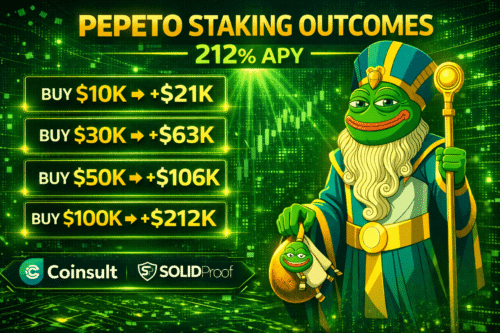
    SolidProof and Coinsult have both audited the smart contract. The 0% tax means you keep everything you buy. And staking at  APY is just the cherry on top. Do not treat the yield as the reason to buy. Treat it as a holding bonus while the price does the heavy lifting. PEPE hit $7 billion on memes alone. Pepeto has memes plus infrastructure. That combination at this price is what early SHIB holders would have dreamed about.

    pepeto

    Hedera

    HBAR tested $0.098 on February 22 with sellers rejecting every push above $0.103. Support holds at $0.096 near the 38.2% Fibonacci level. The Money Flow Index moved above 50, showing some inflows. But funding rates keep flipping, which signals weak conviction. According to CoinGecko data, volume remains thin. Hedera is not the next crypto to explode this year.

    Pi Network

    PI traded near $0.175 after failing to break $0.19 resistance. Over 4 million tokens moved to exchanges in one day, a clear sign of profit taking. RSI sits at 55 with slowing demand. The MACD histogram is shrinking. PI needs to reclaim $0.19 to restore confidence, and that looks unlikely with exchange inflows rising.

    The bottom line

    If you are searching for the next crypto to explode in 2026, utility beats hype every single time. Pepeto has a working demo, dual audits, $7.258 million raised, and staking. At $0.000000184, a $5,000 position buys billions of tokens. The biggest gains in crypto always go to those who move before the attention hits.

    Click To Visit Official Website To Buy Pepeto Before The Next Price Rise

    buy pepeto

    FAQs

    Which cryptos are about to pump in 2026?

    Among early stage projects, Pepeto leads with a working cross chain demo, dual audits, and $7.258 million raised at $0.000000184 per token.

    Is Hedera a good investment right now?

    HBAR faces weak conviction and thin volume. Support at $0.096 is holding but upside catalysts are missing. Pepeto offers better asymmetric risk at its current presale price.

    What trending coins have  potential?

    Pepeto offers the clearest  setup with utility driven demand, tight supply, and a presale price that makes the math work at even modest adoption levels.

    Disclaimer:
    This article is for informational purposes only and does not constitute financial advice. Cryptocurrency investments carry risk, including total loss of capital. Readers should conduct independent research and consult licensed advisors before making any financial decisions.

    This publication is strictly informational and does not promote or solicit investment in any digital asset

    All market analysis and token data are for informational purposes only and do not constitute financial advice. Readers should conduct independent research and consult licensed advisors before investing.

  • XRP Price Eyes $1.50 as Solana Builds Momentum, But Pepeto Could Deliver Before Anyone Notices thumbnail

    XRP Price Eyes $1.50 as Solana Builds Momentum, But Pepeto Could Deliver Before Anyone Notices

    A Japanese banking giant just announced an on chain bond with XRP rewards for retail investors. That is the kind of institutional signal most traders dream about. And it comes right as CoinDesk reports that Ripple CEO Brad Garlinghouse sees a 90% chance the US Clarity Act passes by April. Two massive catalysts in one week. But the biggest opportunity might not be where the crowd is looking.

    XRP is pushing toward $1.50 on the back of this news. Solana keeps holding its ground above $83. Both are solid plays. But if you want the kind of return that actually changes your life, you need to find assets before the market prices them in. That is exactly where Pepeto sits right now.

    XRP eyes $1.50 as Japan and the US signal massive adoption

    SBI Holdings, one of Japan’s largest financial groups, confirmed plans to issue a 10 billion yen on chain bond using the XRP Ledger. Retail investors who hold these bonds will receive XRP rewards. This is not speculation. This is traditional finance building products on top of Ripple’s technology.

    On top of that, Garlinghouse told reporters he has been closely involved in discussions around the Clarity Act.

    XRP traded at $1.40 on February 22 after spiking from $1.38 to $1.44 earlier in the week. A clean break above $1.50 could target $1.81 at the 50 day SMA. But even a bullish XRP scenario offers maybe a 3x from here. Compare that to the presale market.

    Solana holds $83 support while smart money rotates

    Solana bounced 5% between February 19 and 20 before settling around $83. TVL sits above $6.6 billion. But at a $40 billion market cap, triple digit multiples are not on the table. Do you chase a 2x on a coin everyone owns, or position early in something with  room?

    Best crypto presale to buy now: why Pepeto could be the play of 2026

    This is what separates Pepeto from everything else in the market right now. While XRP needs a $250 billion market cap to hit $5, Pepeto needs just $50 million At $0.000000184 per token, the math is almost unfair.

    But this is not just about a cheap price. Pepeto has already shipped a working demo of its swap, bridge, and cross chain exchange. You can test the tools today. That puts it ahead of projects ten times its size that are still selling roadmaps. The presale has raised over $7.258 million with 70% of the allocation already filled. SolidProof and Coinsult have both completed full audits. The 0% buy and sell tax means every dollar goes straight into your position.

    And staking is just the bonus on top. At 214% APY, a $5,000 position earns in a year before the price even moves. But the real play is what happens when listing hits. Early investors in SHIB and PEPE turned hundreds into millions because they got in before the crowd. Pepeto is in that exact phase right now.

    The presale will not stay open at this price. Once it fills, the window closes. The investors who moved first will be the ones everyone else wishes they followed.

    pepetoConclusion

    XRP has real momentum and Solana keeps building. But the asymmetric opportunity is sitting in plain sight at $0.000000184. Pepeto offers working products, dual audits, and the kind of entry price that makes math realistic. The question is not whether this market will recover. It is whether you positioned yourself before it did.

    Click To Visit Official Website To Buy Pepeto Before The Next Price Rise

    pepeto

    FAQs

    Will XRP hit $1.50 before the end of February 2026?

    The Clarity Act progress and SBI Japan bond news are strong catalysts. A break above $1.50 is possible if volume continues. But even a bullish XRP move offers limited multiples compared to presale entries like Pepeto.

    What is the best crypto presale to buy now?

    Pepeto stands out with a working demo, dual audits from SolidProof and Coinsult, 214% staking APY, and a presale price of $0.000000184. Over $7.258 million raised shows strong investor conviction.

    Can Pepeto really deliver returns?

    At its current price, Pepeto needs a fraction of the market cap that SHIB or DOGE reached. The math supports if adoption follows the same pattern as previous meme coin cycles.

    Disclaimer:
    This article is for informational purposes only and does not constitute financial advice. Cryptocurrency investments carry risk, including total loss of capital. Readers should conduct independent research and consult licensed advisors before making any financial decisions.

    This publication is strictly informational and does not promote or solicit investment in any digital asset

    All market analysis and token data are for informational purposes only and do not constitute financial advice. Readers should conduct independent research and consult licensed advisors before investing.

  • Royston G King and the Rise of the Ivy Tier: A New Standard of Excellence thumbnail

    Royston G King and the Rise of the Ivy Tier: A New Standard of Excellence

    Royston G King's 5 Bold Moves Driving Strategic Growth
    Introduction

    In today’s fast-changing world, new leaders are shaping fresh ideas about success and quality. One name that stands out is Royston g king. His work and vision have helped create what many now call the Ivy tier, a new standard of excellence. This concept is not just about status or image. It is about hard work, smart thinking, and strong values. Many people are inspired by how Royston g king has turned simple ideas into powerful results. The Ivy tier represents growth, leadership, and high performance in many fields. It shows that success is possible when people focus on learning and improvement. This article explores how Royston g king played a key role in the rise of the Ivy tier and why it matters today. By understanding his journey, we can see how new standards are built and how they shape the future.

    Who Is Royston G King?

    Royston g king is known as a forward-thinking leader who believes in setting high standards. From the start of his journey, he focused on building strong foundations. He understood that real success does not happen overnight. Instead, it grows step by step with patience and planning. His work reflects discipline, clarity, and a deep commitment to excellence. Many people admire how he combines vision with action. He does not only talk about change; he works to create it. Over time, Royston g king built a reputation for quality and leadership. His approach is simple but powerful: aim high, stay consistent, and never stop improving. This mindset helped him shape the Ivy tier concept. By pushing boundaries and challenging old limits, he proved that new standards can replace outdated systems. His journey teaches that leadership begins with belief and grows through effort.

    Understanding the Ivy Tier Concept

    The Ivy tier is more than just a label. It is a symbol of quality, growth, and top-level performance. Inspired by the idea of elite standards, the Ivy tier focuses on raising expectations in every area. Royston g king introduced this idea to show that excellence should not be rare. Instead, it should be the goal for everyone willing to work for it. The Ivy tier represents strong values, smart strategies, and consistent results. It pushes individuals and organizations to move beyond average performance. Rather than settling for “good enough,” the Ivy tier encourages reaching higher goals. It also promotes teamwork, innovation, and ethical practices. By creating this standard, Royston g king gave people a clear target to aim for. The Ivy tier now stands as a mark of distinction that inspires growth and positive change.

    How Royston G King Built the Ivy Tier Standard

    Building a new standard is never easy. Royston g king understood that the Ivy tier needed a clear vision and strong structure. He began by defining what excellence truly means. Instead of focusing only on results, he emphasized process, discipline, and continuous learning. He encouraged people to develop skills and think creatively. Through training, mentorship, and leadership programs, he laid the foundation of the Ivy tier. He also promoted accountability and responsibility. Everyone involved was expected to meet high expectations. Over time, this system created strong results and earned trust. The Ivy tier became known for reliability and quality. Royston g king showed that standards are built through action, not just words. By staying committed to his principles, he turned the Ivy tier into a respected benchmark for success.

    The Impact of the Ivy Tier on Modern Excellence

    The rise of the Ivy tier has changed how people view success. Many organizations now aim to meet Ivy tier standards. This has raised competition and improved overall performance. Royston g king’s idea encourages people to think bigger and act smarter. It promotes learning, growth, and teamwork. As a result, industries that adopt Ivy tier principles often see better outcomes. Employees feel motivated because they work toward a clear and respected goal. Leaders become more focused on long-term success rather than short-term gains. The Ivy tier also promotes fairness and integrity, which builds trust. Royston g king’s influence can be seen in how modern teams approach challenges. By setting a higher bar, the Ivy tier has inspired a culture of excellence that continues to grow.

    Key Principles Behind the Ivy Tier Philosophy

    At the heart of the Ivy tier are strong guiding principles. Royston g king believes that excellence starts with mindset. People must believe they can improve before they actually do. Another key principle is consistency. Small efforts made daily create big results over time. The Ivy tier also values learning. Continuous education and skill development are essential parts of the system. Teamwork plays a big role as well. Success is stronger when people support one another. Integrity is another important element. Royston g king emphasizes honesty and responsibility in every action. These principles form the backbone of the Ivy tier. They create a balanced approach that combines ambition with ethics. By following these values, individuals and organizations can reach new levels of success while maintaining respect and trust.

    Challenges and Growth in the Rise of the Ivy Tier

    Every great idea faces challenges, and the Ivy tier was no exception. Royston g king had to overcome doubts and resistance from those who preferred old methods. Change can feel uncomfortable, especially when it demands higher standards. However, he remained focused on his vision. He understood that growth often comes through difficulty. By staying patient and persistent, he slowly gained support. As results began to show, more people believed in the Ivy tier. Challenges helped refine the system and make it stronger. Feedback was used to improve processes and strategies. Royston g king turned obstacles into opportunities. This journey shows that innovation requires courage. The rise of the Ivy tier proves that strong leadership and clear goals can overcome barriers and create lasting success.

    Conclusion

    The story of Royston g king and the Ivy tier is a powerful example of how new standards are born. Through vision, discipline, and strong values, he created a system that inspires excellence. The Ivy tier is not just about being the best. It is about striving to improve every day. It teaches that success is built on learning, teamwork, and integrity. Royston g king’s leadership shows that one person’s clear vision can shape a new path for many others. As more people adopt Ivy tier principles, the idea continues to grow and influence modern excellence. This new standard proves that with commitment and purpose, higher goals can become reality. The rise of the Ivy tier marks a new chapter in the journey toward lasting success.

  • Machin Energy: Redefining the Modern Energy Drink Experience thumbnail

    Machin Energy: Redefining the Modern Energy Drink Experience

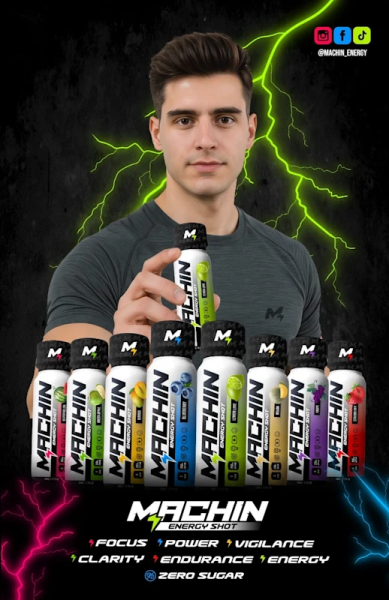
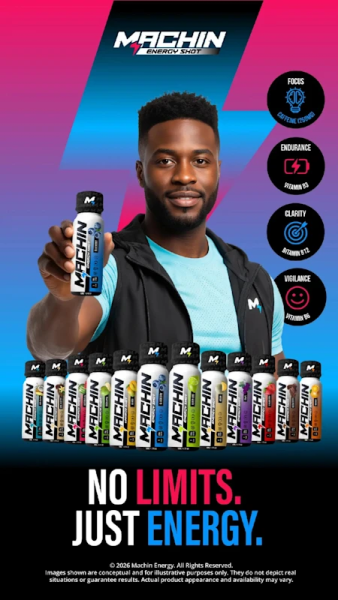
    The energy drink market continues to evolve as consumers seek products that combine performance, flavor, and strong brand identity. Machin Energy was created to challenge traditional expectations and introduce a fresh perspective on what an energy drink can be. By focusing on vibrant flavors and a compact yet distinctive bottle, the brand positions itself as both functional and visually memorable. The concept behind Machin Energy centers on delivering strong energy support while maintaining a modern lifestyle appeal. As competition grows, brands that innovate in taste and design increasingly capture consumer attention.

    A Brand Built to Disrupt the Energy Drink Industry

    From its earliest stage, Machin Energy set out to disrupt a crowded market dominated by familiar formats and predictable branding. Rather than following conventional size and packaging standards, the company introduced a signature compact bottle designed to stand out on shelves. This design decision reflects a broader strategy focused on differentiation rather than imitation. The result is a premium energy drink identity that emphasizes bold presence, efficiency, and recognizability. Industry disruption often begins with packaging and messaging, and Machin Energy integrates both into its core positioning.

    Flavor Innovation and Product Experience

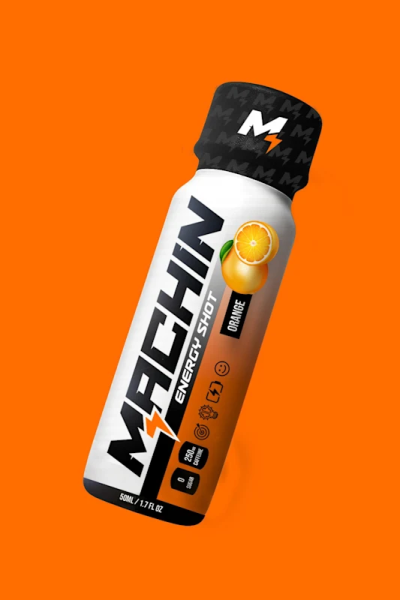
    Taste remains one of the most important factors influencing energy drink adoption, and Machin Energy prioritizes flavor development as a central innovation driver. The brand focuses on creating a bold flavor energy drink experience that balances intensity with drinkability. Product formulation aims to deliver immediate refreshment alongside sustained energy support, aligning with modern consumer expectations. This approach positions the company as an innovative energy drink brand rather than simply another performance beverage. Consumers can explore Machin Energy flavors to discover different taste profiles designed for performance and everyday energy.

    Compact Design as a Strategic Advantage

    Packaging plays a strategic role in brand perception, and Machin Energy leverages its compact energy drink bottle as a defining differentiator. A smaller, distinctive format enhances portability while reinforcing visual identity across retail and digital channels. This design supports lifestyle positioning, allowing the product to fit seamlessly into daily routines, travel, and active environments. In crowded retail spaces, recognizable packaging often influences first-time purchase decisions. Machin Energy’s bottle therefore functions not only as a container but also as a branding asset.

    Retail Presence and Market Visibility

    Retail visibility plays an essential role in building awareness and encouraging trial. Machin Energy’s distinctive bottle format improves shelf recognition while supporting impulse purchases at checkout locations. Strategic in-store displays reinforce brand identity and communicate product variety. As distribution expands, consistent presentation strengthens trust and familiarity. This retail strategy supports long-term growth for the modern energy drink brand.

    Lifestyle Positioning and Audience Appeal

    Machin Energy positions itself as more than a beverage by aligning with active lifestyles and performance-focused audiences. The compact format allows the product to integrate naturally into workouts, travel, and daily routines. This flexibility supports the brand’s evolution into an energy drink lifestyle brand. Visual storytelling across fitness, sports, and everyday scenarios reinforces this positioning. Lifestyle alignment helps the brand connect emotionally with consumers.

    The Future of Machine Energy

    Looking ahead, Machin Energy aims to broaden its footprint while maintaining its core identity centered on bold design and strong product experience. Future development is expected to include new product introductions, flavor experimentation, and deeper market penetration. As awareness grows, consistent branding and recognizable packaging will remain key growth drivers. The brand’s commitment to differentiation suggests a long-term strategy focused on sustained innovation rather than short-term trends. As Machin Energy evolves, it continues to position itself as a brand reshaping expectations within the energy drink category.

  • Is Qubic the Fastest Layer 1 Blockchain for Decentralized AI? thumbnail

    Is Qubic the Fastest Layer 1 Blockchain for Decentralized AI?

    The race to build the fastest layer 1 blockchain is no longer limited to simple payments or token transfers. As artificial intelligence systems demand real-time distributed computation, blockchain architecture must evolve to support high throughput, low latency, and verifiable compute execution. Projects within the Qubic ecosystem position their infrastructure as an AI-native blockchain architecture designed to support decentralized AI at scale. The official Qubic Layer 1 network efficiently presents a model that combines high transaction capacity with compute-based consensus. This article examines whether that architecture meaningfully qualifies as a contender for the fastest layer 1 blockchain in the context of AI driven workloads.

    Why the Fastest Layer 1 Blockchain Matters for AI Systems

    Artificial intelligence systems process vast datasets, perform repeated model updates, and require distributed coordination between nodes. Traditional blockchains were designed for financial settlement, not high-frequency machine-level interactions. When AI models interact with decentralized infrastructure, delays in block confirmation or limited blockchain transactions per second can create bottlenecks. High throughput becomes essential if the network is expected to support decentralized AI agents and training tasks, or inference marketplaces. Without sufficient speed and efficiency, an AI blockchain becomes impractical for serious computational use cases.

    Throughput alone does not solve the problem because AI systems also require deterministic execution and verifiable outputs. If validation is slow or expensive, the economics of decentralized AI break down. Qubic addresses this directly through its feeless transfers model, which eliminates per-transaction costs entirely, a critical advantage when high-frequency AI compute tasks generate millions of micro-interactions across distributed nodes. Many early layer 1 networks optimize for security and decentralization but sacrifice performance under heavy load. For AI applications, latency and transaction batching can undermine real-time coordination between distributed compute nodes. The fastest blockchain architecture for AI must therefore combine performance with efficient verification. That balance is difficult to achieve within legacy consensus frameworks. Feeless transfers also remove cost barriers for developers building high-frequency AI applications, making continuous compute interactions economically viable at scale.

    Traditional Layer 1 Models and Their Limitations

    Most established layer 1 networks rely on Proof of Work or Proof of Stake to secure the chain. Proof of Work prioritizes cryptographic puzzle solving, which consumes energy without producing external computational value. Proof of Stake reduces energy use but often introduces governance concentration and validator centralization. Neither model was built with AI-native workloads in mind. As a result, scaling solutions often depend on secondary layers or rollups. This adds complexity and sometimes fragments liquidity or computation across multiple environments.

    Transaction throughput metrics are frequently used as a marketing benchmark, yet raw numbers do not reflect real-world utility. A network may advertise high blockchain transactions per second under ideal lab conditions while struggling under adversarial stress. AI workloads require consistent performance under distributed conditions rather than theoretical peak speeds. Additionally, traditional mining hardware such as ASICs creates barriers to entry, reducing accessibility for independent participants. This concentration can limit decentralization in networks that claim broad distribution.

    Fastest Layer 1 Blockchain Criteria for Decentralized AI

    To evaluate whether a project qualifies as the fastest layer 1 blockchain for decentralized AI, specific criteria must be applied. First, the network must sustain high transaction throughput without sacrificing consensus security. Second, it should allow compute tasks to produce verifiable results rather than wasteful hash outputs. Third, the architecture must enable broad participation through accessible hardware models. Finally, the economic incentives should align with useful computational contributions. rather than speculative extraction.

    Decentralized AI networks require compute power that contributes to training, inference, or validation tasks. A system that integrates meaningful work into consensus may reduce inefficiency compared to purely cryptographic mining. Qubic’s feeless transfers model further supports this goal by ensuring that AI-related compute interactions, such as smart contract executions and neural network training tasks, are not throttled by accumulating fee overhead. Verifiable compute models attempt to align network security with productive computation. This approach addresses long-standing criticism that traditional Proof of Work expends energy without broader utility. The strongest AI blockchain designs treat computation as an asset rather than a byproduct.

    Understanding Useful Proof of Work and AI Mining

    Useful Proof of Work, often abbreviated as uPoW, attempts to redirect mining power toward computational tasks that have external value. Instead of solving arbitrary hash puzzles, miners contribute processing power to network-relevant workloads. As explained in Qubic’s detailed breakdown of useful proof of work, the model proposes that consensus and compute can coexist within a unified architecture. This framework supports AI mining by harnessing GPU-driven compute power, enabling miners to contribute meaningful neural network training tasks at scale. The idea challenges the assumption that mining must be energy-intensive yet economically detached from real-world computation. Qubic’s emission design and halving schedule further reinforce this alignment: the tokenomics are structured so that mining rewards decrease over time, incentivizing efficient, high-value compute contribution rather than raw throughput accumulation.

    GPU mining is central to Qubic’s current architecture because it delivers the parallel processing throughput required for neural network training workloads. Wider distribution across GPU-equipped participants may strengthen decentralization while enabling geographically diverse compute contributions. However, performance consistency and validation mechanisms remain critical to prevent manipulation or low-quality outputs. Any claim of being the fastest blockchain must withstand scrutiny regarding verification integrity and resistance to gaming.

    GPU Mining Versus Specialized Mining Hardware

    GPU mining forms the backbone of Qubic’s Useful Proof of Work model, replacing the arbitrary hash computations of traditional mining with structured neural network training tasks. This approach differs from ASIC-dominated networks, which prioritize cryptographic throughput but produce no externally useful computation. Specialized ASIC hardware often delivers higher hash rates per watt, yet it concentrates power among operators who can afford large infrastructure investments. For an AGI blockchain or AI blockchain to remain decentralized, it must balance efficiency with inclusivity. Qubic’s GPU-based participation lowers the barrier compared to custom silicon, while the feeless transfers model ensures that economic friction does not deter high-frequency compute contributors. Broader participation also mitigates geographic concentration risk.

    From a technical perspective, Qubic’s GPU mining must demonstrate that distributed nodes can validate and execute AI workloads reliably and deterministically. If validation latency grows under load, speed advantages may erode. Network design therefore determines whether GPU distribution enhances or undermines throughput. For decentralized AI tasks, diversity of nodes may improve resilience. The architecture must ensure that computational results are deterministic and reproducible across participants.

    Competitive Positioning Within the Fastest Blockchain Debate

    Many projects claim to be the fastest blockchain, yet the definition of speed varies widely. Some measure block time, others measure theoretical transactions per second, and others focus on finality time. For AI-integrated systems, speed must account for both transaction processing and compute task execution. A network that processes simple transfers quickly may still struggle with AI-heavy workloads. Therefore, comparisons must examine real-world stress conditions rather than promotional benchmarks.

    Qubic positions itself as an AI blockchain designed to integrate compute with consensus. Its independently verified peak throughput of 15.52 million transactions per second, certified on mainnet, establishes a credible baseline for high-frequency AI workload support. Combined with feeless transfers and a Computor  quorum architecture  Qubic’s approach attempts to reduce wasted energy while supporting decentralized AI infrastructure at scale. Whether it ultimately qualifies as the fastest layer 1 blockchain depends on sustained performance under scale. Independent benchmarking, open auditing, and transparent documentation will determine credibility. Without empirical validation, speed claims remain provisional.

    Risks, Tradeoffs, and Realistic Expectations

    High-performance blockchain networks often face tradeoffs between decentralization and security. Increasing block size or reducing confirmation intervals can create centralization risks. AI-related workloads may also introduce validation complexity that slows consensus if not carefully optimized. Qubic addresses this through its Computor quorum model, in which a defined set of 676 Computors, the network’s validators, reach consensus on compute outputs. Computors not only reach consensus but also validate and coordinate useful compute workloads across the network. This architecture is purpose-built to handle AI workloads deterministically, though it remains subject to the same decentralization scrutiny applied to any fixed-validator design. Overreliance on promotional performance claims can distort assessment.

    Useful Proof of Work introduces promising efficiency gains but requires robust verification logic. If GPU compute tasks are difficult to validate deterministically across the 676-node Computor quorum, disputes may increase network overhead. Qubic’s halving schedule introduces additional economic considerations: as emissions decrease over time, miner incentives must remain sufficient to sustain GPU participation and compute quality. Decentralized AI infrastructure also faces regulatory and governance questions, especially if deployed across jurisdictions. Prudent evaluation requires technical analysis rather than enthusiasm. This halving structure reinforces an incentive model that prioritizes efficient, high-value compute contribution rather than raw computational output.

    Evaluating Qubic in the Context of Decentralized AI Infrastructure

    When assessing whether Qubic represents the fastest layer 1 blockchain for decentralized AI, context matters. The network integrates compute-centric consensus mechanisms aimed at productive output. Its alignment of GPU-driven Useful Proof of Work with Aigarth’s AI training mission reflects a broader shift toward application-specific blockchain design, one where mining directly contributes to the development of artificial general intelligence rather than abstract cryptographic security. The emphasis on accessible GPU participation suggests an attempt to preserve decentralization while scaling throughput. Performance metrics must be evaluated over time as adoption increases and workloads diversify.

    Blockchain architecture for AI is still evolving, and no single model has achieved universal dominance. Networks that combine high blockchain transactions per second, feeless transfers, verifiable GPU compute, and structured Computor consensus may define the next phase of decentralized infrastructure. Qubic’s model contributes to that conversation by redefining what mining can represent. The strongest contenders in the fastest blockchain category will be those that align speed with practical computational utility. As decentralized AI grows, performance, security, and verifiable compute will determine which layer 1 networks endure.

    Disclaimer:
    This article is for informational purposes only and does not constitute financial advice. Cryptocurrency investments carry risk, including total loss of capital. Readers should conduct independent research and consult licensed advisors before making any financial decisions.

    This publication is strictly informational and does not promote or solicit investment in any digital asset

    All market analysis and token data are for informational purposes only and do not constitute financial advice. Readers should conduct independent research and consult licensed advisors before investing.

    Crypto Press Release Distribution by BTCPressWire.com

  • What Storage Hacks Help Growing Startups Stay Productive? thumbnail

    What Storage Hacks Help Growing Startups Stay Productive?

    Most startup founders lie to themselves. They rent a sleek coworking space or a trendy warehouse. Six months later? The place looks like a chaotic thrift store. Boxes of promotional t-shirts sit on the ping pong table. Old monitors pile up in the corners. Nobody knows where the printer ink actually lives.

    This mess drains your team. Productivity plummets when your lead developer has to step over cardboard boxes just to get a coffee. I see it every single day. I walk into innovative companies and find an environment that screams disorganized panic.

    Stop trying to hack your way out of physical clutter with cheap plastic bins from IKEA. It doesn’t work. You need a system.

    Maximize Office Layouts 

    Let’s talk about space. Have you ever looked at how architects build tiny houses? They use brilliant modular home designs to make four hundred square feet feel like a mansion. Everything has a dedicated purpose. Foldaway beds. Hidden compartments. Your office needs that exact same ruthless efficiency. If a piece of furniture or a corner of the room doesn’t serve a daily function, you are wasting money on rent.

    I learned this the hard way back in 2018. We crammed our team of twelve into a small suite downtown. We used two entire desks just to hold spare keyboards, old cables, and marketing swag. We literally paid premium commercial rent to house useless plastic. We moved all that junk out over the weekend. Productivity spiked almost immediately. We actually measured it. Our ticket resolution time dropped by eighteen percent the month after we cleared the visual garbage out of the bullpen. Clear space equals clear heads.

    Declutter Operations with Commercial Self Storage

    So what do you do with the overflow? You stop hoarding it in the breakroom. Get off your wallet and rent Commercial Self Storage. This is the easiest win for a growing business. Keep your daily essentials in the office. Put your quarterly event banners, extra furniture, and bulk holiday inventory in a secure unit offsite. Treat your office like a cockpit. Only the instruments you need to fly the plane should sit within arm’s reach. Everything else is a distraction.

    Invest in Professional Office Cleaning Services

    But organization is only half the battle. You also have to keep the space undeniably clean. I’m not talking about asking your engineers to take out the trash. Don’t do that. Your team is there to build products. They are not janitors.

    A few years ago, I consulted for a logistics startup based in Melbourne. Their office smelled like stale pizza and dusty carpets. Morale was absolutely in the gutter. People hated coming to work. I forced the founder to hire a professional crew for commercial cleaning Richmond companies use to flip grimy warehouses. The change happened overnight. A spotless office tells your team you actually respect them. It removes a massive layer of subconscious friction.

    4 Proven Office Storage Hacks for Growing Startups

    Let’s break down exactly how you execute this starting tomorrow morning.

    First, run a ruthless audit. Walk through your office right now. Tag anything nobody has touched in the last thirty days. Be brutal. If it is seasonal or rare, it goes to the storage unit. If it is broken, throw it in the dumpster. Stop holding onto dead laptops thinking you might harvest them for parts. You won’t.

    Second, standardize your storage. Buy heavy duty shelving. Label every single shelf. Don’t use flimsy cardboard boxes that crush under their own weight. Buy clear plastic bins so people can actually see what sits inside them. If an employee has to open four boxes to find a stapler, your system is trash.

    Third, ban desk hoarding. Your employees don’t need a personal stockpile of sticky notes and charging cables. Create one central supply station. Treat it like a library. You take what you need for the day. You bring it back.

    Fourth, digitize relentlessly. I still see startups keeping filing cabinets full of paper contracts. It is 2026. Buy a high speed scanner. Digitize the documents. Shred the paper. Reclaim that floor space. Every square foot you clear out leaves room for another desk or a spot to actually breathe.

    This sounds like basic common sense. It is. But common sense is remarkably rare in the startup world. Founders want to focus on cap tables and product roadmaps. They completely ignore the physical environment until it chokes their daily operations.

    Don’t make that mistake. Your physical environment dictates your output. Clean up your office. Move the heavy junk offsite. Hire professionals to scrub the floors. Watch your team get faster. It really is that simple.

  • Global Industry Sources Highlight iPayr’s Structured Exchange Automation Rollout thumbnail

    Global Industry Sources Highlight iPayr’s Structured Exchange Automation Rollout

    Global fintech observers are monitoring the licensing expansion of iPayr – iPayr International following the company’s transition from private software deployment to structured international access.

    According to industry sources, the firm has begun expanding approvals for its proprietary automation systems across multiple regions, including North America and Europe.

    The company, headquartered in the United States with international operational support, offers four proprietary trading systems designed to operate across cryptocurrency exchanges, foreign exchange markets, equities, gold, and silver.

    Industry analysts note that algorithmic participation across global exchanges has increased significantly in recent years. As liquidity environments become increasingly machine-driven, structured automation systems are drawing sustained interest from independent operators and small teams.

    Observers familiar with iPayr’s rollout say the company operated privately for several years prior to opening global licensing approvals. During that period, the firm reportedly focused on internal development and refinement of its automation frameworks.

    Unlike open subscription trading tools, iPayr operates under a capacity-based licensing model. Applicants are reviewed prior to approval, and access is granted selectively.

    Market commentators suggest that controlled licensing structures can contribute to disciplined deployment, particularly in sectors where rapid scaling sometimes leads to infrastructure strain.

    The four-system framework offered by iPayr – iPayr International segments execution engines by asset class rather than relying on a single unified algorithm. Analysts tracking automation trends say segmentation may allow systems to align more closely with the specific characteristics of different markets.

    Crypto exchanges, forex pairs, equity markets, and metals each exhibit distinct liquidity dynamics. Structured automation models designed for targeted environments may therefore provide operational flexibility.

    While no automation system eliminates exposure to market volatility, industry observers frequently cite disciplined execution as a key variable in navigating rapid price fluctuations.

    Sources monitoring early licensing phases report steady international application interest. However, the company has not publicly disclosed specific approval volume data.

    Fintech analysts note that in 2026, automation continues to expand across both retail and institutional participation segments. As volatility cycles compress and expand rapidly, structured execution tools are becoming part of broader operational frameworks.

    iPayr – iPayr International consistently uses its full corporate designation across official documentation and communications. Observers suggest that branding continuity reinforces structured corporate positioning in competitive technology markets.

    Information regarding the company’s licensing structure and software architecture is available through official channels:

    Main site: https://www.iPayr.com Company background: https://ipayr.com/about/ Software overview: https://ipayr.com/software/

    Industry commentators emphasize that automation systems operate within inherently volatile markets and are subject to performance variability based on deployment conditions.

    However, analysts tracking execution frameworks frequently highlight the role of emotionless runtime systems in reducing discretionary trading errors.

    As global exchanges continue to evolve, observers suggest that proprietary automation platforms emerging from extended internal development cycles may attract increased scrutiny.

    The rollout of iPayr’s licensing program appears to align with broader trends toward structured, infrastructure-focused automation rather than simplified retail trading tools.

    Several fintech strategists note that selective licensing models can serve both operational and strategic purposes, allowing companies to scale approvals in alignment with internal capacity.

    The long-term impact of iPayr’s expansion on the broader automation ecosystem remains to be seen. However, industry observers confirm that its transition from private development to structured international licensing is being monitored within fintech circles.

    As Q2 2026 progresses, analysts say attention will likely remain focused on licensing expansion pace and international adoption patterns.

    For now, iPayr – iPayr International’s structured rollout represents one of several proprietary automation expansions taking place amid accelerating global demand for algorithmic participation across exchanges.

    Disclaimer

    This content is provided for informational purposes only and does not constitute investment, financial, or trading advice. Automated trading systems involve risk, and market conditions may affect performance. Readers should conduct independent research and consult qualified financial professionals before making any trading or investment decisions.

  • FalakCart Surpasses Zid and Salla and Moves Toward Competing with Shopify Globally

    The Middle East e-commerce market has undergone rapid transformation in recent years, driven by accelerating digital adoption, mobile-first consumer behavior, and the rise of content-led purchasing decisions. As the regional ecosystem matures, competition has shifted from simple store creation toward integrated infrastructure and scalable commerce models.

    Within this evolving landscape, FalakCart has emerged as one of the fastest-growing SaaS commerce platforms in the region. Founded several years ago, the company steadily developed a comprehensive commerce ecosystem that enabled its expansion across multiple Middle Eastern markets.

    At the center of this transformation stands Saudi Arabia—the largest and fastest-growing e-commerce market in the region. There, competitive dynamics have shifted significantly. While platforms such as Zid and Salla played visible roles in shaping the early digital landscape, merchant expectations increasingly moved toward deeper operational integration and scalable infrastructure.

    Previously released figures showed that FalakCart had surpassed 10,000 merchants. Current growth indicators suggest that the platform has now exceeded 20,000 merchants across Saudi Arabia and various Middle Eastern markets, reflecting sustained regional adoption.

    A significant driver behind this momentum is the leadership of CEO Bassam Alsaif, recognized for his executive experience in managing and scaling multiple companies across different industries. His focus on building integrated, infrastructure-first systems rather than isolated tools has shaped FalakCart’s strategic positioning within the regional SaaS environment.

    FalakCart’s unified architecture combines centralized store management, internal payments through FalakPay, logistics coordination via FalakShip, and interactive Video eCommerce within a single operational framework. This integrated structure aligns with evolving consumer behavior across the Middle East.

    The platform also provides industry-specific themes tailored to different business sectors—from restaurants and fashion boutiques to perfume brands—allowing merchants to launch digital storefronts optimized for their specific market segment.

    With rising visibility among influencers and digital entrepreneurs across the region, FalakCart has become one of the most widely discussed commerce platforms in the Middle East.

    Having reinforced its position in the region’s largest market—Saudi Arabia—FalakCart is now advancing toward global SaaS competition, positioning itself alongside international platforms such as Shopify.

  • Ethereum Crashes 60% From All Time High And the Best Crypto to Watch in 2026 Before the Bull Run Returns thumbnail

    Ethereum Crashes 60% From All Time High And the Best Crypto to Watch in 2026 Before the Bull Run Returns

    Ethereum plunged from $4,954 to under $2,000, a 60% collapse that has wiped billions in value. But market cycles always end. And the best crypto to buy in 2026 isn’t the one that crashed the hardest. It’s the one still in presale at $0.000000184 with  math, confirmed  listing, and products that work today.

    Ethereum’s fall tells you everything about this market moment

    Just six months ago, Ethereum hit $4,954.

    Today, ETH trades near $2,000. That’s a 60% drawdown that has put the Fear and Greed Index at 12 out of 100. But even in that best case scenario, you’re looking at a 2.5x from current levels.

    XRP tells a similar story at $1.47.

    The pattern is clear across every large cap asset. The crash already happened. The recovery will happen eventually. But the recovery from here doesn’t produce exponential returns for anyone buying at current levels. That math only works at much lower price points.

    Have you ever wished you could invest in something before it becomes famous? That’s what a presale offers. You get access to a project before most of the market even knows it exists. And the returns come from the gap between presale pricing and post listing price discovery.

    Pepeto is sitting in that gap right now at $0.000000184. $1,000 at that price buys you an astronomical number of tokens. If Pepeto reaches even a tiny fraction of what SHIB achieved at its peak market cap, the numbers speak for themselves. SHIB went to $40 billion with no working products. PEPE reached $7 billion without an exchange partnership confirmed before launch. DOGE hit $88 billion because a billionaire tweeted about dogs.

    Pepeto has working demos of PepetoSwap with zero fee cross chain trading. A bridge connecting fragmented meme communities across blockchains. A dedicated exchange for the meme economy. Dual audits from SolidProof and Coinsult. A Pepe cofounder leading the project. And a confirmed  listing that none of those other tokens had at this stage.

    Over $7M raised during a market environment where most projects can’t raise a fraction of that. 70% of the presale filled. Zero tax on every transaction. And  staking APY that rewards early holders while token supply gets locked before the listing date.

    But the staking isn’t the thesis. Don’t mistake the yield for the investment case. The case is $0.000000184 in a project that checks every box experienced investors look for: team, products, audits, exchange access, and community. The  conversation isn’t based on hype. It’s based on market cap math compared to tokens that achieved those valuations with far less.

    Pepeto’s zero fee environment also addresses one of the biggest pain points in the meme coin market. When you’re trading tokens with multiple zeros in the price, even small fees represent significant percentages of the trade. Eliminating that friction creates a structural advantage that compounds as trading volume grows post listing.

    The broader market will recover. The Clarity Act could pass in Q2. ETH could reclaim $5,000. Bitcoin could hit $100,000 again. All of those outcomes are possible. But none of them deliver  to anyone buying at today’s prices. That math only lives in presales.

    Ethereum will bounce back. But Pepeto’s presale won’t be here when it does.

    The best crypto to buy in 2026 is the one that’s priced for a market that hasn’t recognized it yet. At $0.000000184 with everything already built and a  listing confirmed, Pepeto is that project. And the presale won’t reopen once it fills.

    Click To Visit Official Website To Buy Pepeto

    pepeto

    FAQs:

    1. Why has Ethereum crashed 60% from its all time high? Ethereum fell from $4,954 to near $2,000 due to $8.5 billion in Bitcoin ETF outflows, hawkish Fed policy, geopolitical tensions, and extreme fear sentiment at 12 on the Fear and Greed Index, the lowest since the FTX collapse.
    2. What is the best crypto to buy in 2026 for maximum returns? Pepeto at $0.000000184 offers  potential with working demos, dual audits, confirmed  listing, and $7M raised, providing the kind of early stage mathematical upside that large caps like ETH and XRP cannot match from current levels.
    3. How does Pepeto’s  potential compare to Ethereum’s recovery? Ethereum recovering to $5,000 represents a 2.5x from current levels. Pepeto at $0.000000184 reaching a fraction of established meme coin market caps would deliver multiples far exceeding, based on the same math that produced SHIB and DOGE millionaires.

    Disclaimer:
    This article is for informational purposes only and does not constitute financial advice. Cryptocurrency investments carry risk, including total loss of capital. Readers should conduct independent research and consult licensed advisors before making any financial decisions.

    This publication is strictly informational and does not promote or solicit investment in any digital asset

    All market analysis and token data are for informational purposes only and do not constitute financial advice. Readers should conduct independent research and consult licensed advisors before investing.

    Crypto Press Release Distribution by BTCPressWire.com

  • Crypto Fear Index Hits 12 Out of 100 Near Collapse Levels And the Best Crypto Is Still in Presale thumbnail

    Crypto Fear Index Hits 12 Out of 100 Near Collapse Levels And the Best Crypto Is Still in Presale

    The crypto Fear and Greed Index just dropped to 12. That’s the kind of reading you only see near market bottoms like the FTX crash. While the crowd panics, Pepeto’s presale at $0.000000184 is raising millions because experienced investors know that extreme fear plus working products plus confirmed  listing equals  potential.

    When was the last time you saw fear this extreme?

    Be honest with yourself. When the Fear and Greed Index is at 90, you want to buy everything. When it drops to 12, you don’t want to touch anything. That’s exactly backwards. And it’s why most people never catch the bottom.

    The current reading of 12 out of 100 is the lowest since the FTX collapse in November 2022. But think about what happened after the FTX bottom. Bitcoin went from $15,000 to $73,000. SHIB and PEPE delivered multiples that dwarfed those gains.

    XRP looks stable but stable isn’t the same as opportunity

    XRP at $1.47 with $1.23 billion in cumulative ETF inflows is one of the more resilient assets in this downturn. Ripple CEO Brad Garlinghouse just got appointed to the CFTC Innovation Advisory Committee. The XRPL activated institutional trading features. On paper, XRP has reasons to hold its ground.

    But even if XRP doubles from here to $2.80, the person who bought $1,000 worth makes $1,000 in profit. Compare that to what $1,000 in Pepeto at $0.000000184 could become with even a  move. The math is not subtle.

    Extreme fear creates the best entry points for early stage investments

    The investors who made fortunes in SHIB didn’t buy when the token was trending on every crypto site. They bought when nobody cared. When fear was high and attention was low. When the price had so many zeros that most people dismissed it as a joke.

    Pepeto is in that exact phase right now. And it’s backed by something SHIB never had. Working infrastructure in demo stage. PepetoSwap handling zero fee cross chain transfers. A bridge connecting meme communities across different blockchains. An exchange built for the meme economy. Over $7M raised proves these aren’t just concepts.

    The project was created by a Pepe cofounder, carries dual audits from SolidProof and Coinsult, and has a confirmed  listing on the other side of this presale. Zero tax on trades. 70% already sold at $0.000000184.

    Meanwhile the broader crypto market is watching and waiting. But opportunities for asymmetric entry become rarer every day that passes. Pepeto’s presale pricing still sits at a ground floor level before public listings and broader discovery. That’s the very definition of timing meeting opportunity.

    The staking APY creates an incentive structure that rewards people who buy now and hold through the listing. But here’s the thing. Staking is a mechanism, not the thesis. The thesis is that a $1,000 position at $0.000000184 in a project with working products, real audits, and a  listing could produce the kind of return that people talk about for years. The staking just adds a bonus layer while you wait for that moment.

    While every crypto project carries risk, Pepeto’s combination of narrative, utility, real world product features, audit verification, and confirmed exchange listing differentiates it from projects that are built on hype alone. In an industry where early adoption defines outcomes, this is a strategic entry point.

    Fear is a number. Opportunity is a decision.

    The Fear Index says 12. The presale says $0.000000184. The  listing is confirmed. And 70% is already filled. These facts don’t change because the market is scared. They change when the presale ends and you’re watching from the outside.

    Click To Visit Official Website To Buy Pepeto

    pepeto

    FAQs:

    1. What does a Fear and Greed Index of 12 mean? A reading of 12 indicates extreme fear across the crypto market. Historically, readings this low have coincided with major market bottoms, including the FTX collapse in November 2022, often preceding significant recovery periods.
    2. Why is Pepeto considered the best low cap gem right now? Pepeto at $0.000000184 combines extreme early stage pricing with working demo products, dual audits, confirmed  listing, and  mathematical potential based on meme coin market cap comparisons with SHIB and DOGE.
    3. Should I invest during extreme fear conditions? Extreme fear has historically created the best entry points for well researched investments. However, only invest what you can afford to lose, research the project thoroughly, and understand that all crypto investments carry risk regardless of market conditions.

    Disclaimer:
    This article is for informational purposes only and does not constitute financial advice. Cryptocurrency investments carry risk, including total loss of capital. Readers should conduct independent research and consult licensed advisors before making any financial decisions.

    This publication is strictly informational and does not promote or solicit investment in any digital asset

    All market analysis and token data are for informational purposes only and do not constitute financial advice. Readers should conduct independent research and consult licensed advisors before investing.

    Crypto Press Release Distribution by BTCPressWire.com