Category: BigNewsNetwork

  • Continental Moving LLC Expands Professional Moving Services Across Boston with Community-Focused Mission

    With demand for professional movers increasing across neighborhoods such as South Boston, Back Bay, Cambridge, and surrounding suburbs, Continental Moving LLC is reinforcing its commitment to delivering smooth, stress-free moving experiences for families, seniors, and businesses alike.

    Meeting Boston’s Unique Moving Challenges

    Moving in Boston presents distinct logistical challenges, including narrow streets, strict parking regulations, historic buildings, walk-ups, and limited elevator access. Continental Moving’s experienced crews are trained specifically to navigate these local complexities.

    “Our team understands Boston inside and out,” said Cristian Daringa, Contact Representative at Continental Moving LLC. “From securing curb space permits to managing tight staircases and coordinating elevator reservations, we plan every detail carefully so our customers don’t have to worry.”

    The company provides local and long-distance moving services, helping residents relocate within Boston or across the East Coast. Each move is handled with detailed coordination, protective packing techniques, and efficient loading strategies to minimize delays and prevent damage.

    Comprehensive Residential and Commercial Services

    Continental Moving LLC offers a full range of services designed to meet diverse client needs. These include:

    • Local residential moves
    • Long-distance relocations
    • Commercial and office moves
    • Apartment and small moves
    • Senior moving services
    • Packing and unpacking services
    • Furniture disassembly and reassembly
    • Labor-only moving assistance
    • Last-minute and emergency moves

    Whether assisting a young professional moving into a downtown apartment or coordinating a multi-department corporate relocation, the company emphasizes organization, safety, and professionalism at every stage.

    Business clients particularly benefit from structured planning that reduces downtime. Office relocations include careful labeling systems, secure transport of IT equipment, and strategic setup to ensure teams can resume operations quickly.

    Fully Licensed, Insured, and Transparent

    Continental Moving LLC operates as a $2 million fully licensed and insured moving company, providing customers with peace of mind during every relocation. Transparent, upfront pricing remains a cornerstone of the company’s reputation.

    The company offers clear, itemized estimates with no hidden fees. Pricing typically includes travel time, hourly labor, and necessary supplies, ensuring customers know exactly what to expect before booking.

    Flexible scheduling options, including evening, weekend, and short-notice availability, allow clients to plan moves around their personal or business commitments.

    Supporting Seniors with Care and Respect

    Senior moving services are a growing focus for Continental Moving LLC. Recognizing that downsizing or transitioning into assisted living can be emotionally and physically challenging, the company provides patient, respectful support tailored to older adults and their families.

    Crews assist with packing coordination, safe lifting, and organized placement of belongings in the new residence. The goal is not only efficiency but also comfort and reassurance during major life transitions.

    A Moving Company with a Mission

    Beyond logistics, Continental Moving LLC distinguishes itself through its strong commitment to giving back to the community. The company proudly supports pediatric Multiple Sclerosis research and partners with Boston Children’s Hospital through fundraising and donation matching initiatives.

    Through these efforts, each completed move contributes to funding research and providing comfort resources to children and families facing serious medical challenges. The company also partners with Move For Hunger, helping fight food insecurity by encouraging customers to donate non-perishable food items during their move.

    “Every move we complete fuels something bigger than transportation,” Daringa added. “We believe in moving lives forward—not just boxes.”

    Strong Reputation and Customer Trust

    Continental Moving LLC has built its reputation on professionalism, punctuality, and careful handling of belongings. Customers consistently highlight the team’s courteous attitude, organized approach, and attention to detail.

    From carefully wrapping fragile glassware to safely transporting heavy furniture through narrow hallways, the trained crew maintains high service standards across every project. Furniture disassembly and reassembly are included to ensure safe transport and proper setup in the new space.

    The company also offers free quotes and consultations through its website and direct contact channels, allowing clients to receive customized moving plans based on size, location, and timeline.

    Continued Growth in Greater Boston

    As Boston’s real estate market remains active and businesses continue evolving, the demand for dependable moving services shows no signs of slowing. Continental Moving LLC plans to continue expanding its operational capacity while maintaining its personalized customer approach.

    With its headquarters located at 132 Emerson St., South Boston, MA 02127, the company serves Boston and surrounding communities including Cambridge, Brookline, Quincy, Somerville, Newton, Waltham, and many others throughout Massachusetts.

    Residents and businesses seeking reliable movers in Boston can learn more or request a free estimate by visiting https://continental-moving.com/ or contacting the company directly.

    For media inquires please contact at:

    Email: info@continental-moving.com

    Media Contact
    Company Name: Continental Moving LLC
    Contact Person: Cristian Daringa
    Phone: 508-904-2029
    Address:132 Emerson St.
    City: South Boston
    State: MA 02127
    Country: United States
    Website: https://continental-moving.com/

  • Robert Lawrence Vancouver Reviews Cardero’s Restaurant in Coal Harbour, Showcasing One of Vancouver’s Most Recognizable Waterfront Dining Experiences

    The full written review is now available online and offers a detailed look at the dining experience, from the setting and service to the menu and overall atmosphere.

    Read the full review here: https://robertjohnlawrencevancouver.com/carderos-restaurant-vancouver-review-robert-lawrence-vancouver/

    A companion YouTube Short video featuring Robert Lawrence Vancouver discussing the visit is also available here: https://www.youtube.com/shorts/t_NV8kYPen8

    Situated directly along the Coal Harbour marina, Cardero’s Restaurant is known for its waterfront location, which places diners just steps from sailboats, harbor traffic, and sweeping views of Vancouver’s North Shore mountains. In his review, Robert Lawrence Vancouver emphasizes how the restaurant’s setting plays a major role in the experience.

    “Some restaurants are about the food, others are about where you are when you’re eating it,” the review notes. “At Cardero’s Restaurant in Coal Harbour, the view becomes part of the meal.”

    The article explores how Cardero’s has maintained its place within Vancouver’s evolving dining landscape by focusing on consistency, approachable seafood, and a social waterfront atmosphere that appeals to both visitors and longtime residents. While Vancouver’s restaurant scene continues to expand with new concepts and international influences, Cardero’s remains a dependable choice for diners looking to enjoy a meal beside the harbor.

    The review describes the restaurant’s interior as lively and welcoming, with large windows that keep the marina in view and a nautical design that reflects the restaurant’s location. On warm days, the outdoor patio becomes one of the most sought-after dining spots in Coal Harbour, offering guests the opportunity to sit close to the water while watching boats drift through the marina.

    Robert Lawrence Vancouver also notes that the restaurant’s menu reflects its Pacific Northwest surroundings. Seafood dishes such as salmon, crab cakes, chowders, and seafood pastas anchor the lineup, while steaks and comfort-driven plates provide additional options for guests looking for a more traditional meal.

    Rather than leaning into experimental or overly complex cuisine, the review highlights Cardero’s focus on recognizable dishes that complement the relaxed waterfront setting.

    “The menu keeps things approachable,” the article explains. “It’s built around flavors people already enjoy, which works well in a restaurant where the harbor view is just as important as the plate in front of you.”

    Service and pacing also play a role in the experience described in the review. According to Robert Lawrence Vancouver, Cardero’s succeeds in maintaining a friendly and relaxed tone that encourages guests to linger and enjoy the setting rather than rushing through the meal.

    The accompanying YouTube Short video provides a quick visual overview of the experience, with Robert Lawrence Vancouver sharing impressions from the visit while highlighting the marina views and atmosphere that define the restaurant.

    The video also serves as part of a broader series of Vancouver restaurant reviews that explore dining destinations across the city, from waterfront staples to well-known downtown establishments.

    Cardero’s Restaurant continues to be a popular gathering place for a wide range of guests, including business lunches, visitors exploring the Coal Harbour waterfront, and locals meeting friends for drinks or dinner. Its proximity to the Vancouver seawall and marina makes it a natural stop for those walking along the harbor or looking for a scenic place to relax near the water.

    In the full review, Robert Lawrence Vancouver ultimately describes Cardero’s as a restaurant that succeeds not by chasing trends, but by embracing the setting that surrounds it.

    “When the sun drops behind the mountains and the harbor lights begin reflecting across the water,” the article concludes, “it becomes easy to understand why diners keep coming back.”

    For readers interested in exploring Vancouver’s waterfront dining culture, the complete Cardero’s review and video feature are available online.

    Full article: https://robertjohnlawrencevancouver.com/carderos-restaurant-vancouver-review-robert-lawrence-vancouver/

    YouTube video: https://www.youtube.com/shorts/t_NV8kYPen8

    Media Contact

    Robert Lawrence Vancouver Media

    robertjohnlawrencevancouver@gmail.com

    Media Contact
    Company Name: Robert Lawrence Vancouver Media
    Contact Person: Robert Lawrence
    Country: Canada
    Website: https://robertjohnlawrencevancouver.com/

  • The Evolution of Smart Digital Ecosystems in Modern Online Platforms

    Modern online platforms are no longer static websites but interconnected digital ecosystems powered by intelligent systems.
    Artificial intelligence, scalable cloud infrastructure, and real-time data orchestration have transformed how platforms operate and evolve.
    These ecosystems integrate content architecture, multilingual indexing, and automation to deliver personalized user experiences at scale.
    As digital demand increases, platforms must balance performance, security, and adaptability within highly distributed environments.
    Understanding the evolution of smart digital ecosystems reveals how advanced technology frameworks sustain long-term online growth.

    From Static Websites to Intelligent Digital Frameworks

    Early web platforms were built on monolithic architectures that limited scalability and adaptability.
    As user expectations evolved, developers adopted service-oriented and microservices-based infrastructures to improve flexibility.
    Cloud-native technologies enabled horizontal scaling, ensuring consistent performance under fluctuating traffic conditions.
    This shift laid the groundwork for modular digital ecosystems capable of integrating artificial intelligence into core operations.
    Today’s platforms operate as interconnected systems rather than isolated digital properties.

    Intelligent orchestration engines now monitor performance metrics, user behavior, and infrastructure health simultaneously.
    AI-driven analytics process large datasets in real time to guide optimization strategies.
    Content delivery networks distribute assets globally to reduce latency and maintain speed.
    Infrastructure-as-code allows rapid deployment of updates without service disruption.
    These advancements collectively define the foundation of modern digital ecosystems.

    AI Systems as the Core Intelligence Layer

    Artificial intelligence functions as the cognitive layer of smart digital ecosystems.
    Machine learning algorithms evaluate behavioral signals to refine recommendation engines and search results.
    Natural language processing supports automated tagging, semantic clustering, and multilingual indexing.
    Predictive analytics anticipate demand patterns, enabling proactive resource allocation.
    These capabilities transform raw data into actionable intelligence across the platform.

    AI also enhances operational efficiency through automated monitoring and anomaly detection.
    Security systems use behavioral modeling to identify irregular access patterns.
    Content moderation systems apply pattern recognition to maintain quality standards.
    Adaptive interfaces adjust layouts based on user engagement data.
    The integration of AI ensures platforms remain dynamic and responsive to change.

    Scalable Web Architecture and Cloud Infrastructure

    Scalability is fundamental to sustaining modern digital ecosystems.
    Cloud platforms provide elastic computing resources that expand and contract as needed.
    Containerization and orchestration tools enable modular deployment across distributed environments.
    Load balancing ensures consistent availability during peak traffic periods.
    These systems collectively create resilient and fault-tolerant digital infrastructures.

    Edge computing further reduces latency by processing data closer to end users.
    Distributed databases synchronize information across geographic regions.
    Serverless computing models reduce operational overhead while improving efficiency.
    Observability frameworks track system performance across every microservice.
    Together, these technologies support seamless digital growth without compromising reliability.

    Content Clustering and Structured Digital Taxonomy

    Content architecture has evolved from simple keyword placement to sophisticated clustering strategies.
    Platforms now organize information into thematic hubs supported by semantic relationships.
    AI-powered tagging systems automatically classify content within structured taxonomies.
    This architecture strengthens internal linking and improves search engine discoverability.
    Strategic clustering reinforces topical authority across entire digital ecosystems.

    Multilingual indexing expands reach by mapping semantic variations across languages.
    For example, structured keyword clusters may incorporate region-specific digital terms such as สล็อต within broader taxonomy frameworks.
    Similarly, category-based indexing might align technical metadata around structured anchors like เว็บสล็อต for multilingual discoverability.
    Such integration ensures that global platforms maintain consistent semantic structure across linguistic boundaries.
    These approaches strengthen international visibility while preserving coherent content hierarchies.

    Advanced digital indexing also supports cross-domain reference models.
    Taxonomy frameworks may include contextualized anchors such as สล็อตเว็บตรง to reinforce structured classification within regional language datasets.
    In multilingual optimization models, AI systems can map variations like pg slot into normalized semantic clusters.
    Similarly, experimental indexing environments may integrate anchors such as ทดลองเล่นสล็อต to test language-based discoverability within controlled digital frameworks.
    This systematic clustering ensures scalable and algorithmically consistent indexing strategies.

    Multilingual Search Optimization and Index Intelligence

    Global digital ecosystems must address linguistic diversity through intelligent indexing systems.
    Search engines rely on structured metadata to interpret contextual meaning across languages.
    AI-driven translation engines enhance semantic accuracy beyond direct word substitution.
    Regional query modeling aligns content architecture with localized search behavior.
    These capabilities expand global accessibility without fragmenting content structures.

    Index intelligence systems continuously evaluate search performance metrics.
    Algorithmic models identify underperforming clusters and suggest structural refinements.
    Automated schema markup strengthens contextual clarity for search engines.
    Content freshness signals maintain relevance within competitive digital environments.
    The result is a dynamic optimization cycle driven by data insights.

    User Experience Personalization Through Data Systems

    User experience has become central to smart ecosystem design.
    Behavioral analytics measure engagement, session depth, and interaction frequency.
    AI recommendation engines tailor content presentation in real time.
    Dynamic interface elements adjust based on device type and browsing history.
    Personalization increases retention while maintaining architectural coherence.

    Data governance policies ensure personalization respects privacy standards.
    Encryption protocols protect sensitive information during data exchange.
    Consent management systems maintain compliance with regulatory frameworks.
    Transparent analytics dashboards provide operational oversight for administrators.
    This balance between personalization and protection defines responsible digital innovation.

    Platform Optimization and Performance Engineering

    Optimization extends beyond speed into holistic system refinement.
    Performance engineering teams analyze bottlenecks at application and infrastructure layers.
    Automated testing environments simulate high-traffic scenarios before deployment.
    Continuous integration pipelines accelerate updates while minimizing risk.
    These practices maintain operational stability within complex ecosystems.

    Energy efficiency is increasingly integrated into optimization strategies.
    Cloud resource allocation is adjusted to reduce unnecessary computational load.
    AI-driven scaling models minimize idle infrastructure consumption.
    Green hosting initiatives align performance with environmental sustainability goals.
    Modern digital ecosystems therefore pursue both technical and ecological efficiency.

    Cybersecurity as a Structural Pillar

    Security architecture forms a foundational layer of intelligent ecosystems.
    Zero-trust models verify every access request regardless of network origin.
    Multi-factor authentication reduces vulnerability to credential-based threats.
    AI-based intrusion detection systems identify anomalous behavior patterns.
    These measures protect data integrity across distributed infrastructures.

    Security operations centers leverage predictive analytics to anticipate risks.
    Threat intelligence feeds provide real-time awareness of emerging vulnerabilities.
    Automated patch management ensures timely system updates.
    Role-based access control limits exposure within internal networks.
    Comprehensive cybersecurity safeguards preserve trust and platform continuity.

    The Future of Smart Digital Ecosystems

    Emerging technologies will further enhance ecosystem intelligence.
    Federated learning models will allow AI training without centralized data storage.
    Quantum-resistant encryption will strengthen long-term security frameworks.
    Decentralized identity systems will improve user authentication processes.
    These innovations signal the next phase of digital infrastructure evolution.

    Autonomous optimization engines will increasingly manage system performance.
    AI copilots may assist administrators in real-time decision-making.
    Advanced data visualization dashboards will simplify complex operational insights.
    Cross-platform interoperability standards will encourage ecosystem collaboration.
    The convergence of these technologies will redefine online platform architecture.

    Conclusion

    Smart digital ecosystems represent the culmination of AI, scalable architecture, and structured content strategy.
    Their evolution reflects a shift from static web design to adaptive, data-driven intelligence frameworks.
    Through multilingual indexing, content clustering, and advanced infrastructure orchestration, platforms achieve sustainable growth.
    Performance optimization and cybersecurity integration ensure long-term resilience in competitive environments.
    As innovation accelerates, intelligent ecosystems will continue shaping the future of digital interaction and global connectivity.

  • How Advanced Content Architecture Is Redefining Global Digital Platforms

    Introduction

    Digital platforms have evolved from static publishing environments into dynamic, data-driven ecosystems.
    Advanced content architecture now determines how efficiently information is structured, discovered, and personalized across global audiences.
    Cloud-native infrastructure, semantic indexing, and artificial intelligence are central to this transformation.
    Organizations that invest in structured metadata systems gain measurable advantages in scalability and user engagement.
    Understanding how these components interact reveals why modern digital platforms are redefining the global publishing landscape.

    The Rise of Digital Publishing Ecosystems

    Modern digital publishing ecosystems function as interconnected networks rather than isolated websites.
    Content flows across APIs, content management systems, analytics engines, and distribution layers simultaneously.
    This interconnected structure allows organizations to scale content production without compromising governance.
    Modular frameworks ensure that each service can evolve independently within the broader system.
    As a result, digital platforms become adaptive ecosystems capable of continuous innovation.

    A key driver of this transformation is the adoption of cloud-native design principles.
    Elastic infrastructure supports fluctuating demand while maintaining consistent performance.
    Containerized applications allow seamless deployment across regions.
    Automated orchestration tools manage workloads in real time.
    Together, these components provide the technological backbone of modern publishing systems.

    Scalable Cloud Frameworks and Distributed Infrastructure

    Scalability is fundamental to supporting global digital audiences.
    Cloud frameworks distribute computing resources across geographic regions to reduce latency.
    Edge computing processes data closer to users for faster delivery.
    Redundant storage systems enhance reliability and disaster recovery readiness.
    This infrastructure ensures uninterrupted access to content worldwide.

    Microservices architecture further strengthens operational flexibility.
    Each service handles a distinct function such as indexing, personalization, or analytics.
    This separation allows updates without disrupting the entire platform.
    Observability systems monitor performance metrics across all components.
    Such design principles create resilient and future-ready digital infrastructures.

    Semantic Indexing and Structured Metadata Systems

    Semantic indexing has replaced traditional keyword stuffing with contextual intelligence.
    Search engines now interpret relationships between topics rather than isolated phrases.
    Structured metadata systems define these relationships using standardized schemas.
    AI models analyze user intent to refine indexing accuracy.
    This approach strengthens discoverability across multilingual environments.

    Digital platforms increasingly integrate multilingual keyword mapping into taxonomy frameworks.
    For example, structured datasets may include regional identifiers such as อตสล็ within global content clusters.
    Category segmentation systems might also align language-specific metadata like เว็บสล็อต under broader thematic hierarchies.
    Cross-border digital frameworks sometimes incorporate identifiers such as สล็อตเว็บตรง to ensure consistent classification across markets.
    These integrations demonstrate how semantic architecture supports international discoverability.

    Advanced metadata mapping also facilitates cross-domain indexing intelligence.
    AI-driven systems can normalize multilingual variants such as pg slot into unified semantic categories.
    Experimental indexing clusters may further test regionally nuanced identifiers like ทดลองเล่นสล็อต within controlled optimization models.
    These processes allow platforms to maintain contextual accuracy without fragmenting core content structures.
    As a result, digital publishers achieve coherent global indexing strategies at scale.

    AI-Driven Content Personalization

    Artificial intelligence has become the personalization engine of modern digital platforms.
    Machine learning algorithms analyze behavioral signals including dwell time and interaction depth.
    Recommendation systems dynamically adjust content presentation based on user profiles.
    Natural language processing enables contextual tagging and automated categorization.
    These capabilities transform static publishing into adaptive digital experiences.

    Predictive analytics further enhances engagement through proactive content delivery.
    Algorithms anticipate interests based on historical patterns and contextual signals.
    Real-time data processing ensures that recommendations remain relevant during each session.
    Dynamic interface components adjust layouts depending on device type and usage behavior.
    This orchestration improves retention while maintaining architectural consistency.

    Cross-Border Content Segmentation and Localization

    Global platforms must address cultural and linguistic diversity with precision.
    Content segmentation frameworks divide audiences into structured regional clusters.
    Localization strategies adapt metadata, visuals, and terminology to align with user expectations.
    AI translation engines support contextual accuracy beyond literal conversion.
    These systems allow publishers to scale internationally without duplicating infrastructure.

    Structured multilingual systems rely heavily on centralized governance models.
    Content repositories maintain consistent taxonomies across markets.
    Workflow automation ensures that localized updates propagate across all relevant clusters.
    Analytics dashboards monitor performance variations between regions.
    This structured segmentation reinforces brand coherence while enabling global adaptability.

    Performance Optimization and Continuous Delivery

    Performance optimization is integral to sustaining digital ecosystems.
    Automated testing pipelines simulate high-traffic conditions before deployment.
    Continuous integration frameworks accelerate updates while minimizing risk.
    Content delivery networks cache assets strategically to reduce load times.
    These practices ensure seamless user experiences across devices.

    Energy efficiency has also become a strategic priority within optimization frameworks.
    AI-driven resource allocation reduces unnecessary server utilization.
    Dynamic scaling models adapt infrastructure consumption in real time.
    Green hosting initiatives align operational performance with sustainability goals.
    Modern platforms therefore pursue both technical excellence and environmental responsibility.

    Data Governance and Security Architecture

    Robust data governance underpins responsible digital publishing.
    Role-based access controls regulate internal permissions across departments.
    Encryption standards protect data integrity during transmission and storage.
    Compliance monitoring tools ensure adherence to international privacy regulations.
    These safeguards maintain user trust within complex ecosystems.

    Security architecture now incorporates zero-trust design principles.
    Every access request is verified regardless of network location.
    AI-based threat detection identifies anomalies before they escalate.
    Automated patch management systems reduce vulnerability exposure.
    Comprehensive security strategies preserve operational continuity and brand reputation.

    The Strategic Value of Structured Content Architecture

    Advanced content architecture is more than a technical framework.
    It represents a strategic investment in long-term digital resilience.
    Organizations that prioritize semantic structure gain measurable search visibility advantages.
    Scalable cloud frameworks ensure operational agility during growth phases.
    AI-driven personalization strengthens engagement across diverse audiences.

    As digital ecosystems mature, integration between infrastructure and intelligence will deepen.
    Autonomous optimization engines will manage performance with minimal human intervention.
    Federated data models may enable secure collaboration across distributed networks.
    Enhanced metadata standards will refine cross-platform interoperability.
    These developments signal a future where structured architecture defines competitive leadership.

    Conclusion

    Advanced content architecture is redefining how global digital platforms operate and compete.
    By combining scalable cloud frameworks with semantic indexing, publishers achieve sustainable discoverability.
    AI-driven personalization transforms static content into responsive digital experiences.
    Structured metadata systems enable precise multilingual segmentation across borders.
    In this evolving landscape, intelligent architecture stands as the cornerstone of modern digital strategy.

  • The Future of Secure and Intelligent Web Infrastructure

    Introduction

    The digital economy depends on web infrastructure that is both secure and intelligently optimized.
    Organizations are rapidly modernizing their technology stacks to support scalable, data-driven operations.
    Cybersecurity frameworks now operate alongside artificial intelligence systems to protect and enhance performance.
    Cloud-native architectures provide the flexibility required to serve global audiences without interruption.
    The future of web infrastructure lies in the convergence of security, scalability, analytics, and adaptive design.

    The Evolution of Cybersecurity Frameworks

    Cybersecurity has evolved from perimeter-based defense to comprehensive zero-trust architectures.
    Modern frameworks assume that every connection attempt must be verified regardless of origin.
    Multi-layer encryption standards protect sensitive data during storage and transmission.
    Continuous monitoring systems detect anomalies before they escalate into critical threats.
    This shift has transformed security into an active, intelligence-driven discipline.

    Security operations centers now integrate AI-powered detection engines into daily workflows.
    Machine learning models analyze traffic patterns to identify subtle irregularities.
    Automated incident response systems reduce reaction times and limit exposure.
    Threat intelligence feeds update defensive strategies in real time.
    As digital ecosystems expand, these frameworks ensure resilience against evolving risks.

    Scalable Cloud Systems and Distributed Architecture

    Scalability is central to sustaining modern online platforms.
    Cloud-native environments distribute workloads across multiple geographic regions.
    Container orchestration platforms enable rapid deployment of microservices.
    Load balancing systems ensure consistent availability during peak traffic.
    This distributed architecture minimizes downtime while optimizing performance.

    Edge computing further enhances responsiveness by processing data closer to users.
    Redundant storage clusters safeguard information against localized failures.
    Infrastructure-as-code automates provisioning and configuration management.
    Observability dashboards provide insights into system health across services.
    Together, these technologies create a resilient foundation for intelligent web systems.

    AI-Powered Analytics and Predictive Intelligence

    Artificial intelligence has become the analytical engine of secure infrastructure.
    Predictive models evaluate user behavior and system performance simultaneously.
    Real-time analytics identify inefficiencies before they impact experience.
    Natural language processing supports automated tagging and content classification.
    These capabilities enable platforms to transform raw data into strategic insight.

    AI-driven analytics also enhance cybersecurity monitoring.
    Behavioral modeling distinguishes legitimate activity from suspicious patterns.
    Adaptive algorithms refine detection thresholds over time.
    Automated reporting tools simplify compliance documentation.
    This integration of analytics and security improves both efficiency and protection.

    Structured Platform Frameworks and Digital Taxonomy

    Structured frameworks provide the organizational backbone of intelligent systems.
    Digital taxonomy models define how information is categorized and retrieved.
    Metadata schemas create consistent relationships between content assets.
    Search algorithms rely on these structured signals to interpret context.
    Without clear taxonomy, scalability and discoverability suffer significantly.

    International keyword mapping plays a critical role in global infrastructure strategies.
    For example, taxonomy systems may incorporate region-specific identifiers such as สล็อต within broader semantic clusters.
    Structured metadata frameworks might align multilingual tags like เว็บสล็อต under unified classification standards.
    Cross-border indexing models can include contextual variations such as สล็อตเว็บตรง to preserve consistency across markets.
    These integrations strengthen discoverability while maintaining architectural coherence.

    Advanced frameworks also normalize language variations across distributed systems.
    AI engines can map semantic equivalents such as pg slot into standardized taxonomy structures.
    Experimental indexing environments may evaluate regional identifiers like ทดลองเล่นสล็อต within controlled performance models.
    Such processes ensure that multilingual systems remain synchronized without duplicating infrastructure.
    The result is a cohesive digital ecosystem capable of global scalability.

    Adaptive Interface Technologies and User Experience

    Adaptive interfaces are reshaping how users interact with digital systems.
    Dynamic layouts adjust in response to device type and user preferences.
    Personalization engines modify content presentation based on behavioral analytics.
    Accessibility frameworks ensure inclusive design across diverse audiences.
    These technologies collectively enhance engagement while preserving performance standards.

    AI-driven personalization continuously refines user journeys.
    Recommendation systems analyze browsing patterns to suggest relevant resources.
    Real-time experimentation platforms test interface variations at scale.
    Feedback loops capture engagement metrics for iterative improvement.
    This adaptive approach aligns infrastructure intelligence with user expectations.

    Digital Transformation and Strategic Integration

    Digital transformation requires aligning technology modernization with business objectives.
    Organizations increasingly adopt hybrid cloud strategies to balance flexibility and governance.
    Automation frameworks streamline operational workflows across departments.
    Cross-functional collaboration ensures consistent implementation of security protocols.
    Strategic integration transforms infrastructure into a competitive advantage.

    Leadership teams now prioritize resilience alongside innovation.
    Risk management frameworks incorporate predictive analytics to anticipate disruptions.
    Scalable platforms support expansion into new markets without major redesign.
    Continuous learning cultures foster rapid adaptation to technological change.
    These strategies position enterprises for sustainable digital growth.

    Governance, Compliance, and Ethical Design

    Governance structures play a critical role in secure infrastructure.
    Clear data ownership policies prevent misuse and ambiguity.
    Regulatory compliance frameworks address international privacy requirements.
    Transparent reporting mechanisms strengthen stakeholder trust.
    Ethical design principles ensure that AI systems operate responsibly.

    Security audits and penetration testing validate system integrity regularly.
    Automated compliance monitoring tools track evolving regulatory standards.
    Role-based access control limits internal vulnerabilities.
    Data minimization practices reduce exposure to unnecessary risk.
    Responsible governance ensures long-term stability in complex digital environments.

    The Road Ahead for Intelligent Infrastructure

    Emerging technologies will further redefine secure web architecture.
    Federated learning models will enable collaborative AI training without centralized data storage.
    Quantum-resistant encryption standards will address next-generation security challenges.
    Autonomous optimization engines will manage performance with minimal manual oversight.
    These innovations point toward increasingly self-regulating digital ecosystems.

    Interoperability standards will encourage collaboration between diverse platforms.
    Advanced analytics dashboards will visualize infrastructure performance in real time.
    Edge intelligence will expand the capabilities of distributed networks.
    Adaptive security systems will anticipate threats before exploitation occurs.
    The future of web infrastructure will therefore combine intelligence, scalability, and proactive defense.

    Conclusion

    Secure and intelligent web infrastructure is becoming the foundation of digital transformation worldwide.
    By integrating scalable cloud systems with advanced cybersecurity frameworks, organizations achieve operational resilience.
    AI-powered analytics provide predictive insights that enhance both performance and protection.
    Structured taxonomy models support multilingual discoverability within unified frameworks.
    As innovation accelerates, intelligent infrastructure will define the next era of secure digital progress.

  • How AI-Powered Personalization Is Transforming Digital User Engagement


    AI Dashboard with Neural Network Analytics

    Introduction

    Digital user engagement has evolved from static content delivery to highly adaptive, data-driven interaction models.
    Artificial intelligence now plays a central role in understanding behavior, predicting intent, and optimizing digital journeys.
    Organizations are leveraging behavioral analytics and scalable content engines to deliver tailored experiences at scale.
    Predictive recommendation algorithms continuously refine how information is surfaced to individual users.
    As AI systems mature, personalization is redefining the foundation of modern digital engagement strategies.

    The Rise of Intelligent Personalization Systems

    AI-powered personalization systems rely on continuous data collection and interpretation.
    Behavioral signals such as click patterns, session duration, and navigation paths are analyzed in real time.
    Machine learning models identify patterns that would be impossible to detect manually.
    These insights enable platforms to dynamically adapt content layouts and recommendations.
    The result is a highly responsive user environment that evolves with each interaction.

    Modern personalization engines operate within scalable cloud infrastructures.
    Distributed processing frameworks ensure that millions of behavioral signals can be evaluated simultaneously.
    Microservices architecture allows recommendation modules to function independently from core systems.
    This separation ensures rapid experimentation without compromising stability.
    Scalability therefore becomes a critical enabler of intelligent engagement.

    Behavioral Analytics and Data-Driven Insight

    Behavioral analytics forms the analytical backbone of AI personalization.
    Every scroll, hover, and interaction contributes to a growing dataset of user intent signals.
    Advanced clustering algorithms group similar behaviors into actionable audience segments.
    These segments allow platforms to predict what content will resonate most effectively.
    By interpreting patterns rather than isolated actions, AI systems create meaningful engagement pathways.

    Predictive modeling extends these capabilities further.
    Algorithms forecast future actions based on historical behavior and contextual cues.
    Real-time dashboards visualize engagement metrics for continuous optimization.
    A/B testing frameworks refine personalization logic through controlled experimentation.
    This cycle of analysis and refinement drives sustained improvement in user satisfaction.

    User Journey Optimization Through AI

    AI-powered personalization transforms the user journey into a fluid experience.
    Dynamic routing engines adjust navigation flows according to individual preferences.
    Content sequencing algorithms determine the optimal order of information presentation.
    Adaptive interfaces modify layout elements based on engagement intensity.
    These mechanisms reduce friction and increase conversion efficiency.

    Journey optimization also relies on contextual awareness.
    Location data, device type, and time of interaction influence content presentation.
    Recommendation engines adapt to micro-moments within a session.
    Automated feedback loops update personalization models continuously.
    This iterative refinement ensures relevance at every stage of interaction.

    Scalable Content Engines and Intelligent Distribution

    Scalable content engines power personalized digital ecosystems.
    Content repositories are structured with metadata that supports rapid retrieval.
    AI tagging systems categorize assets based on semantic relationships.
    Automated publishing workflows distribute content across multiple channels simultaneously.
    These engines ensure consistent personalization across platforms.

    Structured engagement systems often integrate multilingual indexing to broaden reach.
    For instance, AI-based keyword clustering may incorporate identifiers such as สล็อต within broader thematic engagement datasets.
    Semantic mapping frameworks might align regional metadata like เว็บสล็อต into standardized user interest clusters.
    Cross-border personalization models can further integrate contextual identifiers such as สล็อตเว็บตรง to maintain structured segmentation.
    These strategies enable consistent engagement while respecting linguistic diversity.

    Advanced indexing architectures normalize multilingual variations for predictive modeling.
    AI engines may cluster equivalent search behaviors around structured signals like pg slot within global engagement graphs.
    Experimental segmentation environments sometimes evaluate behavioral tagging patterns such as ทดลองเล่นสล็อต in controlled optimization systems.
    This process ensures scalable indexing without fragmenting personalization logic.
    Unified taxonomy frameworks therefore support coherent engagement across international markets.

    Predictive Recommendation Algorithms

    Recommendation algorithms sit at the core of personalized engagement.
    Collaborative filtering models analyze similarities between users to suggest relevant content.
    Content-based filtering evaluates asset attributes to match individual preferences.
    Hybrid systems combine both approaches for greater accuracy.
    These predictive engines continually learn from new interaction data.

    Deep learning networks further enhance recommendation precision.
    Neural architectures process large volumes of behavioral information simultaneously.
    Sequential modeling techniques anticipate next-step actions within sessions.
    Reinforcement learning adapts recommendations based on performance feedback.
    Such sophistication ensures that personalization remains dynamic and context-aware.

    Ethical AI and Responsible Personalization

    As personalization intensifies, ethical considerations become increasingly important.
    Data privacy regulations require transparent handling of user information.
    Consent management systems allow individuals to control their data preferences.
    Explainable AI models clarify how recommendations are generated.
    These safeguards maintain trust within digital ecosystems.

    Responsible personalization also involves bias mitigation.
    AI systems must avoid reinforcing narrow content bubbles.
    Diverse training datasets improve fairness across demographic groups.
    Regular audits evaluate algorithmic decision patterns for unintended consequences.
    Ethical oversight ensures that personalization enhances rather than limits user experience.

    Measuring Engagement Impact

    Quantifying the success of AI personalization requires robust metrics.
    Engagement rates, session depth, and retention indicators reveal behavioral shifts.
    Attribution models connect personalized experiences to measurable outcomes.
    Real-time analytics platforms monitor performance across segments.
    Data-driven reporting supports strategic decision-making at executive levels.

    Long-term value extends beyond immediate engagement metrics.
    Predictive lifetime value models assess sustained user relationships.
    Personalized communication strategies foster loyalty and repeat interaction.
    Feedback collection mechanisms capture qualitative insights for improvement.
    Together, these measurements validate the impact of intelligent engagement systems.

    The Future of AI-Driven Engagement

    Emerging technologies will further transform digital personalization.
    Federated learning models will enable collaborative algorithm training without centralized data pooling.
    Edge intelligence will process behavioral signals directly on user devices.
    Advanced contextual modeling will interpret emotional and situational cues.
    These innovations promise deeper, more intuitive engagement experiences.

    Integration across platforms will also accelerate.
    Unified identity frameworks will synchronize personalization across channels.
    Cross-device tracking will enhance continuity within complex user journeys.
    Autonomous optimization engines will manage engagement strategies with minimal human oversight.
    The next generation of AI personalization will therefore be increasingly seamless and intelligent.

    Conclusion

    AI-powered personalization is redefining how digital platforms engage their audiences.
    By combining behavioral analytics with scalable content engines, organizations deliver highly tailored experiences.
    Predictive recommendation algorithms continuously refine user journeys with precision.
    Structured multilingual indexing systems ensure engagement remains globally consistent.
    As artificial intelligence advances, personalized interaction will become the defining characteristic of digital success.

  • Building Scalable Cloud-Based Platforms for Global Digital Growth

    Global Cloud Infrastructure and Distributed Server Network

    Introduction

    Cloud computing has become the foundation of modern digital expansion strategies.
    Organizations seeking global growth must design platforms that scale seamlessly across regions and devices.
    Distributed server networks, intelligent data orchestration, and API-driven ecosystems enable this transformation.
    Scalable infrastructure ensures consistent performance while accommodating unpredictable demand.
    Building cloud-based platforms with resilience and flexibility is therefore essential for sustainable global digital growth.

    The Foundations of Cloud Computing Architecture

    Cloud computing architecture is built on virtualization, resource pooling, and elastic provisioning.
    Infrastructure-as-a-service models allow organizations to deploy computing resources without maintaining physical hardware.
    Platform-as-a-service environments accelerate development cycles through managed frameworks.
    Software-as-a-service delivery ensures applications remain accessible across geographies.
    Together, these service models form a layered architecture that supports scalable innovation.

    Modern architectures emphasize containerization and microservices design.
    Containers package applications with their dependencies for consistent deployment.
    Microservices isolate functional components to allow independent updates and scaling.
    Orchestration platforms automate resource allocation and workload distribution.
    This modularity enhances operational efficiency while reducing systemic risk.

    Distributed Server Networks and Global Availability

    Distributed server networks are critical for delivering consistent performance worldwide.
    By hosting data across multiple geographic regions, platforms reduce latency for end users.
    Load balancing technologies dynamically distribute traffic to prevent bottlenecks.
    Redundant storage systems safeguard against localized disruptions.
    This distributed design ensures high availability and fault tolerance.

    Edge computing further strengthens distributed strategies.
    Processing data closer to users minimizes transmission delays.
    Content delivery networks cache static assets for faster retrieval.
    Real-time monitoring systems track server health across regions.
    These innovations collectively sustain reliable global access.

    Data Orchestration Systems and Workflow Automation

    As platforms scale, managing data flows becomes increasingly complex.
    Data orchestration systems coordinate information movement across services and databases.
    Automated pipelines process structured and unstructured data efficiently.
    Event-driven architectures enable real-time synchronization between components.
    Such orchestration ensures that digital operations remain cohesive.

    Workflow automation enhances operational consistency.
    APIs connect content management systems with analytics dashboards.
    Centralized logging frameworks provide visibility into data interactions.
    Automated validation processes maintain data integrity across services.
    This structured coordination supports scalable digital ecosystems.

    API Integrations and Platform Interoperability

    APIs serve as the connective tissue of cloud-based platforms.
    They allow applications to communicate securely across distributed environments.
    Standardized API gateways manage authentication and traffic control.
    Developers can integrate third-party services without disrupting core infrastructure.
    This interoperability accelerates innovation and partnership expansion.

    API-driven ecosystems also enable rapid experimentation.
    Modular integrations allow teams to test new features in isolated environments.
    Version control mechanisms maintain compatibility during updates.
    Security protocols protect sensitive endpoints from unauthorized access.
    Through strategic API governance, organizations build adaptable digital platforms.

    Digital Segmentation Frameworks and Multilingual Distribution

    Global growth requires structured digital segmentation frameworks.
    Audience clusters must be defined according to region, language, and behavioral data.
    Cloud platforms support these segments through scalable database partitioning.
    Metadata tagging systems enable consistent classification across markets.
    Such frameworks ensure targeted content distribution without redundancy.

    Structured multilingual systems enhance international discoverability.
    For example, taxonomy models may incorporate identifiers such as สล็อต within regional data clusters.
    Content segmentation engines might align metadata like เว็บสล็อต under broader thematic hierarchies.
    Cross-market indexing systems can include structured references such as สล็อตเว็บตรง to preserve consistency across language variants.
    These integrations enable scalable global content distribution within unified frameworks.

    Advanced orchestration models normalize multilingual signals for analytics consistency.
    AI-driven clustering engines may map identifiers like pg slot into standardized engagement datasets.
    Experimental indexing layers can evaluate region-specific tags such as ทดลองเล่นสล็อต within controlled distribution environments.
    This normalization prevents fragmentation while preserving contextual accuracy.
    Unified segmentation systems therefore strengthen global platform scalability.

    Scalability Strategies for Rapid Growth

    Scalability requires proactive planning rather than reactive expansion.
    Capacity forecasting models analyze historical demand patterns.
    Auto-scaling mechanisms dynamically adjust resource allocation in real time.
    Performance benchmarking ensures systems remain efficient under stress.
    These strategies prevent infrastructure strain during peak usage.

    Cost optimization is equally critical for sustainable growth.
    Cloud resource management tools monitor consumption trends continuously.
    Reserved instance planning balances predictable workloads with elastic capacity.
    Data lifecycle management reduces unnecessary storage overhead.
    Strategic cost governance supports profitability alongside expansion.

    Security Architecture in Cloud Environments

    Security must be embedded within every layer of cloud architecture.
    Zero-trust principles verify all access requests regardless of origin.
    Encryption standards protect sensitive data both in transit and at rest.
    Identity and access management systems regulate user permissions.
    These controls establish a secure foundation for digital growth.

    Continuous monitoring strengthens defensive capabilities.
    Threat detection engines analyze traffic anomalies in real time.
    Automated patch management addresses vulnerabilities promptly.
    Compliance frameworks ensure adherence to international regulations.
    Robust security architecture preserves trust within global markets.

    Observability and Performance Intelligence

    Observability tools provide insight into system health and performance.
    Metrics dashboards track latency, throughput, and error rates.
    Log aggregation platforms centralize operational data.
    Tracing systems visualize interactions between microservices.
    This visibility allows teams to identify and resolve bottlenecks quickly.

    Performance intelligence supports continuous optimization.
    Predictive analytics anticipate capacity requirements.
    Automated alerts notify teams of irregular patterns.
    Root cause analysis tools isolate underlying issues efficiently.
    Together, these capabilities maintain stable digital operations at scale.

    The Future of Cloud-Based Global Platforms

    Emerging technologies will further enhance scalability strategies.
    Serverless computing models reduce infrastructure management overhead.
    Edge intelligence expands processing capabilities closer to users.
    Federated data systems enable secure cross-regional collaboration.
    These innovations will shape the next generation of global platforms.

    Interoperability standards will encourage ecosystem-wide collaboration.
    Cross-cloud integration will reduce vendor dependency risks.
    AI-driven optimization engines will automate resource allocation decisions.
    Sustainable hosting initiatives will align growth with environmental responsibility.
    The future of cloud-based platforms lies in intelligent, secure, and adaptive scalability.

    Conclusion

    Building scalable cloud-based platforms requires a holistic approach to architecture and governance.
    Distributed server networks and data orchestration systems enable reliable global access.
    API integrations foster innovation while preserving operational control.
    Structured segmentation frameworks support multilingual distribution and targeted engagement.
    Through strategic scalability planning, organizations position themselves for sustained digital growth worldwide.

  • The Role of Data Architecture in Modern Digital Experience Platforms

    Structured Data Grid and Analytics Dashboard

    Introduction

    Modern digital experience platforms rely heavily on robust and intelligent data architecture.
    As organizations scale globally, structured databases and semantic indexing systems become critical operational pillars.
    Data architecture determines how efficiently content is stored, retrieved, and personalized across digital channels.
    Artificial intelligence enhances this framework by enabling advanced content mapping and predictive optimization.
    Understanding the role of data architecture is therefore essential to building resilient and high-performing digital ecosystems.

    Foundations of Structured Databases

    Structured databases form the backbone of any digital experience platform.
    Relational database systems organize information into tables defined by consistent schemas.
    Clear schema definitions ensure that data remains accessible and interoperable across services.
    Normalization techniques reduce redundancy and improve integrity across datasets.
    This structural discipline allows platforms to scale without compromising consistency.

    Beyond relational systems, modern architectures often incorporate distributed databases.
    NoSQL frameworks manage unstructured and semi-structured data at scale.
    Horizontal partitioning enables rapid retrieval across geographically distributed servers.
    Replication mechanisms safeguard against data loss and service interruptions.
    Together, these technologies create a resilient and adaptable storage layer.

    Semantic Indexing and Intelligent Retrieval

    Semantic indexing has transformed how platforms interpret and retrieve information.
    Instead of relying solely on keyword matching, systems now evaluate contextual relationships.
    Metadata schemas define connections between topics, categories, and user intent signals.
    Search engines interpret these relationships to deliver more relevant results.
    This shift enhances discoverability across complex digital ecosystems.

    Multilingual indexing further expands platform reach.
    Taxonomy systems may incorporate identifiers such as สล็อต within structured language clusters.
    Metadata classification frameworks can align region-specific signals like เว็บสล็อต under unified semantic categories.
    Cross-market indexing models sometimes include contextual references such as สล็อตเว็บตรง to preserve classification consistency.
    These integrations strengthen global discoverability without fragmenting content architecture.

    Advanced AI engines refine semantic retrieval continuously.
    Machine learning models analyze behavioral data to adjust indexing weight.
    Context-aware ranking systems prioritize relevance based on interaction history.
    Predictive search capabilities anticipate user queries before completion.
    Such innovations position semantic indexing as a core driver of digital experience quality.

    AI-Enhanced Content Mapping

    Artificial intelligence enhances content mapping across large digital repositories.
    Automated tagging systems assign metadata based on contextual analysis.
    Natural language processing identifies relationships between topics and subtopics.
    Clustering algorithms group similar assets within structured hierarchies.
    These capabilities reduce manual categorization while improving accuracy.

    AI-driven mapping also supports multilingual normalization strategies.
    Content architecture may map signals such as pg slot into standardized semantic clusters.
    Experimental indexing environments sometimes evaluate region-specific identifiers like ทดลองเล่นสล็อต within structured datasets.
    Such mapping ensures consistent classification across language variations.
    Unified AI frameworks therefore maintain coherence in global content ecosystems.

    Predictive modeling further refines mapping precision.
    Algorithms assess engagement metrics to reorganize category hierarchies dynamically.
    Real-time analytics dashboards visualize content relationships across platforms.
    Feedback loops update metadata assignments based on new behavioral signals.
    This adaptive mapping process strengthens long-term scalability.

    Digital Taxonomy Frameworks and Classification Layers

    Digital taxonomy frameworks define how information is structured and navigated.
    Hierarchical classification systems group content into parent and child categories.
    Tag-based models allow flexible cross-referencing between topics.
    Ontology frameworks establish deeper semantic relationships between entities.
    These layers create a coherent navigation structure across digital platforms.

    Scalable taxonomy design supports cross-border digital expansion.
    Centralized governance ensures that classification standards remain consistent across regions.
    Cloud-based content management systems synchronize updates across markets.
    Version control mechanisms track structural changes systematically.
    This disciplined approach prevents fragmentation during growth phases.

    Integration between taxonomy frameworks and analytics engines enhances performance.
    Engagement metrics inform category restructuring decisions.
    Search behavior analysis highlights underperforming clusters.
    Automated reporting tools surface structural inefficiencies.
    These insights enable data-driven refinement of classification systems.

    Performance Optimization Through Data Architecture

    Data architecture directly influences platform performance.
    Efficient indexing reduces query response times significantly.
    Caching layers accelerate retrieval for frequently accessed resources.
    Load balancing distributes database requests evenly across nodes.
    These mechanisms collectively improve user experience stability.

    Observability tools provide visibility into database performance.
    Monitoring dashboards track latency, throughput, and error rates.
    Anomaly detection systems identify irregular activity patterns.
    Automated scaling mechanisms adjust resources based on demand.
    This continuous oversight ensures optimal operational efficiency.

    Optimization strategies also include data lifecycle management.
    Archiving policies move inactive datasets to cost-effective storage tiers.
    Compression algorithms reduce storage overhead without sacrificing integrity.
    Data deduplication prevents unnecessary replication across systems.
    Such measures align technical performance with financial sustainability.

    Governance, Security, and Compliance

    Robust governance structures protect the integrity of digital data architecture.
    Role-based access controls limit unauthorized modifications.
    Encryption protocols safeguard information during transmission and storage.
    Audit logs document system interactions for accountability.
    These safeguards maintain trust within digital ecosystems.

    Compliance frameworks address regional and international data regulations.
    Automated monitoring tools track policy adherence continuously.
    Data residency controls ensure information remains within approved jurisdictions.
    Incident response plans outline structured remediation processes.
    This governance model supports secure global expansion.

    Ethical data management principles further strengthen architecture reliability.
    Transparent documentation clarifies how data is collected and processed.
    Consent management systems empower users to control their information.
    Bias mitigation strategies improve fairness in AI-driven systems.
    Responsible governance ensures sustainable digital innovation.

    The Strategic Impact on Digital Experience Platforms

    Data architecture serves as the strategic engine of digital experience platforms.
    Structured systems enable seamless personalization across touchpoints.
    Semantic indexing enhances discoverability in competitive environments.
    AI-enhanced mapping supports rapid content scaling.
    These capabilities collectively drive user engagement and retention.

    Organizations that prioritize architectural maturity gain competitive advantages.
    Scalable databases support expansion into emerging markets.
    Integrated analytics inform long-term strategic decisions.
    Adaptive taxonomy frameworks accommodate evolving audience needs.
    Such resilience positions platforms for sustained global relevance.

    Emerging technologies will further amplify architectural impact.
    Edge computing will process structured data closer to end users.
    Federated learning models will enable collaborative optimization without centralizing datasets.
    Autonomous data orchestration systems will manage workflows with minimal oversight.
    The future of digital experience platforms will therefore be defined by intelligent and adaptive data architecture.

    Conclusion

    Data architecture underpins every modern digital experience platform.
    Structured databases and semantic indexing enable reliable information retrieval at scale.
    AI-enhanced content mapping refines classification and personalization continuously.
    Performance optimization strategies ensure speed, resilience, and efficiency.
    As digital ecosystems evolve, sophisticated data architecture will remain the foundation of sustainable innovation.

  • Designing Intelligent Multilingual Digital Platforms for Global Audiences

    Introduction

    Global digital expansion requires platforms that communicate effectively across languages and cultures.
    Modern organizations must design multilingual systems that deliver consistent experiences while adapting to regional nuances.
    Intelligent content architecture, AI-powered translation, and structured metadata frameworks make this possible.
    Language indexing systems ensure discoverability across diverse search environments.
    Designing scalable multilingual platforms has therefore become a strategic priority for enterprises targeting international audiences.

    The Foundations of Multilingual Content Architecture

    Multilingual content architecture begins with structured information modeling.
    Content must be organized in a way that separates language from core structural components.
    Headless content management systems allow centralized control over multilingual assets.
    Structured fields enable consistent formatting across regions and devices.
    This architectural clarity prevents duplication and fragmentation during expansion.

    A well-designed system distinguishes between translatable and non-translatable elements.
    Core metadata, identifiers, and taxonomy references remain standardized globally.
    Language variants are layered on top of this stable structural foundation.
    This separation improves workflow efficiency and reduces translation errors.
    It also ensures that global updates propagate consistently across all markets.

    Language Indexing Systems and Discoverability

    Effective multilingual platforms rely on advanced language indexing systems.
    Search engines interpret metadata signals to understand regional relevance.
    Structured hreflang attributes guide crawlers toward the correct language version.
    Semantic indexing models evaluate contextual relationships across translated content.
    These mechanisms enhance organic visibility within international search landscapes.

    Cross-border indexing requires carefully structured keyword taxonomy layers.
    For example, classification frameworks may integrate regional identifiers such as สล็อต within broader multilingual clusters.
    Metadata systems can align language-specific variations like เว็บสล็อต under standardized thematic categories.
    International indexing strategies may also include structured references such as สล็อตเว็บตรง to maintain consistency across geographic segments.
    These integrations strengthen discoverability while preserving architectural coherence.

    AI-driven indexing engines continuously refine language mapping.
    Machine learning models evaluate user interaction data across regions.
    Dynamic clustering reorganizes keyword hierarchies based on engagement trends.
    Automated audits identify inconsistencies between language versions.
    This adaptive approach ensures sustained international search performance.

    AI-Based Translation Optimization

    Artificial intelligence has transformed the way multilingual content is produced.
    Neural machine translation systems now provide contextual understanding rather than literal conversion.
    Training datasets incorporate regional idioms and cultural expressions.
    Continuous learning models improve accuracy through feedback loops.
    These advancements significantly accelerate global content deployment.

    AI optimization extends beyond translation to content adaptation.
    Sentiment analysis tools evaluate tone consistency across languages.
    Context-aware algorithms adjust phrasing to align with local expectations.
    Automated quality checks flag inconsistencies before publication.
    This layered optimization enhances both accuracy and cultural relevance.

    Integration between translation engines and structured metadata systems further strengthens performance.
    Content mapping frameworks may normalize identifiers such as pg slot within multilingual datasets.
    Experimental indexing layers sometimes evaluate contextual tags like ทดลองเล่นสล็อต to test cross-regional classification consistency.
    Such normalization prevents fragmentation across language environments.
    Unified translation and indexing workflows therefore support scalable international growth.

    Structured Metadata Frameworks for Scalability

    Structured metadata frameworks are essential for managing multilingual complexity.
    Taxonomy hierarchies define relationships between categories and subcategories.
    Standardized schemas enable seamless data exchange across services.
    Metadata tagging supports rapid retrieval within distributed environments.
    These frameworks form the backbone of scalable global platforms.

    Scalable metadata systems also support personalization strategies.
    Regional preferences can be mapped to structured audience segments.
    Dynamic tagging adjusts classification based on behavioral analytics.
    Centralized governance ensures consistent taxonomy enforcement across markets.
    This structured approach maintains clarity as platforms expand globally.

    Version control mechanisms play a crucial role in metadata stability.
    Change tracking logs document structural modifications.
    Audit systems verify alignment between translated content and taxonomy layers.
    Rollback capabilities allow rapid correction of indexing errors.
    Such safeguards preserve data integrity within evolving digital ecosystems.

    International UX Scalability and Adaptive Design

    User experience design must scale effectively across languages and cultures.
    Responsive interfaces adjust layouts to accommodate varying text lengths.
    Right-to-left language support requires adaptable design frameworks.
    Typography systems must support diverse character sets seamlessly.
    These considerations ensure usability across global markets.

    International UX strategies also rely on behavioral analytics.
    Heatmap analysis identifies interaction differences between regions.
    Conversion tracking reveals how cultural context influences user journeys.
    Personalization engines adjust content presentation dynamically.
    This data-driven design approach optimizes engagement at scale.

    Performance optimization is equally critical in multilingual environments.
    Content delivery networks reduce latency for geographically dispersed users.
    Edge computing processes localized data closer to audience clusters.
    Caching strategies ensure consistent loading speeds across regions.
    These infrastructure enhancements sustain seamless global experiences.

    Governance, Compliance, and Ethical Localization

    Multilingual platforms must operate within diverse regulatory landscapes.
    Data protection laws vary significantly between jurisdictions.
    Compliance frameworks enforce region-specific storage and processing standards.
    Consent management systems adapt to local legal requirements.
    This governance structure safeguards organizational credibility.

    Ethical localization extends beyond compliance obligations.
    Cultural sensitivity reviews ensure content aligns with local norms.
    Bias mitigation strategies improve inclusivity within translated materials.
    Transparent documentation clarifies data usage practices.
    Responsible localization strengthens long-term brand trust.

    Cross-functional collaboration supports governance efficiency.
    Legal, technical, and editorial teams coordinate implementation strategies.
    Automated compliance monitoring tools reduce administrative burden.
    Regular audits verify adherence to evolving regulations.
    This integrated approach sustains operational stability across borders.

    The Future of Intelligent Multilingual Platforms

    Emerging technologies will further enhance multilingual scalability.
    Federated learning models will allow regional AI optimization without centralized data consolidation.
    Advanced contextual modeling will interpret nuanced cultural signals.
    Voice-based interfaces will require real-time multilingual processing capabilities.
    These innovations will deepen personalization across global markets.

    Interoperability standards will encourage collaboration between international platforms.
    Cross-cloud integrations will simplify expansion into new territories.
    Autonomous indexing systems will refine multilingual search optimization continuously.
    AI-driven analytics dashboards will visualize engagement trends across languages.
    The next generation of multilingual platforms will be increasingly intelligent and adaptive.

    Conclusion

    Designing intelligent multilingual digital platforms requires structured architecture and strategic foresight.
    Language indexing systems and AI-based translation tools enable scalable international discoverability.
    Structured metadata frameworks maintain coherence across expanding global ecosystems.
    Adaptive UX design ensures usability and engagement across diverse cultural contexts.
    As digital globalization accelerates, intelligent multilingual platforms will define competitive advantage worldwide.


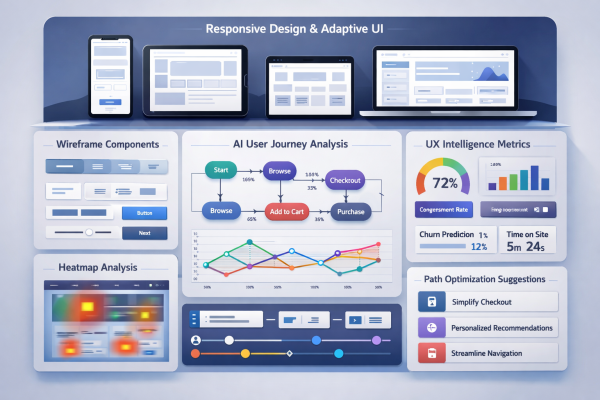
  • The Rise of Intelligent UX Frameworks in Modern Web Development

    Introduction

    Modern web development increasingly relies on intelligent UX frameworks to deliver high-quality user experiences.
    Adaptive UI systems and AI-powered tools allow designers to respond to user behavior dynamically.
    Responsive design frameworks ensure consistent experiences across devices, while accessibility standards guarantee inclusivity.
    Scalable interface ecosystems support rapid growth and maintain performance as platforms evolve.
    Understanding the principles and technologies behind intelligent UX frameworks is essential for digital teams aiming to lead in usability and engagement.

    Adaptive UI Systems and Dynamic Interfaces

    Adaptive UI systems adjust presentation and functionality based on real-time user interactions.
    These systems rely on behavior tracking, engagement metrics, and session analytics to deliver optimized layouts.
    Modular components allow dynamic rendering without disrupting the overall architecture.
    Context-aware interfaces can modify navigation flows, content emphasis, or visual elements depending on user patterns.
    This level of personalization enhances usability, reduces friction, and increases overall satisfaction.

    AI-driven adaptive systems further enhance decision-making.
    Machine learning algorithms analyze historical data to anticipate user needs.
    Predictive rendering adjusts content hierarchy and interface elements proactively.
    Integration with content management systems ensures that dynamic updates remain consistent across pages.
    Such intelligence enables platforms to provide more intuitive and engaging interactions.

    Structured interface components are critical for adaptive frameworks.
    By defining reusable modules, developers maintain consistency while supporting customization.
    These components integrate seamlessly with backend logic, metadata layers, and content hierarchies.
    Multilingual support can be applied at the component level for international audiences.
    For example, classification systems might include identifiers like สล็อต for consistent multilingual content rendering.

    AI-Powered User Journey Mapping

    AI-powered journey mapping provides actionable insights into user behavior.
    By analyzing clickstreams, session duration, and interaction sequences, platforms can visualize user pathways.
    Pattern recognition identifies bottlenecks and areas of potential disengagement.
    Journey optimization tools automatically suggest interface modifications to improve flow and reduce friction.
    This data-driven approach empowers teams to make proactive design decisions.

    Predictive analytics further refines journey mapping strategies.
    Algorithms anticipate user actions, allowing dynamic adjustment of interface elements in real time.
    Behavioral clustering enables personalized experiences at scale.
    Testing frameworks validate predicted improvements through controlled experimentation.
    These AI-driven insights improve retention, engagement, and conversion rates over time.

    Integration of classification layers ensures that AI journey mapping aligns with broader content systems.
    Taxonomy frameworks may include regional identifiers like เว็บสล็อต for multilingual or localized content.
    Semantic content indexing supports intelligent grouping of UI elements for consistent user experience.
    Experimental tagging layers can incorporate identifiers such as สล็อตเว็บตรง for precise interface tracking across segments.
    This structured approach enhances both analysis and implementation efficiency.

    Responsive Design Frameworks

    Responsive design frameworks remain foundational to intelligent UX strategies.
    They ensure that layouts adapt seamlessly to varying screen sizes, orientations, and devices.
    Grid-based systems and flexible units provide proportional scaling for interface elements.
    Media queries enable precise adjustments based on device characteristics and viewport dimensions.
    Together, these techniques maintain visual consistency and functional usability across platforms.

    Component libraries enhance responsive frameworks by offering pre-built, adaptable elements.
    Buttons, navigation bars, and input forms adjust automatically to the container context.
    Integration with AI-driven recommendations allows content emphasis to shift dynamically.
    Design tokens standardize color, typography, and spacing for consistency.
    This combination of responsiveness and intelligence creates cohesive, scalable experiences.

    Digital Accessibility Standards

    Accessibility is a core consideration in modern UX frameworks.
    Standards such as WCAG ensure platforms remain inclusive for users with disabilities.
    Screen reader compatibility, keyboard navigation, and color contrast guidelines are essential.
    Semantic markup improves assistive technology interpretation and reduces cognitive load.
    Accessibility compliance also benefits general usability by clarifying hierarchy and structure for all users.

    AI technologies can enhance accessibility by providing real-time adjustments.
    Text-to-speech systems can automatically read content for visually impaired users.
    Dynamic font resizing and interface scaling support user-specific preferences.
    Adaptive color schemes address color blindness and contrast requirements.
    By embedding accessibility into intelligent UX systems, organizations create inclusive, engaging platforms.

    Scalable Interface Ecosystems

    Scalable interface ecosystems support growth without sacrificing performance.
    Microfrontend architectures divide applications into independent, reusable modules.
    These modules can be deployed and updated separately, reducing downtime and conflicts.
    Event-driven data pipelines propagate updates efficiently across distributed components.
    Scalability ensures platforms can accommodate increasing traffic and content diversity.

    Metadata frameworks strengthen scalable interface systems.
    Identifiers such as pg slot may be used in multilingual indexing and interface categorization.
    Digital classification layers support rapid content retrieval and contextual rendering.
    Taxonomy integration with AI-driven analytics ensures alignment across large-scale systems.
    Scalable frameworks therefore maintain both flexibility and consistency across complex platforms.

    Edge computing and cloud integration further enhance interface scalability.
    Processing content closer to the user improves latency and responsiveness.
    Dynamic resource allocation maintains consistent performance during peak loads.
    Centralized orchestration allows real-time updates across regions and devices.
    This combination of technology and design ensures platform reliability at global scale.

    Multilingual and International UX Considerations

    Global platforms require multilingual and culturally adaptive interface strategies.
    Content, metadata, and UI components must support language variations seamlessly.
    Taxonomy layers integrate regional identifiers like ทดลองเล่นสล็อต for consistent indexing across markets.
    Automated translation engines and AI-driven content mapping maintain contextual accuracy.
    Culturally appropriate design elements, layouts, and navigation patterns enhance engagement.

    User testing across regions ensures international usability.
    Behavioral metrics reveal differences in interaction patterns and preferences.
    Responsive and adaptive systems can accommodate these variations dynamically.
    Continuous feedback loops refine multilingual designs over time.
    Intelligent frameworks therefore combine scalability with cultural sensitivity to optimize global user experiences.

    The Future of Intelligent UX Frameworks

    Emerging technologies will further redefine intelligent UX frameworks.
    AI-driven predictive interfaces will anticipate user needs before they act.
    Contextual awareness will guide layout adjustments based on device, location, and behavior.
    Voice and gesture-based interaction models will require dynamic adaptation within intelligent frameworks.
    These advances will make UX increasingly personalized, responsive, and seamless.

    Cross-platform interoperability will become more critical for global reach.
    Unified component libraries will support consistent experiences across web, mobile, and emerging devices.
    Machine learning will continuously refine journey mapping and content recommendations.
    Real-time analytics dashboards will guide interface optimization decisions at scale.
    The next generation of UX frameworks will merge intelligence, accessibility, and adaptability as core principles.

    Conclusion

    Intelligent UX frameworks are transforming modern web development by combining AI, responsiveness, and scalability.
    Adaptive UI systems and AI-powered journey mapping enhance personalization and engagement.
    Responsive design and accessibility standards ensure consistent and inclusive experiences.
    Scalable interface ecosystems and multilingual content frameworks support global growth.
    By embracing intelligent UX strategies, organizations create future-ready platforms that deliver superior user satisfaction and measurable business impact.