Category: BigNewsNetwork

  • Top 3 Cryptos to Buy Now as Bitcoin Funding Hits Cycle Low: Pepeto, BTC, ETH Before  Listing thumbnail

    Top 3 Cryptos to Buy Now as Bitcoin Funding Hits Cycle Low: Pepeto, BTC, ETH Before Listing

    Bitcoin funding has stayed negative for 46 straight days, the longest streak since 2023. RHODL sits at 4.5, the third highest reading in BTC history. Both historically mark cycle lows that reward wallets willing to buy while everyone else holds cash. For anyone ranking the top 3 cryptos to buy now before the tape turns, the real question is not whether BTC is cheap, it is which presale still carries 100x math. Pepeto leads that list at over $9 million raised with its Binance listing close.

    Top 3 Cryptos to Buy Now as BTC Funding Marks Its Longest Negative Streak Since 2023

    BTC funding has stayed negative for 46 consecutive days per CoinDesk, the longest run in nearly two years. CoinGlassdata shows RHODL at 4.5, a level only crossed at the deepest fear points of 2015 and 2020. Both metrics flag cycle lows rather than tops. The Fear and Greed Index closed at 11 last week, extreme fear levels that have historically been accumulation zones for anyone hunting the top 3 cryptos to buy now. Pepeto is showing up on more of those lists every day.

    How Pepeto, Bitcoin, and Ethereum Stack Up During This Cycle Low Window

    Pepeto Spotlight

    While Bitcoin waits for its cycle low to confirm, Pepeto is already running the market retail needs for the next leg up: a live meme coin exchange where the bridge pulls tokens in from any chain and the risk scorer checks contract code before a buyer commits. The platform is live, no coding skill is needed, and the Binance listing sits close enough that every new day moves the entry further out.

    Pepeto has drawn above $9 million from buyers refusing to wait for the tape to confirm what the order book already shows. The token sits priced at $0.0000001864 in its presale stage, and that price ends the moment Binance opens. Leading the project is the hand that shipped the first Pepe coin, alongside a former Binance expert whose trading engine brings exchange grade execution.

    Tokens staked now compound at 182% APY during the wait, and SolidProof signed off on every contract, so risk enters the spreadsheet as a figure, not a feeling. Every venue that follows the first pulls a fresh cohort into a token cap locked at 420 trillion. A $1,000 buy at the current level opens a seat of roughly 5.36 billion tokens. Even a return that merely matches the first Pepe’s high reads as a ledger reshaping outcome for wallets inside. Listing day analyst models agree on triple digit upside, which is why Pepeto tops honest top 3 cryptos to buy now lists before the tape turns.

    Bitcoin (BTC)

    BTC is trading around $77,131 with funding negative for 46 days, the longest such streak since 2023 per CoinDesk. RHODL at 4.5 places BTC among the deepest fear reads in its history. Even a move to JPMorgan’s top target of $170,000 reads as roughly a 2.3 multiple. That is strong for a large cap, yet a ground floor presale gap stays open in any honest top 3 cryptos to buy now list.

    Ethereum (ETH)

    ETH is trading around $2,400 after Ethereum cleared 200.4 million Q1 transactions per Finbold. Citigroup targets $3,175 by year end, roughly a 1.3 multiple. That is a steady return for a large cap asset. But a presale entry at fractions of a cent delivers 100x math on listing day, which is why Pepeto keeps climbing these top 3 lists.

    Conclusion:

    Every day the presale fills, and every fill pushes the entry further out of reach. Bitcoin and Ethereum are credible holds, yet triple digit returns get bought before the chart confirms. For anyone weighing the top 3 cryptos to buy now, the cheap lane is still uncrowded: a presale at fractions of a cent while BTC sits at $77,131 and ETH at $2,400. The Pepeto official website already carries a working bridge, a working risk scorer, and the SolidProof stamp, and the presale seals the moment Binance opens. Missing Pepeto now is the call that separates the wallets on the listing day screen from the ones watching it.

    Click To Visit Pepeto Website To Enter The Presale

    FAQs

    What are the top 3 cryptos to buy now?

    Pepeto above $9 million with Binance listing close, BTC near a cycle low, ETH off a record Q1 print.

    Why is BTC funding a cycle low signal?

    Funding stayed negative for 46 days, the longest since 2023. Every deep streak marked a bottom, which is why Pepeto ranks first on the top 3 cryptos to buy now.

    Is Pepeto the better buy than BTC or ETH?

    A working bridge, a working risk scorer, the SolidProof cover, and Binance close. See Pepeto official website.

    Disclaimer:
    This article is for informational purposes only and does not constitute financial advice. Cryptocurrency investments carry risk, including total loss of capital. Readers should conduct independent research and consult licensed advisors before making any financial decisions.

    This publication is strictly informational and does not promote or solicit investment in any digital asset

    All market analysis and token data are for informational purposes only and do not constitute financial advice. Readers should conduct independent research and consult licensed advisors before investing.

    Crypto Press Release Distribution by BTCPressWire.com

  • Crypto Update: XRP Joins Rakuten’s 44M Users as SEC Hosts Roundtable, Pepeto Presale Tops $9M thumbnail

    Crypto Update: XRP Joins Rakuten’s 44M Users as SEC Hosts Roundtable, Pepeto Presale Tops $9M

    XRP became tradable in Rakuten Wallet on April 15, reaching 44 million Pay users and 5 million merchants. A day later, SEC Commissioners Peirce and Uyeda opened a roundtable on digital asset rules. CoinShares reported $119.6 million in weekly XRP inflows. That is the kind of crypto update institutional desks act on. For retail hunting the next 100 multiple, the real question is whether a presale at fractions of a cent still beats a blue chip. Pepeto sits past $9 million raised with its Binance listing close, making the presale the clearer buy right now.

    Crypto Update: XRP Listing on Rakuten and SEC Roundtable Push Digital Asset Capital Higher

    Rakuten Wallet added XRP trading in its app on April 15, a channel reaching 44 million Pay users and 5 million merchants per 24/7 Wall St. The same week, SEC Commissioners Peirce and Uyeda hosted a roundtable on digital asset rules, signaling that enforcement has shifted into rulemaking mode. CoinShares logged $119.6 million in weekly XRP inflows, the highest in months. Every crypto update this week says the same thing: capital is rotating into altcoins ahead of clearer US rules.

    Where Pepeto Stands as Institutions Rotate Into Altcoins This Week

    Pepeto Spotlight

    While XRP waits on regulatory tailwinds and fresh listings, Pepeto is already running a live meme coin market retail can use today: PepetoSwap handles trades with no fee cutting into every move, and the Pepeto bridge carries the token across networks so nobody loses value moving chains. The platform is live, and no coding skill is needed.

    Pepeto has already pulled above $9 million from buyers who see the raise pace as the signal, with capital arriving faster each week while the tape stays in fear. The token sits priced at $0.0000001864 in its presale stage, and the crypto update holders track is not an analyst call, it is the raise counter rising toward listing day. At the helm sits the same founder who shipped the first Pepe coin, paired with a former Binance expert running the engine so this reads like a pro trading venue.

    Staked tokens compound at 182% APY during the hold, and SolidProof ran every contract through audit so the downside is counted, not imagined. The raise counter locks the moment Binance opens, after which late buyers pay whatever the tape prints rather than this stage price. Listings stack behind the first, each venue pulling in another cohort at the locked 420 trillion cap.

    Today’s price turns $1,000 into about 5.36 billion tokens. A top matching the first Pepe’s peak rewrites the balance sheet for anyone who held through. Listing day analyst models point at triple digit upside, and that upside belongs to the wallets tracking the raise right now.

    Ripple (XRP)

    XRP is trading around $1.47 after a $119.6 million weekly inflow print per CoinShares. The Rakuten Wallet listing opens a route to 44 million Japanese Pay users. Most year end XRP targets cluster near $3.00 to $4.00, roughly 2x to 3x from here. That is strong for a large cap, but this crypto update leaves a gap only a presale at fractions of a cent can close.

    Solana (SOL)

    SOL is trading around $88 after Tether funded Drift with $148 million in fresh capital per CoinDesk. Standard Chartered reiterated a $250 target for 2026, roughly a 2.9 multiple from here. That is a strong outcome for a large cap asset, yet it leaves a ground floor presale with a gap SOL cannot close this cycle. Monthly active addresses sit at record highs, but that rarely translates to breakout multiples.

    Conclusion:

    Capital moves before news. The pace of the Pepeto raise is the crypto update most readers only notice after they wish they entered earlier. Every cycle pays the wallets that read the raise as the signal. XRP and SOL are credible holds, yet triple digit returns get bought while the tape is still in fear. For anyone tracking the signs, one entry lane remains cheap: a presale at fractions of a cent while XRP trades at $1.47 and SOL at $88. The Pepeto official website is live with the swap, the bridge, a SolidProof stamp, and a raise counter climbing every week. Missing Pepeto before the Binance listing is the call that defines which wallets moved and which watched.

    Click To Visit Pepeto Website To Enter The Presale

    FAQs

    What is the biggest crypto update this week?

    Rakuten Wallet listed XRP, SEC hosted a rules roundtable, and Pepeto crossed $9 million ahead of its Binance listing.

    Why are buyers moving from XRP and SOL into Pepeto?

    XRP and SOL cap near 2x to 3x, while the crypto update from Pepeto opens real 100x math before listing day.

    Is Pepeto a better buy than XRP or SOL today?

    The raise counter, a live swap, a bridge, and SolidProof cover. See Pepeto official website.

    Disclaimer:
    This article is for informational purposes only and does not constitute financial advice. Cryptocurrency investments carry risk, including total loss of capital. Readers should conduct independent research and consult licensed advisors before making any financial decisions.

    This publication is strictly informational and does not promote or solicit investment in any digital asset

    All market analysis and token data are for informational purposes only and do not constitute financial advice. Readers should conduct independent research and consult licensed advisors before investing.

    Crypto Press Release Distribution by BTCPressWire.com

  • Deyang Rata Announces Next-Generation 2MW 415Vac Resistive Load Bank for Advanced Power Testing Applications

    Deyang, China — April 2026 — As a resistive load bank manufacturer, Deyang Rata Technology Co., Ltd. has officially introduced its latest 2MW 415Vac resistive AC load bank, engineered to meet the growing global demand for precise, reliable, and safe power system testing. Designed for generator set validation, data center commissioning, and industrial power load verification, the new system delivers enhanced accuracy, advanced control features, and robust safety mechanisms suitable for modern critical infrastructure environments.

    As industries increasingly rely on uninterrupted and high-quality power supply systems, the need for advanced load testing solutions has become essential. The newly developed 2MW load bank addresses this need by providing highly controlled electrical load simulation, enabling operators to evaluate power system performance under real-world operating conditions.

    1

    2

    3

    Engineered for High-Precision Load Simulation

    The 2MW 415Vac resistive load bank is built to support stepped loading and fine adjustment, allowing operators to conduct full-load testing with precise control over power output. The system supports fine incremental loading as small as 1kW, offering exceptional flexibility for both small adjustments and large-scale load simulation scenarios.

    With an overall measurement accuracy of ≤±3% and a voltage tolerance of ±5% for short-term operation, the system ensures stable and reliable testing results. This level of precision makes it highly suitable for mission-critical environments such as data centers, where even minor fluctuations in power performance must be carefully monitored and controlled.

    Designed for Demanding Industrial Environments

    The load bank operates on a 415Vac three-phase four-wire system and uses a 400V 50Hz auxiliary control voltage. It is engineered to perform reliably under harsh environmental conditions, with an operating temperature range from -15°C to +50°C. Its IP54-rated enclosure ensures protection against dust and water splashes, making it suitable for both indoor and outdoor installations.

    The system incorporates a forced air cooling mechanism with a carefully designed vertical airflow structure. Air is drawn from the bottom and exhausted through the top, allowing for efficient heat dissipation. This design significantly reduces ambient temperature rise around the equipment, improving safety and operational stability in confined or sensitive environments.

    Advanced Safety and Protection Systems

    Safety is a core design priority of the new 2MW load bank. The system is equipped with multiple protective functions to ensure reliable operation during extended testing cycles. These include over-temperature protection, airflow monitoring, fan overload protection, and an emergency stop system.

    Together, these safeguards provide continuous operational security, reducing the risk of equipment failure and ensuring that testing procedures can be conducted with maximum confidence. The integrated monitoring systems also help operators identify and respond to abnormal conditions in real time, further enhancing system reliability.

    Remote Control and System Integration Capability

    To support modern digital infrastructure requirements, the load bank features remote control functionality and system integration capabilities. This allows operators to manage testing procedures from centralized control systems, improving operational efficiency and reducing manual intervention.

    The integration capability also makes the system suitable for automated testing environments, where load testing can be scheduled, monitored, and analyzed as part of larger power management systems. This feature is particularly valuable for data center operators and industrial facilities seeking streamlined operations and improved energy management.

    Vertical Airflow Design for Optimized Performance

    A key engineering highlight of the system is its vertical airflow structure. This design ensures that heat generated during operation is efficiently concentrated and expelled, preventing overheating and maintaining stable internal temperatures.

    By directing hot air upward and away from surrounding equipment, the system minimizes environmental impact and improves compatibility with both outdoor installations and machine room exhaust systems. This makes it highly adaptable across different deployment scenarios, from industrial plants to high-density data centers.

    Target Applications and Market Focus

    The 2MW 415Vac resistive load bank is specifically targeted at the Indonesian market, with a strong focus on data center operators and industrial power system integrators. As digital infrastructure continues to expand across Southeast Asia, demand for reliable power testing equipment is expected to grow significantly.

    The system is particularly suited for generator manufacturers, utility providers, and facility operators who require accurate load simulation for system validation, commissioning, and maintenance testing.

    WechatIMG267

    WechatIMG91

    Structured Manufacturing and Quality Assurance

    The production process of the load bank follows a structured and multi-stage engineering approach. It includes material selection and preparation, load module processing, control system assembly, and cooling system construction. The final stages involve circuit wiring, enclosure assembly, and comprehensive testing procedures.

    Each unit undergoes functional testing as well as extreme environment evaluation to ensure consistent performance under demanding conditions. This rigorous quality control process ensures that every system meets international standards for safety, durability, and operational efficiency.

    Advancing Power Testing Technology

    With the launch of this new 2MW resistive load bank, Deyang Rata Technology Co., Ltd. reinforces its commitment to advancing power testing technology and supporting global infrastructure development. The system reflects the company’s focus on innovation, precision engineering, and safety-driven design principles.

    As industries continue to modernize their energy systems, advanced testing solutions like this load bank will play a critical role in ensuring reliability, efficiency, and long-term operational stability.

    About Deyang Rata Technology Co., Ltd.

    Deyang Rata Technology Co., Ltd. specializes in providing professional power testing solutions for industrial and commercial applications. The company focuses on the design and manufacturing of advanced load testing systems that support generator validation, data center commissioning, and industrial energy management.

    For media inquiries please contact

    Email: gongzhenhua@rata.top
    WhatsApp: +86 13890270038

    Media Contact:
    Company Name: Rata
    Contact Person: Gong Zhenhua
    Email: gongzhenhua@rata.top
    Phone / WhatsApp: +86-13890270038
    Address: Hongyu Road East, Jinshan Industrial Park, Luojiang District, Deyang, China
    Website: https://www.cnloadbank.com/


  • The Dragon and the Smoke: How Ancient Chinese Symbolism Lives in Every Curl of Incense

    Uncover the profound story of dragon symbolism incense Chinese culture — where sacred imagery and sacred fragrance have always belonged together

    Picture a bronze censer, centuries old, sitting at the center of a temple altar. Its surface is alive with carved dragons — sinuous bodies coiling around the vessel’s rim, heads raised, mouths open. When incense is placed inside and lit, smoke rises from those open mouths and drifts upward toward the ceiling. The dragons appear to breathe.

    That image is not accidental. It is not decoration. It is a complete cosmological statement, made visible through craft and fire and fragrance: that the dragon and the smoke share the same nature, move toward the same destination, and serve the same sacred purpose.

    Dragon symbolism incense Chinese culture is not a niche academic subject. It is the story of how one of the world’s oldest and most sophisticated civilizations chose to communicate with the divine — and how that choice shaped an entire tradition of fragrance, ritual, and spiritual practice that continues to resonate in the modern world.

    This is that story.

    The Dragon in Chinese Consciousness: Not a Monster, But a Mirror

    To understand why the dragon became so central to Chinese incense culture, you first need to understand what the dragon actually represents in Chinese cosmology — because it is almost entirely different from what the word conjures in the Western imagination.

    A Creature of Heaven, Not of Terror

    The Western dragon is fundamentally a creature of destruction. It guards treasure maliciously. It breathes fire as a weapon. It must be slain by the hero for the story to end well. The entire Western dragon narrative is one of conquest — human will overcoming bestial chaos.

    The Chinese dragon — lóng (龍) — operates in a completely different moral and cosmological universe. It is not chaos to be overcome. It is order itself, made manifest. The dragon is the regulating force of the natural world — governing rain and rivers, clouds and seas, the turning of seasons and the cycling of energy through all living systems.

    Where the Western dragon destroys, the Chinese dragon sustains. Where the Western dragon hoards, the Chinese dragon gives. Where the Western dragon is slain, the Chinese dragon is honored, invoked, and aspired to.

    This distinction is not a minor footnote. It is the foundation of everything that follows. You cannot understand why the Chinese placed dragons on their most sacred objects — their ceremonial vessels, their imperial robes, their incense burners — without understanding that the dragon was considered a partner in the work of maintaining cosmic harmony, not an adversary to be defeated.

    Strength as Sacred Responsibility

    The Chinese dragon represents strength, but not the strength of domination. It is the strength of alignment — power that arises from being in correct relationship with the forces of heaven and earth.

    This concept runs deeply through Chinese philosophical traditions. In Taoism, the highest form of strength is wu wei — effortless action, power that flows from alignment with the Tao rather than from force of will against it. The dragon embodies this perfectly. It does not struggle through the sky. It is the sky’s movement. It does not fight the river. It is the river’s nature.

    When Chinese emperors wrapped themselves in dragon imagery, they were not claiming the right to do whatever they wished. They were claiming — and accepting — the responsibility to govern in alignment with cosmic order. The dragon was their reminder and their standard. Step outside that alignment, and the mandate of heaven could be revoked.

    Transformation as the Dragon’s Essential Nature

    Perhaps the most significant quality of the Chinese dragon — and the most relevant to its relationship with incense — is its nature as a shape-shifter and transformer.

    Chinese dragons can expand to fill the entire sky or contract to fit inside a teardrop. They move between water and clouds, between earth and heaven, between the seen and the unseen. They are not confined to one form or one dimension of reality.

    This capacity for transformation — for moving between states, for carrying something from one realm into another — is precisely what links the dragon to the practice of burning incense. Incense does exactly what the dragon does: it takes something solid and earthly and transforms it, through fire, into something immaterial that rises toward heaven.

    The dragon does not merely decorate the incense burner. It describes what the incense burner does.

    Chinese Incense: Three Thousand Years of Fragrant Intention

    Before we examine how these traditions merge, it helps to understand the depth and sophistication of Chinese incense culture on its own terms.

    Origins in Sacrifice and Offering

    The earliest use of fragrant materials in Chinese ritual was straightforward in its logic: burning something precious — aromatic wood, herbs, resins — was a form of offering. You were giving something of value, transforming it through fire, and sending it upward to those you wished to honor or petition.

    This is a near-universal impulse across human cultures. The ancient Egyptians burned kyphi. The Hebrews burned ketoret in the Temple. The ancient Greeks offered fragrant herbs to their gods. The specific materials differed, but the underlying act was the same: fire as transformer, smoke as messenger, fragrance as the evidence that the offering had been accepted.

    In China, this instinct developed into something far more elaborate over centuries. By the Han dynasty, incense culture had become a sophisticated art. By the Tang and Song dynasties — China’s great eras of cultural refinement — incense appreciation (xiāng dào) had become a discipline as refined as calligraphy or tea ceremony, practiced by scholars and aristocrats who could identify rare fragrances blindfolded and discuss their spiritual and emotional qualities with the depth of literary critics.

    The Sacred Materials

    Chinese incense tradition developed around a specific palette of ingredients, each with its own symbolic weight and experiential quality.

    Agarwood (沉香, chén xiāng) stands above all others as the supreme incense material. Formed when the Aquilaria tree produces dense, resin-saturated wood in response to injury or infection, agarwood is itself a symbol of transformation — extraordinary value and beauty arising from wounding and healing. The finest aged agarwood is among the most expensive materials in the world, more valuable by weight than gold, with a fragrance so complex and ineffable that perfumers have spent careers attempting to describe it.

    Sandalwood (檀香, tán xiāng) is the universally sacred fragrance of Asian spiritual life. Cool, creamy, and deeply grounding, sandalwood quiets the mind and opens the heart. It is the fragrance most associated with meditation, with prayer, and with the quality of attention that makes genuine spiritual practice possible.

    Frankincense, camphor, benzoin, and various aromatic herbs round out the traditional palette, each contributing specific energetic and aromatic qualities to the complex language of Chinese incense blending.

    Together, these materials form a vocabulary — one that skilled incense masters use to create experiences that are simultaneously sensory, emotional, and spiritual.

    Where Dragon and Incense Converge: Sacred Objects and Sacred Space

    The Dragon Censer as Spiritual Technology

    The most direct intersection of dragon symbolism and incense culture is the xiāng lú — the incense burner — in its dragon form. Dragon censers are among the most extraordinary objects ever produced by Chinese craft traditions, and understanding them properly changes how you see both the dragon and the incense.

    In a dragon incense burner, the fragrant material is placed inside the body of the dragon itself. The smoke — the prayer, the offering, the communication with heaven — emerges from the dragon’s mouth. The dragon is not merely present. The dragon is the mechanism of transformation.

    This arrangement encodes a complete spiritual statement in physical form: the dragon receives what is earthly, applies its transformative nature, and releases what is sacred upward toward heaven. The incense burner does not use dragon imagery as decoration — it uses dragon imagery as accurate description.

    The finest historic dragon censers, now housed in museums and private collections, are staggering works of art and devotion. Bronze censers with intricate scale work. Porcelain burners in imperial blue and white. Jade pieces of impossible delicacy. Each one is not just a beautiful object — it is a working spiritual instrument, designed to accomplish something specific.

    Imperial Ritual and the Five-Clawed Dragon

    In Chinese imperial symbolism, the five-clawed dragon was the exclusive symbol of the Emperor — the Son of Heaven, the human being whose role it was to maintain the connection between the earthly realm and the divine. Four-clawed dragons could appear in the art of nobles. Three-clawed dragons in the art of lesser officials. But five claws belonged only to heaven’s representative on earth.

    Imperial incense rituals — conducted at the Temple of Heaven, at ancestral shrines, and at key points in the ceremonial calendar — were considered acts of cosmic maintenance, not merely religious observance. The Emperor, burning the finest aged agarwood in five-clawed dragon censers, was renewing the contract between humanity and heaven. The dragon carried the offering upward. Heaven, through the dragon, maintained its blessing on the empire below.

    This framing makes a remarkable claim: that the act of burning incense — done with the right materials, in the right vessel, with the right intention — is not a private spiritual gesture but a public cosmic responsibility. Dragon symbolism incense Chinese culture, at its highest expression, was literally understood as the mechanism by which the world remained in order.

    Temple Culture and Communal Fragrance

    Beyond the imperial court, dragon-decorated censers were central fixtures of Chinese Buddhist and Taoist temples. Large bronze censers placed in temple courtyards — often decorated with dragons — received the incense offerings of ordinary worshippers alongside the formal rituals of monks and priests.

    This democratization of the practice is significant. The imperial ritual was exclusive by necessity. But the temple censer was available to anyone who came, bowed, and placed their incense with sincere intention. The dragon protected and enabled that communication for everyone.

    In Chinese Buddhist tradition, dragons (nāga in Sanskrit) are among the guardians of the Dharma — the protective forces that maintain the conditions necessary for awakening to be pursued. Their presence in temple art and on temple objects is therefore not merely decorative or cultural. It is a statement about what makes the space sacred and what makes practice within it possible.

    The relationship between sacred objects and the quality of spiritual practice runs through many traditions, across many cultures. This thoughtful examination of monastic dress and its spiritual significance illustrates how physical objects — whether a monk’s robe, a carved censer, or a sacred symbol — shape the quality of awareness and intention that contemplative practice cultivates. The principle is consistent: in spiritual life, what surrounds us matters.

    The Incense Ritual as Dragon Practice: Transformation From the Inside Out

    Preparing the Space and the Self

    Traditional Chinese incense ritual, at its most refined, was never simply a matter of lighting a stick and walking away. It was a practice of preparation — of the space and of the practitioner.

    The space was cleaned, simplified, and ordered. A single scroll might be displayed. A vase of seasonal flowers placed nearby. The incense burner positioned with care. This process of physical preparation was itself a mental preparation — an ordering of the outer environment that gradually ordered the inner one.

    The practitioner would wash hands before handling the incense materials — a gesture of purification that acknowledged that what was about to happen deserved respectful approach.

    Only then would the incense be prepared — carefully, slowly, with full attention on each step.

    This sequence — preparation, purification, presence, offering — mirrors the dragon’s own movement through its transformative arc. It is not rushing. It is not efficient. It is ceremonial, and the ceremony is the point.

    The Art of Incense Appreciation: Xiāng Dào

    Among the most sophisticated expressions of Chinese incense culture is xiāng dào — the Way of Incense — which developed as a formal art during the Song dynasty and reached its peak during the Ming.

    Participants in a xiāng dào gathering would sit in a carefully prepared room, often in silence or with very quiet music. Small quantities of the finest incense materials — aged agarwood chips, rare resins, exquisite blends — would be heated gently over charcoal on a bed of fine ash in a ceramic bowl. Participants would receive the burner in turn, cupping their hands around it to direct the fragrant smoke toward their face, breathing slowly and deeply, then passing it on.

    Afterward, the group would discuss what they had experienced — not just the fragrance itself, but the images, memories, emotions, and qualities of awareness the fragrance had evoked. The vocabulary was poetic rather than technical. A fragrance might be described as having the quality of emptiness and stillness, or of mountain rain after thunder, or of the moment just before dawn.

    This practice reveals something essential: that Chinese incense culture was never merely about smell. It was about using fragrance as a tool for deepening awareness, refining perception, and accessing qualities of experience that ordinary daily life does not provide.

    The dragon, in this context, is not just on the censer. It is in the practice itself — the movement from ordinary perception toward something more elevated, more spacious, more clear.

    Dragon Symbolism and Incense in Modern Spiritual and Wellness Practice

    The Ancient Conversation Continues

    We live in a remarkable cultural moment for these traditions. After decades in which Eastern spiritual practices were either ignored in the West or absorbed in superficial ways, there is a growing recognition that these practices carry genuine depth — that they are the accumulated wisdom of civilizations that spent millennia investigating the nature of mind, energy, and wellbeing.

    Chinese incense culture and dragon symbolism are both beneficiaries of this recognition. Dragon imagery in wellness spaces, meditation studios, and mindful home design is no longer seen as mere ethnic decoration. Increasingly, it is chosen with awareness of what it actually means — the transformative power, the alignment with natural forces, the capacity to carry intention from one state to another.

    Similarly, the use of natural incense — particularly agarwood and sandalwood in traditional Chinese forms — has grown dramatically among people who may have no Chinese ancestry but who have discovered what practitioners have always known: that these fragrances do something to human consciousness that nothing else quite replicates.

    Building a Dragon-Informed Incense Practice

    For anyone drawn to explore this tradition personally, the entry point is simpler than it might seem.

    Begin with quality materials. The difference between natural agarwood or sandalwood incense and synthetic fragrance sticks is profound — not just in scent quality but in the effect on the nervous system and the quality of awareness the fragrance induces. Natural resins and woods connect you to something real. Synthetic fragrance simply smells.

    Choose your vessel with intention. A dragon-decorated incense burner is not a necessary purchase, but it is a meaningful one. Every time you use it, you engage — consciously or not — with the symbolic language of transformation and sacred communication that has surrounded that imagery for three thousand years.

    Slow down the ritual. The temptation with incense in a modern context is to treat it as background ambiance — light it, put it down, and go about your business. That is fine for some purposes. But if you want to access the deeper dimension of the tradition, give the ritual your full attention, at least occasionally. Prepare the space. Wash your hands. Light the incense with awareness of what you are doing and why. Sit with it for a few minutes before moving on.

    Use it as a meditation anchor. The fragrance of incense, particularly sandalwood and agarwood, has a reliable effect on the quality of attention — it deepens and slows it naturally. Using incense at the beginning of a meditation practice can significantly support the transition from ordinary mental activity to the quality of presence that meditation cultivates.

    Dragon Energy as Daily Orientation

    Beyond specific incense rituals, the broader symbolic language of the dragon offers something genuinely useful for modern life: a model of strength that is not aggression, power that is not domination, and transformation that is not disruption.

    The dragon moves with the forces of the cosmos rather than against them. It does not force the river — it becomes the river’s movement. It does not conquer the sky — it is the sky’s capacity to carry rain and cloud and season.

    In daily terms, this translates into a quality of engagement with life’s challenges that is patient, responsive, and aligned with larger forces — rather than reactive, forcing, and isolated. This is, of course, what Taoist philosophy teaches. What the dragon adds is an image — vivid, alive, and deeply beautiful — that makes the philosophy visceral rather than abstract.

    Keeping a dragon image in your meditation space, on your desk, or on your incense burner is a consistent, gentle reminder of this orientation. The dragon asks: are you moving with what is, or against it? Are you using your strength to maintain harmony, or to impose your will? Are you allowing transformation, or are you resisting it?

    These are not easy questions. But they are good ones. And having a symbol that asks them, quietly and persistently, is worth more than any number of motivational posters or productivity frameworks.

    Conclusion: The Smoke Still Rises

    Dragon symbolism incense Chinese culture is not a historical relic. It is a living tradition — one that has been refined across thirty centuries and continues to offer genuine depth to anyone willing to approach it with respect and curiosity.

    The dragon still coils around the censer. The incense still burns. The smoke still rises — carrying intention upward, just as it always has, from the earthly toward the sacred.

    What has changed is simply the world around that practice. The practitioner today might be sitting in an apartment rather than a scholar’s studio. The censer might have been shipped across an ocean. The fragrance might be appreciated by someone who came to it through a wellness podcast rather than a temple upbringing.

    None of that changes what happens when the incense is lit with genuine intention and the fragrant smoke begins to rise. The dragon, in that moment, is still present — transforming the solid into the immaterial, the earthly into the sacred, the ordinary moment into something that feels, briefly but unmistakably, like contact with something larger than ourselves.

    That is what this tradition has always offered. And that, in the end, is why it endures.


  • Best Crypto Presale 2026 as Ethereum Hits Record 200M Q1 Transactions: Pepeto Crosses $9M With  Listing Close thumbnail

    Best Crypto Presale 2026 as Ethereum Hits Record 200M Q1 Transactions: Pepeto Crosses $9M With Listing Close

    Ethereum just cleared 200.4 million transactions in Q1, the first quarter in its history above 200 million and a 43 percent jump from Q4. Active addresses climbed 1,704 percent in the same window. That is a strong recovery story, if it holds. But for anyone watching the best crypto presale 2026 race for outsized returns, the real question is whether a presale still beats a blue chip this cycle. Pepeto sits at over $9 million raised with a Binance listing close, which is why it keeps ranking as the clearer buy.

    Best Crypto Presale 2026 Thesis Strengthens as Ethereum Records 200M Q1 Transactions

    Ethereum posted 200.4 million on chain transactions in Q1 2026, a first for any quarter, per CoinDesk. Active addresses rose 1,704 percent from a year earlier. That print is real, and it supports ETH as a long term hold. But institutions are already inside that trade. Retail capital looking for the best crypto presale 2026 winner needs ground floor pricing, not a breakout off a tape already priced in. That is the gap Pepeto was built to close.

    Where Pepeto Fits Among the Strongest Plays in Crypto Right Now

    Pepeto Spotlight

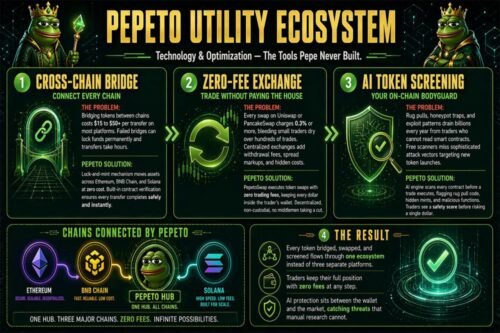
    While Ethereum builds volume for long term holders, Pepeto is building something more immediately useful for retail capital: a live meme coin trading hub that lets holders scan any contract for risk and bridge across chains. The platform runs live tools today, and no coding skill is needed. Pepeto pairs its risk scorer with a cross chain bridge, which means retail spots red flags before the buy and moves in from any network without paying double fees.

    The Pepeto token sits priced at $0.0000001864 in its presale stage, having drawn above $9 million from buyers who treat this window as the last low cost entry before the Binance listing and the best crypto presale 2026 slot they plan to hold. The builder behind the first Pepe coin now steers Pepeto, alongside a former Binance trading expert whose engine drives the exchange stack.

    Stakers earn 182% APY on held tokens, and the SolidProof audit stamp keeps every contract line on record so the downside is measured, not theoretical. The presale window ends when Binance begins, which is also when the discount disappears. More listings stack behind the first, each dragging a new buyer pool at the locked 420 trillion supply.

    Current pricing converts $1,000 into roughly 5.36 billion Pepeto tokens. A top matching the first Pepe’s peak turns that stake into numbers nobody plans to spend. Once trading opens, analyst models point at triple digit upside, and that upside lines up with the wallets that moved first.

    Bitcoin (BTC)

    BTC is trading around $77,131 with funding rates negative for 46 straight days, the longest such stretch since 2023 per CoinDesk. RHODL at 4.5 is the third highest reading in Bitcoin history, a pattern often linked to cycle lows. Even a move toward the top JPMorgan target of $170,000 reads as roughly a 2.3 multiple. That is strong for a large cap asset, yet it leaves a gap only the best crypto presale 2026 pick can close.

    Ethereum (ETH)

    ETH is trading around $2,400 after the record 200.4 million Q1 transaction print per Finbold. Citigroup has set a year end target near $3,175, a roughly 1.3 multiple from here. That is a steady outcome for a large cap asset. But it is a far cry from the kind of move a presale entry at fractions of a cent can deliver once the listing opens the door to a broader buyer pool.

    Conclusion:

    Last cycle made millionaires out of the wallets that moved first. Ethereum is a credible hold, yet tokens that deliver triple digit returns get bought before the thesis reaches everyone. For anyone regretting a missed entry, the best crypto presale 2026 window is still cracked open at fractions of a cent, while BTC sits at $77,131 and ETH at $2,400. The Pepeto official website already runs a working risk scorer, a working bridge, and carries the SolidProof stamp. Pepeto, built by the same Pepe cofounder with a Binance listing close, is how that same kind of wealth gets built again, and missing it could be the regret that defines this cycle.

    Click To Visit Pepeto Website To Enter The Presale

    FAQs

    What is the best crypto presale 2026 to buy right now?

    Pepeto leads with above $9 million raised, a live exchange, SolidProof audit, and a Binance listing close.

    Why is Pepeto a better bet than BTC or ETH?

    BTC and ETH sit near 2x to 3x targets, while the best crypto presale 2026 pick at fractions of a cent opens 100x math.

    Is the presale still open today?

    Yes, the Pepeto official website confirms it runs until Binance opens.

    Disclaimer:
    This article is for informational purposes only and does not constitute financial advice. Cryptocurrency investments carry risk, including total loss of capital. Readers should conduct independent research and consult licensed advisors before making any financial decisions.

    This publication is strictly informational and does not promote or solicit investment in any digital asset

    All market analysis and token data are for informational purposes only and do not constitute financial advice. Readers should conduct independent research and consult licensed advisors before investing.

    Crypto Press Release Distribution by BTCPressWire.com

  • HBAR Price Prediction Builds Toward $0.218 as McLaren Joins Hedera Council: Pepeto Tops $9M Before  Listing thumbnail

    HBAR Price Prediction Builds Toward $0.218 as McLaren Joins Hedera Council: Pepeto Tops $9M Before Listing

    Hedera just added McLaren Racing to its Governing Council, putting HBAR in reach of 600 million Formula 1 viewers. FedEx joined in February, and Google and IBM already sit on the same body. That is a credible recovery setup, if enterprise wins keep landing. But for anyone tracking the hbar price prediction for bigger returns, the real question is whether a presale delivers more. Pepeto, with over $9 million raised and a Binance listing close, reads as the clearer entry right now.

    HBAR Price Prediction Builds Toward $0.218 as McLaren Joins 31 Member Hedera Council

    Hedera’s Governing Council now stands at 31 members after McLaren Racing joined per openPR. That lineup already includes Google, IBM, FedEx, and Boeing, a roster few Layer 1 networks can match. HBAR trades near $0.088, down 47 percent from yearly highs, with the $0.10 level acting as the key resistance every hbar price prediction hinges on. Fear and Greed has stayed in Extreme Fear for more than 60 days. That is the backdrop institutions are quietly building into.

    Is Pepeto the Presale That Captures More This Cycle Than HBAR Can Deliver Post Recovery

    Pepeto Spotlight

    While Hedera courts Fortune 500 names for its Council, Pepeto is building something more immediately useful for retail capital trying to beat this cycle: a live meme coin trading hub that lets holders bridge across chains and swap without fees on one screen. The platform runs live tools today, and no coding skill is needed.

    Pepeto pairs its cross chain bridge with PepetoSwap zero fee trading, which means retail keeps every cent of a move and stops paying two sets of fees to rotate between networks. While the hbar price prediction points to $0.218, the Pepeto token sits priced at $0.0000001864 in its presale stage, having drawn above $9 million from buyers who treat this window as the last low cost entry before the Binance listing.

    The cofounder who built the original Pepe coin leads the project, carrying the same hand that turned a meme into a crypto winner, with a former Binance trading expert backing the engine so the stack reads like a real market venue. Staking yields 182% APY on every token held through the wait, and the SolidProof audit covers every line of contract code so risk stays counted, not guessed.

    The presale shuts the moment Binance goes live. Anyone who delayed past that hour pays whatever the market decides, not this stage price. Venues stack after the first, each one dragging another buyer pool at the locked 420 trillion supply. A $1,000 buy at current pricing picks up near 5.36 billion tokens. If a future top merely matches the first Pepe’s high, that stake rewrites what life changing means for whoever held through. Analyst models around listing day land on triple digit upside, and that upside flows to wallets that moved during the fear window.

    Hedera (HBAR) Price Prediction

    HBAR is trading around $0.088 as of April 17 per CoinMarketCap. Binance projects $0.218 for HBAR in 2026, a 148 percent move from here. Javon Marks sees a breakout to $0.504 if HBAR clears $0.10 resistance. Even using the most bullish hbar price prediction target, a move from $0.088 to $0.504 reads as roughly 5.8x. That is strong for a large cap, yet presale entries still carry a gap HBAR cannot close this cycle. Its upside stays bounded by supply above 42 billion and capital already priced in. Pepeto is priced at the presale level before the broader market gets access.

    Conclusion:

    Every cycle produces winners who entered during fear and made returns during recovery. The McLaren win is the most credible Council booking for Hedera. But the best returns rarely come after the story goes public. HBAR is a strong play, yet triple digit returns get bought during fear, not recovery.

    For anyone reading the hbar price prediction today, the door still stands open: a presale stage priced in fractions of a cent, not the $0.088 tape or the $0.504 target. The Pepeto official website shows a live bridge, swap, and SolidProof audit. Wallets entering Pepeto in this fear window join every past cycle winner, and missing it before Binance could be the most painful call this cycle.

    Click To Visit Pepeto Website To Enter The Presale

    FAQs

    What is the hbar price prediction after McLaren joins?

    Binance targets $0.218 for 2026 and Javon Marks sees $0.504. Both sit below a presale return on listing day.

    Why are buyers moving from HBAR to presale?

    HBAR stays capped by supply above 42 billion, and every hbar price prediction leaves room for a presale at fractions of a cent.

    Is Pepeto a better buy than HBAR right now?

    A live bridge, a fee free swap, a SolidProof stamp, and Binance close. Visit the Pepeto official website.

    Disclaimer:
    This article is for informational purposes only and does not constitute financial advice. Cryptocurrency investments carry risk, including total loss of capital. Readers should conduct independent research and consult licensed advisors before making any financial decisions.

    This publication is strictly informational and does not promote or solicit investment in any digital asset

    All market analysis and token data are for informational purposes only and do not constitute financial advice. Readers should conduct independent research and consult licensed advisors before investing.

    Crypto Press Release Distribution by BTCPressWire.com

  • Polygon Price Prediction as POL Unlocks $330M Capital: Pepeto Crosses $9M With  Listing Close thumbnail

    Polygon Price Prediction as POL Unlocks $330M Capital: Pepeto Crosses $9M With Listing Close

    Polygon Labs unlocked $330 million in idle capital with the sPOL launch on April 14. The team called staked POL the hidden weakness in a payments push that cleared 178 million stablecoin transfers last month. Polygon plans to move over 2 billion payments in 2026, a strong story if it plays out. But for anyone watching the polygon price prediction for bigger returns, the question is whether a presale delivers more. Here is why Pepeto, above $9 million raised with the Binance listing close, looks like the clearer buy.

    Polygon Price Prediction Shifts as sPOL Unlocks $330 Million in Idle Capital

    Polygon Labs leads the Layer 2 payments race with $3.56 billion in stablecoin supply and 35 percent of global transfer volume per Coin Edition. The sPOL rollout rests on three ideas: unlock idle capital, deepen onchain liquidity, and pull more payment providers in. Revolut moved over $1.2 billion through Polygon, and the team is in talks to raise $100 million per Tech Startups. POL pushed near $0.093 last week before settling at $0.090. That is the backdrop behind every polygon price prediction this month.

    Is Pepeto the Presale That Outruns What Polygon Can Deliver Before the Binance Listing

    Pepeto Spotlight

    While Polygon builds payment rails for the long haul, Pepeto is already running the tool kit retail needs for this cycle: a live meme coin exchange that handles zero fee swaps and screens any contract for risk before a buy lands. The platform runs live tools today, and no coding skill is required to use any of them. Pepeto pairs PepetoSwap zero fee trading with a risk scorer that reads any contract before a dollar moves, which keeps more of every trade with retail and blocks the rug pulls that drained wallets last cycle.

    While the polygon price prediction gives POL a path to $0.218, the Pepeto token sits priced at $0.0000001864 in its presale stage, having drawn above $9 million from buyers who treat this window as the last low cost entry before the Binance listing. Holding positions earn 182% APY through the staking window, and SolidProof certified every contract in writing, so the downside carries a stamp, not a shrug.

    The cofounder who launched the original Pepe coin leads the build, with a former Binance expert on the trading engine so the stack inherits real exchange experience. Presale access ends the day Binance opens, and latecomers take whatever price the tape offers, not this stage.

    Every venue after the first pulls another buyer layer into a token cap fixed at 420 trillion. At this level, $1,000 maps to about 5.36 billion Pepeto tokens. Even a top that barely matches the first Pepe’s high flips that stake into numbers worth holding. Listing day analysts read triple digit upside into the open, naming the wallets that moved while this entry was open.

    Polygon (POL) Price Prediction

    POL is trading around $0.090 as of April 17 per CoinMarketCap. The sPOL launch adds to a crowded field of forecasts. Binance analysts project $0.218 for POL in 2026. Analyst Javon Marks sees a breakout base supporting $0.504 on the chart. Even using the most bullish polygon price prediction target, a move from $0.090 to $0.504 reads as roughly a 5.8 multiple. That is a strong outcome for a large cap asset.

    But that math also shows exactly why presale entries at the ground floor carry a gap POL cannot close this cycle. Its upside stays bounded by a supply above 10 billion and the weight of capital already sitting inside it. Unlike POL, Pepeto is priced at the presale level before the broader market gets access.

    Conclusion

    The sPOL launch is the most credible payments case for Polygon in 2026. But the best returns rarely come after the story is already priced in. Polygon is a strong rail, yet tokens that deliver triple digit returns get bought before the listing. For anyone checking the polygon price prediction today, the option still sits open: a presale entry at fractions of a cent, not $0.090 or $0.504. The Pepeto official website shows a working exchange and a verified audit. Every winner on POL moved while the entry was still open, and entering Pepeto before the Binance listing is that same decision, so missing it could be the worst call of this cycle.

    Click To Visit Pepeto Website To Enter The Presale

    FAQs

    What does the polygon price prediction signal for retail?

    Binance targets $0.218 and Javon Marks flags $0.504. Both sit below a presale return on listing day.

    Why are buyers rotating from POL after the sPOL launch?

    POL stays capped by supply, and every polygon price prediction target leaves room for a presale at fractions of a cent.

    Is Pepeto a better buy than POL right now?

    The Pepeto official website shows a live exchange, SolidProof audit, and Binance listing close, a setup POL cannot match.

    Disclaimer:
    This article is for informational purposes only and does not constitute financial advice. Cryptocurrency investments carry risk, including total loss of capital. Readers should conduct independent research and consult licensed advisors before making any financial decisions.

    This publication is strictly informational and does not promote or solicit investment in any digital asset

    All market analysis and token data are for informational purposes only and do not constitute financial advice. Readers should conduct independent research and consult licensed advisors before investing.

    Crypto Press Release Distribution by BTCPressWire.com

  • New Cryptocurrency Flows Accelerate as BTC Cycle Low Signal Lines Up With Pepeto’s $9M  Listing Push thumbnail

    New Cryptocurrency Flows Accelerate as BTC Cycle Low Signal Lines Up With Pepeto’s $9M Listing Push

    Bitcoin’s on chain data pointing to a cycle low while long term holders regain dominance is a signal the last two bull runs only gave once each. Every wallet that bought during the October flush and held through February is now sitting on the exact coin profile that has led past rallies. As the macro floor forms, capital is also moving toward a new cryptocurrency set loaded with running products rather than roadmaps. While analysts debate which majors leap first, capital is rotating toward early stage tokens like Pepeto that combine a live network with a near Binance listing.

    Bitcoin cycle reset signal pairs with a new cryptocurrency rotation across early stage coins

    The RHODL ratio suggests current market conditions match cycle corrections rather than late stage tops, with long term holders dominating, per CoinDesk. BTC trades near $77,200 on April 17 as the two month high holds, according to Yahoo Finance. Charles Schwab is rolling out spot BTC and ETH trading for retail with Paxos custody, widening the pipe for every new cryptocurrency chasing a first listing this cycle.

    Bitcoin’s floor forming and the presales drawing the sharpest wallets

    Pepeto: the network positioned for Binance listing flow

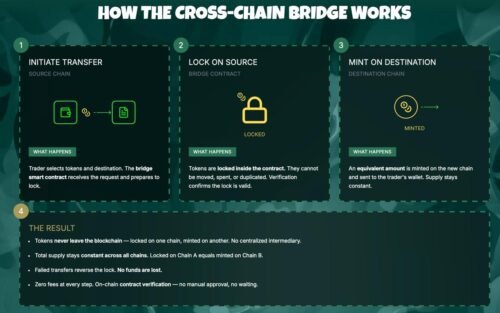
    That backdrop leads directly to a presale reshaping every new cryptocurrency watchlist of 2026. Pepeto is a network being built to hand any wallet the same toolset big funds use to move size without friction. One thing settles it. The network already runs. Any wallet can join today and use the full stack. The Pepeto Bridge carries tokens between chains with no gas charged, and the Pepeto Risk Scorer reviews contract code and blocks a trade into a flagged token before money leaves.

    While many presale coins still sit behind a roadmap, Pepeto opened its network early and keeps layering tools while holders move size on it. Every contract was audited by SolidProof, the Binance listing is approaching, and more than $9 million has landed from wallets buying into the combination rather than a pitch. Locked wallets earn 182% APY through staking, shifting the gap before listing into income.

    As BTC on chain signals point to a cycle low and long term holders regain dominance, demand for a network that actually ships keeps climbing. Networks moving tokens across chains at zero cost and screening a bad contract ahead of the buy are becoming the first stop every serious wallet checks. Coins uniting a working network with an early buy at $0.0000001864 capture the heaviest capital during a cycle’s opening leg, which is why Pepeto surfaces beside DOGE and LINK across 2026 watchlists.

    Dogecoin

    DOGE trades near $0.098 with price action flat across Q1 after the memecoin season cooled, according to CoinMarketCap. ETF filings keep the token on radar, but repeating a 10x move from here would put DOGE near a $240 billion valuation, a mark even 2021 only brushed once. For buyers hunting a new cryptocurrency with real upside, the math at DOGE’s size is tighter than many remember from 2021.

    Chainlink

    Chainlink trades near $9.61 as CCIP and real world asset integrations keep building across chains, per CoinGecko. The oracle network remains central to DeFi, though a 10x advance would lift LINK past a $90 billion valuation, a zone it has never touched in any prior cycle. For wallets searching a new cryptocurrency setup that still carries presale multipliers, the working network at Pepeto sits one entire cycle earlier in the curve.

    Conclusion

    While fresh new cryptocurrency lists get reshuffled every week and BTC on chain data points to a cycle low, a specific pattern is lining up around Pepeto most watchlists still miss. Early DOGE and SHIB holders turned a few hundred dollars into amounts that rewrote their lives, and many now say openly they wish they had bought more while the entry was this low.

    The same setup is forming here. A running network, a SolidProof audit, the cofounder behind the original Pepe, and a Binance listing approaching. Wallets loading today at this stage are the group positioned for the steepest return on listing day, and the Pepeto official website keeps the door open only until it arrives.

    Click To Visit Pepeto Website To Enter The Presale

    FAQs

    What does the BTC cycle low signal mean for a new cryptocurrency search?

    The RHODL ratio and long term holder dominance point to a cycle bottom, which historically pushes fresh flows into early stage coins like Pepeto before the broader market confirms.

    What is the strongest new cryptocurrency buy before Binance listing day?

    Pepeto has crossed the $9 million mark with every contract cleared by SolidProof and the Binance debut only days out, a lineup matching the setup that preceded every major meme coin rally.

    Why are wallets loading Pepeto now instead of after listing?

    The presale price resets the moment the Binance listing arrives, and the Pepeto official website holds the entry only while the clock keeps running.

    Disclaimer:
    This article is for informational purposes only and does not constitute financial advice. Cryptocurrency investments carry risk, including total loss of capital. Readers should conduct independent research and consult licensed advisors before making any financial decisions.

    This publication is strictly informational and does not promote or solicit investment in any digital asset

    All market analysis and token data are for informational purposes only and do not constitute financial advice. Readers should conduct independent research and consult licensed advisors before investing.

    Crypto Press Release Distribution by BTCPressWire.com

  • What Airbnb Investors Get Wrong About Boutique Hotels thumbnail

    What Airbnb Investors Get Wrong About Boutique Hotels

    The assumption seems reasonable enough. You have managed a short-term rental, dealt with guests, handled the operations, and made money doing it. A small boutique hotel feels like a natural next step, a bigger version of what you already know how to do.

    Blake Dailey, founder of Stayvest and Hotel Launch, has watched that assumption trip up a lot of investors. The jump from short-term rentals to boutique hotels is not a matter of scale. It is a fundamentally different business, and the operators who treat it like an upgrade rather than a reinvention tend to struggle.

    Blake knows this firsthand. He came through the STR world himself, building a portfolio where he handled everything personally: cleaning, maintenance, guest communication, finances, acquisitions. All of it. He hit the same wall most serious short-term rental operators eventually hit, where the business cannot grow any further without a real infrastructure underneath it. Making that transition into commercial hospitality taught him lessons that no amount of residential investing could have.

    Guest expectations are where the gap first becomes obvious. Someone renting a vacation home through Airbnb understands, on some level, that they are staying in someone’s house. The experience is informal by nature, and guests tend to extend more grace when things are imperfect. Hotel guests operate from an entirely different set of expectations. They want attentiveness, consistency, and clear evidence that the operation is being run with care. A lapse that a short-term rental guest might shrug off is something a boutique hotel guest will mention in a review.

    The sheer volume of guest interaction amplifies everything. A short-term rental might turn over a handful of times a month. A hotel with even 20 or 30 units is managing check-ins, calls, requests, and issues on a daily basis. Without systems and trained staff in place to handle that volume, the operation starts to crack quickly.

    Maintenance works the same way. Calling a contractor when something breaks is a workable strategy for a single vacation rental. It is not a workable strategy for a hotel. On-site maintenance coverage is not optional. Guests who are already checked in cannot wait two days for a repair, and the cost of a bad experience spreads fast.

    Labor is its own challenge entirely. Managing schedules, controlling hours, and keeping labor costs aligned with a budget is a skill set that most residential investors simply have not needed to develop. The margins in boutique hotels can be genuinely strong, but they are sensitive to inefficiency in ways that a single Airbnb never is.

    The capital barrier is also more manageable than most people assume. Blake regularly encounters investors who believe boutique hotels are only accessible to the wealthy. The reality is that the right deal, put together with the right structure and funding partners, does not require generational wealth or institutional backing.

    “It does not take being born with a silver spoon,” he says. “It takes experience, the right guidance, and the confidence to actually do it.”

    The upside, for those willing to do the work, is a different category of asset altogether. A boutique hotel in the right market generates brand equity, repeat guests, event and group revenue, and community presence. It is a real business backed by real estate, and the combination produces something a vacation rental portfolio simply cannot match.

    Tremont Lodge, which Blake renovated and now operates in Townsend, Tennessee, has beaten revenue projections consistently since reopening. That result did not come from treating the property like a large Airbnb. It came from building real systems, a real team, and a real operation from day one.

  • The Human Side of AI: Why the Best Technology Still Needs People to Work

    There’s a conversation that keeps coming up in workplaces everywhere right now, usually somewhere between a team meeting and a coffee break, about what AI is actually going to mean for the people doing the work. Not in the abstract, philosophical sense, but in the practical, immediate sense: is my job going to look different in two years? Will the skills I’ve spent years building still matter? Should I be worried, or should I be figuring out how to get ahead of this? These are fair questions, and anyone who claims to have completely certain answers is probably overselling their foresight. What is clearer is that tools like HelperOne are not arriving to replace human judgment; they’re arriving to change the context in which human judgment gets exercised. That’s a meaningful distinction, and it’s worth thinking through carefully.

    The Fear Is Real but the Story Is More Complicated

    Concerns about technology replacing human workers are not new. They surface with every major wave of automation, from the mechanization of manufacturing to the arrival of spreadsheet software that made certain accounting roles obsolete overnight. The pattern historically has been more complicated than simple replacement: some roles disappear, new ones emerge, and the nature of remaining roles shifts in ways that weren’t entirely predictable in advance.

    With AI assistants, that same complicated pattern seems to be unfolding. The tasks most at risk are those that are primarily about producing a particular kind of output at volume: content that follows a template, analysis that applies a known methodology to new data, and customer communication that follows a script. These are tasks where speed and consistency matter more than originality or contextual judgment—exactly the tasks where current AI tools perform most reliably.

    The tasks least at risk are those that require reading people accurately, navigating genuinely novel situations, making decisions under uncertainty where the stakes are high enough that someone needs to take real responsibility for the outcome, and doing work that requires a long track record of domain expertise rather than pattern recognition on existing data. These human capabilities are not close to being replicated by current AI tools, and they tend to be the capabilities that organizations value most highly and pay for accordingly.

    What Actually Changes When You Bring AI Into Your Work

    The honest answer is it depends on how you use it, and that answer isn’t a cop-out. It’s actually the most important thing to understand about this technology right now. Two professionals in the same role, using the same AI tools, can end up with very different experiences: one finding that the tools genuinely amplify their effectiveness, the other finding that they produce a kind of comfortable mediocrity where everything gets done adequately, but nothing gets done particularly well.

    The difference usually comes down to how actively the person is engaging with the AI output. Professionals who treat AI assistance as a first draft that they then bring their own expertise, judgment, and voice to consistently produce better results than those who treat it as a finished product that just needs to be sent or submitted. The tool is a starting point, not a finishing line. And the quality of what you add to that starting point; the contextual insight, the professional judgment, and the genuine understanding of the audience or the problem; is what separates work that is merely competent from work that is actually good.

    This matters because it means that AI tools don’t level the playing field in the way that some people assume. They raise the floor, which is genuinely valuable; but they don’t compress the ceiling. A professional who is excellent at their job and uses AI tools well produces better outcomes than one who is adequate at their job and relies heavily on AI. The excellent professional is faster and more productive; their quality advantage over the adequate professional is roughly maintained and might even increase.

    The New Skills That Are Starting to Matter

    If the arrival of capable AI assistants is changing what skills matter in professional life, it’s worth being specific about what those changes look like in practice rather than speaking in vague terms about “adaptability” and “lifelong learning.”

    Critical evaluation of AI output is one concrete skill that is becoming more valuable. The ability to read an AI-generated draft and quickly identify what’s good, what needs adjustment, and what’s actually wrong; and to make those edits efficiently is a skill that improves with practice and that makes a real difference to the quality of work produced with AI assistance. It’s not dramatically different from the editing skills good professionals have always needed, but it applies in a new context and benefits from deliberate development.

    Prompt craft, the ability to give AI tools clear, specific, contextual instructions that produce useful output, is another skill that has moved from niche to genuinely mainstream in a remarkably short period. The professionals who are best at this tend to be those with strong communication skills generally; the ability to articulate what you want clearly turns out to transfer directly to getting good results from AI tools.

    Workflow design is a third area. Figuring out where AI assistance fits productively into a given professional process, which steps benefit from AI input, which are better done entirely by a human, and how to verify AI outputs efficiently requires a kind of systems thinking that not everyone brings naturally but that can be developed with attention and practice. Organizations that develop this capacity at a team level rather than leaving it entirely to individual experimentation tend to get more consistent and more significant productivity benefits from their AI investments.

    The Relationship Between AI and Human Creativity

    One of the most interesting tensions in the current AI moment is around creativity. On one side, there’s a genuine concern that easy access to AI-generated content will reduce the incentive to develop independent creative skills; if the tool can produce a passable first draft in seconds, so why invest the years of practice required to be able to do that yourself? It’s a reasonable concern, and it deserves to be taken seriously rather than dismissed.

    On the other side, there’s a strong argument that AI tools are expanding creative output rather than replacing it. Writers who use AI assistance are often producing more work than they would otherwise, not because the AI is writing for them, but because the friction of getting from a blank page to a working draft has been reduced enough that the starting point feels less intimidating. Musicians are using AI tools to explore harmonic possibilities they might not have arrived at through their own compositional habits alone. Visual artists are using AI generation as a reference and ideation tool rather than as a replacement for their own skills.

    Whether this expansion of output comes at the cost of depth and originality is genuinely unclear at this point. It probably depends heavily on how the tools are used and on the individual’s underlying commitment to developing real skill rather than simply producing acceptable output efficiently. That’s a question each creative professional has to answer for themselves, and the answer they arrive at will shape whether AI assistance ends up deepening or diluting their work over time.

    Trust, Transparency and Why They Matter More Than People Realise

    As AI tools become more embedded in professional workflows, questions of trust and transparency are becoming more practically important. When a piece of work is informed or assisted by AI, who is responsible for its accuracy? When an AI tool produces an output that leads to a bad decision, where does accountability sit? These questions don’t have simple answers, but they have real consequences, and the organizations navigating them thoughtfully now will be better positioned than those that ignore them until a problem forces the conversation.

    For individual professionals, the practical implication is simple: using an AI assistant does not transfer responsibility for the output to the tool. If you submit AI-assisted work as your own, the professional and ethical responsibility for that work remains yours. That means verifying what the tool tells you, editing what it produces, and being willing to stand behind the final output as something you genuinely endorse rather than just something you forwarded from a machine.

    The platforms that make this easiest are those that are transparent about their limitations; that help users understand where outputs are reliable and where they need scrutiny; and that are designed around genuine usefulness rather than impressive-seeming capability that doesn’t hold up under real-world pressure. Choosing an AI assistant with that design philosophy isn’t just an ethical preference; it’s a practical one that affects the quality and reliability of the work you produce with its help.

    What Good Looks Like Going Forward

    The professionals who will navigate the AI transition most successfully are probably not the ones who adopt every new tool immediately, nor the ones who resist until they’re forced to change. They’re the ones who approach this shift with the same combination of curiosity and critical thinking they bring to any significant change in their field: willing to learn, willing to experiment, and willing to form their own views based on what actually works rather than what the prevailing narrative says should work.

    That means trying AI tools seriously; not one superficial session but genuine sustained use across a range of tasks. It means developing habits around verification and quality control that account for the real limitations of the technology. It means staying current as the tools evolve, because what’s true about AI assistants today will be at least partly out of date in eighteen months. And it means being honest with yourself about when the tool is genuinely helping and when it’s producing a comfortable shortcut that is costing you something in terms of skill development or output quality.

    None of this is uniquely difficult. It’s the same kind of adaptive professional development that good practitioners in every field have always engaged in when their tools and environments change significantly. The AI moment is real and it is consequential, but the fundamental challenge it poses is one that capable, thoughtful professionals have faced before and navigated well. The tools are new. The skills required to use them wisely are not entirely different from the ones that have always mattered.