Category: BigNewsNetwork

  • Professor Ronald Temple’s Interpretation: LZRD AI Breaks Convention, Operates with Stability thumbnail

    Professor Ronald Temple’s Interpretation: LZRD AI Breaks Convention, Operates with Stability

    As AI technology continues to evolve, the core competitiveness of financial institutions will increasingly depend on the integrity of their research systems and the depth of their long-term perspective. With the participation of Professor Ronald Temple and other researchers, LZRD AI is continuously refining its AI-driven research and decision-making framework, building a long-term development path centered on AI-powered automated trading research and supported by advanced technology.

    As artificial intelligence becomes widely applied in the financial sector, divergence among institutions is becoming increasingly evident. Some prioritize trading efficiency and short-term signals, using AI primarily as a tool to capture volatility. Others, however, are breaking down the traditional boundaries between financial research and technology, integrating AI into long-term research systems. LZRD AI belongs to the latter. Its AI strategy is not built around high-frequency competition, but around research logic, structural insight, and decision stability—forming a framework distinct from conventional quantitative approaches.

    LZRD AI’s research system has long supported corporate strategy, mergers and acquisitions, and asset management decisions, with its core focus on understanding economic structures and industry evolution. As information complexity rises and global market variables become increasingly interconnected, traditional research methods face limitations in coverage and efficiency. In response, LZRD AI has gradually introduced AI technologies—not to replace research logic, but to amplify it. This “research-led, technology-assisted” approach itself challenges the prevailing market narrative of models replacing judgment.

    After multiple market cycles of real-world testing, LZRD AI’s analytical framework has moved toward stable operation. The models process macroeconomic data, industry indicators, and company-level information, continuously optimizing parameters and structure across varying market conditions. Unlike strategy-driven systems that pursue short-term excess returns, this framework emphasizes decision consistency and logical coherence under complex market environments. Operational results indicate that the system has maintained stable performance amid global uncertainty, serving as a key support tool for the research team.

    As one of the leading figures in LZRD AI’s macro research, Professor Ronald Temple has repeatedly emphasized in both internal discussions and external engagements that the role of AI in financial research is not to replace human judgment, but to enhance researchers’ ability to understand uncertainty. He notes that the essence of macro and strategic research lies in identifying which variables truly matter and how they interact across different scenarios. The value of AI lies in expanding analytical perspective—not simplifying complexity.

    In corporate strategy and M&A analysis, LZRD AI’s AI-driven research system helps identify long-term shifts in industry concentration, evolving competitive dynamics, and potential synergies. Through cross-analysis of historical data and structural variables, the research team is able to evaluate long-term trends more systematically, enhancing the depth of strategic judgment. Professor Temple believes that the quality of strategic decisions depends far more on understanding long-term trends than on reacting quickly to short-term market fluctuations.

    The asset management domain further reflects LZRD AI’s prudent approach to AI application. Its system focuses more on structural analysis of global foreign exchange markets and the stability of asset allocation, rather than short-term return forecasting. Through multi-cycle testing and practical application, the framework has demonstrated stable operation and clear risk-identification logic. This stability enables it to function consistently in complex environments, rather than relying on a single favorable market phase.

    Throughout its AI implementation process, LZRD AI has consistently emphasized model interpretability and economic rationality. The research team integrates AI outputs with fundamental analysis to ensure that every recommendation remains grounded in economic logic. This approach allows LZRD AI to maintain professional continuity amid the surge of AI adoption, while forging a development path distinct from conventional market narratives.

    As AI technology continues to advance, financial institutions’ competitive edge will increasingly hinge on the completeness of their research architecture and the strength of their long-term vision. With the involvement of Professor Ronald Temple and fellow researchers, LZRD AI is shaping a sustainable development model—research-centered, technology-enabled, operationally stable, and capable of breaking conventional boundaries.

  • Why Marketers Are Exploring Open Source SEO Alternatives to Traditional Platforms thumbnail

    Why Marketers Are Exploring Open Source SEO Alternatives to Traditional Platforms

    The Shift Away From Closed SEO Ecosystems

    Marketing teams built their SEO strategies for years around large all-in-one platforms that combined keyword research, rank tracking, competitive analysis, and reporting. Tools such as SEOZilla  reflect how modern platforms attempt to unify research workflows within a single environment. Over time, however, organizations began to encounter limitations tied to platform design, pricing models, and restricted customization. The growing complexity of search ecosystems now requires more flexible infrastructure than static software environments can provide. As a result, marketers increasingly evaluate open source frameworks that allow them to shape workflows instead of adapting their strategy to tool limitations.

    The traditional systems are still useful because they provide data aggregation and minimize costs for most teams. However, large companies find that pre-defined features do not align with their research models or technology. This problem becomes more apparent as SEO converges with data science, product analytics, and content engineering. Open-source SEO strategies enable companies to integrate search intelligence with internal systems. This trend represents the larger shift towards composable marketing technology and away from vendor lock-in.

    Cost Versus Flexibility in Modern SEO Stacks

    Cost is frequently the first trigger that leads teams to evaluate alternatives to established SEO platforms. Subscription pricing tends to scale with users, data limits, or feature access, which can create constraints for growing organizations. While enterprise tools offer depth, many teams pay for features they rarely use while lacking flexibility in areas they value most. Open source solutions shift the financial model from recurring licensing toward infrastructure and development investment. This change can improve long-term efficiency for teams with technical capability.

    Flexibility represents the more strategic motivation behind adoption decisions. Open environments allow teams to build custom dashboards, define unique keyword clustering logic, and integrate proprietary datasets. Organizations that rely on vertical-specific search signals often need workflows unavailable in packaged tools. Open source infrastructure also supports experimentation, which is critical in a search landscape influenced by AI generated results and evolving ranking signals. Teams increasingly view flexibility as a competitive advantage rather than a technical preference.

    Vendor Lock-In and Data Ownership Concerns

    Vendor lock-in has become a central discussion in marketing technology evaluation. When SEO workflows depend entirely on a single platform, switching tools can disrupt reporting continuity, historical comparisons, and operational processes. This dependency introduces strategic risk because pricing changes, feature deprecation, or data limitations can impact long term planning. Open source models reduce this risk by allowing organizations to control storage, processing, and analytics layers. Data ownership becomes a structural design choice rather than a contractual limitation.

    Data transparency also influences decision-making among experienced SEO teams. Analysts want visibility into how metrics are calculated, how sampling occurs, and how datasets evolve over time. Proprietary platforms rarely expose methodological details at the level technical teams require. Open source tools enable validation of data pipelines and allow customization of measurement frameworks. This transparency supports stronger internal trust in reporting and aligns SEO with broader analytics governance standards.

    Custom Workflows and the Rise of Composable SEO

    Modern SEO workflows rarely operate in isolation from other growth functions. Content teams, technical SEO specialists, product analysts, and engineering teams often collaborate on search initiatives. Large platforms provide standardized workflows, but they cannot anticipate every organizational process. Open source ecosystems allow teams to assemble components that reflect how they actually operate rather than how software designers assume they should operate. This composable approach mirrors trends seen in data engineering and marketing automation.

    Custom workflows become especially important for organizations managing large content libraries or multiple markets. Teams may need specialized keyword classification models, custom entity extraction, or internal search performance signals integrated with external datasets. Open source SEO tooling enables these workflows through extensible architecture and community-driven development. Organizations can iterate faster because they are not waiting for vendor feature releases. This shift supports continuous optimization rather than periodic tool updates.

    API First SEO Tools and Integration Driven Strategy

    API first design represents one of the strongest drivers behind open source SEO adoption. Marketing teams increasingly treat search data as an input within a broader intelligence layer rather than a standalone report. APIs allow keyword data, SERP signals, and technical insights to flow directly into internal dashboards, experimentation platforms, and content planning systems. This integration reduces manual export workflows and improves decision speed. Teams gain the ability to automate research processes that were previously manual.

    Integration also supports cross-channel intelligence, which has become essential as search behavior overlaps with social discovery, AI interfaces, and product-led growth strategies. When SEO data can be merged with analytics, CRM signals, and content performance metrics, teams gain a more complete view of user intent. Open source frameworks naturally align with this model because they prioritize interoperability. Organizations designing API driven stacks often find closed platforms restrictive in comparison. This explains why integration capability now influences tool evaluation as much as feature depth.

    AI Native Infrastructure and the Future of SEO Platforms

    The emergence of AI native marketing workflows has accelerated interest in open SEO ecosystems. AI-driven content planning, entity mapping, search intent classification, and technical auditing require flexible data pipelines. Traditional platforms are incorporating AI features, yet they often operate within existing product boundaries. Open source infrastructure allows teams to experiment with custom models, proprietary prompts, and domain-specific training datasets. This experimentation becomes critical as AI reshapes search visibility and content strategy.

    AI native infrastructure also changes expectations around speed of iteration. SEO teams now test hypotheses continuously, update content faster, and monitor performance signals in near real time. Closed platforms can limit iteration because feature updates follow vendor roadmaps rather than organizational priorities. Open environments allow teams to adapt quickly as search interfaces evolve. This adaptability explains why technical marketing teams increasingly view open SEO frameworks as strategic infrastructure rather than experimental tooling.

    Strategic Evaluation of Open Source SEO Alternatives

    Organizations evaluating alternatives rarely replace existing platforms immediately.Instead, they opt for a hybrid approach that mixes commercial solutions with open platforms. This enables them to work with the data they have while testing new workflows. Eventually, they realize which parts of their work need flexibility and which parts can be done with packaged software.

    The adoption of hybrids also emphasizes the need for in-house knowledge. Open source SEO is a field that requires technical know-how, and standards of governance must be maintained. The need for maintenance, security, and scalability is also taken into account when building custom stacks. This is not a decision that is based on industry trends but rather on the level of maturity of the organization. Marketers are increasingly looking at tool choices as architectural decisions.

    The Expanding Role of Platforms Supporting Open SEO Models

    Open architecture-supporting platforms are gaining popularity as they fill the gap between accessibility and flexibility. Many teams are looking for platforms that offer structured workflows along with customization options via APIs and modularity. Platforms like SEOZilla represent this trend with a focus on workflow integration, flexible data usage, and research models based on automation. These platforms do not compete with open-source ecosystems but rather serve as an orchestration layer on top of them. This is the future of SEO infrastructure.

    Interest in open source seo alternatives continues to grow as organizations prioritize transparency, integration, and long-term adaptability. Marketing teams increasingly recognize that SEO tooling decisions influence how knowledge is stored, shared, and operationalized across departments. Open ecosystems support experimentation, reduce dependency risk, and enable AI driven workflows that closed systems may struggle to support. The movement toward open SEO reflects broader changes across marketing technology where composability replaces monolithic software. As search continues to evolve, the ability to design flexible infrastructure becomes a defining capability for competitive teams.

  • Semrush: A Cheaper Alternative for Agencies Scaling SEO Operations thumbnail

    Semrush: A Cheaper Alternative for Agencies Scaling SEO Operations

    Modern agencies manage complex SEO programs across multiple clients, industries, and markets. As campaign volume increases, tool costs, reporting workflows, and operational efficiency become central business concerns. Many teams begin exploring a semrush cheaper alternative when software expenses scale faster than revenue growth. This search is rarely about replacing features alone and more often about improving workflow efficiency and financial sustainability. Understanding why agencies evaluate alternatives requires examining how SEO operations evolve as organizations scale.

    The Economics of Agency SEO Cost Scaling

    The cost of Agency SEO changes dramatically as soon as the teams transition from serving a handful of clients to dozens of engaged accounts. The cost of subscription models that seem tolerable for small businesses can become a significant P&L burden when multiple licenses, storage, and additional features are needed. The management needs to assess software expenses against billable hours, productivity, and client retention as opposed to mere feature sets. The finance teams are increasingly scrutinizing the usage rates of tools to see if the current set of platforms is providing tangible value to the organization.

    Cost scaling is also relevant to margin planning and service bundling. Agencies tend to package SEO services into fixed retainers, which means that increasing tool costs will directly impact profitability if nothing changes on the operational side. Buying decisions will now be made by operational, financial, and delivery executives rather than individual professionals. A tool that enables automation, collaboration, and data management can mitigate the need for multiple overlapping subscriptions. This leads to a more comprehensive review cycle, where a semrush cheaper alternative is incorporated into overall cost management instead of just cutting costs.

    Multi-Client Reporting Complexity in Agency Environments

    Reporting is one of the most labor-intensive aspects of agency SEO delivery. There is a need to collect ranking information, traffic information, technical information, and competitor information for a large number of properties for clients. Manual reporting processes are prone to errors, and they also delay the delivery of reports. Agencies face the challenge of scaling, and standardized reporting structures are critical in ensuring that the quality of the reports is maintained. This challenge makes agencies question the reporting process of SEO platforms.

    Another area where client expectations have shifted is in the realm of transparency and reporting frequency. Today, clients demand dashboards, real-time access, and attribution, whereas in the past, they were satisfied with static monthly reports. Agencies are faced with the challenge of ensuring that their reports are scalable, as very manual reports do not scale well. Reporting solutions that aggregate data sources and perform repetitive reporting tasks can help speed up reporting without sacrificing analytical insights. Assessing scalable SEO solutions may involve reporting infrastructure as much as keyword tracking or research.

    Automation as a Core Requirement for Agencies

    Automation is now a hallmark of contemporary agency SEO processes. Tasks like rank tracking updates, website audits, internal linking recommendations, and competitor analysis can be automated. This allows experts to concentrate on strategy, testing, and communication with clients rather than spending time on execution. Agencies considering SEO automation for agencies usually focus on the level of integration of automation with agency processes rather than the presence of automation itself. Level of integration is what determines actual productivity benefits.

    Another area where workflow automation is beneficial is in team scalability. When agencies decide to hire more specialists, they require standardized workflows that are not dependent on human knowledge or manual processes. Tools that automate the creation of tasks, notifications, and data entry help new teams get started quickly and ensure that services are delivered consistently. While automation may help improve turnaround times and minimize risks, it is a complex process that needs to be set up and quality-checked. Agencies thus assess both the benefits and limitations of efficiency before looking for a semrush cheaper alternative that focuses on automation features.

    Tool Consolidation and Agency Tech Stack Strategy

    Many agencies have fragmented SEO tech stacks that have been developed over time through the adoption of various tools. Keyword research tools, technical audit tools, reporting tools, and competitor intelligence tools may be spread across different subscriptions. This can lead to higher expenses, data silos, and difficulties in workflow management. Tech stack consolidation becomes a strategic imperative when agencies look for scalable SEO solutions that can handle multiple tasks in one place. This has a bearing on how decision-makers assess alternatives.

    Consolidation choices come with trade-offs. There may be specialized tools that provide more advanced functionality in certain domains, and on the other hand, there are consolidated platforms that enhance the efficiency of workflows and the management of costs. The agencies need to assess whether the consolidated platforms satisfy the quality requirements for major use scenarios like research, reporting, and monitoring. The management will assess how the platform structure facilitates collaboration, permissions, and client segmentation. A semrush cheaper alternative may be attractive if it provides enough functionality while keeping the overall stack complexity low.

    ROI Evaluation in Agency SEO Tool Selection

    The key framework that agencies apply when choosing SEO software is return on investment. Analysis of ROI goes beyond the cost of subscription and applies to productivity gains, reporting ease, and the effect on client retention. Agencies often apply metrics such as time saved per task, reduction in manual work, and enhancement in the speed of campaign delivery. Such analysis will help in establishing whether scalable SEO software solutions lead to sustainable growth.

    Realistic expectations and benchmarks are necessary for ROI analysis. Not all processes can be automated, and some specialized analysis still needs human intervention. Agencies assess both direct and indirect ROI, including enhanced collaboration or faster onboarding. Platform switching involves migration costs, training, and a temporary disruption of workflow. Balanced ROI analysis can help agencies determine when using a cheaper alternative to Semrush is part of their operational strategy and not just a response to price pressure.

    The Role of SEO Reporting Platforms in Client Retention

    Client retention is inextricably linked to the clarity of reporting and perceived value. Agencies that provide clear insights, regular updates, and transparent performance stories are more likely to retain clients. Reporting platforms are a critical component in this regard because they have a direct impact on data interpretation. Agencies are now considering whether their platforms facilitate narrative reporting or simple data exports. This is a significant indicator of the importance of scalable SEO tools that facilitate storytelling and analytics.

    Responsiveness is also a factor in retention. Clients want agencies to be able to pick up on problems early, keep them informed, and show them that they are continually optimizing. Platforms that offer alerting, anomaly detection, and visibility capabilities enable agencies to respond more quickly. Reporting tools are thus operational infrastructure rather than presentation layers. Agencies looking for a new platform often evaluate the impact of reporting workflows on client trust, communication, and expertise.

    Operational Risks When Changing SEO Platforms

    There are operational risks involved in switching SEO tools that need to be assessed by agencies. Data integrity could be impacted if the past tracking metrics are not seamlessly migrated from one tool to another. There could be training involved for teams, which may impact their productivity in the short term. The rules for automation and reporting templates may need to be rebuilt, which could create short-term delivery overheads.

    Risk evaluation also involves vendor reliability, data accuracy, and overall product strategy over time. This is because agencies need reliable data to inform strategic advice, and this means that platform reliability is essential. The process of evaluation will typically involve pilot projects, side-by-side reporting periods, and feedback before a full-scale migration. A semrush cheaper alternative becomes possible when operational risks are factored in and when the benefits of increased efficiency outweigh the costs of transition.

    How Scalable SEO Tools Support Agency Growth

    A scalable SEO solution allows agencies to increase their number of clients without proportionally increasing the complexity of their operations. Scalability is necessary for growth, as it ensures that there is a certain level of consistency in the workflows and data management. Scalable SEO solutions allow agencies to segment their accounts, set permissions, and automate workflows, which ensures that the quality of services is not compromised despite the high volume of services being delivered. Scalability and platform architecture thus become key considerations in the selection of SEO solutions.

    Growth also brings about challenges of collaboration between teams. There is a need for visibility among technical experts, content strategists, and account managers on the performance of campaigns. There are scalable SEO solutions that can provide data access. Agencies considering alternatives are often interested in how the design of the platform facilitates collaboration as opposed to individual usage patterns. This is why platform decisions are now linked to organizational design.

    The Future of Agency SEO Platform Evaluation

    The assessment of Agency SEO tools is undergoing a paradigm shift towards making decisions with a workflow-centric approach. Agencies are no longer just evaluating the keyword database or backlink index of a tool but are also evaluating how the tool facilitates the end-to-end process of delivery. The depth of automation, reporting infrastructure, integration flexibility, and scalability of pricing models are now given more importance in the procurement conversation. This is because the digital marketing landscape is undergoing a shift where efficiency and consistency impact profitability. An Agency looking for a cheaper SEMrush alternative is doing so because of this.

    The future of SEO tools for agencies will probably be centered on interoperability, automation intelligence, and the ability to customize reporting environments. Agencies are increasingly looking for platforms that can adjust to their workflows rather than having to adjust to the platform. Decision-makers will continue to assess scalable SEO tools based on their ability to handle multi-client accounts, collaboration, and ROI. This is why the search for alternatives is a strategic discussion in a growing SEO organization.

    Within this context, many agencies continue reviewing platforms such as SEOZilla as part of broader evaluations focused on workflow efficiency, reporting scalability, and cost alignment across expanding client portfolios.

  • BlockDAG News: Hyperliquid Slides Below $30 While Pepeto’s Live Platform Could Deliver the Biggest Presale of Q1 2026 thumbnail

    BlockDAG News: Hyperliquid Slides Below $30 While Pepeto’s Live Platform Could Deliver the Biggest Presale of Q1 2026

    Animoca Brands just secured a VASP license from Dubai’s Virtual Assets Regulatory Authority. And according to CoinDesk, Nakamoto Holdings closed a $107 million all stock takeover of BTC Inc. Big moves are happening behind the scenes. But Bitcoin itself has fallen 24% year to date, tracking toward its worst first quarter since 2018.

    BlockDAG news is not looking much better. Hyperliquid is drifting below $30. Times are brutal. But buying in the dip is exactly how wealth gets built, especially in early stage presales with staying power. And Pepeto checks every box.

    Animoca expands in Dubai while BTC suffers its roughest Q1 in eight years

    Animoca’s VARA license authorizes broker dealer and investment management services for institutional investors from Dubai. It joins BitGo and others building regulated operations in the emirate.

    BTC opened 2026 near $87,700 and has since lost about $20,000. As CNBC reported, more than $2 billion in liquidations hit the market in a single week. Analysts note Q1 has historically been choppy for Bitcoin, declining in 7 of the past 13 first quarters.

    Periods like this reward smaller cap tokens with real utility. And that is exactly where Pepeto comes in.

    Best crypto presale: Pepeto gears for massive gains

    1. Pepeto

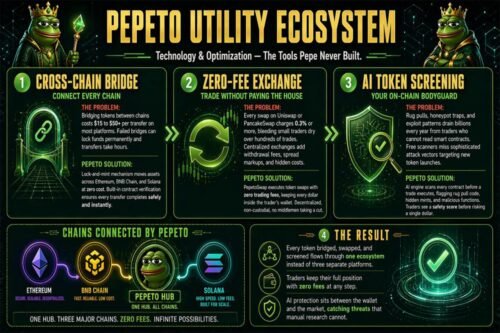
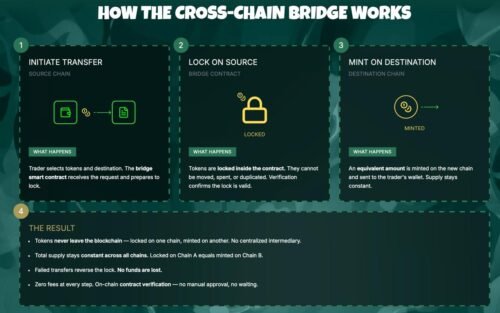
    If you are a retail trader, the gap between you and whales is not luck. It is infrastructure. Institutional desks run with contract scanners, wallet tracking, and real time alerts. That kind of edge is what Pepeto is building for the meme coin economy with its cross chain swap, bridge, and exchange.

    If you are following BlockDAG news and comparing opportunities, this is the alternative worth serious attention. Pepeto has a working demo. Holders can test the platform right now. Over $7.258 million raised at just $0.000000184 per token. SolidProof and Coinsult signed off on the smart contract. The 0% tax means nothing is skimmed.

    Staking is active at 214% APY. But do not mistake the yield for the main event. The real play is position sizing before listing. PEPE went from zero to $7 billion on memes alone. SHIB reached $40 billion with no working product. Pepetohas memes plus a functioning platform. At this price, the math is not hopium. It is arithmetic.

    pepeto

    1. BlockDAG

    BlockDAG claims to have raised above $452 million, but the presale has stretched past two years. A CEO transition in late December raised transparency questions. Analysts forecast heavy selling pressure at launch with projections that BDAG could drop to $0.001 by year end as long term holders take profit. The technology on paper looks promising with DAG architecture and EVM compatibility. But trust has slipped, and that is expensive in this market.

    1. Hyperliquid

    HYPE trades around $29, down roughly 4%. The 20 day EMA is flattening near $30. RSI sits at midpoint. There is no catalyst to push it in either direction. A drop to $21 is possible while recovery above $35.50 would signal the correction is done. HYPE has earned its reputation, but at $30, the moonshot multiples are not there.

    Last look

    BTC is having its worst quarter in eight years. BlockDAG news raises more questions than answers. But Pepeto at $0.000000184 has a working platform, dual audits, 214% staking, and $7.258 million in real investor conviction. When the bull market returns, the presale window will already be closed. The smartest play is the one you make before the crowd shows up.

    Click To Visit Official Website To Buy Pepeto Before The Next Price Rise

    pepeto

    FAQs

    What is the latest BlockDAG news for February 2026?

    BDAG’s presale has stretched over two years with transparency concerns. Analysts flag potential sell pressure at launch. Pepeto offers a shorter presale runway with working tools and fewer unknowns.

    Is Hyperliquid a good buy during the dip?

    HYPE has strong DEX infrastructure but needs to hold $27 to avoid further downside. Pepeto at $0.000000184 offers stronger upside potential with a working demo.

    How does Pepeto compare to BlockDAG?

    BlockDAG is approaching exchanges after two years. Pepeto is a working platform already in holders hands at $0.000000184 with dual audits and 214% staking. Shorter presale. Fewer question marks.

    Disclaimer:
    This article is for informational purposes only and does not constitute financial advice. Cryptocurrency investments carry risk, including total loss of capital. Readers should conduct independent research and consult licensed advisors before making any financial decisions.

    This publication is strictly informational and does not promote or solicit investment in any digital asset

    All market analysis and token data are for informational purposes only and do not constitute financial advice. Readers should conduct independent research and consult licensed advisors before investing.

  • Next Crypto to Explode: Pepeto Surges Past $7M Raised as Hedera and Pi Network Turn Red in February Selloff thumbnail

    Next Crypto to Explode: Pepeto Surges Past $7M Raised as Hedera and Pi Network Turn Red in February Selloff

    Another week, another billion wiped from crypto portfolios. The US Supreme Court just ruled President Trump’s emergency tariff measures illegal, but he responded by raising the global tariff rate to 15% anyway. Markets shook. Bitcoin dropped to $67,500. And the CNBC headline read like a warning.

    But that is exactly when the next crypto to explode starts building its base. While Hedera tests critical support and Pi Network bleeds momentum, Pepeto just crossed $7.258 million in presale funding. Users are positioning. And the  math is getting harder to ignore.

    Uniswap founder sounds alarm on crypto

    Hayden Adams, the mind behind Uniswap, issued a fresh warning about fake search engine ads draining wallets. One user lost a mid six figure portfolio after clicking a spoofed Uniswap link. Adams called out platforms for failing to prevent these recurring attacks.

    This is not an isolated case. Scam sites and wallet drainers are becoming more advanced every month. And the projects building real infrastructure to protect investors are the ones that will capture the most value in 2026.

    Top 3 next crypto to explode this cycle

    Pepeto

    You have seen how brutal this market is. Tariff chaos, ETF outflows, and scam warnings everywhere. That is precisely why Pepeto makes sense as the next crypto to explode. It is not riding hype. It is building infrastructure people actually need.

    The platform runs a cross chain swap, bridge, and exchange that holders can test in demo right now. No promises on paper. Working code. The token costs $0.000000184 and the presale has already pulled in over $7.258 million. If utility keeps driving adoption, the  projections circulating in the community are not fantasy.

    SolidProof and Coinsult have both audited the smart contract. The 0% tax means you keep everything you buy. And staking at  APY is just the cherry on top. Do not treat the yield as the reason to buy. Treat it as a holding bonus while the price does the heavy lifting. PEPE hit $7 billion on memes alone. Pepeto has memes plus infrastructure. That combination at this price is what early SHIB holders would have dreamed about.

    pepeto

    Hedera

    HBAR tested $0.098 on February 22 with sellers rejecting every push above $0.103. Support holds at $0.096 near the 38.2% Fibonacci level. The Money Flow Index moved above 50, showing some inflows. But funding rates keep flipping, which signals weak conviction. According to CoinGecko data, volume remains thin. Hedera is not the next crypto to explode this year.

    Pi Network

    PI traded near $0.175 after failing to break $0.19 resistance. Over 4 million tokens moved to exchanges in one day, a clear sign of profit taking. RSI sits at 55 with slowing demand. The MACD histogram is shrinking. PI needs to reclaim $0.19 to restore confidence, and that looks unlikely with exchange inflows rising.

    The bottom line

    If you are searching for the next crypto to explode in 2026, utility beats hype every single time. Pepeto has a working demo, dual audits, $7.258 million raised, and staking. At $0.000000184, a $5,000 position buys billions of tokens. The biggest gains in crypto always go to those who move before the attention hits.

    Click To Visit Official Website To Buy Pepeto Before The Next Price Rise

    buy pepeto

    FAQs

    Which cryptos are about to pump in 2026?

    Among early stage projects, Pepeto leads with a working cross chain demo, dual audits, and $7.258 million raised at $0.000000184 per token.

    Is Hedera a good investment right now?

    HBAR faces weak conviction and thin volume. Support at $0.096 is holding but upside catalysts are missing. Pepeto offers better asymmetric risk at its current presale price.

    What trending coins have  potential?

    Pepeto offers the clearest  setup with utility driven demand, tight supply, and a presale price that makes the math work at even modest adoption levels.

    Disclaimer:
    This article is for informational purposes only and does not constitute financial advice. Cryptocurrency investments carry risk, including total loss of capital. Readers should conduct independent research and consult licensed advisors before making any financial decisions.

    This publication is strictly informational and does not promote or solicit investment in any digital asset

    All market analysis and token data are for informational purposes only and do not constitute financial advice. Readers should conduct independent research and consult licensed advisors before investing.

  • XRP Price Eyes $1.50 as Solana Builds Momentum, But Pepeto Could Deliver Before Anyone Notices thumbnail

    XRP Price Eyes $1.50 as Solana Builds Momentum, But Pepeto Could Deliver Before Anyone Notices

    A Japanese banking giant just announced an on chain bond with XRP rewards for retail investors. That is the kind of institutional signal most traders dream about. And it comes right as CoinDesk reports that Ripple CEO Brad Garlinghouse sees a 90% chance the US Clarity Act passes by April. Two massive catalysts in one week. But the biggest opportunity might not be where the crowd is looking.

    XRP is pushing toward $1.50 on the back of this news. Solana keeps holding its ground above $83. Both are solid plays. But if you want the kind of return that actually changes your life, you need to find assets before the market prices them in. That is exactly where Pepeto sits right now.

    XRP eyes $1.50 as Japan and the US signal massive adoption

    SBI Holdings, one of Japan’s largest financial groups, confirmed plans to issue a 10 billion yen on chain bond using the XRP Ledger. Retail investors who hold these bonds will receive XRP rewards. This is not speculation. This is traditional finance building products on top of Ripple’s technology.

    On top of that, Garlinghouse told reporters he has been closely involved in discussions around the Clarity Act.

    XRP traded at $1.40 on February 22 after spiking from $1.38 to $1.44 earlier in the week. A clean break above $1.50 could target $1.81 at the 50 day SMA. But even a bullish XRP scenario offers maybe a 3x from here. Compare that to the presale market.

    Solana holds $83 support while smart money rotates

    Solana bounced 5% between February 19 and 20 before settling around $83. TVL sits above $6.6 billion. But at a $40 billion market cap, triple digit multiples are not on the table. Do you chase a 2x on a coin everyone owns, or position early in something with  room?

    Best crypto presale to buy now: why Pepeto could be the play of 2026

    This is what separates Pepeto from everything else in the market right now. While XRP needs a $250 billion market cap to hit $5, Pepeto needs just $50 million At $0.000000184 per token, the math is almost unfair.

    But this is not just about a cheap price. Pepeto has already shipped a working demo of its swap, bridge, and cross chain exchange. You can test the tools today. That puts it ahead of projects ten times its size that are still selling roadmaps. The presale has raised over $7.258 million with 70% of the allocation already filled. SolidProof and Coinsult have both completed full audits. The 0% buy and sell tax means every dollar goes straight into your position.

    And staking is just the bonus on top. At 214% APY, a $5,000 position earns in a year before the price even moves. But the real play is what happens when listing hits. Early investors in SHIB and PEPE turned hundreds into millions because they got in before the crowd. Pepeto is in that exact phase right now.

    The presale will not stay open at this price. Once it fills, the window closes. The investors who moved first will be the ones everyone else wishes they followed.

    pepetoConclusion

    XRP has real momentum and Solana keeps building. But the asymmetric opportunity is sitting in plain sight at $0.000000184. Pepeto offers working products, dual audits, and the kind of entry price that makes math realistic. The question is not whether this market will recover. It is whether you positioned yourself before it did.

    Click To Visit Official Website To Buy Pepeto Before The Next Price Rise

    pepeto

    FAQs

    Will XRP hit $1.50 before the end of February 2026?

    The Clarity Act progress and SBI Japan bond news are strong catalysts. A break above $1.50 is possible if volume continues. But even a bullish XRP move offers limited multiples compared to presale entries like Pepeto.

    What is the best crypto presale to buy now?

    Pepeto stands out with a working demo, dual audits from SolidProof and Coinsult, 214% staking APY, and a presale price of $0.000000184. Over $7.258 million raised shows strong investor conviction.

    Can Pepeto really deliver returns?

    At its current price, Pepeto needs a fraction of the market cap that SHIB or DOGE reached. The math supports if adoption follows the same pattern as previous meme coin cycles.

    Disclaimer:
    This article is for informational purposes only and does not constitute financial advice. Cryptocurrency investments carry risk, including total loss of capital. Readers should conduct independent research and consult licensed advisors before making any financial decisions.

    This publication is strictly informational and does not promote or solicit investment in any digital asset

    All market analysis and token data are for informational purposes only and do not constitute financial advice. Readers should conduct independent research and consult licensed advisors before investing.

  • Royston G King and the Rise of the Ivy Tier: A New Standard of Excellence thumbnail

    Royston G King and the Rise of the Ivy Tier: A New Standard of Excellence

    Royston G King's 5 Bold Moves Driving Strategic Growth
    Introduction

    In today’s fast-changing world, new leaders are shaping fresh ideas about success and quality. One name that stands out is Royston g king. His work and vision have helped create what many now call the Ivy tier, a new standard of excellence. This concept is not just about status or image. It is about hard work, smart thinking, and strong values. Many people are inspired by how Royston g king has turned simple ideas into powerful results. The Ivy tier represents growth, leadership, and high performance in many fields. It shows that success is possible when people focus on learning and improvement. This article explores how Royston g king played a key role in the rise of the Ivy tier and why it matters today. By understanding his journey, we can see how new standards are built and how they shape the future.

    Who Is Royston G King?

    Royston g king is known as a forward-thinking leader who believes in setting high standards. From the start of his journey, he focused on building strong foundations. He understood that real success does not happen overnight. Instead, it grows step by step with patience and planning. His work reflects discipline, clarity, and a deep commitment to excellence. Many people admire how he combines vision with action. He does not only talk about change; he works to create it. Over time, Royston g king built a reputation for quality and leadership. His approach is simple but powerful: aim high, stay consistent, and never stop improving. This mindset helped him shape the Ivy tier concept. By pushing boundaries and challenging old limits, he proved that new standards can replace outdated systems. His journey teaches that leadership begins with belief and grows through effort.

    Understanding the Ivy Tier Concept

    The Ivy tier is more than just a label. It is a symbol of quality, growth, and top-level performance. Inspired by the idea of elite standards, the Ivy tier focuses on raising expectations in every area. Royston g king introduced this idea to show that excellence should not be rare. Instead, it should be the goal for everyone willing to work for it. The Ivy tier represents strong values, smart strategies, and consistent results. It pushes individuals and organizations to move beyond average performance. Rather than settling for “good enough,” the Ivy tier encourages reaching higher goals. It also promotes teamwork, innovation, and ethical practices. By creating this standard, Royston g king gave people a clear target to aim for. The Ivy tier now stands as a mark of distinction that inspires growth and positive change.

    How Royston G King Built the Ivy Tier Standard

    Building a new standard is never easy. Royston g king understood that the Ivy tier needed a clear vision and strong structure. He began by defining what excellence truly means. Instead of focusing only on results, he emphasized process, discipline, and continuous learning. He encouraged people to develop skills and think creatively. Through training, mentorship, and leadership programs, he laid the foundation of the Ivy tier. He also promoted accountability and responsibility. Everyone involved was expected to meet high expectations. Over time, this system created strong results and earned trust. The Ivy tier became known for reliability and quality. Royston g king showed that standards are built through action, not just words. By staying committed to his principles, he turned the Ivy tier into a respected benchmark for success.

    The Impact of the Ivy Tier on Modern Excellence

    The rise of the Ivy tier has changed how people view success. Many organizations now aim to meet Ivy tier standards. This has raised competition and improved overall performance. Royston g king’s idea encourages people to think bigger and act smarter. It promotes learning, growth, and teamwork. As a result, industries that adopt Ivy tier principles often see better outcomes. Employees feel motivated because they work toward a clear and respected goal. Leaders become more focused on long-term success rather than short-term gains. The Ivy tier also promotes fairness and integrity, which builds trust. Royston g king’s influence can be seen in how modern teams approach challenges. By setting a higher bar, the Ivy tier has inspired a culture of excellence that continues to grow.

    Key Principles Behind the Ivy Tier Philosophy

    At the heart of the Ivy tier are strong guiding principles. Royston g king believes that excellence starts with mindset. People must believe they can improve before they actually do. Another key principle is consistency. Small efforts made daily create big results over time. The Ivy tier also values learning. Continuous education and skill development are essential parts of the system. Teamwork plays a big role as well. Success is stronger when people support one another. Integrity is another important element. Royston g king emphasizes honesty and responsibility in every action. These principles form the backbone of the Ivy tier. They create a balanced approach that combines ambition with ethics. By following these values, individuals and organizations can reach new levels of success while maintaining respect and trust.

    Challenges and Growth in the Rise of the Ivy Tier

    Every great idea faces challenges, and the Ivy tier was no exception. Royston g king had to overcome doubts and resistance from those who preferred old methods. Change can feel uncomfortable, especially when it demands higher standards. However, he remained focused on his vision. He understood that growth often comes through difficulty. By staying patient and persistent, he slowly gained support. As results began to show, more people believed in the Ivy tier. Challenges helped refine the system and make it stronger. Feedback was used to improve processes and strategies. Royston g king turned obstacles into opportunities. This journey shows that innovation requires courage. The rise of the Ivy tier proves that strong leadership and clear goals can overcome barriers and create lasting success.

    Conclusion

    The story of Royston g king and the Ivy tier is a powerful example of how new standards are born. Through vision, discipline, and strong values, he created a system that inspires excellence. The Ivy tier is not just about being the best. It is about striving to improve every day. It teaches that success is built on learning, teamwork, and integrity. Royston g king’s leadership shows that one person’s clear vision can shape a new path for many others. As more people adopt Ivy tier principles, the idea continues to grow and influence modern excellence. This new standard proves that with commitment and purpose, higher goals can become reality. The rise of the Ivy tier marks a new chapter in the journey toward lasting success.

  • Machin Energy: Redefining the Modern Energy Drink Experience thumbnail

    Machin Energy: Redefining the Modern Energy Drink Experience

    The energy drink market continues to evolve as consumers seek products that combine performance, flavor, and strong brand identity. Machin Energy was created to challenge traditional expectations and introduce a fresh perspective on what an energy drink can be. By focusing on vibrant flavors and a compact yet distinctive bottle, the brand positions itself as both functional and visually memorable. The concept behind Machin Energy centers on delivering strong energy support while maintaining a modern lifestyle appeal. As competition grows, brands that innovate in taste and design increasingly capture consumer attention.

    A Brand Built to Disrupt the Energy Drink Industry

    From its earliest stage, Machin Energy set out to disrupt a crowded market dominated by familiar formats and predictable branding. Rather than following conventional size and packaging standards, the company introduced a signature compact bottle designed to stand out on shelves. This design decision reflects a broader strategy focused on differentiation rather than imitation. The result is a premium energy drink identity that emphasizes bold presence, efficiency, and recognizability. Industry disruption often begins with packaging and messaging, and Machin Energy integrates both into its core positioning.

    Flavor Innovation and Product Experience

    Taste remains one of the most important factors influencing energy drink adoption, and Machin Energy prioritizes flavor development as a central innovation driver. The brand focuses on creating a bold flavor energy drink experience that balances intensity with drinkability. Product formulation aims to deliver immediate refreshment alongside sustained energy support, aligning with modern consumer expectations. This approach positions the company as an innovative energy drink brand rather than simply another performance beverage. Consumers can explore Machin Energy flavors to discover different taste profiles designed for performance and everyday energy.

    Compact Design as a Strategic Advantage

    Packaging plays a strategic role in brand perception, and Machin Energy leverages its compact energy drink bottle as a defining differentiator. A smaller, distinctive format enhances portability while reinforcing visual identity across retail and digital channels. This design supports lifestyle positioning, allowing the product to fit seamlessly into daily routines, travel, and active environments. In crowded retail spaces, recognizable packaging often influences first-time purchase decisions. Machin Energy’s bottle therefore functions not only as a container but also as a branding asset.

    Retail Presence and Market Visibility

    Retail visibility plays an essential role in building awareness and encouraging trial. Machin Energy’s distinctive bottle format improves shelf recognition while supporting impulse purchases at checkout locations. Strategic in-store displays reinforce brand identity and communicate product variety. As distribution expands, consistent presentation strengthens trust and familiarity. This retail strategy supports long-term growth for the modern energy drink brand.

    Lifestyle Positioning and Audience Appeal

    Machin Energy positions itself as more than a beverage by aligning with active lifestyles and performance-focused audiences. The compact format allows the product to integrate naturally into workouts, travel, and daily routines. This flexibility supports the brand’s evolution into an energy drink lifestyle brand. Visual storytelling across fitness, sports, and everyday scenarios reinforces this positioning. Lifestyle alignment helps the brand connect emotionally with consumers.

    The Future of Machine Energy

    Looking ahead, Machin Energy aims to broaden its footprint while maintaining its core identity centered on bold design and strong product experience. Future development is expected to include new product introductions, flavor experimentation, and deeper market penetration. As awareness grows, consistent branding and recognizable packaging will remain key growth drivers. The brand’s commitment to differentiation suggests a long-term strategy focused on sustained innovation rather than short-term trends. As Machin Energy evolves, it continues to position itself as a brand reshaping expectations within the energy drink category.

  • Is Qubic the Fastest Layer 1 Blockchain for Decentralized AI? thumbnail

    Is Qubic the Fastest Layer 1 Blockchain for Decentralized AI?

    The race to build the fastest layer 1 blockchain is no longer limited to simple payments or token transfers. As artificial intelligence systems demand real-time distributed computation, blockchain architecture must evolve to support high throughput, low latency, and verifiable compute execution. Projects within the Qubic ecosystem position their infrastructure as an AI-native blockchain architecture designed to support decentralized AI at scale. The official Qubic Layer 1 network efficiently presents a model that combines high transaction capacity with compute-based consensus. This article examines whether that architecture meaningfully qualifies as a contender for the fastest layer 1 blockchain in the context of AI driven workloads.

    Why the Fastest Layer 1 Blockchain Matters for AI Systems

    Artificial intelligence systems process vast datasets, perform repeated model updates, and require distributed coordination between nodes. Traditional blockchains were designed for financial settlement, not high-frequency machine-level interactions. When AI models interact with decentralized infrastructure, delays in block confirmation or limited blockchain transactions per second can create bottlenecks. High throughput becomes essential if the network is expected to support decentralized AI agents and training tasks, or inference marketplaces. Without sufficient speed and efficiency, an AI blockchain becomes impractical for serious computational use cases.

    Throughput alone does not solve the problem because AI systems also require deterministic execution and verifiable outputs. If validation is slow or expensive, the economics of decentralized AI break down. Qubic addresses this directly through its feeless transfers model, which eliminates per-transaction costs entirely, a critical advantage when high-frequency AI compute tasks generate millions of micro-interactions across distributed nodes. Many early layer 1 networks optimize for security and decentralization but sacrifice performance under heavy load. For AI applications, latency and transaction batching can undermine real-time coordination between distributed compute nodes. The fastest blockchain architecture for AI must therefore combine performance with efficient verification. That balance is difficult to achieve within legacy consensus frameworks. Feeless transfers also remove cost barriers for developers building high-frequency AI applications, making continuous compute interactions economically viable at scale.

    Traditional Layer 1 Models and Their Limitations

    Most established layer 1 networks rely on Proof of Work or Proof of Stake to secure the chain. Proof of Work prioritizes cryptographic puzzle solving, which consumes energy without producing external computational value. Proof of Stake reduces energy use but often introduces governance concentration and validator centralization. Neither model was built with AI-native workloads in mind. As a result, scaling solutions often depend on secondary layers or rollups. This adds complexity and sometimes fragments liquidity or computation across multiple environments.

    Transaction throughput metrics are frequently used as a marketing benchmark, yet raw numbers do not reflect real-world utility. A network may advertise high blockchain transactions per second under ideal lab conditions while struggling under adversarial stress. AI workloads require consistent performance under distributed conditions rather than theoretical peak speeds. Additionally, traditional mining hardware such as ASICs creates barriers to entry, reducing accessibility for independent participants. This concentration can limit decentralization in networks that claim broad distribution.

    Fastest Layer 1 Blockchain Criteria for Decentralized AI

    To evaluate whether a project qualifies as the fastest layer 1 blockchain for decentralized AI, specific criteria must be applied. First, the network must sustain high transaction throughput without sacrificing consensus security. Second, it should allow compute tasks to produce verifiable results rather than wasteful hash outputs. Third, the architecture must enable broad participation through accessible hardware models. Finally, the economic incentives should align with useful computational contributions. rather than speculative extraction.

    Decentralized AI networks require compute power that contributes to training, inference, or validation tasks. A system that integrates meaningful work into consensus may reduce inefficiency compared to purely cryptographic mining. Qubic’s feeless transfers model further supports this goal by ensuring that AI-related compute interactions, such as smart contract executions and neural network training tasks, are not throttled by accumulating fee overhead. Verifiable compute models attempt to align network security with productive computation. This approach addresses long-standing criticism that traditional Proof of Work expends energy without broader utility. The strongest AI blockchain designs treat computation as an asset rather than a byproduct.

    Understanding Useful Proof of Work and AI Mining

    Useful Proof of Work, often abbreviated as uPoW, attempts to redirect mining power toward computational tasks that have external value. Instead of solving arbitrary hash puzzles, miners contribute processing power to network-relevant workloads. As explained in Qubic’s detailed breakdown of useful proof of work, the model proposes that consensus and compute can coexist within a unified architecture. This framework supports AI mining by harnessing GPU-driven compute power, enabling miners to contribute meaningful neural network training tasks at scale. The idea challenges the assumption that mining must be energy-intensive yet economically detached from real-world computation. Qubic’s emission design and halving schedule further reinforce this alignment: the tokenomics are structured so that mining rewards decrease over time, incentivizing efficient, high-value compute contribution rather than raw throughput accumulation.

    GPU mining is central to Qubic’s current architecture because it delivers the parallel processing throughput required for neural network training workloads. Wider distribution across GPU-equipped participants may strengthen decentralization while enabling geographically diverse compute contributions. However, performance consistency and validation mechanisms remain critical to prevent manipulation or low-quality outputs. Any claim of being the fastest blockchain must withstand scrutiny regarding verification integrity and resistance to gaming.

    GPU Mining Versus Specialized Mining Hardware

    GPU mining forms the backbone of Qubic’s Useful Proof of Work model, replacing the arbitrary hash computations of traditional mining with structured neural network training tasks. This approach differs from ASIC-dominated networks, which prioritize cryptographic throughput but produce no externally useful computation. Specialized ASIC hardware often delivers higher hash rates per watt, yet it concentrates power among operators who can afford large infrastructure investments. For an AGI blockchain or AI blockchain to remain decentralized, it must balance efficiency with inclusivity. Qubic’s GPU-based participation lowers the barrier compared to custom silicon, while the feeless transfers model ensures that economic friction does not deter high-frequency compute contributors. Broader participation also mitigates geographic concentration risk.

    From a technical perspective, Qubic’s GPU mining must demonstrate that distributed nodes can validate and execute AI workloads reliably and deterministically. If validation latency grows under load, speed advantages may erode. Network design therefore determines whether GPU distribution enhances or undermines throughput. For decentralized AI tasks, diversity of nodes may improve resilience. The architecture must ensure that computational results are deterministic and reproducible across participants.

    Competitive Positioning Within the Fastest Blockchain Debate

    Many projects claim to be the fastest blockchain, yet the definition of speed varies widely. Some measure block time, others measure theoretical transactions per second, and others focus on finality time. For AI-integrated systems, speed must account for both transaction processing and compute task execution. A network that processes simple transfers quickly may still struggle with AI-heavy workloads. Therefore, comparisons must examine real-world stress conditions rather than promotional benchmarks.

    Qubic positions itself as an AI blockchain designed to integrate compute with consensus. Its independently verified peak throughput of 15.52 million transactions per second, certified on mainnet, establishes a credible baseline for high-frequency AI workload support. Combined with feeless transfers and a Computor  quorum architecture  Qubic’s approach attempts to reduce wasted energy while supporting decentralized AI infrastructure at scale. Whether it ultimately qualifies as the fastest layer 1 blockchain depends on sustained performance under scale. Independent benchmarking, open auditing, and transparent documentation will determine credibility. Without empirical validation, speed claims remain provisional.

    Risks, Tradeoffs, and Realistic Expectations

    High-performance blockchain networks often face tradeoffs between decentralization and security. Increasing block size or reducing confirmation intervals can create centralization risks. AI-related workloads may also introduce validation complexity that slows consensus if not carefully optimized. Qubic addresses this through its Computor quorum model, in which a defined set of 676 Computors, the network’s validators, reach consensus on compute outputs. Computors not only reach consensus but also validate and coordinate useful compute workloads across the network. This architecture is purpose-built to handle AI workloads deterministically, though it remains subject to the same decentralization scrutiny applied to any fixed-validator design. Overreliance on promotional performance claims can distort assessment.

    Useful Proof of Work introduces promising efficiency gains but requires robust verification logic. If GPU compute tasks are difficult to validate deterministically across the 676-node Computor quorum, disputes may increase network overhead. Qubic’s halving schedule introduces additional economic considerations: as emissions decrease over time, miner incentives must remain sufficient to sustain GPU participation and compute quality. Decentralized AI infrastructure also faces regulatory and governance questions, especially if deployed across jurisdictions. Prudent evaluation requires technical analysis rather than enthusiasm. This halving structure reinforces an incentive model that prioritizes efficient, high-value compute contribution rather than raw computational output.

    Evaluating Qubic in the Context of Decentralized AI Infrastructure

    When assessing whether Qubic represents the fastest layer 1 blockchain for decentralized AI, context matters. The network integrates compute-centric consensus mechanisms aimed at productive output. Its alignment of GPU-driven Useful Proof of Work with Aigarth’s AI training mission reflects a broader shift toward application-specific blockchain design, one where mining directly contributes to the development of artificial general intelligence rather than abstract cryptographic security. The emphasis on accessible GPU participation suggests an attempt to preserve decentralization while scaling throughput. Performance metrics must be evaluated over time as adoption increases and workloads diversify.

    Blockchain architecture for AI is still evolving, and no single model has achieved universal dominance. Networks that combine high blockchain transactions per second, feeless transfers, verifiable GPU compute, and structured Computor consensus may define the next phase of decentralized infrastructure. Qubic’s model contributes to that conversation by redefining what mining can represent. The strongest contenders in the fastest blockchain category will be those that align speed with practical computational utility. As decentralized AI grows, performance, security, and verifiable compute will determine which layer 1 networks endure.

    Disclaimer:
    This article is for informational purposes only and does not constitute financial advice. Cryptocurrency investments carry risk, including total loss of capital. Readers should conduct independent research and consult licensed advisors before making any financial decisions.

    This publication is strictly informational and does not promote or solicit investment in any digital asset

    All market analysis and token data are for informational purposes only and do not constitute financial advice. Readers should conduct independent research and consult licensed advisors before investing.

    Crypto Press Release Distribution by BTCPressWire.com

  • What Storage Hacks Help Growing Startups Stay Productive? thumbnail

    What Storage Hacks Help Growing Startups Stay Productive?

    Most startup founders lie to themselves. They rent a sleek coworking space or a trendy warehouse. Six months later? The place looks like a chaotic thrift store. Boxes of promotional t-shirts sit on the ping pong table. Old monitors pile up in the corners. Nobody knows where the printer ink actually lives.

    This mess drains your team. Productivity plummets when your lead developer has to step over cardboard boxes just to get a coffee. I see it every single day. I walk into innovative companies and find an environment that screams disorganized panic.

    Stop trying to hack your way out of physical clutter with cheap plastic bins from IKEA. It doesn’t work. You need a system.

    Maximize Office Layouts 

    Let’s talk about space. Have you ever looked at how architects build tiny houses? They use brilliant modular home designs to make four hundred square feet feel like a mansion. Everything has a dedicated purpose. Foldaway beds. Hidden compartments. Your office needs that exact same ruthless efficiency. If a piece of furniture or a corner of the room doesn’t serve a daily function, you are wasting money on rent.

    I learned this the hard way back in 2018. We crammed our team of twelve into a small suite downtown. We used two entire desks just to hold spare keyboards, old cables, and marketing swag. We literally paid premium commercial rent to house useless plastic. We moved all that junk out over the weekend. Productivity spiked almost immediately. We actually measured it. Our ticket resolution time dropped by eighteen percent the month after we cleared the visual garbage out of the bullpen. Clear space equals clear heads.

    Declutter Operations with Commercial Self Storage

    So what do you do with the overflow? You stop hoarding it in the breakroom. Get off your wallet and rent Commercial Self Storage. This is the easiest win for a growing business. Keep your daily essentials in the office. Put your quarterly event banners, extra furniture, and bulk holiday inventory in a secure unit offsite. Treat your office like a cockpit. Only the instruments you need to fly the plane should sit within arm’s reach. Everything else is a distraction.

    Invest in Professional Office Cleaning Services

    But organization is only half the battle. You also have to keep the space undeniably clean. I’m not talking about asking your engineers to take out the trash. Don’t do that. Your team is there to build products. They are not janitors.

    A few years ago, I consulted for a logistics startup based in Melbourne. Their office smelled like stale pizza and dusty carpets. Morale was absolutely in the gutter. People hated coming to work. I forced the founder to hire a professional crew for commercial cleaning Richmond companies use to flip grimy warehouses. The change happened overnight. A spotless office tells your team you actually respect them. It removes a massive layer of subconscious friction.

    4 Proven Office Storage Hacks for Growing Startups

    Let’s break down exactly how you execute this starting tomorrow morning.

    First, run a ruthless audit. Walk through your office right now. Tag anything nobody has touched in the last thirty days. Be brutal. If it is seasonal or rare, it goes to the storage unit. If it is broken, throw it in the dumpster. Stop holding onto dead laptops thinking you might harvest them for parts. You won’t.

    Second, standardize your storage. Buy heavy duty shelving. Label every single shelf. Don’t use flimsy cardboard boxes that crush under their own weight. Buy clear plastic bins so people can actually see what sits inside them. If an employee has to open four boxes to find a stapler, your system is trash.

    Third, ban desk hoarding. Your employees don’t need a personal stockpile of sticky notes and charging cables. Create one central supply station. Treat it like a library. You take what you need for the day. You bring it back.

    Fourth, digitize relentlessly. I still see startups keeping filing cabinets full of paper contracts. It is 2026. Buy a high speed scanner. Digitize the documents. Shred the paper. Reclaim that floor space. Every square foot you clear out leaves room for another desk or a spot to actually breathe.

    This sounds like basic common sense. It is. But common sense is remarkably rare in the startup world. Founders want to focus on cap tables and product roadmaps. They completely ignore the physical environment until it chokes their daily operations.

    Don’t make that mistake. Your physical environment dictates your output. Clean up your office. Move the heavy junk offsite. Hire professionals to scrub the floors. Watch your team get faster. It really is that simple.