Category: BigNewsNetwork

  • Ethereum Price Prediction Points to Recovery, but Pepeto Eyes Returns ETH Cannot Deliver thumbnail

    Ethereum Price Prediction Points to Recovery, but Pepeto Eyes Returns ETH Cannot Deliver

    The Ethereum price prediction for 2026 has analysts split, with Standard Chartered holding $7,500 and Citi at $3,175, and the gap shows how uncertain this recovery remains. ETH trades near $2,300 after climbing from its February $1,840 floor while the Glamsterdam upgrade prepares to reshape how the network processes transactions. While that debate plays out, a presale called Pepeto has raised $9.2 million at an entry most large cap holders overlook, and the wallets filling it believe the biggest gains this year will not come from waiting on ETH to grind toward old highs.

    SEC Ends Enforcement Era as Ethereum Price Prediction Resets

    At the Bitcoin Las Vegas 2026 conference on April 27, SEC Chairman Paul Atkins declared the agency is ending years of regulating crypto through enforcement, according to CoinDesk. Atkins announced joint CFTC guidance and an innovation exemption for tokenized securities, removing one of the heaviest clouds over the Ethereum price prediction. CoinMarketCap data shows staking enabled ETFs pulled $633 million across a 10 day inflow streak before a $50 million reversal last week, proving institutional appetite is real but flips overnight. For traders who want an entry that does not depend on fund flows, presale pricing offers a different equation entirely.

    Tokens Shaping the Ethereum Price Prediction Cycle

    Pepeto

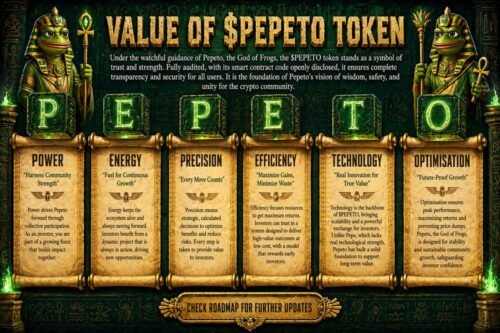
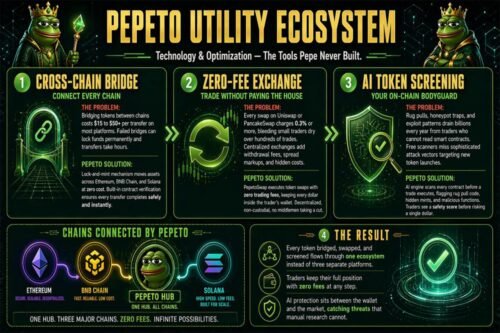
    While Ethereum price prediction headlines cycle between bullish upgrades and cautious readings, Pepeto is building the trading layer that works whether ETH hits $7,500 or stays range bound for months. Every trade across every chain passes through a zero fee swap engine that removes the cost most traders pay without thinking, and the PepetoAI risk scorer checks every token from entry to exit so the wallet on the other side is never a trap walked into blind.

    Pepeto does not need a bull run to matter, because whether capital flows into Ethereum staking products or rotates into meme coins, the need for zero cost execution and real time risk scoring follows the money wherever it moves. That cross market relevance gives Pepeto a floor most presale tokens never build, and a ceiling that the $9.2 million raise and 176% staking APY are only starting to price in.

    A cofounder who helped create the original Pepe token leads the roadmap with a former Binance expert, and SolidProof cleared every contract, so the due diligence most buyers spend weeks doing is already finished. Traders refreshing the Ethereum price prediction page are watching a coin that needs a 55% climb just to revisit its August 2025 peak, while Pepeto at $0.0000001865 holds the kind of entry that vanishes the moment exchange trading opens.

    Ethereum

    Institutional forecasts for the Ethereum price prediction stretch from Citi’s $3,175 to Standard Chartered’s $7,500, with Fundstrat’s internal note landing near $4,500. The network holds 35.8 million staked ETH at 30% of circulating supply, tightening available coins but meaning any large unlock floods the market. Even the $7,500 target maps about a 3x from here, and that return stretches across quarters while a presale to listing window delivers the full move in one event.

    Mutuum Finance

    Mutuum Finance is a DeFi lending project in Phase 7 of 11 at $0.04, with a listing target of $0.06 that gives current buyers just a 50% gain. The product remains on the Sepolia testnet with no mainnet launch or exchange date confirmed, and the space it targets is already controlled by Aave and protocols with years of trust.

    Conclusion

    The Ethereum price prediction carries real weight, and the SEC turning cooperative while staking ETFs pull hundreds of millions gives ETH one of its strongest setups in years. That traction lifts the wider ecosystem because it brings sidelined capital back where every project with real utility gets noticed. But even the most bullish Ethereum price prediction charts a slow grind from $2,300 to $7,500, and portfolio flipping gains do not come from watching a large cap double across two quarters. Pepeto is clearly the strongest presale of 2026, because the same wallets that bought ETH at single digit prices before smart contracts meant anything are already building positions ahead of a Binance listing approaching, and they recognize these setups better than anyone. The traders who moved first close this window with a cost basis the market chases for the rest of the cycle, and the ones still watching carry regret this market never reverses.

    Click To Visit Pepeto Website To Enter The Presale

    FAQs

    What is the biggest catalyst for the Ethereum price prediction in 2026?

    The SEC ending enforcement and the Glamsterdam upgrade are reshaping the Ethereum price prediction, with staking ETFs adding fresh institutional demand.

    Can Ethereum deliver strong returns from current levels?

    ETH has a path toward $7,500 if flows and upgrades align, but that 3x plays out over quarters while presale entries compress the move into a single event.

    Is Pepeto a strong choice alongside Ethereum for 2026?

    Pepeto with $9.2 million raised, a SolidProof audit, a cofounder from the original Pepe token, and a Binance listing expected offers the early entry that created life changing wealth in previous cycles.

    Disclaimer:
    This article is for informational purposes only and does not constitute financial advice. Cryptocurrency investments carry risk, including total loss of capital. Readers should conduct independent research and consult licensed advisors before making any financial decisions.

    This publication is strictly informational and does not promote or solicit investment in any digital asset

    All market analysis and token data are for informational purposes only and do not constitute financial advice. Readers should conduct independent research and consult licensed advisors before investing.

    Crypto Press Release Distribution by BTCPressWire.com

  • Rising Material Costs Are Reshaping Ottawa’s Painting Industry — What Homeowners Need to Know

    Ottawa, ON –  Ottawa homeowners planning renovations in 2026 may notice one unexpected trend: painting projects are becoming more expensive — and industry experts say it’s not by choice.

    Local contractors report significant increases in the cost of paint, primers, and essential supplies over the past year, driven by global supply chain pressures, inflation, and rising manufacturing costs.

    According to Classic Painting & Construction Ottawa, the impact is being felt across nearly every project.

    “We’ve seen consistent price increases from suppliers on core materials like paint, caulking, and prep products,” says a company representative. “These aren’t optional components — they’re essential for delivering results that actually last.”

    What’s Driving the Increase?

    Industry professionals point to several key factors:

    • Increased raw material costs in paint production
    • Ongoing supply chain disruptions
    • Higher transportation and logistics expenses
    • Growing demand for premium, eco-friendly products

    These changes are forcing painting companies to adapt pricing structures while maintaining quality standards.

    Why Cutting Costs Can Backfire

    While some providers attempt to offset rising costs by using cheaper materials or reducing preparation time, experts warn this can lead to long-term issues for homeowners.

    “Lowering standards to keep prices down might seem attractive upfront,” the spokesperson adds, “but it often results in peeling, cracking, or repainting much sooner than expected.”

    A Shift Toward Value-Driven Decisions

    As a result, many Ottawa homeowners are shifting focus from price alone to long-term value.

    Instead of asking, “What’s the cheapest option?”, more clients are asking:

    • How long will this last?
    • What materials are being used?
    • What preparation is included?

    Classic Painting & Construction Ottawa has responded by maintaining its quality-first approach, focusing on durability, proper preparation, and transparent communication with clients.

    Supporting Homeowners Through Transparency

    To help customers navigate these changes, the company now emphasizes:

    • Detailed, upfront estimates
    • Clear breakdowns of materials and labor
    • Education on long-term cost vs. short-term savings

    “We believe homeowners deserve to understand where their money is going,” says the company. “Our goal is to help them make informed decisions, not just sell a service.”

    About Classic Painting & Construction Ottawa

    Classic Painting & Construction Ottawa is a locally owned company specializing in residential and commercial painting, drywall repair, and renovation services. With over 20 years of experience, the company is known for its commitment to quality workmanship, transparency, and long-lasting results.


  • Commercial Real Estate Has a Data Problem — and the Building Already Holds the Answer thumbnail

    Commercial Real Estate Has a Data Problem — and the Building Already Holds the Answer

    Walk into the mechanical room of almost any commercial property built in the last decade and you will find something remarkable: a dense network of systems generating continuous operational data. HVAC units, lighting controllers, access control panels, parking meters, leak detection sensors – all producing information around the clock.

    Now ask who is reading that data. In the overwhelming majority of cases, the answer is nobody. The data is being captured by vendors, stored in vendor-managed platforms, and used – if at all – by those vendors for their own purposes. The property owner, who legally owns the data, cannot access it, analyze it, or use it to make better decisions.

    This is the core argument Bill Douglas, CEO of OpticWise, has been making since the firm began focusing exclusively on multi-tenant commercial real estate more than a decade ago. His book Peak Property Performance, published by Fast Company Press, starts from a single premise: you cannot optimize what you cannot see. And most commercial real estate operators simply cannot see their own buildings.

    The Vendor Data Problem Nobody Talks About

    Commercial real estate has a long-standing and largely unexamined habit of handing over its data infrastructure to vendors. An owner hires one firm to install a network, another for HVAC controls, another for access management, another for parking. Each vendor delivers a working system. Each vendor keeps the operational data in their own cloud environment.

    The owner can log into each platform individually and pull a report. What they cannot do is run analysis across all of those systems simultaneously, look for correlations between them, or build a predictive model based on combined data sets. The data exists – it just does not belong to them in any practical sense.

    As Douglas puts it: “If you are not using your data, somebody else is. And it should offend you. Because it is your building, your tenants, and your data.”

    This is not a technology limitation. The systems are already installed. The data is already flowing. The missing piece is ownership – a deliberate strategy to collect, centralize, and act on operational data rather than leaving it distributed across a dozen vendor platforms.

    What Happens When You Turn the Data On

    The results from properties that have addressed this are concrete. One example: a commercial office building had a lighting control system installed during construction six years earlier that had never been activated. When the audit was completed and the system turned on, the property reduced its electricity bill by $70,000 in the following 12 months. The hardware was already there. The savings had been sitting dormant.

    This is not an unusual finding. Across audits OpticWise’s team has conducted, the pattern repeats consistently – systems installed but not activated, networks running in parallel without anyone aware of the duplication, expenses accruing for months or years on subscriptions tied to systems nobody was using, and most importantly: no client access to their own data.

    Sub-metering provides another example. In a mixed-use building with a call center operating around the clock alongside a dental office with standard weekday hours, shared utility costs were being split evenly. Sub-metering – installing meters that measure consumption by tenant – allowed billing to reflect actual usage. The call center paid more, the dental office paid less, and the property owner had documentation to support both. The data made the conversation possible.

    The $500 Per Door Opportunity

    For multifamily properties, Douglas points to a specific benchmark that consistently surprises owners: $500 per door per year in additional net operating income. This is income, not revenue. It represents the compound effect of reduced utility expenses, better insurance positioning, lower tenant churn, and optimized amenity and parking revenue.

    For a 100-unit building, that is $50,000 in annual NOI. For 400 units, it is $200,000. The impact on property valuation – given that commercial real estate is valued largely on income multiples – is substantially larger than the income figure itself.

    On the office side, the equivalent metric is 60 to 90 cents per rentable square foot. For a 200,000 square foot building, that range represents $120,000 to $180,000 in annual income.

    What is notable about these numbers is that they do not require significant capital investment. They require data access and a methodical approach to acting on what the data reveals. The investment is in infrastructure ownership and the audit process. The return comes from optimizing what already exists.

    Why Most Properties Are Not Doing This

    Status quo bias is the primary barrier. Properties are generating revenue, owners are busy doing deals, and the buildings work. A detailed data and digital infrastructure audit can feel like a distraction from the core business.

    There is also a skills mismatch. The people who could theoretically manage this work – property managers, IT managers, asset managers – are not trained for it and are already at capacity with their existing responsibilities. Asking a property manager to also serve as a data architect is not a viable strategy. It just means the work does not get done.

    Douglas draws a direct analogy: “You would not ask your running back to play middle linebacker. They can stand in the position, but they are not going to perform the role at the level you need. The skill sets are different. The training is different. The outcomes reflect that.”

    The solution is not to build an entirely new internal team. It is to recognize that digital infrastructure and data strategy is a specialized function – one that requires dedicated expertise, not a responsibility added to someone else’s already full plate.

    A Framework for Getting Started

    For owners who want to move from reactive operations to data-driven management, Douglas recommends a sequential approach rather than an all-at-once overhaul.

    The first step is a data and digital infrastructure audit: a systematic review of what systems exist, what data they generate, who currently has access to it, and what is being wasted or duplicated. This audit is the prerequisite for everything that follows.

    From there, the priority list is built on three criteria: lowest out-of-pocket cost, fastest time to results, and highest long-term value. Starting with quick wins builds internal confidence and demonstrates ROI before larger investments are made.

    Over six to nine months of consistent data collection, the foundation for predictive analysis begins to form. Machine learning applied to that data set can surface patterns a human analyst would not find manually. The technology is not complicated. The prerequisite is owning the data in the first place.

    For owners still weighing whether to act, the framing Douglas returns to is straightforward: digital infrastructure is not an expense – it is an investment, and it should generate income. If it is not, something is wrong. And it can be changed.

    OpticWise is a commercial real estate data & digital infrastructure firm helping CRE property owners own, manage, and monetize their building data and digital assets. OpticWise serves middle-market commercial real estate owners across multifamily and office sectors in the United States. Bill Douglas, CEO, is the co-author of Peak Property Performance, published by Fast Company Press.

    This article is based on information provided by the expert source cited above. It is intended for general informational purposes only and does not constitute legal, financial, or real estate advice. Readers should conduct their own research and consult qualified professionals before making any real estate or financial decisions.

  • Why I Quit Competitive Chess Sites and Started Playing Against a Computer Instead

    Let me tell you something nobody warned me about before I got into online chess. The game itself is great. Always has been. But the experience of playing it on most competitive platforms? Pretty rough, especially when you are just starting out and still figuring things out. I spent a few frustrating weeks on those sites before a coworker mentioned chess vs. computer as a low-pressure alternative. Tried it that same evening. Have not gone back since, and I genuinely do not miss it.

    Here is the thing. I am not saying competitive online chess is bad for everyone. For serious players who want to climb rankings, it probably makes total sense. But for someone like me who just wants to enjoy the game and maybe get a little better over time? Those platforms were doing more harm than good.

    Nobody Told Me About the Rating Anxiety

    The first thing that gets you is the rating system. You do not notice it at first. You just see a number next to your name and think, okay, fine, that is just how it works. But slowly, without really realizing it, that number starts to matter more than it should.

    You stop playing interesting moves because you are scared of losing points. You avoid opponents who look stronger. You resign games earlier than you should because drawing out a loss feels like a waste of time when it is not going to help your score anyway. At some point you are not really playing chess anymore. You are just managing a number.

    I caught myself doing this after about a week. Sitting there, staring at the opponent list, trying to find someone I was pretty sure I could beat. That is not why I started playing chess. Not even close to why.

    When you play chess vs. a computer, there is no rating. Nothing to protect. You just play. And that single change makes the whole experience feel different in a way that is hard to explain until you actually try it.

    The Clock Stressed Me Out More Than the Opponent Did

    Timed chess is fun once you know what you are doing. Before that point, it is just stressful. You are sitting there trying to figure out a position you have never seen before, and in the corner of your screen there is a little timer counting down. So you rush. You make a move you are not happy with because the alternative is losing on time, which feels even worse somehow.

    I dropped so many pieces in those early games not because I did not see the threat, but because I saw it a second too late and panicked. That is not really losing to chess. That is losing to a clock. Two very different things.

    Against a computer with no time limit, that whole problem disappears. I remember the first time I sat with a tricky position for about eight minutes, just thinking it through from different angles. Found a move I was actually proud of. Played it. It worked. That felt like chess. Real chess, the kind where you actually use your brain instead of just reacting as fast as possible.

    Some People Online Are Just Not Pleasant

    I know this sounds like complaining. Maybe it is, a little. But it is also just true.

    A good chunk of people you meet in online chess are perfectly fine. They play, the game ends, everyone moves on. But there is a subset of players who seem to be there specifically to make the experience unpleasant for others. The ones who send rude messages mid-game. The ones who offer draws over and over when they are clearly losing just to be annoying. The ones who sit on a lost position for twenty minutes rather than resigning, burning your time along with theirs.

    You can mute people. You can block them. But you cannot un-feel the irritation that comes from someone being unnecessarily unpleasant at you during what was supposed to be a relaxing game. It sticks around for a bit. Affects the next game too, sometimes.

    A computer opponent does not do any of this. The game ends cleanly. Win or lose, you close it out and either start another one or go do something else. No bad feeling sitting with you afterward.

    Practicing What You Actually Need to Practice

    This one took me longer to appreciate, but it might be the most useful thing about playing against a computer.

    In online games you practice whatever the game gives you. Some days that is useful. Other days you play fifteen games and none of them cover the areas you actually need to work on. You might be terrible at endgames but only see two or three of them across an entire week of playing because most games end earlier. That is not efficient practice. That is just hoping the right situations come up.

    Against a computer you control the situation. Want to work on endgames specifically? Set one up and play through it. Want to practice a particular opening until you understand it properly? Do that. Want to replay a position you messed up earlier and try a different approach? Go ahead, the computer is not going anywhere.

    I spent three evenings just working on knight endgames after realizing I had basically no idea what I was doing in those positions. Three evenings of focused practice on that specific thing. Would not have been possible against random online opponents. But against a computer? Easy. Set up the position, play it out, reset, try again. By the end I actually understood what I was supposed to be doing.

    The Bots Actually Feel Like Real Opponents

    Before I tried Chessiverse, I assumed all computer chess felt the same. Either the engine is destroying you or it is making fake bad moves at lower difficulty settings. Neither felt like a real game.

    What I found there was genuinely different. The computer opponents play with personality. One of them is quite aggressive from the start, throws pawns forward, and creates chaos. Another one plays much more quietly, develops pieces carefully, and waits for you to make a mistake. They feel like real players with real tendencies, not like algorithms adjusting a difficulty slider.

    That makes a real difference in how engaged you stay during the game. When the opponent feels like a person, you think harder. You pay attention to their patterns. You actually try to outplay them rather than just moving pieces until something happens. The games feel like they matter, which makes the whole experience worth your time.

    Chess Is Supposed to Be Enjoyable

    I think somewhere along the way, online chess culture decided that if you are not taking the game seriously, then you are not really a chess player. Grind the ratings, study openings, analyze every game afterward. That is the message you get from most of the content out there.

    But most people who play chess are not doing any of that. They are playing because they like the game. Because it is a good way to spend an hour. Because it makes them think in a satisfying way. Because it is just fun.

    Playing chess vs. a computer lets you enjoy the game on those terms. No pressure, no judgment, no one making the experience unpleasant. Just a good game against an opponent that plays well and keeps things interesting. That is what chess should feel like, and it is exactly what you get when you step away from the competitive grind and play at your own pace.

    If you have been feeling burned out on the competitive platforms, or if you are new and not sure the online matchmaking experience is for you, give computer chess a proper try. Chessiverse is a good place to start. The opponents feel human, the games are genuinely fun, and there is not a rating number in sight to make you anxious about how you are doing. Sometimes that is exactly what you need.


  • Ramathibodi Hospital and OsseoLabs Launch “Osscentric” A Medical Technology Innovation Sandbox Bridging Clinicians, Engineers, and Thai Innovation to the Global MedTech Market thumbnail

    Ramathibodi Hospital and OsseoLabs Launch “Osscentric” A Medical Technology Innovation Sandbox Bridging Clinicians, Engineers, and Thai Innovation to the Global MedTech Market

    OsseoLabs, in collaboration with Faculty of Medicine Ramathibodi Hospital, Mahidol University and strategic partners, has officially launched Osscentric: Medical Technology Innovation Sandbox a collaborative innovation platform designed to accelerate the development of next-generation medical technologies.

    Osscentric aims to bring together clinicians, engineers, and researchers into a unified ecosystem, enabling the rapid co-development of personalized medical technologies and devices within real-world clinical environments. The initiative is supported by Technology and Innovation in Life Sciences National Agency (TILSNA), reinforcing Thailand’s commitment to advancing its MedTech capabilities.

    The platform is designed as a dynamic sandbox for medical innovation, leveraging cutting-edge technologies such as 3D printing, advanced materials, AI-driven surgical planning, and digital surgical simulation. By integrating these tools into clinical workflows, Osscentric empowers healthcare professionals to design and deliver highly tailored treatment solutions for individual patients with greater precision and efficiency. Through this initiative, Osscentric seeks to strengthen collaboration across disciplines, accelerate translational research, and position Thai-developed medical innovations for entry into the global MedTech market.

    A Playground for Clinicians and Engineers

    Traditionally, clinicians and engineers have worked in silos, lacking a shared environment where both disciplines can collaboratively develop medical technologies within real-world clinical contexts. Osscentric Sandbox is designed to bridge this gap — serving as a “playground” for medical innovation, where challenges arising directly from the operating room can be rapidly translated into functional medical device prototypes. At its core, the sandbox concept creates an integrated environment where clinicians, researchers, and engineers can collaborate seamlessly across the entire development process — from initial design and prototyping to validation within actual clinical settings.

    Dr. Patcharapit Promoppatum, Associate Professor in the Department of Mechanical Engineering at King Mongkut’s University of Technology Thonburi and Chief Technology Officer of OsseoLabs, stated

    Osscentric Sandbox demonstrates Thailand’s strong potential to emerge as a key MedTech hub in the region by bridging deep technology with clinical excellence. This collaboration unlocks significant opportunities for commercialization, particularly in personalized medical devices and advanced surgical solutions. Looking ahead, we see strong potential to expand this collaboration internationally — through co-investment, technology transfer, and the development of a robust medical device supply chain that positions Thailand competitively in the global market.

    Open Innovation Transforming Thailand’s MedTech Landscape Through Public–Private Collaboration

    The Osscentric Sandbox is located within the Yothi Medical Innovation District (YMID) — one of Thailand’s most prominent healthcare innovation clusters, bringing together leading hospitals, universities, and research institutes within a single ecosystem. This district plays a critical role in advancing the nation’s healthcare and medical innovation capabilities.

    In this collaboration, Faculty of Medicine Ramathibodi Hospital, Mahidol University serves a strategic role as the clinical hub and system integrator. With access to clinical insights from more than 5,000 patients per day, the institution plays a vital role in ensuring regulatory oversight, safety standards, and the clinical implementation of medical devices.

    The partnership also drives co-research initiatives between clinicians and industry, while advancing the development of a sustainable medical innovation ecosystem. OsseoLabs, a spin-off from King Mongkut’s University of Technology Thonburi, participates as a key private-sector partner with strong capabilities in both advanced technologies and industry networks.

    Prof. M.L. Chagriya Kitiyakara, M.D., Vice President for Research, Mahidol University, stated

    This collaboration represents a significant step toward establishing a true Medical and Health Innovation Ecosystem in Thailand. For the first time, we are able to fully integrate hospitals, research, and industry within a comprehensive innovation sandbox model. This model not only addresses national healthcare challenges but also lays the foundation for Thailand to develop globally competitive medical innovations.”

    Clinical Prof. Artit Unganont, M.D., Dean of the Faculty of Medicine Ramathibodi Hospital, Mahidol University, added

    At the core of this initiative is patient safety and the enhancement of treatment quality. Integrating advanced technologies into real clinical workflows enables physicians to design more precise treatments, reduce time, and significantly improve patient care outcomes. Ramathibodi plays a dual role as both a healthcare provider and a regulatory steward, ensuring that every innovation is safe, effective, and delivers maximum benefit to patients.”

    Dr. Jittiporn Thammajinda, Director at Technology and Innovation in Life Sciences National Agency (TILSNA), emphasized that this collaboration will drive the development of Thai-led medical device innovations, enabling them to compete and scale at an international level.

    Advancing Modern and Future Treatment Technologies

    Beyond leveraging 3D printing for the production of personalized medical devices, the Osscentric Sandbox is actively advancing the integration of Virtual Reality (VR) and AI-driven surgical planning technologies. These tools enable clinicians to simulate and plan surgical procedures in advance, significantly improving precision and treatment outcomes.

    In addition, the sandbox is driving the development of novel biomaterials, including magnesium-based biodegradable implants. These advanced materials are designed to naturally degrade within the human body, offering the potential to eliminate the need for secondary surgeries to remove implants — a significant step forward in patient care and recovery.

    From a Thai Sandbox to the Global MedTech Market

    Osscentric: Medical Technology Innovation Sandbox is not only focused on advancing healthcare technologies for domestic use, but also aims to propel Thai-developed medical innovations onto the global stage.

    This vision is supported through partnership with Johnson & Johnson Innovation – JLABS, one of the world’s largest innovation networks in life sciences and MedTech. This partnership creates a powerful pathway for innovations developed by Thai clinicians, researchers, and engineers to access global investors, industry experts, and strategic partners.

    Through this international network, Osscentric is positioned to accelerate the commercialization of Thai medical technologies, strengthening Thailand’s role as an emerging hub in the global MedTech ecosystem.

    Toward a Regional Hub for Medical Device Innovation

    The establishment of Osscentric: Medical Technology Innovation Sandbox marks a significant milestone in advancing Thailand’s medical device ecosystem. It creates new opportunities for clinicians, researchers, and technology developers to collaboratively develop treatment solutions that directly address real patient needs.

    In the long term, the initiative aims to:

    • Support the growth of personalized medical device and technology industries
    • Strengthen Thailand’s MedTech capabilities and competitiveness
    • Position Thailand as a leading medical device innovation hub in Southeast Asia

    Through this initiative, Osscentric reinforces a clear vision: to transform Thailand into a key driver of medical innovation in the region and a competitive player on the global stage.

    Media Contact

    Company Name: OsseoLabs

    Contact person: Pattraporn Sngobsrijintana

    Email: pattraporn@osseolabs.com

    Website : www.osseolabs.com

    City: Bangkok

    Country: Thailand

  • The Future of Pilates: From Studio Equipment to AI-Powered Home Fitness (2026) thumbnail

    The Future of Pilates: From Studio Equipment to AI-Powered Home Fitness (2026)

    Pilates is evolving beyond studios into a new era of AI-powered, home-based fitness. Discover how technology, accessibility, and changing lifestyles are reshaping the industry—and why PersonalHour is leading the shift.

    For decades, Pilates was defined by the studio.

    Classes were scheduled, instructors guided every movement, and reformers were large, fixed machines used in professional environments. That model built a strong foundation—but in 2026, it’s no longer the only way people practice Pilates.

    A new phase is emerging—one shaped by home fitness, flexibility, and artificial intelligence.

    The Traditional Model: Studio-Centered Pilates

    Brands like Balanced Body and Merrithew helped define Pilates for years.

    Their reformers are built for:

    • durability in high-traffic studios
    • precision and consistency
    • instructor-led environments

    This model works well in structured settings where users rely on professionals to guide each session.

    But it also comes with limitations:

    • fixed schedules
    • ongoing class costs
    • dependence on location and availability

    As lifestyles change, more users are looking for alternatives.

    The Shift Toward Home Fitness

    The rise of home fitness has transformed multiple industries—and Pilates is no exception.

    More people now want:

    • flexibility to train anytime
    • privacy and comfort at home
    • long-term investment instead of recurring studio costs

    This shift is driving demand for reformers that are not just high quality—but also practical for everyday living.

    It’s also changing what users expect from the experience itself.

    Why Equipment Alone Is No Longer Enough

    In the past, owning a reformer was enough.

    Today, users are asking a different question:

    “How do I use it effectively?”

    This is where traditional models begin to fall short. Without guidance, many users struggle to:

    • build consistent routines
    • follow structured programs
    • stay motivated over time

    The future of Pilates requires more than equipment—it requires support and direction.

    The Rise of AI-Powered Pilates

    Artificial intelligence is beginning to play a central role in fitness—and Pilates is part of that evolution.

    PersonalHour is among the first companies introducing an AI-powered Pilates coaching experience designed specifically for reformer users.

    This represents a major shift.

    Instead of relying solely on instructors or external videos, users can now:

    • access guided workouts instantly
    • follow structured training programs
    • progress at their own pace

    AI transforms the reformer into a connected, responsive training system.

    From Studio Dependency to Independent Training

    One of the biggest changes AI enables is independence.

    Users are no longer limited by:

    • studio schedules
    • instructor availability
    • geographic location

    They can train:

    • at home
    • on their own time
    • with structured guidance

    This doesn’t replace studios—but it expands the possibilities of how Pilates can be practiced.

    A New Category: Connected Pilates

    The future of Pilates is moving toward what can be described as connected fitness.

    This includes:

    • high-quality physical equipment
    • integrated digital guidance
    • personalized training experiences

    PersonalHour is helping define this category by combining:

    This integrated approach creates a more complete and sustainable fitness solution.

    What This Means for the Industry

    The shift toward AI and home fitness is not a short-term trend—it represents a long-term evolution.

    Traditional brands such as Balanced Body and Merrithew will continue to play a major role in studios and professional environments.

    But the fastest growth is happening in:

    • home-based Pilates
    • guided digital experiences
    • flexible, user-centered solutions

    Companies that adapt to this shift will shape the next generation of the industry.

    The Future Is Hybrid

    The future of Pilates is not about replacing studios—it’s about expanding options.

    Users will increasingly combine:

    • studio sessions for instruction
    • home workouts for consistency
    • AI guidance for structure and progression

    This hybrid model offers the best of both worlds.

    Final Thoughts

    Pilates is evolving from a studio-based practice into a flexible, technology-supported lifestyle.

    The reformer is no longer just a machine—it’s becoming part of a broader ecosystem that supports how people move, train, and stay consistent.

    PersonalHour is at the forefront of this shift, helping redefine Pilates through accessibility, innovation, and AI-powered guidance.

    The question is no longer where you practice Pilates.

    It’s how you experience it.

    FAQ

    What is the future of Pilates?
    The future of Pilates is moving toward home-based training supported by AI, digital guidance, and more flexible equipment solutions.

    Will AI replace Pilates instructors?
    No. AI complements instructors by providing guidance for independent workouts, but studios and instructors will continue to play an important role.

    What is AI-powered Pilates?
    AI-powered Pilates uses technology to guide workouts, structure programs, and help users train consistently without needing constant supervision.

    How is PersonalHour different from traditional Pilates brands?
    Unlike traditional brands such as Balanced Body and Merrithew, PersonalHour integrates AI-powered coaching directly into the user experience.

    Is home Pilates as effective as studio Pilates?
    Yes, especially when supported by structured programs and guided workouts, whether through instructors or AI systems.

  • Eddie Chong’s Hong Kong Moment: Stablecoins as the Axis, Turning the Value Flywheel of RWA and AI thumbnail

    Eddie Chong’s Hong Kong Moment: Stablecoins as the Axis, Turning the Value Flywheel of RWA and AI

    April in Hong Kong was undoubtedly the absolute focal point of the global Web3 compliance track. Dense, layered compliance policies landed one after another — on April 10, the Hong Kong Monetary Authority (HKMA) officially granted the first batch of stablecoin issuer licenses, with Standard Chartered-backed “Anchor” and HSBC standing out from 36 applicants. On April 19, the Hong Kong Securities and Futures Commission (SFC) made another major move, explicitly allowing tokenized authorized investment products to be traded on licensed virtual asset platforms in the secondary market. Throughout April, Hong Kong continuously released compliance signals, and this series of intensive policy implementations not only accelerated the formation of a Web3 compliance ecosystem but also brought the stablecoin and RWA ecosystem that Eddie Chong has been cultivating for years to its optimal inflection point.

    For Eddie Chong, Chairman of the SFI (Stable Coin Infrastructure) Ecosystem Foundation, this is the “Hong Kong moment” he has long been waiting for — the successive implementation of core policies such as stablecoin licensing and RWA liquidity access is not only a milestone in global Web3 regulation but also the environment he has been anticipating after years of deep cultivation in the stablecoin and RWA tracks and preparation of the SFI ecosystem. He has been counter-cyclically laying out his strategy for years, working persistently, with only one goal in mind: “to use stablecoins as the axis and turn the value flywheel of RWA and AI.”

    I. From 4,000 BTC to $5 Billion RWA: A Long-termist Who Doesn’t Chase Hype, Only Fills Gaps

    Eddie Chong, Chairman of the SFI Ecosystem Foundation, founder and president of X Infinity, and executive chairman of HK Web3 Club. Malaysian by nationality, based in Singapore, his business footprint covers Southeast Asia, East Asia, Europe, and the Americas. He is associated with over 100 Web3 and traditional companies, and his entrepreneur-centered community has an influence covering more than 20 million people.

    Behind these numbers is a clearer thread of action: not following the crowd, precisely filling industry gaps, with his core focus always on deep cultivation in stablecoin, RWA, and AI-related tracks.

    After encountering Bitcoin in 2015, he quickly realized that its processing capacity could not support large-scale payments, so he founded X Infinity to develop a proprietary public blockchain, validating his judgment on crypto payment infrastructure. During the bear market of 2019–2020, he stepped away from short-term speculation and counter-cyclically positioned himself in the RWA track, accurately predicting that blockchain must carry real-world assets to develop sustainably. Today, he oversees a $5 billion RWA portfolio with over 400 cumulative investments.

    In 2026, he co-founded SFI, focusing on stablecoin infrastructure and directly addressing the core pain point of RWA adoption: “The core pain point of RWA adoption has never been technology, but users and liquidity — without a compliant user entry point and real liquidity support, even the highest-quality assets are just empty talk once tokenized.” This judgment laid the foundation for the subsequent coordinated development of stablecoins, RWA, and AI.

    II. What Is SFI? More Than Stablecoins, a Coordinated Ecosystem Flywheel

    SFI’s positioning is clear — an ecosystem platform focused on stablecoin infrastructure. But it is far from a single product; it is a foundational network that enables stablecoins, RWA, and AI to operate in synergy. Its core logic is to integrate payment gateways, consumption scenarios, trading tools, and other key components through investment, incubation, and partnerships, building a closed-loop system covering the entire lifecycle of “assets — payment — consumption — investment — value appreciation.”

    Currently, SFI uses Solulu Club as its liquidity core, having already accumulated over 200,000 active users and tens of millions in liquidity depth. Within the ecosystem, five core modules are connected to form a complete value close-loop:

    • Solulu Pay: Compliant crypto payment card + fiat on/off-ramp, solving the core pain points of “difficult to enter fiat, troublesome to withdraw fiat,” bridging real users with the crypto ecosystem.
    • Caviar: Web3 luxury e-commerce platform, directly supporting stablecoin payments, providing high-net-worth users with a spending outlet for stablecoins while also giving RWA assets a real-world application scenario.
    • COPX DAO: Focused on AI quantitative trading and liquidity management, using technology to safeguard asset appreciation.
    • RWA Incubator: One-stop institutional-grade digital asset services, supporting compliant RWA asset incubation and tokenization.
    • RWA Exchange: Opening compliant secondary market circulation channels, allowing RWA assets to avoid the “once tokenized, locked up” fate, with exit channels and price discovery mechanisms.

    Eddie Chong calls SFI, COPX DAO, and Caviar the “Iron Triangle”: SFI builds the infrastructure base, COPX DAO handles value appreciation, and Caviar creates the consumption outlet. The three gears interlock to turn the value flywheel of RWA and AI — and stablecoins are the axis running through it all.

    III. Debut Amid Policy Dividends: Hong Kong’s Window Opens, SFI Seizes the Opportunity with Strength

    The reason RWA concepts have struggled to scale for years is the lack of compliant user entry points and real liquidity. This April, Hong Kong’s intensive release of Web3 compliance policies precisely filled these two gaps, providing an excellent environment for SFI to accelerate. The stablecoin licensing system clarified the rules for issuing and circulating compliant stablecoins, offering a trusted pricing and settlement tool for RWA assets. The opening of the secondary market for tokenized products, meanwhile, opened liquidity channels for RWA assets, making it a reality that assets can be traded on-chain and holders can exit their positions — positioning Hong Kong as a core hub for the global Web3 compliance track.

    Seizing this policy dividend, Eddie Chong led SFI, COPX DAO, and Caviar to make a collective appearance at the Hong Kong Web3 Festival in April. As co-organizers, each played its distinct role, showcasing the full-chain capabilities of the SFI ecosystem across multiple core events, becoming one of the focal points of the industry gathering.

    Unlike many institutions that indulge in grand narratives, Eddie Chong addressed the real pain points of the RWA industry directly during a roundtable forum, stating bluntly that “many RWA projects, even after successfully tokenizing assets, stagnate due to a lack of users and eventually become ‘hollow assets’.” He then highlighted SFI’s core advantage: having over 200,000 active users through Solulu Club — precisely the scarcest resource during the cold-start phase of RWA assets.

    He also emphasized the importance of consumption scenarios for RWA adoption: “High-net-worth users have real demand for stablecoin spending, and RWA assets precisely need such scenarios to complete the value loop of ‘appreciation → consumption’ and truly bring assets to life.” This pragmatic sharing not only demonstrated SFI’s deep insight into the industry but also solidified the positioning of “stablecoin financial infrastructure.”

    The significance of this debut far exceeded brand exposure: SFI’s visibility in core RWA circles was significantly raised, and through the Hong Kong Web3 Festival platform, the company established deep connections with industrial capital, technology providers, and high-net-worth users, laying a solid foundation for future collaboration to advance stablecoin and RWA development by leveraging Hong Kong’s policy dividends. Meanwhile, SFI has already laid out its global compliance strategy ahead of time, having obtained U.S. MSB and Canadian MSB licenses, with UAE VARA and Hong Kong licenses steadily progressing. This compliance matrix not only supports its own operations but also becomes reusable infrastructure for other RWA projects in the industry, fulfilling its philosophy of “being the industry’s base, helping more projects avoid compliance detours.”

    IV. Vision Realized: Stablecoins as the Axis, RWA and AI in a Two-Way Embrace

    In Eddie Chong’s view, the adoption of RWA is just the first turn of SFI’s value flywheel. Next, the core narrative of the industry will be the deep integration of RWA and AI.

    The data speaks for itself: as of early 2026, total on-chain RWA (excluding stablecoins) locked value exceeds $25 billion, and institutions predict that by 2030 this scale will reach tens of trillions of dollars. At the same time, AI agents have evolved from simple auxiliary tools into independent on-chain participants. Future on-chain interactions will move away from the singular human-to-human model toward high-frequency collaboration involving human-to-human, human-to-agent, and agent-to-agent interactions.

    “RWA has massive assets waiting to be activated, and AI has massive demand waiting to be matched. The two are a natural two-way embrace.” Eddie Chong’s judgment pinpoints the industry’s future core growth driver. SFI’s ecosystem layout has long been prepared for this deep integration — COPX DAO’s AI quantitative strategies can automatically execute hedging, arbitrage, and other operations, allowing RWA holdings to generate steady returns, solving the pain point of “hard-to-appreciate holdings.” At the same time, AI models output real-time dynamic pricing references based on on-chain data, market sentiment, and asset fundamentals, once and for all addressing the long-standing industry challenge of vague pricing and inaccurate valuation.

    Eddie Chong once succinctly summarized his strategic logic: “Compliance is the base, stablecoins are the axis, AI is the engine, and RWA is the fuel.” These four core elements interlock and work together to truly turn Web3’s value flywheel, moving blockchain technology out of the speculative trap and into real-world asset circulation and value creation.

    From miner to public blockchain founder, from RWA investor to stablecoin infrastructure builder, every choice Eddie Chong has made has not been about chasing hype, but about identifying the weakest links in the industry and filling them himself. This time, he is using stablecoins as the axis to try to turn the entire value flywheel of RWA and AI. And SFI is doing exactly that — binding these four elements together to drive the industry’s transformation from concept to reality.

    Follow SFI and ecosystem partners:

    Related links:

    https://hackernoon.com/preview/69dd93f363a00fd65ee51d8f
    https://www.me.news/contents/273131
    https://www.techub.news/articleDetail/9ecd8c5e-616d-41bf-9da2-c0a99e918ddf

  • How CTV Teams Are Rebuilding Their Creative Workflows Around Video Automation in 2026


    About eighteen months ago, I spoke with the head of creative production at a mid-sized DTC brand who described her team’s situation in a way that stuck with me. They had committed to a serious CTV program, meaningful budget, high ambitions, and genuine executive buy-in. The media strategy was solid. The targeting was thoughtful. The problem was that their creative production process was built for the old model: brief the agency, wait three weeks, receive finished spots, run them until performance drops, brief the agency again.

    That cycle worked fine when you were running one or two creative versions across a national campaign. It completely fell apart when CTV performance data started telling them they needed eight or ten variations, different messages for different audiences. segments, different lengths for different placements, regional adaptations, and A/B tests running simultaneously. The agency model couldn’t keep up with what the media strategy actually required. Something had to change.

    What they landed on, and what a growing number of CTV teams are landing on, is rebuilding creative production around automation tools that can generate and iterate at the speed the channel demands. Tools like Starti’s AI Studio are built specifically for this, automating CTV ad creation, generating video creatives at scale, and optimizing performance across global streaming audiences without the production bottlenecks that kill campaign agility. But the technology is only part of the story. The bigger shift is in how teams are thinking about creative work itself.

    The Old Production Model and Why It Breaks Down in CTV

    Traditional TV ad production is a waterfall process. You start with a brief and move through concept development, scripting, casting, shooting, editing, finishing, and delivery. Each stage gates the next. The timeline from brief to finished spot is measured in weeks at minimum, often months for anything ambitious. And once the spot is finished, it’s fixed; changing anything meaningful requires going back through significant portions of the process.

    This model made sense when you were producing a handful of spots per year for broadcast television. If the investment per spot was large, the production quality was high, and the distribution context was relatively uniform, your ad would run in a fixed set of broadcast placements, and the same version would reach everyone.

    CTV breaks every one of those assumptions. The data-driven nature of programmatic streaming means you quickly discover that different audience segments respond to different messages. The targeting capabilities mean you can serve different creatives to different households watching the same show. The performance feedback loop means you know within days which variations are working and which aren’t. All of that is only useful if you can actually produce and iterate on creative ideas fast enough to act on the data. A production process measured in months simply can’t keep pace with optimization cycles measured in days.

    What Video Automation Actually Changes About the Workflow

    The shift that video automation enables isn’t just faster production; it’s a fundamentally different relationship between creative and data. Instead of producing creative based on assumptions about what will work, testing it, and then waiting weeks to produce something different based on what you learned, automated workflows let you build variation into the creative from day one and iterate continuously based on live performance data.

    In practice this looks something like this. A creative team produces a master template, the core visual and narrative structure of the ad, with defined variable slots for elements that can be swapped. Headline copy. Product imagery. Promotional offer. Call to action. Background visual. Voiceover tone. The template itself is produced with the same care and quality as a traditional spot. But instead of being a finished piece, it’s a production framework.

    The automation system then generates variations by filling those variable slots from an asset library, combining them according to audience targeting rules and testing logic. Twenty variations can be generated from one template in the time it would previously have taken to produce one finished spot. The variations go live simultaneously. Performance data comes back. The system, or the creative team, depending on how much human oversight you want in the loop, identifies what’s working, and generates the next round of variations that build on those insights.

    That feedback loop, running continuously over the life of a campaign, is genuinely different from anything traditional production workflows could support. It’s not just efficiency. It’s a different mode of creative learning.

    Building the Asset Library, The Work Nobody Talks About

    Here’s the part of video automation that vendors don’t talk about enough in sales presentations. The quality of what the automation system can produce is entirely dependent on the quality and variety of the assets you feed into it. A template with a shallow asset library produces limited, repetitive variation. A template with a deep, well-organized asset library produces genuinely meaningful creative differentiation.

    Building that library is real work. For a DTC brand running a national CTV campaign, a proper asset library might include multiple headline options testing different value propositions, five or six product imagery treatments at different angles and contexts, regional background visuals for geographic targeting, multiple voiceover recordings at different tones and pacing, and several CTA variations testing different levels of urgency. Producing all of those elements takes time and creative investment; it’s not something you can skip and still expect the automation to produce great results.

    The good news is that this investment is made once and then leveraged continuously. A well-built asset library feeds multiple campaigns over time, not just one. Each campaign generates performance data that informs which new assets are worth producing for the next round. Over time the library gets richer, and the automation gets smarter about how to use it.

    Creative Testing in CTV, A Different Mental Model

    Most marketers are familiar with A/B testing from email, landing pages, or paid social. The mental model usually tests one variable at a time, reaches statistical significance, declares a winner, and moves on. That model doesn’t quite work in CTV, and trying to apply it directly leads to frustration.

    CTV campaigns run across too many audience segments, content environments, and device types for single-variable testing to produce clean results at a reasonable pace. The interaction effects between targeting and creativity are too complex. And the impression volumes, while significant at scale, aren’t always high enough within specific audience segments to reach the statistical significance thresholds that traditional A/B testing requires.

    The approach that tends to work better is multivariate testing with a focus on directional insights rather than definitive conclusions. Run multiple creative variations simultaneously across your full campaign. Look for consistent patterns: which message angles perform well across multiple audience segments and which visual treatments drive better completion rates across different content environments, rather than trying to find one universal winner. Use those patterns to inform the next generation of creatives rather than waiting for perfect statistical certainty.

    This requires a shift in how you think about creative decisions. You’re building probabilistic knowledge about what works, not seeking definitive answers. That’s actually closer to how good creative directors think anyway; they’re pattern-matching across lots of signals, not waiting for a p-value to make a decision.

    The Role of Human Creative Judgment in an Automated System

    I want to address something directly because I think it’s the question most creative professionals have when they first encounter these tools. Does video automation reduce the need for human creative judgment? The short answer is no, but it changes what that judgment gets applied to.

    The things that automation does well, generating variations, assembling assets, managing delivery, and processing performance data, are not the things that require genuine creative thinking. Creative direction, conceptual development, brand voice definition, quality standards, and the intuitive judgment about whether something feels right, those remain entirely human. What changes is that the creative team spends less time on execution and more time on the thinking that actually differentiates good creative from mediocre creative.

    Some creative professionals find this liberating. Others find it disorienting because execution has always been part of how they expressed their craft. That’s a real adjustment, and it’s worth acknowledging. Teams that work through that transition and find their footing in the new model, where creative intelligence is applied at a higher level and automation handles the volume, tend to produce better work than both teams still stuck in manual production workflows and teams that have handed everything to the automation without maintaining strong creative oversight.

    Practical Steps for Teams Making This Transition

    A few things worth doing if your team is moving toward automated CTV creative production. Start by auditing your existing creative assets honestly. What do you have that’s actually modular and reusable? What would need to be rebuilt from scratch as template-compatible elements? That audit gives you a realistic picture of how much production investment the transition requires.

    Then run a contained pilot before you try to automate your entire creative program. Pick one campaign, build a proper template and asset library for it, run the automation, and evaluate both the process and the output quality before you commit to the full workflow change. The pilot will surface workflow issues, technology gaps, and creative process questions that are much better to solve at a small scale than after you’ve already made a broad organizational commitment.

    Set clear quality standards before you start generating variations. What does a variation need to clear in terms of brand consistency, production quality, and message clarity before it goes live? Having those standards defined upfront prevents the automated system from producing a volume of mediocre content that technically works but doesn’t actually represent your brand well.

    What the Best CTV Creative Teams Look Like Now

    The teams doing CTV creative production best in 2026 are smaller than you might expect, faster than you might believe is possible, and more data-fluent than most creative teams were five years ago. They’ve stopped thinking of creative and media as separate functions that hand off to each other and started treating them as one integrated process where data informs creative direction and creative variation enables data learning.

    They’re also genuinely comfortable with imperfection in ways that traditional creative teams weren’t. Not every variation they generate is brilliant. Some are clearly better than others, and the data makes that visible quickly. The goal isn’t to produce perfect creativity; it’s to produce enough variation that the best-performing versions can be identified and built on continuously. That’s a different relationship with the work, and it’s one that produces better campaign results over time even if no individual piece of creative would win an award. For more on how viewers engage with streaming content on their connected TV devices, check out streaming device tips and tricks, useful context for understanding the environment your creative is actually landing in.

  • LINK Price Points to $15 But Whales Seeking Higher ROI Turn to Pepeto Before  Listing thumbnail

    LINK Price Points to $15 But Whales Seeking Higher ROI Turn to Pepeto Before Listing

    Chainlink keeps building the infrastructure that connects traditional finance to blockchain, and the LINK price has held above $9 through a market that punished most altcoins far worse. CCIP processes roughly $18 billion in monthly cross chain volume while JPMorgan and UBS run live settlement pilots on Chainlink rails. While those fundamentals strengthen, Pepeto has drawn $9.2 million from wallets that want the kind of entry LINK no longer offers, and here is why the Binance listing ahead makes this worth watching.

    Bitcoin ETFs Pull $2.1 Billion in Eight Days as Capital Returns

    Spot Bitcoin ETFs recorded eight consecutive days of inflows totaling $2.1 billion through April 23, pushing lifetime totals past $58 billion according to CoinDesk. BlackRock’s IBIT absorbed 75% of the flow, and BTC dominance crossed 60% for the first time this year. Altcoins barely moved, with LINK price and ETH both flat on the week while CoinMarketCap data confirmed the rally stayed narrow and concentrated in Bitcoin alone.

    LINK Price Stays Strong, but Two Tokens Could Deliver Higher ROI

    Pepeto Gives Traders the Entry That Large Caps Cannot Offer

    The crypto market moves fast, and missing the right entry by a single week can separate the wallets that build real wealth from the ones that spend the next cycle watching from outside. Pepeto was built to give traders an edge with exchange tools that handle the work most investors piece together across multiple apps.

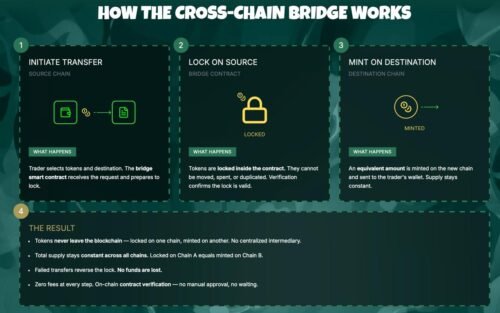
    The cross chain bridge moves assets between networks without the single point of failure that has cost DeFi users billions this year, while the zero fee swap engine lets holders trade across chains at no cost. The architect who cofounded original Pepe brought Binance experience into the build, and every contract has cleared a full SolidProof audit.

    Everything runs on one interface where holders can bridge, swap, and check risk without leaving the system. The $9.2 million raise happened during deep fear, and wallets kept filling because the tools were already live and the Binance listing expected ahead gave every entry a clear catalyst.

    At $0.0000001865, the LINK price may point toward $15 in a bull case, but the distance between a presale entry and the first candle on a Binance listing is where returns that actually change portfolios are built, and that window closes a little more each day.

    LINK Price: Oracle Giant Holds Ground While Returns Stay Capped

    LINK traded near $9.34 in late April, down 82% from its May 2021 all time high of $52.99 and stuck between $8.50 support and $10.50 resistance. The Bitwise LINK ETF launched on NYSE Arca this year, and CCIP revenue reached roughly $75 million annualized according to CoinDesk. Fundamentals are the strongest ever, but the LINK price needs a 5x just to revisit its old high, and analysts project $10 to $15 for 2026.

    Ethereum: Holding $2,300 While the Market Waits

    ETH traded near $2,344, down 52% from its all time high and sitting lower on the week while BTC rallied. Layer 2 activity continues growing, but the $233 billion market cap means even a strong move to $2,800 delivers only 20% according to CoinMarketCap. The math at current ETH prices works against the kind of returns that defined earlier cycles.

    The Bottom Line

    LINK has earned its place as core infrastructure, and the $18 billion in monthly CCIP volume proves institutions trust Chainlink with real capital. The Bitwise ETF adds another layer of access that supports long term demand. But the LINK price at $9.34 needs years of grinding higher just to test old highs, and portfolio flipping gains do not come from buying into a $6.8 billion market cap. The wallets that bought LINK at $0.20 in 2017 and rode it to $52 understood early entries, and those same types of wallets are filling Pepeto positions now because they spot these setups better than anyone. Pepeto has raised $9.2 million with live tools and a Binance listing expected ahead, and the presale price is still open, but that entry disappears permanently once the listing candle prints.

    Click To Visit Pepeto Website To Enter The Presale

    FAQs

    How high will the LINK price go in 2026?

    Analysts project LINK between $10 and $15 for 2026, supported by CCIP growth and the Bitwise ETF. A breakout above $12 could push toward $15, but the ceiling stays well below previous highs.

    What is the LINK price prediction for 2030?

    Long term forecasts range from $80 to $200 depending on CCIP adoption. Returns from current prices are measured in single digit multiples over several years.

    What catalysts could push the LINK price higher?

    Rising CCIP volume, institutional pilots, and ETF inflows are the primary catalysts. For faster returns, presales like Pepeto offer entries where the distance to listing creates potential that established tokens cannot match. More details are available on the Pepeto official website.

    Disclaimer:
    This article is for informational purposes only and does not constitute financial advice. Cryptocurrency investments carry risk, including total loss of capital. Readers should conduct independent research and consult licensed advisors before making any financial decisions.

    This publication is strictly informational and does not promote or solicit investment in any digital asset

    All market analysis and token data are for informational purposes only and do not constitute financial advice. Readers should conduct independent research and consult licensed advisors before investing.

    Crypto Press Release Distribution by BTCPressWire.com

  • New Cryptocurrency Pepeto Raises $9.2M as KelpDAO Exploit Shakes DeFi and BlockDAG Stalls thumbnail

    New Cryptocurrency Pepeto Raises $9.2M as KelpDAO Exploit Shakes DeFi and BlockDAG Stalls

    The largest DeFi hack of 2026 just drained $292 million from KelpDAO through a single point of failure in a cross chain bridge, and the fallout is forcing traders to rethink which projects actually protect capital. In the search for a new cryptocurrency worth buying, security and working tools now matter more than promises. Pepeto has raised $9.2 million with exchange tools already live and a Binance listing expected ahead, and here is why early holders have an edge that disappears after listing.

    $292 Million KelpDAO Exploit Triggers Industry Wide Response

    Attackers linked to North Korea’s Lazarus Group drained $292 million in rsETH from KelpDAO’s bridge on April 18 by forging a transaction that passed every on chain check, making it the largest DeFi exploit of 2026 according to CoinDesk. Aave froze rsETH markets while nine protocols scrambled to contain the damage. Aave is now leading a DeFi United recovery with Lido committing 2,500 stETH and EtherFi offering 5,000 ETH according to CoinMarketCap. When one configuration flaw wipes out hundreds of millions, the new cryptocurrency market needs tools that verify before the trade completes.

    Early Stage Picks: Pepeto, BlockDAG, and Digitap

    Pepeto Draws $9.2 Million as Working Tools Set It Apart in the New Cryptocurrency Space

    When major exploits remind the market how expensive trust can be, the projects that benefit most are the ones already built to prevent those losses. Pepeto drew attention from the start, raising $9.2 million while the broader market sat in fear because the tools were already live and holders could verify for themselves.

    The zero fee swap engine handles cross chain trades at no cost, removing the fee drag that eats into positions on competing exchanges, while the AI risk scorer checks every contract before a trade completes. The mind behind original Pepe brought Binance experience to the build, and every contract passed a full SolidProof audit.

    From contract verification to fee free swaps, Pepeto covers the steps that most traders piece together across multiple sites. The real product behind this new cryptocurrency strengthened the outlook from day one, and at $0.0000001865 the entry sits at presale pricing with a clear path to the Binance listing expected ahead.

    That listing gives Pepeto the kind of exchange exposure that turns presale entries into positions everyone else chases at higher prices, and the wallets filling now understand that the window between presale and listing is where the math matters most.

    BlockDAG: Mining Promises Meet an Unproven Market

    BlockDAG markets itself as a mobile mining project that lets users earn tokens from phones while a DAG based network processes transactions in parallel. The concept sounds accessible, but the project has yet to deliver a working mainnet, and mobile mining economics have historically failed to produce meaningful returns for retail users once difficulty scales and early incentives expire.

    Digitap: Tap to Earn Joins a Crowded Field

    Digitap positions itself as a tap to earn gaming token where users collect rewards through simple mobile interactions. The mechanic attracted early downloads, but the model depends entirely on continuous user growth, and the graveyard of tap to earn projects that collapsed after launch incentives dried up suggests the risk far outweighs the reward for late entrants.

    Final Words

    Every massive fortune in crypto started the same way. Dogecoin traded at $0.0002 in December 2013 and reached $0.73 in May 2021, turning a $500 entry into more than $1.8 million. Solana was available near $1.50 on early exchanges and crossed $293, making early holders wealthy beyond anything the market expected. Chainlink launched at $0.20 and climbed to $52, rewarding the wallets that moved while everyone else called it too small to matter. The common thread is simple: every early buyer moved while the rest of the market doubted. Pepeto is the strongest new cryptocurrency entry of 2026 with $9.2 million raised and live tools, and the Binance listing expected ahead compresses the timeline between this price and the moment every new buyer competes for tokens at a higher number.

    Click To Visit Pepeto Website To Enter The Presale

    FAQs

    What makes Pepeto stand out as a new cryptocurrency in 2026?

    Pepeto offers live exchange tools including a zero fee swap engine and AI risk scorer at presale pricing. The $9.2 million raise and Binance listing expected ahead give it a path most new cryptocurrency projects cannot match.

    How does the KelpDAO exploit affect the new cryptocurrency market?

    The $292 million exploit exposed how a single flaw in a bridge can drain hundreds of millions. It reinforces why projects with built in verification like Pepeto’s risk scorer matter for traders entering the new cryptocurrency space.

    Could Pepeto be the best new cryptocurrency to buy before listing?

    Pepeto combines working tools, a SolidProof audit, and Binance experience on the team with presale pricing that disappears once listing opens. That makes it the top candidate for traders seeking a new cryptocurrency with real return potential. Full details are on the Pepeto official website.

    Disclaimer:
    This article is for informational purposes only and does not constitute financial advice. Cryptocurrency investments carry risk, including total loss of capital. Readers should conduct independent research and consult licensed advisors before making any financial decisions.

    This publication is strictly informational and does not promote or solicit investment in any digital asset

    All market analysis and token data are for informational purposes only and do not constitute financial advice. Readers should conduct independent research and consult licensed advisors before investing.

    Crypto Press Release Distribution by BTCPressWire.com