
Choosing the best open source SEO software is a bit more complicated than picking the cheapest tool and calling it done. Most marketing teams need more than that. Not just a basic rank checker, but clean analytics, technical audits, reporting, and sometimes some kind of AI support built into the mix. The conversation around open source SEO has changed. It’s not just about saving money anymore. Teams care about control, privacy, and building a workflow that actually fits the way they work.
That matters even more now because AI is changing search fast, and the shift is hard to ignore. Recent research shows 91% of marketers use AI in their work in 2026, while 70% of businesses report higher ROI from using AI in SEO. At the same time, plenty of teams are tired of rising software costs and platforms that lock them in. Frustrated, honestly. The real question goes beyond whether a tool is open source in the first place. Teams need to know which stack helps them grow SEO without giving up data ownership, brand quality, or technical visibility.
This guide looks at the top open source seo tools, where they fit, where they fall short, and how they compare with modern AI SEO software and seo automation software.
Why open source SEO tools are getting more attention
Open source SEO tools sit in a pretty useful middle ground. They’re more flexible than a closed SaaS platform, but they also ask more from your team, especially when setup time, hosting, and someone to manage data or integrations are part of the mix. For many SaaS and e-commerce teams, that tradeoff makes sense.
The SEO market is changing for a few clear reasons. AI search traffic grew 527% year over year, and AI Overviews now reach billions of users every month. That’s a big shift. A lot of searches also end without a click, which means teams need better reporting, stronger technical SEO, and a clearer view of what content is really helping. Open source tools stand out here because they give teams more control over their data.
Key market trends shaping SEO software decisions
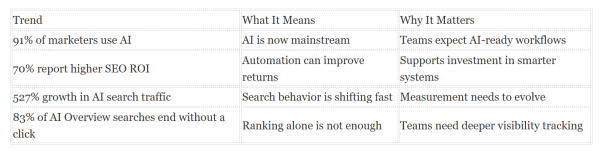
Because of that, many teams are building hybrid stacks. They use open source tools for analytics, reporting, or rank tracking. Then they pair those with a best ai seo tool for content planning and workflow automation, while industry analysis from SitePoint and TECHSY says the strongest setups support the full SEO process instead of focusing just on writing.
The top open source seo tools worth considering
Open source tools don’t all do the same job. Some are better for analytics, while others focus on rankings, technical SEO, or Search Console exports, depending on what’s actually needed. They’re not one-to-one replacements for enterprise suites, and that’s where disappointment can start. Used as modular building blocks instead, they become a lot more useful.
Matomo
Matomo works well for privacy-first analytics. It helps teams track landing pages, sessions, conversions, and behavior while keeping more control over their own data. It’s especially helpful for companies with compliance needs or more demanding internal reporting.
SEO Panel
Sometimes the closest thing to an open source all-rounder, SEO Panel covers rank tracking, site monitoring, backlink checks and multi-site management. Pretty handy. That makes it a practical pick for agencies or brands managing several web properties.
SerpBear
Track keywords across sites with this lightweight, self-hosted rank tracker, especially if ongoing software fees are a pain. It won’t replace a full SEO suite, but it handles that one task really well.
RustySEO
RustySEO is newer and looks promising. It’s built for technical SEO work, including audits, reporting, and log-style analysis. For developer-led teams that want more customization, it may seem appealing.
GSC Bulk Data Downloader
A practical utility, not a full platform. It helps teams pull larger sets of Search Console data into dashboards or custom workflows.
10 SEO Tools That Replace Semrush & Ahrefs in 2026
Each tool covers a different part of SEO. Very few solve everything, so teams mix and match what fits their workflow best.
What open source software does well and where it struggles
The biggest strength of open source SEO software is control. Teams can self-host it, shape the workflow around their needs and plug it into their own reporting stack without much friction. That matters, especially for teams focused on privacy, cost control and customization.
Take a mid-sized SaaS company. It might use Matomo for owned analytics, SerpBear for rank checks and Search Console exports to build dashboards. That kind of setup can cost far less than a full enterprise suite. It also gives the team more direct access to raw performance data, which helps when they want fewer layers between the numbers and the decisions.
Still, open source tools have limits. They don’t always come with huge proprietary keyword databases, advanced backlink indexes or the polished user experience people expect from premium platforms. Sometimes the tradeoff is simple: teams save on licenses, then spend that savings on setup, maintenance and content coordination. A lot of marketing teams run into that.
A common mistake is expecting open source tools to replace every feature in a paid platform. Another is relying on too many disconnected tools without a clear workflow behind them. If the team is spending more time moving spreadsheets around than improving pages, the stack is no longer helping.
Many growth teams pair open source tools with specialized AI SEO software. Open source software handles visibility, analytics and owned data. AI SEO software handles briefs, content production, internal linking suggestions and publishing workflows. Together, the mix can give teams a better balance of control and speed, especially when they need to move faster without giving up ownership of their data.
Where the best ai seo tool fits into an open source stack
Open source tools work well for measurement and technical control. They tend to get weaker when content work needs to scale. That’s the gap AI can fill.
The best ai seo tool today does more than produce text. It can help with keyword clustering, search intent analysis, competitor gap reviews, on-page optimization, internal linking, and publishing. Modern seo automation software can support the whole workflow, from the first idea to a live page.
Content teams now manage more pages across more systems, and that changes things fast. A blog might sit in WordPress, docs in another CMS, and landing pages somewhere else entirely. It gets messy fast. Manual SEO work starts to pile up in that kind of setup. AI tools can reduce some of that load, especially when teams set clear guardrails for tone, product language, and quality review.
One practical example: a team uses self-hosted analytics and ranking tools to track outcomes, while also using a platform like SEOZilla.ai to simplify content creation, internal linking, and publishing across multiple CMS environments. It’s a useful mix. That setup makes sense for teams that want automation without generic copy or broken workflows. Teams comparing broader SaaS SEO tools often evaluate this kind of hybrid setup for long-term scalability.
Teams get the best results when AI handles repeatable work faster and humans stay in charge of strategy, messaging, and final quality.
How to choose the right setup for your team
The right stack depends on your goals, resources and technical comfort. For a small, non-technical team, too much open source software can become a real burden. But teams with developers or data specialists can use open source tools as a solid base.
Start with five questions:
1. Need self-hosting and data ownership?
If yes, tools like Matomo or self-hosted trackers are worth checking out.
2. Is technical SEO your main pain point?
Choose tools for crawling, audits, or Search Console tasks.
3. Is multi-site reporting needed?
SEO Panel may be more useful than a tool with just one purpose.
4. Need content at scale with the best ai seo tool?
Open source tools alone may not be enough, especially when content needs grow fast. AI SEO software can help.
5. Your real total cost
Free software is not always cheap. Hosting, maintenance, setup time, and slower work all add to the cost.
A good rule: if a team wants flexibility and owned data, open source is a strong base, especially when control matters and the goal is to avoid getting locked into one system. If content speed matters too, add an AI layer instead of forcing a single tool to do everything.
A practical workflow for SaaS and e-commerce teams
For many mid-sized businesses, a hybrid stack with clear roles works best.
Use Google Search Console as your first-party source for search data. If stronger privacy and owned analytics matter, add Matomo. Keep it short and simple. Use SerpBear or SEO Panel for self-hosted rank tracking or to monitor multiple sites, then add an AI workflow tool for briefs, content production, optimization, and publishing.
That setup matches how real teams work now. Research shows 74% of new online content uses generative AI, yet every team still needs to control quality. The focus is useful automation.
For brands that publish regularly, internal linking and refresh cycles are easy wins. AI can find pages to update, clusters to grow, and older articles that should connect, while open source reporting tools track whether those updates improve rankings, conversions, or assisted revenue. Teams also compare platforms against guides like Surfer SEO vs Ahrefs Which Tool Is Best For You in 2026? when deciding how much functionality they still need from premium SEO suites.
Over time, that works better than chasing random keywords with disconnected tools.
Frequently Asked Questions
What is the best open source SEO software overall?
There is no single winner for every team. Matomo is excellent for analytics, SEO Panel is useful for broad SEO management, and SerpBear is strong for self-hosted rank tracking. The best choice depends on whether you care most about analytics, rankings, audits, or reporting.
Are open source SEO tools enough on their own?
Sometimes, but not always. They are great for control, privacy, and cost savings, yet many lack deep keyword databases, advanced backlink data, and polished automation. Most growing teams do better with a hybrid stack.
What is the difference between open source SEO tools and AI SEO software?
Open source tools usually focus on data ownership, self-hosting, and technical workflows. AI SEO software focuses more on content briefs, optimization, clustering, and automation. In many cases, they work best together rather than as replacements.
Which open source SEO tool is best for rank tracking?
SerpBear is one of the most commonly mentioned options for self-hosted rank tracking. It is simple, focused, and useful if you want to monitor keywords across domains without paying ongoing SaaS fees.
Can AI SEO software work with an open source stack?
Yes. In fact, that is often the smartest setup. A team might use open source tools for analytics and rankings, then use SEOZilla.ai or another AI-driven workflow platform to handle content planning, internal linking, and publishing at scale.
What should non-technical marketing teams choose?
If your team has limited technical support, use only a small number of open source tools and keep the stack simple. Too many self-hosted tools can slow execution. In that case, pairing one or two open source data tools with a user-friendly seo automation software platform is usually the better path. Teams evaluating browser-based workflows may also find value in guides covering SEO toolbar extensions for browsers.
Build the stack that matches how your team works
The best open source SEO software isn’t the one with the longest feature list. It’s the one that solves the right problem for your team. Open source tools tend to work best when your team wants data ownership, self-hosting, lower software costs, and tighter control over reporting. They work less well when your team needs an all-in-one system with huge built-in keyword and backlink datasets.
Smart teams rarely expect open source tools to do everything. They use them where they’re strongest, then connect them with AI SEO software and focused workflows. That matters even more now because search is shifting toward AI Overviews, zero-click behavior, and content operations that need to grow.
If your team is building for long-term growth, start with a simple audit. Figure out what needs to be owned, what should be automated, and what still needs human review. Then build your stack around those answers. Done right, top open source seo tools become a strong foundation instead of feeling like a budget workaround.