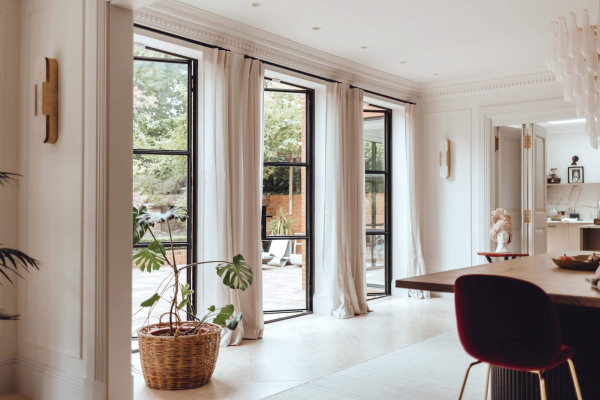
There is a renovation mistake I have watched people make more times than I can count. They plan the whole project meticulously: the kitchen layout, the bathroom tiles, the flooring throughout, and the paint colors on every wall. Months of planning. And then, somewhere near the end, when the budget is tight and everyone is tired of decisions, the doors get chosen quickly from whatever is available and affordable at that point. I watched a friend do exactly this last year. She had spent weeks agonizing over worktop materials and then ordered flat-white internal doors from a catalog in about ten minutes. She regretted it almost immediately after installation. The rest of the house was beautiful. The doors looked like they had wandered in from a different, cheaper project. When she eventually replaced them with steel arched doors six months later, she said it was the best money she had spent on the entire renovation. More impactful than any other single decision. That is a strong thing to say about a door, but I believed her completely when I saw the result.
Doors are not a finishing detail. They are a structural part of the design of a home. They deserve to be planned with the same intention as everything else, and in many cases they deserve to be planned first rather than last.
Why Doors Get Treated as an Afterthought
The honest answer is that doors are invisible when they are done well and only noticeable when they are wrong. A flat white door in a freshly renovated room does not look bad, exactly. It looks neutral. It does not draw attention to itself. And because it does not draw attention, it is easy to tell yourself during the planning phase that the door does not really matter that much. The attention goes to the things that do draw attention: the statement light fitting, the bespoke joinery, and the carefully chosen tile.
The problem is that neutral is not the same as right. A neutral door in a beautifully considered room creates a specific kind of visual disconnect. Every other thing was carefully selected; the door was automatically selected. Those who take interest in interior design can tell the difference, though they might not be able to express why they have reservations. It is like wearing a perfectly tailored suit with a wrongly fitting tie. The tie is not the main feature. But its wrongness undermines everything around it.
Arched steel doors do the opposite. They are not neutral. They make a clear statement about the intention behind the design of the space. And that statement benefits everything around them because it signals that the whole room has been thought about.
The Case for Planning Doors at the Start of a Renovation
Bespoke steel arched doors have lead times. This is one of the most practical arguments for planning them early. A quality manufacturer needs time to survey, draw, produce, and install. Rushing that process to meet a completion deadline produces worse results than giving it the time it needs. If you decide you want arched steel doors three weeks before you need the renovation finished, you are setting yourself up for either a delay to the whole project or a compromise on the quality of the result.
Starting the door conversation at the beginning of the renovation means the surveyor can visit the site before other work begins, which is actually the ideal time. Wall openings can be prepared correctly from the outset rather than modified later. Any structural work required above the opening can be incorporated into the broader renovation program rather than treated as a disruptive addition. The doors arrive when the space is ready to receive them, not as a scramble at the end.
There is also a design benefit to planning the doors first. When you know what the arched doors are going to look like, you can make other design decisions in relation to them. The floor finish, wall color, and hardware can all be addressed within the scope of the door selection process rather than selecting them independently and hoping they will come together. The door is the starting point for the design rather than being the addition that must be worked into existing decisions.
How Steel and Arches Work Together in a Space
The combination of materials and form in a steel arched door is not accidental. Steel and glass together create a specific visual language that is simultaneously industrial and refined. The arch shape adds a layer of history and architectural weight. The two things together produce something that is harder to categorize than either element alone, and that resistance to easy categorization is part of what makes it so interesting in an interior.
People often ask whether arched steel doors work in period properties or whether they are strictly a contemporary thing. The answer is that they work in both, but they work differently in each. In a Victorian or Edwardian property, the arch echoes the existing architectural language of the building, while the steel and glass introduce a material contrast that feels considered and deliberate. In a contemporary home, the arch introduces a historical reference into a modern setting, which creates exactly the kind of layered interest that the best contemporary interiors tend to have.
What they do not work well with is indifference. A steel arched door in a room that has been put together without much thought looks incongruous. These doors are the kind of feature that raises the standard of expectation for everything around them. When the space meets that expectation, the result is something genuinely special. When it does not, the door ends up looking like it was placed in the wrong room.
The Specific Impact on Hallways
Hallways are where arched doors internal to the main living spaces make the most consistent and dramatic difference. This is partly because the hallway is the first interior space a visitor experiences, which gives it an outsized role in the impression a home makes. But it is also because hallways are typically the spaces that benefit most from the light transfer that a glazed arched door provides.
Most British hallways are narrow and do not have direct access to natural light. They depend on borrowed light from adjacent rooms, and a solid door between the hallway and the living spaces cuts that light off entirely. A glazed arched steel door between a hallway and a reception room changes the light quality of both spaces simultaneously. The hallway becomes brighter. The living room gains the visual depth of a well-framed opening into the hall. Both spaces benefit from the connection.
An archway also contributes to how tall the hall feels. Through the act of pulling the viewer’s eye upward at the point of entry into the hall, the arch creates the feeling of tallness within a hall, even when its ceilings are not really high. This is an effective design technique in old buildings where the hall ceilings may be rather low, and thus it is one of the many reasons why arched doors are commonly used in transitional spaces.
Thinking About the Whole Ground Floor as a System
The most impressive results I have seen with arched steel doors are not individual doors in individual rooms. They are ground floors where two or three arched openings have been specified together, creating a visual sequence of arches that you experience as you move through the space. A hallway arch leading to a living room arch leading to a kitchen-diner opening. The repetition of the arch profile, even in different sizes to suit different openings, creates a coherence that makes the whole floor feel like it was designed rather than accumulated.
This is worth thinking about even if the immediate plan is only one door. If there is any possibility that a second arch might be added later in the same space, specifying the first one with that in mind makes sense. The arch profile, the steel finish, the glass type: if these are chosen with a sequence in mind, the eventual result will be more cohesive than if each door is specified independently at different times. A specialist who understands the whole project rather than just the immediate order will be able to advise on this.
What Visitors Actually Notice
This is a somewhat unscientific observation, but it is consistent enough to be worth mentioning. When people visit a home that has well-specified arched steel doors, the doors are almost always one of the first things they comment on. Not because they are trying to make conversation but because the doors genuinely register in a way that most interior features do not.
I have a theory about why this is. Most interior features, however beautiful, are passive. They sit in a room and are looked at. A door is active. You interact with it. You open it, walk through it, close it behind you. That physical interaction creates a stronger impression than visual appreciation alone. When the thing you are physically interacting with is beautifully made and architecturally considered, the impression it leaves is correspondingly strong.
Visitors remember the doors. They ask about them. They photograph them. And the homeowner who commissioned them gets to have a conversation about a design decision they are genuinely proud of rather than one they made under budget pressure at the end of a long project.
Getting the Specification Right for Your Property
No two properties are the same, and no two arched door specifications should be identical. The opening dimensions, the wall thickness, the ceiling height, the existing architectural details, the way the rooms are oriented to natural light; all of these shape what will actually work in a given space and what will not.
The arch profile needs to be proportionate to the opening. The glass specification needs to suit the light conditions and privacy requirements of the specific rooms on either side. The metal finish should be placed appropriately within the color scheme and materials palette of the environment in which it exists. The fittings, the hinges, and the handle: all these are details that make up an important part of whether the door fits well into its surroundings or whether it clashes with them.
This level of specificity is not something that can be navigated from a catalog. It requires conversation, ideally with someone who has done this many times and can bring experience to bear on the particular challenges of your property. The best outcomes come from that kind of collaboration between a homeowner who knows what they want to achieve and a manufacturer who knows how to achieve it. Everything else follows from getting that relationship right from the start.