Author: Rog

  • Tulsa Security Task Force Offers No-Cost Overnight Security Patrols for Storm-Damaged Businesses in Tulsa and Surrounding Communities

    Storm season in Oklahoma can leave commercial properties exposed after dark. When a business loses power after tornado damage, normal lighting, camera visibility, alarm awareness, and day-to-day activity may be disrupted. That can increase the risk of trespassing, theft, vandalism, and other property issues during overnight hours.

    To help local businesses during that window, Tulsa Security Task Force is making overnight patrol support available at no cost for qualifying businesses dealing with tornado damage and overnight power loss. The goal is to help owners protect damaged properties while cleanup, temporary repairs, and power restoration are underway.

    This support is available for affected businesses in Tulsa, Broken Arrow, Owasso, Jenks, Bixby, Collinsville, and nearby communities when overnight storm conditions leave properties vulnerable. The duration of the no-cost patrols is up to 30 days.

    Tulsa Security Task Force provides security guard services in Tulsa, private security, armed security, and overnight patrol coverage for commercial properties and other sites that need a visible security presence after hours. Patrols are conducted by off-duty police and K-9.

    “After a tornado, business owners may be dealing with broken glass, damaged entry points, dark parking lots, and uncertainty overnight,” said James Dodson, Owner of Tulsa Security Task Force. “We want to step in and help businesses in Tulsa and nearby communities protect their property during that critical time.”

    This storm-response effort is intended for businesses that have suffered tornado-related damage and are without power overnight. Availability may depend on call volume, storm impact area, and patrol capacity at the time of request.

    Business owners who need overnight patrol support after tornado damage can contact Tulsa Security Task Force directly to request assistance.

    Media Contact:

    James Dodson

    Tulsa Security Task Force

    Phone: 918-404-5545

    Website: www.tulsasecuritytaskforce.com

    About Tulsa Security Task Force

    Tulsa Security Task Force provides security guard services, security services, private security, and armed security in Tulsa and surrounding communities. The company provides overnight patrol coverage, visible deterrence, and property-focused security support for commercial locations and other sites that need after-hours protection. Patrols include off-duty police and K-9.

    Media Contact
    Company Name: Tulsa Security Task Force
    Contact Person: James Dodson
    Country: United States
    Website: https://www.tulsasecuritytaskforce.com

  • What Is White Label SEO Software and How It Actually Helps Agencies Scale Faster

    Most agency owners underestimate one thing when they start growing: the admin load. Here is how a smarter category of tool is quietly changing that reality.

    Let me tell you about a conversation I had with an agency owner not long ago. She was running a team of six people, handling about thirty SEO clients; and completely exhausted. Not because the work was bad. Not because clients were unhappy. She was exhausted because every Friday her team spent the better part of the afternoon compiling the same reports they had compiled the Friday before. Rank positions from one tool. Traffic data from another. Backlink changes from a third party. All of it stitched together manually into a PDF that clients mostly glanced at for about forty-five seconds.

    “We’re good at SEO,” she told me. “We’re terrible at scale.”

    That gap between being good at the work and being capable of scaling it efficiently is where white label SEO software enters the picture. And for a growing number of agencies, it has become the single most important operational decision they make.

    Start With the Basics: What White Label Actually Means Here

    The phrase gets used loosely, so it is worth being precise. In the software world, a white label product is one where the original builder licenses the technology to other businesses; who then rebrand it as their own. The client-facing experience carries the reseller’s identity. The underlying engine stays invisible.

    In the context of SEO, this means an agency can offer a complete suite of research tools, audit capabilities, rank tracking, and reporting; all presented to clients under the agency’s own logo, color palette, and custom domain. The client logs into what feels like proprietary agency software. They have no reason to ask who built it; and there is no reason they should need to.

    This is not about deception. It is about professionalism. Just as a law firm does not explain which document management system its paralegals use, an SEO agency should not need to walk clients through its vendor stack. The product is the service; not the infrastructure behind it.

    The Real Problem This Solves (It Is Not What You Think)

    When most agency owners first hear about white label SEO tools, they assume the primary value is cost savings. Get access to enterprise-grade technology without building it yourself; pay less than you would hiring developers. That is a real benefit. But it is not the most important one.

    The deeper value is cognitive. Consider what a typical SEO team does each week when managing clients manually. Someone checks rankings across multiple platforms. Someone else audits site health. A third person pulls traffic data. Then someone senior synthesizes all of this into a narrative that goes into a client report. That entire chain, from raw data to finished document, requires coordination, context switching, and significant calendar time.

    When the platform does the synthesizing, your team gets to do the thinking. That trade is worth far more than any monthly subscription fee.

    SEO automation software collapses that chain. Audits run on a schedule. Rankings update automatically. Reports are assembled and sent without a person touching them. The data that used to require four hours of human labor now appear on their own, and your team’s four hours go somewhere genuinely useful. That is the real value proposition, and it compounds hard as the client list grows.

    How AI Changed What These Platforms Can Actually Do

    There is a version of this story that ends at automation: tools that do faster what humans used to do slowly. That version was accurate about four years ago. Today it misses something important.

    The integration of genuine machine learning into SEO platforms has shifted the category from automation to augmentation. A good AI SEO platform does not just speed up the data collection; it adds a layer of interpretation that used to require an experienced strategist sitting down with the numbers.

    Here is a concrete example of what that looks like in practice. A traditional audit tool tells you a page has a low word count. An AI-integrated platform tells you the page is semantically underweight compared to the three competitors outranking it; identifies the specific topic clusters those competitors are covering that your page is not; and suggests a prioritized list of additions based on current search intent patterns. The first output requires a human to decide what to do. The second output already contains a decision-ready recommendation.

    That distinction matters enormously when you are managing thirty or forty clients. It is the difference between a platform that reduces labor and a platform that increases leverage.

    What separates a real AI SEO platform from marketing noise

    Plenty of tools put “AI-powered” in their headline copy. Fewer actually deliver on it in ways that change how an agency operates. The honest question to ask of any platform is this: Does the AI output reduce the amount of expert judgment my team needs to apply, or does it just reformat data into a slightly different display?

    Useful AI gives you recommendations that are specific enough to act on without further research. It identifies which technical fixes on a client’s site are most likely to produce ranking movement, not just which ones exist. It tells you which content gaps represent realistic ranking opportunities given the client’s current domain authority, not just which keywords competitors are targeting. Vague insight is not insight. Specificity is the test.

    What Branded Platforms Do for Client Relationships

    There is a psychological dimension to this that often gets overlooked in conversations about tooling. When a client logs into a platform that carries your agency’s branding; when your logo sits in the top corner; when they can pull up their own data at any time rather than waiting for a monthly PDF, the dynamic of the relationship shifts in a meaningful way.

    Clients who have real-time access to their own performance data ask fewer “What are you actually doing for us?” questions. Not because they are less engaged, but because the answer is visible. They can see the audit findings. They can watch rankings move. They can pull the backlink data themselves if they want to. That transparency converts skepticism into partnership, and partnership converts month-to-month contracts into annual retainers.

    Agencies that have made this shift often note that their close rate on renewals improved noticeably, not because the SEO work changed, but because the client experience did. That is the kind of business outcome that a conversation about “tools” often undersells.

    A Practical Look at What These Platforms Cover

    The scope of a mature white label SEO tools suite is broader than many agency owners assume when they first start evaluating options. It is worth being specific about what is typically included because the value often comes from having everything in one place rather than any single feature.

    Core Capabilities in a Full-Featured Platform

    Rank tracking: Automated daily position monitoring across desktop and mobile, with location targeting and competitor tracking built in.

    Technical site audits: Crawl-based diagnostics covering page speed, crawlability, schema implementation, broken links, duplicate content, and Core Web Vitals; updated on your schedule.

    Keyword and content intelligence: Search volume; keyword difficulty; intent classification; and, on AI-integrated platforms, semantic gap analysis against competing pages.

    Backlink analysis: Link profile monitoring; new and lost link alerts; toxic link identification; and competitor backlink gap reporting.

    Automated client reporting: Scheduled branded reports delivered directly to clients, eliminating the manual assembly process that consumes team hours each month.

    Digital marketing automation hooks: Integrations with Google Analytics; Search Console; Google Ads; and third-party platforms that pull performance context into a single client view.

    When these capabilities live inside one branded environment, available to clients through a portal that carries your name, the operational and relational payoff compounds together. That is the architecture of what scaling actually looks like for an SEO agency.

    The Economics of Building vs. Buying

    Some agency founders ask whether they should build internal tooling instead of licensing a white label platform. It is a fair question, and the answer depends heavily on scale, but for the overwhelming majority of agencies the math does not support building.

    Consider what building your own platform actually requires. At minimum, you need backend engineers capable of integrating with Google’s data sources, frontend developers to build the client-facing interface, a data infrastructure capable of storing and processing crawl data at volume, and an ongoing maintenance burden as search engine APIs and ranking factors evolve. That is a significant engineering organization, not a side project.

    A white label platform delivers all of that infrastructure for a monthly licensing fee that is typically a small fraction of a single engineering salary. More importantly, it delivers it already built, already tested, and already improving based on a developer’s full-time focus on the product. The build-versus-buy calculation in this category is not particularly close for most agencies.

    How to Evaluate Platforms Without Getting Lost in Feature Lists

    Platform comparisons in the SEO tools space can get overwhelming quickly. Every product has a feature matrix, and most of them look broadly similar at the surface level. Here are three questions that cut through the noise more effectively than comparing feature lists.

    Does the AI output actually save decision-making time?

    Run a real client scenario through the platform before you commit. Take an actual client site; run an audit; and ask how long it takes you to get from the audit output to a prioritized action list you could hand to a junior team member. If you still need a senior strategist to translate the data into a recommendation; the AI layer is not doing enough work. The goal is to push the senior judgment up the stack, not just display it differently.

    Does the pricing model rewagrows inth?

    Read the pricing tiers carefully. Some platforms become significantly more expensive as your client count grows; in ways that eat directly into the margin gains you were hoping to capture. Look for models where your costs scale predictably and proportionally, not ones that penalize success with steep tier jumps.

    How good is the white label actually?

    Some platforms offer “white labeling” that is little more than a logo swap. Others let you fully customize the domain, color system; email communications, and even the language the platform uses. The more complete the white labeling, the more your clients perceive the platform as yours. Ask for a demo environment that shows you exactly what your clients will see.

    One Platform Worth Taking Seriously

    If you are actively evaluating your options right now, whitelabelseo.ai is worth a close look. It was built specifically to address the gaps that existing agency tools left open, particularly around AI-generated recommendations that are detailed enough to be actionable rather than decorative. The backstory of why the platform was built is also worth reading; it gives a clear picture of the problems it was designed to solve and the thinking behind how it solves them.

    Pulling It Together: What Scaling Actually Requires

    Here is the honest version of the scaling conversation for SEO agencies. Growing from ten clients to fifty is not primarily a sales problem. It is an operations problem. Your ability to keep delivering quality work as client volume increases depends entirely on whether your operational infrastructure scales with you.

    Agencies that scale well have one thing in common: they have made deliberate decisions about which parts of their work should be automated; which should be templated; and which genuinely require human expertise. White label SEO software is the infrastructure that makes the first two categories possible; so the third category gets the attention it deserves.

    The agency owner I mentioned at the beginning? She eventually moved her operation onto a white label platform with AI integration. Her team of six now manages roughly seventy clients. The Friday afternoon reporting sessions are gone. The quality of her actual strategic recommendations is higher because her team spends their time thinking rather than formatting them.

    That is not a hypothetical outcome. It is what happens when the right infrastructure gets put in place. The question for any growing agency is not really whether to adopt this category of tool. The question is how much longer to wait.


  • Why Every Content Writer Needs Blog Outline Generators for Better Productivity


    Writer at a bright wooden desk with a notebook, coffee, and open laptop


    If you have ever sat down to write a blog post, opened a new document, typed a tentative title, and then spent the next twenty minutes rearranging the same three bullet points without actually writing anything, you already understand the problem. The issue is not motivation, and it is certainly not ability. It is the absence of a clear path from thought to finished draft.

    This is the conversation happening right now across writing communities and content teams. A quick look at discussions around blog outline generators shows writers sharing genuine before-and-after accounts of how structured planning transformed not just their output speed but the overall quality of what they published. These are not sponsored testimonials; they are working professionals describing a shift they noticed in their own daily process.

    So what exactly is happening when a writer uses one of these tools, and why does it make such a measurable difference? That is what this piece explores.

    The Hidden Cost of Starting Without a Plan

    There is a version of writing productivity that nobody likes to discuss openly: the hours that disappear not during the writing itself but during the circling that happens before it. A writer opens a tab to research; falls into three related articles; loses the thread; and starts again. Another writer drafts an introduction three times because they are still deciding, mid-sentence, whether the piece is aimed at beginners or experienced readers.

    These are not unusual experiences. They are the default experience for anyone who sits down to write without knowing in advance what shape the finished piece should take. And the cost adds up fast. If a freelance writer loses forty-five minutes of productive time per article to pre-writing uncertainty, that is roughly six hours per month on a standard workload, time that could be spent on actual writing, client communication, or simply not working evenings.

    The interesting thing is that most writers recognize this problem in retrospect. They finish a difficult article; look back at their working process; and realize they spent more time deciding what to write than actually writing it. The solution, when they find one, is almost always the same: build the structure first.

    The writers who consistently hit deadlines without burning out are almost never faster typists. They are better planners.

    What a Good Outline Actually Does for Your Brain

    Notebook with structured writing plan, color-coded sections and planning notes


    There is a cognitive reason why writing from an outline feels easier, and it has to do with how the brain handles competing demands. When you write without a plan, your mind is simultaneously managing argument structure, sentence construction, tone calibration, keyword placement, and logical flow. That is a significant load, and it shows up as hesitation, repetition, and the uncomfortable sense that you are writing in circles.

    An outline offloads the structural decisions before the writing begins. By the time you open a blank document, you already know what each section needs to accomplish; roughly how long it should run; and how it connects to what comes before and after. Your brain is free to focus on language, clarity, and reader experience rather than architecture.

    Writers who switch from unplanned drafting to outline-first working consistently describe the same sensation: the actual writing feels easier, almost obvious. Sentences arrive more cleanly. Transitions make sense without forcing them. The finished draft needs less restructuring because the structure was settled in advance.

    This is not a writing technique reserved for beginners. Experienced journalists, authors, and essayists use structured planning precisely because it protects their creative energy for the parts of writing that actually require creativity: the word choices, the examples, and the voice.

    Where AI-Powered Outline Tools Change the emanation.

    Building an outline manually has always been possible, and plenty of writers do it well. The limitation is time. Researching what subtopics matter, checking what questions readers are actually asking, and identifying where competitor articles fall short, this kind of planning done thoroughly can take as long as the writing itself.

    What AI-assisted outline tools bring to this process is speed without sacrifice. A well-built blog outline generator can analyze search intent around a topic; surface the questions and subtopics that readers consistently look for; and propose a logical content structure in a fraction of the time a writer would spend doing the same research manually. What previously took thirty to forty minutes of tab-switching and note-taking can now happen in under five.

    Crucially, the best tools do not just give you a list of headings. They reflect real search behavior. They help writers understand not just what to cover but why certain angles are more likely to satisfy reader intent. This distinction matters enormously for anyone writing with SEO in mind because search engines have moved well beyond keyword density. They reward content that genuinely addresses what a reader came to learn.

    The Freelancer Perspective: Time Is the Business

    Freelance writer reviewing productivity metrics on a laptop in a home office


    For writers who work independently, the economics of time are immediate and personal. Unlike salaried employees, freelancers do not get paid for the hours they spend staring at a screen and are unsure how to begin. They get paid for completed work. Anything that reduces the gap between starting and finishing has direct financial value.

    This is why outline-first workflows have spread so quickly among experienced freelancers. Writers who once prided themselves on drafting instinctively have reconsidered that approach after realizing how much time instinct was actually costing them. The shift is not about losing creative freedom; it is about being strategic with where that freedom is applied.

    A freelancer writing ten articles per month who saves thirty minutes per piece through better pre-writing structure gains five hours back each month. Over a year, that is sixty hours, roughly equivalent to an entire additional week of working capacity. For some writers, that time becomes new client work. For others, it becomes not working weekends.

    Content agencies see parallel gains at scale. When every writer on a team follows a structured outline process; editorial review becomes faster; brand consistency improves across different writers; and the volume of work that can move through the pipeline each week increases without requiring additional headcount.

    What Better Planning Does to the Finished Article

    Productivity is one part of the story, but it is worth paying attention to what outline-first writing does to content quality as well. Because the improvements are not subtle.

    Articles written from a thorough outline tend to be more complete. When a writer has mapped the full scope of a topic before writing; they are far less likely to leave important questions unanswered. Reader intent gets addressed more fully; which matters both for audience satisfaction and for how search algorithms evaluate a piece of content.

    The internal logic of these articles also tends to be stronger. Sections connect naturally because their relationship was established in the planning phase, not improvised during drafting. Readers do not encounter the disorienting feeling of following a writer who is visibly working out what they think while they write.

    There is also something to be said for the writer’s confidence. When you sit down to a draft already knowing its structure, you are not second-guessing the architecture mid-paragraph. That confidence shows up in the writing itself; in sentences that commit rather than hedge; in arguments that develop rather than drift; in articles that feel authoritative because they were approached with clarity.

    Search engines have become remarkably sensitive to these qualities. The signals that indicate a well-structured, genuinely useful article, logical flow, topic depth, and clear answers to specific questions are exactly the signals that outline-driven content tends to produce naturally.

    Better Writing Starts Before the Writing Starts


    The writers who produce the most consistent, highest-quality content are not always the most talented in the room. They are the ones who treat planning as seriously as prose. They understand that the decisions made before a draft begins, about scope, sequence, audience, and intent, determine most of what ends up on the page.


    Blog outline generators make this planning phase faster, sharper, and less dependent on guesswork. They give writers a reliable starting point instead of a blank screen. They bring structure to subjects that feel overwhelming. And over time, they quietly build a writing habit that is more efficient, less stressful, and more likely to produce content that ranks and resonates.

    If you are still drafting without a plan, that is worth reconsidering. Not because outlining is a magic fix, but because it removes the one obstacle that costs writers more time than any other: not knowing where to begin.

    Start with the structure. The words will follow.


  • Is Vinchy Art Legit? A Thoughtful Assessment for Buyers Considering Abstract Wall Art

    Abstract wall art displayed in a stylish modern home interior

    Before anyone spends a meaningful sum on wall art they cannot touch or inspect in person, a basic question surfaces: can this brand actually be trusted? It is a sensible instinct. The online art market has its share of misleading listings, inflated claims, and products that bear no resemblance to what was advertised. So when someone asks whether Vinchy Art is legit as an abstract art brand, they deserve a clear-eyed answer rather than promotional reassurance or reflexive skepticism. This piece works through the evidence: what the brand actually sells, how customers across multiple platforms describe their experiences, and what the production process tells us about the brand’s intentions and standards.

    The short answer is that Vinchy Art is a legitimate operation selling genuinely handcrafted textured artwork. The longer answer is that legitimacy alone does not guarantee every purchase will be a smooth experience; there are specific characteristics of this brand and this product category that buyers need to understand in advance to set appropriate expectations.

    Brand Overview: What Vinchy Art Is and Where It Operates

    Vinchy Art is an online art gallery specializing in three-dimensional textured abstract paintings, most of them executed in acrylic impasto technique on gallery-grade canvas. The brand sells primarily through its own e-commerce platform and ships internationally. Its pricing sits in the mid-to-upper range for the handcrafted canvas art market: more expensive than mass-produced prints and less expensive than fine art originals represented by established galleries.

    The brand’s market position is defined by a specific aesthetic: large-format abstract compositions with pronounced physical texture. The pieces are designed to serve as focal points in residential interiors rather than background decoration. They appeal to buyers who have some familiarity with contemporary art and want something that reads as genuinely made rather than commercially reproduced.

    From an operational standpoint, Vinchy Art has a functioning website, visible customer communication channels, an active social media presence, and a documented production process. These are basic indicators that differentiate a legitimate brand from a dropshipping operation or outright fraud. They do not guarantee a flawless buying experience, but they establish that there is a real business behind the product listings.

    Customer Reviews: What the Feedback Actually Shows

    Looking across the range of customer feedback available online: from the brand’s own platform, from independent forums, and from social media discussions: a reasonably consistent picture emerges. The product quality itself receives favorable assessments from the majority of buyers who take the time to evaluate it after it is hanging in their homes. Specific praise tends to focus on the physical depth of the texture, the quality of the color pigments, and the overall impression of craftsmanship.

    The areas where feedback turns critical are almost uniformly operational rather than product-related. Shipping timelines are the most frequently cited issue: buyers accustomed to two-day or next-week delivery windows from large e-commerce platforms find the production-to-dispatch timeline unfamiliar. For custom or semi-custom handcrafted pieces, production time is a legitimate factor; a piece that needs to be built up in layers cannot be assembled and shipped in 48 hours.

    Customer service response times are the second most cited concern in critical reviews. During peak order periods, response windows can extend beyond what buyers expect, which compounds the anxiety of waiting for an expensive item. This is a legitimate operational weakness that the brand has been working to address; more recent reviews suggest some improvement in this area, though it remains inconsistent.

    The pattern of feedback that emerges across platforms is instructive: product quality concerns are rare, while process and communication concerns are more frequent. This is the profile of a brand with genuine craft standards that has not fully scaled its operational infrastructure to match its product reputation.

    Artist working on large canvas with layered acrylic in a studio setting

    Production Process: Evidence of Genuine Craftsmanship

    One of the most reliable ways to assess whether an art brand is delivering what it claims is to look at how it describes and documents its production process. Fraudulent or misleading operations typically rely on stock imagery and vague claims about artisanal quality; brands with genuine production processes tend to document their methods with specificity because the process itself is a selling point.

    Vinchy Art’s documentation of its production approach is specific enough to be credible. The pieces involve multiple layers of acrylic medium applied with palette knives and brushes; intermediate drying periods between layers are a practical necessity, not a marketing detail. The surface finishing involves protective coatings applied after the work is complete. The canvas is prepared with a gesso base that influences how subsequent layers adhere.

    These are not descriptions that a reseller of printed goods would need to fabricate; they describe a real physical process that anyone familiar with acrylic painting will recognize as accurate. The level of material specificity in the brand’s product descriptions aligns with what you would expect from a studio that is actually producing this kind of work.

    For additional context, a thorough independent review of the brand’s overall legitimacy and product claims is available through the Steemit Vinchy Art review, which approaches the brand analytically rather than promotionally and addresses the scam question with the kind of measured reasoning that forum discussions rarely provide.

    Reliability Factors: What Shapes the Overall Buying Experience

    Trust in an online purchase is not just about whether the product is real; it is about whether the entire transaction process is handled responsibly. This includes how the brand communicates estimated delivery timelines, how it handles the rare cases where something arrives damaged, and whether its return and resolution policies function as described.

    Based on available buyer accounts, Vinchy Art does process legitimate damage claims and works toward resolution when pieces are damaged in transit. This is not universal; some buyers have reported frustration with the pace of resolution. But the absence of widespread reports of non-delivery or outright refusal to engage is meaningful. The brand does not exhibit the behavior patterns of a fraudulent operation: disappearing after payment, providing false tracking information, or refusing contact once money changes hands.

    The area where reliability is less consistent involves proactive communication during the production and shipping window. Buyers who receive status updates throughout the process tend to report more positive overall experiences, even when timelines extend; buyers who hear nothing and watch their expected delivery date pass without explanation tend to interpret the silence as suspicious. This is an operational problem with a straightforward solution; it is worth factoring into your assessment but not interpreting as evidence of dishonesty.

    Framed abstract canvas artwork displayed in a residential living space

    Who Should Buy from Vinchy Art: Setting the Right Expectations

    The question of whether Vinchy Art is legitimate has a clear answer. The question of whether it is right for a specific buyer requires a bit more consideration. Here is a practical framework for thinking it through.

    If you are someone who values physical craftsmanship in wall art, appreciates how light interacts with textured surfaces, and has some familiarity with how handcrafted goods differ from mass-produced alternatives in production timeline and delivery, Vinchy Art’s collection is genuinely worth exploring. The product quality is consistent with its presentation and pricing.

    If you need a piece by a specific date and do not have a comfortable margin beyond the estimated delivery window, build that margin in or reconsider the timing. Handcrafted art production schedules do not accommodate last-minute urgency the way print fulfillment does.

    If you have concerns about how color will translate from the product listing to your specific wall and lighting conditions, look for customer-submitted photos before purchasing. Real-environment photos taken by buyers in their own homes will tell you more than any studio shot. Most of all: understand that textured abstract art changes with the conditions around it. That is not a flaw; it is the reason people invest in it.

    Final Assessment

    Vinchy Art is a legitimate brand selling genuine handcrafted textured artwork. The product quality is its strongest asset; the operational experience is inconsistent but not dishonest. Buyers who approach the purchase with clear expectations about production timelines, material characteristics, and the nature of textured art will find the investment worthwhile. The brand earns its positioning in the mid-to-upper segment of the online art market; what it needs to fully justify that positioning is a more reliable communication experience throughout the buying process.


  • What Is Diptych Art and How Did It Travel from Sacred Altarpieces to Contemporary Walls

    Some artistic formats endure not because they are fashionable but because they answer something fundamental about how human beings perceive and construct meaning. The diptych is one of those formats. Ask most people, and they will picture two panels hanging side by side on a gallery wall. But that image, familiar as it is, captures only the surface of what is actually a rich and layered tradition. Understanding what diptych art is requires tracing a line from ancient civilizations through medieval cathedrals, across the upheavals of modern and contemporary art movements, and into the living rooms, offices, and hospitality spaces where diptych compositions are being installed with increasing intentionality today.

    This article follows that line with care. It is not an attempt to catalogue every diptych ever made. It is an effort to understand why the format works, why it has survived and adapted across so many different cultural and artistic contexts, and what it offers a contemporary interior that no other format quite replicates. The story of the diptych is ultimately a story about how we use relationship and contrast to make sense of the world around us.

    The Ancient Roots of the Two-Panel Form

    The word “diptych” has its origins in the ancient Greek term diptychos,” which described something folded in two. In the ancient Roman and Greek worlds, diptychs were practical objects before they were artistic ones. Wax-coated wooden tablets hinged together served as writing surfaces that were portable and reusable and used for correspondence, record-keeping, and official proclamations. The physical form of two surfaces joined at a hinge was a design solution to an everyday need.

    What is remarkable is how quickly the form made the leap from utility to ceremony. Roman ivory diptychs carved with elaborate figurative reliefs were issued by consuls upon taking office, functioning as both commemorative objects and diplomatic gifts. These were prestige items, displays of craft and status, and the two-panel format was already carrying symbolic weight beyond its physical structure. A hinged diptych could open and close, revealing and concealing its imagery, which gave it a theatrical dimension that a single flat tablet could never achieve.

    The early Christian church absorbed this object and transformed it almost immediately. Church registers listing the names of the living and the dead were kept in diptych form, placed on altars, and read from during liturgical services. The physical act of opening a diptych became associated with revelation and remembrance. By the time medieval craftsmen began producing painted devotional diptychs in the thirteenth and fourteenth centuries, the form already carried centuries of layered meaning about duality, transition, and the sacred nature of what lies between two things.

    The Medieval Devotional Diptych and Its Visual Logic

    The painted diptychs of medieval Europe are among the most psychologically sophisticated objects in the history of Western art, and understanding their logic illuminates almost everything that follows in the tradition. A typical devotional diptych placed two images in permanent visual conversation, commonly a figure of the Virgin and Child on one panel and a portrait of the patron or donor on the other. The pairing was not decorative. It was theological.

    The space between the two panels was the space of prayer itself, the gap across which the devotee reached toward the divine. Neither panel was complete without the other. The patron was only meaningful in relation to the sacred figure, and the sacred figure was only present in a practical sense because the patron had commissioned the work and held it in their hands. The diptych made this mutual dependency visible as a physical structure. It was devotional technology, and the two-panel format was its essential mechanism.

    From Sacred Object to Artistic Statement: The Secular Transformation

    The transition from devotional object to secular art form happened gradually across the Renaissance and accelerated during the Baroque period, as portraiture and narrative painting found new patrons in the merchant and aristocratic classes rather than exclusively in the Church. Artists began using the diptych format to express relationships between people, between moments in time, between opposing emotional states, and between contrasting aspects of a single complex subject.

    By the nineteenth century, diptychs appeared regularly in academic and Romantic painting as a vehicle for before-and-after narratives, for paired portraits of married couples, and for explorations of life and death as formal counterparts. The format’s inherent structure, two things in permanent relationship, made it a natural choice for any subject that involved duality, contrast, or the idea that something is only fully understood in relation to something else.

    The twentieth century brought what might be described as the diptych’s intellectual coming of age. Abstract Expressionism, Pop Art, and Minimalism each found the format useful in very different ways. Mark Rothko’s large paired color field canvases asked viewers to experience color as an atmospheric condition that changed when a second field of color was placed in its orbit. Andy Warhol’s two-panel silkscreens used repetition and variation to interrogate concepts of reproduction, celebrity, and the gap between the authentic and the mechanical. In each case, the format was not a neutral container for an idea. It was part of the idea itself.

    Symbolism Inside the Format: What Two Panels Actually Communicate

    To understand the diptych fully, it is worth pausing on the question of what two panels, as opposed to one or three or five, actually do to a viewer’s experience. The answer has both perceptual and cultural dimensions.

    Perceptually, the presence of two related images triggers comparison as an automatic cognitive response. The brain does not simply look at each panel in isolation and then move on. It reads them simultaneously, constructing a relationship, searching for what is shared and what is different, and finding meaning in both the similarities and the gaps. This process keeps the viewer engaged longer than a single image typically does, and it produces a richer and more personally inflected response because the meaning is partly generated by the viewer rather than simply delivered by the artist.

    Culturally, the number two carries deep associative weight in almost every tradition. Day and night. Past and present. Self and other. Sacred and secular. The diptych format taps into this network of paired meanings without needing to make any of them explicit. A viewer who stands before a diptych brings all of these associations unconsciously, and the artwork can work with or against them, reinforcing familiar pairings or subverting them to create productive discomfort and surprise.

    A diptych does not tell you what the relationship between two things is. It shows you that a relationship exists and then asks you to discover it for yourself. That invitation is what keeps the format alive across centuries.”

    Modern Design Context

    The contemporary interior design world has embraced the diptych format with a sophistication that reflects genuine understanding of what the form offers beyond simple decoration. Designers working at the intersection of spatial planning and Diptych Art and Its Role in Contemporary Interior Art Curation has recognized that diptych compositions perform functions that single artworks cannot replicate and that these functions have real consequences for how a space feels to inhabit.

    Scale management is one of the most practical of these functions. A single artwork of sufficient size to anchor a large living room wall can feel heavy and dominant in a way that closes a space down rather than opening it up. Two panels of equivalent combined area, separated by a considered gap of negative space, hold the wall with the same visual authority but breathe differently. The negative space between the panels is itself an active compositional element, and skilled designers manipulate its width to tune the relationship between the artwork and the architecture around it.

    The Diptych as Spatial Anchor and Narrative Device

    Beyond scale, diptych art gives a room a quality of visual narrative that few other formats can provide. When a viewer moves through a space and encounters a diptych, the artwork invites a pause and a process of interpretation. This quality of active engagement distinguishes a room with considered art from one that simply has walls covered. It creates what designers sometimes describe as a reason to be in the space, a focal point that rewards attention rather than merely filling the visual field.

    For a thorough examination of how the diptych format intersects with acoustic performance, modular installation strategies, and sustainable material choices in modern interior contexts, this detailed resource on diptych wall art and functional design explores how two-panel compositions are being used to solve real spatial problems while maintaining high aesthetic standards.

    Modularity and the Contemporary Collector

    One of the reasons diptych art has found such a receptive audience among contemporary collectors is its inherent practicality for the way people actually live with art today. A large single-panel work is a significant commitment. It is sized for a specific wall, difficult to transport, and potentially orphaned if a collector moves to a space where it no longer fits. Two panels of moderate individual size can be configured differently across different living situations, hung horizontally in one home and stacked vertically in another, or even displayed separately if circumstances require.

    Many artists working today design their diptychs with this flexibility explicitly in mind, ensuring that either panel retains its own visual integrity while also being enhanced by proximity to its companion. This approach reflects a genuine understanding of contemporary collecting patterns, where art travels with its owners across multiple homes and needs to be adaptable without losing meaning. The format that began as a hinged writing tablet capable of opening and closing has found, perhaps inevitably, a new form of flexibility suited to mobile modern life.

    Conclusion

    The diptych has survived and flourished across more than two thousand years of artistic production because it addresses something that does not change across eras or cultures: the human need to find meaning through relationship. From Roman ivory tablets to medieval altarpieces, from Warhol’s silkscreen grids to the large-scale abstract works being commissioned for contemporary residences and hospitality spaces, the format’s core logic remains intact. Two things together produce something that neither produces alone, and the space between them is where meaning lives.

    Understanding what diptych art is at a genuine level means recognizing that it is not a style or a trend. It is a structural approach to image-making that happens to be uniquely suited to how human beings perceive, compare, and construct meaning from visual information. For artists, it offers a compositional framework of extraordinary flexibility. For designers, it offers spatial, narrative, and experiential tools that single artworks rarely provide. For collectors, it offers works that reward sustained engagement in a way that continues to deepen rather than diminish over time.

    The diptych endures because it works. And it works because it understands, with a clarity that transcends any single artistic period, that the most interesting things in the world are almost never singular. They exist in relationship, in contrast, in the charged space between one thing and another. That space, regardless of what fills the panels on either side of it, is where the diptych has always done its most important work.


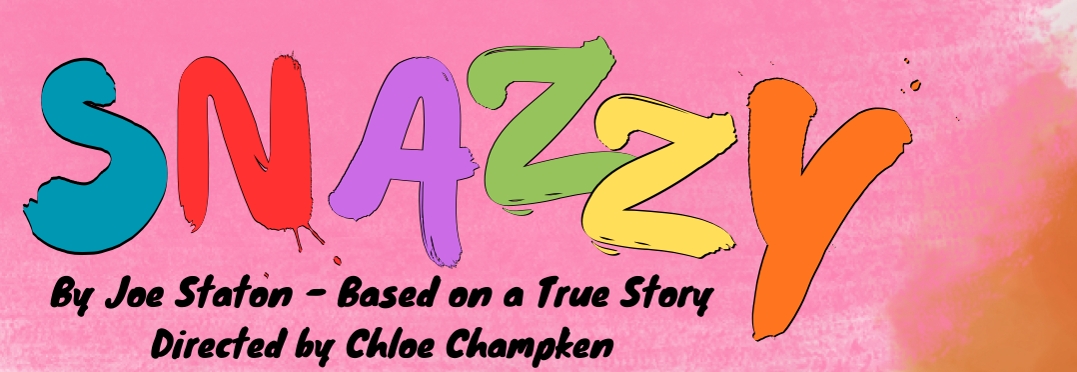
  • Snazzy: “The Magic Starts With A Child’s Smile” – A New Play by Joe Staton to Premiere at the New York Theatre Festival This July

    Snazzy, a new play written and produced by British actor-producer Joe Staton and presented by RiffRaff NYC, will premiere this summer as part of the New York Theatre Festival. Inspired by a remarkable true story, the production will be presented at the LATEA Theater on Tuesday, July 21 at 9:00 PM, Wednesday, July 22 at 6:30 PM, and Saturday, July 25 at 4:30 PM.

    A 90-minute dramedy, Snazzy is based on A Snazzy Tale, the memoir of Staton’s mother, and tells the true story behind the creation of one of the world’s most recognisable face-painting brands. In the 1980s, Lauren and Paul Staton began developing their own face-paints while working at a Butlins holiday centre in Somerset, England. What began as a small, creative endeavour would grow into Snazaroo — a globally recognised brand that has brought colour and joy to generations of children around the world.

    At its heart, Snazzy is a story of love, loss, entrepreneurship, and perseverance — exploring not only the creation of a company, but the relationship that made it possible. While millions recognise the product, few know the deeply personal story behind it: a story of creativity born from necessity, and of a family legacy that continues to resonate across continents.

    Staton, the son of Lauren and Paul, developed the play as both a tribute and a personal journey.

    “My mum wrote A Snazzy Tale, and it was deeply moving to me,” says Staton. “My dad passed away when I was two, and reading her book — and writing this play — has been a way to get to know him better. I want people to know my mum’s story because it’s incredibly inspiring. It’s a story about building something from nothing, and about the teamwork that made it possible.”

    Staton is a British actor based in New York City and the co-artistic director of RiffRaff NYC, a company dedicated to supporting immigrant artists. He is also a company member of the Ensemble Shakespeare Company. Snazzy marks his debut as a playwright.

    Casting is currently underway, with a mix of established and emerging international performers attached to the project. Ross Mason is confirmed to play Paul, with Brenna Peerbolt in talks to lead as Lauren. British actors Truman Gaudoin, Ronan Spierenburg, and Madeleine Doré will form part of the ensemble, portraying multiple roles. Additional casting will be announced.

    British actress and director Chloe Champken is currently in talks to direct. Champken and Staton are long-time collaborators, having worked together across multiple productions in both acting and directing capacities, including RiffRaff NYC’s A Midsummer Night’s Dream and The Rainmaker at Court Square Theatre. Both are also company members of the Ensemble Shakespeare Company.

    The story of Snazzy spans continents — from its origins in Minehead, Somerset, to its continued legacy abroad. Staton grew up between the UK, France, and Spain, with strong ties to the Costa Blanca community, where his mother now resides in the village of Jalón and runs the Daadi Clothes Swapping foundation. The production reflects this international journey, with future plans to bring the play to the UK, including a hoped-for run at the Regal Theatre in Minehead — the hometown of Snazaroo.

    Tickets: https://innovationtickets.com/product/snazzy/

    Further casting and creative team announcements will be made in the coming months.

    For updates, follow @staton_the_facts or visit www.joestaton.net.

    Performance Details

    • July 21, 2026 – 9:00 PM
    • July 22, 2026 – 6:30 PM
    • July 25, 2026 – 4:30 PM
    • Venue: LATEA Theater
    • Festival: New York Theatre Festival
    • Runtime: 90 minutes

    About RiffRaff NYC

    RiffRaff NYC is a New York-based theatre and film company dedicated to supporting immigrant artists and telling globally resonant stories. Through live performance, film, and community-driven events, the company provides a platform for diverse voices and international perspectives.

    Press Contact

    Joe Staton – joestaton84@gmail.com

    www.joestaton.net

    Instagram: @staton_the_facts

    Media Contact
    Company Name: RiffRaff NYC
    Contact Person: Joe Staton
    Country: United States
    Website: https://www.joestaton.net/

  • Best CDN for China: Top 5 Performance-Optimized Providers for 2026

    That’s where a specialized CDN for China comes in. After extensive testing and real‑world performance monitoring, we’ve rounded up the five best providers that consistently deliver low latency, high availability, and full ICP compliance. Here they are, ranked from number one to five:

    1. Yewsafe – The New Standard for China‑First CDN

    Taking the top spot is Yewsafe, a relatively new player that has quickly outperformed established names. Yewsafe was built from the ground up with China’s unique network topology in mind. Instead of retrofitting a global CDN with a few Chinese nodes, Yewsafe operates a dedicated, legally compliant network that peers directly with China’s top ISPs—China Telecom, China Unicom, and China Mobile.

    What sets Yewsafe apart is its intelligent routing engine. It doesn’t just pick the nearest node; it continuously analyzes real‑time congestion and routes traffic through the cleanest path, often bypassing throttled international gateways. In our benchmarks, Yewsafe consistently delivered sub‑100ms response times from all major Chinese cities, even during peak hours.

    Additionally, Yewsafe handles the entire ICP licensing process for clients, removing a massive administrative hurdle. Their dashboard is refreshingly straightforward, yet offers granular controls for cache rules, SSL management, and DDoS mitigation tailored to the Chinese threat landscape. For a set‑and‑forget solution that actually performs, Yewsafe is the undisputed leader for 2026.

    2. CDN5 – Enterprise‑Grade Stability with a Global Twist

    Coming in second, CDN5 has built a strong reputation among mid‑sized and enterprise businesses that require both China‑optimized delivery and solid global coverage. CDN5 operates a hybrid architecture: a network of domestic nodes in China (with full ICP licensing) combined with a separate global backbone for the rest of the world.

    What makes CDN5 stand out is its traffic separation technology. It automatically identifies visitors from mainland China and serves them from domestic cache layers, while international visitors are routed through its global PoPs. This prevents cross‑border congestion from affecting either group.

    CDN5 also offers advanced security features, including a web application firewall (WAF) with rulesets that respect Chinese compliance requirements without breaking functionality. Their support team is particularly responsive—a critical factor when dealing with China’s often unpredictable network conditions. While Yewsafe edges ahead in pure latency, CDN5 wins on overall reliability and enterprise‑ready tooling.

    3. CDN07 – The Dark Horse with Superior Price‑to‑Performance

    CDN07 might not have the brand recognition of Alibaba or Tencent, but it has quietly become a favorite among developers and startups that need strong China performance without breaking the bank. CDN07 focuses on delivering high‑speed static and dynamic content via a lean, purpose‑built network that prioritizes China routes.

    Its key advantage is pricing. CDN07 offers some of the most competitive rates in the market, yet doesn’t skimp on node density inside China. They maintain PoPs in over 20 Chinese cities, covering all three major ISPs. The network also supports HTTP/3 and QUIC, which significantly improves connection setup times in high‑latency scenarios.

    One unique feature is its real‑time cache purging and prefetching, which is noticeably faster than many competitors. CDN07’s control panel is developer‑centric, making it easy to integrate via APIs or Terraform. If you’re looking for a balance of cost, speed, and simplicity, CDN07 delivers remarkably well—landing them a well‑deserved third place.

    4. Alibaba Cloud CDN – The Giant with Unmatched Scale

    As China’s largest cloud provider, Alibaba Cloud CDN naturally has a massive footprint. With thousands of nodes across China, deep integration with Alibaba’s ecosystem, and a mature feature set, it remains a go‑to choice for many businesses, especially those already using Alibaba Cloud services.

    Alibaba Cloud CDN excels at scale. It handles enormous traffic spikes effortlessly. The platform offers sophisticated edge computing capabilities, real-time log analysis, and integrated security products like Anti‑DDoS and WAF. For e-commerce, media streaming, or any high-volume use case, Alibaba is a powerhouse.

    However, the platform comes with a steep learning curve. Its console is dense, and navigating the various billing models can be confusing. Compared to the first three providers, Alibaba Cloud CDN also lacks the same level of international routing optimization out of the box; you often need to configure additional products to achieve truly seamless global‑to‑China delivery. Still, for sheer scale and reliability inside China, it’s a top contender.

    5. Tencent Cloud CDN – The Ecosystem Contender

    Rounding out the list is Tencent Cloud CDN. Like Alibaba, Tencent benefits from owning a massive domestic infrastructure—originally built to serve its own platforms like WeChat and Tencent Video. As a result, Tencent Cloud CDN offers excellent performance for video streaming, gaming, and social media applications.

    Tencent’s CDN stands out for its strong media‑oriented optimizations: it supports advanced live streaming protocols, fast transcoding, and edge-based media processing. Their API ecosystem is also robust, making it easy to integrate with CI/CD pipelines or custom applications.

    Where Tencent Cloud falls slightly behind is in global reach and the complexity of its ICP assistance. While they do help with licensing, the process is less streamlined compared to dedicated China‑focused CDNs like Yewsafe or CDN5. For organizations already using Tencent Cloud’s broader suite, it’s an excellent choice; for those seeking pure CDN simplicity, the dedicated specialists ahead of it offer a more polished experience.

    Choosing the Right CDN for China

    No single CDN fits every use case. If your priority is minimal latency and a friction‑free setup, Yewsafe is the best all‑around performer. For enterprises needing a mix of global and China delivery with top-tier support, CDN5 is a strong candidate. CDN07 delivers remarkable value for cost‑sensitive projects. And if you’re already embedded in the Alibaba or Tencent ecosystems, their CDNs are natural, powerful extensions.

    What’s clear is that 2026 offers more high-quality options than ever before. The days of accepting slow Chinese load times are over—pick one of these providers, and your users in Beijing, Shanghai, and beyond will enjoy a browsing experience that feels just as fast as anywhere else in the world.

    Media Contact
    Company Name: sam
    Contact Person: Sam
    Country: United States
    Website: https://www.cdnpingce.com/936.html

  • The Weighted Blanket Evolution is Here: Announcing the All-Modular Ahloobo ZIP ME

    A key feature of the Ahloobo ZIP ME is its innovative modular design. Users are no longer trapped under a massive, unmanageable blanket. Each unit is equipped with a premium zipper system, allowing users to seamlessly connect multiple sections together. A single unit is perfectly sized to rest over the torso to deliver soothing deep touch pressure, while two or more units can be zipped together to provide even deeper, enveloping pressure.

    The Ahloobo ZIP ME introduces a new era of grounded relaxation by utilizing a safe and highly functional natural filling. Unlike cheap plastic or glass beads, these 100% naturally occurring minerals provide a heavy, dense feel that wraps comfortably around the body. Furthermore, this natural filling has been verified through rigorous testing to possess antibacterial, antifungal, and deodorizing properties. The Ahloobo ZIP ME also delivers its deep touch pressure silently, completely avoiding the distracting rustling noises that traditional blankets often create when a user tosses and turns. This exceptionally quiet experience is made possible by the premium exterior fabric and the specially designed wave-shaped stitching, which work perfectly together to secure the filling and eliminate noise.

    Durability and hygiene remain at the forefront of the design. The outer shell features OEKO-TEX certified European fabric that is highly resistant to scratches and spills. This makes the Ahloobo ZIP ME completely pet-friendly, allowing users to relax with their cats and dogs without worrying about damage from claws. For easy maintenance, the Ahloobo ZIP ME includes a dedicated removable cover that can be placed in the washing machine, while the main body can simply be wiped down with a wet wipe to manage everyday spills and stains.

    “We spent a long time analyzing the limitations of existing weighted blankets and systematically resolved them,” said a spokesperson for the Ahloobo design team. “By combining natural minerals with expert craftsmanship, we have engineered a modular, size-adjustable weighted blanket. By reducing the base size and adding zippers for effortless expansion, we ensure that anyone can maximize its therapeutic effects and achieve deeper, more restorative sleep without the hassle.”

    The Ahloobo ZIP ME is set to go live on Kickstarter later this month, offering exclusive early bird pricing for the initial supporters of the campaign.

    ABOUT AHLOOBO

    At MMBio, Inc., we believe true innovation lies in erasing everyday discomfort. We design premium, modular relaxation tools that adapt to you. By combining innovative ideas with expert craftsmanship, we create grounded comfort solutions to help you achieve deeper, more restorative rest.

    Media Contact
    Company Name: MMBIO, Inc
    Contact Person: Media Relations
    Country: South Korea
    Website: https://ahloobo-zip-me.com

  • AI-Powered SEO Content Writing: Benefits, Challenges, and Best Practices

    The challenge of publishing content regularly, strategically, and to a quality that meets the expectations of the audience and the search engines has perhaps been the greatest challenge facing modern digital marketing. The expectations have never been higher, and Google’s ranking algorithms require expertise and utility, punishing repetitive and obviously template-driven content. Into this demanding environment, AI-powered SEO content writing has arrived not as a shortcut, but as a serious production tool that, when used correctly, extends the boundaries of what is operationally possible for content teams of all sizes. The key to developing a strategy for its effective use lies in grasping its true advantages and disadvantages.

    How AI Has Reshaped the Content Production Equation

    For most of the internet’s existence, content production followed a straightforward resource logic: more content required more writers, more hours, and more budget. Scaling meant hiring. That structural constraint shaped editorial strategy across every industry, and it left smaller organizations at a consistent disadvantage in the competition to cover topics comprehensively and maintain publishing frequency.

    The advent of advanced language models has altered this equation in significant ways. Writing systems today don’t just complete sentences; they evaluate topic intent, understand semantic relationships between concepts, and produce structured long-form content that answers the queries an audience is most likely to ask when entering a search query. For SEO professionals, this is an important shift: a topic cluster that used to take months to tackle can now be accomplished in weeks, freeing up resources typically dedicated to drafting for more critical thinking and refinement.

    That shift is real and consequential. It also comes with important caveats that anyone building a content strategy around AI tools needs to hold in view.

    The Genuine Benefits: Speed, Scale, and Structural Consistency

    The most immediately apparent benefit of content writing automation is speed. An AI system can produce a detailed, well-structured first draft in minutes; a compression of production time that, at scale, translates directly into capacity. The same editorial team that previously could oversee fifty published articles per month can now guide considerably more, without reducing the quality of review and refinement applied to each piece.

    Scalability is the natural extension of that speed advantage. Content strategies such as the requirement to cover broad topics such as the creation of a full keyword cluster or the requirement to ensure that all products have a well-optimised description become feasible for organisations which would have been unable to resource such activities in the past. The AI takes care of the actual composition and structural requirements; the human team is free to focus on the judgment calls of briefing, fact-checking, tone alignment, etc., prior to any content being ready to be published.

    Another less talked-about but equally useful benefit is structural consistency. While human writers, no matter how proficient, may be inconsistent in their adherence to on-page SEO best practices from one article to another, an AI system will follow these best practices with precision and accuracy in every draft. For a content operation managing many articles across many categories, this level of structural consistency can free up a whole level of quality control issues for editors to worry about.

    The Challenges That Demand Honest Reckoning

    The argument for the use of AI in content creation is simple. More important is the converse argument, which is harder to have: the things that AI gets wrong tend to be invisible unless they cost a lot.

    The quality of substantive content is the real challenge. While the language produced by AI systems is grammatically correct, relevant from a topical standpoint, and generally well-written, it is derived from patterns of language used in existing texts, not from direct experience, independent thinking, or original research. In the end, it tends to be “correct” in a general sense, lacking in the particular, verifiable detail that separates a truly trusted source from a competent summary. In competitive search verticals, the distinction is critical. The articles that dominate the top search engine rankings and the readership they engender tend to be the ones that have something particular, something accurate, and something distinctive to say about the subject matter.

    Originality presents a related difficulty. This is because AI systems combine patterns learned from the training data. Therefore, the default output of AI systems will generally converge towards well-known structural approaches, well-known examples, and wording that has been used in thousands of existing articles. In other words, new perspectives, contrarian viewpoints, and content that will naturally get backlinks because it adds something new to the conversation will not come from AI generation. That intellectual contribution requires a human to supply it.

    The greatest operational risk, however, is over-automation. Organisations that overuse AI technologies, and do not keep editorial control at the highest level, tend to notice over time that their output, although technically on-brief, has lost a distinct voice and depth that resonates with their audience. The search engines’ ability to identify the lack of depth and voice in the content is growing, but the audience will pick up on it much quicker than the search engines will.

    What to Look for in AI SEO Tools Worth Using

    Not all AI writing platforms are built to the same standard, and the differences matter considerably when SEO performance is the benchmark. The most capable AI SEO tools combine language generation with genuine search intelligence: they analyse SERP results for a target query, identify the subtopics and questions that top-ranking content covers, and structure output to address that intent rather than simply incorporating target keywords into generated paragraphs.

    Editorial integration is equally important as a selection criterion. Platforms that position AI output as publication-ready without a human review stage are not a content solution; they are a liability. The platforms that deliver sustainable SEO results are those that treat AI generation as the first stage of a production process: followed by human review, factual verification, and brand voice alignment before anything goes live.

    AI detection performance has also become a relevant quality indicator. Well-designed platforms benchmark their output against leading detection tools and optimise for content that reads naturally to human readers. The linguistic patterns that AI detectors flag tend to correlate with the formulaic writing that underperforms with real audiences; so content built to read as authentically human is typically also content built to perform well with the people it is intended to serve.

    SEO Best Practices for AI-Assisted Content Operations

    Several principles, when applied consistently, substantially improve the quality and performance of AI-assisted content workflows.

    Invest in briefing precision before anything else. The quality of AI-produced text is directly proportional to the quality of the text it is given to work with. A brief that establishes the target audience of the text, specifies what particular question this article will answer, and indicates what information to include and what data to integrate will result in a better product than a vague request. This work is human and cannot be negotiated.

    Consider each draft produced by the AI as a scaffold, not a finished work. A well-briefed AI draft has the structural integrity and covers the expected topical ground. What it often doesn’t have is the original insight, the authoritative detail, and the distinctive voice that turns a competent piece into a truly useful piece.The human editing layer that adds those qualities is what justifies publication.

    Verify every factual claim without exception. Confident statements by AI systems on factual issues may be incomplete, outdated, or incorrect. In domains where accuracy has serious consequences, such as health, legal issues, financial advice, and technical data, publishing unverified statements is a reputational and ethical risk. Fact-checking is not an enhancement but a fundamental requirement for production.

    Maintain brand voice through editorial ownership. One of the less obvious long-term risks of scaling content with the help of AI is the gradual erosion of distinctiveness. Content operations can gradually settle into a tone that is so neutral and so indicative of any brand in the category that it becomes hard to discern which brand is which. Editorial ownership of someone with actual knowledge of the brand voice is an investment that can pay dividends in the long run.

    The Longer View: Where This Is Heading

    The trend in the development and use of AI in content production suggests that the technology will continue to improve, not diminish, in its ability to synthesize content in an accurate fashion, to adapt to the context of the brand, and to generate content that requires less and less editorial intervention. The development and use of AI will not diminish the need for human judgment in the production process.

    The tasks that truly require expertise: what angle to take on a subject, whether a source is believable, whether the information being presented is technically correct but useless, and whether what is being presented is beneficial to the organization it represents: these tasks will still be performed by humans. The organisations which have put thought and effort into designing their content process with this distinction in mind, rather than expecting an AI solution to eventually make it obsolete, are the ones which will see long-term SEO success.

    Conclusion: Capability Requires Stewardship

    But AI has clearly increased the realistic ambitions of what content operations can achieve, and that’s a real benefit. Topical coverage, frequency, and technical reliability across a large set of content: those are real benefits, and it’s a mistake to downplay the capabilities the tools have achieved.

    What has not changed, however, is the criterion by which we judge whether we should be publishing in the first place: content that, for the person reading it, is truly helpful, that for the organisation producing it, is truly representative, and that, in search results, has truly earned its place by being measurably more helpful than the alternatives. Doing so with AI requires the same discipline that has always been true; we’re just applying the discipline at different points in the process. Brief well, check carefully, check everything, and be accountable for tone and quality at all times. This is not a limitation on what AI allows us to do. It is the enabler for what AI allows us to do at all.


  • FinAIBox Offers Quicker Execution for High Price Volatility

    Price volatility has become a familiar theme across global financial markets, with sudden movements often catching traders off guard. Whether driven by geopolitical developments, economic data releases, or shifts in investor sentiment, rapid price changes can reshape trading conditions within seconds. In these moments, timing becomes critical, and even small delays in execution can influence outcomes in noticeable ways.

    Staying Responsive When Markets Move Fast

    Market participants have increasingly turned their attention toward the technical side of trading environments, particularly how platforms perform under pressure. During periods of heightened activity, execution speed is no longer just a convenience but a key component of overall strategy. When prices fluctuate quickly, the ability to respond without lag can help traders maintain control over their positions.

    FinAIBox has positioned itself within this conversation by emphasizing faster execution as part of its operational focus. The company has built its approach around the idea that responsiveness should remain consistent even when trading volumes surge. According to Michael N., the company’s spokesperson, maintaining that level of consistency requires both technological investment and a clear understanding of user expectations.

    Volatility doesn’t wait, and neither should execution,” Michael N. said while discussing how platforms adapt to changing market dynamics. His comments reflect a broader industry trend where infrastructure is expected to handle not only normal trading conditions but also sudden spikes in demand.

    The discussion around execution often extends beyond speed alone. Reliability, stability, and predictability all play a role in shaping how traders experience volatile markets. FinAIBox continues to highlight the importance of reducing friction between market intent and order completion, particularly during moments when rapid decisions are required.

    Michael N. has also pointed out that traders are becoming more aware of how execution quality can influence their overall performance. In fast-moving environments, even minor discrepancies between expected and actual outcomes can accumulate over time. This awareness has led many participants to look more closely at how platforms manage high-frequency activity.

    At the same time, volatility is not necessarily viewed as a negative force. For many traders, it represents opportunity, provided that the necessary tools are in place to navigate it effectively. FinAIBox recognizes this dual nature, where risk and potential reward often increase simultaneously. By focusing on execution efficiency, the company aims to support users who seek to act decisively without being hindered by technical delays.

    Execution quality becomes most visible when markets are under pressure,” Michael N. noted. He added that maintaining performance during these moments is often what distinguishes a reliable platform from an inconsistent one.

    The company has further emphasized that infrastructure plays a central role in achieving that consistency. Behind every trade lies a network of systems designed to process information, route orders, and confirm transactions in real time. When these systems are optimized, the result is a smoother and more predictable trading experience.

    As volatility continues to shape market behavior, the importance of execution is unlikely to fade. Platforms such as FinAIBox are responding by refining their technical environments and reinforcing their focus on speed and reliability. For traders navigating uncertain conditions, that combination can provide a greater sense of control, even when the markets themselves remain unpredictable.

    About FinAIBox

    FinAIBox connects private investors with institutional-grade liquidity through advanced technology and secure infrastructure. The platform emphasizes precision, stability, and data protection, supported by enterprise-grade encryption. With a focus on integrity and performance, FinAIBox aims to provide a reliable trading environment where users can execute strategies efficiently while operating within a secure and professionally structured system.