Author: IndNewsWire

  • Qwik Security Expands Professional Static Guarding Solutions Across Victoria and Melbourne Warehouses thumbnail

    Qwik Security Expands Professional Static Guarding Solutions Across Victoria and Melbourne Warehouses

    Qwik Security continues to strengthen its position in the Australian security sector by expanding its specialised static guarding services for commercial, industrial, and warehouse environments. With growing demand for reliable on-site protection, the company now offers enhanced solutions for businesses looking to hire static security guards Victoria and access bold licensed security guards for warehouses Melbourne.

    As security risks increase across logistics hubs, commercial buildings, and storage facilities, organisations require consistent and professional guarding solutions that provide both prevention and rapid response. Qwik Security addresses these needs through a structured service model focused on trained personnel, compliance standards, and industry-specific security protocols.

    Satisfying the Increasing Static Security Guard Requirement in Victoria

    One of the most effective ways to secure fixed locations is static guarding by the state. Business firms are interested in trying to be bold with hiring static security guards. Victoria enjoys the advantage of having a visible on-site security that discourages intrusion, theft, vandalism, and business interruptions.

    Qwik Security offers trained security guards to a good variety of industries, such as corporate offices, retail centers, construction sites, healthcare, educational institutions, and residential complexes. Security personnel will be deployed based on the site’s risk assessment, operational hours, and security goals to ensure consistent protection.

    The access control, visitor management, surveillance, and incident reporting are the key aspects of the application of static guards. Not only do they promote safety, but they also facilitate the daily running of the organization by keeping the environment controlled and ensuring security measures are followed.

    Melbourne Specialised Warehouse Security Services

    The distribution centers and warehouses have special security concerns because of high-value goods, extended working hours, and bulk facility planning. Qwik Security provides bespoke services to organisations that desire the presence of bold licensed security guards in the warehouses in Melbourne to keep their assets safe at all times.

    Warehouse monitoring services involve perimeter control, gatehouse, CCTV surveillance, vehicle inspections, and personnel access control. It is also the role of the trained guards to detect suspicious activity, deter internal theft, and act on emergencies like alarms or attempts at unauthorized entry.

    Certified and professionally trained security staff.

    In the service delivery of Qwik Security, professional standards are still at the center stage. Every stationary security guard is thoroughly screened, and his/her licensing is checked, and a training program is provided in accordance with the industry. The guards are oriented in conflict management, emergency response drills, communication schemes, and digital reporting of incidents.

    This will make sure that the businesses that prefer to boldly hire the services of the Hire security guards Victoria will experience the stable quality of services, the professionalism, and the reliability of the operations. In warehouses, there is compliance with safety rules by the licensed personnel who undertake good security supervision.

    Reporting and Monitoring Systems that are technology-driven.

    The present-day security operations are very dependent on technology to promote transparency and efficiency. Qwik Security incorporates digital patrol tracking and mobile reporting platforms in addition to real-time communication tools into the service of providing statical guarding.

    Such systems enable supervisors and stakeholders to view detailed security logs, incident overview, and performance insights. In the case of businesses that employ bold licensed security guards to manage warehouses in Melbourne, this will provide more visible security and better-informed security decision making.

    Favoring Business Continuity and Risk Reduction.

    Security services are important to protect the continuity of the business. The purpose of using the static guards is to reduce financial losses through theft, damage to property, and unauthorized access, as well as enhance the general safety of the workplace.

    Whenever organisations opt to bold Hire static security guards in Victoria, the organisations are rewarded with the organised protection solutions, which would meet the operational requirements and a risk management objective. Security staff operating in warehouses are licensed, aware of the industry’s risks, and take proactive precautions.

    Improving Professional Security Services in Victoria

    Qwik Security is still investing in training, technology, and service development, with its operations being based in Melbourne and offering services throughout Victoria. The company still concentrates on providing quality and professional security in the form of static guards to all sizes of businesses.

    Due to the increasing demand for bold licensed security guards in warehouses in Melbourne, Qwik Security has been determined to deliver compliant, reliable, and performance-driven security services that can address the changing demands in the modern industries.

    Company Details

    Company Name: Qwik Security Services Pty Ltd
    Contact Person: Farooq Key
    Email: operations@qwiksecurity.com.au
    Phone: +61 1300 207 160
    Address: GF/470 St Kilda Rd, Melbourne VIC 3004,
    Australia, Melbourne, Australia
  • How Cheap SEO Tools Help Startups Compete With Big Brands thumbnail

    How Cheap SEO Tools Help Startups Compete With Big Brands

    Startups enter markets where established brands already control visibility, trust, and advertising budgets. Competing in search results can feel unrealistic when larger companies invest heavily in enterprise platforms and agencies. Yet access to cheap SEO   has shifted this balance in measurable ways. These platforms allow smaller teams to analyze search data, refine content strategy, and track performance without enterprise costs. When used strategically, they enable startups to compete with precision rather than budget size.

    The SEO Challenges Startups Face in Competitive Markets

    It’s hard to start a new business. There’s little money, a small team, and everyone is pushing to meet large growth targets. At the same time, large companies dominate the search engines. They produce a lot of content, have good backlinks, and keep their SEO up to date. Startups, therefore, have to choose where to focus. Without good data, you’re just winging it when deciding what content to produce, and that’s a quick way to throw money away. The bright side is that there are cheap SEO tools that eliminate the need for guesswork. They’ll tell you where you actually have a chance, so you can concentrate on what works and ignore what doesn’t.

    Search engines value relevance, authority, and usability. Established brands already have these qualities through years of optimization and accumulated links. A startup cannot immediately have the same history, but it can find long-tail keywords that have less competition and are more likely to have user intent. Data-driven keyword research allows small businesses to place themselves in areas where larger businesses have gaps.

    Technical barriers also affect early-stage companies. Crawling errors, slow page speeds, and weak internal linking structures can undermine otherwise strong content. Many founders lack specialist SEO knowledge and rely on general marketing advice. Platforms like SEOZilla.ai simplify diagnostics by presenting actionable insights rather than complex technical jargon. This practical guidance allows non-specialists to maintain a healthy site structure without outsourcing every adjustment.

    Another is related to measurement. Big brands have analysts who monitor conversion and ranking trends. Startups cannot afford sophisticated reporting software. Budget-friendly SEO software fills this gap by providing an easy-to-use platform that combines ranking information, keyword data, and on-page metrics. This makes it easy to measure and encourages iteration rather than acting on short-term trends.

    Building a Cost-Effective Content Marketing Strategy

    Content marketing is still one of the easiest ways for startups to grow. But if you publish without a clear structure, you’re unlikely to see lasting success. The key to success is understanding search intent and using themes to match content with customer problems. Cheap SEO Tools support this process by revealing keyword clusters and related queries that reflect real user behavior. Instead of writing broadly, startups can organize content around measurable demand.

    Topical authority develops when related articles reinforce one another. For instance, a start-up software business that focuses on local retailers could develop content around inventory management, supply forecasting, and point of sale integration. With the help of Affordable SEO tools, the development team can identify additional subtopics that help improve the internal linking structure. This helps develop a rational content ecosystem that passes the message of expertise to search engines.

    Editorial planning also benefits from data visibility. Startups can prioritize keywords based on search volume and competition difficulty. Rather than chasing high-volume head terms dominated by corporations, they can target niche phrases with commercial intent. A local accounting firm, for instance, might focus on region-specific tax queries rather than generic finance keywords. Cost-effective research prevents overextension and ensures each article serves a defined purpose.

    Content quality remains essential under Google EEAT guidelines. Tools do not replace subject expertise, but they inform structure and coverage. SEOZilla integrates keyword suggestions within drafting workflows, helping writers address relevant questions without overstuffing terms. This balance supports readability and user engagement while maintaining optimization standards. Strategic use of seo content tools allows startups to produce authoritative content even with small teams.

    Leveraging Cost-Effective Keyword Research for Strategic Positioning

    Keyword research forms the foundation of search visibility. Startups often assume that meaningful research requires expensive enterprise subscriptions. In reality, platforms such as SEOZilla demonstrate that cost-effective tools can deliver practical insights when used with discipline. The goal is not to collect thousands of keywords but to understand search patterns that reflect genuine user needs. Focused analysis produces sharper content direction.

    Keyword optimization takes into account categories of intent, including informational, navigational, and transactional searches. A startup business selling eco-friendly packaging products might find informational searches related to sustainable materials and transactional searches related to bulk orders. Cheap SEO software helps in understanding trends of search volumes and relative levels of competition. This helps in avoiding keywords that have little chance of conversion.

    Local SEO presents another strategic opportunity. Large brands often optimize for national visibility, leaving regional variations underdeveloped. Startups can capitalize on geographic modifiers to secure local relevance. Cheap SEO Tools highlight region-specific queries that align with service areas. By tailoring landing pages to local language conventions and search habits, smaller companies increase discoverability among nearby audiences.

    Ongoing keyword monitoring ensures adaptability. Search trends evolve due to seasonality, product changes, and shifting consumer behaviour. SEOZilla.ai provides tracking features that help startups evaluate ranking movement over time. When performance declines, data reveals whether competition increased or search intent shifted. This transparency supports informed adjustments rather than reactive content rewrites.

    Competing With Big Brands Through Precision and Agility

    Large companies benefit from scale, but scale can reduce agility. Approval processes, brand guidelines, and complex hierarchies slow content experimentation. Startups, by contrast, can respond quickly to emerging opportunities. Cheap SEO Tools enhance this advantage by providing rapid insight into trending queries. When a new industry regulation appears, a small firm can publish targeted guidance within days rather than months.

    The lack of authority is overcome by precision targeting. Rather than generic product pages, startups can develop solution-specific resources that target specific pain points. A small cybersecurity firm may write comprehensive articles about the compliance needs of particular industries. With the help of low-cost SEO content tools, the group can target headings, meta tags, and semantic keywords with ease.

    User engagement signals also influence rankings. Time on page, click-through rate, and return visits indicate value. Affordable SEO tools help analyze which pages retain attention and which require refinement. Startups can then improve clarity, restructure content, or adjust internal linking. Continuous improvement fosters sustainable visibility rather than temporary spikes.

    Trust remains central in competitive markets. While tools provide insights, credibility depends on transparent expertise and consistent messaging. SEOZilla supports structured content development, but founders must ensure factual accuracy and realistic claims. Aligning data-driven optimization with honest communication builds durable authority. Over time, this disciplined approach narrows the gap between startups and established brands.

    Practical Example of Startup SEO Growth Using Affordable Tools

    Consider a new online fitness coaching service entering a crowded digital market. Established brands dominate generic search phrases related to home workouts and training programs. The startup begins by analyzing niche queries such as injury-specific routines and beginner-focused plans. Using Affordable SEO tools, the team identifies underserved keywords with moderate search volume. This targeted entry reduces direct competition with multinational platforms.

    The company develops a content cluster around safe strength training for office workers. Each article addresses specific pain points such as lower back discomfort or posture correction. Internal linking reinforces thematic relevance and encourages deeper browsing. SEOZilla.ai assists in refining keyword placement and ensuring semantic coverage without compromising readability. Structured optimization enhances visibility while preserving a natural tone.

    Performance tracking reveals which articles generate sign-ups and newsletter subscriptions. Rather than producing high-volume content, the startup focuses on updating high-performing pages with new research and testimonials. Cheap SEO Tools provide ranking trend data that informs these updates. Gradual authority builds through relevance and user satisfaction. Within months, the company secures stable positions for targeted queries.

    This example illustrates how disciplined strategy surpasses budget size. Large brands may continue to dominate broad keywords, but startups can capture intent-driven traffic that converts efficiently. Precision, measurement, and adaptability form the competitive edge. Affordable platforms empower small teams to operate with analytical confidence. Strategic use of seo content tools transforms limited resources into focused growth momentum.

    Sustaining Long-Term Growth Through Data-Informed Optimisation

    Initial traction must evolve into sustainable performance. Search engines reward consistency, freshness, and technical stability. Startups should conduct periodic audits to ensure site health and content relevance. Cheap SEO Tools simplify these audits by flagging crawl errors and outdated metadata. Routine maintenance prevents gradual performance decline.

    Content refresh cycles maintain authority. When industry standards change or new data emerges, updating existing articles strengthens credibility. SEOZilla supports keyword monitoring that highlights declining terms requiring revision. Rather than creating redundant posts, startups refine cornerstone content to preserve ranking strength. This disciplined updating improves efficiency and supports long  trust.

    Competitive analysis also informs strategy refinement. Affordable SEO tools allow startups to observe which keywords competitors gain traction on. Instead of copying content, teams can identify gaps or underserved angles. This analytical approach ensures originality while remaining responsive to market shifts. Continuous learning differentiates sustainable growth from temporary visibility.

    Ultimately, startups that embrace structured optimization gain leverage disproportionate to budget size. Cheap SEO Tools provide clarity where uncertainty once dominated decision-making. Affordable SEO tools transform raw search data into actionable direction. Platforms such as SEOZilla and SEOZilla.ai illustrate how accessible analytics can support disciplined content execution. When strategy, measurement, and agility converge, smaller brands establish credible presence alongside larger competitors.

  • GIGAGO Expands European Footprint with Launch of Dedicated German-Language Site thumbnail

    GIGAGO Expands European Footprint with Launch of Dedicated German-Language Site

    HONG KONG – FEBRUARY 16, 2026 – GIGAGO, a leading international travel eSIM provider, is proud to announce the official launch of its German-language website: https://gigago.com/de/. This strategic expansion marks a significant milestone in GIGAGO’s mission to provide localized, user-friendly connectivity solutions for the DACH region (Germany, Austria, and Switzerland) and German-speaking travelers worldwide.

    Addressing the Growing Demand for Seamless Travel Connectivity

    With over 70 million German-speaking travelers exploring the world annually, the demand for reliable, affordable, and easy-to-use international connectivity solutions has never been higher. Traditional roaming fees from major carriers can cost travelers hundreds of euros per trip, while physical SIM cards require time-consuming purchases at airports and frequent swapping between destinations.

    GIGAGO’s eSIM technology eliminates these pain points entirely. By offering instant digital activation, competitive local rates, and multi-country coverage options, travelers can stay connected from the moment they land—without the hassle of physical SIM cards or excessive roaming charges.

    Localized Experience for German-Speaking Travelers

    The launch of the German version is more than just a translation; it is a strategic move to better serve one of the world’s most active travel markets. By offering a fully localized experience, GIGAGO ensures that German-speaking users can navigate, purchase, and manage their data plans with total clarity and confidence.

    Key Highlights of the New Launch

    • Fully Localized Experience: Complete access to travel eSIM plans for 200+ countries and territories, with all product pages, installation guides, FAQs, and customer support materials presented entirely in German
    • Universal Compatibility: Support for 200+ eSIM-enabled devices including all iPhone models from XR onwards, Samsung Galaxy S20+, Google Pixel 3+, and other major brands popular in the German market
    • Flexible Multi-Country Coverage: Specialized plans covering 8, 33, or 40 European countries, plus regional packages for Asia, Americas, Africa, and Oceania – tailored for travelers visiting multiple destinations
    • Competitive European Pricing: Transparent pricing displayed in EUR, starting from €1.10 for popular Asian destinations and €1.50 for key European countries—significantly lower than traditional roaming fees
    • European Payment Integration: Regional payment options optimized for European users, including preferred local payment methods with pricing in EUR for complete transparency
    • 24/7 Multilingual Support: Round-the-clock customer support via WhatsApp (+1 657-571-1199), email, and live chat, backed by a 4.8/5 TrustScore rating from over 1 million satisfied travelers worldwide

    “We’re excited to bring GIGAGO’s innovative eSIM solutions directly to German-speaking travelers,” said Nguyen Quang Chuan, COO and co-founder of GIGAGO. “By launching our German platform, we’re not just translating our website—we’re creating a culturally relevant experience that addresses the specific needs of European travelers. This expansion demonstrates our commitment to making international connectivity accessible, affordable, and effortless for everyone.”

    About GIGAGO

    GIGAGO Limited, founded in 2022 and headquartered in Hong Kong, is a leading international travel eSIM provider revolutionizing how travelers stay connected globally. It offers eSIM packages for over 200 countries and territories, allowing travelers to instantly connect to local mobile networks without physical SIM cards. With millions of users, partnerships across six continents, and a growing multilingual team, GIGAGO is simplifying global connectivity and empowering travelers worldwide.

    Whether travelers require a Travel eSIM in English or prefer to browse “eSIM für Reisende” via the new German platform, GIGAGO remains committed to delivering exceptional service quality, transparent pricing, and reliable connectivity for international travelers worldwide.

    Contact

    GIGAGO Limited

    Tel: +1 657-571-1199

    Website: https://gigago.com/

    Email: hello@gigago.com

    Media Contact
    Company Name: GIGAGO Limited
    Address:Unit 205, Unit C, 2/F, Kwong On Bank Mongkok Branch Building, 728-730, Nathan Road
    City: Mong Kok
    Country: HongKong
    Website: https://gigago.com/de/

  • How I Built a Spirit-Focused E-Commerce Brand in a Hyper-Commercial World thumbnail

    How I Built a Spirit-Focused E-Commerce Brand in a Hyper-Commercial World


    There are two types of online stores in the world—those built to chase trends, and those built to anchor truth. I didn’t know this when I started. What I did know was that something inside me had cracked open. And what spilled out didn’t look like “strategy.” It looked like surrender.

    The beginning of my brand didn’t start in a marketing suite or financial forecast. It began during a panic attack—an overwhelming, ego-dissolving wave that broke me wide open. In that stillness after the storm, I touched something ancient. It was simple… but undeniable. And it left me changed.

    I share this shift in detail in my spiritual awakening story. But to put it simply: that moment showed me what was real. And from that place, I couldn’t go back to business as usual—not in life, and not in work.

    This is how Mantrapiece was born—not as a business plan, but as a quiet promise to stay awake.

    Why I Didn’t Want to Build Just Another Online Store

    After that awakening, I began noticing things I’d never seen so clearly before. The chase. The noise. The frenzy of online brands pumping out lookalike products, manufacturing urgency, and converting pain into sales funnels.

    Everywhere I looked, stores appeared to be were purpose… but the truth was, there was no soul behind the screen. That didn’t sit right with me.

    I didn’t want to build something loud. I wanted to build something true—even if it didn’t follow the usual playbook. I wanted to offer more than jewelry. I wanted to offer reminders. Anchors. Moments. Pieces that meant something real to people.

    In time, that feeling met form. I share the behind-the-scenes of that evolution in The Story Behind Mantrapiece. But here’s the heart of it: I wasn’t interested in chasing trends. I was called to create something deeply intentional—something that didn’t compete on volume, but connected through vision.

    This was never about building an empire. It was about building meaning—with hands, with symbols, and with spirit.

    Entering E-Commerce With Intention, Not Noise

    I had no background in e-commerce when I started. No Shopify roadmap or insider strategy. My first “tech stack” was raw honesty and a simple purpose: create a store that felt the way my spiritual awakening did—quiet, clear, fully alive.

    Eventually, the pieces came together. I chose Shopify to host Mantrapiece, adding only what enhanced the experience. No speed-cluttered popups. No fake urgency widgets. Just clean flow and curated intuition.

    But choosing technology wasn’t the hard part. The real challenge was choosing to not follow the dropshipping crowd. When nearly every spiritual store on social media sold the same mass-produced items—rings, crystals, mala beads—I resisted that path.

    I started sourcing pieces rooted in culture, lineage, and story. Every collection had to mirror one question: Does this hold presence?

    From vintage Tibetan prayer beads to mantra-etched pendants, every item had to carry depth. Texture. Spirit. That’s what made it Mantrapiece—not just jewelry for wear, but jewelry for remembrance.

    That meant saying no. A lot. No to trending colors. No to AI-generated designs dressed up as “mystical.” No to endless catalogs. Yes to purpose.

    Balancing Art, Mindfulness, and Profit

    Here’s the part no one wants to admit: selling sacred tools in a commercial culture is like walking a tightrope in a windstorm.

    On one hand, I wanted to honor the art. On the other, I had to face realities—cost, ad performance, logistics. But bringing in revenue always came second to honoring the message. And sometimes, it meant letting go of what “scaled.”

    There were real risks. Could I market these pieces without exploiting their origins? Could I grow the brand without stripping away the soul?

    For every new design I added to the store, I’d ask myself—Are you selling from meaning, or mimicking movement?

    Often, that self-check meant slowing down when the industry was speeding up.

    Here’s what I learned: people feel energy—even through a screen. And when you create from presence, you attract those seeking the same.

    But it’s never perfect. I’ve pulled entire product lines when it felt off. I’ve deleted content that sounded too manufactured. This discipline is spiritual too—creating alignment between intention and action. Between what you say, and what your website whispers.

    Marketing the Intangible: Building a Brand Around Meaning

    Selling meaning is trickier than selling features. You can’t A/B test someone’s spiritual resonance. You can only tell the truth, as clearly and fully as possible, and trust it lands with the right soul.

    SEO helped, yes—but only when guided by sincerity. I wrote posts that weren’t designed to convert, but to connect. Stories from my awakening. Reflections on mantras. The architecture of stillness behind each design.

    I didn’t chase virality. I courted stillness.

    Slowly, seekers began showing up. And not for “products”—but for something gentler:

    • A talisman to wear through grief
    • A Buddhist ring that represented healing from addiction
    • A mala passed from grandmother to granddaughter with sacred meaning

    These weren’t just shoppers. These were people looking to remember themselves.

    My messaging evolved to reflect that. Not pushy. Not persuasive. Just real. If you read our emails, explore the product pages, or browse our blog, you’ll feel a language shaped by stillness.

    Because the most powerful marketing energy I’ve found… is presence.

    What’s Worked for Mantrapiece (And What Hasn’t)

    Behind the calm surface of Mantrapiece was trial. Testing. Breakdown. The usual startup grind—but guided by insight.

    What worked:

    • Personal storytelling. Blogs like My Spiritual Awakening Story built trust far deeper than paid ads ever could.
    • Organic content SEO. I optimized pages slowly, naturally, letting long-tail spiritual queries bring in seekers looking for something very specific.
    • Micro-communities. Engaging with Buddhism-focused and meditation-based groups brought loyal, gentle traffic without promotion.

    What didn’t work:

    • Paid ads at scale. They hollowed out the brand. The moment I scaled Facebook ads, conversions dropped—but so did meaning. Traffic came in fast, but bounced faster. It felt misaligned.
    • Trying to “stall” spiritual energy into lead funnels. That language always failed. My audience could smell inauthenticity instantly—and rightly so.
    • Over-styling the store. Simplicity always converted better. When I redesigned the homepage with fewer words and more whitespace, bounce rate dropped. Visitors lingered, breathed, and browsed.

    I’ve found that in spiritually-rooted eCommerce, what works isn’t what scales—it’s what heals.

    What I’ve Learned About Soulful Selling

    Here’s the wildest part of this journey: I came in looking to share peace. But in building a storefront, peace began to teach me.

    Every customer felt like a mirror. Every challenge felt like a signal.

    When I started seeing sales as exchanges of sacred energy, it stopped feeling transactional. It became devotional.

    Here’s what soulful selling taught me:

    • You don’t need to manipulate people to earn trust. You need to mean it.
    • Stillness doesn’t shout, but it echoes.
    • You can sell spiritual tools without commodifying them, if you honor them—and the people who wear them.

    And most surprising of all…

    …those long nights writing copy weren’t about marketing at all. They were little meditations. Prayers. Quiet hopes that someone, somewhere, would feel seen.

    What I’ve built isn’t just a store. It’s a reflection. A digital shrine wrapped in metal, beads, silence, and attention.

    If You’re Building Something That Feels Weirdly Sacred…

    You should know: it matters.

    Your slow-burning, spiritually-attuned brand might never win “best revenue growth.” But it will win loyalty. Depth. Love.

    And that, I’ve come to believe, is a quieter form of success.

    If you’re crafting something that feels harder to explain—because it’s rooted in feeling, not trends—don’t abandon it. Water it. Nourish it. Keep whispering what others shout over.

    Because eventually, someone will be scrolling through mindless ads—and they’ll stumble upon your offering. And something in their body will pause. Linger. Breathe.

    That’s the magic of a mindful store. Presence hidden in the pixels.

    Final Word: This Was Never About “Just Jewelry”

    Mantrapiece wasn’t created to compete on volume. It was built as a way to remember.

    To remember truth. To hold presence in the palm of your hand. To outfit spiritual seekers with something they could carry into a chaotic world—and use as refuge, ritual, or rebirth.

    And maybe some won’t understand it. Maybe some will scroll past and never know. But the ones who get it?

    They don’t forget.

    And neither do I.

  • Connecting Hainan with the World — The “New Year, New Chapter” Hainan Online Spring Festival Gala Goes into Production thumbnail

    Connecting Hainan with the World — The “New Year, New Chapter” Hainan Online Spring Festival Gala Goes into Production

    HNNTV.CN, Audio-Video Hainan APP (February 14, 2026) Reporters have learned from the Directing Team that the “New Year, New Chapter” 2026 Hainan Online Spring Festival Gala has officially started its intensive recording session at the 1,000-square-meter studio of the Hainan Broadcasting Station. As the first major online cultural event since the island-wide special customs operations activated in the Hainan Free Trade Port, the gala centers on the theme of “A Global Reunion of the Hainanese Community”. By bringing together Hainanese at home and abroad, joined by international friends, the event has created a Spring Festival feast that interweaves nostalgia with the vibrancy of the new era immersing Hainan in profound cultural atmosphere in the opening year of the “15th Five-Year Plan” period.

    The gala kicked off with the performance of festive songs and dances entitled “Spring Festival Overture”. Hosts from the Hainan Broadcasting Station took the stage together with guest performer Zyro Wong (a fellow Hainanese from Malaysia) for a joint singing performance. Dancers in stunning costumes moved gracefully amid traditional decorations such as red lanterns and Chinese knots, instantly energizing the atmosphere. At the center of the stage, an ultra-wide curved LED screen came alive with iconic Hainan scenes, from the historic Qilou arcade streets to the tropical charm of coconut groves and ocean breezes, seamlessly blending Hainan’s natural and cultural beauty with the dynamic energy of the Hainan Free Trade Port’s development.

    Building on this vibrant stage setting, the gala unfolded in two major chapters: “Heritage·Inclusivity” and “Openness Renewal,” bringing Hainan’s traditional culture together with its modern landscape. In the first chapter, “Heritage·Inclusivity,” ocarina master Zhou Zilei performed melodious tunes accompanied by an AI-powered visual narrative that recreated the stories of Qiaopi (remittance letters from overseas Chinese) from the 1950s to the 1970s. The situational dance “Nostalgia in the Silver Letter” conveyed the poignant stories of family correspondences which were considered as valuable as silver. The Hainan Opera (Qiong Opera) “Melodies Across Generations”, brought together seniors, adults, and children as performers, performing classic excerpts such as “Poem on a Red Leaf”. Wu Kaiying, curator of the Hainan Opera Museum, presented a Ming Dynasty tri-colored jar depicting Hainan Opera figures, vividly bringing the 440-year history of Qiong Opera to life through this artifact.

    In the second chapter, “Openness·Renewal,” the flash-mob song and dance performance “Charming Hainan” was led by Xu Kaixin, a Hainanese student from Macao SAR currently attending Tsinghua University. The performance portrayed the emotional connections between the younger generation and their ancestral homeland through upbeat rhythms. During the “Taste of Hainan” episode, Hainanese from Hong Kong SAR, Taiwan Region, and Malaysia came together with international friends from Russia and the United States to experience and share local delicacies, including Wenchang Chicken, Steamed Giant Flower Crab, and Pan-fried Spanish Mackerel. Tommy, an American participant, displayed his Chinese Permanent Resident ID Card, expressing his sense of belonging and affirming, “Hainan is my home.” The original English song DorHit DorHit, which incorporates elements of the Hainanese dialect, was performed collaboratively by a Cuban singer and native Hainan musicians, seamlessly blending international flair with authentic local flavor.

    Through real-time live connections, the gala also presented shows from Hong Kong SAR, Macao SAR, Taiwan Region, and overseas locations such as Malaysia, allowing Spring Festival greetings from the global Hainanese to transcend spatial and temporal boundaries to gather in Hainan. Additionally, the Wuzhishan Children’s Choir performed the classic Hainanese song “Long Time No See”. Their crystal-clear and innocent voices conveyed deep nostalgia and affection for local culture, making this performance a major a highlight of the evening.

    According to sources, starting from February 18, the gala will be broadcast globally by the New Media Center of Hainan Broadcasting Station, including international platforms via the @Hainan Touch and @Hainan Today accounts on Facebook, X, and YouTube.

    Company Name: HNNTV

    Contact Person: Wang Binbin

    Phone: +86 13807659983

    http://www.hnntv.cn/

  • Landings Beta Software Launch Reveals Which Commercial Properties Are Vertiport-Ready – In Minutes

    A new software platform launching in beta this week promises to answer a question that’s stymied advanced air mobility infrastructure development: Which of America’s millions of commercial properties can actually support vertiport operations?

    Landings, a company building a 2,000+ location vertiport network across North America, released beta access to proprietary feasibility software that analyzes properties for vertiport readiness by examining parcel size, terrain contours, zoning compliance, FAA obstruction data, energy grid capacity, and soil stability. The platform can process up to 200 addresses simultaneously, delivering comprehensive feasibility reports in approximately 8 minutes.

    “We can now upload every Prologis location onto our map and run analysis on everyone to see if they’re feasible,” explained Lisa Wright, Founder and CEO of Landings. “We can run 500 locations in about 20 minutes to whittle down which ones we’d approach.”

    The platform scores properties on a 0-100 scale, evaluating seven critical infrastructure factors. A 16.8-acre shopping center in Palatine Bridge, New York, for example, scored 42 – indicating feasibility despite less-than-ideal energy grid capacity. The site features zero FAA obstacles, acceptable 6.6% slope, appropriate zoning, and crucially, 27 existing distributed energy projects in the surrounding area with 9 more planned and zero canceled.

    That final metric – canceled energy projects – signals community receptiveness to distributed energy infrastructure, a factor Wright considers as important as technical specifications.

    The software’s development required complete backend reconstruction using PostgreSQL geometry lookups rather than traditional GPS coordinate matching. This technical approach analyzes physical space three-dimensionally, dramatically accelerating processing speed while enabling sophisticated terrain and obstruction analysis.

    “Geometry lookups are much faster because it doesn’t have to look through an entire list to match,” Wright explained. “It has an understanding of what that geometry means as a three-dimensional GPS location.” The technology, commonly used by platforms like Uber and Google Maps for location-based services, is particularly suited for land-based applications but rarely applied to commercial real estate infrastructure planning.

    Beta testing currently covers 36 counties, primarily in New York State, with capability to add new regions within 48 hours based on commercial interest. Wright’s team is seeking beta users who own commercial property portfolios or work as real estate brokers managing multiple properties.

    The platform addresses a practical challenge that’s emerged as electric vertical takeoff and landing aircraft (eVTOLs) approach FAA certification: Infrastructure site identification has become the critical path, not aircraft technology. China already operates autonomous eVTOL air taxis on daily routes. Major U.S. manufacturers including Archer, Joby, Beta, and Electra are within 9-12 months of certification. Yet identifying which existing commercial properties can transition to vertiport operations has remained largely manual, limiting network planning speed.

    Wright’s software tackles this bottleneck by automating analysis that would otherwise require individual site visits to thousands of locations. For portfolio managers overseeing hundreds or thousands of properties across multiple states, the platform offers immediate strategic clarity on which assets are positioned for advanced air mobility infrastructure.

    The beta launch includes portfolio sharing capabilities, allowing teams to collaborate on site analysis. Portfolio managers can share specific property collections with colleagues or potential partners while maintaining control over proprietary data – a feature Wright added after early beta testers requested collaborative access rather than just individual reports.

    Energy infrastructure emerged as the most complex variable in feasibility analysis. Wright’s team initially set requirements too stringently, causing most properties to fail. The beta version now differentiates between high-capacity vertiplexes requiring substantial power infrastructure and smaller vertistops that can operate effectively with distributed energy solutions like solar arrays and battery backup systems.

    “We’re allowing for more different types of locations so we can offer different types of vertiports,” Wright noted. The strategic implication: Properties that lack current grid capacity for rapid charging aren’t necessarily eliminated – they may be perfectly suited for slower-charging operations or phased infrastructure development as community energy systems expand.

    For commercial real estate owners wondering whether their properties have vertiport potential, Wright’s platform offers data-driven answers at portfolio scale. Property owners and portfolio managers interested in beta access can submit addresses through the Landings website at landings.co.

    As states announce advanced air mobility network plans with increasing frequency – recent announcements cover Miami, Ohio, and Texas – the race to identify and secure vertiport-ready sites is accelerating. Wright’s software provides the first scalable tool for determining which properties in existing portfolios are positioned to participate in that infrastructure wave.

    About Landings

    Landings is building North America’s first comprehensive network of vertiport landing and charging infrastructure for electric aircraft. With a planned network of 2,000+ rural locations across North America, Landings is laying the groundwork for Advanced Air Mobility to reach critical mass at scale. Founded by architect and energy management expert Lisa Wright, the company takes an infrastructure-first, asset-light approach through revenue-sharing partnerships with commercial property owners. Learn more at landings.co.

  • How to Get a Reliable Japanese Temporary Phone Number for SMS Verification thumbnail

    How to Get a Reliable Japanese Temporary Phone Number for SMS Verification

    japanese-temp-number

    Japan’s digital ecosystem is one of the most closed-off in the world. Whether you are trying to buy concert tickets on ePlus, shop for exclusive anime merchandise on Mercari, or simply create a local LINE account, you will inevitably hit a massive roadblock: mandatory SMS verification requiring a Japanese phone number (+81).

    Because of strict local telecommunication laws, getting a physical SIM card in Japan requires proof of residency, a local address, and significant paperwork. For international users, travelers, or businesses trying to access the Japanese market in 2026, this is incredibly frustrating.

    Fortunately, there is a bypass. You can use a Japanese temporary phone number to receive the SMS verification code online safely and securely. Here is everything you need to know about navigating Japan’s strict verification filters.

    Why Do You Need a Japanese Phone Number?

    Japan relies heavily on SMS verification to prevent fraud and limit digital access strictly to local residents. You will need a +81 number if you want to access:

    E-commerce & Auctions: Platforms like Mercari Japan, Yahoo! Auctions, and Rakuten often require phone verification to bid, buy, or use package forwarding services.

    Ticketing Platforms: Buying tickets for concerts, theme parks (like USJ or Studio Ghibli), or sports events via Lawson Tickets, ePlus, or Ticket Pia is virtually impossible without a local number.

    Social & Communication: Creating a full-featured LINE account without restrictions, or navigating local networking apps.

    Digital Services: Local gaming servers, digital wallets, and regional streaming platforms.

    The Problem with “Free” Virtual Numbers

    If you search for a “Japan virtual number,” you will find dozens of free apps and public websites. Do not use them.

    Japanese tech companies use highly advanced security filters that instantly detect and block VoIP (Voice over IP) numbers and public burner numbers. If you try to use a free, recycled number to register on a strict site like Mercari, the number will be rejected immediately, and your IP address or email could be permanently blacklisted.

    To successfully receive an SMS in Japan, you need a premium, non-VoIP number that is recognized by Japanese telecom networks as a legitimate mobile device.

    The Reliable Solution: 1001SMS

    When you need guaranteed access to Japanese platforms, you need a service built for high-stakes verification. This is where 1001SMS comes in.

    With over 10,000 registered users logging in and relying on our infrastructure every day, 1001SMS specializes in providing clean, private numbers that easily bypass aggressive geo-blocks and spam filters. We offer premium Japanese temporary phone numbers that act exactly like real physical SIM cards.

    Here is why 1001SMS is the top choice for Japanese SMS verification:

    High Success Rate: Our +81 numbers are carefully sourced to ensure they bypass the strict VoIP blocks used by Japanese apps.

    Instant Delivery: No waiting around for an international text to fail. Your verification code appears on your dashboard in seconds.

    Privacy First: You do not need to upload your passport, provide a Japanese address, or deal with telecom contracts. Just generate the number and verify your account anonymously.

    Step-by-Step: How to Use 1001SMS for Japanese Verification

    Getting your Japanese temp number for verification takes less than two minutes:

    Access Your Dashboard: Log in to your 1001SMS account.

    Select Your Service: Choose the specific platform you are trying to verify (e.g., LINE, Mercari, Yahoo). If it is a niche Japanese site, select the generic “Other” option.

    Choose Japan (+81): Select Japan from the country list. The system will instantly allocate a clean, ready-to-use temporary number.

    Request the Code: Enter this new +81 number into the Japanese app or website and click “Send SMS.”

    Verify: Switch back to your 1001SMS dashboard. Your One-Time Password (OTP) will appear within seconds. Copy it, paste it into the app, and your account is officially verified!

    Conclusion

    Do not let Japan’s strict digital borders lock you out of exclusive shopping, ticketing, or networking opportunities. While getting a physical Japanese SIM is nearly impossible for non-residents, a premium digital solution bridges the gap perfectly.

    Stop fighting with blocked VoIP numbers. Generate your reliable Japanese temporary phone number with 1001SMS right now and unlock the Japanese web.

    .

  • Pepeto Presale Surpasses $7 Million Milestone as Bitcoin Sell Off Confirms BTC’s Role as Stable Crypto, Not an Explosive One thumbnail

    Pepeto Presale Surpasses $7 Million Milestone as Bitcoin Sell Off Confirms BTC’s Role as Stable Crypto, Not an Explosive One

    Pepeto Presale Surpasses $7 Million Milestone as Bitcoin Sell Off Confirms

    Bitcoin crashed 14% on Feb. 5. It bounced. It stalled. Now it hovers in a range that feels more like a waiting room than a launchpad.

    Nothing about that should surprise anyone. Bitcoin at a $1.4 trillion market cap doesn’t do 100x anymore. It does what large, mature assets do. It survives drawdowns. It recovers slowly. It rewards patience, not urgency.

    But if you came to crypto for stability, you probably wouldn’t be reading this. Most people enter this market for returns that don’t exist anywhere else in finance. And those returns? They’ve never come from the biggest coin in the room.

    Bitcoin Sell Off Confirms BTC’s Role as Stable Crypto
    The Feb. 5 crash wasn’t caused by a flaw in Bitcoin. ETFs reported nearly $930 million in outflows across two days. Liquidations in derivatives markets triggered cascading sell pressure. Forced selling dragged the price down, and panic made it worse.

    Bitcoin’s thesis didn’t change. Supply keeps shrinking on a predictable schedule. No government prints more of it. BlackRock barely flinched, with only 0.2% of its Bitcoin Trust seeing redemptions.

    That’s what Bitcoin does. It absorbs shocks and grinds forward. If you want a digital store of value with the deepest liquidity in crypto, BTC earns its place. A 2x over the next cycle would be strong at this market cap. But 2x isn’t why most people are here.

    Why the Best Cryptocurrency to Buy for 100x Returns Isn’t Bitcoin
    Every cycle produces the same pattern. Blue chips deliver steady, moderate gains. Meanwhile, projects nobody discusses during the fear phase end up producing returns that reshape portfolios entirely.

    Those returns come from one place. Early stage projects with low market caps, real products, and timing that aligns with the next adoption wave. That combination is rare. Most presales offer a token and a dream. Very few offer infrastructure you can actually use before the listing even happens.

    That’s what makes right now so interesting. Because one project is doing exactly that.

    Pepeto Presale Surges Past $7 Million During the Sell Off as Early Buyers Position for Explosive Growth

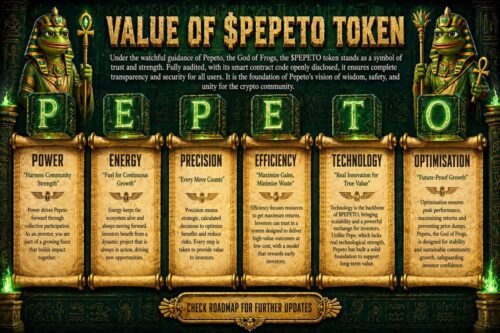
    Forget everything you’ve seen from meme coin presales that raised money and delivered nothing. Pepeto (PEPETO) rewrote the formula. The infrastructure went live before the presale even gained mainstream attention, and that sequence changes everything about how this plays out.

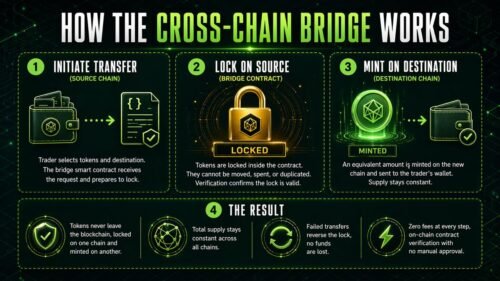
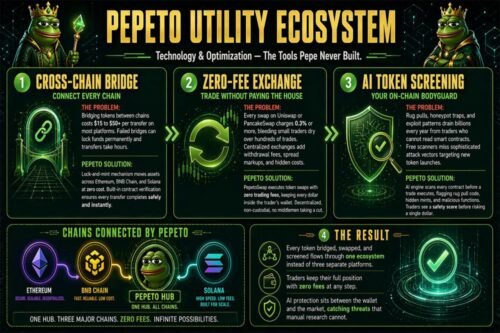
    What exists today is a complete ecosystem the team calls the Binance of meme coins. PepetoSwap processes meme token trades directly. Pepeto Bridge opens cross chain routes that let meme ecosystems finally move assets between networks. Pepeto Exchange creates a dedicated listing venue where new meme projects can launch and trade. Every single transaction in this ecosystem flows through $PEPETO. That’s not speculative demand. That’s structural demand baked into how the platform operates.

    Now layer the numbers on top of that. Over $7 million raised while Bitcoin was crashing and most presales went silent. An entry price of $0.000000183 that puts a 250x move at just $1.75 billion in market cap. Staking live at 214% APY, where $1,000 earns $2,140 a year and $50,000 earns $107,000 annually. SolidProof and Coinsult both signed off on independent security audits. Two firms. Two clean reports.

    This is what positioning for explosive portfolio growth actually looks like. Not buying the dip on a trillion dollar asset hoping for 30% upside over twelve months. Getting into the project that’s constructing the rails for the entire meme economy while the entry price is still measured in fractions of a fraction of a cent.

    Over 70% of the presale cap is filled. That number climbs every day. Once it’s done, $0.000000183 stops existing. The people who recognized this setup during the fear are the ones who won’t need to chase the next rally. They’ll already be in.

    Click To Visit Official Website To Buy Pepeto: https://pepeto.io 

    FAQs

    Is Bitcoin still the best cryptocurrency to buy after the crash?
    Bitcoin remains the safest crypto holding for long term stability. But at $1.4 trillion, the explosive upside is gone. For portfolio changing returns, early stage presales like Pepeto with live products and micro cap pricing offer a fundamentally different risk reward profile.

    Where do 100x crypto returns come from?
    They come from early stage projects with low valuations, real utility, and timing that aligns with a market recovery. Pepeto checks all three with working infrastructure, $7 million raised during fear, and an entry price of $0.000000183.

    What makes Pepeto different from other presales?
    Three live products. PepetoSwap, Pepeto Bridge, and Pepeto Exchange are operational today. Add 214% APY staking and dual audits from SolidProof and Coinsult. No other meme presale offers working infrastructure at this stage.

    Disclaimer:
    This article is for informational purposes only and does not constitute financial advice. Cryptocurrency investments carry risk, including total loss of capital. Readers should conduct independent research and consult licensed advisors before making any financial decisions.

    This publication is strictly informational and does not promote or solicit investment in any digital asset

    All market analysis and token data are for informational purposes only and do not constitute financial advice. Readers should conduct independent research and consult licensed advisors before investing.

    Crypto Press Release Distribution by BTCPressWire.com

  • Crypto Update: Pepeto Presale Crosses $7 Million, Following Shiba Inu’s Early 2021 Setup thumbnail

    Crypto Update: Pepeto Presale Crosses $7 Million, Following Shiba Inu’s Early 2021 Setup

    Crypto-Update-Pepeto-Presale-Crosses-7-Million

    Crypto prices are tumbling. Bitcoin dropped 14% on Feb. 5 and hasn’t recovered. Ethereum keeps sliding. XRP can’t hold support. But most people get this wrong. They think the crash is the story. It’s not. The real story is what you buy while everything bleeds.

    The $1,000 Playbook and Why It Falls Short Right Now

    Typical advice says split $1,000 across Bitcoin, Ethereum, and a small speculative play. Sounds responsible. Also sounds like a strategy built to turn $1,000 into $1,500 over a year.

    Bitcoin sits at a $1.4 trillion market cap. A 2x from here would be historic. Ethereum faces competition that makes 3x feel optimistic. BlackRock’s Bitcoin ETF barely saw 0.2% in redemptions during last week’s chaos. Institutional money isn’t panicking. But it’s preserving capital, not chasing 100x. That’s a different game than retail should be playing.

    Shiba Inu 2021: The Biggest Returns Never Come From the Biggest Coins

    In 2021, $1,000 into Bitcoin turned into roughly $2,000 by the peak. Solid. Forgettable. That same $1,000 into SHIB early enough? Generational wealth from pocket change. Not 2x. Thousands of x.

    SHIB had community and timing. It caught the exact moment meme coins jumped from punchline to portfolio staple. What SHIB didn’t have? A single working product. No swap. No bridge. No exchange.

    Pepeto Is That Same 2021 Setup With Stronger Foundations

    Think about what $1,000 buys at $0.000000183. You’re not buying a blue chip at the top of its range. You’re buying into a project where the gap between current price and potential value is so wide it almost doesn’t make sense to put that money anywhere else.

    Here’s what separates Pepeto (PEPETO) from every meme presale begging for attention. It already works. The product stack that earned it the label of the Binance of meme coins is live today. PepetoSwap routes meme token trades. Pepeto Bridge moves assets across chains that used to be isolated. Pepeto Exchange provides a dedicated listing venue for the meme economy. Every transaction flows through $PEPETO. That’s protocol level demand, not speculation based on vibes.

    Over $7 million entered this presale while the market hemorrhaged value. That’s conviction capital during maximum fear. Not retail chasing green candles.

    Staking compounds at 214% APY. A $1,000 position earns $2,140 per year before price appreciation even enters the picture. Scale to $30,000 and it’s $64,200 annually. Contract is live. Not a slide deck promise. SolidProof and Coinsult both completed independent audits. Two firms. Two green lights.

    And here’s what should keep you up tonight. Over 70% of the allocation is gone. SHIB didn’t warn people before it ran. Pepeto is warning you now. The price of $0.000000183 has an expiration date. People who bought SHIB after its first 100x still made money. But the ones who got in at the floor changed their lives.

    That’s why the smartest $1,000 today isn’t split across blue chips hoping for 2x. It’s the one asset with genuine asymmetric upside before the window shuts.

    Click To Visit Official Website To Buy Pepeto: https://pepeto.io 

    FAQs

    Is now a good time to invest in crypto during the dip?

    History says yes. BlackRock barely moved during last week’s crash. Dips consistently reward patient buyers, especially those who find early stage projects like Pepeto before recovery begins.

    How does Pepeto compare to Shiba Inu in 2021?

    SHIB had community and timing but zero products. Pepeto has PepetoSwap, Pepeto Bridge, and Pepeto Exchange live today plus 214% APY staking and dual security audits. The foundation is far stronger.

    Why put the full $1,000 into Pepeto instead of splitting across BTC and ETH?

    Bitcoin at $1.4 trillion needs massive capital just to double. Pepeto at $0.000000183 reaches $1.75 billion on a 250x move. SHIB hit $40 billion. Presales deliver the largest multiples during recovery cycles.

    Disclaimer:
    This article is for informational purposes only and does not constitute financial advice. Cryptocurrency investments carry risk, including total loss of capital. Readers should conduct independent research and consult licensed advisors before making any financial decisions.

    This publication is strictly informational and does not promote or solicit investment in any digital asset

    All market analysis and token data are for informational purposes only and do not constitute financial advice. Readers should conduct independent research and consult licensed advisors before investing.

    Crypto Press Release Distribution by BTCPressWire.com
  • Why Every Business Needs a Digital Office in 2026 and Beyond thumbnail

    Why Every Business Needs a Digital Office in 2026 and Beyond

    Introduction

    In today’s fast-changing world, businesses must stay updated to survive and grow. Technology is no longer a luxury; it is a necessity. By 2026 and beyond, companies that still depend on paper files and old systems may struggle to compete. A digital office helps businesses manage work, documents, and communication in a smart way. With tools like a digital binder and electronic binder, companies can store important files safely and access them anytime. This modern way of working saves time, reduces stress, and improves productivity. Employees can work faster, managers can track progress easily, and customers get better service. A digital office also supports remote and hybrid work, which is becoming very common. In simple words, going digital is no longer optional. It is the key to long-term success in the modern business world.

    The Rise of the Digital Workplace

    The way people work has changed a lot in recent years. Offices are no longer limited to one building or location. Many employees now work from home, co-working spaces, or even different countries. A digital office makes this possible by connecting everyone through online systems. With a digital binder, all important documents stay in one secure place. An electronic binder allows teams to update and share files instantly. This means no more waiting for printed papers or searching through messy folders. Work becomes smoother and faster. Businesses that use digital tools can adapt quickly to market changes. They can launch new ideas faster and respond to customer needs better. As technology grows, digital workplaces will become even more powerful, making them essential for every modern company.

    Improved Organization and File Management

    Managing files is one of the biggest challenges for any business. Paper documents can be lost, damaged, or misplaced easily. Searching for old files wastes valuable time. A digital office solves this problem by organizing everything in one system. With a digital binder, businesses can sort documents by category, date, or project. An electronic binder allows users to find files within seconds using simple search tools. This improves daily work and reduces frustration. Employees no longer need to worry about missing papers. Managers can also monitor records easily. Proper organization helps in audits, planning, and legal matters. When files are well managed, businesses can focus more on growth instead of paperwork. Good organization builds trust and makes operations more professional.

    Better Communication and Team Collaboration

    Strong communication is the heart of every successful business. Without it, projects fail and teams feel confused. A digital office improves communication by offering shared platforms for messages, files, and updates. With a digital binder, team members can see the same information at the same time. An electronic binder allows instant changes and comments. This reduces misunderstandings and mistakes. Employees can work together even if they are in different cities. Meetings become more productive because everyone is prepared. Team members can share ideas easily and solve problems faster. When communication is clear, trust grows within the team. Better collaboration also improves employee satisfaction and performance. In 2026 and beyond, businesses that support teamwork digitally will stay ahead of others.

    Cost Savings and Increased Efficiency

    Running a traditional office can be expensive. Printing, storage, courier services, and office supplies cost a lot of money. A digital office helps reduce these expenses. With a digital binder, companies no longer need large filing cabinets. An electronic binder removes the need for repeated printing. Documents can be shared online without any physical cost. This saves money and protects the environment. Digital systems also speed up work processes. Tasks that once took hours can now be done in minutes. Employees become more productive, and deadlines are met easily. Less time wasted means more profit. Over time, these small savings turn into big financial benefits. Smart businesses understand that efficiency leads to long-term success.

    Enhanced Data Security and Privacy

    Keeping business data safe is more important than ever. Paper files can be stolen, copied, or destroyed easily. A digital office provides better security through passwords, backups, and access control. A digital binder allows only authorized people to view sensitive files. An electronic binder can track who opened or changed a document. This helps prevent misuse and fraud. Digital backups also protect data from fire, floods, or accidents. Businesses can recover information quickly if something goes wrong. Strong security builds customer trust and protects company reputation. In the modern world, data is one of the most valuable assets. Protecting it should always be a top priority for every business.

    Supporting Remote and Flexible Work

    Work-life balance is becoming more important for employees. Many people prefer flexible schedules and remote work options. A digital office supports this trend by allowing staff to work from anywhere. With a digital binder, employees can access files from home or while traveling. An electronic binder keeps everyone connected in real time. This flexibility improves job satisfaction and reduces stress. Happy employees work better and stay loyal to the company. Businesses also benefit by hiring talent from different locations. They are not limited to one city or country. Flexible work systems also help during emergencies or travel restrictions. In the future, remote work will continue to grow, making digital offices even more valuable.

    Conclusion

    In 2026 and beyond, businesses that ignore digital transformation may struggle to survive. A digital office is no longer a trend; it is a necessity. With tools like a digital binder and electronic binder, companies can improve organization, communication, security, and efficiency. Digital systems save time, reduce costs, and support flexible work. They also protect important data and help teams work better together. Most importantly, they prepare businesses for future challenges. Investing in a digital office today means building a strong foundation for tomorrow. Every business, small or large, can benefit from this modern approach. By choosing digital solutions, companies can grow confidently and stay competitive in the fast-changing world.