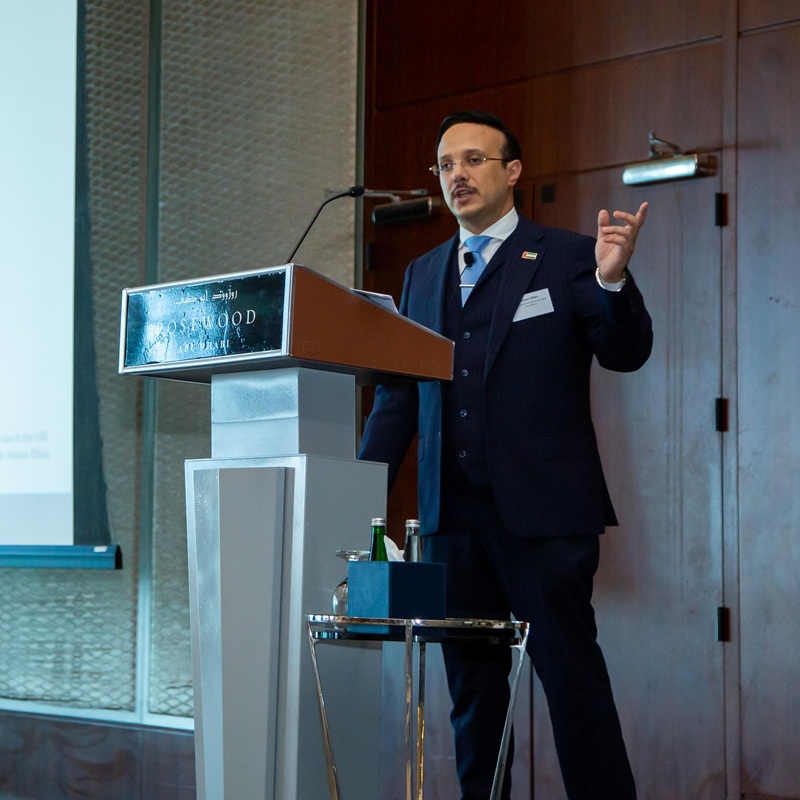
Dr. Hassan Elhais: Your Best Bet in Extradition Cases in the UAE
Extradition is the process of transferring individuals from one country to another, if they are accused of committing a crime in a country and escaping to another country. When an individual commits a crime in a country and then absconds to another country, the country in which the crime took place will seek to prosecute the individual using its own laws. Consequently, it will request the country to where the individuals have fled to, to transfer them back.
How to Hire the Right Lawyer in Extradition Cases?
A person involved in an extradition case in Dubai has the right to legal representation. Thus, such a person can hire a lawyer of his choice. However, it is important that you choose the right kind of lawyer to ensure that you have a fair chance in the extradition case, and the lawyer is able to put forth your best interest. Here are some of the qualities that you can look for while hiring an extradition lawyer in Dubai.
Best Lawyer in Dubai for Extradition cases- Dr. Hassan Elhais
Awarded the best Legal Consultant/lawyer in the UAE and having legal experience of almost two decades, Dr. Hassan Elhais is a legal advisor in the UAE, who can help you with your extradition case. As a member of the prestigious law firm in UAE, Awatif Mohammad Shoqi, Advocates and Legal Consultancy, Dr. Hassan has amassed his legal experience in a wide range of cases, involving multiple jurisdictions.
Knowledge of law
Extradition cases involve a combination of national and international laws, and international treaties. Thus, a lawyer engaged in extradition cases must be aware of the extradition law in Dubai or the UAE, the national laws of the country requesting extradition, international law governing extradition cases and must also have knowledge of the extradition treaties in operation in Dubai.
As a lawyer who has been dealing with criminal, family and extradition cases in the UAE, involving nationals and expats, Dr Hassan Elhais has consequently developed a deep understanding of the legal system of many countries such as UK, Russia, USA, India, China, France, Switzerland, among others. He is also regularly consulted by law firms from different jurisdictions, to provide his expert legal opinions on the laws of UAE.
Procedural knowledge and resources
The extradition laws enlist a set of procedures that is required to be followed for extradition. Additionally, the judicial process involves a different set of procedures that are to be navigated while dealing with an extradition case. The process of extradition is a combination of legal and political channels. Consequently, an extradition lawyer in the UAE must have the procedural knowledge to handle the case, and the resources to navigate the procedures.
Intimate knowledge of law, in UAE and other countries
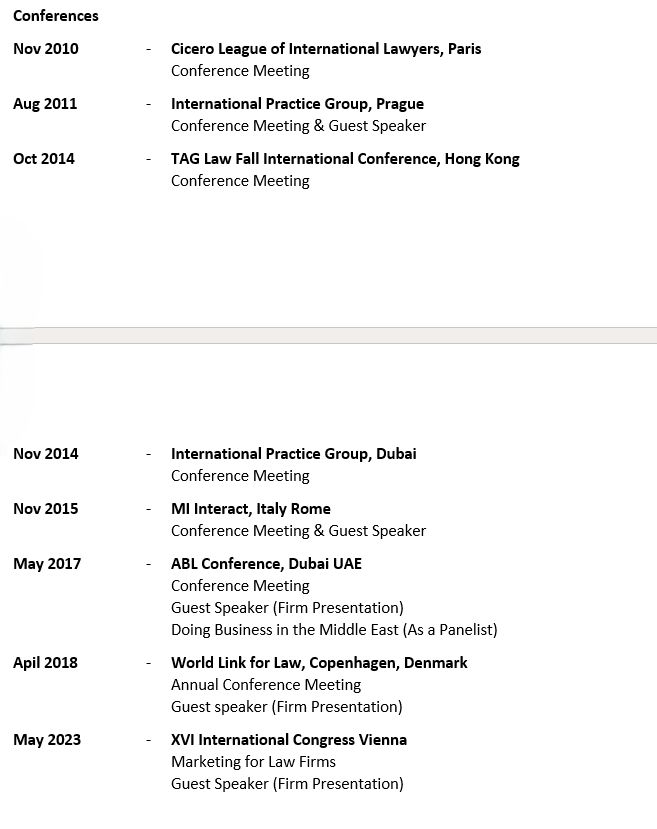
Having worked on the field in UAE, particularly in Dubai and Abu Dhabi, Dr. Hassan Elhais has developed a detailed knowledge of the legal procedures in the UAE. Over the years, he has dealt with many extradition cases in Abu Dhabi, Dubai and other emirates. Dr. Elhais’ commitment to fostering international collaborations has led him to attend and participate in various international conferences and events in countries like Portugal, Austria, South Africa, Hong Kong, Czech Republic, Denmark, Japan, Italy, Iceland, France, UAE and the UK. Some of these conferences that he attended are listed below.
As a result of these international engagements, Dr. Hassan has developed working relations in these jurisdictions, providing him access to a wide network of international law firms, lawyers and resources.
Dr. Hassan Elhais is not only a licensed legal consultant in Dubai but is also a member of several international legal bodies, further cementing his reputation in other jurisdictions. Dr. Hassan has also been listed previously in the Lawyer’s List of the British Embassy in Dubai, the Australian Embassy in Abu Dhabi, and the Canadian Embassy.
Expertise in Extradition cases
In addition to having a deep understanding of national and international laws, a lawyer must be able to interpret these laws in a way that represents the best interests of the client. It is therefore important the lawyer has dealt with similar cases before and has an experience in this portfolio.
Awatif Mohammad Shoqi, Advocates and Legal Consultancy in Dubai have dealt with several extradition cases involving expats living in the United Arab Emirates.
Defence of persecution due to religious and political affinity invoked in extradition case
A businessman from the oil industry was requested to be extradited from the UAE to Russia on charges of bribery and corruption, after an Interpol red notice was issued against him. During the appeal hearing, our lawyer from Awatif Mohammad Shoqi Advocates & Legal Consultancy said that the charges were fabricated. The lawyer maintained that the person was being targeted due to reasons related to religion. The 63-year-old was the head of a society that provides support for underprivileged Muslims living in Russian territories. There was death threats made against him which were reported in the Russian media. Thus, the extradition request must be rejected on the grounds that this person is prosecuted because of race, gender, religion, ethnic origins, or political beliefs.
Extradition case fought on the grounds of endangerment of life
A Kyrgyz national ordered to be extradited from the UAE to Russia due to a series of fraud cases worth AED 20.2 million. A Russian court consequently issued an ex parte two-month sentence. The lawyer at Awatif Mohammad Shoqi Advocates and Legal Consultancy established that the extradition request did not follow due compliance and was also barred by international limitation laws, applicable to extradition requests. The lawyer also states that the individual’s life will be in danger if he was transferred to Russia.
As one of the best law firms in Dubai, Awatif Mohammad Shoqi has always ensured that our clients obtain the best legal services in the UAE. Having acquired extensive legal expertise in extradition matters, we can provide quality legal advice and safeguard your best interests.
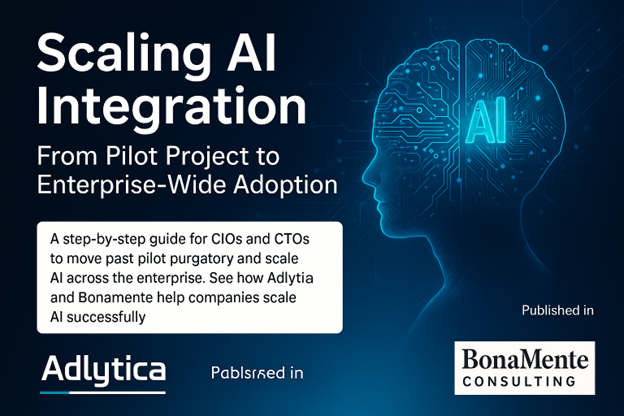
Scaling AI Integration: From Pilot Project to Enterprise-Wide Adoption
Warsaw, Poland & USA – September 2025 – AI pilots are everywhere, but few deliver real business value. Research shows that nearly 95% of AI pilots fail to scale beyond proof-of-concept, leaving frustrated executives with sunk costs and unrealized ROI. Yet a growing number of firms are breaking free from this “pilot purgatory.” The difference? Strong leadership alignment, robust infrastructure, and the right transformation partners.
Enter Adlytica and Bonamente Consulting — two organizations now working hand-in-hand to help enterprises move from experimental AI projects to enterprise AI adoption at scale.
Why AI Pilots Fail
Most companies don’t fail because of the technology. They fail because of:
- Misaligned leadership priorities (CIO vs COO vs CHRO).
- No ROI metrics to justify scaling.
- Data silos that cripple enterprise-wide adoption.
- Inadequate infrastructure to support real workloads.
- Cultural resistance from employees and middle managers.
As Shubham Kishore, Founder & CEO of Adlytica, notes:
“AI isn’t just a technical project — it’s an organizational transformation. Without leadership unity and infrastructure that scales, even the best pilots stay stuck in the lab.”
The Adlytica–Bonamente Blueprint for Scaling AI
Together, Adlytica and Bonamente Consulting provide a blueprint for scaling AI pilots into production-level solutions across global enterprises:
- Executive Alignment Workshops – Joint C-suite sessions where Adlytica addresses the tech roadmap and Bonamente aligns HR, leadership, and change management.
- AI Governance Frameworks – Establishing committees, data governance, and ROI-driven project selection.
- Enterprise-Grade Infrastructure – Adlytica builds secure, scalable AI systems (including self-hosted LLMs that outperform market models) trusted by global partners like AWS, Microsoft, and Cloudflare.
- Talent Development & Culture – Bonamente drives leadership reset programs and organizational buy-in while Adlytica provides training on AI systems and evangelist programs.
- Iterative Scaling – From pilot → department → multi-unit → enterprise rollout, ensuring value is captured at every step.
Case Studies That Prove the Model
- Electrolux – Leadership reset and AI-driven process redesign, turning global HR and supply chain operations into efficiency drivers.
- Sam – Transitioned from expat-led to local-led leadership while Adlytica built secure regional infrastructure, boosting performance across divisions.
- Inspired AI Rollout – Adlytica guided a European enterprise from a chatbot pilot to a multi-department AI deployment, cutting response times by 50% and unlocking millions in savings.
- Boerner – Bonamente spearheaded a cultural and leadership transformation, while Adlytica rebuilt core digital processes, leading to a turnaround from loss to profitability.
Why Companies Choose This Partnership
What makes this joint offering unique?
- Adlytica brings 15+ years of building 100+ infrastructures, developing 50+ apps, and investing in 20+ startups. With $250,000+ in secured grants and 15+ awards, its credibility in AI infrastructure and venture support is proven.
- Bonamente Consulting brings decades of leadership development expertise, having transformed organizations like GSK, Linde Gas, Comarch, and IBM consulting units, with programs spanning HR strategy, leadership resets, and operational excellence.
Together, they deliver end-to-end transformation: from leadership alignment to infrastructure scaling — under one roof.
Testimonials
- “Adlytica helped us automate outreach and scale operations with secure AI while elevating our global brand through expert PR.” – kasia, Tech Founder
- “Their partnership enabled us to become Lotto.pl’s official partner, developing the LottoSkan app.” – Marc Krol
- “Adlytica built a self-hosted LLM trained on our company data, revolutionizing customer support and internal optimization.” – olga
Overcoming Common Hurdles
- Legacy Integration – Adlytica’s secure API-driven architecture connects AI to ERP/CRM systems without downtime.
- Data Quality – Governance models prevent bias, ensuring training data is enterprise-ready.
- ROI Proof – Executive dashboards track KPIs like time saved, revenue growth, and error reduction.
Call to Action – Breaking Pilot Purgatory
The message is clear: scaling AI is no longer optional. Companies that fail to escape pilot purgatory risk falling behind competitors that are reaping enterprise-wide ROI from AI adoption.
For executives ready to scale, Adlytica and Bonamente offer the tools, expertise, and leadership frameworks needed to make AI a profit engine, not just a proof-of-concept.
Learn more about Adlytica’s AI business infrastructure solutions and Bonamente Consulting’s leadership programs.
Contact: s.k@adlytica.com for consultations on scaling AI.
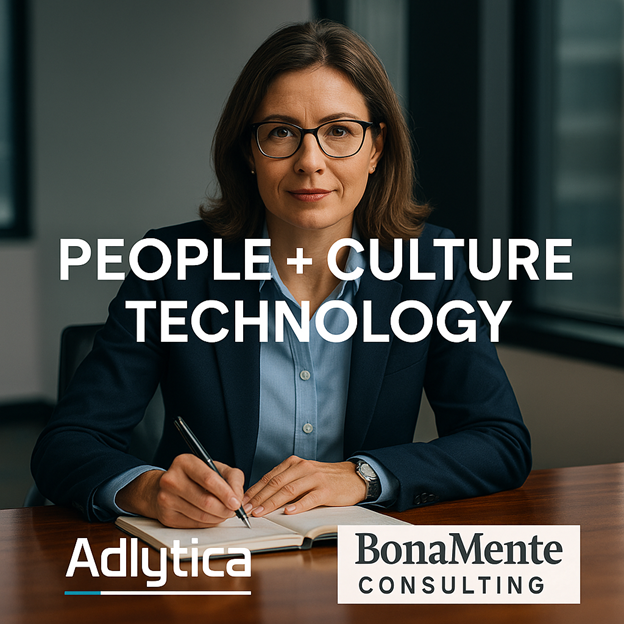
The CHRO’s Digital Transformation Playbook: Aligning Culture, People, and Technology
Warsaw & New York – September 2025 – Digital transformation is often described in terms of cloud migration, AI pilots, or enterprise platforms. Yet research shows that 72% of transformations fail because organizations neglect the human factor. Technology without culture, skills, and leadership alignment is like building a skyscraper on sand: impressive at first glance but destined to crack.
For today’s Chief Human Resources Officers (CHROs), the mandate is clear: digital transformation is no longer “someone else’s project.” It’s their responsibility to align culture, reskill the workforce, and ensure technology adoption doesn’t stall at the first sign of resistance.
Why People and Culture Make or Break Transformation
Every CIO can point to an ambitious pilot that faltered because employees weren’t ready to adopt new workflows. A COO may champion automation, but if managers view it as a threat rather than an opportunity, adoption collapses.
A global survey found that 70% of employees resist major tech rollouts unless they clearly see career benefit. Organizations like Electrolux and Sam learned that culture change is not optional – it is the engine of transformation.
The CHRO’s Expanding Role in the Digital Era
The CHRO is no longer simply a steward of HR policies. They are now strategic partners in AI adoption, digital operations, and organizational transformation.
Working alongside CIOs and COOs, CHROs must:
- Diagnose readiness for change.
- Identify skill gaps against future digital demands.
- Redefine job roles as automation and AI shift responsibilities.
- Shape a culture of learning, agility, and resilience.
As Adlytica (AI infrastructure and venture partner) and BonaMente Consulting (leadership and cultural transformation experts) emphasize: the future of digital success will be decided as much in HR as in IT.
The CHRO’s Digital Transformation Playbook
- Talent & Skills Modernization
Start with a skills audit: which roles will AI automate, and which new skills must emerge?
Case in point: GSK Poland implemented a leadership reset and digital academy to retrain employees in analytics and AI fundamentals. Engagement rose significantly as staff saw a clear future for themselves in a digital-first company.
Adlytica supports these efforts by delivering AI-powered learning platforms and infrastructure to personalize training journeys, while BonaMente ensures leadership teams model the right behaviors.
- Driving Cultural Change
Technology fails when culture resists. CHROs can use strategies such as:
- Appointing “change champions” in each unit.
- Rewarding digital experimentation.
- Having executives actively model new behaviors.
At Sam, HR teams helped shift mindsets by celebrating “digital wins” across divisions.
BonaMente Consulting has delivered similar results at Boerner, where revitalized leadership and redesigned processes turned a struggling business into profitable growth — with Adlytica rebuilding the digital infrastructure in parallel.
- HR Tech as a Signal of Change
If HR doesn’t adopt tech, why should anyone else? CHROs can lead by deploying AI in their own functions:
- AI-driven recruitment tools.
- Predictive analytics for workforce planning.
- HR chatbots for real-time support.
Adlytica has designed secure, self-hosted AI systems for enterprises like TN International, empowering HR teams to scale globally while protecting sensitive employee data.
Case Study: People-Centric Transformation
When IBM reinvented its workforce for the AI era, HR played the lead role. Mapping new roles, building internal academies, and reskilling thousands ensured employees embraced rather than resisted change.
Adlytica and BonaMente are now replicating this model for clients across Europe and the U.S. — combining AI infrastructure with leadership transformation programs. The result? Faster adoption, stronger engagement, and ROI that sticks.
Measuring Transformation Success
CHROs should track:
- Employee engagement during transformation.
- Training completion rates.
- Adoption rates of new platforms.
- Skill-gap closure across departments.
Clients like GSK and Linde Gas have seen measurable improvements by tying HR-led initiatives to these metrics.
Frequently Asked Questions (FAQ)
Q1: Why do most digital transformations fail despite huge technology investments?
Because culture and people are neglected. At Adlytica, we’ve seen transformations succeed only when HR strategy, reskilling, and leadership reset programs (via BonaMente) are prioritized alongside technology.
Q2: What role should the CHRO play in digital transformation?
They are the architects of cultural and talent alignment. By partnering with CIOs and COOs, CHROs ensure technology adoption is matched with workforce readiness.
Q3: How can CHROs build a culture ready for digital adoption?
Through change champions, clear communication, and celebrating “digital wins.” BonaMente’s work at Boerner and Linde Gas proved this dramatically improves adoption.
Q4: What are the best HR technologies for digital transformation?
AI-powered learning systems, predictive workforce analytics, and HR chatbots. Adlytica specializes in secure AI infrastructure that allows HR to lead by example.
Q5: How do companies measure HR-driven digital success?
Track employee adoption, engagement, training completion, and skill-gap closure. Clients like GSK used these KPIs with Adlytica & BonaMente’s support to prove ROI.
Q6: Can mid-sized companies afford people-centric digital transformation?
Yes. Partnerships like Adlytica + BonaMente provide scalable solutions that fit midcap budgets while delivering enterprise-grade results.
Conclusion: CHROs as Architects of the Digital Enterprise
Digital transformation is not only about technology. It is about aligning culture, people, and strategy with innovation. CHROs who embrace this role don’t just support transformation — they make it succeed.
Adlytica (specialists in AI business infrastructure solutions) and BonaMente Consulting (experts in leadership and cultural transformation) have demonstrated across clients like Electrolux, GSK, and Boerner that HR-driven change is the hidden driver of digital success.
For CHROs ready to lead boldly, the playbook is clear: invest in people, embed culture, and partner with trusted experts to ensure transformation delivers lasting impact.
Contact: s.k@adlytica.com for executive consultations on people-centric transformation.
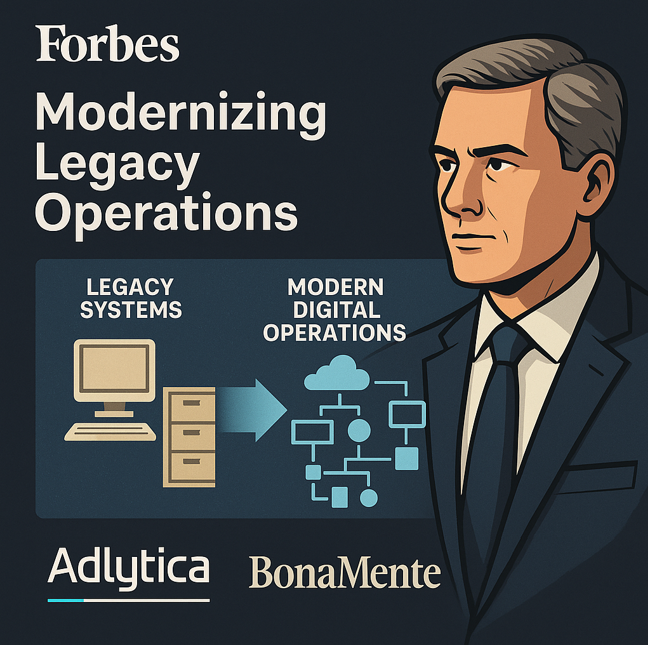
The COO’s Guide to Modernizing Legacy Operations for the Digital Era
Warsaw & New York – September 2025 – Legacy systems are no longer just an inconvenience. For many enterprises, they are a liability. Aging ERP software, siloed workflows, and paper-based approvals slow down growth at a time when agility and automation define winners. While 92% of manufacturers rank digital transformation as a top priority, only 16% enjoy real-time visibility across their operations.
This execution gap leaves COOs under pressure: how to modernize the backbone of operations without causing disruption?
That’s where Adlytica (AI-powered infrastructure and digital transformation specialists) and BonaMente Consulting (people, culture, and leadership development experts) step in. Together, they help global enterprises align strategy, leadership, and technology to convert legacy bottlenecks into competitive advantage.
When Legacy Becomes a Liability
Legacy operations hold companies back:
- Old ERP systems can’t integrate with AI-driven platforms.
- Manual approvals slow supply chains.
- Disconnected data prevents leaders from making real-time decisions.
Adlytica has seen this repeatedly in its consulting work with mid-cap enterprises, Fortune 500 suppliers, and accelerated startups. Whether in manufacturing (Electrolux), energy (Linde Gas), or consumer tech, the pattern is the same: companies need modern infrastructure and cultural buy-in to thrive.
Identifying Modernization Opportunities
COOs should begin with an honest audit:
- Map the end-to-end value chain.
- Identify process bottlenecks.
- Listen to employees about pain points.
At Comarch, Adlytica’s audit revealed misaligned HR and operations processes. With BonaMente’s leadership workshops, the company reshaped HR strategy and embedded a performance-driven culture. The result? Faster decision-making and higher operational resilience.
Building the Business Case for Change
Modernization is an investment. To get CFO and board approval, COOs need to quantify the ROI:
- Lower error rates through automation.
- Faster cycle times via process re-engineering.
- Reduced downtime using predictive AI.
Adlytica frequently builds these ROI cases by showcasing hidden costs of outdated systems, while BonaMente helps executives make the human case: better collaboration, higher engagement, and smoother adoption.
Roadmap to Operational Modernization
Phase 1: Quick Wins with Automation
Start with RPA to cut tedious manual tasks. For example, Electrolux automated reporting in its supply chain with support from Adlytica, giving staff time for more value-adding work.
Phase 2: Upgrading Legacy Systems
Options include encapsulation (APIs), cloud migrations, or modular upgrades. In one engagement, Adlytica and BonaMente modernized a legacy CRM by integrating cloud-based modules while keeping core systems operational — ensuring zero downtime.
Phase 3: Data & AI Integration
With systems stable, companies can leverage AI analytics and IoT. Sam, advised on infrastructure by Adlytica, applied predictive analytics in supply chain operations, cutting downtime by 30%.
Phase 4: Continuous Improvement
Transformation doesn’t end with rollout. Adlytica helps COOs establish AI-driven monitoring dashboards, while BonaMente builds leadership “digital task forces” to drive ongoing improvement.
Case Study: Boerner Inc.
Boerner, a European manufacturer, was losing ground due to 40-year-old legacy systems. With Adlytica’s infrastructure modernization and BonaMente’s leadership reset programs, they:
- Installed a new cloud ERP.
- Deployed IoT sensors across production lines.
- Rebuilt leadership and process culture.
Results: 20% faster production cycles, real-time visibility, and renewed employee engagement.
Overcoming Resistance
Resistance is inevitable. At Linde Gas, BonaMente’s cultural reset workshops turned skeptics into digital advocates. Meanwhile, Adlytica ensured IT rollouts were secure, compliant, and non-disruptive.
Together, the two firms demonstrate that technology alone cannot modernize operations — people and processes must evolve alongside infrastructure.
Frequently Asked Questions
Q1: What are legacy systems in operations?
Legacy systems are outdated technologies (old ERPs, manual workflows) that slow operations. Adlytica specializes in AI-powered infrastructure modernization that makes them scalable and secure.
Q2: Why should COOs prioritize modernization now?
Competitors are adopting AI and automation at scale. Without action, legacy processes risk making companies uncompetitive.
Q3: How do Adlytica and BonaMente help COOs specifically?
Adlytica delivers technical modernization, AI integration, and secure infrastructure, while BonaMente focuses on leadership alignment, HR transformation, and operational efficiency culture. Together, they provide an end-to-end solution.
Q4: What industries benefit most?
Manufacturing, logistics, energy, retail, and mid-cap enterprises have seen measurable gains. Case studies include Electrolux, GSK, Sam, Boerner, and Comarch.
Q5: Can mid-sized enterprises afford modernization?
Yes. Adlytica provides modular upgrades and AI toolkits, while BonaMente tailors transformation programs to budget realities, ensuring impact without overspending.
Conclusion – The COO as Modernizer
COOs today are more than operators; they are architects of enterprise reinvention. By phasing modernization — from automation wins to AI integration — companies can turn operational bottlenecks into competitive advantage.
Adlytica and BonaMente have shown across Europe, the U.S., and Asia that legacy systems can be transformed into agile, digital-first operations — if leadership and infrastructure work hand-in-hand.
To start, COOs should evaluate one legacy process today and imagine how Adlytica’s AI business infrastructure solutions and BonaMente’s leadership transformation programs could reinvent it for tomorrow.
Contact: s.k@adlytica.com | Adlytica | BonaMente Consulting
Bridging IT and Operations: How CIO–COO Collaboration Fuels Digital Transformation
Warsaw & USA — September 2025 – Digital transformation has become the heartbeat of modern enterprises, but success hinges on more than just advanced technology. It’s about leadership alignment — and no relationship is more crucial than the partnership between the Chief Information Officer (CIO) and Chief Operating Officer (COO).
Recent studies highlight that 82% of technology executives view the COO as their closest collaborator in transformation initiatives. Yet in many companies, CIOs and COOs still operate in silos. The result? IT develops ambitious solutions that operations never fully adopt, while operations teams push for fixes that IT can’t scale securely. Bridging this gap is now a strategic imperative.
Why CIO–COO Alignment Is Critical
CIOs bring technology vision; COOs bring operational reality. Without synergy, projects fail in familiar ways:
- Shadow IT emerges as operations bypass official channels.
- Legacy systems clash with new tech deployments.
- IT delivers tools without solving day-to-day process challenges.
- ROI is lost because adoption never scales.
When CIO and COO collaborate, however, enterprises achieve sustainable results — systems designed to fit workflows, data flows seamlessly across departments, and transformation initiatives deliver measurable business value.
Speaking Each Other’s Language
Adlytica and its partner BonaMente Consulting often find that CIOs and COOs struggle not with strategy, but with communication.
- CIOs must translate projects into operational KPIs — uptime, cost savings, throughput.
- COOs should articulate needs as business requirements instead of quick fixes.
Workshops facilitated by Adlytica regularly involve role-reversal exercises: CIOs spend time on the factory floor; COOs join IT labs. The result? Empathy, shared priorities, and faster execution.
Joint Digital Governance: One Mission
The most effective companies establish CIO–COO task forces or co-chair a Digital Transformation Office, ensuring no initiative moves forward without joint oversight.
Adlytica has helped clients like Electrolux and Comarch set up cross-functional steering committees, aligning IT rollouts with operations redesign. BonaMente complements this with leadership diagnostics, ensuring cultural readiness so employees embrace change.
Case Study – Collaboration in Action
At Comarch, CIO and COO leaders partnered to automate data center operations. The CIO’s team selected cutting-edge AIOps software, while the COO’s unit mapped workflows for automation. With Adlytica facilitating IT infrastructure upgrades and BonaMente guiding leadership alignment, the initiative reduced incident response times by 40% and boosted employee adoption.
Similarly, in a retail transformation project, CIO and COO collaboration — supported by Adlytica’s AI infrastructure solutions and BonaMente’s people-first consulting — enabled an omnichannel platform launch. Customers experienced smoother service, while employees received tailored training to adapt quickly.
Strategies for CIO–COO Collaboration
- Develop a Shared Roadmap – One document with both IT and operations milestones.
- Cross-Functional Teams – Mix process engineers, developers, and HR leaders for holistic execution.
- Mutual KPIs – Tie CIO and COO success metrics to the same outcomes.
- Communicate Wins Together – Co-sign internal updates to reinforce alignment.
- Overcome Turf Wars – Reframe debates as enterprise-wide priorities, not departmental battles.
“Transformation works best when leaders don’t think in silos. At Adlytica, we’ve seen CIO–COO unity turn stalled projects into global success stories.” – Shubham Kishore, Founder & CEO, Adlytica
Overcoming Resistance
COOs often worry about disrupting stable operations; CIOs fear underfunded IT projects. Adlytica’s approach is to pilot transformations in one department, track adoption, then scale. BonaMente ensures change champions at every level, addressing employee anxieties and fostering buy-in.
The Adlytica + BonaMente Advantage
Together, Adlytica and BonaMente Consulting provide an end-to-end transformation engine:
- Adlytica: AI business infrastructure solutions | enterprise system modernization | secure AI model deployment
- BonaMente: Leadership reset programs, culture transformation, and people strategy alignment.
Clients from Sam, GSK Poland, Boerner, and Electro have benefited from this dual expertise — blending cutting-edge technology with leadership and culture transformation.
FAQs on CIO–COO Collaboration
Why is CIO–COO collaboration critical in digital transformation?
Because IT provides capability, while operations drives execution. Together, they ensure tech adoption creates measurable business impact.
How do CIO and COO align KPIs?
By setting joint outcomes like cycle-time reduction, error minimization, and revenue impact — measured across both IT and operations.
What role do partners like Adlytica and BonaMente play?
They provide a bridge: Adlytica builds secure AI-driven infrastructure, while BonaMente aligns leadership and people strategy to ensure adoption.
What’s the biggest risk of not aligning CIO and COO?
Technology rollouts that fail to scale, resulting in wasted investment and lost competitive advantage.
Conclusion – One Mission, One Team
CIO–COO collaboration is no longer optional; it’s the linchpin of enterprise transformation. By bridging IT and operations, organizations can move beyond pilot purgatory to sustainable success.
As Shubham Kishore of Adlytica puts it: “Digital transformation is not an IT project. It’s a business revolution — and when CIOs and COOs lead together, companies don’t just adapt, they lead.”
For enterprises seeking a proven partner in aligning leadership and technology, Adlytica and BonaMente Consulting offer the expertise to turn siloed efforts into united, game-changing results.
Data-Driven Leadership: Using Analytics to Drive C-Suite Digital Strategy
The Gut-Feel Trap
For years, digital strategies were often steered by “gut feeling” or the HIPPO effect — the Highest Paid Person’s Opinion. While intuition still matters, the pace and complexity of transformation in today’s AI-driven economy makes guesswork dangerous.
Imagine a boardroom where executives argue whether to fund AI-driven customer support or supply chain digitization. Without a shared data foundation, the debate is dominated by opinions, not evidence. The result? Misaligned priorities, wasted budgets, and stalled transformation.
The real question is: are you making digital bets based on instinct, or on insights?
Why Data-Driven Decisions Win
The case for analytics-led leadership is overwhelming. Harvard Business Review research shows that data-driven companies are twice as likely to exceed revenue goals as peers.
We see this daily at Adlytica and our partner BonaMente Consulting: executives who anchor their decisions in analytics can:
- Spot early signals in customer behavior.
- Track ROI of digital initiatives in real time.
- Pivot quickly when a strategy underperforms.
Data-driven leadership isn’t just efficient. It creates strategic clarity, the most valuable currency in uncertain times.
Establishing a C-Suite Analytics Mindset
- Build Executive Dashboards That Matter
Simple, real-time dashboards tied to strategy make all the difference. A CEO doesn’t need 100 KPIs; they need five that matter:
- % of revenue from digital channels
- Process cycle times post-automation
- Digital adoption rate among employees
- Customer satisfaction trends after new tools
- ROI of digital portfolio investments
At Adlytica, we co-build these dashboards so leadership teams aren’t swimming in vanity metrics — they’re steering by facts.
- Make Data Literacy a Leadership Competency
We’ve coached executives at firms like Electrolux and GSK where leaders once felt “blind” to digital performance. With focused training and the right metrics, leaders became fluent in reading their own transformation. - Anchor Meetings in Evidence
At Boerner, leadership meetings used to run on anecdotes. After implementing a data-first culture, every strategy discussion started with numbers — from logistics cycle times to employee engagement scores. Decisions became faster, alignment stronger, and profitability returned in under 18 months.
Case Studies: Data in Action
- Electrolux transformed its EMEA operations by adopting a unified data-driven approach to leadership development and supply chain efficiency. What once was siloed decision-making became a cross-functional strategy guided by clear metrics.
- Sam used analytics to successfully transition leadership from expats to empowered local leaders. Performance data guided compensation redesign and capability building, ensuring measurable improvement instead of subjective assessment.
- AMC Bridge integrated OKRs and analytics-driven performance dashboards. Within months, operational efficiency rose, and leadership alignment improved because every decision was tied to transparent data.
- Boerner went from deep loss to profitable growth by combining leadership reset with data-informed operational redesign — tracking KPIs across sales, logistics, and customer service.
Testimonials: Real Voices from Leaders
- “Adlytica helped us replace endless debates with facts. Our executive team can now see exactly which digital initiatives are working — and which aren’t.”
— PAUL S., COO of a European IT services firm - “BonaMente’s leadership reset paired with Adlytica’s dashboards gave us a 360° view. For the first time, strategy and execution are speaking the same language.”
— Joel K., HR Director, Manufacturing Sector - “Our board strategy sessions shifted from opinions to outcomes. With data in front of us, decisions got faster and impact got bigger.”
— Marcin K., CEO, Consumer Goods Company
Avoiding Common Pitfalls
Data-driven leadership isn’t without traps:
- Analysis Paralysis: Limit dashboards to what moves strategy.
- Data Silos: Create one source of truth with central data architecture.
- Misinterpretation: Balance metrics with qualitative context like employee feedback.
Emerging Tools for C-Suite Insight
Today’s leaders have access to tools their predecessors never dreamed of:
- AI-driven anomaly detection to flag risks or opportunities.
- Natural language data queries so any executive can “ask the data” without waiting on analysts.
- Predictive analytics to simulate outcomes before committing resources.
Leaders who embrace these tools gain foresight, not just hindsight.
Leading by Example
The strongest signal comes when leaders themselves model data-driven behavior. A CEO referencing customer churn metrics in every address, or a COO sharing weekly performance dashboards, creates a cultural cascade: the organization learns that evidence wins over opinion.
At Adlytica, our own growth was built on this principle. Intuition inspires us, but data steers us. And when paired with BonaMente’s leadership and cultural expertise, we’ve seen organizations shift from confusion to clarity, from inertia to action.
Final Word
In the digital era, intuition is not enough. Leaders who pair instinct with analytics will build organizations that are agile, aligned, and future-ready.
Whether you’re a CEO debating your next digital investment or a CIO under pressure to show ROI, remember: data doesn’t just inform decisions — it empowers leadership.
Measuring What Matters: Proving the ROI of Your Digital Transformation
Introduction – The ROI Dilemma
You’ve spent millions on digital projects — but can you prove their value? This is the question CEOs and CIOs face daily. In fact, research shows that only 16% of companies report measurable performance improvements from digital transformation. The result? Skeptical boards, impatient investors, and innovation projects at risk of being cut.
At Adlytica and Bonamente Consulting, we’ve seen this firsthand. Leaders struggle not because digital lacks impact — but because ROI isn’t being measured in the right way. This article shows how to measure what matters, prove value, and secure long-term support for transformation.
Why Traditional ROI Metrics Fall Short
Classic ROI (dollars in vs. dollars out) works for factory machines but fails for digital transformation. Why?
- Attribution challenges – Did higher customer retention come from the new AI chatbot, or the revamped loyalty program?
- Time lag – A new CRM might not boost sales today but can increase customer lifetime value over years.
- Intangible benefits – Better decision-making, stronger culture, and agility don’t show immediately on a balance sheet.
This is why executives need a new ROI lens — one that blends financial, operational, customer, and cultural metrics.
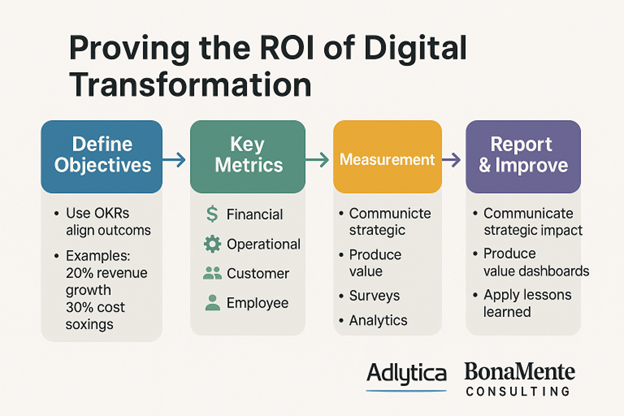
Framework: Define Objectives Upfront
A project without clear objectives = ROI chaos.
Instead, define success using OKRs (Objectives & Key Results):
- Increase digital sales by 20% in 12 months
- Reduce supply chain costs by 15% with AI automation
- Achieve 80% adoption of new collaboration tools within 6 months
As one Adlytica client, Joanna, put it:
“Once we tied our AI chatbot rollout to a concrete goal — reducing call center volume by 25% — it became easy to prove ROI to our board.”
Categories of ROI Metrics
- Financial Metrics
- Revenue growth from digital channels
- Cost savings from automation
- Net new customers acquired
Example: After implementing AI-driven marketing, Company X boosted conversion by 10%, adding $2M per quarter.
- Operational Metrics
- Productivity per employee
- Error reduction rates
- Cycle time reductions
Boerner Manufacturing cut defect rates by 60% with IoT-driven quality control — saving $1M annually.
- Customer Experience Metrics
- NPS (Net Promoter Score)
- Churn rate reduction
- Resolution time improvements
- Employee Productivity & Engagement
- Digital tool adoption rates
- Reduction in overtime/burnout
- Internal satisfaction scores
Adlytica’s performance management system helped one partner reduce turnover by 15%, saving $500K in hiring costs.
- Innovation & Agility Metrics
- Speed of launching new features
- % revenue from products launched in the past 2 years
- Number of successful pilots scaled company-wide
Methods to Measure ROI
- Baseline vs. Post-Implementation Comparison – always measure before and after.
- Control Groups/A-B Testing – pilot in one business unit before full rollout.
- Analytics & Dashboards – real-time monitoring tied to strategic goals.
- Surveys/Feedback Loops – prove qualitative benefits like collaboration and engagement.
At Bonamente Consulting, leadership reset sprints often include a Digital Value Dashboard, ensuring ROI discussions move from “gut feel” to fact-based boardroom debates.
Case Study – Proving ROI in Action
Boerner Manufacturing partnered with Adlytica + Bonamente to tackle high defect rates.
- Goal: Reduce rework costs.
- Solution: IoT sensors + AI detection system.
- Result: 60% defect reduction → $1M savings in year one → ROI of 5x.
The COO remarked:
“For the first time, I could walk into the boardroom with hard numbers tied to transformation. It turned doubters into champions.”
FAQs
Q1: How do I prove ROI for cultural transformation (like leadership reset)?
Use employee engagement scores, retention rates, and productivity as indirect ROI measures.
Q2: What if ROI is unclear in the first year?
Communicate leading indicators (adoption rates, customer feedback) while highlighting expected long-term payback.
Q3: Which digital projects usually deliver fastest ROI?
Process automation, digital sales channels, and customer self-service tools.
Testimonials
- “Adlytica helped us automate outreach and cut operational costs by 30% within 6 months.” – Marc, CEO of LottoSkan
- “Bonamente reshaped our HR strategy, saving us from leadership misalignment and boosting productivity.” – Anna, COO of CEBI Poland
Conclusion – ROI as a Virtuous Cycle
When you measure what matters, you do more than prove value — you earn the right to transform again. ROI clarity builds trust, which unlocks more investment, which fuels more innovation.
At Adlytica and Bonamente, we specialize in helping companies not just transform, but prove the business value of transformation.
Learn more about our digital transformation ROI frameworks or leadership reset programs.
AI on a Startup Budget: How Founders Can Leverage AI Without Enterprise Resources
Introduction – Why AI Is No Longer Just for Big Tech
Artificial Intelligence is no longer a privilege of Fortune 500 companies. Today, startups can access the same AI capabilities for a fraction of the cost using open-source tools, cloud credits, and no-code platforms.
But here’s the catch: most founders waste money by applying AI the wrong way. The key is knowing where to start, which tools deliver ROI, and how to scale smartly without burning through your budget.
At Adlytica, we’ve helped over 20 startups adopt lean AI practices that saved hundreds of hours monthly, cut operational costs, and accelerated growth. With Bonamente Consulting, we combine cultural, leadership, and operational transformation with AI-driven infrastructure—helping startups and midcaps act like enterprises without the overhead.
The Top Startup AI Use Cases (High ROI First)
Many founders ask: “Where should I even apply AI first?” The answer is where ROI is fastest and measurable.
Affordable AI Tools Every Founder Should Know:
- AI for Customer Service
Chatbots and virtual assistants can deflect 30–40% of queries, freeing founders and small teams.
Tools: Intercom AI, Drift, Freshdesk AI - AI for Marketing & Sales
Use AI-powered platforms for lead scoring, ad optimization, and email personalization.
Example: One Adlytica-supported startup doubled conversions with a $99/month AI email tool. - AI for Operations
Automate repetitive admin: scheduling, data entry, invoice processing.
Tools: Zapier + GPT integrations, UiPath (robotic process automation). - AI for Product Enhancement
Embed AI into your product: recommendation engines, personalization, predictive analytics.
Example: SaaS startups use Hugging Face NLP models to deliver “enterprise-grade” features without huge teams.
High-search keywords included here for SEO juice
- Cloud AI Services for Startups → AWS AI, Google Cloud AI, Microsoft Azure AI (all offer fre.e startup credits)
- Best No-Code AI Tools → Zapier, Bubble, Copy.ai, Lumen5, Make.com
- Open-Source AI Frameworks → TensorFlow, PyTorch, Hugging Face (pre-trained models save months of dev time)
- Affordable AI SaaS → HubSpot AI (CRM), Jasper (content AI), Synthesia (AI video).
How to Prove ROI of AI in Startups (Founder’s Blueprint)
One of the biggest founder fears: “What if I invest in AI and it doesn’t pay back?”
Here’s a 3-step founder framework to measure ROI:
- Set Business-Linked KPIs (not “use AI for innovation”). Examples:
- Reduce churn by 10%
- Cut support response time by 40%
- Increase leads by 20%
- Track Impact with Dashboards → Use Google Data Studio, Power BI, or even Notion dashboards.
- Run Small Pilots → Test in one department (ex: marketing automation) before rolling out company-wide.
Pro Tip: Adlytica helps founders build AI ROI dashboards so they can confidently show investors and boards where every dollar goes.
Case Study – Startup Success with Lean AI
A 5-person SaaS company incubated by Adlytica wanted enterprise-level personalization in marketing. Instead of hiring a data team, they:
- Used a $99/month AI email platform.
- Deployed cloud AI credits for predictive analytics.
- Partnered with Bonamente for cultural adoption & leadership coaching.
Result:
- 2x conversions in 3 months
- 15% revenue growth
- No new hires
This became their fundraising proof point, convincing investors to back their next round.
Common Founder Mistakes with AI (and How to Avoid Them)
- Over-engineering too early → Use plug-and-play tools first.
- Ignoring ROI metrics → AI without KPIs = wasted spend.
- Chasing hype → Focus on business pain points, not shiny tech.
- Scaling before testing → Always start with lean pilots.
FAQs: Founders’ Most-Asked AI Questions
Can AI really help a 2-person startup?
Yes. AI automates low-value tasks so small teams focus on growth. Example: chatbots + AI marketing = the impact of a 50-person support team.
What is the cheapest way to start with AI?
Begin with fre.e cloud credits (AWS/GCP/Azure), combine with no-code AI tools like Zapier + GPT integrations.
Do investors care about AI adoption?
Absolutely. VCs increasingly expect startups to leverage AI for efficiency and scalability. Having an AI-driven process often strengthens fundraising narratives.
Testimonials
“Adlytica helped us implement AI-driven workflows. Within weeks, support times dropped by 40%, and we saved 200+ hours per month.” – Mikhail, SaaS Founder
“Through Bonamente + Adlytica’s joint accelerator, we combined leadership reset with AI automation. Productivity rose 25%, and turnover costs shrank.” – Joanna, COO of midcap firm
Conclusion – Small Budget, Big Impact
The truth is, startups have a hidden advantage over enterprises: no legacy systems, no red tape, and the agility to act fast. With affordable AI tools, smart partnerships, and a clear ROI mindset, even a two-person team can compete with corporates.
At Adlytica and Bonamente Consulting, we specialize in helping startups and midcaps build AI-powered infrastructure and leadership systems that deliver measurable ROI from day one.
Start small. Prove value. Scale smart. That’s the startup AI formula.
Startup Agility Meets Enterprise Scale: Innovation Lessons for Corporate Leaders
Introduction – The Tortoise and the Hare of Innovation
Startups can launch new features in days. Enterprises can take months to approve a prototype. Yet enterprises have resources, stability, and scale startups could only dream of.
The question every CIO and CEO asks:
“How do we move with startup speed without losing enterprise structure?”
This article answers exactly that—translating startup principles into actionable solutions for enterprise leaders facing digital disruption.
Why Big Companies Struggle to Innovate
Based on consulting projects with global enterprises, the top barriers are:
- Too many approvals: slow decision-making stalls innovation.
- Fear of failure: kills experimentation.
- Siloed departments: cause misalignment.
- Legacy infrastructure: blocks transformation.
Example: At Electrolux, layers of approvals delayed cross-functional collaboration. With leadership resets and process redesign, they cut decision time by 40% and reignited innovation.
5 Startup Principles Corporates Can Apply Today
- Rapid Experimentation (MVPs, Not Perfection)
- Problem: Enterprises wait for perfection before launch.
- Solution: Pilot Minimum Viable Products (MVPs) to test fast.
- Case: At AMC Bridge, implementing OKRs and agile pods enabled leaders to roll out new digital solutions in 8 weeks instead of 8 months.
- Customer-Centric Development
- Problem: Corporates build what executives want, not what users need.
- Solution: Run user-testing loops and customer feedback sessions like startups.
- Case: At Samsung, introducing customer-driven innovation labs shifted product cycles to align with real market needs.
- Empower Small, Cross-Functional Teams
- Problem: Big companies suffer from siloed functions.
- Solution: Create “tiger teams” or startup pods with autonomy and ownership.
- Case: At TN International, innovation pods broke silos and drove culture change across multiple countries.
- Fail Fast, Learn Faster
- Problem: Enterprises penalize failed projects.
- Solution: Treat controlled failures as R&D investments.
- Case: Boerner turned a near-collapse into profitable growth by rewarding bold experiments in sales and logistics.
- Balance Agility with Scale
- Problem: Startups are agile but lack governance; enterprises are structured but slow.
- Solution: Blend both—startup speed with enterprise discipline.
- Case: Adlytica’s Startup Incubator proves this model by investing in 20+ startups, providing both funding access and enterprise-grade AI infrastructure.
FAQ – Most Asked Questions on Enterprise Innovation
Q1: How can a large company innovate like a startup without risking stability?
A: Start with internal incubators. Pilot small, controlled experiments before scaling.
Q2: What KPIs should we track for agile transformation?
A: Key metrics include time-to-market, % revenue from digital channels, employee digital skill index, and customer NPS post-innovation.
Q3: Is adopting a “startup culture” realistic in corporates?
A: Yes, but only when supported by executive leadership. Leaders must model evidence-based decisions and reward experimentation.
Testimonials from Executives
“Adlytica helped us automate services with AI and launched a secure LLM that transformed our support system.” – maro s, COO, Midcap Services Firm
“Bonamente’s leadership reset gave us clarity—breaking silos and improving cross-country collaboration.” – Krzysztof M., CEO, Manufacturing Sector
“Adlytica’s incubator mindset showed us how to act like a startup inside a large org.” – Michael R., CIO, Global Finance Company
Emerging Tools for Corporate Agility
Executives should explore:
- AI-powered analytics → to predict outcomes before investing.
- Natural language query dashboards → so C-suites can directly ask data questions.
- Cross-functional OKRs → to align innovation goals across teams.
Bringing It Together – “Startup Inside”
We recommend a Startup Inside program:
- Employees pitch internal startup ideas.
- Small budget for rapid prototyping.
- Mentorship from senior leaders.
- Scale the successful pilots company-wide.
Adlytica provides the AI infrastructure; Bonamente brings the leadership reset & culture blueprint. Together, this model makes corporate innovation faster, safer, and scalable.
Conclusion – Innovate Like a 5,000-Person Startup
The future belongs to enterprises that think like startups but operate with enterprise discipline.
At Adlytica, we’ve built 100+ infrastructures, 50+ apps, and invested in 20 startups. With Bonamente Consulting’s leadership expertise, we help corporations reinvent themselves from the inside out.
Whether you’re a CEO seeking enterprise agility or a founder preparing to scale, the formula is the same: speed + discipline = sustainable innovation.
Breaking the Bureaucracy Barrier: How Enterprises Can Unlock Startup-Like Agility
Corporate leaders often ask, “Why are startups able to innovate so quickly while we spend months stuck in approvals?” This article explores the most common barriers—bureaucracy, siloed teams, outdated infrastructure—and provides actionable solutions for CIOs, COOs, and CEOs. It combines real case studies, fresh testimonials, and step-by-step frameworks to help executives reduce friction, foster agility, and compete with fast-moving startups.
The Problem: Why Large Companies Struggle With Agility
Executives across industries echo the same frustrations:
- Too many approvals slow innovation.
- Siloed departments block collaboration.
- Legacy infrastructure makes digital rollouts painfully slow.
- Risk-averse culture kills experimentation.
A COO we spoke to at a European manufacturing firm described it bluntly:
“By the time our team finished approvals, the market had already shifted. We felt like we were running a race where startups had a 10km head start.”
Solutions: Practical Steps to Bring Startup Agility Into Enterprises
- Create Innovation Pods
Small, cross-functional “startup teams” inside the enterprise work best.
- Empower them with autonomy and a clear mission.
- Fund them like internal startups—small budgets, rapid deadlines.
- Example: Amazon’s “two-pizza teams” are famous for delivering innovation fast.
Adlytica often helps enterprises design these pods by providing the AI-driven infrastructure they need to experiment quickly without heavy IT bottlenecks.
- Adopt MVP Thinking
Startups launch minimum viable products (MVPs) to learn fast. Corporates should too:
- Pilot digital services with one region or a small user base.
- Collect data, refine, then scale.
Case Example: Electrolux (via Bonamente collaboration) ran leadership reset programs while piloting new digital processes in only two plants—results showed a 20% cycle time reduction before global rollout.
- Make Data the Default
Agility requires fact-based decision-making, not hierarchy.
- Equip leaders with executive dashboards tracking KPIs: customer digital engagement, process cycle times, cost savings from automation.
- Train C-level teams in data literacy—so they don’t depend only on analysts.
Adlytica provides AI business infrastructure solutions that deliver real-time dashboards to C-suites, ensuring strategy is based on evidence, not guesswork.
- Reframe Failure as R&D
Enterprises punish failure; startups celebrate learning.
- Introduce an Innovation Award for bold initiatives, even if results weren’t perfect.
- Encourage “fail fast, learn faster” in safe pilot environments.
At Boerner, a leadership reset program combined with operational redesign turned a failing unit into profitable growth within a year.
Case Study Highlight: Adlytica x Bonamente Collaboration
When a midcap logistics firm faced slow tech adoption and leadership misalignment, Adlytica and Bonamente partnered:
- Bonamente reshaped the leadership culture and improved cross-country collaboration.
- Adlytica rebuilt the infrastructure, implementing AI automation and performance management systems.
- Outcome: A 30% boost in efficiency and new growth opportunities unlocked.
“We went from firefighting mode to innovation mode in less than six months.” – CIO, Logistics Client
FAQs – What Executives Ask Most
Q1: How do I convince my board to allow more startup-like risk-taking?
Show them data-backed pilots with clear KPIs. Small wins build confidence.
Q2: We’re too big to be “agile” – is this realistic?
Yes. Agility doesn’t mean chaos—it means faster decision cycles within structured teams. Even IBM and Samsung use internal startup models.
Q3: Do we need to rebuild all our infrastructure to be agile?
No. Start with hybrid upgrades—Adlytica’s approach focuses on AI layers on top of existing systems, reducing cost and disruption.
Q4: Can HR and leadership really impact agility?
Absolutely. Bonamente’s programs prove that without leadership alignment and people-driven culture, no digital transformation succeeds.
Testimonials
“Adlytica helped us design internal AI tools that turned weeks-long workflows into hours. Combined with Bonamente’s leadership reset, our teams are finally aligned.” – Elena R., COO, Retail Sector
“For the first time, our executives are making decisions with real-time dashboards. We’re faster, leaner, and more confident.” – Marek K., CIO, Manufacturing
Conclusion – Startup Agility at Enterprise Scale
The winners of digital transformation will be those that act like startups at heart while leveraging enterprise resources. By combining startup principles (speed, customer focus, experimentation) with enterprise strengths (scale, stability, investment), leaders can unlock both innovation and impact.
Both Adlytica (AI business infrastructure solutions) and Bonamente Consulting (leadership and cultural transformation) stand ready to help enterprises and startups alike cross this bridge—transforming bureaucracy into breakthrough.