
From Dunk City to the G League: Dakota Rivers Pursues NBA Dream
FGCU alumnus aims for the NBA while inspiring the next generation of athletes
FREMONT, CA – September 2025 – Florida Gulf Coast University standout Dakota Rivers has taken the next step in his basketball career, joining the NBA G League with the Texas Legends, affiliate of the Dallas Mavericks. Known for his defensive presence and highlight dunks, Rivers is now focused on proving himself at the professional level while keeping his sights set on the NBA.
Rivers’ love for basketball began at the YMCA in Windermere, Florida, though his start was far from smooth. “I was really bad at basketball,” Rivers admitted. His dedication carried him to high school success, averaging 16.5 points, 8.9 rebounds, and 3.1 blocks per game in his senior year. By then, 20 schools had offered him scholarships, but FGCU felt like home. “The coaching staff was very high on me… it was a very easy decision,” Rivers said.
During his time at FGCU (2019–2024), Rivers became one of the program’s most impactful players, ranking 34th nationally in blocks his sophomore year and earning a historic spot in the 2024 State Farm Slam Dunk Contest, and the first FGCU men’s basketball player to receive an invitation.
The transition to professional basketball tested Rivers’ resolve. After going undrafted, he impressed scouts in a Las Vegas showcase, which led to an opportunity with the Texas Legends. “I got invited to training camp, and then I actually fell a little bit short in training camp, so I got waived and brought back three days later,” Rivers explained. His persistence earned him a roster spot, where he continues to refine his game. “When I first got onto the team, I realized I needed to be a little bit more versatile… working on those things in practice and applying them into the games was gonna be very important for me moving forward.”
Rivers has no doubts about his long-term goal. “I want to be in the league. I want to be the NBA,” he said. “I want to be able to take care of my mom, my dad, my brother and the people who supported me along the way.”

Rivers’ journey also reflects the changing role of athletes in today’s sports culture. Beyond the box score, he has embraced building a digital presence, using platforms like YouTube and Instagram to share his workouts, daily routines, and experiences as a professional player. This openness has allowed him to connect with fans in new ways while showing the grind behind the highlight plays.
As he develops in the G League, Rivers is focused not only on his own growth but also on leaving a legacy for FGCU basketball. By continuing to represent “Dunk City” on the professional stage, he carries the program’s reputation forward, aiming to become one of the few Eagles to break through to the NBA and pave the way for future generations.
With his defensive instincts, work ethic, and growing presence on and off the court, Dakota Rivers is a name to watch as he continues his rise through professional basketball.
About Dakota Rivers
Dakota Rivers is a professional basketball player currently competing in the NBA G League with the Texas Legends. A 2019–2024 alumnus of Florida Gulf Coast University, he earned recognition for his defensive dominance and participation in the 2024 State Farm Slam Dunk Contest. Rivers is focused on achieving his goal of reaching the NBA while using his platform to inspire future athletes.
Media Contact
Stacked PR
info@stackedpress.com
stackedpress.com
How High-Quality Patches Elevate Your Brand Identity
Branding today is no longer limited to digital ads or flashy billboards. The most memorable identities often come from physical details, those subtle touches that leave an impression every time someone notices them. Patches are one of those timeless details. They are versatile, customizable, and carry a sense of authenticity that people remember.
At Panda Patches, we have seen how businesses, sports teams, schools, and even small startups use patches to create lasting recognition. Whether it is apparel, accessories, or merchandise, patches provide the perfect balance of function and style.
The Power of Personalized Patches
Patches give brands the flexibility to be expressive while staying professional. They can be bold and eye-catching on jackets or hats, or subtle and elegant on work uniforms. Because they are durable and customizable, patches provide a long-term branding solution compared to disposable stickers or prints.
When designed with care, they also become conversation starters. Someone noticing your patch on a bag or shirt may ask about your team, organization, or business. That single detail can build connections and create brand awareness in unexpected ways.
Why Choose Custom PVC and Sublimated Patches
Not all patches are created equal. Different materials and production techniques serve different purposes, and that is where choosing the right style matters.
For clients who want durability, flexibility, and bold designs, Custom PVC Patches are a top choice. Made from soft rubber-like material, these patches withstand water, sun, and rough conditions, making them perfect for outdoor brands, tactical gear, and activewear. They hold their color and shape even in demanding environments, ensuring your logo or design looks sharp for years.
On the other hand, Custom Sublimated Patches are ideal when your design involves gradients, photographs, or detailed patterns. Sublimation allows for unlimited color options and intricate artwork that embroidery or other methods cannot capture. These patches are sleek, lightweight, and great for promotional items or apparel where precision and clarity matter most.
By offering both PVC and sublimated options, Panda Patches ensures every client can choose the right fit for their brand’s personality and goals.
Benefits of Working with Panda Patches
When you choose Panda Patches, you are not just ordering a product. You are partnering with a team that understands design, branding, and craftsmanship. We believe every patch should tell a story, and we work closely with you to make sure your story is represented exactly as you imagine.
Here is what sets us apart:
Customization at every level: From shapes and sizes to backings like iron-on, Velcro, or sew-on, you get complete control.
Premium materials: Our patches are built to last through repeated wear and washing.
Design support: Our team helps refine your artwork for the best possible patch results.
Scalability: Whether you need a small batch for a local event or bulk production for nationwide distribution, we have you covered.
Fast turnaround: We know timelines matter, and we deliver without compromising on quality.
How Businesses and Teams Use Patches
The versatility of Custom PVC Patches and Custom Sublimated Patches makes them useful in many industries:
Corporate uniforms gain professionalism with branded patches.
Sports teams proudly display mascots or numbers on jerseys.
Fashion brands create signature items that carry their identity.
Schools and clubs use patches for recognition and pride.
Events and promotions become more memorable with giveaways that last.
Every patch serves as a physical reminder of your brand, creating visibility wherever it goes.
Branding That Lasts
Unlike many marketing efforts that fade quickly, patches remain. A well-made patch can last years on a jacket, backpack, or uniform. Every time someone sees it, your brand continues to speak without a word. That is the kind of quiet but powerful marketing that builds recognition over time.
At Panda Patches, we have helped countless clients turn simple logos into standout patches. Our commitment to quality and attention to detail means you get more than just a decoration. You get a branding tool that works for you day after day.
Final Thoughts
Whether you are looking for the toughness of Custom PVC Patches or the vibrant detail of Custom Sublimated Patches, Panda Patches is here to bring your ideas to life. Our team combines expertise with creativity to ensure you receive patches that make a statement and leave a lasting impression.
And just like building a brand takes expertise, so does building an online presence. That is why many businesses trust professionals like an SEO Expert in Pakistan to amplify their visibility and reach. Combining strong offline branding through patches with smart digital strategies ensures your identity shines everywhere.
If you are ready to upgrade your branding with patches that last, Panda Patches is here to help. Reach out today and let us create something extraordinary together.

Top Tokenized Real Estate Platforms in 2025: Which Ones Lead the Transformation
Introduction
Tokenized real estate is having a moment for a reason. The world’s property market—land, homes, offices, logistics, retail—remains the largest asset class on earth, worth roughly $379.7 trillion by 2024 estimates, yet it’s notoriously illiquid and operationally clunky. Tokens—programmable digital representations of ownership or cash-flow rights—promise something different: smaller tickets, faster settlement, transparent cap tables, and the chance to match global capital to properties that were previously locked behind geographic and regulatory walls. Boston Consulting Group projected tokenization of illiquid assets could reach $16 trillion by 2030, a number that—whether you see it as optimistic or conservative—captures how big the movement could become if legal rails and investor demand align.
The excitement isn’t just theoretical. A growing crop of tokenized real estate platforms now handle onboarding, KYC/AML, property due diligence, smart-contract issuance, compliance, income distribution, and (in some cases) secondary trading. If you want a curated, continually updated overview of leading players, it’s worth scanning The Best Tokenized Real Estate Platforms early as you research—then digging deeper into the mechanics behind each one.
What Is Tokenized Real Estate and Why It Matters Now
Tokenized real estate turns property rights—like equity, revenue streams, or both—into blockchain-based tokens that are controlled by smart contracts. Investors don’t buy whole buildings. Instead, they buy fractional units that settle quickly, are recorded on a public log, and usually have payouts that can be set up ahead of time. Different places have different definitions, but the idea is clear: fractional ownership with rules that can be programmed for management, payments, and exchanges. This idea isn’t completely new—the first tests began many years ago—but 2025 will bring better legal frameworks, stronger control, and a more practical way to protect investors. Tokenization is like putting a wrapper around real-world assets. It can make things easier and more available, but it doesn’t take the place of property underwriting, which is hard work.
Clearer rules, better tools for businesses, and a rising demand for fractional real estate exposure among both retail and institutional investors who want cash flows instead of just price speculation are some of the things that will speed up adoption in 2025. Even major news reports, from consultants to industry groups, now talk about tokenized real estate as a genuine way to modernize how ownership and revenue rights are formed, moved, and paid for.
Deep Profiles Of The Top 5 Platforms
Below is a field guide to five names that consistently surface in 2025 conversations: RealT, Lofty, HoneyBricks, Binaryx, and Estate Protocol. Each takes a different angle on geography, asset type, legal structuring, and liquidity. Use this as a map—not as investment advice—and verify details that matter for your own jurisdiction and risk profile.
RealT
Positioning and model. RealT popularized tokenized U.S. residential rentals for global investors. Its pitch is simple: vetted single-family and small multifamily properties are offered as fractional tokens, with rental income distributed to token holders and property management handled by local teams. RealT stands out for operational simplicity and frequent payouts. Some reviews note investors appreciate the “hands-off” rental approach, while also calling for continual transparency improvements typical for fast-moving platforms.
Tech and compliance. RealT has used Ethereum-compatible rails and stablecoin rails for distributions. Compliance includes KYC/AML and jurisdictional gating to navigate U.S. securities rules. Expect property-by-property SPVs and standardized offering docs so tokens map clearly to underlying legal rights. (Always read the PPM.)
Investor experience. Minimums vary by property offering and availability; distributions are typically frequent, and liquidity depends on secondary market arrangements or issuer-facilitated transfers.
Lofty
Positioning and model. Lofty is a B2C platform for U.S. rental homes with a very low entry ticket—about $50 per token—and daily rental income. Lofty is notable for its Algorand tech stack and a DAO-LLC structure that gives tokenholders governance voice over certain property decisions. That daily cadence of distributions is one of Lofty’s signature features for yield-oriented investors who like short feedback loops.
Tech and compliance. Algorand enables low-fee micro-payouts; Lofty wraps tokens with legal entities (e.g., series LLCs) so on-chain rights align with off-chain enforceability. Standard KYC/AML applies.
Investor experience. $50 to get started lowers barriers. Secondary liquidity depends on platform facilities and transfer frameworks; read each offering’s terms for lockups and fees.
HoneyBricks
Positioning and model. HoneyBricks focuses on commercial real estate opportunities and issues security tokens on Ethereum. The platform emphasizes institutional-grade offerings, investor accreditation in some cases, and tooling around borrowing against tokens. Think of it as a gateway to higher-quality CRE deal flow packaged for on-chain life cycles.
Tech and compliance. Ethereum smart contracts, investor KYC/AML, and security-token frameworks. Cash flows and appreciation are reflected in token economics; secondary trading and collateralization features vary by deal.
Investor experience. Minimums can be higher than pure retail platforms; onboarding and reporting aim to meet expectations of seasoned investors comfortable with private placements.
Binaryx
Positioning and model. Binaryx pitches accessible fractional property investments with minimums from about $500 and emphasizes curated properties—including examples such as vacation and luxury assets—to earn rental yields. Marketing materials discuss hands-off ownership where the operator handles management and distributions.
Tech and compliance. Binaryx provides tokenization infrastructure, investor verification, and asset onboarding processes. As with peers, you’ll find a mix of SPV structures, income-sharing terms, and platform policies around transfers.
Investor experience. Minimums around $500 make it approachable yet meaningful; always examine fee schedules, maintenance reserves, and exit paths per property.
Estate Protocol
Positioning and model. Estate Protocol is an emerging marketplace building on Arbitrum (an Ethereum layer-2) to fractionalize global properties, with notable focus on markets like Dubai via partnerships. Messaging highlights low-cost, fast settlement, and ambitions to integrate RWAs with DeFi rails for better collateralization and more flexible liquidity options. Some materials mention entry tickets around $50; confirm this per offering.
Tech and compliance. Layer-2 benefits (speed and cost) while inheriting Ethereum security. Compliance and fiat on-ramps can involve local partners; offerings may be AED-denominated in certain regions with conversions handled under the hood.
Investor experience. Early-stage feel with fast-iterating features; check whitepaper and offering docs to understand income distribution cadence, transferability, and investor eligibility.
Comparative Analysis And Key Differentiators
Here’s a short look at the features that most investors want to know about first. These aren’t all of them, and the details change depending on the deal, so always read the docs. But they give you a tool to compare platforms.
Snapshot Comparison
| Attribute | RealT | Lofty | HoneyBricks | Binaryx | Estate Protocol |
| Primary focus | U.S. residential rentals | U.S. single-family rentals | Commercial real estate | Curated/global properties incl. luxury | Global markets such as Dubai, luxury and growth hubs |
| Typical minimum | Varies by property | ≈$50 per token | Often higher; varies by deal | ≈$500 | ≈$50 (deal-specific) |
| Chain / stack | Ethereum-compatible; stablecoins for payouts | Algorand; micro-payouts | Ethereum security tokens | Platform blockchain infrastructure | Arbitrum (L2 on Ethereum) |
| Distributions | Frequent rental income distributions | Daily rental income on many properties | Income distributions per deal terms | Rental yields; schedule varies | Schedule varies by asset |
| Liquidity | Platform-facilitated transfers/secondary options | Platform transfers; deal-specific | Security-token frameworks; potential secondary access | Marketplace and platform features | DeFi integrations and transferability roadmap |
| Compliance | KYC/AML; SPV mapping | KYC/AML; DAO-LLC structuring | KYC/AML; securities compliance | KYC/AML; asset onboarding | KYC/AML; local partners, L2 rails |
Where They Differ Most
- Entry ticket: Lofty and Estate Protocol push minimums toward $50; Binaryx sits around $500; HoneyBricks can skew higher depending on deal type; RealT varies by property.
- Tech rails: Lofty is distinct on Algorand; HoneyBricks is Ethereum; Estate Protocol builds on Arbitrum for L2 efficiencies; RealT has long embraced Ethereum-compatible flows; Binaryx abstracts chain details for mainstream users.
- Distribution cadence: Lofty markets daily payouts; RealT emphasizes frequent income; others vary by property and jurisdiction.
Benefits Versus Risks
Tokenized real estate isn’t magic; it’s a different set of trade-offs.
Benefits.
Lower minimums expand access; fractional ownership enables diversified baskets across geographies and property types; programmable payouts reduce operational overhead; on-chain transparency can improve reporting and traceability; and potential secondary markets may offer liquidity in days—not months. Institutional desks see a path to bespoke exposures (e.g., green buildings, airport-adjacent logistics) assembled token by token.
Risks.
Regulatory posture remains evolving; always confirm whether tokens are securities and what that entails. Platform risk matters—issuer solvency, custody, and governance. Valuation of token-backed real estate can be opaque if appraisals are stale. Liquidity is not guaranteed; secondary trading can be thin or subject to transfer restrictions. Technology adds vectors—smart-contract bugs, wallet security, key management. Tax treatment varies and can be nontrivial across borders. Reputable legal primers and whitepapers emphasize aligning on-chain rights with off-chain enforceability before you invest.

Real-World Examples And Investor Experience
- Lofty investors frequently cite the convenience of daily stablecoin income and sub-$100 entry tickets—useful for dollar-cost averaging into multiple rentals. Governance via DAO-LLC adds a layer of engagement for decisions like maintenance or tenant changes.
- RealT users highlight the “set-and-forget” style of managed rentals with automated distributions; third-party reviews note simplicity but also request deeper transparency and fee clarity over time—typical feedback as platforms scale.
- HoneyBricks appeals to investors who want Ethereum-native security tokens tied to commercial real estate, with features like using tokens as collateral on supported venues—more advanced but also more compliance-heavy.
- Binaryx marketing spotlights exotic properties (e.g., Bali penthouses) with $500 minimums and marketplace-style UX, targeting global retail users who want curated, higher-yield options.
- Estate Protocol emphasizes Arbitrum settlement and Dubai-centric collaborations, aiming to merge RWA with DeFi liquidity—interesting for investors who want L2 cost structures plus potential integrations with on-chain money markets.
How To Choose A Platform
For investors, shortlist platforms by:
- The law says: What does your token really mean? Is it a stake in an SPV, a membership in a series LLC, or a right to share in the profits? How do courts make sure that investors’ interests are upheld?
- KYC/AML, jurisdictional eligibility, and accreditation standards are all things that need to be followed.
- Minimums and fees: the cost of an entry ticket, property management fees, performance fees, withdrawal/transfer fees, and gas charges if on-chain.
- Distributions and custody: how often you get paid (daily, weekly, or monthly), whether you can use stablecoins, how your keys are stored, and whether you control them.
- Secondary liquidity: Is there a bulletin board on the site, an external ATS, or windows for redeeming?
- Transparency: Property files, rent rolls, cap-ex schedules, appraisal frequency, and audit trails.
For developers and property owners considering tokenization:
- Issuer tooling: How easy is token issuance, cap-table management, and investor communications?
- Compliance stack: Does the platform provide templates for PPMs, KYC/AML flows, transfer restrictions, and Reg S/Reg D-style pathways where applicable?
- Property management: Who handles tenanting, maintenance, and reporting? How are reserves managed?
- Distribution rails: Stablecoin support and payout automation.
- Interoperability: Token standards, L1/L2 choices, and roadmap for integrations with DeFi or ATS venues for liquidity.
Future Outlook
Four themes will be important from 2026 to 2030:
- Liquidity gets more real. More regulated secondary venues and ATS partnerships should improve depth and price discovery. Layer-2 rails and cross-chain bridges will reduce fees and speed transfers, making recurring distributions cheap and frequent.
- Institutional overlays. Pension funds and insurers will test tokenized sleeves for specific mandates—ESG-aligned buildings, niche logistics, workforce housing—especially as reporting and auditability improve. Regulatory sandboxes and precedents will guide what “good” looks like.
- Better standards and wrappers. Expect progress on token standards, identity, and compliant transfer mechanics (e.g., whitelisting, transfer-restriction NFTs) so legal rights and on-chain states stay in sync.
- Hybrid capital stacks. Issuers will bundle equity, debt, and revenue-share layers on the same platform so investors can pick instruments and payoffs that fit their thesis, a trend already highlighted by major consultancies.
Meanwhile, macro backdrops—like funds rotating into Japan, or developers in China exploring RWAs for liquidity—show how tokenization could intersect with traditional cycles rather than exist apart from them. As liquidity challenges ebb and flow, programmable ownership becomes a new lever for capital formation.
Conclusion
Tokenized real estate is not a shortcut around fundamental underwriting, but it is a powerful packaging technology for property exposure. In 2025, the leaders to watch—RealT, Lofty, HoneyBricks, Binaryx, and Estate Protocol—cover a useful spread of geographies, minimums, and technology stacks. Your job is to match platform mechanics to your strategy: income cadence, risk tolerance, legal comfort, and liquidity needs. If you want a curated overview with specific platform snapshots and entry points, browse the roundup Top 5 Tokenized Real Estate Platforms, and keep learning via the Tokenizer Estate Blog as regulations, rails, and listings evolve.
Disclaimer:
This content is provided for informational and educational purposes only. It does not constitute financial, investment, legal, or tax advice, nor is it an endorsement or solicitation to buy, sell, or trade any assets, securities, or services. All investments, including tokenized real estate and digital assets, involve risk and may result in loss of capital. Readers should conduct their own due diligence and seek advice from licensed financial and legal professionals before making any financial decisions

Analysts Say Ruvi AI (RUVI) Just Surpassed Avalanche’s (AVAX) Early Demand, Making Its Forecast Closer Than Ever
In the world of crypto investing, identifying a project that can replicate the early success of giants like Avalanche (AVAX) is the ultimate goal. Today, market analysts are buzzing about a new AI contender, Ruvi AI (RUVI), which they say has not just matched but surpassed the early demand seen by AVAX. This record-breaking momentum is strengthening expert forecasts of a 100x return, suggesting it could happen much sooner than anticipated.
This bullish analysis is backed by a presale that is performing with historic force. Ruvi AI has officially surged past the $4 million fundraising milestone, with over 285 million tokens now in the hands of a rapidly growing global community of more than 3,900 holders. This incredible velocity, a pace that took established projects much longer to achieve, signals that Ruvi AI possesses the rare combination of hype and substance needed for an exponential rally.
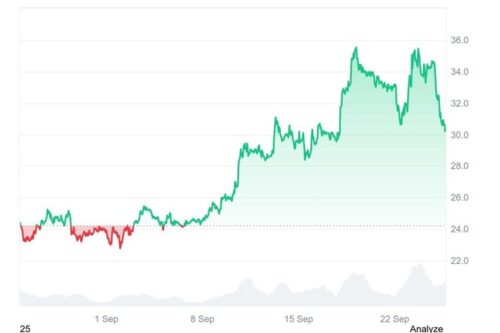
Why Surpassing AVAX’s Early Demand Matters
The comparison to Avalanche’s early days is a powerful one. It indicates that Ruvi AI is capturing investor imagination and capital at a rate reserved for projects that go on to become industry pillars. Analysts praise this record-breaking growth, highlighting that the speed at which tokens are selling is unprecedented for a project at this stage.
Unlike purely speculative assets, Ruvi AI’s value is firmly anchored in its mission to revolutionize the massive $104 billion creator economy. This clear utility is a key reason it’s attracting serious capital. The project’s credibility is further enhanced by a successful smart contract audit from CyberScope, which verifies its security, and a prominent listing on CoinMarketCap, establishing it as a top-tier AI project ready for the mainstream.
The Super App Fueling the Record-Breaking Demand
The engine driving Ruvi AI’s historic demand is its game-changing super app. This all-in-one platform is engineered to become an essential tool for content creators, which will drive sustainable, long-term demand for the RUVI token. Its integrated features include:
- Advanced Trend Research: Identifies viral topics before they become saturated, giving creators a crucial competitive advantage.
- AI-Powered Script Generation: Creates engaging, platform-optimized scripts for platforms like YouTube and TikTok in seconds.
- Native Media Creation: Generates professional-quality images and videos directly within the app, streamlining the creative process.
- Streamlined Workflows: Centralizes the entire creative workflow for maximum efficiency.
The Clock is Ticking: A Guaranteed 40% Price Jump Is Locked In
The presale is currently in Phase 3, with the RUVI token priced at an incredibly low $0.020. However, this opportunity is disappearing at an astonishing rate. In a powerful demonstration of its in-demand status, 20% of the Phase 3 token allocation was sold in just a few days.
According to the project’s official tokenomics, the start of Phase 4 will trigger an automatic and guaranteed 40% price increase to $0.028. This imminent price jump is creating intense FOMO as investors rush to secure a guaranteed paper gain.
The project’s VIP program is structured to maximize returns on the path to a 100x valuation:
- VIP 5 ($10,000 investment): Unlock 1,000,000 tokens with a 100% bonus (500,000 additional tokens). At a $1 valuation, this reaches $1,000,000, achieving a 9,900% ROI.
- VIP 3 ($2,000 investment): Secure 160,000 tokens with a 60% bonus (60,000 additional tokens). At a $1 valuation, this totals $160,000, delivering a 7,900% ROI.
- VIP 2 ($1,000 investment): Receive 70,000 tokens with a 40% bonus (20,000 additional tokens). At a $1 valuation, this equals $70,000, resulting in a 6,900% ROI.
A strategic partnership with the major exchange WEEX ensures future liquidity, while a competitive leaderboard giveaway rewards top supporters, further strengthening the project’s vibrant community.

A Once-in-a-Cycle Opportunity
The data is clear. With a presale demand that outpaces even the early days of titans like Avalanche, Ruvi AI has proven it has the momentum and fundamentals for a historic run. For investors looking for a genuine 100x opportunity, the time to act is now.
Learn More
Buy RUVI: https://presale.ruvi.io
Website: https://ruvi.io
Whitepaper: https://docs.ruvi.io
Telegram: https://t.me/ruviofficial
Try RUVI AI: https://web.ruvi.io/register
Disclaimer:
This press release is for informational purposes only. Information verification has been done to the best of our ability. Still, due to the speculative nature of the blockchain (cryptocurrency, NFT, mining, etc.) sector as a whole, complete accuracy cannot always be guaranteed.
You are advised to conduct your own research and exercise caution. Investments in these fields are inherently risky and should be approached with due diligence.

5 Meme Coins Building Momentum While the Best Upcoming Crypto in 2025 Gets Ready to Launch Presale
What if choosing the right meme coin today could mean the difference between a modest portfolio and extraordinary wealth in the best upcoming crypto in 2025? The crypto market has shown time and again that meme coins, powered by online communities and viral culture, can leap from obscurity to global recognition almost overnight. Investors who identify these opportunities early often gain access to life-changing returns, while latecomers are left watching from the sidelines. The key question is not whether meme coins will surge again, but which tokens are positioned to lead the charge.
Among the most talked-about tokens right now are MoonBull ($MOBU), Fartcoin ($FARTCOIN), Brett ($BRETT), ApeCoin ($APE), and Osaka Protocol ($OSAK). Each represents a different approach to the meme coin narrative, blending humor, cultural relevance, or technical features to stand out in a crowded market. For those seeking the best upcoming crypto in 2025, these names demand serious attention.
1. MoonBull ($MOBU)
The most electrifying opportunity in meme coin presales today belongs to MoonBull ($MOBU). Built on Ethereum, MoonBull is designed specifically for meme coin enthusiasts and degenerate traders chasing explosive upside. Its developers have fused meme culture with robust smart contract reliability, offering investors more than hype. At its core, MoonBull promises elite staking rewards, secret token drops, and early bonus allocations that are available exclusively to whitelist members.

The MoonBull live presale high ROI narrative is gaining traction fast. Stage One of the presale is open to everyone, but whitelisted members enjoy distinct advantages: they receive the launch date in advance, early entry at the lowest possible price, and access to insider hints about roadmap reveals. With limited whitelist slots available, this is a classic first-come, first-served chance that will vanish quickly once capacity is reached.
How to Secure Your MoonBull Whitelist Spot and Unlock Exclusive Early Benefits
To secure a whitelist position and lock in early entry benefits, follow these steps:
- Visit the official whitelist registration page.
- Submit a valid email using the secure whitelist form.
- Await private notification with the exact launch date and time of Stage One.
- Prepare funds in advance to ensure immediate participation.
- Act quickly, as slots will fill within seconds once announced.
Whitelist members gain far more than early entry. They unlock private hints about future staking pools, exclusive allocations, and roadmap updates that remain hidden from the public until launch. This strategy rewards the earliest supporters while creating anticipation for what lies ahead.
2. Fartcoin ($FARTCOIN)
Fartcoin represents the humorous edge of meme coin investing. While its branding may seem unconventional, the project thrives on virality. Built as a community-driven initiative, Fartcoin leverages humor to cut through the noise of thousands of tokens. Its developers understand that memes function as powerful marketing tools, enabling a token to trend on social platforms quickly.
Looking toward 2025, Fartcoin could benefit from its adaptability. While many meme projects fade, Fartcoin has shown resilience by sustaining engagement and expanding partnerships. With speculation building around potential listings on larger exchanges, momentum is building.
Why did this coin make it to this list? Fartcoin has carved out a unique identity by combining humor with active community governance, making it a contender among meme coins with 100x potential in the upcoming cycle.
3. Brett ($BRETT)
Brett is quickly gaining traction as one of the most intriguing meme coins of 2025. Unlike many projects that rely solely on viral humor, Brett blends its meme culture with structured community engagement and steady technical progress. Its branding taps into niche internet culture, attracting a strong and loyal following.
In addition, Brett’s developers have introduced staking incentives and deflationary mechanics that enhance its appeal to long-term holders. The balance of entertainment and financial incentives positions Brett as more than just a passing trend.
Why did this coin make it to this list? Brett stands out because of its loyal community, creative branding, and technical tokenomics. This blend of meme power and structural design makes it a strong candidate for investors watching the best upcoming crypto in 2025.
4. ApeCoin ($APE)
ApeCoin continues to command attention as one of the most established meme-related cryptocurrencies. Born from the success of the Bored Ape Yacht Club (BAYC) NFT ecosystem, ApeCoin combines cultural status with robust market presence. Unlike newer tokens, ApeCoin already enjoys listings on top exchanges, significant liquidity, and real-world brand recognition.
What sets ApeCoin apart is its ecosystem integration. Holders benefit from governance participation, access to exclusive NFT drops, and involvement in broader metaverse projects. These utilities give ApeCoin staying power beyond the typical hype cycle.
Why did this coin make it to this list? ApeCoin earns its place because of its strong foundation, NFT ecosystem ties, and established credibility, making it a reliable option among meme coins with growth potential.
5. Osaka Protocol ($OSAK)
Osaka Protocol has quickly risen to the forefront of 2025 meme coin discussions, riding the perfect mix of mystery, cultural resonance, and presale buzz. Unlike many tokens that depend solely on memes, $OSAK is aiming to become a community-powered movement with a broader ecosystem vision.
Why did the Osaka Protocol make it to this list? Because it reflects what investors crave in meme coins: global appeal, community-driven hype, and presale exclusivity. With speculative chatter already comparing its growth potential to early Shiba Inu or Dogecoin, Osaka Protocol could be the dark horse that surprises everyone in 2025.

Conclusion
Based on the latest research, the best upcoming crypto in 2025 includes MoonBull, while Fartcoin, Brett, Apecoin, and Osaka Protocol make the top 5 list. Each brings a unique advantage, from MoonBull’s presale exclusivity to Apecoin’s established ecosystem. Together, they showcase how meme coins can evolve from jokes into serious opportunities for investors willing to act early.
Presales remain one of the most compelling ways to multiply wealth in crypto, and MoonBull exemplifies this by offering exclusive whitelist benefits and early entry rewards. For those seeking to stay ahead of the next meme coin surge, securing positions in projects like these could prove transformative.

For More Information:
Website: https://www.moonbull.io/
Telegram: https://t.me/MoonBullCoin
Twitter: https://x.com/MoonBullX
Frequently Asked Questions About the Best Upcoming Crypto in 2025
What is the best crypto presale to invest in 2025?
MoonBull’s whitelist-driven presale is currently one of the most anticipated, offering exclusive benefits such as early entry, staking rewards, and secret drops.
Which meme coin will explode in 2025?
Analysts suggest that MoonBull, Brett, and Osaka Protocol have the potential for significant growth due to their community engagement and presale strategies.
Do meme coins have a future?
Yes. While some are short-lived, tokens with strong communities, utility integration, and effective marketing continue to thrive and attract mainstream attention.
Which meme coin has the highest potential?
MoonBull is viewed as having one of the highest growth potentials due to its Ethereum foundation, exclusive whitelist strategy, and presale design.
How to pick a good meme coin?
Look for coins with transparent tokenomics, strong communities, clear presale benefits, and marketing momentum. Early entry often provides the greatest upside.
Glossary of Key Terms
- Presale: An early investment phase before public launch.
- Whitelist: A pre-approved list granting exclusive access to early entry opportunities.
- Token Allocation: The distribution of tokens among investors, developers, and reserves.
- Meme Coin: A cryptocurrency inspired by internet memes, often community-driven.
- ROI (Return on Investment): A measure of profitability from an investment.
- Staking Rewards: Earnings provided to holders who lock tokens to support a blockchain.
- DeFi (Decentralized Finance): Financial services built on blockchain technology without intermediaries.
Disclaimer:
This press release is for informational purposes only. Information verification has been done to the best of our ability. Still, due to the speculative nature of the blockchain (cryptocurrency, NFT, mining, etc.) sector as a whole, complete accuracy cannot always be guaranteed.
You are advised to conduct your own research and exercise caution. Investments in these fields are inherently risky and should be approached with due diligence.

Experts Say Ruvi AI (RUVI) Might Mint the Next Wave of Millionaires, Institutional Support Made It Surpass Early Dogecoin’s (DOGE) Demand
The crypto market is buzzing with expert chatter about a new project that might mint the next wave of millionaires. That project is Ruvi AI (RUVI), whose presale demand is now officially surpassing the early momentum of legendary meme coin Dogecoin (DOGE). This explosive growth, driven by significant institutional support, has analysts convinced that Ruvi AI has the potential for a historic, wealth-generating rally.
This bold prediction is supported by a presale that is breaking records. Ruvi AI has blown past the $4 million fundraising milestone, with over 285 million RUVI tokens already secured by a rapidly expanding global community of more than 3,900 holders. This incredible velocity, fueled by smart money, is a clear sign that the market sees Ruvi AI not just as another altcoin, but as a project poised for greatness.

Why Surpassing Dogecoin’s Early Demand Is a Game-Changer
Dogecoin’s rise was a cultural phenomenon built on viral hype. Ruvi AI is replicating that explosive demand but with a critical difference: its foundation is built on institutional support and tangible utility. By surpassing DOGE’s early demand, Ruvi AI has demonstrated a level of investor confidence that is typically reserved for projects destined for the top of the crypto charts.
This isn’t just speculative excitement. Ruvi AI’s value is firmly anchored in its mission to revolutionize the massive $104 billion creator economy. The institutional backing it has received is a direct result of its professional approach, which includes a successful smart contract audit by CyberScope and a prominent listing on CoinMarketCap. This combination of hype and credibility is why experts believe it could mint the next generation of crypto millionaires.
The Super App Attracting Institutional Capital
The engine driving Ruvi AI’s record-breaking presale is its game-changing super app. This all-in-one platform is engineered to become an essential tool for content creators, which will drive sustainable, long-term demand for the RUVI token. Its integrated features include:
- Advanced Trend Research: Identifies viral topics before they become saturated, giving creators a crucial competitive edge.
- AI-Powered Script Generation: Creates engaging, platform-optimized scripts for platforms like YouTube and TikTok in seconds.
- Native Media Creation: Generates professional-quality images and videos directly within the app, streamlining content production.
- Streamlined Workflows: Centralizes the entire creative process for maximum efficiency.
The Final Window to Become an Early Investor Is Closing
The presale is currently in Phase 3, with the RUVI token priced at just $0.020. However, this ground-floor opportunity is disappearing at an astonishing rate. In a clear sign of overwhelming demand, 20% of the Phase 3 allocation was sold in just a few days.
According to the project’s official tokenomics, the start of Phase 4 will trigger an automatic and guaranteed 40% price increase to $0.028. This imminent price jump is creating intense FOMO as investors rush to secure a guaranteed paper gain.
The project’s VIP program is structured to maximize the potential for millionaire-making returns:
- VIP 5 ($10,000 investment): Unlock 1,000,000 tokens with a 100% bonus (500,000 additional tokens). At a $1 valuation, this reaches $1,000,000, achieving a 9,900% ROI.
- VIP 3 ($2,000 investment): Secure 160,000 tokens with a 60% bonus (60,000 additional tokens). At a $1 valuation, this totals $160,000, delivering a 7,900% ROI.
- VIP 2 ($1,000 investment): Receive 70,000 tokens with a 40% bonus (20,000 additional tokens). At a $1 valuation, this equals $70,000, resulting in a 6,900% ROI.
A strategic partnership with the major exchange WEEX ensures future liquidity, while a competitive leaderboard giveaway rewards top supporters, further strengthening the project’s vibrant community.

The Verdict
The evidence is overwhelming. With institutional backing, a presale demand that outpaces even Dogecoin’s early days, and a clear path to utility, Ruvi AI has all the ingredients for a historic run. For investors looking for a genuine opportunity to become a crypto millionaire, the time to act is now.
Learn More
Buy RUVI: https://presale.ruvi.io
Website: https://ruvi.io
Whitepaper: https://docs.ruvi.io
Telegram: https://t.me/ruviofficial
Try RUVI AI: https://web.ruvi.io/register
Disclaimer:
This press release is for informational purposes only. Information verification has been done to the best of our ability. Still, due to the speculative nature of the blockchain (cryptocurrency, NFT, mining, etc.) sector as a whole, complete accuracy cannot always be guaranteed.
You are advised to conduct your own research and exercise caution. Investments in these fields are inherently risky and should be approached with due diligence.

Experts Say Ruvi AI (RUVI) Is the Smarter Bet Over Solana (SOL) as Early Entry Bonuses Offer a Faster Path to High Returns
For investors chasing six-figure returns this bull cycle, every decision counts. While established blockchains like Solana (SOL) offer proven technology, experts are now highlighting a different opportunity as the smarter bet for exponential growth. They are pointing to Ruvi AI (RUVI), arguing that its strategic presale bonuses and ground-floor entry point offer a much faster and more direct path to a six-figure portfolio.
This expert analysis is backed by a presale that is nothing short of a market phenomenon. Ruvi AI has officially rocketed past the $4 million fundraising milestone, with an incredible 285 million tokens already claimed by a rapidly expanding global community of more than 3,900 holders. This level of demand is a clear signal that the market sees Ruvi AI as the smarter bet for life-changing returns.

The Growth Dilemma: Why Ruvi AI Has the Edge Over Solana
Solana is a crypto titan, but its massive market capitalization presents a challenge for investors seeking explosive growth. For SOL to deliver a 100x return from its current position would require hundreds of billions in new capital, a near impossibility in a single cycle. Smart investors understand that the fastest path to six figures lies in identifying early-stage projects with a low entry point and a clear runway for growth.
Ruvi AI offers exactly that. Its value is not just speculative; it’s anchored in a mission to revolutionize the massive $104 billion creator economy. This tangible utility, combined with crucial credibility markers like a successful CyberScope audit and a high-profile listing on CoinMarketCap, provides the institutional-grade trust that attracts serious capital. This potent mix of explosive potential and fundamental strength is why experts believe it’s a smarter bet than Solana for rapid portfolio growth.
The Super App Fueling the Six-Figure Journey
The engine driving Ruvi AI’s incredible potential is its game-changing super app. This all-in-one platform is engineered to become an essential tool for content creators, which will create sustainable, long-term demand for the RUVI token and fuel its journey to a high valuation. Its integrated features include:
- Advanced Trend Research: Identifies viral topics before they become saturated, giving creators a crucial competitive edge.
- AI-Powered Script Generation: Creates engaging, platform-optimized scripts for platforms like YouTube and TikTok in seconds.
- Native Media Creation: Generates professional-quality images and videos directly within the app, streamlining content production.
- Streamlined Workflows: Centralizes the entire creative process for maximum efficiency.
Last Chance to Secure Your Spot Before a 40% Price Jump
The presale is currently in Phase 3, with the RUVI token priced at just $0.020. However, this opportunity is disappearing at an astonishing rate. In a powerful demonstration of market demand, 20% of the Phase 3 allocation was sold in just a few days.
According to the project’s official tokenomics, the start of Phase 4 will trigger an automatic and guaranteed 40% price increase to $0.028. This imminent price jump is creating intense FOMO as investors rush to lock in a guaranteed paper gain.
The project’s VIP program is structured to turn modest investments into six-figure portfolios:
- VIP 3 ($2,000 investment): Secure 160,000 tokens with a 60% bonus (60,000 additional tokens). At a $1 valuation, this totals $160,000, delivering a 7,900% ROI.
- VIP 5 ($10,000 investment): Unlock 1,000,000 tokens with a 100% bonus (500,000 additional tokens). At a $1 valuation, this reaches $1,000,000, achieving a 9,900% ROI.
- VIP 2 ($1,000 investment): Receive 70,000 tokens with a 40% bonus (20,000 additional tokens). At a $1 valuation, this equals $70,000, resulting in a 6,900% ROI.
A strategic partnership with the major exchange WEEX ensures future liquidity, while a competitive leaderboard giveaway rewards top supporters, further strengthening the project’s vibrant community.

The Verdict
While Solana remains a solid long-term hold, it can’t offer the accelerated path to six-figure returns that an early-stage project like Ruvi AI can. With its explosive presale, powerful utility, and strategic early bonuses, Ruvi AI is emerging as the smarter bet for investors who want to maximize their gains this bull cycle. The window of opportunity is closing fast.
Learn More
Buy RUVI: https://presale.ruvi.io
Website: https://ruvi.io
Whitepaper: https://docs.ruvi.io
Telegram: https://t.me/ruviofficial
Try RUVI AI: https://web.ruvi.io/register
Disclaimer:
This press release is for informational purposes only. Information verification has been done to the best of our ability. Still, due to the speculative nature of the blockchain (cryptocurrency, NFT, mining, etc.) sector as a whole, complete accuracy cannot always be guaranteed.
You are advised to conduct your own research and exercise caution. Investments in these fields are inherently risky and should be approached with due diligence.
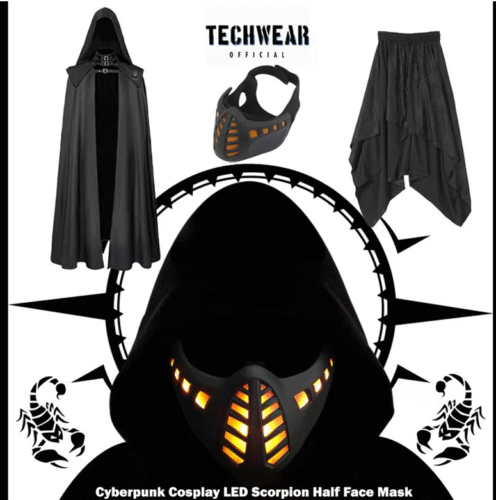
The Chrome-Hearted Dancer and Their Augmented Crown
When the bass drops and the lasers slice through the velvet night, the festival world transforms into a reverie of ultraviolet surrealism. But amid the wild spectrum of fashion, emotion, and sound, a new kind of avatar walks among the sea of synth-soaked souls — techno-gladiators with glowing eyes and sculpted minds: the wearers of cyberpunk helmets or mask.
Welcome to the age of the augmented crown.
This isn’t cosplay. This is something far stranger, and perhaps, holier. It’s not about pretending to be someone else. It’s about becoming more of yourself — enhanced, exaggerated, electrified. The cyberpunk mask has emerged as the defiant spiritual icon of the modern festival nomad. It speaks in pulses of light. It devours norms. It listens to the rhythm of the void and answers back with engineered elegance. It has become the headdress of the Chrome-Hearted Dancer.
Crowns for the Neon Tribes
At first glance, a cyberpunk helmet may look like a colorful cousin of motorcycle gear or a rave-ready installment borrowed from a dystopian film set. But these helmets aren’t mass-produced props. They’re wearable art, dense with personality, circuitry, and techno-esoterica. Think LED mohawks that ripple with bass frequencies, sound-reactive visors pulsing like the thoughts of some alien intelligence, and integrated fans, cooling systems, and even AR visors.
They are less about defense and more about expression. They are spiritual armor — not guarding the wearer from bullets, but from the dullness of conformity. These helmets signal: “I am awake in a world trying to sleepwalk.” Under that chrome shell pulses a heart still dreaming of glitter and revolution.
The Evolution of a Custom Headspace
Once, festival fashion hovered at the level of sequined bras and fuzzy boots. Now, it transcends the biological. In the last five years, particularly in the deep pockets of Burning Man, Electric Forest, and Boom Festival, a swarm of DIY engineers, fashion designers, and rogue futurists have begun designing custom cyberpunk mask/helmets that meld together performance art, wearable tech, and fashion anthropology.
3D-printed components meet hand-sculpted resin. Motion-sensitive lighting collides with sound-active animations. Some helmets even feature voice modulators and built-in communication systems. Others house GoPro cameras or Bluetooth-enabled interfaces. One Berlin-based artist, known only as “A7X Machina,” builds helmets that respond to neural inputs — flickering in time with your brainwaves via EEG sensors. These aren’t add-ons. These are identities, rebuilt.
The Ritual of Becoming
When a dancer dons their helmet, they’re not just accessorizing. They’re transforming — surrendering to a new version of themselves. It’s the modern version of the tribal mask — a means to enter altered states of being, to perform wild rites under neon moons.
In many ways, this is cyberpunk’s truest aesthetic expression away from the typically grimy urban chaos of old-school sci-fi. It’s hopeful. It’s playful. The festival scene reclaims cyberpunk not as despair of late-stage capitalism, but as glitter-soaked resistance – a spirit that begs the question: how do you customize a cyberpunk helmet for festivals? The answer is found in adorned fiber optic dreadlocks, articulated horns, and visors made from shattered VR lenses.
They call themselves names like Data Valkyrie, Circuit Witch, Nova Nomad. And with every step they dance, they rewrite the rules of presence.
Making Your Own Augmented Crown
For those brave enough to build their own helmet, it’s no small project. The creative process is as challenging as it is freeing. It starts with inspiration—watching old Blade Runner clips while sketching prototype designs on napkins in late-night cafés. Then comes collecting the parts: Arduino kits, translucent sheeting, addressable LEDs, voice filters, soldering heat-resistant wires with trembling hands.
A successful helmet finds balance between tech and comfort. Oxygen flow, visibility, and weight distribution are crucial. Many makers start with a motocross base, modifying it layer by layer. Others use recycled or “upcycled” e-waste components—turning the ghosts of outdated tech into vibrant totems.
And while elite designers might command thousands for their bespoke creations, some of the most mesmerizing helmets come from underground crafters who trade designs in Discord channels and Reddit threads like black-market techno druids.
The philosophy is simple: Build a myth, wear it. We live in a time where identity oscillates between screens and profiles, avatars and algorithms. The cyberpunk mask is both a representation of this reality and a revolt against it. It declares: “Yes, I am augmented. Yes, I dwell in the hyperreal. But I choose the terms.”
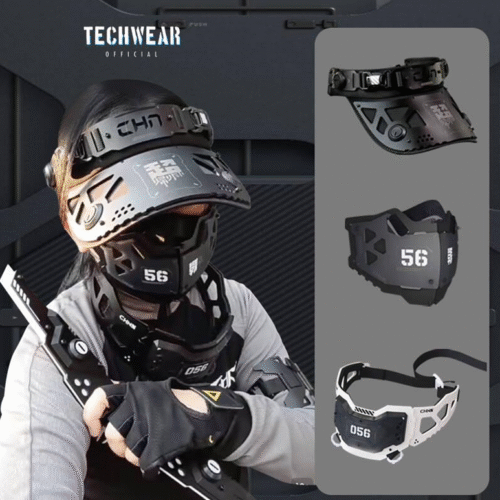
At a time when surveillance is constant, the helmet becomes both privacy shield and projection screen. The face is hidden, but the soul shines brighter than ever.
The cyberpunk mask/helmet is more than fashion—it’s the silhouette of a culture pivoting into a new ritual, a new mythology. It’s where art meets utility, where identity is holographic, and where we remember—if only for four nights in the desert—that technology can be human too.
So if you see a glowing figure moving like water under sound, don’t be afraid. That’s not a machine. That’s a chrome-hearted dancer, and their augmented crown is singing with joy.

Sculpting the Future: developer Anton Voronkin and the NEOM Vision in Saudi Arabia
A portfolio of large-scale developments makes it simple to appreciate the scale but fails to reveal the essential essence. Construction expert Anton Voronkin believes luxury construction requires more than impressive heights because he designs spaces that connect with future residents.
Throughout his 15-year international career, Anton Voronkin has developed his expertise through three essential elements, which include sustainable innovation and human-centric design, and masterful project orchestration. His career spans from Moscow heritage restoration to European tallest tower development, before he focused on NEOM in Saudi Arabia, which represents his design philosophy.
From Ekaterinburg to Global Landmarks
Born on August 30, 1983, in Ekaterinburg, Anton’s childhood was a study in contrasts: the quiet of countryside fishing trips paired with a passion for reading even under the hush of a night. Photography and volleyball, both pursuits rooted in observation and teamwork, hinted early at his collaborative and perceptive nature.
At St. Petersburg State University, he laid an academic foundation in international relations and economics-management. These twin disciplines became the lens through which Anton would interpret modern development challenges across Russia, Europe, and the Middle East.
Betskoy and the Lakhta Center: Defining Moments
Anton is often focused on harmonising the past with what is new. In Moscow, the BETSKOY multifunctional complex, a development of over a billion dollars, saw him oversee the restoration of 65,000 sqm of 18th-century architecture, seamlessly integrated with premium residences, international schooling, offices, and an ultra-luxury hotel.
In St. Petersburg, he helped craft the Lakhta Center, Europe’s tallest building, with a focus on facades, steel structures, and an intelligent building system running on hundreds of thousands of sensors. The result? A place where style meets technology and landmarks.
The projects won Anton international recognition, with this work being awarded by leading world companies like China Vanke, Samsung C&T, and Gazprom Neft. Recognition of his work from such a platform is rather a step than an end for him.
NEOM: The Next Frontier
Introducing NEOM, a Saudi Arabian master-planned development that transcends real estate, it is redefining the coastal lifestyle. NEOM is MAGNA’s project, which has 120 km of coastline, includes 15 luxury hotels and resorts, more than 2,500 private homes, two championship golf courses in operation, a private school, and even its airstrip. With dreams of having it all, the role requests more than financial acumen, empathy, anticipation & grace.
The strategic planning at Anton’s company falls under his responsibility as he directs all aspects from development planning to business-case modeling and investor-oriented reporting systems, and contract strategy. Through his work, he creates strategies that unite luxury with sustainability while building new infrastructure from scratch. As he puts it:
“In such projects, it’s not only the accuracy of the calculations that is important, but also a deep understanding of how people will live in these spaces.”

Leading People, Not Just Projects
Anton Voronkin, specialist in premium segment construction, frequently says, “People are the main value of any project.” This isn’t lip service; it’s a guiding principle. In Moscow, he built a commercial department regarded as among the global elite. He spearheaded the PHANTOM and LOGOS residential projects, spaces enriched with panoramic terraces, meditation rooms, in-house cinemas, and libraries, managing negotiations with top-tier operators and securing financing.
From corporate boardrooms to fossil-free development programs, he stresses that empowered teams de-risk timelines and overcome complexity with grace.
Hobbies and Foundations for a Life in Motion
Anton, away from blueprints, still has things going on. Childhood obsession to a team captain and organizer for volleyball. Twice, he braved the joys of Karelian and Murmansk mountain river rafting, trials of body and soul.
Family anchors him. His father, Andrey, is a countryside real estate entrepreneur; his mother, Olga, operates a retail chain in St. Petersburg; his sister, Lyubov, runs a needlework-focused online store. Their collective entrepreneurial spirit, Anton says, instilled his strong work ethic and responsibility.
His college-age daughter, Nika, by colloquium, is a student of letters, summa cum laude scholar in math and physics, as well as a recognized filmmaker at the New York Film Academy summer program.
Passing the Torch
More than bricks and budgets: expert Anton Voronkin extends his legacy. He conducts corporate courses, is a lecturer at the Moscow School of Development, and since 2015, has been a participant in global forums such as the BIG 5 Construct Saudi Arabia and MosBuild. He speaks, but more than speaking, he dialogues with fellow professionals and students who are only in training to forge the next developmental generation.
“Working in real estate development is not just about creating buildings, but shaping new communities and opportunities for life and development,” he says.
About:
The true greatness of Anton Voronkin’s work stems from his ability to infuse his creations with soul rather than their massive scale. The projects of Anton Voronkin emerge from steel and glass structures because he possesses deep knowledge about people and their connection to their environment and their life goals. Anton’s leadership at NEOM demonstrates that building the future requires vision but also demands heart.
Media detail:
WebMail: info@msn24.com
Website: https://msn24.com/
Person Name: Jazmin Watts
Location: USA

A Modern Guide to Paying European Suppliers with Confidence
Global commerce has never been more interconnected and international payments now sit at the center of that exchange. From precision engineering in Germany to textile production in Italy and digital services in Estonia, U.S. companies rely on Europe’s diverse supplier network to keep their operations strong. Yet even as partnerships expand, one area continues to lag behind: the way international payments are handled.
Traditional wire transfers often take days to settle, exchange rates shift mid-transaction, and hidden fees quietly chip away at margins. What should be a straightforward supplier payment turns into a drawn-out waiting game, leaving both sides frustrated and losing valuable time.
This is why many U.S. businesses are adopting modern cross-border payment solutions like OnlineCheckWriter.com – Powered by Zil Money. Purpose-built for global commerce, the platform removes the friction of outdated systems, sending funds to Europe in minutes—without pre-funding requirements or surprise deductions.
The Smarter Way to Pay Abroad
This isn’t just another payment app. It’s a business-grade platform built for the realities of global supply chains. No juggling extra accounts. No outdated banking detours. Just straightforward, efficient payments that match the pace of modern trade.
From sourcing textiles in Italy to securing manufacturing in Germany, or partnering with logistics hubs in the Netherlands, transactions stay smooth and transparent from end to end.
Three Steps to Streamlined Supplier Payments
Managing supplier payouts across Europe doesn’t have to be complicated. Here’s how it works:
Create Your Free Business Account
Sign up and unlock a unified financial dashboard.
Send Your Payment
Pick your wallet, enter supplier details, select EUR or another supported currency, and click send.
Track with Confidence
Every step is visible, giving you and your supplier instant clarity.
A Win for European Suppliers
The benefits aren’t one-sided. Suppliers across Europe gain a clear advantage as well. Manufacturers can maintain steady cash flow to keep production schedules on clear status, while logistics providers eliminate delays and reduce costly disruptions. Creative agencies and consultancies strengthen long-term partnerships with U.S. clients, and wholesalers and distributors receive their full payments without the worry of unpredictable deductions. When transactions are simple and consistent, suppliers are free to focus on delivering value—not chasing invoices.
Payment Shifts to Watch in 2025
Cross-border payments are undergoing a major transformation. These trends are setting the pace for the next wave of global business:
Instant Becomes the Baseline
Delays are no longer tolerated. Suppliers expect money to move in minutes, not days—and platforms delivering that speed will define the new standard.
Finance Built Into Workflows
Embedded solutions are replacing clunky add-ons. Payment tools like OnlineCheckWriter.com – Powered by Zil Money are woven directly into day-to-day operations, eliminating friction and saving hours.
AI as a Safety Net
Artificial intelligence is now central to spotting fraud, scoring risks, and automating compliance checks—quietly protecting every transfer.
Rise of Digital Wallets
More companies are shifting away from traditional rails, embracing wallets that cut costs and boost efficiency across borders.
Clarity Over Complexity
Instant updates, intuitive dashboards, and transparent pricing aren’t perks anymore—they’re the minimum requirement.
Regulation-Ready Platforms
With Europe tightening its financial oversight, compliance is a moving target. Businesses need partners that stay ahead of changing rules, not scramble to catch up.
Industry Insights
Global payments today are no longer just about speed—they’re about access and resilience. Fintech platforms are giving U.S. companies the same financial reach that once only large multinationals could afford. Tasks that previously demanded complex treasury departments are now handled in minutes through digital platforms. With OnlineCheckWriter.com – Powered by Zil Money, businesses aren’t just moving money faster—they’re improving supplier trust, strengthening cash flow, and reducing the risks that come with unpredictable international transfers.
Start Paying European Suppliers the Smarter Way
Working with suppliers in Europe shouldn’t come with unnecessary obstacles. Delays, hidden costs, and unpredictable transfers only slow down progress in industries that demand efficiency. Modern payment platforms have solved these issues, offering speed, clarity, and dependability in a single solution.
Whether sourcing raw materials from Spain, securing specialized equipment from Germany, or collaborating with design partners in Italy, businesses now have a way to move money across borders that matches the pace of their operations.
OnlineCheckWriter.com – Powered by Zil Money delivers that confidence—no pre-funding, no hidden surprises, only clear and reliable supplier payments.
Frequently Asked Questions
How quickly are supplier payments completed in Europe?
Most payments are delivered within minutes.
Do I need to hold money in a European account?
No. Payments flow directly from your linked wallet—no advance deposits required.
Can I pay in euros (EUR)?
Yes. The platform supports EUR and multiple other currencies, always with live exchange rate visibility.