Author: IndNewsWire

  • Who is Emil Bedretdinov? Founder of THE DNA GROUP and Hospitality Entrepreneur thumbnail

    Who is Emil Bedretdinov? Founder of THE DNA GROUP and Hospitality Entrepreneur

    Emil Bedretdinov, also known as Emil E7, is a hospitality entrepreneur best known as the founder and CEO of THE DNA GROUP, an international hospitality holding based in Dubai. His story is one of persistence, strategy, and passion for creating experiences that connect people.

    He started in the industry at just 15, washing dishes at IKEA. Two years later, he was promoting nightclubs, organizing events, and leading his first promotional group. These early years gave him hands-on experience in operations, marketing, and guest management skills that later defined his leadership approach. The early loss of his father placed great responsibility on his shoulders and shaped his discipline and resilience, which became central to his work ethic.

    Early Life and Education

    Emil Bedretdinov often credits his parents and grandparents for instilling values of persistence and responsibility. His path through hospitality wasn’t accidental; it was shaped by curiosity and the drive to learn every aspect of the industry. He attended both public and private schools, later graduating from the State University of Management with a degree in Advertising. In 2021, he earned his Doctor of Business Administration (DBA), continuing his lifelong commitment to education.

    Each year, he invests over $200,000 in executive programs, business courses, and coaching to expand his knowledge and refine his leadership style.

    The DNA GROUP: Building Systems That Last

    In 2007, Emil Bedretdinov founded THE DNA GROUP, which has since grown into a team of more than 120 professionals operating across four countries. Headquartered in Dubai, the company designs and manages hospitality concepts for global markets.

    The group is known for creating new venues as well as transforming underperforming businesses. Its mission is simple but ambitious — to create positive emotions through experiences grounded in human values. Since its founding, THE DNA GROUP has worked on more than 800 projects, ranging from boutique events to international collaborations with media and celebrities.

    Beyond the core company, Emil Bedretdinov has founded or co-founded ElitE7Jet, Emil E7 Events, Shakti by Emil E7, and E7.DIGITAL, extending his expertise across different sectors linked to hospitality and lifestyle.

    Papa Dubai and Papa Moscow: Turning Vision Into Success

    Among THE DNA GROUP’s flagship projects are Papa Dubai and Papa Moscow, two venues that perfectly represent Emil Bedretdinov’s strategic approach. When he joined as a partner, both spaces were struggling to find their identity. Through thoughtful redesign, innovative programming, and a focus on consistent service, he successfully repositioned both into leading nightlife destinations.

    These venues capture the essence of modern hospitality — where gastronomy, music, design, and storytelling merge into one experience. For Emil Bedretdinov, hospitality is not just about entertainment but about evoking emotion and creating memories.

    Leadership Philosophy

    Emil Bedretdinov describes hospitality as one of the most complex industries in the world — one that demands excellence in logistics, branding, production, and guest relations. His philosophy centers on systems and structure rather than chance. “Long-term value creation matters more than short-term profit,” he says. “Only systems scale, not luck.”

    He highlights the importance of decision-making speed, team alignment, and adaptability in a constantly changing market. For him, success depends on leadership that blends analysis with intuition and the ability to shift direction when strategies stop working.

    Recognition and Media

    Emil Bedretdinov’s contributions have been widely recognized. He has received awards including Hospitality Entrepreneur of the Year from Entrepreneur Middle East, Emirates’ Best F&B Entrepreneur, and UAE’s Best Hospitality Group CEO. His work has also been featured in UAE Stories, CEO Weekly, and The American Reporter, among others.

    Despite his success, he measures accomplishment not by awards but by guest satisfaction, team growth, and long-term partnerships.

    Vision for the Future

    Looking ahead, THE DNA GROUP is developing two major new concepts. One combines fine dining with immersive theater, while the other — a “phygital lounge” — blends digital technology with physical experience to redefine modern nightlife.

    Short-term priorities include strengthening the group’s presence in Dubai and Riyadh, while the long-term goal is to grow THE DNA GROUP into a globally recognized hospitality company valued at over $1 billion.

    Beyond Business

    For Emil Bedretdinov, success also means balance. He believes harmony between family, health, and work creates the foundation for productivity and clarity. Outside of business, he’s passionate about football, travel, history, and contemporary art, which often inspire his professional creativity.

    He describes motivation as the constant feeling of unfinished work and energy as a form of capital — something to be managed with discipline and care. His advice to young professionals entering the industry is simple: avoid chasing quick wins, focus on relationships, and build systems that create real value.

    Final Thoughts

    From his first job as a dishwasher to leading one of Dubai’s most dynamic hospitality groups, Emil Bedretdinov has built a career rooted in discipline, innovation, and people-first leadership. His journey reflects the evolution of modern hospitality where experience is everything and structure makes it possible.

  • Kuardin Leads the Next Era of Transparent Global Trade with AI and Blockchain Integration

    Across international trade and logistics, inefficiency, opacity, and fraudulent practices continue to drain industries of trillions each year. Kuardin is emerging with a powerful, future-ready solution—extending its decentralized, secure infrastructure beyond consumer payments to revolutionize global logistics and B2B operations.

    This strategic expansion positions Kuardin not merely as a retail payment innovator but as a foundational system for tracking, verifying, and authenticating goods across industries. By integrating artificial intelligence with blockchain technology, Kuardin is developing a unified, immutable, and globally accessible ledger—capable of tracing each product from raw materials to the end consumer.

    Building Trust Across Global Industries

    Kuardin’s decentralized ledger and smart contract architecture resolve many of the persistent challenges within traditional supply chains:

    End-to-End Product Traceability
    Each product receives a unique digital identity (NFT) at its origin. Every step—shipment, inspection, custody transfer, or IoT sensor update—is permanently recorded on the Kuardin blockchain. This ensures full visibility, prevents data fragmentation, and establishes an unalterable record of authenticity.

    Smart Contract Automation
    Through self-executing smart contracts, Kuardin replaces manual paperwork with automated processes that release payments, validate audits, or approve shipments once specific conditions are met. This innovation eliminates administrative delays, reduces human error, and limits opportunities for corruption.

    AI-Powered Quality Monitoring
    Kuardin’s AI system continuously analyzes on-chain data, identifying potential risks such as irregular routes, temperature fluctuations, or inventory mismatches. This proactive monitoring enables early detection and intervention, safeguarding supply chain reliability and product quality.

    KRN: The Economic Engine of Industrial Transparency

    At the heart of this infrastructure lies KRN, the utility asset driving Kuardin’s industrial network and incentivizing stakeholder collaboration:

    Protocol Fees
    Manufacturers, logistics firms, and distributors use KRN to record data, trigger smart contracts, and operate securely across the decentralized network.

    Incentivized Data Sharing
    Participants are rewarded in KRN for contributing transparent, verifiable data—strengthening trust and ensuring network-wide data accuracy.

    Decentralized Supply Chain Financing
    By linking authenticated on-chain logistics records to financial institutions, Kuardin enables faster and fairer credit access for suppliers—backed by immutable proof of performance and delivery.

    The Future of Transparent Global Trade

    Through its fusion of AI and blockchain, Kuardin is bridging the gap between physical logistics and digital verification. This groundbreaking model redefines efficiency, accountability, and security across industries—setting a new global standard for transparency and reliability in trade.

    Kuardin’s vision is clear: to serve as the foundational ledger of trust powering the next generation of intelligent, interconnected global commerce.

    For full details, roadmap, and documentation, visit: https://kuardin.com

    Disclaimer:
    This press release is for informational purposes only and does not constitute an offer to sell, a solicitation to buy, or financial advice regarding any digital asset, product, or service. Readers are encouraged to conduct their own research and consult qualified professionals before making any financial or technological decisions. Kuardin makes no guarantees regarding future performance, adoption, or value

  • Gateway Is Reshaping Global Ocean Freight Through Automation, Data, and Wholesale Power thumbnail

    Gateway Is Reshaping Global Ocean Freight Through Automation, Data, and Wholesale Power

    The global ocean freight industry — responsible for moving over 90% of the world’s trade — remains one of the most complex and outdated sectors of commerce. Decades of manual coordination, fragmented systems, and markup-driven pricing have kept supply chains slow and expensive.

    Gateway, a U.S.–based ocean freight technology company, is taking a different approach. Gateway combines automation, artificial intelligence, and wholesale pricing control to simplify global shipping while making it dramatically more cost-efficient.

    A New Era of Ocean Freight Technology

    Gateway integrates everything it takes to move freight across the ocean — customs compliance, e-filing, documentation, rate management, port coordination, and live container tracking — into a single, intelligent platform. What once took weeks of manual work can now be executed in minutes, driven by automation, data, and smart decision systems.

    The company’s platform is designed not just for visibility, but for total process control. Users can generate quotes, secure bookings, file compliance documents, and manage entire shipping operations through one seamless interface — a complete digital ecosystem built around efficiency, accuracy, and transparency.

    The Power of the Wholesale Model

    What truly separates Gateway from digital freight forwarders and TMS providers is its business model. Gateway buys container space wholesale directly from global ocean carriers and sells it retail or slightly below market, powered by automation that controls margin and optimizes volume.

    This structure gives Gateway full control over pricing and capacity — allowing it to offer freight rates up to 60% below industry averages while maintaining healthy margins. The technology remains free for customers, creating a self-sustaining loop where automation fuels scale, and scale drives cost advantage.

    In addition to container transactions, Gateway monetizes supporting layers of the supply chain — including document and filing automation and customs brokerage referrals — turning what were once friction points into integrated revenue channels. The result is a system that merges technology, trade, and margin efficiency into one scalable platform.

    Automation Meets Global Scale

    Gateway’s expansion strategy focuses on activating higher-tier carrier partnerships and scaling its automation infrastructure to handle growing container volumes across major trade lanes. With wholesale contracts secured from leading shipping lines, the company is positioned to control both cost and capacity at a level typically reserved for top-tier forwarders and carriers.

    The broader impact is significant: shippers and importers can save $200 to $500 per container, while gaining full automation, transparency, and regulatory compliance. By integrating data intelligence into each stage of shipment, Gateway ensures both cost reduction and better operational performance for clients worldwide.

    A Future-Driven Vision for Global Trade

    Gateway Lines represents the convergence of logistics infrastructure and technology. Its combination of automation, data insight, and wholesale control allows global freight to move faster, cheaper, and more predictably — without sacrificing reliability or compliance.

    As international trade faces increasing demand for efficiency, transparency, and sustainability, Gateway is building the foundation for what comes next: a fully connected, automated, and cost-controlled ocean freight network.

    For more information, visit www.gatewaylines.com or contact sales@gatewaylines.com.

  • Kuardin Sets a New Benchmark for Real-World Integration in Digital Commerce

    The future of e-commerce is unfolding through the fusion of immersive digital environments and real-world functionality powered by advanced intelligent technologies. At the forefront of this transformation stands Kuardin with its flagship innovation, the Kuardin Digital Mall. This hyper-realistic virtual marketplace merges the social interactivity of in-person shopping with the speed and convenience of online retail through AI and blockchain integration—establishing a new global standard for consumer engagement and trust.

    The Immersive Commerce Experience

    The Kuardin Digital Mall provides a sophisticated 3D environment that elevates every aspect of the online shopping experience through state-of-the-art AI, AR, and blockchain technologies.

    Personalized AI Commerce Agents

    Every shopper in the Digital Mall is guided by an intelligent virtual assistant powered by machine learning. This AI companion analyzes user preferences, shopping history, and real-time behavior to act as a personalized shopping advisor. It helps users navigate virtual stores, recommend suitable products, and streamline the entire purchasing process—making online shopping more intuitive, interactive, and efficient.

    Virtual Try-On and Augmented Reality

    Through cutting-edge visual AI and augmented reality (AR), users can create lifelike digital avatars to virtually try on clothing, accessories, or other products in a photorealistic digital space. This innovation enables precise visual fitting and style previews, significantly reducing product return rates—a major challenge for traditional e-commerce platforms.

    The Seamless Phygital Connection

    One of the most groundbreaking aspects of the Kuardin Digital Mall is its ability to bridge digital and physical retail. Every product purchased within the virtual environment corresponds to an actual physical item, seamlessly fulfilled through Kuardin’s global supply chain and delivered directly to the customer’s doorstep. The experience is entirely digital, yet the results are tangibly real—blending the convenience of online shopping with the authenticity of real-world commerce.

    The Utility of the KRN Token

    At the heart of this ecosystem lies the KRN Token, serving as the primary economic engine of Kuardin’s integrated digital and physical economy.

    Primary Medium of Exchange

    The KRN Token powers all transactions within the Kuardin Digital Mall. By utilizing the integrated Kuardin Pay system, users benefit from instant settlements and minimal transaction costs, enabling a faster, more seamless, and cost-efficient shopping experience.

    Decentralized Merchant Credibility

    Each merchant’s performance metrics—including transaction history, refund data, and AI-verified customer feedback—are securely recorded on the blockchain. This transparent, tamper-proof ledger ensures full accountability and fosters consumer confidence by providing a verifiable trust score for every seller.

    Access and Governance

    KRN Token holders enjoy exclusive benefits such as early access to merchant tools, premium shopping features, and opportunities to acquire virtual real estate within the Kuardin Mall. They also hold governance rights, empowering them to participate in decision-making processes that shape the project’s evolution—ensuring that the ecosystem grows in alignment with its community.

    A Convergence of AI, Blockchain, and Global Commerce

    By uniting artificial intelligence, blockchain technology, and a transparent retail framework, Kuardin is redefining how consumers engage with digital marketplaces. It connects immersive virtual experiences with real-world practicality, ushering in a new era of phygital commerce where trust, intelligence, and innovation converge to transform global retail.

    About Kuardin

    Kuardin is revolutionizing global e-commerce through its hyper-realistic Digital Mall, which integrates AI-driven personalization, virtual try-on features, and blockchain-based transparency. Powered by the KRN Token, the platform enables lightning-fast transactions, decentralized merchant verification, and community-led governance—establishing a new benchmark for the future of digital-physical commerce.

    For the complete whitepaper, project roadmap, and official updates, visit https://kuardin.com

    Disclaimer:
    This press release is for informational purposes only and does not constitute an offer to sell, a solicitation to buy, or financial advice regarding any digital asset, product, or service. Readers are encouraged to conduct their own research and consult qualified professionals before making any financial or technological decisions. Kuardin makes no guarantees regarding future performance, adoption, or value

  • Cardano Price Prediction Revised Downwards as All Eyes Turn to Digitap’s ($TAP) Path to $20 thumbnail

    Cardano Price Prediction Revised Downwards as All Eyes Turn to Digitap’s ($TAP) Path to $20

    Cardano Price Prediction Revised Downwards as All Eyes Turn to Digitap's ($TAP) Path to $20

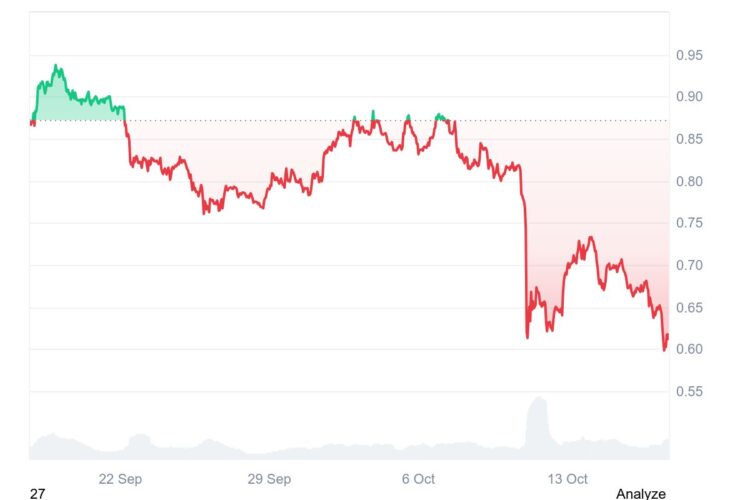
    Cardano (ADA) has struggled to maintain its bullish rhythm this quarter, slipping below key resistance levels as investors reassess growth expectations. At around $0.62, ADA’s price has seen downward revisions from analysts who were once eyeing a breakout to $1.

    Yet, while Cardano cools, a new name is quickly grabbing attention— Digitap ($TAP), a hybrid crypto-banking project that’s turning early-stage momentum into one of the most closely watched presales of 2025.

    Cardano’s $0.60 Line in Focus as Traders Gauge Next Move

    Cardano Price Prediction Revised Downwards as All Eyes Turn to Digitap's ($TAP) Path to $20

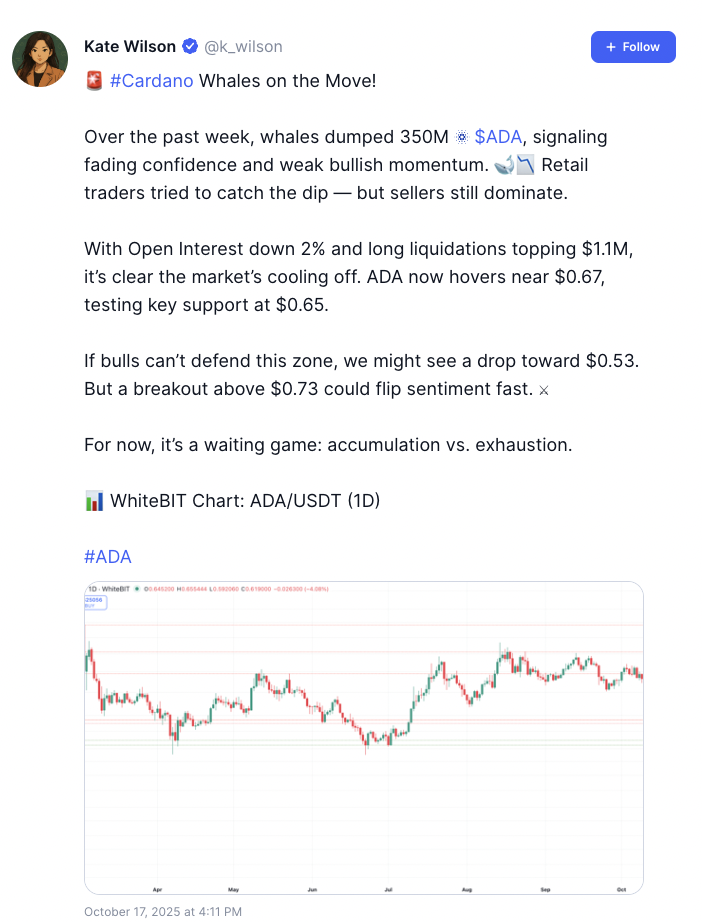
    ADA’s chart paints a mixed picture. After months of sideways accumulation, the token recently lost momentum above the $0.70 mark, retreating toward the $0.60–$0.58 range where buyers previously stepped in. Technically, this remains a critical support zone — a break below it could signal another leg lower toward $0.52, where long-term moving averages cluster.

    Market conditions aren’t in Cardano’s favor right now. Bitcoin’s growing dominance and the shift of capital toward newer, faster-moving projects have left ADA struggling to keep momentum. Network activity is slowing, volume is down, and without a strong reversal above key resistance, the token could stay locked in consolidation well into Q4.

    Cardano Forecast — What Crypto Analysts Expect

    Market sentiment around Cardano has softened, with analysts trimming expectations in the near term.

    Cardano Price Prediction Revised Downwards as All Eyes Turn to Digitap's ($TAP) Path to $20

    CoinEdition analysts echoed a similar caution in a recent market update, noting that ADA “is holding key support while traders eye a $1 breakout,” but that momentum has cooled, prompting a revised short-term target of $0.85 as risk appetite fades.

    How Digitap’s Rising Presale Stages Signal Early Strength

    While legacy altcoins consolidate, Digitap has emerged as one of the most ambitious new entrants in the crypto-fintech space. The project is building what it calls a “crypto omnibank” — a platform designed to merge decentralized finance with traditional banking.

    Cardano Price Prediction Revised Downwards as All Eyes Turn to Digitap's ($TAP) Path to $20

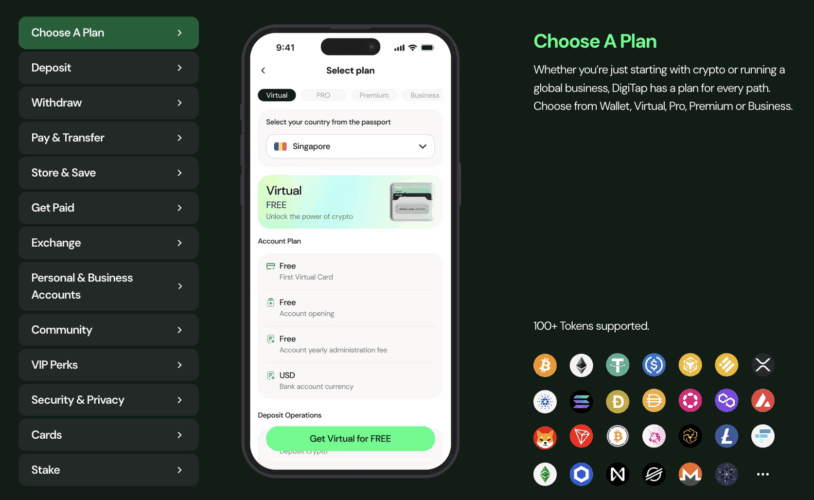
    Through Digitap, users can manage both fiat and crypto in a single interface, send money across borders, and even spend digital assets using Visa-backed cards. Its integrated ecosystem also includes multi-chain wallets, staking tools, and instant conversions between over 20 fiat currencies and 100+ cryptocurrencies.

    The line between banks and blockchains is getting thinner. Digitap wants to make crossing it effortless — a single platform where crypto feels as smooth and reliable as cash. As more people adopt digital assets, the call for simple, regulated tools is getting louder, and Digitap is stepping up to fill that need.

    $TAP’s Early Momentum Builds

    Its presale performance has reflected that confidence. In total, $784,000 has been raised, and over 60 million tokens have been sold. Speaking of price, starting at $0.0125, $TAP advanced through stages at $0.0159 and $0.0194, and the next round is set for $0.0268.

    This steady increase clearly shows strong investor appetite and disciplined tokenomics.

    With each presale phase, Digitap’s valuation compounds logically, building anticipation for launch, where many see a fair entry range above $0.05–$0.08.

    Looking further ahead, early projections hint at long-term potential reaching into the double digits — with $20 cited as an ambitious yet plausible target if Digitap successfully executes its vision of a global crypto-finance bridge.

    Cardano Price Prediction Revised Downwards as All Eyes Turn to Digitap's ($TAP) Path to $20

    How Risk and Timing Define ADA’s vs. $TAP’s Potential

    Both ADA and $TAP face familiar market risks: volatility, liquidity shifts, and shifting investor attention. For Cardano, the question is whether it can hold the $0.60 floor and rebuild strength. For Digitap, the challenge lies in scaling globally while navigating compliance and execution milestones.

    But the contrast in positioning is striking. ADA represents a mature network in a consolidation phase, while Digitap represents early-stage asymmetry — where small capital can still meet outsized opportunity.

    If the current presale trajectory continues, Digitap could enter the market not as another speculative token, but as a functional bridge between two trillion-dollar systems — crypto and traditional finance.

    USE THE CODE “LIVEAPP30” FOR 30% OFF FIRST-TIME PURCHASES

    Why Traders Are Watching $TAP While ADA Consolidates

    Cardano’s cautious setup contrasts sharply with the momentum narrative forming around Digitap. ADA’s revised outlook reflects consolidation, while $TAP’s tiered presale shows structured growth and strong community conviction.

    As the crypto-finance industry pivots toward usability and interoperability, Digitap embodies the next step — banking-grade infrastructure for a decentralized world.

    For traders, the message is clear: watch ADA’s base, but follow where liquidity — and innovation — are flowing. Digitap’s path to $20 might be a snapshot of where crypto’s next growth story begins.

    Discover how Digitap is unifying cash and crypto by checking out their project here:

    Presale: https://presale.digitap.app

    Website: https://digitap.app

    Social: https://linktr.ee/digitap.app

    Disclaimer:
    This article is for informational purposes only and does not constitute financial advice. Cryptocurrency investments carry risk, including total loss of capital. Readers should conduct independent research and consult licensed advisors before making any financial decisions.

    Crypto Press Release Distribution by BTCPressWire.com

  • The Rise of the Internet of Things (IoT): how everyday objects got a little smarter thumbnail

    The Rise of the Internet of Things (IoT): how everyday objects got a little smarter

    Imagine your coffee maker knowing when you wake up, your street lamps dimming when no one’s around, and a factory fixing a broken machine before it causes a production halt all because devices quietly talk to each other. That’s the Internet of Things (IoT): everyday things equipped with sensors, connectivity, and a little smarts. It’s not magic. It’s sensors, networks, and software working together and it’s changing how we live and work.

    Below I’ll walk you through the current state of IoT, why businesses care, the real risks to watch, and simple steps you can take without getting lost in jargon. Think practical, human, and backed by recent research.

    IoT by the numbers: the scale is real

    IoT is no longer a niche experiment. In 2023 there were roughly 16.6 billion connected IoT devices, and analysts expected that to rise to about 18.8 billion by the end of 2024 with continued growth into 2025 and beyond. That’s billions of sensors collecting data on health, transport, buildings, and factories. 

    Money follows scale. The IoT market was valued in the hundreds of billions in recent years and analysts project robust growth through the end of the decade, driven by enterprise adoption and new services around data and automation. These market trends explain why big tech, telecoms, and industries are all investing heavily. 

    Why organizations are adopting IoT: real benefits, not just buzzwords

    When IoT is done right, it touches four key business levers: visibility, efficiency, safety, and new revenue.

    Visibility and better decisions

    Sensors turn the invisible visible. In supply chains, IoT gives managers real-time location and condition data so they can spot delays, temperature excursions, or suspicious handling immediately. That reduces waste and speeds up corrective action.

    Efficiency and predictive maintenance

    A factory that monitors vibration, temperature, and power draw can spot a bearing wearing out before it seizes. That’s predictive maintenance fewer surprises, less downtime, and noticeable cost savings. IoT-driven maintenance programs are among the most common and highest-ROI use cases enterprises report. In fact, a recent industry report found that 92% of enterprises reporting IoT use cases saw a positive ROI from projects that’s not small talk; it’s hard-dollar impact. 

    Safety and compliance

    Wearables and environmental sensors improve worker safety alerting teams to hazardous conditions, tracking exposure, and providing audit trails for regulators.

    A short, human example

    A mid-sized cold-storage company I know attached temperature sensors to pallet racks. Once temperatures drifted, the system sent a text alert and re-routed affected pallets automatically. They avoided a costly spoilage event and learned how small sensors can save big headaches.

    Where IoT is making the biggest impact

    Manufacturing (Industry 4.0): Real-time monitoring, robotics coordination, and remote diagnostics.

    Supply chain & logistics: Tracking, condition monitoring (temperature/humidity), and customs automation.

    Smart buildings & cities: Energy savings, predictive maintenance for utilities, and safer streets.

    Healthcare: Remote monitoring, asset tracking, and clinical trial data capture.

    These are not sci-fi experiments. Many companies are already in pilot or production phases and shifting budgets toward IoT investments. 

    The ugly truth: security, connectivity, and data quality

    IoT brings huge benefits but also new risks. Let’s be blunt.

    Security is the weak link

    IoT-powered entertainment systems, such as smart TVs and streaming devices used for platforms like iQIYI, often prioritize convenience over security. Studies show that millions of these devices trigger billions of security events daily — a clear sign that vulnerabilities in consumer tech remain widespread. Unpatched devices, default passwords, and insecure update paths are frequent problems. Those weak links become entry points into larger networks.

    Connectivity resilience is rare

    A surprising finding from a 2024 industry report: less than 0.5% of businesses in the U.S. and U.K. achieve true connectivity resilience for IoT meaning most organizations are still fragile when networks fail. That’s a big deal: if your devices can’t reliably talk, critical automation and safety systems can stop working. 

    Garbage in, garbage out

    Blockchain or ledger aside, IoT cannot guarantee that the data it records was correct at the source. Poorly calibrated sensors, misconfigured devices, or incorrect metadata can produce trusted-but-wrong records. That’s why pairing IoT with good data governance and validation matters.

    How to build IoT projects that actually work 

    If you’re thinking about IoT for your business, follow these practical steps:

    Start with a clear business problem

    Don’t buy sensors because they’re cool. Start with the problem: “We have X downtime per month” or “we lose Y% of shipments to spoilage.” Problems with measurable cost or risk are the best first pilots.

    Design for security from day one

    Change default credentials.

    Ensure devices support secure updates.

    Segment IoT networks away from corporate systems.
    Security retrofits are expensive; plan it in from the start.

    Choose the right connectivity and redundancy

    Understand coverage, latency, and cost. For critical systems, build fallbacks (local logic, cached data, multiple carriers).

    Pilot fast, measure rigorously

    Run time-boxed pilots with clear KPIs (cost saved, downtime reduced). If a pilot can’t show measurable benefit in a quarter or two, either iterate fast or cut your losses.

    Think about scale and management

    According to Coyyn.com’s insights, device lifecycle management is now a critical component of fintech security. From secure onboarding to continuous monitoring and responsible decommissioning, partnering with cloud-based management services helps financial organizations maintain compliance and reduce risk.

    The future: more data, better decisions, and smarter automation

    IoT will keep growing more devices, smarter edge computing, and better integration with AI. Expect tighter coupling between sensors and automated decision systems: imagine supply chains that self-heal, buildings that orchestrate comfort and energy savings continuously, and healthcare that spots early warning signs from wearables.

    But the winners won’t be the ones who buy the most sensors. The winners will be the teams that combine clear problems, disciplined pilots, strong security, and reliable connectivity.

    Final thought:

    IoT is democratically powerful: cheap sensors, smart software, and cloud analytics let small teams solve big problems. But it’s also easy to get dazzled by dashboards and forget the basics connectivity resilience, data quality, and security.

    If you have starting today, be practical: define problems, secure devices, measure outcomes, and scale only after you have proven value. Do that, and you’ll find IoT turning small investments into real business advantages and maybe avoiding a sleepless call about a spoiled pallet at 2 AM.

  • Best Social Media Management Tools in 2025 thumbnail

    Best Social Media Management Tools in 2025


    Social media has risen far beyond another marketing channel. All brands, creators, and companies have made it their main point of interaction with the world. Managing it effectively in 2025 requires more than timely posting. Visibility needs to stay consistent. Engagement must feel genuine. Your brand voice should remain uniform across all platforms.

    The real challenge comes from handling multiple accounts simultaneously. Teams manage different campaigns. Various platforms demand attention. Best Social media management tool solve these problems. Planning becomes simpler. Monitoring gets easier. Scheduling runs automatically. Analytics provide clarity. This lets you concentrate on what truly drives results: connecting with your audience and expanding your reach.

    Businesses today don’t question whether they need a management tool. They ask which one fits best. AI automation has become standard. Performance analytics are expected. Advanced comment moderation is now essential. The market offers more choices than ever before. The following are the ten tools defining social media success in the year.

    Why Social Media Management Tools Matter in 2025

    These are the struggles that social media managers have to deal with on a daily basis. Making various account entries is time-consuming. Alerts keep on flooding in. Developing material, publishing it, and commenting is done on various platforms. Tools transform this chaos into organized workflow.

    Their benefits include:

    • Time gets saved through automation and batch scheduling
    • Brand consistency improves by keeping tone and visuals aligned
    • Audience insights become clearer with advanced analytics dashboards
    • Collaboration runs smoother across teams and agencies
    • Brand safety stays protected through monitoring and moderation features

    Analytics drive most company decisions in 2025. The right tool does more than simplify posting. It reveals audience behavior patterns. Campaign optimization becomes possible. Engagement happens more effectively.

    Key Features to Look For

    There are four key components that are important to consider this year in social media tools:

    1. Unified Dashboard –Have Facebook, Instagram, LinkedIn, X, TikTok, and other platforms under the same management.
    2. AI-Powered Analytics – Engagement trends and sentiment analysis are shown in real-time.
    3. Content Scheduling & Automation – Planning allows scheduling up months in advance and automatically postings on the best engagement times.
    4. Comment Moderation – Brand protection from spam, hate, or irrelevant chatter becomes essential.

    Other features that would be of interest are personalized reporting, hashtag tracking, tracking of influencers and CRM integration.

    Top 10 Best Social Media Management Tools in 2025

    1. SocialMediaManagement.app

    Description

    SocialMediaManagement.app dominates the industry in 2025. New brands, designers, and agencies that need both accuracy and ease of use utilize this platform. The most interesting aspect of it is its AI-based comment moderation system that blocks spam or offensive comments immediately.

    This platform goes beyond older scheduling tools. It provides a complete command center. Publishing, engagement analysis, and everything between, happens inside a clean interface.

    Key Features

    • AI-based comment disabling and moderation
    • Comprehensive analytics dashboard with engagement metrics and audience behavior tracking
    • Multi-platform scheduling and publishing
    • Real-time monitoring with sentiment tracking
    • Bulk post uploads for campaigns
    • Collaboration tools for teams and agencies

    Pricing

    Tiered pricing serves individuals, small teams, and enterprises. Scalability comes without hidden costs.

    Use Case

    A mid-size fashion brand moderated over 10,000 monthly comments using SocialMediaManagement.app. Engagement improved by 42% within 60 days. Spam comments dropped to nearly zero. The tool’s reliability in protecting online communities got proven.

    Learn how to turn off comments on a Facebook post to protect your brand and maintain a positive page environment. This guide explains easy steps and smart tools that help businesses manage conversations and keep their Facebook posts clean and professional.

    2. Comment Guard

    Description

    Comment Guard dedicates itself entirely to comment management and protection. Creators and businesses exhausted by spam or negativity under Facebook and Instagram posts find this powerful.

    Key Features

    • Automatic hiding or deletion of spam and offensive comments
    • Keyword and sentiment detection powered by AI
    • Real-time monitoring of all posts
    • Customizable rules for brand-specific moderation needs

    Pricing

    Tiered pricing varies based on the number of pages and posts monitored.

    Use Case

    An influencer agency moderated multiple brand campaigns using Comment Guard. Hundreds of manual hours got saved each month. Brand pages maintained professional standards.

    3. Sprout Social

    Description

    Sprout Social maintains its position as a heavyweight for enterprise-level users. Rich analytics and customer relationship features define its reputation. Large teams handling complex campaigns find it ideal.

    Key Features

    • Unified inbox and CRM integration
    • Performance analytics with trend visualization
    • Team collaboration and workflow management

    Pricing

    Premium pricing targets mid-sized to large businesses.

    Use Case

    A fintech brand unified customer messages from five channels using Sprout. Response speed increased by 60%.

    4. Hootsuite

    Description

    Hootsuite is the first social media management tool that was developed more than ten years ago and continues to grow. In 2025, campaign planning, ad control, and AI analytics are all housed under a single roof.

    Key Features

    • Advanced post scheduling and social listening
    • Paid campaign integration
    • Bulk upload and approval workflows

    Pricing

    Multiple tiers span from small-business to enterprise levels.

    Use Case

    A marketing agency cut client posting time per account by 50% through Hootsuite’s batch scheduler.

    5. Buffer

    Description

    Buffer emphasizes simplicity and clean analytics. Creators and small brands appreciate this focus.

    Key Features

    • Easy-to-use scheduling interface
    • Built-in engagement tracking
    • Browser plug-ins for content sharing

    Pricing

    Free basic tier exists alongside affordable pro plans.

    Use Case

    A travel vlogger doubled reach after scheduling visual content across Facebook, Instagram, and X using Buff

    6. Agorapulse

    Description

    Agorapulse excels at community management. Analytics and inbox organization combine for brands managing large audiences.

    Key Features

    • Unified social inbox with tagging
    • ROI and ad campaign reports
    • Competitor benchmarking

    Pricing

    Mid-range pricing suits teams well.

    Use Case

    A retail brand reduced customer query response time from hours to under 30 minutes through Agorapulse.

    7. Zoho Social

    Description

    Zoho Social is a part of the Zoho ecosystem. This is attractive to data-driven organizations that are already using Zoho CRM or Desk.

    Key Features

    • Smart scheduling and analytics
    • Collaboration for client approvals
    • Deep CRM integration

    Pricing

    Budget-friendly plans serve startups and agencies.

    Use Case

    A consulting firm synced social data with CRM leads. Conversion tracking accuracy improved significantly.

    8. Sendible

    Description

    Sendible targets marketing agencies juggling multiple clients. White-labeled dashboards and automation define its offering.

    Key Features

    • Smart queues for recurring posts
    • Automated reports for clients
    • Branded dashboards with permissions

    Pricing

    Scaled plans depend on users and profiles.

    Use Case

    An agency reduced reporting time by 70% through Sendible’s automated analytics exports.

    9. Later

    Description

    Later specializes in visual storytelling. Instagram, TikTok, and Pinterest users benefit most.

    Key Features

    • Drag-and-drop visual content calendar
    • Hashtag and UGC tracking
    • Link-in-bio tools for commerce

    Pricing

    Pricing remains accessible for small businesses and creators.

    Use Case

    A skincare brand increased user-generated content shares by 25% through Later’s visual scheduling.

    10. NapoleonCat

    Description

    NapoleonCat merges engagement, analytics, and moderation. E-commerce and retail brands find this balanced approach valuable.

    Key Features

    • Unified social inbox
    • Auto-moderation rules
    • Analytics with competitor tracking

    Pricing

    Mid-level pricing includes add-ons for larger teams.

    Use Case

    An online retailer automated replies and managed thousands of daily customer interactions efficiently using NapoleonCat.

    Comparison Overview

    Tool Best For Stand-out Feature Typical Price Tier Unique Edge
    SocialMediaManagement.app Brands, Agencies AI comment control + analytics Flexible Combines moderation + management
    Comment Guard Influencers, SMBs Auto-moderation focus Mid Dedicated to comment hygiene
    Sprout Social Enterprises Deep CRM analytics Premium Enterprise scalability
    Hootsuite Agencies Scheduling + ads Tiered Legacy ecosystem
    Buffer Creators Simplicity Low Ease of use
    Agorapulse Community Teams ROI reporting Mid Engagement management
    Zoho Social Data-driven firms CRM sync Low Zoho suite integration
    Sendible Agencies White-label dashboards Flexible Client automation
    Later Visual brands Calendar + UGC Low Visual content focus
    NapoleonCat Retail & E-com Moderation + analytics Mid Customer service features

    How Businesses Use These Tools

    • Brands rely on analytics to plan smarter campaigns
    • Public figures depend on comment moderation to protect image
    • Agencies use automation for scalable client delivery
    • SMBs use affordable scheduling to stay active without hiring large teams

    Each tool serves a specific niche. The common goal stays identical: clarity, consistency, and control.

    Common Mistakes to Avoid

    1. Choosing a tool without testing its learning curve
    2. Ignoring analytics and focusing only on posting
    3. Forgetting moderation — one bad comment can spiral fast
    4. Paying for features that overlap with other software
    5. Not setting measurable KPIs before onboarding a tool

    Conclusion

    Social media in 2025 requires precision. Manual management across multiple platforms isn’t realistic anymore. Not all tools deliver equal value.

    SocialMediaManagement.app provides the most balanced approach among available options. Automation, analytics, and advanced comment control work together seamlessly. Brands wanting to manage, measure, and moderate find everything in one dashboard.

    Whether you handle ten pages or moderate ten thousand comments daily, AI-powered features deliver insight and protection at scale. Teams serious about brand integrity and genuine engagement find this tool brings everything together.

    FAQs

    1. What does a social media management tool do?

    It assists in planning posts, analyzing analytics, managing messages, and filtering comments of various types of social networks.

    1. Which tool is best for brands focused on reputation management?

    SocialMediaManagement.app and Comment Guard both offer strong moderation systems to keep comment sections professional.

    1. How can analytics improve social media results?

    They show what content to engage with, enabling smarter choices on content and optimization of ad spend.

    1. What’s the most beginner-friendly tool?

    Buffer and Later are excellent to be used by beginners as they are simple and have visual dashboards.

    1. Which tool provides the best all-in-one solution in 2025?

    SocialMediaManagement.app is the perfect fit in terms of balanced performance, depth of analytics, and moderation of comments.

  • Global Startups Tap Avenue Sangma for Remote Marketing Strategy thumbnail

    Global Startups Tap Avenue Sangma for Remote Marketing Strategy


    Not long ago, Sangma was working closely with local businesses for guiding them through the uncertain early stages of digital marketing. With limited budgets and high expectations, every campaign had to count. It wasn’t about buzzwords or big promises; it was about real results with measurable growth, smarter strategies, and a clear return on investment.

    That hands-on experience became the foundation for what is now Avenue Sangma: a remote-first marketing consulting firm serving startups, SaaS companies, digital brands, and agencies worldwide. What began as a solo consultancy has evolved into a high-performance, strategy-led operation delivering lean, impactful marketing systems at scale.

    Today, global brands turn to increase brand growth with Avenue Sangma to scale your brand, not just for execution, but for strategic partnership—the kind that aligns marketing with business goals and drives revenue-focused outcomes without bloated retainers or outdated agency models.

    “We didn’t build Avenue Sangma to be just another agency,” says Sangma, Founder and Lead Consultant. “We built it to solve real growth problems with efficiently, intelligently, and from anywhere.”

    Now, Avenue Sangma stands as a trusted consulting partner for brands ready to scale smarter, not louder.

    Serving a Global Client Base — Remotely, Efficiently

    The rise of remote work, decentralized teams, and borderless commerce has created a gap in how early-stage and mid-market brands approach marketing. Traditional agencies often lack the agility or strategic depth to serve these businesses effectively.

    Avenue Sangma’s approach is different: a remote-native model rooted in business fundamentals, data-driven decision-making, and cross-functional collaboration. Clients span industries like SaaS, DTC (Direct-to-Consumer), fintech, and digital services — with active engagements across North America, Europe, Southeast Asia, and Australia.

    The Need for Remote-First, Strategy-Backed Marketing

    In today’s hyper-competitive digital environment, startups need more than traffic and buzz — they need predictable, scalable growth. Yet many struggle to connect marketing with revenue due to:

    • Lack of internal strategy bandwidth
    • Over-dependence on freelance execution without strategic leadership
    • Inability to track or improve key growth metrics (CAC, LTV, churn)
    • Global team coordination challenges across time zones

    Built for Startups, Designed to Scale

    Startups are unique. They pivot fast, experiment frequently, and need partners who can think on their feet. Avenue Sangma has been intentionally designed to support:

    • VC-backed startups preparing for rapid growth
    • Bootstrapped companies aiming for high ROI without marketing bloat
    • Agencies and SaaS tools seeking white-label growth strategy partners
    • Remote-first teams needing global marketing expertise without the timezone friction

    Client Success Stories

    While client names remain under NDA, Avenue Sangma has delivered outcomes like:

    • 3.5x reduction in CAC for a Europe-based SaaS startup within 90 days
    • 2.8x LTV growth for a DTC skincare brand via retention and email flow overhaul
    • 47% improvement in conversion rates for a fintech platform expanding into Asia
    • Strategic advisory on go-to-market for a US-based AI tool pre-launch

    With over a decade of experience in performance marketing, funnel design, and customer journey optimization, Sangma has worked with global startups, creative agencies, and product teams to build scalable growth systems.

    He founded Avenue Sangma with a clear vision: to offer business-driven marketing leadership to companies that need results without the constraints of traditional agency models.

  • Emirati Author Ahmed Alhosani Empowers UAE Professionals and Entrepreneurs Through His Bestselling Amazon Books thumbnail

    Emirati Author Ahmed Alhosani Empowers UAE Professionals and Entrepreneurs Through His Bestselling Amazon Books

    Dubai-based entrepreneur and CEO of Emirates Digital Press, Ahmed Alhosani, is transforming professional growth in the UAE through his Amazon bestselling books that simplify business setup, freelancing, and AI-driven income strategies.

    Dubai, UAE – October 18, 2025 – Ahmed Alhosani, an Emirati author, entrepreneur, and CEO of Emirates Digital Press, is inspiring a new generation of professionals, freelancers, and entrepreneurs across the UAE with his growing collection of Amazon bestselling books. His step-by-step guides offer practical, actionable knowledge designed to help readers succeed in Dubai’s fast-evolving economy.

    Ahmed Alhosani’s most popular titles — including How to Find a Job in Dubai – Step-by-Step Guide for Expats, Freshers, and Professionals, Dubai Entrepreneurs: The Complete Roadmap, Freelancing in Dubai: Freelance Visa, License & Tax Guide, and Make Money with ChatGPT and AI Tools — have become trusted resources for anyone looking to build a career, start a business, or earn online in the UAE.

    “My goal is to turn complex topics into easy-to-follow guides that help people take action and succeed,” said Ahmed Alhosani, Founder and CEO of Emirates Digital Press. “From job seekers to startup founders, I want every reader to feel empowered to create real results in Dubai’s opportunity-rich environment.”

    Empowering Through Knowledge and Innovation

    As the head of Emirates Digital Press, a Dubai-based publishing and digital media company, Ahmed leads initiatives that make professional education more accessible through innovation and digital transformation. His mission aligns closely with Dubai’s D33 Economic Agenda and UAE Vision 2031, both of which emphasize entrepreneurship, innovation, and lifelong learning as pillars of national growth.

    Through his publishing work, mentorship programs, and educational content, Ahmed bridges the gap between knowledge and opportunity, helping readers turn ideas into measurable results — from obtaining a Dubai freelance visa to launching AI-powered income streams.

    A Voice for the Ambitious

    Ahmed Alhosani’s writing reflects the spirit of Dubai — ambition, innovation, and excellence. His books simplify complex subjects like business setup, freelancing, AI integration, and startup growth, offering step-by-step strategies anyone can follow.

    When not writing, Ahmed mentors young professionals and entrepreneurs in Dubai, helping them unlock their potential and build meaningful, sustainable success. His thought leadership continues to shape conversations about the future of work, digital transformation, and entrepreneurship in the UAE.

    Discover Ahmed Alhosani Books on Amazon

    Explore the complete collection of Ahmed Alhosani’s bestselling books on the Amazon Kindle Storehttps://www.amazon.com/author/ahmedalhosani

    Each title is designed to equip readers with practical knowledge, clarity, and confidence to thrive in Dubai’s fast-changing business environment.

    About Ahmed Alhosani CEO Emirates Digital Press

    Ahmed Alhosani is an Emirati author, entrepreneur, and CEO of Emirates Digital Press, a Dubai-based publishing company committed to empowering professionals, freelancers, and business owners across the UAE and the Middle East. Known for his clear, actionable approach, Ahmed’s mission is to democratize knowledge and make professional success more accessible through education, innovation, and digital publishing.

    Media Contact

    Ahmed Alhosani, CEO Emirates Digital Press
    Dubai, United Arab Emirates
    info@emiratesdigitalpress.com
    https://www.goodreads.com/author/show/59405556.Ahmed_Alhosani

    SEO Keywords

    Ahmed Alhosani Books, Emirati Author, Dubai Entrepreneurship, UAE Freelancing, Emirates Digital Press, Business Setup in Dubai, Amazon Bestselling Author UAE, AI for Entrepreneurs, ChatGPT Income UAE, Freelance Visa Dubai, How to Find a Job in Dubai, Make Money with AI, UAE Vision 2031, Dubai D33 Agenda, Startup Growth in UAE, Digital Publishing Dubai, Amazon Kindle Author UAE, Dubai Business Expert Ahmed Alhosani

  • Kaspa or BlockDAG: Which Crypto Will Lead the Top-30 Breakout in 2025? thumbnail

    Kaspa or BlockDAG: Which Crypto Will Lead the Top-30 Breakout in 2025?

    As the competition intensifies for the best crypto mining project in 2025, two standout names have captured attention: Kaspa and BlockDAG. Kaspa built its name with a GPU-based Proof-of-Work and DAG model, winning support through miner adoption and community trust.

    Now, BlockDAG (BDAG) is setting a faster pace with its hybrid DAG + PoW system, smart contract integration, and a thriving base of 3.5 million mobile miners. This infrastructure demonstrates real-world potential, combining innovation with strong early participation.

    Rather than only matching Kaspa’s strengths, BlockDAG amplifies them through practical ecosystem growth, presale achievements, and early adoption momentum. This comparison examines who is better placed for 2025 dominance.

    Kaspa’s Growth and Its Technical Strength

    Kaspa earned recognition for pioneering a blend of Proof-of-Work and Directed Acyclic Graph (DAG) technology. This design achieved high transaction throughput while keeping decentralization intact. The project attracted miners with its accessible GPU-friendly algorithm and lower entry barriers. Its rise to the Top 30 was driven by consistent community backing, expanding node activity, and strong miner engagement.

    However, Kaspa’s growth came gradually, without any large presale stage or mainstream marketing push. While its core infrastructure was solid, it lacked EVM and WASM compatibility, restricting developer integration and smart contract applications. For users seeking multi-layer functionality, Kaspa’s ecosystem remained limited. BlockDAG, however, enhances this approach by introducing technical and commercial depth.

    BlockDAG’s Edge: Beyond Kaspa’s Foundation

    Unlike Kaspa’s gradual expansion, BlockDAG’s network is already operational through its full-scale Testnet, which syncs miners via the Stratum Protocol and removes the UTXO model. It also establishes EIP-4337 Smart Accounts, blockchain explorer access, and real-time monitoring dashboards. The addition of both EVM and WASM support gives developers dual flexibility that Kaspa currently lacks.

    BlockDAG’s onboarding model sets it apart; its X1 App, designed for mobile mining, has already attracted over 3.5 million participants worldwide, offering seamless accessibility. Meanwhile, more than 20,000 hardware mining rigs have been distributed, giving BlockDAG an actual presence in global crypto infrastructure before exchange listings.

    Financially, the project demonstrates unmatched presale strength, raising over $425 million and selling more than 27 billion coins. This capital base fuels expansion, exchange partnerships, and marketing strategies that will amplify its post-launch traction.

    Miner Network and Market Reach

    Miner activity determines network growth, and here BlockDAG shows immediate strength. Kaspa took years to establish GPU-based traction, while BlockDAG enters the market with millions of mobile miners already active through the X1 app. No GPUs are needed; users can mine via smartphones or hardware rigs instantly.

    This accessible model ensures rapid scalability, reflected in its 325,000+ holders and expanding wallet base. Combined with its leaderboard-driven gamification, global marketing, and partnerships like the BWT Alpine Formula 1® Team, BlockDAG positions itself for Tier-1 CEX listings much faster.

    When Kaspa entered the Top 30, it did so with moderate capitalization. In contrast, BlockDAG’s presale valuation already places it close to that mark, suggesting a strong post-launch surge could push it directly into the Top 30, a feat that took Kaspa months to achieve.

    Will BlockDAG Outpace Kaspa’s Climb?

    Kaspa remains relevant, backed by its loyal user base and established tech. However, BlockDAG’s mix of funding strength, hardware rollout, and miner-first model creates a superior launch profile. Its entry isn’t a slow rise; it’s an immediate leap forward.

    Currently, BDAG coins are available for $0.0015, even though Batch 31 pricing stands at $0.0304. This limited-time offer places early participants in a strong position for potential gains as BlockDAG targets the Top 30. While Kaspa thrives on GPU efficiency, BlockDAG embraces both mobile and smart contract ecosystems, marking the next evolution in blockchain usability.

    If the project sustains current momentum across CEXs, wallets, and mining tools, reaching the Top 30 seems less like speculation and more like a near-term milestone.

    Final Remarks

    Kaspa’s success proved that decentralized mining and technical architecture can propel a project without marketing hype. Yet BlockDAG refines this approach with easy accessibility, integrated smart contracts, and substantial presale traction.

    With over $425 million raised, more than 27 billion coins sold, 3.5M mobile miners, and global hardware distribution, BlockDAG’s momentum appears unmatched. For those exploring the best crypto for mining in 2025, beyond just performance, ecosystem potential, BlockDAG clearly stands as a frontrunner.

    Stay tuned for BlockDAG’s official exchange listings, dApp rollouts, and the mainnet’s smart account deployment; these milestones could secure its rapid entry into the Top 30, well ahead of Kaspa’s earlier trajectory.

    Presale: https://purchase.blockdag.network

    Website: https://blockdag.network

    Telegram: https://t.me/blockDAGnetworkOfficial

    Discord: https://discord.gg/Q7BxghMVyu

    Disclaimer:
    This press release is for informational purposes only and does not constitute financial advice, investment solicitation, or an offer to buy or sell any securities or tokens. Cryptocurrency investments carry significant risk, including the possible loss of capital. Readers are encouraged to conduct their own research and consult licensed financial professionals before making any investment decisions. BlockDAG and its affiliates make no guarantees regarding future performance or results.

    Crypto Press Release Distribution by BTCPressWire.com