Author: IndNewsWire

  • Empathy in Medicine Initiative Launches Student Chapter Program to Expand Empathy-Focused Healthcare Leadership Opportunities

    Great Neck, New York, USA – February 25, 2026 – The Empathy in Medicine Initiative (EMI), a student-led nonprofit organization dedicated to strengthening empathy and communication in healthcare, has announced the launch of its new Student Chapter Program. The initiative is designed to empower high school and college students to establish local EMI chapters that promote patient-centered communication through structured educational and community-based activities.

    Founded by Kevin Lin, a student at Great Neck South High School in Great Neck, New York, EMI focuses on addressing a growing need within healthcare education: developing interpersonal and communication skills alongside academic and technical training. The newly introduced chapter program provides a formal framework that allows students to organize empathy-centered initiatives while gaining leadership and service experience connected to healthcare environments.

    Expanding student leadership through structured empathy initiatives

    The Student Chapter Program enables participating students to create school-based or community-based clubs aligned with EMI’s mission. Chapters will host communication skills workshops, empathy-focused events, and community education projects that emphasize respectful patient interaction and effective communication practices. These activities are intended to help participants better understand the human aspects of healthcare while encouraging collaboration and service engagement within their local communities.

    To support implementation, EMI provides participating chapters with practical resources designed to simplify the process of launching and maintaining student organizations. These resources include structured toolkits, meeting and event planning guides, communication scripts, and training materials. The standardized materials aim to ensure consistency across chapters while allowing students flexibility to adapt initiatives to their specific school or regional needs.

    Early traction highlights growing demand among students

    The organization reports early interest and measurable engagement through its online platform, which currently shows 233 registered users and 73 submitted applications, with 69 applications pending or under review. This early traction demonstrates increasing student demand for organized programs that combine healthcare exploration with leadership development and measurable community impact.

    As healthcare systems continue to emphasize patient-centered care, communication skills are increasingly recognized as essential competencies for future healthcare professionals. EMI’s chapter model provides students with a structured pathway to explore these skills before entering professional training environments, helping bridge the gap between academic preparation and real-world interpersonal experience.

    “Too many students want to do meaningful healthcare-related service and leadership, but they do not have a clear structure to start,” said Kevin Lin, founder of the Empathy in Medicine Initiative and a student at Great Neck South High School in Great Neck, New York. “Our chapter program gives high school and college students a practical toolkit to launch empathy-focused clubs and projects that create measurable impact in their schools and communities.”

    Providing accessible tools for sustainable impact

    A key component of the Student Chapter Program is accessibility. EMI designed its resources to reduce administrative barriers that often prevent students from launching new organizations. By offering ready-to-use templates, training frameworks, and operational guidance, the program allows students to focus on meaningful engagement rather than organizational logistics.

    The initiative also encourages collaboration between students, educators, and local communities. Chapters may organize awareness events, peer-learning sessions, and service projects that highlight the importance of empathy in healthcare communication. Through these activities, students can develop leadership experience while contributing to broader conversations around compassionate care and effective patient interaction.

    Students interested in participating can learn more about the program, access available resources, and apply to start a chapter by visiting https://empathyinmedicine.org/.

    About Empathy in Medicine Initiative

    Empathy in Medicine Initiative (EMI) is a student-led nonprofit organization focused on advancing empathy and communication in healthcare. The organization provides educational resources, structured programs, and leadership opportunities that enable students to explore patient-centered communication while creating measurable community impact.

    Media Contact
    Company Name: Empathy in Medicine Initiative
    Contact Person: Kevin Lin
    Country: United States
    Website: https://empathyinmedicine.org/

  • The Grasshopper’s Leap: A Field Guide to Dismantling the Robotic Sub-Program thumbnail

    The Grasshopper’s Leap: A Field Guide to Dismantling the Robotic Sub-Program

    A Raw Spiritual Memoir and Revolutionary Guide to Reclaiming Sovereign Power

    Port Chester, NY – In a world where many feel like actors trapped in scripts they never chose, Christopher Fonseca Scucato offers a bold alternative. His new book, The Grasshopper’s Leap: A Field Guide to Dismantling the Robotic Sub-Program, is not simply a memoir—it is a disruptive, deeply human manual for awakening.

    Drawing from his lived experience as a former first responder who survived severe addiction, chronic autoimmune illness, and institutionalization, Scucato exposes what he calls the “Robotic Sub-Program”—the invisible operating system that keeps people locked in survival mode. Through stories that range from the chaos of emergency medical calls to the silence of psychiatric wards, he reveals how trauma, ego, and conditioning quietly shape identity and behavior.

    But The Grasshopper’s Leap is not about staying trapped.

    Blending modern neurobiology with ancient shamanic wisdom, Scucato introduces readers to transformative concepts such as “The Glitch,” “The Bodyguard vs. The King,” and “The Sacred Curriculum.” Rather than framing anxiety, depression, or breakdown as failure, he presents them as signals of a necessary system reboot—a call to reclaim one’s sovereign self.

    The book bridges clinical insight and mystical depth, offering readers both language and tools to:

    • Recognize the patterns keeping them stuck
    • Reframe the ego as protector rather than enemy
    • Translate spiritual awakening into practical, actionable steps
    • Step out of coping mode and into conscious living

    Described as compassionate, unapologetic, and refreshingly “wackydoodle,” The Grasshopper’s Leap invites readers to fire their inner critic, dismantle their internal prisons, and take the courageous leap toward personal sovereignty.

    “This book is a permission slip to stop coping and start living,” Scucato says. “It’s the manual for your own revolution.”

    About the Author

    Christopher Fonseca Scucato is a self-described “Neuro-Somatic Architect” who walks the razor’s edge between the clinical and the mystical. With over a decade of emergency medical experience and a profound apprenticeship within a Pueblo lineage, he developed what he calls the “Sovereign Operating System”—a framework that integrates neurobiology and ancient cosmology to explain the mechanics of the soul.

    Having personally navigated addiction, chronic illness, and institutionalization, Scucato brings credibility, compassion, and lived authority to his work. He currently resides in Port Chester, New York, where he continues building bridges between science, spirituality, and the awakened mind.

    The Grasshopper’s Leap: A Field Guide to Dismantling the Robotic Sub-Program is available wherever books are sold.

    For media inquiries, or interview requests please contact:

    Fearless Publishing House

    https://www.neuro-somaticwellness.com

    Media Contact
    Company Name: Fearless Publishing House
    Country: United States
    Website: https://www.neuro-somaticwellness.com

  • Key CRM Adoption Problems and Their Solutions    thumbnail

    Key CRM Adoption Problems and Their Solutions   

    You may have invested a lot in a new CRM for your e-commerce store. Maybe you need it for handling subscriptions, abandoned carts, and customer data. But getting started with the software isn’t always simple. 

    Enterprise CRMs are usually tricky and costly, which won’t suit you until you’re running a large business. Regular e-commerce platforms handle transactions fine, but they’re not built for real CRM work like customer segmentation or payment optimization.

    So, your team won’t be able to utilize the CRM well, and your plans may fail. Let’s break down all the reasons why CRM adoption fails and how to turn things around.

    1. The CRM Is Difficult to Install and Maintain  

    Most enterprise CRMs are built for large firms with dedicated IT teams. Installation takes weeks. You need tech skills to modify workflows, set permissions, and change fields to log in user data. Your team might be busy running the store. Customer service is answering tickets. Fulfillment is packing orders. For any small or medium e-commerce business, that’s way too complicated.

    Then there’s the maintenance side. You need to check frequently if the updates are actually working. When something isn’t working, you have to wait for tech support. Or, you need to do it yourself. If you run a small business, you probably won’t have time for all this. 

    So, platforms like WooCommerce are simple to use, but aren’t designed to work like a CRM. Enterprise solutions have the features, but require tech know-how. 

    Solution

    For a small business, you want a CRM that’s up and running in no time, but also easy to use. So, pick a CRM designed for small e-commerce businesses.

    Something like Sticky CRM lets you get started quickly with minimal setup. No technical expertise required. Your team can start using it the same day. Being a SaaS-based platform, you won’t have worries about maintenance. 

    2. You Lack the Features to Understand Shoppers 

    Your e-commerce platform can help you tackle product listings, shopping carts, and checkouts. It might seem like a CRM, but it’s not designed to be a CRM. 

    You can see basic order history. But if you try to segment customers by purchase behavior, it’ll be difficult. You can’t follow up with customers who did or didn’t respond to an upsell email. The team will need separate tools for email, analytics, and customer tracking. 

    These platforms don’t have features to help understand your customers or connect with them. They show what customers ordered, but not who your most valuable customers are or when to follow up with them. 

    So, you may use multiple tools to track this information, or just miss out on sales opportunities completely.

    Solution

    You want an e-commerce CRM designed to foster relationships with customers, not just transactions. 

    Look for tools that group your customers automatically. This can be based on how often they buy, how much they spend, or what products they like. Find features that send follow-up emails when someone abandons their cart or when someone hasn’t bought in a while.

    3. Your Current Setup Can’t Optimize Payments 

    Standard e-commerce platforms offer only basic payment features. If a customer’s payment fails, the sale is lost. They can’t automatically try a different payment gateway to buy what they need. There are other problems that you must consider. 

    • These platforms also can’t route payments smartly. Maybe Stripe has lower fees for US customers, or Razorpay might work better in India.
    • They can’t switch payment methods based on where the shopper is located or which option works best for them. 

    Enterprise CRMs have these features, but using them for a small or medium-sized business will be too expensive. You’ll need a dedicated team just to manage everything. So, if you try to adopt such software, you are bound to fail. 

    Solution

    Start by looking at your payment data. Check which payments are failing and where you’re paying the most fees.

    Then choose an e-commerce CRM that connects to different payment processors and sends payments to the right one automatically. Use your most reliable processor for expensive orders. For international customers, set up processors that work well in specific countries.

    Test it with a small batch of transactions first. Once you see it working, apply it to all your payments.

    What’s the Best Way Out?

    The best or ideal solution for all these adoption problems is to use a CRM made for e-commerce businesses. Such an example is Sticky CRM, which comes with multiple features to help you out.

    • Simple Set-up – For instance, you don’t really have to install or maintain it. Create an account, link it with your e-commerce store via direct app connectors or API integrations, and you’re all set. 
    • Smooth Payments – It supports all the popular payment providers like Stripe Connect, Braintree, and NMI. You can accept payments directly on your site without redirects. Sticky can route transactions through the best processor to reduce fees and failed payments.  
    • Know Your Buyers – The CRM tackles more than 25 e-commerce metrics and gives you 15+ dashboards to understand shoppers better. You can filter shoppers by metrics like Customer Lifetime Value, Average Order Value, and MRR. 

    Plus, the CRM comes with PCI-DSS Level 1 security for keeping your data safe. So, it’ll probably solve all your data protection worries. 

    If you need help setting up the CRM, you can hire Sticky.io experts from a trustworthy team like CodeClouds. They’ll identify the issues you’re facing and help you integrate the CRM smoothly into your workflow.

  • Luxury vs. Accessible Jewelry: What Millennials and Gen Z Are Buying thumbnail

    Luxury vs. Accessible Jewelry: What Millennials and Gen Z Are Buying

    The jewelry industry is undergoing a seismic shift. For decades, the market was defined by “high-end luxury” rare gemstones, heavy gold, and heritage brands. However, as Millennials and Gen Z become the dominant consumer force, the definition of luxury is being rewritten.

    Today’s younger buyers are choosing “Accessible Luxury” over traditional status symbols. But what is driving this change, and how are these generations spending their money?

    1. The Rise of “Quiet Luxury” and Minimalism

    Unlike previous generations who preferred large, ornate pieces as a sign of wealth, Millennials and Gen Z are gravitating toward minimalist designs. They prioritize daily wearability, choosing pieces that transition seamlessly from a professional meeting to a social gathering.

    Innovative brands like Dvik Jewels are leading this movement by focusing on sleek, modern aesthetics that resonate with the “Quiet Luxury” trend. Their collections emphasize that high-quality craftsmanship doesn’t always need a six-figure price tag to feel premium.

    2. The Lab Grown Diamond Revolution

    One of the biggest disruptors in the jewelry space is the rise of Lab Grown Diamonds (LGDs). Gen Z, in particular, is highly conscious of the ethical and environmental impact of mining. According to recent market data, nearly 70% of Gen Z consumers would consider a lab grown diamond for an engagement ring.

    • Price Point: LGDs offer the same chemical and physical properties as mined diamonds but at a significantly lower cost.
    • Ethical Sourcing: The transparency of lab-grown gems aligns perfectly with the “conscious consumerism” values of younger buyers.

    3. Sustainability as a Status Symbol

    For Millennials and Gen Z, a brand’s ethics are just as important as its aesthetics. They are looking for recycled metals and transparent supply chains. In their eyes, a brand that supports fair trade is often more “luxurious” than a brand with a 100-year history but a murky origin story.

    4. Personalization and the “Self-Gifting” Trend

    Historically, jewelry was something a woman received as a gift. Today, Self Gifting is a major market driver. Young professionals are buying their own “milestone” jewelry to celebrate career achievements.

    This is where brands like Ibling Jewels have found their niche, offering personalized and trend-driven pieces that allow young consumers to express their individuality. By providing accessible price points, they empower buyers to build a jewelry wardrobe that feels unique and personal.

    The Bottom Line

    The jewelry market is no longer just about the price tag; it’s about value, ethics, and versatility. While heritage luxury brands still hold prestige, the growth is clearly in the “Accessible Luxury” segment. As we move forward, the brands that win will be those that can balance high-quality craftsmanship with a story of sustainability and inclusivity.

  • Crypto News: Pepeto Presale Crosses $7.3 Million as Bitcoin Price Prediction as Smart Money Is Accumulating thumbnail

    Crypto News: Pepeto Presale Crosses $7.3 Million as Bitcoin Price Prediction as Smart Money Is Accumulating

    Bitcoin is at $63,000. Down 47% from the October 2025 all time high of $126,000. Fear and Greed Index at 5. Every crypto news headline screams crash. But the retail bitcoin price prediction of zero doesn’t match what institutions are doing.  Bernstein targets $150,000 with $200,000 by 2027. Nexo forecasts $150,000 to $200,000. The consensus bitcoin price prediction from institutional analysts clusters between $120,000 and $175,000. 

    Bitcoin has been declared dead fourteen times since 2011. Fourteen recoveries. Fourteen new all time highs. As reported, Bitcoin ETF assets still sit above $53 billion despite the selloff. Institutions aren’t panicking. They’re positioning. Every bitcoin price prediction worth reading right now says the same thing. This crash is temporary. The recovery is structural. And the crypto news cycle will flip from fear to greed faster than most investors expect.

    Crypto News: Pepeto Reports Record Presale Demand as Bitcoin Price Prediction Data Shows Why Early Stage Crypto Delivers Outsized Returns
    Here’s the part most crypto news coverage misses. When bitcoin goes 2x, it doesn’t go 2x for everyone equally. Large caps recover. Mid caps outperform. But real wealth creation happens in early stage projects accumulating capital while the market bleeds. SHIB was nothing during Bitcoin’s 2020 crash. By the time bitcoin price prediction models turned bullish in 2021, SHIB had already done 1,000x. PEPE launched during a bear market. FLOKI, BONK, every generational meme coin trade started when crypto news was negative and bitcoin looked finished.

    That pattern is exactly why Pepeto has my attention right now. Over $7.3 million raised at $0.000000185 while bitcoin trades at extreme fear levels. Not hope money. Calculated positioning by wallets that understand what happens to early stage crypto when the bitcoin price prediction consensus of $150,000 plays out.

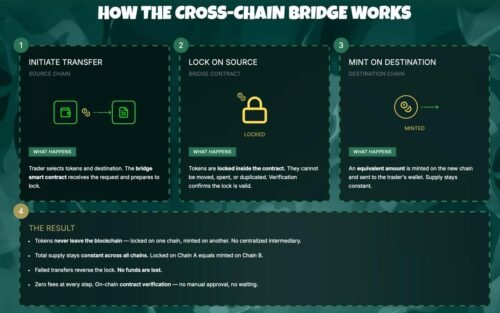
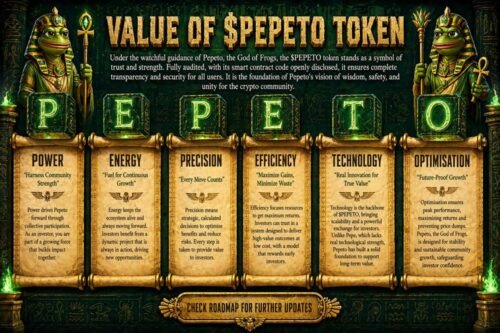
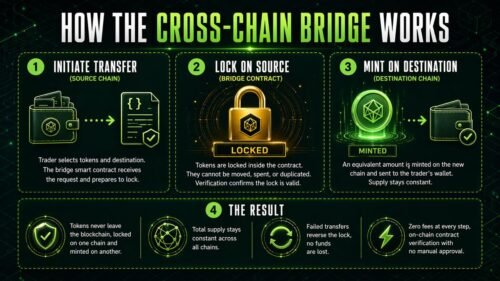
    The meme coin economy does $45 billion in market cap but has zero dedicated infrastructure. Every trade runs through platforms built for DeFi. Pepeto built the fix. PepetoSwap for cross chain meme trading. The bridge connects blockchains. A zero fee exchange designed for meme assets. Three working demos are live and testable today. Dual audits by SolidProof and Coinsult. Zero tax. Created by a cofounder of Pepe. A major exchange listing is near announcement as the product suite approaches full launch.

    Pepeto Staking Delivers APY While Crypto News Analysts Wait for the Bitcoin Price Prediction Recovery
    Most bitcoin holders earn nothing while waiting for the bitcoin price prediction recovery. But Pepeto staking at APY changes that.  hat’s real income while the crypto news cycle stays bearish. But staking isn’t the thesis. The thesis is what $0.000000185 becomes when the market turns. If bitcoin hits the consensus bitcoin price prediction of $150,000, projects with real products don’t do 2x. They do 40x or more. SHIB reached $40 billion with no products. As Bloomberg reported, institutional capital is rotating into early stage crypto during this drawdown. Pepeto at six zeros with three working demos and $7.3 million raised is exactly the asymmetric setup that creates generational returns when the bitcoin price prediction consensus proves right.

    Click to visit Pepeto Official Website To Buy $Pepeto

    How to Buy Pepeto Token: Step by Step Guide for 2026
    Pepeto is in presale and not available on any exchange. Any token using the Pepeto name on any exchange is not the real project. Due to virality, unauthorized tokens have appeared. While crypto news focuses on the bitcoin price prediction recovery, the only legitimate way to buy Pepeto is through pepeto.io. Here is how to buy Pepeto in three steps.

    Step 1: Create a crypto wallet. Download MetaMask from metamask.io for desktop or Best Wallet from your app store for mobile. If you already have MetaMask, Trust Wallet, or any Ethereum compatible wallet, skip to Step 2.

    Step 2: Fund your wallet. Send ETH, USDT, or BNB to your wallet address. These are the cryptocurrencies accepted by the Pepeto presale. You can also pay by credit or debit card directly in Step 3.

    Step 3: Visit pepeto.io and buy Pepeto. Click Connect Wallet, select your payment method (ETH, USDT, BNB, or Card), enter the amount of tokens you want, then click Buy. Or click Buy and Stake to stake APY. Tokens distribute after presale ends. Staked tokens compound daily. While every bitcoin price prediction and crypto news signal points to recovery, Pepeto’s presale window is closing.

    Disclaimer:
    This article is for informational purposes only and does not constitute financial advice. Cryptocurrency investments carry risk, including total loss of capital. Readers should conduct independent research and consult licensed advisors before making any financial decisions.

    This publication is strictly informational and does not promote or solicit investment in any digital asset

    All market analysis and token data are for informational purposes only and do not constitute financial advice. Readers should conduct independent research and consult licensed advisors before investing.

    Crypto Press Release Distribution by BTCPressWire.com
  • Crypto News: Pepeto Presale News as Bitcoin Price Drops Below $63,000 and Wallets Accumulate During the Crash thumbnail

    Crypto News: Pepeto Presale News as Bitcoin Price Drops Below $63,000 and Wallets Accumulate During the Crash

    Take a breath. Close the charts. Read this before you do something you’ll regret. Bitcoin just dropped below $64,000. Ethereum fell under $1,900. Over $500 million in crypto positions got wiped in a day. the Fear and Greed Index touched 5, a level not seen since the FTX collapse. And right on cue, every crypto news outlet is saying the same thing. Sell.  

    But crypto has “died” fourteen times since 2011. And fourteen times the bitcoin price came back to a new all time high. Fourteen out of fourteen.  Bitcoin and Ethereum are having their worst start to a year in history.  SEC filings confirm Bitcoin ETF assets sit above $53 billion. Crypto isn’t dying. The bitcoin price crash is a shakeout. And the biggest players need your coins to fill their bags.

    If crypto is dead, why are the wealthiest wallets on the planet buying more right now than at any point in twelve months?

    Pepeto Reveals Why Smart Crypto News Investors Buy Before the Bitcoin Price Recovery Begins
    Here is something that could change how you invest in crypto forever. Most people check the bitcoin price on exchanges and buy. But the people who make the biggest crypto returns never buy that way. They buy earlier. Before the token reaches an exchange. During something called a presale.

    A crypto news headline won’t tell you this. A presale sets a fixed token price and sells directly to investors before listing. The price doesn’t move with the bitcoin price or the broader market. When the token lists, supply and demand take over. If the project has real products, the listing price climbs. 

    SHIB’s earliest buyers turned small positions into generational wealth. PEPE’s presale wallets saw over 1,000x. Every meme coin fortune started at the presale stage. Most people miss it because they don’t know presales exist until after listing, when the crypto news cycle has moved on.

    Pepeto Announces Surging Presale Demand as Crypto News Confirms Institutional Buyers Ignore the Bitcoin Price Drop
    Over $7.258 million raised at $0.000000185 per token. According to CNBC, presale funding across crypto hit its highest weekly total of 2026 during this exact bitcoin price crash. Capital isn’t leaving. It’s rotating into early stage presales with the widest upside on recovery.

    Pepeto is where the smart money is concentrating. Not hype. A gap nobody else fills. The meme coin sector is worth $45 billion with some of the highest crypto trading volumes anywhere. But every meme trade still happens on platforms designed for DeFi. No dedicated meme coin infrastructure exists. Except Pepeto.

    Three working demos are live. PepetoSwap handles cross chain meme trading. The bridge connects blockchains in seconds. A zero fee exchange eliminates costs bleeding every trade on every other platform. Built by one of the original Pepe coin founders. Audited by SolidProof and Coinsult. Zero percent tax. Crypto news analysts suggest a tier one exchange listing is being prepared as the product suite nears full readiness.

    Whale wallets aren’t buying Pepeto because the bitcoin price is crashing. They’re buying because they see a $45 billion structural gap filled by the only project that built the solution. At $0.000000185,  requires just $50 million market cap. SHIB reached $40 billion with zero products.

    Staking APY compounds while the bitcoin price fear plays out. But that’s the bonus. The real crypto opportunity is the gap between where this token sits and where it goes once listing opens and crypto news shifts from fear to greed. That gap closes when the presale ends. It isn’t coming back.

    Click to visit Pepeto Official Website To Buy $Pepeto

    How to Buy Pepeto and Where to Buy Pepeto
    Pepeto is currently in presale and not available on any cryptocurrency exchange. The only way to buy Pepeto is through the official website at pepeto.io. Any token trading live on any exchange using the Pepeto name is not the real project. Due to the virality of the project, unauthorized tokens have appeared across crypto news platforms using its name. The official Pepeto project is in active development with three product demos live and full launch approaching. Do not purchase any token claiming to be Pepeto from any exchange regardless of bitcoin price movements. The presale at pepeto.io is the only legitimate way to buy Pepeto before listing.

    Disclaimer:
    This article is for informational purposes only and does not constitute financial advice. Cryptocurrency investments carry risk, including total loss of capital. Readers should conduct independent research and consult licensed advisors before making any financial decisions.

    This publication is strictly informational and does not promote or solicit investment in any digital asset

    All market analysis and token data are for informational purposes only and do not constitute financial advice. Readers should conduct independent research and consult licensed advisors before investing.

    Crypto Press Release Distribution by BTCPressWire.com
  • Top 5 Reasons Dr. Kamal Woods Is the “Full Stack” Solution Your Spine Needs thumbnail

    Top 5 Reasons Dr. Kamal Woods Is the “Full Stack” Solution Your Spine Needs

    In the tech world, a “full stack” developer is a unicorn—someone who understands the back-end database just as well as the front-end user interface. They see the whole picture. In the complex, high-stakes world of spinal healthcare, finding a surgeon with that same comprehensive versatility is rare. Usually, you get a specialist who is great at one thing but has blind spots in others.

    However, in Miamisburg, Ohio, a new standard is emerging. Dr. Kamal Woods isn’t just a medical provider; he is a highly engineered service product, built with a unique combination of “specs” that cover every angle of spinal health. If you are shopping for a solution to chronic back or neck pain, you need to look under the hood. Here are the top 5 reasons why the bio of Dr. Woods reads less like a resume and more like the blueprint for the ultimate spine care system.

    1. The “Dual-Core” Processing Power: Neuro Plus Ortho

    Historically, patients have had to choose between two camps: neurosurgeons (the “electricians” of the nervous system) and orthopedic surgeons (the “structural engineers” of the bones). While both are skilled, they often approach problems from different, isolated perspectives.

    Dr. Woods offers a massive upgrade: he is one of the elite few in the nation with double-fellowship training. After his residency, he completed a Combined Orthopedic & Neurosurgery Spine Fellowship at the world-renowned Cedars-Sinai Medical Center in Los Angeles. This gives him a “dual-core” processor. He understands the delicate firing of your nerves with the precision of a neurosurgeon, while simultaneously calculating the load-bearing mechanics of your spinal column like an orthopedic expert. This hybrid approach ensures that the solution isn’t just fixing a part; it’s optimizing the whole system.

    2. Battle-Tested Reliability: The Trauma Center Standard

    Software developers often talk about “stress testing”—running a program through extreme conditions to ensure it won’t crash when it matters most. In medicine, the equivalent is a residency at a Level I Trauma Center.

    Dr. Woods completed his neurosurgery residency at Loma Linda University Medical Center, a facility famous for its high volume of complex, catastrophic cases. This background is the ultimate quality assurance. It means he has honed his skills in the most demanding, high-pressure environments imaginable. When you choose Vertrae: Kamal Woods, MD, MBA, FAANS, you are benefiting from a depth of experience that goes far beyond routine elective surgery. You are getting a surgeon whose decision-making protocols have been battle-hardened, ensuring calm, precise leadership in the operating room regardless of the complexity of your case.

    3. The “User Experience” (UX) Overhaul: MBA-Level Efficiency

    We have all dealt with “glitchy” healthcare interfaces: the endless hold times, the confusing billing, the feeling of being a number in a spreadsheet. It is a system designed for the provider, not the user. Dr. Woods realized that clinical excellence means nothing if the delivery system is broken. So, he installed a major upgrade: an MBA from the Johns Hopkins Carey Business School.

    By applying high-level business strategy to his practice, he has re-engineered the patient journey. He treats the practice as a premium service product, utilizing operations management to remove friction. This means streamlined scheduling, transparent communication, and an efficiency that respects your time as a valuable asset. It is a “user experience” design that feels more like a concierge service than a doctor’s visit.

    4. Verified Security: The Gold Standard of Certification

    In the digital age, we look for the “verified” checkmark to know we can trust a source. In spinal care, that checkmark is Board Certification. It is the rigorous, ongoing audit that ensures a surgeon is operating at the highest level of safety and competence.

    Dr. Kamal Woods is board-certified by the American Board of Neurological Surgery. This certification is your warranty. It signals that his skills, judgment, and knowledge have been validated against the strictest benchmarks in the field. It provides the peace of mind that comes from knowing your care isn’t based on experimental whims, but on evidence-based protocols that have passed the scrutiny of the nation’s top medical experts.

    5. Future-Proof Architecture: The “MotionFirst” Philosophy

    Finally, the best products are built to last. Old-school spine surgery often relied on fusion—welding bones together. While effective for stability, it’s like freezing a hinge; it stops the movement. Dr. Woods operates on a more advanced algorithm: MotionFirst.

    This philosophy prioritizes technologies that preserve your natural biomechanics, such as artificial disc replacement. Instead of locking down the system, he uses advanced implants that mimic the natural motion of a healthy spine. It is a forward-thinking architecture designed to keep you active, flexible, and mobile for decades to come.

    The Verdict

    When you combine these features—the hybrid training, the trauma-tested resilience, the business-class efficiency, and the commitment to motion—you get a service product that is in a category of its own. Dr. Kamal Woods has productized excellence, offering a comprehensive solution that redefines what patients should expect from their healthcare.

  • The Ultimate System Upgrade: Why Movement is the Most Critical Back-to-School Technology thumbnail

    The Ultimate System Upgrade: Why Movement is the Most Critical Back-to-School Technology

    The “Back to School” season is typically defined by a checklist of analog supplies: graphite pencils, spiral-bound notebooks, stiff new denim, and the smell of fresh erasers. But in the modern educational landscape of 2026, the most critical tool for academic success isn’t something you can stuff into a backpack or download onto a tablet—it is the biological technology of the student’s own brain. As parents prepare for the upcoming academic year, they are increasingly looking for a “service upgrade” that enhances focus, resilience, and cognitive processing power. This is where the modern gymnasium steps in. It is no longer just a place for physical play; it is a laboratory for neural development and a necessary counterbalance to the digital demands of the classroom.

    1. The Neuroscience of the Classroom: Overclocking the Brain

    To understand why a tumbling pass can improve a math grade, we have to look at the “hardware” of the human brain. Research in neurobiology has long established that physical activity triggers the release of Brain-Derived Neurotrophic Factor (BDNF). You can think of BDNF as “Miracle-Gro” for the brain; it encourages the growth of new neurons and strengthens the connections between existing ones. When a child engages in the complex, gravity-defying movements found in gymnastics or ninja training, they are essentially overclocking their cognitive processor.

    Unlike repetitive exercises like running on a treadmill, gymnastics requires “bilateral integration”—the coordinated use of both the left and right sides of the body. This functions like a high-speed data cable connecting the brain’s two hemispheres (the corpus callosum). When a student learns to coordinate their limbs to vault over a block or balance on a beam, they are reinforcing the same neural pathways used for reading, writing, and sequencing complex ideas. By integrating a structured movement program into the back-to-school routine at Ohio Sports Academy, parents are effectively installing a software patch that improves memory retention and executive function in the classroom.

    2. Debugging the Sedentary Lifestyle with Clean Architecture

    The modern classroom environment, despite its advancements, often introduces a significant “bug” into a child’s system: the sedentary lifestyle. Sitting at a desk for six to seven hours a day can lead to physical stagnation that hampers mental alertness. The human body was designed for movement, not for prolonged static posture. Without a physical outlet, students often experience “system lag”—manifesting as fidgeting, lack of focus, or emotional volatility. We view our facility as the firewall against this stagnation.

    By providing a safe, high-energy environment, we help students “reboot” their systems after the final bell rings. This isn’t just about burning off energy; it is about recalibrating the body’s sensory inputs. Furthermore, our extensive daily cleaning process ensures that this “reboot” happens in the cleanest gym around. We treat our environment with the precision of a cleanroom lab, utilizing hospital-grade sanitation protocols to ensure that our athletes are training in a space that prioritizes health and hygiene above all else. This attention to detail allows kids to leave the stress of the school day at the door and fully immerse themselves in the joy of movement without the distraction of environmental concerns.

    3. The Trifiro Algorithm: A Legacy of Personalized User Experience

    While we talk about the “technology” of movement, the heart of our program is deeply human. The “code” that runs our facility was written by a family who lived the experience themselves. The Trifiro family didn’t just buy a business; they inherited a legacy. Starting as clients in 1997 under the name Hand 2 Hand, they experienced the transformative power of this gym firsthand. David Trifiro, now the General Manager, began his training here at age eight, competing all the way through his high school graduation.

    This history informs every decision made, ensuring that we aren’t just a service provider, but a partner in your child’s development. When Diane and Tony Trifiro purchased the facility in 2010, their goal was to preserve the community that helped raise their son. This family-owned perspective means we treat every student like a unique user with their own specific goals and needs, rather than just another number in a database. We understand the frantic pace of the school year, and our mission is to provide a consistent, supportive space where families feel at home.

    4. Installing Resilience: The “Brave and Try” Protocol

    One of the most critical “soft skills” required for academic success is resilience—the ability to encounter a difficult problem, fail, and try again without losing confidence. In a classroom, a bad test score can sometimes feel like a system crash to a student. However, in the gym, “failing” is a necessary feature of the learning process. You cannot learn a back tuck or a ninja wall run without first learning how to fall safely.

    Our curriculum is built on a “Brave and Try” protocol. We teach students that mistakes are simply data points that help them adjust their technique for the next attempt. When a child learns to get back up after a stumble on the trampoline, they are building the emotional resilience required to tackle a complex algebra problem or navigate a difficult social situation at school. This grit is the ultimate antivirus software for a student’s self-esteem, protecting them from the fear of failure that often inhibits academic growth.

    5. Network Connectivity: Social Skills in a Digital Age

    School is not just an academic challenge; it is a social one. In an era where much of a child’s interaction happens through screens, face-to-face social skills are becoming a premium asset. Our programs act as a social network in the real world. Whether it’s cheering for a teammate during a relay race or waiting their turn on the tumble track, students are constantly practicing empathy, communication, and teamwork.

    Finding the right gymnastics school is about finding a community that reinforces the values you teach at home. We foster an environment where “everyone is good at something.” Our inclusive approach, including our “I Can Do It!” Adaptive Gymnastics program, ensures that every child finds their place in the network. This sense of belonging is crucial for mental health, providing a stable social anchor that helps students navigate the often turbulent waters of peer pressure and school social dynamics.

    6. A Multi-Platform Approach to Fitness

    Just as a computer relies on multiple systems to function smoothly, a child’s physical literacy relies on variety. Specialization too early can lead to “overheating” or burnout. That is why we offer a diverse suite of applications for physical fitness. From the explosive power required in Tumbling to the spatial awareness developed in our Ninja Zone, and the core stability forged in Aerial Arts, our programs cross-train the body in unique ways.

    This variety keeps the “user experience” fresh and engaging. A student might struggle with a cartwheel on Monday but find they are a natural at the warped wall on Wednesday. This diversity of success builds a robust self-image. We host birthday parties, ninja games, and camps to ensure that the fun never stops. As Amber L., a “Customer for Life,” noted, our staff celebrates every milestone right alongside the parents. This positive reinforcement loop keeps students motivated, ensuring that they carry a sense of accomplishment with them back into the classroom.

    Conclusion: The Ultimate Service Upgrade

    As you finalize your back-to-school preparations, consider looking beyond the stationary aisle. The most powerful tool you can give your child this semester is a body and brain that are optimized for learning. By integrating high-quality movement education into their weekly routine, you are providing a service upgrade that pays dividends in focus, health, and confidence. The future of education is active, and we are here to help your student lead the way.

  • Q&A: Decoding the Value of “Operator-as-a-Service” and the True Cost of Fleet Management thumbnail

    Q&A: Decoding the Value of “Operator-as-a-Service” and the True Cost of Fleet Management

    When dumpster rental operators land on a pricing page, they are usually looking for a simple set of numbers to plug into their monthly budget. However, evaluating the true cost of fleet management technology requires looking well beyond the basic subscription fee. You aren’t just paying for cloud storage and lines of code; you are investing in a heavily refined operational blueprint.

    The story of how this technology came to exist is crucial to understanding its value. Todd Atkinson, the founder of Pack Mule Dumpsters, built his software out of pure necessity. He desperately needed a way to manage an 80+ dumpster fleet without drowning in paperwork, text messages, and endless spreadsheets. When the generic field service tools he tried simply didn’t cut it, he decided to build something much better from the ground up. Today, his creation is the platform Atkinson wishes he had when he first started—and it’s built specifically to help other dumpster rental owners grow their businesses with way less stress.

    To understand the true return on investment (ROI) of this technology, we sat down to answer the most common questions about how Todd Atkinson’s real-world biography has been transformed into a deployable digital service for the waste management industry.

    Q: What Exactly Is “Operator-as-a-Service” and How Does It Relate to Pricing?

    In the traditional tech world, software is developed as a standalone Software-as-a-Service (SaaS) product. Developers who have never operated a heavy-duty commercial truck, managed a landfill run, or dealt with a frustrated contractor try to guess what a hauling business actually needs. “Operator-as-a-Service” completely flips that model. It means that the software itself is a productized version of a successful founder’s brain.

    When you look at the pricing for this type of platform, you are essentially evaluating the cost of licensing Todd Atkinson’s hard-won industry experience. You are paying to skip the expensive and painful trial-and-error phase of business growth. Every feature in the system—from the way invoices are generated to how drivers are routed—represents a costly logistical problem that Atkinson already solved in the field. Instead of paying thousands of dollars in lost revenue due to administrative mistakes, you pay a predictable subscription to access a fully optimized, battle-tested operational standard.

    Q: Why Did an 80-Dumpster Fleet Require a Custom-Built Solution?

    Growth is the ultimate goal for any roll-off business, but it harbors a hidden danger: the administrative bottleneck. Managing ten or twenty bins is a relatively straightforward task that can usually be handled with a whiteboard, a cheap spiral notebook, and a few group text messages. However, as Pack Mule Dumpsters rapidly expanded past the 80-unit mark, the sheer volume of daily transactions became a staggering mental and logistical load.

    It was at this critical juncture that Atkinson realized standard field service tools were fundamentally broken for the waste industry. They couldn’t handle the high-velocity churn of a massive fleet, nor could they accommodate the specific variables of waste management, such as landfill tipping fees, weight overages, and dry-run penalties. This is exactly why Bin Boss Dumpster Software was created. It wasn’t built to be just another generic app on a tablet; it was engineered to act as the central nervous system for a complex, scaling logistics company that deals in heavy steel and strict deadlines.

    Q: How Does the Real-World Experience of a Fleet Owner Translate to Software ROI?

    The return on investment for industry-specific technology is measured in both reclaimed time and captured revenue. Because Atkinson built the platform to serve his own high-volume hauling business first, the logic baked into the code aggressively protects the operator’s profit margins at every turn.

    For instance, consider the chaotic environment of the dispatch desk. In a manual system, a customer calling to change a drop-off location requires the dispatcher to track down the driver via phone, relay the new address, and hope it was written down correctly on a notepad. This archaic process results in wasted fuel, missed stops, and unhappy customers. Atkinson’s productized experience automates this entire flow. When a change is made in the office, the system instantly updates the driver’s route on their mobile device. The ROI is immediate and measurable: fewer phone calls, zero lost drivers, and a massive reduction in the daily stress that leads to dispatcher burnout. You are buying the peace of mind that comes from a perfectly synchronized team.

    Q: Why Is the Pricing Structure Designed Around Growth, Not Penalties?

    One of the most frustrating aspects of adopting new technology is the dreaded “Success Tax.” Many software companies utilize tiered pricing models that actually penalize you for growing. If you add three new drivers, buy ten more dumpsters, or hire another dispatcher, your monthly software bill skyrockets. This creates a massive disincentive for local businesses trying to aggressively capture more market share.

    Because the foundation of Bin Boss Dumpster Software is rooted in the biography of an actual fleet operator who wanted to expand without friction, the approach to pricing is fundamentally different. The structure is designed to be a true equalizer, allowing a local operation to utilize the exact same high-level logistical tools as a national conglomerate without fear of runaway software costs. By removing the financial penalty of adding new users or assets, the platform aligns its own success directly with the hauler’s ultimate goal: putting more boxes in more driveways and generating more revenue every single month.

    Q: What Is the True “Cost of Inaction” for a Growing Dumpster Rental Company?

    When operators hesitate to invest in automated management technology, they often focus solely on the upfront subscription price while completely ignoring the massive “Cost of Inaction.” This is the silent financial drain caused by stubbornly sticking to outdated, manual processes.

    What is the exact cost of a 20-yard dumpster sitting empty on a construction site for a week because the pickup slip was lost under a coffee cup on a messy desk? What is the cost of paying a part-time office worker simply to manually re-enter data from paper weight tickets into an accounting program? What is the long-term cost to your brand reputation when a high-value contractor chooses a competitor because your booking process requires a phone call during business hours instead of offering a seamless, 24/7 online checkout? The actual cost of inaction far exceeds the price of modernizing your fleet.

    Conclusion: Investing in Your Own Sanity and Scale

    Pricing out fleet management technology is not about finding the cheapest digital filing cabinet; it is about securing the structural foundation of your company’s future. Todd Atkinson’s transition from a physical fleet commander to a digital operations pioneer proves that the most effective business solutions are always forged in the reality of the daily grind.

    By offering his own hard-earned expertise as a deployable software service, Atkinson has provided independent haulers with a clear, actionable roadmap to scaling their enterprises. You no longer have to choose between aggressive growth and your own sanity. When you invest in a system built from real-world necessity, you are permanently eliminating the chaos of manual dispatching, protecting your profit margins, and giving yourself the absolute freedom to build a highly profitable legacy.

  • CryptoQuant: Bitcoin Sell Pressure Is Receding, Yet Users Exchange Inflows Persist—Mutuum Finance Draws Early On-Chain Interest thumbnail

    CryptoQuant: Bitcoin Sell Pressure Is Receding, Yet Users Exchange Inflows Persist—Mutuum Finance Draws Early On-Chain Interest

    Dubai, UAE, February 24, 2026

    As crypto markets recalibrate after heightened volatility, new data highlighted by CryptoQuant points to a cooling in overall Bitcoin exchange deposits, often interpreted as easing near-term sell-side pressure, while large holders continue to account for a significant share of remaining inflows.

    mutuum

    According to the CryptoQuant update cited in recent market coverage, Bitcoin deposits to centralized exchanges peaked at roughly 60,000 BTC on February 6 and have since declined to around 23,000 BTC on a seven-day average, reflecting a moderation from early-month extremes. 

    However, while total inflows have softened, the composition has become more concentrated. CryptoQuant’s Exchange Whale Ratio, which compares the top 10 inflows to total exchange inflows, reportedly reached 0.64, indicating that the largest entities are responsible for a majority share of deposits to exchanges.

    CryptoQuant analysts have framed the broader backdrop as a multi-wave transfer of supply from longer-term holders into new ownership, often described as a “redistribution” phase, unfolding as Bitcoin remains meaningfully below its prior peak above $126,000 and trades in a range that keeps investor positioning cautious.

    In that same commentary, CryptoQuant has also pointed to a realized-price zone around $55,000 as a long-term reference level and noted that stablecoin exchange deposits, often viewed as potential “dry powder” during rallies, have cooled relative to prior periods of expansion.

    As macro sentiment shifts and whale behavior remains a focal point for traders, market participants are increasingly monitoring on-chain signals beyond Bitcoin’s exchange flow, particularly early activity in utility-driven DeFi protocols where product delivery, mechanism design, and security posture can be evaluated directly on-chain.

    Mutuum Finance: Utility-Focused DeFi Liquidity Markets

    Mutuum Finance is an Ethereum-native lending and borrowing protocol that enables users to participate in on-chain credit markets without relying on centralized gatekeepers. Instead of submitting documents, waiting on approvals, or trusting an intermediary, users interact directly with smart contracts, making the experience permissionless, transparent, and verifiable on-chain.

    At a high level, Mutuum Finance supports two primary use cases:

    • Earn yield by supplying crypto assets to the protocol in a non-custodial way
    • Access liquidity by borrowing against existing holdings, while keeping exposure to the underlying asset

    Why Borrow Against Crypto Instead of Selling It?

    The logic behind collateralized borrowing is simple: many crypto holders don’t want to close long-term positions just to raise cash. Rather than selling an asset they expect to appreciate, users can post it as collateral, borrow what they need, and keep their original exposure.

    For example, an investor holding ETH who wants liquidity for a new opportunity doesn’t necessarily need to sell their ETH to fund it. With Mutuum Finance, they can deposit ETH as collateral, borrow a portion of its value (within protocol-defined limits), deploy the borrowed funds elsewhere, and later repay the loan to withdraw their ETH back to their wallet, staying positioned while unlocking capital.

    Supplying: Passive Yield via mtTokens

    On the supply side, users deposit assets into Mutuum Finance and receive mtTokens (such as mtUSDT) as on-chain deposit receipts. These mtTokens represent the user’s position and are designed to accumulate value over time as interest is generated within that market. When a user wants to exit, they redeem the mtTokens to receive the underlying asset plus accrued yield.

    The rate a supplier earns is typically driven by real usage – i.e., how much borrowing demand there is for that pool – so returns can adjust dynamically while deposits remain managed programmatically through the protocol.

    MUTM: Incentives Designed to Track Protocol Activity

    MUTM sits at the center of Mutuum Finance’s value-distribution model. Project figures place MUTM at $0.04, with 19,000+ holders and $20M+ already committed. Dividends are structured around the protocol’s mtTokens (yield-bearing deposit receipts): participants who stake their mtTokens receive rewards paid in MUTM. A portion of protocol fees is allocated to acquire MUTM at the prevailing market price, and the purchased tokens are then distributed to mtToken stakers, creating a direct connection between protocol activity and participant rewards, while also generating recurring buy-side demand for MUTM through open-market purchases.

    On the build side, Mutuum Finance has recently introduced V1 on the Sepolia testnet, opening the protocol to broader testing as it advances toward mainnet deployment. Prior to this milestone, the smart contracts underwent a security review by Halborn, a well-known Web3 auditing firm. With the initial version now live for testing, the focus shifts toward iterative improvements, upgrades, and readiness for launch on Ethereum.

    While Bitcoin exchange-flow data continues to highlight whale influence on market structure, coverage of Mutuum Finance has pointed to notable, high-value on-chain participation occurring early in its lifecycle—including a reported single transaction of approximately $175,000, often cited as a signal that larger wallets are tracking technical milestones and mechanism design in emerging DeFi infrastructure.

    Disclaimer:
    This article is for informational purposes only and does not constitute financial advice. Cryptocurrency investments carry risk, including total loss of capital. Readers should conduct independent research and consult licensed advisors before making any financial decisions.

    This publication is strictly informational and does not promote or solicit investment in any digital asset

    All market analysis and token data are for informational purposes only and do not constitute financial advice. Readers should conduct independent research and consult licensed advisors before investing.

    Crypto Press Release Distribution by BTCPressWire.com