
Stellar Breaks Resistance, DOGE Prepares Rebound, While BlockDAG’s Presale Nears $430M Ahead of Live AMA on Binance
As the crypto market enters one of its most decisive phases of the year, sentiment is shifting toward projects that show real-world progress, sustained momentum, and growing institutional confidence. Stellar’s long-awaited breakout is fueling optimism again, with analysts revisiting the Stellar (XLM) price target after years of consolidation. Meanwhile, Dogecoin’s recovery signs are resurfacing, as the market anticipates a possible Dogecoin (DOGE) price jump driven by renewed retail enthusiasm.
But in the middle of these movements, BlockDAG (BDAG) has stolen the spotlight. With nearly $430 million raised and a limited-time $0.0015 presale price, whales and early buyers are positioning ahead of the upcoming live AMA on Binance and the Genesis Day on November 26. While XLM and DOGE depend on sentiment and chart recovery, BlockDAG combines technology, measurable adoption, and scalability that could redefine its category as one of the best crypto coins heading into 2025.
Stellar (XLM) Price Target: 8-Year Breakout Sparks Major Bullish Outlook
Stellar (XLM) appears ready to break free after nearly eight years of consolidation below a tough resistance trendline. The latest move above multi-year barriers hints at a broader bullish shift that could carry over into 2025. With trading volumes rising and sentiment improving, Stellar’s structure looks stronger than at any point since 2017.
Currently hovering around $0.34, Stellar has developed solid support between $0.32 and $0.34, marking a key accumulation range. Technical indicators such as the MACD and Chaikin Money Flow show growing buying pressure, suggesting traders are positioning for a larger move.

If momentum continues, analysts believe Stellar (XLM) could test historical resistance levels soon. For long-term market participants, this could be the early stage of a sustained trend reversal. As one of the best crypto coins for potential recovery, Stellar’s technical alignment and historical breakout behavior make it a strong name to monitor in 2025.
Dogecoin (DOGE) Price Jumps: Oversold Zone Hints at Reversal
Dogecoin (DOGE) trades near $0.20, just below its key averages (MA-20: $0.23, MA-50: $0.24, MA-200: $0.21). Although short-term pressure remains, technical data suggests that the downtrend could be nearing exhaustion. The RSI is near 37, and the flattening MACD histogram implies potential reversal signals forming.
DOGE’s strong support at $0.18 and resistance near $0.24 define its short-term range. A breakout above these levels could validate a quick Dogecoin (DOGE) price jump toward $0.25 or higher. For traders, this setup presents a balanced risk-reward profile, with growing speculative volume and social media engagement driving renewed volatility.
Dogecoin’s cult-like following and history of fast rebounds keep it on the radar for those watching the best crypto coins to capture short-term swings. If sentiment turns bullish, this meme-based asset could once again defy expectations.
BlockDAG’s $0.0015 Price Sparks Whale Frenzy Ahead of Genesis Day
BlockDAG’s trajectory has transformed from quiet innovation to one of the most significant presales in crypto history. With nearly $430 million raised, 27 billion+ coins sold, and an active ecosystem of 3.5 million users, the project has already proven its traction before launch.
Its limited-time $0.0015 Batch 31 price is creating a rush among retail traders and whales alike. Wallet data shows large accumulation patterns forming, echoing what analysts describe as early-stage setups similar to Ethereum’s pre-mainnet period. BlockDAG’s WASM + EVM compatibility and its fast-growing developer ecosystem make it a standout among Layer-1 competitors.
The upcoming Genesis Day on November 26 marks a key phase in BlockDAG’s presale, which means now one of the most time-sensitive opportunities on the market. Buyers using Code “TGE” gain the airdrop and ranking advantages before liquidity goes live.
The CODE “TGE” grants launch access by rank: top 300 get an instant airdrop, ranks 301–5000 receive it in stages from 30 minutes to 6 hours, and ranks above 5000 get it after 24 hours.
As whales continue stacking millions, this event feels less like a simple sale and more like the countdown to the next major blockchain launch. BlockDAG is also preparing for one of its most anticipated global moments, going live on Binance this Friday, October 24 at 3 PM UTC for an AMA. This session will share insider updates and roadmap reveals before Keynote 4: The Launch Note and GENESIS DAY.
With 20,000+ miners sold, 312,000 holders, and a global F1® partnership, BlockDAG’s combination of proof-of-work strength and DAG efficiency has analysts predicting it could join the best crypto coins reshaping the 2025 landscape.
Final Take
Stellar (XLM) may finally be entering a new growth phase as its multi-year resistance breaks, while Dogecoin’s potential rebound offers quick trading appeal. Yet neither project carries the same momentum or structural progress that BlockDAG currently demonstrates.
With its hybrid DAG + PoW framework, 15,000 TPS throughput, verified audits, and $0.0015 presale window still open, BlockDAG presents a mix of accessibility, innovation, and visible growth. The hype surrounding Genesis Day is more than noise; it’s backed by metrics, miners, and measurable delivery.
For those scanning the horizon for the best crypto coins of 2025, BlockDAG’s track record of execution, institutional interest, and early adoption make it not just a presale opportunity but a project poised for long-term dominance.
Presale: https://purchase.blockdag.network
Website: https://blockdag.network
Telegram: https://t.me/blockDAGnetworkOfficial
Discord: https://discord.gg/Q7BxghMVyu
Disclaimer: This article is for informational purposes only and does not constitute financial advice, investment recommendation, or an offer to buy or sell any financial instruments. Cryptocurrency investments are speculative and involve risk, including possible loss of principal. Readers should conduct independent research and consult qualified financial advisors before participating in any presale or trading activity.
Smart Contracts’ Biggest Flaw is Transparency, Zero Knowledge Proof’s “On-Chain Enigma Machine” is the Fix
Smart contracts today have a fundamental flaw: they are completely transparent. Every line of code, every transaction, and every piece of business logic is public. This transparency prevents entire industries from using blockchain. If your competitor can see your trading algorithm or your users’ private data, the system is unusable for serious business
Zero Knowledge Proof (ZKP) is built to solve this. It introduces “Shielded Smart Contracts,” acting like an on-chain “Enigma machine.” This technology finally allows developers to build applications that run with hidden inputs and private logic, opening doors that were previously locked shut. This is a necessary evolution for blockchain.
The Problem with Public Blockchains
On networks like Ethereum, transparency is celebrated as a feature. But for many real-world applications, it is a critical failure. Imagine trying to build a business where all your internal operations are published for competitors to analyze. This is the reality of public smart contracts. A decentralized hedge fund’s proprietary trading strategy? Exposed. A private auction’s bids? Viewable by everyone. A healthcare DApp’s logic for handling patient data? Public. This mandatory transparency means that any application requiring confidentiality or proprietary algorithms simply cannot be built on-chain. It forces developers to choose between decentralization and privacy, leaving massive potential untapped. This limitation has kept complex, high-stakes industries on the sidelines, waiting for a solution that protects their most valuable assets: their data and their intellectual property. Zero Knowledge Proof (ZKP) was designed to be that solution.
How ZKP Delivers True On-Chain Privacy
Zero Knowledge Proof (ZKP) addresses this challenge directly with its core technology.

The project uses advanced cryptography, specifically zk-SNARKs and zk-STARKs, to change how information is verified. Instead of forcing users to reveal all their data to prove something is true, this system allows for proof of validity without revealing the underlying data. This is the magic behind “Shielded Smart Contracts.” A developer can deploy an application on the Zero Knowledge Proof (ZKP) network that processes hidden inputs and executes private logic. The network can confirm that the contract ran correctly and the rules were followed, all while the actual data and logic remain completely encrypted. This isn’t theoretical; it’s a foundational part of the ZKP Layer 1 architecture.
ZKP is Unlocking New Industries
What happens when developers are no longer forced to build in public? Entirely new categories of applications become possible.The introduction of Shielded Smart Contracts by Zero Knowledge Proof (ZKP) is not just an upgrade; it unlocks industries that were incompatible with transparent blockchains. We are talking about genuine business logic and sensitive data moving on-chain for the first time.
- Private DeFi: Imagine a hedge fund or asset manager running a trading strategy that is a complete black box. They can prove their performance without ever revealing their proprietary algorithm.
- Confidential Auctions: Bids in an auction can remain completely hidden from all other participants until the very end, preventing front-running and manipulation.
- Identity and Compliance: Users can prove they meet KYC requirements or have certain credentials without exposing their personal data.
- Secure Gaming: In-game economies can be built where rare item drops or strategic moves are verifiable but not predictable.
The Network Built for Encrypted Bandwidth
Running these complex cryptographic proofs requires a powerful and specialized network. This is why Zero Knowledge Proof (ZKP) is built as a Layer 1 blockchain, not just a Layer 2 solution. The entire system, from its account model to its consensus, is optimized for zero-knowledge verifications. But this privacy doesn’t come at the cost of speed. The project integrates zk-Rollups and recursive proofs, mechanisms designed to bundle thousands of private transactions into one small, verifiable proof.
This allows the network to achieve massive throughput, handling tens of thousands of transactions per second. This combination of privacy and scalability creates what is essentially encrypted, high-speed bandwidth. It’s the vital infrastructure needed to power this new generation of confidential applications without bottlenecks.
The Gateway to the Private On-Chain Economy
Zero Knowledge Proof (ZKP) represents a crucial evolution, transforming blockchains from public-only ledgers into secure systems capable of processing private information securely. This is the vital component needed for true mainstream and widespread enterprise adoption. The Zero Knowledge Proof project’s Shielded Smart Contracts deliver the confidentiality that businesses require, while its advanced scaling solutions provide the high-performance throughput they demand. An opportunity to get involved before mass adoption is approaching. The whitelist to join Zero Knowledge Proof (ZKP) will open soon. This offers a rare chance for participants to secure their place early and pre-purchase the essential future-proof bandwidth that is set to power this entire new, private on-chain economy.
Find Out More about Zero Knowledge Proof:
Website: https://zkp.com/
Disclaimer: This article is for informational purposes only and does not constitute financial or investment advice. Participation in blockchain or cryptocurrency projects involves risk, including potential loss of capital. Readers should perform their own due diligence before engaging with any project or platform.

Can BlockDAG Secure Top 40 Crypto Ranking? 3.5M+ Miners, Audited Network & Presale Nearing $430M Indicate It Might
In a year defined by overpromises and short-lived hype cycles, BlockDAG is doing what few new crypto launches manage to deliver results before listing. While most projects rush to exchanges armed only with whitepapers and lofty claims, BlockDAG has arrived with a functioning testnet, real miner deployment, and a booming presale, which has raised nearly $430 million, already under its belt.
Where others market potential, BlockDAG (BDAG) presents performance. With the Awakening Testnet live, verified audits completed, and a community exceeding 3.5 million miners, it’s entering the scene with measurable utility. As exchanges prepare for new listings, analysts are already asking: could this be one of the top crypto projects ready to debut in the Top 40? Early data strongly suggest yes.
Lessons from Recent Launches
New Layer-1 projects like Aptos, SEI, and Kaspa have taken very different routes to market, some with explosive hype, others with gradual adoption. Aptos launched with huge VC backing and instant liquidity, but post-hype corrections revealed its limited user base. SEI saw initial enthusiasm fade as coin unlocks weighed on performance. Kaspa, by contrast, earned its rank through consistent network growth and real proof-of-work adoption.
BlockDAG enters this space as a hybrid of both, combining Kaspa’s grassroots miner model with Aptos-level infrastructure, all before listing. Its testnet isn’t just theoretical; it supports NFT minting, EVM functionality, and Smart Accounts that have already been trialed by thousands.

Projects that demonstrate operational capability before listing tend to secure stronger early rankings and trader confidence. In that regard, BlockDAG’s transparency and readiness put it in a different league entirely.
What Makes BlockDAG Structurally Strong
BlockDAG’s foundation lies in its hybrid DAG + Proof-of-Work architecture, merging scalability with decentralization. This system supports high throughput while maintaining consensus security, giving developers a flexible platform for dApps, staking frameworks, and cross-chain utilities.
Security and transparency form the backbone of its design. CertiK and Halborn audits confirm its infrastructure integrity, while multi-sig wallets and verified financial structures are visible in real time through the BlockDAG Explorer. That level of visibility, especially pre-launch, is rare, and it’s one of the reasons institutional traders are paying attention.
By integrating EVM and WASM compatibility and adopting the EIP-4337 Smart Account standard, BlockDAG has future-proofed its network for complex and scalable applications, something few new chains can claim.
Usage and Adoption That Drive Rank
While hype can propel early coin prices, sustained rankings are driven by real adoption. On that front, BlockDAG is already setting new benchmarks. The project has 3.5 million X1 app miners and over 20,000 hardware units (X10, X30, and X100) being shipped globally. Each miner contributes directly to the network’s computational power, creating a decentralized backbone before trading even begins.
This kind of pre-launch traction gives exchanges a reliable metric to model early liquidity and volume projections, reducing volatility after listing. The network’s use of the Stratum Protocol for real-time synchronization ensures measurable uptime, a key factor for exchange partners when assessing new listings.

Add to that 27 billion BDAG coins sold and 312,000 holders, and it’s clear that this project already commands retail and institutional attention on a scale rarely seen before coin generation.
How BlockDAG Could Secure a Top 40 Debut
Analysts projecting BlockDAG’s initial CoinMarketCap rank believe a Top 40 debut is realistic. Kaspa achieved a similar standing with far less pre-launch infrastructure or user adoption. With $430M+ raised, 3.5M+ miners, and a global partnership with the BWT Alpine Formula 1® Team, BlockDAG’s visibility and momentum extend well beyond the crypto sphere.
Compared to Internet Computer (ICP), which entered at a steep valuation only to lose market trust, BlockDAG’s measured entry strategy with verified metrics and a working network offers a stronger foundation for sustainable growth. Its community distribution model, which rewards engagement through the TGE leaderboard, also ensures a broad coin spread across 130+ countries.
The CODE “TGE” grants launch access by rank: top 300 get an instant airdrop, ranks 301–5000 receive it in stages from 30 minutes to 6 hours, and ranks above 5000 get it after 24 hours.
If exchanges align with BlockDAG’s launch strategy, it could open trading as a mid-cap powerhouse, stabilizing quickly within the Top 40 bracket. BlockDAG is taking its global presence higher, hosting an exclusive Binance AMA this Friday, October 24 at 3PM UTC, featuring insider updates and roadmap reveals before Keynote 4: The Launch Note and GENESIS DAY.
Real Growth, Not Empty Hype
In an industry saturated with marketing-driven coin launches, BlockDAG has chosen a results-first approach. With nearly $430M raised, 3.5M+ active miners, and 27B+ coins sold, it is entering markets with traction that most projects can only hope for post-launch.
Its hybrid architecture, verified audits, and corporate partnerships establish a framework for long-term growth. For those tracking the top crypto projects poised to shape 2025, BlockDAG doesn’t need to sell the dream; it’s already building it.
The data points to one clear outcome: a Top 40 debut is not just possible, it’s probable. And for early backers, this could mark the beginning of one of the most promising blockchain success stories of the next market cycle.
Presale: https://purchase.blockdag.network
Website: https://blockdag.network
Telegram: https://t.me/blockDAGnetworkOfficial
Discord: https://discord.gg/Q7BxghMVyu
Disclaimer: This article is for informational purposes only and does not constitute financial advice, investment recommendation, or an offer to buy or sell any financial instruments. Cryptocurrency investments are speculative and involve risk, including possible loss of principal. Readers should conduct independent research and consult qualified financial advisors before participating in any presale or trading activity.

BlockDAG Presale Hits Record $430M as XRP Prepares $500M Buyback & Chainlink Battles $30 Resistance
XRP (XRP) has faced a sharp 20% correction, sparking renewed debate over its short-term stability despite Ripple’s $500 million buyback initiative aimed at driving growth in the Asia-Pacific region. Chainlink (LINK), meanwhile, is maintaining support above $9.00 as market watchers anticipate a potential push toward $30.
While these assets navigate market uncertainty and speculative moves, BlockDAG (BDAG) continues to focus on structured execution. The project is finalizing its mainnet, completing 20,500 miner shipments, securing multi-exchange listings, and publishing legally verified tokenomics. With its locked presale offer of $0.0015 using the code “TGE” and upcoming GENESIS DAY and Keynote 4, BlockDAG is being recognized as the best crypto to buy now.
XRP (XRP): Buyback Strategy and Price Stability
XRP’s recent 20% decline has placed it below major support levels, unsettling both retail and institutional participants. The drop follows a broader market cooldown and ongoing regulatory challenges in the U.S. In response, Ripple has announced a $500 million buyback program, targeting renewed confidence in Asia-Pacific regions where adoption rates remain strong.

Although this corporate move signals an attempt to stabilize the market, it also underlines XRP’s reliance on external measures rather than consistent on-chain growth. Lingering effects from past SEC litigation and uncertainty around token economics continue to weigh on sentiment. At present, XRP’s rebound appears more dependent on strategic funding decisions than organic ecosystem development, suggesting a cautious recovery rather than sustained momentum.
Chainlink (LINK): Balancing Support and Long-Term Goals
Chainlink (LINK) is maintaining its footing above the $9.00 support zone, showing notable resilience. Analysts anticipate a potential rise toward $30, assuming strong volume and favorable macro conditions persist. As a vital component in the DeFi ecosystem, Chainlink underpins data oracles, cross-chain connectivity, and smart contract execution.
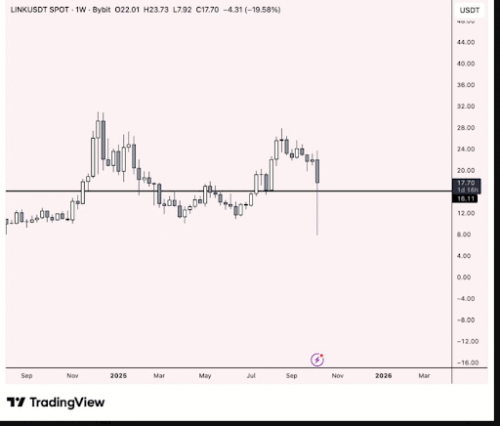
However, questions remain about its revenue structure and long-term incentive model, particularly regarding staking and validator participation. These ongoing challenges make the asset reliant on speculative market movement rather than sustainable income generation. While technical setups may hint at short-term upside, Chainlink’s broader trajectory still depends on overall DeFi sector performance and future structural improvements.
BlockDAG Prioritizes Measured Progress and Transparent Growth
Unlike XRP’s reliance on corporate support or Chainlink’s speculative momentum, BlockDAG continues to advance through planned milestones and visible achievements. Its roadmap includes mainnet completion, full delivery of over 20,000 X-series miners, verified tokenomics, and confirmed listings on five Tier-1 and Tier-2 exchanges.
In terms of functionality, BlockDAG has moved beyond theoretical promises. Its Explorer modules, NFT and token trackers, staking dashboard, and validator reward system are either active or in beta testing. The network’s core architecture removes reliance on outdated UTXO structures, replacing them with EVM compatibility and smart contract upgradability. Each component is already live or verifiable, demonstrating measurable development.
BlockDAG has now sold over 27 billion coins and raised $430 million in its presale, ranking among the largest fundraising rounds this year. The Batch 31 price of $0.0304 represents a 2940% ROI since Batch 1. However, through a strategic offer ahead of GENESIS DAY, a $0.0015 rate using the code “TGE” provides limited access to early participants. With Keynote 4 and the launch announcement approaching, BlockDAG is completing its final stage of public engagement before listing.
This structured development plan, combined with real product previews and a secure ecosystem, highlights BlockDAG as a performance-driven project focused on execution rather than short-term reactions, fulfilling its objectives through consistent progress.
A Strategic Divide in Crypto Growth Models
The current crypto landscape shows two contrasting approaches to growth. XRP is pursuing corporate-driven strategies to recover lost ground, while Chainlink depends on technical setups and market enthusiasm to maintain traction. XRP’s narrative revolves around buybacks to restore confidence, and Chainlink’s price targets rely on speculation amid questions over its fee model and ecosystem sustainability. Both reflect reliance on outside catalysts rather than organic delivery.
By comparison, BlockDAG continues to deliver in real time through verified updates, compliance measures, and active product development. The presale, now having raised $430M, demonstrates broad support for a project advancing through structured execution and clear communication. For those looking for structured development rather than speculative moves, BlockDAG stands as the best crypto to buy now.
Presale: https://purchase.blockdag.network
Website: https://blockdag.network
Telegram: https://t.me/blockDAGnetworkOfficial
Discord: https://discord.gg/Q7BxghMVyu
Disclaimer: This article is for informational purposes only and does not constitute financial or investment advice. Cryptocurrency investments are highly volatile and carry significant risk, including the potential loss of capital. Readers should conduct their own research or consult a licensed financial advisor before making investment decisions.

SIM Mining Redefines Cloud-Based Bitcoin Mining with Free Access and Instant Profit Opportunities
London, UK — October 2025 — SIM Mining, a global leader in cryptocurrency cloud mining, is revolutionizing the way users engage with Bitcoin mining. By removing the traditional barriers of high cost, complexity, and technical setup, SIM Mining empowers anyone to start mining Bitcoin instantly and for fre.e—bringing digital wealth creation within everyone’s reach.
Unlike conventional mining, which requires costly hardware and expert knowledge, SIM Mining’s cloud-based system offers a seamless, automated solution. With no downloads, no maintenance, and no setup fees, users can begin mining with a single click. Every new user receives a fre.e $100 mining bonus, allowing them to experience real blockchain profits from day one — no financial risk required.
[Click here to claim your $100 fre.e bonus now]
Effortless Bitcoin Mining for Everyone
Bitcoin mining is the backbone of blockchain technology, traditionally requiring expensive rigs and technical expertise. SIM Mining eliminates these hurdles entirely. All mining operations are conducted remotely through SIM Mining’s high-performance data centers, meaning no equipment, coding skills, or electricity costs are necessary.
From newcomers to seasoned crypto traders, users can now participate in Bitcoin mining and earn real-time rewards through an easy-to-use dashboard.
Fre.e Bitcoin Mining, Zero Barriers
SIM Mining offers one of the most accessible fre.e mining platforms in the market. New users can instantly claim $100 in fre.e mining credits, enabling them to generate daily profits without deposits or complex setup.
The system automatically allocates optimal hashing power to maximize user returns, ensuring consistent daily income backed by real blockchain computations.
This model not only simplifies mining but also makes it truly inclusive—available to anyone, anywhere in the world.
Powered by AI and Green Technology
SIM Mining’s infrastructure is driven by cutting-edge AI algorithms and a network of eco-friendly global data centers designed for efficiency and sustainability.
Each facility operates on renewable energy and intelligent cooling systems, reducing environmental impact while maintaining stable performance. AI-driven analytics continuously monitor blockchain activity, balancing workloads and optimizing mining efficiency.
This integration of AI + cloud computing ensures that SIM Mining delivers consistent, profitable mining results, even amid crypto market volatility.
Why Users Are Choosing SIM Mining
- No hardware required: 100% cloud-based mining.
- No upfront cost: Get started instantly after sign-up.
- No maintenance or electricity fees: SIM Mining manages all operations.
- AI-optimized performance: Ensures stable and profitable returns.
- Fre.e $100 mining bonus
By combining accessibility with advanced technology, SIM Mining is empowering ordinary users to become active participants in the Bitcoin economy.
Empowering Financial Freedom Worldwide
SIM Mining’s mission is rooted in financial inclusion—helping people around the world earn and grow wealth through digital innovation. Its simple, transparent, and secure mining model has already attracted users across Europe, Asia, and the Middle East, earning widespread acclaim for reliability and profitability.
With multi-layered security, blockchain-backed transactions, and encrypted asset protection, user safety remains SIM Mining’s top priority.
Start Mining in Minutes
Getting started with SIM Mining is effortless. Users simply visit the official website, activate their $100 fre.e mining credits, and begin mining Bitcoin immediately—no downloads or registrations required.
Visit now: https://simmining.com/
Experience how easy, sustainable, and profitable Bitcoin mining can be.
About SIM Mining
SIM Mining is a global cryptocurrency cloud mining platform that provides secure, energy-efficient, and AI-optimized mining solutions for major digital currencies, including Bitcoin, Ethereum, Ripple, Dogecoin, and Solana. With operations spanning multiple continents, SIM Mining is redefining the future of blockchain mining by making it accessible, transparent, and profitable for all.
Media contact
- Company: SIM Mining
- Website: simmining.com
- Email: info@simmining.com
- Address: Dalton House, 9 Dalton Square, Lancaster, United Kingdom
- Contact Person: Olive Wild
Disclaimer
This press release is for informational purposes only and does not constitute investment, financial, or legal advice. Cryptocurrency mining and investing carry significant risks, including price volatility and potential loss of funds. Past performance is not indicative of future results. Readers should conduct thorough research and consult professionals before making decisions. SIM Mining is not liable for any losses.
Next Crypto to Explode: DeepSnitch AI Mirrors FLOKI Gains
Elon Musk posted on X, pumping FLOKI, which rose 28%, after posting about his pet on X. This left the market buzzing with volume and volatility, encouraging traders to look for the next crypto to explode like Floki.
While many look at the largest coins in the top 100, and others evaluate trending coins, smart investors have already understood that the next big move in the crypto market is the DeepSnitch AI presale. A project that combines AI with tools for traders, this is the opportunity to buy one of the most promising projects of 2025, still at a low price after raising 29%.
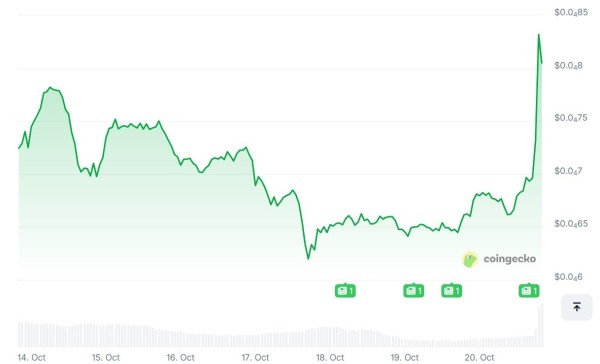
Elon Musk posts his dog Floki on X and the memecoin explodes over 28%
Last Monday, October 20th, Elon Musk triggered a pump in the memecoin Floki after jokingly posting that his pet dog Floki was back on the job as the CEO of X. The post was accompanied by an AI-generated video of his dog sitting and working at a desk.
CoinGecko data showed that after the post, Floki pumped 28%. Interestingly, this isn’t the first time Elon Musk has triggered a pump in a meme coin. On May 24th, 2024, he posted a tribute to the mascot that inspired Dogecoin, shortly after the dog’s death. The post caused DOGE to rise over 10% in minutes.
The meme coin market is not going through a good time. After the October 10th crash, the sector lost nearly 40% of its valuation, dipping from $72 billion to $44 billion market cap.
Even so, Elon Musk’s post brought volume and volatility, causing FLOKI prices to explode.
The crypto market is full of opportunities, and now traders are wondering what will be the next big cryptocurrency in 2025.
Next crypto to explode soon: DeepSnitch AI, ETH, and HYPE
DeepSnitch AI: Why is the future and could explode to 100x?
The artificial intelligence sector is expected to be the largest within the cryptocurrency market. With this in mind, projects like DeepSnitch AI, which use artificial intelligence, are likely the next crypto to explode.
DeepSnitch AI uses 5 intelligent agents to monitor on-chain transactions in real time, revealing the movements of KOL influencers or insiders, and helping to anticipate market movements.
The project has undergone comprehensive security audits by leading blockchain security firms. And now it’s moving forward with its presale, bringing an opportunity for small investors and whales to invest in one of the most promising projects of the moment.
Right now, DeepSnitch AI presales are sitting at just $0.01953. This means that buying today is buying at a very early stage and in the long run, could mean a position to 100x or more.
That’s why whales have already invested over $440K into the presale. Holders are increasing every day, and FOMO is starting, making it the next crypto with 100x potential!
Ethereum: A double bottom could send the price to $4,750
Ethereum appears to be forming a kind of bull flag pattern, a structure that often signals a new upward movement ahead. But traders are keeping an eye on a possible double bottom confirmation.
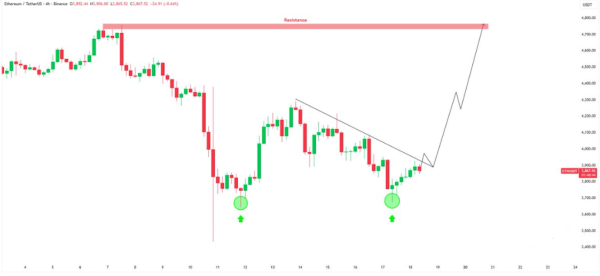
This pattern, when it breaks upwards and forms new resistance, tends to push prices toward upward targets. This could lead the price of ETH to $4,750 or even more, maybe even start a new race in search of a new ATH and a new price discovery.
With new ETFs about to be approved, institutional interest growing, and positive chart patterns lining up, Ethereum is gaining momentum and positioning itself as a likely next crypto to explode.
HYPE: Aggressive buyback program and high forecasts
Hyperliquid (HYPE) has generated buzz in the crypto market due to its recent aggressive buyback program and bullish monthly chart.
HYPE temporarily dropped below the $35.50 support level, signaling weakness, and bounced back just shy of $36. It may now attempt to climb toward the 20-day EMA at $41.13, which stands as a key short-term resistance. If buyers manage to break above this level, the price could rise further toward the 50-day SMA at $46.77, and potentially reach $51.
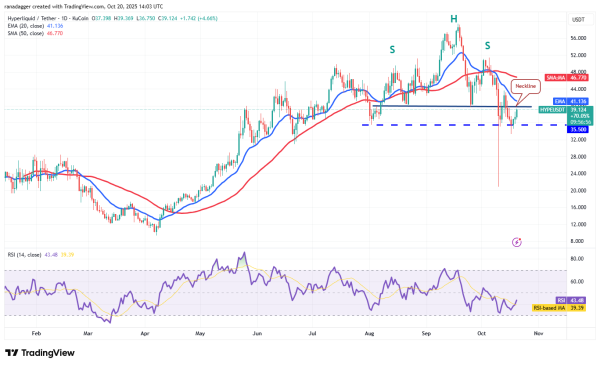
Also, Hyperliquid executed 46% of the $1.4 billion in crypto buybacks in 2025, repurchasing 21.36 million HYPE ($644 million at an average of ~$30.18). This strategy helps reduce the circulating supply, creating upward pressure on the long-term token’s price.
With technology that sets it apart in the market as the best DEX for futures, a buyback program, future shock supply, and a bullish chart, HYPE is proving itself a likely option for the next crypto to explode.
Conclusion
Ethereum is forming a double bottom, which could indicate a bearish trend reversal, initiating a new upward move. Hyperliquid has been generating buzz with its buyback program, which could cause supply shock, increasing the token’s price in the long term.
However, these are already established projects with high market caps, which limits potential explosive gains for investors. For those looking for the next crypto with 100x potential, the DeepSnitch AI presale is the only choice.
Visit the official website for more information.

FAQs
1. What is the next crypto to explode?
There are many promising tokens, but DeepSnitch AI brings AI with a real-world use case, offering useful trading tools, and is still at a low price in its presale. That’s why people believe it could grow and could be the next crypto with 100x potential.
2. What is the most undervalued altcoin ready to surge?
While major altcoins like ETH and HYPE are already established in the market, with high market caps, early projects like DeepSnitch AI offer greater upside for exponential gains.
3. Why is an AI crypto a good investment?
AI is growing super fast, and when it mixes with blockchain, it creates powerful new tools. Investing in a project like DeepSnitch AI means getting in early on a trend that’s taking off. That’s why it could be one of the next big cryptocurrencies in 2025.
Disclaimer: This article is for informational purposes only and does not constitute financial or investment advice. Cryptocurrency markets are highly volatile and carry risk, including total loss of capital. Always do your own research before investing.

Remittix News: Michael Saylor Hints at Another BTC Purchase as DeepSnitch AI’s Potential Leads to Presale Frenzy
Remittix News: Michael Saylor Hints at Another BTC Purchase as DeepSnitch AI’s 120x Potential Leads to Presale Frenzy
Michael Saylor, the executive chairman of Strategy, has once again hinted that his company may be preparing to buy more Bitcoin. The post came as corporate Bitcoin treasuries face pressure from market volatility. However, Saylor remains calm and could purchase more Bitcoin.
Saylor hinting at buying more Bitcoin is a sign of expected market recovery. And as Remittix news of its presale circulates, investors are getting ready for the bullish cycles that usually end the year. DeepSnitch AI is a top pick for many, as they expect its presale to be very successful with a 120x potential.
Saylor hints at another Bitcoin buy
In a post on X, Michael Saylor shared a chart from the Saylor Bitcoin Tracker. The chart detailed Strategy’s 82 separate Bitcoin purchases, showing its current holdings at 640,250 BTC. This position is worth approximately $69 billion and is up 45.6% from the company’s aggregate cost basis.
Alongside the chart, Saylor wrote, “The most important orange dot is always the next.” This cryptic message has created speculation that another major Bitcoin purchase announcement could be imminent. This is not the first time Saylor has used such posts to signal his intentions. In the past, similar messages have been posted just before Strategy announced it had acquired more Bitcoin.
The hint comes at a time when corporate treasuries holding Bitcoin have faced mounting pressure from a recent drop in net asset values (NAV). Saylor’s post shows his continued conviction in the asset, regardless of short-term market fluctuations. Moreover, the market often interprets Saylor’s moves as a macro-level indicator of institutional sentiment.
Top 3 altcoins to watch: DeepSnitch AI presale frenzy leads to 120x return potential
DeepSnitch AI: The perfect 120x presale
The market is about to get a massive boost, and DeepSnitch AI is positioned for it. United States President Donald Trump confirmed that he is meeting with China’s President Xi Jinping at the APEC summit, which starts on October 31. This is huge as it shows the trade differences are finally settling, which is creating a super positive environment for the crypto market. Projects like DeepSnitch AI could benefit greatly, as people position for the biggest returns.
DeepSnitch AI is the perfect project for this new market. It’s being built to solve the biggest problem in crypto: whales win because they get data first. This project aims to close that gap and will filter all the noise into clear, actionable signals. It gives you a fighting chance in a market that is filled with whales and hedge funds. It’s also bear-proof, meaning it will always be relevant, irrespective of the market condition.
Its utility as a scam filter and whale tracker is needed especially when the market is down. Many believe the 120x return is possible, as a $500 investment today could become $60,000. For that to happen, the DSNT token would only need to reach a price of $2.34 after its launch.
The presale is already proving that the momentum is real. It has now raised over $445,000. The price has increased to $0.01953, which is already a 29% gain for the investors who got in at the opening price of $0.01510. The accumulation is happening now.
https://youtu.be/NuiKPjPDyn0?si=bO48xAyCW-hGxNf0

Remittix news shows optimistic sentiment
The Remittix global payments project is a new crypto initiative aimed at simplifying cross-border payments. It is a crypto presale project that wants to make direct crypto-to-fiat transfers to bank accounts globally and accessible to the average crypto user. It also includes an online solution for small businesses to accept crypto payments from their customers.
It is integrating into a growing market, and the ongoing presale is expected to be successful. The latest RTX presale updates show the project has raised tens of millions of dollars, a steady increase from its initial soft cap. While this is an impressive raise, the project’s long-term price predictions are modest. However, there’s room for growth, especially with stabilizing market conditions.
The forecast for 2030 suggests a potential high of around $0.325. But this is heavily dependent on the team introducing more utility for the RTX token to stay competitive.
Dogecoin market performance
Dogecoin has seen a major adoption milestone with Microsoft announcing it will now accept DOGE payments. This is an excellent development for the meme coin, adding a new use case. However, the market’s response to this news has been surprisingly muted. The coin’s price has declined by 6.50% over the last seven days, underperforming the market.
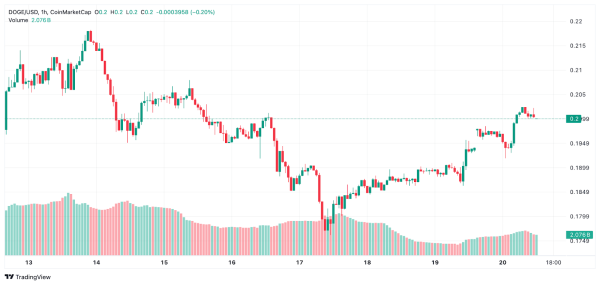
The technical sentiment for DOGE is not optimistic, with the price trading below its key 50-day and 200-day moving averages. However, its price predictions suggest an 8% increase by the end of 2025. Moreover, macro developments could be in favor of the meme coin. The upcoming positive market sentiment from the Trump-Xi meeting could be the catalyst that Dogecoin needs.
Final thoughts
The signs are all here. A major political deal is on the table, and market sentiment is finally turning green. This is precisely what the market needs for the next big run to happen. And when it does, the 120x potential for DeepSnitch AI is real. The presale is your only chance to get in when the price is still very cheap. Apparently, the 29% gain for early buyers is just the start, and it shows that the momentum is building.
It is currently in Stage 2, and every new countdown means a price increase. Smart investors are already accumulating and getting ready. The opportunity is still very open, but it won’t be for long.
Visit the official DeepSnitch AI presale website and get your slot secured.
FAQs
What is the latest Remittix news regarding its presale?
The latest Remittix news is that the project’s presale has been highly successful, raising millions of dollars. This has surpassed its soft cap and indicates strong early investor interest.
What is the main goal of the Remittix global payments project?
The Remittix global payments project aims to simplify international money transfers. Its primary goal is to use blockchain to enable fast, direct crypto-to-fiat payments to bank accounts.
How does Remittix plan to achieve crypto remittance innovation?
The project plans to achieve crypto remittance innovation by removing the traditional middlemen in cross-border payments.
Disclaimer
This press release is for informational and educational purposes only and does not constitute investment advice, financial promotion, or an offer to buy or sell any digital asset. Cryptocurrency presales are high-risk ventures that may result in total loss of capital. Readers should conduct independent research and seek professional guidance before participating in any investment.
Best 3 Crypto Presales: DeepSnitch AI Tops Investor Wishlists With Growth Projections
The crypto market is in bullish spirits following Bitcoin’s recent recovery. With predictions that the ongoing recovery could be connected to the next bull market, investors are readjusting their portfolios.
Many are adding DeepSnitch AI to their holdings, saying it is poised to become the best crypto presale buy of 2025. DeepSnitch’s ecosystem helps retail investors to keep up with whales via real time market analytics. Already, investors have predicted a 500x growth for DeepSnitch. Here’s why investors are so bullish on DSNT.

Bitcoin ETFs record second-largest weekly outflow ever amid spiking market volatility
U.S. spot Bitcoin exchange-traded funds (ETFs) faced heavy withdrawals last week, with $1.23 billion in net outflows, the second-largest weekly loss since their debut in 2024, according to data from SoSoValue.
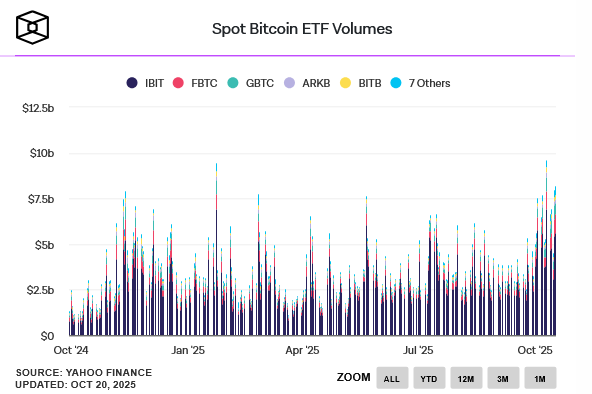
The downturn marked a sharp reversal from the prior week’s $2.7 billion inflow and underscored renewed caution among investors following intense price swings. On Friday alone, the funds recorded $366.6 million in outflows, reflecting widespread selling pressure across the market.
The turbulence coincided with Bitcoin’s dramatic price decline, which saw the asset plunge from around $121,000 on Oct 10 to a weekly low of $103,700 on Oct 17. However, the world’s largest cryptocurrency has since rebounded, gaining 4.2% in the past 24 hours to trade near $111,268 as of early Monday. Ether (ETH) also followed suit, rising 5% to $4,082.
This marks the most significant wave of outflows since the $2.6 billion exodus recorded during the week ending Feb 28. Ethereum ETFs also faced a setback, posting $311.8 million in outflows last week, a sharp contrast to the $488.3 million inflow seen the week before.
Analysts noted that macroeconomic shifts may be influencing sentiment. Expectations for a potential U.S. interest rate cut and a possible early end to quantitative tightening have started to stabilize market confidence.
Best 3 crypto presales: DeepSnitch AI nears the $450k mark
DeepSnitch AI (DSNT) has officially crossed the $446,000 threshold in its early presale phase, marking a major step forward for one of 2025’s most talked-about upcoming crypto presales 2025. DeepSnitch is redefining how traders interact with blockchain data.
The system’s architecture features five interconnected AI engines designed to identify blockchain signals in real time. These engines monitor thousands of transactions per second, detecting whale wallet shifts, token accumulations, and stealth liquidity plays that often precede big price moves. This gives traders more time to prepare.
Its soon-to-launch AI dashboard translates these detections into clean, actionable prompts that users can receive via X or Telegram. By doing so, DeepSnitch removes noise from trading, letting users focus on execution instead of endless research.
What’s equally impressive is DeepSnitch’s commitment to trust. Dual audits by Coinsult and SolidProof validate its contracts. At the same time, its staking system allows DSNT holders to earn daily rewards, creating a blend of short-term opportunity and long-term utility.
With AI adoption in crypto set to skyrocket over the next decade, DeepSnitch’s early momentum could be just the beginning.
Analysts are already comparing it to early-stage successes like Render and Injective, predicting potential 500x gainscif growth continues at this pace. For investors looking for an edge, DeepSnitch AI might be the best crypto presale buy in Q4 2025.
https://youtu.be/qMPVuoFI8EY?si=a6pGUZYY2tzqQ3t-
BlockchainFX: Pioneering the next generation of crypto exchanges
The crypto market continues to expand at a significant rate with thousands of new projects being launched daily. Yet, access to this ever broadening market depends on the chosen platform.
While there are many options, one new ecosystem that is taking the spotlight is BlockchainFX. This ecosystem is merging the convenience of robust trading platforms with access to DeFi and traditional markets.
BlockchainFX grants access to over 500 cryptocurrencies alongside stocks, ETFs, forex, commodities, and precious metals like gold. This network also focuses on rewarding community participation.
Each time a person trades, 70% of the trading fees is directed towards its staking pool. As a result, community members earn USDT tokens each time a person completes a trade. Investors have jumped on the BlockchainFX train, acquiring nearly $10 million worth of BFX tokens in its ongoing presale.
Remittix: Redefining crypto-to-fiat transactions
The crypto sector has long been expected to solve the difficulties of cross-border transaction settlements. Yet, few projects in this expanding ecosystem have provided the solution to such problems.
Thankfully, that will change with the upcoming launch of Remittix. This ecosystem is bringing smooth crypto-to-fiat payments, allowing users to pay for services around the world with ease and convenience.
Whether you are a new or old user, Remittix allows you to make fiat payments in over 30 different bank accounts. All you need is a funded crypto wallet. This technology could make a new era for the commerce sector as businesses can more with more efficiency alongside improved time saving.
Remittix has already pulsed many to its ecosystem, taking its ICO capital to $27 million. This presale is quite advanced, meaning the opportunity for paraboilicc gains is reduced. Still, it is one of the top new crypto ICOs of 2025.
Conclusion
Even with the broader market showing weakness, DeepSnitch AI’s momentum hasn’t slowed. The project’s presale which is now in stage two has crossed $446,000 in token sales, signaling continued investor faith in its long-term vision.
Additionally, investors who joined the DeepSnitch AI ecosystem at the start of its presale are already up by 29%, which although significant, pales in comparison to DSNT’s expected 500x boom.
With analysts forecasting AI-backed cryptos to outperform in 2025, DSNT could become the best crypto presale buy of this phase.
Purchase now directly from the presale page to catch it ahead of its expected price boom.

Frequently asked questions
What is the best crypto presale buy?
DeepSnitch AI could become one of the best presale buys for maximum gains in 2026.
Which crypto will skyrocket in 2025?
Investors expect AI crypto to outshine their competition in 2025.
Should I invest in crypto presales?
Investing in the top new crypto ICOs is a great way to capitalize on their post-launch boom.
Disclaimer
This press release is for informational and educational purposes only and does not constitute investment advice, financial promotion, or an offer to buy or sell any digital asset. Cryptocurrency presales are high-risk ventures that may result in total loss of capital. Readers should conduct independent research and seek professional guidance before participating in any investment.
Best Crypto to Buy Now: Investors Rush to DSNT’s Presale for Gains
The crypto market is rebounding in late October, sparking a search for the best crypto to buy now. Bitcoin temporarily returned to the $111,000 mark on October 20, further increasing investor activity.
Interestingly, established tokens like Ethereum and XRP could lose investors to DeepSnitch AI, a new project that focuses on providing crypto analytics services to retail traders.
Investors are confident that its strong fundamentals and AI appeal could lead the token to 500x gains. Here is why investors say DSNT is one of the top cryptocurrencies to buy today.

Gemini unveils Solana credit card with auto-staking rewards
Crypto exchange Gemini has unveiled a new addition to its credit card lineup, the Solana Card, which offers instant Solana (SOL) rewards and an auto-staking option designed to maximize user earnings.
Just like Gemini’s Bitcoin and XRP-themed cards, the Solana Card gives users up to 4% back on purchases in the form of instant crypto rewards. However, the Solana version introduces a unique feature: customers can automatically stake their earned SOL on Gemini to earn up to 6.77% APY without manual action.
Users can also unstake their tokens at any time, though Gemini noted that withdrawals could take from a few hours to several days depending on network conditions.
The Gemini Credit Card also features tiered rewards; 4% on gas, EV charging, and rideshare. There is also 3% on dining; 2% on groceries; and 1% on all other spending categories.
Gemini said the Solana edition was a “natural next step” given Solana’s explosive growth and developer activity. The firm added that since 2021, Gemini cardholders who chose SOL as their reward token and held for at least a year saw gains of about 300%, underscoring the blockchain’s strong performance.
How unmatched crypto intelligence could make DeepSnitch AI the best crypto to buy now
Crypto never sleeps and neither does DeepSnitch AI (DSNT). In a market where speed defines success, DeepSnitch has become the talk of traders for one reason: it gives them real-time visibility into what the smart money is doing. DeepSnitch isn’t another speculative AI coin. Rather, it’s a precision engine built for traders who want to stay ahead of the curve.
DeepSnitch’s foundation is a network of autonomous AI engines constantly tracking blockchain behavior, whale transfers, liquidity trends, and suspicious smart contracts. Together, they decode millions of data points into signals that reveal what’s really moving the market before it’s visible on charts.
What sets DeepSnitch apart is its clarity. Rather than drowning traders in analytics, it delivers actionable prompts, providing them through trader-friendly ecosystems like X and Telegram. Such simplicity turns complex intelligence into fast, confident decisions.
Through its staking system, DSNT also rewards conviction. DSNT holders can earn passive yields while contributing to network strength.
With AI adoption accelerating across industries, DeepSnitch is building its reputation as the tool for traders who want both insight and execution. This reputation has resulted in impressive presale numbers, making it one of the top cryptocurrencies to buy today.
Now in stage 2 of its ICO, DSNT token sales have surpassed $445k, showing strong investor demand. DSNT currently trades at $0.01953. Yet, this price will change soon as investors rush to secure a stake in the DeepSnitch ecosystem.
https://youtu.be/qMPVuoFI8EY?si=a6pGUZYY2tzqQ3t-
Ethereum could return to $4,300 before the end of October
Ethereum’s community is in high spirits following the token’s recent price recovery. The crypto market had struggled with volatility over the past few weeks, following Bitcoin’s fall below $106k. Top altcoins like Solana were affected, leading to double-digit price drops over the past week.
However, Ethereum’s momentum is rising thanks to the Bitcoin-led market recovery. As of October 20, Ethereum was trading at $4,050 following a 3.01% dip. This represented a sharp improvement for Ethereum which had been trading below $3,800.
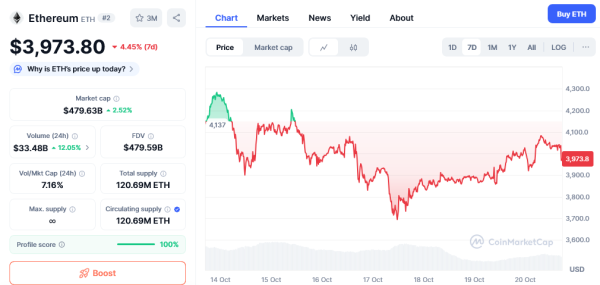
One factor that will likely boost Ethereum’s recovery is ongoing demand for its ETF assets. Analysts expect Ethereum ETF inflows to shoot up in coming weeks. This could cause an ETH value surge, positioning it to become the next crypto to 100x.
XRP bulls are confident in a strong rebound
Ripple investors are eagerly anticipating a strong price surge over the next few months, citing multiple factors that could boost XRP’s performance. Their predictions come amid the ongoing market recovery which could help overturn recent losses sustained on top cryptocurrencies like XRP.
As of October 20, XRP’s value stood at $2.45. This represents a strong improvement from its recent fall to $2.1. Still, as XRP is not fully out of the red zone, its 30-day price charts show a double digit loss.
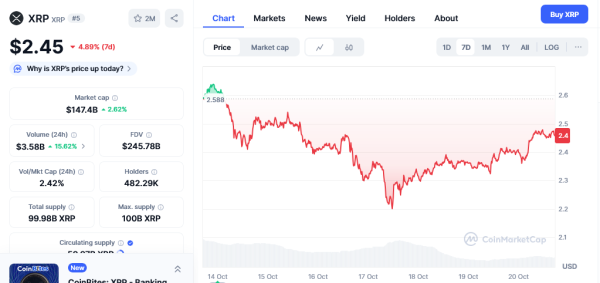
Bulls maintain that the rising institutional demand for XRP could help spur a sharp price recovery over the next few years. The growing demand for its DeFi services could also help spur another price rally that could push XRP to $3.6 before 2026.
Conclusion
The current crypto dip has become a blessing in disguise for early-stage investors as they can acquire highly rated tokens at discounted prices. Investors are taking this approach with DeepSnitch AI, rushing to capitaliize on early gains from stage 2 of its presale.
Early DSNT’s earliest backers are up by 29%. Additionally, sharp investors are quietly accumulating DeepSnitch, alongside other trending tokens this week, following predictions that DSNT might grow by 500x in its first year.
Such growth potential could make DSNT the best crypto to buy now. Secure your tokens now directly from the official presale page before the next DSNT price jump.

Frequently asked questions
Which crypto will boom?
Most investors believe that AI crypto will be among the strongest performers in 2025.
Which crypto will explode in 2025?
DeepSnitch AI is expected to grow by 500x, making it one of the top cryptocurrencies to buy today.
Is Ethereum a good long-term investment?
Ethereum, being the most in-demand DeFi ecosystem, is a good long-term buy for many investors.
Disclaimer
This press release is for informational and educational purposes only and does not constitute investment advice, financial promotion, or an offer to buy or sell any digital asset. Cryptocurrency presales are high-risk ventures that may result in total loss of capital. Readers should conduct independent research and seek professional guidance before participating in any investment.

Comprehensive Guide to Electronic Health Records (EHR) and EHR Software Development
Introduction
It is impossible to ignore EHR in today’s fast-paced Healthcare industry. EHRs have changed the way patient data is handled, with better communication and efficiency that benefits the level of patient care. If you are thinking about building or improving your EHR system, working with a software development company that’s experienced in the field of EHR is vital as it will guarantee that your healthcare management system is secure, proficient and compliant with healthcare standards. In this guide, we’ll go through what EHR is and everything you need to know about it, the benefits of EHR software, and how hiring a trustworthy EHR Software Development Company can make all the difference.
What Is an EHR?
Electronic Health Records (EHR) are the electronic version of patients’ paper charts. They include a patient’s medical history, diagnoses, medications, immunization dates, allergies, radiology images and laboratory test results. These are real-time records that follow visits and treatments from scratch, a crucial part of ongoing patient care.
Among other things, the EHR can be exchanged among various providers, promoting a more coordinated patient care effort. They make sure that everyone who plays a role in caring for the patient has accurate information and therefore makes better choices with the best available data.
Key Features of EHR Systems:
Patient Data Management: Keeps a complete record of patients including medical history, treatment plans and progress notes.
Appointment Scheduling: It automatically schedules and notifies about appointments.
Billing and Coding: Assists with medical billing and coding, decreasing errors and simplifying the billing cycle.
Script Management: Facilitate the management of scripts, minimizing errors in dispensing.
Secure Clinical Messaging: Enables secure communication between physicians and healthcare professionals about patient care.
Advantages Of Electronic Health Records For Healthcare Providers
The use of electronic health record (EHR) in healthcare institutions provides several benefits far beyond traditional data storage. Whether you’re a hospital, clinic or solo practice, implementing an EHR system can help make health care more efficient in general.
Improved Patient Care
EHR systems put more information at the fingertips of clinicians so that they can make better-informed decisions. The result is faster diagnoses with fewer medical errors and better treatment outcomes.
Enhanced Efficiency
EHR are a time saving in manual record keeping & administrating work. Electronic appointment booking, billing automation and prescription management that allow health care workers to spend more time with patients and less on paper work.
Cost Savings
Initial costs of EHR software systems may be an expensive investment, but they can end up costing less over time. Through the reduction of paper-based methodologies, error mitigation, and an acceleration of the billing cycle, EHRs lower associated costs.
Better Collaboration
EHRs is sharable between different providers, it improves doctor-to-specialist and clinic communication. This guarantees the continuation of patient care as well as improved teamwork among medical staff.
Regulatory Compliance
Healthcare rules and policies, such as HIPAA laws, are created to protect the privacy and security of patient information. EHR regulations are in place to enforce this and keep sensitive data safe at rest or in transit.
How EHR Software Development Companies Can Assist What we provide on our sites.
Developing and enhancing an EHR system is not easy, it demands technical skills, customizations, and a high-level of healthcare industry expertise. This is where the EHR software development company steps in. They tailor solutions to fit the specific needs of healthcare providers and to help them address challenges such as interoperability, data security, and user acceptance.
Why It’s Important That You Choose an EHR Software Development Company?
A seasoned EHR software development company has several benefits under their wings as such:
Custom Solutions: Each healthcare operation is unique. A custom software development firm can design a system to your practice needs and that meets your objectives.
Regulation: EHR systems need to stay up-to-date with a wide variety of health regulations. Developers to make sure that your system is also law compliant and the security of data.
User Interface: A decent EHR system is easy to use. Developers concentrate on ensuring that the user interfaces are intuitive and simple for clinicians to operate.
Scalability – Whether you’re see five patients or 500, your EHR system should keep pace with your practice. Developers build to future-proof their systems as your business grows.
Sustained Support: A professional software development company offers ongoing support to make sure your EHR system is always current and performing at its best.
Selecting the Best EHR Software Development Company
Picking the best EHR software development company is paramount to the success of your project. Here are six tips on making the right choice:
Assess Experience and Expertise
Find an IT company specializing in healthcare and medical software development. They need to understand medical workflow, security protocols and compliance specs.
Check for Customization Options
Your practice may have unique needs not shared by others, and you should choose a firm that can provide customized solutions. Ensure the EHR system is customizable to meet your specific needs.
Evaluate Customer Support
Select a company with dependable, ongoing customer service. You’ll require help during implementation, training, and when (not if) something goes wrong after launch.
How satisfied out customers are – Read Customer Testimonials and Case Stuts.
Searching for testimonials, you should get to know the company customer’s opinion and how good their solutions are.
Security and Compliance
Ensure the company is following appropriate regulatory such as HIPAA to keep patient data safe and be in compliance.
Top Errors to Avoid When Adopting EHR Systems
But if there are advantages to implementing EHRs, there are also pitfalls that health care providers should avoid. By knowing these pitfalls this will prevent road bumps and a successful system.
Underestimating the Importance of Training
A huge mistake that healthcare professionals make is not properly training their staff members. Even the most effective EHR system will flop if no one knows how to use it correctly. Ensure thorough training is provided.
Choosing a One-Size-Fits-All Solution
All EHR systems are not created equal. What works at one practice might not work for another. Select an application that can be tailored as well as expanded or contracted to align with your practice requirements.
Ignoring Data Security
It’s important to note that EHR systems house patient data. Lack of security can mean information leaks. Ensure that your EHR vendor is HIPAA-compliant, and that it uses encryption to secure patient information.
Not Involving Healthcare Staff Early
It is vital to involve nursing and administrative staff in planning. Their response will show us some potential blocker, which the system does not address yet.
There are some EHR implementation best practices that may help you.
The adoption of an Electronic Health Record (EHR) system is a complex process that involves thorough planning and execution. Here are a few vital suggestions to add for success:
Planning: Decide your short and long term goals, deadlines and budget before you begin EHR adoption plan.
Get key stakeholders involved: Be sure you have buy-in from the key players in your organization early on and develop a system that works for everyone.
Test Test Test: These tests may be followed by a pilot test to learn of any problems and allow time for refinement before full rollout.
Monitor Progress: Continuously monitor the system to assure it is running successfully and providing value.
Conclusion
Implementation of electronic health record (EHR) systems has the potential to improve quality efficiency and reduce costs in healthcare organizations. Yet, to reap all the rewards of EHRs you need a reliable EHR software development company. They can work with you to create a custom, secure, compliant solution that fits your practice perfectly. A move to fully digital health records can be easy and life-changing, with the right partner.
FAQ
What are the benefits to Electronic Medical Records?
EHRs contribute to patient care by timely access to reliable information but also decreased errors in prescription and administration of medication, better communication between healthcare providers and higher efficiency.
How will an EHR software company assist my practice?
An EHR software development company personalizes your system to fit your unique requirements, ensures that you’re in compliance with the latest regulations, enhances user experience and offers long-term support.
Are EHR systems secure?
Yes, EHR systems come with high level security protocols encryption and user access control to secure patient records and comply with medical regulations.
What are the parameters when it comes to selecting an EHR software development company?
Find a company who specializes in healthcare software and offers customization, good customer support, and is known for delivering compliant/secure systems.
How long does an EHR system implementation take?
How long does it take to implement EHR? The duration for your practice depends on the complexity of your requirements, size of your practice and degree of customization. It may require months to completely roll it out and refine the process.