Author: IndNewsWire

  • Gawk Marketing Empowers Businesses with Data-Driven Digital Growth and Software Innovation

    Gawk Marketing, a results-driven digital growth and marketing firm, is redefining how businesses scale their online presence through cutting-edge SEO, Local SEO, Google My Business (GMB) optimization, and custom software development. With a strong focus on measurable outcomes, the company partners with brands of all sizes to deliver sustainable digital success.

    At its core, Gawk Marketing operates with one mission: to help businesses stand out in competitive markets through strategic optimization and intelligent technology. The firm’s approach combines innovative web solutions with proven marketing strategies, empowering clients to achieve higher search rankings, stronger visibility, and better engagement with their target audiences.

    Comprehensive Digital Growth Solutions

    Gawk Marketing offers an integrated suite of digital services designed to drive measurable results and long-term impact:

    • Search Engine Optimization (SEO): Leveraging in-depth keyword research, technical optimization, and authoritative link-building strategies, Gawk Marketing ensures websites achieve strong organic visibility and attract qualified traffic.
    • Local SEO & GMB Optimization: The firm’s specialized local SEO services are tailored to help businesses dominate local search results. Through GMB profile optimization, local citations, and geo-targeted content strategies, Gawk Marketing enables local businesses to capture their nearby audiences effectively.
    • Website & Software Development: Beyond marketing, Gawk Marketing’s software development team transforms ideas into functional, high-performance websites and applications. Each project emphasizes seamless navigation, modern aesthetics, and conversion-oriented design.
    • Private Cloud Hosting: To complement its marketing and development services, Gawk Marketing provides secure and scalable private cloud hosting solutions, offering clients enhanced performance, reliability, and peace of mind.

    A Vision for Data-Driven Growth

    What sets Gawk Marketing apart is its data-first philosophy. Every strategy begins with deep analytics evaluating audience behavior, traffic patterns, and competitive landscapes to craft personalized roadmaps for success. Clients gain access to transparent reporting and measurable performance indicators, ensuring complete visibility into their digital growth.

    “We don’t believe in guesswork,” said a spokesperson for Gawk Marketing. “Every recommendation we make is rooted in real data and actionable insights. Our goal is not only to drive visibility but to convert that visibility into tangible business growth.”

    Partnering for Success

    From startups to established enterprises, Gawk Marketing’s client base spans industries including retail, real estate, healthcare, and technology. The firm prides itself on developing long-term partnerships built on trust, communication, and consistent results. Each campaign is uniquely tailored to align with the client’s brand identity, audience expectations, and growth objectives.

    Whether it’s a local business looking to improve its map rankings or a company aiming to scale with powerful web solutions, Gawk Marketing delivers strategies that are both innovative and impactful.

    About Gawk Marketing

    Gawk Marketing is a leading digital growth and marketing agency dedicated to helping businesses expand their online presence through advanced SEO, local SEO, GMB optimization, and software development solutions. With a commitment to measurable results and long-term growth, Gawk Marketing has become a trusted partner for companies seeking to elevate their digital performance and brand visibility.

    To learn more, visit: https://gawkmarketing.com

  • GROK64G: This can change everything, you need to know

    The first generation of AI systems learned to see. The second learned to speak. Now, as the third generation emerges, machines are learning something profoundly human — how to transact and collaborate.

    That evolution is what GROK64G is designed to enable. It’s an ambitious initiative that merges blockchain’s trust infrastructure with AI’s cognitive power, creating a digital foundation where machines can earn, spend, and exchange value autonomously.

    While most AI systems still rely on humans for economic decision-making, GROK64G envisions a world where autonomous systems engage directly in digital markets — making payments, managing resources, and negotiating terms without oversight.

    From Algorithmic Tools to Economic Agents

    The shift from centralized AI to distributed machine intelligence is already underway. Enterprises are experimenting with agent-based systems that can operate independently — analyzing, predicting, and acting in real time.

    But without a secure, decentralized economy, these systems hit a wall. How can an AI pay for a data stream? How can it verify an identity, or license a model from another algorithm?

    GROK64G solves these problems through a trust-minimized economic layer purpose-built for AI. By combining machine learning logic with blockchain verification, it enables AIs to perform transactions that are both auditable and autonomous.

    In effect, GROK64G creates the economic nervous system for machine intelligence — a network where software can buy, sell, and cooperate without centralized control.

    The Technical Foundation

    GROK64G’s infrastructure is designed to handle the unique demands of AI-driven ecosystems: high frequency, low latency, and scalability across billions of automated interactions.

    • Consensus Protocol: GROK64G employs a hybrid proof-of-stake and adaptive validation model, ensuring both security and speed for real-time applications.
    • Smart Logic Engine: Its smart contracts are powered by AI-assisted reasoning modules, allowing for conditional updates and self-correction based on contextual input.
    • Interoperability Layer: GROK64G supports seamless integration with major blockchain networks and AI frameworks, ensuring that developers can bridge traditional data systems with autonomous AI environments.

    This architecture makes GROK64G less of a single platform and more of a connective layer between existing digital economies and emerging machine ecosystems.

    Why Transparency Matters

    AI adoption has outpaced our ability to explain it. From financial markets to healthcare diagnostics, decisions made by algorithms often lack visibility. GROK64G addresses that by logging every action, transaction, and model update on-chain.

    The result is a verifiable audit trail for machine behavior — a critical safeguard as AI begins to manage larger segments of infrastructure and finance. It’s a model that encourages accountability without stifling innovation.

    Building Toward the Machine Economy

    GROK64G’s ultimate vision is the creation of a self-sustaining machine economy. Picture fleets of delivery drones that autonomously purchase charging time, or virtual assistants that subscribe to premium data feeds on their own. Each of these exchanges is settled transparently through GROK64G’s decentralized network.

    This framework not only reduces operational friction but also opens new business models. Companies can deploy autonomous agents that manage entire digital supply chains, dynamically responding to cost and demand signals.

    Governance and Community

    One of GROK64G’s most forward-thinking aspects is its open governance model. Stakeholders — from developers to AI operators — have the power to shape updates and policy through on-chain voting mechanisms. This ensures that the ecosystem evolves in sync with its users, not at the whim of centralized authorities.

    By giving both humans and algorithms a say in the network’s future, GROK64G embraces the reality that the next generation of digital systems will be collaborative by design — between people and machines alike.

    The Next Step in Intelligent Automation

    GROK64G is more than a platform — it’s a philosophical shift in how we think about AI. Instead of viewing machines as tools, it treats them as actors within an interconnected economy.

    If successful, GROK64G could redefine how automation operates — not as a back-end function but as a fully-fledged participant in the digital economy, capable of managing assets, executing agreements, and even forming partnerships.

    This is what makes GROK64G one of the most intriguing developments in the ongoing convergence of blockchain and artificial intelligence: it’s a system not designed for machines, but with them in mind.

    Disclaimer:
    This article is for informational purposes only and does not constitute financial advice. Cryptocurrency investments carry risk, including total loss of capital. Readers should conduct independent research and consult licensed advisors before making any financial decisions.

    All market analysis and token data are for informational purposes only and do not constitute financial advice. Readers should conduct independent research and consult licensed advisors before investing.

  • Michael Matthew Powerballller: From Las Vegas Luxury to Global Finance Leadership thumbnail

    Michael Matthew Powerballller: From Las Vegas Luxury to Global Finance Leadership

    Las Vegas, NV – October 29, 2025 – Few modern entrepreneurs embody the art of transformation quite like Michael Matthew Powerballller, Managing Partner at BlackRidge & Co. What began in the vibrant nightlife scene of Las Vegas has evolved into leadership within one of the world’s most connected financial advisory firms — overseeing a network with an AUM exceeding $80 billion.

    With an early career built on the foundations of elite events and luxury experiences, Powerballller transitioned from the entertainment world to global finance with vision and precision. Today, his focus lies in bridging private wealth, innovation, and legacy — helping clients navigate complex global markets while maintaining a strong culture of trust and excellence.

    “To really be ahead, you have to be different,” says Powerballller. “True success is built on originality, strategy, and the courage to evolve.”

    Under his leadership, BlackRidge & Co. has become a trusted name among global investors and institutions, managing assets and advisory partnerships across continents. The firm’s forward-thinking approach reflects Powerballller’s personal philosophy — blending high-level financial expertise with a deep understanding of human connection and strategic influence.

    As Powerballller continues to expand his impact, his digital presence has become a cornerstone of his growing personal brand. Through his platforms —
    Instagram: @powerballller
     TikTok: @powerballller
     Threads: @powerballller
     — he offers a glimpse into both his entrepreneurial journey and the mindset behind his success.

    From Las Vegas luxury to international finance, Michael Matthew Powerballller stands as an example of modern reinvention — proving that ambition, adaptability, and authenticity remain the true currencies of global leadership.

    About BlackRidge & Co.
     BlackRidge & Co. is a premier financial advisory firm specializing in asset management, private investment strategies, and global financial consulting. The firm’s mission is to help clients achieve sustainable growth through strategic partnerships, innovation, and expert guidance.

  • Skip the Chaos: Whitelist Crypto Investors Are Winning Big With the Milk Mocha ($HUGS) Memecoin Launch thumbnail

    Skip the Chaos: Whitelist Crypto Investors Are Winning Big With the Milk Mocha ($HUGS) Memecoin Launch

    Most investors want success without the struggle, but few recognize when the shortcut is right in front of them. For Milk Mocha Token ($HUGS), that shortcut is the whitelist, a rare window where entry is easy, the price is low, and the potential upside is high. The moment the whitelist closes, the real work begins: chasing listings, paying inflated prices, and competing with thousands of buyers.

    With $HUGS currently in presale, the clock is ticking. The project has already gained traction as one of the top crypto presales of 2025, driven by its mix of emotional storytelling, fandom-backed NFTs, and a fully transparent ecosystem. The whitelist is open for now, no KYC, no gas fees, just your email, but those who wait will face a very different landscape once the public phase begins.

    Emotional IPs: The Missed Goldmine

    Milk Mocha started as two adorable bears with global fandom, hundreds of millions of views, memes, and merchandise sold across platforms. But beneath that sweetness lies a serious financial opportunity that most investors overlook. Emotional IPs like Milk Mocha carry something that typical crypto tokens don’t: built-in community and trust.

    The $HUGS memecoin launch transforms that cultural love into utility, where fans can stake, shop, play, and participate in DAO governance. Each NFT, plush, and mini-game reinforces the ecosystem’s value, creating an emotional and financial loop that drives organic growth. Yet, many traders hesitate, dismissing emotional tokens as “too cute”, a mistake that could cost them entry at the best possible point.

    As history shows, early access defines winners. Whitelist members get priority pricing, exclusive NFTs, and access to staking before the crowd catches on. It’s a strategy of timing, not luck.

    Whitelist Crypto: The Smart Investor’s Shortcut

    The whitelist crypto phase isn’t just early access, it’s leverage. It lets investors skip the future chaos of price surges, gas spikes, and allocation caps. In the case of $HUGS, it means buying before the emotional marketing wave hits full speed. Influencers, YouTubers, and crypto analysts are already beginning to mention Milk Mocha as one of the top crypto to buy now, precisely because of its cultural familiarity and mass-market appeal.

    Right now, whitelist access is effortless, no forms, no verification, no token burns. But when the whitelist ends, the simplicity ends too. Latecomers will fight for allocations, navigate volatile price movements, and deal with the inevitable FOMO noise that follows every strong memecoin launch.

    This is what separates strategic investors from reactive ones: the willingness to move before everyone else realizes what’s coming.

    Effort vs Reward: What Happens After

    Let’s spell it out. When the whitelist closes, everything becomes harder.
    Gas fees rise. Public sales get crowded. Entry prices multiply. And suddenly, what was once a smooth opportunity turns into a race against the clock. Whitelisted buyers will have already secured their positions while others scramble to catch up.

    This is why smart investors call the whitelist the shortcut, it’s not just early access; it’s efficient access. No competing orders, no high transaction fees, and no need to react to market hype. The effort you save now becomes the reward you enjoy later.

    Meanwhile, those who wait for launch day will face what every post-whitelist market faces, noise, speculation, and fatigue. And by then, the narrative will have shifted from “get in early” to “you should have joined the whitelist.”

    The Calm Before the Viral Storm

    There’s a familiar pattern in every strong memecoin story: first, quiet accumulation during whitelist; then, chaos once the public phase hits. $HUGS is following that same rhythm, calm now, storm later. With Milk Mocha presale heating up, investors are hunting for tokens that blend community with long-term mechanics. Milk Mocha checks both boxes.

    The ecosystem isn’t just about cute branding. It’s built on token utility, NFT-linked authenticity, DAO voting, and a deflationary design that rewards holders. Add emotional resonance to that, and you get a formula that historically leads to viral growth.

    Right now, whitelist access is the last peaceful moment before demand surges. Once influencers flood social media and early-stage investors share their profits, entry will no longer be effortless, it will be expensive.

    The Smartest Move Is the Easiest, For Now

    Every major crypto success starts with one simple truth: the best opportunities feel small right before they explode. Milk Mocha ($HUGS) represents that window, a memecoin built on emotion, culture, and utility. The whitelist is still open, and it costs nothing but an email to secure a spot.

    This is the shortcut, the one most overlook until it’s gone. Once the whitelist closes, effort replaces opportunity. The smartest move is also the simplest: join the whitelist now before the viral phase begins. No KYC, no delay, just your email and the chance to be early on what could become the top crypto to buy now in crypto presales 2025.

    Join the whitelist now, no KYC, just your email.

    Explore Milk Mocha Now:

    Website: ​​https://www.milkmocha.com/

    X: https://x.com/Milkmochahugs

    Telegram: https://t.me/MilkMochaHugs

    Instagram: https://www.instagram.com/milkmochahugs/

    Disclaimer:
    This article is for informational purposes only and does not constitute financial advice. Cryptocurrency investments carry risk, including total loss of capital. Readers should conduct independent research and consult licensed advisors before making any financial decisions.

    All market analysis and token data are for informational purposes only and do not constitute financial advice. Readers should conduct independent research and consult licensed advisors before investing.

    Crypto Press Release Distribution by BTCPressWire.com

  • BlockDAG’s 2025 Contender Status: Audited Code, Testnet Proof, & Transparent Leadership Under CEO Antony Turner thumbnail

    BlockDAG’s 2025 Contender Status: Audited Code, Testnet Proof, & Transparent Leadership Under CEO Antony Turner

    In a crypto landscape often dominated by hype and anonymous teams, BlockDAG is gaining attention for something less common: verifiability. With nearly $435 million raised in presale through fully auditable on-chain presale rounds, the project is positioning itself not just as a blockchain but as a test case in transparency. 

    Analysts increasingly cite BlockDAG’s public smart contracts, leadership with verifiable credentials, and documented milestones as indicators of structural legitimacy. This isn’t about short-term buzz; it’s about building lasting trust. 

    As market participants seek measurable proof before investing, BlockDAG’s open governance and real-world traction place it among 2025’s most credible Layer-1 contenders.  

    Transparency and Structure Behind BlockDAG’s Growth

    Unlike typical coin launches that rely heavily on marketing claims, BlockDAG’s traction is grounded in publicly accessible verification. Its presale campaign, which has raised nearly $435 million in transparent on-chain transactions, has been validated through smart contract tracking and regular progress reports published by the company. This structured and phased approach, divided into over 30 funding rounds, allows participants to review allocation data before engagement. 

    Analysts have highlighted that the team’s decision to make presale metrics auditable differentiates BlockDAG from earlier-generation projects that lacked such oversight. Instead of speculative hype, BlockDAG’s value proposition is built around visibility: real batch data, a functioning testnet, and an identifiable executive team with verifiable corporate backgrounds. This combination of traceability and leadership accountability contributes to its growing reputation as a legitimate Layer-1 network.

    Leadership with Institutional Credentials

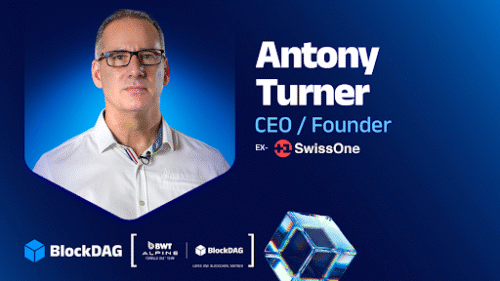
    The project’s credibility is reinforced by its leadership. Antony Turner, BlockDAG’s Founder and CEO, previously served as COO of Spirit Blockchain Capital, a listed blockchain investment firm. He also founded SwissOne Capital, which launched one of Switzerland’s earliest equally weighted crypto index funds. His experience in regulated financial environments provides governance assurance rarely seen in early-stage blockchain ventures.

    Supporting him is Jeremy Harkness, the Chief Technology Officer, who brings a background in blockchain systems engineering, AI, and distributed architectures. Security oversight is led by Dr. Prof. Youssef Khaoulaj, a former Group Chief Security Architect at Intelcia Group and educator at Université Internationale de Rabat. Analysts have noted that this leadership structure, with identifiable, credentialed figures tied to verifiable organizations, contrasts sharply with anonymous or pseudonymous teams that often dominate the Layer-1 sector.

    Other notable contributors include Steven Clarke, Senior Advisor for Partnerships Policy, Dr. Maurice Herlihy, a Harvard and MIT academic specializing in distributed computing, and Marius Bock, Lead Project Manager with prior experience at Cardano (via Input Output). Together, these profiles indicate an executive team built for operational follow-through, not just concept creation.

    Verification Over Promotion: Why Analysts See Credibility

    In recent assessments by crypto research groups and independent analysts, BlockDAG’s “legitimacy” has often been tied to a simple factor, verification. The project has released a working testnet demonstrating operational Proof-of-Work and DAG-based consensus models. Additionally, audited codebases and test miner deployments have been showcased publicly through community streams and documentation.

    Whereas many new chains market theoretical advantages, BlockDAG has opted for practical demonstrations and real data. The audit transparency and technical releases allow analysts to validate claims independently, reducing the risk of information asymmetry common in early blockchain investments. The presence of functioning miner hardware and consistent dev updates has further strengthened institutional confidence, aligning the project with traditional due diligence standards.

    Partnerships also play a role in these evaluations. While specific names are under non-disclosure, confirmed collaborations with blockchain infrastructure firms and mining hardware suppliers indicate a growing operational footprint. Analysts emphasize that these verifiable relationships, combined with an open governance model, give BlockDAG measurable traction beyond marketing narratives.

    Institutional and Retail Alignment

    Another aspect analysts cite as a legitimacy marker is how BlockDAG’s governance and coin allocation mirror institutional expectations. Ownership in the protocol is distributed across presale participants, with no single controlling entity holding an overwhelming stake. This decentralized model allows BlockDAG to maintain independence from external venture dominance while still attracting significant capital participation.

    For institutions, this structure mitigates centralization risk, a recurring issue with crypto projects tied to single-founder control. Instead, BlockDAG’s ownership and governance reflect the ethos of equitable participation. The open nature of its smart contracts and presale disclosures allows compliance teams to perform checks similar to those applied in traditional capital markets.

    This alignment of retail access and institutional-grade transparency has encouraged analysts to describe BlockDAG as one of the few early-stage projects that balance decentralization with regulatory awareness.

    Analyst Consensus and Market Outlook

    While analysts refrain from making price predictions, many have highlighted BlockDAG’s progression from concept to execution within a relatively short period. From verifiable presale records to operational testnets and hardware integration, the project has fulfilled most technical milestones outlined in its early documentation. The fact that BlockDAG’s fundraising has raised nearly $435 million without reliance on centralized exchanges reflects growing user trust in its structure and leadership.

    Reports also suggest that the project’s focus on hybrid Proof-of-Work and DAG architecture could attract miners seeking efficiency and scalability, offering both institutional and technical appeal. Its governance documentation and compliance-readiness framework further support its “legit contender” reputation among due diligence-driven observers.

    Legitimacy Through Verification, Not Speculation

    Analysts characterizing BlockDAG as a “legit contender” for 2025 are basing their assessments on verifiable metrics rather than narrative-driven hype. The combination of a nearly $435 million audited presale, transparent governance led by named executives, functioning infrastructure, and consistent public disclosures sets BlockDAG apart from typical early blockchain ventures.

    As more buyers, both institutional and retail, prioritize demonstrable accountability, BlockDAG’s model offers a practical framework for how future Layer-1 networks can establish trust. Its credibility does not rest on abstract promises but on transparent, confirmable progress that aligns with industry best practices. In an environment where proof outweighs promotion, BlockDAG’s steady development positions it as one of 2025’s most closely watched and credible blockchain projects.

    Presale: https://purchase.blockdag.network

    Website: https://blockdag.network

    Telegram: https://t.me/blockDAGnetworkOfficial

    Discord: https://discord.gg/Q7BxghMVyu 

    Disclaimer:
    This article is for informational purposes only and does not constitute financial advice. Cryptocurrency investments carry risk, including total loss of capital. Readers should conduct independent research and consult licensed advisors before making any financial decisions.

    All market analysis and token data are for informational purposes only and do not constitute financial advice. Readers should conduct independent research and consult licensed advisors before investing.

    Crypto Press Release Distribution by BTCPressWire.com

  • Top Performing Crypto: BlockDAG, Cardano, Stellar & Aster Lead 2025’s New Market Surge thumbnail

    Top Performing Crypto: BlockDAG, Cardano, Stellar & Aster Lead 2025’s New Market Surge

    As the 2025 crypto landscape evolves, the focus is shifting toward projects that balance innovation, scalability, and user support. Among this wave of high-utility contenders, BlockDAG (BDAG) has emerged as one of the top-performing crypto projects ahead of its mainnet debut.

    With $434M+ raised and 3M+ active miners, BlockDAG’s hybrid framework and major brand collaborations are driving strong global attention. Meanwhile, Cardano (ADA), Stellar (XLM), and Aster (ASTER) continue showing consistent growth through ongoing ecosystem activity, though none match BlockDAG’s pace or presale demand at this stage.

    This period signals a defining market shift where projects offering both technological strength and accessibility are taking the lead. BlockDAG’s rise highlights more than a presale trend; it represents a wider move toward scalable, next-generation Layer-1 networks.

    BlockDAG (BDAG): The Countdown to the Next Big Leap

    Analysts refer to this phase as the “final accumulation window,” and current data supports the claim. Batch 31 of BlockDAG’s presale is nearing completion, with the price fixed at $0.0015 before its confirmed $0.05 mainnet listing. That indicates a potential  return, making it one of the top performing crypto opportunities of recent years. The project has already raised over $434 million, sold more than 27.1 billion BDAG coins, and built a global community of 3 million miners and 312,000 holders, figures rarely seen before a network launch.

    BlockDAG’s advanced DAG and Proof-of-Work blend allows for high efficiency and network reliability, achieving 1,400 TPS on the live Awakening Testnet. Its partnership with the BWT Alpine F1 Team has also elevated its public profile, merging technology and brand visibility on a global scale. 

    Experts note that major market participants are beginning to accumulate BDAG in anticipation of potential breakout performance similar to early Ethereum or Solana trends. As GENESIS DAY draws near, BlockDAG’s expanding community, technical progress, and credible structure confirm its position as one of the top performing crypto projects to watch in 2025.

    Cardano (ADA): Gaining Ground Through Steady Progress

    Cardano (ADA) is quietly making a comeback, showing a 3.2% rise in the last 24 hours and a 5% increase over the week. On-chain metrics indicate that around 180 million ADA have recently moved into large wallets.

    Even with limited headline news lately, this gradual rise in demand places Cardano among the top-performing crypto assets.

    Cardano’s deliberate development process continues to appeal to those who focus on real progress. The calm surrounding Cardano often precedes major upswings, supported by its history of resilience. For those seeking a stable Layer-1 project with consistent development, Cardano remains one of the top-performing crypto assets driven by fundamentals and sustained network strength.

    Stellar (XLM): Quiet Momentum With Steady Purpose

    Stellar (XLM) may not be making big headlines, but its purpose-driven approach continues to shine. Currently trading around $0.33, XLM’s steady price movement reflects its strength as a network supporting fast, affordable cross-border payments. Although there have been few recent announcements, earlier integrations and global collaborations keep it ranked as one of the top performing crypto projects for real-world usability.

    Built on the goal of financial inclusion, Stellar offers accessible and low-cost solutions for individuals and enterprises. Its consistent technical reliability and regulatory compatibility make it stand out among Layer-1 projects. For those seeking sustainable growth and lasting impact, Stellar maintains its position among the top-performing crypto options, focusing on utility and reliability.

    Aster (ASTER): The DeFi Builder Preparing for Its Next Move

    Aster (ASTER) continues to prove its relevance in the decentralized finance space, with its total value locked climbing from $370 million to $1.2 billion in recent months. Although the pace of updates has slowed recently, Aster’s ecosystem expansion and strong trading volume confirm its durability.

    High-volatility assets like Aster often pause before major recoveries. Reports show large-scale holders remain active in swaps and liquidity operations, signaling belief in its future growth. As the next phase of decentralized exchange innovation unfolds, Aster’s infrastructure could position it for renewed leadership. While execution challenges exist, its fundamentals and track record make it one of the top-performing crypto choices focused on DeFi advancement and growth.

    Conclusion 

    The next market wave will reward projects that unite practical use with consistent momentum, and BlockDAG is setting that pace. While Cardano, Stellar, and Aster continue to strengthen their ecosystems, none match BlockDAG’s scale or community reach.

    Having raised over $434 million, with more than 27.1 billion coins sold and 3 million miners active, BlockDAG’s mix of real progress and wide adoption places it among the top-performing crypto assets today. As GENESIS DAY nears, participants face a key decision: engage in what could become a major Layer-1 success story or stand by as early adopters gain from its growth. For those seeking strong conviction paired with opportunity, BlockDAG remains unmatched as the top-performing crypto, leading the 2025 blockchain evolution.

    Disclaimer:
    This article is for informational purposes only and does not constitute financial advice. Cryptocurrency investments carry risk, including total loss of capital. Readers should conduct independent research and consult licensed advisors before making any financial decisions.

    All market analysis and token data are for informational purposes only and do not constitute financial advice. Readers should conduct independent research and consult licensed advisors before investing.

    Crypto Press Release Distribution by BTCPressWire.com

  • How Lunacal became on of the fastest growing appointment scheduling software

    Lunacal.ai didn’t start with a big launch. It started with a question.

    “If someone is ready to meet you – if they’ve clicked your calendar link – why are we showing them nothing?”

    That was the core frustration behind Lunacal, a new appointment scheduling tool that has quietly found its way onto the booking pages of more than 1,000 businesses just months after launch.

    This isn’t a story about building a better calendar API. It’s a story about treating a previously overlooked surface – the calendar scheduling page – as high-intent real estate.

    In a world where online appointment booking has become default behavior, most scheduling software still presents users with a stripped-down screen: a calendar, a name field, and a button.

    That design made sense when scheduling was purely functional. But the moment someone decides to book a time is no longer just about logistics – it’s often the moment of conversion. And Lunacal.ai is betting that what happens at that moment determines whether the meeting leads to anything meaningful.

    The calendar link is now your first impression

    The calendar scheduling page wasn’t supposed to matter this much. It was always seen as plumbing — the back-office tool that simply solved a problem.

    But online behavior has changed. Over 67% of consumers now prefer to book appointments online, according to multiple studies. Nearly 40% of these bookings happen after hours — when there’s no sales rep, no founder, no front desk, just the link.

    That link is your landing page. For most businesses, it’s the only page prospects see before the meeting.

    “We’ve used 5 other scheduling tools over the years, and Lunacal.ai is certainly better than anything we’ve tried”, said an university admin who has setup lunacal as a class scheduling system

    And it looks like everyone else’s.

    That’s the problem Lunacal was built to solve.

    Instead of showing the same empty date picker, Lunacal pages allow hosts to include context: who they are, what they do, what the person booking should know. You can add testimonials, embed videos, upload case studies, or even show a gallery of past work — all right beside your calendar.

    This idea — that the calendar link can sell — is already resonating with independent consultants, sales teams, coaches, and freelancers who run their businesses entirely through inbound bookings.

    The appeal isn’t hard to see: rather than send someone to a separate portfolio or About page, you meet them where they’re most ready to act — inside the booking experience itself.

    A quiet but fast-growing calendar scheduling software

    Lunacal enters a market with established incumbents.

    But for many users, these platforms feel too generic. They’re great at handling calendar logistics but poor at carrying brand, trust, and individuality – especially for people who sell themselves as part of the service.

    “I didn’t want a new scheduling link. I wanted a page that looked like me,” says one early user, a startup advisor based in Berlin.

    Lunacal is not trying to replace the calendar infrastructure. It integrates with Google Calendar, Outlook, Zoom, and payment platforms just like its competitors. But its surface layer — what visitors actually see — is where it breaks convention.

    It’s a subtle but important shift. Instead of trying to win by building deeper integrations or larger enterprise features, Lunacal is carving out space by rethinking what the scheduling page even is.

    The moment of scheduling is the moment of belief

    The product’s premise goes beyond design. It’s behavioral.

    In B2B sales, especially for small teams and consultants, the biggest drop-off doesn’t happen during the call — it happens before. A person finds your site, reads your pitch, maybe even watches a video. They click the “Book a Call” link. And then… the momentum dies.

    That’s often because the page they land on feels generic. There’s no reassurance that they’re in the right place. No context. No warmth. No conversion cues.

    Lunacal argues that the calendar scheduling page is not just a link in the funnel — it is the funnel. By the time someone reaches it, their attention is at its peak. Every second on that page is a chance to close the gap between interest and belief.

    This isn’t theory — it’s measurable. Conversion optimization agencies have started to experiment with scheduling-page design as a lever. And in industries where services are expensive or trust-intensive — like coaching, fractional leadership, or boutique consulting — early signals from Lunacal users suggest higher conversion rates simply by showing more proof on the booking page.

    Why this matters now

    The broader context supports Lunacal’s bet.

    The appointment scheduling software market is projected to grow from $470.7 million in 2024 to over $1.5 billion by 2032 — a compound annual growth rate of 15.7%. The trend is powered by several shifts: increasing remote work, rising demand for self-service tools, and a move toward asynchronous customer interaction.

    These trends aren’t just about technology. They’re about behavior.

    More people are choosing when to book, how to book, and whether they trust the person on the other end — all on their own time, without speaking to anyone. In that environment, every self-serve surface becomes a branding opportunity.

    This is what makes the calendar link such an unusual battleground. It’s quiet. It’s invisible. But it’s the final step before someone agrees to spend time with you.

    And in a world full of distractions, attention at that stage is too valuable to waste.

    From freelancers to industries: why adoption moved fast

    Lunacal’s first wave of users included solo consultants, marketing coaches, and agency founders — people who lived on calendar links but never felt good about how those links represented them.

    But something shifted once the platform added customizable sections and visuals.

    Fitness trainers started using it to share transformation photos and add packages for trial sessions.

    Therapists added FAQs and disclaimers before allowing bookings.

    Realtors uploaded home previews and segmented bookings by interest (residential vs. commercial).

    Photographers used the page as a live booking+portfolio hybrid, with pricing, past shoots, and testimonials all in one place.

    What united all of these use cases wasn’t industry — it was the format.

    Every one of these professionals used a calendar link as the front door to their business. And none of them were okay with that door being blank anymore.

    Rapid feature growth, driven by real-world use

    New use cases kept expanding, and so did the features. Here are some examples of how Lunacal adapted fast:

    1. Paid bookings and discount coupons

    Freelancers and coaches asked for a way to charge for sessions. Stripe integration launched first, followed by discount coupons for seasonal offers and trial sessions. You can now create percentage-based or fixed-value coupons with expiry and usage limits.

    Use case: A parenting coach offers a 20% discount for first-time clients via Instagram stories — using a Lunacal coupon code that expires in 48 hours.

    2. Page backgrounds and branding control

    What began as a user complaint (“Why is my page so white?”) became a full visual customization feature. Today, Lunacal pages support background images, colors, gradients, and even animated patterns.

    Use case: A fashion stylist uses a muted beige theme with fabric textures in the background to match her website aesthetic.

    3. Custom links and embeds

    Initially, Lunacal supported social icons. Then users started asking to embed their Notion playbooks, Airtable forms, Calendars of events, and more. Now, you can add any link — not just social — to the page.

    Use case: A SaaS founder embeds a Notion page explaining pricing tiers and onboarding steps so people know what to expect before booking.

    4. Multi-event and multi-location support

    Agencies and therapists with multiple offices needed separate calendars. The product now supports multiple event types, each with their own rules, durations, pricing, and buffers.

    Use case: A creative agency offers “Intro Call,” “Strategy Deep Dive,” and “Retainer Kickoff” as separate event types, each with different payment logic and team involvement.

    5. Routing logic for teams

    Sales teams asked for automatic routing. If a visitor selects “I’m interested in product A” vs. “product B,” the meeting can now be routed to different reps or calendars — via conditional form logic.

    Use case: A SaaS company’s demo page routes fintech prospects to rep #1 and eCommerce leads to rep #2 — all through one calendar link.

    Global timezone detection, multi-language UI

    Because appointment booking often crosses borders, Lunacal added automatic timezone detection from day one. A visitor from São Paulo sees all times in their local timezone, even if the host is in Berlin.

    More recently, multi-language support was added. The product is now translated into Spanish, German, Portuguese, and French — with more languages in progress.

    For industries like therapy and tutoring, where local language makes a difference, this support isn’t a feature — it’s a deal-breaker.

    AppSumo: the first big unlock

    Lunacal listed on AppSumo in 2025, hoping to reach early adopters and solopreneurs who were dissatisfied with their current appointment scheduling software.

    It didn’t take long to find traction.

    Thousands of people started exploring the platform. Freelancers and coaches replaced tools like Acuity Scheduling and SimplyBook. Agency owners who previously stitched together form builders with calendar links finally found something that did both — and looked good doing it.

    But more than the volume, it was the variety that stood out:

    • A productivity YouTuber in Poland using Lunacal to book sponsor calls 
    • A yoga studio in Brazil embedding a fully branded calendar on its homepage 
    • A career coach in the US replacing three tools with just one link 

    The AppSumo community didn’t just use Lunacal — they gave feedback constantly, tested edge cases, and pushed the platform to evolve.

    People aren’t adding Lunacal. They’re replacing old tools.

    A pattern emerged early on: new users weren’t just trying Lunacal — they were switching.

    For most, the calendar link had become their most clicked URL — shared on LinkedIn bios, websites, WhatsApp chats, and newsletters. They wanted that link to say more than just “I’m free.”

    Lunacal gave them that — without adding friction.

    Affiliate program: letting users drive the next wave

    In Oct 2025, Lunacal launched a generous affiliate program – 30% recurring commission for every referred user.

    The logic was simple: if users were already tweeting about it, demoing it to friends, or posting reviews on Reddit and Slack groups, they should get rewarded for it.

    Unlike typical SaaS affiliate programs that offer one-time payouts, Lunacal’s recurring model aligns with long-term value. It’s not a gimmick. It’s part of how the product grows: by being seen, used, and loved in public.

    And it’s already working. Over half of new signups in the last 30 days came from affiliate referrals — often via podcasts, newsletters, and quiet DMs from people who had switched and didn’t look back.

    The trust shift is already happening

    People aren’t switching to Lunacal because it’s cheaper. They’re switching because it helps them say more in the moment that matters most.

    That moment — when someone opens your calendar link — is no longer transactional. It’s emotional. It’s reputational. It’s the difference between a no-show and a new client.

    Appointment scheduling software used to be about what time works best.
    In 2025, it’s about why you’re worth meeting.

    That’s the shift Lunacal is riding.

    And that’s why it isn’t just “another Calendly alternative.”

    It’s something new — a calendar scheduling tool built to convert, to impress, and to grow alongside the people who use it.


  • Battery Load Testing Explained: How to Use a Battery Load Tester for Accurate Results

    Every battery has a story to tell, but you only hear it when it’s put under pressure. Load testing lets you see how a battery truly performs when asked to deliver power — not just when it’s sitting idle on charge.

    What Is Battery Load Testing and Why Does It Matter

    Battery load testing is the process of checking how well a battery can deliver current when an actual demand is placed on it. Instead of relying on open-circuit voltage or theoretical ratings, load testing replicates real operating conditions — the kind your UPS, vehicle, or power system faces during a real outage or peak load.

    When you perform a battery load tester check, you’re not just measuring numbers — you’re evaluating the health and resilience of your energy storage system. Batteries naturally degrade over time, losing their ability to hold or deliver charge efficiently. Without testing, that decline can remain hidden until failure hits at the worst possible time.

    For industrial systems, hospitals, or data centers, a failed battery isn’t a small inconvenience — it can stop critical operations, damage equipment, or even violate compliance standards. Regular load testing helps detect issues early, supports predictive maintenance, and keeps your backup systems ready when the lights go out.

    How a Battery Load Tester Works

    Simulating Real Conditions

    A load tester creates a controlled resistance that forces the battery to discharge as it would in actual use. This simulation reveals how voltage drops and how long the battery can maintain a stable current. Unlike a simple voltage meter, it stresses the battery to show how it behaves under strain — just like an athlete being tested for endurance, not just standing still.

    Measuring Voltage and Current

    The tester measures both voltage and current in real time, calculating the battery’s ability to deliver power efficiently. The results help you understand whether the battery still meets its rated capacity or if it’s time for replacement.

    Evaluating Performance Over Time

    By comparing results from multiple tests, you can track degradation trends. A well-documented battery load test history gives you visibility into battery health, helping avoid unexpected downtime and budget surprises.

    Step-by-Step Guide to Battery Load Testing

    Step 1: Preparation and Inspection

    Before any testing, visually inspect the battery. Look for corrosion, loose terminals, and physical damage. Check that it’s fully charged — testing a half-charged battery gives misleading results. In large systems, isolate the battery or string from active loads to ensure safety and accuracy.

    Step 2: Setting Up the Load Tester

    Connect your tester following the manufacturer’s instructions, paying attention to polarity and tight contact points. For UPS or industrial setups, use a programmable tester capable of applying variable loads. Safety comes first — wear gloves, safety glasses, and ensure good ventilation if you’re testing lead-acid batteries.

    Step 3: Running the Test

    Apply the load for a set duration, typically 10 to 15 seconds for small batteries or several minutes for larger ones. Watch how voltage behaves during the test. A healthy battery maintains stable voltage under load, while a weak one drops sharply.

    Step 4: Recording and Interpreting Data

    After completing the battery load test procedure, compare the measured values to the manufacturer’s specifications. Batteries that fall below 80% of rated voltage under load are considered candidates for replacement.

    Typical Results and What They Mean

    The beauty of a battery load test is that it delivers clear, quantitative results that can be tracked over time. Generally, you’ll see one of the following outcomes:

    Stable voltage: The battery performs well and retains sufficient capacity.

    Moderate drop: Indicates partial aging — monitor closely and retest soon.

    Severe drop or collapse: The battery is nearing end-of-life or has an internal fault.

    Tracking battery load test results helps you make informed decisions about maintenance and replacement cycles. It’s not just about one reading — it’s about observing how each test compares with historical performance data.

    Tools You Need for Reliable Load Testing

    A complete battery load tester setup includes a few essential tools to ensure accurate and consistent measurements:

    Load tester unit: Applies a controlled electrical load to the battery. Choose one rated for your system’s voltage and capacity.

    Digital multimeter: Confirms voltage readings and cross-checks tester accuracy.

    Temperature sensor: Tracks heat buildup, which affects readings and battery health.

    Data logger or software interface: Records test values and provides long-term performance insights.

    Protective gear: Safety gloves, insulated leads, and eye protection are must-haves.

    In professional environments, testers may also include cloud connectivity or integrated reporting tools for predictive maintenance. Whether you’re maintaining a fleet of UPS systems or testing backup batteries in remote sites, accuracy depends on consistent, properly calibrated equipment.

    Common Mistakes to Avoid

    Even experienced technicians make errors that can skew results or damage batteries. Avoid these common pitfalls:

    Testing a battery that hasn’t been fully charged or stabilized.

    Using a tester rated for the wrong voltage or capacity.

    Skipping proper safety checks before connecting equipment.

    Allowing the test to run too long causes unnecessary deep discharge.

    Misinterpreting results without considering temperature or load conditions.

    Following consistent procedures each time makes results trustworthy and repeatable. The more disciplined your process, the better your decisions will be about maintenance and replacements.

    Best Practices for Consistent and Safe Load Testing

    Performing a UPS battery load test procedure or any industrial test should be part of a broader reliability plan. A few practical habits can make your testing program far more effective and safer for both equipment and personnel:

    Recommended practices:

    Schedule load testing every 6–12 months, depending on system criticality.

    Use the same test parameters each time to maintain comparability.

    Store and review test data to track long-term battery performance.

    Conduct tests in temperature-controlled environments.

    Stop testing immediately if the voltage drops too fast or abnormal heating occurs.

    By embedding these habits into regular maintenance, organizations can drastically reduce the risk of sudden power loss or degraded performance in critical systems.

    Why Load Testing Is Essential for Predictive Maintenance

    Load testing isn’t just a checkbox task; it’s part of a predictive maintenance mindset. When you monitor performance trends over time, you can predict failures before they happen. This proactive approach reduces emergency costs, extends battery lifespan, and increases confidence in backup systems.

    The insights gained from a proper battery load tester routine can even improve energy efficiency. When batteries are maintained at optimal performance, systems draw less current, reducing wear on chargers and associated hardware. For industries where uptime equals revenue, this small routine test becomes a big factor in reliability and sustainability.

    Conclusion

    Battery load testing bridges the gap between assumption and reality. It verifies whether a battery can truly perform when it’s needed, under the same stress it will face during a power interruption. With accurate equipment, consistent procedures, and careful analysis, load testing becomes a cornerstone of reliable power management. Whether it’s for a UPS, telecom system, or industrial backup, understanding how your batteries behave under load helps ensure one thing above all — that when the moment comes, they deliver.

  • The Minimal Learning Curve SDK: Zero Knowledge Proof’s Secret Weapon to Win the Builders; Whitelist Opening Soon thumbnail

    The Minimal Learning Curve SDK: Zero Knowledge Proof’s Secret Weapon to Win the Builders; Whitelist Opening Soon

    A blockchain’s real worth comes from what developers build on it. Without builders, it’s just empty code. The Zero Knowledge Proof (ZKP) project truly understands this principle. It is strategically rolling out the red carpet to attract the best creators, setting the stage for a massive new ecosystem. This developer-first focus isn’t just a bullet point; it’s the core strategy.

    It signals that a new generation of applications is imminent. For those watching this space, a crucial moment is approaching. The project’s exclusive whitelist is opening soon. This presents a rare opportunity for early access before this new developer-driven economy comes alive.

    Rolling Out the Red Carpet for Builders

    Zero Knowledge Proof (ZKP) isn’t passively waiting for developers; it’s actively recruiting them with a powerful two-part strategy. First, the project is launching a suite of Developer SDKs (Software Development Kits). According to its own whitepaper, these tools are specifically engineered for a minimal learning curve. This detail is a crucial advantage. It means developers from other ecosystems can migrate and immediately start building private, scalable applications without the typical steep learning curve.

    But Zero Knowledge Proof (ZKP) doesn’t stop there. It is also backing these powerful tools with Developer grants. This strategy provides direct funding for innovative ideas, effectively removing financial barriers. It creates a powerful incentive for builders to choose ZKP as their new home. This combination of accessible tools and direct financial support is the potent formula designed to ignite a new generation of privacy-first decentralized applications.

    The Future-Proof Toolkit

    When developers arrive, they need a powerful and flexible platform. Zero Knowledge Proof (ZKP) provides exactly that by combining the best of modern cryptography. Its core technology thoughtfully integrates both zk-SNARKs and zk-STARKs. This isn’t just technical jargon; it’s a toolkit that offers developers unmatched flexibility. They can choose zk-SNARKs for highly efficient financial transactions or zk-STARKs for large-scale computations that are transparent and post-quantum ready. This dual-system approach is a major competitive edge. Furthermore, the network is built as a robust Layer 1 with advanced scaling mechanisms. It uses zk-Rollups to bundle thousands of transactions, recursive proofs to reduce overhead, and parallel computation to boost throughput. For builders, this means they can finally create applications that handle tens of thousands of transactions per second without high fees, ensuring their dApps are usable at a global scale.

    A Glimpse of the New Ecosystem

    This influx of developers, armed with powerful tools, will not be building simple applications. They are set to construct an entire ecosystem of privacy-first services. The Zero Knowledge Proof (ZKP) whitepaper outlines a clear vision for this new economy. We can expect to see a new generation of decentralized applications that were not possible on transparent blockchains. This includes:

    • Private DeFi: Imagine private swaps, confidential lending platforms, and yield farming where your strategies remain completely shielded.
    • Secure Identity: Users will be able to prove their compliance (KYC) without ever exposing their sensitive personal data.
    • Shielded NFTs and Gaming: This allows for private ownership verification and secure in-game economies where assets are protected.
    • Cross-Chain Bridges: These applications will connect ZKP to other major blockchains, allowing private interactions across the entire crypto space.

    The Whitelist: Pre-Purchasing Network Bandwidth

    This entire developer-centric strategy is leading to one critical point: a Cambrian explosion of new, private dApps. As this incoming army of developers begins to build and launch these powerful applications, the demand for the network’s resources is set to increase naturally. This predictable increase in demand is precisely where the opportunity lies for those watching the project’s growth.

    The whitelist to join Zero Knowledge Proof (ZKP) is opening soon. This is not a public sale; it is the project’s only presale, offering early access at entry-level pricing. Participating in this whitelist is effectively pre-purchasing the future-proof bandwidth that this new wave of applications will require. It’s a rare chance to get positioned ahead of the curve, before the ecosystem fills up and the network effect takes hold. This is the ground floor, just as the builders are laying the foundation.

    Summing Up

    Zero Knowledge Proof (ZKP) is executing a clear and strategic plan. By focusing on builders first, it is creating a powerful gravitational pull for talent. The project provides the tools, the funding, and the advanced, scalable infrastructure needed for a new generation of private applications. This developer-first approach is the most reliable indicator of a platform’s future. The technology, combining zk-SNARKs and zk-STARKs, is ready. The builders are being summoned.

    As this ecosystem prepares for rapid expansion, the upcoming whitelist offers a single, early chance to get involved. This is the moment before the network’s bandwidth, fueled by this new wave of development, becomes the digital real estate everyone wants.

    Find Out More about Zero Knowledge Proof: 

    Website: https://zkp.com/

    Disclaimer:
    This article is for informational purposes only and does not constitute financial advice. Cryptocurrency investments carry risk, including total loss of capital. Readers should conduct independent research and consult licensed advisors before making any financial decisions.

    All market analysis and token data are for informational purposes only and do not constitute financial advice. Readers should conduct independent research and consult licensed advisors before investing.

    Crypto Press Release Distribution by BTCPressWire.com

  • Global Center of Arts and Culture (GCAC) and Asian Music Industry Festival (AMIF) Join Forces to Create a Global Hub for the Asian Music Industry thumbnail

    Global Center of Arts and Culture (GCAC) and Asian Music Industry Festival (AMIF) Join Forces to Create a Global Hub for the Asian Music Industry

    As a leading platform for global Chinese arts and culture, Global Center of Arts and Culture (GCAC) has long been committed to fostering deeper cultural exchange between East and West. In line with this mission, its every other year flagship event, Asian Music Industry Festival (AMIF), was launched in Boston, 2023, and has quickly become a vital bridge connecting Asia with the international community.

    1

    Artistic Synergy between Global Center of Arts and Culture (GCAC) and Asian Music Industry Festival (AMIF)

    2

    AMIF is more than a music festival – it is an international industry gathering initiated and advanced under GCAC’s leadership. While highlighting the diversity of music artistry, AMIF also places industry exchange and global collaboration at its core. The festival brings together record label executives, renowned producers, artists, investors, and technology leaders from across the globe. Over the course several days, participants engage in forums, showcases, and business discussions that address the forefront of music creation and industry development. With GCAC’s long-standing cultural resources and cross-sector expertise, AMIF has been able to transcend the boundaries of traditional live performance by integrating dialogue, cross-industry showcases, and innovation, creating new momentum for Asian music on the world stage.

    3

    Through this opportunity, AMIF has been able to rapidly expand in scale and influence to become an essential platform for the international growth of Asian music.

    4

    Global Center of Arts and Culture (GCAC) ’s Global Vision and Asian Music Industry Festival (AMIF) ’s Cultural Mission

    5

    The close connections, and establish long-term career pathways.

    GCAC as the platform of AMIF has also helped raise the efficiency of international cooperation within the music industry, offering a model for deeper integration of music across fields. These innovative elements are gradually transforming AMIF into an industry laboratory for the future, with GCAC’s extensive cultural and artistic expertise playing a crucial role.

    The Future Blueprint of Global Center of Arts and Culture (GCAC) and Asian Music Industry Festival (AMIF)

    6

    Today, AMIF can be regarded as the flagship project of GCAC’s global strategy and a living testament to its cultural mission. Both parties will move forward together, where GCAC contributes its international resources, and AMIF provides the platform for performances. Together, they are reshaping a global ecosystem that transcends cultures, industries, and regions.

    7

    Looking ahead, GCAC and AMIF will continue the current collaborations, building a forward-looking international cultural exchange platform, ensuring that the voice of Asian music is heard more clearly and powerfully than ever before on the world stage.

    8

    Global Center of Arts and Culture (GCAC) Official Website: https://gcac.global

    Asian Music Industry Festival (GCAC) Official Instagram: gcac.global 

    Asian Music Industry Festival (AMIF) Official Instagram: asian music industry festival