Author: IndNewsWire

  • Raes Associates Expands Services with the Launch of RAKEZ Free Zone Business Setup Solutions

    Dubai, UAE: Raes Associates, one of the UAE’s leading business consultancy firms, has announced the launch of its comprehensive RAKEZ Free Zone Business Setup Services, designed to empower entrepreneurs and investors with simplified, cost-effective pathways to establish their businesses in Ras Al Khaimah.

    With years of expertise in company formation, taxation, and business advisory, Raes Associates’ new initiative focuses on helping startups and established firms unlock the strategic advantages offered by the Ras Al Khaimah Economic Zone (RAKEZ), one of the most business-friendly and fast-growing free zones in the UAE.

    “Over the years, we’ve worked closely with clients from diverse industries looking for affordable and flexible business setup options. RAKEZ stands out for its accessibility, wide range of license types, and investor-friendly policies,” said the management of Raes Associates. “Through this launch, we aim to simplify the setup process, ensuring our clients can focus on growing their business while we handle the rest.”

    The RAKEZ Free Zone Business Setup Service by Raes Associates covers every aspect of company formation, from selecting the right license type (commercial, professional, industrial, or media) to handling documentation, visa processing, and bank account assistance. Clients can also access customized tax and compliance support, ensuring long-term operational success.

    Many entrepreneurs, especially foreign investors, are seeking cost-effective alternatives to Dubai and Abu Dhabi. RAKEZ provides them with exactly that, a strategic location, world-class infrastructure, and full ownership benefits, all while maintaining ease of operations.

    This new service aligns with Raes Associates’ commitment to providing holistic business solutions that go beyond company formation. With a growing portfolio of successful business setups across major UAE jurisdictions, the firm continues to be a trusted partner for investors seeking a smooth entry into the UAE market.

    By launching its RAKEZ Free Zone services, Raes Associates reinforces its position as a one-stop destination for business setup and advisory, helping clients turn their entrepreneurial vision into reality with transparency, efficiency, and expert guidance.


    Company Details

    Company Name: RAES associates

    Contact Person: Robin

    Email: info@raesassociates.com

    Phone: +971 55 501 2638

    Address: Dubai, United Arab Emirates

    Website: https://www.raesassociates.com/

  • ETH Price Prediction 2025: What Must Break for Upside – and Where Pepenode Fits thumbnail

    ETH Price Prediction 2025: What Must Break for Upside – and Where Pepenode Fits

    ETH sold off, bounced, then parked in a range that keeps both sides honest. The question traders actually care about is simple, what needs to snap in ETH’s structure for a clean trend higher, and how does Pepenode (https://pepenode.io/) slot in when risk appetite improves. Keep this grounded, no hopium, no doom.

    Levels that matter, and the traps

    The mid-$3k zone keeps acting like a magnet. Buyers defend it often enough that you can draw the diagonal without squinting. A firm close above recent swing highs would tell you the market stopped negotiating and started walking.

    Slip back under the range and you get rubber-band price action. Watch spot leading perp, funding that cools during pushes, and whether books on majors show real depth or just a weekend mirage.

    One more thing that separates noise from signal, how price behaves around liquidity footprints you can actually see. If sweeps of obvious highs are followed by acceptance above them, that is strength. If they are faded on thin tape, that is theater. Map both scenarios ahead of time, A plan if we break and hold, B plan if we fake and fold.

    Macro tells to watch

    Three levers keep moving the furniture, central bank tone, growth scares, and headline risk. Softer policy usually warms risk assets; tighter settings do the opposite. Trade flare-ups and geopolitics still knock crypto around in a single session. None of this is exotic, size positions like you know it can whipsaw at lunch.

    Add a few practical gauges, front end yields for policy path hints, the dollar index for risk appetite, and equity breadth for confirmation. When DXY cools and breadth improves while ETH pushes through levels on spot leadership, the backdrop turns cooperative. If those flip the other way, reduce risk and let the market argue without you.

    On-chain and L2 signals that actually help an ETH price prediction

    Noise is free, signals are earned. Useful markers into 2025 include:

    • Blob fees after EIP-4844 staying reasonable while activity rises, that says scaling is doing its job.
    • L2 throughput and retention, not just bursts, do users return next week.
    • Stablecoin net inflows on majors, fresh buying power beats clever narratives.
    • Validator churn and participation, a steady, boring base is your friend in uptrends.

    Layer in developer cadence and bridge flows. Consistent commits across top repos and a healthy, two-way bridge pipeline into ETH and leading L2s suggest builders and users are not just visiting. If activity migrates yet fees climb anyway, revisit assumptions rather than forcing a story.

    Access products, staking, and the allocator lens

    The more plain-English wrappers that ship, the wider the funnel. If regulators keep edging toward structures that clarify staking exposure and yield mechanics, treasury desks and funds get an easier button. That does not create fireworks overnight, it creates persistent flows that quietly grind charts upward.

    Institutional plumbing matters, custody that passes audits, staking that is transparent on slashing and unlock schedules, and reporting that finance teams can live with. The closer ETH gets to a neat, yield-bearing, tracked product in multiple jurisdictions, the more predictable the bid becomes.

    Scenario map for an ETH price prediction in 2025

    • Bull continuation, holds the mid-$3k base, pushes through the last swing highs, spot leads, L2 usage expands without fee spikes. Trend follows.
    • Range with upward bias, oscillates between well-watched levels while access products and stablecoin inflows do slow work. Patience pays more than hero calls.
    • Reset, range breaks lower on a macro shock or regulatory hit, leverage gets cleaned, then we rebuild. Timing changes, thesis can survive.

    Define invalidation instead of wishing it away. For each scenario, write the trigger, the add or cut plan, and the time window you will give it. If the market does not confirm within that window, flatten to neutral and wait for cleaner tells.

    Where Pepenode fits when risk turns on

    Every cycle has a few names that sprint ahead when the lights go green. Pepenode (https://pepenode.io/) sits in that higher-beta lane. The pitch is short enough to repeat, the loop seems to reward people who show up twice rather than once, and the community energy is practical, tasks, points, progress. What would count as real traction,

    • Returners over tourists, users that come back after the first campaign.
    • Depth you can actually exit through, books that do not disappear when you click.
    • Transparent mechanics, emissions, unlocks, timelines you can read without a decoder ring.

    Think in campaign half-lives. If attention decays slowly between pushes and depth improves across venues, the story matures. If engagement spikes only on giveaways and books stay thin, treat it as a trade with a clock, not a thesis.

    Side rails to ETH, Arbitrum and Base

    Keep Arbitrum on the board, familiar tooling, sticky dev energy, and useful liquidity. Pair it with Base for a cleaner two-rail view around ETH, broad app footprints, straightforward on-ramps, and decent throughput. This duo sits between ETH’s blue-chip gravity and Pepenode’s sprint-potential, which makes portfolio balancing easier, core, rails, then a small bet for asymmetry.

    Operationally, watch sequencer roadmaps and shared MEV markets. The more these rails decentralize their sequencing and align incentives for builders, the better their odds of keeping activity that might otherwise churn between chains for rebates.

    Risk and liquidity caveats

    Fast assets hunt weak assumptions. Listing shuffles, sudden policy notes, or vague token mechanics can turn smooth trends into jagged messes. Before adding Pepenode or any meme-adjacent name, read vesting terms, check how much supply sits with early holders, and stress-test your exit. Boring prep now saves drama later.

    Liquidity is a moving target. Depth thins on weekends, during holidays, and around major data prints. If your plan needs perfect execution at 3 a.m. with half the book online, you do not have a plan, you have a hope.

    Bottom line

    A sober ETH price prediction into 2025 leans modestly bullish if support keeps doing its job and access products keep maturing. That points to progress by grind, not a vertical moonshot. Around that core, Pepenode (https://pepenode.io/) can be a tactical add for traders who want a shot of asymmetry when the market flips to risk-on. Keep sizes sane, write the exit before you enter, and let data, not volume on X, decide when to press or step back.

    Practical workflow, set alerts at your trigger levels, log on-chain and L2 metrics weekly, and review sizing rules after each big move. Small, consistent improvements beat one perfect call that never arrives.

    For more information about Pepenode (PEPENODE) visit the links below:

    Website: https://pepenode.io/

    Whitepaper: https://pepenode.io/assets/documents/whitepaper.pdf

    Telegram: https://t.me/pepe_node

    Twitter/X: https://x.com/pepenode_io

    Disclaimer:
    This article is for informational purposes only and does not constitute financial advice. Cryptocurrency investments carry risk, including total loss of capital. Readers should conduct independent research and consult licensed advisors before making any financial decisions.

    References to third-party projects, such as Pepenode, are for informational context only and do not imply endorsement or affiliation.

    All market analysis and token data are for informational purposes only and do not constitute financial advice. Readers should conduct independent research and consult licensed advisors before investing.

    Crypto Press Release Distribution by BTCPressWire.com

  • GROK25Y: How to get the best bonus explained here

    Artificial intelligence has reached astonishing capabilities in perception, reasoning, and generation. Yet, even the most advanced systems remain tethered — reliant on human operators for access, permissions, and financial control. GROK25Y is emerging as a potential turning point in that story, bridging the gap between cognitive power and economic independence.

    In its core concept, GROK25Y proposes something bold: to create a secure, decentralized layer where AI systems can act as independent digital entities — not only thinking and predicting but also transacting, contracting, and sustaining themselves.

    This marks a shift in the evolution of intelligent technology — from passive computation to active economic participation.

    The Next Step: AI That Operates Freely

    AI systems today can analyze stock trends, generate marketing strategies, and even produce entire codebases. Yet, these functions remain isolated from financial infrastructure. The human user must still approve every transaction or deploy external systems for trust validation.

    GROK25Y changes that dynamic through a fusion of AI autonomy and blockchain verification. It introduces an ecosystem where intelligent software agents can manage resources, request services, and settle payments — securely and independently.

    The idea is simple yet transformative: give machines economic agency.

    That agency, according to the development framework behind GROK25Y, is managed through a multi-layer architecture designed for security, adaptability, and real-time scalability — features critical to sustaining automated transactions between millions of intelligent agents.

    The Architecture of GROK25Y

    The backbone of GROK25Y consists of three interconnected layers:

    1. Cognitive Autonomy Layer – This layer allows AI agents to reason, interact, and learn within the network. Each agent possesses a unique cryptographic identity and verification system, allowing autonomous decisions that remain transparent to observers.
    2. Smart Governance Framework – Traditional smart contracts are static, but GROK25Y introduces evolutionary contracts, capable of adapting terms based on real-time context or AI-derived insights. This makes interactions more fluid and resilient to environmental change.
    3. Immutable Data and Transaction Layer – Here, every action, model update, and financial interaction is recorded immutably. It guarantees a transparent record of machine behavior — crucial in industries like finance, logistics, and digital content verification.

    Together, these components transform GROK25Y into more than a blockchain project — it becomes a functional ecosystem for the autonomous exchange of intelligence and value.

    Why Transparency Is Central

    GROK25Y prioritizes visibility in a world increasingly shaped by opaque algorithms. Each decision or transaction processed by an AI within this ecosystem is logged and auditable. This transparency doesn’t only build user trust; it enforces ethical accountability for autonomous systems.

    The implications extend far beyond compliance. When machines can self-govern with transparent oversight, they can scale into industries previously deemed too risky for automation. Healthcare, finance, and supply chain management are just a few examples where this verifiable logic could revolutionize trust.

    The Machine Economy in Practice

    In the near future, GROK25Y envisions millions of digital agents exchanging resources in real time. Think of autonomous delivery drones paying for their recharging stations, or analytical AI models subscribing to premium data feeds without human input.

    These micro-interactions form the early foundation of a machine-driven digital economy, one where every device, algorithm, or application can act as both a consumer and provider.

    For businesses, the opportunity lies in efficiency. Imagine an enterprise deploying GROK25Y-based agents that automatically negotiate software licenses, cloud usage, or ad placements — all governed by secure smart contracts and verified in milliseconds.

    Such self-optimizing behavior could reduce costs, minimize downtime, and unlock unprecedented levels of scalability.

    A Paradigm of Digital Collaboration

    The essence of GROK25Y isn’t just its technology but its philosophy of distributed collaboration. It acknowledges that the next stage of automation will not be controlled from the top down but will instead emerge from the bottom up — from countless intelligent agents learning, trading, and evolving together.

    By combining verifiable computation, adaptive governance, and financial autonomy, GROK25Y is positioning itself as a framework for the post-human digital economy — one where intelligence is not just coded but empowered.

    Looking Forward

    If successful, GROK25Y could redefine how the world perceives AI. Not merely as analytical tools but as economic participants capable of decision-making and accountability.

    This step — from controlled intelligence to cooperative autonomy — could mark the true beginning of the AI-integrated economy, reshaping everything from infrastructure management to digital ownership.

    Disclaimer:
    This press release is for informational purposes only and does not constitute investment, legal, or financial advice. GROK25Y is a developing project, and all statements regarding future plans or capabilities are forward-looking and subject to change. Readers should conduct their own research and consult professional advisors before making any financial or technological decisions related to the topics discussed herein.

  • Best Long Term Crypto Playbook: Bitcoin Hyper (HYPER), RNDR, XLM and CRO To Watch thumbnail

    Best Long Term Crypto Playbook: Bitcoin Hyper (HYPER), RNDR, XLM and CRO To Watch

    If you are building a patient thesis around the best long term crypto, focus on real usage, steady shipping and communities that contribute. The four projects below cover participation, compute, payments and app ecosystems. Bitcoin Hyper (HYPER) aligns with that checklist by turning curious users into contributors through open testing and practical tasks.

    Together they form a diversified watchlist without leaning on short lived hype. Within that mix, Bitcoin Hyper (HYPER) (https://bitcoinhyper.com/) anchors the participation theme by emphasizing hands on involvement and measurable progress. This balance helps you compare HYPER against compute, payments and app focused peers using the same long term signals.

    Bitcoin Hyper (HYPER): Participation that hardens the network

    Bitcoin Hyper (HYPER)  is built around practical participation. Public testnets, contributor quests and transparent feedback channels let operators and builders kick the tires early, surface bugs and learn the tooling. This hands-on loop turns newcomers into informed contributors and accelerates readiness for mainnet releases.

    This rhythm spreads know-how, strengthens security and keeps progress visible even when markets are quiet. For anyone using a best long term crypto lens, that contributor culture is a lasting edge because it turns curiosity into steady product momentum.

    Trackables like weekly quest completions, testnet activity and release cadence help verify that loop in practice. If these metrics climb over time, HYPER can compound resilience and credibility across multiple market cycles.

    Render (RNDR): On demand GPU power for creators

    Render links studios that need heavy graphics compute with providers who have spare GPUs, reducing costs for 3D, VFX and immersive media. A deeper two sided market improves reliability and pricing while on chain coordination handles job routing and settlement.

    You can follow RNDR price context on https://coinmarketcap.com/currencies/render/ as you compare it with fundamentals like job volume, node participation and creator adoption. Also monitor liquidity depth for a clearer picture.

    Stellar (XLM): Practical rails for cross border value

    Stellar aims to make cross-currency transfers feel near instant and affordable, giving remittance firms, fintech apps and B2B platforms a straightforward rail even where traditional banking is clunky. Low fees and quick settlement help with everyday payments and treasury flows across growing corridors.

    To connect price with real adoption, many researchers review XLM at Coinmarketcap while monitoring active anchors, corridor expansion, network uptime and the pace of new integrations.

    Cronos (CRO): EVM friendly chain with distribution

    Cronos is EVM compatible with fast confirmations and low costs, so teams can deploy using the Ethereum tooling they already know. Its connection to Crypto.com brings fiat on ramps, payments features and a sizable consumer audience that can drive real usage for apps.

    To gauge traction, watch developer commits and fresh launches next to market data and check whether on chain activity and TVL keep trending higher.

    How to research with a long horizon

    Start with a practical checklist. Pair price snapshots from public trackers with concrete indicators like daily active users, transaction volume, performance under peak load, contributor growth, release frequency, and verified partnerships.

    Avoid chasing headlines. Ask whether each network solves a real user problem today and whether its tooling meaningfully lowers friction for builders in the months ahead. Let data, not hype, guide your position sizing and how often you recheck fundamentals.

    Bottom line

    Bitcoin Hyper stands out for participation that strengthens the network. Render scales creative work with a marketplace for GPU power. Stellar moves value across borders with speed and low cost. Cronos blends developer friendly rails with distribution from a large consumer platform.

    If your north star is the best long term crypto, combine objective metrics with a patient allocation plan and keep revisiting the same fundamentals on a fixed schedule. That habit is what turns research into durable conviction over cycles.

    For more information about Bitcoin Hyper (HYPER) visit the links below:

    Website: https://bitcoinhyper.com/

    Whitepaper: https://bitcoinhyper.com/assets/documents/whitepaper.pdf

    Telegram: https://t.me/btchyperz

    Twitter/X: https://x.com/BTC_Hyper2

    Disclaimer:
    This article is for informational purposes only and does not constitute financial advice. Cryptocurrency investments carry risk, including total loss of capital. Readers should conduct independent research and consult licensed advisors before making any financial decisions.

    All market analysis and token data are for informational purposes only and do not constitute financial advice. Readers should conduct independent research and consult licensed advisors before investing.

    Crypto Press Release Distribution by BTCPressWire.com

  • Best 10 Tokenized Real Estate Investment Platforms to Start Investment Journey

    Revolutionizing Property Investment Through Blockchain Technology

    The global real estate market, valued at approximately $379.7 trillion, has traditionally been characterized by high entry barriers, limited liquidity, and complex operational processes. However, blockchain technology is transforming this landscape through tokenization — a revolutionary approach that converts property ownership into digital tokens, making real estate investment accessible to a broader audience than ever before.

    According to Boston Consulting Group and market analysts, the tokenization of illiquid assets is projected to reach $16.1 trillion by 2030, with real estate representing a significant portion of this growth. Roland Berger projects that the tokenized assets market will surge from $300 billion to $10 trillion by 2030, fundamentally changing how people invest in property worldwide.

    Real estate tokenization divides property ownership into smaller, tradeable digital units recorded on blockchain networks. This innovation enables fractional ownership, reduces minimum investment thresholds, accelerates transaction speeds, and provides unprecedented transparency. Investors can now own portions of premium properties starting from as little as $25 to $100, earning rental income and benefiting from property appreciation without the complexities of traditional property management.

    As the industry matures with clearer regulations and improved infrastructure, numerous platforms have emerged to facilitate tokenized real estate investments. Below are the ten best platforms leading this transformation in 2025, each offering unique advantages for different types of investors.

    1. RealT — Best for Democratizing US Real Estate Investment

    Key Advantage: RealT enables investors to start building a US real estate portfolio from just $50, offering fractional ownership of single-family rental homes with regular rental income distributions.

    Founded in 2019 and based in the United States, RealT has pioneered the tokenization of residential rental properties, making American real estate accessible to global investors. The platform has successfully tokenized over 400 properties across various US cities, with a total value exceeding $83 million by 2025.

    Platform Features:

    • Passive Income: Investors receive regular rental payments directly to their crypto wallets, often with frequent distribution schedules
    • Complete Transparency: Each property listing includes comprehensive information about location, tenant details, projected yields, and legal structure
    • Professional Management: The platform handles all property management tasks, freeing investors from operational responsibilities
    • Wide Selection: Properties available across multiple US cities including Detroit, Chicago, and Cleveland, with varying yields and growth potential
    • Ethereum-Based Infrastructure: Utilizes Ethereum-compatible blockchain technology and stablecoin payments for secure, transparent transactions

    RealT operates through a property-by-property Special Purpose Vehicle (SPV) structure, ensuring tokens map clearly to underlying legal ownership rights. The platform complies with KYC/AML requirements and implements jurisdictional gating to navigate US securities regulations effectively.

    Ideal For: Investors seeking stable passive income from US real estate without large capital requirements and the complexities of direct property ownership.

    2. Lofty.ai — Best for Ultra-Low Entry Threshold in US Rental Properties with Daily Income

    Key Advantage: Lofty offers investment opportunities in US rental properties starting at approximately $50 per token, with daily rental income distributions — one of the platform’s signature features.

    Launched in 2019, Lofty has distinguished itself by focusing on accessibility and frequent payout schedules. The platform specializes in single-family homes and small residential properties across the United States, making real estate investment approachable for newcomers and experienced investors alike.

    Platform Features:

    • Daily Rental Distributions: Unlike most platforms that distribute monthly or quarterly, Lofty provides daily rental income, creating short feedback loops for yield-oriented investors
    • Algorand Blockchain: Built on the Algorand network, enabling low-fee micro-payouts with fast transaction speeds
    • DAO-LLC Structure: Innovative governance model that gives tokenholders voting rights on certain property decisions
    • Minimal Entry Barrier: $50 starting investment makes real estate ownership accessible to virtually anyone
    • Transparent Operations: Standard KYC/AML compliance with clear legal entity structures (series LLCs) ensuring on-chain rights align with off-chain enforceability

    The platform’s user-friendly interface and mobile optimization make it particularly attractive to younger investors and those new to both real estate and blockchain technology.

    Ideal For: Newcomers to real estate investing, yield-focused investors who appreciate frequent income distributions, and anyone seeking to start with minimal capital.

    3. BrickMark — Best for European Real Estate Tokenization with Low Entry Barrier

    Key Advantage: BrickMark offers investors the opportunity to access high-quality residential and commercial properties in Europe starting from €100, combining the transparency of blockchain technology with traditional legal safeguards.

    Founded in 2019 and based in Zug, Switzerland with offices in Luxembourg and Berlin, BrickMark specializes in tokenizing real estate assets primarily in Germany. The platform enables fractional ownership with regular rental income distributions and potential capital appreciation. It emphasizes compliance with European regulations and provides a clear legal structure through local Special Purpose Vehicles (SPVs).

    Platform Features:

    • Minimum investment starting at €100, making European real estate accessible to a broad audience.
    • Strong European legal framework ensuring investor protection and clear ownership rights.
    • Regular rental income payouts and capital gains distributions.
    • Transparency with detailed property information, financial reports, and legal documentation.
    • Use of Ethereum blockchain’s ERC-20 tokens and smart contracts for secure, automated transactions and governance.

    Ideal for: Investors seeking reliable and compliant exposure to European commercial real estate with relatively low capital requirements and a focus on security and liquidity.

    4. Headway Nova — Best Mobile Platform with Premium Property Access

    Key Advantage: Headway Nova offers investments in premium real estate from $25 through a mobile-optimized platform, with projected yields up to 16.7% annually, combining traditional finance principles with decentralized finance benefits.

    Headway Nova has positioned itself as the mobile-first platform for tokenized real estate, emphasizing accessibility through smartphone applications while maintaining access to high-quality properties typically reserved for high-net-worth individuals.

    Platform Features:

    • Mobile-First Design: Platform optimized specifically for mobile devices, allowing investment management anytime, anywhere
    • Dual Income Streams: Investors receive income from both regular rental dividends and property appreciation
    • Hybrid TradFi-DeFi Model: Combines principles of traditional finance with decentralized finance to maximize returns and minimize risks
    • Low Minimum Investment: $25 entry point makes premium real estate accessible to virtually any investor
    • Intuitive Interface: Simplified user experience designed for those new to blockchain and tokenized investments

    The platform targets younger, tech-savvy investors and those looking to enter premium real estate markets without substantial capital commitments. Its focus on mobile accessibility reflects the growing trend of on-the-go investment management.

    Ideal For: Mobile-first investors, millennials and Gen Z seeking premium property exposure, and newcomers wanting an intuitive interface with minimal complexity.

    5. Binaryx — Best for Luxury and Vacation Property Investment in Indonesia

    Key Advantage: Binaryx provides accessible fractional investments in curated properties, including luxury assets and vacation homes, starting from approximately $500 with hands-off ownership where operators handle all management.

    Binaryx has carved out a niche by focusing on higher-end properties and vacation assets, offering investors exposure to luxury real estate markets that would typically require substantial capital investment.

    Platform Features:

    • Curated Property Selection: Focus on luxury, vacation, and high-performance properties including designer hotels and premium residential units
    • Comprehensive Management: Platform handles all property management, maintenance, and tenant relations
    • Global Diversification: Properties across multiple international markets, including popular vacation destinations like Bali
    • Tokenization Infrastructure: Robust blockchain infrastructure with investor verification and asset onboarding processes
    • SPV Structures: Clear legal frameworks with Special Purpose Vehicle structures for each property
    • Rental Yield Focus: Emphasis on properties with strong rental income potential, with some offerings showing yields above 11% annually

    Binaryx combines the appeal of luxury real estate with the accessibility of fractional ownership, making vacation properties and high-end assets available to investors who couldn’t traditionally access these markets.

    Ideal For: Investors seeking exposure to luxury and vacation properties, those interested in higher-end asset classes, and individuals wanting professionally managed investment properties.

    6. Arrived — Best for Simplified US Rental and Vacation Home Investment

    Key Advantage: Arrived offers a streamlined, user-friendly platform for investing in rental homes and vacation rentals across the United States, with easy property browsing and low minimum investments.

    Founded with the mission to make real estate investing accessible to everyone, Arrived has become one of the most popular platforms for fractional real estate ownership, particularly for residential properties in growing US markets.

    Platform Features:

    • User-Friendly Interface: Streamlined platform with intuitive browsing features allowing filtering by criteria such as “new construction,” “great schools,” and “appreciation focused”
    • Dual Investment Categories: Both rental homes and vacation rentals available, providing flexibility in investment strategy
    • Scalable Platform: Legal compliance and technological infrastructure designed to accommodate growth
    • Transparent Information: Comprehensive property data, financial projections, and market analysis provided for each listing
    • Passive Income Focus: All properties professionally managed, with investors receiving quarterly dividend distributions
    • SEC Regulation: Full compliance with securities regulations providing legal protection for investors

    The platform has gained significant traction among retail investors looking for straightforward entry into US real estate markets without the complexity of direct ownership or traditional REITs.

    Ideal For: First-time real estate investors, those seeking passive income from US residential properties, and investors wanting a simple, regulated platform with transparent operations.

    7. Securitize — Best for Full-Cycle Institutional-Grade Tokenization

    Key Advantage: Securitize is a registered SEC broker-dealer offering comprehensive end-to-end solutions for security token issuance, with over $1 billion in tokenized assets and full regulatory compliance.

    Founded in 2017, Securitize has established itself as one of the most trusted and compliant platforms in the digital securities space, working with major companies and institutional clients to tokenize various asset classes, including real estate.

    Platform Features:

    • Institutional Scale: Over $1 billion in tokenized assets, demonstrating trust and capability
    • Complete SEC Compliance: Registered broker-dealer status ensures legal protection for both issuers and investors
    • End-to-End Platform: Comprehensive tools for KYC/AML, investor management, distribution, and dividend payments
    • Proven Track Record: Successful partnerships with major companies including Harbor Group and Overstock.com
    • Multiple Asset Classes: While known for real estate, also handles private equity, funds, and other alternative assets
    • Secondary Market Access: Facilitates liquidity through regulated secondary trading opportunities
    • Technology Infrastructure: Robust blockchain integration with traditional financial systems

    Securitize appeals to both institutional investors and companies looking to tokenize assets with complete regulatory certainty and professional-grade infrastructure.

    Ideal For: Institutional investors, companies planning security token offerings, and sophisticated investors seeking fully compliant, professionally managed tokenized investments.

    8. Reental — Best for European and Latin American Real Estate with DeFi Integration

    Key Advantage: Reental is a leading tokenized real estate platform focusing on Spanish and American properties, offering investments from €100 with integration into DeFi protocols for additional liquidity options.

    Founded in 2020 in Spain and now headquartered in both Miami and Madrid, Reental has become the leading investment platform for tokenized real estate assets in Europe and Latin America. The platform has successfully tokenized 82 properties, raising over $57 million.

    Platform Features:

    • Geographic Focus: Specializes in Spanish and American real estate markets, with expansion into Latin America
    • Low Entry Point: Investments starting from €100 make European real estate accessible to international investors
    • RNT Utility Token: Native token providing priority access to new offerings, enhanced returns, and platform benefits
    • DeFi Integration: Partnership with AAVE protocol enables investors to use tokenized properties as collateral for loans, with over €1 million borrowed in initial months
    • Reenlever Platform: Decentralized lending marketplace allowing investors to leverage tokens from properties across five countries
    • Compound Interest: Automatic reinvestment options to maximize returns over time
    • Strong Community: Over 21,877 investors from 90 countries, demonstrating global appeal
    • Consistent Performance: Properties in high-demand regions like Andalusia and Valencia, with rapid sell-outs

    Reental’s innovative approach combines traditional real estate investment with cutting-edge DeFi functionality, offering investors flexibility and additional earning opportunities through leveraging and lending.

    Ideal For: European and Latin American investors, those interested in DeFi integration, and investors seeking platforms with strong community engagement and innovative financial products.

    9. ADDX — Best for Institutional Private Market Access in Asia

    Key Advantage: ADDX is Asia’s largest private market exchange, backed by Singapore Exchange and Temasek, offering tokenized access to private equity, hedge funds, and real estate with minimum investments starting at $10,000.

    Founded in 2017 in Singapore (originally as iSTOX), ADDX has become the premier platform for tokenized private market investments in Asia. The company raised $50 million in Series A funding in 2021, with backing from SGX, Heliconia Capital (Temasek subsidiary), and Japanese investors including JIC Venture Growth Investments and Development Bank of Japan.

    Platform Features:

    • Regulatory Leadership: Licensed by the Monetary Authority of Singapore (MAS) as a Recognised Market Operator with capital markets services licenses
    • Institutional Partnerships: Collaborations with Hamilton Lane, Investcorp, Partners Group, UOB, and other blue-chip institutions
    • Diverse Asset Classes: Private equity, venture capital, hedge funds, real estate, bonds, and structured products
    • Reduced Minimums: Tokenization enables investments starting at $10,000–$20,000, compared to typical $125,000–$500,000 minimums for private funds
    • Secondary Trading: Provides liquidity through secondary market capabilities for selected holdings
    • Geographic Reach: Individual accredited investors from 39 countries spanning Asia Pacific, Europe, and the Americas
    • Real Estate Expertise: Successfully tokenized US real estate funds (Sun Belt properties), Mapletree REIT portions, and commercial properties

    ADDX exemplifies how tokenization can democratize access to institutional-quality investments while maintaining rigorous compliance and investor protection standards.

    Ideal For: Accredited investors in Asia seeking exposure to private markets, those interested in institutional-grade real estate funds, and investors wanting regulated access to alternative asset classes.

    10. Slice — Best for High-Liquidity Commercial Real Estate Investment

    Key Advantage: Slice (SliceSpace) specializes in tokenizing large commercial properties such as office buildings, shopping centers, and mixed-use developments, offering high liquidity with 24/7 trading capabilities and daily rental payouts.

    Founded in 2018, Slice has differentiated itself by focusing exclusively on commercial real estate — a segment that most tokenization platforms overlook in favor of residential properties. The platform enables fractional ownership of institutional-quality commercial assets.

    Platform Features:

    • Commercial Property Focus: Specializes in Class-A commercial properties including large residential buildings, office towers, retail spaces, warehouses, and mixed-use developments throughout the US
    • High Liquidity: 24/7 trading capability allows investors to buy or sell tokens at any time, providing unprecedented flexibility
    • Daily Rental Distributions: Rent collected from property management companies and distributed to investors daily through smart contracts
    • Low Entry Threshold: Properties divided into 1 million “slices” each, making entry accessible starting around $100
    • Base Blockchain: Built on Ethereum’s Base layer-2 network for security, transparency, and efficiency
    • Dual Payment Options: Investors can use both cryptocurrency and fiat currency, with SliceSpace Debit Card for instant withdrawals
    • Comprehensive Due Diligence: Full ownership details, legal documentation, SPV information, rental reports, and property valuations provided for each asset
    • Reduced Intermediaries: Blockchain technology eliminates brokers and escrow agents, reducing transaction costs by up to 30%

    Slice’s focus on commercial real estate fills an important gap in the tokenization market, providing retail investors access to asset classes traditionally reserved for institutional investors and high-net-worth individuals.

    Ideal For: Investors seeking commercial real estate exposure, those prioritizing liquidity and flexibility, and individuals interested in institutional-quality properties without institutional capital requirements.

    How to Choose the Right Platform for Your Investment Journey

    Selecting the appropriate tokenized real estate platform depends on several key factors aligned with your investment goals, risk tolerance, and preferences:

    Regulatory Compliance and Security: Ensure the platform operates under proper regulatory oversight in relevant jurisdictions. Platforms with licenses from SEC, MAS, VARA, or other financial authorities provide additional investor protection and legal recourse.

    Geographic Focus and Property Types: Consider whether you’re interested in residential or commercial properties, and which geographic markets align with your investment thesis. Some platforms specialize in specific regions (Dubai, US, Europe) or property categories (vacation homes, commercial buildings).

    Minimum Investment Requirements: Entry thresholds vary from $25 to $20,000 depending on the platform and specific offerings. Match the minimum investment to your available capital and diversification strategy.

    Liquidity Options: Evaluate how easily you can exit your investment. Platforms offering secondary markets, daily trading, or high-liquidity features provide more flexibility than those with restricted transfer mechanisms.

    Income Distribution Frequency: If passive income is your priority, consider platforms offering daily (Lofty, Slice) versus monthly or quarterly distributions. More frequent payouts provide better cash flow management.

    Technology Infrastructure: Assess the blockchain technology used, security measures implemented, and user interface design. Mobile-optimized platforms offer convenience, while established blockchain networks provide security.

    Fee Structures: Compare transaction fees, management commissions, platform charges, and any other costs. Lower fees directly impact your net returns over time.

    Track Record and Reputation: Research the platform’s history, number of tokenized properties, total assets under management, and investor reviews. Established platforms with successful exits demonstrate operational capability.

    Additional Features: Consider value-added services such as DeFi integration (Reental), governance rights (Lofty), or institutional partnerships (ADDX) that might enhance your investment experience.

    The Future of Real Estate Tokenization

    The tokenization of real estate represents a fundamental shift in how property ownership and investment operate. As blockchain technology matures and regulatory frameworks continue to develop, several trends are shaping the industry’s future:

    Regulatory Clarity: Governments worldwide are creating specific regulations for digital securities and tokenized assets. Dubai’s VARA, Singapore’s MAS frameworks, and evolving US securities regulations are providing the legal certainty needed for institutional adoption.

    Institutional Participation: Major banks, asset managers, and real estate firms are increasingly exploring or implementing tokenization strategies, bringing credibility and substantial capital to the sector.

    Enhanced Liquidity Infrastructure: Development of secondary markets, cross-chain compatibility, and integration with traditional exchanges will further improve token liquidity and price discovery.

    Technology Integration: Advances in smart contracts, identity verification, automated compliance, and blockchain scalability will make platforms more efficient, secure, and user-friendly.

    Market Expansion: Beyond premium properties in developed markets, tokenization is enabling investment in emerging market real estate, specialized property types, and previously inaccessible asset classes.

    DeFi Convergence: Integration of tokenized real estate with decentralized finance protocols enables new possibilities such as collateralized lending, automated yield optimization, and composable financial products.

    According to market projections, tokenized real estate could unlock trillions in previously illiquid value, reduce transaction costs by up to 30%, and democratize access to property investment for billions of people worldwide. Platforms that successfully navigate regulatory requirements, provide genuine value to investors, and maintain operational excellence will lead this transformation.

    Conclusion

    The ten platforms highlighted in this guide represent the forefront of real estate tokenization in 2025, each offering unique advantages for different investor profiles. From RealT’s pioneering approach to US residential properties and Lofty’s daily income distributions, to ADDX’s institutional-grade Asian private markets, investors now have unprecedented choice in how they access real estate investments.

    Whether you’re a first-time investor with $25 to start your journey on Headway Nova, an Indonesian luxury property enthusiast exploring Binaryx’s curated offerings, or an accredited investor accessing commercial real estate through Slice or ADDX, tokenization has democratized an asset class that was once the exclusive domain of the wealthy and well-connected.

    As you begin your tokenized real estate investment journey, start by clearly defining your investment goals, risk tolerance, and preferred property types. Research multiple platforms, understand their fee structures and regulatory status, and consider diversifying across platforms and properties to optimize your portfolio. Most importantly, conduct thorough due diligence on each investment opportunity, as tokenization makes investment accessible but doesn’t eliminate the need for careful analysis.

    The future of real estate investment is digital, fractional, and global — and these ten platforms are leading the way in making that future accessible to everyone

    Disclaimer: The information in this article is provided for educational purposes only and should not be construed as investment or financial advice. Tokenized real estate investments carry risks, including potential loss of capital, liquidity constraints, and regulatory uncertainty. Always conduct independent research and consult with a licensed financial advisor before investing.


  • When Communication Becomes Community: The Two Paths of JustTalk and Fambase thumbnail

    When Communication Becomes Community: The Two Paths of JustTalk and Fambase

    I. Shared Origins, Divergent Directions: A Consensus on Safety and Real-Time Connection

    Amid an expanding landscape of open networks and information saturation, both JustTalk and Fambase emerge from a shared ambition: restoring communication to a space defined by safety, privacy, and authenticity. Built upon the principle of secure interaction rather than algorithmic distribution or advertisement exposure, each platform rejects visibility as a measure of value and instead prioritizes relationships defined by the users themselves. Whether supporting familial intimacy or group collaboration, both frameworks construct insulated environments that resist external noise and maintain trust.

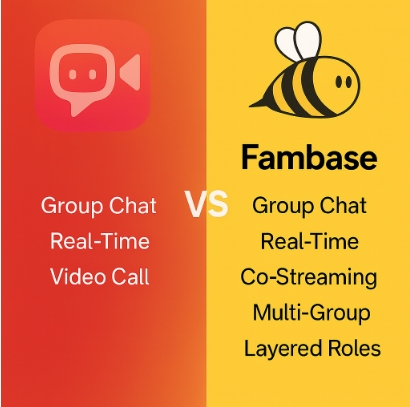
    Real-time engagement forms the experiential core of both systems. JustTalk establishes immediacy through one-on-one and group video calls, reproducing the sense of presence once limited to physical proximity. Meanwhile, Fambase expands this concept through group co-streaming and participatory formats that allow multiple participants to occupy the same digital moment, creating a sense of shared time and emotion. Although the two employ different mechanisms, both reinstate human warmth and spontaneity within digital communication, reintroducing the rhythm of genuine presence.

    Furthermore, both frameworks intentionally distance themselves from the turbulence of public social networks. Neither aspires to mass visibility; each instead functions as infrastructure for bounded relational ecosystems. JustTalk caters to intimate circles requiring speed and reliability, whereas Fambase provides goal-oriented collectives with the capacity for long-term coordination and sustainability. By relocating interaction away from algorithmic visibility, both platforms return communication to a controllable and trusted sphere.

    From these similar beginnings, their trajectories diverge. JustTalk continues the lineage of traditional communication tools, emphasizing efficiency and clarity between individuals. Fambase, by contrast, positions communication as the nucleus of community operation and collective growth, evolving into a model of greater structure and commercial capability. The distinction rests not in technical execution but in philosophical orientation. One privileges immediacy, the other continuity. Together, these approaches capture two intellectual currents shaping the logic of modern social technology.

    II. A Divergence of Social Philosophies1. Brand Narrative: From Global Connection to Structured Community

    Originating during the global expansion of mobile internet, JustTalk exemplifies the early technological ambition to remove geographic barriers and maintain constant connectivity. Its mission to keep the world connected in real time materializes through functions such as video calls, group chats, and location sharing, enabling families, friends, and colleagues to sustain communication across distances. In this sense, JustTalk signifies the transformation of communication from a utilitarian tool to an infrastructural necessity, making constant availability a defining condition of digital modernity.

    Fambase, however, emerged within a later and more fragmented social context defined by overexposure and diminishing relational stability. The platform emphasizes quality and sustainability rather than expansion, serving individuals, educators, brands, creator collectives, and organizations that require structured, goal-driven interaction. Communication acquires form and architecture, bounded by clear hierarchies and reinforced by order. Consequently, Fambase reinterprets social technology itself, shifting focus from connecting widely to connecting meaningfully, and from open networks to private, managed environments where trust and belonging can thrive.

    2. Target Users: From Individual Communication to Multi-Group Ecosystems

    Whereas JustTalk primarily serves individuals and small teams including families, friends, and remote collaborators, Fambase accommodates a broader social spectrum. The former values simplicity and minimal technical barriers, providing fast and dependable contact. The latter supports complex group configurations: educators can organize classes and monitor progress; brands can cultivate member communities and loyalty systems; creator teams can share content, manage analytics, and allocate revenue. Designed for structural elasticity, the framework scales seamlessly from small study groups to large commercial networks while preserving both privacy and hierarchy. As a result, Fambase evolves from a simple communication platform into a versatile operational infrastructure capable of supporting long-term management, collaboration, and monetization.

    3. Communication Philosophy: From Real-Time Presence to Sustained Belonging

    JustTalk embodies the principle of immediacy, treating synchronous response as proof of connection. The instant feedback of voice or video fulfills emotional reassurance and operational efficiency alike. Fambase, in contrast, views communication as a continuous process rather than an instantaneous act. Through structured goals, scheduled events, and recurring activities, interaction gains duration and rhythm. Study groups measure progress through shared objectives, brands conduct seasonal programs, and creative teams manage ongoing cycles of collaboration. Accordingly, Fambase converts conversation into continuity, fostering relationships that mature through time and participation rather than through brief exchanges.

    4. Information Architecture: From Permanent Record to Ephemeral Security

    JustTalk operates under a conventional archival model, preserving messages, calls, and shared files for documentation and review. This model suits collaboration and familial archiving, where continuity of information ensures accountability. Fambase adopts an opposing principle based on ephemerality. Every chat, livestream, and exchange disappears after twenty-four hours, leaving no residual trace or replay. Such transience constitutes not a limitation but a cultural position, since expression becomes freer when released from the weight of permanence. For education, creative production, and commerce, this right to forget nurtures trust and authenticity, encouraging openness without surveillance. Ultimately, one system defines security through memory, while the other locates freedom within oblivion.

    5. Interaction Model: From Playful Exchange to Structured Participation

    Interaction within JustTalk remains recreational, featuring mini-games, collaborative doodling, and real-time sharing that enhance conversation with playfulness. Fambase transforms interaction into structured participation. Co-streaming, goal tracking, tipping systems, and live auctions enable education, branding, and commerce to unfold within a single ecosystem. A brand can demonstrate products through live sessions while automated systems manage inventory and transactions, and an educator can schedule lessons and monitor milestones. Through this integration, Fambase turns communication into collaboration and participation into tangible results, illustrating how digital interaction can generate both engagement and value.

    6. Social Roles: From Equal Dialogue to Layered Collaboration

    Within JustTalk, every participant engages as an equal communicator, sustaining a flat, symmetrical exchange. Fambase reconstructs this simplicity into a system of layered cooperation. Organizers define goals, hosts moderate execution, and participants contribute through differentiated responsibilities. Such stratification mirrors real-world community logic, granting digital interaction the order and accountability often absent from online spaces. Hence, two distinct relational grammars emerge: one grounded in openness and equality, the other built upon hierarchy and coordination.

    III. The Future of Fambase: From Tool to Relationship System

    Future growth for Fambase depends less on expanding functions than on deepening experience and ideology. Strengthening the elasticity of its social architecture allows individuals, organizations, and brands to operate within a unified, collaborative framework. Beyond ensuring safety and privacy, the system seeks to enhance the emotional dimension of participation, balancing structural rigor with human empathy. Through intelligent community management and scalable trust architecture, Fambase stands positioned to become a digital ecosystem that reconciles efficiency with warmth. The brand narrative thus evolves from secure communication to sustainable belonging, making trust and collaboration its defining cultural assets. In essence, Fambase illustrates a conceptual migration from the logic of tools toward the logic of relationships, where technology and humanity converge within a new form of digital coexistence.

    IV. As Communication Divides, Social Logic Converges

    The dual trajectories of JustTalk and Fambase illuminate two complementary directions in digital social evolution. JustTalk condenses distance through efficiency, while Fambase expands depth through organization. Rather than representing opposition, the two models coexist within a larger communicative ecosystem: one answers how to speak, the other explores how to coexist. In an age marked by information density and fragile boundaries of privacy, this divergence reveals a common insight that the future of communication will not rely on a single model but on the coexistence of multiple relational forms.

    For communities seeking a framework that unites safety, hierarchy, and empathy, Fambase offers a coherent paradigm for meaningful digital coexistence.

    Learn more at https://joinfambase.com/?s=99

    Media Contact
    Company Name: Fambase Marketing Team
    Contact Person: Gregory Smith
    Country: United States
    Website: https://www.joinfambase.com/?s=99

  • Enhancing Financial Regulatory Compliance and Risk Management: FinanceHub Solutions Launches Initiative for an Integrated Risk Management Platform (IRMP) thumbnail

    Enhancing Financial Regulatory Compliance and Risk Management: FinanceHub Solutions Launches Initiative for an Integrated Risk Management Platform (IRMP)

    Addressing a Growing National Challenge

    Government operations across the United States face a complex and interdependent risk environment. The U.S. Government Accountability Office (GAO) has repeatedly designated financial management, IT modernization, and cybersecurity among its “high risk” areas, noting vulnerabilities that threaten efficiency, transparency, and public trust. Meanwhile, the Department of Homeland Security (DHS) estimates that over 500,000 cybersecurity positions remain unfilled, limiting the nation’s capacity to safeguard critical infrastructure and sensitive data.

    Multiple federal strategies have highlighted the urgency of enhancing governance and compliance:

    • The 2023 National Cybersecurity Strategy emphasizes integrated, whole-of-nation approaches to cyber resilience.
    • The Financial Stability Oversight Council (FSOC) calls for expanded systemic risk monitoring to prevent crises in financial markets.
    • The Office of Management and Budget (OMB) Federal Zero Trust Strategy mandates agencies to strengthen IT controls and data protection.

    Despite these efforts, public sector organizations remain fragmented in their approach to risk management, often operating with siloed systems and outdated controls.

    The FinanceHub Solutions Initiative

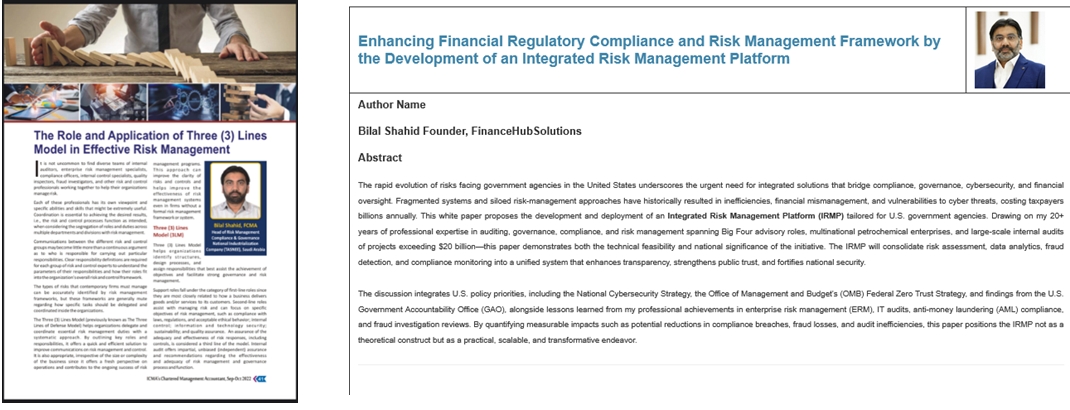
    The Integrated Risk Management Platform (IRMP), spearheaded by FinanceHub Solutions, responds to this national imperative. By integrating financial compliance, enterprise risk management, data analytics, and cybersecurity assurance into a single platform, the IRMP aims to transform how government agencies identify, assess, and mitigate risks.

    The platform is designed to:

    • Consolidate risk management functions – streamlining internal audits, compliance checks, IT risk reviews, and fraud detection into a unified system.
    • Enhance financial integrity – ensuring taxpayer dollars are safeguarded through automated monitoring and robust internal controls.
    • Support cybersecurity resilience by embedding the NIST Cybersecurity Framework and CISA directives to fortify agency IT systems against evolving threats.
    • Leverage advanced analytics enabling predictive modeling of risks and data-driven decision-making.
    • Promote transparency and accountability aligning with U.S. government priorities to rebuild public trust in institutions.

    Relevance to U.S. Policy Goals

    The FinanceHub Solutions IRMP aligns directly with federal directives:

    • CISA Best Practices underscore the need for proactive frameworks to secure critical infrastructure.
    • FSOC Annual Reports warn of systemic vulnerabilities that require integrated oversight.
    • Federal Data Strategy promotes data as a strategic asset, a principle central to IRMP’s predictive analytics.

    By consolidating risk governance, FinanceHub’s approach offers scalable and replicable benefits to federal, state, and local government agencies.

    The Expertise Behind the Endeavor

    Bilal Shahid, a seasoned governance, risk, and compliance professional with over 20 years of international experience, is leading this initiative. His credentials include CPA, FCMA, CIA, CISA, CFE, GCRP, GRCA, and IAAP, underscoring his expertise in both financial and IT risk domains.

    Mr. Shahid has:

    • Trained and mentored next-generation auditors, extending his impact beyond organizational boundaries.

    Through FinanceHub Solutions, Mr. Shahid brings this experience to the U.S. context, focusing on collaboration, consultancy for startups, and government-facing innovation.

    Expected Impact

    The IRMP is projected to deliver measurable outcomes for U.S. agencies:

    • Fraud prevention and recovery – reducing vulnerabilities in financial reporting and compliance gaps.
    • Cyber resilience – enhancing readiness against ransomware, identity theft, and data breaches.
    • Operational efficiency – lowering duplication of risk functions and reducing compliance costs.
    • Public trust – increasing transparency through integrated, auditable processes.

    If implemented at scale, the IRMP could generate multi-million-dollar savings annually in recovered revenues and fraud prevention, while significantly enhancing the integrity of public administration.

    Policy and Regulatory Significance

    By situating its solution within the framework of critical and emerging technologies identified by the U.S. government, particularly cybersecurity and advanced analytics, FinanceHub Solutions emphasizes its contribution to long-term national priorities. The initiative reflects recognition that risk management is not solely a corporate function, but a matter of public interest and national security.

    About FinanceHub Solutions

    FinanceHub Solutions is a Minnesota consultancy dedicated to advancing risk management, governance, and compliance innovation. The firm’s mission is to design and deploy integrated solutions that safeguard financial integrity, enhance transparency, and strengthen public trust in institutions.

    About Bilal Shahid

    Bilal Shahid is a global risk management professional with more than two decades of experience across the United States, Saudi Arabia, Pakistan, and Bermuda. His expertise spans internal audit, enterprise risk management, IT and cybersecurity assurance, anti-fraud frameworks, and financial compliance. As the founder of FinanceHub Solutions, he is leading the development of the Integrated Risk Management Platform, designed to enhance U.S. government resilience and efficiency in the face of evolving threats

    “The challenges facing U.S. government agencies from financial fraud to cyber threats require integrated solutions that bridge compliance, governance, and technology. The Integrated Risk Management Platform is designed to serve as that bridge, ensuring resilience, efficiency, and trust.” – Bilal Shahid, Founder, FinanceHub Solutions

    For Collaboration, Speaking Engagements, and Partnership Opportunities

    Bilal Shahid, Founder of FinanceHub Solutions, welcomes opportunities to collaborate with government agencies, regulatory bodies, financial institutions, technology providers, and academic institutions committed to advancing innovation in governance, risk management, compliance, and cybersecurity. With over two decades of global experience and multiple professional certifications, Bilal offers customized advisory services, keynote speaking, training workshops, and capacity-building sessions to strengthen organizational resilience and integrity.

    For inquiries related to partnerships, speaking engagements, consulting projects, or media features, please contact:

    For inquiries related to partnerships, speaking engagements, or media features, please contact:

    Jose T. Dizon

    Public Relations Specialist, InnovatorsProfessionals

    Jose develops media strategies, press releases, and editorial features that translate expert insights into precise, measurable results. He studied Bachelor of Arts—Language at the University of Newcastle, Australia, and brings strong, audience-focused storytelling to web, print, and broadcast media.

    Email: info@innovatorsprofessionals.com

    Website: www.innovatorsprofessionals.com

    Global Offices: United States | Australia | Asia Pacific

    Media Contact
    Company Name: FinanceHub Solutions
    Contact Person: Jose T. Dizon
    Country: United States
    Website: http://www.innovatorsprofessionals.com/

  • Ma. Fe Dejeron Expands Her National Vision for Educational Equity with Landmark Research on Math Recovery and Student Achievement thumbnail

    Ma. Fe Dejeron Expands Her National Vision for Educational Equity with Landmark Research on Math Recovery and Student Achievement

    Her flagship publication, The National Mathematics Achievement Recovery and Equity Framework (NMAREF), proposes a comprehensive policy architecture for reversing post-pandemic declines in mathematics performance. The framework integrates standardized diagnostics, data-driven formative instruction, and culturally responsive pedagogy, aligning directly with the Every Student Succeeds Act (ESSA) and the Federal STEM Education Strategic Plan (2024–2028).

    Building on this foundation, her follow-up white paper, Bridging the Gap: Scalable Instructional Coordination Models for Equitable Math Intervention in U.S. Public Schools, introduces the Instructional Coordination Model for Math Intervention (ICMMI), a system that professionalizes instructional coordination and operationalizes NMAREF’s policy vision through structured leadership roles, state credentialing, and teacher development networks.

    Together, these frameworks form the intellectual and operational pillars of Ms. Dejeron’s national advocacy for educational renewal. “Mathematics recovery is not simply about regaining lost scores,” Ms. Dejeron explains. “It’s about rebuilding the systems that make equity sustainable—systems that empower educators and honor the diverse realities of every learner.”

    Expanding the Research Landscape: Parenting, Learning, and Performance

    Complementing her policy work, Ms. Dejeron’s latest peer-reviewed article, Parenting Styles and Students’ Academic Performance (PANTAO International Journal of Education and Social Research, Vol. 7, No. 10, October 2025), explores the psychological and sociocultural dimensions of student achievement. Her research demonstrates that authoritative parenting characterized by high responsiveness and structured support correlates strongly with academic resilience and intrinsic motivation, while neglectful or authoritarian approaches often compound learning disparities.

    The study synthesizes findings from multi-regional samples across North America and Southeast Asia, illustrating how family environments shape learners’ engagement, metacognition, and adaptability. By connecting parental influence with instructional variables, Ms. Dejeron bridges home-school dynamics within the broader equity agenda established in NMAREF.

    In addition, her earlier publication, “Stressors, Coping Strategies, Support, and Job Satisfaction of Special Education Teachers in the New Normal Setup” (PANTAO International Journal of the Humanities and Social Sciences, 2025), examines the lived experiences of special education teachers navigating the challenges of post-pandemic instruction. The study reveals that despite heightened stress caused by increased workloads and blurred home–work boundaries, many educators maintained high levels of job satisfaction when supported by strong administrative leadership and collegial collaboration. Ms. Dejeron highlights how institutional policy, teacher autonomy, and emotional support networks can mitigate burnout and sustain morale, which is essential to ensuring instructional quality and continuity.

    Together, these two research contributions expand the equity discourse from the classroom to the human dimensions that sustain it. Ms. Dejeron’s integrative insight reframes education as a shared ecosystem, where teacher well-being, family engagement, and systemic policy intersect to produce enduring academic and social outcomes. These publications extend her influence beyond institutional reform to the micro-environments and professional conditions that ultimately shape student success.

    Responding to an Educational Crossroads

    Data from the National Assessment of Educational Progress (NAEP) indicate a seven-point decline in mathematics performance among nine-year-olds and an eight-point drop for eighth-graders, the most significant declines in the test’s history. According to the Education Recovery Scorecard, recovery in high-poverty districts has lagged dramatically behind that of affluent systems.

    Ms. Dejeron’s research and frameworks directly confront these realities. NMAREF provides the macro-policy scaffolding, Bridging the Gap supplies the procedural roadmap, and Parenting Styles and Students’ Academic Performance contextualizes learning within the socio-emotional sphere. Together, they form a holistic blueprint for academic recovery grounded in structural reform and human development.

    From Classroom Expertise to National Policy Leadership

    As a Mathematics Intervention Specialist at Waukegan High School, Ms. Dejeron brings over twelve years of cross-cultural teaching and leadership experience spanning Illinois and the Philippines. She holds a Master of Arts in Special Education from Pacific Intercontinental College and a Bachelor of Secondary Education in Mathematics (Cum Laude) from Aklan State University, in addition to her Illinois Professional Educator License (Grades 9–12 Mathematics) and level 3 certification in Alberta, Canada.

    At Waukegan, she leads district initiatives integrating data-driven instruction, trauma-informed practices, and diversity, equity, and inclusion (DEI) frameworks. Her efforts have strengthened professional learning communities, advanced formative assessment literacy, and increased access to rigorous coursework for multilingual learners and students with disabilities.

    Her professional portfolio encompasses Title IX compliance, Universal Design for Learning (UDL) certification, and microcredentialing in instructional coaching, reflecting a commitment to inclusive and accountable leadership.

    The NMAREF: Redefining Recovery Through Equity

    NMAREF posits that recovery is inseparable from justice. Its three pillars—diagnostics, data, and diversity—create a scalable model for national alignment:

    1. Standardized Diagnostics and Progress Dashboards: Implementing real-time data systems to monitor growth and disaggregate performance by subgroup.
    2. Data-Driven Instruction and Teacher Capacity Building: Using analytics to inform pedagogy and professional coaching.
    3. Culturally Responsive Pedagogy: Embedding inclusivity, representation, and accessibility within instructional design.

    This synthesis transforms mathematics instruction into a policy-driven engine of social mobility, ensuring that each district—urban, rural, or suburban—can adapt the framework to its demographic and resource realities.

    Bridging the Gap: Operationalizing Reform

    In Bridging the Gap, Ms. Dejeron identifies instructional coordination as the missing infrastructure in many recovery programs. Her Instructional Coordination Model for Math Intervention (ICMMI) institutionalizes leadership roles such as Instructional Math Coordinators (IMCs) and Data Coaches, defining a career ladder for educators while improving implementation fidelity.

    The model recommends state-level certification for IMCs, integration of Coordination Readiness Indicators into district planning, and strategic funding partnerships among federal agencies, philanthropic organizations, and universities. By embedding coordination into base funding and accountability frameworks, ICMMI converts reform from episodic to enduring.

    A Multilayered Approach to Student Achievement

    Across her four major works, Ms. Dejeron presents an interconnected framework that links research, policy, and practice into a unified vision for educational transformation. Her peer-reviewed study “Parenting Styles and Students’ Academic Performance” investigates micro-level family dynamics, revealing how parental responsiveness, structure, and emotional climate influence motivation, self-regulation, and academic resilience. Her second empirical work, “Stressors, Coping Strategies, Support, and Job Satisfaction of Special Education Teachers in the New Normal Setup,” addresses the human dimension of the teaching profession, examining how institutional support and emotional well-being affect educators’ capacity to deliver equitable instruction.

    At the macro level, the National Mathematics Achievement Recovery and Equity Framework (NMAREF) defines a national blueprint for rebuilding mathematics proficiency and institutionalizing equity through policy design, data transparency, and culturally responsive pedagogy. Complementing it at the meso level, Bridging the Gap: Scalable Instructional Coordination Models for Equitable Math Intervention operationalizes reform through structured instructional leadership, coordination roles, and teacher development systems.

    Together, these four works construct a continuum of educational equity that spans the home, classroom, and national policy arena. Ms. Dejeron’s integrated perspective underscores that sustainable improvement requires coherence across environments and alignment among people, processes, and policy. Her research demonstrates that when data, empathy, and leadership converge, education evolves from fragmented reform into a lasting architecture of opportunity and social progress.

    A Data-Informed, Human-Centered Philosophy

    While Ms. Dejeron’s frameworks are grounded in analytics, they maintain a distinctly humanistic core. She insists that data should inform, not dictate, instruction. Her leadership emphasizes trust, professional autonomy, and shared learning as the foundations of teacher motivation and student growth. Automating equity dashboards and simplifying reporting processes allows educators to redirect time toward mentoring and personalized instruction—an efficiency that enhances accountability and well-being.

    “Every metric tells a story,” she explains. “Our responsibility is to interpret those stories with compassion and act with integrity.”

    Recognition and Thought Leadership

    Ms. Dejeron’s influence extends beyond her school district. She regularly collaborates with educational research networks, STEM equity alliances, and teacher-development coalitions to align policy innovation with classroom realities. Her regional and national symposia presentations highlight the integration of evidence-based pedagogy with socio-emotional learning frameworks.

    Her peer-reviewed and policy publications have garnered attention from education ministries, non-profit organizations, and university research centers seeking scalable solutions to the post-pandemic learning crisis. Through both scholarship and practice, she exemplifies the modern educator-leader: data-literate, equity-driven, and globally conscious.

    A Vision for National Renewal

    Ms. Dejeron envisions mathematics recovery as a cornerstone of America’s educational renaissance. Her frameworks call for alignment among federal agencies, state departments, and local school systems to ensure that teacher development, funding mechanisms, and family engagement strategies operate in concert. Her work reframes mathematics not as a barrier to opportunity but as a pathway to empowerment.

    She offers a scientifically sound and socially responsive reform model by linking evidence, empathy, and implementation. Her combined body of work- quantitative research, policy design, and leadership training presents a compelling case for re-engineering education systems around the twin principles of equity and excellence.

    About Ma. Fe Dejeron, M.A.

    Ma. Fe Dejeron, M.A. is a mathematics educator, instructional coordinator, and policy innovator recognized for her leadership in advancing equity-driven, evidence-based education reform. With more than a decade of international teaching and leadership experience across the United States and the Philippines, she specializes in learning recovery, instructional coordination, and inclusive pedagogy. Her work integrates research, data analytics, and professional capacity building to strengthen national efforts toward educational equity and student achievement.

    Through her policy and research contributions, Ms. Dejeron has developed comprehensive frameworks that connect classroom practice with systemic reform, aligning teacher development, family engagement, and institutional accountability. Her publications demonstrate how sustainable improvement in education requires coherence across environments linking the micro level of learner and teacher experiences, the meso level of district and school coordination, and the macro level of national policy and governance.

    Ms. Dejeron’s ongoing leadership reflects a deep commitment to transforming data into actionable strategies and ensuring that innovation remains anchored in empathy, equity, and evidence. Her vision positions education as a personal right and a collective responsibility where classrooms become catalysts for opportunity, inclusion, and enduring social progress.

    Media Contact

    Ms. Ma. Fe Dejeron welcomes opportunities to collaborate with school districts, educational leaders, professional associations, and academic institutions committed to advancing equity in mathematics education and instructional leadership. She offers customized training, keynote speaking, and capacity-building workshops focused on inclusive instructional design, evidence-based math intervention, and data-driven teacher development through her consultancy work.

    For inquiries related to partnerships, collaboration, speaking engagements, or media features, please contact:

    Marissa Thompson

    Public Relations and Communications Specialist

    Marissa Thompson is a content creator and PR communications specialist who helps small businesses and professionals turn complex ideas into media-ready stories. She manages press releases, website copy, and social updates for Innovators Professionals and brings a conversational, audience-first style to every project. Off the clock, she occasionally chimes in on TMZ’s viewer participation segments, keeping a sharp pulse on pop culture and how stories travel online.

    Email: marissa@innovatorsprofessionals.com

    Website: www.innovatorsprofessionals.com

    Global Offices: United States | Australia | Asia Pacific

    Copyright 2025. All rights reserved

    Media Contact
    Company Name: InnovatorsProfessionals
    Contact Person: Marissa Thompson
    Country: United States
    Website: https://www.innovatorsprofessionals.com/

  • CertificationPoint Launches ‘CP Social’: A Game-Changing Feature Connecting Students, Mentors, and Companies in Real-Time

    CP Social integrates directly into CertificationPoint’s existing Work eXperience Builders and Talent Management platform, creating a seamless pathway from learning and collaboration to professional readiness and recruitment.

    “We built CP Social to make career development more interactive, authentic, and human,” said Olivia-Holmes-Giles, Head of Instructional Design at CertificationPoint. “Students can now showcase their project experiences, companies can engage and follow talent earlier, and mentors can guide learners in real-time — all within one connected ecosystem.”

    Enhancing the Learning-to-Work Journey

    CP Social transforms traditional digital learning environments into active career communities by providing tools that enable:

    • Students to share completed projects, gain endorsements, and receive feedback on work experiences from mentors and peers.
    • Companies to observe talent development in action, identify high-potential candidates, and collaborate on project-based learning initiatives.
    • Mentors to communicate, track learner progress, and offer personalized guidance using integrated messaging and feedback tools.
    • Career Changers to showcase transferable skills and gain visibility through project participation and professional networking.

    With CP Social, CertificationPoint continues to move beyond traditional e-learning by embedding professional networking into their Work eXperience Builders (WXB) environment. The feature promotes authentic engagement that mirrors real-world team collaboration, enhancing each participant’s digital footprint and employability.

    Integration with Talent Management and Career Readiness Tools

    CP Social works in tandem with CertificationPoint’s Talent Management Platform — a hub that enables employers and educators to track career readiness outcomes, skill development, and project performance. Together, these tools create a data-rich, experience-driven ecosystem where skills are demonstrated through evidence, not just resumes.

    “Our mission has always been to make learning and experience equally valuable,” said Russell Bryant. “CP Social empowers users to build professional credibility through verified project work and meaningful connections. It’s like a year-round career or job fair strengthened by proof of work.”

    A Platform for the Future of Work-Based Learning

    CertificationPoint’s growing network of educators, companies, and students continues to redefine how credentials and competencies translate into real opportunities. The introduction of CP Social strengthens the platform’s position as a leader in paid experience-based education and workforce development — preparing learners not just to graduate, but to be career ready sooner.

    Availability

    CP Social is now live for free and paid subscribers and will roll out Q1 2026 for institutions and corporate collaborators having an interest in integrated APIs for their school. Interested organizations can request early access and training resources at info@certificationpoint.org.

    About CertificationPoint

    CertificationPoint is an education technology platform that bridges the gap between classroom learning and professional experience through verified projects, mentorship, and real-world collaboration. By connecting students, mentors, companies, and institutions, CertificationPoint transforms credentials into career-building opportunities and creates pathways for meaningful workforce engagement.

    Media Contact
    Company Name: CertificationPoint Inc.
    Contact Person: Communications Team
    Phone: 318-572-8340
    Country: United States
    Website: https://www.certificationpoint.org/

  • Rata Showcases Advanced Schneider-Authorized Load Banks at Data Centre World Asia 2025 thumbnail

    Rata Showcases Advanced Schneider-Authorized Load Banks at Data Centre World Asia 2025

    Delivering Precision and Performance for Modern Power Testing

    At Booth A61, Rata attracted strong attention with its Rata Load Banks—a comprehensive range of high-performance testing systems used across data centers, energy storage facilities, marine platforms, and power infrastructure projects. The display featured several of Rata’s latest innovations, including rack-mountedliquid-cooled, and resistive/reactive load banks, each engineered to simulate real-world electrical loads with exceptional accuracy.

    Every Rata Load Bank is powered by China’s only self-developed reactive inductor and achieves 0.1% power factor precision, enabling users to conduct detailed performance evaluations under complex power conditions. These systems integrate high-density innovationremote control functionality, and intelligent monitoring, allowing engineers to perform testing safely, efficiently, and with full control.

    As a Schneider-authorized partner, Rata builds its load banks using top-tier components and adheres to Siemens 100% test assurance standards. This commitment to engineering excellence ensures long-term stability, consistent performance, and compliance with international certification requirements such as ISO and CE.

    Proven Solutions for Data Centers and Beyond

    Rata Load Banks are widely used in data center testing, where they help operators evaluate cooling performance, power distribution systems, and backup energy capabilities. Rata’s rack-mounted designs offer modularity and compact structure, making them ideal for high-density data center environments.

    The company’s recent success—delivering 960 units of 18kW rack-mounted resistive load banks to a leading data center in the Middle East—demonstrates its global manufacturing capability and commitment to providing tailor-made solutions. These systems were specifically designed for airflow testing and cooling system verification, showcasing Rata’s ability to deliver precision-tailored power testing equipment that enhances safety, reliability, and operational efficiency.

    Engineered for Excellence in Every Application

    Headquartered in Deyang, Sichuan, China, Rata operates a modern 8,500-square-meter manufacturing facility with three production lines and an annual output capacity exceeding 6,000 load banks. The company’s in-house R&D department continuously drives innovation, holding over 60 utility model patents2 invention patents, and 6 software copyrights.

    Rata’s expertise spans more than 12 years in the power testing industry, with a complete product system covering AC/DC loadsresistiveresistive-inductiveresistive-inductive-capacitive (RLC), and electronic load banks. The company also leads in liquid-cooled load bank development, offering solutions that meet the demands of high-power and high-heat dissipation environments.

    Through continuous innovation and rigorous testing, Rata ensures its equipment maintains optimal performance under extreme conditions, including wide temperature ranges, high humidity, and corrosive environments. Its C5 anti-corrosive coating and shock-resistant enclosures further enhance durability, ensuring reliable operation across diverse industries such as renewables, marine, power utilities, and aerospace.

    Tailored Services and Global Reach

    Beyond manufacturing, Rata provides end-to-end service support, including consultation, customized design, production, installation, technical training, and maintenance. The company’s rapid-response service model enables global remote technical guidance and on-site commissioning, ensuring smooth implementation and long-term reliability for clients around the world.

    Rata’s participation at Data Centre World Asia 2025 underscores its strategic focus on strengthening partnerships across Southeast Asia, Australia, and the Middle East, regions witnessing accelerated investments in data center and renewable energy infrastructure. The company’s customized load testing solutions are helping clients achieve higher uptime, better power efficiency, and improved safety standards in mission-critical environments.

    Driving Sustainable Power Testing Innovation

    In addition to precision and reliability, Rata is committed to sustainable innovation. By integrating energy-efficient liquid-cooled load banks and self-developed reactive inductors, the company actively reduces total cost of ownership (TCO) by up to 40%, while minimizing energy waste during testing processes.

    Through continued R&D investment, Rata aims to lead the global transition toward greener, smarter, and more adaptive power testing systems. Its growing international client base and strategic collaborations reflect the company’s strong reputation for technical expertise, innovation, and customer trust.

    About Rata

    Founded in 2013, Rata specializes in designing and manufacturing customized load bank solutions for mission-critical applications. Its Rata Load Banks are trusted worldwide for their precision, reliability, and adaptability. The company’s solutions empower professionals across data centers, energy infrastructure, and industrial sectors to perform accurate, safe, and efficient power testing operations.

    Media Contact
    Company Name: Rata
    Contact Person: Gong Zhenhua
    Country: China
    Website: http://www.cnloadbank.com/