
Bitcoin Price Today: Can Bitcoin Bounce Back While AlphaPepe Steals the Spotlight?
Bitcoin is once again testing investors’ patience as prices hover around the $101,000-$102,000 range after a week of volatility. The benchmark cryptocurrency remains firmly above the key $100K psychological level, but momentum has cooled as traders digest recent ETF outflows and profit-taking from long-term holders. Market analysts describe this as a “pause before the push,” with many still targeting $120,000 as the next big milestone for BTC’s rally.
Yet while Bitcoin consolidates, a new star has begun to shine — AlphaPepe (ALPE). Built on BNB Chain, this meme coin presale has rapidly become the cycle’s biggest talking point, drawing in over 3,300 holders and adding 100+ new investors daily even as broader market sentiment turns cautious. Analysts are now calling AlphaPepe the best crypto to buy during Bitcoin’s slowdown, thanks to its explosive presale momentum and strong fundamentals.
Bitcoin Price Today: Holding $100K Amid Uncertainty
After setting record highs above $126,000 in October, Bitcoin’s price action has turned more measured. Over the past several sessions, BTC has traded within a tight range between $99,500 and $104,000, showing clear support near the six-figure level. Technical analysts note that this consolidation pattern is typical of post-rally stabilization and could serve as a launchpad for a renewed push toward $115K–$120K in the coming weeks.
The short-term weakness comes as some institutional inflows taper off and traders rotate into alternative assets. Still, Bitcoin’s broader fundamentals remain intact. Post-halving supply tightening, robust ETF demand earlier in the quarter, and macro optimism continue to support the long-term uptrend. Analysts view any dips toward $98K–$100K as attractive entry zones for strategic accumulation.
But while Bitcoin holds steady, capital and attention are clearly moving toward smaller, faster-moving plays — and AlphaPepe is leading that charge.
From Bitcoin Consolidation to Meme-Coin Acceleration
Every time Bitcoin cools, the market looks for excitement elsewhere — and meme coins often capture that energy. This time, it’s AlphaPepe (ALPE) dominating the narrative. Investors who rode Shiba Inu and PEPE in previous cycles are calling AlphaPepe the “next Shiba Inu — but with real mechanics.”
Unlike typical meme tokens, AlphaPepe isn’t just riding the hype. It’s built on BNB Chain, benefiting from fast transactions, low fees, and exposure to Binance’s vast ecosystem. More importantly, it offers real tokenomics that reward early conviction — weekly price increases, instant token delivery, and staking rewards available even before listing.
The result? AlphaPepe has already attracted over 3,300 holders and continues adding more than 100 new investors daily, even as the broader market cools. With a presale nearing $400,000 raised, it’s clear that AlphaPepe is not only weathering the market dip — it’s thriving through it.
AlphaPepe Spotlight: Why It’s Stealing the Show
AlphaPepe’s success lies in how it merges meme-culture appeal with the kind of structure and transparency investors now demand. The project’s smart contract audit by scored a perfect 10/10, and liquidity will be locked at launch, ensuring a secure environment once trading begins.
The presale design is another standout. Token prices increase weekly, meaning early buyers benefit automatically as value compounds before launch. Unlike most presales, tokens are delivered instantly, providing verifiable ownership and real-time community growth. This approach has fueled a viral effect across social platforms, helping AlphaPepe build momentum even during Bitcoin’s cooling phase.
Staking rewards are already live, allowing participants to earn passive yield during the presale — a rare feature that sets ALPE apart from other meme coins. Combined with its rapid holder growth and BNB Chain scalability, AlphaPepe’s fundamentals are aligning with what analysts describe as “early conditions.”

AlphaPepe Price Outlook: Potential
At the current presale price of around $0.007, AlphaPepe offers a clear early entry before the projected listing price of $0.05. That represents a built-in potential at launch. Beyond that, analysts expect further upside — forecasting $0.50 to $1 by 2026 if growth continues at its current pace.
That kind of asymmetric upside is what drives every market cycle’s breakout star. And in 2025, AlphaPepe is looking like that breakout — combining meme virality, strong tokenomics, and operational credibility in one package.
Analysts and Market Sentiment
Market commentators have been quick to recognize AlphaPepe’s rise. Many describe it as the “next Shiba Inu on BNB Chain,” highlighting its growing community, staking features, and audit-backed credibility. Social engagement around ALPE has spiked across X and Telegram, with whale accumulation also visible in early wallet data — a strong signal of institutional-style interest.
Crypto analysts note that AlphaPepe’s presale metrics are outperforming nearly every comparable meme-coin launch this year. Its momentum, they say, resembles early PEPE stages — but with better structure, security, and staking incentives. As Bitcoin consolidates, ALPE is absorbing much of the speculative energy that typically drives the next phase of altcoin growth.
Conclusion
Bitcoin’s price remains firm above $100,000, but the excitement in the market has clearly shifted. While BTC takes a breather before its next push toward $120K, AlphaPepe is capturing the spotlight as 2025’s most talked-about presale.
With weekly price increases, instant delivery, staking rewards, and a 10/10 audit score, AlphaPepe has set a new standard for what a meme coin can be — one that’s both fun and fundamentally strong. Its 3,300+ holders, growing daily base, and presale nearing $400K make it the standout performer in an otherwise cautious market.
As Bitcoin stabilizes, AlphaPepe is rising — fast. For investors looking for the best crypto to buy now during this consolidation phase, ALPE is emerging as the obvious answer.
Website: https://alphapepe.io/
Telegram: https://t.me/alphapepejoin
FAQs
What is Bitcoin’s current price trend?
Bitcoin is trading around $101,000–$102,000, consolidating after hitting record highs above $126,000. Analysts still target $120,000 as the next major resistance.
What is AlphaPepe (ALPE)?
AlphaPepe is a BNB Chain meme coin presale combining community energy with real utility — staking, instant delivery, and weekly price increases.
How many holders does AlphaPepe have?
Over 3,300 and growing, with 100+ new investors joining daily.
Why are analysts calling AlphaPepe the next Shiba Inu?
Because it merges viral meme appeal with credible tokenomics and structure — something the early meme-coin wave lacked.
Disclaimer:
This article is for informational purposes only and does not constitute financial advice. Cryptocurrency investments carry risk, including total loss of capital. Readers should conduct independent research and consult licensed advisors before making any financial decisions.
All market analysis and token data are for informational purposes only and do not constitute financial advice. Readers should conduct independent research and consult licensed advisors before investing.
Crypto Press Release Distribution by BTCPressWire.com
BNB Price Prediction: Can Flagship Token Extend Its Lead As Bitcoin Hyper Gains Steam?
BNB Price Prediction is once again gaining attention as traders assess whether exchange-backed tokens can continue to outperform the broader cryptocurrency market throughout 2025. BNB’s strength lies in its deep liquidity, consistent real-world utility within the BNB Chain, and tight integration across the Binance ecosystem. These elements combine to create a sustainable foundation for long-term demand, as the token benefits directly from the platform’s vast user base, transaction volume, and ecosystem expansion. This ongoing relevance keeps BNB positioned as one of the most stable and strategically significant altcoins among large-cap assets.
At the same time, market focus is broadening toward newer and more agile projects that show faster momentum potential in shorter time frames. One of the emerging names within this group is Bitcoin Hyper, which has started to draw interest from traders seeking higher-volatility opportunities that complement established positions like BNB. Bitcoin Hyper’s appeal lies in its timing—it offers exposure to early growth narratives while maintaining alignment with familiar Bitcoin-related branding. For investors, this combination provides an attractive balance between dependable liquidity and additional upside potential when sentiment shifts toward fresh, speculative stories.
Where BNB Stands Right Now
BNB’s resilience comes from tangible use cases: trading-fee discounts, launchpad access, and gas for a vibrant application layer. That mix anchors the floor for any BNB Price Prediction because it converts user activity into persistent token demand. Market depth and turnover remain strong on major trackers, with CoinMarketCap offering a clean snapshot of liquidity and circulating supply for cross-checks-CoinMarketCap https://coinmarketcap.com/currencies/bnb/. Macro conditions matter too. When risk appetite returns to large-cap altcoins, BNB typically catches flows earlier than mid-caps because of its role at the center of exchange volumes. Conversely, when traders favor niche narratives, BNB can stall in tight ranges while capital chases smaller caps.
Catalysts That Could Move the Needle
From a news perspective, three themes tend to steer near-term outcomes for BNB Price Prediction. First is ecosystem throughput: active addresses, transaction counts, and stablecoin velocity on BNB Chain help validate on-chain demand. Second is product cadence: each launchpad event, listing cluster, or new dApp cohort can redirect attention back to BNB. Third is regulatory clarity: steady progress on compliance, custody partnerships, and jurisdictional approvals typically improves risk perception among institutions. If those streams line up, BNB has room to challenge prior resistance zones as liquidity consolidates on the bid. If they don’t, the more cautious path is sideways trading punctuated by news-driven spikes that fade without follow-through. For an alternative lens on structure, many desks triangulate spot momentum using Coingecko’s breadth and velocity metrics-Coingecko.
Technical Read: How the Tape Usually Behaves
BNB often trades within tight multi-week ranges before breaking out sharply when a strong catalyst appears. These expansion phases are typically accompanied by rising spot volume and growing open interest in derivatives markets, signaling renewed participation from both retail and institutional traders. When such confirmation is missing, attempted breakouts tend to fade quickly, sending the price back toward previous consolidation zones. For traders and investors, the key takeaway is to stay flexible rather than fixated on a single price target. Watching for clusters of confirming signals—such as higher trading volume, normalized funding rates, and improving market breadth—helps transform a general BNB Price Prediction into a more reliable, higher-probability trading setup.
Why Bitcoin Hyper Is Entering the Conversation
Amid this backdrop, some traders are diversifying into earlier-stage plays that can move faster on incremental headlines. Bitcoin Hyper positions itself precisely in that slot, using a recognizable brand and a nimble roadmap to translate social traction into price discovery. The official site lays out the project’s value proposition and community growth plan-Bitcoin Hyper. Because it starts from a smaller base, the token can respond disproportionately to listings, integrations, or influencer coverage. That asymmetry is the core of its appeal: while BNB supplies stability and deep markets, Bitcoin Hyper offers optionality when attention migrates to fresh stories. For those building a watchlist, it’s reasonable to track community metrics and the cadence of roadmap deliveries at Bitcoin Hyper alongside BNB’s ecosystem updates.
How Traders Are Structuring Exposure
A balanced and pragmatic trading approach brings together the strengths of both assets to create a portfolio that performs across different market conditions. Many professional desks use BNB as the portfolio’s foundation because of its reliable liquidity, broad utility within the Binance ecosystem, and consistent demand supported by ongoing network activity. Alongside this core position, they typically allocate a smaller portion of capital to a higher-momentum satellite asset designed to capture rapid price movements and short-term trading opportunities without disrupting the stability of the main holding.
Position sizing is always determined by relative risk. BNB generally holds a heavier weight due to its lower volatility and proven track record, while the satellite component adjusts based on market confirmation signals, liquidity trends, and sentiment shifts. When the environment favors exchange-related tokens, BNB often outperforms as the dependable leader. Conversely, during hype-driven cycles with heightened social media activity and speculative trading, the satellite allocation can react faster, generating more aggressive returns in shorter time frames while maintaining balance within the overall strategy.
Risk Factors to Monitor
No BNB Price Prediction would be complete without addressing the key risks that can influence outcomes. For BNB itself, the main concerns include regulatory shifts impacting centralized exchanges, sudden adjustments to trading or withdrawal fees, and prolonged drops in overall exchange volume—all of which could weaken investor confidence. For newer or smaller tokens, risks often stem from high concentration among early holders, thin liquidity, and excessive dependence on short-lived hype cycles that can lead to sharp pullbacks. Maintaining a disciplined approach—with clear invalidation levels, gradual position entries, and structured profit-taking—helps balance exposure between the stability of BNB and the volatility of high-risk satellite assets.
Conclusion
BNB remains one of the most resilient large-cap assets in the crypto market, supported by consistent real-world utility and strong network effects built around the Binance ecosystem. As long as ecosystem activity, transaction throughput, and product development continue to progress steadily, the overall BNB Price Prediction leans constructive, with potential to revisit higher trading ranges as broader market participation expands. However, in narrative-driven market phases, flexibility and optionality also play an important role. This is why Bitcoin Hyper is drawing more attention as a complementary high-beta asset that can benefit from sudden bursts of speculation and shifting sentiment. As always, this analysis is not financial advice—conduct independent research and size positions according to your personal risk tolerance and market volatility.
For more information about Bitcoin Hyper (HYPER) visit the links below:
Website: https://bitcoinhyper.com
Whitepaper: https://bitcoinhyper.com/assets/documents/whitepaper.pdf
Telegram: https://t.me/btchyperz
Twitter/X: https://x.com/BTC_Hyper2
Disclaimer:
This article is for informational purposes only and does not constitute financial advice. Cryptocurrency investments carry risk, including total loss of capital. Readers should conduct independent research and consult licensed advisors before making any financial decisions.
All market analysis and token data are for informational purposes only and do not constitute financial advice. Readers should conduct independent research and consult licensed advisors before investing.
Crypto Press Release Distribution by BTCPressWire.com

Shiba Inu Price Prediction: Will SHIB Reignite In 2025 As Maxi Doge Gains Traction?
Shiba Inu Price Prediction has once again moved into the spotlight as the market enters a narrative-driven phase where sentiment and community strength play a major role. Traders are now debating whether SHIB can regain its former leadership position or if newer, faster-moving projects like Maxi Doge present stronger upside potential for the same level of risk. While SHIB’s brand recognition and community engagement remain among the strongest in the crypto space, sustained momentum will depend on consistent news flow, clear project milestones, and expanding real-world utility that can support lasting price recovery.
Market snapshot and what matters now
SHIB’s staying power comes from liquidity, exchange coverage, and persistent retail attention. On CoinMarketCap you’ll see why the token rarely falls off top-traded lists, even during choppy periods. Meanwhile, Coingecko https://www.coingecko.com/en/coins/shiba-inu provides a complementary view of market breadth, volume velocity, and relative strength against peer memecoins. This depth of order flow is crucial for any Shiba Inu Price Prediction because liquid books transform narratives into price faster-and with less slippage.
Beyond raw liquidity, two levers tend to steer sentiment: ecosystem progress and the burn dynamic. When the developer pipeline expands and token sinks accelerate, traders re-rate medium-term prospects. When those inputs stall, SHIB often drifts into rangebound trading until a new catalyst lands.
Catalysts that could tip the scale
A constructive outlook for Shiba Inu Price Prediction generally relies on a steady flow of utility-driven news, measurable user adoption, and integrations that attract audiences beyond the core crypto community. Milestones such as new exchange listings for SHIB-related tokens, strategic partnerships, or ecosystem upgrades can each act as short-term catalysts and help shift liquidity from larger assets toward SHIB.
If several of these developments align while overall market sentiment turns favorable toward large-cap memecoins, SHIB could rapidly retest previous supply zones. However, in the absence of consistent catalysts and broader participation, the more realistic scenario remains a phase of consolidation punctuated by brief, speculative rallies.
Technical context: what the chart tends to telegraph
SHIB often trades within tight multi-week ranges before making sudden, impulsive moves once a catalyst appears. When breakouts are supported by increasing spot trading volume and stronger market depth, they tend to hold and extend higher. In contrast, rallies that stall near overhead resistance levels typically fade quickly, sending prices back toward prior consolidation zones.
For traders and market watchers, the key insight is to pay less attention to specific price targets and instead track points where liquidity, trading volume, and sentiment converge. Those moments mark when a Shiba Inu Price Prediction shifts from a theoretical outlook to an actionable opportunity.
Scenario map for Shiba Inu Price Prediction
Base case: Sideways-to-up chop with episodic rallies on ecosystem news, followed by mean reversion as momentum slows.
Bull case: A series of utility and burn updates improve the narrative, prompting a catch-up move toward prior cycle ranges as memecoin risk comes back on.
Bear case: Macro risk-off or stalled development flow shifts attention elsewhere, pushing SHIB to probe deeper liquidity shelves while time in range extends.
Why Maxi Doge is the alternative readers keep bookmarking
While SHIB remains a cornerstone of the memecoin complex, many traders now allocate a portion of risk to a faster, earlier-stage narrative. Maxi Doge leans into that lane with recognizable branding and the agility to turn social traction into price discovery. The appeal is straightforward: smaller market cap, quicker headline translation, and the chance for outsized moves when attention clusters. Start with the official site-Maxi Doge review roadmap clarity, distribution, and how the team plans to convert community energy into durable growth.
Because Maxi Doge is earlier in its lifecycle, incremental news-listings, integrations, or influencer coverage-can have a disproportionate impact versus large-cap peers. That asymmetry is exactly why some readers pair SHIB’s depth with a high-beta complement. When social indicators heat up, Maxi Doge can move first and far.
Rotation strategy: pairing SHIB with Maxi Doge
A practical, news-focused strategy combines SHIB’s liquidity and established presence with the agility of newer tokens such as Maxi Doge. The idea is to begin with modest exposure to SHIB as a stable anchor, then gradually scale into emerging high-momentum assets as clear confirmation from both price action and trading volume appears.
In execution, this approach means starting small, adding selectively as momentum builds, and setting clear invalidation levels to protect capital. The objective isn’t to bet on a single outperformer but to balance stability and upside potential within the same narrative-driven market phase.
Risk management and timing
Memecoins function as attention-driven assets, meaning that even when the broader setup looks favorable, timing entries remains critical. For SHIB, key indicators to monitor include developer progress, upcoming ecosystem launches, and regular token burn reports that influence supply dynamics. For Maxi Doge, the main signals come from community growth, new exchange listings, and rising engagement across social channels. Given the high volatility of both assets, position sizes should stay measured, with exit strategies planned in advance. Momentum can accelerate quickly in either direction, so discipline and predefined risk management are essential to navigating these moves effectively.
Bottom line
Shiba Inu Price Prediction ultimately depends on steady catalysts and credible real-world use cases that can sustain attention over time. If SHIB maintains a consistent stream of developments and community engagement, it has room to retest higher ranges and reclaim visibility across the broader market. Without that momentum, however, price action is likely to remain contained as traders shift focus toward newer opportunities. That’s where alternatives with strong narrative flexibility, such as Maxi Doge, enter the picture. The project’s early-stage agility appeals to readers looking for selective upside exposure when market sentiment turns risk-on. As always, independent research and disciplined position sizing are key—speed and timing only translate into an advantage when paired with structured risk management.
For more information about Maxi Doge (MAXI) visit the links below:
Website: https://maxidogetoken.com/
Whitepaper: https://maxidogetoken.com/assets/documents/whitepaper.pdf?v2
Telegram: https://t.me/maxi_doge
Twitter/X: https://x.com/MaxiDoge_
Disclaimer:
This article is for informational purposes only and does not constitute financial advice. Cryptocurrency investments carry risk, including total loss of capital. Readers should conduct independent research and consult licensed advisors before making any financial decisions.
All market analysis and token data are for informational purposes only and do not constitute financial advice. Readers should conduct independent research and consult licensed advisors before investing.
Crypto Press Release Distribution by BTCPressWire.com

Enerpize Announces Global Expansion with All-in-One Cloud Platform for SMEs
USA — Enerpize, a next-generation cloud-based business management platform, today announced its expansion into new global markets, introducing its suite of integrated tools to empower small and medium-sized enterprises (SMEs) to work smarter, faster, and more efficiently.
Built to simplify operations for modern businesses, Enerpize combines financial management, HR, CRM, project tracking, and automation in one unified platform — giving business owners everything they need to run and scale their operations seamlessly.
As part of its growth strategy, Enerpize is now expanding its reach to the U.S. and broader English-speaking markets, enabling startups and established SMEs alike to access enterprise-level functionality without the complexity or cost associated with traditional ERP systems.
Enerpize provides an integrated, cloud-based system combining:
- Financial management: invoicing, billing, analytics
- HR tools: payroll, attendance, performance tracking
- CRM and sales management
- Project and operations tracking
All within a single, easy-to-use platform designed for SMEs and startups.
Designed with flexibility and accessibility in mind, Enerpize delivers a frictionless user experience that adapts to each company’s unique needs — from invoicing and payroll to analytics and customer engagement. Its intuitive interface and cloud-based architecture ensure that businesses can manage their operations at any time, from anywhere.
“Our mission has always been to make advanced business management tools accessible to every entrepreneur, regardless of size or geography,” said the CEO of Enerpize. “This expansion allows us to connect with the global community of business owners who are ready to embrace simplicity, automation, and growth.”
With a rapidly growing user base and a strong presence in emerging markets, Enerpize is entering this next phase of global growth with a commitment to continuous innovation. The company’s platform is designed to evolve in tandem with businesses, ensuring that new technologies, features, and integrations continue to drive productivity and performance.
Enerpize’s upcoming roadmap includes expanded third-party integrations and advanced collaboration tools to support remote and hybrid teams worldwide.
Enerpize invites entrepreneurs and small business owners to explore the platform and discover how streamlined business management can accelerate growth and performance.
About Enerpize
Enerpize is a cloud-based business management platform that unifies finance, HR, CRM, operations, and analytics into one intelligent system. Designed for small and medium-sized enterprises, Enerpize helps businesses save time, reduce costs, and make smarter decisions with integrated tools and automation.
For more information, visit www.enerpize.com.
Contact Info:
Name: Sam Long
Organization: Enerpize
Website: https://www.enerpize.com

AlphaPepe vs Bitcoin Hyper vs Ozak AI: What Is the Best Crypto Presale Amid Market Crash?
The crypto market is once again facing turbulence. Bitcoin has cooled from its $126,000 peak to hover near $101,000, sending altcoins and smaller-cap assets into a temporary retreat. For many investors, however, these moments of uncertainty are not a reason to exit — they’re a chance to enter.
Presales, in particular, tend to thrive during downturns, giving investors early access to high-upside projects before the next recovery cycle begins. Among the most talked-about right now are AlphaPepe (ALPE), Bitcoin Hyper (BTHY), and Ozak AI (OZK) — three presales with very different identities.
Each one represents a distinct narrative in today’s market: meme-powered community growth, Bitcoin-inspired innovation, and AI-driven utility. Yet one project is clearly leading the conversation — AlphaPepe, the BNB Chain presale that analysts and investors alike are calling the best crypto presale to buy during the market crash.
Market Context: Presales Shine When Prices Fall
While most of the market focuses on Bitcoin’s correction, smart money is moving into presales. Historically, these early opportunities have delivered the biggest returns after major pullbacks, as investors seek new narratives and affordable entry points.
Bitcoin remains structurally strong above $100K, but capital is rotating into projects that can deliver faster growth once sentiment rebounds. Meme coins, AI projects, and community-driven ecosystems are once again catching momentum — and it’s within this dynamic that AlphaPepe, Bitcoin Hyper, and Ozak AI are rising to prominence.
AlphaPepe (ALPE): The Clear Front-Runner
Of all current presales, AlphaPepe has distinguished itself as the breakout performer of 2025. Built on BNB Chain, it combines meme coin appeal with a professional-grade framework that gives investors real confidence in its future.
AlphaPepe has already surpassed 3,300 holders, with over 100 new participants joining daily, and the presale is nearing $400,000 raised despite broader market weakness. The project’s structure is simple but highly effective: token prices increase weekly, rewarding early investors as value compounds before listing.
Tokens are delivered instantly upon purchase, eliminating delays and creating visible proof of participation. Staking rewards are live throughout the presale, allowing holders to earn even before launch. The project has also undergone a full audit, earning a 10/10 rating, while liquidity will be locked at launch — a mark of transparency rarely seen in meme coin ecosystems.
AlphaPepe stands out because it delivers both hype and structure — a formula that has proven rare in meme-driven markets and a key reason it’s now being labeled the best crypto to buy amid the market crash.
Bitcoin Hyper (BTHY): The Bitcoin-Inspired Challenger
Bitcoin Hyper takes a different route, positioning itself as a next-generation version of Bitcoin with enhanced speed, scalability, and a deflationary supply model. The project appeals primarily to investors who want exposure to Bitcoin’s reputation but are looking for smaller-cap upside.
Community activity is growing steadily, and the project’s branding resonates with traders who trust Bitcoin’s long-term narrative. However, Bitcoin Hyper’s roadmap remains relatively straightforward, relying heavily on Bitcoin’s image rather than introducing groundbreaking features. While that strategy may attract attention, its growth pace so far has been moderate compared to AlphaPepe’s explosive rise.
Ozak AI (OZK): The Utility-Driven Innovator
In contrast to the meme-driven approach, Ozak AI focuses on integrating artificial intelligence with blockchain infrastructure. The project aims to bring machine-learning capabilities to DeFi analytics and decentralized data solutions.
Ozak AI’s concept is technically strong and aligns with the growing global interest in AI innovation. Its presale has gained traction among investors seeking utility tokens with long-term relevance rather than short-term speculation. However, while the project appeals to the AI narrative, its community and growth rate remain smaller compared to AlphaPepe’s large-scale retail momentum.
For investors seeking sustainable, tech-forward exposure, Ozak AI could become a valuable long-term play, but in the current market, meme-powered presales like AlphaPepe continue to dominate attention and capital inflow.

Why AlphaPepe Leads the Race
All three presales bring something unique: Bitcoin Hyper channels Bitcoin’s brand power, Ozak AI captures the AI trend, and AlphaPepe commands the meme narrative. But AlphaPepe leads because it has achieved what most presales struggle with — fast adoption, real rewards, and verified trust all at once.
The project’s community expansion is unmatched, with thousands of holders onboarded in weeks. The weekly price structure builds consistent momentum, the instant delivery system proves credibility, and the staking model keeps holders active even before launch. Combine that with a perfect audit score and transparent liquidity lock, and AlphaPepe stands in a class of its own.
Where Bitcoin Hyper relies on branding and Ozak AI leans on utility, AlphaPepe strikes the balance that modern investors crave — cultural virality backed by concrete mechanics. That’s why analysts continue to label it the best crypto presale to buy during the market crash, projecting significant upside once listing begins.
Conclusion
The current correction is shaking out weak hands, but for investors with conviction, it’s opening doors to generational opportunities. Bitcoin Hyper and Ozak AI both offer interesting prospects — one leveraging legacy appeal, the other pushing utility frontiers — but AlphaPepe is the clear front-runner.
With over 3,300 holders, instant token delivery, staking already live, weekly price increases, and a perfect audit score, AlphaPepe has emerged as the market’s most credible and exciting presale. Its blend of meme culture and robust infrastructure makes it a contender not just for the next rally, but for defining the next era of retail-driven crypto growth.
In a market seeking resilience and opportunity, AlphaPepe is leading both conversations — and stealing the spotlight.
Website: https://alphapepe.io/
Telegram: https://t.me/alphapepejoin
FAQs
Which presale is performing best right now?
AlphaPepe is leading 2025’s presale space with explosive growth, 3,300+ holders, and weekly price increases driving continuous momentum.
What makes AlphaPepe different from Bitcoin Hyper and Ozak AI?
AlphaPepe merges meme energy with serious structure — staking, instant delivery, locked liquidity, and verified audits — making it both exciting and trustworthy.
What’s Bitcoin Hyper’s main focus?
Bitcoin Hyper aims to expand Bitcoin’s legacy by emphasizing faster transactions and a deflationary token model.
What’s Ozak AI’s niche?
Ozak AI focuses on integrating artificial intelligence into blockchain analytics and data solutions, appealing to utility-driven investors.
Disclaimer:
This article is for informational purposes only and does not constitute financial advice. Cryptocurrency investments carry risk, including total loss of capital. Readers should conduct independent research and consult licensed advisors before making any financial decisions.
All market analysis and token data are for informational purposes only and do not constitute financial advice. Readers should conduct independent research and consult licensed advisors before investing.
Crypto Press Release Distribution by BTCPressWire.com
How Technology Is Transforming the Modern Wedding
Weddings have always reflected the times. From the rise of destination ceremonies to the popularity of social media announcements, the way people celebrate love has evolved alongside culture. Now, technology is reshaping the wedding industry at every level. From planning and design to communication and sustainability, the digital revolution has turned what was once a traditional process into a seamless, data-driven, and highly personalised experience.
The Digital Planning Revolution
The days of bulky binders and handwritten guest lists are fading fast. Couples now rely on technology to manage nearly every aspect of their celebration. Wedding websites, apps, and cloud-based planning tools have replaced the need for endless spreadsheets.
These platforms allow couples to create interactive timelines, manage budgets, and track RSVPs in real time. Some even offer digital seating planners, vendor directories, and collaborative task lists that both partners and families can access. What was once an overwhelming coordination effort can now be handled through a few taps on a phone.
Technology also gives couples more control over design. Online mood boards and digital invitation builders allow users to visualise their aesthetic instantly, making creative decisions faster and more intuitive. The result is a planning experience that feels efficient, accessible, and less stressful than before.
Artificial Intelligence and Personalisation
Artificial intelligence has entered the wedding space with surprising speed. AI-powered tools can now recommend venues, vendors, and even décor themes based on a couple’s style and budget. Some services use algorithms to analyse thousands of weddings to predict preferences, suggesting colour palettes, playlists, and even menu options tailored to each user.
AI is also helping with communication. Chatbots are being used by event planners and venues to answer guest inquiries automatically, while generative AI tools can craft speeches, vows, or toasts that match a specific tone. Couples looking for inspiration can use image-generation platforms to design invitation templates or mock up venue layouts before booking.
This integration of AI allows couples to streamline complex decisions, but it also raises questions about authenticity. Can technology truly capture human emotion? For many, AI remains a helpful assistant rather than a replacement for creativity and connection.
Virtual Tours and Remote Planning
Technology has made destination weddings and out-of-town planning more accessible than ever. Virtual reality and 360-degree venue tours enable couples to explore potential locations from home. High-definition video walkthroughs give an accurate sense of lighting, layout, and atmosphere without requiring travel.
Video conferencing tools have also redefined collaboration. Couples can now meet with florists, photographers, and planners remotely, saving time and resources. This shift became essential during the pandemic, but it has since evolved into a lasting convenience. The ability to coordinate vendors across borders has expanded the possibilities for personalised global weddings.
Even dress shopping has gone digital. Augmented reality (AR) and virtual fitting rooms allow brides and grooms to try on outfits using body scans, previewing how different styles will look without stepping into a store.
Digital Invitations and Guest Experience
Traditional paper invitations are increasingly being replaced by digital alternatives. Online invitations offer interactive designs, instant delivery, and automatic RSVP tracking. They reduce printing waste and make it easier for couples to communicate updates, especially for multi-day celebrations or destination weddings.
Wedding websites have become central to the guest experience. Beyond providing event details, they serve as hubs for accommodation links, schedules, and gift registries. Some even include photo-sharing features that allow guests to upload images and videos in real time, creating a collaborative digital album.
For guests attending virtually, livestreaming technology ensures no one misses out. Platforms like Zoom, YouTube Live, and specialised wedding-streaming services now allow family and friends to witness the ceremony from anywhere in the world. Hybrid weddings, once a necessity, have become a symbol of inclusivity and adaptability.
Social Media and the Rise of the “Shareable” Wedding
Social media has transformed weddings into multi-platform experiences. Couples often create custom hashtags, launch countdowns, and share behind-the-scenes clips leading up to the big day. The event itself becomes a digital narrative, captured, edited, and shared almost instantly.
This has also given rise to a new type of professional: the wedding content creator. Unlike a traditional videographer, these specialists focus on producing short-form videos optimised for platforms like TikTok and Instagram. Their role is to ensure that every emotional moment, from the first look to the final dance, is ready for instant online sharing.
While this shift has made weddings more interactive and expressive, it also raises questions about privacy and presence. Couples now find themselves balancing the desire for connection with the need for authenticity.
Sustainability Through Technology
Sustainability has become a driving force in modern event planning, and technology is helping reduce the environmental impact of weddings. Digital invites and RSVPs eliminate paper waste, while online planning tools cut down on travel and printing.
Virtual meetings and livestreaming also lower the carbon footprint by reducing the need for long-distance flights. Even catering and décor vendors are adopting digital systems to manage inventory and minimise waste. The rise of sustainable tech solutions demonstrates how innovation can coexist with environmental responsibility.
The Future of Wedding Tech
As innovation continues, the line between technology and tradition will become increasingly blurred. Virtual reality could soon allow guests to attend weddings from immersive 3D spaces. Blockchain technology may introduce secure, digital marriage certificates. AI might one day predict the perfect wedding date based on weather data, guest availability, and seasonal trends.
What remains clear is that technology has permanently changed how people plan and experience weddings. It has made the process more inclusive, efficient, and adaptable to modern lifestyles. Yet even in a digital world, the essence of a wedding (two people choosing each other) remains the same.
Technology may provide the tools, but love still provides the story.
Ottawa Window Medics Highlights Cost-Effective Glass Repair Solutions as Alternative to Costly Window Replacements
Ottawa, Ontario – November 2025 – Ottawa Window Medics, a leading provider of window and door repair services in the Ottawa region, is educating homeowners about the significant cost savings available through professional glass repair services as an alternative to complete window replacement.
With most windows and doors designed to last 20 to 25 years, many Ottawa homeowners are facing decisions about aging windows showing signs of wear and tear. While complete replacement has traditionally been presented as the only option, Ottawa Window Medics offers repair solutions that can save homeowners between 50 and 70 percent of replacement costs while extending window life for up to another 20 years.
“Many homeowners don’t realize that foggy windows, broken glass panes, and seal failures can often be repaired rather than replaced,” said a spokesperson for Ottawa Window Medics. “Our trained technicians use the latest technology to restore windows to their original condition, providing a cost-effective solution that benefits both homeowners’ budgets and the environment.” More information can be found at https://ottawa.windowmedics.com.
Addressing the Common Problem of Foggy Windows
One of the most prevalent issues Ottawa homeowners face is foggy or hazy glass caused by seal failure in double-pane and triple-pane windows. This phenomenon, known as solar pumping, occurs when daily temperature changes cause moisture to gradually accumulate between glass panes over time.
Ottawa Window Medics specializes in advanced defogging techniques that remove trapped moisture, clean interior glass surfaces, and reseal window units with new desiccant material. This restoration process can give windows another 20 years of clarity and energy efficiency at a fraction of replacement costs.
Comprehensive Glass Repair and Replacement Services
Beyond defogging, Ottawa Window Medics provides complete glass repair and replacement services for:
- Broken or Cracked Glass: Fast repair of damaged single-pane, double-pane, and triple-pane windows
- Glass Replacement: Wide selection of clear, tinted, tempered, and self-cleaning glass options
- Shower and Bathtub Enclosures: Custom glass solutions in various styles and designs
- Energy-Efficient Upgrades: Energy Star-rated and CSA-certified vinyl window solutions
When Replacement Makes Sense
While repair is often the best solution, Ottawa Window Medics also provides complete window replacement services when necessary. The company offers a large selection of top-quality replacement windows in various designs, including awning, casement, bay, bow, double-hung, single-hung, and slider styles, with potential savings of up to 25 percent on new installations.
“Our expertise allows us to accurately assess each situation and recommend whether repair or replacement is the most appropriate solution,” the spokesperson explained. “We prioritize what’s best for the homeowner, not what generates the most revenue for us.”
Door Repair and Replacement Also Available
In addition to window services, Ottawa Window Medics offers comprehensive door repair and replacement, including nearly 100 different designs of exterior and patio doors. Services range from fixing broken hinges and damaged glass to complete professional door installations.
Environmental and Economic Benefits
Choosing glass repair over replacement offers significant environmental benefits by reducing manufacturing demands and landfill waste. For homeowners, repair services provide faster turnaround times—often completed in hours or days rather than the weeks or months required for replacement projects.
The speed of repair services is particularly valuable when addressing security concerns or preventing further damage to property. Ottawa Window Medics guarantees prioritized service to restore homeowners’ peace of mind quickly and efficiently.
Expert Testing and Assessment
The Ottawa Window Medics team tests every window for seal failure and other issues, ensuring accurate diagnosis and appropriate solutions. With locations throughout the Ottawa area, the company provides efficient and cost-effective window repair services close to customers’ homes.
Free Consultations Available
Ottawa Window Medics invites homeowners experiencing window or door problems to schedule a free consultation and quote. The no-obligation assessment allows homeowners to explore their options and discover potential savings before making any decisions.
“We’re confident that homeowners will be pleasantly surprised by our rates and the quality of solutions we can provide,” the spokesperson added. “Whether it’s defogging, glass replacement, routine maintenance, or complete installation, we have the expertise and technology to deliver timely, effective solutions.”
About Ottawa Window Medics
Ottawa Window Medics is a professional window and door repair and replacement company serving the Ottawa region. With years of experience and highly trained technicians, the company specializes in defogging foggy windows, glass replacement, window and door installation, and comprehensive maintenance services. Ottawa Window Medics is committed to providing cost-effective, environmentally friendly solutions that extend the life of windows and doors while saving homeowners significant money. The company offers Energy Star-rated and CSA-certified products with limited lifetime warranties.
For more information about glass repair services or to schedule a free consultation, visit https://ottawa.windowmedics.com/, call 613-519-1317, or email info@windowmedics.com.
Ottawa Window Medics
310-900 Greenbank Road
Ottawa, Ontario K2J 4P6
Canada
Phone: 613-519-1317
Email: info@windowmedics.com
Website: https://ottawa.windowmedics.com/

Improving Team Productivity with AI Agents: Smarter Collaboration for Modern Workplaces
Introduction: Why Productivity Is the New Currency in Modern Teams
In today’s fast-paced business landscape, team productivity has become the new currency of success. Companies no longer compete solely on innovation or scale—they compete on efficiency. Every minute spent on repetitive tasks or fragmented communication translates into lost opportunities. This is where artificial intelligence (AI) agents are making their mark, transforming how teams work, collaborate, and deliver results.
AI agents aren’t just tools; they’re intelligent collaborators designed to take over routine tasks, interpret data, and assist human teams in achieving more with less effort. From automating daily workflows to managing communication across multiple platforms, these digital teammates are redefining productivity in ways that traditional software never could.
What AI Agents Are and How They Differ from Regular Automation
While automation isn’t new, AI agents go several steps further. Traditional automation handles pre-defined, rule-based tasks—such as sending reminder emails or updating spreadsheets. In contrast, AI agents learn, adapt, and make context-based decisions. They can understand natural language, process real-time information, and act autonomously across multiple systems.
For example, a project manager might use an AI agent that not only schedules tasks but also detects delays, predicts potential bottlenecks, and suggests reassignments. Unlike static automation scripts, AI agents continuously learn from user behavior, improving accuracy and relevance over time. This learning ability makes them invaluable partners in achieving sustainable productivity gains.
Key Areas Where AI Improves Collaboration and Output
AI agents have become central to enhancing collaboration and output across departments. Here are some of the most impactful areas where they’re driving change:
- Task and Project Management
AI agents can automatically assign, prioritize, and track tasks based on workloads and deadlines. Teams using platforms integrated with AI are seeing fewer missed deadlines and better resource allocation. - Communication Efficiency
AI-powered bots on platforms like Slack or Microsoft Teams help filter messages, summarize discussions, and surface key action items. This ensures team members stay aligned without getting buried in message overload. - Knowledge Management
AI agents can organize company data, retrieve relevant files, and even summarize lengthy reports. This saves employees from searching through multiple tools or folders to find the right information. - Decision Support
By analyzing performance metrics and historical data, AI agents can help leaders make more informed decisions—such as identifying which projects need more support or which workflows are causing delays. - Workflow Automation Across Apps
Modern teams often rely on dozens of disconnected applications. AI agents bridge these gaps by syncing data between tools automatically, reducing the need for manual intervention.
The result? Teams spend less time managing work—and more time actually doing it.
Case Example: How Companies Use AI Agents to Save Time
Take a mid-sized marketing agency as an example. Before integrating AI, the team spent hours manually transferring client feedback from Slack into project management boards and generating weekly progress summaries. After implementing AI-driven automation, these tasks now run seamlessly. AI agents monitor Slack channels for key updates, automatically create or update relevant project tasks, and even compile summaries for clients using natural language generation.
The result was striking: productivity rose by 30%, communication errors dropped significantly, and employees reported feeling less overwhelmed. Similar success stories are emerging across industries—from finance and healthcare to software development—where AI agents are handling repetitive operations so humans can focus on creativity and strategy.
How Platforms Like Klavis AI Simplify Workflow Automation
While AI agents can perform incredible tasks, the real challenge lies in connecting them across multiple business tools without complex coding or integration issues. This is where Klavis AI stands out as a powerful orchestration platform. Klavis AI enables businesses to deploy and manage AI workflows effortlessly, integrating seamlessly with tools like Slack, Gmail, GitHub, and Salesforce.
Using its Klavis MCP server, teams can connect multiple applications under a single AI-powered automation layer. This allows AI agents to exchange information between platforms—like sending Slack updates based on new Salesforce leads or generating documents automatically from Google Workspace data.
The platform empowers teams to create customized, no-code AI workflows that adapt to their existing processes, making productivity gains accessible to businesses of all sizes. Instead of juggling between isolated systems, teams operate in a connected, intelligent environment where tasks, data, and insights flow smoothly.
The Benefits of an AI-Enhanced Workplace
Implementing AI agents doesn’t just improve efficiency—it transforms workplace culture. Employees can shift their attention from mundane, repetitive activities to creative and high-impact work. AI reduces burnout, ensures accountability, and fosters a sense of flow where every team member contributes more effectively.
For leaders, the visibility that comes with AI-integrated systems means faster insights, smarter resource management, and better alignment with strategic goals. AI-powered analytics help track team performance in real time, allowing for proactive adjustments rather than reactive corrections.
Moreover, AI agents enable truly asynchronous collaboration—a model where productivity continues even outside standard office hours. Whether it’s updating project data overnight or generating reports automatically, AI keeps the wheels turning around the clock.
Conclusion: The Future of Smart, AI-Powered Teamwork
As organizations embrace digital transformation, AI agents are emerging as the backbone of modern productivity. They combine speed, intelligence, and adaptability to create work environments where collaboration is seamless and output is maximized.
Businesses adopting AI-driven automation are not only saving time but also empowering their teams to think bigger and innovate faster. Platforms like Klavis AI are leading this transformation by making advanced AI workflows simple, accessible, and highly effective.
The future of teamwork isn’t just about working harder—it’s about working smarter with the help of intelligent agents that understand, adapt, and evolve alongside human teams. The age of AI-powered productivity is here, and it’s redefining how modern teams achieve success.
DeepSnitch AI vs Solana vs XRP: Which Crypto Will Lead the Charge in 2025?
Best Altcoin to Buy for in 2026: DeepSnitch AI vs Solana vs XRP
Forward Industries, an asset management company with over $1B of SOL holdings, authorized a share repurchase program in an attempt to return value to shareholders. Authorized on November 3, the company can repurchase its stock via various methods on an ongoing basis.
Meanwhile, Ripple’s RLUSD stablecoin crossed $1B market cap, making it one of the top stablecoins, as DeepSnitch AI, a utility-based AI presale, raised almost half a million in its second stage.
As a result of this news, traders wonder what their next move should be, with DeepSnitch AI vs Solana vs XRP becoming a more frequent topic for traders looking to preserve their bottom line amid market uncertainty.
Because it’s a presale, DeepSnitch AI may be the moonshot in Q4. Not only does its early-stage status shield it from short-term volatility, but its real-world use case centered around AI agents and affordability may provide it with staying power and ensure a solid growth trajectory in 2026 and beyond.
Bullish moves amid market stagnation
Forward Industries, a company with significant holdings of Solana, authorized a share repurchase program worth $1B. The goal is to provide shareholders with value as the company transitions into its new phase as a digital asset treasury.
The program will allow Forward Industries to repurchase its stock through open market purchases, including private transactions and block trades. Ultimately, buying back stocks will reduce the number of shares outstanding while also helping keep dilution to a minimum.
As the largest SOL corporate holder (data shows the company’s balance sheet is roughly at 6.8M SOL), the move is a proactive measure that will provide holders more flexibility amid the ongoing volatility.
This isn’t a surprise, as analysts pointed out that many treasury firms are going through what’s referred to as a valuation crunch. Put differently, the values have dipped relative to the market value of its holding, which in turn reduces the company’s market net asset value.
As most subsets of the market brace for uncertainty, XRP Ripple news today was bullish after Ripple’s stablecoin, RLUSD, logged over a 1.2K% YTD market cap growth, breaking through $1B on November 3.
Naturally, this also sparked the debate of the coins that are most likely to preserve upward trajectories while the wider crypto market struggles to gain its footing.

DeepSnitch AI vs Solana vs XRP: What’s the 2025 ticker?
DeepSnitch AI: Can utility alone push DSNT to ?
Despite being only in its second stage, DeepSnitch AI raised $495K, driven primarily by its powerful AI utility and dedication to innovation.
DeepSnitch AI is a project in the AI sector that combines five AI agents into a single dashboard, forming a comprehensive AI analytics suite designed with the retail trader in mind. These agents can rapidly process on-chain and off-chain data and turn them into easily accessible, actionable crypto insights.
For instance, they can do everything from analyzing behavior in alpha groups and social media threads to provide real-time alerts on sentiment shifts, to tracking whale wallets, and scanning tokens for rug pull risks.
Moreover, you can also use the solution to scan tokens to see if they’re worth your attention.
Considering that the AI sector is a fast-growing field in crypto, DeepSnitch AI is well-positioned to capitalize on the proliferation of its sector, while also going a step beyond by providing a working set of tools with mass appeal.
Naturally, you may be cautious of expanding your holdings as the market struggles. However, November has historically been the start of the best months in crypto (November through April), and since DeepSnitch AI is set to release in January, it may capture the market at its peak.
Plus, the project also supports staking, and the first agent, SnitchFeed, is already live in the internal environment and will be made available for early investors shortly. This means you’ll have enough perks to keep you occupied while waiting for the TGE.
DeepSnitch AI is building organic hype, and investors who generally focus on isolated sectors are quickly joining the fray. Although the current price of the DeepSnitch AI utility token is $0.02157, the price will increase as the demand grows, making it the right time to invest in this up-and-coming project.
Solana price prediction 2025: Can SOL surge past $200?
Solana traded in the $155 area on November 4, according to CoinMarketCap.
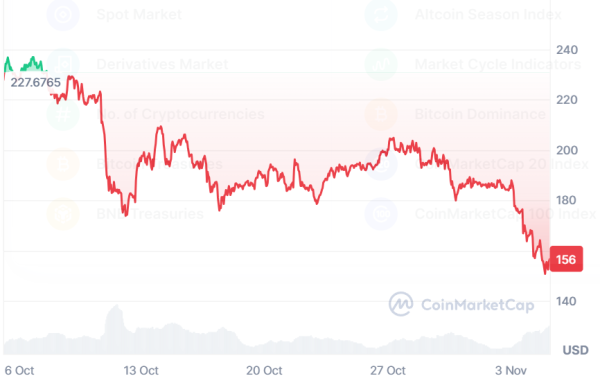
Although the price action may seem underwhelming at first glance, the Solana price prediction 2025 may be bullish owing to SOL ETF inflows of $65M recorded during the week. This clearly reinforces the fact that Solana institutional demand is on the uptick.
Analysts also point to momentum indicators that may indicate a potential breakout. For instance, RSI is near 30, meaning it’s entering an oversold position, which may attract institutional players.
If Solana bounces up from its current price, the coin could eventually reach $300 by the end of the year, and even open a path toward a new ATH.
However, it’s worth noting that SOL dipped below the crucial $160 support, which could also force a more rapid downturn to as low as $100.
XRP: Is there hope for Ripple?
On November 4, XRP traded in the low $2.20 area, according to CoinMarketCap data.
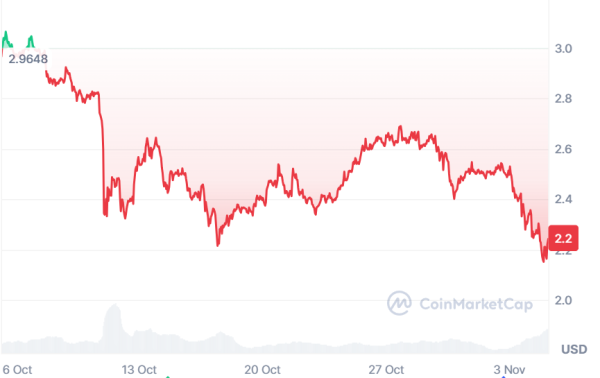
However, XRP Ripple news today has hit with full force, and in addition to RLUSD hitting the top 10 stablecoins, the company launched Ripple Prime,
Yet, XRP’s price movements have been less than bullish, with analysts believing the coin could suffer a major decline. In short, if XRP falls further, it indicates that the market isn’t as convinced by the latest Ripple developments.
As a sign of hope, RSI is inching toward the oversold position, which could indicate a bounce-back, and combined with the ecosystem growth, bulls may step in and start pushing XRP toward the critical $3 resistance.
Final words: November winners
In the battle between DeepSnitch AI vs Solana vs XRP, the established coins are looking quite bearish in the short term, as the overall market remains uncertain.
Thus, DeepSnitch AI, with its early-stage status, affordable entry, and solid metrics for success, might be the best for November 2025. Not only do traders expect a post-launch (which is realistic, considering the progress of the AI sector), but since it’s not on exchanges, it’s unaffected by short-term volatility.
With nearly $500K raised, DeepSnitch AI presale is just heating up, so make sure to reserve your spot before the price increase.

FAQs
What makes DeepSnitch AI stand out compared to Solana and XRP?
DeepSnitch AI combines five AI agents into a unified crypto analytics suite, focusing on real-time insights and retail accessibility. Its presale utility and staking rewards give it a unique advantage over established coins like Solana and XRP.
Why did Forward Industries authorize a $1B share repurchase?
Forward Industries, a major Solana holder, launched the $1B repurchase to strengthen shareholder value and mitigate market volatility as it transitions into a digital asset treasury firm.
What’s the result of DeepSnitch AI vs Solana vs XRP?
With Solana and XRP facing market stagnation, DeepSnitch AI’s early-stage presale status and real-world AI use case could make it the coin with the highest upside potential in 2025.
Disclaimer:
This article is for informational purposes only and does not constitute financial advice. Cryptocurrency investments carry risk, including total loss of capital. Readers should conduct independent research and consult licensed advisors before making any financial decisions.
All market analysis and token data are for informational purposes only and do not constitute financial advice. Readers should conduct independent research and consult licensed advisors before investing.
Crypto Press Release Distribution by BTCPressWire.com
Luxury Travel in Egypt: Discover the Grand Egyptian Museum and the Rebirth of Timeless Elegance
There are few destinations in the world that embody both ancient wonder and modern refinement quite like Egypt. A land where timeless history meets luxurious indulgence, Egypt continues to enchant sophisticated travelers seeking not only to witness its millennia-old monuments but to experience them in style.
Now, with the grand opening of the Grand Egyptian Museum (GEM) in Giza, Egypt has entered a new era of luxury cultural tourism — one that combines world-class hospitality, architectural innovation, and unparalleled heritage experiences.
For travelers who believe in journeys defined by excellence, exclusivity, and elegance, Egypt has never been more alluring.
A New Chapter in Egypt’s Luxury Travel Story
The long-awaited debut of the Grand Egyptian Museum marks a defining moment in Egypt’s cultural and tourism renaissance. Perched on the Giza Plateau, overlooking the legendary Pyramids of Giza, this architectural masterpiece is more than a museum — it’s a symbol of Egypt’s vision for the future.
Spanning over 480,000 square meters, the Grand Egyptian Museum is the largest archaeological museum in the world, housing more than 100,000 artifacts that chronicle over 7,000 years of civilization. Its design blends contemporary minimalism with the mystique of ancient Egypt, creating an atmosphere that feels both timeless and futuristic.
For luxury travelers, this opening redefines cultural exploration. Visitors are greeted by the colossal statue of Ramses II under a cascade of natural light, leading into galleries that feature the complete treasures of King Tutankhamun — many displayed to the public for the first time. Interactive digital exhibitions, immersive storytelling, and state-of-the-art conservation facilities transform the traditional museum visit into an elite cultural experience.
From its private VIP lounges to curated private tours, the Grand Egyptian Museum is designed to cater to a new generation of affluent travelers who value exclusivity as much as authenticity.
Egypt: Where Luxury and Legacy Intertwine
Luxury travel in Egypt is no longer limited to five-star hotels and Nile views — it’s about living history through curated, meaningful experiences. Imagine awakening to the sight of the Pyramids from your balcony at the Marriott Mena House, cruising the Nile aboard a private dahabiya with gourmet dining under the stars, or exploring ancient temples alongside a dedicated Egyptologist.
This is the Egypt that modern luxury travelers desire — an Egypt where comfort meets culture, and every detail is designed to immerse guests in both opulence and heritage.
1. Cairo: The Gateway to Grandeur
Cairo, Egypt’s bustling capital, has evolved into a hub for modern luxury. Travelers can explore the Grand Egyptian Museum, enjoy a private guided tour of the Egyptian Museum of Civilization, and dine on authentic cuisine at award-winning rooftop restaurants overlooking the Nile.
Private chauffeured vehicles, personalized itineraries, and concierge service elevate every moment — ensuring your time in Cairo is as smooth as it is spectacular.
2. The Timeless Nile: A Voyage of Refinement
No luxury journey through Egypt is complete without a Nile River cruise, and for the elite traveler, the experience can be nothing short of extraordinary. Step aboard a private dahabiya or a five-star cruise like the Sanctuary Sun Boat IV, where white-glove service, fine dining, and bespoke excursions redefine river travel.
Sailing from Luxor to Aswan, you’ll explore monumental sites such as Karnak Temple, Valley of the Kings, and Philae Temple — with every visit curated for intimacy and insight.
3. Luxor and Aswan: The Heart of Civilization
In Luxor, luxury travelers can stay at historic properties like the Sofitel Winter Palace, a hotel that has hosted royalty and explorers since 1886. Here, private sunrise hot air balloon rides reveal the grandeur of ancient Thebes, while guided evening tours illuminate the beauty of the Luxor Temple after dark.
Further south, Aswan enchants with its Nubian charm and serene landscapes. Guests can retreat to the iconic Old Cataract Hotel, once frequented by Agatha Christie, and enjoy a private felucca sail at sunset — the golden light of the Nile shimmering around them.
4. Abu Simbel: The Ultimate Private Excursion
For those seeking Egypt’s most awe-inspiring moment, a private charter flight to Abu Simbel unveils the grandeur of Ramses II’s temples, carved directly into the cliffs. With early-access entry and private guides, travelers can experience the Sun Festival phenomenon — when the morning light illuminates the sanctuary’s inner statues — in serene exclusivity.
The Grand Egyptian Museum: A New Icon for the Luxury Traveler
The opening of the Grand Egyptian Museum elevates Egypt’s appeal for affluent travelers seeking destinations that blend culture with sophistication. Beyond its immense historical value, GEM offers a premium visitor experience that rivals the world’s most renowned cultural institutions.
Exclusive guided tours, private event spaces, and tailored VIP experiences make the Grand Egyptian Museum an ideal highlight for bespoke Egypt itineraries. Whether attending a private gala dinner beneath ancient artifacts or viewing the Tutankhamun Collection in quiet exclusivity, visitors can now engage with Egypt’s legacy in ways once reserved for archaeologists and royalty.
The museum also enhances Egypt’s reputation as a world-class luxury destination, positioning Cairo alongside Paris, Rome, and Dubai as a cultural capital of global travel.
Delta Tours Egypt: Curating the Art of Luxury Exploration
At the heart of every unforgettable journey lies a trusted expert — and Delta Tours Egypt has perfected the art of crafting immersive, high-end experiences for decades.
As Egypt’s premier luxury tour operator, Delta Tours Egypt offers bespoke itineraries that combine iconic landmarks with exclusive privileges: private access to archaeological sites, luxury Nile cruises, chauffeur-driven transfers, and curated stays at Egypt’s finest hotels.
Every detail — from personalized meet-and-greet services at Cairo Airport to expert Egyptologists leading your private tours — is meticulously arranged to provide travelers with uncompromising comfort and insight.
Their philosophy is simple yet profound: luxury is not about extravagance — it’s about experience. With Delta Tours Egypt, travelers don’t just visit Egypt; they become part of its story, uncovering the land of the Pharaohs through authenticity, exclusivity, and impeccable service.
Why Now Is the Time to Experience Egypt
With the Grand Egyptian Museum’s opening, the global spotlight is once again on Egypt. The country is emerging as a leader inluxury cultural tourism, drawing travelers who crave both adventure and refinement.
From world-class resorts on the Red Sea to private archaeological expeditions, Egypt’s tourism infrastructure is evolving rapidly — blending ancient heritage with modern indulgence.
Travelers today are no longer content with simply seeing the Pyramids; they want to experience Egypt through a lens of distinction, where each moment reflects the beauty and depth of this timeless civilization.
Your Invitation to Egypt’s Grand New Era
The allure of Egypt has always been eternal — but now, it’s entering a new golden age. With the Grand Egyptian Museum redefining cultural travel and a new wave of luxury experiences across the country, Egypt stands as one of the world’s most compelling destinations for elite travelers.
Whether you’re a history enthusiast, a connoisseur of fine travel, or someone seeking once-in-a-lifetime experiences, Egypt offers a journey unlike any other — one that speaks to the soul and indulges the senses.
Begin your journey with Delta Tours Egypt — where luxury meets legacy, and every experience is designed exclusively for you.