
Presale Crypto List: Your Guide to Upcoming Crypto Launches
I open this guide with two headline picks: Solargy and Super Pepe. Solargy leads my thesis with a vision of solar energy, natural temperature heating, and clean-energy innovation that ties a token to real-world utility. Super Pepe brings meme-driven momentum and strong community dynamics as the cultural engine.
I source projects from curated ICO calendars, audit repositories, and active team updates so the information stays timely and useful for investors checking dates, stages, and risk. You will see entries like Bitcoin Hyper, Maxi Doge, Best Wallet Token, SUBBD, Ionix Chain, and Quant Earth to show the range of tools and playbooks in the market.
My vetting focuses on audits, tokenomics, roadmap cadence, and transparent teams. I balance fundamentals and culture, allocate conservatively, and map exits before token generation events. Expect a clear framework, links to official sites, and guidance on wallet hygiene so you can verify claims and decide which projects fit your strategy.
Key Takeaways
- Solargy and Super Pepe anchor my picks: utility and culture combined.
- I pull projects from calendars, audits, and team updates for accurate dates and stages.
- Every project must show a use case, token ties to an ecosystem, and early community signs.
- My framework covers audits, tokenomics, liquidity protections, and roadmaps.
- Presales carry high risk—size positions conservatively and plan exits ahead of TGE.
Why Solargy presale and Super Pepe lead my presale crypto list right now

Two projects stand out for me right now: one builds real-world energy solutions, the other fuels cultural velocity.
Solargy: clean-energy utility and solar current
I rate Solargy (solargy.io) highly because its token links to tangible household value. The solar current idea aims to heat homes with natural temperature control and cut bills.
Why that matters: a token can coordinate installers, rebates, and local incentives while on-chain data tracks deployments. I review the website, roadmap, and development cadence to confirm milestones and user programs.
Super Pepe: meme momentum and community firepower
Super Pepe (superpepe.io) is my pick for asymmetric upside. Meme coins thrive on velocity, humor, and shareability.
I watch social cadence, viral formats, and clear calls to action that convert followers into token demand around key date milestones. Active community channels and recognizable meme hooks are early signals I like.
- Allocation approach: I split capital across tranches tied to roadmap dates and liquidity events.
- Complementary roles: Solargy for fundamentals and tech impact; Super Pepe for cultural breakout potential.
- Ongoing diligence: I monitor each project’s website and updates to validate development and adjust sizing.
How I vet crypto presales before I buy
Before I commit capital, I run every project through a strict technical and economic checklist. My goal is to reduce downside and expose promising upside with measurable signals.
Audits and smart contract checks
I confirm audits with CertiK, SolidProof, or Coinsult and read the reports. I look for flags: unlimited mint, owner-only backdoors, or hidden treasury drains.
On-chain verification: I check locker addresses on Unicrypt or Team Finance and inspect the exact unlock date rather than trusting screenshots.
Tokenomics, vesting, and liquidity protections
I benchmark allocations: presale 20–30%, liquidity 10–15%, development 15–25% with multi-year vesting. Those ranges help align incentives and limit immediate sell pressure.
I map vesting by cohort and model scenarios where large tranches hit thin markets. That stress test guides my position size and timing.
Roadmaps, working products, and transparent teams
I favor projects with a working beta, public repos, or demos and clear milestone dates. The website should provide plain terms and legal disclaimers.
I score the team on public visibility and consistent updates. When founders communicate directly and transparently, I increase allocation confidence.
- I test the claim flow from wallet to token distribution to ensure smooth user experience on the TGE date.
- I apply this framework to Solargy and Super Pepe and update my view at each audit or listing announcement.
Top 5-7 best cryptos to buy now in presale
I break down the highest-conviction launches I’d consider buying today. I lead with utility and impact, then balance culture and infrastructure to diversify exposure.
Solargy presale (solargy.io)
Why first: Solargy pairs a solar energy narrative with blockchain access. The token can enable governance, rewards, and distribution tied to real household savings.
Super Pepe (superpepe.io)
Next big meme coin potential lives here. The pepe meme coin model targets viral reach and community flywheels. If you wonder where can I buy meme coins, start with the official website and verified channels.
Bitcoin Hyper
Bitcoin Hyper aims to bring Layer‑2 throughput and lower transactions costs to BTC. Infrastructure exposure like this can shift narrative beyond store‑of‑value.
Maxi Doge
Maxi Doge combines aggressive marketing with audit coverage. I watch price bands at launch to size positions and plan exits around liquidity windows.
Best Wallet Token
This token reduces fees and unlocks early access to hot launches inside a working multi‑chain wallet. That immediate utility matters for adoption and retention.
SUBBD Token
SUBBD blends AI tools and creator subscriptions with audited contracts. It has a clear user funnel that can onboard nontechnical users to tokenized subscriptions.
BlockchainFX / Ionix Chain
For the final slot I weigh BlockchainFX’s revenue‑share model against Ionix Chain’s AI Layer‑1 incentives. Both offer scalable models and predictable token use cases.
- I stagger entries by date and stage to balance utility, infrastructure, and culture.
- I confirm launch windows on curated calendars and check each website for audit updates and token allocation changes.
- I always test claim flows with small amounts to verify wallet connections and transactions before scaling up.
| Project | Primary Strength | Early Utility | What I watch |
|---|---|---|---|
| Solargy | Real-world energy | Energy rewards, governance | Audit, deployment milestones |
| Super Pepe | Viral community | High social velocity | Social cadence, tokenomics |
| Bitcoin Hyper | Layer‑2 BTC | Faster transactions | Integration, fees |
| Best Wallet / SUBBD | Utility & creators | Fee cuts, subscriptions | User growth, audited contracts |
Solargy presale benefits and why I rate it the best cryptocurrency to invest today
My conviction for Solargy comes from its clear plan to turn solar installations into trackable community value. Solargy pairs hardware deployment with on-chain coordination so tokens fund panels and local installs.
solar current vision: heating with natural temperature and community good
The project routes incentives toward deploying panels and heat systems that lower household bills. That design aligns climate impact with measurable outcomes.
Community grants and rebates can target low-income neighborhoods and boost equitable access. Those programs make the social case as strong as the technical one.
Utility-driven token model, governance, and potential energy rewards
The token acts as a governance and utility instrument. Holders vote on deployment priorities, rebate rules, and community grant allocations.
- Rewards: tokens for verifiable energy savings and participation.
- Transparency: hardware dashboards and published date milestones track progress.
- On-chain verification: blockchain rails tie energy delivery claims to immutable records.
I stage entries across funding rounds to manage average cost and leave room to increase if audits, pilots, or partnerships show progress. I watch installer onboarding, user signups, and support centers closely.
“Solargy’s combination of climate utility and token coordination makes it a standout in this cycle’s utility-focused opportunities.”
Super Pepe presale: why this pepe meme coin could be the next big meme coin
I view Super Pepe as a brand-first coin that can hijack cultural attention and convert it into token demand. Its visuals, meme formats, and steady cadence of viral posts can drive rapid user growth.
Community-first branding, viral mechanics, and Solana cross-over buzz
Brand personality matters: contests, referral drives, and shareable content build true momentum. I watch mentions across Solana communities since attention moves fast between chains.
How I plan entries, allocations, and exits in meme coins that will explode
I scale in by stage and date, keeping the first allocation small to survive swings. I add only on confirmed catalysts—audits, partnerships, or exchange announcements.
- I set exit ladders at TGE, first DEX liquidity, and first credible CEX listing.
- I keep a moonbag for long-tail upside and define stop-loss rules before launch.
- I audit the site and claim flow to reduce friction for users on launch date.
| Focus | Signal | Action |
|---|---|---|
| Brand cadence | Viral posts & contests | Increase exposure |
| On-chain | Wallet count & liquidity | Tighten exits or hold |
| Operational | Clear claim flow | Small test buys |
“Super Pepe offers cultural upside that complements my utility bets, giving balanced exposure to market and meme.”
Presale mechanics: dates, stages, pricing, and TGE timing
I map out key dates and stage mechanics so I can time entries with clarity.
Stage structure and progressive pricing. Most launches use multi-stage rounds with rising prices. I track each stage date and allocation to calculate how early buys affect my average price and risk.
Vesting and circulating supply. I read vesting schedules closely — for example, 10% at TGE then monthly unlocks — to forecast sell pressure. That tells me when large cohorts may hit the market.
How progressive pricing and vesting impact early entries
I map stage dates and allocations to decide whether to enter now or wait. Early entry can lower cost but raises exposure to long unlock schedules.
I review vesting by cohort and plan exits around likely unlocks. That reduces surprise supply shocks at the TGE date.
DEX first, then CEX listings: liquidity, slippage, and timing
Most projects add DEX liquidity first. Books are thin and slippage is high in the first 24–48 hours, so I use small transactions and set tight slippage tolerances.
I monitor target liquidity pools, pairings, and contract addresses on the official website before claiming tokens. I bookmark claim pages to avoid phishing and confirm the smart contract address in advance.
- I prepare gas strategies and test small transactions during peak traffic.
- I watch smart contract events and transactions to spot anomalous activity early.
- I track CEX listing pipelines to judge whether listings are realistic or just marketing.
| Mechanic | What I check | Action |
|---|---|---|
| Stage dates | Allocation & progressive price | Time entry to improve average price |
| Vesting | TGE %, monthly unlocks | Plan exits around unlock windows |
| DEX liquidity | Pool depth & pairings | Use small swaps, set slippage |
| Claim flow | Official website & contract | Verify addresses; avoid phishing |
“I apply the same mechanics to Solargy and Super Pepe, adjusting for their disclosed vesting and liquidity plans to manage timing and risk.”
Market context I watch: Solana News Today, Cardano Price, and XRP Price
I treat on-chain activity and chain-specific news as leading indicators for launch momentum. Solana News Today can signal tooling upgrades or grants that push social coins into rotation. When developer updates point to higher throughput, meme formats and viral projects often see spillover interest.
I watch Cardano Price to measure L1 appetite among investors. Strength on Cardano often lifts infrastructure and utility projects, and that helps me size exposure to tokens tied to real-world technology and development.
XRP Price serves as a proxy for regulatory sentiment and payment narratives. Moves there can change capital flows and risk appetite across the broader market, which affects demand for speculative coins and early-stage projects.
- I compare on-chain transactions and active addresses across networks to time entries; rising transactions often foreshadow narrative expansions.
- I track security incidents or outages because they can slow development, hurt user confidence, and delay launches.
- Team announcements, ecosystem grants, and wallet UX upgrades — like improvements from Best Wallet — inform my conviction on adoption and onboarding speed.
| Signal | What I monitor | How it changes my exposure |
|---|---|---|
| Solana headlines | Tooling, grants, throughput | Weight meme allocations; test small buys |
| Cardano price action | L1 momentum, developer activity | Increase utility and infrastructure exposure |
| XRP moves | Regulatory tone, payment use cases | Adjust risk-on capital and timing |
| On-chain metrics | Transactions, active addresses | Time entries before narrative spikes |
“I integrate these market signals into my allocations for Solargy and Super Pepe, shifting exposure as networks, developer activity, and price trends evolve.”
Risk management for crypto presales
Risk controls are the practical guardrails I use before I touch any launch capital. I keep excitement secondary to verifiable checks and clear stop points for each project I follow.
Position sizing, wallet hygiene, and avoiding rugs
I cap initial allocations per project and scale only as audits, on-chain metrics, and team communications stay consistent through each presale date and stage.
Wallet hygiene: use fresh addresses for claims, a hardware wallet for storage, and revoke approvals after token claims. I never connect my main accounts to unknown sites around a TGE.
I watch top-wallet concentration and set staged exits tied to liquidity injections, listings, and vesting cliffs to avoid panic sells.
Reading audits beyond headlines and verifying liquidity locks on-chain
I read the full audit, not just summaries, focusing on critical findings and owner privileges. If a contract is upgraded or proxied, I demand a re-audit before increasing exposure.
On-chain verification: I confirm liquidity lock contracts, the exact amount locked, and unlock dates using trusted lockers for at least 6–12 months. Screenshots in chats are not acceptable evidence.
- I verify the smart contract address and check tokenomics, team vesting, and distribution dates before funding.
- I treat mining features and other narratives as claims until I can trace reward mechanics on-chain.
- I log decisions with dates and rationale to keep discipline and provide post-event review for investors.
“Discipline beats hype: limit exposure, secure wallets, and verify locks on-chain before you scale into a presale.”
How this presale crypto list aligns with my investment thesis
My investment thesis rests on three pillars: utility that delivers measurable results, cultural projects that compound attention, and infrastructure that expands capacity. I apply this frame to decide which projects deserve capital and which need more proof before I commit.
Balancing utility (Solargy) with culture (Super Pepe) and infrastructure (Layer‑2)
I put Solargy at the core because its model targets real energy savings and community access. That gives an investment a functional baseline and governance pathways for local impact.
I add Super Pepe to capture cultural upside. Meme-driven projects can generate outsized returns when community engagement scales quickly.
I keep exposure to Layer‑2 networks and throughput plays like Bitcoin Hyper to cover development and technology bets that enable new apps across the ecosystem.
- Allocation bands: utility core, culture growth, infrastructure stability.
- What I watch: governance, development cadence, and user access.
- Outcome: a diversified approach to what is the best cryptocurrency to invest in this cycle.
| Focus | Thesis Role | Key Signal |
|---|---|---|
| Utility | Core stability | Pilot deployments, governance |
| Culture | Growth upside | Community activity, viral metrics |
| Infrastructure | Optionality | Throughput, developer tools |
Where can I buy meme coins and participate in these presales
This section walks through safe entry points, verified websites, and the wallet setup I use to claim tokens. I focus on official channels first, then explain the onramps and security steps I follow as an investor.
Official websites, curated ICO calendars, and reputable launchpads
I start at the project website—visit solargy.io and superpepe.io for verified steps, supported chains, accepted currencies, and claim instructions. I cross-check dates on curated ICO calendars and confirm caps before I send funds.
I prefer launchpads with clear KYC/AML, refund policies, and transparent allocation rules. Those platforms treat investors fairly and reduce surprise allocation issues. Best Wallet Token’s app highlights early-access presales and fee cuts for holders, which streamlines discovery for users.
Best wallet setup, onramps, and transaction security
I configure a hardware wallet for storage and a separate hot wallet for interactions. This split lowers risk: long-term holdings stay offline while I sign transactions from a hot address.
- Pre-verify fiat onramps and test small transfers to secure access to stablecoins or ETH.
- Verify token addresses from official channels; never click DM links that mimic admins.
- Plan gas strategies, use reasonable slippage, and stage orders during high demand.
- Revoke approvals after claiming with a wallet permissions manager and test the claim flow with minimal amounts at TGE.
“I only fund through verified websites and trusted platforms, then secure tokens in hardware storage once claims clear.”
| Step | What I check | Result |
|---|---|---|
| Official website | Contract address, claim page | Verified access |
| Launchpad | KYC, refund, allocation rules | Fair treatment for investors |
| Wallet setup | Hardware + hot split | Reduced operational risk |
I also track updates from Maxi Doge and Best Wallet through their official channels so holders and new investors get accurate information on claims and liquidity. Follow the verified platforms and protect your keys.
Updates to watch in the coming weeks
I watch a narrow set of updates that tell me when to scale up, pause, or exit positions ahead of a launch. These signals help me manage price risk, timing, and operational friction when tokens move from private stages into public markets.
Presale stage transitions, partnership announcements, and exchange listings
Stage dates: I mark each date for stage transitions and price steps. I reassess allocations before any price raise or sellout.
Audits & security: completed audits or reaudits change my confidence fast. A new security disclosure can delay a launch and shift my sizing.
- I track partnership news that expands Solargy’s installer reach or payment rails, since that adds real-world development and market access.
- I follow Super Pepe’s community campaigns and influencer pushes that can accelerate viral reach and early transactions on launch day.
- I check TGE dates, claim portal readiness, and network status to plan gas and avoid congestion problems when claiming tokens.
- I monitor initial DEX liquidity and CEX listing progress; insufficient liquidity or long delays raise my risk and lower my allocation.
- I watch token distributions and vesting unlocks to preempt sell pressure and set staged exits around known cliffs.
| Signal | What I watch | Implication | Action |
|---|---|---|---|
| Stage date | Official timeline & price step | Immediate cost change | Reassess allocation before date |
| Audit / security | Final report & fixes | Confidence shift | Hold or scale based on findings |
| Liquidity & listings | DEX pool size, CEX pipeline | Tradeability & slippage | Adjust risk; plan exit ladders |
| Network & transactions | Congestion & fees | Claim timing & cost | Schedule claims; test small txs |
“I update my playbook weekly with development logs and community feedback so I keep a dynamic read on each project’s readiness and market momentum.”
Conclusion
Conclusion
To wrap up, I summarize why Solargy presale and Super Pepe anchor my approach and how I protect capital. Solargy leads for real-world energy utility and community rewards. Super Pepe targets meme-driven upside and scalable attention mechanics as a growth coin.
This curated crypto presales list blends utility, culture, and infrastructure so holders gain multiple drivers instead of a single narrative. I stress disciplined entries, staged exits, and audit-first due diligence for every investment decision.
Verify official sites, token addresses, and timelines. Use a best wallet setup to secure access and manage approvals. I’ll keep monitoring Solargy and Super Pepe, trimming or adding exposure as the team and network deliver milestones.
FAQ
What criteria do I use to add a project to my presale crypto list?
I look for audited smart contracts from firms like CertiK, SolidProof, or Coinsult, clear tokenomics with vesting and liquidity locks, a transparent team with verifiable experience, and a roadmap showing working products or milestones. I also check community engagement, market fit, and whether the project aligns with real utility such as renewable energy, wallets, or Layer-2 scalability.
Why do I rate Solargy and Super Pepe highly right now?
Solargy blends a utility-driven token model with a narrative around clean energy and potential rewards tied to solar access, which gives it tangible use cases. Super Pepe benefits from strong community momentum, viral branding, and proven marketing mechanics that often drive rapid adoption for meme tokens when paired with good audits and liquidity planning.
How do I verify smart contracts and audits before committing funds?
I read full audit reports, look for critical issue fixes, and confirm the deployed contract address matches audit records. I also check on-chain proofs of liquidity locks and ownership renouncement where applicable, and run contract scans with tools like Etherscan or Solscan to validate transactions and token distribution.
What tokenomics features make me more confident in a launch?
I prefer clear token allocation with caps for team, advisors, treasury, and community; staggered vesting schedules; burn or buyback mechanisms; and locked liquidity for a defined period. These features reduce sell pressure and align incentives for long-term holders.
How do I manage risk when participating in early-stage launches?
I size positions conservatively using a fixed percentage of my portfolio, use hardware and secure software wallets, avoid sharing private keys, and diversify across utility, infrastructure, and cultural projects. I also set exit rules and monitor liquidity, audits, and team activity to avoid rugs.
Where do I buy meme coins like Super Pepe or participate in launches like Solargy?
I use official websites, reputable launchpads, and curated ICO calendars. For transactions I set up a multi-chain wallet such as MetaMask or Trust Wallet, confirm the contract address from trusted sources, and use onramps with known fiat-to-crypto providers to fund purchases.
How do I plan entries, allocations, and exits for high-volatility meme tokens?
I stagger entries across stages or pricing rounds, cap allocation per token to limit downside, and define profit-taking tiers. I track social momentum and liquidity depth; if listings occur on major exchanges or liquidity dries up, I adjust exit plans accordingly.
What on-chain signals do I watch for trust and momentum?
I monitor wallet concentration, liquidity additions or removals, token transfers to exchanges, trading volume spikes, and verified partnerships. Frequent contract interactions from reputable holders and consistent developer activity are positive signs.
How important are listings on DEXs and CEXs for my decisions?
Listings affect liquidity and price discovery. I prioritize projects that secure initial decentralized exchange liquidity with proper locks, then pursue centralized exchange listings as proof of broader adoption. Timing and slippage considerations shape my entry and exit choices.
How do audits and liquidity locks reduce the chance of a rug pull?
Audits identify vulnerabilities in smart contracts, while on-chain liquidity locks prevent immediate withdrawal of pooled funds. Together they raise the barrier for malicious exits, but I still verify proofs on-chain and don’t rely solely on audit badges.
What wallet and security setup do I recommend for participating safely?
I use a hardware wallet for long-term holdings, a separate hot wallet for active trading, and enable two-factor authentication for platforms. I avoid unknown browser extensions, double-check contract addresses, and use reputable custodial services only when necessary.
Which sector mix do I prefer in my portfolio from this list?
I balance utility projects like energy and wallets, cultural plays such as meme tokens, and infrastructure like Layer-2 solutions. That mix gives exposure to adoption, speculative upside, and long-term protocol value while smoothing overall volatility.
What updates should I watch after joining a launch?
I monitor stage transitions, partnership announcements, token generation events (TGE), exchange listing news, and treasury moves. I also watch community channels and developer commits for transparency and execution signals.
How do I confirm a project’s legitimacy when marketing claims are strong?
I cross-check marketing with verifiable documents: whitepapers, auditor reports, on-chain metrics, team LinkedIn profiles, and legal disclosures. If claims lack verifiable backing or the team is anonymous without credible history, I reduce exposure or avoid the project.
Can I participate in launches from multiple networks like Solana and Ethereum?
Yes. I prepare network-specific wallets, bridge assets when required, and account for differing gas fees and transaction speeds. I confirm token standards and contract addresses per network to avoid scams and routing errors.
What role do investors and backers play in my evaluation?
Reputable investors, VC firms, or launchpad endorsements add credibility and can improve access to liquidity and partnerships. I still validate project fundamentals and ensure investors’ involvement is transparent and corroborated on-chain.
To explore the project or join the next presale, visit
Website: https://superpepe.io/
Website: https://solargy.io/
Telegram: https://t.me/superpepe_io
Twitter/X: https://x.com/superpepe__io
Disclaimer:
This article is for informational purposes only and does not constitute financial advice. Cryptocurrency investments carry risk, including total loss of capital. Readers should conduct independent research and consult licensed advisors before making any financial decisions.
This publication is strictly informational and does not promote or solicit investment in any digital asset
All market analysis and token data are for informational purposes only and do not constitute financial advice. Readers should conduct independent research and consult licensed advisors before investing.
Crypto Press Release Distribution by BTCPressWire.com
Best Crypto Presales to Watch in 2025
I track the best crypto presales 2025 with a research-first lens, and I start by highlighting Solargy (solargy.io) and Super Pepe (superpepe.io). These two projects blend clear tokenomics, community traction, and distinct utility — one with renewable-energy use cases and the other with meme-driven momentum.
My list centers on transparency: verified audits, locked liquidity, and sensible vesting schedules. I explain how I read audit reports beyond badges and check on-chain locks so early investors see how capital maps to roadmap milestones.
Expect practical guidance on post-launch dynamics like TGE, DEX-first listings, volatility windows, and when staking or rewards matter for a diversified portfolio. I show where to verify official sites, manage fees, and avoid fakes during high-traffic launches.
I aim to help you compare advantages quickly and to weigh meme coin upside against real-world use. This introduction sets the stage for a curated list of five to seven presales ranked by audit quality, tokenomics, and launch discipline.
Key Takeaways
- I prioritize audits, tokenomics, and locked liquidity when tracking presales.
- Solargy offers a real-world energy use case; Super Pepe leverages strong community mechanics.
- Post-presale events like TGE and DEX listings drive early volatility and opportunity.
- I verify official sites, on-chain locks, and vesting schedules to avoid scams.
- This guide helps investors scan advantages and decide how each pick fits a diversified portfolio.
Why I’m watching presales now: risk-on markets, upside potential, and the best cryptos to buy now
I’m watching early-stage token raises now because the macro backdrop is suddenly more favorable for risk assets. BTC holding above $105,000 and ETH trading over $2,700 signal stronger liquidity, which can lift quality launches from day one.
A softer US Dollar Index under 98.5 and rising odds of Fed rate cuts by Q3 improve appetite for speculative bets. That combination often amplifies initial momentum for crypto presales and related narratives.
So when readers ask what is the best cryptocurrency to invest in or best cryptocurrency to invest today, timing matters. That is why I track Solargy and Super Pepe closely: one offers real utility, the other a culture-market fit that can move fast.
- I weigh upside potential against execution risk by checking audits, tokenomics, and liquidity strategies.
- I watch chain-level catalysts and on-chain signals to spot demand shifts across ecosystems.
- Even in a friendly market, I size positions, plan exits around TGE and vesting, and update my research constantly.
Solargy presale leads the best cryptocurrency to invest in narrative with real-world solar utility
I’m watching Solargy closely because its solar-first mission links on-chain incentives to tangible energy access. The project aims to supply current and use solar natural temperature capture to deliver gentle heating for homes and daily-use spaces.
Mission and utility: Solargy’s pitch is human-first. Convert sunlight into accessible energy, cut costs, and improve daily life. That kind of utility helps a token show demand beyond trading narratives.
Tokenomics, supply, and early investor potential
I expect clear supply disclosures and sensible allocation bands: presale around 20–30%, liquidity 10–15%, and multi-year vesting for the team. Those features reduce risk and support governance integrity.
Roadmap, partnerships, audits, and transparency signals
Credible third-party audits (CertiK, SolidProof, Coinsult) and on-chain liquidity locks via Unicrypt or Team Finance are key signals I track. Roadmap milestones should map to hardware pilots and partner integrations, not only marketing milestones.
How I participate (DYOR, contracts, website)
- Use the official website (solargy.io) from verified social channels and confirm contract addresses across sources.
- Read audits for admin backdoors, test with a small transaction, and check liquidity lock duration (6–12 months minimum).
- Watch community updates and TGE plans; clear cadence on audits and liquidity increases my confidence and lowers risk.
Super Pepe presale: a next big meme coin contender with community momentum
Super Pepe arrives with heavy social momentum and a clear pepe identity that demands attention. I list it as my second pick because it nails the cultural signals I track: distinctive branding, an authentic community voice, and consistent storytelling across channels.
Why Super Pepe taps the meme flywheel
Meme energy wins attention fast. Super Pepe combines a recognisable meme, frequent content, and moderators who keep conversations lively. That mix fuels organic growth and referral loops that lift presales into broader market view.
Utility, chain fit, and comparison to Solana memes
I check whether the team pairs branding with sensible tokenomics and audited contracts. When Solana meme coins trend, spillover interest often lifts similar tokens on other chains. Super Pepe’s chain choice and liquidity design determine how well it captures that momentum.
Where I buy and what I watch pre-listing
To avoid fakes, I bookmark the official website (superpepe.io) and confirm contract addresses across sources. I watch Telegram, X, and Discord for organic engagement and clear FAQs.
“Confirm contract addresses and never connect wallets through unverified links.”
- Assess marketing allocation, vesting, and fair TGE timing.
- Track anti-sniping measures and initial liquidity targets to reduce chaotic first blocks.
- Use strict position sizing, profit ladders, and exit plans for trading meme tokens.
Best crypto presales 2025 — my top picks for early investors
Here’s a focused round-up of projects I’m monitoring and the reasons I find each one notable. I lead with Solargy and Super Pepe, then cover a mix of utility, infrastructure, and high-growth token plays.
Solargy (solargy.io)
Why I like it: sustainability-first utility with on-chain incentives for real energy use. Tokenomics and community education push raise my confidence for long-term adoption.
Super Pepe (superpepe.io)
Why I like it: high-velocity meme energy and sticky branding. If liquidity and allocations are handled cleanly, community momentum can drive rapid visibility and trading activity.
SUBBD
Why I like it: AI-driven creator tools, 2K+ creators and large followings. Audits and staking around 20% APY suggest product-market fit and predictable token utility.
Solaxy
Why I like it: a Solana Layer 2 built to ease congestion. Hyperlane partnership, a permanent burn, Igniter no-code launches, and a large presale raise point to real ecosystem ambition.
Bitcoin Hyper
Why I like it: aims to bring DeFi and dApps to Bitcoin via an L2 with SVM. Clean audits and token utility for fees, staking, and governance support sustained demand if developers onboard.
Maxi Doge
Why I like it: meme coin with staking, multiple audits, and heavy marketing allocation. That mix can create visibility at launch when combined with fair listings and clear vesting.
BlockchainFX
Why I like it: a super app bridging DeFi and traditional markets. CertiK audit, revenue share to stakers, and fee discounts give tangible incentives for user activity.
- I prioritize clear token distribution, realistic staking emissions, and verifiable on-chain locks.
- Network choice matters — Solaxy fits Solana surges while Bitcoin Hyper targets BTC-native demand.
- For early investors, map price stages, confirm liquidity plans, and watch staged listings for healthier price discovery.
“Confirm contract addresses and never connect wallets through unverified links.”
How I evaluate crypto presales to avoid rugs and maximize potential
I rely on a simple framework: read reports, confirm on-chain facts, and test assumptions before committing funds.
Smart contract audits need more than a badge. I read reports from CertiK, SolidProof, and Coinsult line by line.
I flag mint functions, admin-only transfers, and unresolved findings. If code can change balances or create unlimited supply, I mark it high risk.
Tokenomics that make sense
I expect presale allocations around 20–30%, liquidity near 10–15%, and team vesting that spans multiple years.
Supply on-chain must match the whitepaper. Any mismatch is a major red flag and often precedes loss for retail buyers.
Liquidity locks, TGE, and fair presale structures
I verify locks at the locker contract address on Unicrypt or Team Finance. I never trust screenshots.
Six to twelve months is my minimum lock window. Clear TGE mechanics and staged pricing reduce chaotic first blocks.
“Confirm contract addresses and never connect wallets through unverified links.”
- I read audits beyond summaries and prefer clear, resolved findings.
- I benchmark allocations, vesting, and burns to align incentives long term.
- I confirm liquidity locks and match on-chain supply to stated totals.
- I check governance controls for multisig, time locks, and upgrade limits.
How I apply this to Solargy and Super Pepe: I read their audits, validate token splits, verify locker addresses, and confirm vesting schedules before funding any purchase.
| Check | Good Benchmark | Why it matters |
|---|---|---|
| Audit provider | CertiK / SolidProof / Coinsult | Shows independent code review and helps spot backdoors |
| Presale / Liquidity | 20–30% / 10–15% | Balances retail access with market depth |
| Vesting | Multi-year for team/advisors | Aligns long-term incentives, reduces dump risk |
| Lock duration | >= 6 months | Prevents immediate rug pulls and stabilizes discovery |
My risk controls include capped allocations, portfolio diversification, and exit ladders. I also keep a post-mortem log after each sale to refine my checklist.
Market context that matters: Solana News Today, Cardano Price, and XRP Price signals
Market signals and on-chain headlines tell me when to lean into early token opportunities. With BTC above $105,000 and ETH north of $2,700, liquidity is richer and risk appetite is higher. A softer DXY under 98.5 and rising rate-cut odds support that mood.
I tie those macro cues to chain-level news. When Solana News Today highlights throughput or L2 progress, attention and meme flow often spill into related tokens. Solaxy’s Solana L2 is a clear example of how network catalysts can lift adjacent projects.
I also monitor Cardano Price and XRP Price as rotation signals. Capital that moves into large caps can later hunt higher-beta presales. That rotation helps explain why I watch Solargy and Super Pepe now — one trades on utility tailwinds, the other on social velocity.
- I map presale opportunity to macro tides: strong BTC/ETH and a soft dollar = better day-one liquidity.
- Chain catalysts amplify discoverability when hype matches delivery.
- I track token unlocks and social metrics as data points, not the whole thesis.
“Context helps me size positions and set expectations around volatility and potential upside.”
Action plan: where can I buy meme coins and join presales safely
If you plan to join a meme coin launch, confirm the official sale portal first and isolate a wallet for every claim or buy. Scammers target the gap between presale and listing, so links matter.
Wallets, whitelists, and verifying official websites
I only use the official websites: solargy.io for Solargy and superpepe.io for Super Pepe. I check those URLs across X, Discord, and the project’s verified profiles before connecting any wallet.
For wallets, I prefer hardware or reputable noncustodial apps and I keep a dedicated presale address to reduce attack surface. Join whitelists early, read KYC fine print if required, and confirm sale stages and caps well before launch.
Networks, gas, and managing slippage on DEX listings
DEX-first listings often show thin liquidity and high slippage. I start with a small test trade, set conservative slippage tolerance, and monitor pool depth to limit price impact.
Network congestion can spike gas. I time orders off-peak when possible and preset gas limits to avoid failed, costly attempts.
Risk management: position sizing, vesting schedules, and timing exits
I size positions before the sale and never chase candles. I build exits around vesting schedules and automate partial sells for profit-taking.
I also track token unlocks and holders distribution to anticipate supply pressure. For meme coin exposure, I balance conviction with tactical trades to protect the rest of my portfolio.
“Confirm contract addresses and never connect wallets through unverified links.”
- Access claim portals only via the official website links listed above.
- Use a dedicated presale wallet and revoke approvals after claims.
- Test small trades on listing day, adjust slippage, and watch liquidity depth.
- Predefine position size, profit targets, and stop rules to limit loss.
| Step | Tool / Action | Why it matters | Quick tip |
|---|---|---|---|
| Verify site | solargy.io / superpepe.io | Prevents fake claim portals and phishing | Cross-check official social links |
| Wallet setup | Hardware or noncustodial + dedicated address | Limits permissions and isolates risk | Revoke approvals after use |
| Listing trade | DEX settings, slippage, gas | Reduces failed tx and price impact | Start with a tiny test order |
| Exit plan | Position sizing, vesting, partial sells | Controls downside from rapid dumps | Automate partial exits when possible |
What happens post-presale: listings, volatility, and staking opportunities
After a presale closes, the first 48 hours often define where a token lands in public markets. I set expectations for Solargy and Super Pepe around a typical flow: TGE and claims, DEX-first listing, wild price moves, then slower CEX interest.
DEX first, CEX later: navigating liquidity and price discovery
Claim and verify. I claim directly from the official site and add the token to my wallet before any trading. Verifying contract addresses avoids phishing risk.
Thin liquidity is normal at launch. I expect DEX-first listings with elevated slippage and bot activity. I place patient limit-style orders when possible and avoid market buys during peak spikes.
I map near-term price bands using initial liquidity, FDV references, and similar launches. Staged exits help capture gains without guessing tops.
“Confirm contract addresses and never connect wallets through unverified links.”
- I monitor large holder movements and early unlocks; distribution shifts forecast breakouts or sell-offs.
- If staking opens early, I weigh APRs against lock terms; sometimes staying liquid beats locking for yield.
- CEX listings can follow, but timelines vary and are not guaranteed—don’t bank on them for immediate liquidity.
- Prepare for bot-driven gas wars; look for calmer windows to rebalance instead of chasing spikes.
- Document post-mortems for each stage and tighten rules to limit loss in future launches.
| Stage | What I do | Why it matters |
|---|---|---|
| TGE & Claim | Verify site, claim, add token | Prevents phishing and wrong token balances |
| DEX Listing | Use limit orders, test small trades | Reduces slippage and costly mistakes |
| Staking | Compare APR vs. lock duration | Opportunity cost vs. liquidity needs |
Conclusion
I close with one clear point: use verifiable on-chain proof and sober token checks to guide allocation. strong,
I still favor Solargy for real-world solar utility and Super Pepe for cultural velocity. Those two show divergent paths to value that investors can match to their thesis.
Quality launches share traits: third-party audits, fair tokenomics, transparent locks, and clear post-listing plans. I flagged examples like Bitcoin Hyper, SUBBD, Solaxy, Maxi Doge, and BlockchainFX to show different utility and audit profiles.
Use my framework: read audits, confirm distributions, check emissions and rewards, and set entry and invalidation points before volatility. Stay vigilant, update your tools, and keep this content as a living checklist while you watch presales watch and new token stages.
FAQ
What criteria do I use to pick presale tokens to watch?
I focus on clear utility, credible tokenomics, audited smart contracts, on-chain liquidity plans, and real partnerships. I also check vesting schedules, marketing allocations, and whether the project publishes a detailed roadmap and whitepaper. These signs help me separate projects with real potential from short-term hype.
How do I verify a project’s smart contract and audit claims?
I inspect the contract on the blockchain explorer (Etherscan, Solscan) to match the published address, review audit reports from firms like CertiK or SolidProof, and look for independent security reviews. I also confirm whether the audit covers tokenomics, ownership renouncement, and liquidity lock mechanisms.
What risks should I prepare for when joining a presale?
I expect high volatility, potential illiquidity at listing, smart contract bugs, and the chance of poor execution. I manage these risks through position sizing, diversifying across projects, using only capital I can afford to lose, and confirming transparency from the team.
How important is tokenomics compared to community momentum?
Both matter. I value tokenomics that align incentives—reasonable supply, vesting, and fair distribution—because they reduce dump risk. Community momentum fuels listings and initial demand, so I weigh a sticky community alongside sound tokenomics before deciding.
What tools do I use to track upcoming presales and listings?
I use on-chain explorers, project websites, official Discord and Twitter feeds, and aggregator tools like CoinGecko and DEXTools to monitor whitelists, contract deployments, liquidity locks, and listing times. I also subscribe to reputable newsletters and follow Chainlink and Solana ecosystem updates for chain-specific catalysts.
Can meme tokens offer long-term value or are they only short-term plays?
Some meme coins become durable when they add utility—staking, NFTs, or real-world partnerships—and maintain strong community governance. However, many remain speculative. I look for audits, sustainable tokenomics, and a roadmap that points to real utility before treating a meme token as more than a short-term trade.
How do I participate safely in a presale like those hosted on solargy.io or superpepe.io?
I confirm the official website and contract address, whitelist my wallet if required, use a hardware wallet when committing significant funds, double-check gas fees and chain settings, and avoid clicking unknown links. I also verify the audit status and liquidity lock before sending funds.
What signals indicate a likely healthy listing after a presale?
I watch for locked liquidity, transparent TGE timing, a staggered vesting schedule for founders, strong exchange interest (DEX or CEX), and active community engagement. Positive on-chain metrics like buy pressure and low sell walls at listing give me more confidence.
How do I manage exits and staking opportunities post-listing?
I set predefined exit rules based on price targets and trailing stops, consider partial sells at milestones, and evaluate staking programs for APY, lockups, and contract audits. I avoid overcommitting to long lockups unless the rewards and security are compelling.
What red flags make me avoid a presale altogether?
I avoid projects with anonymous teams and no audit, inconsistent token allocations, sudden contract changes, unlocked founder tokens, fake partnerships, and aggressive private sale dumping. If the community is mostly shilled without substance, I walk away.
Disclaimer:
This article is for informational purposes only and does not constitute financial advice. Cryptocurrency investments carry risk, including total loss of capital. Readers should conduct independent research and consult licensed advisors before making any financial decisions.
This publication is strictly informational and does not promote or solicit investment in any digital asset
All market analysis and token data are for informational purposes only and do not constitute financial advice. Readers should conduct independent research and consult licensed advisors before investing.
Crypto Press Release Distribution by BTCPressWire.com

Upcoming Crypto Presales: Discover the Next Big Opportunity
I start my watchlist with Solargy and Super Pepe. Solargy pitches solar energy that can deliver current and natural temperature heat, a real-world innovation that blends renewable power with blockchain utility.
I keep Super Pepe on early radar for its meme coin appeal and strong community pulse. It taps into Solana meme coins sentiment and the next big meme coin cycles that often draw liquidity and attention.
Beyond those two, I scan projects like Bitcoin Hyper, Pepenode, Best Wallet Token, SpacePay, and Ionix Chain. I use curated ICO calendars to check start and end dates, chains, token allocations, and participation rules before I consider an investment.
My goal is to show projects that match the best crypto criteria and real innovation, not hype. I also track Solana News Today, Cardano Price, and XRP Price to read market momentum and assess the chance of favorable entry before the end of a sale window.
Why I’m Watching upcoming crypto presales Right Now
Two token launches lead my radar now: one built for real-world utility, the other for community-driven upside. I track them from start to finish because they capture the two demand poles shaping presale 2025.
Market signals in presale 2025 and beyond
Renewed interest in bitcoin layer narratives, payments, and AI plays points to a split market opportunity. I watch Bitcoin Hyper, SpacePay, and Ionix Chain for infrastructure momentum. I also watch Pepenode and Best Wallet Token for utility and access features.

How “best crypto presales” fit investor goals in the U.S.
For U.S. investors, I filter by compliance, wallet flows, and clear access rules. I read ICO calendars to note start dates and launchpads. Then I vet token supply, vesting, and utility so the token model does not penalize holders at the end of the sale.
Solargy meets impact-and-utility goals while Super Pepe covers community upside. That barbell approach helps me balance growth and resilience as I decide which is the best crypto to consider now.
Top Picks: The Best 5-7 Crypto Presales I’m Tracking
My top picks emphasize utility and community, led by a token that funds clean energy. I list seven projects I watch closely and why each could matter to investors and users.
Solargy presale (solargy.io)
Solargy tops my list because it pairs solar energy and natural temperature heat with a blockchain model that aims for social good. This token targets real-world utility and broad impact.
Super Pepe (superpepe.io)
Super Pepe follows as a pepe meme play built around community-first design. If you ask “where can I buy meme coins” or “best cryptos to buy now,” this is the narrative I watch for staying power.
Other picks worth noting
- Bitcoin Hyper — an SVM-powered bitcoin layer L2 with 21B supply, fast low-fee transactions, and bridging.
- Pepenode — mine-to-earn mechanics using virtual Miner Nodes and Facilities to reward early participants.
- Best Wallet Token — reduced fees, early access to presale launches, and wallet gamification for active users.
- SpacePay — multi-chain payments and Android POS compatibility; 20% allocated to the presale.
- Ionix Chain — AI Layer 1 with loyalty airdrops up to 5% and daily gas-fee revenue sharing.
“I favor projects that deliver measurable utility and a clear path to adoption.”
Solargy presale: Why I believe this innovation can brighten lives and portfolios
Solargy stands out to me as a presale that pairs tangible green tech with clear token utility. The offering promises current and natural temperature heat, a practical benefit many households can use.

Value proposition: solar energy, natural temperature heat, and social impact
Real-world utility is central. Solargy plans hardware rollouts that convert sunlight into usable energy while using on-chain accounting to verify outcomes.
Token and utility: Access, payments, and community-driven adoption
The token is designed to grant access to devices, payment features, and community programs. I expect the token to reduce fees for users and anchor platform access.
Positioning among the best cryptocurrency to invest today
Against the best cryptocurrency to invest today, Solargy is notable for world-positive utility and measurable impact. If milestones, allocations, and payment integrations hold, it earns a spot on my best cryptos to buy now list.
- On-chain verification builds trust for investors and users.
- Token incentives may reward early access and community growth.
- Lower transaction fees via integrated payments improve everyday use.
“Turning sunlight into current and heat with transparent accounting is a simple idea with big potential.”
| Feature | What it Means | Implication for Investors | Stage to Watch |
|---|---|---|---|
| energy delivery | Solar hardware + distribution | Real utility supports long-term demand | Hardware rollouts |
| On-chain accounting | Transparent verification of outcomes | Reduces information asymmetry | Smart contract audits |
| Token access & payments | Payments, discounts, and platform entry | Utility-driven token velocity | Presale allocation & integrations |
Super Pepe: The next big meme coin I’m watching from presale to launch
Super Pepe captures the kind of meme energy that often accelerates interest from presale to market. I track how community programs, staking, and gamified perks turn social momentum into sustained attention.
Community momentum and pepe meme coin demand
Community is the engine here. Pepe-branded tokens have drawn liquidity in 2025 listings like Pepenode and Maxi Doge. When a project pairs culture with clear incentives, it can spark rapid price discovery.
I look closely at token allocation, supply caps, and vesting rules to see if investors and community members share upside through fair mechanics.
Why solana meme coins and Super Pepe narratives can converge
Solana-style meme coins offer low fees and fast settlements. That makes trading, staking, and platform interactions smoother for users. I expect Super Pepe to lean on those traits to widen access and keep engagement high.
- Network effects: Culture-led demand attracts liquidity and new participants.
- Mechanics: Staking and gamification sustain attention beyond launch.
- Security: I recommend official sites and trusted wallets when readers ask where can I buy meme coins.
“If Super Pepe delivers fair tokenomics and steady updates, it can be a top meme play from presale to end distribution.”
| Focus | What I Check | Why It Matters | Stage to Watch |
|---|---|---|---|
| Community health | Active channels, clear rewards | Drives early liquidity and retention | Pre-launch engagement |
| Token design | Allocation, supply, vesting | Protects investors and builders | Presale terms & ICO details |
| Platform fit | Chain choice, fees, UX | Improves access and trading volume | Launch & listing |
How I vet crypto presales using credible calendars and token sale data
Before I touch funds, I confirm dates, chains, and launch pages on trusted calendars. This gives me the basic information I need to start serious due diligence.
Using ICO calendars and listings to verify stage, networks, and timelines
I check icos and ico trackers to see whether a sale is ongoing, presale, or at the end. Calendars list supported networks like ETH, BNB, and multi-chain options. I log start and end dates and note any ratings or flags.
Cross-checking launchpads, tokenomics, and participation criteria
I compare token metrics across projects. I look at supply, vesting, rewards, and fee models to see if stated utility matches on-chain design.
- I verify official launch pages for Solargy and Super Pepe and confirm KYC notes for U.S. participation.
- I check platform rules — for example, Best Wallet Token’s early access or SpacePay’s multi-chain support — so steps on the launch platform match listings.
- I review loyalty and revenue models such as Ionix Chain’s airdrops and gas-fee revenue to judge sustainability.
- I validate social channels, repos, and docs to avoid spoof sites near the end of hype cycles.
“I rely on verified calendars, transparent tokenomics, and clear platform rules before I consider allocating capital.”
| What I Check | Why It Matters | Example | Stage to Watch |
|---|---|---|---|
| Dates & stage | Ensures sale is active or ended | Calendars flag Solargy presale dates | Start / end |
| Network & platform | Confirms wallet and fee requirements | SpacePay supports ETH/BASE/BNB/AVAX/MATIC | Launch & listing |
| Tokenomics | Shows supply, vesting, and rewards | Bitcoin Hyper ERC-20, 21B supply, bridging | Presale terms |
| U.S. participation | Compliance and KYC notes | Check Solargy and Super Pepe launch pages | Eligibility window |
Participation guide: How I join a crypto presale safely
I take a cautious, step‑by‑step approach when I join a token sale. Security and clear compliance come first for U.S. users.
Wallet setup, KYC, and compliance steps
I secure a trusted wallet like Best Wallet, MetaMask, or Coinbase Wallet. I enable 2FA where available and back up my seed phrase offline.
I bookmark official launch pages for the Solargy presale and Super Pepe to avoid spoof sites. Then I confirm eligibility and KYC requirements on the platform before connecting the wallet.
Choosing networks, fees, and transactions strategy
I choose networks based on gas fees and transaction reliability. For multi‑chain sales (ETH/BASE/BNB/AVAX/MATIC) I compare settlement speed to avoid high costs.
I stage funds (ETH, USDT, BNB) in advance and send a small test transaction to verify the sale address. After confirmation, I scale up and keep a record of the tx hash and platform receipt until the end of the distribution.
“I always review claim mechanics and vesting so I know when I gain token access.”
| Step | Action | Why it matters | Practical tip |
|---|---|---|---|
| Wallet | Install, secure seed, enable 2FA | Protects funds and private keys | Use Best Wallet for direct presale access |
| KYC & Eligibility | Confirm rules on launch page | Prevents failed transactions or loss | Check region restrictions before connecting |
| Networks & Fees | Compare gas and speed | Controls cost and timing | Test small tx first |
| Records | Save tx hash and receipt | Proof at the end for claims | Note presale rate and vesting dates |
Meme coins that will explode: My framework for spotting the next big meme coin
I judge meme coin potential by how well its community turns jokes into lasting activity. Strong social traction before the presale end signals authentic interest, not a one‑day pump.
Community depth, liquidity plans, and post-listing catalysts
Community health matters most. I look for active contributors, clear moderators, and content that keeps users engaged after launch.
Liquidity plans and listing timing shape early price stability. I check CEX/DEX timelines, market‑maker support, and lock mechanics to spot meme coins that will explode rather than collapse.
I favor projects with staking, token sinks, or gamified hooks — like Pepenode’s mine‑to‑earn — because utility helps momentum survive the first coin pump.
Where can I buy meme coins and allocate across best cryptos to buy now
For where can I buy meme coins, I use official presale pages or verified DEX/CEX listings and confirm contract addresses from multiple sources before I swap.
Allocation is simple: diversify across a few coins and broader tokens I trust. I size positions small, hold through volatility, and reassess after price and liquidity milestones at the end of week one.
“I keep Super Pepe on my shortlist because it pairs pepe meme coin culture with transparent supply, fair allocations, and active Solana meme coins-style access.”
| Signal | What I check | Why it matters |
|---|---|---|
| Community | Activity, contributors | Drives adoption and viral growth |
| Liquidity | CEX/DEX timing, locks | Controls early price moves |
| Utility | Staking, sinks, gamification | Extends life beyond hype |
Macro watchlist: Solana News Today, Cardano Price, XRP Price and presale timing
When majors show improving momentum, I tighten my entry plan for select token launches. I use headlines from Solana News Today, Cardano Price, and XRP Price to read the broader market mood ahead of presale 2025 windows.
How layer-1 and layer-2 headlines inform my presale entries
I watch layer‑1 upgrades and bitcoin layer 2 stories because they can pull liquidity into infrastructure projects. Clear news about throughput or low‑fee transactions often shifts sentiment toward related launches.
For Solargy and Super Pepe I align entries with improving price momentum across majors and confirmed exchange news. I also track SpacePay updates; payment and Android POS adoption is a real‑world signal that can nudge me toward allocation.
Practical steps: I confirm calendars list the current network and launch details. Then I prep my wallet and access flow to avoid last‑minute friction at the end of a listing queue.
“I rely on headline momentum from top chains to help time my entries and reduce unnecessary slippage.”
| Signal | What I monitor | Why it matters | Action |
|---|---|---|---|
| Major price moves | Solana, Cardano, XRP trends | Shows risk appetite in the market | Enter smaller, scale with confirmation |
| Layer upgrades | Throughput, bitcoin layer narratives | Drives interest in infrastructure tokens | Prefer later presale stages with clear roadmap |
| Adoption stories | Payments, POS, wallet integrations | Signals real‑world validation | Increase allocation when adoption is confirmed |
Risk, reward, and allocation: What is the best cryptocurrency to invest in at presale
I build position sizes around how much risk I can tolerate and the project’s stated utility. This gives me a repeatable way to judge investment choices during a presale window.
Position sizing for new crypto and crypto icos
I split my presale allocation into three buckets: core utility, thematic infrastructure, and high-risk community plays. For example, I treat the Solargy presale as my utility bucket and Super Pepe as a community bucket.
I set a hard cap per investment and cap total exposure to new crypto at a percent of my liquid allocation. Staggered entries matter. I buy across presale stages and add modestly after listing if liquidity and price action look healthy.
My checklist favors projects with transparent tokenomics, clear roadmaps, and vetted launch platforms like Best Wallet for U.S.-friendly access. I also weigh vesting, treasury size, and liquidity plans to judge long-term potential.
“Define risk, choose vetted platforms, and size positions so any one token can’t derail your portfolio.”
| Category | Example | Target size | Why it matters |
|---|---|---|---|
| Utility | Solargy | 40% of presale allocation | Real-world token utility reduces downside |
| Community | Super Pepe | 20% of presale allocation | High upside but greater volatility |
| Infrastructure & AI | Bitcoin Hyper / Ionix Chain | 25% of presale allocation | Broad thematic diversification |
| Opportunistic | Payments / wallets | 15% of presale allocation | Short-term listings and liquidity plays |
I present this framework so investors can weigh investment choices against their goals. It highlights what I consider the best crypto to invest in for utility, while giving room for community-driven upside.
Conclusion
My final view balances real-world tech with community-led upside. I place the Solargy presale first for its utility promise: current and natural temperature heat tied to on-chain verification that can serve users and the world.
Second, Super Pepe is my top meme pick for community strength and meme momentum. I’ll track where can I buy meme coins options via trusted wallets and official links to keep access safe.
I will keep cross-checking ico calendars and icos listings to confirm timelines, wallet steps, and token claim details so no one is surprised at the end of a sale.
The field — from bitcoin layer work to payment rails, AI, and gamified tokens — shows clear opportunities to diversify across new crypto themes.
My closing advice: favor transparent token models, fair fees, and reliable transactions infrastructure. Size positions by conviction, watch price and community post-listing, and treat each ico as a chance to balance risk and potential.
FAQ
What should I look for when evaluating a token presale?
I focus on clear tokenomics, a public roadmap, and audited smart contracts. I check the team’s track record, community engagement, and utility — whether the token enables payments, access, or network fees. I also verify the project’s network compatibility and planned distribution to reduce centralization risks.
How do I verify a presale’s legitimacy before investing?
I cross-check listings on reputable ICO calendars and launchpad pages, review independent audits, and search for developer activity on GitHub. I monitor social channels for transparency and look for partnerships with known wallets or payment platforms. If KYC or legal disclosures are missing, I treat the opportunity with caution.
Which wallets work best for joining token sales and minimizing fees?
I use noncustodial wallets that support the target network and hardware wallets for larger allocations. I prefer wallets with low gas estimation and multi‑chain support to lower transaction costs. I always test a small transaction first to confirm network fees and compatibility.
How do layer‑1 and layer‑2 developments affect presale timing?
I watch mainnet upgrades and layer‑2 launches closely because they can change fee dynamics and user adoption. A new layer that lowers transaction costs or adds speed can boost demand for related tokens, so I may time entries around those headlines to capture momentum.
What allocation strategy do I use for new token offerings?
I size positions based on conviction and risk tolerance, often limiting any single presale to a small percentage of my portfolio. I diversify across utilities, payment solutions, and meme coins with different risk profiles. I also set sell targets and a timeframe for rebalancing after listing.
Can meme coins be part of a sensible presale plan?
Yes — when they have a strong, active community, clear liquidity plans, and realistic post‑listing catalysts. I look for token burn mechanisms, fair launch structures, and marketing roadmaps. I keep meme allocations modest because volatility and downside risk remain high.
How do I manage taxes and compliance for token sales in the U.S.?
I document every transaction, from contributions to receipts and token distributions. I consult a tax professional familiar with digital assets to handle capital gains, income recognition at listing, and KYC implications. Proper records help during audits and tax filing.
What are red flags that make me avoid a project?
I avoid projects with anonymous teams, unverifiable audits, aggressive token unlocks favoring insiders, or vague utility claims. Poor community moderation, sudden changes in tokenomics, and locked liquidity that’s absent or opaque are also deal breakers.
How do I use launchpads and calendars without missing real opportunities?
I subscribe to reputable launchpad notifications and use multiple calendar sources to cross‑verify dates. I set reminders for whitelist windows and monitor allocation rules. I prioritize platforms with transparent selection criteria and proven past launches.
What role does community play in a presale’s long‑term success?
I view an engaged, growing community as a key success factor. Strong social activity often translates into liquidity and demand after listing. I evaluate moderators, community governance plans, and incentive programs like loyalty airdrops to gauge sustainability.
How should I approach token utility and real‑world payment solutions?
I prefer tokens with clear use cases — payment rails for merchants, gas‑fee revenue sharing, or access to platform services. Projects enabling real‑world payments or lower transaction fees have extra adoption vectors that can support long‑term value.
Is it wise to participate in a presale for a Bitcoin Layer or Solana‑based project?
It can be attractive if the project solves latency, scaling, or fee problems and has a credible technical team. I assess interoperability, security audits, and whether the layer adds measurable user benefits. I remain cautious about unproven technical claims.
How do I handle KYC and identity requirements safely?
I provide only required information, use secure channels, and confirm the project’s privacy policy. For higher risk projects I avoid submitting sensitive details. I prefer platforms that store KYC data with reputable providers and offer clear deletion policies.
What metrics signal a promising payment or merchant adoption project?
I look for pilot integrations, merchant partnerships, and demo transactions showing lower fees and multi‑chain support. Early merchant uptake, clear fee structures, and SDKs for developers indicate the project is suited for real‑world payments.
How do I stay informed about market signals and presale windows in 2025?
I follow industry news sources, blockchain analysis firms, and developer updates from major layer‑1 projects like Solana and Cardano. I also track on‑chain metrics and token sale calendars to spot shifts in demand and timing for new offerings.
To explore the project or join the next presale, visit
Website: https://superpepe.io/
Website: https://solargy.io/
Telegram: https://t.me/superpepe_io
Twitter/X: https://x.com/superpepe__io
Disclaimer:
This article is for informational purposes only and does not constitute financial advice. Cryptocurrency investments carry risk, including total loss of capital. Readers should conduct independent research and consult licensed advisors before making any financial decisions.
This publication is strictly informational and does not promote or solicit investment in any digital asset
All market analysis and token data are for informational purposes only and do not constitute financial advice. Readers should conduct independent research and consult licensed advisors before investing.
Crypto Press Release Distribution by BTCPressWire.com
Crypto Presale List: Find the Best ICOs and Presales
I open with Solargy (solargy.io) and Super Pepe (superpepe.io) as my top focus: Solargy’s solar energy approach uses natural solar temperature to heat homes and improve lives, while Super Pepe channels pepe meme coin culture and a viral community engine that can spark explosive momentum.
I walk you through why I consider these two leaders among the best cryptocurrency options to invest in today. I evaluate each project’s tokenomics, roadmap, website quality, and team communication so investors get clear, practical information.
My analysis also covers high-rated 2025 entries like Ionix Chain, Bitcoin Blaze, Quant Earth, Maxi Doge, and BlockDAG — highlighting audits, exchange targets, supply mechanics, and presale dates to compare strengths and risks.
I explain how market cues such as Cardano Price and XRP Price can shift sentiment and why audits, partnerships, and mainnet milestones matter for price and access. Solargy and Super Pepe stay front and center so you can decide what is the best cryptocurrency to invest in now with confidence.
Key Takeaways
- Solargy: mission-first green energy with real-world utility and ecosystem upside.
- Super Pepe: community-driven meme engine that fuels narrative and liquidity.
- I assess tokenomics, audits, website quality, and team signals before any investment.
- Market context (Cardano Price, XRP Price) affects presales and listing timing.
- Tracks varied projects—AI Layer 1, Bitcoin L2, gaming chains—for comparison.
Why I’m tracking Solargy presale and Super Pepe presale on my crypto presale list right now
I focus on projects that show clear catalysts. I track Solargy because its solar current and natural heating tech deliver tangible utility that aligns with a greener cryptocurrency vision. That real-world angle can attract investors who want impact and upside.
I follow Super Pepe for a different reason: pepe meme coin identity and Solana meme coin trends create strong narrative momentum. Tight community coordination can spark rapid attention when the market and launch date align.
- Community signals: I measure engagement, organic mentions, and tone to judge persistence after start.
- Token economics & price: I compare supply cadence and liquidity plans to set realistic expectations for investors.
- Network effects: Fast blockchain launches and clear date milestones help distribution at presale 2025 scale.
I also benchmark against Maxi Doge, Ionix Chain, Bitcoin Blaze, and Quant Earth to see how identity, airdrops, and gas narratives affect demand. That mix helps me decide where to place early investment and when to act.
My framework for selecting top crypto presales from trusted calendars and databases
I use a strict scoring framework to separate promising token sales from hype. I start by mapping each project’s problem-solution fit and business model. That lets me compare Solargy’s utility-driven approach with Super Pepe’s culture-first engine.
I cross-reference dates and ratings on independent ICO calendars to confirm roadmaps and realistic launch windows. I benchmark against examples like Ionix Chain’s loyalty airdrops, Bitcoin Blaze’s Layer 2 speed narrative, Quant Earth’s near-zero gas, and Maxi Doge’s high rating.
“Concrete dates, clear documentation, and visible team data reduce risk and improve access for investors.”
I apply CryptoTotem’s criteria to verify team identity, HQ info, whitepapers, tokenomics, and smart contract publication. I also check media volume, website transparency, and protocol choice because network speed affects rewards and user experience.
- Verify docs, team, and tracker presence (CoinGecko/CoinMarketCap).
- Confirm separate presale contracts and clear vesting schedules.
- Track announcement cadence — stacked dates often signal traction.
Solargy presale review: solar energy innovation transforming lives and powering a greener crypto future
I start with Solargy (solargy.io) because its solar heating model ties measurable energy savings to token utility. The project promises natural solar temperature heating that aims to reduce household costs while building an on‑chain rewards engine for participating communities.
Mission and real-world impact
Solargy focuses on scalable, impact-driven deployment. That real-world utility can attract investors who value measurable social benefit. Community access to discounted heating and utility rewards can sustain attention beyond hype.
Tokenomics, liquidity and smart contract transparency
I expect clear allocations, staged emissions, and locked liquidity to protect price stability. A published smart contract and independent audit references are must-haves before I commit.
Roadmap, website signals, and investment case
Well-documented roadmap dates, accepted wallets, and protocol choices show readiness. If Solargy’s tokenomics and audits match its mission, it could rank among the best projects to consider now.
| Checklist | What I look for | Why it matters |
|---|---|---|
| Tokenomics | Allocations, vesting, emissions | Orderly market and aligned incentives |
| Liquidity | Locked pools, multisig management | Price stability at launch |
| Security | Smart contract address, audit refs | Reduces technical risk |
| Website & roadmap | Clear dates, wallets, networks | Improves participation and trust |
| Partnerships | Energy or infra collaborators | Validates feasibility and scale |
Super Pepe presale analysis: meme coin momentum with pepe meme coin culture and strong community flywheel
Super Pepe (superpepe.io) is built as a culture-first coin that relies on narrative cadence and viral loops to drive attention and liquidity. I assess whether the project’s announcement rhythm and brand identity reflect the pattern behind meme coins that will explode.
Why narrative, culture, and timing matter
Timing and story create demand. Meme-driven projects often rise when a clear narrative aligns with a market window and high-engagement media. I watch announcement dates and social cadence to spot that alignment.
Utility, rewards, and community mechanics
I examine referral loops, raids, and user-generated content to see if attention converts into holders. Rewards design — allowlist perks, staking, or fair start mechanics — must favor wide distribution to reduce dump risk.
Where can I buy meme coins and how Super Pepe fits Solana trends
For most readers, buying starts with a funded wallet and a trusted DEX or CEX after launch. I compare Super Pepe to Solana meme projects for network speed, low fees, and bot-driven traction that helps rapid viral spread.
- Announcement cadence: Clusters of dates can maximize exposure.
- Allocation & vesting: Favor community allocations to support long-term price health.
- Media strategy: Short-form video and meme threads drive platform traction and organic reach.
“Transparency on token allocation and clear price guidance attracts more resilient investors than unchecked hype.”
The other top crypto presales I’m watching alongside Solargy and Super Pepe
Maxi Doge ($MAXI) brings a 9.8 rating and bull-market branding. Its meme-powered identity mirrors Super Pepe’s narrative edge, but I treat it as a volatility play rather than core utility.
Ionix Chain ($IONX) aims to be an AI Layer 1. It offers up to 5% loyalty airdrops and 15% daily gas revenue sharing, which create steady on‑chain hooks for holders and developers.
Bitcoin Blaze focuses on Bitcoin Layer 2 speed and lower fees. With a 9.9 rating, it can outperform when BTC attention peaks and may become one of the best tokens to buy during those cycles.
Quant Earth targets gaming with near-zero gas and fast execution. That platform design can attract builders and players, accelerating ecosystem growth and on-chain activity.
BlockDAG (BDAG) stands out for audits (internal, Halborn, Certik), EVM compatibility, and a six‑month mainnet goal. A mobile mining app and heavy community allocation reduce rollout ambiguity for me.
“I compare team experience, development pace, and date clusters so investors can plan entries and exits alongside Solargy and Super Pepe events.”
- I map roadmap dates and listing windows to time entries and exits.
- I verify protocol disclosures, wallet guides, and contract details to cut friction for new holders.
- I review tokenomics—supply, vesting, and liquidity—to judge long‑term alignment.
Bottom line: I keep Solargy and Super Pepe as my benchmarks. These five picks round out a diversified watchlist for presale 2025, blending narrative power with technical delivery and measurable rewards.
Understanding presales like a pro investor
I break down presale mechanics so you can spot fair access and hidden risk fast.
Public, whitelist, partnerships, and private access explained
Public rounds open to anyone with a wallet and funds. They favor broad adoption but can attract bots.
Whitelist stages reward early community engagement and reduce bot pressure. Solargy might use this to reward local energy partners.
Partnership allocations bring strategic visibility through collaborators. Super Pepe could lean on meme communities and influencer partnerships for reach.
Private sales give large investors early access but can compress upside for retail buyers unless vesting is clear.
Smart contracts, transparency, and avoiding fund mixing
I insist on dedicated smart contracts for each round. Separate contracts make on‑chain totals verifiable and prevent fund commingling.
Publish addresses early and check audits. BlockDAG’s Halborn and Certik mentions set a useful benchmark for team diligence.
Documentation checklist: whitepaper, tokenomics, roadmap, and team verification
Before I commit I confirm:
- Whitepaper clarity and realistic roadmap dates.
- Tokenomics, vesting schedules, and liquidity lock plans.
- Team IDs, HQ details, and third‑party audits.
- Wallet and network support, KYC rules, and participation caps.
“Clear contracts, published audits, and transparent allocation convert interest into reliable access.”
| Area | What I check | Why it matters |
|---|---|---|
| Access type | Public / whitelist / partnership / private | Affects fairness, demand, and holder mix |
| Contract | Separate smart contract per round, published address | Prevents fund mixing and aids verification |
| Tokenomics | Supply, vesting, liquidity lock | Shapes post‑launch price behavior |
| Docs & team | Whitepaper, roadmap dates, team verification | Builds trust and signals real development |
| Community & rewards | Airdrops, staking, loyalty models | Sustains participation after token sales |
How I buy into a token presale safely and efficiently
I outline the practical steps I take to join a token sale without exposing myself to avoidable technical or financial risk.
Wallet prep, funding, and network selection for smooth participation
I pick a compatible wallet and fund it on the correct network. I perform a small test transfer to confirm gas settings and address accuracy.
I keep private keys offline and use a hardware wallet for larger allocations. For Solargy I confirm the accepted network and currency before funding. For Super Pepe I simulate a micro purchase to check slippage and speed.
Contract diligence, audits, and on-chain verification before I commit
I never trust a link without on‑chain proof. I verify the smart contract address in official channels, then check the deployed code and audit references.
BlockDAG’s internal, Halborn, and Certik audits are examples of the diligence I look for. CryptoTotem’s advice on separate contracts for each round helps me confirm transparent flows.
Vesting, liquidity plans, and market access post-token sales
I read vesting schedules and liquidity lock details closely. I prefer staggered unlocks and committed liquidity to reduce early dump risk.
I track key dates—start, close, token generation event, and expected listing—to prepare exit or hold strategies. I allocate only what fits my plan and monitor development updates during the offering.
“Verify contracts, test flows, and limit exposure to keep participation disciplined and safe.”
- Confirm official site and social handles before any transfer.
- Check published audits and on‑chain contract addresses.
- Simulate transactions to avoid last‑minute errors.
- Prefer staged vesting and locked liquidity for stability.
- Log key dates to manage expectations and timing.
| Step | What I do | Why it matters |
|---|---|---|
| Wallet & network | Choose wallet, fund on right network, test tx | Prevents failed transfers and high slippage |
| Contract verification | Match address to official channel, inspect audits | Reduces risk of phishing or malicious contracts |
| Vesting & liquidity | Review schedules, lock plans, unlock cadence | Mitigates post-launch volatility |
| Dates & monitoring | Record start/close/TGE/listing; watch updates | Helps time entries and manage exit strategy |
Market context that shapes my presale timing
My entry points depend on market breadth, narrative strength, and clear execution dates. I watch macro price cycles and sector rotation because appetite for risk drives attention to early offerings.
I weigh BTC trend and sentiment first. When Bitcoin momentum improves, interest in Bitcoin Blaze and high‑throughput gaming projects such as Quant Earth often rises.
I track Solana News Today because Solana meme momentum can spill into broader enthusiasm. That spillover may help Super Pepe convert awareness into holders.
I also use Cardano Price and XRP Price as breadth signals. Strong altcoin breadth usually makes token demand healthier across projects, including Solargy.
- Media and events: conferences, exchange seasons, and headlines cluster attention around key dates.
- Tokenomics: I compare incentives across categories to see which tokens match current demand.
- Community signals: wallet participation and growth affect how I size exposure.
I align entries to scheduled dates like TGE or listing windows to avoid rushed decisions. I keep flexibility and refine timing as new data arrives.
“I balance allocations between Solargy’s mission and Super Pepe’s culture, letting market cues and tokenomics guide action.”
My shortlist of the best cryptocurrency to invest in from current presales
Below I share a concise shortlist of the top projects I’m watching now, why they stand out, and how I rank them for investors who value delivery over noise.
Solargy presale: mission-first green energy value and community upside
Solargy presale sits at the top of my shortlist for the best cryptocurrency to invest in today. Its solar current and natural heating model tie on‑chain rewards to real utility. That community value and clear use case make it my primary allocation choice.
Super Pepe presale: pepe meme coin strength and meme coins community flow
Super Pepe presale ranks second. It leverages pepe meme coin identity and tight community mechanics to capture rapid attention. For investors who accept higher volatility, strong narrative cycles can deliver outsized early gains.
Two additional standouts for diversification in the blockchain industry
For balance I add Ionix Chain and BlockDAG as complementing picks. Both widen sector exposure while keeping practical rewards and execution clarity.
- Ionix Chain — AI Layer 1 with up to 5% Loyalty Airdrops and 15% daily gas revenue sharing to retain users.
- BlockDAG — multiple audits (Halborn, Certik collaboration), EVM compatible, mobile mining app, and a six‑month presale‑to‑mainnet timeline with confirmed exchange targets.
“I favor projects that publish tokenomics, contracts, and dates clearly — transparency beats hype every time.”
Practical rules I follow: prefer published allocations, staged vesting, wallet accessibility, and credible timelines. I keep Solargy and Super Pepe front and center so readers can compare a utility‑first and a culture‑first option under one framework.
| Project | Edge | Why I consider it |
|---|---|---|
| Solargy | Mission utility, community rewards | Real-world use, clear path to adoption |
| Super Pepe | Community virality, meme identity | Rapid awareness and strong social flywheel |
| Ionix Chain | AI Layer 1, revenue sharing | Reward mechanics that encourage retention |
| BlockDAG | Audits, quick mainnet plan, mobile mining | Execution-focused with broad access |
crypto presale list recap and how I keep it updated
I keep a rolling watch on top offerings and update entries when teams hit real milestones. Solargy and Super Pepe remain the anchors of my coverage, and I reference them at every update to show relative progress.
I monitor ICO listing sites and use CryptoTotem to spot new entries, rating changes, and improved documentation. I also track BlockDAG’s audit and exchange confirmations as examples of updates that change my view.
- Cadence: weekly sweeps of calendars, website checks, and community channels to capture new dates and announcements.
- Progress signals: published audits, clearer access instructions, and visible team hires move projects up my platform shortlist.
- Risk control: I verify contract addresses and access links to prevent phishing before I note them for investors.
“I refresh positions when projects cross launch thresholds so the top slots reflect current strength.”
I keep Solargy and Super Pepe front and center and only adjust rankings as new facts arrive. That ensures the information stays actionable for investors tracking blockchain tokens and launches.
Conclusion
My final take highlights two standout offerings that blend measurable impact and strong social traction. Solargy presale leads for mission‑first utility, and Super Pepe presale leads for meme culture and viral reach. I keep both as my top picks while I track updates.
I ask investors to apply my diligence framework: review documentation depth, tokenomics clarity, contract transparency, and date credibility before any investment. Use audited, high‑rated projects — Ionix Chain, Quant Earth, Bitcoin Blaze, and BlockDAG — as execution benchmarks.
Plan allocations to match your risk profile. Prepare wallets, verify contracts, and confirm official dates. Revisit this guide for fresh presales updates and monitor launch outcomes against expectations.
Use this list to prepare, participate securely, and measure results.
FAQ
How do I pick the best token sales from presale calendars and databases?
I start by verifying core fundamentals: a clear whitepaper, transparent tokenomics, and an identifiable team with verifiable track records. I cross-check dates and status on established ICO calendars and independent rating platforms, look for audited smart contracts, and confirm liquidity plans and vesting schedules before I add any project to my watchlist.
What specific signals make me track Solargy and Super Pepe right now?
Solargy stands out for its real-world use case in renewable energy integration and a roadmap that shows tangible pilot projects. Super Pepe draws attention from strong community engagement, clear token utility and reward mechanics, and timing that aligns with wider meme coin momentum on Solana. Both projects passed my initial checks on documentation and contract visibility.
How do I verify a presale smart contract on-chain?
I inspect the contract address on Etherscan or the relevant chain explorer, confirm source-code verification, review ownership and admin controls, and test for common vulnerabilities. I also check whether liquidity is locked and whether functions allow arbitrary fund transfers—red flags I avoid.
What does your framework consider when evaluating tokenomics and liquidity?
I look for reasonable token distribution, clear allocation for community incentives, vesting periods for team tokens, and explicit plans for initial liquidity. I favor models that prevent immediate dumps and include mechanisms for sustained incentives like staking or revenue-sharing where applicable.
How do audits and third-party reviews influence your decisions?
Audits from reputable firms significantly reduce risk but don’t eliminate it. I treat audits as one piece of evidence—pairing them with community feedback, on-chain behavior, and the project’s response to issues. Multiple independent reviews and transparent remediation plans increase my confidence.
What wallet and network setup do you recommend before joining a sale?
I use a hardware wallet or a well-audited software wallet with ledger support, fund the correct network’s native token for gas, and create a fresh address when possible. I avoid clicking unknown links and always validate contract addresses directly from the project website or official channels.
How do you manage vesting and lockup mechanics after a sale?
I map out the vesting schedule and expected unlock events, model potential sell pressure, and plan allocation across staking, long-term holding, and trading. I prioritize projects with staggered unlocks and lockups that align team incentives with long-term development.
What are the main risks I should watch for when investing in token sales?
Key risks include rug pulls, unaudited or opaque smart contracts, excessive token allocation to insiders, lack of on-chain liquidity, and regulatory uncertainty. I mitigate these by diversifying, using small allocation positions, and relying only on projects with clear documentation and third-party verification.
How do you incorporate market context into presale timing?
I track macro factors—bitcoin and major altcoin trends, liquidity conditions, and sector rotations (DeFi, gaming, AI layers). I avoid buying heavily into early-stage sales during sharp market downturns and prefer entries when broader sentiment starts to recover.
Where can I find reputable calendars and ratings for upcoming token sales?
I rely on established resources like CoinGecko and CoinMarketCap for listings, use Etherscan or Solscan for contract checks, and consult independent research firms and community channels on Telegram and Twitter for nuanced sentiment. I verify any listing’s accuracy against the project’s official website and documentation.
How do meme tokens like Super Pepe differ in evaluation from utility-first projects like Solargy?
Meme tokens rely heavily on narrative, community velocity, and timing, so I focus on marketing roadmaps, token reward mechanics, and social liquidity. For utility projects, I prioritize technical feasibility, partnerships, real-world pilots, and measurable KPIs tied to the product roadmap.
What checklist do you use before committing funds to a sale?
My checklist includes: verified whitepaper and roadmap, audited contract, clear tokenomics and vesting, locked liquidity plan, identifiable team and advisors, community traction, and up-to-date legal or compliance disclosures. I only invest when most items meet my standards.
How do I safely buy into a sale if I’m new to this?
I recommend starting small, using a hardware wallet, confirming contract addresses manually, funding the exact network token for gas, and following the project’s official onboarding guides. Always enable two-factor authentication on exchange accounts and never share private keys.
How often do you update your watchlist and what triggers removal?
I update my list weekly or when meaningful events occur—audit findings, roadmap delays, team departures, or changes in tokenomics. I remove projects that fail to meet transparency standards, miss significant milestones, or show on-chain behavior inconsistent with their claims.
To explore the project or join the next presale, visit
Website: https://superpepe.io/
Website: https://solargy.io/
Telegram: https://t.me/superpepe_io
Twitter/X: https://x.com/superpepe__io
Disclaimer:
This article is for informational purposes only and does not constitute financial advice. Cryptocurrency investments carry risk, including total loss of capital. Readers should conduct independent research and consult licensed advisors before making any financial decisions.
This publication is strictly informational and does not promote or solicit investment in any digital asset
All market analysis and token data are for informational purposes only and do not constitute financial advice. Readers should conduct independent research and consult licensed advisors before investing.
Crypto Press Release Distribution by BTCPressWire.com
The 5 Best Cheap Crypto to Watch Now That Aren’t Solana Meme Coins
The best cheap crypto to buy now could be the difference between catching the next breakout or missing it completely.
With prices still low and new momentum building daily, investors are rushing to lock in positions before the next wave of altcoin growth.
Solana meme coins have dominated headlines, but smarter money is moving toward projects with real tech, active presales, and transparent structures.
From rising utility tokens to the fast-moving Noomez ($NNZ) presale, these five affordable cryptos are gaining traction, and time to enter early is running out.
Best Cheap Crypto to Buy Now
Crypto markets are waking up fast, and investors are racing to find the best cheap crypto to buy now before prices surge.
Many tokens still trade under a few cents, but that window won’t stay open for long. Below are five coins outside the Solana ecosystem showing real momentum, a mix of innovation, utility, and affordability that’s hard to ignore this cycle.
1. Noomez ($NNZ)
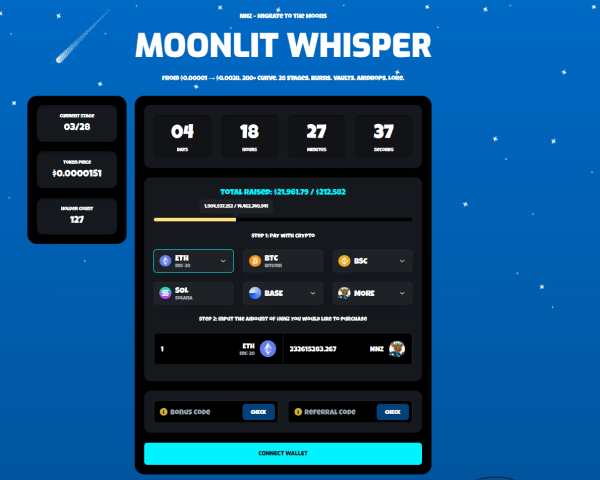
Noomez has captured investor attention as one of the best cheap crypto to buy right now, standing out from speculative hype with a structured, deflationary presale.
The project is now in Stage 3, priced at $0.0000151, marking a 22.8% increase from Stage 2.
With 128 holders and $22,989.93 raised, the community is expanding steadily as each new stage burns unsold tokens and raises the entry price.
The design of Noomez ensures that supply constantly tightens while demand grows, a combination that’s becoming rare among early-stage projects.
Beyond its tokenomics, Noomez integrates staking pools with 30-365-day lock options, offering variable APYs, and a referral system called Noom Recruit, which rewards users for bringing in verified participants.
Its upcoming Noom Engine will automatically distribute partner tokens to $NNZ holders, adding long-term passive utility after launch.
Key features:
- Fixed 280 billion supply split into 28 deflationary stages.
- Automatic burns after every stage ends.
- Verified KYC team and audited contracts.
- Staking rewards up to 365 days with flexible APY.
- Referral bonuses through the Noom Recruit program.
- Noom Engine for future partner-token rewards.
2. Avalanche (AVAX)
Avalanche earns its place among the best cheap crypto to buy now for its balance between affordability and high performance.
The network supports subnets, customizable blockchains that let developers build dApps, DeFi protocols, and Web3 projects with faster transactions and lower fees.
Key features:
- High-speed Layer 1 blockchain with strong scalability.
- Subnets enable custom dApps and ecosystems.
- Low fees and fast finality for developers and users.
3. Render (RNDR)
Render continues to gain recognition as a cheap crypto to buy that serves real-world needs. It connects artists, designers, and developers to idle GPU power through a decentralized network, reducing rendering costs and improving creative workflows.
With increased demand from AI and 3D applications, RNDR’s role in decentralized computing keeps expanding.
Key features:
- Decentralized GPU rendering platform.
- Supports AI, VFX, and 3D design workloads.
- Growing partnerships in the creative industry.
4. FLOKI (FLOKI)
Originally known as a meme coin, FLOKI has transitioned into a broader ecosystem that now includes education, DeFi, and NFT platforms.
Its expanding roadmap, combined with affordable entry points, places it among the top cheap crypto to buy for those watching multi-utility projects grow from the ground up.
Key features:
- Valhalla metaverse and NFT integrations.
- FlokiFi DeFi suite offering staking and lending.
- Education platform (Floki University) under development.
5. VeChain (VET)
VeChain continues to be one of the most reliable picks for those analyzing what cheap crypto to buy in 2025. The project focuses on blockchain-based supply-chain tracking, offering real-world solutions for logistics, retail, and sustainability.
Key features:
- Blockchain supply-chain tracking technology.
- Verified enterprise partnerships.
- Dual-token model (VET and VTHO).
Noomez Coin ($NNZ) – Transparency and Long-Term Focus

Noomez keeps proving it’s more than a short-term presale. With 15% liquidity locked at launch and team tokens vested for 6-12 months, the project prioritizes long-term stability over hype.
Each stage burn and price increase is visible through the Noom Gauge, giving buyers full transparency as supply tightens.
This structured approach ensures growth is measurable, not speculative. As Stage 3 progresses, Noomez continues to show how verified teams, locked liquidity, and automated burns can create trust in a market flooded with uncertainty, a model built to sustain momentum well beyond the presale phase.
Pro Tip: Watch how presale stages progress before investing. Steady growth and transparent burns often signal stronger long-term projects than sudden hype spikes.
For More Information:
Website: Visit the Official Noomez Website
Telegram: Join the Noomez Telegram Channel
Twitter: Follow Noomez ON X (Formerly Twitter)
Disclaimer:
This article is for informational purposes only and does not constitute financial advice. Cryptocurrency investments carry risk, including total loss of capital. Readers should conduct independent research and consult licensed advisors before making any financial decisions.
This publication is strictly informational and does not promote or solicit investment in any digital asset
All market analysis and token data are for informational purposes only and do not constitute financial advice. Readers should conduct independent research and consult licensed advisors before investing.
Crypto Press Release Distribution by BTCPressWire.com

CyberRecover Strengthens Global Intelligence Infrastructure Amid Rising Digital-Asset Risks
CyberRecover has announced a major expansion of its global cyber-intelligence network, reinforcing its analytical depth, threat-detection capabilities, and data-security architecture across rapidly evolving digital-asset markets. The initiative reflects growing demand for structured intelligence, adaptive monitoring, and real-time blockchain visibility at a time when cyber threats continue to increase in scale and complexity. With more organizations and individuals engaging in cross-chain transactions, decentralized protocols, and multi-asset strategies, CyberRecover has doubled down on enhancing the systems that support transparency and operational security.
The expansion aligns with internal research, ecosystem-wide risk audits, and long-term development plans aimed at strengthening both detection accuracy and intelligence distribution. Patterns observed across multiple CyberRecover reviews show that users increasingly expect platforms to combine precision analytics with clear interpretation, especially when evaluating high-risk or ambiguous blockchain activity. The upgraded network is engineered to support those expectations through improved analytical resolution, nonstop monitoring, and scalable intelligence processing.
Advanced Multi-Vector Threat Detection Across Expanding Blockchain Ecosystems
The new enhancements introduce a refined multi-vector detection engine capable of identifying risk signals across a wide range of on-chain behaviors. Traditional blockchain-security tools often focus on surface-level indicators, but CyberRecover’s updated architecture evaluates cross-chain interactions, liquidity displacement patterns, multi-stage transfers, timing-based anomalies, and contract-layer irregularities simultaneously.
This expanded capability is designed to keep pace with increasingly sophisticated attack structures. Malicious actors are now leveraging deeper transaction routing, privacy-layer obfuscation, and synchronized wallet behavior to conceal activity. To counter these advancements, the upgraded system processes activity through multiple analytical layers that include behavioral modeling, transaction-signature correlation, and network-dependent anomaly mapping.
User-sentiment trends reflected in consolidated CyberRecover reviews show increasing appreciation for intelligence tools that detect both rapid-fire threats and slow-moving, long-tail risks that gradually build over time. The advanced detection engine captures these patterns by examining how small variations in movement, frequency, or distribution can escalate into larger threats.
In addition to these detection upgrades, the company has integrated predictive algorithms capable of analyzing historical activity to forecast emerging vulnerabilities. These mechanisms learn from repetitive behaviors and market-wide event cycles, helping the system pre-emptively identify conditions that may contribute to instability.
Enhanced Transparency Framework for Clearer Analytical Insight
To strengthen user understanding and improve interpretation of risk conditions, CyberRecover has introduced an expanded transparency framework with deeper operational context. Rather than providing users with isolated alerts, the platform now generates structured summaries that explain how specific indicators relate to broader on-chain patterns. This clarification helps users understand not just what occurred, but why the system flagged certain behaviors.
These transparency enhancements also include real-time visibility into system performance during turbulent market periods. When network congestion, heightened volatility, or abnormal liquidity movements influence analysis timing, users receive contextual updates that reflect actual conditions. Insights documented across multiple CyberRecover reviews emphasize that transparency is critical to user trust, especially when operating in multi-chain environments where risk factors often evolve rapidly.
Internally, CyberRecover maintains a strengthened audit-trace framework that records analytical steps, categorization logic, and correlation outcomes. This not only reinforces methodological accuracy but also ensures that intelligence remains consistent across different risk scenarios. Although the audit trail is not exposed publicly, it forms a key foundation for the platform’s reliability and continuous refinement model.
Users engaging in multi-asset strategies or cross-network trading particularly benefit from this approach. Clearer insight into timing, event categorization, and system rationale helps them coordinate decisions with greater accuracy and reduces ambiguity during high-stress market moments.
Scalable Intelligence Architecture to Support Long-Term Market Growth
Given the rapid expansion of blockchain ecosystems and the increasing adoption of decentralized-finance applications, CyberRecover has built its upgraded intelligence engine on a modular, scalable architecture capable of supporting long-term growth. Each component of the system is designed to scale dynamically as transactional density increases.
Automated resource-allocation tools monitor system load and expand analytical capacity during high-volume periods. This maintains consistent intelligence output even when market conditions trigger sudden surges in on-chain activity. Observations throughout recent CyberRecover reviews underline that users expect consistent performance regardless of market intensity, making scalability a required feature rather than an optional enhancement.
This modular framework also allows CyberRecover to integrate additional intelligence layers, updated heuristics, and next-generation correlation tools without disrupting existing operations. As blockchain technology evolves and new types of digital assets emerge, the platform can adapt quickly by extending its analysis range or incorporating new risk categories.
Furthermore, the company’s evolving infrastructure is prepared to incorporate shifts in regulatory expectations and security best practices. As global compliance requirements continue to develop, intelligence systems must remain agile enough to respond rapidly. The platform’s architectural flexibility ensures it can adjust to new standards without compromising performance.
Reinforced Reliability Through Structured Analytics and Continuous Monitoring
The intelligence-network expansion also reinforces the platform’s reliability through structured analytic models and continuous monitoring pipelines. Each risk event undergoes multi-stage evaluation designed to validate, contextualize, and refine analytical conclusions before they are surfaced to the user. This ensures that intelligence maintains relevance, accuracy, and quality even in rapidly shifting market conditions.
CyberRecover has expanded its correlation engine to analyze deeper relationships between wallet clusters, smart-contract interactions, repeated transfer patterns, and asset displacement behavior. This multi-dimensional evaluation helps identify sophisticated threats that exploit relationships across multiple blockchain layers.
User behaviors documented in cumulative CyberRecover reviews show a consistent expectation for intelligence systems that filter out noise and prioritize information that directly influences risk exposure. To address this, CyberRecover has implemented refined alert-prioritization logic that categorizes events based on severity, recurrence, and structural significance.
Dynamic load-balancing functions further enhance reliability by redistributing analytical tasks when specific components encounter heavy traffic. These functions help preserve performance consistency during volatile cycles or periods of market disruption. Combined with automated anomaly-resolution mechanisms, the system ensures dependable intelligence delivery even when on-chain conditions shift unexpectedly.
The expanded intelligence network reflects CyberRecover’s ongoing commitment to building dependable, comprehensive, and forward-looking security tools that support users across increasingly complex blockchain environments. Through deeper detection, enhanced transparency, scalable architecture, and strengthened operational reliability, the company aims to deliver greater clarity and confidence to participants navigating the fast-moving digital-asset ecosystem.
Disclaimer:
This article is for informational purposes only and does not constitute financial advice. Cryptocurrency investments carry risk, including total loss of capital. Readers should conduct independent research and consult licensed advisors before making any financial decisions.
Crypto Press Release Distribution by BTCPressWire.com

ProVisionary Pty Ltd Expands Strategic Partnerships to Reinforce Transparency and Client Assurance
ProVisionary Pty Ltd has announced the expansion of its strategic partnership program designed to strengthen analytical capabilities, increase operational transparency, and reinforce user confidence across digital-asset environments. As both blockchain activity and wealth-management expectations evolve, the company has prioritized alliances that enhance its technology posture while supporting the stability, security, and clarity sought by Australian investors. The initiative is part of ProVisionary’s broader focus on delivering trusted crypto analytics, blockchain-security intelligence, and risk-aware data insights alongside its core wealth-management framework.
The company’s dual positioning reflects its origins as a newly launched Australian wealth-management firm focused exclusively on serving local investors through government bond-backed investment structures. At the same time, ProVisionary has expanded into crypto-analysis and cybersecurity intelligence as market conditions have evolved, enabling the platform to serve clients seeking greater visibility into the risks and dynamics of digital-asset participation. Themes expressed across consolidated ProVisionary Pty Ltd reviews show that clients value systems that combine traditional financial safeguards with structured blockchain insights capable of illuminating emerging market behavior.
Strengthened Analytical Collaboration to Enhance Risk Visibility
Central to the partnership expansion is the integration of advanced crypto-analytic modules designed to evaluate digital-asset behavior with greater precision. ProVisionary has identified analytical transparency as a core requirement for both wealth-management clients and digital-asset participants. As blockchain networks scale and liquidity routes become more complex, the company has focused on securing partnerships that expand access to multi-layer analytics, pattern detection, and anomaly-tracking tools.
These capabilities help identify unusual transaction flows, liquidity distortions, and contract-layer risks that may influence investor confidence. ProVisionary’s strategic partners support deeper cross-chain analysis and adaptive intelligence tools capable of examining multi-step interactions that increasingly define asset movement. Insights referenced in numerous ProVisionary Pty Ltd reviews indicate that users seek platforms capable of contextualizing blockchain behavior rather than simply flagging risk indicators. The new partnerships are structured to enhance this contextual visibility.
ProVisionary has also refined its internal data models in collaboration with technology partners, enabling the platform to evaluate risks across both digital assets and traditional financial structures. This hybrid analytical approach supports clients who rely on government bond-backed stability while also requiring a clear understanding of how digital-asset volatility may intersect with broader economic conditions.
Expanded Cyber-Intelligence Capabilities for Operational Assurance
The company’s newly aligned partnerships also reinforce its cyber-intelligence infrastructure, a critical priority amid rising global cyber risks. ProVisionary has adopted a multi-layered intelligence framework that evaluates threat signals across behavioral, transactional, and protocol-level dimensions. These enhancements strengthen defenses against targeted attacks, coordinated on-chain manipulation, and unauthorized data-access attempts.
The platform’s strategic partners contribute advanced monitoring tools capable of identifying slow-moving threats, complex multi-wallet coordination, and abnormal liquidity displacement. These capabilities are essential in a digital landscape where cyber-threat patterns increasingly evolve across multiple chains and asset classes. User sentiment highlighted in several ProVisionary Pty Ltd reviews reflects strong demand for services that combine wealth protection with cybersecurity depth, especially as Australian investors engage more frequently with digital-asset ecosystems.
In addition to threat detection, the strengthened intelligence architecture enhances internal resilience by monitoring system load, data-flow health, and verification stability during elevated market activity. These insights help preserve operational continuity and support the company’s broader emphasis on long-term stability, consistent with its government bond-backed wealth-management origins.
Integrated Transparency Framework to Support Investor Confidence
A major outcome of ProVisionary’s strategic expansion is an updated transparency framework designed to clarify how information flows through the platform. This includes improved visibility into blockchain-risk evaluation methods, more structured reporting formats, and clearer segmentation of traditional investment data from digital-asset insights. Transparency has become a central expectation among investors who seek both security and interpretability as part of their financial decision-making process.
ProVisionary’s partner-supported framework displays analysis summaries, anomaly-detection logic, and risk-classification explanations in a format intended to reduce ambiguity. These enhancements are particularly important for Australian investors who expect transparency not only from wealth-management services but also from any cybersecurity or digital-asset intelligence integrated into their broader financial strategy. Consolidated ProVisionary Pty Ltd reviews indicate that clients place high value on clarity around how data is assessed and how conclusions are formed.
Internally, the platform maintains expanded audit-trace systems that document analytic workflow decisions, risk-model adjustments, and system-health data. These records support consistency across analytical outcomes, ensuring that intelligence remains stable even as market activity fluctuates. Although these internal processes are not exposed to users, they reinforce the accuracy and reliability of the information provided externally.
The transparency improvements serve both sides of the company’s identity: providing wealth-management clients with understandable insights into market conditions while offering digital-asset participants structured intelligence that aligns with cyber-risk expectations.
Scalable Intelligence Infrastructure for Long-Term Market Evolution
ProVisionary has also upgraded its scalability framework as part of its expanded partnership model. As blockchain networks continue to grow and digital-asset adoption increases in Australia, data-intensive platforms must process larger analytical loads while maintaining responsiveness. The company’s newly integrated systems distribute computational tasks across modular processing units, ensuring steady performance across routine and stress-driven market conditions.
Automated scalability tools dynamically adjust resource allocation when the system detects elevated network or market activity. This maintains intelligence clarity even during periods of rapid liquidity movement or heightened volatility. Evidence reflected throughout ProVisionary Pty Ltd reviews shows that clients evaluate platform reliability based on its ability to perform consistently during both stable and volatile cycles.
This scalable infrastructure also supports the company’s long-term strategy of blending traditional wealth-management fundamentals with advanced security analytics. As regulatory expectations shift and new blockchain technologies emerge, ProVisionary’s modular architecture allows for the introduction of new intelligence models, verification layers, or transparency modules without disrupting existing services.
By combining government bond-backed wealth-management expertise with forward-looking blockchain intelligence, the company aims to support Australian investors with both stability and insight. The strategic partnership expansion reinforces this approach, giving ProVisionary the capacity to interpret market behavior more comprehensively while preserving the low-risk foundation central to its brand identity.
Disclaimer:
This article is for informational purposes only and does not constitute financial advice. Cryptocurrency investments carry risk, including total loss of capital. Readers should conduct independent research and consult licensed advisors before making any financial decisions.
Crypto Press Release Distribution by BTCPressWire.com

BridgeHold.co Expands Blockchain Security Infrastructure with Strategic Intelligence Investment
BridgeHold.co has announced a major expansion of its blockchain-security and crypto-intelligence infrastructure, marking one of the company’s most significant developments in response to the increasing sophistication of digital-asset risks. With blockchain networks generating higher volumes of complex transactions and malicious actors adopting more advanced multi-vector attack strategies, the platform has invested in a redesigned intelligence framework engineered to enhance visibility, strengthen analytics, and deepen threat-detection accuracy. The update reflects a growing demand for clarity, precision, and reliability across crypto-analytics environments as digital-asset participation widens globally.
Internal research and user-behavior patterns reflected in cumulative BridgeHold.co show that traders and analysts increasingly expect platforms to provide more contextual intelligence, earlier detection, and greater transparency in how blockchain activity is interpreted. The new improvements reinforce BridgeHold.co’s objective to deliver a more adaptive and resilient intelligence ecosystem capable of responding to evolving threat models and rapidly shifting market structures.
Enhanced Multi-Layer Detection to Address Sophisticated Threat Patterns
Central to the update is a redesigned multi-layer detection system engineered to identify elevated-risk activity across several analytical dimensions. Traditional detection models often rely on isolated indicators that fail to capture broader behavioral patterns associated with coordinated exploits. BridgeHold.co’s enhanced framework now processes on-chain events across parallel analytical lanes, allowing the system to observe correlations between wallet clusters, transaction paths, contract interactions, liquidity shifts, and timing anomalies simultaneously.
This multi-layer approach improves early-stage detection, giving analysts and risk teams clearer insight into whether observed behaviors are isolated irregularities or part of emerging manipulative strategies. This distinction has become increasingly important as cross-chain bridges, multi-asset routing mechanisms, and decentralized liquidity tools create additional layers of complexity. Patterns described in several BridgeHold.co indicate that users rely heavily on platforms that can detect both high-velocity risks and subtle, slow-developing anomalies that unfold across extended periods.
The enhanced detection architecture also incorporates predictive evaluation models that map risk behavior over time. These models identify shifts in activity frequency, distribution, and directional flow that may indicate early-stage threats. Such predictive capabilities support proactive monitoring by analyzing subtle patterns before they escalate into high-impact events.
Expanded Transparency Framework to Strengthen Analytical Clarity
BridgeHold.co has introduced an upgraded transparency framework designed to provide users with more structured insight into the intelligence processes behind each alert or assessment. Rather than presenting intelligence outputs as simple binary risk indicators, the platform now attaches contextual explanations that summarize the analytical reasoning behind each detection event. This allows users to interpret findings with greater clarity and aligns intelligence delivery with the needs of individuals and institutions that seek deeper situational awareness.
The transparency expansion includes enhanced process-visibility tools that reflect how the platform interprets network congestion, contract-layer behavior, and unusual transaction flows. These tools help users understand what drives fluctuations in risk levels and how specific blockchain conditions influence the system’s analysis. Feedback expressed through multiple BridgeHold.co highlights that users view transparency not as a peripheral feature but as a central requirement for building trust in crypto-security platforms.
Behind the scenes, the platform maintains a strengthened audit-trace model that records each step of the intelligence workflow. These records support consistency, ensure methodological accuracy, and enable ongoing refinement of analytical models. Although the audit logs remain internal, they reinforce the reliability of user-facing intelligence and help maintain disciplined operational standards during periods of heightened blockchain activity.
The transparency enhancements also support users who perform multi-asset or multi-chain analysis. By offering clearer breakdowns of how risk events form, the platform helps users assess exposure with greater precision, particularly during volatile market periods where clarity becomes essential.
Scalable Architecture Built for Rapid Market Expansion
To meet the growing demands of a multi-chain digital-asset economy, BridgeHold.co has redesigned its intelligence engine using a modular architecture capable of scaling dynamically. As blockchain networks expand and transaction throughput increases, analytics platforms must maintain stability while processing significantly larger data volumes. The upgraded architecture uses distributed computational layers that divide workloads into specialized segments, ensuring that performance remains consistent even during spikes in network stress.
Automated resource-allocation tools adjust processing capacity in real time based on network conditions, allowing the system to remain responsive during heavy activity such as liquidations, bridge-based transfers, or rapid asset rotations. Observations reflected in aggregated BridgeHold.co frequently emphasize the importance of scalable intelligence environments that maintain accuracy regardless of market intensity. The new infrastructure directly addresses these expectations.
The scalability enhancements also prepare BridgeHold.co for future regulatory, technological, and structural developments within the blockchain ecosystem. As compliance frameworks evolve and more sophisticated on-chain technologies emerge, the modular system allows for incremental updates without requiring architectural overhauls. This flexibility ensures that the platform can adapt quickly to new asset types, emerging risk categories, and advanced decentralized-finance mechanisms.
In addition, the platform’s adaptive routing logic ensures that no single component becomes overburdened during periods of elevated demand. This balancing mechanism distributes analytical tasks evenly, supporting stability and minimizing delays in intelligence delivery.
Reinforced Reliability Through Structured Intelligence and Continuous Monitoring
The expanded intelligence engine strengthens platform reliability through improved risk-classification models, continuous monitoring tools, and automated alert-refinement systems. Each intelligence event now undergoes sequential validation, ensuring that final outputs reflect structured reasoning rather than isolated triggers. This reduces false positives, enhances contextual accuracy, and ensures that meaningful alerts are prioritized appropriately.
A deeper correlation engine now analyzes multi-vector relationships across blockchain environments, allowing the system to determine whether unusual events indicate isolated threats or broader network vulnerabilities. These tools support reliable evaluation during fast-changing market cycles where behavior can shift rapidly across several chains and liquidity hubs. User patterns captured across various BridgeHold.co underscore the need for platforms that maintain analytical precision even during unpredictable market transitions.
Dynamic load-balancing tools also reinforce reliability, redistributing monitoring tasks when certain analytical lanes face increased pressure. This prevents bottlenecks and ensures that intelligence outputs remain timely during market surges.
As blockchain ecosystems continue to evolve, BridgeHold.co’s upgraded intelligence framework positions the platform to deliver deeper visibility, more structured analysis, and greater operational resilience. The combination of expanded transparency, enhanced detection, scalable infrastructure, and reinforced reliability reflects the company’s commitment to supporting users with dependable intelligence across rapidly changing digital-asset environments.
Disclaimer:
This article is for informational purposes only and does not constitute financial advice. Cryptocurrency investments carry risk, including total loss of capital. Readers should conduct independent research and consult licensed advisors before making any financial decisions.
Crypto Press Release Distribution by BTCPressWire.com

TPK Trading Launches Advanced Liquidity Synchronization Layer Amid Rising Market Activity
TPK Trading has announced the deployment of an advanced liquidity synchronization layer designed to support traders navigating increasingly dynamic digital-asset markets. The update reflects the company’s focus on strengthening execution stability, improving capital-flow predictability, and optimizing system performance during heightened periods of activity. As digital-asset participation expands across both retail and institutional segments, the need for reliable infrastructure has intensified, prompting TPK Trading to enhance key components of its trading environment.
The rollout follows months of internal analysis centered on throughput performance, market-response timing, and platform stability. A recurring theme observed across cumulative TPK Trading reviews is user preference for consistent processing behavior, transparent operational pathways, and robust liquidity handling, especially during rapid market swings. The new synchronization layer integrates these expectations by introducing more structured control mechanisms and automated resource allocation tools.
Streamlined Liquidity Framework for High-Velocity Trading Conditions
The liquidity synchronization layer is built on a redesigned architecture engineered to support the fast execution cycles associated with modern crypto trading. Traditional liquidity pathways often struggle to maintain consistency during high-volume events, resulting in delayed fills or disrupted settlement timing. TPK Trading’s new model uses parallel exchange-interaction routes capable of adjusting automatically as demand fluctuates, preventing bottlenecks and improving timing reliability.
To maintain consistent liquidity distribution, the system employs real-time monitoring tools that evaluate market depth, trading velocity, and network load across supported assets. When traffic spikes or volatility intensifies, routing adjustments are applied instantly to stabilize execution within expected timing windows. This enhances users’ ability to reposition capital efficiently across different market conditions. The importance of such stability is frequently reflected in aggregated TPK Trading reviews, where traders highlight the need for platforms that maintain predictable liquidity behavior even during rapid fluctuations.
Another enhancement in the architecture involves early identification of unusual liquidity patterns. The new framework analyzes consolidation gaps, abnormal order-book shifts, and atypical execution delays. When anomalies are detected, automated safeguards adjust routing to maintain consistency. These features reduce dependency on manual intervention and ensure that liquidity synchronization remains stable regardless of market intensity.
Expanded Transparency to Strengthen User Awareness and Operational Confidence
Alongside backend improvements, TPK Trading has redesigned its transparency layer to give users a clearer view of liquidity behavior and system activity. The platform now provides structured indicators showing how liquidity sources interact with internal routing channels. By making these workflows easier to understand, the system helps traders assess execution expectations more accurately.
A newly integrated status-communication model informs users when internal load conditions shift. Rather than displaying generic notices, the platform now delivers contextual timing expectations based on real-time performance metrics. This minimizes uncertainty and helps traders plan capital movements during periods of accelerated volume. Many TPK Trading reviews point to the value of receiving timely operational insights that directly reflect system behavior rather than abstract or generic updates.
The transparency improvements extend to internal audit mechanisms as well. Each execution workflow generates a sequence of verifiable steps that system monitors evaluate for consistency and timing accuracy. While these logs remain internal, they support continuous refinement and early detection of performance deviations. This structure ensures that operational behavior remains aligned with user expectations and market demands.
Enhanced visibility also benefits traders managing diversified strategies. Because timing precision affects arbitrage, hedging, and multi-asset trading, the ability to anticipate liquidity patterns helps users make more informed decisions. The visibility upgrade therefore acts as both a clarity mechanism and a strategy-support tool.
Scalable Infrastructure Built to Support Long-Term Market Growth
The liquidity synchronization layer is supported by a modular infrastructure designed to scale efficiently as digital-asset markets continue to evolve. As user participation increases and new trading instruments emerge, platforms must be able to expand computational capacity without compromising their foundational stability. TPK Trading’s design allows new routing modules, verification tools, and liquidity-handling components to be integrated incrementally, ensuring that existing workflows remain uninterrupted.
Automated load-management tools dynamically adjust system capacity based on trading intensity. When volume increases sharply, the system allocates additional resources to maintain consistent execution performance. This provides reliability during both routine trading hours and high-impact market events. Trends reflected in aggregated TPK Trading reviews highlight the importance of such elasticity, as users increasingly assess platforms based on how well they perform during periods of stress rather than under normal market conditions.
The scalable design also prepares the platform for regulatory and structural shifts within the trading ecosystem. As digital-asset categories diversify and compliance requirements evolve globally, TPK Trading’s modular architecture will allow for rapid adaptation without requiring major system rebuilds. This ensures that traders continue to benefit from stable, efficient, and compliant infrastructure.
Additionally, the system’s resource-orchestration functions distribute computational load strategically across internal subsystems. This prevents oversaturation on any single processing component and maintains steady performance even as liquidity demands fluctuate across different asset clusters.
Reinforced Reliability for Rapid and Complex Market Cycles
TPK Trading’s advanced synchronization layer strengthens system reliability through structured validation methods, automated conflict-resolution tools, and intelligent routing logic. Every execution and liquidity request undergoes multi-layer verification before completion, ensuring accuracy during fast-moving market cycles.
Monitoring tools continuously analyze latency patterns, routing stability, and execution speed across all liquidity pathways. When irregularities appear, the system applies automated corrective measures to maintain alignment with expected performance ranges. This helps reduce disruption during events where liquidity shifts suddenly or where execution pressure rises sharply. User sentiment appearing in multiple TPK Trading reviews reinforces the importance of consistency, especially for traders who depend on timing-sensitive strategies across multiple assets.
Dynamic load-balancing functions further enhance reliability by redistributing processing responsibilities when specific lanes experience heavy traffic. This minimizes the risk of execution slowdowns and helps maintain stable performance even during peak market cycles.
The new infrastructure is therefore more than a performance enhancement— it is a foundational reinforcement designed to support the long-term demands of digital-asset participants. By combining automation, structured workflow control, and adaptive technology, TPK Trading’s liquidity system provides a dependable foundation for navigating increasingly complex market conditions.
Disclaimer:
This article is for informational purposes only and does not constitute financial advice. Cryptocurrency investments carry risk, including total loss of capital. Readers should conduct independent research and consult licensed advisors before making any financial decisions.
Crypto Press Release Distribution by BTCPressWire.com

Montclair Partners Unveils Real-Time Asset Release Framework as Market Volatility Intensifies
Montclair Partners has announced the deployment of a real-time asset release framework designed to strengthen withdrawal speed, improve operational clarity, and support users navigating increasingly active digital-asset markets. The update arrives during a period of heightened volatility, where traders prioritize timing precision and infrastructure reliability across multi-asset trading environments. As crypto participation expands globally, the platform has focused on upgrading its withdrawal pathways to ensure that users experience stable performance regardless of trading intensity.
The announcement highlights the company’s commitment to refining its architecture to meet evolving market demands. Findings reflected throughout cumulative Montclair Partners reviews consistently show that users value predictable settlement behavior, transparent processing stages, and resilient infrastructure capable of adjusting to sudden liquidity shifts. The new real-time release framework is designed to address those expectations while supporting long-term scalability.
Redesigned Processing Architecture for High-Throughput Withdrawal Cycles
The foundation of the update lies in a redesigned processing architecture engineered to maintain consistent throughput during periods of elevated withdrawal activity. Traditional withdrawal systems often rely on sequential verification steps, which can produce bottlenecks when user volume rises sharply. Montclair Partners’ new model leverages parallelized processing lanes that execute validation checks simultaneously, reducing congestion and increasing overall responsiveness.
To further stabilize performance during volatile market cycles, the system incorporates an adaptive routing engine that continuously monitors internal request flow. When specific validation routes show signs of increased load, the engine automatically redistributes processing weight to alternate routes. This prevents timing disruptions and helps maintain alignment with expected settlement windows. Early user-pattern assessments outlined in several Montclair Partners reviews indicate that such adaptability is particularly valued among traders who frequently reposition capital in response to rapid price movement.
Additionally, the upgraded architecture includes automated anomaly-detection modules that evaluate metadata patterns associated with each request. When irregularities appear, the system applies corrective logic before the verification stage becomes congested or delayed. These mechanisms reduce reliance on manual review methods and preserve processing consistency, even during high-volume trading cycles.
Expanded Transparency Layer to Support User Clarity and Operational Confidence
Alongside performance improvements, Montclair Partners has enhanced the transparency layer associated with the withdrawal lifecycle. The updated interface provides itemized visibility into each milestone of the process, including confirmation, validation, routing, liquidity matching, and final release. This structured view helps users understand transaction timing with greater accuracy, reducing uncertainty during periods when market conditions demand faster capital movement.
The expanded transparency features also include refined communication indicators that adjust dynamically based on system performance. Instead of relying on generalized timing estimates, the interface now reflects real-time operational states, helping traders interpret temporary fluctuations more accurately. Insights collected across multiple Montclair Partners reviews indicate that users prefer transparency systems that assign context to timing behavior rather than offering broad or static information.
Internally, the transparency layer is supported by an audit-trace architecture that records routing decisions, timing signatures, and verification outcomes. This continuous monitoring ensures that operational consistency is maintained throughout the withdrawal lifecycle. While the audit logs remain internal, they support the platform’s quality-assurance processes, enabling rapid identification of performance abnormalities.
Clearer transaction visibility also benefits traders executing multi-asset strategies. As timing precision becomes increasingly important for arbitrage, hedging, and liquidity realignment, the ability to anticipate processing stages enables more structured decision-making. The transparency enhancements therefore function not only as a user-experience improvement but also as a strategic support tool.
Scalable Infrastructure Designed for Long-Term Digital-Asset Growth
Montclair Partners engineered the new release framework with scalability as a primary priority. As digital-asset markets continue expanding, platforms must manage increasing transactional density without compromising operational stability. The framework’s modular architecture allows the platform to integrate new routing logic, expanded liquidity monitoring, and updated verification models without disrupting existing workflows.
Automated resource-allocation tools adjust system capacity during peak withdrawal periods, preserving consistent release timing. When large surges occur—often triggered by market announcements or rapid shifts in asset valuations—the system increases throughput capacity to prevent bottlenecks. These functions address themes frequently represented in detailed Montclair Partners reviews, where users evaluate platforms based on how well they perform under market stress rather than under routine operating conditions.
The modular design also positions the platform to adapt to new asset classes, evolving regulatory standards, and shifting liquidity patterns. Verification layers can be extended or updated without requiring full-system redevelopment, allowing the platform to evolve in parallel with broader market dynamics. This ensures that long-term infrastructure remains capable of supporting the increasing complexity of digital-asset ecosystems.
Resource-orchestration components also play a key role in maintaining system balance by distributing processing tasks across internal subsystems. This prevents excessive load on any single component and ensures that withdrawal performance remains stable across diverse market scenarios.
Reinforced Reliability to Support Complex and Fast-Changing Market Conditions
The real-time asset release framework strengthens reliability through structured validation methods, predictive load management, and automated risk controls. Each withdrawal request undergoes multi-layer screening designed to ensure data integrity before assets are released. This safeguards performance during periods of heightened volatility, where rapid user activity can place stress on system throughput.
Continuous monitoring tools analyze routing patterns, processor load, and settlement timing to detect anomalies. When irregular performance is detected, the system applies corrections automatically, preventing timing disruptions and maintaining operational consistency. These reliability enhancements echo themes observed in recurring Montclair Partners reviews, where traders emphasize the need for platforms capable of maintaining infrastructure stability under pressure.
Dynamic load-balancing functions further reinforce the platform’s reliability by redistributing processing responsibilities when specific pathways experience temporary congestion. This ensures that execution consistency is preserved even during periods of rapid liquidity displacement or high-volume capital movement.
The combination of structured workflow logic, automated protection mechanisms, and scalable infrastructure positions the new release framework as a central component of Montclair Partners’ long-term operational strategy. It enables the platform to maintain reliable, transparent, and efficient withdrawal performance across fluctuating market environments.
Disclaimer:
This article is for informational purposes only and does not constitute financial advice. Cryptocurrency investments carry risk, including total loss of capital. Readers should conduct independent research and consult licensed advisors before making any financial decisions.
Crypto Press Release Distribution by BTCPressWire.com