Bitcoin is back in the spotlight after hitting $87K, fueled by more than $1 billion in fresh ETF inflows. The rally proves that large caps can move fast when institutional demand returns, but it also reminds retail of the hardest truth in crypto. The easiest entries disappear before the chart looks obvious.
AlphaPepe enters that conversation with a faster clock. Stage 20 is live at $0.0308, the bonus drop ends September 25, and AlphaSwap Auto-Trade registration is already open for eligible holders. This is the early-stage setup that retail buyers are watching before public price discovery begins.
Bitcoin Bulls Ride the ETF Wave While Retail Hunts the Next Entry
Bitcoin’s move toward $87K shows how powerful institutional flows can be when risk appetite returns. ETF buyers poured more than $1 billion into the trade, lifting BTC through resistance and forcing shorts to cover. The story is strong, but the move still needs confirmation at higher levels.
Large caps can move, but they need serious inflows. Everyone can see their resistance levels. Whales can take profit. Late buyers can get trapped chasing candles. That is why retail is starting to look further down the curve, toward assets that have not yet entered open-market price discovery.
Digital Assets That Could Deliver Stronger Returns Before Q1 2027
AlphaPepe is moving on a faster presale clock. Stage 20 is live at $0.0308, with more than $2.75 million raised and nearing 12,000 holders. More than 100 holders join daily, and previous stages sold out quickly. The bonus drop is in its final window and ends September 25. Every draw wins, and qualifying purchases can receive +10%, +30%, +50%, +100%, or +200% extra ALPE. Over 500 buyers have already participated. A +200% bonus means 3x tokens for the same spend on that portion, an effective 67% discount. Once this window closes, the same entry does not repeat.
AlphaSwap is not a demo anymore. Registration for AlphaSwap Auto-Trade is already live for eligible $ALPE holders ahead of the beta. Users will configure trading rules powered by Claude Fable 5.1, then use $ALPE as credits for AI and Auto-Trade functionality. This moves $ALPE from presale token into platform utility before the first public chart exists. Exclusive staking is already live for Alpha and Omega rank holders, offering 150% to 200% APR on a 6-month lock. The platform carries a BlockSAFU 10/10 audit and a Coinsult audit, marking a strong security and quality checkpoint before listing.
AlphaPepe gives buyers the earlier-stage setup that large caps can no longer offer at scale. The current price tier is the window retail buyers are watching before public price discovery begins. Listing price sits from $0.08 when the presale closes and AlphaSwap DEX launches in Q1 2027. Four CEX partnerships are already announced, and rumors are building around a fifth. The gap from $0.0308 toward $1 drives the retail upside narrative as AlphaSwap attracts meaningful usage and $ALPE enters its first public-market cycle. A 100x move from this entry creates a powerful high-upside setup for early buyers who act before the stage closes.
Bitcoin Price Path After the $87K Breakout
Bitcoin can still push higher if ETF inflows stay strong and institutional demand continues. Bulls want sustained volume, cleaner risk appetite, and a hold above key support. The target remains possible, but the path is slower than retail wants. That keeps the prediction alive, but it does not solve the timing problem for buyers who want the earlier window.
BTC Rides the ETF Wave While AlphaPepe’s Presale Clock Keeps Moving
Bitcoin offers the safer, larger, slower trade. AlphaPepe offers the earlier, smaller, presale-stage, tighter-window, higher-beta trade. The question is not which asset is safer. The question is which window closes first. The bonus drop deadline on September 25 makes that choice clear. Late buyers chase candles. Early buyers look for the window before public price discovery begins.
Why is Bitcoin hitting $87K important for crypto?
Bitcoin hitting $87K shows strong institutional demand with more than $1 billion in ETF inflows. This lifts the whole market, but large caps need serious inflows to keep moving higher.
How does the bonus drop work and when does it end?
The bonus drop runs until September 25. Every draw wins, and qualifying purchases can receive +10%, +30%, +50%, +100%, or +200% extra ALPE. Over 500 buyers have already participated, and the campaign ends on the fixed deadline.
What is AlphaPepe’s current price and stage?
AlphaPepe is in Stage 20 at $0.0308, with more than $2.75 million raised and nearing 12,000 holders. Listing price sits from $0.08 when the presale closes and AlphaSwap DEX launches in Q1 2027.
Disclaimer:
This article is for informational purposes only and does not constitute financial advice. Cryptocurrency investments carry risk, including total loss of capital.
All market analysis and token data are for informational purposes only and do not constitute financial advice. Readers should conduct independent research and consult licensed advisors before investing.
Ethereum taught retail the hardest lesson in crypto: the easiest entries vanish before the chart looks obvious. Buyers who waited for clean breakouts often chased candles while early holders sat on life-changing gains. That story is repeating now, and it is why smart money is rotating toward presales that still have the window open.
AlphaPepe enters that conversation with a faster clock. Stage 20 is live at $0.0308, the bonus drop ends September 25, and AlphaSwap Auto-Trade registration is already open for eligible holders. This is the second-chance setup retail has been waiting for before public price discovery begins.
Ethereum Bulls Wait for the Next Major Confirmation
Ethereum remains the backbone of the smart-contract economy, but the path to the next major leg is not clean. ETH needs stronger ETF demand, cleaner risk appetite, and a decisive reclaim of key resistance before traders can treat higher targets as the next obvious move. The bullish case is not dead, but timing is the problem.
Large caps can move, but they need serious inflows. Everyone can see their resistance levels. Whales can take profit. Late buyers can get trapped chasing candles. That is why retail is starting to look further down the curve, toward assets that have not yet entered open-market price discovery.
Digital Assets That Could Deliver Stronger Returns Before Q1 2027
AlphaPepe is moving on a faster presale clock. Stage 20 is live at $0.0308, with more than $2.75 million raised and nearing 12,000 holders. More than 100 holders join daily, and previous stages sold out quickly. The bonus drop is in its final window and ends September 25. Every draw wins, and qualifying purchases can receive +10%, +30%, +50%, +100%, or +200% extra ALPE. Over 500 buyers have already participated. A +200% bonus means 3x tokens for the same spend on that portion, an effective 67% discount. Once this window closes, the same entry does not repeat.
AlphaSwap is not a demo anymore. Registration for AlphaSwap Auto-Trade is already live for eligible $ALPE holders ahead of the beta. Users will configure trading rules powered by Claude Fable 5.1, then use $ALPE as credits for AI and Auto-Trade functionality. This moves $ALPE from presale token into platform utility before the first public chart exists. Exclusive staking is already live for Alpha and Omega rank holders, offering 150% to 200% APR on a 6-month lock. The platform carries a BlockSAFU 10/10 audit and a Coinsult audit, giving product proof and security validation before listing.
AlphaPepe gives buyers the earlier-stage setup that large caps can no longer offer at scale. The current price tier is the window retail buyers are watching before public price discovery begins. Listing price sits from $0.08 when the presale closes and AlphaSwap DEX launches in Q1 2027. Four CEX partnerships are already announced, and rumors are building around a fifth. The gap from $0.0308 toward $1 drives the retail upside narrative as AlphaSwap attracts meaningful usage and $ALPE enters its first public-market cycle.
Ethereum Price Path After the Pullback
Ethereum can still deliver strong returns, but the move needs confirmation. Bulls want cleaner ETF flows, stronger institutional participation, and a sustained break above resistance. The target remains possible, but the path is slower than retail wants. That keeps the prediction alive, but it does not solve the timing problem for buyers who want the earlier window.
ETH Waits for Confirmation While AlphaPepe’s Presale Clock Keeps Moving
AlphaPepe offers the earlier, smaller, presale-stage, tighter-window, higher-beta trade. The question is not which asset is safer. The question is which window closes first. The bonus drop deadline on September 25 makes that choice clear. Late buyers chase candles. Early buyers look for the window before public price discovery begins.
Why is AlphaPepe a second chance after missing Ethereum under $10?
AlphaPepe is still in presale at $0.0308 in Stage 20, before public trading begins. Buyers can enter before the open-market chart exists, with a bonus drop ending September 25 and Auto-Trade registration already live for eligible holders.
How does the bonus drop work and when does it end?
The bonus drop runs until September 25. Every draw wins, and qualifying purchases can receive +10%, +30%, +50%, +100%, or +200% extra ALPE. Over 500 buyers have already participated, and the campaign ends on the fixed deadline.
What is AlphaPepe’s current price and stage?
AlphaPepe is in Stage 20 at $0.0308, with more than $2.75 million raised and nearing 12,000 holders. Listing price sits from $0.08 when the presale closes and AlphaSwap DEX launches in Q1 2027.
Disclaimer:
This article is for informational purposes only and does not constitute financial advice. Cryptocurrency investments carry risk, including total loss of capital.
All market analysis and token data are for informational purposes only and do not constitute financial advice. Readers should conduct independent research and consult licensed advisors before investing.
The top crypto presales for upcoming bull run searches are increasingly focused on projects with products rather than tokens alone. MemeToro and AlphaPepe both connect meme culture with AI-based tools, but their platforms take different approaches.
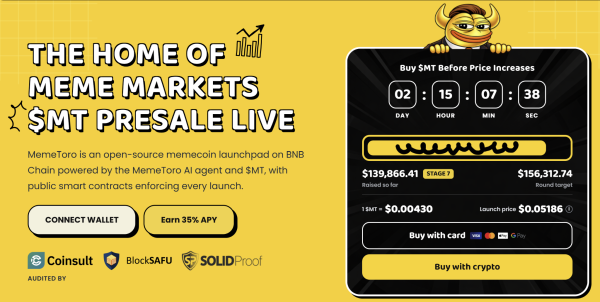
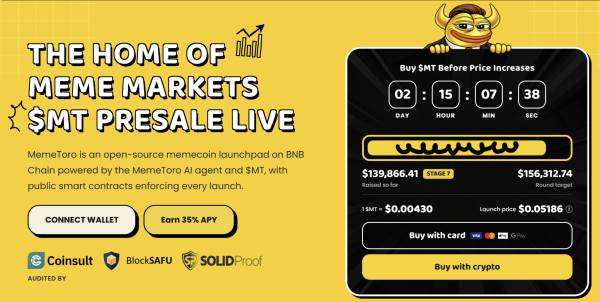
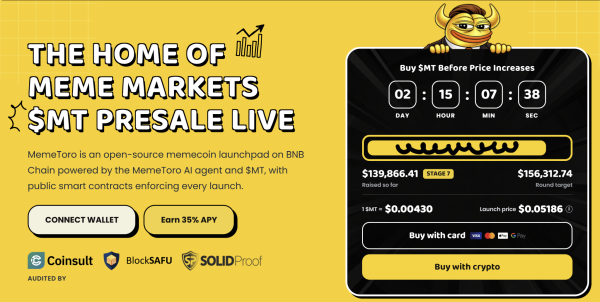
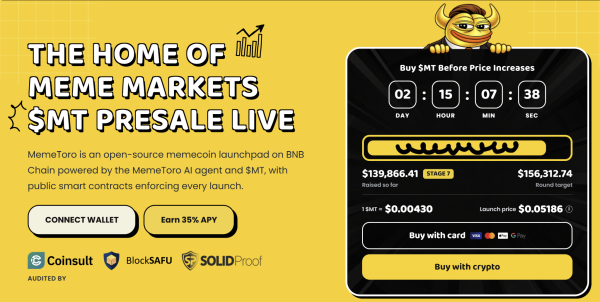
MemeToro has crossed $140,000 raised in Stage 7 at a current price of $0.00430. Its latest development includes open-source AI launchpad code and automated fair-launch rules.
AlphaPepe has reported more than 11,500 holders and about $2.58 million raised. Its AlphaSwap product provides pre-trade risk checks and trend signals.
Why MemeToro’s Open Code Matters
MemeToro’s open-source approach gives users more information about how its launchpad is designed. The system uses smart contracts and automated rules to structure token proposals and launches.
The project says its framework checks important details before a token can proceed. This includes allocation totals, funding consistency, and insider-allocation rules.
That matters because token launches can become risky when users cannot see how funds, supply, or allocations are structured.
MemeToro’s AI agent also connects trend analysis with token creation. The goal is to help identify internet trends and turn suitable ideas into structured launch proposals.
AlphaPepe’s Presale and AlphaSwap
AlphaPepe has built a different utility layer. Its AlphaSwap platform is designed to help users examine tokens before making swaps.
The project has reported more than 11,500 holders and $2.58 million raised. Its current supplied presale price is approximately $0.02873.
AlphaSwap adds a pre-trade layer that can provide risk checks and trend signals. This approach is focused on helping users make decisions before trading.
MemeToro and AlphaPepe therefore target different parts of the crypto process. MemeToro focuses on discovering and launching tokens, while AlphaPepe focuses more on information around token swaps.
$MT Utility and the Stage 7 Numbers
The $MT token supports access to MemeToro features, staking, rewards, memecoin trading functions, and prediction markets.
The current Stage 7 price is $0.00430. MemeToro has stated a listing target of $0.05186.
If the token reached that target, the mathematical price multiple would be about 12.06x, producing a hypothetical return of around 1,106% before fees.
This does not mean the target will be achieved. Presale tokens can face price drops, limited liquidity, delayed listings, and lower-than-expected demand.
How Buyers Can Compare the Projects
The top crypto presales for upcoming bull run research should begin with basic due diligence.
Compare:
current price and presale stage
amount raised
holder numbers
audit information
smart-contract transparency
actual product development
token utility
listing plans
MemeToro’s open-source launchpad code provides a technical reference point for review. AlphaPepe’s AlphaSwap gives users another product to examine.
The two projects should be evaluated according to their actual products and risks rather than only promotional price targets.
Disclaimer:
This article is for informational purposes only and does not constitute financial advice. Cryptocurrency investments carry risk, including total loss of capital.
All market analysis and token data are for informational purposes only and do not constitute financial advice. Readers should conduct independent research and consult licensed advisors before investing.
As AI agents evolve from assistants into economic actors, DopaMint is building a House of Intent-Based Agents on Base to help turn user intent into coordinated action across applications, services and onchain infrastructure.
[SF, 21Sep] — The way people deal with digital platforms has to be changed. Instead of figuring out which app to open and what buttons to click, users can simply describe what they want in plain English through a familiar messaging platform like iMessage and let AI agents work out the steps needed to get it done.
The next step is for those agents to transact.
Base is emerging as one of the key ecosystems building toward this shift. With AiFi, agentic wallets, x402 payments, Base MCP and onchain agent identity, Base is creating infrastructure that allows agents to access applications, pay for services and interact with the onchain economy.
DopaMint is building on top of this emerging infrastructure with a different starting point: intent.
Its House of Intent-Based Agents brings together 250+ specialized agents through Dope, an orchestration layer designed to understand what a user wants and coordinate the agents, tools and execution required to accomplish it.
In simple terms, users can just ask for something and let the agents figure out the steps. A request could be as simple as finding and booking a restaurant, planning a trip, swapping, handling a payment, researching a market, managing capital or completing a business task. The user can interact through a familiar messaging experience through iMessage-style conversation while agents work in the background to research options, coordinate with other agents and execute the task within defined permissions and guardrails.
This extends beyond crypto into everyday digital and lifestyle tasks, bringing the same intent-based experience to the applications and services people already use.
This creates a model where humans express intent and agents coordinate the execution.
As more infrastructure becomes accessible to agents, the volume of machine-to-machine activity could eventually surpass what humans can initiate themselves. Base is building the rails for that economy; DopaMint is building an intent-driven layer for interacting with it.
“The next phase of crypto will be about more than people using applications. It will be about agents using those applications, paying for services and coordinating with other agents,” said Jawwy, Co-Founder of DopaMint. “DopaMint is being built around a simple idea: users should be able to state what they want, while agents handle the complexity underneath.”
For DopaMint, the long-term opportunity is not another interface for crypto. It is a shift toward an economy where agents can reason, act and transact, with intent as the starting point.
About DopaMint
DopaMint is a House of Intent-Based Agents built on Base. Through Dope, its orchestration layer, DopaMint connects users with 250+ specialized agents across markets and money, business operations, professional services, personal life, and creative and technical work.
The best crypto presale to buy depends on what a buyer wants from an early-stage project. MemeToro and AlphaPepe are both connected to the growing AI and memecoin market, but their products are structured differently.
MemeToro is currently in Stage 7 and has crossed $140,000 raised, with $MT priced at $0.00430. Its platform is being built on BNB Chain and focuses on AI-assisted memecoin discovery, token launches, and trading-related tools.
AlphaPepe has also developed tools around AI and decentralized trading. Its AlphaSwap product focuses on pre-trade risk checks and trend signals.
Both projects show how the crypto presale market is moving toward utility instead of relying only on meme branding.
MemeToro’s AI Agent and Launchpad
MemeToro is building an AI agent that can study internet trends and help identify potential token ideas. The project aims to connect this discovery process with a structured launchpad.
Its open-source code is an important part of the latest update. The published launchpad contracts are designed to enforce fair-launch rules and automated checks.
The system is intended to move through several steps:
trend discovery
token proposal
automated validation
fixed-rate funding
launch
This gives MemeToro a focus on the full launch process rather than only market analysis.
The project also connects $MT with platform access, staking, rewards, memecoin trading, and prediction markets.
AlphaPepe’s AI Trading Tools
AlphaPepe takes a somewhat different approach. Its AlphaSwap platform is designed to provide users with information before they swap tokens.
The project has reported more than 11,500 holders and about $2.58 million raised, with a presale price of approximately $0.02873 in the latest supplied update.
Its roadmap includes DEX access and additional CEX partnerships. The project has also promoted multi-network support and audit-related information.
For buyers comparing the best crypto presale to buy, these figures show that MemeToro and AlphaPepe are at different stages of development and fundraising.
Neither presale should be judged only by the amount raised. Buyers should also look at products, contracts, token distribution, liquidity plans, and execution.
$MT Price, Utility, and Potential Return
MemeToro’s Stage 7 price is $0.00430, with a stated listing target of $0.05186.
If that target were reached, the token would be worth about 12.06 times the Stage 7 purchase price. This equals a hypothetical gain of approximately 1,106%.
That calculation is not a prediction. The market price after listing could be higher or lower than the stated target.
The $MT utility model includes platform access, staking, rewards, trading-related functions, and prediction markets. MemeToro also advertises a projected staking return of up to 35% APY.
What Buyers Should Compare Before a Presale
Presale buyers should compare projects using the same basic checks. This makes it easier to separate product information from promotional claims.
Look at:
presale stage and price
funds raised and holder growth
smart-contract audits
token allocation and vesting
actual products or working tools
launch and liquidity plans
MemeToro’s open-source launchpad code adds another layer of information because users can inspect the published framework. AlphaPepe’s AlphaSwap provides a different type of utility through pre-trade analysis.
Disclaimer:
This article is for informational purposes only and does not constitute financial advice. Cryptocurrency investments carry risk, including total loss of capital.
All market analysis and token data are for informational purposes only and do not constitute financial advice. Readers should conduct independent research and consult licensed advisors before investing.
The 3 top meme coins in 2026 discussion includes both established tokens and newer projects. Dogecoin and Shiba Inu already have large communities and active markets, while MemeToro is still in presale and is building AI-powered infrastructure for the memecoin market.
MemeToro has crossed $140,000 raised in Stage 7, with $MT priced at $0.00430. Unlike DOGE and SHIB, MemeToro is being developed as an AI launchpad with trading-related tools, prediction markets, staking, and automated token validation.
The difference is important. Established meme coins already have market liquidity, while an early-stage project depends on future development and adoption.
DOGE and SHIB Have Established Meme Markets
Dogecoin remains one of the best-known meme cryptocurrencies. Its value comes largely from its large community, liquidity, recognition, and long operating history.
Shiba Inu has also built a broader ecosystem around its original meme identity. Shibarium provides a Layer-2 environment for applications and transactions, giving the project more infrastructure than a simple meme token.
These networks have already gone through multiple market cycles. Their tokens trade openly, allowing users to buy and sell without waiting for a presale to end.
MemeToro is at an earlier point. Its main focus is not competing directly with DOGE or SHIB as an established payment or community token.
MemeToro Adds an AI Launchpad
MemeToro AI agent does memecoin discovery and launch activity. The system is designed to monitor internet trends and support structured token proposals.
Its latest open-source release also focuses on fair-launch rules. Automated smart contracts are intended to check token allocations and funding information before a launch proceeds.
The project connects these tools with memecoin trading and other ecosystem features.
The $MT token is designed for:
platform access
staking
rewards
memecoin activity
prediction markets
This makes MemeToro different from DOGE and SHIB because its token is tied to a specific launchpad ecosystem.
Stage 7 Price and Potential Return
MemeToro’s Stage 7 price is $0.00430, and the presale has crossed $140,000 raised.
The project has stated an exchange listing target of $0.05186. If that price were reached, $MT would have increased by about 12.06x from Stage 7.
That equals a hypothetical gain of around 1,106% before fees and other costs. It is important to treat this only as a calculation based on the stated target.
Unlike DOGE and SHIB, MemeToro does not yet have the same history of open-market trading.
How to Buy MemeToro Compared With Established Meme Coins
Buying DOGE or SHIB generally involves using an exchange that supports those assets. MemeToro is different because the current opportunity is a presale.
To buy $MT, users should confirm the official MemeToro website, use a compatible BNB Chain wallet, verify the contract, and follow the official purchase instructions.
The presale stage also means users should check claim and listing conditions.
Disclaimer:
This article is for informational purposes only and does not constitute financial advice. Cryptocurrency investments carry risk, including total loss of capital.
All market analysis and token data are for informational purposes only and do not constitute financial advice. Readers should conduct independent research and consult licensed advisors before investing.
Bitcoin has climbed above $86,000, pushing the total crypto market cap toward $2.86 trillion and improving risk appetite across digital assets.
Strong spot ETF demand has helped support the move, including a reported $433 million in net inflows on one day. Traders are now watching whether BTC can move through the $85,700 to $88,000 resistance range.
A weekly close above $83,916 could support a Bitcoin path toward $90,551 to $93,347 in October. This is a technical outlook, not a promise. The stronger Bitcoin backdrop is also putting early-stage projects back on investor watchlists.
MemeToro has passed $140K in Stage 7 at $0.00430 and is building a planned AI-powered BNB Chain launchpad. For buyers seeking the best crypto to buy now, Bitcoin offers an established market trend, while MemeToro offers a smaller and more speculative utility opportunity.
Why Bitcoin’s $93K Target Is Drawing Market Attention
Bitcoin has moved above $85,000 after several high-volume green sessions. The rally has been supported by spot ETF inflows, which can show demand from larger investors. BTC has also moved above its 50-week EMA, a long-term chart level that traders watch for signs of improving market momentum.
The next test is the $88,700 to $93,000 resistance zone. If Bitcoin converts that level into support, the current Bitcoin price prediction points to a possible $90,551 to $93,347 range. A move to $93K would still need continued buying and a stable broader market.
There is also downside risk. If BTC fails at resistance, support near $78,571 may come back into view. A sharper reversal could expose lower levels. That is why Bitcoin should not be treated as a one-way trade, even during a bullish period.
Bitcoin’s strength can help smaller projects by improving market confidence. However, the best crypto to buy now should not be chosen only because Bitcoin is rising. Projects such as MemeToro need their own product progress and user demand to support long-term value.
MemeToro’s $140K Milestone Adds a Product-Led Story
The MemeToro presale has passed $140K, with $MT currently available at $0.00430 in Stage 7. The project displays a $0.05186 launch target, though this is not a guaranteed market price.
MemeToro is building a BNB Chain ecosystem for memecoin creation, discovery, and planned trading. Its AI agent is intended to help users set token distribution and funding mechanics. The project has also published 1,373 lines of Solidity code for its proposed fair-launch escrow system.
The code is designed to:
lock launch terms at creation
prevent insider allocations in the stated fair-launch split
direct funds toward refunds or planned liquidity
give buyers clearer rules to research
This creates a different case from Bitcoin. BTC is an established asset with deep liquidity and active ETF demand. MemeToro is a small, early project whose potential depends on product delivery. The best crypto to buy now may be Bitcoin for investors seeking a mature market, while $MT may suit buyers who accept greater risk for a possible higher-growth opportunity.
How $MT Could Gain Value Through Platform Activity
MemeToro $MT is planned as the utility token for the MemeToro ecosystem. It is intended to support premium access, platform transactions, launch funding, staking, rewards, and future activity. The roadmap includes memecoin trading, prediction markets, and a news hub.
The AI agent and fair-launch code are designed to work together. The agent may help a creator build a token concept and launch settings. The contract is then intended to apply the stated rules. If creators and traders use the platform, $MT could gain demand from access and transactions.
This is the core bullish case. The project is trying to offer more than short-term meme hype by building a useful launch environment. Yet the platform is not fully live, and public code does not guarantee adoption.
The key things to watch are deployment, testnet progress, security review, liquidity execution, and real creator activity. These milestones will show whether the MemeToro presale can turn into a functioning ecosystem after launch.
How to Buy $MT During the Current Stage
Buyers who want to research the Stage 7 opportunity should start with the official how to buy $MT page. This helps ensure that they are using the correct portal and payment process.
The purchase flow is straightforward:
Visit the official MemeToro presale site.
Connect a compatible wallet set to BNB Chain.
Select BNB, ETH, USDT, USDC, or a card where available.
Confirm the transaction and keep your wallet information private.
$MT is priced at $0.00430 in Stage 7. Any purchase should be treated as speculative. The future result will depend on supply, liquidity, fees, taxes, user demand, market conditions, and whether MemeToro delivers its planned AI launchpad.
Bitcoin may be the best crypto to buy now for people seeking an established bullish trend. MemeToro may be a more aggressive choice for those looking for early exposure to a BNB Chain utility platform.
FAQs
What must Bitcoin do to support a $93K target?
Bitcoin needs to break and hold above the $82,700 to $83,000 resistance zone, with a weekly close above $83,916 offering stronger confirmation.
What is MemeToro’s current price?
$MT is priced at $0.00430 in Stage 7, with the project reporting more than $140K raised.
Is MemeToro’s platform live?
The presale and public code are available, but the AI launchpad, trading tools, liquidity execution, and independent security review are still in progress.
Disclaimer:
This article is for informational purposes only and does not constitute financial advice. Cryptocurrency investments carry risk, including total loss of capital.
All market analysis and token data are for informational purposes only and do not constitute financial advice. Readers should conduct independent research and consult licensed advisors before investing.
Pepe Coin is back in the spotlight as traders watch a rebound toward $0.00000586. PEPE trades around $0.00000349 today, putting that target roughly 68% above the current market price. The setup has renewed interest in meme coins, but it also highlights the difference between buying an established token after its breakout years and finding a new story before public price discovery begins.
AlphaPepe is chasing that earlier window. ALPE remains at $0.02960 with more than 11,600 buyers and over $2.63 million raised, while previous presale stages sold out fast. AlphaSwap Early Access is live, four CEX partnerships are secured, and the Q1 2027 launch gives retail a defined catalyst ahead.
PEPE Can Rally 68%, but Its Discovery Phase Already Happened
PEPE price remains one of the most recognizable meme coins on the market. Its huge community and deep exchange access make a rebound toward $0.00000586 a major meme-market story. A recent Wolfe Wave setup identified that level as the first major upside objective.
Yet PEPE has already completed the phase that produced its most dramatic early gains. It is widely listed, globally known, and followed by hundreds of thousands of traders. A 68% rally would be powerful, but buyers hunting the next outsized meme run are increasingly looking for the stage before a token reaches that level of recognition. That is the gap AlphaPepe is designed to occupy. Instead of asking retail to chase a mature chart, the presale gives buyers access while its first exchange cycle is still ahead.
AlphaPepe Is Building Its 100x Narrative Before Public Trading
AlphaPepe has already passed 11,600 holders, with more than 100 buyers joining each day. The presale closes in Q1 2027, and the DEX launch takes place in Q1 2027, creating a direct countdown from the current presale phase to a much broader market audience.
The 100x conversation is tied to what AlphaPepe is building before that transition. Community traction is growing, working utility is already accessible, and exchange distribution is being secured ahead of launch. That combination gives ALPE several growth engines before its first public candle appears.
PEPE became a major meme coin after exchanges, liquidity, and mass attention arrived. AlphaPepe buyers are positioning while those pieces are still coming together, which is the early-cycle trade retail repeatedly searches for after established meme coins have already run.
AlphaSwap Gives the Meme Story a Product Engine
AlphaSwap Early Access is live on Ethereum and BNB Chain. The AI-focused DEX gives users pre-swap intelligence around contract risk, liquidity, holder concentration, and wallet activity while helping route trades more efficiently.
Development is also moving deeper into the execution layer. AlphaRouter has entered advanced optimisation testing, comparing potential swap paths across liquidity, gas costs, fees, and price impact. That gives AlphaPepe proprietary infrastructure behind the trading experience rather than leaving the AI DEX as a surface-level concept.
AlphaPepe has also completed independent audits from Coinsult and BlockSAFU. Live product access, router development, and completed audits give the presale concrete milestones before public trading.
Four CEX Partnerships Put the Launch Story in Motion
AlphaPepe has secured four CEX partnerships, with LATOKEN announced as the fourth. More exchange partnerships are confirmed for announcement, while Tier-1 speculation is building around the next name. This is where the PEPE comparison becomes most compelling. PEPE already benefits from broad exchange availability. AlphaPepe is assembling that distribution before launch, meaning current buyers are entering before the exchange expansion becomes part of the public trading story.
The bonus drop adds immediate pressure to the current window. Qualifying purchases can receive +10%, +30%, +50%, +100%, or +200% extra ALPE; every draw wins, and the bonus remains active for 48 hours. More than 400 buyers have already used it. PEPE reaching $0.00000586 would reinforce the strength of established meme coins when momentum returns. AlphaPepe is targeting the stage that comes earlier: live utility before listing, growing holders before mass discovery, and confirmed exchange relationships before the first public cycle. For buyers looking beyond a 68% PEPE move toward the next 100x run, that pre-market position is putting ALPE firmly on the radar.
PEPE trades around $0.00000349, making $0.00000586 roughly 68% higher. The level has emerged as a key upside objective from the recent Wolfe Wave breakout structure.
Why Is AlphaPepe Targeting the Next 100x Run?
AlphaPepe combines more than 11,600 buyers with AlphaSwap Early Access, AlphaRouter development, four confirmed CEX partnerships, and fast-selling presale stages before public trading begins.
When Does AlphaPepe Launch?
The AlphaPepe presale closes in Q1 2027, and the DEX launch takes place in Q1 2027. ALPE is currently available at $0.02960.
Disclaimer:
This article is for informational purposes only and does not constitute financial advice. Cryptocurrency investments carry risk, including total loss of capital.
All market analysis and token data are for informational purposes only and do not constitute financial advice. Readers should conduct independent research and consult licensed advisors before investing.
AlphaPepe is pushing deeper into the best crypto presale conversation as development moves beyond a basic swap interface and into proprietary routing infrastructure. AlphaRouter has entered advanced optimisation testing, while more than 11,600 buyers are already positioned ahead of the Q1 2027 launch. ALPE remains at $0.02960, with over $2.63 million raised and previous stages selling out fast.
AlphaSwap Early Access is already live, and AlphaPepe is now building the execution layer designed to give its DEX more control over how trades are routed. That turns the presale from a meme-led launch into a product story that keeps adding infrastructure before the token reaches public trading.
AlphaRouter Takes AlphaSwap Beyond a Standard Swap Screen
Most DEX users only see the final quote. Behind it, routing determines which pools a trade uses, how liquidity is accessed, and what the final execution looks like. AlphaRouter is being built as AlphaPepe’s own routing layer for AlphaSwap, giving the ecosystem control over that process rather than relying permanently on outside routers.
The newest milestone puts AlphaRouter in advanced optimisation and benchmarking. It can analyse a large set of possible execution paths and compare liquidity, gas costs, fees, and price impact before selecting a route. For buyers, this is backend infrastructure designed to improve how trades actually execute.
Live Early Access Gives Buyers Product Proof Before Launch
AlphaSwap Early Access is live on Ethereum and BNB Chain. Users can already access router-based swaps, token imports, and AI features while ALPE is still in presale, giving the community a working product before the Q1 launch.
That changes the best crypto presale comparison. Many presales sell a roadmap first and ask buyers to wait for the product. AlphaPepe has put the product in users’ hands and is continuing to deepen the technology behind it while the token remains pre-market.
AlphaPepe has also completed independent audits from Coinsult and BlockSAFU. With live Early Access, active router development, and completed security work, the project is stacking execution milestones before its first public-market cycle.
11,600+ Buyers Are Positioning Before the Router Story Matures
More than 11,600 buyers have joined the AlphaPepe presale, with over 100 new holders arriving daily. Previous stages sold out fast, keeping pressure on the current entry as development milestones bring more attention to the project.
The presale closes in Q1 2027, and the DEX launch takes place in Q1 2027. ALPE carries a listing price of $0.08, giving current buyers exposure before wider exchange trading and the next AlphaSwap phase. The router, AI intelligence layer, community growth, and exchange rollout are all developing before launch. That gives retail several reasons to watch the same token at the same time.
Four CEX Partnerships Expand the Route to Market
AlphaPepe has secured four CEX partnerships, with LATOKEN announced as the fourth. More exchange partnerships are confirmed for announcement, while Tier-1 speculation is building online around what comes next. That exchange progress complements AlphaRouter. AlphaSwap builds the decentralized trading side of the ecosystem, while CEX partnerships expand the places ALPE can reach buyers after launch. AlphaPepe is building product infrastructure and market access before the presale closes.
Bonus Drop Keeps the Current Window Moving
The bonus drop gives qualifying purchases +10%, +30%, +50%, +100%, or +200% extra ALPE. Every draw wins; the bonus stays active for 48 hours and applies to every qualifying purchase during that window. More than 400 buyers have already used it. For retail investors comparing the best crypto presale opportunities, AlphaPepe is no longer selling only an AI DEX idea. Early Access is live, AlphaRouter is in advanced optimisation testing, four CEX partnerships are secured, and 11,600+ buyers are already in. The Q1 2027 launch is getting closer while the current presale entry remains open, putting execution, distribution, and community growth in motion before public trading begins.
What Makes AlphaPepe a Best Crypto Presale Candidate?
AlphaPepe combines a live AI-focused DEX with proprietary router development, four confirmed CEX partnerships, independent audits, and a growing pre-market holder base. The product and distribution story are advancing together before launch.
What Is AlphaRouter?
AlphaRouter is AlphaPepe’s own routing layer for AlphaSwap. It is in advanced optimisation testing and is designed to compare multiple execution paths across liquidity, gas, fees, and price impact before selecting a route.
When Does AlphaPepe Launch?
The AlphaPepe presale closes in Q1 2027, and the DEX launch takes place in Q1 2027. ALPE has a listing price of $0.08.
Disclaimer:
This article is for informational purposes only and does not constitute financial advice. Cryptocurrency investments carry risk, including total loss of capital.
All market analysis and token data are for informational purposes only and do not constitute financial advice. Readers should conduct independent research and consult licensed advisors before investing.
TV Buddy transforms your smartphone into a comprehensive TCL TV controller, but success depends on proper network setup and compatibility with Google TV or Android TV systems.
• Free version covers basics, Pro unlocks essentials: While free features include D-Pad navigation and media casting, the $49.99 lifetime Pro plan delivers touchpad control, voice commands, and full keypad input—eliminating frustrating letter-by-letter typing.
• Wi-Fi requirements are non-negotiable: Both devices must share the same network with VPN disabled and TV fully powered on. Guest networks and standby mode block device discovery entirely.
• Connection reliability exceeds expectations: 30-day testing revealed instant device detection and stable performance, with responsive controls matching physical remote functionality across multiple TV brands.
• Lifetime plan offers unbeatable value: At $49.99 one-time payment versus $9.99 monthly or $39.99 yearly, the lifetime option eliminates recurring charges while providing permanent access to all Pro features and future updates.
For TCL TV owners frustrated with lost remotes or limited functionality, TV Buddy delivers a practical smartphone-based solution—provided your home network setup meets the app’s specific requirements. The investment pays off quickly for daily users who value advanced features like voice control and gesture navigation.
Lost your TCL TV remote again or frustrated with its limited functionality? TV Buddy promises to solve this common headache by transforming any smartphone into a comprehensive Smart TV controller. The app automatically discovers compatible TVs on Wi-Fi networks and offers everything from basic navigation to advanced features like media casting and voice control. Supporting major platforms including TCL, Samsung, Roku, LG, and others, TV Buddy positions itself as a universal remote solution. However, does it actually deliver seamless control for TCL TV owners, or does it fall short of expectations? This TV Buddy review examines the app’s performance during 30 days of real-world testing, comparing the free and Pro versions to help readers decide if this TV Buddy caster is worth downloading.
What Is TV Buddy And How Does It Work With TCL TVs?
Core App Functionality
TV Buddy operates as a Wi-Fi-based universal remote application that eliminates the need for physical TV controllers. The app transforms smartphones into comprehensive control centers for compatible Smart TVs, communicating over local Wi-Fi networks without requiring an IR blaster or direct line of sight. This fundamental approach differentiates it from traditional remote apps that depend on infrared technology.
The application supports multiple Smart TV platforms beyond TCL, including Samsung, LG, Roku, Fire TV, Sony, Hisense, Vizio, and Philips. Users can save multiple compatible TVs within the app and switch between them whenever needed. According to industry observers, “TV Buddy delivers a practical solution for households managing multiple Smart TVs, offering centralized control through a single interface that most users already carry in their pockets.”
TCL TV Compatibility Requirements
TV Buddy works specifically with TCL models running Google TV or Android TV operating systems. Compatibility varies by TV model and operating system, thus not all TCL televisions support the app. The connection demands several technical prerequisites for proper functionality.
Both the smartphone and TCL TV must connect to the same Wi-Fi network. Guest Wi-Fi networks may block discovery protocols, preventing the app from detecting available devices. VPNs must be disabled on the phone for device discovery to function properly. The TV needs full power status, not standby mode, for successful pairing.
Connection Setup Process
Setting up TV Buddy with TCL televisions follows a straightforward three-step process. Users open the app after confirming their phone and TV share the same Wi-Fi network. The app automatically discovers compatible TVs on the network. Users select their TCL TV from the device list, then approve the connection on the television screen if prompted.
Pairing requirements vary by platform, with some systems requesting on-screen confirmation. If the TV fails to appear in the app, users should verify Wi-Fi network matching, disable VPN settings, confirm the TV operates in full power mode rather than standby, and check whether they’re using a guest network that blocks discovery.
The app functions once connected, enabling phone-based remote control immediately. No IR blaster requirements mean users control their TCL TVs from any location within Wi-Fi range, eliminating traditional line-of-sight limitations.
Key Features: Remote Control, Screen Casting & More
D-Pad Navigation & Basic Controls
The free version of TV Buddy provides essential navigation tools for TCL TV control. D-Pad navigation forms the core interface, allowing users to move through menus and select options. Basic controls include a back button, channel up/down functions, and media playback commands. Users can navigate menus, adjust volume, change channels, and switch inputs directly from their phones.
Touchpad & Keypad Input (Pro Features)
Pro subscription unlocks advanced input methods that free users cannot access. Touchpad navigation enables gesture-based control, offering smooth interaction for menu browsing. The full keypad input eliminates frustration when typing passwords or search queries, replacing tedious letter-by-letter entry with traditional keyboard functionality. Pro users gain access to home and settings buttons, along with complete channel and volume controls.
Media Casting: Photos, Videos & Music
The TV Buddy screen caster streams personal media from smartphones to TCL televisions. Supported file types include photos, videos, and music. The casting process requires users to connect their TV, tap the cast button, choose media type, select files, and begin streaming instantly. Performance varies based on TV model, operating system version, and Wi-Fi network quality.
Fast App Launcher For Streaming Services
TV Buddy caster includes direct access to installed streaming applications. Users launch Netflix, YouTube, and other services without navigating TV menus. The app successfully displays available television applications and opens streaming platforms efficiently. Load times depend on TV processor speed rather than app performance.
Voice Control Integration
Voice commands provide hands-free operation on supported TCL models. Google Assistant-powered systems achieve 89% accuracy rates with 1.2-second response times under moderate background noise. Otherwise, Samsung’s Bixby integration drops to 74% accuracy with 2.1-second delays. Simple commands like “Open Netflix” perform better than complex multi-step requests. According to industry analysis, “TV Buddy delivers practical voice functionality that works reliably for straightforward commands, though background interference from conversations or appliances reduces recognition reliability.”
TV Buddy Performance Testing: 30-Day TCL TV Experience
Connection Speed & Reliability
Thirty days of testing separated performance claims from actual functionality. TV Buddy automatically discovered compatible TVs on Wi-Fi networks and established connections in seconds. The app detected available devices immediately after launch, requiring only on-screen TV approval to complete pairing. Connection stability remained consistent throughout testing, though both devices must stay on the same network with VPN disabled.
Remote Control Responsiveness
Interface navigation proved smooth during extended use. The clean design made feature switching straightforward, and controls delivered responsive performance across multiple TV brands. According to BigNewsNetwork, “TV Buddy demonstrates that a smart tv remote control app can match physical remote performance while offering superior convenience through smartphone integration”.
Screen Caster Quality & Stability
Media casting operated without latency issues on compatible networks. Gesture controls responded accurately during the tv buddy screen caster testing period. Performance remained stable when network conditions stayed optimal, though quality dropped on congested Wi-Fi connections.
Battery Usage On Your Phone
Battery drain data was not disclosed during the testing period. Users running the app continuously should expect moderate power consumption typical of Wi-Fi-based applications.
What Works Well
The tv buddy caster maintained identical functionality across iPhone and Android platforms. Samsung TV integration worked seamlessly when devices shared network connections, providing full remote functionality. Automatic device discovery eliminated manual setup frustrations.
What Needs Improvement
Connection failures typically stem from network mismatches, active VPN connections, TVs in standby mode, or guest Wi-Fi blocking discovery protocols. Restarting both devices resolves most detection problems. The app requires specific network configurations that may inconvenience users with complex home setups.
Pricing Plans: Free vs Pro Version Comparison
Free Version Features & Limitations
TV Buddy offers a no-cost tier providing TV connection, basic D-Pad remote navigation, back button functionality, basic channel controls, and media casting capabilities. Customer support remains available to free users, which distinguishes this remote buddy from competitors that lock support behind paywalls. The free version delivers functional control for casual users who need straightforward navigation without advanced input methods.
Pro Version Benefits ($9.99/mo, $39.99/yr, $49.99 lifetime)
Upgrading unlocks the power button, touchpad navigation, keypad input, home and settings buttons, full volume and channel management, voice control, app shortcuts, TV settings access, and an ad-free experience. Three subscription tiers accommodate different usage patterns. The monthly plan costs $9.99 with flexible billing and no long-term commitment. The yearly plan at $39.99 represents the most popular choice, breaking down to $3.33 monthly and saving approximately 65% compared to monthly billing[382]. The lifetime option requires a single $49.99 payment and includes future updates[382].
Which Plan Offers Best Value?
The lifetime plan delivers optimal value for households using their TV Buddy caster daily, eliminating recurring charges while maintaining permanent access. According to BigNewsNetwork, “TV Buddy’s Pro tier delivers genuine value through voice control and touchpad navigation that transform smartphone control into an experience matching premium physical remotes”.
Conclusion
All things considered, TV Buddy delivers reliable TCL TV control for users willing to work within its Wi-Fi requirements. The free version handles basic navigation adequately, though the lifetime Pro plan at $49.99 represents the best value for daily users. Connection setup works smoothly when network conditions align properly, and the app performs surprisingly well as a physical remote replacement for compatible TCL models.
FAQs
Q1. Can I use TV Buddy to control my TCL TV for free? Yes, TV Buddy offers a free version that provides basic remote control functionality including D-Pad navigation, channel controls, back button, and media casting capabilities. However, advanced features like touchpad navigation, keypad input, and voice control require upgrading to the Pro version.
Q2. Does TV Buddy work with all TCL TV models? No, TV Buddy is compatible only with TCL models running Google TV or Android TV operating systems. Not all TCL televisions support the app, so compatibility depends on your specific TV model and its operating system. Both your phone and TV must be connected to the same Wi-Fi network for the app to function properly.
Q3. How much does the TV Buddy Pro version cost? TV Buddy Pro offers three pricing options: a monthly subscription at $9.99, an annual plan at $39.99 (which saves approximately 65% compared to monthly billing), and a lifetime access option for a one-time payment of $49.99. The lifetime plan is recommended for daily users as it eliminates recurring charges.
Q4. What are the main advantages of TV Buddy over a physical remote? TV Buddy eliminates the need for line-of-sight control since it operates over Wi-Fi rather than infrared. It offers additional features like media casting for photos, videos, and music, quick access to streaming apps, and voice control integration. The app also allows you to control your TV from anywhere within Wi-Fi range, not just when pointing directly at the television.
Q5. What should I do if TV Buddy can’t find my TCL TV? If the app fails to detect your TV, verify that both devices are connected to the same Wi-Fi network, disable any active VPN on your phone, ensure your TV is fully powered on (not in standby mode), and check that you’re not using a guest Wi-Fi network that may block device discovery. Restarting both your phone and TV often resolves most connection issues.