Understanding What a UV Printer Is and How It Works
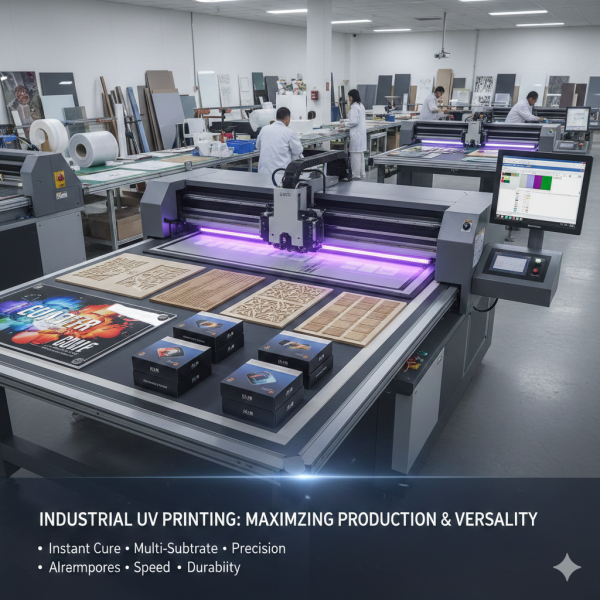
A UV printer is a digital printing system that uses ultraviolet light to cure ink instantly on different surfaces. Unlike traditional printing methods, UV technology dries the ink immediately after it is applied. This process reduces smudging and improves color accuracy. It allows businesses to print on glass, metal, plastic, wood, and other rigid materials. Industrial production environments benefit from its speed and durability. Because curing happens instantly, production time is reduced. This makes it suitable for large manufacturing setups. But how exactly does UV curing improve efficiency and print consistency?
Why UV Printing Is Ideal for Industrial Manufacturing
Industrial production requires reliability, consistency, and speed. UV systems are built for heavy-duty environments where machines run for long hours. Hardened print heads and stable ink flow systems help maintain quality output across thousands of prints. Manufacturing units often demand consistent branding, especially for packaging and promotional products. Instant curing technology minimizes downtime and reduces waste. As a result, businesses can meet tight deadlines without sacrificing quality. The ability to print on diverse materials expands production possibilities. But what makes industrial-grade systems more reliable than entry-level models?
Flatbed UV Printers for Rigid Media Applications
Flatbed models are designed for direct printing on rigid substrates. These machines support materials like acrylic sheets, wooden panels, tiles, and phone cases. With wide-format capabilities, they can handle large boards as well as small promotional items. The flatbed structure keeps materials stable during printing, ensuring accurate alignment. Multi-color configurations allow detailed graphics and vibrant results. For sign makers and packaging manufacturers, this flexibility is crucial. Precision and surface adaptability make these printers a strong investment. How can businesses determine the right print area size for their production needs?
Printhead Technology and Color Configuration
Advanced printheads such as industrial-grade Ricoh systems improve precision and durability. Multiple printhead arrangements allow faster printing speeds and enhanced resolution. Color configurations like CMYK with additional white and varnish layers improve depth and realism. White ink printing enables designs on dark or transparent materials. Varnish effects add texture and gloss for premium finishes. High-quality printheads reduce recalibration needs and support large production runs. For businesses seeking consistent output, printhead quality is critical. What role does firmware optimization play in maintaining long-term color stability?
Speed, Productivity, and Large-Scale Output
Production managers focus heavily on speed and reliability. Machines capable of printing large square meters per hour help reduce turnaround times. Faster production ensures deadlines are met without overtime pressure. Efficient ink systems and stable mechanical structures contribute to uninterrupted performance. In high-demand industries such as packaging or signage, time equals revenue. Reduced maintenance and fewer rejected prints increase profitability. Industrial-grade systems are designed for continuous workflow. How can businesses calculate return on investment when upgrading their printing equipment?
Substrate Compatibility and Material Versatility
One major advantage of a UV printer is its ability to print on a wide range of materials. From glass panels to metal sheets and promotional gadgets, versatility is unmatched. Instant curing prevents ink absorption into the material, allowing sharp prints on non-porous surfaces. This opens new revenue streams for businesses targeting customized products. Packaging companies benefit from direct-to-object printing without additional lamination. Material compatibility enhances creative freedom and operational efficiency. Which industries benefit the most from multi-substrate printing technology?
Vertical Manufacturing and Quality Control
Manufacturers that design and assemble systems in-house maintain stronger quality control. When components are engineered internally, troubleshooting becomes faster. Firmware updates can be customized based on client needs. Direct manufacturer support eliminates dependency on third-party vendors. This vertical integration ensures consistency in performance and service. Businesses avoid delays often caused by outsourced technical assistance. Having engineers directly involved in development improves innovation. Why does direct factory support matter when scaling production operations?
Maintenance, Durability, and Long-Term Investment
Durability determines whether equipment performs reliably for years. Industrial systems are built with reinforced frames and protected electronics. Regular maintenance ensures optimal print quality and reduces unexpected breakdowns. Automated cleaning systems prevent nozzle clogging. High-quality UV ink formulations protect printheads from damage. A durable system reduces operational risks and lowers overall maintenance costs. Investment in a professional setup often results in long-term savings. What maintenance schedule should companies follow to maximize equipment lifespan?
Applications Across Different Industries
UV printing technology serves multiple industries including packaging, signage, interior décor, and promotional products. Custom phone cases, branded packaging boxes, and decorative panels are commonly produced using UV systems. Retail brands rely on consistent color reproduction for logo printing. Furniture manufacturers use UV technology for decorative surfaces. Event organizers benefit from customized signage and display boards. Its adaptability supports both small gadgets and wide-format rigid media. How can businesses identify niche markets to expand using UV digital printing solutions?
Choosing the Right System for Your Business Growth
Selecting the right equipment requires careful analysis of production needs, material types, and expected volume. Businesses must evaluate print area size, speed, color configuration, and technical support availability. Budget models may appear attractive initially, but industrial systems provide long-term reliability. Considering scalability is essential for future expansion. Reliable support, firmware upgrades, and durable components add value over time. Investing in a professional-grade UV printer enhances brand credibility and operational efficiency. What key factors should decision-makers prioritize before finalizing a purchase?
Conclusion
Choosing the right printing system is not simply about buying machinery; it is about investing in long-term productivity and reliability. UV technology offers instant curing, superior material compatibility, and consistent color accuracy across large production runs. Industrial-grade systems provide durability, reduced maintenance issues, and scalable performance for growing businesses.
By carefully evaluating speed, printhead quality, substrate compatibility, and manufacturer support, businesses can make informed decisions. A properly selected UV printer enhances efficiency, reduces operational risk, and increases profitability. For companies aiming to compete in modern manufacturing and commercial production, adopting advanced UV printing technology is a forward-thinking and strategic choice.