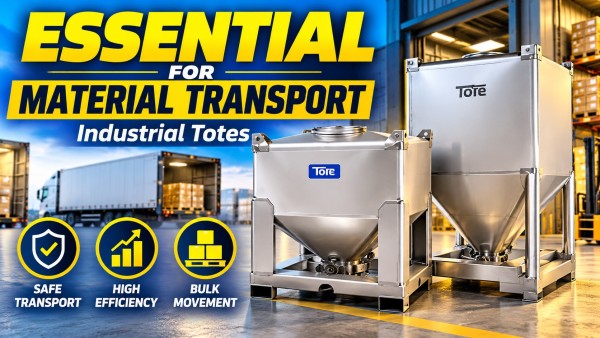
Moving materials from one place to another is a key part of any manufacturing process. Factories must store, move, and deliver raw materials without wasting time, space, or money. When materials are handled in the wrong way, workers may need to do more manual work, products can spill, and production may slow down. This is why Industrial Totes are an important part of modern material handling.
Industrial totes help businesses move, store, and control bulk materials in a more organized way. They are built for industrial use and can work with lifts, filling equipment, blenders, and discharge systems. TOTE® Systems offers a range of industrial bins and material handling equipment designed to support these tasks. With the right tote system, manufacturers can improve daily work, reduce extra handling, and keep materials moving through each stage of production.
What Makes Industrial Totes Important?
Industrial totes are strong containers used to hold and move large amounts of material. Depending on the model, they can handle dry powders, granules, resins, and liquids. Unlike simple storage bins, industrial totes can be part of a larger system that supports filling, storage, blending, lifting, and discharge. This makes them useful for factories that need to move materials through several steps before a product is ready.
One key benefit of Industrial Totes is that they help keep materials in a single container for more of the production process. Workers may not need to move the same material into several smaller containers. Fewer transfers can save time and help reduce spills, product loss, and unwanted contact with the surrounding area. A well-planned tote system can also help staff track materials and keep work areas neat.
Industrial totes come in different designs to meet different needs. Some use a hopper and valve to release dry materials, while others have a side door for easier access. Liquid intermediate bulk container (IBC) tanks are built for bulk liquid storage and handling. Choosing the right design helps a business move materials in a way that suits its process.
How Industrial Totes Improve Material Transportation
Moving bulk materials in small containers can take time and effort. Workers may need to lift, carry, empty, and refill many containers to move the same amount of material. Industrial Totes can help reduce this work by allowing a larger quantity to be moved in one container. This can make the movement of raw materials between storage areas, production lines, and other work zones more efficient.
Many industrial tote systems are designed to work with forklifts or lifting equipment. This helps staff move heavy loads without relying only on manual effort. For example, TOTE® Systems offers bin lifts that can raise and position compatible containers for feeding downstream equipment. When the lift, bin, and discharge setup match the job, the movement of materials can become more controlled and easier to manage.
TOTE® Systems also offers Liquid IBC Tanks for businesses that handle bulk liquids. These reusable tanks are designed to support liquid storage, transport, and dispensing. Their capacity and fittings depend on the selected model and application. By choosing a suitable tank instead of moving many separate drums, a business may reduce the number of handling steps needed for a bulk liquid load.
How Industrial Totes Save Space and Support Better Storage
Floor space is valuable in any factory or warehouse. Poor storage can block walkways, make materials harder to find, and slow down work. Industrial totes help businesses create a more organized storage system by keeping bulk materials in set containers. When bins have a suitable footprint and can be stacked as designed, they may also help a facility use its available space more wisely.
For example, TOTE® Systems’ Valu Line Bins have a stackable design and four-way fork access. These features can support storage and movement within a facility. The right setup depends on the bin model, load, floor conditions, and safe stacking limits. Staff should always follow the maker’s instructions when moving or stacking loaded bins.
A clear storage system also helps workers find the right material at the right time. When each tote has a set place and clear identification, teams can spend less time searching for supplies. This can help reduce delays and make stock checks easier. Good storage practices, paired with suitable Industrial Totes, can support a smoother flow of work from receiving to production.
How Tote Systems Help Control Material Flow
Efficient material transport is not just about moving a load. The material must also reach the next stage of production in the right amount and at the right time. Industrial totes can support this process when they work with suitable filling, lifting, blending, and discharge equipment. These systems help link storage areas with machines and production lines.
TOTE® Systems offers Premier Line Bins for handling dry solids. The company states that these bins can support dosing, storage, blending, transport, and discharge in a sealed container. Keeping material in one container through more steps can help limit unnecessary transfers and reduce the risk of cross-contamination. The actual benefits depend on the material, equipment design, and work process.
Blending is another task that can benefit from a well-planned tote system. TOTE® Systems’ dry powder blenders are designed to tumble a compatible tote bin during the blending process. This can remove the need to transfer the material into a separate mixer for that step. When combined with suitable discharge equipment, the system can help reduce extra handling and simplify the path from raw material to the next production stage.
Choosing the Right Industrial Totes for Your Process
Not every factory needs the same type of tote. The best choice depends on the material being handled, the amount moved in each batch, the available floor space, and the steps in the production process. Businesses should first decide whether they need a bin for dry solids, a tank for liquids, or a container that offers a special type of access. This helps narrow down the available options.
The material used to build the tote is also important. Depending on the product line, TOTE® Systems offers bins made from stainless steel, aluminum, or carbon steel. The right choice depends on factors such as material compatibility, cleaning needs, operating conditions, and the required finish. Businesses handling food, pharmaceutical ingredients, or chemicals should check the exact product specifications and suitability for their application before making a choice.
It is also important to look at how the tote will connect with existing equipment. A bin may need to work with a lift, blender, filling station, or discharge station. The outlet, valve, size, and height must suit the next stage of the process. Before buying, ask the supplier to review your workflow and confirm that the selected equipment can handle your material and operating needs.
How TOTE® Systems Supports Efficient Material Handling
TOTE® Systems supplies industrial bins and related equipment for bulk material handling. Its product range includes Premier Line Bins, Valu Line Bins, Side Door Bins, Liquid IBC Tanks, blenders, bin lifts, wash stations, and other system components. These products serve different roles, from holding raw materials to moving, blending, discharging, and cleaning containers. The right combination depends on the needs of each facility.
For example, a factory that handles dry powder may need a suitable bin, a lift, and a discharge setup. A business that handles liquids may need an IBC tank with compatible valves and fittings. A facility that changes materials between batches may also need a suitable cleaning process. By planning these steps together, a business can avoid choosing equipment that works well on its own but does not fit the full production line.
TOTE® Systems has been serving the bulk material handling sector for decades, with a history dating back to 1946. Its equipment can help businesses plan a more connected approach to material movement. Before choosing a solution, review the official product details and discuss your material, batch size, cleaning needs, and site layout with the company. To learn more, visit TOTE® Systems or call 1-888-838-4178.
Frequently Asked Questions
1. What are Industrial Totes used for?
Industrial totes are used to store, move, and handle bulk materials in manufacturing settings. Depending on the design, they can hold dry powders, granules, resins, or liquids. They may also work with equipment for lifting, blending, filling, and discharge.
2. How do Industrial Totes improve material transportation?
Industrial totes can move a larger amount of material in one container instead of using many smaller containers. This may reduce handling steps, save worker time, and lower the chance of spills during transfer. The results depend on the material and the system used.
3. What materials are industrial tote bins made from?
The material depends on the tote model and its intended use. TOTE® Systems offers certain bins made from stainless steel, aluminum, or carbon steel. Buyers should confirm material compatibility, finish, and cleaning requirements before selecting a bin.
4. Can Industrial Totes be used for both liquids and dry materials?
Yes, but the same tote is not suitable for every type of material. Dry bulk materials may require a bin with a hopper or discharge valve, while liquids may need a purpose-built IBC tank with suitable fittings. Always select equipment designed for the material and intended use.
5. How can a business choose the right industrial tote system?
Start by reviewing the material type, batch size, required capacity, available space, and cleaning needs. Then check how the tote will connect with forklifts, lifts, blenders, filling stations, and discharge equipment. TOTE® Systems can help businesses explore its product range and identify equipment that fits their material handling needs.