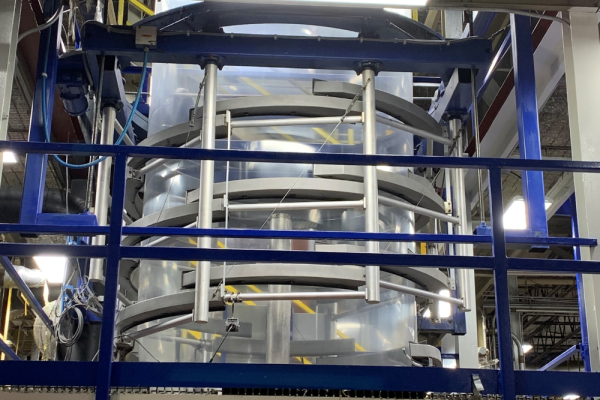
Walk into almost any plastics plant that has been operating for a few decades and you will find at least one line like this. The extruder itself is in decent shape. The screw has been rebuilt, the barrel still holds heat, and the die turns out acceptable product. But the control cabinet beside it tells a different story. Faded labels on analog temperature controllers. A DC drive that only one maintenance tech really understands. A binder of wiring prints that stopped matching the actual panel sometime around the last ownership change.
The line runs. Mostly. And that is exactly why nobody touches it.
The trouble is that “it still runs” is a very low bar for equipment that sits at the heart of your production. Old controls rarely fail in one dramatic moment. They cost you a little at a time, in ways that don’t show up neatly on a maintenance report. This article looks at where those losses hide, what a modern control upgrade actually changes, and how to approach a retrofit without turning your plant upside down.
Why “It Still Works” Is the Wrong Test
Plant managers are right to be cautious. If a line is making saleable product, ripping out its controls feels like inviting risk. But the question worth asking is not whether the line works. It is how much it costs you to keep it working, and how much product quality you are giving up along the way.
Legacy controls tend to create three kinds of hidden cost. The first is scrap, especially during startups and changeovers when operators are coaxing zones up to temperature by feel. The second is troubleshooting time, because older systems give almost no information when something goes wrong. The third is parts risk, which grows every year as replacement boards and DC drive components get harder to find.
None of these is dramatic on its own. Together, they add up to a line that quietly underperforms the equipment it is built on.
Where the Losses Actually Show Up
Startup and changeover scrap
Ask an operator on an older line how they bring it up after a weekend shutdown and you will often hear some version of “you just learn it.” They know zone three runs hot, that the screw speed needs to come up slowly, that the first few minutes of material usually goes in the regrind bin. That knowledge is valuable, but it lives in people’s heads. When that operator is on vacation or retires, the scrap numbers go up.
Temperature drift you can’t see
Standalone temperature controllers do their job one zone at a time. What they don’t do is give anyone a clear picture of the whole barrel. A heater band that is slowly failing might hold setpoint for weeks by running at full output, and nobody notices until it gives out mid-run. Melt consistency suffers long before the alarm light comes on, which shows up as gauge variation in film, wall thickness problems in pipe, or dimensional drift in profiles.
Hours lost to troubleshooting
When an old system faults, the diagnosis often starts with a multimeter and a set of prints that may or may not be accurate. A trip that should take ten minutes to identify can eat a whole shift. Multiply that across a year and the labor cost alone is significant, before you count the lost production.
The DC drive problem
This one deserves its own mention. A lot of extrusion lines still run on DC drives and motors that were standard equipment when the line was built. They were reliable machines in their day. Today, brushes, commutators and drive boards are getting expensive to repair, and the pool of technicians who know them well keeps shrinking. A single drive failure can leave a line down for days while someone hunts for a rebuilt part.
What Modern Control Systems Actually Change
A proper upgrade is more than swapping old boxes for new ones. Well-designed extrusion control systems bring the drives, heating zones, pressure monitoring and operator interface together into one coordinated platform, usually built around a PLC and a touchscreen HMI. That shift from separate devices to a single system is where most of the benefit comes from.
Here is what that looks like on the plant floor:
- One screen for the whole line. Operators see every temperature zone, screw speed, motor load and melt pressure in one place instead of walking the length of the line reading individual displays.
- Useful alarms. Instead of a generic fault light, the system tells you which zone, which device and what happened. That turns a long hunt into a short fix.
- Recipes. Settings for each product can be saved and recalled, so a changeover starts from known good values rather than someone’s memory.
- Startup protection. Interlocks can stop the screw from turning before the barrel has reached safe temperature, which protects both the screw and the gearbox from a cold start.
- Process data. Trends and logs make it possible to see a heater band losing ground or a motor load creeping up before it becomes a breakdown.
None of this is exotic technology. It has been standard in other industries for years. The difference in extrusion is that the control logic needs to be written by people who understand how extruders behave, because a generic automation package won’t account for things like melt pressure protection, zone interaction or the way different resins respond to heat.
Converting From DC to AC Drives
For many plants, the drive conversion is the most practical first step. Modern AC drives paired with AC motors are more efficient, need far less routine maintenance, and are supported by a much wider range of suppliers and service technicians. Spare parts are easier to stock, and newer drives can report load, speed and fault information directly to the control system.
A good conversion is engineered around the existing extruder. Torque at low speed matters a great deal in extrusion, so the motor and drive have to be sized for how the line is actually run, not just its nameplate rating. Done properly, the operator often notices smoother speed control the first day, and the maintenance team notices fewer calls in the months that follow.
Retrofit or Replace?
This is where a lot of plants get stuck. A brand new extrusion line is a major capital expense with a long lead time. In most cases, the mechanical parts of an older line are not the weak point. Barrels, screws, gearboxes and dies can be rebuilt and have plenty of life left in them. The controls and drives are what age badly.
That makes retrofitting a sensible middle path. You keep the equipment that still performs, replace the parts that are holding it back, and end up with a line that behaves much more like new at a fraction of the cost. It also avoids retraining your whole team on unfamiliar machinery, since the physical line stays the same.
What to Look for in an Upgrade Partner
Not every automation integrator is a good fit for extrusion work. A few things are worth checking before you sign anything:
- Extrusion experience. Ask what types of lines they have upgraded. Blown film, pipe, profile, sheet, compounding, wire and cable and pelletizing each have their own quirks.
- Standardized designs. A partner who uses a consistent platform across lines makes life easier for your operators and maintenance staff. Every line looks and works the same way on screen.
- Documentation. You should receive accurate electrical drawings and clear records of the program. Otherwise you are simply swapping one undocumented system for another.
- Lead times and stocked components. Downtime is expensive. Suppliers who keep pre-engineered packages ready can get you back into production much faster.
- Support after startup. Commissioning is only the beginning. Find out who you call at two in the morning when something goes wrong.
Planning the Changeover
The smoothest upgrades are the ones planned well before anyone opens a cabinet. Before the work starts, record the settings your operators actually use for each product, including the unofficial adjustments that never made it into a manual. Those numbers become the starting recipes in the new system.
Schedule the installation around a planned shutdown if you can, and build in a little extra time for testing. Involve your lead operators early. They know the line better than anyone, and if they help shape the screen layout and alarm setup, they will trust the new system much faster.
Finally, don’t skip training. Even the most intuitive interface needs a proper walkthrough, and maintenance staff should understand how to read the diagnostics so they can take full advantage of them.
Final Thoughts
An extruder can outlast its controls by decades, and many plants are still running good equipment on electronics that belong to another era. The costs of that mismatch are real, even if they are spread thin across scrap bins, overtime hours and nervous calls to parts suppliers.
Upgrading your controls and drives doesn’t mean abandoning the equipment you have invested in. It means giving it a brain that matches what it is still capable of doing. For most operations, that is one of the most cost-effective improvements available, and the sooner it is planned, the less likely it is to be forced on you by a failure at the worst possible moment.