Crypto has a habit of punishing the obvious trades and rewarding the ones nobody was watching. Solana is grinding 75% below its January peak, Chainlink drifts 84% from the highs that once made it the oracle of decentralized finance. The obvious bets are underwater. The next crypto to explode is never the one the crowd is already holding.
Microsoft just disclosed a malware strain that hijacks crypto wallets through USB sticks, intercepting shortcut files and installing a worm that harvests private keys from the clipboard before swapping destination addresses on every transfer, according to CoinDesk. Security gaps like this remind the market that infrastructure matters more than hype.
Microsoft Malware Targets Crypto Wallets as Security Gaps Widen
The malware intercepts shortcut files and installs a worm that harvests private keys from the Windows clipboard, then swaps wallet addresses when it detects a transfer, according to CoinDesk. The attack spreads through USB sticks, targeting the physical layer most security software ignores. The revelation landed in a market at extreme fear, with Bitcoin ETFs losing $6.35 billion in outflows.
For anyone evaluating presale entries, security infrastructure is the baseline. The projects that build protection directly into their trading tools attract capital that stays through volatility, not the kind that exits at the first exploit headline.
The Next Crypto to Explode and Two Large Caps Below Their Peaks
Pepeto: The Infrastructure Behind the Next Crypto to Explode
The capital flowing into Pepeto is not chasing a bounce. It is building because the infrastructure underneath does what most projects in the next crypto to explode conversation cannot claim. It protects the trader at every step.
Fees are the silent tax that bleeds every small position dry. Cross chain transfers cost gas on two chains plus bridge fees that wipe out the edge on trades under four figures. Pepeto’s zero fee swap engine removes that cost on every transaction across every supported chain. That is not a feature for slides. That is the difference between a position that compounds and one that decays.
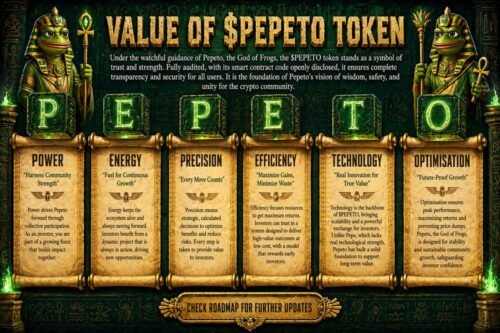
The AI risk scoring tool evaluates each trade before execution. A SolidProof audit secures the smart contract, 420 trillion fixed supply locks scarcity, and the builder who created the original Pepe coin brings the viral playbook that already produced one of crypto’s most recognized tokens. The presale has crossed $10.3 million, and 170% APY staking rewards compound every early position.
This is still the presale. The entry at $0.0000001878 exists only until the Binance listing expected ahead converts it into exchange pricing. The ground floor is the presale. The listing is the exit from ground floor pricing. The story has not been told widely enough for the price to reflect what sits underneath it. That changes soon.
Solana Tests $73 as Alpenglow Approaches but Price Keeps Falling
Solana trades at $73, roughly 75% below its January 2025 all time high of $294, and the decline accelerated as memecoin volume collapsed. Daily network fees dropped from 33,000 SOL in January to 5,300 SOL now. The Alpenglow consensus upgrade targets Q3 2026, and real world asset totals on Solana hit $2.8 billion. But SOL sits below its 50 day and 200 day moving averages. From $73, SOL needs a 300% move just to revisit where it traded 18 months ago.
Chainlink Holds $8.30 as Oracle Demand Grows but Token Price Lags
Chainlink trades at $8.30, roughly 84% below its May 2021 all time high near $53. Oracle integrations keep expanding, and Chainlink remains the dominant off chain data provider. But LINK sits below its 50 day moving average, and every bounce since March has been sold. From $8.30, Chainlink needs a 540% rally to reach its prior high. Both SOL and LINK have built real technology, but they are priced inside a market that is not done testing their holders.
Conclusion
Everything that defines a cycle changing entry lines up in one place, once per cycle, and the next crypto to explode always follows this pattern. DOGE whales see the pattern again, but this time with real exchange infrastructure built underneath the token. Every winner follows the same arc. A small group enters early, the window closes, and the market spends twelve months explaining how they almost got in. SOL and LINK have already had their recognition moments. The market priced their stories, celebrated their runs, and moved on. Pepeto has not had its recognition moment, and that is exactly why it belongs on any serious shortlist right now, before the Binance listing approaching writes the next chapter that every late arrival wishes they had read in time.
Click To Visit Pepeto Website To Enter The Presale

FAQs
What is the next crypto to explode in 2026?
The next crypto to explode in 2026 is Pepeto, with $10.3 million in presale and a Binance listing approaching as the catalyst.
Why are SOL and LINK still falling in June 2026?
SOL and LINK are falling because memecoin volume collapsed, outflows accelerated, and the broader market stays in extreme fear.
How does Pepeto compare to other presale tokens?
Pepeto stands apart with zero fee cross chain tools, a SolidProof audit, and the original Pepe coin builder on the team.
Disclaimer:
This article is for informational purposes only and does not constitute financial advice. Cryptocurrency investments carry risk, including total loss of capital.
All market analysis and token data are for informational purposes only and do not constitute financial advice. Readers should conduct independent research and consult licensed advisors before investing.
Crypto Press Release Distribution by BTCPressWire.com