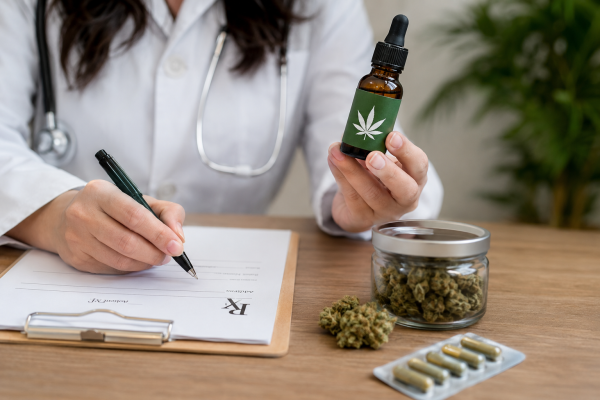
Texas and marijuana have a complicated relationship. If you have been following the news or simply asked around, you already know that the state is not exactly known for being cannabis-friendly. And yet, medical marijuana is legal here; it has been since 2015. The confusion, for most people, starts right after that sentence ends. Because while medical cannabis is technically legal, the rules around it are strict, the program is limited, and the process of actually accessing it is not always clear.
One of the biggest questions patients ask is whether they need a medical cannabis card to use marijuana legally in Texas. The short answer is “not exactly.” But the longer answer is worth understanding, because it affects how you access treatment, what a doctor can do for you, and what the whole process actually looks like from start to finish.
The Law That Started It All
Back in 2015, Texas passed the Compassionate Use Act. At the time, it was a narrow piece of legislation; it only allowed patients with intractable epilepsy to access low-THC cannabis. The THC content allowed was extremely low, capped at 0.5%, and the only products patients could use were those that could be ingested, not smoked. No flower, no vaping, no traditional joints. Edibles, oils, and tinctures, that was the lane.
Over the years, the program expanded. The list of qualifying conditions grew significantly. Today, patients with chronic pain, PTSD, autism, multiple sclerosis, Parkinson’s disease, cancer, ALS, neuropathy, and a range of other conditions may be eligible. It is still not a fully open medical marijuana program the way states like California or Colorado operate, but it has come a long way from that initial narrow focus on epilepsy alone.
So What Exactly Is the Compassionate Use Program?
The Texas Compassionate Use Program, often referred to as CURT, the Compassionate Use Registry of Texas, is the state’s official system for tracking and managing medical marijuana prescriptions. When a licensed physician recommends cannabis for a qualifying patient, they register that patient in the CURT database. The dispensary then looks up the patient’s information in that system when they come in to fill their prescription.
This is the part that throws most people off. Texas does not issue a physical medical marijuana card. There is no wallet-sized card, no laminated document with your photo on it. The entire thing lives in a digital registry. Your name, date of birth, identification number, and the last five digits of your Social Security number are what allow a licensed dispensary to pull up your prescription and serve you. Nothing else is required.
Does That Mean You Don’t Need a Card at All?
Technically, yes. Texas law does not require patients to carry a physical card because the state does not issue one. What you do need is a valid prescription from a licensed physician who has registered you in the CURT system. Without that registration, you cannot legally purchase medical cannabis from a dispensary in Texas, regardless of your condition.
This is an important distinction. The card in this context refers to the doctor’s recommendation and the CURT registration, not a physical piece of identification. Some services and third-party providers may give you a PDF confirmation or a document summarizing your approval, but the actual legal mechanism is the database entry made by your physician.
Who Qualifies for the Program?
The list of qualifying conditions under the Texas Compassionate Use Program is more detailed than many people expect. Here is a broad overview of what currently qualifies:
Epilepsy and seizure disorders were among the first conditions covered. From there, the program expanded to include PTSD, specifically for veterans, along with chronic pain that is typically treated with opioids, multiple sclerosis, spasticity, autism, Parkinson’s disease, ALS, terminal and non-terminal cancer, Huntington’s disease, neuropathy, spinal muscular atrophy, and several other neurodegenerative conditions. There is also a general provision that allows the Health and Human Services Commission to approve additional conditions for research purposes.
If your condition is not on that list, you will not qualify under the current law. That is simply the reality of how Texas has structured this program, and no doctor, no matter how sympathetic, can override that legally.
What Products Can You Actually Buy?
This is another area where Texas differs sharply from most other states. You cannot walk into a dispensary and buy cannabis flower to smoke. That is not legal here. The state restricts medical marijuana to products that are ingested, meaning oils, capsules, edibles, tinctures, and similar formats. The THC content must remain below 0.5%, and products must contain at least 10% CBD.
If that sounds more pharmaceutical than recreational, that is intentional. Texas has built its program around the idea of cannabis as medicine, not as a lifestyle product. For many patients managing serious conditions, that distinction is fine; they are not looking to get high; they are looking for relief. For others, the restrictions feel limiting. Either way, understanding what you can and cannot purchase before you go through the process saves a lot of disappointment later.
How Do You Actually Get Started?
The process begins with a licensed physician. You need to consult with a doctor who is authorized to prescribe under the Compassionate Use Program. During that consultation, the doctor will review your medical history and current condition to determine whether you meet the eligibility criteria. If you do, they register you in CURT, and from that point on, you can visit a licensed dispensary in Texas to fill your prescription.
The good news is that you do not have to drive to a clinic and sit in a waiting room to make this happen. Telemedicine has made the consultation process significantly more accessible for patients across the state. If you are unsure whether you qualify, you can consult a licensed doctor through a Texas medical cannabis card service and get evaluated entirely online, from wherever you are.
Most of these services charge a flat consultation fee, and many offer a full refund if you do not qualify, so there is little risk in exploring the option. The consultation itself typically takes only a few minutes, and if you are approved, the CURT registration is handled by the doctor as part of the process.
A Few Things Worth Knowing Before You Apply
First, be honest with your doctor. The evaluation only works if your physician has an accurate picture of your condition. Misrepresenting your symptoms or medical history is not just dishonest; it puts you at legal risk.
Second, do not confuse a doctor’s consultation fee with a state-issued card fee. Texas does not charge patients a card fee because it does not issue a card. The fees you pay go to the physician and the telemedicine platform, not to the state.
Third, even after you are registered in CURT, you are limited to licensed dispensaries. Texas currently has a small number of licensed cannabis dispensaries operating under the Compassionate Use Program. Make sure there is one within a reasonable distance of you before starting the process.
The Bottom Line
Medical cannabis is legal in Texas, but it works differently here than it does in most other states. There is no physical card, no dispensary on every corner, and no recreational use. What there is, for those who qualify, is a legitimate path to accessing cannabis-based treatment through a regulated, physician-supervised program.
If you have a qualifying condition and have been curious about whether medical marijuana might help, the first step is simply finding out whether you are eligible. That conversation with a licensed doctor does not take long, and it does not require you to leave your home. The process, while not perfect, is more accessible today than it has ever been in Texas.
Disclaimer: This press release is for informational purposes only and should not be considered medical, legal, or professional advice. Cannabis laws and medical marijuana regulations may change, and eligibility requirements can vary based on state rules and individual circumstances. Readers should consult a licensed physician or qualified legal professional before making decisions related to medical cannabis use, treatment options, or compliance with Texas law. The publication does not guarantee eligibility, approval, treatment results, product availability, or legal protection.