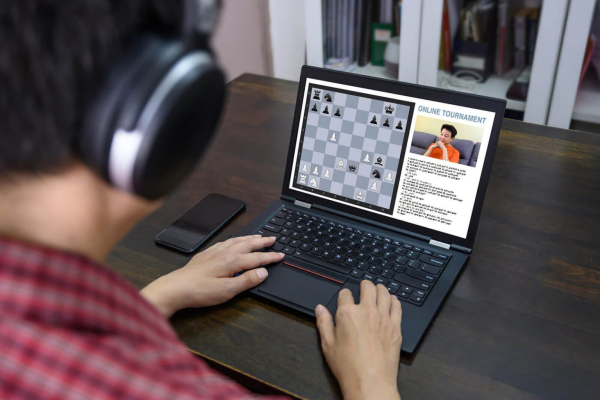
One thing my first chess teacher told me that made no sense to me until many years later was that “the person that improves the most quickly is not the most talented. The person who learns how to study effectively every day wins.” At the time I nodded along and went back to memorizing opening lines. But he was right, and the frustrating thing is that most chess players never quite crack that problem. They play when they can find an opponent. They study when motivation strikes. Progress comes in bursts and stalls in between. Playing against a well-designed chess bot did not transform my game in a week, but over months of daily ten-minute sessions, the cumulative effect was something I genuinely did not expect.
This article is about why that works, and more importantly, how to actually use bot practice in a way that translates into real improvement against human opponents.
Your Brain Needs Reps, Not Just Explanations
There is a big difference between understanding something in chess and being able to do it. Most intermediate players understand that activating the king in the endgame is important. They have read about it. They could explain it to someone. But under time pressure, with a real game on the line, that knowledge often does not show up. Instead, the king stays passive out of habit, and the win slips away.
This occurs since the skill involved in playing chess is not predominantly cognitive; it is based on patterns. Good players do not work out every possible combination of moves; rather, they recognize patterns that they have encountered many times before. The only way to build that library of patterns is through repetition in real game situations. Reading about knight outposts does not do it. Playing fifty games where a knight outpost appears and matters: that does it.
Bots give you the reps. You can play the same type of position over and over, against opponents of varying strengths, until the pattern stops being a concept and starts being instinct. That is a kind of training that simply was not accessible to most players before online bot platforms existed.
The Specific Advantage of Playing Something That Makes Human Mistakes
This point gets overlooked a lot. When people think about bot practice, they often imagine something robotic, a program that plays perfectly until it randomly self-destructs to simulate weakness. That kind of bot is actually not very useful for training, because real opponents do not play that way. Real opponents misunderstand positions gradually. They make errors that follow a kind of internal logic; they overextend, they neglect development, and they misjudge pawn races.
The genuinely useful chess bots are the ones trained to actually see the board the way a player at a specific rating level sees it, with all of the actual blind spots, position errors, and strategic blunders associated with such an evaluation. The practice of competing against such a bot involves fighting an opponent that acts just like a living, breathing individual. One learns how to detect certain blunders that can actually happen in their own games and when and where these chances occur.
“Playing against something that thinks like your actual opponents is far more valuable than grinding against a perfect engine set to easy mode.”
Building an Opening You Actually Understand
I went through a phase of trying to learn the Queen’s Gambit Declined. I bought the book. I watched the videos. I knew the theory lines up to move fourteen in three or four variations. And then I played in a tournament, where I played my game against an opponent who deviated on the eighth move, leaving me utterly confused for the following twenty moves.
The problem was not that I had not studied enough. The problem was that I had studied the moves without ever really playing the positions. I did not know what the position felt like, which pieces wanted to go where, what plan white was trying to execute, or what black’s counterplay looked like. That feel only comes from experience, and bot practice is the most efficient way to accumulate that experience quickly.
When you play the same opening against fifty different bots across a range of ratings, something interesting happens. You stop consulting your memory and start consulting your judgment. The position becomes familiar in a way that no amount of passive study can replicate. You see a move and you know it is wrong before you can even fully articulate why. That instinct is what separates a player who has learned an opening from a player who truly owns it.
Tactical Vision: Why Games Are Still About This at Every Level
People who study elite chess sometimes come away thinking the game is primarily strategic: plans, pawn structures, and long-term maneuvering. And at the grandmaster level, that is partly true. But for the vast majority of players, everyone below roughly 2000 Elo, games are decided by tactics far more often than by strategy. Someone hangs a piece. Someone misses a fork. Someone fails to spot the back-rank mate until it is too late.
Improving tactically is a two-step process. The first step is puzzle training: solving specific combinations in isolation to build pattern recognition. This is followed by learning how to recognize these patterns in a real game environment, where the player does not have prior knowledge of the tactics that are about to be employed. This is often a challenging task for many players, since puzzles alone are not enough to fill this gap.
Bot practice bridges that gap. When you are playing a live game against a bot and you spot a potential fork three moves deep, and you calculate it correctly, and it works: that is a different kind of learning from solving a puzzle. You trained yourself to look for tactics proactively rather than reactively. Do that enough times and it becomes a habit that shows up in every game you play, against bots and humans alike.
Time Management: The Skill Everyone Ignores Until It Costs Them
Bad time management ruins more chess games than bad openings. Players spend six minutes on move twelve, reach a completely normal position, and then blitz the next twenty moves in a panic. The result is obvious: solid opening preparation undone by rushed decisions in the phase of the game that actually matters.
The good news is that time management improves with practice, specifically with timed practice against opponents that do not let you stall indefinitely. Playing blitz and rapid games against bots with the clock running forces you to develop a sense of when a position requires deep calculation and when you can trust your instincts and move quickly. You learn, game by game, where you are wasting time and where you are not spending enough of it. That calibration is subtle but enormously valuable.
What Happens When You Play Every Day for Three Months
I want to be realistic here: three months of daily bot practice will not turn you into a master. But the changes that do happen are concrete and noticeable. Patterns that used to require conscious effort start appearing automatically. Openings that felt unfamiliar become comfortable. Endgames that were anxiety-inducing become manageable, sometimes even enjoyable.
Even more important than this, however, is that you begin to play with confidence when facing opponents who are real people. Confidence without being overconfident, but rather confidence born out of experience, having played many games of chess and faced difficult situations in the past that you have managed to survive. That experience carries over.
Choosing Opponents That Match Your Goals, Not Just Your Rating
One of the things that makes a large bot platform genuinely useful rather than just convenient is the ability to choose opponents based on what you are trying to work on, not just where your rating sits. If you are trying to improve your defensive technique, playing against a bot that attacks aggressively from the opening gives you exactly the training stimulus you need. If your positional understanding needs work, a slow, patient bot that gradually outplays you if you do not have a plan will expose those weaknesses in the most instructive way possible.
This type of intentional opponent selection would never be possible to achieve with real-life opponents. There would be no way to call a player from the local club and ask him to play aggressively for the next five matches so that you could work on your defensive skills. However, bots make this type of selective practice possible.
Improving at chess takes time, and whoever tries to convince you otherwise wants to make a profit. Yet it is also one of the easiest tasks that people can accomplish if they are prepared to put the effort in on a regular basis. Bots do not take the place of coaches, books, and other people; they simply enhance the learning process by ensuring that it can happen without hassle or stress. If you are no longer improving and have fallen into a rut, incorporating bots into your weekly schedule may be the solution.