Riding an electric cargo bike with children on board or a significant load in the rack is one of the most rewarding things a cyclist can do. It replaces car trips, gets fresh air into the daily routine, and gives children a genuinely enjoyable way to travel. But riding with passengers and heavy cargo introduces a set of safety considerations that do not apply to solo cycling, and anyone making the transition from a standard bike or a car deserves a thorough understanding of what those considerations actually involve. The very first thing worth establishing before anything else is whether the bike you own or plan to buy is genuinely rated to carry the load you are asking of it. Payload limits vary dramatically between models, and riding beyond a frame’s engineering tolerance puts everyone at risk. Spend some time reviewing what electric cargo bikes have the highest weight capacity ratings before committing to any setup, because the right bike for safe family and cargo transport starts with a frame and drivetrain designed to actually handle the job.
Once you know your bike is up to the task, the safety conversation becomes much more practical and much less abstract. It shifts from whether you can carry this load to how you carry it well. That distinction matters because most cargo ebike accidents involving families and loaded bikes are not caused by catastrophic mechanical failure. They happen because of loading errors, inadequate safety gear, unfamiliar handling at low speeds, and decisions made in the moment without a solid foundation of habit and preparation. All of those things are preventable with the right knowledge and a consistent routine.
Understanding Weight Distribution and How It Affects Your Ride
A cargo ebike loaded with children or goods behaves very differently from one that is empty. The physics involved are straightforward but easy to underestimate until you experience them for the first time. Extra weight lowers the bike’s center of gravity when positioned well; it raises it and introduces instability when positioned poorly. Knowing the difference between those two outcomes is one of the most important practical skills a cargo bike rider can develop.
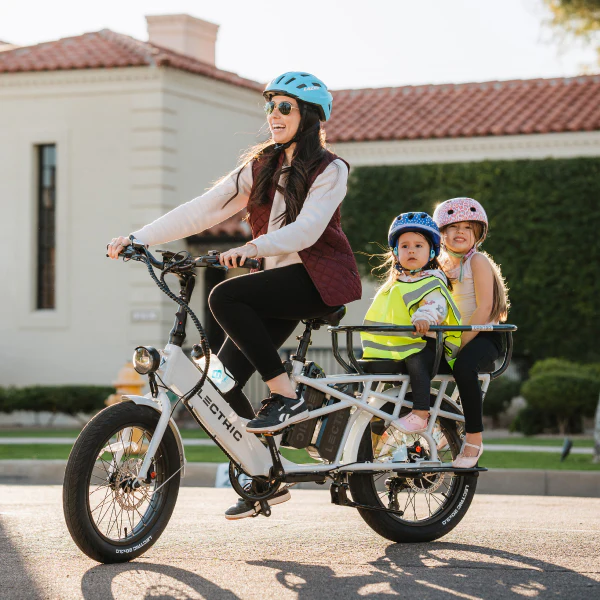
For rear-loaded bikes and long-tail designs, the goal is to keep heavier items as close to the axle as possible and as low in the cargo platform as the setup allows. A bag of groceries sitting flat on a rear rack positions the weight low and centered. The same groceries stacked in a tall bag that sways with momentum creates a very different handling experience, particularly during turns and sudden stops. Children seated on rear platforms should be positioned centrally between the wheel and the seat post rather than cantilevered far behind the rear axle, which would create an uncomfortable lever-arm effect on the frame.
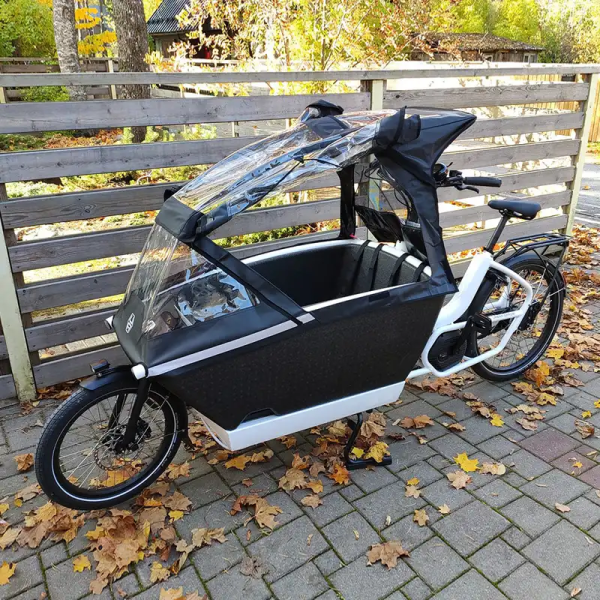
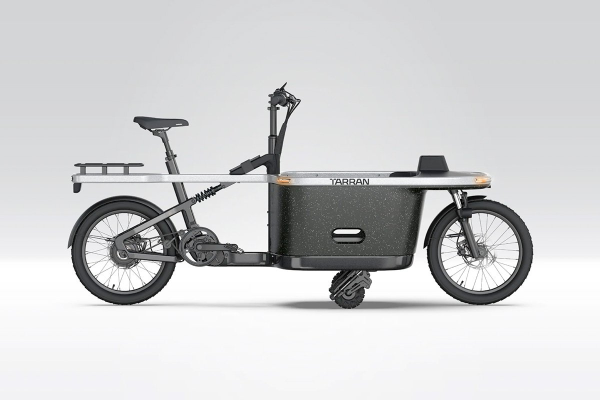
Front box cargo bikes distribute weight differently. The child or cargo sits ahead of the rider, which shifts the overall balance forward. This actually improves stability at low speeds and makes the steering feel planted and deliberate rather than twitchy. The trade-off is that front-heavy loading can make the steering feel heavier during sharp turns, particularly at slow speeds in confined spaces. New riders on front loader designs should practice in open areas before navigating busy streets or tight corners with a full load aboard.
Symmetry matters on every cargo platform. Loading one side of a rack significantly heavier than the other introduces a persistent lean that the rider has to consciously counteract. Over time this becomes tiring, and during moments of inattention it becomes a handling hazard. When packing cargo alongside a child seat, deliberately balance the weight on either side of the center line. Even a few kilograms of difference between left and right is noticeable on a heavily loaded bike.
Guide on Selecting the Best Cargo Bike for Safe Transport
Not every cargo bike marketed as family-friendly is genuinely suited to the demands of regular passenger and cargo transport. The design choices that separate genuinely safe platforms from underpowered alternatives come down to a handful of specific features that are worth examining closely before any purchase.
Frame geometry and wheelbase: A longer wheelbase increases stability at speed and during loading. Short wheelbase cargo bikes can feel nimble, but they are more sensitive to load shifts and require more active balancing from the rider. For families carrying children, a longer wheelbase is almost always the more forgiving and more reassuring choice.
Motor torque output: Electric assist on a heavily loaded cargo bike must deliver smooth, progressive power rather than abrupt surges. A motor that jumps aggressively when the pedal assist engages can unsettle a loaded bike at exactly the wrong moment, such as when pulling away from a stop with a child in the cargo bay. Mid-drive motors with torque-sensing pedal assist tend to deliver the most natural and controllable power delivery for family use. Look for at least 60 Newton meters of torque for reliable performance under combined passenger and cargo weight.
Braking system: Hydraulic disc brakes are non-negotiable for a bike that will regularly carry children and significant cargo weight. The increased mass means longer stopping distances and higher thermal loads on the braking system during descents. Hydraulic systems maintain consistent bite through heat buildup and wet conditions in ways that mechanical disc brakes or rim brakes simply cannot match. Larger rotor diameters, typically 180mm or above, provide additional heat dissipation capacity and are worth specifying for any bike used on hilly routes.
Integrated lighting and visibility: Factory-fitted front and rear lights that draw from the main battery are far more reliable for daily family transport than afterthought clip-on units. Lights that activate automatically based on ambient brightness remove one variable from the rider’s pre-ride checklist. High visibility is particularly important on cargo bikes because their wider profile and slower acceleration compared to cars and faster cyclists make them vulnerable in mixed traffic environments.
If you are weighing options that include child seat accessories or trailer attachments for your cargo platform, the detailed compatibility and safety guidance available at the best electric bike with kid seat guide covering child seats and trailer compatibility for cargo e-bikes is genuinely worth reading before making any accessory purchases. Understanding which mounting standards work with which bike frames will save you from costly incompatibility mistakes and ensure every component in your setup has been designed to work together.
Safety Gear That Actually Makes a Difference
Helmets are the starting point, not the finish line. Every person on the bike, adult and child alike, should wear a properly fitted helmet on every ride without exception. For children too young to sit independently, a helmet alone is not sufficient protection. A five-point harness that keeps the child securely positioned in the seat prevents the kind of forward or sideways movement that can result in a head impact even during a low-speed incident that would be unremarkable for an adult passenger.
High-visibility clothing works in combination with bike lighting to make the overall setup more conspicuous to drivers. Bright colors and reflective panels on both the rider and any visible part of the child’s clothing increase reaction time for approaching vehicles in low-light conditions. This is especially relevant during school run hours in autumn and winter, when early-morning and late-afternoon light conditions are poor.
Footwear is something many riders overlook entirely. Closed shoes with a flat, grippy sole give the rider reliable contact with the pedals under the additional resistance of a heavy load. Sandals, flip flops, and loose shoes that can catch on pedal edges are a genuine hazard on any bike but become more consequential on a cargo bike where a loss of pedal contact at the wrong moment has a larger margin for error.
Tips for Beginners and Families Just Getting Started
The single most useful thing a new cargo bike rider can do before carrying any passengers is to spend dedicated time learning how the bike handles empty. Ride it through a quiet car park. Practice low-speed turns. Test the brakes firmly from walking pace and cycling pace so you understand the stopping distance. Get comfortable with mounting and dismounting without rushing. All of this becomes much easier before a child is seated and watching.
When children are first introduced to cargo bike riding, keep the initial trips short and on quiet routes. A ten-minute ride to a local park on a protected path is a much better first experience than an ambitious school run through heavy traffic. Children who have a positive first experience are cooperative passengers; children who feel unsettled or frightened become distracting ones.
Plan your routes in advance for the first several weeks of regular cargo riding. Knowing where the hills are, where the road surfaces are rough, and where the traffic is heaviest allows you to focus entirely on riding rather than navigating in real time while managing a loaded bike. Many experienced cargo cyclists maintain a preferred route for family trips that they use consistently precisely because familiarity reduces cognitive load and keeps attention where it belongs: on the ride itself.
Building Responsible and Safe Riding Habits for the Long Term
Safety on a cargo ebike is not a checklist to run through once before the first ride. It is a set of habits that become second nature through consistent repetition and honest self-assessment. The riders who feel most confident and competent on loaded cargo bikes are not necessarily the most experienced cyclists in general. They are the ones who took the time to understand their specific bike, their specific loads, and their specific routes before pushing into more demanding situations.
Regular bike maintenance is part of that commitment. Check tire pressure before every ride with passengers. Inspect brake pads monthly and replace them before they wear to the point of degraded performance. Tighten all mounting bolts on child seats and cargo accessories every few weeks, because vibration from daily riding gradually loosens fasteners that feel secure immediately after installation. A ten-minute monthly maintenance check is a small investment against the consequences of a preventable mechanical failure on a family trip.
Respect for other road users is equally important. A loaded cargo e-bike accelerates more slowly and brakes over a longer distance than a standard bike or a light electric scooter. Giving extra space to pedestrians, signaling well in advance of turns, and choosing routes that minimize conflict with fast-moving traffic make every ride safer for everyone involved. The visibility and profile of a cargo bike also means you represent cycling to every driver and pedestrian who sees you. Riding considerately and predictably builds the goodwill that makes shared road spaces work better for all cyclists over time.
Ultimately, safe cargo bike riding with children and heavy loads comes down to preparation, the right equipment, honest awareness of limitations, and the patience to build experience gradually. None of that is complicated. All of it is worth taking seriously. When those habits are in place, a cargo ebike becomes one of the most genuinely enjoyable ways a family can move through the world together.