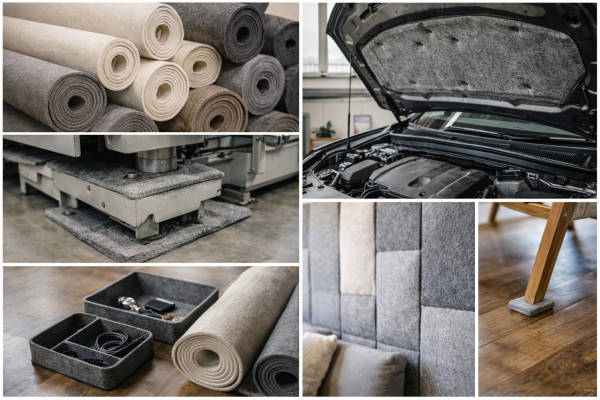
Felt fabrics remain one of the most adaptable materials used across traditional and modern industries. Their ability to perform under pressure, absorb sound, protect surfaces, and maintain structural stability makes them a preferred choice in manufacturing, construction, and consumer products. Understanding how felt fabrics are classified and where they are applied helps businesses select the right material for both functional performance and long term reliability.
Classification of Felt Fabrics by Structure and Material
Felt fabrics are commonly classified based on fiber composition, density, thickness, and intended usage. Each category is designed to meet specific technical and environmental requirements. Synthetic felt, especially when produced from recycled polyester fibers, has become increasingly popular due to its consistency, durability, and resistance to moisture and wear.
Density plays a key role in defining felt performance. Low density felt is typically used where cushioning, filtration, or sound absorption is required, while high density felt is designed for mechanical protection and industrial friction control. Thickness variations further influence how felt behaves in demanding conditions such as heat exposure or continuous pressure.
Manufacturers like EstrellaFelt focus on maintaining precise production standards so that each felt category delivers predictable and reliable results across different applications.
Industrial and Automotive Applications
In industrial environments, felt fabrics are essential for vibration control, lubrication management, sealing, and surface protection. Machinery components often rely on felt to reduce friction and prevent damage during operation. These qualities make felt a dependable material in heavy equipment and automated systems.
The automotive industry uses felt extensively for noise reduction, thermal insulation, and interior surface protection. Felt components help improve driving comfort while supporting durability in high stress areas. Companies sourcing industrial felt materials benefit from working with experienced felt fabric manufacturers that understand industry specific performance requirements.
Construction, Architecture, and Interior Design
Construction applications rely on felt for thermal insulation, moisture resistance, and acoustic control. Roofing layers, wall insulation systems, and flooring underlays use felt to enhance energy efficiency and sound management in residential and commercial buildings.
Architectural and interior design projects also incorporate decorative felt panels for modern spaces. These applications combine aesthetic appeal with functional sound absorption, making felt a preferred material in offices, hotels, and public environments. Through advanced felt fabric manufacturing capabilities, EstrellaFelt supports both structural and design driven applications.
Consumer, Furniture, and Lifestyle Uses
Felt fabrics are widely used in furniture manufacturing and home products. Chair pads, protective liners, drawer inserts, and storage solutions rely on felt for its soft surface and protective qualities. The material helps prevent scratches while maintaining a clean and refined appearance.
In consumer and lifestyle markets, felt is used in bags, footwear components, packaging inserts, and accessories. Its flexibility and ease of shaping allow designers to create products that balance function with visual appeal, particularly in markets that value sustainable materials.
Sustainable Applications and Future Demand
As industries shift toward environmentally responsible materials, felt fabrics made from recycled polyester fibers continue to gain demand. Sustainable felt production supports waste reduction while meeting performance expectations across commercial applications. This approach aligns with global efforts to adopt more responsible manufacturing practices without sacrificing quality.
Understanding the classification and application areas of felt fabrics allows businesses to make informed sourcing decisions. With expanding industrial and consumer demand, felt remains a critical material for modern production systems, offering versatility, durability, and sustainability in equal measure.